













UA-56202873-1
Page 257

Punjabi Mother Tongue

0

By Bhupinder ‘Bo’ Singh | Language |

Introduction

The International Mother Language Day falls on February 21, but this year for me its reminder arrived exactly a month earlier when I read the news item about the Canadian Government agreeing to settle class action claim “seeking reparations for the loss of language and culture brought on by Indian residential schools, for $2.8 billion.” My mind was filled with thoughts and feelings for the loss of the Indian tribes. Suddenly a thought occurred, wait this could be fate of my mother tongue too, if we fail to safeguard and make efforts to preserve it. The language which is mother tongue of over 130 million is endangered today, as it is not being taught, spoken, or propagated. The official apathy extends on the either side of border that divides Punjab. It is a pretty grim and an alarming reality which should be a wake-up call for us. A wake-up call from our slumber before it becomes too late as it becomes an extinct language.   

We may claim pride in our heritage, but we fail to exhibit it, by shying from speaking in Punjabi. We claim we are Punjabi by nature and food, but our speech does not reflect it. It will be no exaggeration to say that when it comes to our mother tongue, we have been carrying a self-perceived inferiority complex. In fact, Guru Nanak Dev Ji (1469 -1539) observed this trait in Punjabis over 500 years back, as reflected in these words:

ਘਰਿ ਘਰਿ ਮੀਆ ਸਭਨਾਂ ਜੀਆਂ ਬੋਲੀ ਅਵਰ ਤੁਮਾਰੀ ॥੬॥

“Ghar ghar mian sabhanaa(n) jeeaa(n) bolee avar tumaaree. 6.” (SGGS, Pg. No. 1191)

Translation: In each and every home, everyone addresses using the term “Mian” for greetings; your speech has changed, O people. ||6||

That was the language of rulers then, but now it has been replaced by Hindi/Urdu and English instead. This inferiority complex is not to be found in Germans, French or Chinese outside India (pre-partition as Bengal and Punjab were divided in 1947). Amongst the Indians Bengalis, Tamilians, Telgus, Gujaratis and Sindhis are very firmly attached to their mother tongue, who will unhesitatingly switch to it as their preferred medium of communication. I am sure I have omitted many other people unintentionally, as this list is not an exclusive list; but simply based on my mental imprints through my interactions with speakers of these languages.

Brief Historical Perspective

The language that I am referring to is Punjabi, which is the common mother tongue of people of Indus valley. This was the spoken language and employed as method of communication for ages. During the time of Guru Nanak Dev Ji, he noticed that the scriptural Hindu text were written in Sanskrit, which was not the language of the masses. Therefore, he adopted Punjabi to convey his own ideas so that everyone could understand them and incorporate them in their lives. Thus, Guru Ji was giving to the masses the spiritual insights in the language of common man, instead of Sanskrit which was an exclusive domain and privy of Brahmins. This was a revolutionary step in the process of dismantling the caste structure which had made others dependent on Brahmins for their spiritual, religious, and social needs. The Gurmukhi Punjabi script adopted by Guru Ji was based on Landa.

Fast forward about 300 years to the times of Maharaja Ranjit Singh (1789 – 1839), the literacy in the Khalsa Raj was almost 100%. All places of worship as Gurudwara, Mandir and Masjid could only operate, if they had an attached school for imparting education. All the women were literate in his kingdom. Despite the fact that official court language was Persian, Punjabi was language of the masses. Although, Maharaja himself had received a little formal education, still he was a great education visionary. His strategy for educating the masses was through the Qaida-E-Noor. After the annexation of the kingdom in 1849, the British Indian government started planning the introduction of modern European system of education there. They realized that in order to succeed there they will have to root out Qaida system. The British rulers made sure that nobody in Punjab could read their language as a means to curb resistance. Anybody handing over a gun or sword to the Raj rulers was paid two annas while the one returning Punjabi Qaida was paid six annas. The colonial rulers collected Punjabi Qaidas from village to village and burnt them. Shahzad (2010) is of the view that the English rulers did not use Punjabi as medium of instruction as they knew that by doing so literacy rate in Punjab will increase. These educated people will come to know their rights and would challenge the rule of the invaders. Today, we cannot even find a single copy of this historical Qaida, thus no historical evidence exists.

Here we can see the treatment of the native language at the hands of foreign rulers, who considered their English language to be superior over the native language. At the time of Independence from the British in 1947 the Punjab was divided between India and Pakistan. Now a new indigenous national pride was awakening in these two nations divided on the basis of faith. To show their native pride Urdu was adopted as state language in Pakistan and Hindi in India. Now, the thrust to promote the national language over the entire country became a new reality in the name of integration. The new found thrust was at the cost of preservation of the regional languages. The Urdu in Pakistan, and Hindi in India, along with English become the first language at homes, while the regional languages were considered as the language of rural, rustic, uneducated masses. In West Punjab (Pakistan) the Punjabi speaking population is 60 million, but Punjabi is not taught in schools as per UNESCO report.

The Punjabi Language in Indian Punjab received another jolt when Punjab was divided into Punjab and Haryana in 1966, while some territories of erstwhile Punjab were merged with Himachal Pradesh and union territory of Chandigarh was carved out. Hindi was adopted as the state language in Haryana, Chandigarh and Himachal and the voice of Punjabi speaking people in these territories were totally ignored.  To rebuff Punjab, the state of Haryana adopted Tamil as second state language, despite the fact there were hardly any speakers of that language or trained teachers to impart it in the schools. In Indian Punjab the state which was carved based on the language its native language is not enjoying its rightful status as per the three language (English – Hindi – Regional Language) policy.      

Now, with globalization, the trend to immigrate out of the country is further accelerating the demise of Punjabi. As the immigrants are driven by the desires of bettering their lives, quickly start assimilating into their new adopted countries. As the parents want their kids to fit in, thus mother language becomes low on the totem pole of life’s priorities. The English thus becomes the first language at homes outside Punjab.

Need to Preserve

UNESCO has published a report (Reference 4) wherein they have clearly advocated the benefits of early learning in the mother language. See under for the highlight from UNESCO report:

“Research shows that education in the mother tongue is a key factor for inclusion and quality learning, and it also improves learning outcomes and academic performance. This is crucial, especially in primary school to avoid knowledge gaps and increase the speed of learning and comprehension. And most importantly, multilingual education based on the mother tongue empowers all learners to fully take part in society.” 

The Gurmukhi alphabet which was derived from the Landa alphabet that has roots in the incredibly old Brahmi alphabet. Second Sikh Guru Angad Dev Ji (1539-1552) enhanced the Gurmukhi alphabet to its current state for the express purpose of writing the holy book, giving rise to the slogan “Guru’s mouth” for it.

Now that doomsday alarms have been sounded, let us look at how to avoid this precarious scenario. The efforts will have to be made on multiple fronts. The first place to start the change has to be home. After all, if Sikhi has to survive today then the Sikhs need to get Guru Ji’s message as written by them from its source in “Gurmukhi.” The translations or interpretations will always carry personal understanding including the biases or some taint. For the Sikhs the survival of their language is not just a question of survival of their mother language alone, but preserving the key that opens the door of Guru’s spiritual wisdom and salvation. Thus, the stakes are much higher. Let us explore some areas how this can be pursued.

Using Music

The power of music is phenomenal. The new born are sung rhymes and songs, to lull them to sleep as well as teach them. No wonder Guru Nanak Ji employed the power of music to spread his message by singing his hymns to music scales. In Gurudwaras the devotional singing called Keertan is the primary mode of spiritual discourses. The scientists have found that music stimulates more parts of the brain than any other human function. That’s why they see so much potential in music’s power to change the brain and affect the way it works. The Punjabi music is very robust, catchy, rhythmic that has gained a strong following outside the Punjabi speaking world. No social functions and weddings are complete without the Punjabi songs. The essential highlights of garbas in Gujarat, Pongal celebration in south, and Bollywood dances are Punjabi songs. We need to ride on that interest wave and create an interest in Punjabi Language. The rhymes and folk songs can become effective tools for teaching the language and making it a preferred language of choice.

Storytelling

Language is the cultural glue that binds communities together and stories become its building blocks. The art of storytelling in family setting is declining, as the family units have metamorphosed from joint families to nuclear families with both working parents. But the power of oral storytelling has not diminished despite the advent of digital devices. The power of storytelling can be used to promote and initiate kids into the language. We need to create more quality illustrated children’s book along with digital stories. We have a repertoire of traditional catchy folktales that have not been exploited as tools for teaching the language. We really need to get such resources developed and properly implemented to gain benefits from it.

Individuals and organizations have made some maiden efforts in this direction, but we need to raise the presentation and quality standards of these initiatives. More efforts are needed on how to disseminate these resources available to the learners for propagating Punjabi along with setting up their distribution centers. Even on the digital platform there is a need to develop additionally such teaching tools. The need of the hour is an author of caliber of Bhai Vir Singh (1872-1957) to inspire us with the love of our mother language and Guru’s teachings through the writings.  

Making Movies

The movies may have become a staple of entertainment but there is another potential of the movies – educational. Well besides entertainment this medium provides avenues for cultural and literary immersion, it also makes effective tool to impart students with a deeper understanding of subject through visuals. Its use can be used to supplement the book reading on a boring/complex subject to make it more easily related to. The exposure to movies can inspire students to become involved in the movie making industry by choosing it as their future profession as well. We need to come up with good stories, engaging themes and treatment to make effective use of the medium. We really need a Satyajit Ray (1921-1992) of Punjabi films who can take them to a higher level and gain global recognition. This will in turn generate interest in learning the language.

Making a modern Qaid-E-Noor for today’s world

This will be a nostalgic trip to make anew Qaida to teach Punjabi inspired by the legendary Qaida-E-Noor. Unfortunately, no copy of the legendary Qaida exists that could be used as a model/guide for the newer version. It will have to be a grassroots effort to make a Qaida that is appealing to the learners and for the parents to use it to teach.This is not an untenable initiative, but the best brains will have to pool their talents to come with something exciting like that. The requisite resources and plans to make effective use of Qaida has to be chalked out again using Maharaja’s initiative as the model, then tailoring it according to modern times.

Making Digital Media Content

The computers have changed the world in more ways than the other technologies from the past. It has changed and is continuously changing the way world works. Today even a one-year-old is playing or watching content from the smart phones. In fact, phones have become baby sitters, story tellers, games centers and entertainers for the youngsters. They also present a great tool for teaching; we have to explore its potential and harness it as a tool to teach Punjabi. There are some children’s Disney shows that provide us with templates on how to harness this technology, which is here to stay. This subheading will be incomplete without a mention of online web portal for teaching Punjabi. This should be a complete comprehensive online university which offers diplomas, advanced courses and certificates of completion.  

Punjabi Learning Centers

We need to plan Punjabi Learning Centers in line with language teaching institutions being run by some countries to promote their mother language. Some examples are Goethe Institute – German, Alliance Française – French, Confucius Institute – Chinese etc.No government is going to lead such an effort for Punjabi, so we will have to make our own efforts. These institutes running such programs provide us with a template and model and how it can be done. The syllabus, course duration, text books, and other resources need to be developed and standardized. We need to get organized and start, then plant the physical seed in some location. Then the model can be replicated in other cities, and it can be scaled up worldwide, if we can get proper organizational structure and setup. Besides teaching Gurmukhi reading and writing other courses as Gurbani-Santhiya, Keertan etc. can be added to their offerings. We will not only be connecting the future generation to the mother language but to father figure Guru as well in a meaningful way.  

Conclusion

We have to realize that raising children in an environment where Punjabi is the ordinary language of daily interaction is central to the survival of our beloved mother language. The onslaught of globalization on the fate of the languages without significant speakers is going to be their death knell. The irony of the times is that the pitch for Punjabi language has to be made in English. Thus, the situation is grim, but not hopeless. It requires recognition of the situation we are facing and working on in a concerted efforts at the grassroots level. Let us not go down the history lane as the generation that was complicit in pushing Punjabi to extinction, but the generation that reversed the trend and made it to flourish again.

There will be skeptics who may not believe in it. But I can vouch from my personal experience. My father and myself were born in Burma (now Myanmar) and we spoke Punjabi and learnt to read and write Gurmukhi at home. My kids were raised in USA, and we had to put an effort to do it for their sake. Now my grandkids are on this path of learning. So, there is hope, we need to make commitment and develop the requisite resources. So let us all join hands irrespective of our individual faith and rise for the common good that Punjabi language matters. We are citizens of world, so no language is despised by us, but we only exist when our mother tongue is revered by us as reflected in its usage by us. The picture of the consequences of neglect as painted By Guru Nanak Ji is:

  ਖਤ੍ਰੀਆ ਤ ਧਰਮੁ ਛੋਡਿਆ ਮਲੇਛ ਭਾਖਿਆ ਗਹੀ ॥

“Khatreeaa ta dharam chhoddiaa malechh bhaakhiaa gahee.” (SGGS, Pg No. 662)

Translation: The protectors (Khatris) have abandoned their religion and have adopted a foreign language.

References:

  1. https://www.cbc.ca/news/canada/british-columbia/residential-school-band-class-action-settlement-1.6722014
  2. https://patch.com/connecticut/trumbull/history-of-punjabi-language–gurmukhi-alphabet
  3. https://www.quora.com/How-did-Tamil-became-the-second-official-language-in-Haryana
  4. Shafi Aamir. Punjabi Parents’ Perception of Punjabi as Their Children’s Mother Tongue https://www.numl.edu.pk/journals/subjects/1566368197Punjabi%20Parents%2011.2.pdf
  5. https://www.unesco.org/en/articles/why-mother-language-based-education-essential UNESCO Report: Mother Tongue Matters: Local Language as a Key to Effective Learning. 2008

Bhupinder ‘Bo’ Singh, Houston. Born in Bhamo, Myanmar, he now lives in Houston, US, where he runs a manufacturing company formed with his son. A mechanical engineer by training, he has authored a number of books, including Connecting with the Master – A collection of essays on topics related to Sikhism (2006) and In Bully’s Eyes – An Illustrated Children’s book on Bullying (2019).

RELATED STORY:

Inspiring Life of Guru Gobind Singh Ji (Asia Samachar, 17 Jan 2023)

ASIA SAMACHAR is an online newspaper for Sikhs / Punjabis in Southeast Asia and beyond. When you leave a comment at the bottom of this article, it takes time to appear as it is moderated by human being. Unless it is offensive or libelous, it should appear. You can also comment at FacebookTwitter, and Instagram. You can reach us via WhatsApp +6017-335-1399 or email: asia.samachar@gmail.com. For obituary announcements, click here.

Trauma therapist tells senior Sikhs importance of mental wellness

0
Dr Navroop Sood (right) shares some thoughts with the Sunehri Sahelian – Photo: SIWEC Facebook

By Asia Samachar | Singapore |

Trauma therapist Dr Navroop Sood shared about the importance of physical and mental wellness in a session with the senior Sikhs at a session at Singapore’s Central Sikh Temple last week.

The members of the Sunehri Sahelian and Sunehray Pal then immersed themselves in laughter and music, followed by the weekly stretch and exercises.

And there was a special activity for the day. The members were given recycled bottles of a drink and rice to get creative with! They throughly enjoyed themselves as they prepared their DIY shakers and shaked their way through their exercise session.

The programme was anchored by Singapore’s Sikh Welfare Council (SIWEC).

RELATED STORY:

Singapore Senior Parliamentary Secretary visits SIWEC (Asia Samachar, 30 Aug 2022)

ASIA SAMACHAR is an online newspaper for Sikhs / Punjabis in Southeast Asia and beyond. When you leave a comment at the bottom of this article, it takes time to appear as it is moderated by human being. Unless it is offensive or libelous, it should appear. You can also comment at FacebookTwitter, and Instagram. You can reach us via WhatsApp +6017-335-1399 or email: asia.samachar@gmail.com. For obituary announcements, click here.

Sitar maestro Samuel Dass at India-Malaysia 65 musical extravaganza

0
Sitar maestro Samuel Dass at India-Malaysia@65: Musical Extravaganza – Photo: IHCKL

By Asia Samachar | Malaysia |

The High Commission of India in Kuala Lumpur organised a special musical event on Friday (Feb 10) to mark 65 years of establishment of India-Malaysia bilateral relations.

The event, India-Malaysia@65: Musical Extravaganza, also celebrated 75 years of India’s independence and its G20 Presidency in 2023, according to its statement.

The musical extravaganza was led by Malaysian sitar maestro Samuel Dass and his team of musicians from SWARA Community Arts Center. In 2014, MrDass was awarded with the prestigious title “Sultan of Sitar” by the Malaysian Ministry of Tourism, Arts and Culture.

In his speech, Indian high commissioner B.N. Reddy spoke about the impressive strides made in the India-Malaysia relations over the past few decades and how the 2.7 million strong Indian diaspora in Malaysia, second largest abroad, has helped preserve and nurture the traditions of Indian music and culture in Malaysia.

Among the dignitaries present were Human Resource Minister Sivakumar Varatharaju Naidu and Selangor state lawmaker Ganabatirau Veraman.

ASIA SAMACHAR is an online newspaper for Sikhs / Punjabis in Southeast Asia and beyond. When you leave a comment at the bottom of this article, it takes time to appear as it is moderated by human being. Unless it is offensive or libelous, it should appear. You can also comment at FacebookTwitter, and Instagram. You can reach us via WhatsApp +6017-335-1399 or email: asia.samachar@gmail.com. For obituary announcements, click here.
A little love for those equal to us

    1

    By Jagdesh Singh | Opinion |

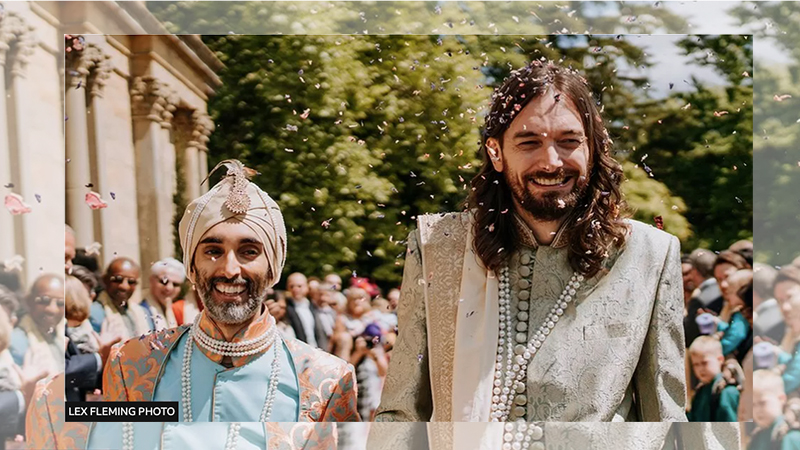
    A picture paints a thousand words, a statement ever more true than before, where we’re constantly bombarded with countless images and videos on social media today. But we’ll never know what’s behind those wide smiles or laughter in those images emitting from the small screens slightly larger than the palm of our hands. A particular image that caught my eye was of a gay couple’s wedding, one of them adorning a beautiful turban crowning his bearded face. The smiles and laughter in that image looked sincere, of happiness and of joy. It was an image on a news article published on the BBC. Intrigued, I quickly read through it to understand the context and story behind the image. The story was interesting, of hope and of awareness within our community, particularly in the UK. You can read more of it here.

    But the story was also a reminder that many of us still view the LGBTQ subset, within our own Punjabi community, under very conservative lens. Punjabis are predominantly Sikhs in Punjab, India, with a whole lot of cultural roots stemming from northern India, intertwined with old Hindu conservative ideas like the caste systems and dowry, just to name a couple. And so the reaction towards a full fledged looking Punjabi Sikh gay publicly coming out, and coming out in his own wedding with a white husband, was pretty typical of conservatives that don’t really understand nor acknowledge why it took this man so much courage to explain his marriage to his world.

    Now, don’t get me wrong. I’m not here to preach, explain and even justify my opinion about the LGBTQ community in general. Nevertheless, I’ll share my opinion.

    Personally, it has been a journey in understanding my acceptance of these humans (even this sentence can sound pretty judgmental while I sit on my high and mighty chair). But the crux of it all is that they’re really as human as we are. Humans who have feelings, dreams and hopes just like any of us.

    As Punjabis, especially the Punjabi diaspora living in countries far away from Punjab India, we all know quite a bit about living as a minority, many times as outsiders that don’t really belong. More often than not, we’ve had to fight for equality and for our voices to be heard. Even in Mother India, for centuries we’ve been struggling to maintain our identity as a people, to practice our way of life, and to maintain the dignity of being recognized as an equal to any other human in this world. We’re even proud of the stories our forefathers have told us, of our struggles and battles of bravery fighting inequality. When everybody else looked at the fairer sex as being the weaker, we were the most progressive, elevating our sisters to being as strong, brave and smart as our brothers and sons. So, we do know a thing or two about equality, you know.

    We’ve broken the barriers for equality between castes, between men and women. We’ve taken our Gurus’ teachings and further broken down barriers between races after venturing out from India as a diaspora. Our kirpans that we wear are symbols to remind us that we stand up to tyranny. Any form of tyranny, protecting the weak and downtrodden, and most importantly protecting against inequality. Embedded into our consciousness from our early childhood is the notion that every human, no matter form or color, is Waheguru’s child. You see, equality is a big deal for us Sikhs.

    Even on the battlefield, we have exhibited our humanity by feeding water to injured soldiers that were supposed to kill us. You might say we’re a tad over romantic with ourselves, and some of these beliefs aren’t practical in today’s world. I’d say we need this humane romanticism more than ever today because cynicism about our lives is at an all time high. We all need a little more love from each other.

    Lesbians, gays, bisexuals, transgenders and queers don’t suddenly decide or change from being heterosexuals in one day. I learned this the hard way when my best friend came out to me. I trusted him all my life, and was shocked 10 years ago when he came out of the closet, to learn of the pain and struggle he had to go through, hiding himself from the people he loved and respected. He tried everything to ‘be normal’. But he knew from his early childhood that he was different from his brothers and his friends. He was frustrated that he could never feel attracted to a girl, and sometimes forced himself to get attracted to a girl who displayed some affection towards him. He knew nobody around him, his family and his friends, who would understand what he was going through. He knew if he came out as a gay, he would be treated almost as a pariah within his close circle of family and friends. He knew he won’t be equal to his family and friends. Nobody would have afforded him equality as a brother and a friend. He was probably right as well.

    He finally came out post the AIDS traumatic era in the 80s and 90s, when society seemed a bit more accepting in the early 2010s. I admit that I would’ve been mean to him, and would’ve ostracized him if I found out in the early 2000s. I was a bigot, and would’ve been toxic to him. As he was my best friend, almost a brother to me, I was forced to recalibrate the way I viewed and understood gays. Now, this is the great thing about fundamental beliefs. These beliefs make sense when you boil it down to the basics. My best friend was a human, first and foremost. He was a child of Waheguru. He was still the loving, caring, smart man that he was before coming out. He wasn’t suddenly this lustful freak who lost all senses of sexuality and wanted to experiment more variety to satiate his sexual hunger. He was never this. He was still my best friend. My fundamental belief of equality was ever relevant as it was the day I learned about it.

    The pain and silent suffering he went through, I really hope and pray, won’t be experienced by the people that I hold dear to my heart, my children, my nephews and nieces. With a little love, I will accept them as they’re are, born as free willed humans, equal as one family.

    All we need is a little more love for each other. A little less of hate to those who aren’t like us in some ways or another.

    Jagdesh Singh, a Kuala Lumpur-based executive with a US multinational company, is a father of three girls who are as opinionated as their mother

    * This is the opinion of the writer, organisation or publication and does not necessarily represent the views of Asia Samachar.

    RELATED STORY:

    Jasvir Singh: ‘I’m a devout Sikh – and married to a man’ – BBC (Asia Samachar, 5 Feb 2023)

    ASIA SAMACHAR is an online newspaper for Sikhs / Punjabis in Southeast Asia and beyond. When you leave a comment at the bottom of this article, it takes time to appear as it is moderated by human being. Unless it is offensive or libelous, it should appear. You can also comment at FacebookTwitter, and Instagram. You can reach us via WhatsApp +6017-335-1399 or email: asia.samachar@gmail.com. For obituary announcements, click here.

    Sardarni Gian Kaur d/o Late Hazara Singh (1930-2023), (Buntong)

    SARDARNI GIAN KAUR D/O LATE HAZARA SINGH (BUNTONG)

    Wife of Late Sardar Gurbachan Singh S/O Late Sardar Pall Singh (Buntong)

    It is with deep regret and profound sadness that we inform you of the peaceful passing of Sardarni Gian Kaur on 12 February 2023. She leaves behind her, children, grandchildren and great-grandchildren.

    Special thanks to caregiver: Kevena.

    The saskar/cremation will be held on 13 February 2023 (Monday) at approximately 3pm at Buntong Hindu Crematorium, Jalan Madras (Buntong), 30100 Ipoh, Perak.

    Cortege leaves at 2:30pm from residence, No 735, Jalan Wayang Buntong, 30100 Ipoh, Perak.

    PATH DA BHOG: 26th February 2023 (Sunday), from 9am to 12pm, at Gurdwara Sahib Buntong (Jalan Bombay, Guntong, Ipoh, Perak)

    Should you have any further questions, please feel free to contact:

    Sons:
    Terloke Singh(Dave): 016-5261670
    Senthok Singh: 013-5309407


    | Entry: 13 Feb 2023 | Source: Family

    ASIA SAMACHAR is an online newspaper for Sikhs / Punjabis in Southeast Asia and beyond. When you leave a comment at the bottom of this article, it takes time to appear as it is moderated by human being. Unless it is offensive or libelous, it should appear. You can also comment at FacebookTwitter, and Instagram. You can reach us via WhatsApp +6017-335-1399 or email: asia.samachar@gmail.com. For obituary announcements, click here.

    Gurmukhi script and Sikh Gurus

      0

      By Jasbir Singh Sarna | Culture |

      The word Gurmukh is ancient and is found in the old Siddha literature of Nath Jogis of the tenth and eleventh centuries. Scholars have differing views on the origin of the name Gurmukhi. In fact, Gurmukh Naam has also appeared in the meaning of “Bhale Purash”.  Pandit Gauri Shankar writes in his commentary on ‘Gurmukhi’: “It contained Sindhi-like amount of vowels . It is said that the scriptures of the Sikhs were also earlier written in such a script which made it difficult for them to read in pure form. Guru Angad (1504-1552 AD), therefore, devised a new script for the accuracy of his scriptures so that it could be read and written in a pure form like Nagari. For this reason it is called ‘Gurmukhi’ i.e. the script derived from the mouth of the Guru.”( Bhartiya Prachin LipiMala, 2001, P.155)

      According to Prof Piara Singh Padam, “When the Punjabi script was suppressed under the Muslim influence and the Punjabi script was revived, the country’s self-respecting Gurus revived the Punjabi script. Since the people who believed in the Guru were called ‘Gurmukhs’, the name ‘Gurmukhi’ was given due to their use. These Gurmukh Sikhs memorized the Guru’s word and preached from place to place. There was also a need to write Bani for this type, so he used the script prevalent in Punjab at that time for this purpose and this use has made the new name ‘Gurmukhi’ more popular.”(Gurmukhi Lipi da Itihas, 1953, P:54-55)

      Dr. Kerry calls Gurmukhi “Gurmukhi Nagari”. Dr. Leitner also considers Guru Angad  to be the originator of Gurmukhi characters.

      “Guru Angad, like Professor Huxley, did not consider it beneath his dignity to write primers for children and he accordingly composed a number of mottos and moral maxims which accompany the letters of the alphabet.”

      “Gurumukhi, however is not a name for a mere character, as is supposed both by the native, including now even, the sikhs themselves, and by Europeans. Etymologically, it is the name of the language, which flowed from the mouth of the Guru Nanak and although his sayings were subsequently committed to writing by Arjan, The characters though not the name, existed before Nanak.” (Lietner, 1883,P:1,29)

      Many scholars have commented on this point .  Sardar G.B. Singh argues that “it is possible that Guru Angad Dev Ji wrote some ‘Bal Bodh’, because there were no printed books at that time. Then the first question arises whether these  were Gurmukhi characters or Lande which are needed more by the Shopkeepers . Even if they are Gurmukhi characters, then there is not much evidence of making or inventing Gurmukhi characters. But later it was a natural thing for the devotees to carry on the tradition that Guru Angad had made Gurmukhi. With this another thing came together and the name of this alphabet became ‘Gurmukhi’. (Gurmukhi Lipi da Janam te Vikas,2020,P.110)

      At the beginning of the spiritual movements, innumerable Sadhus, Saints, Jogis, Naths etc, spoke a central language throughout India which they called Sant Bhakha or Sadhukari. It is mentioned that before the Sikh Gurus, samples of Gurmukhi-like writing were visible in Punjab. Guru Sahib revived the same script and made it famous and popular. Guru Angad  preached and propagated the writing of Bani and biographies of  Guru Nanak, due to which it became popular among the common people that Guru Sahib had invented the script. He writes, “Guru Angad Dev Ji Maharaj considered that the language of each country and its characters are different. Guru Nanak Dev Ji Maharaj was born in Punjab and composed words in the language of this country. But considering that he created an alphabet of thirty five letters, which is called Gurmukhi, and nowadays the Punjabi alphabet can also, very beautifully composed ……”

      Sequence of the Alphabets  during Guru Nanak and Guru Angad times.

      It has been a tradition since ancient times for children to write letters. Pandhe, Bhai, Maulvi, Pandit used to add a sentence to the letters which was repeated while writing the letters. Sheikh Saadi, Amir Khusra etc. also wrote about Karima, Wahid etc. to teach children. Guru Angad  also developed a ‘Bal bodh’ for children, women to learn and write. Dr Leitner gives Balbodh with a similar thirty five letter reference.  Dr. Mohan Singh Deewana sheds light on the dichotomous aspect of ‘Bawan Akhari’ and clarifies that the alphabet has been used to authenticate spellings, to spell them correctly and to combine spiritual meanings with the letters, as in Sanskrit ‘Ekakshari’ Hindi. Kanpate Nath’s ‘Chetisi’ in Hindi ‘Bawan Akhri’ in Punjabi ‘Patti’ or ‘Panti Akhri’ etc.( A History of Punjabi Literature ,1956,115)

      Guru Nanak and Guru Angad  must have ‘corrected’ the Gurmukhi characters but the fact is that the ‘Gurmukhi’ characters were present before Guru Sahib.

      Even though the name was not prevalent in Gurmukhi at that time. If they did not come into existence then the question arises, how did Guru Nanak write the Bani ‘Patti’:  Patti is a wooden board on which children learn to write the alphabet. The tradition of the ‘Patti’ form of poetry is very old. Siddha Acharya Sarhapa has composed poems with many letters of the alphabet at the beginning of each Duae.(Punjabi Sahit Kosh,3rd,P 7-8).To say that the ‘Gurmukhi characters’ created by Guru Angad after the existence of these thirty five letters is tantamount to ignoring the written Patti script of Guru Nanak .

      Although there are three more characters in this strip, that too only to express the parable of Almighty , but still the number thirty five is complete. In Sri Guru Granth Sahib there is a couplet of Asa Mahala ੧ and  after that comes the couplet of Guru Amar Das . If Guru Angad  had written the couplet, then it must have existed before Guru Amar Das’s  couplet? It can also be said with confidence that Guru Nanak  must have written his Bani with his august hands . Guru Angad would have recited all his Bani because Guru Nanak  would have written the difficult words ofGatha,Sanskrit, Persian etc. with his own hand. Guru ji may have also written the verse of Bhai Mardana.

      Aburehan Al-Bruni (c. 1030 AD) in his famous book, Alhind, quotes the script as “semi-nagari”. According to him, the combination of Siddha-Matrika developed from Sharda and the script developed from Nagar script has resulted in a semi-nagari script, the propagation and use of which is prevalent in Bhatti Desh and Sindhu. Only semi-nagari were used in business. Kala Singh Bedi is of the opinion that the pronunciation of these letters was the same now as Ura, Era, Kaka, Gagga, Chacha, Pappa etc. Gurbani also proves that the order of these letters was not the same as now and the shape of some of the letters was also different from the present ones.(Khoj Patrika,2005,p:26). The order of the semi-nagari characters of the time of Guru Nanak and the order of the characters of the present Gurmukhi script are given in a table separately .

      It is clear from the table that Guru Angad made it easier by changing the shapes of some difficult characters. Guru Nanak brought a new twist in language and script. Guru Sahib chose the scientific Gurmukhi script (semi-nagari). Guru Angad had ordered Pade Mokha  to transcribe Janamsakhi Bala. Pade Mokha was familiar with Gurmukhi characters and Devanagari characters. This is the reason that Bale Wali Janam Sakhi was transcribed by Pade Mokha in Gurmukhi characters.

      Sardar GB Singh has read the inscriptions on the stones in many wells of the Punjab, which are from before Guru Nanak. The characters in the inscriptions are   similar to Gurmukhi. Museums of Nagpur. He also saw the shape of the Punjabi letter (b) on a stone in the 8th century. Sardar GB Singh is also of the opinion that every letter of Gurmukhi came into existence before the time of Guru Nanak’s enlightenment. Some research scholars have found in the books of Haridwar, Mathura, Bindraban and Kashi’s dias the signatures of the Hindu pilgrims who preceded Guru Nanak, which are similar to the Gurmukhi characters. The characters of that time may have been considered to be of semi-nagari script.

           In a nutshell we can say that Gurmukhi characters were prevalent in Punjab long before Guru Nanak. The number of sounds uttered by the people in Punjab during the Vedic period is estimated by scholars to be 52. With the passage of time, their number was declining and thirty five (35) Gurmukhi voices were left before Guru Nanak Sahib. ‘Brahmi to express these sounds. Semi-natives developed from Punjabi which were letters that crossed the Sharda script. So Gurmukhi script is scientifically correct for the expression of Punjabi sounds. Letters were written at the feet of Devanagari characters but Gurmukhi is becoming free from this tradition. We can proudly say that Gurmukhi script is very useful for the Punjabi language. The literary treasure of the Punjab exists in Persian script, inscribed by peasants, Sufis, and Islamic preachers. A lot of Punjabi literature is also available in Devanagari. If Punjabis are able to present any script in the whole world in the color of Punjabiat then it can only be called Gurmukhi script. Guru Nanak was fluent in many languages and other Gurus and Gurmukhs maintained this tradition. Following in the footsteps of the original doctrine of the Gurus, the Gurmukhs, Bhagats, Sikhs adopted the script wholeheartedly and the script emanating from the Guru’s mouth became known as Gurmukhi. The meanings of the word ‘Gurmukhi’ are different from ‘Gurmukh’ and are reserved only for the Gurmukhi alphabet or thirty five letters. Thirty-five Gurmukhi characters, Sharda, Lande, Takri, etc., are considered to be a modified form of the script. In addition to these thirty-five letters, some Persian sounds have started to be punctuated to write them correctly or in tatsam form through Gurmukhi script. Looking at history, the first sign of Gurmukhi is inscribed in the books of Baba Mohan. The name existed in the time of Guru Amar Das. According to Prof Pritam Singh, there are references to three old opinions about the origin of Gurmukhi. The oldest of these schools of thought considers Guru Angad to be the master of the script. The earliest evidence of this doctrine is found in a pothi prevalent in Patiala under the name of Baba Mohan ji. This book contains two very interesting passages.

                    The historian Giani Gian Singh (1822-1927 AD) has also given the date of formation of these letters.” In 1598 , so he used to write Baba ji’s words (which were written by the people in Nagari, Persian, Turkish and Takri letters) and the story narrated by Bhai Bala (whose name is now Janamsakhi) from Bhai Pede Mokha Khatri (Who knows all Alphabets), writing date 1602 AD.  According to Giani Gian Singh in Sammat 1598 (1541 AD), Guru Angad made  Gurmukhi characters. Kesar Singh Chibber has linked the Gurmukhi characters with Sri Chand (Guru Nanak’s eldest son), which does not meet the test criteria.

            Finally we come to the conclusion that the Gurmukhi script is the scientific script of Punjabi. Although its origin is the Brahmi script which came into existence from ancient pictographs. Vedic language as it evolved and passed through stages became modern Punjabi. Similarly, the Brahmi script, Sharda and the Gurmukhi script, which transcends the stages of Ardh-Nagri or Bhatt-Akhari, is easily seen on the world stage. The Gurus made it very popular by spreading like beads of rosary dissemination. That is why this Panti Akhri became the ‘Isme-Azam’ of the Sikhs.

      Dr Jasbir Singh Sarna, a native Kashmiri, is a retired Indian agriculture officer. He has authored more than four dozen books, including Sikhs in Kashmir and The Sikh Shrines in Jammu and Kashmir. He can contacted at Jbsingh.801@gmail.com

      RELATED STORY:

      Inspiring Life of Guru Gobind Singh Ji (Asia Samachar, 17 Jan 2023)

      ASIA SAMACHAR is an online newspaper for Sikhs / Punjabis in Southeast Asia and beyond. When you leave a comment at the bottom of this article, it takes time to appear as it is moderated by human being. Unless it is offensive or libelous, it should appear. You can also comment at FacebookTwitter, and Instagram. You can reach us via WhatsApp +6017-335-1399 or email: asia.samachar@gmail.com. For obituary announcements, click here.

      Dr Jasmeet Singh now director at Sungai Buloh Hospital

      0

      By Asia Samachar | Malaysia |

      Dr Jasmeet Singh Sucha Singh is the new director at Sungai Buloh Hospital, effective Feb 7, 2023.

      Dr Jasmeet was previously the director at the Cheras Rehabilitation Hospital (HRC) since 2020. Among others, he also had a stint as the director of Hospital Kuala Kubu Baru.

      He takes over from Dr Kuldip Kaur Prem Singh who retired in October 2022. She was prominent in the news during the Covid-19 pandemic as the hospital has been at the forefront of the country’s fight against the pandemic.

      RELATED STORY:

      Sikh human rights researcher named US health and medicine emerging leader (Asia Samachar, 14 Sept 2022)

      ASIA SAMACHAR is an online newspaper for Sikhs / Punjabis in Southeast Asia and beyond. When you leave a comment at the bottom of this article, it takes time to appear as it is moderated by human being. Unless it is offensive or libelous, it should appear. You can also comment at FacebookTwitter, and Instagram. You can reach us via WhatsApp +6017-335-1399 or email: asia.samachar@gmail.com. For obituary announcements, click here.

      Hari Singh Mukhtiar Singh (1961 – 2023), Petaling Jaya

      HARI SINGH A/L MUKTHIAR SINGH

      21.3.1961 – 10.2.2023

      Village: Thurkot

      Wife: Nerwinderjit Kaur

      Daughter: Jasreen Kaur
      Son: Kiranjit Singh
      Son-in-law: Jagdeesh Singh Gill

      Grandchildren: Veehanjeet

      Siblings:
      Jagdis Kaur ( Katina @ jinder )
      Harbans Kaur
      Late Aranjit Singh
      Amar Singh
      Jasmail Kaur

      Path da Bhog: 26 February 2023 (Sunday), from 6pm to 8pm, at Gurdwara Sahib Petaling Jaya

      Contact:
      Rano – 012 3086 339
      Jasreen – 016 651 5590
      Dershan Bichoo – 012 283 5909
      Amar (Raja) – 018 292 9243


      | Entry: 11 Feb 2023 | Source: Family

      ASIA SAMACHAR is an online newspaper for Sikhs / Punjabis in Southeast Asia and beyond. When you leave a comment at the bottom of this article, it takes time to appear as it is moderated by human being. Unless it is offensive or libelous, it should appear. You can also comment at FacebookTwitter, and Instagram. You can reach us via WhatsApp +6017-335-1399 or email: asia.samachar@gmail.com. For obituary announcements, click here.

      Online Class on Rituals in Sikhi (Karamkands)

      0

      By Asia Samachar | Sikhi |

      What are rituals (karamkands)? Does Sikhi have rituals? If yes, what are their purpose? Have rituals crept back into Sikh institutions like gurdwaras and our daily lives?

      These are some questions that will be explored in a Zoom class conducted by Giani Jaspal Singh Pandhi, a former head granthi at the Subang gurdwara.

      He has just concluded a Zoom series on Anand Kaaraj. And the response has been encouraging. The participants are happy with his approach, especially by responding promptly to questions in the Q&A sessions in each and every class. Click here for a sample from a previous class.

      Why attend the classes? Well, to learn, of course, at the comfort of your home. The class will transform the way you read and understand Gurbani. That is what some of previous learners have said about the classes conducted by Giani Ji.

      Giani Jaspal will be discuss in detail through the weekly Zoom classes on Tuesdays. Time 8pm to 9.30pm (Malaysian, Singapore time); 5.30pm to 7pm (India time).

      Investment: RM30 per month, money that will go towards keeping a good Sikh preacher up and moving.

      If interested, call or Whatsapp Bachan Kaur +6012-621-6273 or Pritam Singh +6016-216-2474

      RELATED STORY:

      Zoom classes for Gurbani Grammar & Anand Sahib (Asia Samachar, 17 July 2022)

      ASIA SAMACHAR is an online newspaper for Sikhs / Punjabis in Southeast Asia and beyond.Facebook | WhatsApp +6017-335-1399 | Email: editor@asiasamachar.com | Twitter | Instagram | Obituary announcements, click here 

      RELATED STORY:

      What happens at a Sikh weddings? What do they sing, and how did it all start? (Asia Samachar, 30 Sept 2022)

      ASIA SAMACHAR is an online newspaper for Sikhs / Punjabis in Southeast Asia and beyond. When you leave a comment at the bottom of this article, it takes time to appear as it is moderated by human being. Unless it is offensive or libelous, it should appear. You can also comment at FacebookTwitter, and Instagram. You can reach us via WhatsApp +6017-335-1399 or email: asia.samachar@gmail.com. For obituary announcements, click here.

      Sdr Prithipal Singh (1956– 2023), Penang

      Jehya Chiri Likheya, Teyha Hukam Kamahey, Ghaley Aavey Nanka, Sadhey Utthi Jahey
      ਜੇਹਾ ਚੀਰੀ ਲਿਖਿਆ ਤੇਹਾ ਹੁਕਮੁ ਕਮਾਹਿ ॥ ਘਲੇ ਆਵਹਿ ਨਾਨਕਾ ਸਦੇ ਉਠੀ ਜਾਹਿ ॥੧॥

      SDR PRITHIPAL SINGH A/L SARDOOL SINGH

      Departed on 7th February, 2023.

      Path Da Bhog: 25 February 2023 (Saturday), from 10.00 am to 12.00 pm, at Gurdwara Sahib Pulapol, Kuala Lumpur

      Contact: Achhinda Singh 019-2289579


      | Entry: 10 Feb 2023 | Source: Family

      ASIA SAMACHAR is an online newspaper for Sikhs / Punjabis in Southeast Asia and beyond. When you leave a comment at the bottom of this article, it takes time to appear as it is moderated by human being. Unless it is offensive or libelous, it should appear. You can also comment at FacebookTwitter, and Instagram. You can reach us via WhatsApp +6017-335-1399 or email: asia.samachar@gmail.com. For obituary announcements, click here.