Aashiq eh na aakhiyaen je lekhae vartae soye (SGGS, 474)
Aashiq – lovers Na aakhiyae – not called Lekhae vartae – doing calculations
Those who are doing calculations (about how I gain in this relation), are definitely not called lovers.
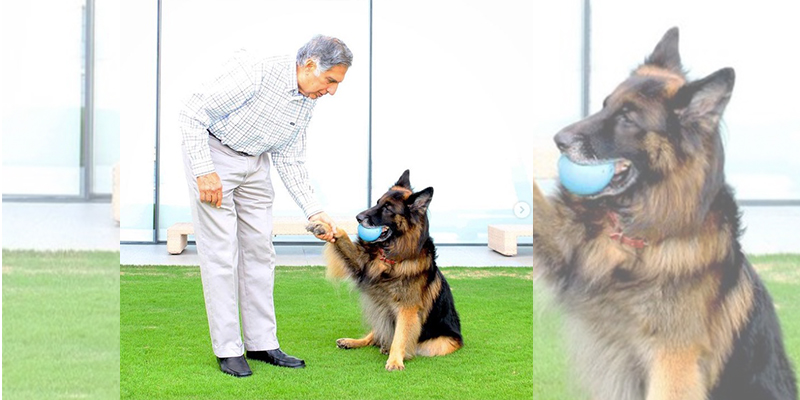
Here is an inspirational example from the life of the successful businessman Mr Ratan Tata.
A documentary showed that once Ratan Tata was invited by Prince Charles and the Queen of England to receive a lifetime achievement award for philanthropy at the Buckingham Palace.
He was already there but before the event he flew back to India. Do you know why? Because – his dog, Tito, had fallen sick. And he cared a lot about his dog hence left that award ceremony to be with his dog.
In a world where each and every person is looking for their own selfish interest, achievements, awards, accolades, future, here is a person who threw it all just to be with his loved one.
And you know that the dog cannot give you anything back in monetary value right? But it’s not about what you are going to get from the one you love. It’s about giving, that’s what love is about.
“Where the only calculations drop, that’s when love begins.”
In Punjabi we have a saying ਜਿਥੇ ਹੋਵੇ ਪਿਆਰ ਉੱਥੇ ਨਾ ਕਰੀਏ ਵਪਾਰ.Jithey hove pyaar othe na kariye vapaar. People mistake this thinking “you should not do business among relatives”. It’s the other way around.
As long as you are still calculating, ‘what am I getting from this? How is this beneficial to me?” As long as those calculations are still going on, it can be anything but love.
I hope a man’s love for his dog can Inspire us to be less selfish towards the people we love.
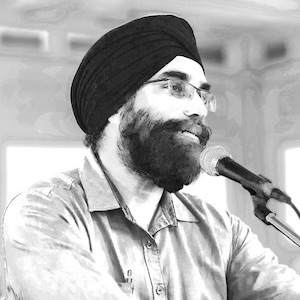
Davinder Singh is a Thai-based motivational speaker. He pens Tony’s Thought of the Day, presenting practical spirituality based on the Sikh Philosophy as well as other spiritual traditions.
* This is the opinion of the writer and does not necessarily represent the views of Asia Samachar.
ASIA SAMACHAR is an online newspaper for Sikhs / Punjabis in Southeast Asia and beyond.Facebook | WhatsApp +6017-335-1399 | Email: editor@asiasamachar.com | Twitter | Instagram | Obituary announcements, click here |
Brother, sisters, brothers-in-law, sisters-in-law, nephews, nieces, relatives and friends.
Saskaar / Cremation: 1.30pm, 25th July 2022 (Monday) at Sikh Crematorium, Bentong, Pahang
Cortege leaves residence at 1.00 pm.
Residence Address: No. 105, Taman Dato Shahbandar Hussein, Bentong, Pahang
Path da Bhog: 6th of August 2022 (Saturday), from 10am to 12pm, at Gurdwara Sahib Bentong Pahang
Contact:
Sandave Singh (016 – 9530374)
Theshvinder Singh (018 – 2336050)
Those we love don’t go away, they walk beside us everyday. Unseen, unheard but always near. Forever loved, forever missed and very dear.
| Entry: 24 July 2022 | Source: Family
ASIA SAMACHAR is an online newspaper for Sikhs / Punjabis in Southeast Asia and beyond.Facebook | WhatsApp +6017-335-1399 | Email: asia.samachar@gmail.com | Twfffitter | Instagram | Obituary announcements, click here
Farmers protest on 17 May 2021 – Photo: Trolley Times
By Prabhjot Singh | Opinion |
“Our agitation is far from over. We will not sit quietly till our demand of getting legal sanctity to the Minimum Support Price (MSP) for farm produce is conceded,” is the unanimous voice coming from farmers organisations especially those owing their allegiance to Samyukta Kisan Morcha (SKM). They are contemplating to revive their agitation as they feel that the NDA Government at the centre was dilly dallying on their demand for guarantying MSP.
Upset over ignoring their demand for constituting an exclusive committee to suggest ways and means of making MSP mandatory, the SKM has outrightly rejected the proposed 29-member committee by the Union Government on minimum support price. The issue came up before the ongoing Monsoon session of Parliament where the ruling BJP refused to budge.
AAP leader Raghav Chadha was on forefront in criticising the 29-member Committee saying that by ignoring Punjab, the Government has played a cruel joke on the farming community in general and the food grain bowl of the country.
Other parties, including Congress, took the Government to task over the discrimination with Punjab and its farmers in setting up the Committee.
AAP and Congress leaders endorsed the stand of the SKM. The SKM leaders have been maintaining that this committee as proposed was nothing else but a back door entry to corporates and yes men of the government to get the already repealed farm laws back in a new format. They held that they would not allow the government to serve “old wine in new bottles”.
“We will force the BJP-led NDA Government to make a law that guarantees MSP for all farm produce,” SKM Leader Darshan Pal said hoping that the MSP law would be in place before the 2024 general elections.
The Samyukta Kisan Morcha leader also pointed that nowhere in the proposed committee notification was any mention of providing legal guarantee to MSP.
“Even the agenda of the committee does not include provisions for making laws on mandatory MSP for all crops,” Darshan Lal said while rejecting the committee downright.
The SKM had considered the proposal at its general house meeting on July 3 where it was unanimously rejected. Instead, the SKM said it was surprised at the Union Government proposal of loading the committee with those who had earlier supported the three disputed Farm Bills or were supporters of corporatizing the agriculture sector.
Even major farm states like Punjab and Uttar Pradesh were completely ignored in the proposed committee.
The Agriculture Minister Narendra Singh Tomar, however, questioned the SKM claims. He held that the government never told the SKM that it would constitute a committee to provide legal guarantees of MSP.
Responding to a question in the Lok Sabha on whether the Government had assured the SKM for the constitution of such a committee in December 2021, Tomar said: “The Government had assured the formation of a committee to make MSP more effective and transparent, to promote natural farming and to change crop pattern keeping in mind the changing needs of the country. Accordingly, a committee has been constituted consisting of representatives of farmers, Central government, state governments, agricultural economists and scientists, etc”.
The government fixes MSP for 22 mandated agricultural crops and Fair and Remunerative Price (FRP) for sugarcane on the basis of the recommendations of the Commission for Agricultural Costs and Prices (CACP), after considering views of state governments and Central ministries and departments concerned and other relevant factors, Tomar said.
“The Government has increased MSPs for all mandated Kharif, Rabi and other Commercial crops with a minimum return of 50 per cent over all India weighted average cost of production from year 2018-19 onwards,” he added.
The Government on Monday, the opening day of the Monsoon session of Parliament, set up a committee to look into issues related to agriculture, including making MSP more effective and transparent, crop diversification and natural farming, eight months after it promised to set up such a panel while withdrawing the three contentious farm laws.
The umbrella body of farmers’ organisations that organised an unprecedented more than a year-long peaceful agitation to demand withdrawal of three central farm laws, also made it clear that it had no plans to nominate three representatives to the panel as suggested by the Union Government.
According to the notification, the committee will hold discussions on making available MSP to farmers by making the system more effective and transparent. It will also make suggestions to give more autonomy to CACP. The committee will also suggest measures to make it more scientific; and strengthen the agricultural marketing system as per the changing requirements of the country to ensure higher value to the farmers through remunerative prices of their produce by taking advantage of the domestic and the export opportunities.
Prime Minister Narendra Modi on November 19 last year had announced the repeal of the three controversial farm laws that triggered a massive farmer protest at Delhi borders. He also announced at that time that the government would set up a committee to make MSP more effective and transparent as well as suggest ways to promote zero budget natural farming.
The SKM leaders held that they agreed to suspend their agitation and return home after the government promised to fulfil their remaining demands.
The SKM wants that twenty two crops that include 14 Kharif crops—paddy, jowar, bajra, maize, ragi, tur (arhar), moong urad, groundnut, soyabean, sunflower, sesamum, niger seed and cotton—six Rabi crops—wheat, barley, gram, masur (lentil), rapeseed, mustard and safflower—besides two commercial crops—jute and copra be brought under mandatory MSP control. In addition, MSP for toria and de-husked coconut be also fixed on the basis of MSPs of rapeseed/mustard and copra, respectively.
Prabhjot Singh is a veteran journalist with over three decades of experience covering a wide spectrum of subjects and stories. He has covered Punjab and Sikh affairs for more than three decades besides covering seven Olympics and several major sporting events and hosting TV shows. For more in-depth analysis please visit probingeye.com or follow him on Twitter.com/probingeye
ASIA SAMACHAR is an online newspaper for Sikhs / Punjabis in Southeast Asia and beyond.Facebook | WhatsApp +6017-335-1399 | Email: editor@asiasamachar.com | Twitter | Instagram | Obituary announcements, click here
Though I don’t think I was ever ‘religious’, as I have began to understand the true message and mission of Sikhi, I have also come to the realisation that in order to connect with the divine or divinity, one needs to steer clear of religion and all kinds of religious dogma and paraphernalia.
I am not condemning religion as such, for I believe many religious organisations, from all traditions, do some wonderful humanitarian work and also provide a place for community and friendship. It’s just that I don’t think one needs religion or religious buildings to remind us of our divine essence, or duties to humanity and nature.
I totally accept that religions and traditions associated with them are part of our social, historical and cultural landscape and that some of the wonders of the world and human creativity can be found at/in religious places, which I love to visit; who cannot be moved by the immense spectacle of the Vatican, Mecca, Darbar Sahib, Amritsar, Lotus Temple in New Delhi, and many other amazing structures. It’s just that I do not think that divinity is only to be found in religious places; the whole universe is the house of the divine.
I know for some this viewpoint may well be problematic, but I feel I need to be honest about my feelings. I also feel having stepped aside from religious identity politics and focussing on the essence of the universal teachings of Gurbani, I actually feel much closer to divinity, or, if you like, the transcendent soul (Paramatma) or formless entity (Akaal Parakh).
As for my outward expression of Sikhi, for me this forms an integral part of my identity and heritage, both religious and secular. But in the main, I see the turban and 5Ks as a powerful symbol of Sikh sovereignty, and reading Gurbani gives me immense pleasure and insight. I meditate regularly because it helps me to have a clear mind and to strengthen my capacity to be creative and reflective. And all this enables me to appreciate and connect with the divinity that surrounds me all the time.
Gurnam Singh is an academic activist dedicated to human rights, liberty, equality, social and environmental justice. He is an Associate Professor of Sociology at University of Warwick, UK. He can be contacted at Gurnam.singh.1@warwick.ac.uk
* This is the opinion of the writer and does not necessarily represent the views of Asia Samachar.
ASIA SAMACHAR is an online newspaper for Sikhs / Punjabis in Southeast Asia and beyond.Facebook | WhatsApp +6017-335-1399 | Email: editor@asiasamachar.com | Twitter | Instagram | Obituary announcements, click here |
In 2015, Bikramjit Singh Gill looked a bit different than he does now. His broad 6-foot-7 frame still stands out in a crowd, but today the 30-year-old Malton, Ontario native has a bushy beard and long hair to match his size. After years of cutting his hair and trimming his beard in order to fit in with his peers, Gill decided to embrace his Sikh heritage and grow them out.
As one of the only Sikh-Canadian basketball players competing at the professional level, Gill has long been a role model in his community. He always welcomed that responsibility, but in 2015 he decided it was time to look the part as well. Gill wearing his hair long and leaving his beard untouched while playing professional basketball illuminated a path for young Sikh athletes to pay homage to their culture and pursue their sports dreams at the same time. He became the living example that you don’t have to sacrifice tradition and blend in with the crowd in order to do what you love.
To a pre-teen Gill, doing what he loved didn’t have anything to do with basketball. Family has always been the most important thing in his life, and with a father who played for the Indian national team and an older brother who played varsity basketball at Georgian College, his participation in the sport was more of an obligation than a passion.
After his father passed away when he was 13, Gill’s relationship with basketball blossomed into a relationship with his dad.
“There’s definitely an emotional connection with [basketball],” he said. “I wear my dad’s number … it’s like a promise. It keeps me going.”
He says he feels his father in every dribble, every squeak of his shoe against the hardwood, every swish of leather and mesh colliding as he sinks a basket. His bond with his brother, Inderbir, evolved as well. The elder Gill was thrust into a new role, acting as a father figure and coach to Gill.
Armed with a newfound love for the game and the support of his brother, Gill started taking basketball more seriously heading into his high school years. The basketball gym at the Malton Community Centre where Inderbir worked became his second home.
Rohit Bakshi, an entrepreneur who once played 3×3 basketball in Japan, helped Gill find his footing in Japanese professional basketball before starting a 3×3 league in India, known as the 3BL.
“3BL is the only basketball league in India,” Bakshi said. “It is like [the] NBA for Indian ballers.”
Gill joined the 3BL’s Gurugram Masters, who compete internationally as one of the best 3×3 teams in the world. He shone in 3×3 play overseas, becoming one of the top 150 players in the world. Team Canada took notice, calling him to compete in International Basketball Federation (FIBA) play.
Despite becoming accustomed to 3×3 basketball, Gill still excels in 5-on-5 play as well. In fact, he’s joining the first ever all-Indian team, India Rising, in The Basketball Tournament (TBT), which begins July 22 in eight regions around the U.S. The elimination-style tournament features 64 teams, awarding $1M US to the winning squad. Since Indians with dual citizenship are barred from competing with the Indian national team, Gill feels as though India Rising can do something special with their participation in the TBT.
Read the full story. ‘How family and culture propelled Bikramjit Singh Gill to basketball success’ (CBC, 20June 2022), here.
ASIA SAMACHAR is an online newspaper for Sikhs / Punjabis in Southeast Asia and beyond.Facebook | WhatsApp +6017-335-1399 | Email: asia.samachar@gmail.com | Twitter | Instagram | Obituary announcements, click here
World Bank Group has appointed Indermit Gill, the man who pioneered the “middle income trap” concept, as its chief economist and senior vice president for development economics.
“Indermit Gill brings to this role a combination of leadership, invaluable expertise and practical experience working with country governments on macroeconomic imbalances, growth, poverty, institutions, conflict, and climate change,” said World Bank president David Malpass in a statement. “Indermit is widely respected for his intellectual contributions to development economics”.
An Indian national, Gill is currently VP for equitable growth, finance, and institutions, where he led work on macroeconomics, debt, trade, poverty, and governance. His new appointment is effective on September 1, 2022.
Between 2016 and 2021, he was a professor of public policy at Duke University and non-resident senior fellow in the Global Economy and Development program at the Brookings Institution.
Gill spearheaded the influential 2009 World Development Report on Economic Geography. His pioneering work includes introducing the concept of the “middle income trap” to describe how developing countries stagnate after reaching a certain level of income, the statement added.
He has published extensively on policy issues facing developing countries, sovereign debt, green growth, labor markets, poverty and inequality, and managing natural resource wealth.
A student of Nobel Laureates Gary Becker and Robert E. Lucas Jr., Gill holds a Ph.D. in economics from the University of Chicago. He has an M.A. from the Delhi School of Economics, and a B.A. in economics from St. Stephen’s College, University of Delhi.
ASIA SAMACHAR is an online newspaper for Sikhs / Punjabis in Southeast Asia and beyond.Facebook | WhatsApp +6017-335-1399 | Email: asia.samachar@gmail.com | Twitter | Instagram | Obituary announcements, click here
The strangest thing about the dreams, is how real they feel. Even if realize that it is the dream, not a reality, still the “sensory” experiences of the dream can remain just as convincingly real. But if we are told that life is a dream, that becomes difficult to agree to. Afterall we can touch objects, feel things and people, environment, all real. Yet the relative permanence of the objects and environments encountered in the waking world is no guarantee that the waking world is as real as it feels. Although the perceived permanence does seem to point to there being something objective or enduring out there, the true nature of whatever is “out there” is for a limited time only. Afterall, the happy times, and occasions in our lives pass like a dream. Same is true of sad times as well. Even the life that feels so real and enduring also ends. So, the words of enlightened does convey the essential reality.
Let us hear Kabir’s words about this illusion:
Jag jeevan aaisaa, supane jaisaa, jeevan supan samaanan.
Saach kar hum gaath dheenee, chhodd param nidhaanan. 1.
The life in this world is only a dream; (really) life is just a dream.
Believing it to be true, I grasped at it, and abandoned (Lord,) the supreme treasure. ||1||
O Father, I have enshrined love and affection for Maya (worldly riches and power),
which has taken the jewel of spiritual wisdom away from me. ||1||Pause||
(Just as) The moth sees with its eyes, but it still becomes entangled; the (foolish) animal does not see the fire.
Attached to gold (meaning wealth) and woman (meaning pleasures), the fool does not think of the noose of Death. ||2||
Reflect upon this, and abandon sin (of evil pursuits); the Lord is the boat to carry you across.
Says Kabir, such is the Lord, the Life of the World; there is no one equal to Him. ||3||5||27||
Two interesting words:
In the beginning – Jag Jeevan – ਜਗਿ ਜੀਵਨੁ – Life in this world (Meaning the transient nature of life)
In the end – Jagjeevan – ਜਗਜੀਵਨੁ – Life of the world (Meaning God, who is forever)
Note – The spelling difference, two separate words in the beginning and the other in the end is a compound single word. The vernacular changes the meaning while the pronunciation is unchanged.
Explanation
Here Kabir Ji has shared the reality of the transient nature of life. As at any moment this life that we know, cherish and experience can end, so he calls it a dream. He says just a dream is over, when we wake up from sleep, same way the life is like a short-lived dream, ends in death and is not everlasting. Yet most of us talk about our dream life, when in reality the life is dream. He repeats the words about dream nature for emphasis. However, believing it to be true and we cling to it, by tying a tight knot with it, as if it is permanent. In the process of grasping to the transient we have abandoned the Supreme Treasure of Naam – the Divine Virtues.
Kabir says that we are in love and attached with Maya (worldly falsehood), as a result the jewel like spiritual wisdom has been taken away from us.
He compares our life to that of a moth, who is enticed and drawn in by the light of the lamp. Yet the fool (moth) so enticed by pleasures, does not see the fire which can burn it. Same way we are enticed by gold (Maya) and woman (pleasures) and don’t reflect on the impending death which will finish the life. The death with a yearning for desires only keeps us in the cycles of birth and death.
In conclusion, Kabir Ji advises us to abandon the sins of attachment (to worldly falsehood of wealth and pleasures) and reflect about Lord, who can ferry you across (the worldly ocean of attachments). Lord alone can give the soul a permanent abode, free from birth and deaths. He concludes by saying that there is nothing else worth considering in this world, except the Lord.
Kabir’s message is to realize the transient nature of life, and not get infatuated with worldly wealth, power, or pleasures. As attachment to those can to become the reason for life of sins, which could put us in cycles of birth and deaths along with the associated sufferings. So enticing is the allure of these, that like moth we fail to realize that it can consume us. Instead, he reminds us to remember God, who can remove all our sufferings, grant us immortality, with perpetual peace and happiness.
Guru Nanak Dev Ji has shared the crisp reality of dream existence in these words:
Translation: Raam passed away, as did Raavan, even though he had lots of relatives. Says Nanak, nothing lasts (here) forever; (this) world is like a dream. ||50||
Guru Amardas Ji says that those who fail to realize the dream nature of life, their life fades:
Translation: They do not recognize the True Word of the Shabad, and like a dream, their lives fade away.
Let us end with a prayer that Guru Ji bless us with the understanding of dream nature of life, so that our life does not wither away in vain. We focus only on the tangible and everlasting.
References:
Singh, Bhai Vir. Santhiya Sri Guru Granth Sahib (1992) Volume 6. Bhai Vir Singh Sahitya Sadan, New Delhi
Bhupinder ‘Bo’ Singh, Houston. Born in Bhamo, Myanmar, he now lives in Houston, US, where he runs a manufacturing company formed with his son. A mechanical engineer by training, he has authored a number of books, including Connecting with the Master – A collection of essays on topics related to Sikhism (2006) and In Bully’s Eyes – An Illustrated Children’s book on Bullying(2019).
ASIA SAMACHAR is an online newspaper for Sikhs / Punjabis in Southeast Asia and beyond.Facebook | WhatsApp +6017-335-1399 | Email: editor@asiasamachar.com | Twitter | Instagram | Obituary announcements, click here
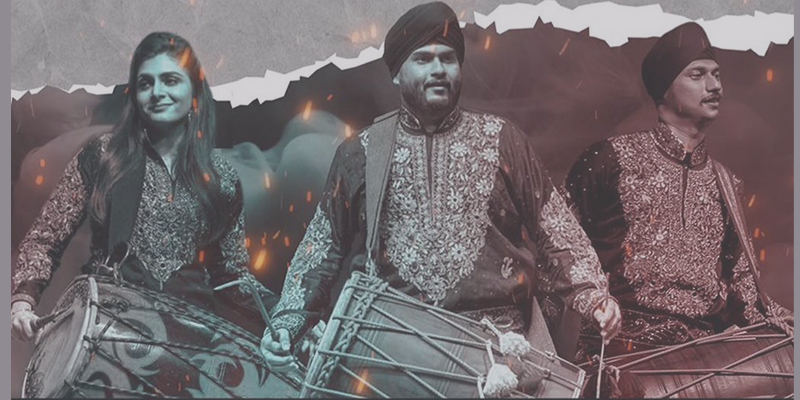
Dhol fans can enjoy Punjabi drumming at an event Tunku Abdul Rahman Hall at the Malaysia Tourism Centre (Matic) in Kuala Lumpur today (July 22) and tomorrow (July 23). Dhol Alliance will be showcasing their talent at the Sounds of Punjab billed as Punjab ethnic drumming and dance event. Tickets are going for RM20 and RM50. Contact 016-7160577.
ASIA SAMACHAR is an online newspaper for Sikhs / Punjabis in Southeast Asia and beyond.Facebook | WhatsApp +6017-335-1399 | Email: asia.samachar@gmail.com | Twitter | Instagram | Obituary announcements, click here
A 60-year-old Sikh man who went missing on June 10 may be in Kuala Lumpur as his identification card and a few other documents were found in the vicinity of KLCC area.
Ajamair Singh Jalaur Singh was reported missing after leaving his house at Lim Garden in Ipoh, Perak in the evening of 10 June supposedly to withdraw money from the bank.
“His IC and other cards were found at the KLCC area on June 20,” his elder brother Harcharanjit Singh told Asia Samachar.
If you have any information on his whereabouts, please contact Harcharanjit at +6019-3629402.
ASIA SAMACHAR is an online newspaper for Sikhs / Punjabis in Southeast Asia and beyond.Facebook | WhatsApp +6017-335-1399 | Email: asia.samachar@gmail.com | Twitter | Instagram | Obituary announcements, click here
Grand Daughters (& Spouses) Dr. Anisha (Sanjave Walia); Melinda; Dr.Maneesha; Jaspreet (Manmeet Bedi); Sonia; Eeshwer Preet (Ryan Macdonald) and Kiren Preet
Great Grandchildren Arjan; Rian; Shaan; Rai
Mataji was widowed at the young age of 34 years. In spite of the toughest of circumstances, she took it upon herself to ensure her children were educated. She was strong, resilient and courageous beyond words. She was deeply religious and held onto her faith in Waheguru. She spent her last few years dedicating herself to the Punjabi community of Seremban. She was happiest doing “langgar sewa” at Gurdwara Sahib Seremban. Mataji was loving and doting towards her family. She fought a gallant battle for her health during her last few years and continued in her usual tenacity right till the end. She breathed her last in our company and was comfortable when she left.
Sahej Path da Bhog: 30th July 2022 (Saturday), 9.30 am -12 pm Kirtan Darbar, Sahej Path da Bhog, followed by Guru Ka Langgar at Gurdwara Sahib Seremban.
Contact: Harjinder Singh 0123852934
| Entry: 21 July 2022 | Source: Family
ASIA SAMACHAR is an online newspaper for Sikhs / Punjabis in Southeast Asia and beyond.Facebook | WhatsApp +6017-335-1399 | Email: asia.samachar@gmail.com | Twfffitter | Instagram | Obituary announcements, click here