Amarjit Singh Sandhu (left) meets Penang CM Chow Kon Yeow – Photo: Amarjit Singh Sandhu LinkedIn
By Asia Samachar | Malaysia|
A team led by Amarjit Singh Sandhu, a corporate chief at memory solutions provider Micron Technology, was recently hosted by the Penang chief minster Chow Kon Yeow.
“The delegation discussed Micron’s growing presence in Penang, our efforts to recruit and develop talent, and initiatives to give back and engage meaningfully with communities,” Amarjit shared on his LinkedIn page. “We continue to build bridges with the government based on meaningful dialogue and collaboration.”
Amarjit is the corporate vice president for assembly and test NAND operations at Micron (Malaysia and Singapore) as well as the country manager for Malaysia.
ASIA SAMACHAR is an online newspaper for Sikhs / Punjabis in Southeast Asia and beyond.Facebook | WhatsApp +6017-335-1399 | Email: asia.samachar@gmail.com | Twitter | Instagram | Obituary announcements, click here
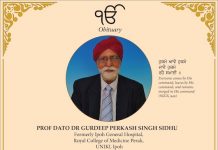
19 Grand Kids, 13 Great Grand Kids, brothers & sister, relatives and friends to mourn their losses.
Saskaar / Cremation: 2pm, 1 May 2022 (Sunday), at the Mantin Sikh Crematorium in Seremban, Negeri Sembilan
Cortege leaves residence at 1.00 pm from No. 27 Jalan Nyior 5, Taman Nyior, 70100, Seremban, Negeri Sembilan
Path Da Bhog & Ardas will be held on 7 May 2022 (Saturday), from 9.30 am – 11.30 am, at Gurdwara Sahib Seremban
Contact:
Sdr Balwant Singh @ 0133413245
Sdr Baldev Singh @ 0133414735
| Entry: 30 April 2022 | Source: Family
ASIA SAMACHAR is an online newspaper for Sikhs / Punjabis in Southeast Asia and beyond.Facebook | WhatsApp +6017-335-1399 | Email: asia.samachar@gmail.com | Twitter | Instagram | Obituary announcements, click here
Please know, under NO circumstance am I writing this article to degrade, slander or put down any particular Gurdwara, committee or Giani. I just want to share my observation as to why I think a Gurdwara today is no longer the same Dharamsaal created by Guru Nanak.
I have travelled and visited many Gurdwaras in Malaysia, India and other parts of Asia including in the UK and I see there are countless issues such as fights, control of power, who can and cannot do certain sewa(s), the questionable rituals being carried out in the darbar itself, lighting of jyot/ deewa, putting up framed Guru’s and some saintly person’s photos, etc (the list goes on)…
Today, many Sikhs (especially the younger generation Gen Y & Z) are questioning everything. They are not getting answers as they are being told to simply listen and obey. The outcome of this mentality of the elders not having answers to their questions, or worst still, trying to answer illogically or giving answers that do not make any common sense, has somewhat created a ‘disconnect’ a vacuum in the minds of our children about Gurdwaras.
Our children simply can’t fathom the countless rituals and religious dogmas being practiced today. How do I know this? Because, I have 2 growing up kids aged 11 and 13 and they asked me some of these questions too, which I have tried to pen the answers to in this blog post.
So, what is the REAL role of a Gurdwara? How can 21st century children and youth see themselves getting connected with a Gurdwara?
PLACE OF WORSHIP
First, let’s try to understand the meaning of the word ‘gurdwara’. If you type the word Gurdwara in Google, you will probably see a similar search result like the one below:
Wait a minute! What?
A Gurdwara is NOT a Sikh place of worship! Someone please update Google on this.
Sikhs do not need a specific place of worship because according to Guru Nanak’s philosophy, God resides in us, in His entire creation. God (the Lord, the light, creator of the Laws of the Universe, which governs EVERY living thing, Hukam) is Omnipresent.
God does NOT reside in a particular place or in a building like in a temple, in a church, in a mosque or in a gurdwara! The whole world and this entire creation is His place of worship!
Guru Nanak made this very clear when He recited the ‘Aarti’ during one of his travels (udaasi) to Jagannath temple in Puri, Odisha (east of India).
Guru Nanak observed that the worshipers (devotees) of Jagannath (Lord Vishnu) were singing praises with candles lit on a plate and were moving them in a circular motion while facing Lord Vishnu’s idol.
Instead, Guru Nanak, went into the open field and composed and sang the ‘Aarti‘ facing the entire creation, while Bhai Mardana (Guru Nanak’s companion) played the rebab.
The devotees were shocked to see how Guru Nanak was singing the Aarti so melodious and beautifully, that too without any plate of candles in His hands. What did this even mean? They were bewildered.
Meaning: Upon that cosmic plate of the sky, the sun and the moon are the lamps. The stars and their orbs are the studded pearls. The fragrance of sandalwood in the air is the temple incense, and the wind is the fan. All the plants of the world are the altar flowers in offering to You, O Luminous Lord. ||1|| Guru Nanak is saying, You are the dispeller of doubts and this is Your Aarti. Without beating any drums, the Shabad (laws) are prevalent. ||1||Pause||
Whilst Guru Sahib is looking at the surrounding environment and expressing His realization of the how he sees the entire creation as singing the Aarti, we Sikhs have not been able to capture the essence of what Guru Nanak said and did.
Sikh Clergy Doing Aarti Facing SGGS in Gurdwaras
Instead, we have begun worshipping (pooja) Sri Guru Granth Sahib (SGGS).
In many Gurdwaras (especially the ones in India) the clergy, literally lights up candles in a plate and starts to sing the Aarti shabad while moving the candle-lit steel plate in circular motion (exactly the same as how the Hindu priests do in the mandirs). Instead of facing an idol or deity, we are facing Sri Guru Granth Sahib Ji.
Look at the irony of what we ourselves are doing! I’m not even going to get into what the Nihangs do during the Aarti ceremony. Their version is almost identical of what you will find the Brahmin priests do in mandirs and Indian temples. It’s true but it’s a sad truth.
How would you answer your child if he/she were to ask you to explain what the Giani is doing in the above photo? Is this part of Guru Nanak’s Sikhi? What would you answer? Tough one, right?!
Sikhs today are all into the outward appearances, dressing up in white kurta-pyjamas, adorning long beards and kesari colored turbans, putting on the 5Ks as an Amritdhari Sikh, more like appearing to look like Sikhs of Guru Nanak BUT whom are we trying to fool? Our actions are PRECISELY that of a Hindu Brahmin priests!
DOORWAY OF GURU’S TEACHINGS
Guru Nanak Dev Ji established the first gurdwara in Kartarpur back in 1521. Back then, it was called a ‘Dharamsaal’ or Ashram.
Later on, Guru HarGobind Sahib, the 6th Guru, introduced the word ‘gurdwara’ and since then, the name ‘gurdwara’ has been used.
DID YOU KNOW? Guru Nanak’s son, Baba Sri Chand was an outcast son of the Guru? Many do not know this but Sri Chand wanted the Guruship for himself and refused to accept Bhai Lehna (later known as Guru Angad) as the next Sikh Guru. In retaliation, Sri Chand adorned a very different dress, looks and character compared to His father, Guru Nanak. He put on a loin cloth, wore the janeyu (which Guru Nanak out right refused to wear), covered his body in Ash and later on took possession of Guru Nanak’s Ashram and converted it to become the Center for Udasis movement.
The etymology of the term gurdwara is from the words gur (ਗੁਰ) (a reference to Shabad – NOT THE PHYSICAL GURU) and dwara (ਦੁਆਰਾ) (doorway) in Gurmukhi. When put together, the meaning would be doorway of the Guru’s teachings.
Guru Arjan Dev Ji says…
ਮੈ ਬਧੀ ਸਚੁ ਧਰਮ ਸਾਲ ਹੈ ॥ ਗੁਰਸਿਖਾ ਲਹਦਾ ਭਾਲਿ ਕੈ ॥
Mai Badhhee Sach Dharam Saal Hai || Gursikhaa Lehda Bhaal Kai ||
Meaning: “I have established a true Dharamsaal. I’ve discovered the right-minded GurSikhs in this place of learning.”
So, to answer the question, “why are gurdwaras today NOT the same dharamsaals as established by our Gurus?”
The simple, straight-forward answer to this question is because, we Sikhs had for a very long time (for almost 60-years) LOST CONTROL of our institutions to several groups of deviant and anti-Sikhi groups mainly the Udasis, Nirmalas and ‘Sant Babas’ beginning from 1718.
Dr. Karminder Singh Dhillon (Malaysia) has done extensive research on this topic in his latest book “Hijacking of Sikhi” which I’ve had great privilege to read myself. I must say, “a truly brave attempt to reveal the depths of truth, well researched and easy to understand book every Sikh should read!”
The book describes how the plot of the Udasis (beginning with the retaliation of Guru Nanak’s son – Baba Sri Chand) being totally unhappy with his father’s decision of passing the Guruship to Bhai Lehna (Guru Angad) and his subsequent plot together with the Brahmin priests who planned to take control of the Kartarpur Dharamsaal of Guru Nanak with the hopes of luring Sikh followers to accept Sri Chand as the rightful Guru. Sri Chand later created Kartarpur Ashram as the center for Udasi sect and learning. How did the Nirmala priests take control of our literature, our institutions and gurdwaras instilling Snatan, Vedic and Brahmannical beliefs (which we see happening in most gurdwaras today) and later on how Sant Deras mainly the Taksaals wrecked the worst havoc by completely renouncing Guru Nanak’s unique philosophy and propogating physical saroop worship of SGGS among other damages. A truly well-written book.
Baba Banda Singh Bahadur gained a stronghold for 10-years (from 1708 – 1718) but sadly his reign came to an abrupt halt (likely due to conspiracies created by power hungry and greedy Sikhs within the army itself). Many were jealous of Baba Banda Singh’s prowess and his ever-growing support of the Sikh communities throughout Punjab and India.
By this time Baba Banda Singh had taken over many major cities and towns in Punjab. So, it is likely these evil-hearted individuals conspired with the British government to grab power and control away from Baba Banda Singh. This, I believe lead to the capture and murder of Baba Banda Singh Bahadur, his children, countless families as well as his loyal members of the army. Most of them had actually fought the same battles side by side with Guru Gobind Singh.
So, coming back to the question, what is a Gurdwara meant to be?
1. Place to receive spiritual wisdom
I think this is one of the most important functions of a gurdwara – to read/listen, understand and then apply Guruji’s teachings in ones life thru Shabad Gurbani. In the past, during the times of our Guru, a lot of emphasis used to be put towards Gurbani Vichaar (contemplation and understanding of Guru’s teachings). In fact, when Guru Nanak himself in Kartarpur, spent hours on with the Sanggat (congregation) imparting ‘true’ spiritual knowledge and true knowledge (sacha gyan). Back then, many followers of Guru Nanak were not even Punjabis or Sikhs by birth. They came from various backgrounds and race ethnicity. Some were Hindus, some were even Muslims but because Guru’s Nanak’s message struck a UNIVERSAL chord, all accepted His teachings and sermons with an open heart.
2. Place to practice equality and selflessness
During Guru’s time, anyone and everyone was welcome to the Dharamsaal. It didn’t matter if you were rich or poor. One was NEVER to look down upon others based on their gender, race, skin color etc. Guru Nanak was especially strict about this. Knowing the only way to break this vicious caste system, the guru introduced selflessness in the form of ‘sewa’ (service) to mankind, NOT just in the gurdwaras but also in our day-t0-day living. Did you know, in Kartarpur, Guru Nanak used to cook and serve ‘langgar’ (meals) for the pilgrims who visited the dharamsaal? It is true! In fact, NO one was on any kind of wage or salary. Everyone volunteered to be part of something so remarkable. They gave out 10% of their incomes as ‘dasvandh’ which was used to run the day to day operations of the dharamsaal and to feed and give shelter to the needy. The sewadaars had NO ulterior motives like wanting to gain popularity, control of the Dharamsaal, politics etc, like the way we see in today’s Gurdwaras.
3. Place for community resources and healthcare
During the times of our gurus, (and even till today in some gurdwaras in the world), the dharamsaals used to act as a community center providing services such as health care, family guidance, consultation, Punjabi classes and collaboration. In fact, free medicine and healthcare was given to anyone who needed medical attention regardless of their gender, race, caste, age, religion or social status.
STATE OF GURDWARAS TODAY
1. Too much power given to committee or clergy (Giani)
Over the last three hundred years (303) or so, we Sikhs have been very unfortunate to have our gurdwaras taken over by the Udasis, Nirmala Mahants and Sant Babeys.
It took Guru Nanak and the other Sikh gurus close to 200-years to abolish the caste based system and rituals but either due to circumstance or probably due to our own ill-preparedness and naivety, we lost control of the gurdwaras to outsiders for many-many years. This is probably why till today, many Sikhs worship Guru Granth Sahib in its physical form. We spend lots of money buying expensive rumaleys (coverings), langgars, donations etc, but we’ve NEVER lifted the rumaleys and read the Divine Shabads of our Gurus in Guru Granth Sahib.
In fact, we carry out rituals and practices which our Gurus have refrained us from doing and which Guru Granth Sahib Ji condemns. The worst part of all, Gianis and gurdwara committee use emotional tactics to lure us into the ‘guilt trap’ of parting with our Dasvandhs and donations to do programs and Akhand Paaths or Sampat Paaths.
Why? So, that they can build more than required building structures, pointless renovations, all in the name of religion. But how about the learning and deciphering of Gurus messages within Gurbani? No one has time for that!
2. Akhand paaths and Gurpurabs outsourced
I know of a particular gurdwara here in Malaysia where they openly advertise everyone should do ONE Akhand Paath a month! They’ve even printed and distributed brochures of all the different Paaths the gurdwara can undertake together with the breakdown of prices. Come one. Where is this coming from? I mean some of us can’t even find time to recite Nitnem everyday, how can they expect families to do ONE Akhand Paath a month? But probably thats the plot of the clergy and committee.
Since we are not able to carry out and do the Akhand Paaths ourselves, outsource it! So, we end up paying the Giani and his team to do it ON BEHALF OF US! This is NOT based on Sikhi or Guru Nanak’s teachings. The clergy can even go on to say, the families who do this Akhand Paaths with them, participating occasionally, will get their problems resolved and they would receive rewards (pun) in the after-life.
Do you know why some Gurdwaras and their Gianis are rich? Because, they’ve made this whole Paath recitation a commercial act. One Akhand Paath can bring in say RM2500 for the Gurdwara, minus the ration which some charge separately. How much can 10 Akhand Paaths a week earn the gurdwara?
RM25,000 x 4-weeks and that’s a whopping RM100K p/month just from Akhand Paaths! It’s a HUGE money making business, isn’t it? Of course, during the COVID19 pandemic, the gurdwaras made some loses as they could not get the crowd to attend Gurdwara functions but its nothing compared to what they make during normal times. You can do the math yourself.
3. Sunday Gurdwara – family get-together
Have you been to a Sunday program in your local gurdwara? I don’t know about you, but as a child, I used to enjoy attending Sunday programs. Why? Because I get a chance to meet and play with my friends, not to mention the free delicious langgar I get to eat after that.
The Giani will be singing one shabad after another for about 1-2 hours and then he would share some mythical story (which he probably heard from his grandmother) and worst of all, they do it so confidently, as if the story is part of Gurbani. I’ve nothing against story-telling, but most of their stories are nothing but concocted tales and lies.
Either the Giani or an invited ‘raagi jatha’ (professional singers) who will do the kirtan with the aim of collecting the most ‘shabad peth’ (money). On several occasions, when I had the chance to attend Sunday programs, I realized the number of people sitting in the langgar hall always outnumbered the ones sitting in the ‘darbaar’ (main hall).
We’d rather sit in the langgar hall, gossiping, instead of sitting in the main hall listening to kirtan. But I cannot blame the Sanggat entirely either. We get Gianis who are not well trained, who themselves have not understood Guru Nanak’s teachings and have made practically NO attempts to apply the teachings of our Gurus in their own lifes. They say something but do something else.
I’m sure you’ve heard or seen first-hand some of the lives of these so called Gianis. At the end, they get caught with their pants down, drinking, smoking, womanizing, telling false tales etc. Some of these Gianis even tell us to belief in miracles and say our Gurus used miracles and had super-natural powers.
Most are trained by deviant centers like the Damdami Taksaal where they use the Fareedkoti Teeka, Sooraj Prakash Granth, Gurbilas Patsaahi 6, and countless other anti-Sikhi texts and books to train the clergy. Not a surprise then why many sanggat members, including the youth have become ‘disconnect’ and are uninterested in attending Gurdwara programs anymore.
4. Wrong concept of Langgar
Are we deserving to eating Guru-Ka-Langgar? I don’t think so. Guru Nanak established the concept of langgar to feed the poor and abolish the caste system because everyone had to sit together to have their meals. Even if you were a king, you’d still have to sit with the rest. But today, you will notice a select few would sit on the floor separately whilst the rest sit on tables and chairs. Where is the unity in thought here? Moreover, today’s langgar is being given to the already well fed and some of the dishes served are probably more expensive than what one would have in a restaurant. Do we need such an extravagant menu for langgar?
5. Gurdwaras as profit centers and elections
Did you know all gurdwaras are registered as non-profit organizations? But to be honest, Gurdwaras today operate like a large corporation with profits in mind.
The committee conduct their roles as if they are running a business or a shop. They go on collecting and keeping Sanggats funds and when it comes to helping out a poor family or to provide funds for a child’s education, they say, they have NO funds!
Every once or twice a year, they carry out elections to vote in a new president. But, instead of passing the baton over peacefully and giving a chance to others to lead, they are busy back-stabbing one another, trying to get votes from the Sanggat. Instead of helping the new president and committee to a smooth take over, they squabble and fight, throwing tantrums and even sometimes ending up with fist fights. I’m sure you’ve heard of police being called in to calm the crowd during an annual gurdwara election? How embarrassing right?
Is there a solution?
Yes! There are many solutions, provided we make a concerted effort to revisit our roots of Sikhism first and study the core values and principles taught to us by our Gurus. Then and only then, can we re-purpose the existing gurdwaras.
We can easily put the blame on Akaal Takhat, SGPC, Taksaals, Sant Babeys, Jathedaars etc but truthfully, the blame should be upon us, the Sikh sanggat. You may ask why? Because, we are split in thought and action. We have different viewpoints of many essential basic tenets of Sikhi. There is a saying, “united we stand, divided we fall”. We are either united in thought and action or we will fall!
We should ourselves recite Gurbani, understand and apply the teachings for ourselves first then share it with our close ones and family before attempting to go out and teach others. Why is this essential? Because Gurbani is meant to elevate ones mind and bring about positive characteristics, divine personalities. Without which, we will always struggle to decide between right and wrong, good and bad deed, selfishness or selflessness.
We need to choose our leaders wisely. We cannot expect a corrupt leader to lead and govern a Gurdwara because, corrupt beings are selfish, greedy and only think for themselves.
We need to bring in well-trained and English learned Gianis. Ones who can speak, read and write English as well and who are trained to view Gurbani from the standpoint of practical living – NOT sharing fake and concocted fairy tales. This will certainly help the younger generation who will stand to benefit from English explanations of Gurbani during Kirtan and Katha sessions in the Gurdwara.
Like a said, the list of possibilities is long. We need to start somewhere. We need to transform our own perceptions of lots of things and start seeing Guru Nanaks Sikhi as a practical, logical and transformational path. We need to make a firm stand to protect what’s left of our Gurdwaras and rid the rituals and senseless activities that has nothing to do with the minds elevation.
We are smart beings. Our youth and the next generation need to see Gurdwaras as REAL centers of learning or else, it’s going to be a downward spiral. In time to come, no youth will step into a Gurdwara. In the next millenium, we might lose our Gurdwaras entirely. How?
The Gurdwara land we are all so proud off is given to us by the local authorities to be used as centers of learning and prayers. But it is not written in stone that they cannot take the land and the buildings back. When the government sees there is not much of activity happening and nothing fruitful is being done to help the youth and the community, they might take our Gurdwaras back and use it for something else.
I hope we will not let this happen!
About the Author: Amarjit Singh Gulati, who runs a Malaysian-based blockchain academy and manages a software solutions company, blogs on Sikhiat JeevanJach.com.
ASIA SAMACHAR is an online newspaper for Sikhs / Punjabis in Southeast Asia and beyond.Facebook | WhatsApp +6017-335-1399 | Email: asia.samachar@gmail.com | Twitter | Instagram | Obituary announcements, click here
Manjodh Singh and fellow Sikhs in uniform at the Vaisakhi 2022 event in Toronto
By Manjodh Singh | Canada |
April 24th 2022. #KhalsaDay #Toronto
Grew up attending this event every year and this past weekend, I filled the shoes of law enforcement and witnessed the great joy of officers in uniform.
Every year across Ontario, Sikh Canadians celebrate Vaisakhi (Baisakhi) – also known as Khalsa Day.
I was extremely fortunate to volunteer and do seva (selfless service) by complying #lawenforcement and #corrections duties on a such an auspicious day.
This was a great opportunity to remember, celebrate and educate communities about Sikh Canadians and the important contributions they have made and continue to make to Ontario’s social, economic, political and cultural fabric.
Photo taken by: Amy Fernandes.
Adapted from Manjodh Singh’s entry at hus LinkedIn page. He is a correctional officer at Ontario Ministry of the Solicitor General
ASIA SAMACHAR is an online newspaper for Sikhs / Punjabis in Southeast Asia and beyond.Facebook | WhatsApp +6017-335-1399 | Email: asia.samachar@gmail.com | Twitter | Instagram | Obituary announcements, click here
Prof. Sukhmander Singh with students from Santa Clara University – Photo: SCU website
By Deborah Lohse | United States |
Each year, graduates of Santa Clara University’s civil engineering program receive a personally signed paperback book, Monkey Wisdom, from the elder statesman of that department— Sukhmander Singh, who has been teaching at SCU for 36 years.
The book contains fable-like stories—most featuring monkeys—that Singh has told to his students over the years whenever he thought they needed a reminder about the merits of focus, perseverance, or personal values. A story about a donkey stuck in a well with dirt being shoveled on him, for instance, turns into a lesson about being able to rise above challenges that rain down in every life. Having grown up in a Sikh Indian farming family which never expected him to go to college—much less get a Ph.D. and become a beloved professor—it’s a lesson Singh feels deeply, and wants to pass on to students.
“I describe him as a ball of sunshine,” said Vanessa De La Rosa, a junior civil engineering student and assistant to Singh. “He can really tell when students are going through a hard time, or when they are stressed out. He knows what they need to hear.”
That unceasing care for his students by Singh—who teaches geology and geotechnical engineering—touched one family so much that they recently donated $3 million to create the Sukhmander Singh Endowed Professorship in Civil, Environmental, and Sustainable Engineering. The professorship will be awarded to a Santa Clara educator who—like Singh—has distinguished themselves academically and exemplifies the highest ideals and values of a Jesuit education, among other qualifiers.
Santa Clara currently has over 50 endowed professorships, including the Wilmot J. Nicholson Family Professorship, which Singh held for 25 years. Most endowed professorships are named in honor of generous donors or former professors—not typically for professors living and working at SCU.
“It’s extremely rare for a professor to be honored in this way,” said Elaine Scott, dean of the School of Engineering. “It goes to show the impact of our profession on students can be very long lasting and profound.”
“An endowed professorship is a tremendous validation of the quality of education our students are receiving,” said Ed Ryan, acting provost of Santa Clara University. “It will help ensure continuity of excellence in civil, environmental, and sustainable engineering course offerings for generations to come.”
Among his peers, Singh is known as the consummate faculty “connector” on campus—championing new professors, especially those from other countries, and advocating for engagement and cultural awareness between U.S.- and foreign-born professors.
Nam Ling, who now chairs the computer science and engineering department, became friends with Singh when both were younger professors in relatively small departments. Singh would actively support his friend, including nominating him for awards, and would encourage all new faculty members, especially foreign-born, to engage with their peers and get noticed for their work.
“Many foreign-born professors are low-key, soft-spoken, and may not speak up if something is wrong or not quite right,” says Ling, whose department now has the largest enrollment in the School of Engineering. “Sukhi is a bit different— more outspoken, willing to speak up.”
For instance, Singh would regularly point out when a qualified person was being overlooked for professional opportunities, and raised concerns if those denied promotions, awards or leadership opportunities don’t receive the honest feedback they need to improve.
“We should be truthful, but also diplomatic and kind,” reasoned Singh. “It will help people.”
Read the full story, ‘An Endowed Honor’ (Santa Clara University website), here.
ASIA SAMACHAR is an online newspaper for Sikhs / Punjabis in Southeast Asia and beyond.Facebook | WhatsApp +6017-335-1399 | Email: asia.samachar@gmail.com | Twitter | Instagram | Obituary announcements, click here
Ravneet Nandra’s first presenting stint at ITV Central on 27 April 2022 – Photo: Videograb, IVT Central
By Asia Samachar | Britain|
Award-winning British journalist Ravneet Nandra is full of excitement after accomplishing her latest target. And she shares the feeling in an update at her LinkedIn profile.
“I thought I’d share my first presenting stint at ITV Central!…I presented the lunchtime bulletin after weeks of pestering the newsroom to practice before and after shifts. Thanks to everyone who helped me make it happen and I hope to present more in the near future,” says the ITV News Central senior production journalist.
Nandra is the winner of the Outstanding Young Journalist at the Asian Media Awards 2020.
Rav, as she calls her herself in her blog entry, said she studied in West London at the first state Sikh School in the UK-Guru Nanak Sikh Academy– for seven years. She found her love for journalism when she joined Birmingham City University‘s student TV and Radio society- ScratchTV.
Whilst living in Birmingham, she began writing articles for Naujawani.com – an opinion website about Sikh and Punjabi current affairs, culture and society.
It was in her undergraduate degree of English Literature where she was certain of fulfilling a career in journalism. In 2015 she began a Masters in Broadcast Journalism at City, University of London. At the same time, she freelanced at BBC Asian Network as a reporter.
ASIA SAMACHAR is an online newspaper for Sikhs / Punjabis in Southeast Asia and beyond.Facebook | WhatsApp +6017-335-1399 | Email: asia.samachar@gmail.com | Twitter | Instagram | Obituary announcements, click here
Gurbax Singh Malhi (right) earned the distinction of being Canada’s first turbaned Sikh MP in 1993. Other turban-bearing MPs to follow suit (L-R) Randeep Sarai, Darshan Singh Kang and Iqwinder Singh Gaheer
By Prabhjot Paul Singh | Opinion |
October 25, 1993 would go down in the annals of history of the Canadian House of Commons as a golden letter day. It was on this day that Canada earned the distinction of electing its first turbaned Sikh MP. The honor went to Gurbax Singh Malhi as he was declared successful from Bramalea-Gore-Malton riding.
Though two more MPs of Indian origin – Harbance (Herb) Singh Dhaliwal and Jagdish Bhaduria – also made their debut in the Canadian House of Commons simultaneously, but the spotlight was on Gurbax Singh Malhi. Since then, no Canadian Parliament has been complete without a turbaned Sikh represented on it.
Starting with three MPs in 1993, now the Indo-Canadian community has grown six times in its strength in the House of Commons. It represents all three major parties – the ruling Liberals, the main Opposition party the Conservatives, and the third major party NDP headed by an Indo-Canadian Jagmeet Singh. Incidentally, Jagmeet Singh is the lone Indo-Canadian NDP in the current House of Commons.
Of 42 MPs of Indian origin elected to House of Commons since 1993, Navdeep Singh Bains, Tim Uppal, Jagmeet Singh, Randeep Sarai, Harjit Singh Sajjan, Darshan Singh Kang, Raj Grewal, Jasraj Singh Hallan and Iqwinder Singh Gaheer, are among those who earned special limelight because of their colorful turbans.
Incidentally, Gurbax Singh Malhi has till date remained the longest serving Sikh MP representing the Liberals. He was elected five times starting in 1993 till he lost the 2011 elections. Otherwise, Deepak Obhrai, who was born in Tanzania, earned the distinction of longest serving Canadian MP of Indian origin. He retained his House of Commons seat for seven consecutive terms mostly as a nominee of Conservatives.
While Gurbax Singh Malhi, Jag Bhaduria and Herb Dhaliwal were the first representatives of Liberals in Canadian Parliament, the honor for giving representation to Indo-Canadians in the House of Commons on behalf of Conservatives went to Deepak Obhrai and Gurmant Grewal. Subsequently, Jasbir Singh Sandhu and Jinny Jogindera Sims were the first Indo Canadians to represent NDP in the Canadian Parliament.
Women of Indo-Canadian descent did not take along to reach Ottawa’s Parliament Hill. Ruby Dhalla (Liberal from Ontario) and Nina Grewal (Conservative from British Columbia) became the torch bearers. They were followed by Jinny Jogindera Sims (NDP).
Sonia Sidhu, Ruby Sahota, Kamal Khera, Bardish Chagger and Anju Dhillon created ripples when they all made their entry into the 42nd Parliament and are all continuing in the current 44th Parliament. In the 43rd Parliament they were joined by Anita Anand, the first Indo-Canadian woman politician to hold the important portfolio of Defense. Also a new entrant was Jag Sahota, the ninth woman of Indian origin to enter Canadian Parliament.
These Canadian MPs of Indian origins have several other firsts to their credit. For example, Gurmant Singh Grewal and Nina Grewal were the first couple to sit in the same House. Herb Dhaliwal was the first from the group to be inducted in the Canadian Cabinet as a Minister for Oceans. Many of them have remained Parliamentary Secretaries attached with important ministries.
In the previous Liberal Government, Harjit Singh Sajjan, became the toast of not only the Indo-Canadian community but also of the rapidly growing Indian Diaspora after he was named the Defence Minister of Canada.
Bardish Chagger hawked media headlines on becoming the first woman leader of the House of Commons. And late last year, Anita Anand stole the limelight as the first Indo-Canadian woman to hold the portfolio of Defence Minister. Incidentally, the last two Liberal Governments had an Indo-Canadian as Defence Minister.
There have been Indo-Canadians who created history both in provincial and federal politics. The shining example has been of Ujjal Dosanjh who after his phenomenal rise as the first Indo-Canadian Premier of British Columbia later held the portfolio of the Canadian Health Minister.
A couple of MPs, including Jinny Jogendra Sims and Parm Gill, later made their debut in provincial politics and held positions as Cabinet Ministers in British Columbia and Ontario, respectively.
Amarjit Sohi, who held an important cabinet portfolio in the previous Justin Trudeau government is now a Mayor of Edmonton in Alberta since last year.
Left ro right: Harjit Singh Sajjan, Bardish Kaur Chagger, Navdeep Singh Bains and Anita Anand.
MPs OF INDIAN ORIGIN
Gurbax Singh Malhi
Harbance (Herb) Singh Dhaliwal
Jag Bhaduria
Deepak Obhrai
Gurmant Grewal
Rahim Jaffer
Nina Grewal
Ruby Dhalla
Ujjal Dosanjh
Navdeep Bains
Sukh Dhaliwal
Tim Uppal
Jinny Jogindera Sims
Devinder Shory
Jasbir Sandhu
Bal Gosal
Parm Gill
Joe Daniel
Amarjit Sohi
Jagmeet Singh
Gagan Sikand
Sonia Sidhu
Jati Sidhu
Bob Saroya
Randeep Singh Sarai
Ramesh Sangha
Harjit Singh Sajjan
Raj Saini
Ruby Sahota
Kamal Khera
Darshan Singh Kang
Raj Grewal
Anju Dhillon
Bardish Chagger
Chandra Arya
Maninder Sidhu
Jag Sahota
Jasraj Sigh Hallan
Anita Anand
Iqwinder Singh Gaheer
George Chahal
Parm Bains
To be concluded.
Prabhjot Singh is a veteran journalist with over three decades of experience covering a wide spectrum of subjects and stories. He has covered Punjab and Sikh affairs for more than three decades besides covering seven Olympics and several major sporting events and hosting TV shows. For more in-depth analysis please visit probingeye.com or follow him on Twitter.com/probingeye
ASIA SAMACHAR is an online newspaper for Sikhs / Punjabis in Southeast Asia and beyond.Facebook | WhatsApp +6017-335-1399 | Email: editor@asiasamachar.com | Twitter | Instagram | Obituary announcements, click here
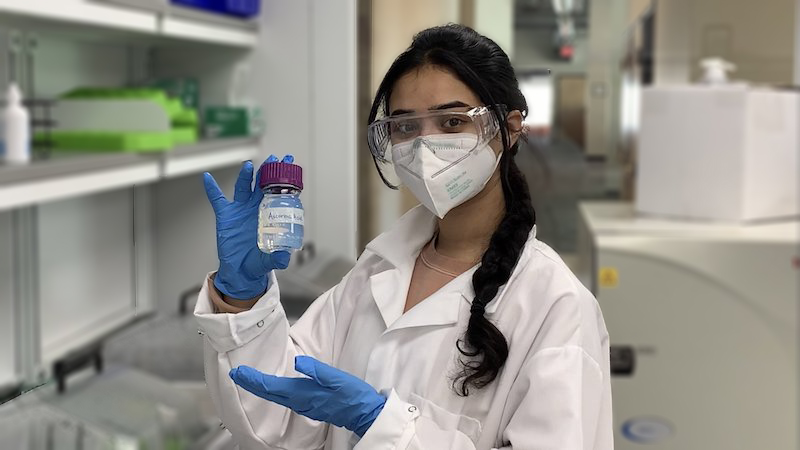
Like father, like daughter. Pria Sawhney emerged gold winner of the 2022 Young Edison Challenge for inventing verifiable hand sanitizer called Vizuell.
The award celebrates student innovators who bring to life Edison’s values by providing innovative solutions to problems displayed within their communities.
Pria’s invention is an alcohol-based, verifiable hand-sanitizer that decolorizes after initial application. Through temporary visual cues, health care workers can ensure total hand coverage, and the casual observer can verify proper sanitization. Vizuell works to tackle healthcare-associated infections and transmission of COVID-19, according to an entry at the award website.
She comes from Lexington High School in Massachusetts, US.
Her father, Amarpreet Sawhney, is a founder of a number of health technology related companies, according to his LinkedIn profile.
He is the chairman and CEO of Instylla Inc which is developing new liquid embolics for tumor embolization and hemostasis. He is also CEO of Rejoni Inc which is developing products to prevent adhesions following gynecological interventions. At the same time, he is also the founding partner and CEO of Pramand LLC, which is developing products for surgical sealing and hemostasis.
Amarpreet had also been selected as the five most innovative medical device CEOs’ by MassDevice.
ASIA SAMACHAR is an online newspaper for Sikhs / Punjabis in Southeast Asia and beyond.Facebook | WhatsApp +6017-335-1399 | Email: asia.samachar@gmail.com | Twitter | Instagram | Obituary announcements, click here
Indian-born are the largest overseas migrants to have moved to Australia in the last decade, overtaking the numbers coming from China.
India and China continue provide the highest number of permanent migrants to Australia. From 2011 to 2021, Indian-born migrants rose by 373,000, followed by 208,000 from China and 118,000 from the Philippines, Australian Bureau of Statistics data showed Tuesday. In the same period, 38,000 Malaysian-born moved to Australia.
England continued to be the birthplace of the largest group of overseas-born living in Australia, constituting 3.8% (967,000) of the population. They are followed by Indians (2.8%), China (2.3%), New Zealand 2.2% (600,000) and the Philippines 1.2% (311,000). Malaysian-born are at the eight spot (172,000).
Latest statistics show that 7.5 million people resident in Australia in 2021 were born overseas, making up 29.1% of the Australian population.
England (967,000) continued to be the birthplace of the largest group of overseas-born living in Australia.
Those born in India (710,000) were the next largest group but had decreased by 13,000 people during the year. Chinese-born (596,000) was the third largest, with an annual decrease of 52,000 people
Almost a third (29.1%) of Australia’s resident population were born overseas (7.5 million people) in 2021, down from 29.8% a year earlier (7.7 million people), according to data.
New Zealand (NZ) citizens also feature highly in the number of settler arrivals, but they are not counted under Australia’s Migration Program unless they apply for (and are granted) a permanent visa.
ASIA SAMACHAR is an online newspaper for Sikhs / Punjabis in Southeast Asia and beyond.Facebook | WhatsApp +6017-335-1399 | Email: asia.samachar@gmail.com | Twitter | Instagram | Obituary announcements, click here
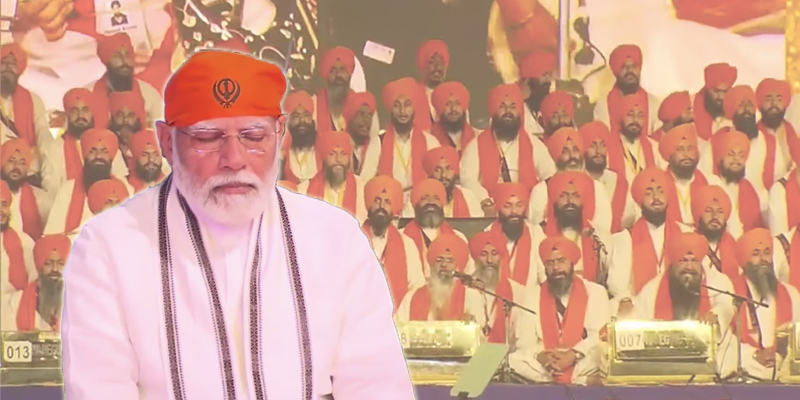
India state organised event bringing together 400 raagi on stage at Red Fort, New Delhi, to mark the birth of Guru Tegh Bahadur on 21 April 2022, with PM Narendra Modi as the guest of honour. -Photo: Videograb from video shared at Modi Facebook page
By Gurnam Singh | Opinion|
2024 marks the 40th anniversary of the declaration of war against the Sikh Punjabi nation by the forces of the Indian state. This began with the army assault on the Darbar Sahib in Amritsar and the deaths of thousands of civilians in what is infamously known as Operation Blue Star. This was followed by 10 years of state terror resulting in the extra judicial murders of thousands more of innocent people. The up shot of this oppression was a demand for a separate Sikh state in Northern India called Khalistan and a global Sikh liberation movement.
But tragically 38 years have passed and not only have we progressed little towards this ambition. Indeed, the dream of liberation is as elusive as ever, those guilty of extrajudicial killings of innocent Sikhs remain unpunished, the Sikh genocide of November 1984 remains acknowledged and Sikh political prisoners languish in jails despite having served many years in excess of their sentences. There are many reasons why we appear to have failed in our quest for justice. Sikhs have no shortage of courageous warriors prepared to sacrifice their lives and livelihoods, but I would suggest the most significant reason for our failure is our unique capacity to be co-opted by the opposition.
One such example is the U.K. based self-proclaimed President of Khalistan in exile, Sewa Singh Lalli. Whilst I respect his past contribution to the Sikh liberation struggle, I was extremely disappointed to read a recent Facebook post by him in which he showered praise on Narendra Modi, the Indian Prime Minister and Home Minister Amit Shah for their service to Sikhs.
This praise comes against the background of political manoeuvres by the Indian intelligence agencies where meetings between the so-called Khalistanis and the Indian state have been taking place. I do not doubt the initial intentions of those Khalistani leaders, such as Sewa Singh Lalli and Ripudaman Singh Malik, who have in the past given much to the struggle for justice, but sadly, like a venus fly trap, though I may be wrong, on the surface it seems like, having been enticed with warm words and hospitality from Delhi, they have been become co-opted into the bigger Hindutva project.
This and other recent events surrounding the demise of the Akali Dal, RSS takeover of the SGPC, the closeness of Haryana SGPC President Baljit Singh Daduwaal and the huge BJP sponsored events held at the Red Fort, Delhi and Panipat, Haryana to commemorate the 400 Anniversary of the birth of Guru Tegh Bhadur Ji, have left many Sikhs wondering what their political future is! And the real danger is that fragmentation and factional infighting amongst Sikhs is likely to increase; and this can only benefit the Hindutva Indian state, which, like all imperial powers, thrives on a divide and rule strategy.
But the highly symbolic sight of self-proclaimed Khalistanis praising Modi and the BJP has brought the whole Khalistan movement into disrepute. It has left many wondering if these pronouncements are part of a deeper strategy by the Indian state, as was the case with the British before them, to cement its hegemony within Sikh Panthic circles.
I have no hesitation in speculating that the BJP, facilitated by the discredited former DSGPC President Manjinder Singh Sirsa, has not suddenly become receptive to the demand for Khalistan, but is more concerned with undermining Sikh demands for sovereignty whilst simultaneously extending the reach of the Indian Hindutva nationalist project. It’s worth noting that Panjab and Delhi are two states that have consistently rejected the BJP and, along with Haryana and Western UP, as we saw with the farmer’s movement, have formed the backbone of opposition to the Hindutva project.
So, what lesson can those like me who have and continue to fight for freedom, justice and self-determination in India and elsewhere take from the current maliase? There are many but, in the context of the current political game playing, perhaps we need to reflect on the words of the Roman statesman Marcus Tullius Cicero whose political thoughts shaped the formation of the Roman Empire. An important lesson from history for us today: “A nation can survive its fools and even the ambitious. But it cannot survive treason from within. An enemy at the gates of the kingdom is less formidable, for he is known and carries his banner openly. But the traitor moves amongst those within the gates freely, his sly whispers rustling through all the alleys are heard and shared in the very halls of the government and hearts of the nation itself.”
Nothing changes, even today, but I can only pray and hope there are enough thinking Sikhs who can see and understand this game. And to those who want to pursue the path of dialogue with the Indian State, I say good luck; there is no harm in talking, our history teachers us to be strategic. However, please only offer praise when you have secured some meaningful concessions, otherwise, you simply disincentivise the Government from giving you anything at all and all our efforts will lead to nothing.
Gurnam Singh is an academic activist dedicated to human rights, liberty, equality, social and environmental justice. He is an Associate Professor of Sociology at University of Warwick, UK. He can be contacted at Gurnam.singh.1@warwick.ac.uk
* This is the opinion of the writer and does not necessarily represent the views of Asia Samachar.
ASIA SAMACHAR is an online newspaper for Sikhs / Punjabis in Southeast Asia and beyond.Facebook | WhatsApp +6017-335-1399 | Email: editor@asiasamachar.com | Twitter | Instagram | Obituary announcements, click here |