Indy Singh Hoth makes history as the youngest and the first person of colour to lead the Institute of Chartered Accountants of Scotland (ICAS).
The global professional body for chartered accountants confirmed him for president for a one-year term at its annual general meeting on Friday (29 April 2022). He had served as vice president for 2020/2021 and deputy president for 2012/22.
“I recognise it’s an important moment in many respects and I hope my presence and representation has a positive impact on those in the profession. Being the ‘first’ is always tough and I take that responsibility seriously to represent to the best of my ability,” he said in an update at his LinkedIn page.
Founded in 1854, ICAS claims to be the world’s first professional body of accountants. Today, the body has 23,000 members and 3,700 CA students, according to information at its website.
Indy is the managing director of property company Masonwood and co-founder of consultancy and venture builder Upside Projects.
Prior to that, he was a senior economist with EY in London. He worked across a number of high-profile economic impact studies which influenced public policy and included clients such as the Premier League and Rugby World Cup. Through his passion for social and humanitarian causes, Indy was a trustee and director of Khalsa Aid International, a charity which provides humanitarian aid in disaster areas and civil conflict zones.
In his note,Indy spoke glowingly of his two-decades in the CA role.
“The CA qualification gave me a huge range of opportunities and social mobility that I’m eternally grateful for. Because of it my career has spanned geographies from Europe, Middle East to North Americas. I’ve been able to work on meaningful projects that have made a difference in the sustainability/social impact space. I’ve taken on non-executive/advisory roles to support community initiatives, NGOs and public institutions,” he writes.
In recent years, he said the CA qualification has given him the grounding, confidence and support to strike it in the world of entrepreneurship across technology advisory, arts and real estate, though noting that the ride had been a ‘roller coaster for sure’.
“That’s why ICAS, the profession and its members are so important to me. CAs are rooted in finance but when I see and meet our members, we’re so much more than just ‘number crunchers’. I see business leaders, trusted advisors, creative leaders and entrepreneurs,” he added.
Indy studied economics at SOAS University of London and has a postgraduate degree in entrepreneurship from University of Cambridge.
ASIA SAMACHAR is an online newspaper for Sikhs / Punjabis in Southeast Asia and beyond.Facebook | WhatsApp +6017-335-1399 | Email: asia.samachar@gmail.com | Twitter | Instagram | Obituary announcements, click here
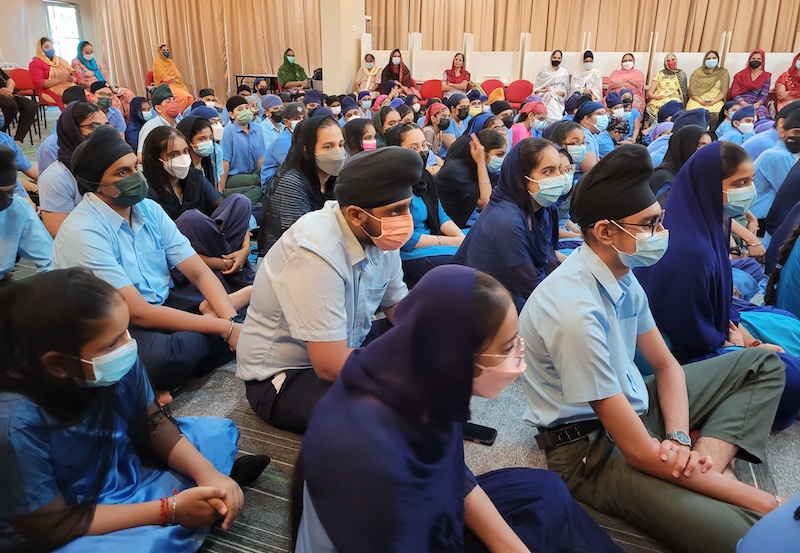
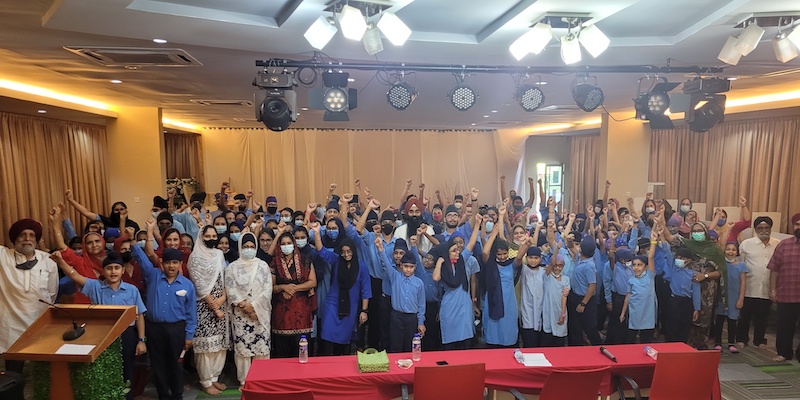
Punjabi language students at Q&A on Sikhi session handled by Inderjit Singh Goraya (Pathankot) in Ipoh in April 2022 – Photo: KDM
By Jaginder Singh Raipatti | Malaysia |
Renowned parcharak Bhai Inderjit Singh Goraya (Pathankot), who is on a Sikhi lecture circuit in Perak, recently held an open discussion and Q&A session at the Guru Nanak Institution Ipoh (GNI) recently.
It was open to GNI Punjabi students and their parents, and Khalsa Diwan Malaysia (KDM) members.
The event on 23 April 2022 kicked off with the rendition of our national anthem, “Negaraku” followed by the school anthem “Guru Nanak School Mahaan”.
After the welcome speech by KDM president Santokh Singh, Inderjit took to the stage and engaged interactively in Punjabi and English with the students, their parents and their teachers.
It was a light-hearted discussion, amusing and entertaining, suited to the age and needs of the students. All questions were attended to, no matter how trivial. The Q&A session was extended, as there were numerous questions from the floor.
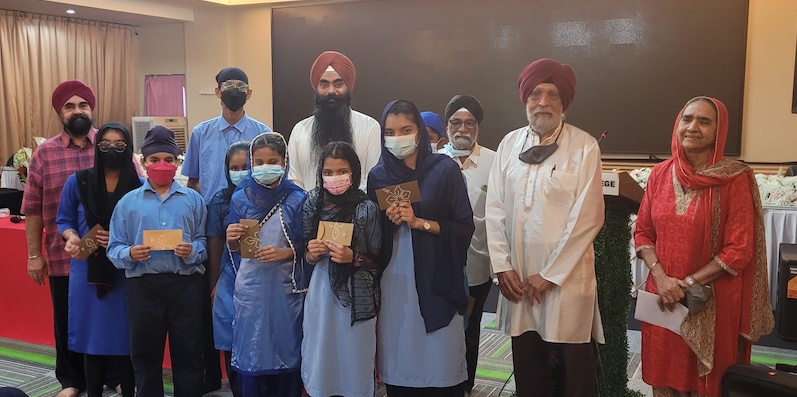
Inderjit also gave away prizes to students who took part and emerged victorious in various language competitions organised by GNI, in conjunction with Vaisakhi 2022.
Punjabi language students receiving prizes after the Q&A on Sikhi session handled by Inderjit Singh Goraya (Pathankot) in Ipoh in April 2022 – Photo: KDM
ASIA SAMACHAR is an online newspaper for Sikhs / Punjabis in Southeast Asia and beyond.Facebook | WhatsApp +6017-335-1399 | Email: asia.samachar@gmail.com | Twitter | Instagram | Obituary announcements, click here
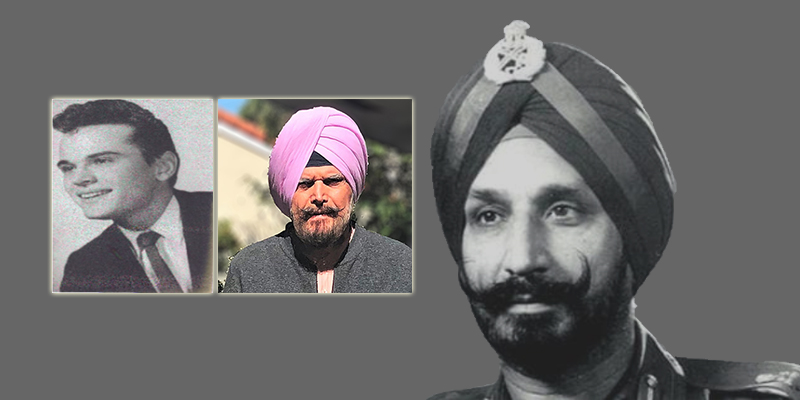
Left: Franklin Paul Tarney (from HS Yearbook) and today. Right: Lt Gen Jagjit Singh Aurora
By Franklin Paul Tarney | Experience | United States |
As a young man, I thought that only other people age and need glasses and get gray hair. I knew intellectually that no one lives forever, but emotionally I thought that I would be the exception! In this essay I will discuss some injustices that I experienced both in and after the military. However, I always remind myself of a buddy from my platoon in Vietnam who returned home only to be physically abused by his drug-addicted son. When that son died of an overdose, the grandson began to abuse him and take advantage of him financially. It is easy to say from a distance that one should not accept this ill treatment, but when it is family, the situation changes. Regardless of unfairness to me in life, there are veterans far worse off.
One of the few times that my Dad was ever wrong was when he said that if I left college, I would never go back – I did go back after Vietnam. I was directionless in college and joined the Marines for discipline and adventure. When I arrived at Marine boot camp – Parris Island, South Carolina in 1965 – I was as much a mystery to myself as the military was to me.
After boot camp, in California, prior my unit’s departure for Vietnam, I was assigned to attend a Vietnam language class. The first person offered this opportunity, was a corporal, who did not want to do it. He thought it would interfere with his “liberty” – his free time. No one else was interested because it involved academics – class work. I worked hard in this class and became fairly fluent in Vietnamese. I was assigned to another Vietnamese language class in Okinawa. Upon arrival in Vietnam, I had so many more opportunities to speak the language and become even more fluent.
Soon, I was attached as an interpreter to a medical outreach program to Vietnamese villagers. I found myself working with Navy physicians and corpsmen (Navy medics) which caused great resentment in my platoon. Their view was that I was a lowly enlisted man like them so why was I interacting with officers in the Navy. The outcome was that the very corporal who turned down the language school opportunity now gave me twice the amount of guard duty as anyone else in my platoon. I had perimeter guard duty every other night. During the day, my language skills assisted in the building of a children’s hospital. Once, I dozed off on guard duty. I managed to get a transfer to a reconnaissance unit after I threatened to write my Dad and ask him to contact our local congressman in New York about my plight. In the recon unit, I became a prisoner-of-war interrogator – quite a transition from interpreting for a medical program and starting a hospital for children. Interpreting for a medical program for Vietnamese villagers made me feel like I was in the Peace Corps. As a P.O.W. Interrogator, I felt like a Gestapo agent.
I returned from the Vietnam War to a polarized country – as it is today. However, back then it was between pro-war and anti-war factions. We came home and were seen by some as war criminals. I had the residual ill effects of exposure to Agent Orange as well as Post-Traumatic Stress Disorder (PTSD) issues. Two acts of real courage gave me inspiration and mitigated my PTSD. One, from my war in Vietnam, but an earlier one from the French in Indochina. First, while in battle in Vietnam – in a position being overrun by the enemy – a radio operator was calling for reinforcements. At that time, back home, there was a cartoon commercial on TV for a breakfast cereal, “Krispy Critters.” A kid would open the cereal box and cartoon animals would come stampeding out of it: elephants, giraffes, lions, tigers, and others. The radio operator shouted into his phone, “They’re on us like Crispy Critters!” Marines were subjected to satchel charges and automatic rifle fire, and yet, they all laughed!
The second source of inspiration for me derived from the French defeat at The Battle of Dien Bien Phu in 1954, which led to America replacing the French in Vietnam. The battle was clearly lost and yet, some Frenchmen still volunteered to parachute into the fight. Some of these volunteers were making their first parachute jump with no prior jump training whatsoever and they jumped at night amidst heavy anti-aircraft fire. I never forgot this and it helped me to focus on an instance of great courage. The phrase “baptism by fire” is often used too casually, such as applied to a person with a new job. This was a soldier’s first time in battle – even if one landed on the ground unscathed – these volunteers were then subjected to mortar and machine gun fire. This story of valor in a lost cause was and continues to be an inspiration for me.
After the war, when I arrived at graduate school, I had a meeting with a professor. He told me he was a WWII veteran who fought in Europe with General Patton. He then said to me, “One day I’ll tell you about a REAL war!”
Demoralized for a time after my return, I happened to learn of the war in 1971 between India and Pakistan over what was East Pakistan, which, after the Indian victory, became Bangladesh. Every night, a Sikh general in the Indian Army would give a TV press briefing here in America. Yes, his turban, long beard, and handlebar mustache were striking, but it was his self-confidence, coupled with no pretentiousness, and impeccable English that also impressed me. India was winning this war, but there was no vanity in General Aurora’s briefings.
Most people who convert to another faith do so for spiritual reasons. In my case, what initially attracted me to the Sikh faith had little to do with spirituality. I was an admirer of the military heritage of the Sikhs. Sikhs became known as “saint-soldiers” given their willingness to resist oppression – be it against themselves or others. The Sikh religion began in India about 500 years ago. Sikhs are neither Hindus nor Muslims. Sikhs believe that one God unites all mankind. Sikhism boils down to three simple practices: humility, forgiveness, and kindness. Good actions are of central importance in the Sikh faith. All human beings are equal and this includes women. I did a lot of research on the military history of the Sikhs and thereby came to appreciate their spirituality. Wearing a turban to cover one’s uncut hair became important to me. The essence of the Sikh faith is transformation.
Judaeo-Christianity worked for my parents. My mother was a devout Roman Catholic. My Dad had a Jewish background from Latvia. When my mother could no longer live on her own in New York City, she came to lived with my wife and me in Florida. She was 94 years old and lived another four years. I told her that if she wanted to go to church on Sundays, I would arrange for her to be picked up, driven to the church of her choice and returned home. She told me that she wanted to worship at the Sikh temple where I worship. Music is central to Sikh worship and Mom was able to read the English translation of our hymns on projected on a screen. She said her prayers in English and Italian and we Sikhs believe that God is multi-lingual.
On the drive taking Mom for the first time to our temple, I explained to her the central importance of the communal meal, called the Langar, which is mandatory after every Sikh religious service. All people, regardless of race or creed are welcomed to partake. As we pulled into a space at the temple parking lot, Mom turned to me and said, “When do we eat?”
Sikhs, both men and some women, are proud to wear the turban, but there are times when they are quite willing to remove it. Many a drowning person has been rescued by a Sikh removing his turban and using it as a lifeline. In 2008, terrorists from Pakistan attacked various places in Mumbai, India including luxury hotels. They also targeted two hospitals, a popular cafe, and a theater. They were looking particularly for foreigners. Almost two hundred innocent people were killed as well as nine of ten of the attackers. There was a turbaned Sikh worker at one of the hotels who was helping shelter some very frightened guests during this terrorist attack. Because of his turban, one English lady thought he, too, was a terrorist. He told her in a very gentle voice that he would remove his turban if that would make her feel better and more secure. She was so comforted by his words, that she told him that he did not have to take his turban off. General Aurora, my initial inspiration in becoming a Sikh, during the 1971 war with Pakistan, is said to have done something amazing and compassionate. True, this is an apocryphal story, but illustrates the Sikh ideal. The General, with his Indian troops, took over an internment camp in which there were many local Bengali women who had been abused by some members of the Pakistani Army. Many of these young women were almost naked. General Aurora removed his turban, tore it into segments and gave them to as many women as possible so they could cover themselves as best they could.
Among the saddest, heartbreaking experiences of my life is being at a supermarket or department store and having people shout out at me “Taliban” or “Osama bin Laden” or “Go back to Arabia!” I was born and raised in New York City and my mother was born in Italy. Yet, when I go to the gym wearing a U.S. Marine Corps bandanna, people come up to me thanking me for my service and welcoming me back home – 50 years later. I suspect that some of those appreciative people at the gym would also shout “Taliban!”
Was I in a war 50 years ago, or as it yesterday? My wife once asked me if I could relive my life, would I have joined the military again. I said, “In a heartbeat!”
Franklin Paul Tarney [a.k.a. Fatehpal Singh Tarney], an ex-Marine of Vietnam era, has been a Sikh for over 40 years. He was very demoralized after the Vietnam War, but Lt. Gen. Jagjit Singh Aurora and his leadership in the 1971 Indo-Pakistani war stimulated by interest in Sikhi. He is proud to be one of the few Western Sikhs to have been president of a predominantly Punjabi Sadh Sangat. A retired history teacher and coach of tennis, soccer, and lacrosse, Tarney is actively involved in interfaith programs in Florida and Michigan.
ASIA SAMACHAR is an online newspaper for Sikhs / Punjabis in Southeast Asia and beyond.Facebook | WhatsApp +6017-335-1399 | Email: asia.samachar@gmail.com | Twitter | Instagram | Obituary announcements, click here
There is a common saying that ‘you are damned if you do and damned if you don’t’. It is used to show how sometimes there are situations where a person can be blamed or considered wrong no matter what he or she does. It reflects an atmosphere of mistrust and even fear, something that I am sure many Sikhs will be able to relate to, especially in today’s social media age where reputations can be made and destroyed by the virtue of a tweet or Facebook post.
A few weeks ago, I attended an invitation-only premiere of the animated movie ‘Supreme Motherhood’, which depicts the life of Mata Sahib Kaur, the wife of Guru Gobind Singh, the 10th and last Guru of the Sikhs. The release of the movie had been keenly anticipated and one could feel a real sense of expectation amongst the 300 or so guests at the Imax Cinema at Millennium Point in Birmingham. What was great about the audience on the night was that it was so varied. We had young and old, male and female, Amritdhari and Sehajdhari. There was a buzz of anticipation as we waited to be let into the cinema.
Along with the buzz, because of some of the adverse reporting about the movie in the media, I could also feel a sense of anxiety. Given that the Shiromani Gurdwara Parbandhak Committee (SGPC) had refused to give their approval amid allegations that the movie was factually inaccurate, I was concerned that we might be seeing a repeat of the events that took place in 2015 concerning the animated film Nanak Shah Fakir based on the life of Guru Nanak. It’s worth recalling that despite winning many awards, following protests from some Sikh groups claiming that it was wrong to depict Sikh figures through actors, and historically inaccurate, Nanak Shah Fakir was banned! There were also questions raised about the character producers of the film and their motives. Interestingly, though the sequence of events was different, almost identical concerns had been raised about the movie Supreme Motherhood.
Arriving at the movie theatre and seeing many familiar faces, and no sign of any protesters, gave me a sense of comfort. I felt reassured that by attending the premiere along with many other respectful Gursikhs, I was not acting against the interests of the Panth. Given the current leaderless and confused state of the Panth, I often feel like the only real source of direction for me is Guru Granth Sahib and my commitment to human rights, especially freedom of expression and belief. Of course, with these freedoms, comes responsibilities, but it is also true that we cannot please all the people all time, so we need to also tolerate differences of thought and opinion.
The morning after attending the movie premiere I did write a short review, which was mostly positive, and posted it on Facebook. But, almost instantly, I received comments from some Facebook friends drawing attention to objections that had been raised about both the content of the movie and the character of those behind the production. To avoid becoming entangled in the controversy, in what can only be described as an act of self-censorship, I deleted the post. Rather than ‘banning’ we should develop the capacity to intelligently challenge those who knowingly or accidentally misrepresent Sikhi.
Since making that choice to delete my thoughts on the Motherhood movie, I have not felt comfortable as it’s not in my nature to stay silent. And so, given that to date the movie has been watched by many Sikhs across the world, and that the views of those objecting to the film and the filmmakers are in the public domain, I felt it was right that I express my thoughts and feelings, too. In doing so, please note, that I am in no way passing judgement on those who were behind the making of ‘Motherhood’, but simply expressing my feelings about the movie itself.
When I was young the only way we could find out about Sikhi was through the Gurdwara. But if I am honest, though I loved to attend and listen to the katha and kirtan, I didn’t understand much and as a result knew very little about Sikh history. But today’s generation, with the advent of the internet and multimedia, are so lucky; there is so much available for them, especially movies like this animation.
Of course, it is not enough to have an animated movie, there is the question of historical accuracy, quality of the script, quality of the picture and sound. I am no expert, but my impression is that Motherhood is perhaps the best animated Sikh movie to date. But I think what impressed me the most was the way it challenged gender stereotypes. As a woman and someone who has always been presented with male role models, seeing a movie where a Sikh woman is depicted as a strong leader of the Khalsa, was truly an eye-opening, inspiring and emotional experience.
I know one of the aims of the producers was to tell the often-ignored stories of women in Sikhi, and they must be congratulated for this. Sadly, much of the Punjabi media depicts women and girls as weak, helpless, and the property of men. So in my mind, both to empower women and young girls, and to give a message to young boys and men about the importance of gender equality, there was a need for a movie like Motherhood. And in this regard, I am sure the movie will have a big impact.
On a personal level, watching the movie was a very emotional experience. Indeed, when Mata Sahib Kaur, dressed in her beautiful Bana, was fighting like a true warrior, I had goosebumps. During the fight scenes, because of the detail of the animation and powerful soundtrack, and the fact that in the past I had done shastra vidya, I almost felt like I was there in the battle scene. Every time Mata Sahib Kaur waved her sword, I felt like it was my arm. The spirit that these scenes awakened within me made me feel so strong, which is difficult to describe; I am sure other women and girls must have felt the same sense of empowerment.
One of the objections raised by the SGPC is that making movies and cartoons depicting the Gurus, is against Sikhi! I find this bizarre given the many depictions of our Gurus in pictures exist already, and animations are nothing more than moving pictures. For sure we should never allow real actors to play the role of the Guru, but besides this, we must move with the times. In today’s multimedia world it is important to make the most of technology to tell our history. And what better character to choose than Mata Sahib Kaur. It is by embracing new technologies that we engage the younger generation.
Ultimately what matters is the stories we tell, and sadly, to date in teaching about Sikh history we have ignored the contribution of women. We Sikhs always claim that there is equality in Sikh, but the way our history is told we focus mostly on the achievements of men. It’s a shame that we talk so little about the role of female heroes like Mata Sahib Kaur and it is so important in today’s world that the next generation is given access to this history, otherwise, they might feel Sikhi is not for them. Why have we forgotten the history of Sikh women is a complicated question, but it was amazing and refreshing to see a movie challenging gender stereotypes by focussing on Mata Sahib Kaur, a leader who led the Khalsa army in such an inspiring way.
As for the protests against the move, no doubt these will rumble on and we will go from one ‘controversy’ to another. For sure the Panth reserves the right to challenge any writer, filmmaker or preacher, who seeks to bring Sikhi into disrepute. However, in the absence of a consensus on a whole range of aspects of Sikh history and tradition, it is difficult to see how this can be achieved. Moreover, any objection must be within the broad principle of freedom of speech, belief and consciousness, something that the Sikh Gurus sacrificed so much for.
Ultimately, the only way to safeguard our history and heritage is to build excellent research and scholarship. It is to broaden and deepen an understanding of Sikhi rather than focus on the surface level and ritualistic aspects, which sadly is increasingly the case. Most importantly, we need to educate the Sikh masses to develop a critical understanding of Sikhi, Sikhi history, Sikhi scripture and Sikh traditions.
New technologies bring with them opportunities and threats. However, what we can’t do is simply ignore these developments and close our eyes. We live in a technological age where we are increasingly getting our knowledge and learning through multimedia. For sure nothing can replace going to the Gurdwara, sitting in the Sangat and listening to kirtan and katha. But, today, by voting with their feet, young people are not attending Gurdwaras and they do not engage with the current crop of Sikh preachers. They get their knowledge and information through a wide range of electronic media and that means we need to make the most of the technology of our age.
Manjit Kaur, a UK-based therapist and counsellor, is a presenter of the 1 Show on Akaal Channel. She can be contacted via email at manjitkaur1show@gmail.com
ASIA SAMACHAR is an online newspaper for Sikhs / Punjabis in Southeast Asia and beyond.Facebook | WhatsApp +6017-335-1399 | Email: editor@asiasamachar.com | Twitter | Instagram | Obituary announcements, click here |
“What you are shouts so loudly in my ears I cannot hear what you say.” – (Ralph Waldo Emerson)
What we are says much more about us than anything we say about ourselves. Only basic goodness in a person makes an impact on others.
We have our role-models in Sikh history who made a massive contribution to the progress of the revolutionary Sikh movement founded by Guru Nanak Sahib. Most did not write autobiographies but others did write about them when the real, positive or negative, impact of their actions became known in due course of history. We remember some as our role models – the Guru-persons and the great Sikhs in history. Sometimes we come across such humble sewadars who leave their impress on our lives.
We also read about those who betrayed community interests at critical times in history. In our own life-time, we try and follow and associate with those we believe to be well-positioned to serve the Panth. Sadly, over the years, some remind us of the Gurbani Panktis:
ਮੈ ਜਾਨਿਆ ਵਡ ਹੰਸੁ ਹੈ ਤਾ ਮੈ ਕੀਆ ਸੰਗੁ ॥
I thought he was a great swan so I associated with him.
ਜੇ ਜਾਣਾ ਬਗੁ ਬਪੁੜਾ ਤ ਜਨਮਿ ਨ ਦੇਦੀ ਅੰਗੁ ॥੨॥
Had I known that he was only a wretched heron from birth, I would have avoided his company. ||2|| (SGGS Ank 585)
Life stories of community role models inspire next generations. I hesitate to use the word leader because the Sikhi concept of true leadership in Guru tradition and Sikh history, is very different from that generally understood. For example, Bhai Lehna (later Guru Angad Sahib) and, amongst the great Sikhs, Kapur Singh (later Nawab) were recognised as role models of Sikhi sewa in humility. They were not leaders as such who claimed some sort of hereditary right to lead or due to their privileged positions of influence with the establishment. In fact, those like Babas Prithi Chand, Ram Rai or Dhir Mal, who did gain influence in the Mughal darbar by promoting themselves or misrepresenting Sikhi, were rejected by the Gurus and the Sikhs.
Humble role models like Nawab Kapur Singh, strengthened the jathebandi (organisation) of the Panth. They recognised and promoted skills and potential and, through succession planning, they produced hundreds like themselves. They set the bar high for Sikhs writing autobiographies. They secured the unity and victory of the Khalsa Panth in the peoples war of liberation in the 18th century.
Thus, like many other Sikh word concepts, leadership in the Sikh tradition is re-defined and needs to be understood using Sikhi-sewa criteria.
Life stories of role models are recorded by historians as biographies. As such, they are an important source of our history and heritage. However, in recent times, the trend is to write own life stories as autobiographies presented in various forms. It takes much humility to talk about own weaknesses, mistakes, missed opportunities and lessons learnt.
Most ambitious individuals with some talent, who single-mindedly maneuver themselves into influential positions with the establishment, are often unaware of the great harm they might have done to the future of the community at critical times. Sadly, there are many such examples in pre and post Indian independence Sikh history. Self-centred individuals exaggerate own successes and limited contribution and blame others for own failures. And so, such a story about self, or My Story, becomes a bit of a mystery to be solved by the discerning reader and future historians.
However, over the years, I have also come across many educational personal accounts. Probably Sachi Sakhi by Sirdar Kapur Singh is one. Another is Soldiers’ Contribution to Indian Independence by late General Mohan Singh of the Indian National Army. Both have been my constant sources of reference in the context of the true story of Indian independence, politics and Brahmanic hegemony.
Neither biographies nor autobiographies should be confused with family heritage and records preserved from generation to generation. There is a wealth of information in old family records and images left by earlier generations. I am still in the process of sorting out my own family documents and images going back well over a hundred years. It is a humbling spiritual experience to be able to look back in time and relate to own family continuum. Family records should be preserved as family treasure so that:
ਪੀਊ ਦਾਦੇ ਕਾ ਖੋਲਿ ਡਿਠਾ ਖਜਾਨਾ ॥
When I opened and looked at the treasure [my family heritage] left by my ancestors,
ਤਾ ਮੇਰੈ ਮਨਿ ਭਇਆ ਨਿਧਾਨਾ ॥੧॥
Then my mind was filled with [spiritual] joy. ||1|| (SGGS Ank 186)
It is a humbling experience and an essential process of orientation in own family and community history.
A biography of a person is his story (history) told by another and not my story (a mystery!) to be read between the lines for the truth. It is an objective account based on independent evidence.
Because, individual performance against the broader historical background, can only be assessed by a trained historiographer, usually when a person is no longer around. In most cases, it is the “true story”!
We should welcome good biographies as part of Sikh history but receive self-promoting autobiographies with caution. In any case, what one is, is generally known and speaks louder than words!
Gurmukh Singh OBE, a retired UK senior civil servant, chairs the Advisory Board of The Sikh Missionary Society UK. Email: sewauk2005@yahoo.co.uk. Click here for more details on the author.
* This is the opinion of the writer, organisation or publication and does not necessarily represent the views of Asia Samachar.
ASIA SAMACHAR is an online newspaper for Sikhs / Punjabis in Southeast Asia and beyond.Facebook | WhatsApp +6017-335-1399 | Email: editor@asiasamachar.com | Twitter | Instagram | Obituary announcements, click here
Path da Bhog: 7 May 2022 (Saturday) at Gurdwara Sahib Alor Setar, Kedah
A Letter From Heaven
I am sending a dove to heaven with a parcel on its wings be careful when you open it Its full of beautiful things Inside are a million kisses wrapped up in a million hugs To say how much I miss you and to send you all my love. Mum I hold you close within my heart and there you will remain To walk with me throughout my life Until we meet again.
Special Thanks
The family of Mdm Balvinder kaur from AlorSetar, Kedah (wife of Sardar Bajit Singh-Ludhiana) would like to express their sincere appreciation and gratitude to the President and the committee of the Gurdwara Sahib Seremban for their support and assistance extended during the recent demise of her mother Madam Sarajit Kaur W/O late Sardar Saudagar Singh at GH Seremban.
A special thanks is extended to Sardar Jasbeer Singh, who volunteered selflessly to drive the hearse from Seremban to Alor Setar.
Thanks to all others who assisted in any way during our time of need
Contact information:
Balvinder Kaur ( Bina ): 019 429 0835 (Daughter)
Baljit Singh: 016 443 5365 (Son-in-law)
| Entry: 1 May 2022 | Source: Family
ASIA SAMACHAR is an online newspaper for Sikhs / Punjabis in Southeast Asia and beyond.Facebook | WhatsApp +6017-335-1399 | Email: asia.samachar@gmail.com | Twitter | Instagram | Obituary announcements, click here
IN SKETCH: Baba Sohan SIngh sketched by Malacca youth Harpreet Singh – PHOTO COURTESY OF GS MALACCA FACEBOOK
By Asia Samachar | Malaysia|
A local movie producer is preparing a short documentary to capture the life and times of Baba Sohan Singh, a former granthi in Malacca who is easily the most famous Sikh in Southeast Asia.
It has been 50 years since he passed away in 1972. The annual programme in his memory will be held in Malacca later this month.
To mark the occasion, movie production house Sri Saheb Production is in the midst of preparing the documentary on the respected Sikh granthi and parcharak.
“If you have a story to tell, get in touch with us. If you old photos, do send a copy to us,” Sri Saheb Production founder Baldev Singh Uppal said in an appeal to the community at large.
Baldev can be reached at +6016-9077555.
(Readers can also email photos/videos to asia.samachar@gmail.com).
ASIA SAMACHAR is an online newspaper for Sikhs / Punjabis in Southeast Asia and beyond.Facebook | WhatsApp +6017-335-1399 | Email: asia.samachar@gmail.com | Twitter | Instagram | Obituary announcements, click here
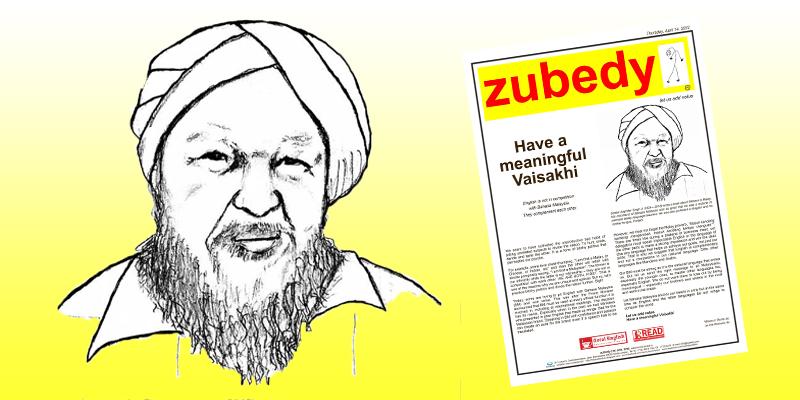
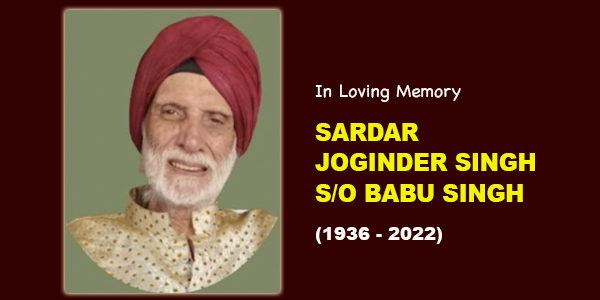
Meet Sardar Joginder Singh (1924 – 2018). The Malaysian-born held the distinction of being one of the few people in the world to have written a Malay book on the Sikh faith.
Unity advocate Anas Zubedy and his team anchored on Joginder’s astounding language talent to put across their salient message for this year’s Vaiskahi celebration.
“His command of Bahasa Malaysia was so good that he was a lecturer to potential Malay language teachers. He was also proficient in English and his mother tongue, Punjabi,” they wrote, tagged with a sketch of later-day Joginder.
The underlying message with the team’s Vaiskahi 2022 greeting was this: English is not in competition with Bahasa Malaysia. They complement each other.
“Our BM must be strong as it is the national language that unites us. But let us send the right message to all Malaysians, especially the younger ones, to master other languages too, especially English. We do not want them to lose out by being monolingual – especially our brothers and sisters in the rural and semi-rural areas,” they wrote in the note. See below for the full text.
This is classic Anas at work. For some years, he had taken up full-page advertisements in Malaysian newspapers to celebrate major festivals like Hari Malaysia, Hari Raya Aidilfitri, Chinese New Year, Deepavali, Wesak, Vaiskahi and Christmas. The fact that someone paid cold, hard cash to celebrate those festive occasions caught the attention of the nation.
“My brand is unity. I support uniting people. It’s our Zubedy brand. We started the [full-page newspaper] advertisements in 2001 for Hari Malaysia,” he told Asia Samachar.
Anas is the principal consultant and founder of Zubedy (M) Sdn Bhd, a Kuala Lumpur-based marketing and advertising firm that he founded in 1994 after leaving Nestle. He was with conglomerate’s branding team for coffee.
With social media gaining traction, Zubedy has begun using those platforms to continue pumping out their messages, with unity of the nation always as the underlying theme.
For Vaisakhi 2022, they heard about Joginder’s contribution. It resonated with an on-going debate about the use of the English language. Joginder was a lecturer at Teachers’ Training College in Tanjong Malim and a founding member of the Sikh Naujawan Sabha Malaysia (SNSM).
He was actively involved with Sikh activities in Malaysia, including running Sikh camps all over the country. This led to him writing the book, Ugama Sikh, published by the SNSM in the 1960s. He later moved to Adelaide, Australia, where he lived for some four decades before passing away on 4 July 2018.
But Joginder’s zeal, commitment and dedication lives on, as amply reflected in anchoring Zubedy’s message for Vaisakhi 2022.
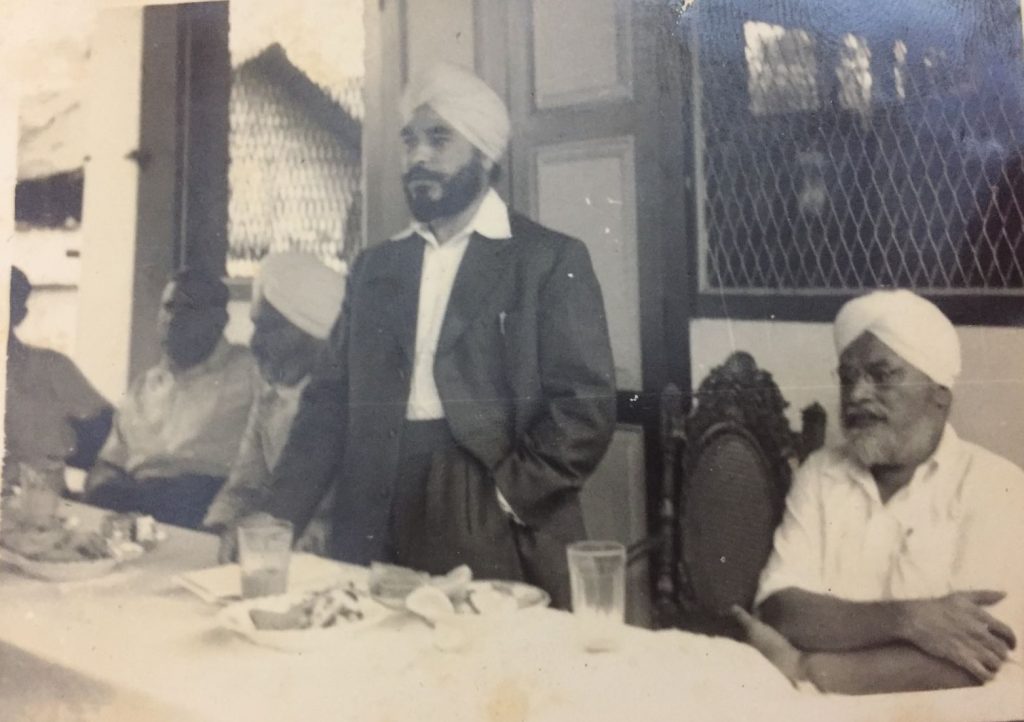
Joginder Singh speaking at the SNSM Samelan in Port Dickson in 1962 – Source: Family collection
(Full text of Zubedy’s Vaisakhi 2022 message)
ENGLISH IS NOT IN COMPETITION WITH BAHASA MALAYSIA. THEY COMPLEMENT EACH OTHER.
We seem to have cultivated the unproductive bad habit of pitting unrelated subjects to divide the nation. To hurt, snide, deride and spite the other. It is a form of bitchy politics that permeates our psyche.
For example, some love chest-thumping, “I am first a Malay, or Chinese, or Indian, etc” and then the other will retort with similar pomposity saying, “I am first a Malaysian”. The former is our ethnicity while the latter is our citizenship – they are not in competition with each other. WE ARE BOTH, FIRST. That is one of the reasons why we are unique and special. But no, let’s practice bitchy politics and divide the nation further. Sigh!
Today, some are trying to pit English with Bahasa Malaysia (BM) and vice versa. This was after the [Malaysian] Prime Minister announced that BM must be used at every official function it is involved in, including at international meetings. The decision has its merits. Especially when in the past we had Ministers who presented in poor English that made us cringe. Bad for the Malaysian brand. Speaking in BM with confidence and passion can create an aura for the brand even if a speech has to be translated.
However, we must not forget the Malay proverb, “Masuk kandang kambing mengembek, masuk kandang kerbau menguak” (When in Rome do as the Romans do.) There are times like during a bilateral or business meet, our delegation must speak impeccable English or the language of the other party to make a strong impression and win the deal. Use any language that helps us achieve our goals, not just our pride. That is why we suggest that English is complementary and not a competition to our national language. Ditto other languages like Mandarin and Arabic.
Our BM must be strong as it is the national language that unites us. But let us send the right message to all Malaysians, especially the younger ones, to master other languages too, especially English. We do not want them to lose out by being monolingual – especially our brothers and sisters in the rural and semi-rural areas.
Let Bahasa Malaysia anchor our hearts in unity but at the same time let English and the other languages be our wings to conquer the world.
ASIA SAMACHAR is an online newspaper for Sikhs / Punjabis in Southeast Asia and beyond.Facebook | WhatsApp +6017-335-1399 | Email: asia.samachar@gmail.com | Twitter | Instagram | Obituary announcements, click here
Children / Spouse Late Harbhajan Kaur (India) Amrik Singh (Batu Pahat) / Pritam Kaur Late Harbans Kaur (Singapore) / Late Puran Singh Gauthi Kaur (Shinder) (Kelana Jaya) / Mehinder Singh Ranjit Singh (Batu Pahat) / Jasbir Kaur Harcharan Kaur (Kuala Lumpur) Late Sarjeet Singh (Batu Pahat) / Darshan Kaur Harjit Kaur (Kuala Lumpur) / Late Baljit Singh
24 grandchildren, 28 great grandchildren, and a host of nephews, nieces, relatives and friends.
Sri Akhand Path will commence on Wednesday, 4th May 2022 at 9am at Gurdwara Sahib Batu Pahat, followed by Path Da Bhog, Kirtan and Antim Ardaas at 8:30am on Friday, 6th May 2022.
Guru Ka Langgar will be served on all three days. Please treat this as a personal invitation.
The family would like to express our heartfelt appreciation to the doctors, nurses and staff of Pantai Hospital Batu Pahat and the caregiver Lovepreet Singh for all their support.
ASIA SAMACHAR is an online newspaper for Sikhs / Punjabis in Southeast Asia and beyond.Facebook | WhatsApp +6017-335-1399 | Email: asia.samachar@gmail.com | Twitter | Instagram | Obituary announcements, click here