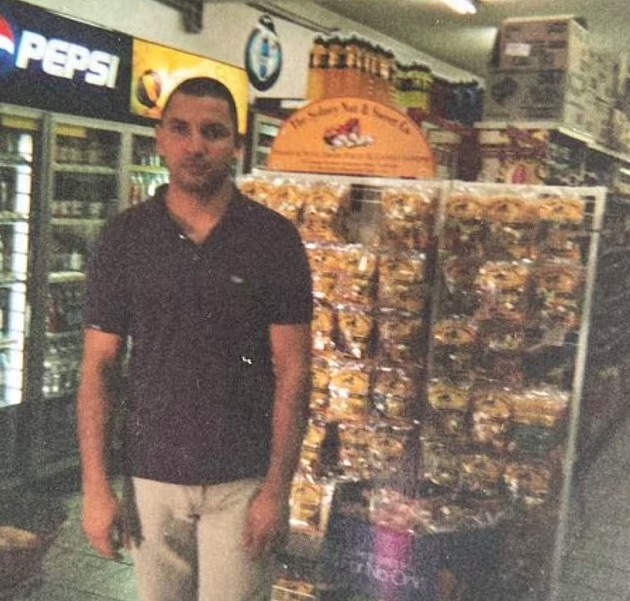
Sons of Late Sardar Bachan Singh and Late Sardarni Gurdev Kaur
1st BARSI will be held on Sunday, 27th February 2022 (Sunday) at Gurdwara Sahib Taiping
10.00am: Kirtan
11:00am: Sehaj Path Da Phog
11:30am: Anand Sahib, Ardaas, and Hukumnama
Guru Ka Langar will be served thereafter.
Contact details: Ravin +6012 4774555
| Entry: 22 Feb 2022 | Source: Family
ASIA SAMACHAR is an online newspaper for Sikhs / Punjabis in Southeast Asia and beyond.Facebook | WhatsApp +6017-335-1399 | Email: editor@asiasamachar.com | Twitter | Instagram | Obituary announcements, click here |
Narinder and his wife Rajwinder (second left), their three children Garrick, Gurmilli and Reeva and his mother Jaswinder Kaur who with his father arranged the couple’s marriage between India, New Zealand and Australia – Photo: Supplied / Daily Mail
By Candace Sutton | Daily Mail | Australia |
He was a school dropout who slept in his car while working on a factory conveyor belt after coming to Australia to pursue his dream of starting a business.
Narinder Singh was a migrant kid who had fled, aged 13, with his family from the religious genocide of strife-torn Punjabi India to New Zealand in the late 1980s.
Despite learning English quickly, Narinder never completed secondary school and became a picker in a kiwi fruit orchard, saving money to move to Australia at the age of 19.
He worked as a labourer, in a petrol station, on a South Australian farm and loading the conveyor belt in an electronics factory, all the while sleeping in his Holden Camira to conserve his meagre funds.
He struggled to find any landlord that would trust a teenager with no experience to be able to run a business and pay the rent.
But this week – 20 years later – Narinder has just opened the 11th store in the QE quality food empire he built worth $50 million in annual revenue, with a goal to have 50 shops across Sydney by 2030.
Narinder has built a loyal following of tens of thousands of customers in ten Sydney suburbs, some of whom told Daily Mail Australia they prefer to shop at QE instead of Coles and Woolworths because of the owner’s ‘attitude and habit of stocking items requested’ by them.
He has a code of five values for the operation of his stores and the people he hires.
They are: ‘We hold no grudges, respect for others, we are passionate, we are responsive and fast moving, and we are learners, curious and not afraid to try new things and make mistakes’.
Read the full story, ‘How a humble Sikh kid who couldn’t speak English went from living in his car and dropping out of school to taking on Australia’s supermarket giants – as he reveals five principles that built his $50MILLION empire’ (Daily Mail, 21 Feb 2022), here.
Narinder arrived as a 19-year-old (above) in Australia and slept in his car while doing menial jobs before renting his first store with the dream of turning it into a business – Photo: Supplied / Daily Mail
ASIA SAMACHAR is an online newspaper for Sikhs / Punjabis in Southeast Asia and beyond.Facebook | WhatsApp +6017-335-1399 | Email: editor@asiasamachar.com | Twitter | Instagram | Obituary announcements, click here
In the 21st century fast paced life mental health issues are becoming more prominent. In this context, I would discuss the importance and relevance of spirituality in the prevention of health problems in modern society. I’d like to clarify that Gurbani is addressing our state of consciousness, which we experience as our mental and emotional state. This is negatively impacted by stress. I do not mean to address mental health disorders, which require medical attention.
First, I would discuss what spirituality means to me, as I experience it in my daily life. From the spiritual guiding principals of Gurbani (Sikh Scriptures) I learned contentment. I no longer find meaning and purpose of life in material things, power and fame. I learned that nobody finds inner peace, happiness and joy by amassing more and more wealth, comforts and conveniences of life. In fact, the more I am identified with material things, power and fame the more I suffer anxiety, worry, stress and pain. I have learned to be completely happy with what I have. Guru Nanak Devji says ਬਿਨਾ ਸੰਤੋਖ ਨਹੀ ਕੋਊ ਰਾਜੈ Bina Santokh Nahi Ko Rajai (SGGS, page 279) meaning the gap between what we have and what we desire is never filled. My happiness does not depend on how much money I have. (This doesn’t, however, mean that I do no work and make money).
I have learned that good times and bad times are simply life situations. I accept the situations as these come my way. First I accept the situation as it is and then find the solution. Guru Nanak call this ਹੁਕਮਿ ਰਜਾਈ ਚਲਣਾhuqam rajaee chalnna meaning living the will of God. I understand that my anxieties, worries and stress come from how I react to the situation. The more I resist, deny the facts of the situation, the more pain and suffering I face. This understanding helps me to remain calm, steady and positive. This does not mean that I don’t make every effort to fix the situation. Is this easier said than done? From my personal experience, I can say it takes time but it can be done as we spiritually awaken.
I have learned that the true nature of every human being is basic goodness. This is who we are, our true self. Every human has the spark of enlightenment within. The way we behave and act in the society is our acquired ego identity. We have acquired bad habits and negative thoughts, which can be changed. I believe that inherently nobody in this world is a bad person. I have learned to accept every member of the society for who he or she is. Guru Nanak says ਨਾ ਕੋ ਬੈਰੀ ਨਹੀ ਬਿਗਾਨਾ ਸਗਲ ਸੰਗਿ ਹਮ ਕਉ ਬਨਿ ਆਈNa Ko Verry Nahi Begana Sagal Sang Hum Ko Ban Aee (SGGS, 1299) meaning human race is one big family. This acceptance helps me not to judge others. When there is no other, there is no anger, hatred, jealousy, or discrimination. We are all humans first. That gives me inner peace and happiness.
I have learned that sharing the resources I have for the benefit of others is a meaningful purpose of life. Working hard and bringing happiness to others gives me peace and joy. Guru Nanak says ਘਾਲਿ ਖਾਇ ਕਿਛੁ ਹਥਹੁ ਦੇਇ ॥ ਨਾਨਕ ਰਾਹੁ ਪਛਾਣਹਿ ਸੇਇ Ghaal Khaai Kichh Hathoon Dheh Nanak Rah Pachhanai Se(SGGS, 1245) meaning real purpose of life is to work hard and share with the needy. When I believe that all members of the society are one big family, my own, how can I not help them? I know I am not doing my share at the present. Helping others is real worship of God. It is a shame to see children come to school without eating in the morning while living in a rich country like Canada.
I believe that sharing the intellectual wealth (spiritual wisdom) is a service to society. Guru Nanak says one should not only share material wealth but also share godly virtues and values. Guru Nanak says ਜੇ ਗੁਣ ਹੋਵਨ੍ਹ੍ਹਿ ਸਾਜਨਾ ਮਿਲਿ ਸਾਝ ਕਰੀਜੈ Je Gunn Howan Sajna Mill Sanjh Kareejai(SGGS, 765) meaning as a society we all should enrich each other by sharing virtues. Even if I can make a difference in the life of a few, this makes my life worth living.
I have discussed above what spirituality means to us in our daily life. Now I would discuss according to spiritual philosophy of Guru Nanak what are the causes of stress and how do spiritual teachings help us in improving our mental and emotional state. Guru Nanak says ਸਰਬ ਰੋਗ ਕਾ ਅਉਖਦੁ ਨਾਮੁSarab Rog Ka Aukhad Naam (SGGS, 274) meaning spirituality, divine wisdom is the cure for stress. It is a mistaken belief among Sikhs that meditation on divine wisdom can cure physical sicknesses instantly and miraculously. Remember that the spiritual guiding principals written in Sri Guru Granth Sahib (SGGS) (Sikh Scriptures) address human consciousness, not the physical body. Having stated that, medical science tells us that those who enjoy peace, happiness and bliss in life and are mentally healthy face fewer physical diseases and recover quicker.
In this context I would discuss a hymn from SGGS where Guru Nanak talks about causes and spiritual solutions for stress. This hymn has four verses and one central verse. The central verse contains the main message and rest of the verses are an expansion of the central message.
Central Verse. ਵੈਦ ਨ ਭੋਲੇ ਦਾਰੂ ਲਾਇ ॥ ਦਰਦੁ ਹੋਵੈ ਦੁਖੁ ਰਹੈ ਸਰੀਰ ॥ ਐਸਾ ਦਾਰੂ ਲਗੈ ਨ ਬੀਰ ॥੧॥ ਰਹਾਉ ॥ Vaid Na Bholai Daroo Laai. Dard Howai Dukh Rahai Sarir. Aisa Daroo Lagai Na Bir (SGGS, 1276). At the time of Guru Nanak medical practitioners were called VAIDS. Guru Nanak is saying VAID you are prescribing medications for physical sicknesses but you are not treating the root cause of physical diseases, which is the state of consciousness. Until such time that a positive mental state is achieved physical sicknesses will continue coming back, because chronic stress leads to physical sickness. Guru Nanak is saying our focus should be on prevention, conscious transformation, and behaviour change.
Dukh Vichhora, Ik Dukh Bhukh. Ik Dukh Sakat Var Jamdoot.Ik Dukh Rog Lagai Tann Dhaai.Vaid Na Bholai Daroo Laai. (SGGS, 1256).
Dukh Vichhora. In this verse Guru Nanak lists three main causes of stress. First is our ego, ignorance of divine wisdom, knowledge, godly virtues and truth. We have lost connection with the Divine and are completely engrossed in the separate self identity (Me or Ego). We have forgotten our true self, who we are. We are slave to our own mind and thoughts. We have lost the purpose of life. All our focus is on protecting Me, my image to others, my possessions, my loved ones, and adding to all that is mine while pushing away all that I judge undesirable. This is the cause of our worry and stress. In this ego consciousness, our life is driven by greed, craving for more, hatred, jealousy, intolerance, anger and violence. In this stressed state, we are not able to cope with difficult life situations.
Ik Dukh Bhukh. Bhukh– Identification with material things, craving for more.
Guru Nanak says that the second cause of our stress is greed and craving for more and more. Identification with material wealth is a ‘disease’. The gap between what we have and what we desire is never filled. Material wealth, power and fame has become the purpose of life for us. I am only if I have these comforts and conveniences. I am completely attached to form. The more I have, the more I expect. When I say I own this business, I and the business become one and that becomes my identity. I would then do anything to protect that identity. As modern society we forget that these are temporary, impermanent objects. Any change or loss becomes reason for our anxiety and worries because our happiness is dependent on these external things. When through divine wisdom and knowledge I internalize the godly virtue of contentment, I learn to be happy with what I have. My happiness is not dependent on material and impermanent things. Worries and stress are human creations. When a one year old child loses his toy, he is not worried or stressed. But when a five year old child runs out of toy battery, he is very upset and cries. His self created happiness is dependent on the toy. It is entirely possible, through spirituality, for us to manage that our happiness is not dependent on material wealth, power and fame.
Ik Dukh Sakat Var Jamdoot. Guru Nanak says the third main cause of our stress is fear: fear of losing a family member, fear of death, fear of what happened yesterday and what may happen tomorrow, fear of business loss or losing a job. Fear is created because we are living in our mind. This fear is about what in fact does not exist; it only exists in our mind. It is emotionally crippling thought. This causes constant anxiety, worry and stress. Guru Nanak says ਨਿਰਭਉ ਜਪੈ ਸਗਲ ਭਉ ਮਿਟੈNirbhau Japai Sagal Bhau Mitai (SGGS, 293) meaning God is fearless. When we contemplate on truth, become spiritually enlightened, we feel no fear because we learn to accept situations as we face them. We learn to live in the present. Guru Nanak says ਚਿੰਤਾ ਤਾ ਕੀ ਕੀਜੀਐ ਜੋ ਅਨਹੋਨੀ ਹੋਇChinta Ta Kee Kijiai Jo Unnhonnee Hoai (SGGS, 1429) meaning everything in our life happens according to unchangeable laws of nature, so accept life situations as they are.
Ik Dukh Rog Lagai Tann Dhaai. Rogis a singular word meaning disease. Guru Nanak says ਹਉਮੈ ਦੀਰਘ ਰੋਗੁ ਹੈHaumai Deerag Rog Hai (SGGS, 466) meaning ego (separation from the Divine/spiritual ignorance) is the most serious disease and is the root cause of a poor mental state and physical ailments. When we suffer stress as discussed above, this leads to physical ailments. Chronic stress causes biological changes in the body which result in many physical health problems.
Vaid Na Bholai Daroo Laai. Guru Nanak says as human race we do not make efforts to understand the root cause of bodily sicknesses. Every effort is to deal with physical diseases. For that reason what we witness today is that mental health issues are increasing every year.
Khasam Visar Kiai Ras Bhog.Ta Tann Ooth Khaloai Rog. Mann Andhai Ko Milai Sajaai. Mann Andhai Ko Milai Sajaai.Aid Na Bholai Daroo Laai. (SGGS, 1256).
Khasam Visar Kiai Ras Bhog. Guru Nanak says because of our ego, ignorance of divine wisdom, knowledge, godly virtues, spiritual path, we have become slaves to our own mind. Our life is driven by our own thoughts. Our intellect can create every comfort and convenience for living but can never experience inner peace and happiness without following the spiritual path, living the truth. Guru Nanak says without spiritual awakening we face conscious death every day here and now. This is why we face worry, anxiety, and stress.
This generation has the comforts and conveniences our forefathers never dreamed of. For that reason ours should be a peaceful and happy generation. We in fact are the most miserable and mentally unstable generation. The reason is that we are completely identified with form, material things, power and status. This is who we are, our identity. Until such time as society we recognize this disease (ROG), we will continue to suffer from stress.
Ta Tann Ooth Khaloai Rog. Guru Nanak says worries, anxiety and stress becomes the cause of our many physical diseases.
Mann Andhai Ko Milai Sajaai. Guru Nanak says when we are egoistic and ignorant of our true nature, who we are, and fail to find the meaning of life, we face pain and suffering in life. We live in constant fear and tensions. Our life becomes a living hell here and now.
Aid Na Bholai Daroo Laai. Guru Nanak says until we realize conscious transformation, find the meaning of life, realize who we are, our true nature, we will continue suffering mentally and physically.
Chandan Ka Phal Chandan Wass. Manas Ka Phal Ghat Mahe Sass.Sass Gaya Kaya Dhal Paai.Ta Kai Pachhai Koai Na Khaye. (SGGS, 1256).
Chandan Ka Phal Chandan Wass (SGGS, 1256). Guru Nanak uses metaphor to emphasize the significance of spirituality in our daily living. A flower spreads fragrance only when it is healthy and alive. A dead flower has no fragrance.
Manas Ka Phal Ghat Mahe Sass. GHAT MAHE—in our consciousness. SASS—divine wisdom, divine knowledge. Guru Nanak says as humans we only experience inner peace, happiness, joy and live life free of worries, anxieties and stress when we are spiritually enlightened, realize our true nature. We experience bliss only when we gain conscious transformation.
Sass Gaya Kaya Dhal Paai. SASS GAYA means life without divine wisdom. Guru Nanak says when our consciousness is empty of divine wisdom, divine knowledge, godly virtues we die spiritual/conscious death here and now (we separate from divine consciousness and fall into ego consciousness). We face mental health issues as a result.
Ta Kai Pachhai Koai Na Khaye.Guru Nanak says our conscious death is a cause of our anxiety and worries. Our life becomes miserable.
Kanchan Kaya Nirmal Hans. Jis Mahe Naam Niranjan Ans.Dukh Rog Sabh Gaya Gavaai. Nanak Chhutas Sachai Naai. (SGGS, 1256).
Kanchan Kaya Nirmal Hans. Jis Mahe Naam Niranjan Ans. Guru Nanak says when we contemplate and meditate on divine wisdom, divine knowledge, and godly virtues, we realize our true nature, our true self. We become persons of compassion, tolerance, kindness, love, humility and contentment. We learn to live the way of surrender to the will of God. Guru Nanak says this enlightenment is a complete transformation of consciousness. We are happy with what we have, and experience a feeling of gratitude. We do not judge but accept others as they are. We do not create separation based on race, religion, gender or any other categorizations. We are one big family of just humans. We share and bring happiness to the life of others. Guru Nanak says ਨਿਰਭਉ ਜਪੈ ਸਗਲ ਭਉ ਮਿਟੈ (SGGS page 293) NIRBHAU JAPAI SAGAL BHAU MITAI meaning when we contemplate on God, that is fearless, we become fearless and experience no fear in life. We are always in the state of mental stillness, calm and stable.
Dukh Rog Sabh Gaya Gavaai. Guru Nanak says I have achieved eternal life here and now. Happiness and bliss is the way of life. Life that is free of pain and suffering.
Nanak Chhutas Sachai Naai meaning the only path to mental stillness, stability is truthful living.
Harbans Singh Kandola. Born in Ludhiana, Punjab, he read Ph.D. in Agriculture from Punjab Agriculture University in 1972. He moved to Canada in 1973 and retired as senior bank manager in 2005. He reads Gurbani passionately to understand its spiritual message and how it matters in his daily life. He read Prof Sahib Singh’s ‘Sri Guru Granth Sahib Darpan’ (SGGS translation) in five years, with complete notes. In the past two decades, Harbans has engaged in Gurbani discussion in radio and television programmes, as well as newspapers and the Sikh Bulletin. He believes that we now have literature with the true and real message of Gurbani which has to be presented to Sikhs and non-Sikhs. This article is from his unpublished book ‘Renaissance of Sikhi’.
ASIA SAMACHAR is an online newspaper for Sikhs / Punjabis in Southeast Asia and beyond.Facebook | WhatsApp +6017-335-1399 | Email: editor@asiasamachar.com | Twitter | Instagram | Obituary announcements, click here
Prayer: 26 February 2022 (Saturday), from 10am to 12 noon, at Gurdwara Sahib Subang
In Waheguru’s care, you rest above peacefully, in our hearts you rest with so much love, you will be dearly missed by your family, your daughter, relatives and friends. We love you so much.
Contact:
012 – 3387762 (Sarban)
017 – 3695308 (Jagjeet)
012 – 6756763 (Daljeet)
| Entry: 20 Feb 2022 | Source: Family
ASIA SAMACHAR is an online newspaper for Sikhs / Punjabis in Southeast Asia and beyond.Facebook | WhatsApp +6017-335-1399 | Email: editor@asiasamachar.com | Twitter | Instagram | Obituary announcements, click here |
Eye on Panjab: (Clockwise, from left): Congress’ Charanjit Singh Channi, SAD’s Sukhbir Singh Badal, Captain Amarinder Singh, Bhagwant Mann and Balbir Singh Rajewal
By Asia Samachar | India |
Panjab votes today to elect who will govern the northern Indian state for the next five years. The ground is so fractured that no one side has emerged as a clear frontrunner.
Charanjit Singh Channi is the face of the Congress. The party appointed him as the chief minister in September 2021, to replace veteran heavyweight Captain Amarinder Singh. Earlier this month, Channi was officially named as the CM-designate, nudging former cricketer Navjot Singh Sidhu.
Shiromani Akali Dal (SAD), with Sukhbir Singh Badal as the CD-designate, has forged an alliance with the Bahujan Samaj Party (BSP).
Mounting a stiff challenge is the Arvin Kejriwal led party Aam Admi Party (AAM) with Bhagwant Mann as their CM face.
Another contender in the fray is the BJP-PLC-SAD (Sanyukt) alliance, getting air cover from Prime Minister Narendra Modi and his party which controls the central government.
And on the side is Sanyukt Samaj Morcha – a faction from the farmers’ protest movement – with Balbir Singh Rajewal as the face, and former CM Captain Amarinder who has floated a new party after leaving the Congress.
ASIA SAMACHAR is an online newspaper for Sikhs / Punjabis in Southeast Asia and beyond.Facebook | WhatsApp +6017-335-1399 | Email: editor@asiasamachar.com | Twitter | Instagram | Obituary announcements, click here
A sketch depicting the Nankana Sahib Massacre (also known as Saka Nankana) on 20 Feb 1921. Insert: The header of of the letter written by Narayan Singh, an eye witness of the terrible massacre, written in 1991 – By Parminder Singh, Punjab (Source: Panjabi Digital Library)
This is an eye witness account of the Nankana Sahib Massacre (Saka Nankana) that took place in 1921. It was captured by Narayan Singh in a letter penned in 1991, seven decades after the event. The letter is available at the Sikh Archives held in Chandigarh, Punjab. Singapore-based Harbans Singh, who used to work for Singapore SATS, translates the letter into English. We thank our columnist Bhagwant Singh for initiating the translation for Asia Samachar.
Seventy years have gone by since I was a B.A. student in Khalsa College Amritsar. It was 20th February 1921, when the President of the Khalsa College Council, Sardar Sunder Singh Majithia received a telegram from Nankana Sahib that on that day 130 Sikhs had been brutally killed or wounded and had been burnt, some alive.
It was natural for such a terrible news to spread in the College and its hostels, within minutes. Five or six of us students decided to proceed to Nankana Sahib. We were told that sale of train tickets from Amritsar to Nankana Sahib had been stopped.
So we took the Khalsa College to Atari road and after walking 15 miles reached Atari and from there took the evening train and reached the Lahore Station yard where the morning Lahore to Sorekote train was waiting. This train was on the line that passed Nankana Sahib. We got up on the train and lay down to rest.
In the morning the train shifted to the platform. It was 21st February and we were told that the train was not going to stop at Nankana Sahib… But who cared?
The train moved on schedule from Lahore and halted at Chicho Ki Malliyan where, with drumbeat it was again announced that the train would not stop at Nankana Sahib. No one paid any attention to the announcement.
The distance from Chicho ki Malliyan to Nankana Sahib was 28 miles and another 23 miles from Nankana Sahib to Jarrhanwala Station. So, travelling 51 miles, the train reached Jarrhanwala, where our group along with about 200 passengers disembarked.
We met more Sikhs there bringing our number to about 300. The whole group started walking along the line, towards Nankana Sahib. Covering 23 miles we reached there at night which we spent in the verandahs of Guru Nanak Serai or under some trees.
The letter by Narayan Singh who was an eye witness of the Nankana Sahib Massacre (also known as Saka Nankana) which took place on 20 Feb 1921 (Source: Panjabi Digital Library)
On the morning of 22nd February the Southern Gate of the grounds of Sri Janam Asthan Sahib was opened and a few of us at a time were brought in.
The scene inside was terrible to behold. The marble floor was all bloodied and outside the Gurdwara Janam Asthan room building were three heaps of human bodies burnt beyond recognition. On one side were lying, three unburnt bodies of Sikhs.
Behind the Prakash Asthan was a Jand tree with wire wrapped around it. We were told that Jathedar Lachhman Singh was tied to the tree with these wires and drenched with kerosene and burnt alive.
Those Sikhs who were sitting in the Janam Asthan room were killed by guns fired from the west-facing door. The Holy Guru Granth Sahib that had been open bore bullet marks as well as the blood of the Singh who was in attendance. There were also bullet holes on the walls of the room.
The Holy Guru Granth Sahib had many pages torn and lying around.
With full reverence the Guru Granth Sahib was brought out of the room. Ragi Bhai Hira Singh Pheruke, did the prakash and from the Prakash page in an emotion filled voice read the Shabad of Sheikh Farid Ji in Raag Suhi,
“Tapp Tapp lohe lohe haath marorau,
Baaval hoyi, so saho lorau”
I was present when he read the whole Shabad.
In the Darshani Deorhi gateway were lying blocks of wood which had been used to chop up the bodies, with pieces of flesh still embedded in the chopper marks.
Bhai Dalip Singh and Bhai Waryam Singh Bhejiyanwaalay, who were in Sardar Uttam Singh’s factory about a mile away from the scene, on hearing the firing in the Gurdwara, had rushed there, were killed upon entering the Gurdwara. Their bodies were dragged some distance away and thrown into a potter’s kiln. Those Sikhs who were sitting in the Baradari in front of the Prakash Asthan room were fired upon from the top of the rooms in the Southern Side of the Complex and were all either killed or wounded.
Among these martyrs was Bhai Kehar Singh of village Jarag, Patiala State and his ten year old son, Balwant Singh who had accompanied his father. He had been pushed into a cupboard by some Sikhs who tried to save the child. When he spoke from inside, Bawa Ladha Ram grabbed him by the arm and threw him alive, into the fire that had been lit to burn as many of the dead as possible. Thus he attained martyrdom. Into this fire was also thrown the flesh of those Sikhs whose bodies were chopped up in the Darshani Deorhi.
In Janam Asthan the half-burnt bodies of the Sikhs had been so viciously cut up that it was impossible to count exactly how many had been martyred. From the number of skulls recovered and including Bhai Dalip Singh and Waryam Singh, who had been killed by the Mahant’s men and thrown into the potter’s kiln, the numbers came to 130. I personally witnessed this terrible scene.
ASIA SAMACHAR is an online newspaper for Sikhs / Punjabis in Southeast Asia and beyond.Facebook | WhatsApp +6017-335-1399 | Email: editor@asiasamachar.com | Twitter | Instagram | Obituary announcements, click here
Jasjit Singh Kang will take up a new role at information technology (IT) services and consulting firm Wipro.
He is now head of Digital Operations and Platforms (DOP) of Wipro’s iCORE business. iCORE stands for integrated cloud infrastructure, digital operations, risk and enterprise cyber security services.
For more than three years now, he has been Wipro Ltd’s vice president for global HR outsourcing, digital operations and platforms. Here, he was responsible for some 15,000 colleagues globally.
Jasjit joined Wipro as a part of the Alight acquisition in 2018 and was instrumental in integrating the business and leading the Asia Pacific operations.
With over 28 years of technology and business leadership experience, Jasjit brings his expertise in operations management, technology-based innovation, business development, and relationship management to the role. As a senior vice president and head, he will focus on driving excellence in delivery operations and business growth, according to a news release.
Before Wipro, Jasjit spent seven years in the banking industry with Citibank, Bank of America, and ANZ Grindlays. He has also worked in the business process management industry with leading companies like Genpact (erstwhile GE Capital International Services), WNS and Aon.
He served also as the chairperson for the National Association of Software and Services Companies (NASSCOM) Global In-house Centers (GIC) for the North India region.
Jasjit, who will report to Wipro iCORE managing director Nagendra Bandaru, has an MBA from the Central Queensland University, Australia, and is a certified Six Sigma practitioner.
ASIA SAMACHAR is an online newspaper for Sikhs / Punjabis in Southeast Asia and beyond.Facebook | WhatsApp +6017-335-1399 | Email: editor@asiasamachar.com | Twitter | Instagram | Obituary announcements, click here
We called her Bua ji. Aunt. All of us at home, regardless of whether we were older or younger than her. She was our next-door neighbour, the second of three wives of “Mohd. Siddiqui, Esq., Barrister”, as the sign on his front door proclaimed. Being our aunt, ostensibly my father’s sister, allowed her to visit us, a non-Muslim household, without a burqa.
Their backdoor was adjacent to ours. Which meant that, during waking hours, early to late, she was more at our place than hers. Her husband’s oldest wife ran their household, the youngest entertained him … and Bua ji had all the time in the world. There were no children in their household.
She simply became family. When I was a couple of years old, Bua ji was a comfort to my mom who had, not much earlier, lost two sons, both in infancy. When two of my sisters came along, my mother’s hands were full and Bua ji lightened her load by taking over my needs because, I’m told, I was a handfull.
I can’t think of a time in my childhood without her around. My father would disappear into the labyrinth of his auto-parts store, and soon thereafter, we’d hear a muffled voice from behind the back-door: ”O … Sher-e-ki-Maa!” she would call – “O Sher‘s mother! May I come in?”
As I grew up into a toddler, it also became routine for her to sing me lullabies to put me to bed. And then, tell me bed-time stories. She had a treasure-lode of them. It wasn’t until years later that I realized how widely read she was. Her tales were exotic and let my imagination wander with no boundaries.
Her repertoire came not only from the Arabian Nights but from Sufis like Sheikh Shaadi, Hafiz and Rumi, and a whole library of Persian texts. There were hilarious stories of Sheikh Chilli and Nasruddin Hodja and classic interchanges between Akbar and Birbal. Strange, but she had also partaken of Indic texts. She flung open the doors to the fables from the Panchtantra and the myths from the Mahabharat and Ramayan.
She knew no English, but soon as I was reading Hindi, she brought in copies of the children‘s periodical, “Chanda Mama”, to which I remained addicted for years.
Thereafter, we ventured into new territory. She began to weave epics of her own and each became a joint creation between us, her imagination fed by my constant barrage of questions and puzzlements. Each night introduced me to new creatures, good and evil, ogres and giants, gnomes and elves, birds and beasts, kings and queens, princes and princesses … One recurring thread, I recall vividly, was spun around the adventures of a parrot in the gilded cage of a palace in a country far away from the bird’s native land. I’ve never forgotten how she irrigated my imagination and planted the love of words and ploughed and furrowed them into a hive of creativity.
After we moved to Canada, I made it a point to visit her on my first trip to India. Widowed and living alone, it was the last time I saw her. She died shortly thereafter.
T. Sher Singh is a writer, editor and publisher at sikhchic.com. The Sikh media portal, now undergoing a major overhaul to bring it up-to-date with the latest gadgets, aims to be up by Spring.
ASIA SAMACHAR is an online newspaper for Sikhs / Punjabis in Southeast Asia and beyond.Facebook | WhatsApp +6017-335-1399 | Email: editor@asiasamachar.com | Twitter | Instagram | Obituary announcements, click here
This gotta be the bizarrest case in the history of the top Indian financial regulatory NSE. The former head of National Stock Exchange Chitra Ramakrishna took guidance from allegedly a fictitious guru to perform her job better. The imaginary monk even took a paycheck which grew 9 fold from INR 15Lpa to a whopping 1.38 crore!
A forensic audit by Ernst & Young (E&Y) on the Colo scam revealed as early as in 2015, that Chitra was sharing internal confidential information about NSE’s organisational structure, financial results and policies and seeking guidance on internal issues with an outsider whose email ID was rigyajursama@outlook.com. The username is a combination of the names of the three vedas).
The fictitious guru, Chitra claims is from the Himalaya and doesn’t have a physical coordinate, despite being allocated the aforementioned email id!
She sought advice from the yogi during her tenure from 2013 till 2016! The Yogi was supposedly on a payroll with 3 days a week working. The yogi had been interacting with Chitra even on operational issues regarding senior NSE employees.
Anand Narayan, who specialises in securities laws and works as an in-house counsel at a major private firm, told ThePrint that “SEBI’s order against NSE and its senior officials shows massive misgovernance issues in one of India’s leading stock exchanges”.
The string of emails and financial transactions are quite revelatory. An email from the so-called guru that exposes how Chitra acted as a mere puppet says, “Don’t worry the straw knows when to be a capillary and when NOT to. Kanchan is the straw and I will be the suction force for this and you will vomit all that is required as always.” Kanchan, referred to in the email is Anand Subramanian (Subbu) and the issue under discussion is how to lobby the government to permit self-listing by the NSE.
Although EY’s investigation suggests the imaginary monk to be Anand Subramniyam the COO of NSE, SEBI however remains unconvinced. This also is a telltale of how slack the SEBI has been around the whole debacle.
Read the full story, ‘The Bizarre Story Of The Imaginary Monk Who Duped The NSE CEO, Drew A Salary Of 1.38 Crore And More’ (Mashable India, 17 Feb 2022), here.
ASIA SAMACHAR is an online newspaper for Sikhs / Punjabis in Southeast Asia and beyond.Facebook | WhatsApp +6017-335-1399 | Email: editor@asiasamachar.com | Twitter | Instagram | Obituary announcements, click here
Malaysian Consultative Council for Buddhism, Christianity, Hinduism, Sikhism and Taoism (MCCBCHST) releases a second press statement on the unilateral conversion of Loh Siew Hong’s three children by the Perlis Islamic Religious Department. Go here for the earlier statement.
18 FEBRUARY 2022
MCCBCHST STATEMENT PERLIS MUFTI’S VIEW IS NOT SUPPORTED BY THE CONSTITUTION
1. The Malaysian Consultative Council of Buddhism, Christianity, Hinduism, Sikhism & Taoism (MCCBCHST) refers to the report in Free Malaysia Today (February 17,2022 under heading ‘children’s conversion legal in Perlis, says Mufti’), where Perlis state Mufti Asri Zainal Abidin has been reported as saying “that under the Perlis Islamic Enactment, either the father, mother, or a guardian can convert their minors to Islam. The Perlis Law is in Malay and reads that either father or mother or a guardian can convert their child”.
2. The MCCBCHST is aware that section 117 (b) of the Perlis Administration of the Religion of Islam Enactment 2006 was amended in 2016 to allow conversion by a single parent. Article 12 (4) of the Federal Constitution was interpreted by the Federal Court in the INDIRA GANDHI’s Case (2018) to mean that both parents must consent before a minor of the marriage can be converted. Despite this clear decision of the Federal Court, the Selangor Islamic Religious Council (MAIS) had in another case appealed against a 2020 Shah Alam Federal Court decision, High Court ruling which allowed a civil action by the children’s nonMuslim mother to invalidate the conversion initiated by their Muslim father, to the Federal Court which unanimously dismissed application for leave by MAIS. The Federal Court stated that “the core issue has already been settled by this same apex court in the 2018 INDIRA GANDHI case.” In view of this Section 117(6) of the Perlis. Administration of the Religion of Islam Enactment 2016 will be void as being in conflict with the Federal Constitution. Thus section 117 (6) should be amended to bring it in line with the Federal Constitution.
3. The Perlis Mufti in the same above report also stated “the Malay version of the Federal Constitution also read that either parent can agree to the child’s conversion.” This issue of the possible existence of an authoritative Malay version of the Federal Constitution was also taken up in the Indira Gandhi case but the Federal Court found no evidence to support that the Bahasa Malaysia version of the Federal Constitution was authoritative. Thus, the Perlis Mufti claim regarding the Bahasa Malaysia version of the Federal Constitution has been ruled upon and it is not open to the Perlis Mufti to dispute the finding of the Apex court on it.
4. In an article in the Malay Mail of 25 January, 2022 where it had carried out a check of the AGC’S Federal Legislation portal, it found the following note on its very first page:
“Teks ini HANYALAH TERJEMAHAN oleh Jabatan Peguam Negara bagi Federal Constitution. Melainkan jika dan sehingga ditetapkan sahih di bawah Perkara 160B Perlembagaan Persekutuan, teks ini bukan perundangan”.
Thus, this note would mean that the Malay translation of the Federal Constitution was only a translation by the AGC and that it was not law unless and until it has been prescribed as authoritative.
5. Bahasa Malaysia version of the Federal Constitution
The Malaysian Federal Constitution is the most important Historical Document for the country which embodies the understanding and the social contract embodied in it. It is a written constitution and is in English and it is which lead to the Independence of the Country. The Bahasa Malaysia version is a translation of the original Federal Constitution which is in English.
Article 160B provides for the Malay translation to prevail over the original English version if there was any conflict or discrepancy between the two.
Question arises. How could a translation be allowed to over-ride the original text? We have seen that the Malay translation for “parent” is stated as “Ibu atau bapa”. This will be inaccurate as the Federal Constitution states singular should include plural in its interpretation section.
The danger is real that by making an arbitrary translation the original safeguards and rights provided by the Original Federal Constitution may be whittled away.
MEMBERS OF PARLIAMENT especially from SABAH & SARAWAK: How was this Article 160B allowed to creep in which through translation can change original meaning?
AN ORIGINAL document like the Federal Constitution cannot be allowed to be over- ridden by a translation. Whenever there is a conflict, the original must always prevail. Statement issued and endorsed by:
Statement issued and endorsed by:
Jagir Singh Arjan Singh (President, MCCBCHST)
Daozhang Tan How Chieow (Deputy President, MCCBCHST)
Datuk RS Mohan Shan (Vice President, MCCBCHST)
Archbishop Julian Leow Beng Kim (Vice President, MCCBCHST )
Venerable Seet Lee Terk (Vice President, MCCBCHST)
ASIA SAMACHAR is an online newspaper for Sikhs / Punjabis in Southeast Asia and beyond.Facebook | WhatsApp +6017-335-1399 | Email: editor@asiasamachar.com | Twitter | Instagram | Obituary announcements, click here