At its core, Idli Kadai tells the story of Murugan (played by Dhanush), whose roots lie in a modest village idli shop run by his father. When Murugan moves away—to Dubai in the film’s early chapters—to pursue professional success, a tragedy calls him back to his home, the humble shop and the traditions his father upheld.
By Asia Samachar | Movie Review |
Idli Kadai is a heartfelt Tamil-language drama written, directed and co-produced by the acclaimed actor-filmmaker Dhanush under his banner Wunderbar Films in association with Dawn Pictures.
The film opened theatrically on 1 October 2025 and entered digital streaming shortly afterwards, including Netflix, in multiple languages including Tamil, Telugu, Hindi and Kannada.
At its core, Idli Kadai tells the story of Murugan (played by Dhanush), whose roots lie in a modest village idli shop run by his father. When Murugan moves away—to Dubai in the film’s early chapters—to pursue professional success, a tragedy calls him back to his home, the humble shop and the traditions his father upheld.
Once back, Murugan must navigate not only familial and business responsibilities, but also a dramatic shift in his own identity: between aspiration and humility, modernity and heritage. The ensemble cast includes Nithya Menen, Arun Vijay, Sathyaraj, Shalini Pandey and Parthiban among others.
While the film operates with the warm comfort of rural textures and familial sincerity, critical and social media commentary has pointed out its familiar tropes—some viewers found echoes of earlier films in its structure and themes.
Yet, the film’s emotional core, its emphasis on legacy, the simple idli shop as a metaphor for roots and continuity, and Dhanush’s layered turn as both director and lead give it a distinctive presence in the South-Indian drama space.
Idli Kadai offers audiences a blend of modern sensibility and rural authenticity: a story that, much like its titular dish, is at once humble, warm and deeply satisfying.
ASIA SAMACHAR is an online newspaper for Sikhs / Punjabis in Southeast Asia and beyond. You can leave your comments at our website, Facebook, Twitter, and Instagram. We will delete comments we deem offensive or potentially libelous. You can reach us via WhatsApp +6017-335-1399 or email: asia.samachar@gmail.com. For obituary announcements, click here
Reflecting on the rise of fascism in Europe and the collapse of even the semblance of democratic norms, Antonio Gramsci, writing in his Prison Notebooks, warned of a profound historical transition. It was here that he penned his now famous line: “The old world is dying and the new world is struggling to be born; now is the time of monsters.”
Throughout history, societies have faced moments of rupture, periods of legal and political in betweenness that occur after the death of an established order and before the consolidation of its successor. These moments are rarely contained within national borders. Instead, they ripple outward and become global disruptions, resembling political and economic tsunamis.
Decades later, the Slovenian philosopher Slavoj Žižek reformulated Gramsci’s insight in his 2010 essay A Permanent Economic Emergency, published in New Left Review. Žižek used the metaphor to make sense of the 2008 global financial collapse and the far reaching fallout that followed.
Since that crisis, governments have risen and fallen, while austerity has been normalised across much of the world. Another consequence has been the increasing targeting of migrants, asylum seekers and refugees. In many Western nations, visible minorities, especially those perceived to be Muslim, have become convenient scapegoats. Today, there are few countries that are not either governed by right wing leaders or being drawn towards more authoritarian policies as part of a wider rightward shift.
It is within this climate that we must understand the disturbing allegations surrounding Nigel Farage, leader of Reform UK since 2024 and an enduring icon of the British Far Right. In recent weeks he has faced claims that during his school days he displayed racist and anti Semitic behaviour, including apparent admiration for Hitler and the Nazi regime. Farage has dismissed these allegations, insisting that he cannot recall events that took place more than 50 years ago.
For many like me us who grew up in Britain’s post war migrant communities, these claims sound painfully familiar. They resonate not only because of what Farage represents today, but because they echo memories we wish we could forget but never can.
Where Memory Diverges; The Victims and the Oppressors.
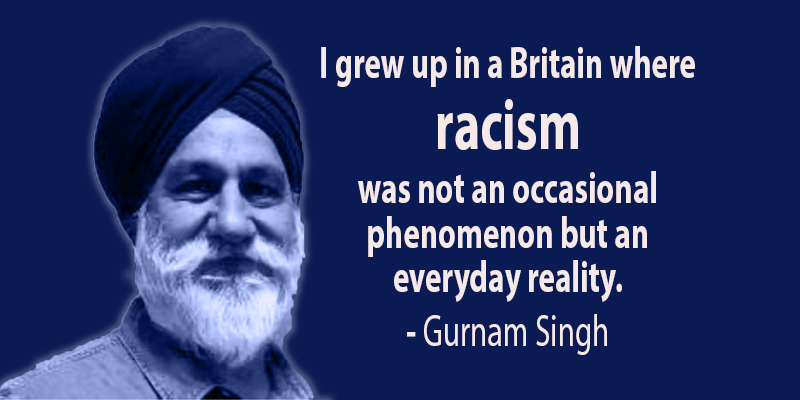
I grew up in a Britain where racism was not an occasional phenomenon but an everyday reality. From the age of three until around 16, I cannot remember a single day when I was not subjected to racial abuse, taunts or violence, whether that was on the streets or in school. No place was safe; even our homes were frequently attacked. It was relentless, brutal and most tragically, it was normalised.
Stuart Hall described this as everyday or common sense racism, a form of racism so deeply woven into social and institutional life that it becomes almost invisible to those who perpetrate it. For them, these incidents were trivial or forgettable. For those of us who bore the brunt of them, they shaped our childhoods, our sense of self and our understanding of Britain.
This is why Farage’s assertion that he simply cannot remember does not convince people like us. Racists forget because they can; victims remember because they must.
The Fiction of Harmless Banter
Part of Farage’s defence is the claim that even if he did say certain things, they were merely schoolboy jokes. My experience tells me otherwise. Racism is never harmless; racism and banter cannot occupy the same moral space. To describe racist behaviour as idle joking is to trivialise the humiliation, the fear and the psychological scars it leaves behind.
By my early teens I had reached a breaking point and began to fight back, verbally, emotionally and sometimes physically. Being strong, confident and eventually captain of the school football team offered some protection. Yet it did not erase the racism; it only changed how I navigated it.
Selective Amnesia – A convenient excuse.
Psychology tells us that we tend to forget what carries little emotional weight. Everyday racism, so casual and unremarkable to those who inflict it, barely registers in their memory. But there is another, more calculated explanation for Farage’s selective amnesia.
He fully understands the political consequences. At a time when the Far Right is working hard to appear respectable and mainstream, any admission of past extremist behaviour threatens the carefully cultivated image he presents to the public.
Thus, he denies. He minimises. He forgets, selectively and strategically.
A Missed Opportunity for Redemption
What is most striking is how differently the public might have responded had Farage chosen honesty over evasion. Had he acknowledged that as a teenager he was swept up in the racist culture of the time, had he expressed remorse and shown moral growth, many might have been willing to accept it.
Accountability, even decades later, can bring closure and even redemption.
Instead, his refusal to confront his past ensures that this story will continue to shadow him. His evasiveness invites further scrutiny and suggests there may be more to uncover.
A Wider Lesson for Anti racists.
For those committed to anti-racism and those from South Asian and African Caribbean backgrounds, in particular, this episode is not only about Farage as an individual. It is a reminder of the Britain many of us grew up in. It speaks to the resilience and unity required to survive the racism of the 1960s, 1970s and 1980s. And it highlights a troubling reality; Far Right narratives are once again finding fertile ground, and racialised minorities are once again being positioned as convenient scapegoats.
Farage’s alleged behaviour, even if it belongs to his distant past, is emblematic of a broader unwillingness within significant sections of British society to confront uncomfortable truths about racism, both historical and contemporary.
Why Remembering Matters
For people like Farage, the past is a political inconvenience. For people like us, the past is lived experience.
The memories of racist abuse do not fade with time. They remain vivid, painful and instructive, reminding us why the politics of intolerance, exclusion and denial must always be challenged with honesty and courage.
Gurnam Singh is an academic activist dedicated to human rights, liberty, equality, social and environmental justice. He is an Associate Professor of Sociology at University of Warwick, UK. He can be contacted at Gurnam.singh.1@warwick.ac.uk
* This is the opinion of the writer and does not necessarily represent the views of Asia Samachar.
ASIA SAMACHAR is an online newspaper for Sikhs / Punjabis in Southeast Asia and beyond. You can leave your comments at our website, Facebook, Twitter, and Instagram. We will delete comments we deem offensive or potentially libelous. You can reach us via WhatsApp +6017-335-1399 or email: asia.samachar@gmail.com. For obituary
Event | Malaysia: Takhat Sri Patna Sahib kirtan jatha touring Ipoh, with programmes at Greentown (Dec 8, Monday) and Buntong (Dec 9, Tuesday).
MESSAGE FROM THE ORGANISING TEAM
Sangat Ji,
With the blessings of Waheguru Ji, we are honoured to invite the entire Sanggat in full force to the Kirtan Semagam of one of the finest and most inspirational Kirtani Jathas of our time — Bhai Sarabjit Singh Ji, Takhat Sri Patna Sahib.
???? Monday, 8th Dec 2025 ???? GS Greentown, Ipoh
???? Tuesday, 9th Dec 2025 ???? GS Buntong, Ipoh
This is a blessed opportunity for the Ipoh Sanggat to receive the Gurmat Vichaar and Ras Kirtan of Bhai Sahib, who has travelled globally spreading the message of Sri Guru Granth Sahib Ji through their soul-touching kirtan.
We humbly request all Sanggat—youths, families, elders—to join in Sadh Sanggat and fill the Darbar Sahib with spiritual energy and love for Gurbani. Do bring your family and encourage others to attend this blessed event.
Let us come together to receive the Anand, Shanti and Kirpa that flows through Gurbani Kirtan.
ASIA SAMACHAR is an online newspaper for Sikhs / Punjabis in Southeast Asia and beyond. You can leave your comments at our website, Facebook, Twitter, and Instagram. We will delete comments we deem offensive or potentially libelous. You can reach us via WhatsApp +6017-335-1399 or email: asia.samachar@gmail.com. For obituary announcements, click here
The year 2025 celebrates the 350th martyrdom of Guru Teg Bahadur, the ninth Guru of the Sikhs.
Guru Teg Bahadur ji was put to death – by the order of then Emperor Aurangzeb – in the public square of Chandni Chowk, Delhi on the 11th of November 1675. Just five years prior, Emperor Aurangzeb had announced his policy of Ek Mazhab – or one religion. In the intolerant and fanatical Emperor’s mind, the only way to have peace and unity was for everyone in the world to profess just one religion. The only thing worse than his bigoted policy was its cruel and demeaning implementation. Aurangzeb had decreed the destruction of all places of worship and education belonging to faiths other that the one he subscribed to. He further ordered the discontinuance of all customs, rituals and practices that contravened his Ek Mazhab dictate.
Guru Teg Bahadur’s supreme martyrdom was in response to the Ek Mazhab decree that was the brainchild of the zealot and fanatical Aurangzeb. The ninth Guru decided, on his own accord, and according to his own humanist convictions, to take a stand on the issue in a very public way. He went to Aurangzeb on his own, to send a message to Aurangzeb that his One Mazhab dictate was unacceptable. The Guru evidently knew that Aurangzeb would stand by his narrow, extremist and intolerant beliefs and resort to tortures and death to anyone who stood up against him.
An ultimate martyrdom thus became necessary to convey an ultimate message to humanity at large – that defending the right to one’s beliefs was an unassailable right. And for such a stand and message he laid down his life.
This is why Chandar Sain Sainapat, in his account of the martyrdom of Guru Teg Bahadur in Sri Guru Sobha Granth (1711 AD) declared the Guru as Srishtt ki Chador. His depiction points towards the defense of humanity and protection of mankind being the philosophical foundation and message of the martyrdom.
It’s quite a straightforward foundation for the martyrdom. Yet, for reasons that can range from nefarious co-option, political agendas, selfish interests, narrow mindedness, envy and plain stupidity – a whole gamut of forces, institutions, ruling elite and governments have spent the past 300 years in undertaking efforts to obscure, distort, corrupt or hijack the truth of the event, its motivation and its philosophical foundations.
Those who share the blame in twisting, obscuring and distorting the truth of the martyrdom include a variety of agenda-oriented authors of classical Sikh historical literature; Sikh clergy, institutions, intellectuals and leadership that propagate the corrupted narratives unthinkingly and un-critically; and the Hindutva led movements within India whose primary aim is the cooption of Sikhi and Sikh Gurus. The general population of Sikh masses – large proportions of whom have broken away from reading, critical thought and the ability to analyze information objectively and form reasoned judgments cannot be without blame; and are hence an accessory to the crime as well.
This edition of The Sikh Bulletin is dedicated towards not just shedding light on the distortion, but exploring the philosophical underpinnings of the unprecedented sacrifice. Readers are presented with a research-based article titled “Guru Teg Bahadur Ji’s Martyrdom: The Real Message And The Efforts To Obscure It” (page 8), as well as two short pieces by the Panch-Pardhani Council titled “The Martyrdom Of Guru Tegh Bahadur Ji: A Living Legacy For The Defense Of Human Rights And Freedom Of Expression” (page 33) and “A Call For Ideological Vigilance On The 350th Shaheedi Anniversary Of Guru Tegh Bahadur Ji.” (page 35). A Punjabi version, as made available by the Council is also published on page 13. The Editorial Board of The Sikh Bulletin thanks the Panch-Pardhani Council for its courageous efforts in this regard.
ASIA SAMACHAR is an online newspaper for Sikhs / Punjabis in Southeast Asia and beyond. You can leave your comments at our website, Facebook, Twitter, and Instagram. We will delete comments we deem offensive or potentially libelous. You can reach us via WhatsApp +6017-335-1399 or email: asia.samachar@gmail.com. For obituary announcements, click here
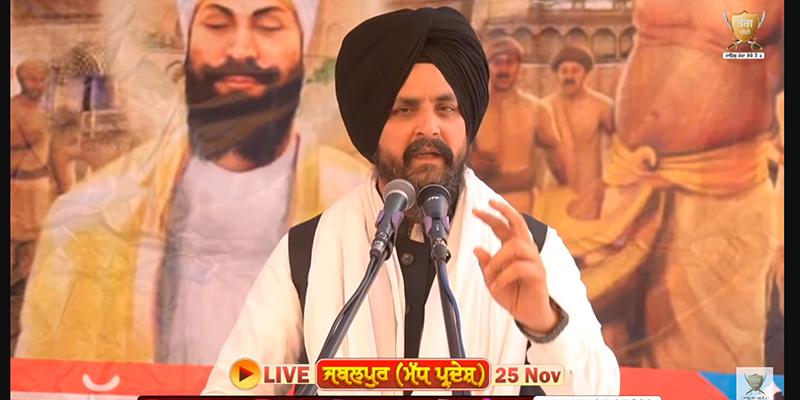
Bhai Sarabjeet Singh Dhunda talked about rethinking Images of the Sikh Gurus in a talk at Jabalpur, Madhya Pradesh, in November 2025 commemorate the 350th martyrdom of Guru Tegh Bahadur – Photo: Asia Samachar screengrab
By Asia Samachar | Sikh Faith |
What can contemporary Sikhs learn from the martyrdom of Guru Tegh Bahadur?
In a recent talk delivered in Jabalpur, a city in the Indian state of Madhya Pradesh, Sikh preacher Bhai Sarabjeet Singh Dhunda highlighted several key points that invite reflection on Sikh history, practice and personal discipline. Sikhs are commemorating the 350th martyrdom of the ninth Guru.
1. Rethinking Images of the Sikh Gurus
Bhai Dhunda noted that many Sikhs have an imprecise or superficial understanding of the images commonly circulated as portraits of the Gurus. These pictures—widely sold in markets and displayed in homes around the world—are often adorned with flowers or incense. He reminded the Sangat that such depictions are artistic imaginings, not historically verified representations, and that over-reliance on them can shift attention away from the Gurus’ actual teachings.
He highlighted that Guru Tegh Bahadur was among the most widely travelled of the Sikh Gurus. He revisited several distant locations originally visited by Guru Nanak during his travels, reaffirming the universal spirit of the Sikh message and strengthening Sikh presence across far-flung regions.
3. The Gurus Directed Sikhs to the Shabad, Not Their Physical Form
Bhai Dhunda emphasised that the Sikh Gurus did not encourage the painting or worship of their physical form. Instead, they consistently directed the sangat towards the Shabad—the divine Word— as the true focus of spiritual practice.
He referenced Bhai Gurdas Ji:
gur murat gur shabad sunn, sad sangat aasan nerankaari (Bhai Gurdas Ji, Vaar 11, Pauri 2)
This line reinforces the idea that the Guru’s real image (murat) is the Shabad itself, experienced in the company of the true sangat.
One of his strongest appeals was directed at couples preparing for marriage. He urged them to take personal responsibility by completing the conclusion of a Sahej Paath —the continuous, flexible reading of the Guru Granth Sahib — on their own, rather than outsourcing it.
He suggested that couples begin reading the Guru Granth Sahib months before their Anand Karaj, allowing the Bani to shape their understanding, values and approach to building a life together.
“Today, Bani has left our homes. It is no longer read,” he lamented, urging Sikhs to revive the centrality of Gurbani in daily life.
ASIA SAMACHAR is an online newspaper for Sikhs / Punjabis in Southeast Asia and beyond. You can leave your comments at our website, Facebook, Twitter, and Instagram. We will delete comments we deem offensive or potentially libelous. You can reach us via WhatsApp +6017-335-1399 or email: asia.samachar@gmail.com. For obituary announcements, click here
ASIA SAMACHAR is an online newspaper for Sikhs / Punjabis in Southeast Asia and beyond. You can leave your comments at our website, Facebook, Twitter, and Instagram. We will delete comments we deem offensive or potentially libelous. You can reach us via WhatsApp +6017-335-1399 or email: asia.samachar@gmail.com. For obituary announcements, click here
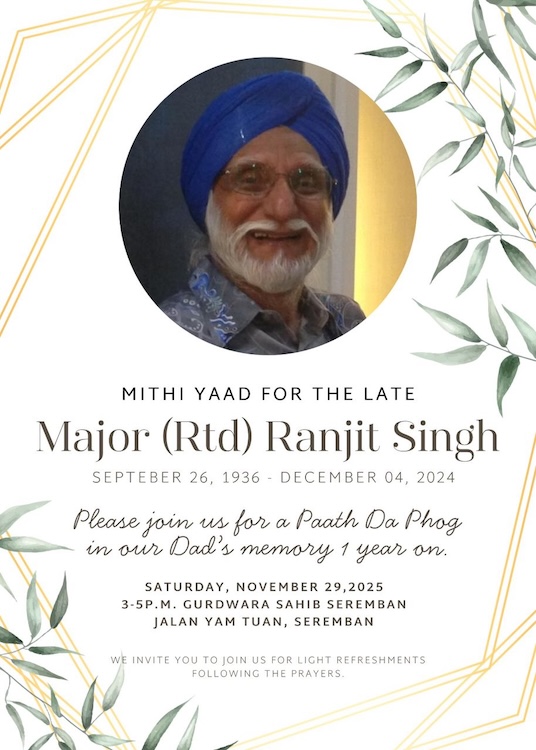
A year has passed, yet the memories of your love continue to warm our hearts. Forever cherished, forever missed.
Family and friends are warmly invited to join in First Barsi prayers at Gurdwara Sahib Seremban on Thursday, 1st January 2026 from 10:00 a.m – 12 noon followed by Guru Ka Langgar.
Link to posting at Facebook and Instagram
| Entry: 26 Nov 2025 | Source: Family
ASIA SAMACHAR is an online newspaper for Sikhs / Punjabis in Southeast Asia and beyond. You can leave your comments at our website, Facebook, Twitter, and Instagram. We will delete comments we deem offensive or potentially libelous. You can reach us via WhatsApp +6017-335-1399 or email: asia.samachar@gmail.com. For obituary announcements, click here
Award-winning journalist Haresh Deol, who has been reporting extensively on the ‘doctored documents’ scandal involving seven so-called “heritage players” alleged to have obtained Malaysian citizenship fraudulently, was attacked in Bangsar, Kuala Lumpur, about 3.30pm today.
He had just concluded a meeting and was walking towards his car when he noticed two burly men loitering nearby.
Sensing trouble, Haresh ran but was knocked down by a third man who was at the scene. He fell to the ground as the two men attacked him. The man who knocked him down used his mobile phone to record the assault.
The attackers fled immediately, and no belongings were taken.
Haresh, the co-founder and editor of Twentytwo13, subsequently lodged a police report at the Brickfields District Police Headquarters and will undergo a medical examination.
Both his elbows were left bloodied, and he suffered bruising to his nose.
Twentytwo13 co-founder and managing editor Pearl Lee urged the authorities to investigate the matter thoroughly.
“Haresh is a respected and well-known journalist, and this incident marks the first such attack in his 25-year career. The assault on him is not only a personal attack but also an attack on Twentytwo13, an attack on journalism and the Malaysian media industry,” said Lee.
She called for swift action and justice.
National Press Club president Datuk Ahirudin Attan also strongly condemned the assault on Haresh, who is his deputy.
“The attack on Haresh is cowardly and feudal,” said Ahirudin.
ASIA SAMACHAR is an online newspaper for Sikhs / Punjabis in Southeast Asia and beyond. You can leave your comments at our website, Facebook, Twitter, and Instagram. We will delete comments we deem offensive or potentially libelous. You can reach us via WhatsApp +6017-335-1399 or email: asia.samachar@gmail.com. For obituary announcements, click here
The gist of its meaning in English as given by Professor Sahib Singh in Sri Guru Granth Darpan (full Panjabi text in the footnote):
O seekers, give up the pride of the mind, physical desire, anger, and the company of harmful people. Keep away from them day and night. Pause. See comfort and pain as equal. See honour and dishonour as equal. A person who rises above joy and sorrow understands the essence of life. Leave flattery. Leave slander. Search for the state free of cravings. This path is hard. Nanak says that only those guided by the Guru come to know it. (Sri Guru Granth Sahib, Ang 219)
These lines give shape to his spiritual vision. He points directly to the movements of the mind: pride, desire, anger, praise, insult, joy, sorrow.
Each one steers a person into reactions that darken judgement.
Freedom appears when these pulls lose strength.
Insight grows when the mind stops leaning toward applause or shrinking from accusation.
His own life rested on this ground.
He wrote bani in 15 raags. He composed 57 sloks. Guru Gobind Singh Sahib, his son, included them in Sri Guru Granth Sahib.
Guru Tegh Bahadar Sahib’s compositions move with restraint. They guide the seeker toward a state where thought gains balance and depth.
The execution under Mughal orders in Chandni Chowk revealed this inner state with startling force. His body fell. His vision held firm. His life showed how spiritual depth can steady a human being when power presses hardest. His martyrdom speaks both to devotees and to those who follow no organised faith.
The shabad in Raag Gauree continues to guide those who seek a life of integrity. It calls for attention to the mind. It asks for an honest look at impulse and reaction. It opens a path that reaches across centuries.
Humanity marks his martyrdom because his message belongs to all.
Harmeet Shah Singh is a career journalist currently serving as Communications and Advocacy Director at UNITED SIKHS (UK), a charity registered in England and Wales.
* This is the opinion of the writer and does not necessarily represent the views of Asia Samachar.
ASIA SAMACHAR is an online newspaper for Sikhs / Punjabis in Southeast Asia and beyond. You can leave your comments at our website, Facebook, Twitter, and Instagram. We will delete comments we deem offensive or potentially libelous. You can reach us via WhatsApp +6017-335-1399 or email: asia.samachar@gmail.com. For obituary announcements, click here
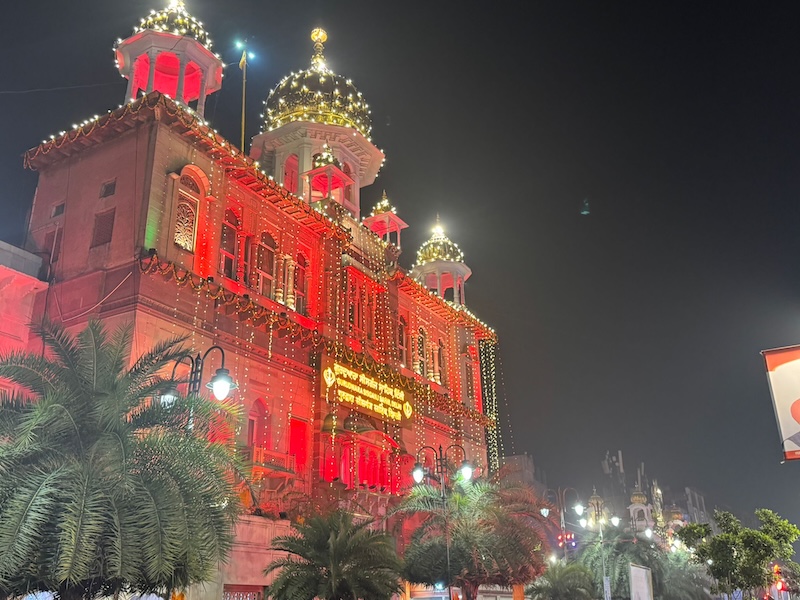
Gurdwara Sahib Sis Ganj, Delhi during the commemoration of Guru Tegh Bahadur’s martyrdom on 23 Nov 2025 – Photo: Daljit Singh Khalsa
By Daljit Singh Khalsa | Experience |
Earlier this week, as I walked through the storied lanes of Chandni Chowk, I felt an irresistible pull drawing me towards Gurdwara Sis Ganj Sahib. Long before my eyes met the sacred domes, a serene and powerful presence descended upon me — a presence so tender, yet so majestic, that it felt as though Guru Tegh Bahadur Sahib Ji Himself was guiding my steps. In that moment, the bustling city seemed to fall away, replaced by a quiet spiritual embrace.
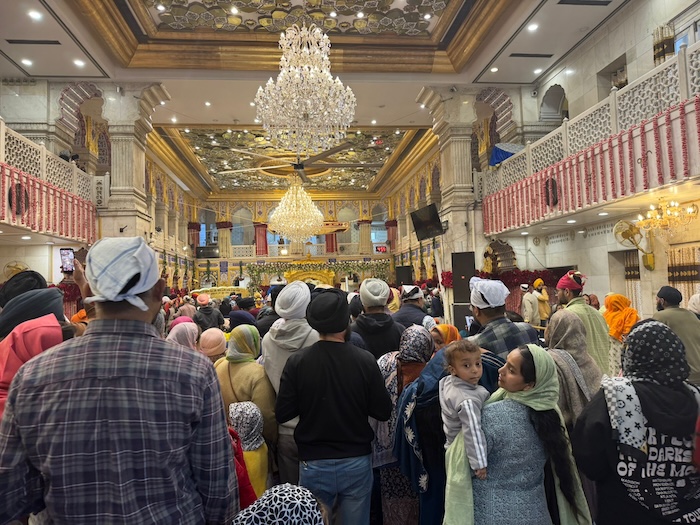
The entire vicinity was overflowing with devotees. Every passageway, every balcony, every open space throbbed with life, as multitudes gathered not simply to visit a historical shrine, but to receive the Guru’s eternal grace on the sacred occasion of Shaheedi Diwas. What touched me deeply was the diversity of faces — Sikhs, Hindus, Muslims and people of various traditions — all standing together in reverence for the Guru who surrendered his life so that others might live with freedom of belief. His compassion had transcended boundaries then, and continues to do so even now.
Inside, the Gurdwara shone with a divine quietude. Fresh blossoms, lovingly arranged, adorned every corner, and the sangat resonated with heartfelt Simran. The sangat’s devotion carried the weight, depth, and gratitude of 350 years of remembrance. Just nearby, the Red Fort — a witness to the very events that shaped Sikh destiny — hosted the grand samagam honouring the supreme martyrdom on 24 November 1675, when the Ninth Guru offered His sacred head for the protection of human dignity.
As I stood before the sanctum, time itself seemed to soften. I could almost behold that fateful moment when the executioner’s sword fell in Chandni Chowk — when a saint of fifty-four years, clothed in serenity and sovereign courage, offered his life so the oppressed could keep their faith. Three and a half centuries have passed, yet his sacrifice continues to burn like an immortal flame, illuminating the hearts of millions across the world.
An imaginary sketch of Guru Tegh Bahadur – Photo: Daljit Singh Khalsa
Wherever I travelled — Delhi, Amritsar, Anandpur Sahib — I felt the same spiritual tide rising among the people. The gurdwaras were filled not out of mere tradition, but out of profound love and devotion. People came in unending streams, holding candles of remembrance for the Guru who defended truths that were not his own. It became clear to me that Guru Tegh Bahadur Sahib Ji is not claimed by a single community — he stands as a guardian of all humanity.
In reflection, my heart returned to the journey of this saint-warrior. Born in 1621 in Amritsar, nurtured in a home where scripture and sword rested side by side, he grew into a Guru who travelled tirelessly through towns and remote villages. His presence dissolved caste, uplifted the downtrodden, and awakened courage among those crushed by despair. From Bakala to Anandpur, from Patna to Assam, he brought a message of equality that reached far beyond the boundaries of Punjab.
A large gathering at Gurdwara Sahib Sis Ganj, Delhi on 23 Nov 2025 to commemorate the martyrdom of Guru Tegh Bahadur – Photo: Daljit Singh Khalsa
It was this very compassion that drew a group of Kashmiri Pandits to him in the summer of 1675. Though their faith differed from his, their suffering pierced his heart. When his young son asked who could confront such tyranny, the Guru responded with quiet strength. He knew the path to Delhi led only to martyrdom, and yet he walked it with the tranquillity of one who has surrendered wholly to the Divine Will.
In Chandni Chowk, he was offered three choices: perform a miracle, embrace Islam or face death. He chose death — not for glory, not for power, but so that the light of religious freedom might never be extinguished. When the sword descended, the heavens themselves seemed to tremble. His sacred head was carried to Anandpur under the cloak of night; his body was cremated by a Sikh who set fire to his own home so that the Guru’s remains would not be desecrated.
Standing in Sis Ganj Sahib, I realised that these were not distant events — they were living truth. His martyrdom reshaped history, inspired the creation of the Khalsa by Sri Guru Gobind Singh Ji, and laid the foundation for standing fearlessly against injustice of every kind.
Guru Tegh Bahadur Sahib Ji’s eternal message continues to echo across the ages:
ਭੈ ਕਾਹੂ ਕਉ ਦੇਤ ਨਹਿ ਨਹਿ ਭੈ ਮਾਨਤ ਆਨ ॥ Bhai kahu ko det nahin, nah bhai manat aan. “Be fearless, and cause no fear.”
In a world still burdened by coercion and conflict, his example remains a guiding star. His courage is not only Sikh heritage — it is human heritage. His life teaches us that to protect the freedom of another is to deepen our own spiritual truth.
As I stepped out of Gurdwara Sis Ganj Sahib, my heart felt transformed. The fragrance of flowers, the melodious Simran, the collective reverence of the sangat — all merged into one sacred whisper: Remember the day. Remember the sacrifice. Remember the Guru who offered His head so that humanity could keep its soul.
physical structures, but the very soul of Anandpur Sahib.
Daljit Singh Khalsa, a UK-based practitioner with over 50 years of experience in both medical and mental health field, is a devout Sikh and an avid traveller. Physical fitness, spiritual discipline and sewa(selfless service) form the core of my daily practice.
ASIA SAMACHAR is an online newspaper for Sikhs / Punjabis in Southeast Asia and beyond. You can leave your comments at our website, Facebook, Twitter, and Instagram. We will delete comments we deem offensive or potentially libelous. You can reach us via WhatsApp +6017-335-1399 or email: asia.samachar@gmail.com. For obituary announcements, click here