UA-56202873-1
Page 478

Need for early Sikh settlers museum 

1
Dya Singh (left) with Tarlochan Singh
By Gurmukh Singh | OPINION |

In November 1994, Dya Singh of Australia published his Research Project and Dissertation for his BA in Aboriginal studies at the University of South Australia. The renowned singer of Gurbani in world music genre was an accountant by profession. He started the Introduction with these words: Since coming to Australia in 1980, I have been intrigued by the number of non-Sikhs who carry the surname “Singh”……which was invariably used as a surname when Sikhs travelled outside Panjab.

So, Dya Singh developed a habit of stopping in small towns in Australia when on long journeys and checking the local telephone directories. He was never disappointed and always found some “Singh” names. He wondered if they had Sikh connections. Soon he started meeting some people with those names who confirmed that, indeed, their ancestors were Sikhs! Dya Singh continued with his degree project and by completion had discovered many such families. Some had kept old photographs of early migrant Sikh Australians. Prompted by these discoveries, others in Australia followed to uncover more information about early Sikh settlers in Australia going back to 1848 when a Sikh migrant had opened his bank account in Adelaide, South Australia.

I was reminded of above research by Dya Singh by a recent communication from Sardar Tarlochan Singh, ex-MP and former Chair, National Commission for Indian Minorities. To quote, “I wrote this earlier also that we should make an effort to have a complete history of arrival of Sikhs in UK and have a permanent place which could be a sort of museum. The Sikh diaspora is now well settled and have all the resources to take up this project. I have seen such a museum in Mauritius, depicting the arrival of Biharis in that country. Near the Statue of Liberty in New York, there is a museum of the arrivals of white men in America. Since our arrival in UK, Canada and America is 125 years old, it is easier to collect documents and newspaper articles and oral history…I hope similar efforts would be made by the Sikhs in all other countries where they are settled.”

There are many non-Sikh examples in America like the museum of early settlers in Virginia. In 1607, Jamestown in Virginia was the first UK settlement in North America. There are other similar museums at Maryland and Alabama.

From Australia, Dya Singh has confirmed that there is a small organisation in Perth called the Sikh Heritage Trail which has done good work in tracing Sikh history there with the possibility of a Sikh heritage museum in due course. However, he thinks that British Sikhs should take a lead.

In the UK, Anglo-Sikh Heritage Trail and Panjab Heritage projects are similar. S. Tarlochan Singh feels that in late S. Harbinder Singh Rana the Sikhs have lost one of the most dedicated visionaries. Having worked with Harbinder Singh Rana on the Wellington Arch “Jawans to Generals” exhibition in 2002, I agree. Much material has already been collated: Peter Bance has published Sikhs in Britain: 150 Years of Photography. Led by S. Harbinder Singh Rana, much work has been done by Maharaja Dalip Singh Trust and Anglo-Sikh Heritage Trial. Amandeep Singh Madra OBE of UK Punjab Heritage Association is also active. The project can be developed as a wing of another museum like the Sikh Museum at Derby.

So, Sardar Tarlochan Singh is keen that there should be a proper place to house the story of Sikhs in the UK and that the earliest arrivals should be described with proper records, photos and artefacts. The museum should also have a gallery of Sikh achievers.

He suggests that such a project should be considered by those with expertise in the field. Similar museums should come up in diaspora countries. With dedicated teamworking, England is in a good position to take a lead and guide others.


Gurmukh Singh OBE, a retired UK senior civil servant, chairs the Advisory Board of The Sikh Missionary Society UK. Email: sewauk2005@yahoo.co.uk. Click here for more details on the author.

* This is the opinion of the writer, organisation or publication and does not necessarily represent the views of Asia Samachar.


RELATED STORY:

Sikhi: The Path for the New Age (Asia Samachar, 17 May 2020)

How coronavirus can change the world (Asia Samachar, 29 April 2020)


ASIA SAMACHAR is an online newspaper for Sikhs / Punjabis in Southeast Asia and beyond. Facebook | WhatsApp +6017-335-1399 | Email: editor@asiasamachar.com | Twitter | Instagram | Obituary announcements, click here |

On two Sikh doctors shaving their beards

0
Dr. Sanjeet Singh-Saluja is a physician who works in the ER at McGill University Health Center (MUHC).
By Parvitar Singh | OPINION |

When the news broke about two Sikh doctors shaving their beards to serve in the frontlines more efficiently (in their words), many emotions flared up whilst at the same time there were many who were in solidarity.

I received many messages two weeks ago asking my view on this issue and some were even in praises on how Sikhs have always stepped up and sacrificed to serve humanity.

I chose not to reply to most of the messages because I was perplexed myself. I was trying to reconcile with many factors – religious, spiritual, social, political, physical, mental, personal and emotional. I also wanted to study the viewpoints of these doctors carefully and hear what what other individuals and Sikh establishments have got to say about this issue.

Coming from a biotechnology (research) background and the study of viruses and bacteria was something day in, day out for me. From a purely scientific viewpoint, I understand how contagious and deadly this virus is, how complex its genetic make up is, how it affects the human respiratory system and possibly even the circulatory system. Therefore mandating the emphasis of personal protection, personal hygiene, social distancing and etc.

Now the beard, and even hair, is sacred for Sikhs. In the form of tenets, it is an absolute taboo to remove our hair. In fact, many Sikhs rather lose their lives than give up their hair as witnessed in history. The list goes on when it comes to the supreme sacrifices of many Sikhs who chose death over giving up their tenets.

As a young kid, my mother use to sing this as a lullaby to me: Seer Jaye Ta Jaye Mera Sikhi Sidakh Na Jaye. Translation: If I have to lose my head, so be it
May I never lose my Sikhi and the practices that come with it.

SEE ALSO: The false choice presented to Sikh doctors serving COVID patients

I myself grew up with my hair unshorn, and eventually the beard came along. Got teased, mocked and bullied in school for my appearance.

It didn’t get any easier in the army – as a combatant it also meant getting down & dirty during PT, trainings, and even spending days in the jungle without showers.

In all of that, I chose not to waiver on my tenets because they are deeply engrained in me and I understand the importance of staying true to my tenets.

Beside these two Canadian doctors, we’ve got many Sikh doctors and nurses around the globe who are serving in the frontlines. In fact, a month ago or so, an elderly Sikh doctor in the UK had lost his life to Covid-19. Many Sikh doctors are serving the frontlines with their beards and donning the personal protective equipment (PPE) and I’m sure it’s challenging given how heat traps in the PPE and they’ve got to withstand long shifts. [See here]

In the case of these two doctors, they’ve shared how it was difficult for them to make this decision, how it has upset them but they found it necessary as it limited their capacity to work and the lack of PPE in their part of the world.

Many Sikhs and Sikh institutions responded with emotion, questioning their strength in the upkeep of the tenets and even provided alternatives that Sikh frontline stuff can adopt to steer around the beard.

I questioned myself for many days and finally reached to these conclusions:

  1. The emotion, anger and sadness that some Sikhs expressed is understandable given how these tenets have seen sacrifice of lives for us to even be practicing them and more importantly, how it has been preached, practiced and passed down from the Sikh Gurus.
  2. To those who showed solidarity aren’t wrong either – perhaps they come from a space of understanding that these doctors are doing their job, adjusting to unprecedented times given the lack of PPE and are putting their personal safety and of their patients as priority.
  3. Religious policing – it can be healthy and unhealthy. Healthy because it gives the religion and more importantly its practices a certain decorum, discipline, format and system. It becomes unhealthy when it becomes intrusive, an avenue for degradation and discrimination and starts going against the very teachings of the religion.

In this case I disagree with all the discriminative viewpoints against these doctors but I understand the less spoken fear of many Sikhs – they wouldn’t want the examples of these doctors become a precedence, an instrument of influence and possibly having this case study taken on a political level where anti – beard polices or measures are put in place thus affecting Sikhs who truly want to do their jobs while practicing their faith.

This fear is valid, it’s the crux of the matter and can be possibly be worrying for Sikhs who are already bearing the brunt of high levels of racism and policies that discriminate against the Sikh tenets especially in the West and Europe.

I personally believe that Sikhism is a highly personal journey between a Sikh and their Creator. In the end, as stated in our scriptures, we are answerable for our own actions.

As human beings being judgemental is something we can’t run away from but I’d urge everyone to have healthy discourses and debates rather than resorting to unhealthy religious policing that may adversely affect those who are either attempting to follow the religion, have their faith already shaken, the ones who are questioning their faith and those who are at the verge of exiting the faith.

I empathise with these doctors and I can’t say I support their decision but I wouldn’t judge them for their decision either because they know their situation best.

In all of this my only concern is having this episode becoming ammunition for the development of policies that can possibly be discriminative and disadvantageous for Sikhs who truly want to serve and do their jobs while keeping and practicing their tenets.

Sikhs are known to be versatile and flexible. We’ve proved time and again that we can serve, work and conduct ourselves efficiently regardless of industry. I guess a lot of the emotion also stems from how many Sikhs have done their part no matter how difficult it has gotten while doing what is required from them and I share the same sentiments.

I am grateful for the Sikh institutions and individuals who have gone out of their way to demonstrate how Sikh males can safely don their PPE with the beard as well as some of the alternatives that can be safely adopted however my very humble request to all Sikhs including the institutions – let’s always come from a place of understanding, empathy, research and education. These are in fact the very fundamentals of Sikhism and that gives us the uniquely neutral global image.

Parvitar Singh is a Singapore-based youth leader who’s passion lies in understanding people, polices and worldview to do his part in making this world a better place.


RELATED STORY:

Sikh officer makes history for Alameda County (Asia Samachar, 21 May 2020)

Dealing with loss, separation during Covid-19 crisis (Asia Samachar, 13 May 2020)


ASIA SAMACHAR is an online newspaper for Sikhs / Punjabis in Southeast Asia and beyond. Facebook | WhatsApp +6017-335-1399 | Email: editor@asiasamachar.com | Twitter | Instagram | Obituary announcements, click here |

Facemask & turban hacks

0

Having trouble fixing your mask over the turban? Yes, the ‘ear’ thing. Worry no more. 16 year-old Dheerej Singh, an active member of a Kuala Lumpur gurdwara, hacks a solution. Check out the video at Asia Samachar Facebook page. Click here.

ASIA SAMACHAR is an online newspaper for Sikhs / Punjabis in Southeast Asia and beyond. Facebook | WhatsApp +6017-335-1399 | Email: editor@asiasamachar.com | Twitter | Instagram | Obituary announcements, click here |

8 Malaysian gurdwaras set to restart prayers under strict conditions

Gurdwara Sahib Sandakan in 2012 – Photo: Facebook page of Rupinder Singh
By Asia Samachar Team | MALAYSIA |

Eight gurdwaras have been permitted to operate on Sundays and under strict conditions from 10 June onwards as the Malaysian authorities try to open up places of worship in the next stage of the battle against the Covid-19 pandemic.

Eighteen of the 26 gurdwaras that applied for operating permission did not make the cut at they were located in the red or yellow zones of the nation’s novel coronavirus tracker.

The eights gurdwaras – five from Perak and one each from Perlis, Johor and Sabah – are part of the 174 non-Muslim places of worship in green zones that will be allowed to open on selected days starting Jun 10, said Malaysian senior minister Ismail Sabri Yaakob in a press conference yesterday (21 May).

Four of the gurdwaras approved in the first round loosening for places of worship are from the Kinta Valley in Perak. They are Gurdwara Sahib Greentown Ipoh, Wadda Gurdwara Sahib Ipoh, Tambun and Bercham. Tapah is the other gurdwara from Perak. The other gurdwaras are Kangar, Muar and Sandakan.

The gurdwaras are only allowed to open on Sundays from 7am to 2pm and must keep its gates closed at other times.

“Most gurdwaras nationwide didn’t apply. Even our advise was they should only apply if they are from the green zone and that they can comfortably comply with the very strict operating conditions,” Malaysian Gurdwaras Council (MGC) president Jagir Singh told Asia Samachar.

The Council of Churches of Malaysia (CCM) has decided to continue to keep churches closed until the movement control order (MCO) is lifted, according to local media reports.

The movement control order (MCO), which took effect since March 18 to rein in the spread of COVID-19, saw the shutdown of prayer and all gatherings at places of worship nationwide.

MGC, which is representing the gurdwaras in meetings with the national health authorities, will be issuing a letter tomorrow to its members to outlines the conditions imposed by the health authority. A copy was emailed to Asia Samachar.

In the letter, MGC has outlined the following points from the SOP:

(i) At one time there can only be maximum of 30 persons allowed to enter and strict Social Distancing to be observed.

(ii) Signboards relating to Social Distancing of at least 1 Meter should be put up.

(iii) Sanggat members who are above 70 years old and below 12 years old are not allowed to be present. This is for their own safety. This does not apply to Granthi Sahiban and Gurdwara staff.

(iv) Must set-up a centre and provide a book for Sanggat members to record their Name and Contact Number. No record of a person’s temperature is required.

(v) All present at Gurdwara Sahib must wear Masks for the duration they are there.

(vi) The Gurdwara committee members and the Sanggat attending must carry with them their identity cards.

(vii) The gates of the Gurdwara can only be opened for the period allowed for Prayer and to be closed immediately after Sanggat members have left.

(viii) No Langgar is allowed. However, “Packed Food” can be given out but cannot be eaten at the Gurdwara Sahib.

(ix) Strict cleanliness and Social Distancing to be observed at all times while at Gurdwara premises.

On applications from other gurdwaras to restart programmes, MGC said the committees can submit the form entitled “Cadangan Rumah Terpilih Dan Berdaftar Dalam Zon Hijau Semasa Tempoh Perintah Kawalan Pergerakan Bersyarat (PKPB)”, which has been distributed to all gurdwaras.

As for the remaining 113 gurdwaras, Jagir said they have been advised to continue to follow the earlier SOP, which include keeping their gates closed and ensuring no functions or Langgar allowed in the gurdwara premises.

For death, the sadharan paath (intermittent reading of the entire Guru Granth Sahib) can be commenced at the gurdwara and the antham ardas can be done.

“Here family members must report to the police and fill up the MCO form. The police will give direction and can allow up to 10 persons. For the purpose of cremation rites, there can be up to 20 family members gathered in the family house,” he said in the letter.

As per a directive form the National Registration Department dated 12 May, all marriage ceremonies are postponed until 31 July 2020.

“Some Gurdwaras have been carrying out welfare work in the past, which may be continued but the Gurdwaras gates to remain closed,” he said.


RELATED STORY:

Malaysian gurdwaras to cancel Vaisakhi celebration (Asia Samachar, 27 March 2020)

ASIA SAMACHAR is an online newspaper for Sikhs / Punjabis in Southeast Asia and beyond. Facebook | WhatsApp +6017-335-1399 | Email: editor@asiasamachar.com | Twitter | Instagram | Obituary announcements, click here |

E-Akhand Path for Malacca annual prayers

0

MALACCA 2020 | Official link for 48th Sant Baba Sohan Singh Ji Salana Yaadgiri E-Akhand Path from Gurdwara Sahib Melaka | Starts 6am Malaysian time (10pm GMT) 22 May 2020. Ends 1pm Malaysian time (5am GMT) 24 May 2020


RELATED STORY:

The most respected Sikh in Southeast Asia (Asia Samachar, 20 May 2020)

ASIA SAMACHAR is an online newspaper for Sikhs / Punjabis in Southeast Asia and beyond. Facebook | WhatsApp +6017-335-1399 | Email: editor@asiasamachar.com | Twitter | Instagram | Obituary announcements, click here |

In My Hands

1
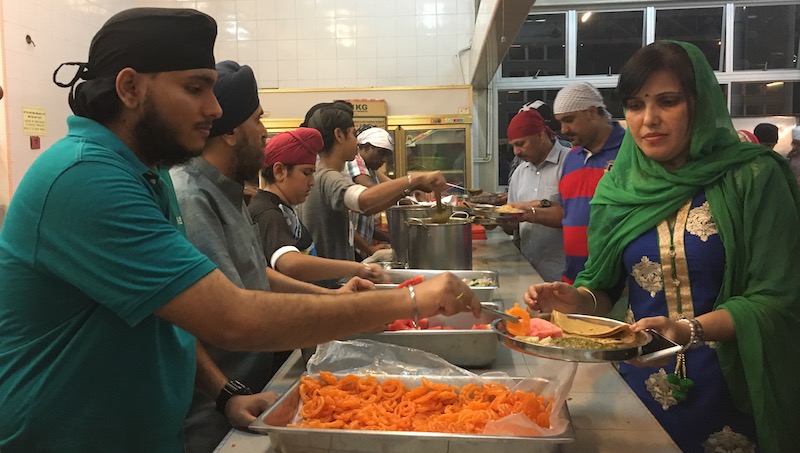
Serving Langgar at a Kuala Lumpur gurdwara – Photo: Asia Samachar file photo, 2018
By Akashdip Singh | OPINION |

It is a Sunday afternoon, May 2020. The last two months has changed my perspective on what I used to consider normal. With the pandemic, it is no longer acceptable to shake hands, let alone giving someone a hug. When situation returns to ‘normal’ or perhaps the ‘new normal’; however we may want to call it, one major aspect that should not be taken for granted is the community kitchen in our Gurdwaras.

Today we generally serve ‘karah parshad’ [also called degh] once the programme is complete with bare hands. During langgar, we serve bread (parshada) with bare hands as well. Do we want to continue doing this? Should we consider using a ladle for serving karah parshaad and putting on gloves or using tongs when serving parshada to avoid direct contact?

I have observed sewadaars (volunteers) using their phones when they are serving. I am particularly concerned about the food that is being served that has direct contact with the bare hands. We have heard that the phone is a playground for germs; yet we accept food from the sewadaars whom we may have seen using their phones when they are serving during langgar. We take the easy way out, not wanting to be impolite and we do not tell them to wash their hands.

Today, the situation is different. We are currently experiencing a global pandemic. Should we still accept it being normal to serve using bare hands? What could the implications be if we were to continue doing this? The main reason for not touching food that is ready to eat with bare hands is to prevent viruses and bacteria from contaminating the food that could still be present even after hands are washed.

All of us who attend Gurdwara need to give this a thought as I am sure that we do not want to saunter through life from this point onward. May Guruji grant us the wisdom to do the right thing.

The author, Akashdip Singh, is a consultant based in Kuala Lumpur. He views life as a journey that has shaped his outlook to see the richness of the universe in all situations. 


RELATED STORY:

Covid-19 and spectre of Fascism (Asia Samachar, 20 May 2020)

ASIA SAMACHAR is an online newspaper for Sikhs / Punjabis in Southeast Asia and beyond. Facebook | WhatsApp +6017-335-1399 | Email: editor@asiasamachar.com | Twitter | Instagram | Obituary announcements, click here |

Sikh fragmentation in UK and globally

Promo photo for Sikh Federation UK’s national convention in 2019 – Photo: SFUK Twitter
By Gurnam Singh | OPINION |

Most people will be familiar with the idiom, ‘one step forward, two steps back’. Well I sometimes feel when it comes to Sikhs, it is a case of ‘one step forward, five steps back’.

Sikh history is replete with heroic accounts of struggle against oppressive rulers. And often for very modest demands, and we have been successful in gaining concessions and much more. For example, the struggle to gain control of the Gurdwaras with the Gurdwara Reform Movement (Sudhar Lehar) in the 1920’s, to the establishment of Sikh rule during the periods of Banda Singh Bahadur and Maharaja Ranjit Singh in the early 18th and 19th Centuries. However, because of a combination of infighting, complacency and divide-and-rule strategies deployed by state actors, often as a panth, we have ended up losing more than we have gained and this has resulted in a roller coaster history of collectivism and fragmentation.

Sadly, when one looks across the world, in the age of social media, it does appear like Sikhs have entered a phase of deep divisions over any range of issues, from demands for a Sikh State in India, doctrinal differences and Sikh representation. This rupture is possibly most powerfully illustrated in the fact we currently have two jathedars of the Akaal Takht, the supreme temporal authority of the Sikh Panth, namely, Jathedar Harpreet Singh, who was appointed by the SGPC and Jathedar Jagtar Singh Havara, currently serving a life sentence in Tihar Prison, Delhi, who was appointed at the Sarbat Khalsa gathering on 10 Nov 2015.

In an age of social media and the internet, even if the source of conflict is local, the ripples rapidly spread across the world and we all become impacted.

A good example is the personal dispute between Sikh preachers (parcharaks) Harnam Singh Dhumma and Ranjit Singh Dhadriawal. After a period of trading insults the dispute resulted in the tragic murder of Bhai Bhupinder Singh following an armed assault on Ranjit Singh’s conclave on 17 May 2016. The fall-out of this dispute rapidly spread across the Sikh world resulting protests and conflict in Gurdwaras from Australia to Europe and North America. Sadly, today Sikhs are more likely to ask which preacher one is following rather than what Guru Granth Sahib is teaching us!

Presently, most Sikhs are preoccupied with coping with the COVID-19 crisis, and sadly many have been directly or indirectly touched with the tragic ill health and death of loved ones.

Due to government enforced lockdowns, many Gurdwaras have been closed off for months and this enforced separation from the Guru and Sangat (congregation) has been a source of much distress and grief. On top of this, Gurdwara management committees are having to deal with the dramatic reduction in donations, which has massively destabilised their finances. In spite of these challenges, to their credit, many Gurdwaras have been performing amazing voluntary service, including providing langar and clothing to the most needy and front line professionals fighting the virus.

In the UK, we are seemingly entering a new phase where the novel coronavirus is in recession and the Government therefore wants to slowly reduce the lockdown by opening schools, work places, shops, etc. To facilitate this, the Government recently established a ‘Task Force’ to look at the opening up of places of worship, including Gurdwaras. As stated by the Communities Secretary, Robert Jenrick, on 15 May 2020, their role is to “develop a plan to enable the phased and safe reopening of places of worship when the evidence shows it is the right time to do so”.

One might have thought this was a pretty uncontroversial move and Sikhs would have welcomed this. However, when the members of the task force were announced, and it was revealed that the Sikh rep would be Jasvir Singh from an organisation called City Sikhs, there was uproar amongst significant sections. Though an eminent barrister and public personality, the view was that as a ‘non-practicing’ Sikh with little involvement in or experience of gurdwara management, he was not a suitable person to be identified as a Sikh ‘faith leader.’ Furthermore, it was felt that given the representatives for the other faiths were the very high status personalities, such as the Archbishop of Canterbury and Chief Rabbi, this move by the UK Government was adding insult to injury.

Subsequent to the appointment, there has been a major fallout between various representative Sikh groupings. On one hand, we have the well-established Sikh Federation UK and the Sikh Council UK, who have openly challenged the Governments move and totally rejected the appointment of Jasvir Singh. In the other camp is the relatively newly established groups called Sikh Assembly and Gurdwara Aid, who have adopted a more pragmatic stance and have sought to engage with the task force.

The question that most ordinarily Sikhs are asking, how could we have come to a situation where the Sikh Council UK, which until recent times was recognised by the UK Government as the legitimate voice of Sikhs, has been side-lined at such an important moment? To answer this question, we need to delve into the recent history of Sikh politics in the UK.

HISTORY OF UK SIKH POLITICS

Some 10 years ago, in the UK, with the onset of Sikh television media, we saw the establishment of the first ever Sikh TV Channel, called The Sikh Channel. Its mission was simple, ‘to bring millions of Sikhs together’. I was honoured to have been part of this history as a presenter of a weekly debate show in front of a live audience called ‘Panth Time’. The aim was to create an open platform for Sikh communities across the world, but mostly in the UK, to engage in open and respectful dialogue about all matter of things concerning the Sikh Panth.

It was a very successful show and we managed to create a real interest in Sikh affairs, especially amongst educated Sikh professionals and those who perhaps were previously less interested in Panthic matters. Perhaps the greatest achievement of the show was the establishment of the Sikh Council UK, which also became a blueprint for other such councils across Europe and further afield.

One of the consistent demands from Sikh Sangats up and down the country was for the establishment of truly representative a national body. This would enable Sikhs organisations to come together with a single voice to resolve internal issues, but also to make representations to government on policy matters concerning Sikhs.

So, to advance this demand, we held a “National Panth Time” which was held almost 10 years ago in April 2010 at the Maharaja Jassa Singh Ramgharia Hall in Birmingham, UK. It was a historic event with over 300 representatives from across the UK coming together in what seemed like a Sikh Parliamentary occasion. At this event, which was televised, a unanimous resolution was passed to establish an umbrella body for UK Sikhs.

For the first 6 years or so the Sikh Council UK went from strength to strength and could rightly claim to have the active engagement of the vast majority of UK Sikh Gurdwaras and organisations. And as a result, the UK Government began to consult them on a whole range of matters.

However, due to a mixture of jathebandhic and individual rivalries, personal egos and no doubt Indian and British state interference, the Sikh Council split and other bodies emerged, with some coming directly out of former Sikh Council members. Over the past few years the Sikh Council UK has without doubt hemorrhaged much support and there is now a view amongst Panthic circles that, if not being run by the Sikh Federation UK, it is significantly influenced them.

Now, concurrent to the COVID-19 crisis and the UK Govt Task Force, the Sikh Federation UK had been fighting a long campaign to have Sikhs identified as an ethnic group in the forthcoming UK wide census in 2021. However, this was rejected both by the courts and in parliament and as a result the Sikh Federation UK has launched a legal appeal against, which is to be heard soon. So when one takes into account the political developments and the fact that the Sikh Council UK has arguably lost much of its broad base, along with the Sikh Federations ongoing activism around the ethnicity tick box, it is no surprise that the UK Government has chosen to bypass them!

This year represents the 36th anniversary of the Indian State assault on the Darbar Sahib in Amritsar, resulting in terrible death and destruction and a decade of insurgency and state terror. Sikhs across the world commemorate the 6 June 1984 army assault, infamously known as ‘Operation Blue Star’, by holding protests, vigils and programmes in gurdwaras. Sadly, due to the lock down restrictions, these are likely not to happen on the scale as in previous years and for sure Sikhs will have to develop new creative ways to remember the martyrs (shaheeds) of 1984. Sadly, it feels like the growing disunity amongst Panthic groups is likely to adversely impact the commemorations as well. It seems at the moment, rather than focussing our fire and energy on the Indian State that continues to oppress Sikhs and other minorities, much of our energy and anger is being aimed at each other. And I am certain the Indian State and those who would wish to harm the Panth will be very satisfied with this state of affairs.

So, if Sikhs are to achieve some semblance of justice, both in India and in our adopted countries across the world, we really need to put our petty differences aside and begin to work together, and the only way we can achieve this if we all put our egos to one side and follow out true leader, namely Guru Granth Sahib Ji. The ONLY faith leader Sikhs have is our Guru and we are all the Sikhs of the Guru. And if we can achieve this, then perhaps we can take many steps forward without falling back.

[Gurnam Singh is an academic activist dedicated to human rights, liberty, equality, social and environmental justice. He is an Associate Professor of Sociology at University of Warwick, UK. He can be contacted at Gurnam.singh.1@warwick.ac.uk]

* This is the opinion of the writer and does not necessarily represent the views of Asia Samachar.

RELATED STORY:

Time to flip some prevailing ideas (Asia Samachar, 24 April 2020)

Sohan Singh Bhakna: Founder of revolutionary Ghadr Party (Asia Samachar, 21 Jan 2019)

ASIA SAMACHAR is an online newspaper for Sikhs / Punjabis in Southeast Asia and beyond. Facebook | WhatsApp +6017-335-1399 | Email: editor@asiasamachar.com | Twitter | Instagram | Obituary announcements, click here |

Flying Sikhs

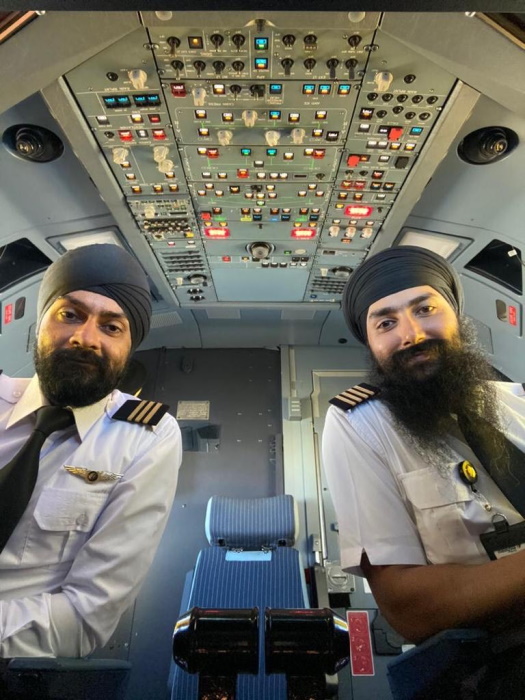
Ready to fly: Amritpal Singh (left) and Hargobind Singh at the controls of an Airbus 330 – Photo: Hargobind Singh Facebook page
By Asia Samachar Team | MALAYSIA |

Looking good! Two Sikh pilots in a cockpit of a Malaysian airliner has created some turbulence on the social media.

Commercial pilot Capt Hargobind Singh, a popular Malaysian Sikh youth leader, posted a photo of him in the cockpit with a fellow Sikh pilot Amritpal Singh – both turbanned and spotting beard.

“After many years of friendship and 12 years of being colleagues, we finally got to share the flight deck and serve Malaysia alongside one another. My first ever flight with a fellow Khalsa!,” he penned in an update on his personal social media account.

They flew an Airbus 330 on a ‘rescue’ mission to bring back the Malaysian students stranded in Cairo, Egypt. A job well done!


RELATED STORY:

Sikh officer makes history for Alameda County (Asia Samachar, 21 May 2020)

Singapore’s ace fighter pilot (Asia Samachar, 12 June 2017)

ASIA SAMACHAR is an online newspaper for Sikhs / Punjabis in Southeast Asia and beyond. Facebook | WhatsApp +6017-335-1399 | Email: editor@asiasamachar.com | Twitter | Instagram | Obituary announcements, click here |

Sikh officer makes history for Alameda County

Officer Jujhar Singh
By Asia Samachar Team | UNITED STATES |

Officer Jujhar Singh makes history as the first turban-bearing Sikh officer in Alameda County, the seventh most populous county in the state of California.

He joins the Hayward Police Department after graduating from the Alameda County Sheriff’s Office Basic Police Academy on 18 May.

The police academy was described as one of the most difficult academies in California,  according to the US-based Sikh Coalition in a social media entry.

Local television crime reporter Henry K. Lee (@henrykleeKTVU) tweeted: “Ofc. Jujhar Singh of @HaywardPD, fresh out of the @ACSOSheriffs academy, is the 1st Sikh officer in Alameda County wearing a turban. When Singh was 10, then-Capt. Darryl McAllister, who later became @UnionCityPD_CA top cop, helped plant the seed.”


RELATED STORY:

Amrit Singh makes history in Texas (Asia Samachar, 22 Jan 2020)

ASIA SAMACHAR is an online newspaper for Sikhs / Punjabis in Southeast Asia and beyond. Facebook | WhatsApp +6017-335-1399 | Email: editor@asiasamachar.com | Twitter | Instagram | Obituary announcements, click here |

The most respected Sikh in Southeast Asia

By Asia Samachar Team | MALAYSIA |

Sohan Singh was no simple granthi. No wonder that the former Malacca gurdwara granthi went on to become one of the most famous Sikhs in Southeast Asia.

Since his death in 1972, Sikhs in Malaysia and Singapore have converged annually for a prayer event in his memory. This year, for the first time since it kicked-off in 1973, the programme could not be held as usual due to the novel coronavirus threat.

So, what has been billed as the largest annual gathering of Sikhs will not be happening, not physically, at least. There are some attempts to do online programmes.

Movie production house Sri Saheb Production has released a 9-minute documentary on the iconic granthi with interviews of people who had met Baba Sohan in person.

Saran Singh Sidhu, who wrote a book on Baba Sohan, said the former granthi and parcharak (preacher) was well grounded in Sikh ethos and Gurbani as well as in ayuvedic and gatka.

Saran said he placed great emphasis on ‘naam japo’. To those who could not do so, he urged them to set aside time to listen to Gurbani.

“Mere reading is not enough. Now, you need to understand it. Understand what are the messages contained in Gurbani. Do good. That was his first lesson,” he said.

His second lesson was to earn an honest living, said the author of the book ‘Sant Baba Sohan Singh Ji of Malacca (1902-1972) – His Life and Times‘.

Dr Kulwant Singh Gill, a former Gurdwara Sahib Malacca committee president, noted that Baba Sohan was a unifying factor for Sikhs in Malaysia.

“He has been an instrumental forces in combining the Sikh Sanggat of Malaysia and Singapore,” he said.

Baba Sohan, easily the most respected granthi and parcharak in Southeast Asia, had always placed importance on proper training and education to become an effective granthi. This was clearly illustrated in his life as captured in Saran’s 425-page book.

Sohan, earlier known as Kaka Ooday Singh (Kaka), came to Malaya in 1926 when he was 24 years old.

At that point of time, he was already well versed and proficient in Punjabi folk songs (lok bolian/geet) and kavisheri (a type of traditional poetry). He was also a practicing akhand pathi and a trained in the Sikh martial art of gatka, according to the book.

After a one-year stint at Gurdwara Sahib Seremban, Sohan was then appointed as a granthi at Gurdwara Sahib Malacca.

Hakam Singh Gill (black pants) with Baba Sohan SIngh of Malacca (centre) – Photo: Family collection
Baba Sohan Singh of Malacca , Baba Sham Singh of Police Gurdwara High Street, Kuala Lumpur and Giani Harchand Singh Bassian performing an Ardas before laying the foundation stone of the Wadda Gurdwara Sahib Kampung Pandan, Kuala Lumpur on 23 August 1963 (Photo – Collection of Dya Singh, Australia, taken from OurGurdwara.com)
Baba Sohan Singh in an undated photograph

In 1932, Sohan applied for an open-dated leave from the sangat and the Malacca gurdwara management committee to return to Punjab.

“He informed the sangat that though he was returning to his village Chathewala to visit his family, his main intention was to further his studies on Sikhism. This knowledge would then enable him to do Gurmat parchaar,” according to the book.

Sohan did the Giani (an academic qualification equivalent to B.A. Honours conducted in the Punjabi language) and the Maha Giani (an academics qualification equivalent to M.A. Honours) courses. He had also studied Sanskrit.

On 10 June 1934, Sohan took over the duties of Granthi at the Malacca gurdwara. He passed away in Ipoh on 24 May 1972 after a short illness.

To view the documentary, click here.


RELATED STORY:

It’s official. Malacca semagam cancelled (Asia Samachar, 29 April 2020)

1965: Malacca naujawans happy Sant Sohan Singh back from India (Asia Samachar, 23 Aug 2017)

ASIA SAMACHAR is an online newspaper for Sikhs / Punjabis in Southeast Asia and beyond. Facebook | WhatsApp +6017-335-1399 | Email: editor@asiasamachar.com | Twitter | Instagram | Obituary announcements, click here |