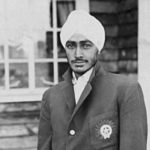
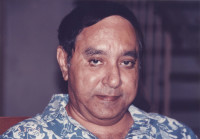
Joginder Paul’s iconic Urdu novel “Ek Boond Lahoo Ki” has been translated into English.
A Drop of Blood, as translated by Snehal Shingavi, was recently as an ebook was released by Penguin Random House India.
Paul is regarded as one of the greatest Urdu novelists of the 20th century and wrote the book in Nairobi in the late fifties when Nehruvian socialism was very much in the air in India and the author was greatly affected by class inequalities witnessed in Kenya, reports PTI.
The book has been described as a powerful satire about institutional corruption and greed cleverly exploring the insidious ways in which the mighty habitually prey upon the vulnerable. He was a penniless refugee when he migrated to Kenya after the Partition of 1947.
The book was published in 1962 at the dying end of the Nehruvian era, but expressed some of its most deeply held pieties: a socialist dispensation for India, tolerance of all religious expression, a hope for the uplift of women, and modernised and educated life for all of its citizens, the report added.
Snehal is associate professor of English at the University of Texas, Austin, and the author of The Mahatma Misunderstood: The Politics and Forms of Literary Nationalism in India (Anthem Books, 2013).
He has also translated Munshi Premchand’s Hindi novel Sevasadan (Oxford, 2005), the Urdu short-story collection Angaaray (Penguin, 2014), Bhisham Sahni’s autobiography, Today’s Pasts (Penguin, 2015) and Agyeya’s Shekhar: A Life (Penguin, 2017; co-translated with Vasudha Dalmia).
ASIA SAMACHAR is an online newspaper for Sikhs / Punjabis in Southeast Asia and beyond.Facebook | WhatsApp +6017-335-1399 | Email: editor@asiasamachar.com | Twitter | Instagram | Obituary announcements, click here |
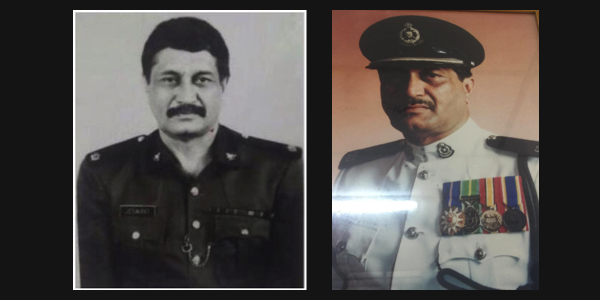
With deep sorrow, we wish to inform that D.S.P. (R) Jeswant Singh Sran passed away peacefully today, 19/5/2020, aged 80, leaving behind his beloved daughters, sons-in-law, 4 beautiful grandchildren, brother, sisters, brothers-in-law and a host of nephews, nieces, grandnephews, grandnieces and friends to mourn his loss.
A 34 year veteran of the Malaysian police force (PDRM), he was assigned to the field force in the 1960’s where as a Sub-Inspector, he had engaged the communists in firefights and was also deployed into the jungles of Johore on missions during the Confrontation. He went on to serve the country as investigating officer, prosecuting officer, and was also OCPD of Cheras, lastly serving in Bukit Aman before his retirement.
An avid reader and a sportsman all his life (starting at the Anglo Chinese School Klang), he was also an international FIFA referee during the Mokhtar Dahari/Soh Chin Aun generation, later to be the first recipient of the Golden Whistle Award by the Football Association of Malaysia (FAM). He was involved with the Kuala Lumpur Football Association (KLFA) when they lifted the Malaysia Cup for 3 consecutive years. In November 2019, he was awarded the ‘Pingat Jasa Pahlawan’ for his contributions to the country.
A larger than life personality, this hero of our nation and of our hearts will be sorely missed.
Please send any condolence messages to rememberingjeswant@gmail.com in place of a Condolence Book. We would love to hear from his friends for all to remember him by.
FAMILY BIODATA
Father: Late Sucha Singh, Banting
Mother: Late Gurdev Kaur, Banting
Wife: Late Madam Mahindar Kaur d/o Sadu Singh Chahl (Sentul)
Daughter & Spouse:
Dr Devender Kaur & Richard Charles Roberts (Liverpool)
Sarinder Kaur (Sheila) & Arvinder Singh (Delhi)
Dato’ Paduka Lakhbir Singh Chahl & Datin Dr. Harinder Kaur
Manjit Singh Chahl & Harjap Kaur (Florida)
Late Jasbir Singh Chahl & Devinder Kaur
Funeral arrangements will be announced later. However, due to the Covid-19 restrictions, we regret to inform that only a small number of immediate family members are allowed to attend. We would like to thank all relatives and friends for their heartfelt condolences.
For more information kindly contact:
Dr. Kalwant Singh Sran 019-2378402
Captain Paramjit Singh 012-3795777
Puan Jagdish 012-2018870
| Entry: 20 May 2020 | Source: Family
ASIA SAMACHAR is an online newspaper for Sikhs / Punjabis in Southeast Asia and beyond.Facebook | WhatsApp +6017-335-1399 | Email: editor@asiasamachar.com | Twitter | Instagram | Obituary announcements, click here |
I am sure most people’s immediate response to the image above, which is of slogans projected by ordinary citizens onto flats in São Paulo, is to say yes! Who in their right mind could disagree with ‘Bolsonaro Out’ and ‘Genocidal Fascist Ignorant Criminal’?
Whilst, as a life long anti-racist and socialist, I find myself instinctively agreeing with the general sentiments expressed in these slogans, I am not certain that labelling Brazilian president Jair Bolsorano a fascist, at least at this moment in time, is accurate. Though we are seeing the rise of a new authoritarian leadership in our largest nations, I don’t think we can call them fascists yet!
For sure Bolsorano, Modi, Trump and Johnson — what I term the ‘Gang of Four’ — are unpleasant egotistical leaders, but does that make them ‘fascists’? I think only time will tell, but at the moment one gets the sense is that each has become the leader due to a mixture of false pretenses, (social) media manipulation, populism, weakness/fragmentation of opposition parties and politics without any principles. To be fascists, in the truest sense, they would need to have significant popular support, both from the masses of ordinary working people from below and ruling elites from above. For a complex set of contradictory reasons, with some limited exceptions, neither of these constituencies favour them. Indeed, much of their ‘popular’ appeal is from precisely those who would suffer most from their policies.
But for sure, under the potentially explosive economic situation brought about by the novel coronavirus, and the real likelihood of mass unemployment and inevitable fallout that will follow, there is a fear that we might be heading towards fascism. By moving towards protectionism and nationalism, on the one hand, and by consolidating their power with majoritarian discontent on the other, there is a real danger of fascism taking hold in all these and other countries. History does have an uncanny knack of repeating itself and to stop fascism re-establishing itself we must both learn the lessons of history and develop an alternative progressive internationalist politics.
The term ‘fascism’ originated from the Italian term fascismo which is derived from fascio meaning ‘a bundle of sticks’. This clearly relates to the violent nature of fascism. Though fascists often exploit ‘democratic’ processes to achieve power, their is a deep mistrust of democracy which itself becomes presented as being an obstacle to national ‘renewell’
In the 1920s in Italy, Mussolini and his National Fascist Party (PNF) stepped into the breach, taking advantage of the failure or ineffectiveness of existing institutions, parties, and elites. Like our present day ‘Gang of Four’, he, too, offered a mixture of “national” and “social” policies designed to make ‘Italy great again’. As well as promising national renewal, the fascists also appealed to Italians’ desire for social security, solidarity, and protection from worst effects of the economic crises. In their endeavour to appear to those at the bottom and top, they promised to provide welfare, restore order and protect private property.
Similarly, in the 1930s in Germany, following the Great Depression, which caused the economy to collapse and immense human suffering, and the failure of the established parties of the left and right, a path was cleared for Adolf Hitler’s National Socialist German Workers’ Party (NSDAP), more popularly know as the ‘Nazi Party. Their promise was to create a “people’s community” (Volksgemeinschaft) that would overcome the country’s divisions. However, most critically, Hitler’s reference to ‘people’ did not include minorities, most notably Jews, and other population groups that were termed “undesirables.” And it was this appeal to majoritarianism that led to the terrible crimes against humanity and the destruction of the country.
We have all seen how the Covid-19 tragedy is hitting the most vulnerable (older people, racialised minorities, refugees and migrant workers, non-unionised workers) the hardest. But most worrying is a sense that these are the very same populations that have been abandoned at this terrible moment in history.
In India, for example, following the invocation of the Disaster Management Act, which gave Prime Minister Modi extraordinary powers to issue sweeping orders even in areas that normally fall under state governments, his government has abdicated responsibility for the millions of stranded migrant labourers. This resulted in an unprecedented humanitarian crisis leaving millions of them having to walk, cycling, and dangerously hitchhike home, sometimes over distances of more than 1,000 km. Indeed, it seems their only saving grace has been a many 1000’s of civil society group, who have sought to provide some means of subsistence.
Perhaps the most spectacular example of this was the relief provided by the Delhi Sikh Gurdwara Management Committee (DSGMC), who has been serving millions of meals to the needy since the lockdown. Currently, the DSGPC under an initiative called “Langar on Wheels” (community kitchen), is serving food for migrant labourers at around 10 locations in Delhi itself. And this model has been replicated by Sikh groups across not only India, but even in the so-called developed western nations.
And so, with some exceptions, most notably South Korea and New Zealand, if these desperate community led initiatives have exposed the weaknesses of the systems of governance, they also provide hope. That is by reminding us that that there are many more good people than those who would wish to see suffering or cause harm. So, the hope that we can avoid the terrible specter of fascism, which thrives on fear and falsehood. And this hope comes from a massive demonstration by ordinary people across the world that what matters most of all is humanitarian values, the values of caring, loving thy neighbour, for justice are equality.
But such sentiments themselves can be put under terrible strain when governments abdicate their responsibilities to protect all the citizens and to uphold universal human rights. Time will tell if history repeats itself or if humanity has indeed learnt from the failures of the past.
[Gurnam Singh is an academic activist dedicated to human rights, liberty, equality, social and environmental justice. He is an Associate Professor of Sociology at University of Warwick, UK. He can be contacted at Gurnam.singh.1@warwick.ac.uk]
* This is the opinion of the writer and does not necessarily represent the views of Asia Samachar.
ASIA SAMACHAR is an online newspaper for Sikhs / Punjabis in Southeast Asia and beyond.Facebook | WhatsApp +6017-335-1399 | Email: editor@asiasamachar.com | Twitter | Instagram | Obituary announcements, click here |
Jaswant, 80, was one of the residents at the complex in Chow Kit, Kuala Lumpur, which had also placed on humanitarian grounds some six dozen Indian passengers who were stranded at the Kuala Lumpur International Airport (KLIA) earlier.
“We are still waiting for the autopsy report to find out the actual cause of death as the deceased was found to be negative in all three tests. Two tests were done before, while the last one was done this morning,” his younger brother Dr Kalwant Singh told Bernama.
Jawant, a certified FIFA referee, was managing a car park at Wisma Tatt Khalsa.
Among others, Jaswant had refereed top football matches in Malaysia including those involving Malaysian legends like Soh Chin Aun and Mokhtar Dahari in the 1970s and 1980s, according to an entry at the Football Association of Malaysia (FAM) social media platform.
“He was stickler for fitness and a no nonsense coach,” Malaysian sports commentator Tony Mariadas, who had known him personally known since the late 1970s said in a blog post.
On May 15, Asia Samachar had reported that two Indian tourists housed at a gurdwara complex in Kuala Lumpur on humanitarian grounds have been sent to Kuala Lumpur General Hospital for observation after suspected of Covid-19. They later tested negative.
The rest of the Indian passengers, who were stranded at the Kuala Lumpur International Airport (KLIA) after India began cancelling in-coming flights in mid-March, tested negative and have been sent to a teacher training facility for a 14-day observation. (Article corrected, adding that the two tested negative).
The passengers were part of the 73 people tested on 7 May at Wisma Tatt Khalsa, the complex adjoining to Gurdwara Sahib Tatt Khalsa, after the authorities placed the surrounding area under an enhanced movement control order (EMCO). This is done for locations with a high number of Covid-19 cases.
The Indian tourists were some of the 300-odd stranded passengers who were sent to Tatt Khalsa, Gurdwara Sahib Puchong and a number of other places to wait out until they could catch their return flights.
ASIA SAMACHAR is an online newspaper for Sikhs / Punjabis in Southeast Asia and beyond.Facebook | WhatsApp +6017-335-1399 | Email: editor@asiasamachar.com | Twitter | Instagram | Obituary announcements, click here |
Kawal Preet, who joined FedEx Express in 1997 as an associate engineer in Singapore, is one of the top women leaders in the world of logistics.
FedEx Express, the world’s largest express transportation company and a subsidiary of New York-listed FedEx Corp, has appointed her as the new president of Asia Pacific, Middle East and Africa (AMEA) region, effective June 1, 2020.
With this latest promotion, Kawal will manage nearly 40,000 team members across 103 markets and territories that make up the AMEA region, accounting for nearly half of the destinations FedEx Express serves.
“Kawal is an industry veteran and brings a wealth of experience working at FedEx. She has proven to be a strong leader repeatedly over the years and has helped take Asia Pacific operations to new heights,” FedEx Express CEO Don Colleran in a statement.
She was previously FedEx Express senior vice president of operations, North and South Pacific regions.
She succeeds Karen Reddington, who served as president of Asia Pacific region since January 2015, and will now be the regional president of Europe and CEO of TNT.
Kawal is an example of someone who has risen through the organisation, with more than half of FedEx global management team have risen through the ranks of the company.
She joined FedEx Express in 1997 as an associate engineer in Singapore. Following a steady series of promotions and roles spanning service quality assurance, ground operations, and planning and engineering for the air and ground network, she has demonstrated a keen passion to create greater access to the global marketplace and connecting businesses with possibilities, according to the statement.
“I am humbled and honored to be leading this talented and experienced leadership team and a new region that is bursting with opportunities for global trade and businesses,” she said.
Kawal was in Penang, Malaysia, in January 2019 for the FedEx Penang Gateway launched which saw the presence of Penang chief minister Chow Kon Yeow. She was then a senior vice president operations of FedEx Express. She also sits on the board of the US-ASEAN Business Council.
Penang chief minister Chow Kon Yeow and Kawal Preet at the launch of the FedEx Penang Gateway – Photo: BBB Events Management
ASIA SAMACHAR is an online newspaper for Sikhs / Punjabis in Southeast Asia and beyond.Facebook | WhatsApp +6017-335-1399 | Email: editor@asiasamachar.com | Twitter | Instagram | Obituary announcements, click here |
AN attempt by Punjabi Christians to brazenly attract Sikhs into their fold in Ipoh, Perak, five years ago saw a vigorous pushback from the Sikh community leaders. What is the situation today? Are Sikhs still being targeted by other faith groups in this former tin mining valley?
“They’re still around but they’ve gone stealth,” one community leader told Asia Samachar when asked about the activities of the Christian groups.
“These is some reverse in the flow. I know of some who have come back to the Sikh fold,” said Santokh Singh who heads the Ipoh-based Khalsa Diwan Malaysia (KDM).
On the other hand, Sikh activists on the ground in Perak – one-time home to the largest Sikh population in this part of the world – say the Sikh preaching front may not have improved over the years, either.
“At this point, it is mostly gurdwara-based programmes. Apart from that, you have some chat groups, confined mostly to forwarded messages,” said Daaljit Singh, a former president of Sikh Naujawan Sabha Malaysia (SNSM) Perak.
Flashback. Exactly five years ago, Sikhs in Ipoh had raised an alarm on alleged intensified moves by Punjabi Christians in luring Sikhs, especially from poorer neighbourhoods, to a Christian worship programme.
The trigger came following widespread invites to Sikh families — through printed cards, WhatsApp messages and word of mouth — to attend church in Ipoh to celebrate ‘Khusian Da Mela’. Initially, one source said the programme was badged ‘Vaisakhi Da Mela’, but changed after an initial Sikh protest.
In response, SNSM Perak, a Sikh youth organisation, had sent a group of observers to the programme held at the Church of Praise at Perindustrian Ringan Sri Rapat, Ipoh.
When spoken to then, SNSM Perak Jathedar Jaswant Singh told Asia Samachar: “We felt that they had gone overboard with the invites, giving them openly to Sikhs. We just wanted to ensure that if Sikhs did turn up, we can advise them what the programme is all about.”
Five years down the road, when contacted again, Jaswant said the Punjabi Christian groups were no longer openly targeting Sikhs, but they were still going about their activities.
On Sikh parchaar (preaching), he said it has not increased in any significant manner.
“Sanggat attandence at Satsang programmes have dwindled so much. Some 15-20 years ago, we used to make one thela (25kg) of rotia (bread). Nowadays, 7-8 kg won’t finish,” he said.
At the same time, he believes the Sikh population in Kinta Valley – the larger area surrounding Ipoh – has increased. “We see many of them attending programmes like Vaisakhi or the New Year,” he said.
SAVING GRACE
One saving grace is the weekend Punjabi schools held all over the country. Perak has 12 Punjabi Education Centres (PECs), as they are known, under the care of KDM and local gurdwaras.
“Apart from academic lessons, we also have Sikhi lessons. We have Sikhi books for these classes. That could be one reason. That could have provided some basic grounding on Sikhi to the students,” said KDM’s Santokh.
At these Punjabi classes, aside from learning basic Sikhi, children also a get chance to mingle.
“They go for outings. There is some sort of togetherness…community coming together. It keeps them together. Otherwise, they will be easy pick [for conversion],” he said.
The PEC has reached even the smaller towns where the Sikh population may have dwindled further due to migration to cities.
He said Punjabi students from smaller towns like Teluk Intan and Sungkai are transported to Bidor for combined Punjabi classes.
“We used to have centres there at one time. But when the number of students drop, we find it more efficient to provide transport and get them to the nearest town. We will open a centre even with five students,” he said.
MISSING YOUTH
Santokh noted that the the parchaar in gurdwaras was geared towards the adults. Hence, the case of the missing youth.
“I don’t blame them [youth]..What is spoken on the stages is geared towards the adults. Sometimes, even the adults don’t understand it. In that respect, what we teach – in classes is more effective.
“I’ve been advocating that gurdwaras must have parallel programmes for the young during major programmes. Programmes for kids in gurdwaras is lacking. You have them in some gurdwaras, but we don’t have enough of it. We need to pay more attention to the children,” he said.
On this, one Ipoh-based Sikh activist said that school going children usually have packed schedules on the weekend, with tuition consuming a good part of their time.
“Parents are very focussed on ensuring that their children do well in schools. I don’t blame them. They see education as a way out for them. After school and tuition, they have very little time left for other acvities, gurdwara included,” he said.
He also noted a significant drop in the number of Sikh youth taking part in Gurmat camps or other Gurmat-related gatherings.
“Our kids’ mindset has changed. They turn to IT to get answers and don’t feel the need to be physically present at a camp or gurdwara,” he said.
However, he observed that the Buddhist youth have seemed to overcome the challenge, as their youth camps are well attended.
“The Buddhist groups have been able to attract the youth. They have made it interesting and exciting. I attended one of their camps and noticed the kids eagerly taking part,” he said.
ASIA SAMACHAR is an online newspaper for Sikhs / Punjabis in Southeast Asia and beyond.Facebook | WhatsApp +6017-335-1399 | Email: editor@asiasamachar.com | Twitter | Instagram | Obituary announcements, click here |
By DJ Bombay Singh (George Town) | LETTER TO EDITOR | MALAYSIA|
Hello Editor,
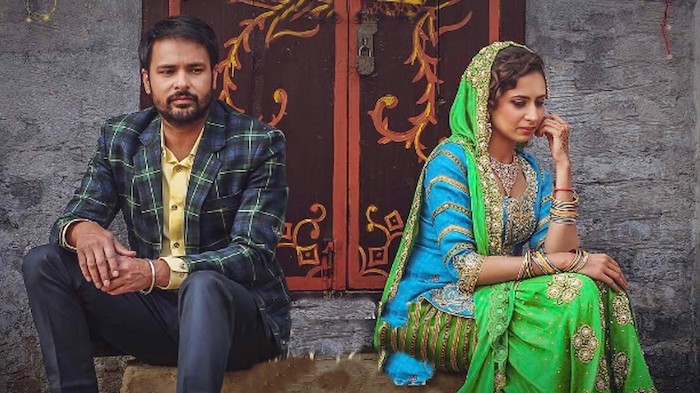
On a recent Wednesday night (6 May), I watched Lahoriye on RTM’s TV2. The film is about a pair of lovers who, despite having the same ethnicity, differ on their faiths, and to make it worse, belong to countries that have bitter past between their governments.
To be specific, it was about Kikkar Singh, a Sikh-Punjabi and Ameeran, a Muslim-Punjabi, whose respective grandparents had to swap their lands between what was to become the divided Punjab, during the partition of India and creation of Pakistan in 1947.
While both sides of the families had no problems with the marriage, a relative who is a budding politician had to become the spoilsport. What this character in the film imply is that government(s) come in between, often for ego and selfish reasons, even when on ground level, there is already love and acceptance between the families of different faiths.
The poignant and best scene of the film was when Ameeran’s grandfather finally meets and tightly hugs Kikkar’s grandfather, who was responsible for him to be still alive during the mad times of the partition of the country.
All’s well that ends well.
At the end of the film, Kikkar and Ameeran are happily married with a child while Kikkar’s sister has also married to Ameeran’s landlord’s son. The faith of all the characters now was not implied and instead, a typical family day-to-day situations was emphasised.
Now, what was wrong with this ending of the film? Doesn’t a marriage need to have abundance of love, trust, sacrifice and acceptance?
What was so wrong that RTM decided the ending of the film cannot be shown and had to be totally snipped off?
Does this mean that it is okay to show the love between different faiths but not when they are happily married?
When a man marries a woman, what is the most important thing between them? Love or religion? If it is the latter, then why do we have so many divorce cases despite the couple being of the same faith?
The message of the film was love triumphs over anything else in the world. (Of course, they should both be 18 years old and above)
If RTM could not get the message and purpose of the film, then what was the point in screening of such stories?
If the station was not going to show the positive scenes of humanity at the end of the movie, then why even bother to screen the film in the first place?
It is so bizarre to note that a movie was censored not for negativity, but for showing positivity!
ASIA SAMACHAR is an online newspaper for Sikhs / Punjabis in Southeast Asia and beyond.Facebook | WhatsApp +6017-335-1399 | Email: editor@asiasamachar.com | Twitter | Instagram | Obituary announcements, click here |
Sonya Kaur Pandey and her parents – Photo: Sinda 2019 annual report
By Asia Samachar Team | SINGAPORE |
Singapore parents Ranjeev Pandey and Melvinder Kaur noticed that their five-year old daughter was attracted to pictorial story books and numeracy-based cartoons.
So, they thought about kick-starting their daughter’s educational journey. For that, they turned to Singapore Indian Development Association (Sinda) that ran a programme called Literacy and Numeracy (LYNN).
Since attending the pre-school programme, Sonya Kaur Pandey is rarely seen without a book!
This is just one of the many success stories at Sinda that has committed to help Indian students to excel. In 2019, the organisation spent S$11.3 million – that’s half of its total expenditure of $22.5 million – for educational programmes. Its total income for 2019 was S33.6 million.
The self help group established in 1991 believes that it is making a difference. For the whole of last year, its frontline divisions reached out to 24,812 beneficiaries, up 12% from the year before.
“We made special effort to connect with younger audiences such as tertiary-level youth, young working adults and new parents – the generations of tomorrow,” said Sinda president Indranee Rajah in a note in the annual report.
The organisation’s youth and family divisions, for example, has found ‘new and innovative’ ways to reach their audiences by developing niche programmes relevant to them.
Sinda had spent $3.5 million for family services and $1.4 million for youth development programmes in 2019, according to its annual report.
“One such example is the Understanding Early Childhood programme — a pilot initiative to guide first-time parents on promoting their toddler’s cognitive and emotional development and strengthening parent-child bonds through collective and interactive play,” said Indranee, who is also Minister in the Prime Minister’s Office.
Other programmes included the newly launched Tamil pre-school programme to strengthen participants’ proficiency in the language in a fun way as well as digital workshops for over 1,100 young ones to equip them with the foundational skills necessary for a technology-driven world.
She noted that Sinda’s Door Knocking Exercise continues to be a good way to connect with Indian households and offer assistance to those in need.
“We worked closely with the respective Grassroots Advisors and Indian Activity Executive Committees [IAECs] to knock on doors, gain access to new beneficiaries and enrol them into our programmes. Many of them required urgent help but did not know who to approach,” she said.
On the impact on the on-going Covid-19 pandemic, Indranee said the organization had temporarily ceased face-to-face programmes, but have instead introduced an e-learning platform to complement the Ministry of Education’s Student Learning Space (SLS).
The platform was piloted in 2019 and offers interactive and real-time video-based lessons conducted online by qualified tutors. Lessons are offered to Primary, Secondary and A-Levels students for various subjects including English, Mathematics and Science.
In view of the novel coronavirus, Sinda has announced a $1.8 million package, which should benefit at least 3,000 families and students.
The new package will supplement the existing $2 million earmarked by the association for financial assistance this year, according to a newspaper report.
ASIA SAMACHAR is an online newspaper for Sikhs / Punjabis in Southeast Asia and beyond.Facebook | WhatsApp +6017-335-1399 | Email: editor@asiasamachar.com | Twitter | Instagram | Obituary announcements, click here |
This topic is discussed on the forums from to time. The expression, Sikhi Ik Sresht Dharam, is used by Sikh scholars to bring out the egalitarian features of the Sikh way of life. Some can take the meaning literally that Sikhi is a superior religion but that cannot be the intended meaning. For a follower of any faith, own chosen path is the best.
Due entirely different approaches, Sikhi was not intended to bridge the almost impossible gulf between Abrahamic and the Vedic traditions, but to offer a third option, the Niara Teesra Panth. As Dr I J Grewal noted, there was hardly anything in politics, society or the religious practices of his time that was acceptable to Guru Nanak Sahib (The Sikhs of the Punjab).
Many bhagats (saints), too, had revolted against the discriminatory and divisive ideologies practised by their background religions. Those practices are condemned by Guru Nanak Sahib in, for example, Asa ki Vaar. The Bani (compositions) of the Bhagats was selectively included in Sri Guru Granth Sahib (SGGS), sometimes with qualifications by the Guru. Thus, the study of Sikhi requires a paradigm shift away from orthodox ideologies.
It was for that reason that scholars like Macauliffe found it difficult to point to a religion of greater originality. Despite the colonial connotation regarding loyalty, Dorothy Field found it little short of a miracle that this faith transformed the outcaste Indian into a fine loyal warrior. (The Religion of the Sikhs).
At interfaith forums, I have often bullet-pointed the main Sikhi characteristics also well set out by Dr I J Singh in his introduction to “Sikhs and Sikhism – A View With a Bias: Uncompromising monotheism; no priesthood or any form of brokerage between God and creation; direct (Khalsa) relationship with the Creator; direct access to the scriptures written in the vernacular; rejection of monasticism and stress on family life and community obligations’; rejection of multi-tiered caste system; demolition of every traditional excuse used to perpetuate gender bias or any form of discrimination; and concept of saint soldier.
Sikhi way of life – the theo-social system – rests on three pillars: constant awareness of the Creator Being, honest work and sharing/charity. Dr I J Singh concludes that all these elements constitute Sikhi as a religion of the people, by the people, for the people.
Provided Sikhs are clear about their way of life, it is not for them to make comparison with earlier systems but for them to continually re-evaluate their own actual performance against the founding principles of Sikhi as above. They do have an authentic original source reference in SGGS to be able to cross check if they are indeed following in the footsteps of the Guru.
It is for other religions to re-confirm that their religious texts are interpreted to meet the headings most relevant to modern human rights and values. It is only when provoked by religious zealots, misrepresenting Sikh ideology and re-writing Sikh history while seeking converts to own religions, that Sikh scholars like Bhai Kahn Singh Nabha have responded by restating the basics of Sikhi.
Unlike the constructive questioning approach of Guru Nanak Sahib, some Sikh scholars, especially those in the interfaith area, have difficulty thinking outside the box. It is more soothing for them to present Sikhi as a faith cobbled together from the good parts of Hinduism and Islam! That sort of conciliatory line is also more acceptable to the establishment wherever the Sikhs live. It is almost a subconscious tactic to promote Sikhi and, sometimes, self! However, such an approach confuses the audience and is not the right approach to show the independence of Sikhi.
Yet, the Guru was less sparing towards the Brahmin and the Mullah when he condemned their practices based on their interpretation of own scriptures. The Guru gave His own interpretation of true Hinduism and Islam. The situation regarding interpretation of scriptures has not changed today when we look at extremist and violent movements in the name of religion.
Sikhi Ik Sresht Dharam does not mean that Sikhi is a superior religion or that any comparison with other faiths is intended, but that Sikhi is a new approach and a new whole-life system. Sikhs themselves need to fully understand that through the Sikh-ing (learning) path shown by the Guru.
Gurmukh Singh OBE, a retired UK senior civil servant, chairs the Advisory Board of The Sikh Missionary Society UK. Email: sewauk2005@yahoo.co.uk. Click here for more details on the author.
* This is the opinion of the writer, organisation or publication and does not necessarily represent the views of Asia Samachar.
ASIA SAMACHAR is an online newspaper for Sikhs / Punjabis in Southeast Asia and beyond.Facebook | WhatsApp +6017-335-1399 | Email: editor@asiasamachar.com | Twitter | Instagram | Obituary announcements, click here |
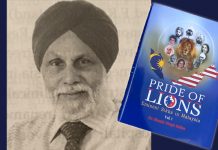
It took the passing away of his father to spur him into capturing the first draft of the history of Sikhs in Malaysia. Otherwise, Dr Manjit Singh Sidhu may have remained cocooned in his cosen academic field.
The nudge resulted in him capturing the life and times some five dozen Sikhs in a book entitled Pride of Lions: Eminent Sikhs in Malaysia released in 2017.
“The passing away of my father Bhai Kirpal Singh sent a shock wave in me. I had been complacent and had not recorded the family history. With that came the realization that the history of Sikh emigrants from Punjab to South-East Asia would soon be forgotten,” he shares in the book’s introduction.
His father, who passed away in 1975, was no ordinary person, as well. He had participated in the Jaito and Guru-ka-Bagh Morchas in the 1920s, making him one of the freedom fighters for the Indian independence. Morcha refers to an organised march or rally.
Dr Manjit, now well into retirement after years of teaching at institutions of higher learning, is working on the second volume of the book.
“At this juncture, I have a list of some 40 people whom I have already interviewed. They will appear in the next book,” Dr Manjit tells Asia Samachar in a telephone interview.
The 77-year old author lives in Mantin, Negeri Sembilan and frequents Gurdwara Sahib Mantin. He retired as an associate professor from Universiti Utara Malaysia (UUM) in 1999. He began his teaching career at University Malaya (UM) in 1975.
Neighbouring Singapore, too, had a similar book. In 2015, Young Sikh Association – Singapore (YSA) published the Singapore at 50 – 50 Sikhs and their Contributions to celebrate Singapore’s 50th birthday (SG50).
Launched by Singapore Prime Minister Lee Hsien Loong, the book featured 50 notable Sikhs who have contributed to Singapore’s development and nation-building across various fields.
As with both books, you can never fit into them all the names that deserve mentioning. The Singapore compendium was the result of a team work while Dr Manjit’s book is a one man’s effort.
“There are still so many Sikhs on whom something should be written about,” said Dr Manjit.
For the second volume, he has interviewed another batch of Sikhs with interesting stories to tell. They include retired Federal Court judge Pajan Singh Gill, Penang Hospital forensic pathologist Dr Bhupinder Singh and Sabah-based senior planter k Jaswant Singh Kler.
Aside from the selection of personalities covered, the book also lacks some robust and in-depth background research.
“Dr Manjit is old-school. He’s not savvy with online research. So, you will detect gaps in the people he has written about,” said one of the persons featured in the book. “However, he has made it up with his persistency in chasing the people he is writing about. He met many of them in person. So, he has presented a great first draft for others to work on.”
Pride of Lions is far from his only work. Dr Manjit is also the author of the Sikhs in Malaysia. Published in 1991, the book is valuable as it has captured for posterity interviews, conducted in 1978 and 1979, of 100 Malaysian Sikhs who were born in India and Pakistan. He had completed similar books for Sikhs in Thailand and Kenya.
The retired Malaysian university lecturer had also released another book, ‘Sikhs and Sikh Institutions In Pakistan’ in 2017. Subsequently, the book was translated by Dr Kulwinder Kaur Minhas into Punjabi, resulting in the release of Pakistan Vich Sikh Ate Sikh Sansthawan.
HERE ARE THE 57 PERSONS COVERED IN Pride of Lions: Eminent Sikhs in Malaysia:
1. Dr. Ajeet Kaur Gill (nee Sandhu), Australian-trained medical doctor
2. Sardar Ajmer Singh, Tokoh Guru
3. Madam Ajaib Kaur, Social Worker
4. Tan Sri Ajit Singh, Malaysia’s First Sikh Ambassador
5. Sardar Budh Singh, President, MIC
Sardar Budh Singh was the second president of the then Malayan Indian Congress. He is captured here in an oil painting placed at the MIC headquarters in Kuala Lumpur. On the left is the first MIC president John Thivy. – PHOTO / ASIA SAMACHAR
6. Sardar Balwant Singh Sidhu, Senior lawyer
7. Datuk Balwant Singh Kler, Malaysia’s sports official
8. Professor Dr. Chatar Singh, Professor of physics and Queen’s scholar
9. Dato’ Sri Chet Singh, GM, Penang Development Corp
10. Engineer Dalip Singh, Dep GM, Malayan Railways
11. Colonel Dara Singh, Ex Chinese Army Colonel, Protector of Aborigines, Game-warden
12. Sardar Ginder Singh Gill, Negeri Sembilan transport company operator
Ginder Singh Gill – Photo / Pride of Lions
13. Datuk Gurbakhs Singh Kler, Father of Sabah Sports
14. Sardar Gurchan Singh, Singa, The Lion of Malaya; Aide-de-camp to Malaysia’s first PM Tunku Abdul Rahman
15. Dr. Gurdev Singh, Penang leading veterinary doctor
16. Tan Sri G.S. Gill, Sikh businessman in sports goods
17. Professor Gurdial Singh, UM law professors
18. Mr. Gurmit Singh, Environment crusader
19. Dr. Harbans Kaur Virik, First child specialist in Malaysia
20. Sardar Habhajan Singh, Journalist & newspaper editor
21. Dato Harjit Singh Hullon, TV new editor & RTM news reader
22. Dato Dr. Harjit Singh, Johor Cricket Council president
23. Madam Harwanth Kaur, First Sikh female lawyer & first lady magistrate in Malaysia
24. Sardar Ishar Singh, Accidental zoo keeper
25. The Legendary Jagat Singh of Perlis, Richest Sikh in Southeast Asia in 1950s
26. Sardar Jagdeep Singh Deo, Penang state executive councillor
27. Mr. Joginder Singh, Teacher to lawyer
28. Sardar Jaswant Singh Khosa, Scribe, Guru Granth Sahib
29. Dato Jagjit Singh, Retired Sessions Court judge
30. Dato Dr. Kaka Singh, dental surgeon & social worker
31. Sardar Karamjit Singh, The Flying Sikh & 2002 Sportsman of the Year (rally car driver)
32. Dato’ Karam Singh Walia, TV3 news editor & leading environment issues journalist
33. Mr. Karpal Singh, DAP chairman, Opposition politician, Tiger of Jelutong
34. Dr. Karpal Singh, Pantai Hospital general & pediatric surgeon
35. Madam Kirpal Kaur, Women entrepreneur & Gulati Stores owner
36. Sardar Kartar Singh, Winner of nation’s highest galantry award
37. Madam Kirenjit Kaur, First Rotary lady governor in Malaysia
38. Datuk Dr. Keshmahinder Singh, Opthhalmologist (eye specialist)
39. Prof. Kernial Singh Sandhu, ISEAS Singapore director
Prof Kernial Singh Sandhu: Director, Institute of South-East Asian Studies, Singapore
40. Sardar Kuldip Singh Sandhu, High ranking Sikh police officer in Singapore
41. Dato’ Lakhbir Singh Chahl, Lawyer, Senior public officer, international diplomat, sportman
42. Sardar Lall Singh, Malaysia’s cricketing legend
Cricket legend Lall Singh
43. Sardar Malkit Singh Lopo, Sikhs in Malaysia chronicler, novelist
44. Bhai Mani Singh Ji, An extraordinary saint
45. Datuk Dr. Mohinder Singh Malhotra, Versatile soil scientist, cooperative leader (Koperasi Khalsa)
46. Dato Nashatar Singh Sidhu, National sports coach, javelin champion, Malaysian rugby captain
47. Madam Preetam Kaur Gill, social worker & women’s rights activist
48. Sardar Pritam Singh, First Asian Assistant Commissioner of Police (ACP) in Malaysia
49. Major General Datuk Ranjit Singh Ramday, First Sikh major general in Malaysian armed forces
50. Dato Rhina Bhar, Lawyer, politician & first Sikh woman senator in Malaysia
51. Professor Satwant Singh Dhaliwal, Queen’s scholar & genetics professor
Prof Satwant Singh Dhaliwal
52. Tan Sri Sarwan Singh Gill, Court interpreter to chief justice, Malaya
53. Sardar Shamsher Singh, Police officer to rubber planter
54. Sant Sohan Singh Ji, A genuine Sikh saint
55. Dr. Tara Singh Shergill, Negeri Sembilan Father of eye surgery
56. Giani Tirlochan Singh, Editor of Malaya Samachar
57. Dr. Veerinderjeet Singh, Leading tax expert
ASIA SAMACHAR is an online newspaper for Sikhs / Punjabis in Southeast Asia and beyond. You can leave your comments at our website, Facebook, Twitter, and Instagram. We will delete comments we deem offensive or potentially libelous. You can reach us via WhatsApp +6017-335-1399 or email: asia.samachar@gmail.com. For obituary announcements, click here























 By Asia Samachar Team | INDIA |