Path Da Bhog: 12 Jan 2020, 5pm-7pm, at Wadda Gurdwara Sahib Jalan Kampung Pandan, Kuala Lumpur
Contact:
Jagmohinderjeet: 011-52192937
Asvin : 010-2260762
Deeply missed by wife, children, grandchildren, siblings, relatives and friends.
| Entry: 31 Dec 2019; Updated: 1 Jan 2020 | Source: Family
ASIA SAMACHAR is an online newspaper for Sikhs / Punjabis in Southeast Asia and beyond.Facebook | WhatsApp +6017-335-1399 | Email: editor@asiasamachar.com | Twitter | Instagram | Obituary announcements, click here |
Voyage of Mercy: Shamdev Singh in the Global Sikhs-Waves of Mercy maiden mission – Photo: The Sikh (Special Edition), March 2005
The Dec 26 2004 Asian tsunami – triggered following a seabed earthquake that measured 9.0 on the Richter scale off the coast of Sumatra in Indonesia – saw waves of destruction smashing into parts of Indonesia, Sri Lanka and India. Close to 500,000 people have died and millions more have been left in urgent need of food and shelter. As Asia grappled with tsunami aftermath, the world has come together in an overwhelming show of sympathy, love and support.
In Malaysia, an established Sikh body – the Sikh Naujawan Sabha Malaysia rose to the occasion by spearheading Global Sikhs,a humanitarian relief team that has ventured into the heart of destruction in Aceh, Indonesia, to do their bit in offering assistance to the victims.We capture their story in this special issue.
By Habhajan Singh | THE SIKH (SPECIAL EDITION) | MALAYSIA |
THEY are familiar with men in turbans.The tsunami-ravaged Aceh, a province in the sprawling Indonesia archipelago, is known for its Islamic credentials. But the “new men in turban” who descended on their land early this year were a new sight for the people of Aceh, who associate turbans and beards as being Islamic or Arab.
“Are you a Muslim?” asks an elderly lady as Dr Jaswant Singh attends to her in the first few weeks following the Dec 26, 2004 tsunami that slammed Aceh with waves as high a three story building.
“No, I’m a Sikh,” he replies.
“What are you doing here?” the lady asks. One look and you can tell something is bothering her. She’s not alone. Many others in Aceh carry the same look of bewilderment and agony. This lady has lost almost her entire family in the killer waves that smashed into Aceh following a massive undersea earthquake off the coast of Sumatra. Aceh alone lost close to 300,000 people in the tragic incident Hence, the makcik – the Malay word for an elderly lady – has many reasons to be anxious.
“I’m here to help,” replies the 37 – year old doctor who grew up in Puchong, Selangor.
”Where are the Arabs?” the lady shot back another question, gazing at his turban.
Dr Jaswant is from the Global Sikhs – Waves of Mercy, an ad-hoc humanitarian relief team powered by a group of Sikhs and expatriate sailors in Malaysia. The soft-spoken doctor signed up to be part of the maiden team of 31 volunteers to carry out relief work in Aceh.
It is a brave act, indeed. as Aceh is closest to the epicenter of the earthquake and one of the worst hit by the tsunami. The almost daily tremors that occurred were a grim reminder to the volunteers that the region could be whacked by another earthquake. These volunteers were walking on Ground Zero that may witness an epidemic outbreak.
Yet Dr Jaswant and his friends braved on.
it did not take long though for the people of Aceh to get to know more about these men in turban. They were not Arabs.They are the Bhai Khanaiyas of today – men and women who are willing to go deep into troubled areas, carrying with them aid and relief, plus bringing hope and love to people desperately in need of them regardless of nationality and race.
True blue humanitarian workers
The Global Sikhs – Waves of Mercy, a mission spearheaded by the Sikh Naujawan Sabha Malaysia (SNSM), has been tremendously successful, both in accomplishing its mission and endearing the hearts of the Malaysian public, plus those from outside the country.
When the SNSM decided to shoulder this mission, it was something it had never executed before. Volunteers of the SNSM, the Malaysian-based Sikh organisation established in the early 1960s, are experts in running Gurmat camps gatherings we come to know as Samelans. They have little or no knowledge of humanitarian relief work. But the call for seva was so strong that these Sabha volunteers found themselves sailing across the deep blue sea, wearing the badge of humanitarian relief work to do their bit for the tsunami victims.
Take Malkith Singh, for example. A long-time dedicated volunteer of SNSM, currently its vice president, Malkith has been assisting in running the day-to-day affairs of the SNSM for many years now. He has organised countless Gurmat camps and coordinated the kirtans and parchars of international raagi jathas. Malkith partakes in the cooking of Guru-ka-Langgar almost every other day in one Gurdwara or another and has attended to to families in need of assistance.
On Jan 7, 2005 Malkith sailed with 30 others on the maiden Global Sikhs‘ relief mission to Aceh. He was on a yatch, fully loaded with thousands of boxes containing food, medicines and emergency supplies and ready to sail more than 500kms.
Malkit Singh (left) and Dr Jaswant Singh (right)were part of the Global Sikhs’s first mission to Aceh in 2004 – Photo: The Sikh (Special Issue) 2005
Within weeks the Global Sikhs-Waves of Mercy team of volunteers was nursing some 10,000 people in two areas. In Pulau Weh, an island just north of Banda Aceh, the volunteers were assisting some 7,000 people displaced and housed temporary in 15 makeshift camps. While Pulau Weh was not as badly hit by the tsunami as other areas in Aceh, aid and relief work carried out by Global Sikhs-Waves of Mercy did become the turning point for the people of this beautiful island who had lost their homes and everything else.
In Paroe and its surrounding areas – villages facing the Indian Ocean that faced the full brunt of the tsunami – some 3,000 villagers came under their care. Here, however, was a story of death and destruction.
In no time, thousands of makciks, like the one under Dr Jaswant’s care, came to know of Sikhs. Whenever they see the men in turban or the words ‘Global Sikhs‘, the villagers knew help has arrived. Not only do they bring food, medicine and love abundance, to the delight of the villagers, the people of Aceh were amazed that the Global Sikhs brought them the Quran and other religious items required by Muslims.
The word began to spread, carrying forward the good name of the followers of Guru Nanak, the founder of Sikhism. An incident in Sabang,the small port city in Pulau Weh that acts as the forward station for the mission illustrates the point.
A group of doctors from the Global Sikhs-Waves of Mercy were left alone to carry out thew work. Feeling hungry walked into the town to buy some food. The shop owner refused to accept payment. “Kamu orang bawa pertolongan” (You’re men who brought us aid),” he said. And when they see men in turban, or the Global Sikhs banner, even the army waves you on. While they may know nothing of the Sikhs, they found them to be honourable people, providing true blue humanitarian relief, with no hidden agendas.
Back in Malaysia, people from all walks of life came to know of these Sikh volunteers: how they have joined in efforts to provide emergency aid to Aceh. Malaysians are impressed as to how such a small community is able to mobilise aid and relief within such a short span of time.There are less than 80,000 Sikhs in Malaysia out of a population of 25 million people. News of the good work of Global Sikhs and other agencies also began making its round in the Sikh circles, as well.
SNSM hopes the good work being carried out by Global Sikhs will correct the misperception people have regarding Sikhs. Global Sikhs hopes to put forward an image of the Sikhs that is dynamic, vibrant and humanitarian. “For years, Sikhs have been branded as terrorists and people who gave trouble. Sadly this image has lingered on, ” Global Sikhs operations director Harvinder Singh told team members in a meeting in the early days of the mission. “This disaster is an opportunity. We will represent Sikhs around the world. Hopefully, it will remind them of Bhai Khanaiya, the first Red Cross.”
What is the spirit of Bhai Khanaiya? We go back some 300 years ago. ln the midst of a battlefield. one solitary soul was walking around, water and medicine in hand. He would attend to anyone in sight, no questions asked. There was a battle going on, with two sides at war with each other. That did not stop him from nursing the wounds of everyone in his path.
Bhai Khanaiya had performed selfless service of humanity with no distinction of nationality, caste or creed. Some Sikhs complained to Guru Gobind Singh that Khanaiya had been resuscitating the fallen enemy soldiers. He was summoned to the Guru’s Darbar. The case against him was put forward. Now, what do you say, Brother Khanaiya? ”Yes, my Lord, what they said is true in a sense, but I saw no Mughals or Sikhs in the battlefield. I only saw human beings.” The Guru. pleased with the reply, blessed him and told the Sikhs that Khanaiya had understood his teachings correctly. In a sense, the Global Sikhs-Waves of Mercy mission works on that very principle: we are here to serve anyone who needs our help.
Global Sikhs operations director Harvinder Singh (left)
THE BEGINNING
The story of Global Sikhs began in the days following the Dec 26 disaster. The province of Aceh on the island of Sumatra is just across the Straits of Malacca. Malaysia is its closest neighbour. Some key volunteers of the SNSM were approached with the idea of providing some form of assistance to the victims in Aceh. At that time, the number of dead reported was way much lower and Indonesia was still not in the news as the place worst hit by the deadly waves.
Within days, the Sabha House the SNSM headquarters in Bangsar, Kuala Lumpur, turned its premises into a center facilitating and coordinating relief operations. More than 100 volunteers were deeply engaged in one activity or another towards this end. Donations in the form of food, clothes and others began pouring in by the lorry loads. Every nook and corner of the two-story bungalow was almost filled up with goods from generous Malaysians. Clearly. a humanitarian relief agency was taking shape at Sabha House. The meeting room was transformed into the mission’s Command and Control Centre, which soon would be operating 24-hours a day. By all accounts this is probably the largest Sikh humanitarian relief agency, in terms of number of volunteers, to go into action in an international tragedy.
By end-March, the Global Sikhs-Waves of Mercy would have sent some 160 volunteers to Aceh over seven missions, performing all kinds of relief and rehabilitation work. Indeed, history is in the making for Sikhs in Malaysia and worldwide.
The energy levels these volunteers exude were simply amazing and contagious. In a matter of no time hundreds came forward to render help in one way or another. These volunteers, most of them with full-time jobs or people running their own companies, came forward to lend time, energy and expertise. Without doubt, the mission needed all the expertise it could muster. Being new to relief work the learning curve was steep. The ‘to-do’ list was lengthy: clarifying the mission, identifying the right people for the right job, providing basic emergency and relief training, searching for funds and goods, coordinating with other relief agencies, getting the necessary approvals, reaching out to people about the work, and so on.
As the mission moved on, the right people and the required stuff began falling in place. At times, it was almost as if miracles were unfolding, one after another. For the first few shipment, the mission needed medicines costing millions of dollars. Overnight, the supply reached our doors at Sabha House. We needed foodstuff to take to Aceh. Again, the donors came forward.
Critical to the mission was a proper control centre. A couple of army experts with just the right expertise and experience came forward to help in that area. At the end, the Command Centre transformed into a mission operation centre: there were clocks on the wall telling you the time In Aceh and Kuala Lumpur, and maps of Aceh were plastered on both corners of the room. Dedicated telephone lines and networked computers were put in place for volunteers to get cracking. The man responsible for putting the Command Centre into place was Global Sikhs deputy operations director, Satwant Singh, a globetrotting environmentalist with a multi-national company.
ROUTE BY SEA
So, how did we get to Aceh? At that point the big international agencies were already making a beeline to Banda Aceh, the capital of the province, perched at the tip of the Sumatra. But feedback that we got noted that the relief teams and goods were stranded at the capital as the complete destruction of the road network on the west coast of Aceh hindered onward movement into the remote areas of Aceh.
Bearing this in mind, what do we do? That was one of the most critical questions for operations director Harvinder Singh and the team. A dedicated and long-time SNSM volunteer, Harvinder played an instrumental role In providing leadership to the team, at that point already in high gear. Having put In so many collective man-hours, they were not about to col back. “lf you want success, you have to do something you have never done before,” Harvinder had said to the team.
And that‘s exactly what happened – treading on a path other volunteers had never treaded before. By sheer coincidence, Global Sikhs were matched with the Waves of Mercy, a group of sailors based in Langkawi, an Island on the West coast of Malaysia. Led by Captain Hugo Crawford, the group of expatriate sailors was already busy putting together a team to send goods and people to Aceh. The Irish-born Capt Hugo and friends were at Langkawi when tidal waves rocked the shores of Langkawi an island on west Side of peninsular Malaysia. The US$10m ship under his care – it belongs to a businessman – was one of the few that were spared during the incident on Dec 26. The 52-year old former carpenter, who hails from Belfast, refused to let the tragedy get the better of him. “The images haunted my mind as I tried to sleep,” says Capt Hugo.”In a flash, it was clear to me what I had to do. I’m a captain of a 130-foot motor yatch. So, why not I attempt a rescue mission for the thousands of unfortunate people along the coastline of Northern Sumatera.” He bandies around his fellow-seamen. That’s how Waves of Mercy came about.
Within a week – by Jan 7 – the new partnership of Global Sikhs – Waves of Mercy sent out two vessels carrying 31 volunteers and 150 tons of emergency supplies on its way to Aceh.The first team, led by with Malkith Singh as the chief-de-mission, also included a group of 10 medical personnel.
Global Sikhs volunteer Raj Sonia (second from left) at one of the camps under the care of Global Sikhs-Waves of Mercy – Photo: The Sikh (March 2005)
The new partnership changed the plan we had initially wanted to operate, thus realigning the mission’s anchor. Unlike most humanitarian agencies in Aceh that came in via air, Global Sikhs now could avoid Banda Aceh and the likelihood of its volunteers and goods getting stranded.
As the only humanitarian aid agency fully mobile with sails, Global Sikhs set its base camp in Sabang, Pulau Weh. The local hospital in Pulau Weh was in dire need of extra help. It had lost five of its nine doctors to the tsunami. Dr Susheelwant Kaur and colleague went straight to work making their way from one camp to another, handing some 7,000 people at 15 Internally Displaced Camps.
Some 20 days after the tsunami, the Global Sikhs team sailed along Paroe. The village caught the attention of Global Sikhs. Since the tsunami incident, the village facing the epicenter of the earthquake had not received any relief, save for a solitary air drop a couple of days earlier. But that proved of little use. Cooking rice with the polluted water made everyone sick. “Move than half its population had been wiped out. When we first landed there, some of the children there could not even walk,” says Malkith Singh, who was on board the Sean Paquitto yacht that brought relief to the villagers.
Dr Tikfu Gee (left) and Dr King (right). Global Sikhs-Waves of Mercy maiden mission – Photo: The Sikh (Special Edition), March 2005
Back at home In Malaysia, things were moving at break-neck speed. Right from the beginning, the mission was meant to embrace anyone and everyone who wanted to serve as humanitarian relief workers, regardless of race, religion or nationality. From the onset, Global Sikhs had enlisted non-Sikh members. Dr Tikfu Gee was busy drawing up the medicine list together with Jagdeep Singh and his wife Jasmeet Kaur. Kishore Kumar was gallantly handling logistics. The husband-wife couple of Tik and Stephanie were working into the wee hours of the night, alongside Tarminder Singh, to get the website up and running.
From day one, the mission adopted the inclusive route. To keep the platform open to other concerned organisations, the team adopted the name Global Sikhs. SNSM Jathedar (president) Harwindar Singh spelt out its mission: “Global Sikhs is a platform for anyone who wants to serve in providing relief to the devastated people of Aceh and to assist them In rebuilding their lives.” At that juncture, the Global Sikhs alliance had already included the United Sikhs. Others Sikh organisations soon began lending a helping hand.
Global Sikhs Aceh Mission 2004 – Photo: The Sikh (Special Issue) 2005
MAKING A DIFFERENCE
Over the weeks, Global Sikhs have been concentrating its efforts in providing assistance to Pulau Weh and Paroe. At Pulau Weh, the team embarked on several other projects. One of them is ensuring proper sanitary conditions at displaced people’s camp.
With the operations moving from the emergency phase to the rebuilding process, Global Sikhs have just sent 16 boats to Paroe. This is to help the predominantly fishing community back on its feet. More boats are on its way. ”You should have seen the glow in the eyes of the people In Paroe when they got the boats. It was simply awesome,” said one volunteer working there.
More importantly, it’s giving the people there – the four or five villages there lost at least half their members and saw the waves destroying their homes – something to look forward to. “We‘re now me the rebuilding phase,” says Jagdev Singh, SNSM Vice President who has taken over as Global Sikhs‘ director of operations.
The work being done by the brave volunteers of the Global Sikhs-Waves of Mercy is definitely making a difference. For years to come, the people of Aceh will remember the men in turban who came as waves of mercy following the waves of destruction.
[The article first appeared in the The Sikh (Special Edition), a SNSM magazine, published in March 2005. The author was the Global Sikhs media director]
ASIA SAMACHAR is an online newspaper for Sikhs / Punjabis in Southeast Asia and beyond.Facebook | WhatsApp +6017-335-1399 | Email: editor@asiasamachar.com | Twitter | Instagram | Obituary announcements, click here |
EKTA volunteers accompany the single mothers who took part in a Mitra women empowerement programme. L-R: Eve, Kuldeep Kaur, Harwinder Kaur, Nirmal Ajit (Bobby), Harindar Kaur, Mindy and Sharon Kaur – Photo: Supplied
By Asia Samachar Team | MALAYSIA |
A skill or two can make a huge difference in our lives. That’s what three ladies from the Klang Valley found when they took part in a single mother empowerment programme not too long ago.
Three Sikh single mothers took part in a two-month training where they were exposed to parenting, IT, communication and social media marketing skills.
Kuldeep Kaur, who had to make alternate arrangements for her daughter for the day, appreciated the learnings from the social marketing classes. “Now I can even teach my daughter a thing or two,” she said in a note shared with Asia Samachar.
Another participant said they were greatly motivated by the EKTA Club of Kuala Lumpur & Selangor volunteers to take part in the programme. “Otherwise, we may not have enrolled,” she said.
EKTA Club, a Kuala Lumpur-based NGO, comprises some 50 lady members from different professions and age groups.
(For singles mothers who would like to enrol in short courses, please contact Bobby from Ekta’s welfare wing at +6012-3055708)
ASIA SAMACHAR is an online newspaper for Sikhs / Punjabis in Southeast Asia and beyond.Facebook | WhatsApp +6017-335-1399 | Email: editor@asiasamachar.com | Twitter | Instagram | Obituary announcements, click here |
First of all, may I take the opportunity of wishing all fellow Sikh vir and bhaina a safe festive end to 2019 and the concluding decade in general. We all survived! Some of us have had pains and setbacks befall us, and some have had euphoric successes. Some births and some deaths. Most have had a bit of everything. But the bottom line is: Waheguru Tera shukar hai. Sabh tere bhanay vich hai. Tera shukar shukar shukar. Gratitude for our health, for our family, for all those who have been our support throughout the decade and especially those who we are grateful for as being part of our lives. There is a lot we need to be grateful for. (My well-wishes and prayers for all for the new year and in fact the 2020 decade are at the end of this short missive.)
I have just one ‘wish’ for our global Sikh Quom for the new year. I try to keep out of ‘quomi‘ squabbles and scholarly debates and issues as I am not qualified or learned enough to chip in, nor am I inclined. But I do have one wish and prayer for ‘us’.
As a Quom, and as a religion, we face multiple challenges from the exterior but more dangerously, from within. Let me firstly express a maxim which I first heard from our living legend – IJ Singh of USA, who needs no introduction: “Let us agree to disagree without becoming disagreeable.”
Besides all the other issues, some big, some small – and some small which blow out of proportions, there is one which was almost settled two decades ago – agreement to accept the Nanakshahi calender globally.
About a century back a Sikh historian S. Karam Singh corrected our (Sikh) prominent dates based on solar calendar and research to supersede the Hindu astrology based (Vikrami) calendar. A few decades ago S. Pal Singh Purewal carried out further in depth research and further corrected the dates of S. Karam Singh Ji.
In brief, S. Purewal, after decades of painstaking research, was able to establish the most important Sikh dates of interest like Gurpurabs, Sangrandh, Shahidhis of Guru Sahibs, Sahibjadays and other prominent Sikhs etc. to the western universally accepted Gregorian calender.
There was general universal acceptance from Sikhs for these calender. A decision to accept this calender called the Nanakshahi calender was accepted by Shiromani Gurdwara Parbhandak Committee (SGPC) at the turn of the last century (20 years ago) with some exceptions. Then after pressure from others, who for their own interests preferred the Hindu calender dates, SGPC overturned the decision.
To move into this upcoming decade and beyond, we Sikhs have to work towards our universal identity – as Global Sikhs, wherever we live, whether in Punjab or other parts of India or any other part of the globe. Our numbers beyond Punjab and India are increasing. We are gaining prominence globally not only as a religion but as a global community (Quom) which contributes positively towards life in the countries we live in.
Besides preserving and practising our own religion, ‘way of life’ and our spiritual language Punjabi/Gurmukhi, we need to upgrade to other universal norms. We read, write and speak the languages of the countries we live in. Even in India, most Sikhs with a global outlook do at least read, speak and write the global language English. We have gurdwaras throughout the world! We have langgar throughout the world! We have kirtan throughout the world! And we have Sikhs in leadership roles in politics, industry, science, IT, commerce, other research and even in governments.
We might not agree on all aspects of our religion and ‘way of life’ and that debate will always be ongoing. Changes which some advocate and some try to force, rightly or wrongly, take time and only if the majority agree. For example, there appears to be a strong case for changing our Nishaan Sahibs to dark blue. (Saffron, kesari, is not a Sikh colour. It is a Hindu colour and it represents the Hindu religion on the Indian flag.) There are those who wish to stop the singing of ‘Deh Shiva’ as our National (International?) Anthem. There are those who advocate what is being coined as a ‘Nanakian Philosophy’, which wants to put greater stress on what they believe Nanak stood for and perhaps less for what Guru Gobind Singh Ji advocated. Some believe there is a great deal of hearsay about what Guru Gobind Singh Ji ‘intended’ or ‘advocated’ and some even cast aspersions and doubts about Guru Ji’s bani basically because it is not within the Guru Granth Sahib Ji, the eternal Sikh Guru. Some want to change the Ardaas as we know it because the 1st. paudi of the Ardaas comes from a bani credited to Guru Gobind Singh Ji. Some want parkash of Dasam Granth. Some want to do away with it. And so on and so forth.
Change takes time (decades) and debate – rational debate, otherwise the ‘status quo’ should exist.
Apparently, to switch from ‘oil-divas’ to electricity at the Darbar Sahib, took 11 (eleven) years of debate, arguments and disagreements! That should give us an indication of the ‘time’ needed to bring about change – responsible change, hopefully.
BUT I DO BELIEVE, THAT WE SIKHS HAVE SPENT ENOUGH TIME WRANGLING OVER THE NANAKSHAHI CALENDER. 20 YEARS!
We need this change simply because it is the right thing to do. Our auspicious dates need to be aligned to the western globally accepted calender. Mainly, we need this so that every year (Gregorian year) we should know our dates in advance.
If due to very strong (self-interests) and pressure from certain quarters we are unable to fix our beloved founder, Baba Nanak Ji’s Gurpurab to Vesakhi, on 15 April, as has been authenticated, it does not matter. But let us at least fix it to one date in November. (Gurbani does teach us that every day is auspicious if we spend it in Naam!) So, if the majority Sikh World wishes to celebrate Baba Ji’s Gurpurab in November, so be it, but let us, at least have a fixed date in November.
I read a story written by one S. Ajit Singh which makes a great point.
About 25 years ago World Sikh News from California published his article about “Monthly Sangrand celebrations” in his village in the foothills of Shivalik. In old days all the people in the village were illiterate and each month they used to refer to the village Pandit about the “Sangrand” day. The Pandit was their calender so to speak.
Pandit ji kept a goat in his courtyard for milk. Each day Pandit Ji would deposit one ‘maingan‘ (goat droppings pellet) in a ‘kujja‘ (a small earthen pot). When the villagers come to him closer to the day, to ask about the Sangrand Day, Pandit Ji would count the number of ‘maingan’ to tell the villagers the correct day (according to him). One day the goat’s tether rope broke and it started roaming about in the pandit’s courtyard. She inevitably overturned the ‘kujja’ resulting in the spilling of the ‘maingans’.
When the villagers came to Pandit Ji to ask about the Sangrand date, the pandit was in a fix. But, true to his wily nature, he cleverly maneuvered the illiterate villagers that there had been a bad luck eclipse during the night. So, he needed to focus his rituals etc. on that for the day. He asked them to come back the next day for the Sangrand date. That evening Pandit ji slipped away and went to the Pandit in the next village to get the date of Sangrand.
Even today, we as an international ‘quom’ are dependent on some ‘pandits’ to give us ‘OUR’ correct dates! We need our dates fixed and not at the beck, call and whim of some pandits either in Banares or even in Jalandhar.
I urge all Sikhs to get hold of the Nanakshahi calender and let us start following fixed dates as per the Gregorian Calender. Nanakshahi calenders are now available on internet.
I wish and pray for a fulfilling new year to all my brothers and sisters. I also wish and pray that all of us, and collectively the global Sikh Quom wherever we live on the planet will have a 2020 vision in the upcoming decade.
Guru dhi meher & Waheguru Ji Ka Khalsa, Waheguru Ji Ki fateh.
[Hard Copies of Nanakshahi calender will be available for distribution into the new year. Any one who wants to receive a copy may email S. Ajit Singh Ji at ajit@ajitsingh.ca OR S. Irwin Preet Singh at irwin.p.singh@gmail.com]
This short article is inspired by S.Ajit Singh Ji’s emails. I have difficulty in sharing the exact wordings he uses especially what he thinks of our dharam-dhe-thekedar, the Brahminic-minded Sikhs, Sikh political leaders especially in Punjab, and the pandits who still control Sikh affairs. But I salute his general views!
Malaysian-born Dya Singh, who now resides in Australia, is an accomplished musician and a roving Sikh preacher. The Dya Singh World Music Group performs full-scale concerts on ‘music for the soul’ based on North Indian classical and semi-classical styles of music with hymns from mainly the Sikh, Hindu and Sufi ‘faiths’. He is also the author of SIKH-ING: Success and Happiness. He can be contacted at dyasingh@khalsa.com
* This is the opinion of the writer and does not necessarily represent the views of Asia Samachar.
ASIA SAMACHAR is an online newspaper for Sikhs / Punjabis in Southeast Asia and beyond.Facebook | WhatsApp +6017-335-1399 | Email: editor@asiasamachar.com | Twitter | Instagram | Obituary announcements, click here |
Global Sikhs’s first mission to Aceh in 2004 – Photo: The Sikh (Special Issue) 2005
By Asia Samachar Team | MALAYSIA|
On 26 Dec 2004, a tsunami struck Aceh. A 30m wall of water hit the Indonesian island triggered by a 9.1 magnitude quake which had struck undersea 160km off Sumatra’s coast. It flattened buildings and killed some 170,000 people in Aceh.
In Malaysia, the incident brought together a group of Sikhs, mostly volunteers of a Kuala Lumpur-headquartered youth-based Sikh youth organisation.
Volunteerism was already in their blood. Most of them were hardened volunteers of the Sikh Naujawan Sabha Malaysia (SNSM) which ran camps and other activities for the Sikh community in Malaysia and in the region.
In no time, they mobilised themselves into a humanitarian relief outfit. Calling themselves the Global Sikhs, they worked with Langkawi-based sailors who called themselves Waves of Mercy, Buddhist organisations and others — all with the common end of helping the victims of the massive tsunami.
With the working relationship with Waves of Mercy, they began sending volunteers and much-needed relief material to Aceh. The volunteers included medical and people with other expertise. In all, they had dispatched more than a dozen missions carrying volunteers and no less than RM27 million worth of goods.
“It was such a heart warming feeling to see strangers who didn’t know each other came together to help humanity. That was the greatest thing that came out of it,” Harwindar Singh, the then jathedar (president) of SNSM, told Asia Samachar.
“We had just returned after our annual one-week camp. The Samelan theme was ‘Vich Duniya Sev Kamaiye’. And then this happened. The next two to three months, our lives were put on hold for this, literally.”
SNSM headquarters, then at Bangsar, Kuala Lumpur, was buzzing with activity. And it also acted as the command centre for the mission.
“I was touched to see the people and organisations that came together. The organisations had different objectives of their own, but we all came together to save lives and help deal with the impact.
“That experience had changed me for life. The fire is still burning,” he said, 15 years after the incident.
Global Sikhs Aceh Mission 2004 – Photo: The Sikh (Special Issue) 2005
Entrepreneur Harvinder Singh, the mission’s first operations director, recalls the event as if it had just happened yesterday.
“I was impressed with the humanitarian aspect of the whole thing. The way everybody came together to help… We asked and somebody would show up. No one could imagine so many people from around the world came so quickly to help,” he said.
In Aceh, Global Sikhs had setup their headquarters at Sabang Port on Pulau Weh. At that time, they were probably the few NGO relief teams with ships, allowing them to scout the west coast of the island for survivors.
“We avoided going to Bandar Aceh as it was already crowded with the other groups. In our discussions with the UN agency then, they told us to take care of the island,” he said.
Malaysian television station NTV7 had also hopped on one of the Global Sikhs-Waves of Mercy mission. You can catch a clip of their documentary here. The documentary clip ends with this: “Find someone who is worse off that you, serve him, and you will be alright.”
In the years to come, Global Sikhs had sprung into action, but none of its missions could compare to the depth and breath involved in the Aceh mission. They had tied-up with United Sikhs to assist Myanmar flooding victims in 2008 and had also gone to Nepal.
Their latest humanitarian work was to assist Punjab, India, after the recent flooding incidents. They are provided blankets to needy villagers in view of the severe winter.
ASIA SAMACHAR is an online newspaper for Sikhs / Punjabis in Southeast Asia and beyond.Facebook | WhatsApp +6017-335-1399 | Email: editor@asiasamachar.com | Twitter | Instagram | Obituary announcements, click here |
PATH DA BHOG: 5 January 2020 (Sunday), from 5.30 to 7.30 pm, at Gurudwara Sahib Sentul | Malaysia ਜੇਹਾ ਚੀਰੀ ਲਿਖਿਆ ਤੇਹਾ ਹੁਕਮੁ ਕਮਾਹਿ ॥ ਘਲੇ ਆਵਹਿ ਨਾਨਕਾ ਸਦੇ ਉਠੀ ਜਾਹਿ ॥੧॥
It is with immense sadness to inform you that my husband, Kaldeep Singh has passed away on 26 December 2019.
Saskaar / Cremation: 2pm, 29 Dec 2019 (Sunday), at Jalan Loke Yew Crematorium, Kuala Lumpur
Path Da Bhog: 5 January 2020, from 5.30 to 7.30 pm, at Gurudwara Sahib Sentul
Contact:
Malkeet 016-3277777
Baldeep 019-6072991 / 016-6664651
Jasmeen 0133226651
| Entry: 28 Dec 2019 | Source: Family
ASIA SAMACHAR is an online newspaper for Sikhs / Punjabis in Southeast Asia and beyond.Facebook | WhatsApp +6017-335-1399 | Email: editor@asiasamachar.com | Twitter | Instagram | Obituary announcements, click here |
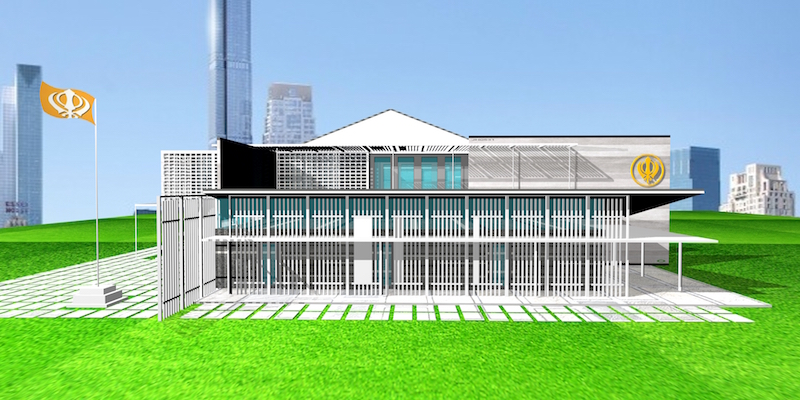
Shelters of Concrete: Gurdwara Design by Vishal J Singh
By Vishal J.Singh | GURDWARA DESIGN |
Concrete is a remarkable material.
Although we think that concrete is a relatively modern material, throughout the ages in the ancient world from Egypt to China, concrete was already used to build monumental jaw-dropping structures such as temples, stadiums, walls, cathedrals, aqueducts and so forth that impressively still stand till today, centuries after it was completed, testifying to the ingenuity of engineers back then. And although the Ancient Romans weren’t the first to create concrete, they were first to use this material extensively in their buildings and infrastructure resulting in magnificent buildings that can be still be gazed at today. Indeed, concrete has had a long relationship with humanity, as evident from the thousands of structures built all over the world through the centuries from one corner of the globe to another.
Concrete itself basically is concocted from 4 basic ‘ingredients’ which consist of cement (the bonding agent that holds it all together), water (the mixing agent), fine aggregates (such as sand and gravel) and coarse aggregates (such as stones and pebbles). When mixed together, they harden over time and form solid shapes. The forms then go on to become the skeletal frame or ‘envelope’ of a structure or a building.
It has been noted that architects, particularly modern architects, have arguably, always had an affection of sorts for concrete, due to its versatility, plasticity and even its raw, unrefined appearance. Concrete can be made to have a smooth, light shade in its veneer, or made to have a dark, rough texture to give a more brutish, coarse look, depending on the aesthetic requirements of the design, although the general public may not have a similar liking for its unfinished appearance.
Like it or hate it, concrete is here to stay.
Having studied modern architecture, I too find myself having an understated appreciation for concrete as a building material, which can be left unfurnished once a building is complete, depending on the texture and colour of the concrete itself. And so for the next conceptual design for a modern gurdwara, concrete was the main choice of material that was used to imagine its form and appearance as presented in the following visuals. As always, these visuals are purely conceptual and are simply the result of my mind having a little bit of fun with the possibility of designing a concrete gurdwara and experimenting with this ubiquitous building material.
The Concrete Gurdwara consists of the usual main spaces that constitute a gurdwara complex, typically an entrance into the Langgar Hall of the ground floor that leads to the Kitchen as well, and the Darbar Sahib located on the first floor. The outside has a single storey block that houses the administration block and the Nishan Sahib Plaza is located in front of the said administration block. The arrangement of spaces is a relatively standard design, but in this conceptual proposal, the focus is not on how the spaces are arranged but on the extensive usage of concrete that makes up the entire complex giving it a rough, hard and textured look.
The façade is most clearly established by the presence of unevenly shaded concrete vent blocks that are built in front of the Darbar Sahib on the first floor that facilitate air flow, and act as a unique visual feature for the entire Gurdwara. Both sides of the Darbar Sahib have walls that seem to ‘float’ above the ground floor that provide protection from the elements for the structure behind them, and are, of themselves, built of exposed concrete as well.
The entrance is located on the left side of the Gurdwara, encased in glass walls to shelter the entrance and staircases going up to the Darbar Sahib. In between the main block where the Darbar Sahib, the Langgar Hall and the Kitchen is located and the Administration block where the offices are located is a free and open corridor, covered by a series of metal louvres above and marked with frames in black. This corridor allows for an unhindered flow of people to walk from once place to another, and to allow natural ventilation to freely pass its passages to help naturally cool the environment within the complex. The Nishan Sahib Plaza is defined by a group of numerous square concrete slabs on the grass that demarcate the area for assembly for the Sanggat when the need arises.
The right side of the Gurdwara where the Administration Block is located, is protected by a series of white metal screens that provide shade to the buildings exterior. The Darbar Sahib and Langgar Hall are next to the Administration block and connected with an open corridor, covered by a series of metal louvers above.
The left side of the Gurdwara is where an additional block is located, and this block houses private accommodation for members of the Sanggat should they need rooms for personal reasons. Just like the rest of the Gurdwara complex, this block meant for accommodation is made of exposed concrete in line with everything else, and incorporates a series of metal screens on the ground floor to create a sense of external demarcation. The grass here is also partially covered by the laying of square concrete slabs from where the Nishan Sahib is, so as to create a continuous avenue for walking from one side of the Gurdwara complex to the other on the opposite end.
The design for this Gurdwara celebrates the widespread usage of concrete in the modern era that we live in, and highlights the inherent show of ‘strength’ and solidity that concrete visually and structurally projects in architecture. It pays homage to the versatility of this material that starts out as a malleable clay-like component in our hands that eventually solidifies into something much stronger over time to create powerful monolithic buildings that are commanding in its presence, especially in the past 100 years or so.
Undoubtedly, the appeal of unrefined, exposed concrete in its raw and brutal form can be initially difficult for people to appreciate at first, but like so many good things, there is usually an allowance for some time to pass in letting people appreciate the raw appeal of concrete, both as a low-maintenance, low-cost building material and as an unusually interesting aesthetic component in modern architecture. As seen, concrete has been with us for a long time, and will undoubtedly remain with us for a long time as well.
Waheguru Bless.
This is the last article in 2019. The next proposal design in 2020 will center on the idea of building a Gurdwara that vividly expresses its structure as its primary design feature and concept, creating a striking ‘marriage of ideas and form’ between architecture and engineering.
Vishal J.Singh, an aspiring architect, holds a Bachelor of Architecture Degree from Infrastructure University Kuala Lumpur and enjoys engaging in architecture and its theories as his first love.
* This is the opinion of the writer, organisation or publication and does not necessarily represent the views of Asia Samachar.
ASIA SAMACHAR is an online newspaper for Sikhs / Punjabis in Southeast Asia and beyond.Facebook | WhatsApp +6017-335-1399 | Email: editor@asiasamachar.com | Twitter | Instagram | Obituary announcements, click here |
Path Da Bhog: 12 January 2020 (Sunday), 9.30am-11.30am, at Gurdwara Sahib Pulapol, Kuala Lumpur
Contact:
Jasvinderjit Singh 016-978 8222
Paramjit Singh 012-390 0051
| Entry: 27 Dec 2019; Updated:29 Dec 2019 | Source: Family
ASIA SAMACHAR is an online newspaper for Sikhs / Punjabis in Southeast Asia and beyond.Facebook | WhatsApp +6017-335-1399 | Email: editor@asiasamachar.com | Twitter | Instagram | Obituary announcements, click here |
Book covers of Sikhs and Sikh Institutions In Pakistan and its Punjabi translated version Pakistan Vich Sikh Ate Sikh Sansthawan. Insert: Dr Manjit and Dr Kulwinder
By Asia Samachar Team | MALAYSIA|
A book capturing the memories and experiences of more than four dozen Pakistani Sikhs is now available in Punjabi.
Pakistan Vich Sikh Ate Sikh Sansthawan is the Punjabi translation of the 168-pages ‘Sikhs and Sikh Institutions In Pakistan’ authored by Malaysian-born retired academic Dr Manjit Singh Sidhu.
The book, translated by Dr Kulwinder Kaur Minhas, captured the overall picture of the minorities, especially the Sikhs, in Pakistan after they were uprooted from their homes following the partition of British-India in 1947.
It also captured a detailed account of the lives of some 50 Sikhs drawn from all over Pakistan: Punjab, Sindh and North-West Frontier Province.
“I interviewed them in person, some in Pakistan and some in India, around 2014” he told Asia Samachar. The Sikhs in India were met in a remote area in Jammu as well as in Amritsar, Ludhiana, Chandigarh and New Delhi.
Those interested to purchase a copy of the Pakistan Vich Sikh Ate Sikh Sansthawan can contact Asia Samachar (+6017-3351399) or via the Amritsar-based publisher Singh Brothers.
Sikhs and Sikh Institutions in Pakistan by Dr Manjit Singh Sidhu – Photo / Asia Samachar
ASIA SAMACHAR is an online newspaper for Sikhs / Punjabis in Southeast Asia and beyond.Facebook | WhatsApp +6017-335-1399 | Email: editor@asiasamachar.com | Twitter | Instagram | Obituary announcements, click here |
SASKAAR / CREMATION: 12pm, 25 Dec 2019 (Wednesday) at Jalan Siram Butterworth Cemetery. Cortege leaves 38, Solok Tengiri, Seberang Jaya, Pulau Pinang. PATH DA BHOG: 5 Jan 2020 (Sunday), 2pm-6pm, at Gurdwara Sahib Butterworth| Malaysia
Path da Bhog: 5 Jan 2020 (Sunday), 2pm-6pm, at Gurdwara Sahib Butterworth
Contact: Ashwinjit Singh 014-6035259
| Entry: 25 Dec 2019 | Source: Family
ASIA SAMACHAR is an online newspaper for Sikhs / Punjabis in Southeast Asia and beyond.Facebook | WhatsApp +6017-335-1399 | Email: editor@asiasamachar.com | Twitter | Instagram | Obituary announcements, click here |
























 ਜੇਹਾ ਚੀਰੀ ਲਿਖਿਆ ਤੇਹਾ ਹੁਕਮੁ ਕਮਾਹਿ ॥ ਘਲੇ ਆਵਹਿ ਨਾਨਕਾ ਸਦੇ ਉਠੀ ਜਾਹਿ ॥੧॥