UA-56202873-1
Page 560

Gurdev Kaur (1946-2019), Setapak

SASKAAR / CREMATION: 4.30pm, 28 July 2019 (Sunday), at Loke Yew Crematorium. Cortège leaves from Gurdwara Sahib Tatt Khalsa at 3:30pm | Malaysia
Gurdev Kaur (1946-2019), Setapak

GURDEV KAUR D/O DALIP SINGH KALEKE

Village: Burundi, Punjab

Born: 22 November 1946

Departed: 27 July 2019

Husband: Late Teja Singh

Children / Spouses:

Balvinder Singh Kler / Darvinder Kaur

Amninder Singh Kler

Bhupinder Singh Kler / Apdesh Vinder Kaur

Tervinder Singh Kler

Grandchildren: Avrinder Singh Kler, Ishrinder Kaur Kler, Simrinder Kaur Kler, Galvina Kler, Asis Reet Kaur Kler, Prabhjot Singh Kler, Jaiveerjot Singh Kler, Harcharanjit Singh Kler, Resvinder Singh Kler

Saskaar / Cremation: 4.30pm, 28 July 2019 (Sunday), at Loke Yew Crematorium

Cortège timing: Cortège leaves from Gurdwara Sahib Tatt Khalsa at 3:30pm

Contact:

Tervinder 016-2247600

Inder Singh 012-3030661


| Entry: 27 July 2019 | Source: Family |

ASIA SAMACHAR is an online newspaper for Sikhs / Punjabis in Southeast Asia and beyond. Facebook | WhatsApp +6017-335-1399 | Email: editor@asiasamachar.com | Twitter | Instagram | Obituary announcements, click here |

Ram Singh (1981-2019), Puchong

PATH DA BHOG: 10 Aug 2019 (Saturday), 10am-12pm, at Gurdwara Sahib Puchong | Malaysia
Ram Singh (1981-2019), Puchong

RAM SINGH A/L LATE RAJINDER SINGH (Abang Anda)

(12 Aug 1981 – 26 July 2019)

Village: Datta

Path da Bhog: 10 Aug 2019 (Saturday), 10am-12pm, at Gurdwara Sahib Puchong

Contact: 019-6646400 Sham Singh, 019-3158975 Manjit Singh


| Entry: 26 July 2019 | Source: Family |

ASIA SAMACHAR is an online newspaper for Sikhs / Punjabis in Southeast Asia and beyond. Facebook | WhatsApp +6017-335-1399 | Email: editor@asiasamachar.com | Twitter | Instagram | Obituary announcements, click here |

Thai Sikhs present books to Bangkok schools

Lakhvinderpal Singh Kukreja, flanked by his brother Rajeev Pal Singh (left) and Rajpal Singh Narang, presenting books on Sikhs in Thailand to a school principal – Photo: Courtesy of Thai Sikh News
By Asia Samachar Team | THAILAND |

Some schools in Bangkok have been armed with books to understand better Sikhs and Sikhi.

A group of Thai Sikhs presented some selected books to Bangkok schools an event at the Wat Nai Rong temple in Bangkok, yesterday (25 July 2019).

“The books will help fellow Thais to understand better Sikhs in Thailand,” Lakhvinderpal Singh Kukreja, one of the Sikhs participating in the event, told Asia Samachar.

They also presented cash of Bhat 107,000 (about RM14,300 or S$4,700), collected from the Sikhs, to assist in the building of some schools.


TO SEE MORE PHOTOS, CLICK HERE FOR THAI SIKH NEWS FACEBOOK PAGE


RELATED STORY:

Thai Sikhs receive award from Princess Sirinthon (Asia Samachar, 29 March 2019)


ASIA SAMACHAR is an online newspaper for Sikhs / Punjabis in Southeast Asia and beyond. Facebook | WhatsApp +6017-335-1399 | Email: editor@asiasamachar.com | Twitter | Instagram | Obituary announcements, click here |

London-based PR firms taps Kiranjeet Kaur to head Malaysian operations

Kiranjeet Kaur
By Jasrinder Kaur | MALAYSIA |

London-based public relations and social media firm W has tapped Kiranjeet Kaur to head its new office in Malaysia that kicked-off earlier this month.

Kiranjeet moves from Hilton Malaysia where she was the PR manager. Prior to that, she was at Cohn & Wolfe Malaysia where she ran consumer accounts from Nestlé to Dulux.

She is now the account director at Kuala Lumpur office, W’s fifth global office and its second in the region after starting operations in Singapore in August 2015.

“I am excited to have joined W Communications KL and am very grateful to both Warren Johnson, W’s founder and Annabel Fox the Group Managing Director of APAC for the opportunity to play an integral role in building the brand here in Malaysia,” she told Asia Samachar in a text.

The Malaysian team will offer a combined specialism in the consumer, travel, lifestyle, digital and corporate space – offering a full PR and digital service to local businesses as well as regional support to global brands, alongside the Singapore office.

Kiranjeet, who hails from Kuala Lumpur, is the daughter of the famed Malaysian former national footballer Santokh Singh and Taljit Kaur. She has two younger brothers Sukhveer Singh and Rajveer Singh.


RELATED STORY:

Leadership lessons from mothers (Asia Samachar, 12 March 2019)

ABOUT THE AUTHOR: Jasrinder Kaur is an editor and chief marketing officer at Asia Samachar. Previously a lecturer at a private Malaysian college, she is also involved with a biotech company.


ASIA SAMACHAR is an online newspaper for Sikhs / Punjabis in Southeast Asia and beyond. Facebook | WhatsApp +6017-335-1399 | Email: editor@asiasamachar.com | Twitter | Instagram | Obituary announcements, click here |

Nermesh Singh’s 3,000km journey to Philippines

Nermesh Singh *right) taking a photo with a group of kids
By Nermesh Singh | THE PHILLIPINES | EXPERIENCE |

Guru Nanak Dev Ji gave us a powerful truth: Ek pita ekas ke hum barik. A universal message of brotherhood, peace and unity. Recognizing the human race as one.

When we talk about helping people who are in dire need, the first thought that would probably come to our mind is by helping them with funds. In general, it is true that money is the main factor when lending a hand. However, helping people isn’t just only by giving them money. It can also be delivered via our good actions.

I was given the opportunity to practice humanitarianism in a 3-month program called MyCorps by Malaysia’ Ministry of Youth & Sports. I was selected out of more than 300 applicants. MyCorps is a life-changing experience designed for Malaysian youths aged 18-30 years old to discover potential and purpose, by serving communities around the world while deepening understanding of different cultures. The movement was initiated by the ministry with the support from the minister Syed Saddiq Syed Abdul Rahman. It aims to prepare young and energized volunteers that would characterize themselves as role models and volunteer leaders to cultivate the spirit of volunteerism and humanitarian among Malaysian youths.

Past MyCorps projects included missions to Cambodia, Middle East (Jordan, Lubnan and Turkey), South Asia (Sri Lanka & Bangladesh), Afrika (Sudan, Tanzania and Uganda) and recently in the seven states of Malaysia.

This MyCorps mission to Southeast Asia is the seventh mission whereby youth volunteer leaders from different backgrounds come hand in hand to address issues and problems and propose solutions that would create a better place for underprivileged and indigenous people of Indonesia, Laos, Philippines and East Timor.

The volunteers served the communities in the areas of education, medical, social and economic development to the marginalized societies. Volunteers were collaborated with local communities and implemented related projects for sustainable living.

This program was implemented in three different phases. The first phase was called Pre-departure Training (8 April 2019 to 8 May 2019). This service training is a combination of fast-paced, action-packed sessions to prepare us mentally and physically for a month to make a positive impact in communities. I met 41 like-minded Malaysians who became my friends and then a new family. Together we underwent intensive training at Outward Bound School, Lumut, Perak where they tested our skills in kayaking, rock climbing, camping and mountain rappelling.

During this phase, we were selectively paired with local impact partners and will receive technical training based on the unique challenges we will solve in your international Mission. Each mission is unique and addresses different issues, thus around 46 training modules covering aspects of education, emergency disaster management, first aid course, human rights, United Nations High Commissioner for Refugees (UNHCR) and many more were designed to expose us to the relevant skills we will need; from building houses to surviving in the wild. Also, we conducted fundraising online and on a weekend basis to collect funds from Malaysians to finance our projects over in Southeast Asian countries. Trust me, it was not easy to roam around under the scorching Sun, asking for donation especially with all kinds of ways to persuade the donors.

Upon the final week of the training, we were announced on our placement during our deployment. With god’s grace, I was offered the Philippines to serve for 2 months. My teammates were own experts of Agriculture (Animal Husbandries), Chemical Engineering, Education, Human Resource and myself from the Medical(Pharmacy) aspect. I was fortunate to be on aired on Selamat Pagi Malaysia@RTM 1 forum show to discuss on our preparedness to get deployed.

The second phase is called the Deployment Phase (14th May 2019 to 14th July 2019). We flew to Manila and met the Chief de Mission of the Embassy of Malaysia. He gave a few tips on how to report if anything goes wrong or if any disastrous takes place knowing that the Philippines lies along a typhoon belt called Ring of Fire, where many of earthquakes and volcanic eruptions occur.

Then we ride on a 13-hour bus trip to Legazpi, Albay region in which we were offered conduct our projects. Our team was hosted by the Social Action Center, a non-government organization in which they assisted us in introducing us to the Albay community. Knowing Legazpi was the capital city of Albay, we decided to shift our attention to lesser privileged municipalities: Ligao & Tiwi. Ligao has the largest number of barangays (villages) among all municipalities in the Albay province. At first, we had difficulties in finding a home to stay, but thankfully one of the barangay captains decided to offer us a home for free. Frequent blackouts occurred during our stay and the Albay community said the blackouts are quite common since years and told us to be prepared for emergency lights.

In the first two weeks, we conducted needs’ assessment in which we were to recognize potential projects in the upland (geothermal villages) and lowland (coastal villages) in Ligao. Communication was an issue as could not understand the native language of Bikol. The saving grace was that the language shares about 2,600 words with the Malay language. For example payung (Bikol)= payung (Malay). We managed to pick up from the surrounding community.

Throughout the remaining 6 weeks, we surveyed and discussed the potential projects based on our skills and expertise.  We also had 15 mini-projects, mostly one-off programmes in which we contributed toiletries to prisoners, newborn preparatory kits to mothers, sports carnival for the deaf, etc.

Throughout the deployment phase, I was in charge of leading the healthcare-based project, photographer/videographer and preparing press releases. On the last day of our deployment, we had official visits from the ministry, city mayor and city officials to officiate our closing ceremony and projects over in Maonon.

The last phase is called the Assessment and Recognition (15 July to 20 July 2019). In this phase, we were back to the homeland in which we were to finalize the financial accounts and final project reports. During this phase, I have learned the importance of managing accounts and donations. Every cent counts!

I have always wanted to serve my people because I believe humanity is the biggest religion. Throughout this mission, I have overcome my fear of hiking, cave rappelling, approaching strangers and being a glossophobia. Abundance heartfelt gratitude to MyCorps for acknowledging and empowering Malaysian youth to help others across borders. To my fellow youth out there, let’s walk on the path of Guru Nanak and his teachings in ‘recognising human race as one’.


RELATED STORY:

Humanitarian warrior Rishi to be cremated in Patiala tomorrow (Asia Samachar, 27 Nov 2018)

Khalsa Aid relief work in Syria a ‘shining example of humanity’ (Asia Samachar, 4 March 2018)


ASIA SAMACHAR is an online newspaper for Sikhs / Punjabis in Southeast Asia and beyond. Facebook | WhatsApp +6017-335-1399 | Email: editor@asiasamachar.com | Twitter | Instagram | Obituary announcements, click here |

Pritam Kaur (1934-2019), Cameron Highlands

AKHAND PATH: 9am, 2 Aug 2019 (Friday) to 4 Aug 2019 (Sunday) at Gurdwara Sahib Tanah Rata, Cameron Highlands. PATH DA BHOG: 4 Aug 2019 (Sunday), 10.30am-12pm, at Gurdwara Sahib Tanah Rata, Cameron Highlands | Malaysia

PRITAM KAUR D/O KARTAR SINGH

(17 May 1934 – 25 July 2019)

Village: Maheru, Nakodar

Husband: Harbhajan Singh s/o Sher Singh

Children / Spouses:

Joginder @ Shindo / Dalbagh Singh Sandhu

Jogindar Singh / Nirmal Kaur

Mehander Singh

Jigender Kaur / Jaswant Singh

Grandchildren: Kiranjeet Singh, Perdeep Singh, Harjeet Singh, Samanpreet Kaur, Kelvinder Singh, Teshvinder Kaur, Rajvinder Singh, Tiranjeet Kaur Mann, Sukhvinder Kaur Mann, Emardeep Singh, Tarandeep Singh, Hardeep Singh

Great Grandchild: Amraj Singh (UK)

Akhand Path: 9am, 2 Aug 2019 (Friday) to 4 Aug 2019 (Sunday) at Gurdwara Sahib Tanah Rata, Cameron Highlands.

Path Da Bhog: 4 Aug 2019 (Sunday), 10.30am-12pm, at Gurdwara Sahib Tanah Rata, Cameron Highlands

Contact:

Joginder 017-5618383

Mehander 012-5167788

Jaswant 012-5656647

Kelvinder 012-5745153


| Entry: 25 July 2019; Updated: 29 July 2019 | Source: Family |

ASIA SAMACHAR is an online newspaper for Sikhs / Punjabis in Southeast Asia and beyond. Facebook | WhatsApp +6017-335-1399 | Email: editor@asiasamachar.com | Twitter | Instagram | Obituary announcements, click here |

Benign neglect

1
By I.J. Singh | OPINION |

There are important matters in life that we all overlook, despite the best of intentions – such as credit cards, unpaid bills, birthdays and anniversaries, and timely medical advice, even matters of race and gender that have become the lightning rods of our times.

We brush them aside with a lightness of spirit and invariably rue the cost later. This kind of neglect turns out to be not so benign, after all. People who are demonstrably intelligent are not always wise, and even those who are otherwise smart sometimes act such that their behavior belies their intelligence.

So then, what exactly is wisdom and how does it differ from intelligence?

It is easier to talk about people or things, not so easy to dissect complex ideas; concepts about what is wisdom or what is love are about as abstract as they can get. The issue — parsing the difference between IQ and wisdom — is not only difficult, it is also universal, eternal, esoteric, complex, and without beginning or end. It has occupied the best minds in ages past and will continue to do so for ages to come. Interested readers may explore our current general understanding of the issues of intelligence and wisdom in the New York Times, Magazine section, May 6, 2007. What we think is “being wise” often depends upon the culture around us. We cannot judge wisdom outside the cultural context. But there are elements in it that transcend geography and culture.

Philosophers and sages have debated it forever, and there are as many answers as there are talking heads. Can wisdom be quantified? Is it different from intelligence? Can it be taught? Is it always a product of age or experience?

The connection of wisdom to age is not unexpected, but we all know that it does not always hold. The world abounds in foolish old people, as well as in those that are wise beyond their years. Remember that a number of Gurus – Hargobind, Har Rai, Harkishan and Gobind Singh — were exceedingly young when they ascended to the office. Jesus was hardly an old man, though he was wise. Certainly, Socrates and Guru Amardas make the case for the age-old wisdom that wisdom might be a gift tied to age.

Keep in mind that although good judgment may come from experience, experience itself is often a product of poor judgment. Even these tautologies reflect probabilities, not certainties.

The formal study of intelligence has been with us for over a century, ever since Binet reported on learning-impaired Parisian children in the early 1900s. Now, there are as many critics and new technologies as there are practitioners. The currently accepted view based on the cognitive psychologist Robert Sternberg’s “Triarchic” theory attempts to measure intelligence from three independent abilities: Analytic, Practical and Creative.

Socrates may have been the first to define wisdom as knowledge combined with virtue. Wisdom, however, has no clear path to a definition or measuring techniques; a formal academic exploration of “wisdom” in western academia might be no older than 50 to 60 years. It is often credited to a New Yorker, Vivian Clayton, who pursued it as a graduate student at the University of Southern California in the early 1970s.

Clayton looked at wisdom as a three-legged stool, comprising cognition or the acquisition of knowledge, reflection or analysis of information, and for both to be filtered through emotion, which would be the affective component.

IQ tests perhaps only measure one or two features, not all three. Even if they measure all three, IQ tests neglect their interaction that is critical. The quality of interaction deserves a name, and that is “wisdom.”

The Hebrew word for wisdom is chochmah, which evokes properties of both the heart and mind. That sounds nice but does not make it any easier to comprehend. One way is to look at the word encompassing both judgment and compassion. Since judgment and compassion both come from experience, wisdom is often associated with age. But age is no guarantee of wisdom. The old are not always wise, the young not always foolish or impulsive.

Since knowledge results from information, it shows an inverted “U” curve with diverging arms, degrading rapidly over a lifetime after its peak is attained — so much for looking for the enlightenment that comes with age. Human history is full of old people such as Socrates, Bhai Budha and Guru Amardas who were relatively old but full of youthful wisdom and also of old people who are and were not so endowed. History also tells us of Guru Harkishan, Guru Har Rai and Guru Gobind Singh, who were young and wiser than the saints. An easy way out of the dilemma then is to connect age to the proverbial ‘age of the soul’ even in a young individual. This idea is rooted largely in the generational transmigration of the soul into a new birth carrying its accumulated experiences and wisdom across generations into a new generation. But that is hypothetical, not supported by rational evidence. The presumable structural identity and journey of the soul as different from a strictly spiritual context is an entirely separate matter. I look at the soul and the mind not as distinct organs to behold like the heart and the brain but more in their spiritual integrative reality – not as something to hold in the palm of your hand. Where heart and brain are organs that live and die, mind and soul and pure poetry that live forever.

Yes, I think I am equating the mind and the soul. I have a longer essay on the soul elsewhere. Let readers weigh in on such matters. I admit that I have neither the IQ nor the wisdom to parse this further. I also think such rationalization as not really necessary. The idea is that intelligence (IQ) and wisdom are like parallel tracks that do connect in ways to define the quality of life. Gurbani often reminds us that intelligence alone is not enough (Sehs sianpaa lakh hovey ta ik na chaley naal, Guru Granth p.1); yet it also warns us not to dismiss the intellectual process as unnecessary (Dithae mukt na hovyee jitcher sabd na karay vitchaar, p. 594). It seems that wisdom results when intelligence and experience are blended with emotional content and frame of mind. And this may be independent of age and formal education.

Information is essential to formal knowledge, but wisdom seems to transcend this requirement. Some of those that we think of as the wisest of humanity –Solomon, Socrates, Buddha, Jesus, and Nanak — never went to college. My more than half a century of experience in academia assures me that not all those who have earned PhDs are wise, even though they may have a sky-high IQ. In other words, it is not wisdom when a person’s IQ is off the chart but one can barely detect a heartbeat in the moral domain.

If one cannot earn wisdom by taking a course in college, and experience doesn’t guarantee it, how, then, do you get it? One can never be too sure of one’s own wisdom but the admission of ignorance asks that we base the judgment on the intellect to admit ignorance. Does wisdom then become a gift that comes to us as Grace – unexplained, perhaps even unearned? As Gurbani says: ‘Aap gavaaye seva karay taan kitch paaye maan’ Guru Granth p. 474.

The beginning of wisdom may lie in the recognition that “I may be wrong.” This idea is inherent in the title “Benign Neglect” of the essay today, but remains unexplored further. For that I count on reader’s indulgence. In an incomplete but final analysis, we are looking at a complex interaction of IQ and experience that results in wisdom that, almost like a sixth sense, is greater than the sum of its parts. In wisdom, knowledge lays the groundwork, but it is coupled with an understanding of the uncertainty of knowledge; emotion is central, but detachment in action is essential. In many ways, in exploring wisdom, we stand astride the nexus of intellect and emotion. How best to yoke intellect and wisdom? Are love and grace the glue that transcend experience or age alone?

In many places and in many ways, Guru Granth asks us to discard intellectual gymnastics and mental acrobatics in the pursuit of wisdom. Thus, is a distinction drawn between wisdom that acts with calm deliberation and the cleverness of the mind that can sometimes construct its own dead-end maze!

The Sikh savant, Bhai Gurdas (Vaar 28, Pauri 5, Line 5) tells us “Gurshikhi da bujhnaa(n) bujh abujh hovae lae bikhey;” literally, he asks us to use the intellect to acknowledge the limits of knowledge; in other words, the roots of wisdom lie in the admission of ignorance. I am not a fan of Mahatma Gandhi, but I agree with him that “It is unwise to be too sure of one’s own wisdom.” I believe that the message of Gurbani repeatedly points out that mere IQ is not enough and may even mislead us; it becomes wisdom when humility and compassion direct and guide it.

Gyan, a word often used in Gurbani and Sikh praxis is often defined as ‘knowledge’ but it is more than just book learning. It may be non-intellectual understanding that flows directly into awareness. Another term for gyan would be ‘knowing.’ Knowing transcends ‘book learning,’ to become the intuitive apprehension of reality without the cumbersome mental processes involved in learning of facts.

Compassion is the beginning of wisdom. Wisdom takes root when we learn to treat the slings and arrows of outrageous fortune, and the foolishness of friends, with benign neglect. And that brings me to the idea that wisdom is calmness in action. To me that describes the concept of sehaj that underlies a Sikh life, which we Sikhs often define as an existence of equipoise and balance – a centered life as the Zen might say. “Older people “disattend” negative information, claims Laura Cartensen of Stanford University, in a discussion of age-related wisdom. Substitute “age” with “wise” and I would agree that the wise blank out negativity, as the basis for action.

Flailing around such contradictions took me to William James, who in his 1890 classic The Principles of Psychology said, “The art of being wise is the art of knowing what to overlook.”

And from there we step back into time with a similar idea. Forgive us our trespasses as we forgive those who trespass against us, says the Bible (Mathews, 18-35).

And then, in a magical leap, my mind went to the period in the 17th and 18th centuries when Sikhs were hunted by the government of that time. There was no judicial process in that unjust society. Yet, Sikh teaching taught them to treat the enemy kindly and fairly and remain ready to forgive.

Today, centuries later, we remember those times and the people in the daily Ardaas — congregational prayer — of the Sikhs. A mandated line in it exhorts us to honor and remember those who overlooked the injustices done to them – Jinha na dekh kay unditth keeta.

This line stands just as true today.


[I.J. Singh is a New York based writer and speaker on Sikhism in the Diaspora, and a Professor of Anatomy. Email: ijsingh99@gmail.com]

* This is the opinion of the writer, organisation or publication and does not necessarily represent the views of Asia Samachar.

RELATED STORIES:

Sound bites: Come home little children (Asia Samachar, 26 May 2019)

News, Good & Bad (Asia Samachar, 3 May 2019)


ASIA SAMACHAR is an online newspaper for Sikhs / Punjabis in Southeast Asia and beyond. Facebook | WhatsApp +6017-335-1399 | Email: editor@asiasamachar.com | Twitter | Instagram | Obituary announcements, click here |

Narinderjeet Singh Sandhu (Nenni), (1968-2019), Port Dickson / Kuala Pilah

Path Da Bhog: 3 August 2019 (Sat), 10am-12pm, at Gurdwara Sahib Port Dickson | Malaysia

Narinderjeet Singh Sandhu (Nenni), (1968-2019), Port Dickson / Kuala Pilah

NARINDERJEET SINGH SANDHU (Nenni from Port Dickson/Kuala Pilah)

Born: 23 October 1968

Departed: 21 July 2019

Mother: Mata Harbajan Kaur

Father: Late Masterji Chaijar Singh Sandhu

Wife: Sathyavalli

Children: Premraj Singh Sandhu, Ajit Singh Sandhu, Gulsheel Kaur Sandhu

Path Da Bhog: 3 August 2019 (Sat), 10am-12pm, at Gurdwara Sahib Port Dickson

Contact: Charan (Charlie) +6012-3093120

MESSAGE FROM FAMILY:

Forever remembered and deeply missed by family and friends.

The family would like to thank all relatives and friends for their support and presence. Kindly treat this as a personal invitation.


| Entry: 24 July 2019 | Source: Family |

ASIA SAMACHAR is an online newspaper for Sikhs / Punjabis in Southeast Asia and beyond. Facebook | WhatsApp +6017-335-1399 | Email: editor@asiasamachar.com | Twitter | Instagram | Obituary announcements, click here |

Comedic video talking about Sikh turban goes viral in US

By National Sikh Campaign | PRESS RELEASE US |
July 24, 2019 (Washington, D.C.): A comedic video educating Americans about Sikhs and their turban has gone viral and it has become a sensation on social media. While in recent years America is facing polarized atmosphere, National Sikh Campaign partnered with a Hollywood comedic powerhouse Funny or Die to inject humor in the public conversation while talking about a subject which often makes people uncomfortable. The video has already been watched by a diverse and a young audience close to half a million within 4 weeks of its launch. Every day the number is growing.

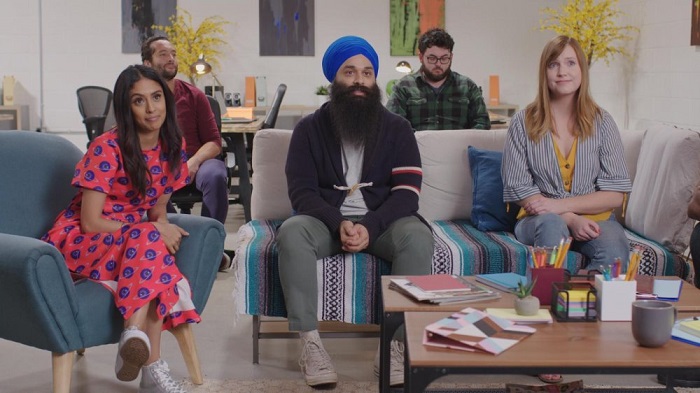
The laughter filled video “Diversity Day” features a Sikh director as well as two Sikh actors, Babbu and Sandy Gill, and is set in a modern-day workplace during an HR training addressing discrimination. Audiences have been laughing along as a struggling-to-be-politically-correct moderator addresses a Sikh-American turban wearing man. Their interactions hilariously reveal facts about the Sikh faith and beliefs in a funny and relatable way.

“The Sikh Turban is a symbol of religious and gender equality and worn as a declaration to stand up for injustice for all people. Due to ignorance of this most important feature of Sikhism, Sikhs and their young ones face negative and sometime hostile environment.“ said Anjleen Kaur, Executive Director of the National Sikh Campaign and We Are Sikhs.

She added, “Working together with the phenomenal team at Funny Or Die has been a hilarious adventure in helping eliminate ignorance through educating America’s youth.”

Gurwin Singh Ahuja, Executive Director of NSC, said, “This video has become an overwhelming success and has garnered more than 400,000 views on Facebook, Twitter, and YouTube and it continues to grow each day. The video has also garnered support from high profile American civil rights groups such as the Anti-Defamation League, the Center for American Progress, Rock the Vote, the Woman’s March as well as Sikh Instagram influencers.

Even the House of Representative Democrats tweeted official support for the video.

YOUTUBE LINK TO VIDEO, CLICK HERE

FACEBOOK LINK TO THE VIDEO, CLICK HERE

He added, “We are very pleased with the results and this is exactly reaching the right audience especially the millennials and Gen Z. It is critical for us to engage the younger people to help spread the message and help create a better environment for our youth.”

“I was born and raised in a Sikh household with a turban wearing father and like many other first-generation Americans, I felt as though the world didn’t really understand me or my faith,” shared “Diversity Day” Director Hans Sahni. “We purposefully cast male and female Sikhs cast members versus well-known actors for ‘Diversity Day’ as we wanted to portray what everyday life is like for Sikh Americans who are too often victims of harassment and bullying. I feel like this project, and everything the We Are Sikhs campaign is doing, can help today’s young people feel more comfortable, accepted and open in a way that I didn’t get to be.”

Brad Jenkins, Founder of Enfranchisement Productions and former Executive Producer at Funny Or Die and Former Associate Director at the White House, says, “Having made lots of content with Funny Or Die, this is one of my favorites to date. Not only are the engagement and comments way more positive than normal, the video is actually helping to eliminate ignorance through education and even better, with laughs.”

We Are Sikhs initiative is the larger mission of NSC to bring awareness to the Sikh Turban. Other awareness initiatives include a partnership with Ben & Jerry’s, a corporate giant and working with Public Broadcasting Network to launch a series of ads aimed at children, which will air on Sesame Street, Arthur, The Magic School Bus, as well as a series of digital shorts for Millennials and Gen Z.

A majority of American Sikhs experience harassment and the numbers are worse for turbaned Sikh children — where over two-thirds experience bullying. The Sikh Turban represents equality and to stand up for injustice for all people, and We Are Sikhs believes that the antidote to intolerance is education and dialogue.

RELATED STORY:

Turban-tying services boom as young British Sikhs embrace heritage (Asia Samachar, 6 July 2019)


ASIA SAMACHAR is an online newspaper for Sikhs / Punjabis in Southeast Asia and beyond. Facebook | WhatsApp +6017-335-1399 | Email: editor@asiasamachar.com | Twitter | Instagram | Obituary announcements, click here |
Singh gets top billing in Aussie cricket

By Asia Samachar Team | AUSTRALIA |

The surname Singh pops up quite a bit for players in the Australian cricket teams.

There were almost 1,500 people registered as Singh playing cricket in the 2018/19 season among 247,000 unique names on the MyCricket website last season, according to a Sun-Herald analysis of Cricket Australia data.

Two of the three most popular names in Australian club cricket were of Indian origin last year, though Smith and Jones are still near the top of the order, reports Sun-Herald.

The second-most common surname, Smith, had 954 unique player registrations. Patel was the third most common name, with 604 registrations, while Jones (553) and Brown (546) round out the top five.

Australian Indian Sports, Educational and Cultural Society founder Gurnam Singh told the newspaper that most Indians would take a bat and a ball everywhere so they could play cricket, be it at the beach, a barbecue or in the bush.

“For Indians in Australia, cricket is like a religion,” said Gurnam, a Cricket Australia community ambassador. “Who I am today, what made me, is cricket. “Many Indians in Sydney and Australia run small clubs that play cricket day and night. My friend has a cricket league and they have 40 teams who play every Sunday.”

A wave of Indian migrants has helped grow the ranks of local cricket teams with their passion for the game filling both local and representative levels across the country, the report [What’s in a Name? Singh Gets Top Billing, Sun Herald, 21 July 2019] added.


RELATED STORY:

True spirit of cricket at second annual Malaysia-Thai Sikhs series (Asia Samachar, 17 April 2019)


ASIA SAMACHAR is an online newspaper for Sikhs / Punjabis in Southeast Asia and beyond. Facebook | WhatsApp +6017-335-1399 | Email: editor@asiasamachar.com | Twitter | Instagram | Obituary announcements, click here |