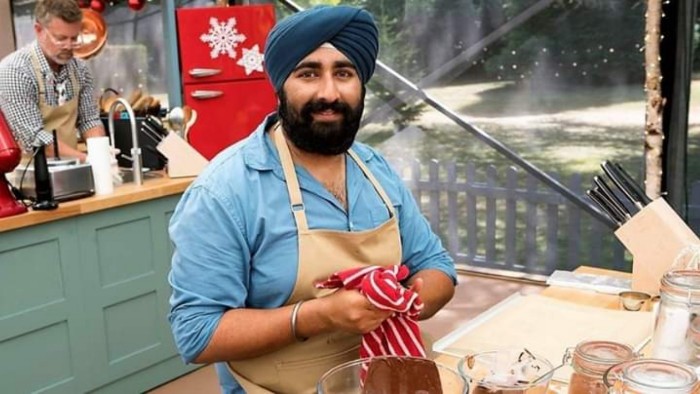
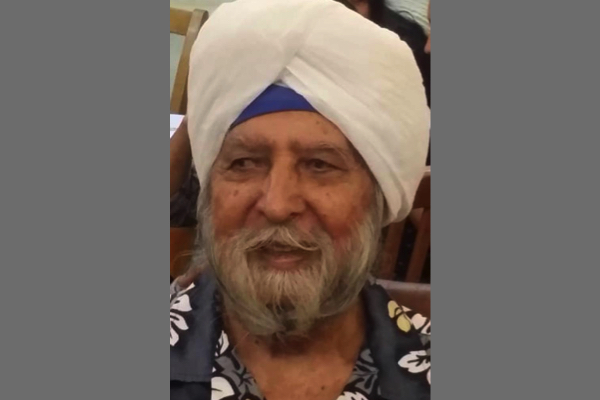
So, what is a neuroscientist in training who authored a paper on “Cerebral Gyrification and Cortical Architecture in Autism Spectrum Disorders” doing in London making pistachio chocolate lemon meringue eclairs on a baking show?
Neuropsychology researcher Jiwandeep Kohli, who is pursuing a joint San Diego State-UC San Diego clinical psychology doctoral degree, believes hobbies should be pursued with the same passion as one’s career.
When he started helping his mom make richly flavored Indian-Punjabi food, he was so young he had to stand on a kitchen stool to reach the countertop. In college, though, Kohli turned to baking, launching his pastry adventures with a fruit tart.
The Mission Valley resident was first contacted about entering a televised baking competition last March. Three years earlier, “The Great British Bake Off” had branched out to produce a U.S. version, “The Great American Baking Show,” which targets baking hobbyists, not professional cooks.
“A casting agent for the show stumbled across my Instagram photos and got in touch with me,” Kohli explained. He was hesitant. He had never imagined baking in front of a national TV audience. In the end, he says, “My friends and family convinced me to do it.”
Outside the kitchen, Kohli’s neuroimaging analyzes the anatomy of the brain, its shape, microstructure and folding patterns. His goal is to aid in earlier diagnosis of autism spectrum disorder (ASD) and identify subgroups to enable targeted intervention. He is now turning his research attention to adults with ASD, a group that has been largely neglected.
Kohli, who wears outfit-coordinated turbans rather than a chef’s toque, gravitated toward cooking because “a love of food and sharing food is one of easiest and strongest ways to connect with other people.” Since it’s his hobby, the only way others can sample Kohli’s culinary creations is to become a friend, he laughs.
Read the full story, When not analyzing brain scans, one San Diego neuropsychology researcher makes fancy pies ( San Diego Union Tribune, 13 Dec 2018), here
Sikhs from tribal areas keep kirtan alive in Peshawar – Photo: Samaa TV
By Saba Rani | SAMAA TV | PAKISTAN |
In the 1990s, Sikhs from the tribal areas first started arriving in Peshawar’s Mohalla Jogan Shah. They soon adjusted to the new environment and opened businesses.
Once their livelihood was sorted out, they started focusing on their young ones who they wanted to keep close to their religious beliefs. That’s when they set up the Gurudwara Bhai Joga Singh Dharmik School.
Every day, young girls in the traditional yellow come to the school to learn hymns. The school has been teaching children music for almost three decades.
However, when terrorism hit the region, it also affected this school. The school never closed down fortunately, but it did at times keep a low profile.
Since peace has been largely restored, you can hear the children singing the hymns if you pass by.
Master Birbal Singh, who teaches music here, says that in Sikhism, music is considered a way of spreading love and is an integral part of the religion. The ‘Paath’ (verses) of Guru Granth Sahib, the holy book in Sikhism, is sung accompanied by a tabla and harmonium.
“I recite two to three Kirtans in an hour or two,” said a girl student. “I have been reciting Kirtan at the Gurdwara for a year and I have spent two years learning the harmonium.”
More than a thousand Shabads (verses) are recited to music this way, he explained, adding that so far two generations of their community have benefited from the school.
“My parents get happy when they see me studying at the gurdwara,” said one boy student. “They get happy seeing me study music.”
The school is not just a training institute but is also a charity centre where the community donates 10% of their earnings as Dasvandh, a contribution in the name of the Guru.
The school’s monthly expenses run up to Rs100,000 and the community pays for everything. In 28 years, the government has never offered it any support. The community says that if it did, they could think about opening similar schools in other districts of the province.
The original article, Sikh hymns survive sad times in Peshawar’s Mohalla Jogan Shah gurdwara, appearead at Samaa TV on 19 Dec 2018. See here.
Facebook is turning to Karandeep Anand to spearhead Workplace, the company’s communications tool for companies.
Karandeep, who worked for 15 years at Microsoft in product management and then clocked in close to four years at Facebook, will head the London-based unit.
“I’m excited to now be part of the journey of bringing Workplace to companies across the globe and help them unlock the potential of their biggest asset – people,” Karandeep wrote on his LinkedIn profile.
In another social media post, he wrote: Back to my enterprise SaaS roots – powered with consumer DNA of Facebook, ending the note with a smiley.
Karandeep has a Bachelor of Technology, Computer Science from India’s International Institute of Information Technology (IIIT).
He will work closely with Julien Codorniou, the Facebook vice president who has been the leader of Workplace, a spokeswoman for Facebook told CNBC.
He will handle the Workplace product team, which includes developers, engineers, researchers and data scientists, while Codorniou will remain in charge of sales and partnerships, the report added.
He was previously Facebook director for product management.
In its two years of existence, Workplace by Facebook has nabbed big-name customers such as Walmart, Starbucks and Chevron, but it has otherwise yet to make a significant dent in the enterprise communications software market and trails rivals Microsoft and Slack, which is expected to go public next year, according to the CNBC report.
The service is used by 30,000 organisations, according to the most recent figures Facebook shared in October 2017.
Path da Bhog: 30 December 2018 (Sunday) at 10.00 a.m. – 12.00 p.m. at Gurdwara Sahib Mantin, Negeri Sembilan
`
| Entry: 20 Dec 2018 | Source: Family |
ASIA SAMACHAR is an online newspaper for Sikhs / Punjabis in Southeast Asia and beyond.Facebook | WhatsApp +6017-335-1399 | Email: editor@asiasamachar.com | Twitter | Instagram | Obituary announcements, click here |
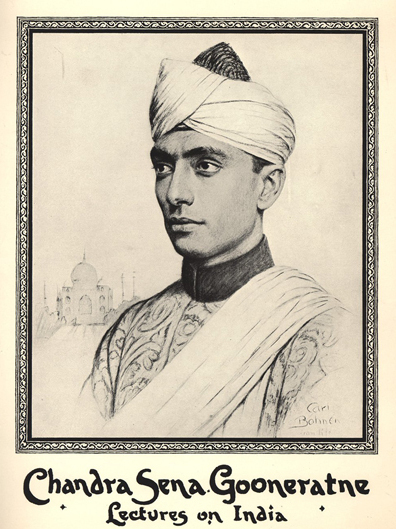
South Asian scholar Chandra Dharma Sena Gooneratne wore a turban to avoid anti-black discrimination in the American South
By TANVI MISRA | NPR |
n mid-20th century America, the turban was a tool that people of color used for “confounding the color lines,” writes Manan Desai, board member of the South Asian American Digital Archive.
At the time, ideas of race in America were quite literally black and white. In some places, if you could pass yourself off as something other than black, you could circumvent some amount of discrimination. People of color — both foreigners and African-Americans — employed this to their advantage. Some did it just to get by in a racist society, some to make a political statement, and others — performers and businessmen — to gain access to fame and money they wouldn’t have otherwise had.
‘A Turban Makes Anyone An Indian’
Chandra Dharma Sena Gooneratne was getting a doctorate at the University of Chicago in the ’20s. Originally from Ceylon (now Sri Lanka), he traveled around America lecturing on the need to abolish the caste system and on India’s push for independence from the British, among other topics.
In a recent article about Gooneratne, Desai notes that visiting scholars from Asia and Africa, like Gooneratne, were startled to encounter anti-black discrimination. But some of these people, who were lugging around colonial baggage from their own countries, found a way around racism.
Gooneratne, for one, used his turban while traveling in the Jim Crow South to avoid harassment, and advised others to do the same, Desai writes.
“Any Asiatic can evade the whole issue of color in America by winding a few yards of linen around his head,” Desai quotes Gooneratne as saying. “A turban makes anyone an Indian.”
Pause. Let’s take care of a couple of housekeeping details: A turban isn’t exclusively Indian. It has variations in the Middle East, East Asia and North Africa. But it was seen as a “racial marker” for Indians, Desai notes, and led to acts of violence against Sikh communities in North America in the 19th century. South Asians weren’t immune to racial prejudice.
The ‘Turban Trick’: A Political Statement
I spoke with Paul Kramer, a historian and professor at Vanderbilt University, who found that the turban was also used by African-Americans. They sometimes added robes, accents and carefully cultivated personas to bypass segregation laws and other kinds of discrimination.
The New York Times picked up the story about Routté’s Alabama trip. He’s written about about a black Lutheran minister, the Rev. Jesse Routté, who pulled off what Kramer calls the “turban trick.”
Routté had traveled to Alabama in a turban and robes, put on an accent, and quickly realized that it was quite easy to fool everyone there into thinking he was a foreign dignitary — and to be received as one.
“Then it kind of goes viral in 1940s terms,” says Kramer, “where the press picks it up, it becomes this colorful story that people are talking about.” When an article appeared in The New York Times, he says, people started pulling up examples of other cases.
“He’s not the first person to pull this off,” says Kramer, “so it’s not entirely a novelty.”
But Kramer says Routté is the sole representative of the first category of African-American turban wearers — those who did it to make a political statement.
Routté’s experiment began after he traveled to Mobile, Ala., in 1943 for a family engagement. He wasn’t happy with how he was treated.
“I was Jim Crowed here, Jim Crowed there, Jim Crowed all over the place,” he later told reporters. “And I didn’t like being Jim Crowed.”
So he went back in 1947, with a plan.
Before he boarded the train to Alabama, he put on his spangled turban and velvet robes. When the train reached North Carolina during lunchtime, Routté walked over to the diner car where the only vacant seat was occupied by two white couples.
One of the men said, “Well, what have we got here?” to which Routté replied in his best Swedish accent (he had been the only black student at a Swedish Lutheran college in Illinois), “We have here an apostle of goodwill and love” — leaving them gaping.
And that confusion seemed to work for Routté on the rest of his trip. He dropped in on police officials, the chamber of commerce, merchants — and was treated like royalty.
At a fancy restaurant he asked the staff what would happen if a “Negro gentleman comes in here and sits down to eat.” The reply: “No negro would dare to come in here to eat.”
“I just stroked my chin and ordered my dessert,” he said.
After he returned to New York, Routté said he felt like “a paratrooper behind enemy lines.”
His son Luther Routté is now 74. Both of his parents — prominent in activist communities in Harlem and Long Island — were always doing “social experiments,” trying to find solutions to the prejudice they saw in the world. And this experiment exploded the myth that blacks were innately inferior and warranted inferior treatment, he says.
“He didn’t change his color. He just changed his costume, and they treated him like a human,” says Luther Routté, who has been a Lutheran pastor for 25 years. It “shows you the kind of myopia that accompanies the whole premise of apartheid or segregation.”
Through the “turban trick,” Routté basically transformed himself from a threat to a guest — black to invisible.
Read the full article, How Turbans Helped Some Blacks Go Incognito In The Jim Crow Era, here (NPR, 19 July 2014)
[ASIA SAMACHAR is an online newspaper for Sikhs / Punjabis in Asia. How to reach us: Facebook message or WhatsApp +6017-335-1399. Our email: editor@asiasamachar.com. For obituary announcements, click here]
Nirpreet Kaur, then 16-years-old, is an eyewitness against some of the direct perpetrators of violence in Delhi in 1984. She recounts the nexus between local politicians and the police and how Sikhs in her neighborhood, surrounded on all 4 sides, organized to fight against the marauders for 4 hours.
She explains that while Sikhs bravely put up a fight, the police finally arrived on scene. At the behest of the police, Nirpreet Kaur’s father left with the police. Then, she heard the police inspector shouting to the crowd: “tumse ek sardar nahin martaa?” (You are unable to kill even this one Sikh?)
The crowd set fire to her father, caught him as he ran, tied him to a pole and burned him to death. Kaur narrates the complicity of those around: shop owners, neighbors and the head of the local mandir/temple who aided the police and leaders in killing her father.
In this poignant and spirited account, Kaur recounts the interaction between Sajjan Kumar’s nephew and her father and names other perpetrators such as ex-MLA Mahinder Yadav, who yelled about her 9-year-old brother, “isse bhi maaro, yeh saap ka bachaa hai.” (Kill him too, he is an offspring of the same snake).
Kaur’s surviving family was taken by a neighbor to the local Air Force station. She describes what she saw there and the witness harassment and intimidation that followed the horror of the first few days of November.
Moving away from her abruptly destroyed childhood, Kaur later went to Punjab, joined the Sikh Youth Federation and married a militant, who she witnessed being killed in a police encounter. She herself was also jailed for 9 years and later tortured by Sumedh Saini (currently promoted to Director General of Police, Punjab) for a week. Following release from jail, she was forcibly re-married by her family and suffered an abusive relationship. Kaur also bravely continues to speak of the abuse of the judicial processes.
She has opened some businesses for some of the women survivors of 1984 and is providing education for second and third generation children in her ongoing attempts to assist them out of poverty.
This article first appeared at 1984 Living History on 28 June 2014. See here.
SASKAAR / CREMATION: 1pm, 20 Dec 2018 (Thursday) at Gui Yuan Crematorium, Kampung Tungku, Petaling Jaya. Cortege will leave from 28, Jalan Qamari U5/109A, Taman Nusa Subang, Seksyen U5, 40150 Shah Alam, Selangor at 12 noon|Malaysia
Daljit Kaur (1969-2018), Taiping / Ex UH Staff Nurse
From Batu 4, Kamunting, Taiping. Passed away peacefully on Tuesday 18th Dec 2018
Leaving behind:
Beloved Husband: K. Kalaiarasan s/o S. Krishnasamy
Sons: Tharvind & Vishal
Saskaar / Cremation: 1pm, 20 Dec 2018 (Thursday) at Gui Yuan Crematorium, Kampung Tungku, Petaling Jaya
Cortege Timing: Cortege will leave from 28, Jalan Qamari U5/109A, Taman Nusa Subang, Seksyen U5, 40150 Shah Alam, Selangor at 12 noon, 20 Dec 2018 (Thursday)
AKHAND PATH will be held at Gurdwara Sahib Sentul commencing on 20 Dec 2018 (Thursday), 4pm.
ANTIM ARDAS will be held at 7pm, 22 Dec 2018 (Saturday). GURU KA LANGAR will be served.
Deeply missed by family members, relatives and friends. Treat this as a personal invitation.
Contact:
Jai (012-3917532)
Manjeet (016-3907077)
Devamany (012-5021470)
| Entry: 19 Dec 2018 | Source: Family |
ASIA SAMACHAR is an online newspaper for Sikhs / Punjabis in Southeast Asia and beyond.Facebook | WhatsApp +6017-335-1399 | Email: editor@asiasamachar.com | Twitter | Instagram | Obituary announcements, click here |
Harcharan Singh (left) and Ranjeet Singh Bhullar to lead MSU
By Asia Samachar Team | MALAYSIA |
Security firm operator Harcharan Singh and electrical engineer-cum-businessman Ranjeet Singh Bhullar were elected unopposed as the top two leaders of the Malaysian Sikh Union (MSU) at its 34th annual delegates conference in Kuala Lumpur on Saturday (15 Dec 2018).
Harcharan was elected as MSU national president and Ranjeet as the national deputy president.
The meeting was attended by representatives from its seven state branches.
“This year is a special year as an important amendments to the Constitution have been made to allow for capable members to hold executive positions in the organisation without much hassle,” Harcharan said in a statement released to Asia Samachar.
He said MSU expects memberships to increase as approvals for members can now be done at the branch levels and is also in the process of reviving its branches in Penang and Malacca.
MSU elects a national president and national deputy president who then appoint the rest of the executive committee which will serve for two years.
The national organisation comprising of 10 council members from different state branches meets 3-4 times per year to oversee activities of the individual branches and arrange meaningful fellowships.
Ranjeet, who hails from Johor, said MSU Johor has made some sterling efforts, including providing welfare aid of RM300 per month to 10-13 families for almost 14years consecutively.
Among the activities carried out in 2018 were a family retreat of members to Frasier Hill and Langkawi and visitations to Sikh inmates serving time in Sungai Buloh and Kajang prisons (arranged by the Selangor/ FT branch).
Harcharan said the organisation plans to move into the e-data world by engaging the services of a web master to digitise membership records and activities on its website.
“This will make reporting of the organisation’s activities to the Government much easier and also create transparency in membership status to all members,” he said.
He said the national body secretariat will commence issuing membership cards to all its life members.
[ASIA SAMACHAR is an online newspaper for Sikhs / Punjabis in Asia. How to reach us: Facebook message or WhatsApp +6017-335-1399. Our email: editor@asiasamachar.com. For obituary announcements, click here]
Sehaj Path Da Bhog: 30 December 2018 (Sunday), 9am-1pm, at Gurdwara Sahib Seremban
Contact:
Ramidar Singh +6019-388 3982
Jaswindar Singh +6012-323 1573
Pritpal Singh +6012-361 6217
Manwindar Kaur +6017-279 6657
`
| Entry: 19 Dec 2018; Updated: 23 Dec | Source: Family |
ASIA SAMACHAR is an online newspaper for Sikhs / Punjabis in Southeast Asia and beyond.Facebook | WhatsApp +6017-335-1399 | Email: editor@asiasamachar.com | Twitter | Instagram | Obituary announcements, click here |
Amardeep Singh Dhillon, a fourth year engineering student at a Malaysian university, is on a roll after having won two education-related awards recently.
The 25-year old Universiti Teknikal Malaysia Melaka (UTeM) student and three fellow course mates topped the inter-university Inclusive Innovation Challenge 2018 (IIC) with an energy harvesting mechanism.
The project was part of their bachelor’s degree project. The winning product allows for the development of energy harvesting mechanism from burning process via an IoT based system. It is meant to help communities in emergencies like floods to utilise full biomass to produce electricity.
Amardeep also won gold in the Innovation and Design Expo (IDEX) 2018.
ASIA SAMACHAR is an online newspaper for Sikhs / Punjabis in Southeast Asia and beyond.Facebook | WhatsApp +6017-335-1399 | Email: editor@asiasamachar.com | Twitter | Instagram | Obituary announcements, click here |