














UA-56202873-1
Page 626

Meaning of Soul, Atma or Rooh

0
Subedar Dharam Singh Sujjon
By Gurmukh Singh OBE | OPINION |

Author’s note: This article is dedicated to the memory of Bhai Sahib, Subedar Dharam Singh Sujjon of UK. It is in response to a query about the nature of the human soul (atma).


Ram rattan tab paayiay jao pehlay tajeh sareer. (SGGS 1366)

The Lord’s Jewel is obtained by first shedding the [egocentric] body.

MEETING BHAI DHARAM SINGH SUJJON IN 2003

I met late Bhai Sahib Subedar Dharam Singh Sujjon in 2003 at the Panjab Times UK 38th Anniversary function held at Guru Nanak Sikh School (Hayes, London).

He walked over, a tall slim and saintly Gursikh with a grey flowing beard. He said Gur Fateh with a faint knowing smile and said, “Mai tuhanoo kafee samay to(n) milan babat soch reha si”. (I had been thinking of meeting you for some time). A short conversation followed. I had read his articles in Punjabi and he seemed to be well acquainted with my work, partly through renowned UK author, late S. Gurbachan Singh Sidhu of Nottingham (UK)

He said something about his age [i] and health and asked me to read and comment on some of his unpublished manuscripts. I told him that I was not qualified for such a task but he persuaded me with his humility and Gursikhi aura. Bhai Sahib subscribed to Bhai Sahib Bhai Randhir Singh ji’s interpretation of Gurbani. It is possible that he had read my translation of Bhai Rama Singh of Akhand Kirtani Jatha’s autobiography, “Roop Gobind ka, Raj Khalsay ka, Sikka Sonay ka”, to which I had given the title: “In Search of the True Guru” (Published by Panjab Times UK, April 2001, 412 pages).

He said: Pad ke, vichaar ke, jivayn tusseen ttheek samjho karr leo. (Read, reflect and do as you please.) That was the only time I met this saintly Gursikh, although we remained in touch for some years.

Over the next few months, I received some draft articles and a book draft with the title, Sikh Ik Sresht Dharam Kivayn? (How is Sikhi a leading faith? Sresht can also be translated as superior.)

As I read through these scripts (in Gurmukhi), it became clear that Bhai Sahib was truly a treasure-house of  knowledge.  He remained a humble Gursikh to the end.

ATMA IN SIKHI

Introduction

A recent query about the human soul – atma or rooh – prompted me to look up some relevant passages from Subedar Dharam Singh Sujjon’s manuscripts. The specific question is, “What is atma with reference to man (mun) and mat (muth)?” For example, we distinguish between mun and muth when we say Sikhan da man neeva, mat uchi in our daily Ardaas (prayer). We pray that the muth, the discerning part of the mind of the Sikhs should remain in control of mun, the wandering or fickle part of the mind.

This article explores around the above query and looks at one Sikh view about the nature of atma, the human soul, and its relationship with mun and muth in the context of the cycle of birth, life and death.

The topic in hand is complex. Some repetition is not only unavoidable but also intentional.  Often, related concepts are shrouded in mysticism and exploited by those wearing the scholarly garbs ranging from the Vedic Pandits to the derawadis running own schools and cults. However, it has been simplified in Gurbani as interpreted by Gursikh scholars.

Guru Nanak Sahib took the Message to the masses in their own simple language. That is because this human life is an opportunity for all to seek blissful union with the Ik Oangkar, the One Creator Being. That opportunity is there for everyone – from the pundit to the simple peasant. The Bhagats, whose Bani is included in Sri Guru Granth Sahib, were from diverse social backgrounds.

When discussing interpretation of Gurbani, I always aim to make the reader conversant with as many original Panjabi word-concepts as possible without interrupting the flow of thought.

In this article:

Sareer = body. Three types of sareer are mentioned: the physical (sathool) or earthly body which we can see; and the energy (sookhsham) and ideas/causal (karan) bodies which we cannot see.

Words which refer to the mind and will be explained later, are man (mun), mat (muth), budh, chitt, anteh karan.

THREE BODIES OR SAREERS

The law of nature is that everything returns to its source of origin. That is true with human beings also.

Jeh te upjio Nanaka leen Tahe mai maan. (SGGS 1426.)

Believe it O Nanak, you will [one day] blend/merge with the Source of your origin.

When someone dies, we say the person has left the body. (We say: Falana sarir tiyag gyia hai.) It means after death a person leaves this earthly body behind and goes somewhere else.

The question is who left this body?


The body which is left behind is the earthly body made of bone, flesh, and blood vessels (hadd, maas, naadi ko pinjar….), called the sathool sarir. Sathool means material. It is the body we can touch and feel. It is made from matter, the panj tatt or five elements mentioned in Gurbani: fire, earth, water, air and sky/space.

The soul or jeev-atma resides in, or rather, is trapped in, three bodies or layers:

  • The physical body which we see and which will be shed on death;
  • The energy or etheric body; and,
  • The causal or ideas body.

Within these three bodies or layers resides the jeev-atma.

Bodies 2) and 3) above remain after death with the atma trapped in them due to the attraction of world-play referred to as maya, prakriti or nature which is the dynamic energy of the Creator Being.

Let us digress a little: In Sikh thought, this world play (maya or prakriti) is true (real) because the Creator is True, and maya is within His Hukam or Command. It is not an illusion as in Vedic thought. It is the Bachittar Natak (ref. Guru Gobind Singh), the wondrous or fantastic play in which we all have roles according to the Hukam of Akal Purakh. That is the reason why a Sikh is always a full participant in life and living, an activist and not an opt-out from   human society.

One component of the sookhsham sareer is called the antehkaran which is combination of mun, budh, chit and ahankaar.

Mun is the intuitive part of the mind; budh the discerning part; and chit is consciousness which forms an idea in the mind, thinks and reflects upon. Perhaps, the reader should pause and reflect on these descriptions of the mind functioning in different modes.

Ahankaar means “I am”. This “I”  entity is separate from the sathool, sookhsham, and karan sareers.  It gives power to the three bodies and keeps them going. If it withdraws that power, the three bodies/sareersathool, sookhsham and karan – do not function. This fourth entity, “I am” is my true being.

It is called jeev-atma. It is the atma or rooh.

Jeev-atma is the offspring (ulaad) of Akal Purakh.

Kaho Kabir eh Raam ki ansh (SGGS 871)

Jeev-atma is the offspring of Akal Purakh and is always longing to return to its Source but is prevented by the outer three bodies/layers. It is covered by them like a jewel which is hidden in layers of mud or mire also referred to as pankaj in Gurbani.

Even after death only the outer physical body is shed but the other two bodies in which the jeev-atma is entrapped, remain and seek another body. And so, the cycle of birth and death continues numerous times until the jeev-atma is freed by the True Guru’s guidance to return to its Source, the Creator Being. That is the cycle of karam (karma).

In our physical body, is the sookhsham sareer. It is the energy or etheric body and is the true copy of the body (sathhool sareer). It is connected to every cell of the body and operates through the meridian system. Meridians are electricity pathways in the body along which vital energy flows. The system gives life force to the body. Without this life force the body is dead. It is lifeless.

The sookhsham sareer itself receives instruction from the karan sareer. Karan means the cause or the reason for something happening, as when say “Is da ki karan hai – what is the cause or reason for this”. So karan sareer is the causal body formed by ideas. The karan saree sends instruction and the sookhshm sareer converts these ideas to actions of the physical body by sending it electrical impulses through its network of meridians.

It sounds complicated but can be understood simply as: ideas activating electrical impulses in our body which in turn cause physical movement or actions. In daily language, the mind sends instructions through the network of nerves, which the body parts carry out as actions. Without thoughts, no signals are sent and there is no action.

So, why not say that we have a mind located in the head, a network of nerves which reaches all parts of the body to activate the physical body?  I believe this concept of three bodies in one – the sathool, sookhsham and karan – shows that the three systems operate together to the level of every cell in the body. “I” awareness is in every cell of the body! On the other hand when we understand Hukam through Naam Simran (meditation on Naam), it is “You”, the Creator Being, Who is in every cell of the body!!

We must remember that this is a two- way system. The body parts carry out the instruction of the mind; however, the body parts also send back signals to the mind and influence and shape  thoughts.  So the mind instructs the body, but the body also instructs and can control the mind. The question is who or what is in control?

Beyond the causal or ideas body, the karan sareer, is the atma or jeev-atma , the offspring of Param Atma, the Akal Purakh or the Timeless Being. Let us pause and reflect: jeev-atma is very much part of the Param Atma, the Akal Purakh, just like a drop of water is not different from the ocean full of water. The drop arose from the ocean and seeks to return to the ocean. So, the jeev-atma seeks to return to the Param Atma or Akal Purakh. However, it is prevented from doing that by the karan and the sookhsham bodies engrossed in world-play.

The Hukam/Command of the Param Atma operates through the jeev atma which activates the causal/ideas, energy and physical bodies in that order.  So, it is by the Hukam we suffer pain/unhappiness (dukhi) or are happy and contented (sukhi). One who understands, accepts dukh/sukh in Waheguru’s Hukam or Bhana, remains aloof and in a state of equipoise. One who does not, is affected by these.


We cannot see the Param Atma and the jeev-atma. Eventually, the jeev-atma entrapped by the ideas, energy and physical bodies (karan, sookhsham and sathool sareers) collectively, starts believing “I am” the doer, forgetting that it is the Will/Hukam of Akal Purakh which is the Doer. So hao-mai or ahankar i.e. “I am the doer” is created and takes over. That becomes the root cause of all pain and sorrow and the reason for the cycles of birth and death.

On death, the causal/ideas and energy bodies in which is imprisoned the jeev-atma, leaves this earthly body to be reborn.

Freedom from the cycle of birth and death is an important milestone in the life of a Gursikh. However, unlike many other faiths, it is not the end-objective.  A Gursikh becomes a witness to this freedom while living, and moves on to the next stage which is to witness and experience the Ultimate Truth, the parkaash/pargaas  of the Param Atma.

Thus, the end objective of Sikhi is stressed in the Pangti:

Raj na chaho(n) mukt na chaho(n) man preet charan kamlaaray. (SGGS 534)

I desire not an empire nor do I desire salvation/emancipation, my soul longs for love of your Lotus Feet.

The first stage is to witness the manifestation of the soul – atam parkaash. The next stage is Param Atam parkaash which has been compared to the light of millions of suns.

Saant sehej sookh man upjio,  kot sur (soor=sun) Nanak pargaas.  (SGGS 716)

Peace equipoise and pleasure/contentment have sprouted in my mind as I experience the   light of millions of suns, O Nanak.

The above can be interpreted as a paradigm shift as the mind is cleared of the cob-web, the net (jaal) of ego-centric thought which ensnare the human soul, the jeev-atma, and filled with the Light of Naam – true experience of Divine Virtues and Commands, the Source of all creation, seen and unseen. Instead of “I”, the Akal Purakh is witnessed as the Doer.

The main objective of every human being is to merge with the Source of all creation, the Akal Purakh, the Timeless Being. Gurbani guides us towards that objective so that the jeev atma is freed from the three bodies described as above and is enabled to return to its Source (upaj sarot).

That can be achieved through inner detachment while we remain fully engaged in this world.

The Sikhi way is to become conscious of Naam i.e. Divine virtues and Commands which guide Sikhi living. A Sikh emulates those virtues and obeys the Commands (Hukm). One becomes aware of Naam when the Almighty enables us to find the Guru and follow his teachings[ii]. This Naam consciousness is only possible when the mind (mun) becomes inwardly focussed.

The human mind, mun, “looks” outwards and experiences the outside world through the body senses. Thus, when outwardly focussed, the mind becomes totally engrossed in world play. Therefore, during life on earth, the mind remains pre-occupied with the world play. It begins to believe that it is the doer i.e. “I am” the doer. “I” am happy. “I” am suffering etc. The connection with the Real Doer, the Akal Purakh is broken. That becomes the cause of  cycles of birth and death

The mind (mun) is also capable of looking inwards and experiencing/realising the jeev-atma, the soul. The jeev-atma is the offspring of the Param Atma, the Supreme Soul, the Creator Being. Naam Simran is the Gurmat way to turn our senses (mun) inwards to witness and realise the jeev-atma. That is when the mun becomes Jote-saroop.

Panch tatt mil kaayia kini.

Tis meh Raam rattan lai chini.

Atam Raam Raam meh aatam.

Har paayiai sabad vichaara hey (SGGS 1030)

Bringing together the five elements the body is created.

Within that seek the jewel of the Lord.

The soul is in the Lord and the Lord is in the soul.

The Lord is obtained by meditating on Naam.

So, in Gurbani, mun has a pivotal role in realising our true self, the jeev-atma, the ray of Param-atma (Supreme-soul) in every being.

Naam is the means for freeing the jeev atma from the causal (ideas) and the astral/energy bodies. Otherwise, the jeev-atma remains trapped  in the cycle of transmigration. Realization of the jeev-atma leads to union with Akal Purak in the realm of Sach Khand, the Ultimate Reality.

Akal Purakh is the self-aware unlimited energy field in which we all live. IT is the Ik Oangkar in Sikh thought: the Singularity which expands and contracts at Own Will or Hukam. We all live in this Self-aware Energy field like fish in water. The jeev-atma is part of Akal Purakh in the same way as a drop water is part of the ocean. It yearns to return to its Source as a drop of water seeks to return to the ocean from whence it came.

So, the Sikhi way is to understand, accept and obey the Divine Law and Commands, the  Hukam. In this way, all aspects of Sikhi life, activity and social activism, become attuned to and are in complete resonance with the Divine Law (Hukam). The ultimate objective of human life is achieved through:

Hukam boojh Param Pad paaee. (SGGS 292)

By understanding and obeying the Divine Law operating in creation, the supreme status, the ultimate objective of human life, is achieved.

Sikhi is both, outward looking (worldly) and inwardly contemplative with focus on Naam, i.e. Divine virtues and commands.

There is no re-birth for a Gursikh.


[i] Bhai Sahib was born on 8 September 1918. However, having lost contact with him, I am not sure of the year of his departure for Sach Khand.

[ii] Ref: S. Rawel Singh’s Understanding Japji Sahib: Review and e-book at link: http://sikhmissionarysociety.org/sms/smsresourcecentre/products/rawelsingh/understandingjapjisahib/

To quote from the review: The author clarifies that living by Naam means emulating Divine virtues/attributes and living by divine commands. That requires daily/timely sustained effort. The reader is left in no doubt that Naam japna requires both, mental and physical activism/effort.
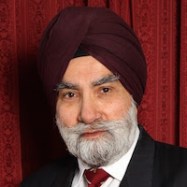
 

Gurmukh Singh OBE, a retired UK senior civil servant, chairs the Advisory Board of The Sikh Missionary Society UK. Email: sewauk2005@yahoo.co.uk. The article first appeared at The Panjab Times, UK

* This is the opinion of the writer, organisation or publication and does not necessarily represent the views of Asia Samachar.


[ASIA SAMACHAR is an online newspaper for Sikhs / Punjabis in Asia. How to reach us: Facebook message or WhatsApp +6017-335-1399. Our email: editor@asiasamachar.com. For obituary announcements, click here]

The Apache lands for Saragarhi Day

0
British Army Apache piloted by a Sikh from the Army Air Corp lands at Southall

The Apache has landed. #SaragarhiDay is officially underway to commemorate the historic and gallant Last Stand of 21 Soldiers of the 36th Sikh Regiment at #Saragarhi in 1897. To celebrate our shared history and heritage we are holding an open day at #Southall Army Reserve Centre.

The above was the tweet at British Army today (15 Sept 2018).

The Southall Army Reserve Centre opened their doors today to celebrate ‘our shared history and heritage by commemorating the Battle of Saragarhi’.

On 12 Sept 1897, 21 Sikhs fought to the last man defending a small communications outpost between two garrison forts, against 10,000 Afghan tribesman. It is considered to be one of the most heroic battles and greatest ‘last stand’ in military history.

This annual event has been held around the country and this year we are bringing Saragarhi Day to West London at the Southall Army Reserve Centre.

In a tweet, media consultant Jay Singh-Sohal wrote this: “How does @BritishArmy commemorate #saragarhiday? By flying an Apache into Southall piloted by one of two British Sikh @ArmyAirCorps officers!’

RELATED STORY:

British Army second commemoration for Battle of Saragarhi (Asia Samachar, 16 Sept 2015)


[ASIA SAMACHAR is an online newspaper for Sikhs / Punjabis in Asia. How to reach us: Facebook message or WhatsApp +6017-335-1399. Our email: editor@asiasamachar.com. For obituary announcements, click here]

Kuldeep Singh (1969-2018), Ipoh

PATH DA BHOG: 11.30am, 30 September 2018 (Sunday), at Gurdwara Sahib Bercham, Ipoh | Malaysia

Kuldeep Singh (1969-2018), Ipoh

KULDEEP SINGH S/O AMAR SINGH

Born: 19 Oct 1969

Departed: 15 Sept 2018

Wife: Paramjeet Kaur d/o Balwan Singh (Pammo)

Children:

Rasveen Kaur

Raveena Kaur

Mother in law: Madam Gian Kaur (Gianno)

Path Da Bhog: 11.30am, 30 September 2018 (Sunday), at Gurdwara Sahib Bercham, Ipoh

Contact:

Raveena Kaur 016 513 7100

Pammo  016 551 9030

Ravi Singh wins Sheikh Abdullah Award for Intercultural Dialogue

0

The international work of Khalsa Aid, including assisting Yazidis and Rohingya Muslims flee genocide and initiating a series of relief efforts for refugees in Congo, have earned them yet another recognition.

Ravinder Singh, the founder and the face of the UK-based humanitarian relief outfit, won the Sheikh Abdullah Intercultural Dialogue Award.

The award, presented in London on Thursday (13 Sept 2018), is one of the recognitions handed out at the No2H8 Crime Awards that honours individuals and organisations who stand against hatred, prejudice and intolerance.

“As a Sikh my Gurus have taught me to shun hate, as a human being I live by this ethos on daily basis through Khalsa Aid International,” Ravi Singh, as he popularly known, said in an entry at the his LinkedIn page.

SEE ALSO: Ravi, does publicity get to your head? 

The other two winners for award were Yorkshire Dales Millennium Trust Charity @PeopleandtheDAL and Fernando Sulichin.

The Sheikh Abdullah Award for Intercultural Dialogue work is supported by Lord Mohamed Sheikh of Cornhill. Lord Sheikh is a Conservative peer, entrepreneur, businessman and founder of the Conservative Muslim Forum. The award is sponsored in honour of his father and his ability to be successful in spite of adversity and multiple barriers in starting life in a new country.

Sheikh Mohammed Abdullah of Mbale, Uganda, was an entrepreneur who had arrived in East Africa, drawn away from India because of the colonial link of Empire.

He became a very successful businessman with investments in the cotton and tobacco industries in Uganda and he was also instrumental in providing philanthropic support to other faith communities in Uganda. For example, he was instrumental in actively supporting the building of mandirs and gurdwaras in the country, whilst he himself was Muslim.

A firm believer that ‘hard work’ would reap rewards, he came to Uganda with no assets and build a successful set of businesses in a country which was culturally and religiously alien to him. With little grasp of Swahili, he built a successful future through intercultural dialogue which he lived out every day.


RELATED STORY:

Khalsa Aid, Kochi gurdwara serve hot meals to Kerala flood victims (Asia Samachar, 19 Aug 2018)

Khalsa Aid relief work in Syria a ‘shining example of humanity’ (Asia Samachar, 4 March 2018)

Ravi, does publicity get to your head? (Asia Samachar, 17 Aug 2016)

ASIA SAMACHAR is an online newspaper for Sikhs / Punjabis in Southeast Asia and beyond. Facebook | WhatsApp +6017-335-1399 | Email: editor@asiasamachar.com | Twitter | Instagram | Obituary announcements, click here |

More than 1,000 Sikhs perished in Malaya during Japanese occupation

1
Malaysian Armed Forces Sikh Veterans Association (MAFSVA) prayer gathering in Penang on 9 Sept 2018 – Photo: Supplied

More than 1,000 Sikh Soldier’s are believed to have perished during the Japanese occupation of Malaya in World War 2 (WW2), a retired army officer told a gathering of fellow Sikh Malaysian armed forces veterans.

“More than 1,000 Sikhs would have perished if you take into account all the battles from the start till the fall of Singapore and the Sikhs POW’S who were killed brutally and the many who were sent to the Death Railway and never returned,” Maj. (Rtd) Harjit S. Rendawa told Asia Samachar.

Harjit is in the midst of gathering details from the war archives on names and if possible their villages in India where they were from to establish local connections with Sikh families. Both his grandfather and father were serving with the British police force when Penang was bombed by the Japanese.

“This is my number one objective,” said the Malaysian Armed Forces Sikh Veterans Association (MAFSVA) deputy president.

On 8 Sept, the association held its first official gathering for its Penang and North chapter. It comprised of prayers at the Wadda Gurdwara Sahib Penang and later a fellowship dinner at the Penang Club. The events were also in conjunction with Malaysia’s 61st National Day and the Armed Forces Day which falls on 18 September.

MAFSVA Penang & North is led by Capt Dr Kulwaran Singh as its chairman, S Sjn Sarjit Singh as secretary and  PW II Manjet Singh RMAF as the treasurer.

“We need to preserve our history from the time Sikhs first set foot in Malaya as Sepoys, as well the history of the wider Sikh involvement during the Japanese occupation ,” he said.

He pointed out that the Battle of Kampar as one of them where Green Ridge one of the remaining defense positions has been gazateed as a heritage site with the efforts of MAFSVA. A memorial is in the pipe line to be constructed with the cooperation of the Indian High Commission.


RELATED STORIES:

Sikh veterans join Merdeka Day Shining Turban campaign (Asia Samachar, 27 Aug 2018)

Malaysian armed forces Sikh veterans form an association (Asia Samachar, 27 July 2016)


[ASIA SAMACHAR is an online newspaper for Sikhs / Punjabis in Asia. How to reach us: Facebook message or WhatsApp +6017-335-1399. Our email: editor@asiasamachar.com. For obituary announcements, click here]

Wrong ‘turban’ remark gets Fandi Ahmad in a big bind

Fandi Ahmad – Photo: FAS
By Suresh Nair | SPORTS247.MY

Fandi Ahmad got himself in a knot of sorts over the use of the six-letter word “turban”. But as quick-silver an international striker he’s noted to be, the newly-minted Singapore national coach settled the matter very amicably.

It sounded like a “storm in a tea-cup” incident but I know that for the Sikh community their formal head-gear is beyond reproach and any mention adverse instantly arouses their sentiments.

For the record, Sikh men commonly wear a peaked turban that serves partly to cover their long hair, which is never cut out of respect for God’s creation. Devout Sikhs also do not cut their beards so many Sikh men comb out their facial hair and then twist and tuck it up into their turbans along with the hair from their heads.

For a Sikh, in Asia, Europe, America or Australia, the dastaar (Sikh turban) is a religious requirement by the Guru’s own injunction. Dastaar is an essential article of faith for male Sikhs, about that there should be no misunderstanding: men must wear it, while it is optional for women.

MEDIA CONFERENCE

Now to fast-roll back to the incident. Fandi made the turban-comment at a media conference on Friday (7 Sept 2018) at the Oasia Hotels and Residence before the friendly match between Singapore and Mauritius, which ended in a 1-1 draw.

Dilenjit Singh (left) and Fandi Ahmad

To a question from The New Paper’s turbaned journalist Dilenjit Singh, who asked: “You said that in terms of skill and technique, some of our rivals in the region have overtaken us. How would that affect you wanting to play the good football which you are known for.”

In response, Fandi said: “We have not all bad…I can’t condemn anybody because our system is different from others. I can’t say it also, as it is against the Government. You know if I say it loud, you know, you will be seeing your turban would be gone. Seriously bro. I cannot say, I want to tell you. But later private, I will tell you. ”

There was an unusual burst of insensitive laughter after the inappropriate comment was made, according to The Online Citizen which first reported the incident, under the headline: ‘Racist remark by Fandi Ahmad?’ which drew a wild-fire response from the Sikh community.

Rather ironically, the rest of the print and broadcast media in the room did not make any mention or report about it despite it being a formal media conference.

I felt the brunt of umpteen calls from Sikh friends to formally raise the matter as I had a similar experience in July when I covered the Singapore Khalsa Association (SKA) annual general meeting. I made an unconscious comment of “extra turban-time” and “taking the turbans out to the Sikh gentlemen and ladies for a very spirited and sporting handing over of the proverbial baton”.

In my quick response, over Facebook, which was carried by Asia Samachar, the region’s most popular online newsletter, I had to immediately clarify that my words had no twinge of disrespect to the Sikhs, who always look on their turban with distinct pride.

QUICK FOOTBALL APOLOGY

Likewise for the Fandi Ahmad incident, wherein the Football Association of Singapore (FAS) immediately expressed “regrets” on comments made by its national coach. In a formal statement on Thursday, FAS said it regrets that Fandi’s comments have upset members of the Sikh community.

“Fandi and the FAS have contacted Dilenjit Singh (The New Paper reporter) and the Sikh Advisory Board (SAB) to explain, apologise and clarify the matter. Mr. Singh gracefully accepted our explanation and apology. Our discussion with the Sikh Advisory Board has also revealed that the comments could be hurtful to the Sikh community even though they were not made with any malicious intent,” it said in the statement.

“As such, the FAS has taken the opportunity to remind all our staff to be sensitive about all remarks made even in jest and accord to the highest level of professionalism and respect in engaging our stakeholders and the community at all times,” it added.

Former award-winning national coach Jita Singh, who ranks as the first Sikh to play for Singapore in the 1970s, felt that the “turban remark was rather uncalled for”.

He explained: “The turban is a symbol of Khalsa and every Sikh dons it with pride. It is not a piece of cloth, it’s a crown to be divinely respected.”

But Jita, who had Fandi Ahmad as a teenager in his team when the Lions won the 1980 Malaysia Cup, added: “I know Fandi very well and he’ll be the last one to ever make a disrespectful racist comment. It’s probably a quick slip of the tongue but for the role-model football icon he is, there’s absolutely no malice.”

SYMBOL OF ROYALTY

Jita, who at 31 was the youngest Singapore coach to win the Malaysia Cup and was honoured with the SNOC ‘Coach of the Year’ award, doesn’t adorn the turban.

But he reiterates that globally, the turban was and continues to be, a symbol of royalty, being used in place of a crown. He said: “The Sikh dastaar makes the Sikh a sardaar (chief or lord). Without dastaar, a Sikh is not a sardaar, and no one addresses him so. The Sikh dastaar, worn neatly and with dignity, does combine and represent the miri-piri (temporal and spiritual) aspects of Sikhi.”

Former Singapore SEA Games long-distance runner Jacter Singh of the 1980s, now a professional track and field coach, says the “feedback he received was sensitive…and lots of Sikhs were actually cursing Fandi”. But he added: “I don’t think Fandi meant any disrespect and I salute him for making peace quickly with the Sikh journalist and FAS for immediately settling the matter very amicably”.

Former Tampines Rovers striker Kalwant Singh of St Joseph’s Institution fame, now in California, USA, remarked that, especially in the USA, “This sort of remarks have been thrown about all the time”. He added: “Sikhs are strong, brave, proud and won’t allow remarks such as Fandi’s to deter us. I understand what Fandi was trying to get across but he should be more sensitive.

“Would he have said the same if there was a Malay journalist with a songkok on or Muslim with a hijab or a Jew with a yamaka on? FAS officials in attendance should have whispered in his ear to immediately restate the sentence.”

The Sikh Advisory Board (SAB) secretary Malminderjit Singh, in a Facebook post, commended the FAS for putting the turban-matter to quick rest.

He wrote: “FAS and Fandi have issued a statement to clarify and apologise for the hurt the comments may have caused members of the community. SAB accepts this gesture and is glad that the unfortunate incident has been addressed.”

He praised the behind-the-scenes mediation by the newly-minted FAS general secretary Yazeen Buhari. He added: “Thank you to the FAS, under the leadership of Yazeen Buhari, who displayed great sensitivity and humility in working with us to address the issue.”

Fandi was not available for comment but friends close to him said he “deeply regretted the quick comment which was said with absolutely no negative thoughts to the Sikh reporter or to the Sikh community”.

SUPER ROLE-MODEL

A close family friend, who asked not to be named, said: “Fandi Ahmad has not a racist bone in his body. He is revered by his peers and youngsters as a super role-model, who always preaches the good values of sportsmanship.”

Fandi in 1994 was decorated by the government with the Pingat Bakti Masyarakat (PBM) and he’s the first professional footballer to play in Europe with FC Groningen in Holland with a two-year contract in 1983.

The Groningen fans voted Fandi the most popular player and the most skilful player that season. He scored 10 goals in 29 games to help the Dutch club rise from ninth to fifth place in the Eredivisie.

He also played for Malaysia Cup state sides Singapore FA, Kuala Lumpur FA and Pahang FA, and won titles with all three, including two “doubles” in 1992 and 1994, and the “Golden Boot” in 1988. He also wore colours of Niac Mitra (Indonesia), Groningen (Holland), Geylang United (Singapore) and SAFFC (Singapore).

The 56-year-old father of five, who’s married to South African model Wendy Jacobs, is also part of the elite “FIFA Century Club” with 101 caps and scored 55 goals, won three South-east Asian Games (SEA Games) silver medals and was captain from 1993 to 1997.

In his managerial career, he took charge of SAFFC, Pelita Raya (Indonesia) and Johor Darul Takzim (Malaysia), served as assistant national coach and also keeps an eye on the Fandi Ahmad Academy.

The media has hailed him as the first Singaporean millionaire sportsperson and first Singaporean sportsperson to have a published biography and ranks in the community as a national legend.

The bigger challenges come under way after he took over from V. Sundramoorthy and has been charged to prepare the Lions for the 2018 Asean Football Federation (AFF) Suzuki Cup in November.

Good news for him came when he got the first win of his tenure after a 2-0 win over Fiji, with goals coming from his son Ikhsan Fandi and captain Hariss Harun, on Tuesday.

So, the”storm in a tea-cup” is over and I know the Sikh community genuinely appreciates the FAS and Fandi Ahmad apology. Their formal head-gear will always be beyond reproach and must be universally respected, just as the songkok is a traditional headgear for the Muslims.

The original article appeared here

Suresh Nair is a Singapore-based journalist who has known the Fandi Ahmad family for more than four decades when (the late) Ahmad Wartam, Fandi’s father, was a Singapore goalkeeper in the mid-1960s.


RELATED STORIES:

FAS ‘regrets’ turban remark by football coach Fandi Ahmad (Asia Samachar, 13 Sept 2016)

First racially abused, Sikh boy then appears as mascot at England-Switzerland football friendly (Asia Samachar, 12 Sept 2018)

US radio hosts suspended after calling Sikh attorney general ‘Turban Man’ – Report (Asia Samachar, 27 Juluy 2018)

ASIA SAMACHAR is an online newspaper for Sikhs / Punjabis in Southeast Asia and beyond. Facebook | WhatsApp +6017-335-1399 | Email: editor@asiasamachar.com | Twitter | Instagram | Obituary announcements, click here |

FAS ‘regrets’ turban remark by football coach Fandi Ahmad

Dilenjit Singh (left) and Fandi Ahmad

Singapore football head coach Fandi Ahmad and journalist Dilenjit Singh have made peace over a remark by the former that could be construed as poking fun at the turban.

The Football Association of Singapore (FAS) has expressed ‘regrets’ on comments made by its national team head coach Fandi in response to a question from the journalist.

In a statement today (13 Sept 2018), FAS said it regrets that Fandi’s comments during the pre-match press conference on 6 Sept 2018 for the match between Singapore and Mauritius, have upset members of the Sikh community.

“Fandi and the FAS have contacted Mr. Dilenjit Singh (The New Paper reporter) and the Sikh Advisory Board (SAB) to explain, apologise and clarify the matter. Mr. Singh gracefully accepted our explanation and apology. Our discussion with the Sikh Advisory Board has also revealed that the comments could be hurtful to the Sikh community even though they were not made with any malicious intent,” it said in the statement.

“As such, the FAS has taken the opportunity to remind all our staff to be sensitive about all remarks made even in jest and accord to the highest level of professionalism and respect in engaging our stakeholders and the community at all times,” it added.

The issue was highlighted in a report titled ‘Racist remark by Fandi Ahmad?’ by media portal the Online Citizen.

The report suggested that Fandi and FAS ‘owe the Sikh community an apology over a culturally inappropriate comment’ made at the press conference.

In capturing the exchange, the portal said the question posed by the TNP writer Dilenjit Singh was as follows: “You said that in terms of skill and technique, some of our rivals in the region have overtaken us. How would that affect you wanting to play the good football which you are known for.”

In response, Fandi Ahmad said: “We have not all bad… I can’t condemn anybody because our system is different from others. I can’t say it also, as it is against the Government. You know if I say it loud, you know, you will be seeing your turban would be gone. Seriously bro. I cannot say, I want to tell you. But later private I will tell you. ”


RELATED STORIES:

First racially abused, Sikh boy then appears as mascot at England-Switzerland football friendly (Asia Samachar, 12 Sept 2016)


[ASIA SAMACHAR is an online newspaper for Sikhs / Punjabis in Asia. How to reach us: Facebook message or WhatsApp +6017-335-1399. Our email: editor@asiasamachar.com. For obituary announcements, click here]

Nagar kirtan to celebrate Kuala Lipis gurdwara turning 102

0
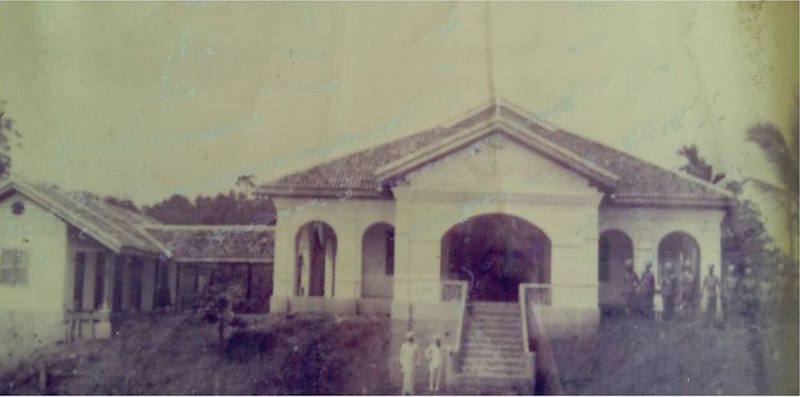
An earlier shot of Gurdwara Sahib Kuala Lipis

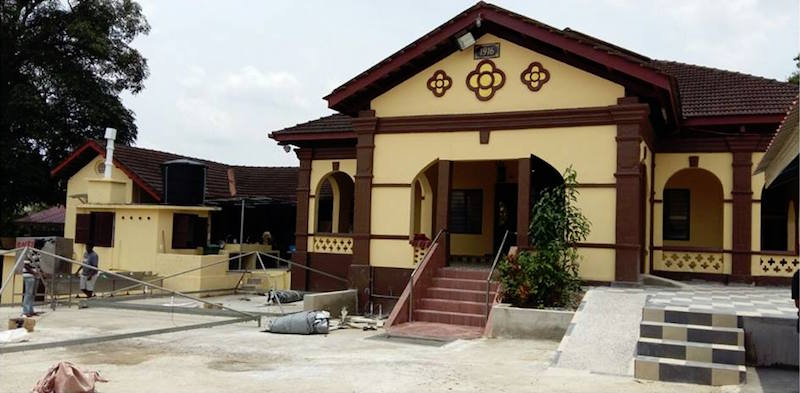
A nagar kirtan and an akhand path will mark the 102th anniversary of the establishment of Gurdwara Sahib Kuala Lipis this month.

The akhand path will be held from 21-23 September. The nagar kirtan will be on Saturday (22 September), right after the nishan sahib selami at 3pm.

The gurdwara, located about 170km from Kuala Lumpur, celebrated on a grand scale its 100th anniversary in 2016.

[Contact details: Giani Mukhtiar Singh 018-2541968]

Gurdwara Sahib Kuala Lipis

RELATED STORIES:

Kuala Lipis gurdwara solid as ever 100 years later (Asia Samachar, 17 Sept 2016)


[ASIA SAMACHAR is an online newspaper for Sikhs / Punjabis in Asia. How to reach us: Facebook message or WhatsApp +6017-335-1399. Our email: editor@asiasamachar.com. For obituary announcements, click here]

Day 15: The four states of mind

0

By Surinder Kaur Sohan Singh | SIKHI STUDY | OPINION


ਰਜ ਗੁਣ ਤਮ ਗੁਣ ਸਤ ਗੁਣ ਕਹੀਐ ਇਹ ਤੇਰੀ ਸਭ ਮਾਇਆ ॥

Raj Gun, Tham Gun, Sath Gun Keheeai,  Eih  Thaeri Sabh MAAIAA. (Pg 1123, SGGS)

Meaning: All the three states of mind – Rajo, Thamo and Sato – are under the grip of MAAIAA  which has been created by God.

ਚਉਥੇ ਪਦ ਕਉ ਜੋ ਨਰੁ ਚੀਨ੍ਹ੍ਹੈ ਤਿਨ੍ਹ੍ਹ ਹੀ ਪਰਮ ਪਦੁ ਪਾਇਆ ॥੨॥

Chouthhae Padh ko jo Nar cheenai tin hee PARAM PADH paaeiaa.

PARAM PADH means the highest state of the mind.

Meaning: Only when one reaches to the fourth state is he free from the grip of maaiaa (also spelt as maya) and is released from bondage.

Gun or Guna are attributes or qualities which define the character of an individual in the different states of mind.

1) Tamo Guna is the lowest category. This mind is in total darkness and is very ignorant. A person who has this state of mind is very lazy, has no motivation and is totally selfish. This mind is full of desires and lives without awareness and has no conscience. He has the potential to harm others in order  to fulfil his desires. This kind of person is a danger to society.

2) Rajo Guna: A person in this category has an intellect. He is full of energy, motivated and works hard for himself and his family but has little concern beyond that. He is egoistic and arrogant.

He thinks his duty is only towards himself and his immediate family members. He accumulates a lot but doesn’t share it with others.

3) Sato Gun: A person in this category is spiritual and has wisdom. He has a high level of awareness. He goes beyond himself to help others. He has divine qualities of sharing and caring. He manifests  these qualities in his everyday life towards all of Nature, plants, animals and human beings. But he has not completely free himself from the grip of maaiaa yet.

4) Chouthaa Padh is the fourth state: In this category awareness reaches the peak and the grip of maaiaa is gone. His life force energy then merges  with the Life Force Energy of the Universe (God). He has succeeded in releasing himself from bondage and is liberated forever.

Every human being has a potential to evolve to this state of liberation in this lifetime with the help of the Gurus teachings.

Maaiaa was created by God but how does it manifest itself in our lives? Guruji answers the question on Pg 921 of Sri Guru granth Sahib (SGGS).

ਜੈਸੀ ਅਗਨਿ ਉਦਰ ਮਹਿ ਤੈਸੀ ਬਾਹਰਿ ਮਾਇਆ ॥

Jaisee AGAN oudhar maih thaisee baahar maaiaa.

Agan means fire. Oudhar means the womb of the mother.

ਮਾਇਆ ਅਗਨਿ ਸਭ ਇਕੋ ਜੇਹੀ ਕਰਤੈ ਖੇਲੁ ਰਚਾਇਆ ॥

MAAIAA AGAN sabh eiko jaehee Kartai khael rechaaeiaa.

Khael means play.

In the 2 line above Guruji says: When the foetus is growing in the mother’s womb, it is exposed to great heat which can adversely affect its wellbeing. If it manages to escape this heat in the womb and comes out safely, it has to face another kind of fire in the world outside the womb. This is the fire of the 5 vices.

KAAM (LUST)

KRODH (ANGER)

LOBH (GREED)

MOH (ATTACHMENT)

AHENGKAAR (EGO)

Both the fire inside the womb and the fire in the creation outside the womb are equally destructive and both have been created by God Himself to test our strength. This is the play of God. In any play there are always positive and negative elements. To make it interesting God has created both negative and positive elements.

Maaiaa is the negative element. What does maaiaa do? Guruji tells us what maaiaa does in the Bani called Anand Sahib:

Eaeh maaiaa jith Har visrai Moh oupjai bhaao dhooja laaeiaa.

MAAIAA does 3 things:

1) Har visrai: It separates us from God who created us. As soon as the baby is born it gets separated from God and starts crying because of pangs of separation.

2) Moh oupjai: To feel secure again the baby starts attaching to the family and possessions.

3) Bhaao dhooja: Bhaao means love. Dhooja means the ‘other’. What is the other? GOD is ONE. The ‘OTHER‘ is the whole of creation.

As soon as the child is born, the link with the Creator is broken and the child slowly falls in love with the ‘OTHER‘ that is the creation.

Many of us get burnt in these 2 fires mainly due to ignorance of this reality. Those who succeed with the help of the Gurus message are able merge with God again and attain PEACE, HAPPINESS, JOYFULNESS and BLISS.

Surinder Kaur Sohan Singh is a Malaysia-based Gurbani enthusiast. This is an edited version of her regular articles shared within a circle of fellow Sikhi seekers. The articles appear on Mondays and Thursdays.

* This is the opinion of the writer, organisation or publication and does not necessarily represent the views of Asia Samachar.


RELATED STORY:

Day 14: Bondage of maaiaa (Asia Samachar, 10 Sept 2018)

Day 13: Banee, Guru and shabad vichaar (Asia Samachar, 6 Sept 2018)

Day 12: Sweetness and humility (Asia Samachar, 3 Sept 2018)


[ASIA SAMACHAR is an online newspaper for Sikhs / Punjabis in Asia. How to reach us: Facebook message or WhatsApp +6017-335-1399. Our email: editor@asiasamachar.com. For obituary announcements, click here]

Meet the Sikhs of Myitkyina

0
Myitkyina gurdwara – Photo: Steve Tickner, Frontier Myanmar
By Emily Fishbein | FRONTIER MYANMAR |

SUNDAY MORNINGS are church time for many residents of Myitkyina. Yet, walking north along the Ayeyarwady River from the main market, it is not church hymns that passers-by can hear, but chanting, drumming and the distinctive sound of a harmonium.

Emanating from the windows of a temple’s golden-domed towers, the musical prayer forms part of the weekly gathering of the Kachin State capital’s small but vibrant Sikh community. Comprising 43 families – 280 people all told – the Sikh community has lived in Myitkyina since it became the commercial and administrative capital of Kachin, and is actively involved in the local economy.

Daw Bhagwant Kaur believes she is 92 years old, making her the oldest Sikh in Myitkyina. She was born in Waingmaw, on the other side of the Ayeyarwady, and traces her ancestry to a soldier who served with the British army in colonial Burma before World War II. He was posted to a town near Sadung on the border with China where he served for about 10 years before settling in Waingmaw, the region’s then capital, where he was joined by five siblings and established a business trading salt, fruit and other goods.

Many Sikhs in Myitkyina have similar stories about the arrival of their ancestors in Kachin. Hand-written records in the gurdwara, or temple, show that the first Sikhs arrived in Kachin in about 1898 with the British military, after which some settled down and went into business.

The small Sikh community shared with others the hardship of World War II, including occupation by the Japanese. Baghwant Kaur said that during those six difficult years she and her family often fled to the jungle to escape the threat of violence.

Soon after World War II ended, Baghwant Kaur travelled to British India to visit relatives in the western province of Rawalpindi, which had a large Sikh population. Then came the upheaval and religious bloodshed that followed the partition of British India into the separate nations of India and Pakistan in 1947.

The Sikh population in Rawalpindi and elsewhere in Pakistan faced persecution and violence, and hundreds of thousands fled to India. Bhagwant Kaur returned to Kachin State, where she married and had six children. Many other members of the Sikh community in Myitkyina have parents or relatives who arrived from Rawalpindi in the aftermath of partition.

When Burma gained independence from Britain in 1948, the Kachin capital was shifted from Waingmaw to Myitkyina. The Sikh community was among those who moved and re-established their businesses and social roots in the new location.

After General Ne Win seized power in 1962, life became harder for members of non-indigenous communities like the Sikhs. Those of Indian descent were barred from higher education and faced other forms of discrimination as they came under pressure to emigrate.

At its peak, the Sikh community in Burma is believed to have numbered about 10,000, but has dwindled to between 2,000 and 3,000. Myitkyina has the biggest community outside Yangon and Mandalay, but there are also sizeable numbers of Sikhs in Lashio, Taunggyi, Mogok and Pyawbwe.

There are about 50 gurdwaras in Myanmar.

Ko Maung Twoo, 24, a grandson of Daw Bhagwant Kaur, sits in his family’s auto parts shop. (Emily Fishbein | Frontier)

Ko Harmed Singh, 22, has been interested from a young age in the baja, or harmonium, a keyboard with a hand-operated pump that is a core element of Sikh music. Beginning in the Eighth Standard, when he was about 14, he began visiting the gurdwara each evening to take lessons from the granthi, a religious scholar who lives at the temple and provides teaching and guidance to anyone who wishes to learn. Harmed Singh, who claims to know more than 1,000 melodies by heart, is known by Sikhs throughout Myanmar for his musical talent.

After services, men and women of all generations often gather for cooking, socialising, and feasting on fragrant Indian poori, curries, sweets and hot milk tea. These langar, or communal meals, form a central element of Sikh tradition. Gurdwaras are open to all faiths and it is not uncommon for Sikhs to invite non-Sikh friends to attend a service or join a langar.

To ensure that traditions are maintained through generations, classes are held at the gurdwara during summer holidays and many parents also teach their children at home.

However, proficiency in Punjabi, the native language of Sikhs and the language used for prayer, is in decline as each generation becomes more socially integrated and Burmese becomes the language of preference at home.

Throughout the generations, Sikhs have maintained positive business and social relations with the diverse ethnic and religious groups of Myitkyina. Sikhs and non-Sikhs regularly get together for a meal or tea, or at tennis or football matches. Many electronics, auto-parts and indoor market shops are run by Sikhs, and their employees and customers are drawn from all communities.

The Sikhs in Myitkyina have maintained their cultural identity as a group while adapting, adjusting and, at times, assimilating with the wider community and by so doing, enriching the fabric of Kachin society.

To read the full story, go here. The author can be reached at fishbeinemily@gmail.com


RELATED STORIES:

Sikh celebration continues in Mogok, Myanmar’s land of rubies (Asia Samachar, 1 April 2018)

Sikhs in Myanmar (Asia Samachar, 17 June 2015)


[ASIA SAMACHAR is an online newspaper for Sikhs / Punjabis in Asia. How to reach us: Facebook message or WhatsApp +6017-335-1399. Our email: editor@asiasamachar.com. For obituary announcements, click here]