














UA-56202873-1
Page 663

Legal action commences into UK Government role in 1984 Sikh Genocide – Statement

STATEMENT | 14 MARCH 2018 | LONDON:

Last week in the interests of openness and transparency in the conduct of public affairs a four year long struggle to disclose secret files and papers from 1984 under the 30 year rule came to a head in a three-day Freedom of Information tribunal.

The UK government maintains that this ‘historic’ material remains sensitive and could disrupt Anglo-Indian relations. Most commentators believe it is more likely the disclosure will embarrass the UK government in its provision of advice and assistance which led to the 1984 Sikh Genocide and human rights violations which followed in order to secure trade.

The hearing was heard largely in ‘closed’ (secret) – with judgement reserved. Judgement is expected in around six weeks and could be subject to onward appeal. But the more the UK government protests the more the suspicion and rumour that it has something to hide.

However, KRW Law acting for the Sikh Federation (UK) also began judicial review proceedings with a pre-action protocol letter about the UK Government’s continuing failure to adequately and independently investigate the UK’s role in the events of 1984.

On 1 November 2017 KRW Law requested in writing on behalf of the Sikh Federation (UK), following publication of the Sacrificing Sikhs, the need for an investigation report (“the Report”), that the Foreign Secretary establish a public inquiry pursuant to section 1 of the Inquiries Act 1985. That request was refused on 15 December 2017.

The letter states:

“The UK’s wider involvement in the serious human rights violations committed by the Indian authorities against Sikhs during the period in or around 1984 needs to be investigated in order to establish whether the UK provided assistance and/or was involved to any extent in the atrocities committed against the Sikh community.”

“The revelations in January 2014 prompted significant public concern and media coverage. For the domestic and international Sikh Community, the disclosure that the UK had assisted the Indian authorities in the lead up to the Amritsar Massacre led to widespread distress, substantial hurt, and disbelief.”

The Heywood Review was inadequate. From the start, the Sikh Federation (UK) has raised significant concerns about its speed and thoroughness, as well as its substantive conclusions. Those concerns have been set out in substantial detail in the Report, commissioned by the Sikh Federation and published on 1 November 2017.

In summary, the Report outlines that:

  • There is evidence that the UK authorities were aware of and anticipated Operation Blue Star taking place after the military advice was provided, despite the Heywood Review’s conclusion that after the military advice was provided no warning was given to the UK that the attack would happen..
  • There are serious concerns about the adequacy of the Heywood Review. Beyond the provision of military advice considered by the Heywood Review, there is evidence of and genuine concerns about: (a) further assistance, advice and/or other forms of support being provided to the Indian authorities; (b) such further involvement being considered, in the aftermath of Operation Blue Star.
  • There are real concerns about the relevance of trade concerns to the actions of the UK authorities during this period.

The approach adopted by the Heywood Review, viewing the military assistance in isolation rather than in the context of the wider UK-India relationship, undermines its credibility as an inquiry capable of addressing the public interest in accountability and transparency in this matter.

KRW Law corresponded with the FCO on the Sikh Federation’s concerns in letters dated 3 November 2016, 11th January 2017, 16th January 2017, and 17th February 2017. This exchange of correspondence anticipated the Report being prepared and provided.

On 1st November 2017, the Claimant’s representatives wrote to the FCO providing a copy of the Report. The letter explained that:

“The publication of this independent research has further undermined public confidence in the original Heywood Review. As such there has been extensive media coverage calling into question the adequacy of the previous investigation, the need for a further investigation and in particular the need for truth and justice in respect of the events of 1984. As such, there has been further political requests for an independent inquiry and to that end we write to ask that you now consider urgently commissioning an independent investigation in the terms of the Inquiries Act 2005 in light of the findings of the report, and the wider public interest in ensuring that truth and justice is achieved in respect of the events of 1984…”

The FCO replied on 15th December 2017 refusing to commission an inquiry (“the decision”). The reasons given for the decision were very thin. Beyond setting out a limited response to minor points made in the Report, the decision failed to grapple at all with the core substantive findings outlined within it. The core paragraph of the decision was as follows:

“Although the [Report] sets out an extensive analysis of the tragic events of 1984 and beyond, based on the papers released to [TNA] and other material, we respectfully differ on the assertion that your client’s report substantiates the need for an independent investigation. We do not believe that the report constitutes sufficient evidence to challenge the conclusions of the 2014 inquiry..”

SEE ALSO: Lessons for today from 1984: Interview with Hari Singh

SEE ALSO:British government ‘covered up’ its role in Amritsar massacre in India – The Observer 

KRW Law have set out in the pre-action letter why the decision is unlawful.

First, the decision discloses an error of law as to the correct legal test to be applied under section 1 of the Inquiries Act and/or took into account irrelevant considerations. The FCO has asked itself whether the Sikh Federation (UK) has proven that some of the matters it seeks the investigation of occurred. This is not the right question. It misdirected itself as to the correct interpretation and application of section 1 of the Inquiries Act.

There is no burden of proof on an individual or body requesting an inquiry to prove that the conclusions reached by a previous inquiry, especially an internal inquiry of limited scope, were wrong and/or to prove that the matters of concern (the provision of not just direct advice and assistance, but also indirect assistance) occurred. On the contrary, while the reaching of definitive conclusions may well be the outcome of the inquiry, even the inquiry itself does not need to be able to reach such conclusions to serve the public interest. The very point of the inquiry is to assess what facts and matters can be established.

Sacrificing Sikhs

Second, it is plain that as a result of asking itself the wrong question, the FCO has failed to take into account, adequately or at all, the public concerns justifying the need for an inquiry.. These include:

  • The limited scope of the Heywood Review, which was conducted internally and very quickly.
  • The fact that there are valid reasons for public concern about not only the military assistance provided which has been admitted, but the wider engagement between the UK and India during this period.
  • There is valid and genuine concern that the UK may have provided wider direct or indirect assistance to or had knowledge of attacks on the Sikh community.
  • There is a clear risk that the conduct disclosed by the revelations of 2014, and/or wider conduct which is yet to be investigated, could be repeated absent a proper inquiry into the propriety of UK-Indian relations in 1984.

Third, taking properly into account the background to the request for an inquiry, including the relevant considerations outlined directly above, the decision is irrational and/or disproportionate.

The letter states “the fact that military assistance was provided in the run up to the Amritsar Massacre is a matter of significant public concern. A limited internal inquiry, that draws conclusions which are unsustainable on their face, does nothing to address that concern. It is plain that to address public concern about what did or may have happened, a full inquiry needs to take place into the events of 1984, including where necessary, events before and after the Amritsar Massacre to establish whether:

  • as the Government says, assistance of concern was provided in an isolated incident that was subject to a decision-making process unconnected with certain key elements of wider UK-Indian relations; or
  • the decision to provide military assistance was taken in the context of wider UK-Indian relations, including defence trade issues and/or it is one example of broader UK involvement, whether direct or indirect, with the atrocities committed against the Sikh community during the relevant period.”

The letter concludes: “no rational decision-maker, or one acting proportionately, would refuse such an inquiry into matters of significant public concern which may have continuing relevance today”.

[The statement was published here and also shared via the social media]

RELATED STORY:

British government ‘covered up’ its role in Amritsar massacre in India – The Observer (Asia Samachar, 29 Oct 2017)

Understanding Sikh activism in Britain (Asia Samachar, 16 Nov 2017)

1984: Hope & Despair (Asia Samachar, 6 June 2017)

Lessons for today from 1984: Interview with Hari Singh (Asia Samachar, 13 Nov 2015)

ASIA SAMACHAR is an online newspaper for Sikhs / Punjabis in Southeast Asia and beyond. Facebook | WhatsApp +6017-335-1399 | Email: editor@asiasamachar.com | Twitter | Instagram | Obituary announcements, click here |

Khalistan: One Sikh’s View

Author’s Note: Readers know that the recent trip to India of Justin Trudeau of Canada was ideally placed to be a celebratory voyage and his entourage consisted of several high ranking Canadian Sikhs. But the local politics of India could not quite stomach the success of Sikh Canadian migrants. As expected, the Indian bureaucracy focused not at all on the success of Indian Sikhs in Canada; instead it concentrated on digging up and reinventing events from 1984 and once again raising the bogey of Khalistan and the dismemberment of India – after over 30 years. I find that in the process, the Indian press and the ruling bureaucracy failed to serve the cause of truth or the nation that they pretend to serve. This essay was written in 1994. Why do I resurrect events and attitudes from so long ago? Because they are as entrenched today as they were then. Times have changed but the attitudes remain unaltered. I speak now, as I did then, because over the years, a false understanding of events and issues has remained — missing is the sense of introspection that would mark progress. The rulers in Delhi have largely ill-served their nation. The only words that I have added are these few.  This essay first appeared as a chapter in the book:  I.J. Singh 1994 SIKHS & SIKHISM: A View With a Bias.  Manohar Books, Delhi, India.  Pp 99-106.

ALL EMBRACING: Justin Trudeau and family at one event during the Canadian PM’s visit to India in February 2018 – Photo: Justin Trudeau Facebook page

In writing this, the usual reason – to convey a point of view – is reinforced by a better one, to initiate a debate. Debating Khalistan is an impossible assignment and an unpleasant chore KHALISTAN: One Sikh’s View

in some ways. Yet, it is only in debate that we hone our skills, sharpen our focus and define our goals. And we should not be afraid to take on sacred cows. This discussion is particularly timely because in recent years a litmus test of political correctness has emerged by which to judge a Sikh. If your opinions fall even a hair short of total support for the idea of Khalistan you are quickly branded anti-Sikh. And this is unfortunate. This debate needs a devil’s advocate for an impossible cause and I am that – a devil’s advocate.

The word “Khalistan” conjures some very disturbing images among Indians: people still remember the painful birth of Pakistan. The Indian government has used the recent demand for Khalistan by Sikhs for some petty and inane policies which are more likely to make that dream of many to come true. Many nasty suggestions have been made regarding the Sikhs (send them to Pakistan!) by many Hindus, including Rajiv Gandhi. The reality is somewhat more complex.

Certainly, the Sikhs need no lessons in patriotism. It has been repeatedly and clearly established that during the struggle for India’s independence, the sacrifice of the Sikhs was far in excess of their proportion in the country; fully 70% to 80% of all freedom fighters who were arrested, sentenced, exiled or hanged by the British were Sikhs. Within a few years of independence, Sikhs had transformed the Punjab into the richest province of India with the highest standard of living. Where India used to endure famines every year, now, thanks to the Punjabi Sikh farmers, the country can even export food. In many ways India owes its unity and integrity to the Sikh soldiers who served it so well in its three wars against Pakistan and one against China. How is it that things have changed so much so soon?

Before the attack on The Golden Temple in June 1984, on Guru Arjan’s martyrdom day, one could perhaps count on fingers of one hand the number of Sikhs who would opt for an independent sovereign republic of Khalistan. After the killing of Sikhs in November 1984, and the subsequent repressive policies of the Indian government solely against the Sikhs, one can count on the fingers of one hand the number of Sikhs who would not choose Khalistan.

This striking shift occurred within months of the attack on the Golden Temple. Rather than being angry at it, frustrated by it or afraid of it, one should understand that such dramatic swings are not to be taken lightly, but are not necessarily etched in stone either. The longer such feelings last, the more entrenched they become and harder to dislodge. The Rubicon may well have been crossed in this matter. The massive increase in the demand for Khalistan indicates that the Sikhs are not sure of their place in India. When the present is slippery the future appears menacing.

Blaming a foreign hand, as Indira and Rajiv Gandhi often did, is escaping responsibility; an objective view would be more useful. Pakistan has been consistently accused of fomenting and fanning rebellion in Punjab and Kashmir. Not that there is much proof of it but even if it were true, an outsider can only exploit a house divided where discord already exists. If people who have already sacrificed so much for the unity, integrity and viability of India for so long now no longer want to be a part of it, there are only two possible explanations. Either most of the 15 million Sikhs were struck by lightning and have lost all reason or there is merit in what they say; one must look at what the Indian government promised or delivered to them in the past 45 years ago.

The Sikhs have said that the promises made to them by Mahatma Gandhi and Jawahar Lal Nehru before 1947 have not been honored. It was for this reason that the Sikh members of the Constituent Assembly of independent India did not initial their acceptance of the Constitution of India. The record of the documents and speeches exists and is simple enough to verify. To have to wait and agitate for 45 years for promises to be fulfilled is indeed to have to wait too long. By now all promises should have been dealt with — fulfilled or negotiated — but resolved. At this time, most Sikhs feel that in India, justice is selective and politics reign supreme. Again, important here is not only the reality but also its perception. To dismiss this feeling as a mere hallucination (of 15 million people) would be compounding injustice with stupidity.

When Sikhs look at the 500 years of their history, it surprises them that anyone should question their loyalty or their right to live with dignity on their own terms in India. Despite long standing disaffection with the Indian government, the Sikhs’ loyalty was not questioned when they defended India against China or Pakistan, nor was it in doubt when Punjab contributed to India’s independence or economic recovery. In essence, today’s Sikh is saying: “My loyalty to the country is a matter of history; to ask me to take a loyalty oath is an insult. I do not have to prove my fitness for a place of dignity here. You, who have done me wrong and are such larger majority than I, have to show me that you wish me to remain a part of India.”  Who is he addressing? The Indian government and the majority community.

It is necessary to remember that despite the attack on the Golden Temple and the widespread terrorism directed specifically against them, Sikhs did not rebel en masseagainst India. Examine this behavior of Sikhs in the context of what Lincoln said at his first inaugural in 1861: “If by the force of numbers, a majority should deprive a minority of any clearly written constitutional right, it might, in any moral point of view, justify revolution…”Indira Gandhi, who probably wanted a strong united India, will then be remembered as the one who fragmented the people and dismembered the country.

If the Indian government cannot act swiftly, decisively and effectively to assure the Sikhs of justice and security, it will never regain its right to govern nor should it.

The Sikhs would then have little choice but to carve out a homeland of their own. Khalistan, no matter how small or imperfect,would then become a reality. Demands of human dignity will prevail and, be it ever so humble, be it ever so meagre, Khalistan will also exist among the nations of the world. No army and no government rhetoric will be able to prevent it. And at this time, the Indian government has clearly lost any claims to the hearts and minds of the Sikhs. That the country would be small and landlocked and its economic base limited – these things do not matter. The country would be larger than many member states of the United Nations, its economy better than many emerging nations in Eastern Europe.

In recent years, many Sikhs have presented most lucidly all the good arguments for Khalistan – the broken promises, systematic injustice to the Sikhs, all the history etc. But as T.S. Eliot reminds us, “History has many cunning passages, contrived corridors and issues, deceives with whispering ambitions. Guides us by vanities.” The issue of Khalistan is not all black or white. It is not Khalistan now or Khalistan never; it is perplexing.

I can present several good reasons why Khalistan is not desirable.

Never in their history have Sikhs set about to conquer territory, subjugate people in the name of religion or establish Sikhism as a state religion. Ranjit Singh, for instance, was a ruler who happened to be a Sikh, and not particularly good one at that. In his later years, he was much better at being a ruler. He did not establish Sikhism as the state religion. His administration was secular. His Punjab remained a multi-religious country. It did not become a Sikh Punjab.

Let’s look at it somewhat differently. I am a minority no matter where I live – in India or wherever. When I came here in 1960 there were two recognizable Sikhs in New York. In Oregon, where I went to school, I was the only one. Many of you can share that experience. Except in Punjab, even in India I remain a minuscule minority. A part of me says wouldn’t it be nice, wouldn’t it be right if there was a little bit of dirt, a little part of this earth which was mine, where I was the king! And that says – “Khalistan now.”

Another part of me says, where I hold sway there will be someone else – a non-Sikh – who will not, whose sensitivities will be ignored, whose rights will be a little abridged, who will not be the chosen one, who will be second class for no fault except that he is not a Sikh. And that is not the Sikh way. That says to me that countries based on religious identity alone are not desirable. Two examples that come to mind are Pakistan and Israel.

But what is undesirable can become historically necessary and even inevitable. Again, Pakistan and Israel come to mind.

Two thousand years of diaspora, bigotry, suffering and pogroms convinced the Jews and the world of the necessity and the inevitability of a Jewish homeland. Before the formation of Pakistan in 1947, the demand for it was not a longstanding one. Just before India’s independence, Mahatma Gandhi and three others dominated the political scene – Nehru, Patel and Azad. Nehru – the father of Indira Gandhi became the Prime Minister, Patel was the Home Minister, and Azad – the sole Muslim (the other two were Hindus) – was the Education Minister.

Azad wrote his diaries — which were sealed for over 30 years after his death, then finally opened. In them, he put the blame for Pakistan squarely on Nehru. He claimed that Nehru and his Hindu dominated political party were most reluctant to share power with the Muslims and the Muslims were suspicious of the Hindus. The Result: partition of the country, and Pakistan became not only necessary but inevitable. Seems like history may be repeating itself in Punjab.

The partition of the country in 1947 carried a horrendous price tag. Nations are formed when there is a shared culture, language, history and so on, not necessarily religion only. The Sephardic and Ashkenazi Jews in Israel do not get along all that well even though both are Jews. Religion alone could not hold together Pakistan and Eastern Bengal, now Bangladesh. Someday, I am sure Bangladesh and Indian Bengal will want to come together as Greater Bengal, based not on religion but on culture, as can be seen in the reunification of Germany.

The demand for Khalistan has to be looked at in perspective. Before 1984 no responsible Sikh leader demanded Khalistan with one exception: Jagjit Singh Chauhan who is London based and has been agitating for Khalistan for over 20 years. I met him in the seventies and he was a voice in the wilderness; not many gurdwaras would give him the time of the day. In 1984 he did not plant a flag and declare, “No more India – We are Khalistan – a separate sovereign country” although there was sufficient provocation, nor did any other Sikh leader.

When Pakistan was formed, Sikhs suffered – we lost a lot. The refugee problem was worse than in Europe during the Second World War. We also lost a part of our heritage. The birth place of Guru Nanak, the historical places in Lahore and Punja Sahib, to name a few. If Khalistan were to be carved today, we would lose a lot more of our inheritance. The Gurus did not live and preach only in Punjab. They traveled all over in India from Assam and Bengal to the South. More importantly, look at our people.

The Sikhs are an outgoing, assertive, outward looking people. They would not be satisfied for long, hemmed in a mini-country with limited opportunities. Soon the borders would be strained. Pakistan is friendly now, but for how long? Remember only people and individuals have friendships, nations do not; they have self-interest to guide them. The words “Pakistan” and “Khalistan” literally mean the same – “land of the pure” in their respective languages. How neighborly will be two lands of the pure be, and for how long?

If Khalistan is undesirable, has it become necessary and inevitable? Now that the demand for Khalistan has surfaced, how hard a demand is it? Is it written in stone? I am not sure, even though I realize that once that once the genie is out of the bottle, it is difficult, if not impossible, to push it back.

Despite all the injustice to the Sikhs, in 1985 Longowal and the Sikhs signed an accord with Indian government – to give peace another chance. Too bad that the Indian government of Rajiv Gandhi did what Indira Gandhi had done earlier; they did not fulfill their promises but delivered more repression. Again in 1989 the Sikhs participated in the electoral process, welcomed by landslideswelcomed the new Prime Minister V.P. Singh into a peaceful open Punjab – no security was necessary. By this act they clearly showed the world that they were not rejecting ties to India, only that the nature of the ties had to change.

Until only one year ago (1993) Simranjit Singh Mann was still looking for a solution within the Indian Constitutional framework. Too bad that the government delivered what it always did – more repression.

Nations cannot be bonded by force, as the Soviets have discovered, but only by enlightened self-interest. The West Europeans are learning that closer political and economic ties can be beneficial to all – of course there is resistance because of the history of centuries of suspicion, war and bloodshed. It can’t be easy for any of the Europeans to comfortably trust the Germans. If the Soviets had disbanded earlier, a looser, cooperating federation of nations might have resulted – now the Ukrainians, Lithuanians and Estonians are at each other’s throat. Just look at Yugoslavia. India awaits a similar fate and needs enlightened leadership.

I can visualize the whole Indian subcontinent – including Pakistan and Bangladesh – remarcated into several secular nation-states based on culture, language and economic interest; the level of cooperation to be determined by their self-interest and their shared history. As it is, I find that most Sikhs have much in common with the culture of Punjab, and that means Pakistan, than with the rest of India where I can only communicate in English. In post-independence India, the only cultural phenomenon that may be the uniting glue of modern India appears to be the Hindi movie industry; any nation deserves better. I would like to see the nation-states free to pursue their own economic and cultural development and not be under the heels of remote bureaucrats in Delhi. Only then will they be able to preserve their rich heritage and contribute to the diversity and richness of the Indian subcontinent.

To my mind the Sikhs have clearly rejected the model of the present Indian governing system. Khalistan, though undesirable, has become increasingly necessary, primarily because of the shortsighted policies of the Indian government. Has it become inevitable?

By now events have probably already overtaken what I have written here, but when I look at my views I have to echo Walt Whitman who said, “Do I contradict myself? Very well then, I contradict myself. I am large and I contain multitudes.”

The issue of Khalistan can, and should, be debated but it will eventually be decided not in New York, London or New Delhi, but in the streets and villages of Punjab. In the meantime, Sikhs everywhere support the legitimate aspirations of our people in the Punjab in whatever form they are expressed.

One thinks of Thomas Jefferson who said: “I weep for my country when I reflect that God is just.”

I.J. Singh is a New York based writer and speaker on Sikhism in the Diaspora, and a Professor of Anatomy. Email: ijsingh99@gmail.com

* This is the opinion of the writer, organisation or publication and does not necessarily represent the views of Asia Samachar.


[ASIA SAMACHAR is an online newspaper for Sikhs in Southeast Asia and surrounding countries. We have a Facebook page, do give it a LIKE. Follow us on Twitter. Visit our website: www.asiasamachar.com] 18254

FROM THE SAME AUTHOR:

Unholy Triad (Asia Samachar, 3 Feb 2018)

And the twain shall meet (Asia Samachar, 17 Jan 2018)

FREE SPEECH, CRITICISM & CENSORSHIP: A Tribute to The First Amendment (Asia Samachar, 11 Dec 2017)


[The fastest way to reach Asia Samachar is by sending us a Facebook message. For obituary announcements, click here]

Kanchen Kaur follows sister’s footstep to Barcelona

MADE THE CUT: Kanchen Kaur makes it to Barcelona. Last year, her sister Asheesh Kaur (right) was selected for the trip under Astro Kem Bola – Photo: Asia Samachar

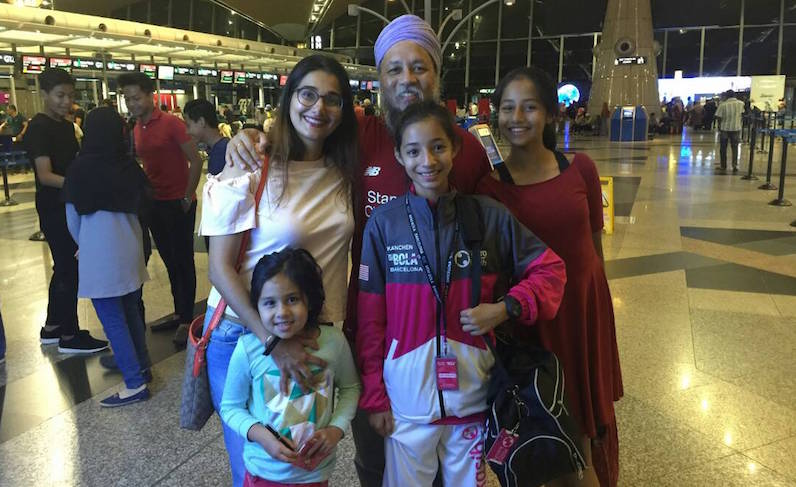
She made it! Twelve year old Kanchen Kaur, an enthusiastic girl footballer from Malaysia, has been selected to join a football training session in Barcelona.

Kanchen was selected along 31 other budding footballers from the Kem Bola Astro for the all-paid football coaching trip to Spain.

Last year, her sister Asheesh Kaur, now 13 years old, was selected for the coaching trip to FCB Escola in Barcelona.

During the selection stage, both sisters were among the final 72 players from Malaysia, Philippines and Singapore of the campaign organised by Malaysian-based satellite television provider Astro.

SEE ALSO: Like father, like daughter. Asheesh journeys to Barcelona

After not making it the year before, Kanchen had came back to the selection with gutso. It showed. She bagged “The Most Improved Player” award during the second phase of the Astro Kem Bola in August 2017.

“Failing the first time was painful. I really wanted to travel with my sister to Barcelona. But with her help and guidance, I felt more confident. I’m glad all our hard work had paid off and I get to experience everything my sister did,” Kanchen told Asia Samachar at the Kuala Lumpur International Airport before leaving last night.

Astro Kem Bola is organised by Astro Kasih, the corporate social responsibility arm of Astro, and 1MCC Sports Sdn Bhd.

The participants will take part in an immersive exchange programme which includes training under the local academy coaches, attending a live professional football match as well as a series of friendly matches against local youth sides.

To date, over 11,000 children have participated in the programme since its inception in 2012. In the past, the Overseas Training Programmes were held with clubs like Cardiff City Football Club and West Ham United Football Club.

Since 2016, the programme moved to FCB Escola in Barcelona. This would be the second group traveling to the football academy for their 10 days football camp.

WELL DONE: Kanchen Kaur bagged the ‘Most Improved Player’ award at the Kem Bola Astro phase two training session last year – Photo: Astro


[ASIA SAMACHAR is an online newspaper for Sikhs in Southeast Asia and surrounding countries. We have a Facebook page, do give it a LIKE. Follow us on Twitter. Visit our website: www.asiasamachar.com] 18194


RELATED STORY:

Footballing sisters try out for Barcelona, again (Asia Samachar, 28 Aug 2017)

Like father, like daughter. Asheesh journeys to Barcelona (Asia Samachar, 13 Dec 2016)

Asheesh Kaur travels to Barcelona for football camp (Asia Samachar, 6 Dec 2016)


[Fastest way to reach Asia Samachar: Facebook message or WhatsApp +6017-335-1399. Our email: editor@asiasamachar.com. For obituary announcements, click here]

Towering Thakral

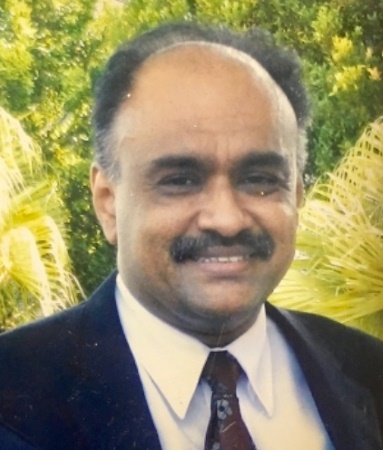
Kartar Singh Thakral

Tenacity, humility and great foresight, built upon immense faith and divinity – these ingredients have been key to the recipe of success for Mr Kartar Singh Thakral, Chairman of Thakral Group of Companies and Executive Director of its Singapore-listed Thakral Corporation.

One of the most distinguished and recognisable personalities in the Singapore business fraternity and the global Sikh diaspora, Kartar’s list of achievements in the field of business are illustrious and inspiring. The genesis of a multi-million dollar and worldwide group of companies started from humble beginnings and steeped in divinity.

Kartar’s father, the late Mr Sohan Singh, became an orphan at the age of nine years when the family was wiped out by an epidemic that hit the Sialkot district in modern-day Pakistan, leaving behind his younger brother and him. Having no relatives to fend for them, the young Sohan worked in a sweets shop in a nearby village serving tea. There, a man by the name of Mr Kirpa Singh used to frequent the shop for almost a year and noticing the young hardworking boy, asked him to work for him in his textile shop in Bangkok. Starting from there, Sohan did his own textile peddling and worked hard enough to open his own shop in Bangkok in 1905 – the Punjab Store – which gradually expanded into Japan and India and laid the foundation for the international Thakral Group.

EARLY DAYS

Born in Bangkok in 1933, Kartar was sent by his father to Singapore in 1952 when he was 19 years old to help his brother expand the fourth branch of the family’s textile business.(1) After a year, his brother returned to Thailand and Kartar was left facing several challenges. His command of English was limited, while he had no knowledge of Mandarin or Malay. However, starting out afresh in a foreign and alien land did not deter Kartar.

He had learnt business principles from his father and brothers (Mr Harbans Singh Thakral and Mr Kuldip Singh Thakral), which Kartar applied effectively and strategically. Starting with a small wholesale textile shop under the Thakral Brothers’ name, at the corner of High Street and Hill Street, where the Treasury Building currently stands, he succeeded in building, over time, a conglomerate of offices in 25 countries, including several emerging markets such as Ukraine, Serbia and Romania, as well as those in Asia such as Laos and Myanmar.(2) A pro-business environment and a strategic port location in Singapore helped build the momentum of trade through the island as Kartar captured these opportunities, remaining ahead of the curve.

Many in Asia had shunned doing business in China and Russia in the 1960s due to their political regimes. But not Kartar! He saw opportunity where others did not as he developed a strong partnership with Chinese Resources Ltd while also securing non-exclusive distribution rights for Russian textiles, realising the growing demand for these goods. The company became a leading distributor of Chinese textiles in the region during the 1960s.

ENTER CONSUMER ELECTRONICS, REAL ESTATE

Kartar’s knack for identifying business trends made him realise that the textile trade would soon become overcrowded and he diversified the company into the consumer electronics business, as Thakral Brothers started an electronics division in Singapore in 1975, while also opening up an office in Hong Kong at the same time.(3) Through successful partnerships with Casio and Panasonic, among other electronics companies, over the next 20 years, the Thakral brand grew to become a household name in the region.

Under the guidance of Kartar, the group decided to invest significantly into selected real estate projects, for which he has a personal passion. Kartar and his capable management team saw opportunity in Australia and Japan, both of which he was familiar with. He started another public-listed entity known as Thakral Holdings Group, focused on Australian hospitality real estate assets.

For a considerable period of time, the Thakral Holdings Group was one of the largest foreign owners and operators of hotels in Australia, following its acquisition of a distressed portfolio of seven major hotels there in 1994, as well as its acquisition of the management rights of the All Seasons Hotel Group. When it was delisted in 2012, the Thakral Holdings Group’s total assets were valued at AUD$1.064 billion.

Kartar Singh Thakral

“An exemplary man in more ways than one, Mr Kartar Thakral built an extremely successful commercial empire with his business acumen but never allowed it to change his modest and unassuming personality.

A true visionary, he identified China as an area of growth and commenced trading operations and built lasting relationships with its leaders several decades before the international community realised its full potential. A leading member of the Singapore business community, his advice was sought for and tapped by many government and private organisations, which he served faithfully for many years.

A compassionate humanitarian and a dedicated philanthropist, he helped many causes connected with the welfare of the disadvantaged by contributing generously by way of time and money for the building and maintaining of schools, hospitals and religious institutions in Singapore, China and India.

A natural leader and mentor, he has passed on his values to his family, friends and employees which will ensure that he and his business empire will have a permanent place in the history of Singapore.

Mr Natarajan Subramaniam

Independent Non-Executive Chairman and Director Thakral Corporation Ltd

Today, the family-run business is a hallmark of the spirit of enterprise, spanning across five sectors. These are in property investment and development, built on Kartar’s own passion and expertise, in the textile industry as the group is a majority shareholder in a yarn spinning mill in Indonesia and hires about 4,000 people there and the distribution and retail of consumer lifestyle products across emerging markets in Asia, including authorised Apple retail stores.

In addition, it represents major timepiece and luxury brands in emerging markets across Indochina, including Myanmar. The group distributes technology products across Asia, and provides technology consulting services to major public and private enterprises. Kartar still remains a key part of the decision-making process of the group’s ventures, especially when it comes to investments.

The group and Kartar have both been recognised for their achievements. He was awarded the Businessman of the Year award in 1995 while Thakral Brothers was ranked the top private company in Singapore in the same year in the first ever Enterprise 50 list compiled then by Andersen Consulting and The Business Times.

NATIONAL RECOGNITION

Kartar’s achievements did not go unnoticed by the Singapore government. During an era when Singapore was developing its own economy and building the Singapore Inc. brand name globally, the Thakral group’s success in evolving into a diversified company, with its own innovation and manufactured products, as well as its track record of gaining large presence in markets around the world, proved relevant. The government tapped onto Kartar’s expertise and wisdom as he was appointed a Director of the then-Singapore Trade Development Board by the Minister for Trade and Industry for a period of four years until 31 December 1998.(4) He was also a member of the Committee to Promote Enterprise Overseas and a member of the Regional Business Forum, both appointments made by the government.(5)

SELFLESS CONTRIBUTIONS

Besides his economic and business contributions to Singapore, Kartar has also played a key role in the Sikh community and wider society through his philanthropic and community service work. His selfless contributions have helped realise many key projects and initiatives in the Sikh community in Singapore and overseas.

Kartar has also been helpful to community organisations which seek his advice and guidance in other strategic matters. He has served as a Trustee of the Singapore Indian Development Association from 1991 to 2006. In the Sikh community, he continues to serve as a Trustee to the Singapore Sikh Education Foundation and the Sri Guru Nanak Satsang Sabha (6) and as a Patron to the Sikh Welfare Council (SIWEC) and Singapore Khalsa Association (SKA).

His principles of integrity, resilience and humility, and community service can be traced back to his focus on developing his spirituality and living a Sikh way of life. In 2008, he was Singapore’s 30th richest person, according to Forbes, but despite all these achievements, Kartar remains humble as he attributes all of this success to divine blessings rather than personal traits.

Prayers, he added, have helped him gain a lot of blessings from God and these are the very values he has instilled in his family which keeps them and their enterprise grounded. This focus on faith and spirituality also helped him overcome a very difficult period in his life. In 1986, he was diagnosed with stomach cancer and, in February that year, he had a major surgery to remove 80 per cent of his stomach. “With perseverance and prayers, I was healed and able to live till now. I remain to have strong faith in God,” he shared.(7)

In spite of being a successful businessman and leading figure in Singapore’s economic landscape, particularly during its developing years, Kartar stated: “It is faith and prayer that have gotten me through to here as I have no education or talent.”(8) This is indeed a hallmark of a remarkably humble, grounded and selfless man.

Thakral Corp Ltd directors: Front row, L-R: Inderbethal Singh Thakral, Natarajan Subramaniam and Kartar Singh Thakral. Back row, L-R: Lee Ying Cheun, Bikramjit Singh Thakral and Dileep Nair – Source: Company Annual Report 2016

Kartar Singh Thakral

Executive Director, Thakral Corp Ltd

Mr Kartar Singh Thakral is an Executive Director of the Company and was the Executive Chairman since the Company’s listing until 31 December 2011. He was first appointed a Director since the incorporation of the Company on 7 October 1993 and was last re-appointed on 29 April 2016. He is a member of the Nomination and Investment Committees of the Company.

In addition, Mr Thakral is the Chairman of the Thakral Family Companies. He joined the family trading business in 1949. He was a director of the Singapore Trade Development Board appointed by the Minister for Trade and Industry for a period of four years until 31 December 1998, the Joint Chairman and Non-Executive Director of Australia listed Thakral Holdings Limited and a Non-Executive Director of India listed GIVO Limited till 22 October 2012 and 31 March 2009 respectively. He was also a member of the Committee to Promote Enterprise Overseas and a member of the Regional Business Forum, both appointed by the Singapore Government; and was a trustee of Singapore Indian Development Association from 1991 till 31 December 2006. He was awarded the Singapore Australian Business Council President’s Medal in 1998 for significant contribution to the Australian Singapore business community. He had been awarded Business Man of the Year 1995.

He is a Founder Trustee of Nishan-E-Sikhi Charitable Trust, India, a trustee of the Singapore Sikh Education Foundation and Sri Guru Nanak Sat Sang Sabha and a patron of Singapore Khalsa Association, Singapore Sikh Welfare Council and Central Sikh Gurdwara Board. He is an Honorary Fellow of the All India Management Association.

Source: Thakralcorp.com, downloaded on 14 March 2018


Endnotes

1 The Next Leap Forward, The Business Times, April 28, 2015. 2 Ibid. 3. Thakral Brothers: From trading to manufacturing, The Business Times, February 10, 1996.
 4 www.thakralcorp.com.
 5 Ibid. 
6 Ibid. 
7 Interview with Mr Kartar Singh Thakral, October 16, 2015. 8 Ibid.final-sg50-book[This article is courtesy of SINGAPORE AT 50: 50 SIKHS AND THEIR CONTRIBUTIONS, a book published in 2015 by the Young Sikh Association, Singapore (YSA) in conjunction with Singapore’s 50th birthday. Some parts of the article above have been adapted from other external sources]


[ASIA SAMACHAR is an online newspaper for Sikhs in Southeast Asia and surrounding countries. We have a Facebook page, do give it a LIKE. Follow us on Twitter. Visit our website: www.asiasamachar.com] 18222


RELATED STORY:

Karan Singh Thakral: Serving with distinction (Asia Samachar, 24 Aug 2017)

Former Singapore MP Inderjit ‘silently’ served nation, Sikh community (Asia Samachar, 30 April 2016)

Thakral into Aussie retirement housing (Asia Samachar, 21 Aug 2015)


[Fastest way to reach Asia Samachar: Facebook message or WhatsApp +6017-335-1399. Our email: editor@asiasamachar.com. For obituary announcements, click here]

Today, 14 March, is Sikh Environment Day

PRESS RELEASE | ECOSIKH | 
EcoSikh press conference at Chandigarh on Sikh Environment Day to be celebrated on 14 March – Photo: EcoSikh

Chandigarh, March 8, 2018: Taking forward their legacy of environment conservation, Washington based non-profit organisation EcoSikh, released a Punjabi song ‘Kudrat’, on the urgent need of environment protection, & to coincide with celebrations of the Sikh Environment Day(SED), which is to be marked on March 14.

The audio video of the song made by young EcoSikh activists, which very effectively gives the message of how humans have created an environmental time bomb, which can go off anytime, was also shown to media.

Since 2010, EcoSikh has facilitated the celebration of the Sikh Environment Day marking the Gurgaddi Diwas (Enthronement day) of Guru Har Rai, who became the 7th Sikh Guru in 1644. He is known in history to have a deep sensitivity for nature & animals and had asked his followers to care for the environment.

EcoSikh held a press conference to elaborate on how it will be celebrating SED & to talk about the Environmental issues connected to Punjab, to be addressed during the celebration. Ravneet Singh- EcoSikh Project Manager, Supreet Kaur- EcoSikh President, Jaspreet Singh from EcoSikh Board along with ‘Kudrat’s’ singer- Harminder Singh, lyricist- Karn Lahoriya and various environmentalists like Manjit Singh from Ganga Nursery, Nikhil Sanger – Founder President of Wildlife Conservation Society, Nawanshahr and Harkirat Singh- Managing Trustee, Satnam Sarv Kalyan Trust were present. It was revealed that this year as many as 18 countries will be marking SED celebrations.

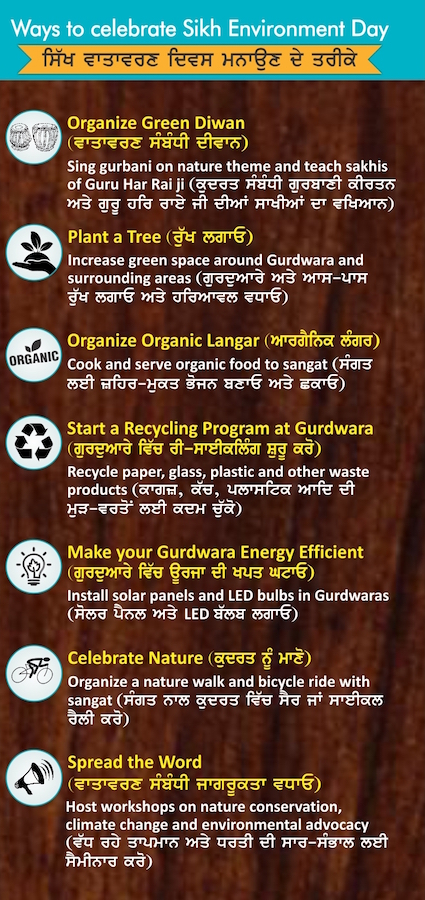
SEE ALSO: Ways to celebrate Sikh Environment Day

Ways to celebrate Sikh Environment Day – Chart: EcoSikh

The panellists shared startling statistics which point that Punjab is on the verge of an environment disaster. Four major cities of Punjab have been included in World’s Top 25 Most Polluted Cities with nine lakh trees being chopped in a short time span of 2011 to 2016. The state is left with just 3.80% forest area. The unnecessary production of tube wells has lead to water level depletion at a rate of 3 feet per year & 102 agricultural development blocks out of 141 in the state, now fall in the dark zone, where the underground water level is 200 feet or more. Moreover, there has not been a proper way to ensure the treatment of industrial waste before dumping it into rivers and one can very well imagine the environment with 4300 tons of garbage produced everyday with such poor garbage management facilities. This environmental degradation has resulted in spread of fatal diseases in the state. An average of 20 cases of cancer are being registered in Punjab daily.

EcoSikh Project Manager, Ravneet Singh, said, “This grave environment situation in Punjab is the motivation for initiatives during the SED. As a part of our SED campaign, activists will be planting trees, doing seminars on saving water, organising-katha kirtan diwan to spread awareness about environment protection, holding cycle rallies, organising displays of organic kitchen gardens, flower shows, setting up of no vehicle zones etc.” Adds Ravneet, “ EcoSikh is calling upon the state government, Gurdwaras, academic institutions and NGOs to focus on plantation and make sure that these trees survive and to ban Styrofoam in government bodies and especially for langars in the Gurdwaras.”

Mentioning about the measures which can be taken to improve the situation, Supreet Kaur, President EcoSikh said, “Our first priority is to impress upon government to ensure that a well planned strategy is put in place to increase the forest area in the state. Second priority is to create awareness among farmers and masses to conserve water and to ensure that industrial waste is treated before being dumped in the rivers.”

EcoSikh activist & ‘Kudrat’ singer , Harminder Singh, said, “We were so deeply saddened by Punjab’s environmental degradation that we wrote lines of song ‘Kudrat’ right from our heart. The song talks about the environmental crisis and the continuously changing climate conditions. It is an effort to spread awareness among people to adopt a pro active strategy against Global warming & garbage disposal. Adds lyricist, Karn Lahoriya,”The song gives the message that if we do not value mother nature now we will have to repent one day. All aspects of the song like lyrics, music, video production etc have been done by EcoSikh activists.”

Dr. Rajwant Singh, EcoSikh Global president, said,” EcoSikh is continuously striving to engage the Sikh Community not just in Punjab & India but even worldwide to spread the message of the Sikh Gurus. We will be renewing our appeal to all Gurdwaras and Sikh institutions to increase the consumption of organically grown food in Langars which will certainly nudge the small farmers to switch to healthier agricultural practices.”

Environmentalists also shared their work experiences and findings which focused on issues like revival of gardens in Gurudwaras, banning of plastic and disposable styrofoam in the Gurdwaras, marriages and festivals and the need to promote organic agriculture. Wildlife conservationist Nikhil Sanger said, “The wildlife is disturbed by plastic and every year the Holla Mohalla increases the intensity of garbage in the jungles of Ropar. So plastic needs to be banned.” Prominent Sikh environmentalist Manjit Singh of Ganga Nursery, appealed to people to realise the gravity of situation by saying, “ For thousands of years, we have been taking continuously from Mother earth. It is high time we should pay her debt.” Harkirat Singh, Trustee of Satnam Sarv Kalyan Trust, which has done extensive job in tree plantation also emphasised on the timely conservation of earth in his “We have already done an irreparable loss to environment. Even if we realise the scenario now, we can think of saving Earth.”

Stated EcoSikh Board Member, Jaspreet Singh, “The sustainable industrial growth of Punjab is essential, so under EcoSikh initiative Guru Har Rai Rukh Lagao Leher 2017, we have created a three layer green zone in Focal Point Ludhiana, we shall continue to address the air issues in future.”

In the past years of EcoSikh has got planted hundreds of trees by the Gurdwaras and educational institutions, and over 2000 trees have been planted by EcoSikh itself in Amritsar. In the near & long term future EcoSikh will focus on the tree plantation along with youth workshops to train young leaders on environmental issues in Punjab.

SEE ORIGINAL PRESS STATEMENT HERE.


[ASIA SAMACHAR is an online newspaper for Sikhs in Southeast Asia and surrounding countries. We have a Facebook page, do give it a LIKE. Follow us on Twitter. Visit our website: www.asiasamachar.com] 18224


RELATED STORY:

Malaysian environmentalist Gurmit Singh tells his story (Asia Samachar, 23 April 2017)


[Fastest way to reach Asia Samachar: Facebook message or WhatsApp +6017-335-1399. Our email: editor@asiasamachar.com. For obituary announcements, click here]

Sardar dropped, Manpreet to lead Indian men’s hockey charge at Commonwealth Games

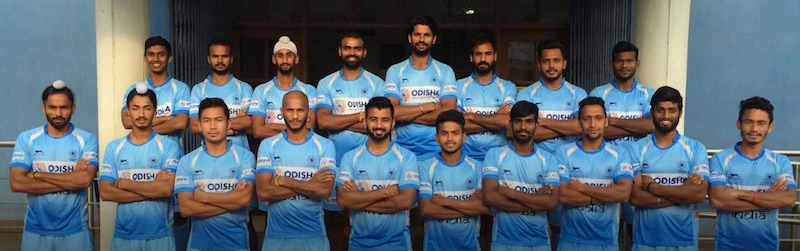
Hockey India named the 18-member squad for the Gold Coast Commonwealth Games. (Photo: Hockey India)

Seasoned goalkeeper PR Sreejesh made a comeback while former skipper Sardar Singh was dropped from the 18-member Indian hockey squad led by Manpreet Singh for the upcoming 21st Commonwealth Games in Gold Coast, reports News18.

The Indian team are in Pool B along with Pakistan, Malaysia, Wales, England and will begin their campaign on April 7 against Pakistan.

While Manpreet dons the captain’s armband, the responsibilities of his deputy will be shouldered by Chinglensana Singh Kangujam.

The report noted that it was under Manpreet’s leadership the Indian team lifted the coveted Asia Cup 2017 followed by a bronze medal feat at the Men’s Hockey World League Final in Bhubaneswar, last year.

Veteran custodian Sreejesh is back after having suffered a medial collateral ligament (MCL) injury during the Azlan Shah tournament in 2017. His brilliant show during the New Zealand tour saw him get his rightful place back.

He will be backed by the 22-year-old talent Suraj Karkera who played a crucial part in the team’s good show in Bhubaneswar last year in his senior counterpart’s absence.

Sardar’s exclusion was on expected lines as he performed below-par at this year’s Azlan Shah tournament. However a few eyebrows were raised with Ramandeep Singh being dropped despite his decent show in the same tournament, the report added.

FILE PHOTO: Sardar Singh pointing out something to Australian umpire Pullman Tim during a semi-final match against Malaysia in the Hockey World League in Antwerp in July 2015. – PHOTO / FFU PRESS AGENCY

Youngsters Dilpreet Singh and Vivek Sagar Prasad, who made their international debut during the New Zealand tour have been rewarded with this opportunity for their good show. Both the players scored in important games.

Freeman and drag-flick expert Rupinder Pal Singh will form India’s wall of defence along with Harmanpreet Singh, Varun Kumar, Kothajit Singh, Gurinder Singh and Amit Rohidas.

India’s midfield will see skipper 25 year-old Manpreet Singh in the lead role, ably supported by the experience of Chinglensana along with young blood in Sumit and Vivek.

The Indian attack will feature a lethal combination between experience and youth as SV Sunil, Akashdeep Singh, Mandeep Singh, Lalit Kumar Upadhyay, Gurjant Singh and Dilpreet Singh are all in the team.


[ASIA SAMACHAR is an online newspaper for Sikhs in Southeast Asia and surrounding countries. We have a Facebook page, do give it a LIKE. Follow us on Twitter. Visit our website: www.asiasamachar.com] 18216


RELATED STORY:

India one step ahead of Malaysian hockey (Asia Samachar, 23 Oct 2017)

India names hockey team for Sultan of Johor Cup (Asia Samachar, 14 Oct 2017)

Sardar to lead India hockey team for Sultan Azlan Shah Cup (Asia Samachar, 23 March 2016)


[Fastest way to reach Asia Samachar: Facebook message or WhatsApp +6017-335-1399. Our email: editor@asiasamachar.com. For obituary announcements, click here]

Jagjit Singh (1964-2018), Batu Caves 

SASKAAR: 12.30pm, 14 March 2018 (Wednesday) at Jalan Loke Yew Crematorium, Kuala Lumpur | Malaysia

Jagjit Singh (1964-2018), Batu Caves

JAGJIT SINGH S/O LATE AMAR SINGH

Age: 54 years

Born: 3 Feb 1964

Departed: 13 March 2018

Called home to be with the Lord on 13 March 2018. Leaving behind beloved:

Wife: Gurdesh Kaur (RHB Bank)

Children:

Jasmine Kaur Olikh

Jacqueline Kaur Olikh

Raj Singh Olikh

Saskaar / Cremation: 12.30pm, 14 March 2018 (Wednesday) at Jalan Loke Yew Crematorium, Kuala Lumpur

Cortege timing: Cortege leaves residence No 73, Lorong D/M, Taman Desa Minang, 68100, Batu Caves, Selangor at 11.30am

Path Da Bhog / Kirtan: T.B.A

Contact:

Gurdesh 012-6778005

Jasmine 012-2652441


| Entry: 13 March 2018 | Source: Family

[ASIA SAMACHAR is an online newspaper for Sikhs in Southeast Asia and surrounding countries. We have a Facebook page, do give it a LIKE. Follow us on Twitter. Visit our website: www.asiasamachar.com] 18207


[The fastest way to reach Asia Samachar is by sending us a Facebook message or Whatsapp message to +6017-3351399. For obituary announcements, click here]

Sikhmom Malaysia lands in Ipoh

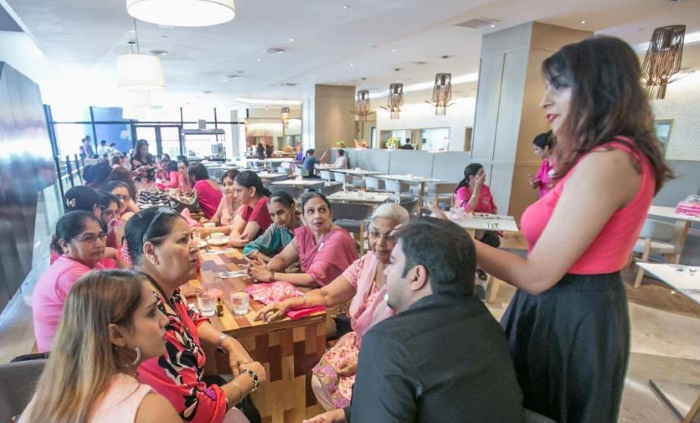
Networking opportunity organised by Sikhmom Malaysia – Photo / Shanno Randhawa

Some 40 people turned up for the latest gathering of Sikhmom Malaysia, an informal group of ladies engaged in charity and organising get togethers.

This time around, they met in Ipoh, Perak, for a high tea on Saturday (10 March).

One of the few male participants were Dr Taranjeet Singh, who is part of the Sikhmom medical arm, who came with his wife Sunita Bhullar.

“I’m delighted to inject not only needles but also my knowledge and experience of 10 years back to the Sangat,” he said.

Matron Ranjit Kaur was equally delighted to be part of the afternoon gathering.

“It was a great networking afternoon, a wonderful meet and great event,” she said.

Among the Sikhmom event organising team members were Pranpreet Kaur, Suzy Virk, Balveena Kaur and Gloriajit Grewal.

Ipoh high tea session organised by Sikhmom Malaysia – Photo / Shanno Randhawa

[ASIA SAMACHAR is an online newspaper for Sikhs in Southeast Asia and surrounding countries. We have a Facebook page, do give it a LIKE. Follow us on Twitter. Visit our website: www.asiasamachar.com] 18198


RELATED STORY:

Women outnumber men for PhDs at Panjab University (Asia Samachar, 5 March 2018)


[Fastest way to reach Asia Samachar: Facebook message or WhatsApp +6017-335-1399. Our email: editor@asiasamachar.com. For obituary announcements, click here]

Former Malaysian national cricketer Ajmerr Singh passed away

Ajmerr Singh Sandhu: Former Malaysian cricket player and state hockey player

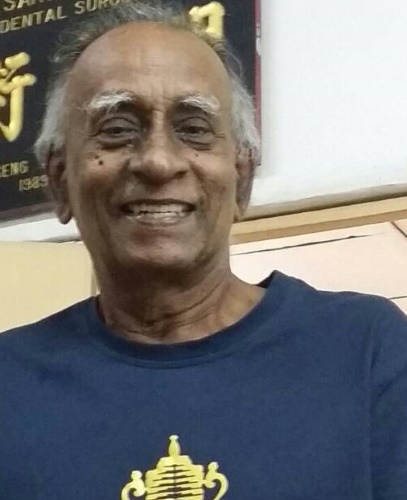
Ajmerr Singh Sandhu, a former Malaysian national creketer and a state hockey player, passed away yesterday (12 March). He was 75.

A former broadcaster for the English service of the Radio Television Malaysia (RMT), Ajmerr was a regular for the Malaysian cricket side in the mid-1970s and early 1980s.

“Very sad on the loss of a good friend. A very intelligent left arm spin bowler who represented Malaysia with honours. Thorough bred gentleman worthy of a great cricketing personality,” fellow former national cricket player Dr Harjit Singh told Asia Samachar in a text message.

“His name will remain in the annals of Malaysia’s cricketing greats,” added Dr Harjit, president of the Johor Cricket Council since 1987 who also held key positions in the Malaysian Cricket Association over the years.

Ajmerr came onto the scene just as Alex Delilkan and Gurucharan Singh, two of Malaysia’s best ever spin bowlers, were getting ready to retire.

“He became a ready replacement when they retired,” he said.

Ajmerr’s remains were cremated in Petaling Jaya this afternoon.


[ASIA SAMACHAR is an online newspaper for Sikhs in Southeast Asia and surrounding countries. We have a Facebook page, do give it a LIKE. Follow us on Twitter. Visit our website: www.asiasamachar.com] 18178


RELATED STORY:

Dr Harjit Singh joins Olympic Council of Malaysia Hall of Fame (Asia Samachar, 10 Dec 2017)

Cricket legend Lall Singh leads Malaysia’s Hall of Fame list (Asia Samachar, 11 Oct 2016)


[Fastest way to reach Asia Samachar: Facebook message or WhatsApp +6017-335-1399. Our email: editor@asiasamachar.com. For obituary announcements, click here]

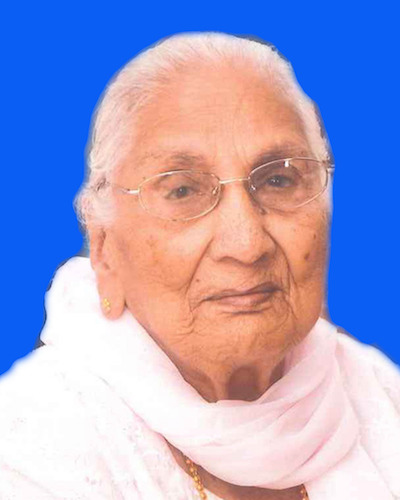
 Prithum Kaur (1922-2018), Sitiawan

PRAYERS: Sukhmani Path: 22 March 2018 (Thursday) at residence; Akhand Path: Commences at 8am, 23 March (Friday) to 25 March ( Sunday); Path Da Bhog / Antim Ardas: 25 March 2018 (Sunday), 10am-12pm, at Gurdwara Sahib Sitiawan | Malaysia

Prithum Kaur (1922-2018), Sitiawan
Mawan Thandia Chawan 

She lived, laughed, loved and left 13.3.2018.


PRITHUM KAUR D/O AMAR NATH DHOL

Village: Nurmahal

Age: 96 years old

Born: 1922

Departed: 13 March 2018

Husband: Late Naranjan Singh Atthi s/o Labh Singh Atthi

Children / Spouses:

Karam Kaur / Late Jamnadas Chabra

Boodar Singh (Daljit) / Kamlish

Isar Singh / Balbir Kaur

Skintara Rani / Late Jaginder Singh Sachdev

Grandchildren:

Sunita Chabra, Anita Chabra, Kavita Chabra, Renuka Kaur, Rima Kaur, Sunaina Kaur, Suraj Singh, Veena Kaur, Rani Kaur, Sangeta Kaur, Harmeet Kaur Sachdev, Reena Kaur Sachdev, Ajitpal Singh Sachdev, Sherin Kaur Sachdev

Great Grandchildren: Harkrishpaal Singh, Jasveerpal Singh, Gushrahulpaal Singh, Alviyaash Khanijow, Amithpal Singh, Divya Roshini Kaur, Jaideep Ryan Singh, Ritesh Singh, Reenita Kaur, Rheapreet Kaur, Aryan Singh Sachdev, Marisha Kaur Sachdev, Jaipreet Riana Kaur, Aarav Punj, Aarush Pal, Aardesh Pal, Aarmaan Pal, Jasslen Kaur Purba

Saskaar / Cremation: 14 March 2018 (Wednesday) at Pundut Crematorium, Lumut

Sukhmani Path: 22 March 2018 (Thursday) at residence (Address: No 44, Taman Raja Muda Musa, 32000, Sitiawan, Perak)

Akhand Path: Commences at 8am, 23 March (Friday) to 25 March ( Sunday), at Gurdwara Sahib Sitiawan

Path Da Bhog / Antim Ardas: 25 March 2018 (Sunday), 10:00am-12pm, at Gurdwara Sahib Sitiawan, Perak

Contact:

Sunita Chabra 016-2753330

Veena Kaur 016-2194511

Sherin Kaur Sachdev 016-6664441

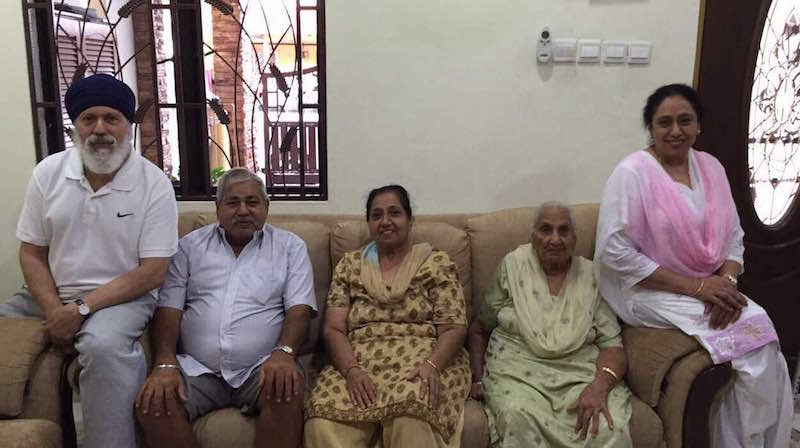
Prithum Kaur (Sitiawan) with four of her children – Photo: Family

| Entry: 13 March 2018 | Source: Family

[ASIA SAMACHAR is an online newspaper for Sikhs in Southeast Asia and surrounding countries. We have a Facebook page, do give it a LIKE. Follow us on Twitter. Visit our website: www.asiasamachar.com] 18185


[The fastest way to reach Asia Samachar is by sending us a Facebook message or Whatsapp message to +6017-3351399. For obituary announcements, click here]