Datuk Baljit Singh Sidhu / Datin Dr Sarvinder Kaur Sandhu
(Shukor Baljit & Partners)
Sardar Balwinder Singh Sidhu
Grandchildren:
Mannvir Singh Sidhu
Baaldesh Singh Sidhu
Ishnajit Kaur Sidhu
Brothers, Sisiters, In-Laws, Nephews, Nieces, a host of Relatives and Friends to mourn their loss
Path Da Bhog / Antim Ardas: 11 March 2018 (Sunday), 5pm-7pm, at Gurdwara Sahib Ampang, Ulu Kelang
Please treat this as a personal invitation
| Entry: 7 March 2018 | Source: Family
[ASIA SAMACHAR is an online newspaper for Sikhs in Southeast Asia and surrounding countries. We have a Facebook page, do give it a LIKE. Follow us on Twitter. Visit our website: www.asiasamachar.com] 18092
[The fastest way to reach Asia Samachar is by sending us a Facebook message or Whatsapp message to +6017-3351399. For obituary announcements, click here]
For some silly reason, I’ve been biting my lip controlling myself from throwing a tantrum with a friend of mine. The physical manifestation of my anger from my pride being hurt was…well, hurtful. Uneasy words were exchanged over an argument about something that really should be inconsequential for the both of us. Clearly there was a popularity contest as well.
At my age, as a father of three girls of which two are very young teenagers, I find this behavior of mine quite immature. But only in the hindsight.
During the rage, I couldn’t see clearly and blaming someone else apart from myself was naturally easy. The anger only subsided after a couple of days, simmering underneath my skin and easily triggered by anything that reminds me of his behavior that caused this friction.
While being angry, I realized that the lack of harmony between myself and the rest around me was a distraction. And I hated it. I had allowed my emotions from my bruised ego affect me more and longer than before. When I remind myself that it’s over something so obscure, I feel worse.
As I look back, this was probably an emotion and reaction that I’ve experienced many a times all my life. And it frustrates me that I’ve never learned to recognize it, to avoid it, to never allow my ego to get bruised, to not go through this disharmony of me and myself.
Ideally, I shouldn’t even be having an ego to be bruised nor get affected by anything or anybody, always in high spirits, always in harmony. It frustrates me even more that I’m so very far away from achieving this state of nirvana. I’m no where being in the state of chardee kala.
We are created unique. Like snowflakes. Not even twins are the same. Our personalities are built since the day we were born, and our personalities evolve every single day as we grow physically, mentally and spiritually. At a single point, our evolving personalities interact with many personalities around us. Our families, our friends, our colleagues, our classmates, and so on. It’s guaranteed that some of these personalities clash with ours for multiple reasons. Barriers between two personalities cause friction, as both personalities evolve bit by bit.
You and I will have some misunderstanding or just mere disagreements that we cannot avoid because of how different our unique personalities are. As what happened to me and my friend. We cannot dispute this.
What’s in our control though is how we react to the clashes. We have a choice.
I know that I have an ego. I sort of know what my triggers are to go down the path of getting my ego hurt and slapped. It’s my choice to avoid those pitfalls. It’s my choice to tell myself that it’s not worth going through disharmony and not indulge in making the other person feel the hurt that I’m feeling. Because it shouldn’t really matter. What matters is harmony between me and those surrounding me, and harmony between me and myself.
If only I can learn to choose correctly when blinded by rage…
Jagdesh Singh, a Kuala Lumpur-based executive with a US multinational company, is a father of three girls who are as opinionated as their mother
* This is the opinion of the writer, organisation or publication and does not necessarily represent the views of Asia Samachar.
[ASIA SAMACHAR is an online newspaper for Sikhs in Southeast Asia and surrounding countries. We have a Facebook page, do give it a LIKE. Follow us on Twitter. Visit our website: www.asiasamachar.com] 18097
[Fastest way to reach Asia Samachar: Facebook message or WhatsApp +6017-335-1399. Our email: editor@asiasamachar.com. For obituary announcements, click here]
Fish Eat Fish World: A Children’s Book by Bhupinder Singh
By Fatehpal Singh Tarney
I would like to preface this review with two statements.
First, the importance of children who are, of course, the future of all things sacred and secular. When I was president of my home Gurdwara Sahib in Florida, I was invited to many interfaith gatherings hosted by various religious groups. I was always warmly welcomed, but the events that most impressed me in terms of the involvement of children were the Baha’i firesides.
Firesides are informal discussions that introduce newcomers to Baha’i teachings. The Baha’i faith is a monotheistic religion founded in Persia in the mid-19th century. I got the impression that all Baha’i programs begin and end with children doing something – be it a prayer, a short sermon, a song, or a dance. The central role of children was of great importance.
Second, through the years, I have written things either historical, political, or religious, but have always wanted to write a children’s book. Bhupinder Singh ji has done it! His short children’s book, “Fish Eat Fish World“, is a lovely, thought-provoking book with superb illustrations by Bhagat Singh Bedi.
I am pleasantly surprised that this is Bhupinder Singh’s first effort at writing a children’s book. It fills a need in our Sikh community, but I think those of other faiths and ethnic groups can relate to it as well. Its ideas will stimulate both the children who read it and the adults who might read it to them. It conveys some basic Sikh principles – especially that of chardi kalaa.
Although we can be disheartened at times and have to deal with misfortune, a positive, optimistic approach to the future, based on the belief that God cares for all creatures, is essential. Everything occurs according to God’s will, but God is forever merciful.
In this little book, the interaction of this small lad with his Dada ji is fantastic and reminds me of my own experience seventy years ago when I received unqualified affection and superb advice from my own grandfather. My beloved grandfather, not a Sikh, would have wholeheartedly agreed with “Nanak naam chardi kalaa / tere bhaney sarbat da bhalaa”.
Anticipation of a brand new bicycle and then the disappointment over probably not getting it, is rather typical for a youngster. The realization that when one’s father loses his job, there are many more important implications is a priceless lesson.
This article was originally published at SikhChic.com. See here.
ASIA SAMACHAR is an online newspaper for Sikhs / Punjabis in Southeast Asia and beyond.Facebook | WhatsApp +6017-335-1399 | Email: editor@asiasamachar.com | Twitter | Instagram | Obituary announcements, click here |
Path da bhog: 11 March 2018 (Sunday), 9am-11.30am, at Gurdwara Sahib Titiwangsa, Kuala Lumpur
Contact:
Sunil 019-238 3838
Anil 019-282 8688
Harveer 010-232 6963
Dharaminder 018-765 4361
Sangeeta 016-302 3211
Ishveena 016-309 5025
| Entry: 5 March 2018 | Source: Family
[ASIA SAMACHAR is an online newspaper for Sikhs in Southeast Asia and surrounding countries. We have a Facebook page, do give it a LIKE. Follow us on Twitter. Visit our website: www.asiasamachar.com] 18059
[The fastest way to reach Asia Samachar is by sending us a Facebook message or Whatsapp message to +6017-3351399. For obituary announcements, click here]
Saskaar / Cremation: 6 March 2018 (Tuesday) at Jalan Loke Yew Crematorium, Kuala Lumpur
Path Da bhog: 14 March 2018 (Wednesday), 6pm-9pm, at Gurdwara Sahib Serdang
Contact:
Prabhjoth Singh 012-8770436
Talvinderjit Singh 016-9127704
| Entry: 5 March 2018 | Source: Family
[ASIA SAMACHAR is an online newspaper for Sikhs in Southeast Asia and surrounding countries. We have a Facebook page, do give it a LIKE. Follow us on Twitter. Visit our website: www.asiasamachar.com] 18062
[The fastest way to reach Asia Samachar is by sending us a Facebook message or Whatsapp message to +6017-3351399. For obituary announcements, click here]
Harpreet Kaur (right) at the Panjab University, Chandigarh, convocation on Sunday. She was awarded a doctorate - Photo courtesy of her Facebook page
Panjab University confers Honoris Causa Degrees on former Indian chief justice Jagdish Singh Khehar (LLD). It was presented by Vice President of India M Venkaiah Naidu - Photo courtesy of PU Facebook page
Vice President of India M Venkaiah Naidu awards Panjab University Khel Ratna Award to Flying Sikh Milkha Singh - Photo courtesy of PU Facebook page
Harpreet Kaur was one of the many women who received their PhDs at the Panjab University, more than double the number of male recipients.
At the Chandigarh-based university convocation on Sunday, women bagged 224 out of the 324 doctorates awarded, reports the Hindustan Times.
There were 122 doctorate recipients from Punjab followed by Chandigarh (56), Haryana (55) and Himachal Pradesh (42) students. Adding an international flavour to the university were seven students from Iran and one each from Thailand and Afghanistan.
“With the blessings of God, I am bestowed with a PhD Degree from Panjab University. I express profound gratitude to my family, my mentor Dr. Sukhmani Bal Riar for her kind support, motivation and guidance,” Harpreet said in a social media entry.
Out of the 324 PhDs, 98 are from science, 14 from pharma sciences, 75 from arts, 34 from education, 43 from languages, 24 from law, 14 from engineering and technology, 11 from business management and commerce, 10 from design and fine arts and 1 from dairying and animal husbandry faculties, the newspaper reported.
The event also saw two Sikh luminaries receiving recognition.
The university conferred conferred Honoris Causa Degrees on former Indian chief justice Jagdish Singh Khehar (LLD) and Khel Ratan Award on Indian legendary runner Milkha Singh.
Known as the Flying Sikh, Milkha represented India at the Olympic Games of 1956, 1960 and 1964 and won gold at the 1958 and 1962 Asian Games.
Justice Khehar was named the Chief Justice of India (CJI) in December 2016, making him the first Sikh to head the nation’s judiciary.
[ASIA SAMACHAR is an online newspaper for Sikhs in Southeast Asia and surrounding countries. We have a Facebook page, do give it a LIKE. Follow us on Twitter. Visit our website: www.asiasamachar.com] 18050
Shell Malaysia Scholarship Programme. Application: 25 Feb to 25 March. Study fields: Engineering, Sciences (Geology, Geosciences, Geomatics, Geophysics) & Commercial (HR, Business & Mgmt). Min 8As (A/A+) in SPM or excellent O-level grades at IGCSE (A*/A).
[ASIA SAMACHAR is an online newspaper for Sikhs in Southeast Asia and surrounding countries. We have a Facebook page, do give it a LIKE. Follow us on Twitter. Visit our website: www.asiasamachar.com] 18040
Khalsa Aid volunteers providing relief aid to Syrian refugees – Photo / Khalsa Aid
The Khalsa Aid International has appeared to be a ray of hope in the war torn Syria.
Last week Syria saw a series of airstrikes and bombings which killed nearly 500 civilians including 121 children in just a week. Khalsa Aid has extended a helping hand by providing free food, shelter and health services to the people in Syria, reportsThe Logical Indian.
Khalsa Aid is an international NGO which is known for providing humanitarian aid in regions facing natural or man made disasters.
About 500 human lives were lost in the past week’s bombing in Eastern Ghouta. Reports had suggested that the 48-hour death toll in Syria is highest since 2013.
UN Secretary-General Antonio Guterres has said the situation in the Eastern Ghouta is like “hell on Earth”.
The NGO, Khalsa Aid, without wasting any time has reached Syria to provide assistance. Khalsa Aid has been providing food, shelter and medical aid, the report said in an article entitled ‘A Shining Example of Humanity: Khalsa Aid Provides Relief Assistance At Syria’.
The NGO also runs Langar Aid which provides emergency food and water supplies in such areas. The efforts of the NGO has met with lot of appreciation from all quarters.
There have been many instances wherein the NGO volunteers have rushed to provide aid, be it in areas of civil conflict or in regions affected by natural disaster. Some of its projects include providing assistance during the Yemen civil war, extending a helping hand to the various natural disaster struck areas including Nepal, UK, Philippines, Mumbai and providing relief during the refugee crisis of Middle east and Myanmar.
Khalsa Aid volunteers attending to Syrian refugees – Photo / Khalsa Aid
[ASIA SAMACHAR is an online newspaper for Sikhs in Southeast Asia and surrounding countries. We have a Facebook page, do give it a LIKE. Follow us on Twitter. Visit our website: www.asiasamachar.com] 18034
Canada PM Justin Trudeau and family visiting the Harmandir Sahib, Amritsar – Photo courtesy of Justin Trudeau Facebook page
“The Indian media machine has gone into overdrive trying to discredit Sikh Canadians; their obsession with our success betrays their attempt to try to appear unthreatened by Sikhs in the diaspora,” writes Canadian-based Jaspreet Kaur Bal in an opinion published by the Washington Post.
In the article commenting on Canadian Prime Minister Justin Trudeau’s recent visit to India, she talked about “intergenerational trauma”, a term used to describe how a traumatic event can be residually transmitted into generations that may not have experienced the event firsthand.
In another opinion piece, British journalist Sunny Hundal argued that what ‘really worries’ the Indian government was the prospect of Sikh diaspora — singling out Britain, Canada and the US — getting into positions of power and challenging the abuse of Sikh civil rights in India.
“Most Sikhs call for a Khalistan not because they want to live in a theocracy but because they want a state where their Sikh brethren are treated equally and with dignity. They want a state that will protect Sikhs, not cover up thousands of extrajudicial killings,” he argued an article published in The Independent.
We share excerpts from works of Jaspreet and Sunny, as well as few others.
SUNNY HUNDAL: India’s indifference to the Sikh diaspora is damaging Western foreign policy towards the country
Why have relations between India and Canada suddenly turned chilly? Blame the Sikh diaspora. The Indian government says it is concerned Trudeau is too close to Sikh separatists and their growing influence poses a threat to India’s unity. A lot of these claims are hyperbole, but they reveal a broader concern among India’s elite.
Their concern is more than just about Canada. What really worries the Indian government is the prospect of Sikhs in Britain, Canada and the US getting into positions of power and challenging the abuse of Sikh civil rights in India. The Indian government mentions the revival of Sikh militancy in India too, but it is highly exaggerated. Among Indian elites there is palpable concern that Western foreign policy towards India will increasingly be shaped by Sikhs willing to challenge its interests. Hence the alarmist talk about Sikh separatism.
India has good reason to worry. Until recently the south Asian giant could broadly count on the West to put trade ahead of human rights.
But the political environment is changing. There are roughly half a million Sikhs in Britain, Canada and the US each. Canadians elected 20 Sikh MPs in 2015, the highest number ever. There are four Sikh cabinet ministers including Defence Minister Harjit Sajjan, and the unofficial leader of the opposition party NDP, Jagmeet Singh, is also a Sikh. In Britain two visibly Sikh MPs were elected just last year and both have embraced Sikh issues with gusto. American Sikhs are a much smaller proportion of the population, but most of them are concentrated in California and many are working to mobilise them too. It’s merely a matter of time before American Sikhs become more politically prominent too.
These elected officials are far from Sikh separatists. Trudeau’s ministers are proud Canadian citizens who serve their own country. None has called for an independent Sikh state, let alone agitated for one. So why the accusations?
Sikh separatists exist; there is little doubt about that. Nor is there any doubt about their antagonism towards India (which I do not share). In recent weeks, over a hundred Sikh gurdwaras in the West have explicitly banned Indian officials on government business, claiming internal interference and citing the arrest of British citizen Jagtar Singh Johal. But the popularity of a Sikh state is much exaggerated, not just by the Indian establishment but separatists themselves.
The problem is this: Indian elite sees any demand by Sikhs for justice over the anti-Sikh pogroms in 1984 as a sign of separatism. Last year Ontario’s state parliament passed a motion describing the events of 1984 as a “genocide” against Sikhs. The Indian media, which largely prefers the term “riots” (as a way to continue the pretence that both Sikhs and Hindus were to blame), cited the motion as proof that Sikh separatism was growing in Canada.
But if raising awareness of human rights abuses is a sign of separatism, India may as well condemn all Sikhs. I have no desire to see an independent Khalistan – the name and the objective of the Sikh nationalist movement. Yet coming from a Sikh family I’m painfully aware of what hundreds of thousands of Sikhs went through in 1984 and afterwards.
The Indian government is shooting itself in the foot. Younger diaspora Sikhs are more attached to their religious identity than their parents and are more willing to speak out. But neither of India’s major parties will openly admit that Sikhs were systematically targeted in 1984, let alone deliver justice 30 years later. They prefer living in denial, thus fanning the flames of anger and giving further ammunition to separatists. If the government went further in assuaging anger over 1984 it would easily undercut the Sikh separatists’ narrative.
Most Sikhs call for a Khalistan not because they want to live in a theocracy but because they want a state where their Sikh brethren are treated equally and with dignity. They want a state that will protect Sikhs, not cover up thousands of extrajudicial killings. Instead India is going in the opposite direction: the rise of the Hindu nationalist Hindutva movement has minorities more concerned about their safety than ever before.
Justin Trudeau won’t leave India feeling dejected or snubbed – au contraire, his main aim was to learn more about the background of Canadian Sikhs. The rise of Jagmeet Singh is a bigger concern for the Canadian PM than the Indian media. Instead it is India that has lost out from this cackhanded diplomacy. It could have used this opportunity to mend fences with Sikhs and grow trade with Canada but it has done neither.
ASIA SAMACHAR: Two Indian magazines and how they treat Sikh related
Two publications with two contrasting tones. Indian magazines, Outlook and The Caravan, splashed Canadian Sikh-related themes on their cover in their latest issues, but taking starkly different positions.
Outlook went on a tirade of how Canadian Sikhs are fuelling the Khalistan agenda for Sikhs in India with a headline ‘Khalistan II: Made in Canada’. The Caravan front-paged up and coming Canadian politician, posing the question ‘Jagmeet Singh: Hard questions for the poster boy of Canadian multiculturalism’.
The context: Canada’s Prime Minister Justin Trudeau maiden visit to India starting February 17. In the one week working visit, Amritsar is on the itinerary, possibly to the consternation of some Indian political segments that have in the past played up the anti-Sikh card.
A casual media reading would consign such reporting, especially the supposed Khalistan spectra, to be mere sensational work in light of the Trudeau’s visit.
SUPRIYA DWIVEDI: Canada’s media oversimplifies Indo-Canadian relations
This entire debacle, though, has once again unfortunately led to a number of oversimplifications and misinformation from our own media as it relates to the on the ground reality in India.
For starters, the whole issue of India thinking Canada is soft on Khalistani terrorists isn’t exactly new. In fact, it’s about as old as I am, dating back to the Air India bombing. And yet it was largely presented by our media as some novel diplomatic dust-up.
On the issue of Khalistan, our media has once again failed to provide any context or nuance. As I’ve noted before, anyone with even a superficial understanding of Indian history and politics could see why Sikhs would want an independent state, especially during times when India is ruled by a Hindu nationalist government. But this isn’t even really about Khalistan anymore. This is about Sikhs in Canada, the U.K. and the U.S. speaking out against the Indian government’s treatment of religious minorities generally, and specifically the demand for some sort of justice over the anti-Sikh pogroms in 1984 following Operation Blue Star and the assassination of prime minister Indira Gandhi.
JASPREET BAL: What Indians need to understand about Sikhs in Canada By
Sikhs have inherited the trauma of their ancestors in a way that continues to shape our thoughts, our behavior and our relationships. In June and November of 1984, more than 15,000 Sikhs (by conservative estimates) in Punjab were the victims of horrific, intentional and strategic attacks by the Indian government. As the Ontario legislature cemented in a historic motion last year, what happened to Sikhs in Punjab in 1984 was genocide. Leading up to the massacre, a post-partition Punjab was struggling to regain some semblance of self-governance. From this arose the Anandpur Sahib Resolution (ASR), a document derived from the consensus of the Sikh community that demanded specific linguistic and cultural rights while still maintaining that Punjab remain an Indian state. Sikhs were asking for rights to their own land, water and education as well as access to their own capital city (which still remains in the control of the central government).
As this struggle continued, in the late 1970s and early ’80s, the Indian state began to increasingly target Sikhs in extrajudicial attacks. In 1978, 13 peaceful protesters were killed in a massacre for which no one has been held accountable, even 40 years later. This conflict, between citizens demanding democratic rights and an increasingly authoritarian government, came to a head when Prime Minister Indira Gandhi ordered a full scale military attack on Harmandir Sahib, the central socio-religious institution of the Sikhs. She did so with the stated purpose of “flushing out militants” who were simply the Sikh political leadership, none of whom had been charged with any crime. Equipped with tanks and guns, the Indian military brutally murdered the thousands of civilians who were at Harmandir Sahib seeking spiritual refuge. Simultaneously, Indian troops attacked other Sikh institutions, burned down libraries, declared a media blackout and maintained a state of emergency. No one was ever charged for these crimes.
The astounding thing is, despite baseless claims to the contrary, Sikhs have not been radicalized by their trauma. Rather, they have been strengthened by it. As a generation raised in the aftermath of the 1984 genocide is now working as educators, activists, artists, homemakers and laborers, we have used our experience to transform the Canadian landscape. We have taken our parents’ fight for justice and used it to become engaged in politics. We have taken the stories whispered from our widowed grandmothers’ lips and turned them into poetry. We have taken our love for our identity and taught our young daughters to care about the little girls on whose land our daughters are settled. We have heard the calls to action of those whose land we occupy and have committed to helping them, because we know all too well the experience of state violence.
Last week saw the dusting off of the trope of the Sikh terrorist. Journalists have been pulled out of retirement to make their same tired statements. There are endless experiences of being Sikh Canadian; to group us all as terrorists is not only harmful but also lazy journalism. The media coverage this past week, which has rushed to reclaim that radicalism is flourishing in Canada, has not paused to make the distinctions that Sikhs are not terrorists. Asking for basic rights, speaking out about human rights abuses and contemplating a day when your people are not discriminated against does not make you an extremist. One can only assume these elementary distinctions are disregarded not out of apathy but rather out of a willful attempt to paint all Sikhs with one brushstroke.
Even as the Canadian PM’s recent India visit dissolved into a diplomatic disaster, Indian liberals lost a valuable chance to display their solidarity with Sikhs and their pursuit of justice
The state curbed the Khalistan movement in the mid-’90s, pushed through electoral democracy in 1992 with 23 per cent voter turnout. But every political party since then has betrayed their mandate. India has still not addressed the lapsed trust — explained why Operation Blue Star took place, or brought justice to the victims of 1984. Once politicians of all hues allow impunity for organised murder, other evils like corruption, nepotism and violation of systems follow. A quarter century later, a lumbering Punjab seeks to escape from the quagmire of poverty, farm debts, farmer suicides, unemployment, and drugs. Yet, tiny Punjab — with 1.5 per cent of the nation’s land — continues to be the farmer and soldier of the nation. In spite of its own ecological disaster — through the over-exploitation of its water table and pollution of earth — it continues to contribute 60 per cent wheat and 40 per cent rice to the Central pool. Punjab continues to stand between not just India and hunger, but also India and Pakistan — a role it has performed since 1965, when the Punjabi Suba movement raged for the creation of the State.
Seeing the systemic breakdown at home and the possibility of better lives abroad, many Punjabis have escaped and are busy making their overseas dreams come true. Their emotional and familial ties with Punjab remain. Now, a new generation has grown up abroad on stories of India’s apathy. Given the freedoms available abroad, a small number in the Sikh diaspora continue to raise these issues. These voices are labelled as support for Khalistan. Yes, there are also those who still seek an independent Khalistan, but their numbers are few. However, their flashy presence makes for media stories through which the political parties back home keep the lid on Punjab, don’t hear its voice, and keep it enmeshed in Khalistan. That is how they deflect from questions of development and keep a cover on the violations by the state.
These days the liberals battle for Najeeb Ahmed, the JNU student missing since October 2016 after an on-campus brawl with members of the right-wing students’ union ABVP. According to a recent report, Punjab has 8,257 Najeebs, or Singhs, or Kumars — the kind of enforced disappearances and killings being reported right now in Uttar Pradesh and earlier in Gujarat. The liberals battle for the CBI Judge BH Loya, who died under mysterious circumstances midway through the hearing in the Sohrabuddin Sheikh encounter case. Do they forget Advocate Khalra? Don’t the liberals see Operation Blue Star as a blot on India’s conscience that needs addressing? Don’t they see the 1984 pogrom as a model for Babri and Godhra?
Though Punjab has returned from violence, it has a long way to go to heal. Healing needs trust. Trust needs solidarities. During Trudeau’s visit, and the media spin on it, the liberals had a chance to display their solidarity with the Sikhs. They had a chance to nuance the term Khalistan — to take the sting out of separatism by advocating the pursuit of justice. They failed. Sadly, Punjab, a laboratory for sectarian violence and human rights violations, is fairly accustomed to isolation. It no longer cares. But the liberals needed to care, they didn’t.. After Trudeau left, NITI Ayog brazenly told Punjab: the nation does not need its produce, the Centre has refused aid. If in the future things turn haywire, let it be noted the liberals remained silent at this critical juncture in Punjab’s history.
Hide-and-Sikh politics By Amandeep Sandhu (author of Roll of Honour, a novel on 1984), The Business Line, 2 March 2018.
ASIA SAMACHAR is an online newspaper for Sikhs / Punjabis in Southeast Asia and beyond.Facebook | WhatsApp +6017-335-1399 | Email: editor@asiasamachar.com | Twitter | Instagram | Obituary announcements, click here |
PATH DA BHOG (1st Barsi): 10 March 2018 (Saturday), 9am-12pm, at Gurdwara Sahib Bidor, Perak |Malaysia
Mahandra Kaur (1936-2017), Bidor
Forever cherished and always remembered.
A woman with a big heart and a smile for everyone.
You were very special Masi.
We will always cherish the fond and unforgetable memories of our stay at the family home you made in Bidor.
MATA MAHANDRA KAUR
Daughter of Late Sardar Banta Singh & Late Sardarni Gurnam Kaur
Age: 81
Village: Pelojla, Jala Amritsar
Husband: Late Sardar Inder Singh S/O Bhag Singh
Missed by children, grandchildren, great-grandchildren, family & friends
Path da bhog: 10 March 2018 (Saturday), 9am-12pm, at Gurdwara Sahib Bidor, Perak
The family cordially invites family, relatives and friends to partake in the 1st Barsi Paath Da Bhog. Please treat this as a personal message from the family.
Contact:
Dr Bajan Singh Tapah – 012 3342546
Reshminder Singh Penang – 012 4980577
Hira Singh Penang – 012 631 0742
Satwant Singh Kajang – 012 644 5148
| Entry: 2 March 2018 | Source: Family
[ASIA SAMACHAR is an online newspaper for Sikhs in Southeast Asia and surrounding countries. We have a Facebook page, do give it a LIKE. Follow us on Twitter. Visit our website: www.asiasamachar.com] 18008
[The fastest way to reach Asia Samachar is by sending us a Facebook message or Whatsapp message to +6017-3351399. For obituary announcements, click here]






















 For some silly reason, I’ve been biting my lip controlling myself from throwing a tantrum with a friend of mine. The physical manifestation of my anger from my pride being hurt was…well, hurtful. Uneasy words were exchanged over an argument about something that really should be inconsequential for the both of us. Clearly there was a popularity contest as well.



 PUBLIC SERVICE ANNOUNCEMENT | MALAYSIA: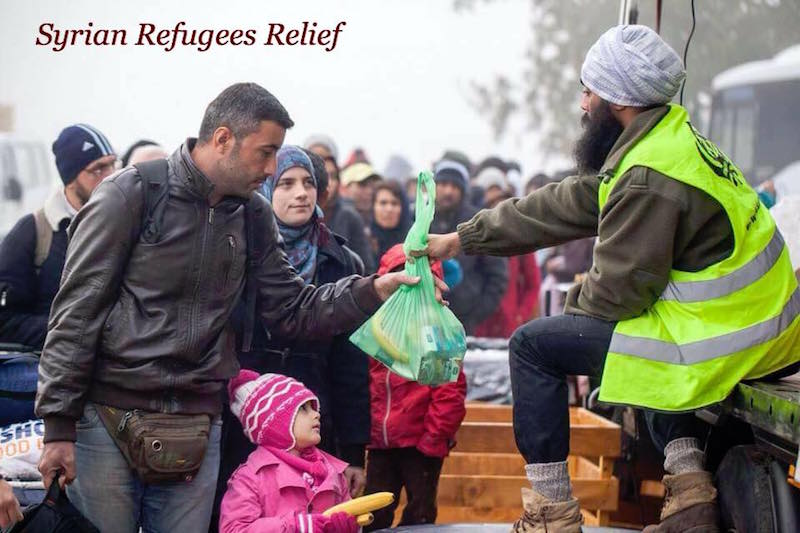

 SUPRIYA DWIVEDI: Canada’s media oversimplifies Indo-Canadian relations