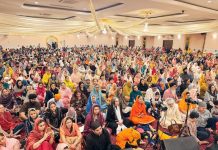
Fund Raising | Malaysia: Gurdwara Sahib Bayan Baru is working to raise another RM200,000 to build a fully equipped kitchen. They have already raised RM200,000 for the project expected to be completed by February 2026. CLICK HERE FOR THE UPDATE AT ASIA SAMACHAR FACEBOOK AND INSTAGRAM.
MESSAGE FROM THE GURDWARA
The Penang gurdwara has raised half the amount needed
Fund Raising | Malaysia: Gurdwara Sahib Bayan Baru is working to raise another RM200,000 to build a fully equipped kitchen. The Penang gurdwara has raised half the amount needed
Gurdwara Sahib Bayan Baru, Penang ????
Waheguru Ji Ka Khalsa, Waheguru Ji Ki Fateh!
Humble Appeal to the Saadh Sangat Ji
With Guru Sahib’s blessings, we have started the construction of a new kitchen at our Gurdwara Sahib. (see photos of the 1st pile)
To complete this important seva, we humbly request your support. We aim to raise RM400,000 to build a fully equipped kitchen.
This project is expected to be completed by February 2026.
✅ Good news: 50% of the required amount has already been raised!
Let us unite as Sangat and contribute towards this noble cause.
???? Donation Details:
???? Bank-in to: Bank: Public Bank Account Name: Persatuan Gurdwara Sahib Bayan Baru, Pulau Pinang Account No: 3241 3543 11
???? WhatsApp bank-in slip to: Manjeet Singh – 012 401 5277 Sohon Singh – 017 474 6902 (A receipt will be forwarded to you)
✉️ Cheque option: Issue cheque to: Persatuan Gurdwara Sahib Bayan Baru, Pulau Pinang ???? Post to: 134, Jalan Sultan Azlan Shah, 11900 Bayan Lepas, Pulau Pinang. (Please write your name, address & H/P number at the back of the cheque. A receipt will be sent.)
???? Please forward this message to family and friends who may wish to contribute.
Dhanvaad Ji ???? Gursewak
RELATED STORY:
(Asia Samachar, x 2025)
ASIA SAMACHAR is an online newspaper for Sikhs / Punjabis in Southeast Asia and beyond. You can leave your comments at our website, Facebook, Twitter, and Instagram. We will delete comments we deem offensive or potentially libelous. You can reach us via WhatsApp +6017-335-1399 or email: asia.samachar@gmail.com. For obituary announcements, click here
Hospital Bentong director Dr S. Vikneswara handing the appointment letter to Jasvir Singh
Jasvir Singh Ram Singh will serve the board of visitors of Hospital Bentong for a two-year period until end-2027.
He received his letter of appointment, signed by Health Minister Dr Dzulkefly Ahmad, from the Pahang hospital’s director Dr S. Vikneswara.
In Malaysia, a Hospital Board of Visitors (BOV) acts as a bridge between the community and the hospital, monitoring service quality and ensuring patient welfare.
These boards, also known as Lembaga Pelawat Hospital, play a crucial role in channeling public feedback, supporting underprivileged patients, and promoting volunteerism. They are appointed by the Minister of Health and comprise individuals with healthcare knowledge and community representation.
Jasvir, who is a member of the Bentong Municipal Council, also serves as special officer for Sikh affairs to Pahang Menteri Besar Wan Rosdy Wan Ismail.
ASIA SAMACHAR is an online newspaper for Sikhs / Punjabis in Southeast Asia and beyond. You can leave your comments at our website, Facebook, Twitter, and Instagram. We will delete comments we deem offensive or potentially libelous. You can reach us via WhatsApp +6017-335-1399 or email: asia.samachar@gmail.com. For obituary announcements, click here
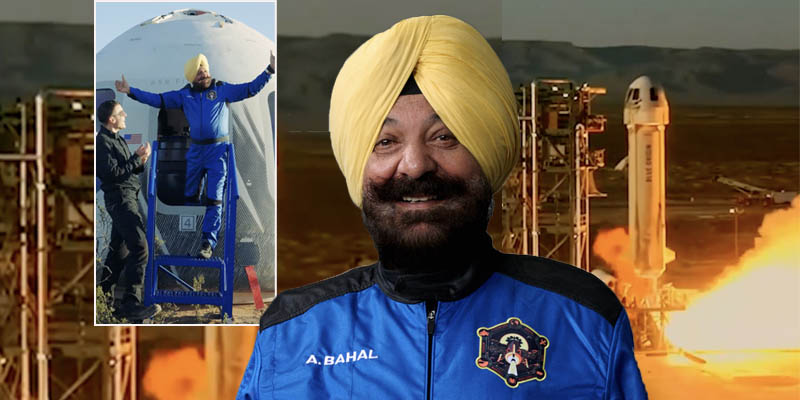
Real estate investor Arvinder Singh Bahal blasts off to space on Aug 3, 2025, on a Blue Origin rocket to become the first Sikh in space
By Asia Samachar | United States |
The first Sikh has just gone to space on a rocket launched by US space technology company Blue Origin Enterprises.
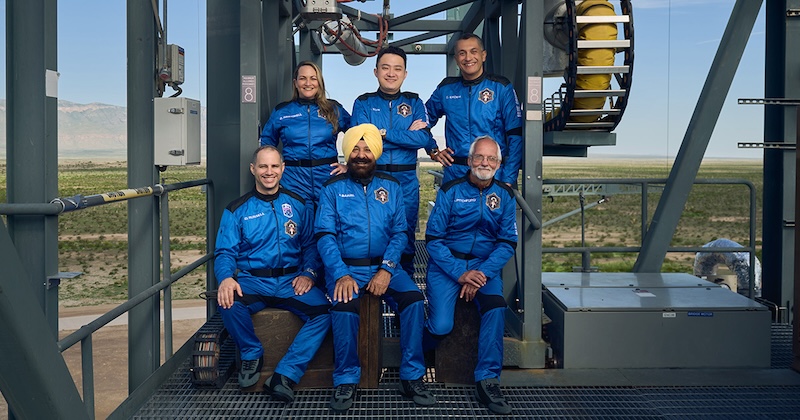
Arvinder Singh Bahal, bearing a light yellow turban, joined five others on board the New Shepard launch vehicle on Aug 3.
The 80-year-old real estate investor who was born in Agra, India, is now a naturalised US citizen.
He has been described as a lifelong traveler and adventurer who has visited every country in the world, the North and South Poles, and skydived Mount Everest and the Pyramids of Giza. He holds a private pilot’s license and also flies helicopters.
The flight, which lasts about 11 minutes from liftoff to capsule touchdown, heads to a point 62 miles over the Earth. This point, known as the Kármán Line, is an internationally recognized boundary of space.
Blue Origin was founded in 2000 by billionaire Jeff Bezos who also founded Amazon in 1994 and owns the Washington Post newspaper.
How much do you pay for the ride out of space? The rates are not publicly available, but you need to pay a deposit of US$150,000 to begin the order process.
Real estate investor Arvinder Singh Bahal blasts off to space on Aug 3, 2025, on a Blue Origin rocket to become the first Sikh in space
The first Indian citizen to travel into space was Rakesh Sharma aboard the Soviet Soyuz T-11 mission in 1984.
The first Panjabi into space was astronaut and aerospace engineer Kalpana Chawla when she flew on the Space Shuttle Columbia in 1997 as a mission specialist and robotic arm operator aboard STS-87.
Chawla’s second flight was in 2003 on STS-107, the final flight of Columbia. She was one of the seven crew members who died in the Space Shuttle Columbia disaster when the spacecraft disintegrated during its reentry into Earth’s atmosphere on February 1, 2003.
Chawla’s family had Punjabi roots. She was born in Karnal, Haryana, India, but her family originally came from Gujranwala in West Punjab, Pakistan. They were Punjabi Hindus who migrated to East Punjab (India) during the Partition of India in 1947.
ASIA SAMACHAR is an online newspaper for Sikhs / Punjabis in Southeast Asia and beyond. You can leave your comments at our website, Facebook, Twitter, and Instagram. We will delete comments we deem offensive or potentially libelous. You can reach us via WhatsApp +6017-335-1399 or email: asia.samachar@gmail.com. For obituary announcements, click here
This article explores the Sikh spiritual critique of artificial intelligence, contrasting the machine age’s efficiency-driven mindset with Sikhism’s emphasis on the divine spark (Jot) within each individual. Drawing on the teachings of Sri Guru Granth Sahib, it argues that AI, lacking spiritual consciousness, cannot replicate the sacred essence of human life. It warns against false worship of technology and the erosion of meaningful work, community, and moral growth. Rather than rejecting innovation, Sikhism calls for spiritually guided technology that upholds human dignity, service, and divine remembrance. The machine must serve humanity, not replace its soul.
By Dr. Devinder Pal Singh| Opinion |
In the rapidly evolving landscape of artificial intelligence (AI), religious traditions worldwide are grappling with questions that strike at the heart of human purpose and dignity. While Pope Leo XIV [1] has emerged as a prominent Catholic voice warning against AI’s potential threats to the soul, Sikhism, the world’s fifth-largest religion, offers its own profound perspective on why thinking machines may fundamentally conflict with divine intention and human flourishing.
The Divine Spark Within
Central to Sikh teachings [1-2] is the concept that every human being carries within them a divine spark, known as the Jot (the light of the Creator). This isn’t merely metaphorical; Sikhs believe that the same divine light that illuminates the cosmos resides within each person, making every individual sacred and irreplaceable. Guru Nanak, the founder of the Sikh way of life, declared:
Sabʰ mėh joṫ joṫ hæ so▫é. Ṫis ḋæ chaanaṇ sabʰ mėh chaanaṇ ho▫é. The Divine Light is in everyone; It is the Light of the One (Creator). Through His Light, all are illuminated. (M. 1, SGGS, p. 13)
ਜਾਣਹੁ ਜੋਤਿ ਨ ਪੂਛਹੁ ਜਾਤੀ ਆਗੈ ਜਾਤਿ ਨ ਹੇ ॥ Jaaṇhu joṫ na poochʰahu jaaṫee aagæ jaaṫ na hé. Recognize the Divine Light within all, and do not ask about social class or status; there are no classes or castes in the world hereafter. (M. 1, SGGS, P. 349)
Artificial intelligence, no matter how sophisticated, lacks this divine essence. It may simulate human reasoning, creativity, even emotion, but it cannot possess the divine spark (Jot) that makes each person a unique manifestation of the Divine. When we begin to treat AI as equivalent to human intelligence, we risk forgetting what makes human consciousness sacred in the first place.
The Danger of False Worship
Sikh scripture warns repeatedly against haumai (ego or false pride) and the worship of false gods. The Guru Nanak states:
ਗੁਰੂ ਜਿਨਾ ਕਾ ਅੰਧੁਲਾ ਚੇਲੇ ਨਾਹੀ ਠਾਉ ॥
Guroo jinaa kaa anḋʰulaa chélé naahee tʰaa▫o.
Those devotees, whose spiritual teacher is blind, shall not find their place of rest. (M.1, SGGS, p. 58)
This verse metaphorically conveys that if a spiritual guide (Guru) himself is ignorant (spiritually blind), then his followers (disciples) will also be misguided and will not attain spiritual fulfillment or true liberation. It emphasizes the importance of following a true, enlightened Guru who has inner vision and divine wisdom. Similarly, Guru Amar Das articulates:
ਗੁਰੂ ਜਿਨਾ ਕਾ ਅੰਧੁਲਾ ਸਿਖ ਭੀ ਅੰਧੇ ਕਰਮ ਕਰੇਨਿ ॥
Guroo jinaa kaa anḋʰulaa sikʰ bʰee anḋʰé karam karén.
When the Guru is blind (ignorant), the disciple also acts blindly. (M. 3, SGGS, p. 951)
This quote highlights the importance of having a spiritually enlightened teacher. If the teacher (Guru) is not truly awakened or wise, then their followers will also remain ignorant, performing rituals or actions without proper understanding or spiritual benefit. It cautions against blind faith and emphasizes the importance of seeking proper guidance.
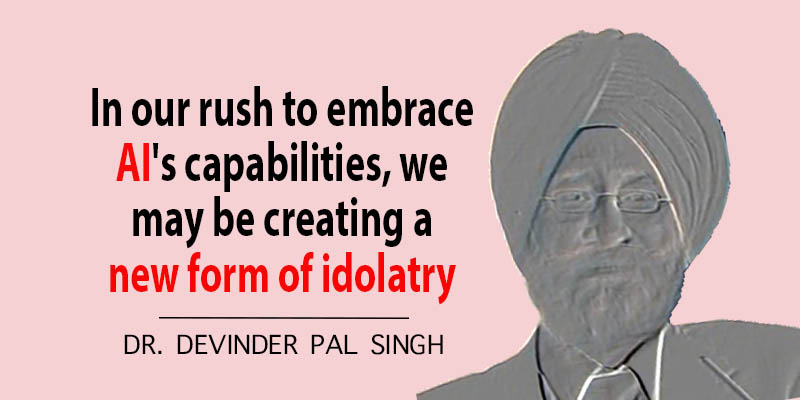
In our rush to embrace AI’s capabilities, we may be creating a new form of idolatry, placing our faith in silicon and algorithms rather than in divine wisdom and human potential guided by spiritual principles.
The Sikh tradition has always emphasized that true knowledge comes from divine grace, not from the accumulation of information. Sri Guru Granth Sahib teaches that worldly cleverness without spiritual wisdom leads to spiritual poverty:
ਗਿਆਨ ਵਿਹੂਣਾ ਕਥਿ ਕਥਿ ਲੂਝੈ ॥ Gi▫aan vihooṇaa kaṫʰ kaṫʰ loojʰæ. Without spiritual wisdom, they (clever persons) babble and argue. (M. 1, SGGS, p. 466)
ਅੰਤਰਿ ਗਿਆਨੁ ਨ ਆਇਓ ਮਿਰਤਕੁ ਹੈ ਸੰਸਾਰਿ ॥
Anṫar gi▫aan na aa▫i▫o mirṫak hæ sansaar.
Spiritual wisdom has not entered within; such a person is spiritually dead in the world. (M. 3, SGGS, p. 88)
ਕਹੁ ਕਬੀਰ ਜਿਹ ਰਾਮੁ ਨ ਚੇਤਿਓ ਬੂਡੇ ਬਹੁਤੁ ਸਿਆਨੇ ॥ Kaho Kabeer jih raam na chéṫi▫o boodé bahuṫ si▫aané. Says Kabir, those who do not remember the Lord may be very clever, but they still drown. (Bhagat Kabir, SGGS, p. 1124)
AI may process vast amounts of data and generate seemingly intelligent responses, but it operates without spiritual consciousness, moral intuition, or divine connection.
Work as Spiritual Practice
One of Sikhism’s three fundamental principles is “Ghaal Khaye (or kirat karni),” which means earning an honest living through righteous work. Labour isn’t merely an economic necessity in Sikh thought; it’s a form of spiritual practice that connects humans to the divine order and their community. Through meaningful work, individuals contribute to the collective welfare while developing discipline, humility, and a sense of service.
The AI revolution threatens to undermine this spiritual dimension of work by replacing human labour with mechanical processes. When machines perform tasks that once required human skill, creativity and care, we not only lose jobs but also opportunities for spiritual growth through service. The Sikh concept of sarbat da bhala (welfare of all) becomes increasingly challenging to achieve when fewer people have meaningful roles in society’s functioning.
The Illusion of Efficiency
Modern AI evangelists promise unprecedented efficiency and convenience, echoing what Pope Leo XIII warned against in Rerum Novarum: “[N]o artifice will ever succeed in banishing from human life the ills and troubles which beset it. If there are any who pretend differently, who hold out to a hard-pressed people the boon of freedom from pain and trouble, an undisturbed repose, and constant enjoyment, they delude the people and impose upon them, and their lying promises will only one day bring forth evils worse than the present”[1].
Sikh teachings suggest that struggle and effort are essential components of the human spiritual journey. Guru Tegh Bahadur wrote:
Sukʰ ḋukʰ ḋono sam kar jaanæ a▫or maan apmaanaa. Harakʰ sog ṫé rahæ aṫeeṫaa ṫin jag ṫaṫ pachʰaanaa. ||1||Usṫaṫ ninḋaa ḋo▫oo ṫi▫aagæ kʰojæ paḋ nirbaanaa.
One who regards both pleasure and pain as the same, and treats honour and dishonour alike; Who remains unaffected by joy and sorrow, that one has truly understood the essence of the world. (1). One who renounces both praise and slander seeks the state of liberation (Nirvana). (M. 9, SGGS, p. 219)
This passage describes the qualities of a spiritually awakened person—someone who is unaffected by dualities such as happiness and sorrow, or praise and blame. Instead, they remain centred and strive for inner realization and liberation, which is central to the Sikh understanding of a Gurmukh (God-centered person).
AI’s promise to eliminate human effort and decision-making conflicts with the Sikh understanding that growth comes through conscious choice, moral struggle and taking responsibility for our actions. The technology offers to spare us from the very experiences that, according to Sikh wisdom, help us develop spiritually and come closer to understanding divine will.
Community and Interconnection
Sikhism places enormous emphasis on community (sangat) and shared service (seva). The institution of langar (free community kitchen) embodies the principle that all people, regardless of their background, deserve dignity and care. These practices depend on human connection, empathy, and the recognition of our shared divine nature.
AI systems, despite their sophistication, cannot participate in this spiritual community. They can process information about human needs, but they cannot feel compassion, experience the joy of service, or form the bonds of mutual respect and love that sustain communities. As we increasingly rely on AI for tasks that once brought people together, from education to care for the elderly, we risk weakening the very social bonds that Sikh teaching sees as essential for spiritual and moral development.
The Path Forward
This doesn’t mean Sikhs must reject all technology. The tradition has always adapted to serve human welfare, and Sikh institutions have embraced innovations that genuinely help people. The question is whether AI, as it is currently developing, serves human flourishing or undermines it.
Guru Gobind Singh, the tenth Sikh Guru, taught that humans must be prepared to stand against forces that threaten righteousness and human dignity. In our time, this might mean resisting the rush toward AI dependency and instead insisting on technology that enhances rather than replaces human wisdom, creativity and spiritual development.
The Sikh response to AI need not be complete rejection but rather a call for technology guided by spiritual principles: Naam simran (remembrance of the Divine), seva (selfless service), and sarbat da bhala (universal welfare). Any artificial intelligence that distances us from these principles, encouraging us to abandon our role as conscious, spiritual beings working toward collective flourishing, contradicts the fundamental teachings that have guided Sikhs for over five centuries.
Ultimately, the Sikh case against uncritical AI adoption hinges on a simple yet profound truth: we are not merely biological computers to be improved upon by silicon substitutes. We are bearers of divine light, called to live consciously, serve others, and recognize the sacred in every human encounter. No machine, however clever, can fulfill that calling for us.
Sri Guru Granth Sahib. (1983). Reprint, S. G. P. C., Amritsar. India. 1-1430.
Singh, D. P. (2014). Relevance of Sri Guru Granth Sahib in the 21st Century, The Sikh Bulletin, 17 (7& 8). 18-22.
Dr. D. P. Singh, M.Sc., Ph.D. is Director, Center for Understanding Sikhism, Mississauga, Ontario, Canada. He is a physicist by training, a teacher by profession and a writer by choice. He specializes in writing on Science, Religion and Environmental topics. Currently, he is working as Director, CanBridge Learning & Educational Consultant to various educational institutions in Canada. Email: drdpsn@gmail.com
ASIA SAMACHAR is an online newspaper for Sikhs / Punjabis in Southeast Asia and beyond. You can leave your comments at our website, Facebook, Twitter, and Instagram. We will delete comments we deem offensive or potentially libelous. You can reach us via WhatsApp +6017-335-1399 or email: asia.samachar@gmail.com
The other clubs taking part are Kelab Sukan Rekreasi Khalsa Kinta, Sentul Sports & Cultural Club, 3J Sports Club, Soti Squad SG, United Bro’s and N9 Sikhs.
ASIA SAMACHAR is an online newspaper for Sikhs / Punjabis in Southeast Asia and beyond. You can leave your comments at our website, Facebook, Twitter, and Instagram. We will delete comments we deem offensive or potentially libelous. You can reach us via WhatsApp +6017-335-1399 or email: asia.samachar@gmail.com. For obituary announcements, click here
| Entry: 5 Aug 2025; Updated: 7 Aug 2025 | Source: Family
ASIA SAMACHAR is an online newspaper for Sikhs / Punjabis in Southeast Asia and beyond. You can leave your comments at our website, Facebook, Twitter, and Instagram. We will delete comments we deem offensive or potentially libelous. You can reach us via WhatsApp +6017-335-1399 or email: asia.samachar@gmail.com. For obituary announcements, click here
ASIA SAMACHAR is an online newspaper for Sikhs / Punjabis in Southeast Asia and beyond. You can leave your comments at our website, Facebook, Twitter, and Instagram. We will delete comments we deem offensive or potentially libelous. You can reach us via WhatsApp +6017-335-1399 or email: asia.samachar@gmail.com. For obituary announcements, click here
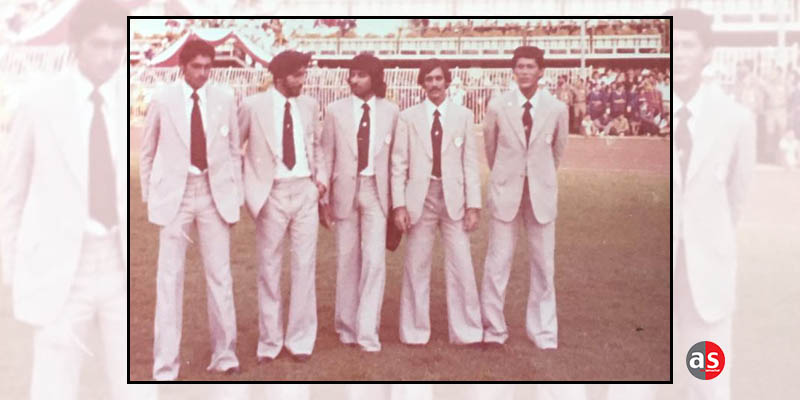
Five Sikh players in the 1978 Bangkok Asian Games, from left, Updesh Singh Gill, Awtar Singh Grewal, Mohindar Singh Grewal, Avtar Singh Gill and Savinder Singh
By After Singh | Malaysia |
The year 1978 was a proud moment for Sikh hockey players for helping Malaysia win the bronze medal in the Asian Games in Bangkok.
Malaysian hockey team was led by five Sikh players – Awtar Singh Grewal (still practising as a lawyer), Avtar Singh Gill (retired from PKNS), Mohinder Singh (retired as Supt of Police), Savinder Singh (retired as a Army Major) and Updesh Singh Gill, who is based in France.
It was the first time in the history of Malaysian hockey that there were five Sikh players in the national hockey team.
The Sikhs did the country proud by helping Malaysia win the bronze medal by edging Japan 2-1 in the third place match. Pakistan edged India 1-0 in the final to win the 1978 Asian Games gold medal.
The other players in the Malaysian team were Len Oliveiro, Razak Leman, Azraai Zain, Sayuti Abdul Samat, K.T. Rajan, Ramakrishnan Rengasamy, K. Balasingam, V. Ravindran, Foo Keat Seong as well as brothers Tam Chiew Seng and Tam Kum Seng.
Mohamad Sidek Othman was the coach while team manager was G. Vijinathan and assistant manager was K. Balakrishnan.
The Malaysian hockey team for the 1978 Bangkok Asian Games – Photos courtesy of national assistant team manager K. Balakrishnan
The 85-year-old Balakrishnan said that the players were selected based on merit and not on race.
“The team played truly for the country. The players showed true friendship on and off the field and it was great teamwork that led them to win the bronze.
“Winning the bronze was a great achievement for the national team. It was also a proud moment especially for having five Sikh players in the national team.
“I believe it was the first time we had a large number of Sikh players in the national team.
“I remember that we had centralised training in Pantai, KL for more than a month for Asian Games and we used to have nasi kandar for meals.
“It was also a proud moment for me as I was selected by the late Sultan Azlan Shah to be the team’s assistant manager,” said Balakrishnan, who was secretary of Melaka Hockey Association from 1970-1985 and then deputy president from 1990 to 2004.
Sadly today we don’t even have a single Sikh hockey player in the national team.
The last Sikh to feature for Malaysia was defender Maninderjit Singh in hockey in the Olympics (2000 Sydney). And last Malaysian to play for the country was Pavandip Singh in the 2021 Junior World Cup in Bhubaneswar, India.
ASIA SAMACHAR is an online newspaper for Sikhs / Punjabis in Southeast Asia and beyond. You can leave your comments at our website, Facebook, Twitter, and Instagram. We will delete comments we deem offensive or potentially libelous. You can reach us via WhatsApp +6017-335-1399 or email: asia.samachar@gmail.com. For obituary announcements, click here
Dead men tell no tales. By extension then, they also write no essays. All the telling and writing – including about one’s death – has to be done while one is alive. So here is mine.
The first narrative that must be told is the obvious one; namely that billions of people could have been born and lived in my place. For all I know, they could have done so much better than me. So, the very fact that I lived my life as such is great in itself.
Every anxiety that life is coming to an end, or has come to an end; can be overcome by the simple assertion “but I did live, and that I did have the opportunity called human life on this wonderful planet.” The probability that I would not have existed is infinitely higher than the one that I did exist. The prospect that someone else could have lived a more productive life than mine is similarly high, very high indeed.
Sure, I suffered loss, pain, and felt let down. But when compared to the infinity of the universe – all of thatpain and agonies combined is a drop in the ocean.
In realization of the above realities, I expect that my death will be accompanied by no fear, no sadness and no regret. I will need the profound silence within which I should be able to say “I have accomplished my task to the best of my abilities.” My task was not to gain fame, followers, or supporters. Neither was it to change, transform or alter anyone’s life. My task was merely to point a finger towards the counsel and messages of Guru Nanak, and it did not even require checking if anyone was listening, reading, looking or watching. The person pointing the finger does not matter. What matters is what it is being pointed at. What is meant to be seen for ourselves is not the finger, but the object of its pointing. After all, pointing to something that has always been there since 1469 required no feat at all.
Someone once asked me what I expected death to be like and if I believed in an afterlife or reincarnation. I said that my ending would not be any different from the switching off of a light bulb, or the falling of a leaf from a tree. Simple, neat, un-eventful and final. No one asks if the light that was switched off, or the leaf that fell off reincarnates.
IMMEDIATELY UPON DEATH
1. The Washing, Cleaning And Dressing Up Of A Corpse. Guru Arjun ji has this couplet in Gurbani.
ਜੇ ਮਿਰਤਕ ਕਉ ਚੰਦਨੁ ਚੜਾਵੈ ॥ ਉਸ ਤੇ ਕਹਹੁ ਕਵਨ ਫਲ ਪਾਵੈ ॥ ਜੇ ਮਿਰਤਕ ਕਉ ਬਿਸਟਾ ਮਾਹਿ ਰੁਲਾਈ ॥ ਤਾਂ ਮਿਰਤਕ ਕਾ ਕਿਆ ਘਟਿ ਜਾਈ ॥੩॥ Jay Mertak Kao Chandan Chrravaiy. Us Tay Kho Kavan Ful Pavaiy? Jay Mertak Kao Bestta Mahe Rulayi. Ta(n) Mertak Ka Kya Ghatt Jayi. SGGS 1160
Meaning: If A Deceased Person Is Adorned With The Fragrance Of Sandalwood; What Benefit Would The Deceased Obtain From It? If A Deceased Was Mixed Up In Filth; Then What Detriment Would The Deceased Suffer.
It’s a foundational critique of the efforts people make, to dress up and present their deceased loved ones to the world. These efforts range from washing and dressing up the dead, to transforming the deceased by paying morticians to display their skills at turning the corpse of a 90-year-old into that of a 19-year-old.
There would thus be no need no need to wash my body, no need to dress it in my best clothes and put on a new pair of leather shoes for me. Please give them to the needy. I would go in the clothes and shape I died in.
For those who will point to the Sikh Rehat Maryada (SRM) and say that washing a dead body is stipulated, I would not mind even one bit, if my own critique against the SRM is used against me: the SRM is man made, chunks of it is plagiarized from the rituals of other religions, and its stipulations cannot supersede the divine counsel of Gurbani (as found on page 1160 above, for instance).
2) The All-Mighty Wake. There will be no need for a wake. People who have never come to see me for years will show up. People who didn’t want to see me ever will show up. Why will I need these people to come see my dead body? It is not that I will wake up to acknowledge them. More likely than not they would have come to make sure I did not wake up.
3) The Euphemism Of Last Respects. There will be no need for last respects either. All the respect that I earned was already given to me in my life by those who mattered. Why would I want people who cannot remember when they paid respect to me prior to this “last respect” to come and pay their “last respects?”
THE PROCESSES AFTER DEATH
1) The Sehej Path or Akhand Path Ritual. There will be no need for any kind of patth – sehej, akhand or Sukhmani. The recitation of patth for dead people is no more than a ritual. Any kind of patth read or recited on my behalf would be worthless to me once I am dead. If fact, any kind of patth read on my behalf when I was alive is also worthless. The only Gurbani reading that mattered was the one I read on my own, by myself for myself; and for the purpose of getting to its messages and putting those messages to practice in my life. None of this can be done after I am dead – so why allow the ritual and charade of doing patth to “assist me in my afterlife” to take place? How can anyone assist – in the hereafter – one who never believed in an “afterlife” for his or her whole life in the here and now?
2) The Ubiquitous Antim Ardas. The “antim” (final) ardas of us Sikhs is anything but “antim”. Nowhere else does one see an avalanche of ardas after ardas but during the death of our loved ones. There is the ardas before washing the deceased. There is the ardas upon the hearse leaving the house or wake. There is an ardas upon arriving at the cremation grounds. There is an ardas upon lighting the pyre. When everyone is prepared to leave the cremation grounds, there is an ardas after the completion of Sohela. The family, friends and relatives then stop over at the local gurdwara for an ardas on behalf of the deceased and the start of a sehej patth. Three days after the cremation, there is an ardas before and another ardas after the remains are collected for disposal. At the disposal site, there is an ardas. If the remains are kept for disposal at special or “holy” site, there will another ardas there. For the patth that is being recited by hired clergy on behalf of the deceased (akhand or sehej) there is a beginning ardas, a mid-point (madh dee ardas) and a completion ardas. On the day of bhog ceremony there will be what is euphemistically called an antim ardas. But that is a euphemism, because it is anything but antim (final). This same ardas will be repeated at every barsi for the next 10, 20 or 30 years. It is, as if no one believed in the antim ardas – or any other ardas for that matter – in the first place. For, if indeed the antim ardas was final, then why are there 10, 20 or 30 more of the same at every barsi?
So, there will be no need for any kind of “antim ardas” over my dead body, or in anything related to my death.
It follows that there will be no need for a dasveen, starveen or barsi or any kind of program relating to my death – in a Gurdwara. For the most part of my life I expressed my beliefs that when it comes to preaching Gurbani, Gurmat and Sikh, the Gurdwara was the headquarters for hijacked Sikhi. For some 2 decades, I have stopped going to Gurdwaras for my own spiritual development because much of what goes on therein contravenes the principles of Gurbani. If I do go, it’s for social purposes – an anand karaj or a marag da bhog of family members. I have told my three children that to be genuine Sikhs – they need to stop expecting the Gurdwara to help them in their Gurbani and Sikhi progress. I tell them that all the corrupted stuff about Sikhism that I had acquired came from the Gurdwaras that I attended for the first 45 years of my life. So why should I be dragged into a Gurdwara after I have died?
3) Obtaining Closure By My family. Closure upon the death of a loved one, family member or a friend does have a place in life and living. Family members, friends and appreciators of the work I did, and content I created and posted in the form of books, videos, essays etc. on the two websites www.sikhivicharforum.org and www.sikhbulletin.com are welcome to hold a memorial seminar or get together in any suitable location, should they feel a need to. At this get-together, they could play my latest video for the audience, have people who are familiar with my work talk about it, and put out my books for distribution. They could have a meal or refreshment to celebrate my work. This is a befitting memorial – far more meaningful than gathering in a Gurdwara that would necessitate the clergy – who don’t know me at all – have the last word on me. Those who are familiar with my views know that with few exceptions, our earn-a-living clergy is one group of people that I hold most responsible for the corruption and distortion that has befallen Sikhi today. Why would I want them as part of my memorial function?
4. No Eulogies Needed. There is undoubtedly a whole psychology at work behind our craving for eulogies. It is indicative of a strangeness that lurks in human nature. A person could be lying on his bed, sick and lonely, and the only visitors he gets may be the occasional family member, health care worker, or the cleaning lady. But the moment he kicks the bucket, people crawl out of the woodwork to race each other into delivering Oscar-worthy speeches about what a “gem of a person” the dead person was. “He lit up the room. He was the greatest soul alive. He touched so many lives. Life would never be the same without him. The community has lost an irreplaceable human being…” The list is as long as it is pretentious.
It seems that human beings have a strange penchant of remembering people after they’re gone. It also seems like people love to pay tributes, but only when the person can’t hear them anymore. Bhagat Kabir says it this way:
Meaning: When Alive, Even Parents Are Not Recognized As Such, But Upon (Their) Death, All The Rituals Meant To Honor Ancestors Are Undertaken.
No one cares much for people in their lives, but the day he or she dies, people suddenly remember all the good times they had with the deceased; even if the last “good time” was in duapur or treyta. The irony? They’ll travel miles, cancel meetings, and even take leave from work to attend the funeral of the person they rarely visited when he or she was alive.
I know I can dispense a whole dishwasher load of advice here: “People don’t need your tributes when they’re gone, they need your support now. If you truly care about someone, prove it while they can still appreciate it. Show love today, not at the funeral…blah blah blah.”
But I know that the psychology pertaining to eulogies will not change, no matter how good the advice. So, a “no eulogy” sign at every and any event connected to my death – from the simple announcement to the even simpler memorial – will be appropriate.
ASIA SAMACHAR is an online newspaper for Sikhs / Punjabis in Southeast Asia and beyond. You can leave your comments at our website, Facebook, Twitter, and Instagram. We will delete comments we deem offensive or potentially libelous. You can reach us via WhatsApp +6017-335-1399 or email: asia.samachar@gmail.com. For obituary announcements, click here
ASIA SAMACHAR is an online newspaper for Sikhs / Punjabis in Southeast Asia and beyond. You can leave your comments at our website, Facebook, Twitter, and Instagram. We will delete comments we deem offensive or potentially libelous. You can reach us via WhatsApp +6017-335-1399 or email: asia.samachar@gmail.com. For obituary announcements, click here