


















By Asia Samachar | Britain |
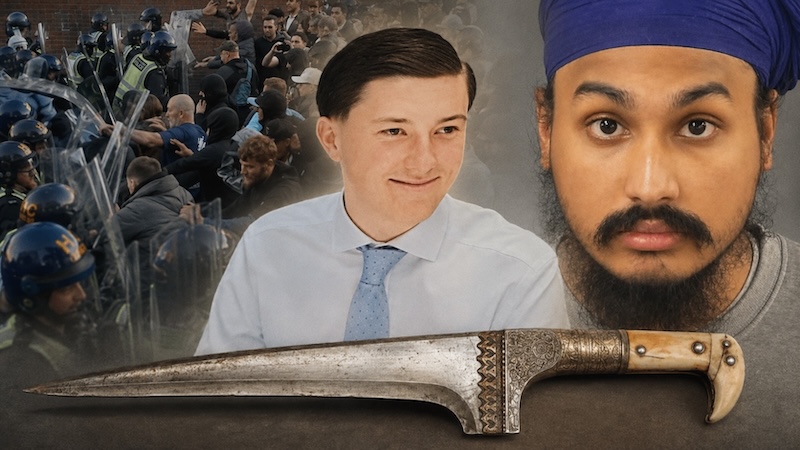
The murder of 18-year-old university student Henry Nowak in Southampton has become one of the most closely watched criminal cases in the UK, not only because of the brutality of the killing, but also because of the police response, the false racism claim made by the killer, the involvement of a bladed article described in court as a Sikh dagger, and the political debate now surrounding the kirpan.
Here is a Q&A to understand the case from the beginning.
Who was Henry Nowak?
Henry Nowak was an 18-year-old first-year University of Southampton student. He was from Chafford Hundred in Essex and was the first in his family to attend university.
In sentencing remarks, Judge William Mousley KC described Henry as a much-loved, kind, hard-working and ambitious young man, devoted to his family and with a bright future.
What happened on the night Henry was killed?
Henry was walking back to his university accommodation in Southampton shortly after 11pm on Dec 3, 2025, after an evening out.
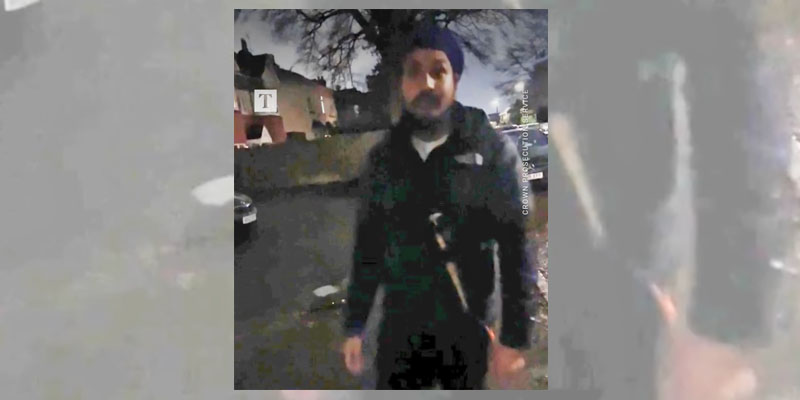
On Belmont Road in Portswood, he encountered 23-year-old Vickrum Singh Digwa, who lived nearby with his family. Digwa was wearing a large sheathed Sikh dagger over his clothing and also had a smaller kirpan under his clothing.
Henry appeared to notice the large blade and filmed Digwa on his phone while making a comment asking whether he was “a bad man”. The judge later found that Henry’s tone was not aggressive or threatening. Digwa replied that he was “a bad man”. He took Henry’s phone, and the confrontation escalated.
How was Henry killed?
The jury found that Digwa deliberately stabbed Henry.
The fatal wound was to Henry’s upper chest. The blade passed through clothing, entered his chest, caught a lung and cut a major vein. Henry also suffered other stab and slash wounds, including to his leg, lower abdomen or groin area, and face.
The judge said Henry was unarmed and defenceless.
What did Digwa claim?
Digwa claimed he had acted in self-defence. He said Henry had attacked him, knocked off his turban and racially abused him. The court rejected that account. The judge said Digwa had told “many lies” and that Henry had said nothing racist.
The judge also found that Digwa falsely presented himself as the victim after the stabbing, while Henry lay injured. Digwa’s brother repeated parts of that false account to police, and Digwa told his mother to remove the murder weapon, sheath and belt.
Why has the police response become a major issue?
When officers arrived, Henry was handcuffed after Digwa falsely claimed he had been racially attacked.
Police body-worn footage released after the criminal proceedings showed Henry telling officers that he had been stabbed and could not breathe. He was initially treated as a suspect before officers realised how seriously injured he was.
The judge said police were given a convincing but wholly false narrative by Digwa. Henry was handcuffed for about a minute before his condition worsened and CPR began.
Hampshire and Isle of Wight Constabulary has apologised for handcuffing and arresting Henry shortly before he died.
Is there an investigation into the police response?
Yes. The Independent Office for Police Conduct (IOPC) is investigating the contact Hampshire and Isle of Wight police officers had with Henry immediately before his death.
The IOPC said the investigation includes the use of handcuffs and the first aid provided. It also said the officers involved are currently being treated as witnesses, although that position remains under review.
Is there now a separate review?
Yes. Hampshire Police and Crime Commissioner Donna Jones has asked His Majesty’s Inspectorate of Constabulary and Fire & Rescue Services (HMICFRS) to carry out an urgent inspection into issues arising from the case.
The review is expected to examine control-room communication, whether critical threat information was passed properly to officers at the scene, frontline response training for knife-crime incidents, first aid, recognition of serious internal bleeding, and how officers assess competing accounts during violent incidents.
The PCC said the review would not interfere with the ongoing IOPC investigation.
What was the verdict?
On May 28, 2026, Digwa was found guilty of murdering Henry Nowak and of possessing a bladed article.
His mother, Kiran Kaur, was convicted of assisting an offender after prosecutors said she helped remove and conceal the weapon.
What sentence did Digwa receive?
On June 1, 2026, Digwa was jailed for life. The judge set a minimum term of 21 years. Taking into account time already spent in custody, the formal minimum term was 20 years and 190 days before any parole consideration.
The judge listed several aggravating factors, including the use of a knife, multiple wounds, filming Henry’s suffering, attempts to cover up the crime, falsely blaming Henry, misleading police, and abusing the legal privilege given to Sikhs to carry a blade for religious reasons.
What is happening with Digwa’s mother?
Kiran Kaur is due to be sentenced on July 17, 2026, for assisting an offender.
Are there additional court cases involving Digwa and his family?
Yes. On June 2, 2026, Vickrum Digwa appeared at Southampton Magistrates’ Court with his father, Moga Singh, and brother, Gurpreet Digwa, on separate weapons charges.
Vickrum Digwa faces six counts of possessing an offensive weapon in a private place. The alleged weapons include a flick knife, an extendable baton, knuckledusters, a machete, swords and kusaris.
Moga Singh and Gurpreet Digwa face the same six charges. Gurpreet Digwa also faces additional charges, including possessing an asp in a public place, possessing a prohibited air rifle, possessing an axe in public, and possessing a knife in public.
The alleged offences are dated Dec 4, 2025, the day after Henry was killed. The next hearing is scheduled for July 9, 2026.
Has there been public unrest after the case?
Yes. On June 2, 2026, a protest in Southampton over Henry’s death and the police handling of the case turned violent.
Hundreds gathered outside Southampton Central Police Station before some protesters moved towards the area where Henry was killed and where Digwa lived. Police said 11 officers and a police dog were injured. Two people were arrested.
Prime Minister Keir Starmer and Home Secretary Shabana Mahmood condemned the violence, while also acknowledging that the case raised serious questions about policing. Henry’s family has urged that his death should not be used to create further division, hatred or tension.
Why has the case become linked to the kirpan?
The murder weapon was described in court as a large Sikh dagger. Reports also referred to it as a ceremonial blade or kirpan.
But the distinction is important. The prosecution told the jury that Digwa had a small kirpan under his clothing, which met his religious obligation, but he also chose to carry a much larger blade. That larger blade was used in the attack.
Sikh community leaders have strongly condemned the murder and argued that Digwa’s actions should not be treated as representative of Sikh belief or normal kirpan practice.
What is a kirpan?
A kirpan is one of the Five Kakkars, the articles of faith associated with initiated Sikhs. The Five Ks are kesh (uncut hair); kara (a steel bracelet); kanga (a comb); kachera (a specific undergarment); and kirpan (a small sword or dagger).
In Sikh tradition, the kirpan is not meant to be an offensive weapon. It represents moral responsibility, courage, discipline, and the duty to protect the vulnerable and stand against injustice.
In practice, many Sikhs wear a small kirpan discreetly under clothing. UK law recognises religious reasons for carrying a kirpan. However, that legal recognition does not permit anyone to threaten, intimidate or attack another person. If a bladed article is used unlawfully, it becomes part of a criminal act.
What have Sikh organisations said?
UK Sikh organisations have condemned Henry’s murder and said Digwa’s actions do not represent the Sikh community.
They have also warned of abuse, misinformation and anti-Sikh backlash after the case. Sikh leaders have called for careful reporting, stressing that one man’s crime should not be used to stigmatise a whole community or an article of faith.
What is the political debate now?
The case has become a flashpoint in UK politics.
Some politicians and campaigners have called for a review or ban on religious exemptions that allow Sikhs to carry kirpans. Others have warned that such calls risk misrepresenting Sikh practice and inflaming prejudice.
PM Starmer said the case raised serious questions, including how racism allegations informed police thinking. However, he rejected violence and criticised attempts to exploit Henry’s death politically.
Home Secretary Shabana said carrying a knife for religious observance is one thing, but using it in violence is entirely different.
What are the main unresolved issues?
Several matters remain unresolved.
The IOPC investigation into the police response is ongoing. The separate HMICFRS review requested by the Hampshire PCC is also pending. Kiran Kaur is due to be sentenced on July 17, 2026. The separate weapons case involving Vickrum Digwa, his father and brother is due back in court on July 9, 2026.
The wider debate over kirpan law, policing, racism allegations and anti-Sikh backlash is also likely to continue.
Join the conversation on this story on Asia Samachar’s Facebook and Instagram pages.
RELATED STORY:
Digwa, father and brother face weapons charges in UK court (Asia Samachar, 3 June 2026)
ASIA SAMACHAR is an online newspaper for Sikhs / Punjabis in Southeast Asia and beyond. You can leave your comments at our website, Facebook, Twitter, and Instagram. We will delete comments we deem offensive or potentially libelous. You can reach us via WhatsApp +6017-335-1399 or email: asia.samachar@gmail.com. For obituary announcements, click here