





















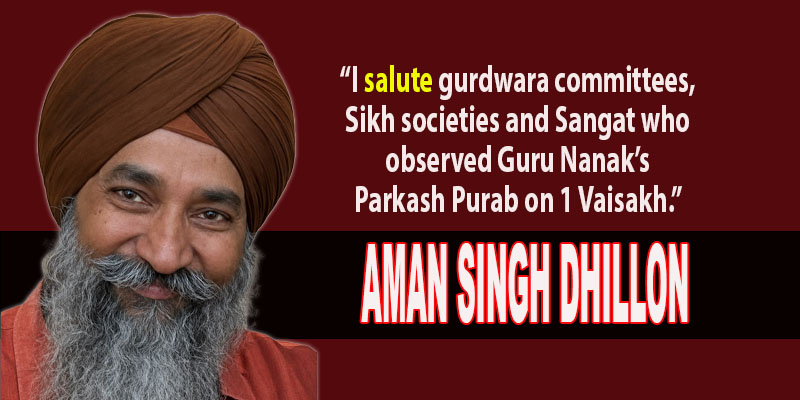
 By Aman Singh Dhillon | Opinion |
ਸਤਿਗੁਰ ਨਾਨਕ ਪ੍ਰਗਟਿਆ ਮਿਟੀ ਧੁੰਧੁ ਜਗਿ ਚਾਨਣੁ ਹੋਆ ॥
ਜਿਉ ਕਰਿ ਸੂਰਜੁ ਨਿਕਲਿਆ ਤਾਰੇ ਛਪੇ ਅੰਧੇਰੁ ਪਲੋਆ ॥
Bhai Gurdas Ji, Vaar 1, Pauri 27
The Shiromani Gurdwara Parbandhak Committee (SGPC) gives 15 April 1469 as Guru Nanak Sahib Ji’s birth date in its published biography. Yet when the SGPC adopted the Nanakshahi calendar in 2003, it retained Katak Puranmashi (the full moon of Katak) for his Parkash Purab. I believe the Panth should now consider a fixed annual observance on 1 Vaisakh, which falls on 14 April in the fixed Nanakshahi calendar. The SGPC’s biography and its calendar give the sangat a fair question to ask. If our own institution dates Guru Nanak’s birth to April, why does its calendar still place the observance in Katak?
Bhai Gurdas Ji describes Guru Nanak’s arrival as a sunrise. The mist clears, light spreads, the stars fade and darkness recedes. To me, the dhundh, the mist, is what clouds our judgement. The chanan, the light, is what allows us to see clearly and speak honestly about what we see. What use is praising that light if we will not bring our own decisions into the open?
What the historical record tells us
Historian Karam Singh examined the question in Katak ke Vaisakh? and made the case for Vaisakh. Bhai Kahn Singh Nabha and Professor Sahib Singh also favoured Vaisakh. In his account of the birth-date debate, calendar scholar Pal Singh Purewal points to several Janamsakhi traditions that place the birth in Vaisakh. The Bala Janamsakhi gives Katak, and later works, including Gurbilas Patshahi 6 and Meham Parkash, have also been cited in support of Katak. These sources deserve to be read and weighed. On the evidence presented by these scholars, I find the case for Vaisakh stronger and Better supported.
FOR MORE ON NANAKSHAHI CALENDAR, CLICK HERE
FOR MORE ON GURU NANAK BIRTHDAY, CLICK HERE
The SGPC’s own biography is a good place to start that conversation. Its date of 15 April 1469 is a historical statement. Observing the Parkash Purab on 14 April each year is a calendar proposal. The sangat deserves to hear the reasoning behind both the date the SGPC publishes and the observance it prescribes.
The courage to make our own decisions
The Singh Sabha reformers understood that a vilakhan kaum, a distinct community, had a responsibility to think carefully about its institutions and practices. The reform tradition they helped build carried into the work on the Sikh Rehat Maryada. Our predecessors debated questions that mattered to the Panth and put their decisions in writing. Today, the sangat would expect a clear explanation if even one word of the Rehat Maryada were changed. A decision about how Sikhs commemorate the birth of Guru Nanak deserves the same care.
SEE ALSO: 13 Questions on Guru Nanak’s Birthday
SEE ALSO: Seremban to celebrate Guru Nanak’s birthday on Vaisakhi, first (major) gurdwara in Southeast Asia
The Nanakshahi calendar gave the Panth something practical. A Sikh child in Kuala Lumpur, Amritsar or Vancouver could learn that Guru Gobind Singh Ji’s Parkash Purab fell on 5 January under the 2003 calendar and remember it from one year to the next. Yet the calendar adopted that year retained three movable observances, including Guru Nanak’s Parkash Purab on Katak Puranmashi. Adopting 1 Vaisakh for Guru Nanak’s Parkash Purab would therefore require a decision of its own, even if the Panth restored the fixed dates introduced in 2003.
In 2010, amendments returned several observances to Bikrami reckoning. There was opposition to the earlier calendar from Harnam Singh Dhuma and some Sant Samaj leaders. In 2013, former Akal Takht Jathedar Giani Joginder Singh Vedanti alleged that the Shiromani Akali Dal leadership had pressed for the changes at the behest of the RSS and BJP. He had served as Jathedar when the 2003 calendar was introduced. His allegation deserves a public response, and the record of how the amendments were made would give the sangat a basis to assess it.
Guru Nanak spoke plainly about power. Can we?
In the Babarvani, Guru Nanak Ji spoke plainly about the suffering inflicted during Babur’s invasions. He gave voice to people whose homes and lives had been torn apart. We praise that courage from our gurdwara stages. It takes courage of our own to put fair questions to people who hold authority in our institutions and to listen carefully to their answers.
Who asked for the 2010 amendments? What reasons did they give? Whom did the SGPC and the Akal Takht consult, and what did they decide? If scholars advising the SGPC reached a conclusion about Vaisakh, let the sangat read their findings and the evidence they considered. Publish the minutes and submissions behind the amendments so the Panth can understand how the decision was made.
For generations, Sikhs have gathered on Katak Puranmashi to hear Gurbani, serve langar and celebrate Guru Nanak’s Parkash Purab. That devotion deserves respect. We can honour it and still ask the SGPC and the Akal Takht to review the historical evidence, restore the fixed dates adopted in 2003 and bring a clear proposal before the Panth to observe Guru Nanak Ji’s Parkash Purab on 1 Vaisakh, 14 April.
Shabash to those who stood their ground
I salute the gurdwara prabandhak committees, Sikh societies and members of the sangat who have observed Guru Nanak’s Parkash Purab on 1 Vaisakh. To those sangats in Jammu and Kashmir and elsewhere who took that stand despite criticism, shabash. It takes conviction to explain your choice openly and generosity to respect fellow Sikhs who make a different choice.
To me, that is part of what it means to be a vilakhan kaum. We should be willing to examine our own history, speak honestly about what we find and take responsibility for the decisions we make as a Panth. The same candour we ask of one another is what we should expect from our leadership.
Every year we recite ਮਿਟੀ ਧੁੰਧੁ ਜਗਿ ਚਾਨਣੁ ਹੋਆ. This year, let the leadership put its own decisions in the light.
References
1. Sri Guru Nanak Dev Ji (SGPC)
2. 13 Questions on Guru Nanak’s Birthday (Asia Samachar, 30 March 2023)
3. Know About the Controversial Nanakshahi Calendar (Hindustan Times, 6 March 2018)
4. Former Akal Takht Jathedar Joginder Singh Vedanti’s account of the 2010 amendments(The Times of India, 24 January 2013)
5. Dual Vaisakhi Observance Reflects Growing Panthic Awareness (Asia Samachar, 12 May 2026)
Join the conversation on this story on Asia Samachar’s Facebook and Instagram pages.

Aman Singh, who is based in Kuala Lumpur, has been active in Malaysian gurdwara and Panthic activities.
* This is the opinion of the writer and does not necessarily represent the views of Asia Samachar.
RELATED STORY:
Super Intelligence: AI, Ego and the Future of Humanity (Asia Samachar, 24 Sept 2026)
ASIA SAMACHAR is an online newspaper for Sikhs / Punjabis in Southeast Asia and beyond. You can leave your comments at our website, Facebook, Twitter, and Instagram. We will delete comments we deem offensive or potentially libelous. You can reach us via WhatsApp +6017-335-1399 or email: asia.samachar@gmail.com. For obituary announcements, click here