

















By Sarabjeet Singh | Sikhi |
6) Ek Onkar and the Metaphysics of Oneness
Most of the time, the image or construct we have of God is the one our mind creates. Guru Nanak Dev Ji understood this deeply, and he often used analogies to explain to us, knowing that our human minds grasp the infinite more easily through imagery than just abstraction. It is also important to approach the analogies not just poetically, but as metaphors pointing to deeper metaphysical insight.
Below are some verses found in the Guru Granth Sahib Ji in which Guru Nanak Dev Ji explains using analogies.
The Ocean and the Drop
In Ang 878, Guru Nanak says:
ਸਾਗਰ ਮਹਿ ਬੂੰਦ ਬੂੰਦ ਮਹਿ ਸਾਗਰੁ ਕਵਣੁ ਬੁਝੈ ਬਿਧਿ ਜਾਣੈ ॥
The drop is in the ocean, and the ocean is in the drop. Who understands and knows this?
Guru Nanak Dev Ji challenges the popular notion that the drop of water must merge with the ocean to become whole, that the soul must journey to merge with the Divine. Instead, Guru Nanak reveals that actually in reality, the drop and the ocean have never been separated. This analogy isn’t about merging, it’s about remembering/realising. The drop was never separate from the ocean. Likewise, the soul is not apart from the One; it is the One in a momentary form. He reveals that the soul is the Divine and that there is an illusion of separation. When we realize this, it awakens us from the dream of duality, and thus we awaken into the reality of Oneness.
The Fisherman and the Fish
Furthermore, in Ang 23, Guru Nanak Dev Ji expands this vision with another analogy:
ਆਪੇ ਮਾਛੀ ਮਛੁਲੀ ਆਪੇ ਪਾਣੀ ਜਾਲੁ ॥
The One is the fisherman and the fish.
ਆਪੇ ਜਾਲ ਮਣਕੜਾ ਆਪੇ ਅੰਦਰਿ ਲਾਲ ॥
The One is the water, the net, and the jewel within.
ਆਪੇ ਮੋਤੀ ਜਾਲੀਅਹੁ ਆਪੇ ਮਾਣਕੁ ਲਾਲੁ ॥ ਨਾਨਕ ਆਪਿ ਚਲਾਇਦਾ ਆਪੇ ਹੀ ਰਖਵਾਲੁ ॥੧॥
The One is the pearl necklace and the gem; The One directs and protects all.
This analogy represents a spiritual mirror, in which every form, every function, every experience is the One experiencing itself in many ways. There is no “other,” no external actor, no separation between the seeker and the sought. Guru Nanak Dev Ji shows us that the Divine is not just the destination; instead, it is the entire process, the path, the player, and the play. This message transcends separation and duality – instead, it awakens reverence for everything, because every moment is the One expressing itself in infinite forms.
Light and Water
In Ang 93, Guru Nanak Dev Ji further clarifies by using the analogies of light and water to describe the soul’s essence:
ਜਿਉ ਜੋਤਿ ਸੂਰਜ ਮਹਿ ਜੋਤਿ ਰਲਾਈ ॥ ਤਿਉ ਜੋਤੀ ਸੰਗਿ ਜੋਤਿ ਮਿਲਾਈ ॥
Just as light is indistinguishable from the sun’s radiance, so too is the soul inseparable from the Supreme Light.
ਜਿਉ ਪਾਣੀ ਸੰਗਿ ਪਾਣੀ ਰਲਾਇਆ ॥ ਤਿਉ ਆਤਮਾ ਰਾਮ ਸੰਗਿ ਸਮਾਇਆ ॥
Just as water flows with water, so is the soul always flowing with the One.
Guru Nanak Dev Ji uses phrases like ਰਲਾਇਆ (ralāiā), which can be confused with merging, which implies separation. Guru Nanak Dev Ji uses the language of merging to describe the felt experience of Oneness, and the merging here is metaphysical in realization. These verses are not about merging in the sense of becoming something else. They are about remembering, realizing, and returning to what has always been true. In a spiritual sense, it is non-dual. It’s the moment when the drop realizes it is the ocean. When the spark remembers it is fire. When the soul awakens that it is the One.
Just as water flowing with water does not change its essence, likewise, ਆਤਮਾ (ātma) — often translated as “soul”– can carry a separative meaning, as if it exists apart from the Whole. Instead, think of it as individualized consciousness remembering it has always been the One. In Sanatan Dharma, Paramātma is described as Universal Consciousness — the Supreme Principle. Ātma, is described as a ray of light or a stream of that same consciousness. It is not separate from this essence, but rather, the One appearing as many.
The word ਸਮਾਇਆ (samāiā), which means to dwell within, is absorbed, is aligned, and points to a truth that is already present, not a future merging.
Sunlight and Diversity
Furthermore, in Ang 1158, Guru Nanak expands this vision through the metaphor of sunlight:
ਜਿਉ ਰਵਿ ਕਿਰਣਿ ਅਨਿਕ ਪ੍ਰਕਾਰ ॥ ਜਲ ਤੇ ਉਪਜੈ ਭਿੰਨ ਨ ਹੋਈ ॥
As the sun’s rays appear in many forms, yet all arise from the same source and are never separate.
ਤਿਉ ਬ੍ਰਹਮੁ ਸਮਾਨੈ ਸਰਬ ਰੰਗ ॥ ਜਿਉ ਪਸਰਿਆ ਪਾਸਾਰੁ ਅਭੰਗ ॥੧॥
So, the One pervades all colours and forms, like the vast, unbroken expanse.
Here, ਰਵਿ (rav) means Sun, ਕਿਰਣਿ (kiran) means Rays, and ਅਨਿਕ ਪ੍ਰਕਾਰ (anik prakār) means many kinds, varied forms, even different spectrums. Though the rays appear diverse or distinct, they are never apart from the sun. ਭਿੰਨ ਨ ਹੋਈ (bhinn na hoi) affirms inseparability. ਤਿਉ (tio) means just so, ਬ੍ਰਹਮੁ (brahm) refers to the One, not a deity but the indivisible essence of reality, which we all are. ਸਮਾਨੈ (samānai) means pervades, dwells within, and ਸਰਬ ਰੰਗ (sarab rang), meaning all colours symbolize the full spectrum of creation: through personalities, cultures, emotions, and infinite forms. The phrase ਪਸਰਿਆ ਪਾਸਾਰੁ (pasariā pāsār) evokes the spread, and ਅਭੰਗ (abhang) means unbroken, indivisible, eternal. Guru Nanak affirms that the One is not outside this diversity; it flows through it as Oneness.
Together, these verses remind us that it was never about becoming but rather remembering. The light doesn’t need to reach the Sun; it needs to awaken to the truth that it has never been apart. This is the essence of Ek Onkar: an awareness that all is One, and that the Light we seek is already flowing through us.
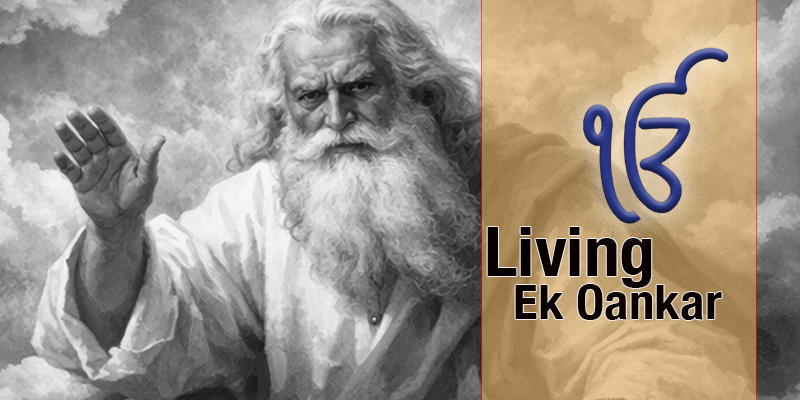
7) Living Ek Onkar
So how then shall we remind ourselves of Guru Nanak’s message of Oneness? If Ek Onkar is the epitome of Oneness, then Naam is the living remembrance and complete awareness of it. In the Guru Granth Sahib, after Ek Onkar, SatNaam appears next. Sat – ਸਤਿ, which is a compressed form of the Sanskrit noun Satya – सत्य, means existence, beingness, eternal reality, and Naam – ਨਾਮੁ, with the onkar underneath (ੁ), does not merely mean a name but rather it represents a state of awareness, a vibrational reality, a living presence.
Together, SatNaam is the living reality of consciousness, the eternal vibrational presence of Oneness, flowing through all of us, awakened within our awareness. In essence, SatNaam is not just a recitation or chanting but rather a complete awareness of our being, that we are all in Oneness.
So, how do we have this awareness? Meditation helps, but it is important to know what separates a mechanical type of meditation from a spiritual one. The whole point is essentially that awareness is awoken.
An example: when one is meditating for 20-30 minutes, after that, you stop, but it keeps going in your mind. That frequency, that vibrational consciousness, that rhythm. Even when you open your eyes, the awareness is still there. This is you, you are you. You are drinking you. You are eating you.
Naam Simran has to be done with words, awakening, and awareness. It can’t just be words (whether out loud or not) while the mind is unaware. Both must be present.
Naam Simran is not about trying to merge with God, find God, or connect to God. It is dissolving that very duality – the illusion that you are separate. You are not on a journey to find the One; you are just lost in forgetting. Because in essence, you are the One. Your very existence is the One.
But remembrance should not be confined to the quiet. It must walk with us into the marketplace, into the kitchen, into the moment of anger or joy. Living Ek Onkar means seeing the One in the stranger, the beggar, the colleague, the child, and the mirror. It means dissolving the reflex to divide, to label, to judge. When we see the One in All, reverence becomes natural and compassion becomes effortless.
To live Ek Onkar is also to listen, not just with ears but with presence. Guru Nanak speaks of Suniai – deep listening that transforms the listener. It is not passive listening but rather a surrender of the ego. In this listening, we find the One speaks through all voices.
Guru Nanak’s teachings invited practicality as well. He distilled Living in Oneness into three principles:
Naam Japna – It is the rhythm of SatNaam echoing through thought, breath, and being. Living in awareness of the One.
Kirat Karni – To align our daily life with integrity. When we live truthfully, we allow our actions to flow from remembrance rather than just reaction. Reminding ourselves that no matter how ordinary our lives are, they can become the very expression of Oneness.
Vand Ke Chakna – To share what we have with those in need, not out of duty but from knowing that there is no “other”. Generosity becomes a natural extension of awareness, affirming Oneness in all.
In essence, to live Ek Onkar is not to escape the world or retreat from reality but rather to see it clearly – as all is One, and One is all.
8) Faith and Reason: Guru Nanak the Pragmatist
Guru Nanak was not only a spiritual liberator, but he was also a pragmatist, a critical thinker, and a realist. He objected to blind faith and transactional spirituality. He challenged rituals, hypocrisy, and fear-based beliefs with clarity and boldness. The hypocrisy here is valid; just like Guru Nanak, we should reflect and contemplate. Guru Nanak rejected transactional spirituality. He taught that the purity of intent matters more than ritual precision.
Guru Nanak Dev Ji contemplated a lot on the rituals that were happening then, and he had sort of a no-nonsense, pragmatist approach to such things. Guru Nanak’s journey to Kurukshetra is a perfect example. According to Sikh tradition, during his First Udasi, Guru Nanak visited Kurukshetra on the day of a solar eclipse, when thousands of pilgrims had gathered to bathe in the sacred Brahm Sarovar. Bhai Mardana, who was hungry at that time, lit a fire and began preparing food. The aroma drifted through the air and reached the nearby Brahmins and pilgrims. Upon smelling it, they rushed over in outrage, accusing Guru Nanak and Bhai Mardana of cooking meat and committing a grave sin, especially on a holy day [32]. Guru Nanak used the moment to initiate dialogue, emphasizing that spiritual wisdom and remembrance of the Divine are far more important than rituals or dietary restrictions. It was during this moment that Guru Nanak composed the following verse, which is found in Ang 1289, in the Guru Granth Sahib:
ਮੂੜੇ ਮਾਸੁ ਮਾਸੁ ਕਰਿ ਮੁਹਿ ਸਗਲੇ ਜੀਅ ਮਾਸੁ ਹੋਇ ॥
Fools cry “meat, meat” — yet all beings are formed of flesh. What purity do they claim?
ਜੀਅ ਮਾਸੁ ਪਿੰਡੈ ਵਸੈ ਮੂੜੇ ਕਉਣੁ ਮਾਸੁ ਨ ਖੋਇ ॥
Flesh lives in everybody. O fool, who among you is untouched by it?
ਅੰਮ੍ਰਿਤ ਨਾਮੁ ਰਿਦੈ ਨ ਵਸੈ ਮੂੜੇ ਅਵਰੁ ਮਾਸੁ ਖੋਇ ॥
If the nectar of remembrance does not dwell in the heart, then all else — meat or not — is wasted.
ਭਰਮਿ ਭੂਲੇ ਮਾਸੁ ਨ ਜਾਣੈ ਮੂੜੇ ਗੁਰਮਤਿ ਮਾਸੁ ਖੋਇ ॥
Lost in illusion, the fool knows not what “meat” truly means. Only through the Guru’s wisdom is its essence revealed.
ਮਾਸੁ ਮਾਸੁ ਕਰਿ ਮੂਰਖ ਝਗੜਤੇ ਗਿਆਨ ਧਿਆਨ ਨਹੀ ਜਾਨਾ ॥
The ignorant quarrel over flesh, knowing nothing of awareness or inner stillness.
ਕਉਣੁ ਮਾਸੁ ਕਉਣੁ ਸਾਗੁ ਕਹਾਵੈ ਕਿਸੁ ਮਹਿ ਪਾਪੁ ਸਮਾਨਾ ॥
What is meat? What is vegetable? What holds sin, and what holds virtue?
ਪਹਿਲਾ ਮਾਸੁ ਹਉਮੈ ਨਿਵਾਰੈ ਤਾ ਕਉ ਮਾਸੁ ਕਹੀਐ ॥
First, dissolve ego — only then can you understand what “meat” truly is.
ਗੁਰਮਤਿ ਮਾਸੁ ਅਕਥ ਕਥੀਐ ਤਾ ਕਉ ਮਾਸੁ ਕਹੀਐ ॥
Through Gurmat, the unspeakable is spoken. Only then is “meat” rightly understood.
ਨਾਮੁ ਮਾਸੁ ਹਿਰਦੈ ਵਸੈ ਤਾ ਕਉ ਮਾਸੁ ਕਹੀਐ ॥
When remembrance lives in the heart, that is the true “meat” — nourishing, liberating.
ਨਾਨਕ ਮਾਸੁ ਮਾਸੁ ਕਰਿ ਮੁਹਿ ਸਗਲੇ ਜੀਅ ਮਾਸੁ ਹੋਈ ॥੧॥
O Nanak, all beings are made of flesh. The fools argue in vain.
Guru Nanak engaged Yogis, Monks, Qazis, and Brahmins in deep dialogue. He operated as the supreme pragmatist and didn’t shy away from controversy. He questioned caste, purity, and blind obedience. He pointed his feet towards the Kaaba, not out of disrespect but to challenge the idea that God resides in only one direction. He was fearless, bold, and never shied away from questioning authority, even spiritual authority. If Guru Nanak were alive today, he would still be debunking spiritual gatekeeping, challenging fear-based teachings, and calling out hypocrisy.
People of today aren’t as simple-minded of the past anymore. We are a very well-educated society. If you tell a kid growing up that he or she must do this amount of prayer to get this or that, it is going to sound very ridiculous to them, and it will be a direct contradiction to what he or she has been learning. The sad thing is that Sikhi can and is compatible with this type of mindset as well, when in reality, Sikhi can flourish in highly educational environments, as shown in the history of Sikhi. But when Sikhi is dumbed down and “model Sikhs” are taught to follow without questioning, it leads to unresolved doubts and spiritual stagnation. We must not discourage debate. We must not silence questions.
Sikhi is about forming a direct relationship with the Guru, not relying on intermediaries. Sants can provide some guidance, but they are not the source. You are a Sikh of the Guru, not of any individual. It is extremely important to learn from many voices, listen to diverse perspectives, and learn from many individuals, each on their own unique path and with their own experiences. Don’t align to one individual, align to the truth. Disband from fear-based spirituality – “If I don’t do this, I won’t get that”. That is a coping mechanism, not a path to truth or liberation. Guru Nanak taught us to have spiritual and political liberty, not spiritual transactions.
To truly understand and live in Sikhi, we should:
Read widely
Expose ourselves to diverse ideas and perspectives
Question boldly
Listen humbly
Remove ritualism
Embrace Oneness and reality.
In essence, to walk in the spirit of Guru Nanak Dev Ji is to awaken. It is to pierce through illusion with love, question with humility, and live with fearless integrity. Sikhi does not ask us to believe blindly but rather invites us to see clearly. Guru Nanak Dev Ji did not come to start a religion; he came to dissolve separation and restore Oneness. Not Oneness as a concept but a lived reality, where the Divine is not confined to ritual, caste, creed, tradition or religion.
SEE MORE COMMENTS ON THIS ARTICLE AT ASIA SAMACHAR FACEBOOK AND INSTAGRAM
Ek Onkar: Guru Nanak’s Living Revelation of Oneness – Part 1
Ek Onkar: Guru Nanak’s Living Revelation of Oneness – Part 2
Ek Onkar: Guru Nanak’s Living Revelation of Oneness – Part 3

ABOUT THE AUTHOR: Sarabjeet Singh is a full‑time Airman with the Republic of Singapore Air Force and a final‑year Electrical & Electronics Engineering student at Nanyang Technological University (NTU). His current research focuses on Guru Nanak’s message of Ek Onkar and the universal principle of Oneness
REFERENCES
- SikhiWiki. (n.d.). Guru Nanak in Kurukshetra.
https://www.sikhiwiki.org/index.php/Guru_Nanak_in_Kurukshetra - Sri Guru Granth Sahib (SGGS). Various Shabads.
- SikhiWiki. (n.d.). Trumpp’s Translation Of Portions Of The Guru Granth Sahib.
https://www.sikhiwiki.org/index.php/Trumpp%27s_Translation_Of_Portions_Of_The_Guru_Granth_Sahib - University of Vienna. (2017). Ernst Trumpp (1828–1885) and the translation of the Guru Granth Sahib in colonial context
https://www.univie.ac.at/indology/Ernst_Trumpp_translation_Guru_Granth_Sahib - Wikipedia. (n.d.). Criticism of Sikhism – Ernest Trumpp
https://en.wikipedia.org/wiki/Criticism_of_Sikhism#Ernest_Trumpp
RELATED STORY:
Guru Nanak’s Concept of God (Asia Samachar, 28 April 2024)
Sikhi and the concept of God (Asia Samachar, 19 June 2022)
ASIA SAMACHAR is an online newspaper for Sikhs / Punjabis in Southeast Asia and beyond. You can leave your comments at our website, Facebook, Twitter, and Instagram. We will delete comments we deem offensive or potentially libelous. You can reach us via WhatsApp +6017-335-1399 or email: asia.samachar@gmail.com. For obituary announcements, click here