

















UA-56202873-1
Page 184

Consciousness, Divinity and Sikhi

2

By Gurnam Singh | Opinion |

The question of what constitutes consciousness is arguably the most fundamental inquiry we can make about human existence. At the common-sense level of self-perception, we, as human beings, can feel and experience consciousness. This approach to consciousness was perfectly captured by 17th century French philosopher, mathematician and scientist René Descartes in his utterance “Cogito, ergo sum,” which translates to “I think, therefore I am.” By recognizing that the act of doubt itself implies a thinking self, Descartes asserted the certainty of his own existence as a conscious being.

Given that ‘thinking’ is not constant, we might talk about degrees or levels of consciousness, typically associated with brain activity. Moreover, it is also conceivable that other animals and perhaps even plant species have their own systems of thought and hence degrees of consciousness. However, when it comes to very simple organisms and certainly bacteria, one might be stretched to think that have any sense of self-consciousness in the Descaritan sense. That said, the presence of complex adaptive behaviour amongst single cell organisms, including altruistic or cooperative behaviour, suggests some kind of intelligence, though clearly, in comparison to organisms, like humans, with centralized nervous systems, this will be very different.

Turning to ‘non-living’ things or inanimate objects, such as mountains and rocks, we might be stretched to argue that they have any consciousness. For this reason, most scientists argue that, while in the not-too-distant future, we may see sophisticated robots powered by artificial intelligence mimicking consciousness, this does not represent ‘real consciousness’. So far, there is nothing much to disagree about. However, when we begin to figure out the source and location of consciousness, divergences appear, particularly between scientific and religious worldviews.

One fundamental assumption of the scientific approach is that consciousness is born out of complex chemical structures. Though there is some disagreement on this, consciousness is understood as a phenomenon associated with the brain’s neural activity. Just as a television, with an array of electronic components and an energy source, can produce sound and video, brain cells arranged in a particular configuration, supplied by necessary chemicals and energy, can produce awareness, perception, and the subjective experience of thoughts and emotions.

If we turn to religion, consciousness is universally associated with the divine spirit, commonly referred to as God and the idea of the soul. Hence, from a religious perspective, consciousness is not reducible to the physical realm or activities of the brain, but there is an autonomous element termed ‘the soul.’ Accordingly, all the main religious traditions assert that when the human body expires, consciousness in the form of the ‘soul’ leaves the body and ends up in some other place.

Examining the main traditions reveals some important variations. In Hinduism, for example, consciousness (Atman) is considered eternal and interconnected with the ultimate reality (Brahman). Buddhism sees consciousness as impermanent and subject to rebirth. In Christianity, consciousness is often associated with the soul, created by God. Islam emphasizes the soul’s accountability in the afterlife, while in Judaism, consciousness is viewed as a divine gift.

DOES CONSCIOUSNESS EXTEND BEYOND BRAINS? THE 2023 HOLBERG DEBATE

In contrast to all these other traditions, in Sikhi, consciousness is seen as a connection to the divine within all of reality, including all matter in the universe. This interconnection is between the transcendent, universal consciousness ‘Paramatma‘ and the life force that exists in all bodies ‘Atma.’ There is a divergence of opinion about the location of the divine force within bodies or physical matter. Gurbani talks about the divine force/consciousness or ‘Atma’ residing in the hearts of all, from highly complex organic organisms such as human beings to simple single-cell life forms, from stationary life forms to those that move—the divine resides within every heart (Bhagat Naam Dev Ji – Sri Guru Granth Sahib Ji – p988).

ਅਸਥਾਵਰ ਜੰਗਮ ਕੀਟ ਪਤੰਗਮ ਘਟਿ ਘਟਿ ਰਾਮੁ ਸਮਾਨਾ ਰੇ ॥੧॥

The keyword deployed here is ‘ghatt,’ which means ‘heart.’ However, given that Gurbani talks about the divine spirit existing within every cell of the body, the ‘ghatt’ can be interpreted as in the nucleus of each cell, or for that matter, the nucleus of each atom. This line of thought, through quantum theory, opens some interesting possibilities for reconciling the current mechanical approach adopted by most scientists and the ‘spiritual’ approach of most of the main religious traditions.

The relationship between quantum mechanics and consciousness is a topic of ongoing debate and speculation within the scientific and philosophical communities. While most neuroscientists and physicists favour classical explanations for consciousness, as discussed earlier, some researchers and theorists propose that quantum processes may play a role in understanding consciousness, suggesting that the fundamental principles of quantum mechanics, such as superposition and entanglement, might be relevant at the level of neural processes. The connection between quantum theory and spirituality emerges through the suggestion that the non-locality and interconnectedness observed in quantum phenomena may parallel certain spiritual or holistic worldviews.

Whether or not one seeks to prove the existence of divinity through faith or quantum theory, the important thing there can be no dispute: consciousness is real, even if our understanding of it is still limited. Developments in Artificial Intelligence may well shed some light on the nature of consciousness and human subjectivity, but for now, the challenge, I think, that the Sikh worldview poses is to avoid both thinking of consciousness in mythological ways, as well as the rather bleak mechanistic model deployed by scientists. Most critically, the challenge Sikhi poses is for us to develop a realization that consciousness permeates every atom and collection of atoms in the universe and that within this multitude of consciousnesses, there is a unity of consciousness or oneness, and that is what constitutes the divine universal force which we call the timeless, limitless entity or ‘Akaal Purakh.’

Gurnam Singh is an academic activist dedicated to human rights, liberty, equality, social and environmental justice. He is an Associate Professor of Sociology at University of Warwick, UK. He can be contacted at Gurnam.singh.1@warwick.ac.uk

* This is the opinion of the writer and does not necessarily represent the views of Asia Samachar.

RELATED STORY:

Miracles and Godmen (Asia Samachar, 31 July 2020)


ASIA SAMACHAR is an online newspaper for Sikhs / Punjabis in Southeast Asia and beyond. When you leave a comment at the bottom of this article, it takes time to appear as it is moderated by human being. Unless it is offensive or libelous, it should appear. You can also comment at FacebookTwitter, and Instagram. You can reach us via WhatsApp +6017-335-1399 or email: asia.samachar@gmail.com. For obituary announcements, click he

Sardar Kundu Singh (1929 – 2023), Setapak, Retired CEB / LLN Staff

SARDAR KUNDU SINGH S/O LATE SARDAR GADAP SINGH

8.5.1929 – 29.11.2023

Setapak, Kuala Lumpur
Retired CEB / LLN Staff

A dedicated and hardworking man who received an award from Tan Sri Leo Moggie for his dedication.

Village: Kairo

Wife: LATE MDM PRITAM KAUR D/O LATE SARDAR NATHA SINGH

It is with deep sadness that we share the passing away of our Father, Grandfather and Great Grandfather Sardar Kundu Singh s/o Gadap Singh to his heavenly abode.

Dearly missed by Sons, Daughters, Son-In-laws, Daughter-In-laws, Grandchildren and Great-Grandchildren

Paath da Bhog: 10 Dec 2023 (Sunday), from 4.00pm – 6.00pm, at Gurdwara Sahib Sentul, Kuala Lumpur. Guru ka Langgar will be served

For details Contact:
Vasdev Singh (Son) 012 483 6324
Sukvinder Kaur (Daughter) 016 245 7926

Due to the increasing COVID cases, we request visitors to wear face masks at all times.

| Entry: 6 Dec 2023 | Source: Family

ASIA SAMACHAR is an online newspaper for Sikhs / Punjabis in Southeast Asia and beyond. When you leave a comment at the bottom of this article, it takes time to appear as it is moderated by human being. Unless it is offensive or libelous, it should appear. You can also comment at FacebookTwitter, and Instagram. You can reach us via WhatsApp +6017-335-1399 or email: asia.samachar@gmail.com. For obituary announcements, click here

The Sikh December Blues

0
Dr. Bains (left) with the sewadar at the historical Gurdwara Kotwali Sahib (Kotwali means a police station)

By Dr. B. S. Bains | Opinion |

In the winter of December 1704, the chill in the air carried with it a foreboding sense of tragedy. Mata Gujari, the resilient mother of Guru Gobind Singh Ji, along with her two younger grandsons Sahibzada Jorawar and Sahibzada Fateh, faced a brutal fate under the oppressive rule of Wazir Khan, the Governor of Sirhind.

Prior to the capture of Guru Gobind Singh’s family, a devoted cook named Ganggu, hailing from the Brahmin Clan, sheltered them in his home in Morinda, near Chandigarh, India. Morinda holds the ancient remnants of the Mohenjo-Daro Civilization, a heritage reminiscent and resemblance of Indus Civilization, Harappa, with ongoing excavations uncovering its historical treasures. However, Ganggu’s loyalty wavered when he set his eyes on the valuable possessions owned by Mata Gujari.

These precious offerings, comprising gold and cash, were dedicated to the Darbar of Guru Gobind Singh Ji in Anandpur Sahib, the town they were compelled to leave upon the request and advice of the Hill Rajas due to the looming threat of a Mughal attack. On a fateful winter night while crossing the Sarsa River, heavy rainfall and floods led to the separation of Guru Gobind Singh’s convoy. Ganggu, along with Mata Gujari and the two younger grandchildren, found themselves isolated from the Revered Five Pyare, Guru Gobind Singh Ji, and his two dedicated elder sons, Sahibzada Ajit Singh, Sahibzada Jujhar Singh and some Sikhs.

A Gurdwara named Gurdwara Parivar Vichora now stands on the site where they were separated, along the banks of River Sarsa in Punjab, India.

One night, as Ganggu noticed the valuables in Mata Gujari’s possession, he succumbed to temptation and stealthily took them. He then loudly declared that his valuables and some cash had gone missing, accusing Mata Gujari. Alerting the local authorities near his home, he orchestrated the capture of Mata Ji and the two younger Sahibzadas, who were subsequently brought to jail. Today there is historical Gurdwara with the original lockup wall being preserved called Gurdwara Kotwali Sahib. I had a chance to personally visit it recently. From here, they were sent to Sirhind under the jurisdiction of Wazir Khan.

MORE ON CHAAR SAHIBZAADE, CLICK HERE

Wazir Khan, fueled by intolerance and blinded by his allegiance to the Mughal Empire, ordered the imprisonment of Guru Gobind Singh Ji’s family. The walls of the cold, dark cell echoed with the innocent laughter of Sahibzada Jorawar, just nine years old, and Sahibzada Fateh, a mere six. Despite the grim circumstances, the young souls maintained an aura of purity and innocence that transcended the confines of their confinement.

Mata Gujari, with her unwavering faith and a heart burdened with the love of a grandmother, whispered words of solace to her innocent grandsons each time they were summoned to be brought before Wazir Khan. The young Sahibzadas, in the face of impending doom, clung to the teachings of their father, Guru Gobind Singh Ji, who had instilled in them the values of sacrifice and righteousness.

PART 1: The Sikh December Blues

PART 2: The Sikh December Blues: The separation of Guru Gobind Singh’s family

PART 3: The Sikh December Blues: The Chamkaur Chapter of the Sikhs (Part III)

PART 4: The Sikh December Blues: Chamkaur & Thence After: The Guru’s Momentous Escape (Part IV)

As the walls closed in around them, Wazir Khan, devoid of empathy, ordered the construction of a brick wall to entomb the Guru’s children alive to their denial to adopt Islam and abundant Sikhism of the Sikh Gurus. The cold, hard bricks pressed against the warmth of their bodies, and the air grew dense with the anticipation of an unfathomable tragedy.

As the bricks were laid, the prayers of a devoted family rose above the suffocating walls. In those dire moments, a divine intervention occurred. The oppressive wall, unable to withstand the weight of the innocent souls it sought to imprison, crumbled. The miraculous collapse granted a brief respite, allowing the family a fleeting moment of unconsciousness.

However, the cruel twist of fate did not relent. Wazir Khan, relentless in his pursuit of cruelty, ordered the execution of the unconscious children. The stillness of the cell was shattered by the sound of unsheathed swords, and the very air seemed to recoil from the impending atrocity.

Mata Gujari, the resilient mother of Guru Gobind Singh Ji, along with her two younger grandsons Sahibzada Jorawar and Sahibzada Fateh

The executioners, fueled by a merciless ideology, slit the throats of Sahibzada Jorawar and Sahibzada Fateh. The innocence of their faces contorted in the agony of the brutal act, leaving an indelible mark on the pages of history.

As the tragic events unfolded, Mata Gujari, who had just regained consciousness, faced the heart-wrenching reality of her grandsons’ sacrifice. In that fateful moment, she too departed from this world, her spirit joining the ethereal realm alongside the innocent souls of her beloved grandsons.

The darkness of that December night bore witness to a sacrifice unparalleled in its magnitude. The blood of the young Sahibzadas and their devoted mother seeped into the very fabric of Sikh history, fortifying the foundation of a resilient faith. The echoes of their sacrifice resonate through time, a testament to the unwavering spirit of those who stand against tyranny and persecution.

In the aftermath of this gruesome tragedy, the land where the innocent blood was shed became hallowed ground. Seth Todar Mall, a compassionate soul amidst the brutality of Sirhind, acquired the land by placing gold coins in the vertical order over its expanse land for the purpose of cremation of the bodies of the Sahibzadas and Mata ji. The most expensive land ever sold on earth bore witness to the grandeur of humanity, transcending religious divides and standing as a symbol ofcompassion in the face of cruelty.

Sikhs worldwide ought to reflect upon the harrowing events of December, particularly the heart-wrenching incidents that unfolded after the dispersion of the Sikh Parivar (Family) across the Sarsa River. This month stands as a somber reminder, marking a series of tragedies that have come to be known as the distressing December blues for the Sikh community globally.

Nonetheless, December also aligns with the birth of the revered figure in the Christian faith, Jesus Christ. As humans, it is imperative that we pay homage to the advent of such revered saints. While Sikhs also partake in the celebration of Christmas, adorned with Christmas tree decorations, it is crucial to reflect on this poignant reminder of our Sikh Gurus and their followers—those from whom our existence today stems, and who were undeniably our great grandparents.

In recognition of the gravity and solemnity of this occasion, Prime Minister Modi has declared the institution of Children’s Day in India, paying homage to the determination and dedication of young Sahibzada Jorawar and Fateh Singh in their pursuit of justice. This annual commemoration, named Veer Bal Diwas, will occur on December 26th, starting from 2022, and will fall one day after Christmas, serving as an inspirational model for the upcoming generation of India.

Dr Balwant Singh Bains is a Malaysia-based kirtan enthusiast and a practicing physiotherapist with a chain of physiotherapy clinics.

RELATED STORY:

Who gave Sikhs their turban? (Asia Samachar, 25 Sept 2023)

Guru Nanak’s Life and Works: A Scientific Perspective (Asia Samachar, 27 Oct 2022)

ASIA SAMACHAR is an online newspaper for Sikhs / Punjabis in Southeast Asia and beyond. When you leave a comment at the bottom of this article, it takes time to appear as it is moderated by human being. Unless it is offensive or libelous, it should appear. You can also comment at FacebookTwitter, and Instagram. You can reach us via WhatsApp +6017-335-1399 or email: asia.samachar@gmail.com. For obituary announcements, click here.

Chaar  Sahibzadas of Guru Gobind Singh

0

By Dr Jasbir Singh Sarna | Sikh History |

In order to free the people of Hindustan from centuries-long slavery, both physical and mental, the tenth master, Guru Gobind Singh ji, not only led courageous struggles against the oppressive rulers of the time but also wrote a new chapter in the history of the concept of everlasting necessity. His determination, self-assurance, courage, and selfless spirit set the standard for unflinching combat in life’s struggles for all future generations.  Guru Sahib brought such a soul into the dead nation by performing sacrifices, deeds, and gifts at his young age that was truly an amazing charisma in the history of the world.

The dates were December 5th and 6th, 1704. Anandpur Sahib had been besieged by Mughals, Pahari Rangers, and Gujars for eight months. The situation in Anandpur Sahib had become a very serious and painful one. The supply of water and rations in the fort was stopped by the enemy forces. There were about 460 Sikh men, women and children inside the fort. Despite the pathetic condition, the Singhs inside the fort were maintaining high morale. They had to survive by eating the leaves of the trees. Even the Parsadi elephant gifted by Tripura Raja to Guru Gobind Singh ji had died of starvation. The situation became very challenging for the Singhs to survive and even engage in a fight with the fiercely enemy that encircled the fort. The Singhs wanted to leave the Anandpur fort, and finally a consensus was reached to bid farewell to Anandpur Sahib.

On the one hand, the encirclement of the enemy forces, the scattered and terrible roads, the torrential rains, forests, the dark black night, and the mighty Sarsa River, and on the other hand, the determination, self-belief, iron will, and sacrifice of Guru Gobind Singh, turned the hopes upside down. About 460 Singhs, Mata Gujri ji, Chaar Sahibzades, Bibi Bhikhan, and Subhikhi were included in this caravan. This entire caravan was moving towards Kiratpur Sahib. While passing the turn from Kiratpur to Bilaspur and going towards the Sarsa River, a hilly (a resident of the hilly region) saw this caravan and informed the troops. The Singhs were informed that the mountain troops were coming near the village of Jhakkhian. On receiving this news, Guru Sahib gave strict instructions to the Warrior Singhs to take a special position. Bhai Uday Singh ordered 50 Singhs to march towards Shahi Tibbi. Bhai Jeevan Singh (Jaita) was instructed to set up a frontline of 100 Singhs on the banks of the Sarsa River. The third batch of one hundred Singhs was under the command of Bhai Bachitar Singh to stop Nawab Sirhind’s army from coming to Chamkaur. Guru Sahib instructed Bhai Uday Singh to inform Sahibzada Ajit Singh and Bhai Budha Singh that they should cross the Sarsa River and reach Bhai Nihang Khan’s fort in Kotla village. During this time, Mata Gujri ji and the younger sons of Dashmesh Pita, his two servants Bhai Sunna Singh and Bibi Subhikhi, crossed the Sarsa River and went to Chamkaur. Gangu Brahmin (cook) took Mata Gujri ji and two younger Sahibzades to his village, Saheri (Kheri). A handful of Singhs fought bravely in ‘Chamkaur Di Garhi’, in which 37 Singhs along with two Vade Sahibzades were martyred. Guru Sahib and Panj Singh remained in the fort till nighttime (December 7, 1705). 

Sahibzada Ajit Singh Ji:

Sahibzada Ajit Singh (1687–1705) was born to Mata Sunder Kaur and Guru Gobind Singh at Paonta Sahib. Sahibzada Ajit Singh and Sahibzada Jujhar Singh are remembered as ‘Vade Sahibzade’ in Sikh history. Sahibzade Ajit Singh was very intelligent, gifted with Gurbani, and agile from his childhood. At an early age, he mastered horseback riding and gun shooting. On May 23, 1699, while commanding a group of one hundred Singhs, he successfully raided the nearby village of Ranghars, who had once plundered the company of Pothohar Sikhs coming towards Anandpur Sahib. On March 15, 1700, he attacked the Gujars of Bajrur village, who once robbed the caravan of Singhs. On August 29, 1700, when the hill kings attacked the Taragarh fort, Sahibzada Ajit Singh bravely defeated the attack along with the Singhs. Similarly, in October 1700, again, the mountain forces attacked Nirmohgarh. Sahibzada took the lead, fought vigorously, and killed many hilly soldiers. Once, Dwarka Das Brahmin’s wife was taken away by the ruler of Bassi Kalan. On March 7, 1703, along with Bhai Uday Singh, Sahibzada and a group of one hundred (100) Singhs rescued the wife of a Brahmin from Basi Kalan and handed her over to the Brahmin. Sahibzada Ajit Singh spent most of his life on the land of Anandpur Sahib. In May 1705, when Anandpur Sahib was besieged by a coalition force of Hill Cheiftians and Mughal forces, he was also there. Both the elder Sahibzadas were with their father while leaving Anandpur Sahib. When forty Singhs fought a fierce battle in the fort of Chamkaur, Sahibzada Ajit Singh went to the battlefield with Singh spirit, showed his bravery, and killed many enemies. “Gur Sobha” testifies to this. Sahibzada Ajit Singh’s total age at the time of martyrdom was 18 years, 11 months, and 19 days.

Sahibzada Jujhar Singh Ji:

Sahibzada Jujhar Singh (1691–1705) was born to Guru Gobind Singh and Mata Jit Kaur at Anandpur Sahib. Like his elder brother, he too was very intelligent, Gurbani-oriented, and skilled in horseback riding and archery. When Guru Sahib left Anandpur Sahib, he was also a companion. During the war of Chamkaur, he demonstrated his unwavering bravery and skill in a face-to-face fight with enemy forces. Before achieving martyrdom, he fought fiercely and killed many soldiers of the Mughal forces. Such a great personality was Guru Gobind Singh ji that before the start of the battle, he himself introduced both the Sahibzadas to the tradition of martyrdom. The Battle of Chamkaur was fought between the Khalsas and the joint forces of Mughals and hill chieftains of Shivalik Hills. It started at noon and continued until sunset. Guru Sahib has also mentioned this battle in his historical letter in Farsi, ‘Zafarnama’ or “Epistle of Victory,” addressed to Aurangzeb. The details of this battle are also found in ‘Bhattvahi Multani Sindhi”. By evening, only five Singhs were left in this battle. A council of Punj Pyares was convened and performed Gurmata to order the Guru Sahib to leave the fort (kachi garhi) with three Singhs. The next morning, December 8, 1705, the remaining two Singhs, Bhai Sant Singh and Bhai Sangat Singh  achieved martyrdom fighting the Mughal forces. Thus, the Battle of Chamkaur, fought between 40 odd Singhs and ten lacs of coalition forces led by the Mughals, remained the most unparalleled battle ever fought.

Sahibzada Zorawar Singh Ji:

        Sahibzada Zorawar Singh (1696–1705) was born at Anandpur Sahib to Mata Jit Kaur and Guru Gobind Singh. From an early age, like his elder brothers, he too had a compelling learning spirit. When Guru Sahib decided to leave Anandpur Sahib, both the younger Sahibzadas, Baba Zorawar Singh and Baba Fateh Singh, were also travelling with them and were in the care of their grandmother, Mata Gujri ji. During the turbulence-dark night at the bank of the Sarsa River, they got separated from the main jatha, and on the way, they happened to meet their former cook servant, Gangu, who had been discharged from Guru Gobind Singh’s household. Gangu took Mata Gujri and the younger Sahibzades to his village, Saheri (Kheri), near Morinda. He sheltered them in his house. In the night, when Mata Ji and Sahibzades fell asleep, Gangu searched their belongings and stole valuables. In the morning, when Mata ji raised the issue with Gangu, the greedy Gangu became angry and protested his innocence, who later got them arrested at the Kotwal of Morida, and from there they were sent to the court of Subedar Wazir Khan of Sirhind. 

Sahibzada Fateh Singh Ji:

   Sahibzada Fateh Singh (1699-1705) was born to Mata Jit Kaur and Guru Gobind Singh at Anandpur Sahib. Fateh Singh was one year and ten months old at that time of the demise of his mother. So the upbringing of these two young heroes was approved under the care of their Grandmother. At Sirhind, despite the chilly winter weather, they were kept as royal prisoners in an open, cold tower (Thanda Burj). From here, start the mental and physical torture of the innocent sahibzadas. First, they were offered to convert to Islam, with promises. When they stood firm to their religious beliefs and flatly refused to convert to Islam, tactics of torture and threats were used on them. But both the Sahibzadas, aged 9 and 7, did not bow to any threat to their lives. Finally, Subedar Wazir Khan, on the advice of Diwan Sucha Nand, and the Quazi passed the order of killing the innocent Sahibzadas by bricking them alive in a wall. It is said that during the court proceeding, the Nawab of Malerkotla, Nawab Sher Muhammad Khan, stood in protest against the gruesome order of the Subedar. On December 12, 1705, both the Sahibzadas were bricked alive in a wall, and when the walls came up on their shoulders, they were killed by cutting their heads. Mata Gujri Ji was also tortured and killed in the cold tower by the subedar’s soldiers. A merchant in Sirhind Diwan Todar Mall paid a heavy price in gold coins to purchase the land where Sahibzadas were cremated; it is considered to be the most valuable land in the history of the world.

   At the site of cremation now stands a glorious Gurdwara, Gurdwara Fatehgarh Sahib, where thousands of devotees pay their obeisance to the youngest martyrs.

  Finally, I would appeal to our younger generation to draw some inspiration from the glorious martyrdom of the four Sahibzadas, the real heroes, who stood tall in the face of horrific circumstance and did not waver in their faith or their commitment to the Gurmat values and God gifted identity, Sikhi Saroop.

  Dashmesh Pita Guru Gobind Singh ji has sacrificed everything he has on his beloved KHALSA, and declared us as HIS very own — Khalsa Mero Roop Hai Khaas, Khalse mey ho(n) karo(n) Niwaas. Khalsa ji, let us strive to be His very own, by following gurmat values, and enjoy his blessings!

Dr Jasbir Singh Sarna, a native Kashmiri, is a retired Indian agriculture officer. He has authored more than four dozen books, including Sikhs in Kashmir and The Sikh Shrines in Jammu and Kashmir. He can contacted at Jbsingh.801@gmail.com

RELATED STORY:

Gurmat camp for Sikh youth in Kashmir (Asia Samachar, 22 Sept 2023)

ASIA SAMACHAR is an online newspaper for Sikhs / Punjabis in Southeast Asia and beyond. When you leave a comment at the bottom of this article, it takes time to appear as it is moderated by human being. Unless it is offensive or libelous, it should appear. You can also comment at FacebookTwitter, and Instagram. You can reach us via WhatsApp +6017-335-1399 or email: asia.samachar@gmail.com. For obituary announcements, click here

Sikh lawmaker makes history for Manitoba

0
Diljeet Singh Brar briefly sits in the Manitoba legislative assembly Speaker’s Chair on Nov 30, 2023 – Photo: Diljeet Brar Facebook

By Asia Samachar | Canada |

A Sikh lawmaker made history when he became the first turbaned member of the Manitoba legislative assembly to preside as a deputy speaker.

“It was probably for the first time in Manitoba’s history that a Turbaned member was in Speaker’s chair. Humbled n honoured with this experience,” Diljeet Singh Brar shared via the social media.

He was relieving his colleague Robert Loiselle, an assistant deputy speaker, during his short break in the session.

Diljeet’s roots trace back to Punjab, India, where he pursued his education and taught at the Punjab Agricultural University, according to the Manitoba NDP Caucus website.

Upon immigrating to Manitoba, he dedicated his skills to the Department of Agriculture as an extension coordinator. In 2019, he earned the honour of being elected as the MLA for Burrows and took on the role of the NDP’s critic for Agriculture and Sport, Culture, and Heritage.

In May 2022, Diljeet achieved the passage of legislation recognizing Turban Day and commemorating its significance to Sikh Manitobans.

RELATED STORY:

Lawmaker Jagdeep Singh Deo makes history in Penang (Asia Samachar, 16 Aug 2023)

ASIA SAMACHAR is an online newspaper for Sikhs / Punjabis in Southeast Asia and beyond. When you leave a comment at the bottom of this article, it takes time to appear as it is moderated by human being. Unless it is offensive or libelous, it should appear. You can also comment at FacebookTwitter, and Instagram. You can reach us via WhatsApp +6017-335-1399 or email: asia.samachar@gmail.com. For obituary announcements, click here

American Sikh. You must watch this animated short film

0
Vishavjit Singh depicted in animated short film American Sikh

By Asia Samachar | United States |

Animated short film American Sikh is based on a real life story. It’s the story of a Sikh boy – born in the US, grew up in India and then returning to the US at 18 – struggling in the search of his identity.

Vishavjit Singh is a New York City based illustrator, writer, performance artist, diversity speaker and creator of Sikhtoons.com.

He got his spark for cartooning in the post 9/11 tragedy when Americans with turbaned and bearded countenance became targets of hate/bias crimes.

Like many fellow Sikhs, Vishavjit confronted a lifetime of prejudice, self-doubt and violence. One fine day, he decided to embrace his identity, and really stand out in the crowd, with a superhero costume! He took on the persona of Captain America — a turbaned and bearded Sikh — fighting against bigotry, intolerance and perceptions of what an American should look like post 9/11.

The film has won best short animation at Sidewalk Film Festival in Birmingham, Alabama, best animation at San Diego International Film Festival, the grand jury award for best short documentary at and the audience choice award at the Tasveer Film Festival in Seattle, a special mention at Chicago International Film Festival and an honorable mention at Tallgrass Film Festival, reports Variety.com.

Its executive producers are Guneet Monga Kapoor (“The Elephant Whisperers”) and Michelin-starred chef and filmmaker Vikas Khanna (“The Last Color”).

Vishavjit uses storytelling as a tool to create space for challenging conversations, and turn our vulnerability towards bias and prejudice into personal innovation, courage and compassion.

Go here to watch the film.

RELATED STORY:

Sikh Captain America dishes on new film, representation – ABC (Asia Samachar, 20 June 2023)

ASIA SAMACHAR is an online newspaper for Sikhs / Punjabis in Southeast Asia and beyond. When you leave a comment at the bottom of this article, it takes time to appear as it is moderated by human being. Unless it is offensive or libelous, it should appear. You can also comment at FacebookTwitter, and Instagram. You can reach us via WhatsApp +6017-335-1399 or email: asia.samachar@gmail.com. For obituary announcements, click here

Changing tunes at the face of accountability

By Karminder Singh Dhillon | The Sikh Bulletin |

When on one night in December 2020, a gang of religious hooligans carried out a murderous attack on Radio Virsa host Harnek Singh; planned to burn down his house on the day of his expected funeral and eliminate his family; their sympathisers sang and danced to the tune of “protecting the dignity of our Gurus and our religion” though the process of Sodha Launna – physically eliminating those labelled as “Guru Nindaks” through the use of violence.

The sponsors of the gang of hooligans claimed the gang had the courage, valour and mettle to stand up for the Gurus and religion. And that they are brave, valiant, and heroic enough to sacrifice their personal self to apply corrective violence – Sodha Launna – on others. The patrons and apologists of the hooligans expressed satisfaction on their social media accounts that an “enemy of the Gurus and Sikhi” in the form of a radio host had been eliminated.

Yet when the religious hooligans were arrested – largely based on weapons they dropped and blood they left behind at the scene of the crime; and dragged to court on charges that carried long prison terms – their tune changed dramatically. The jingle of “courage, valour and mettle to stand up for the Gurus and religion” fell silent. All defendants now danced to a shameless display of limitless cowardice whereby each went on a full-blown rampage to blame the other for “instigating and gas lighting” the other,” as if they were zombies with no minds of their own at all. The ultimate prize for cowardice must go to the alleged mastermind derawadi baba who has asked for the court to not release his name and photo. Pointing fingers at the other co-defendants was the new dance beat.

The tune changed drastically again when the jury returned guilty verdicts against those that had not already pleaded guilty; and again, when it came time to face the sentence. It was now time to cry and plead, to “remind” the sentencing judge that they had “wives and children to take care of.” The hypocrisy of wanting to eliminate the “wife and child” of their Sodha Launna victim aside, one wonders if these hooligans understood the irony of their fast-changing tunes.

The defendants were not the only ones dancing to new beats and chanting new tunes. Their comrades who posted posters of “antim ardas” of Harnek Singh, organized a fund drive for their thugs-in-arms; and their apologists who conducted radio and video shows to justify the attack were equally quick in changing their tunes too. Their new tune – composed as soon as the arrests, charges and trial of the defendants became a reality – was one of silence. Accountability has a way of changing the tunes that religious hooligans and their chums sing.

GETTING DESERVING SENTENCES

Writing for the New Zealand Harald, Craig Kapitan reported that “The mastermind, 48, who orchestrated the nearly successful attempt to murder was given one of the longest possible prison sentences for the crime allowed by law – 13-and-a-half years. The maximum sentence for attempted murder is 14 years. The only reason the defendant didn’t receive the full maximum sentence was because he deserved a six-month credit for the time he spent on electronically monitored bail while awaiting his lengthy trial in September and October, the judge said.“

Craig also reported that defence lawyer Dale Dufty had sought discounts for his client’s previous good character and his traumatic upbringing in India. Crown prosecutor Luke Radich argued, however, that the nature of the case and the defendant’s role required the maximum possible starting point of 14 years. “If this is not amongst the most serious cases of its type, then what is?” he asked. “It could not have been more pre-meditated … and [the defendant] was the architect of it.” The judge ultimately agreed.

SEE ALSO: Shocking details from attempted murder trial of radio host Harnek Singh

SEE ALSO: Attack on Sikh talk radio host simply wrong

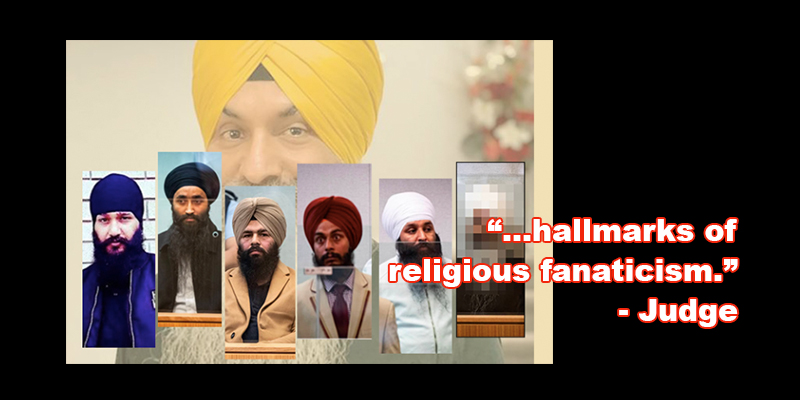
Craig further reported that Justice Mark Woolford, noting the motivation for the attack and providing a reasoning for his long sentence said “It bears all the hallmarks of religious fanaticism. Violence of this kind is committed in what is perceived as the furtherance of the greater good… Sentencing in this context requires a different approach. The emphasis must be placed on protecting the community from further violence and it is essential to send a strong message of deterrence to others.” See here.

Another defendant Sarvjeet Singh Sidhu, 27, who was alleged to have been one of the knife attackers in the driveway, was sentenced to nine-and-a-half years’ imprisonment, taking into account his guilty plea.

THE ONE UNCHANGED TUNE

The one tune that has not changed is that of the victim. Forty stab wounds, 350 stitches and numerous surgeries did not change the mindset, outlook, and beliefs of Harnek Singh as seen from his victim impact statement (VIS) that was read in open court on the day of the sentencing. The substance of his VIS is a reminder as to how a Sikh thinks and acts under the direst of circumstances – in gratitude, non-resort to revenge, and in full stride.

Craig Kapitam reports of Harnek’s VIS as follows: “Addressing the defendants directly, he added: ‘You came to kill me. …You tried to silence me. You wanted to send a chilling message to all those who express their disagreement with your unorthodox religious views. But you failed. …I will continue to express my opinions and beliefs as I always have. The only chilling message you have managed to send is to people with the same views and opinion as yours that actions have consequences and that in a country like New Zealand, the law does not bend for you if your wrongful acts are in the name of God.’ Those words resonated enough with the judge that he repeated them as he sentenced the defendant.”

The Sikh Bulletin reproduces Harnek Singh’s Victim Impact Statement in full below.

“Thank you Judge, for the opportunity to address the court. I want to begin by thanking everyone who helped bring the most traumatic episode of my life to a conclusion – my wife and my child; every officer in this court, the investigators, journalists, friends and well-wishers. I would not be standing here before you without the love, support, and professionalism of all of you.

Three years ago, on the night of December 23rd, 2020, at the driveway of my own home in Wattle Downs, I came face to face with a viciousness, brutality and savageness of a gang of people who had come to kill me – for no reason other than my beliefs. In the horror of the uncountable stab wounds that were being delivered into my body that was held down in my own car with my safety belt, I believed I would not make it out alive. I made peace with my death. I said goodbye forever to my wife and my son. I felt my mind going into a complete shutdown awaiting death that was inevitable.

Attempted murder trial of NZ radio host Harnek Singh (left). The accused, (from left-to-right): Jaspal Singh, Jobanpreet Singh, Jagraj Singh, Gurbinder Singh, Sukhpreet Singh (photos courtesy of New Zealand Herald)

Next, I remember my colleague coming to me as I laid in a pool of my own blood. I remember my wife calling my name. And then waking up on the 25th of December in Middlemore Hospital.

As I regained consciousness over the next few days, I felt excruciating pain and agonizing discomfort. The mental disorientation that accompanied the pain is undescribable. I went through multiple surgical procedures to rectify the injuries sustained from the attack.

The physical injuries that I suffered are far too many to list. The multiple skull fractures required more than 150 stitches in my head alone. The multiple lacerations on my chest, neck, and right shoulder required another 200 stitches on my upper body.

Both of my arms were severely cut. I will forever be grateful to the surgeons who worked to put my arms back together. Both my arms remained in a cast that ran from my fingertips to my elbows. I could not feed myself, or even stand up without assistance. I was in continuous distress and falling asleep remained a challenge. I had gone from being a most independent person to requiring assistance from my wife and family all the time.

Worst of all is the uncertainty that I have to deal with regarding my future. Will life return to normal ever for me? Will I ever be able to use my arms and hands as I could before? Will I even have a job to come to after I recovered?

My financial future remains a concern for me as I am the only breadwinner in my home. How will I be able to provide for my family if my injuries are permanent and long term.

I worry how this attack on me will impact upon my teenage son’s outlook and wellbeing. I worry how it impacts my wife’s state of mind.

My safety has become of utmost concern for my family. It is something my family continuously worries about. They fear that I will be targeted again for the beliefs I hold. They fear that they may be targeted too. After all, the persons who tried to kill me had plans to burn down my house. My family enters into a state of fear each day when the sun goes down. My wife and child wonder if someone is lurking in the shadows, looking into our home, waiting to attack us again. My family does not want me to leave my house except when absolutely necessary. From a carefree, spontaneous, and fun-loving family, ours has been turned into one that is constantly in fear of my safety and of them becoming victims of a next possible attack.

Your honor, New Zealand, its people, its culture and its laws have no place for religious hooliganism and violence aimed at people with differing views. What we have is freedom of thought and speech, and a rule of law. This rule of law has allowed my attackers a fair trial, even allowing the mastermind the right to conceal his identity. It’s time for them to be held accountable through the process of sentencing. I urge your honor to hand down the most appropriate sentence to my attempted murderers.

I want to say something directly to those who came to kill me. You claimed that what drove you to want to kill me was your religious convictions. That your religion inspired you to want to kill me for holding views that are different than yours. What you have, for your cowardly pretext of your dastardly actions is a perverted view of your religion. Nothing in the Sikh religion, or any other religion for that matter condones what you did.

You came to kill me. You wanted to take me away from my family. You wanted to silence me. You wanted to send a chilling message to all those who express their disagreement with your unorthodox religious views. But you failed. I am standing alive in front of you. I will continue to express my views and beliefs as I always have.

The only chilling message you have managed to send is to people with the same views and opinion as yours that actions have consequences and that in a country like New Zealand, the law does not bend for you if your wrongful acts are in the name of God.

And while I continue living my life with my family, you will sit in jail for a long time – away from your own families. I hope you will think of all the pain and destruction you have brought on everyone while serving your rightful sentence. Thank you Judge.”

Two others still await sentencing early next year for attempted murder: Jobanpreet Singh, who was found guilty by the same jury of wielding a knife in the attack, and Hardeep Singh Sandhu, who pleaded guilty to aiding and assisting the attackers by following the radio host home.

Sikh thinker, writer and parcharak Karminder Singh Dhillon, PhD (Boston), is a retired Malaysian civil servant. He is the joint-editor of The Sikh Bulletin and author of The Hijacking of Sikhi. This article appeared as the editorial in the The Sikh Bulletin – 2023 Issue 4 (October-December 2023). Click here to retrieve archived copies of the bulletin. The author can be contacted at dhillon99@gmail.com. 

RELATED STORY:

The Cowardice of Religious Hooligans (Asia Samachar, 1 Oct 2023)

NZ Sikh radio host stabbed in suspected religiously motivated attack (Asia Samachar, 26 Dec 2020)

ASIA SAMACHAR is an online newspaper for Sikhs / Punjabis in Southeast Asia and beyond. When you leave a comment at the bottom of this article, it takes time to appear as it is moderated by human being. Unless it is offensive or libelous, it should appear. You can also comment at FacebookTwitter, and Instagram. You can reach us via WhatsApp +6017-335-1399 or email: asia.samachar@gmail.com. For obituary announcements, click here

US indictment sheds important light on targeting of Canadian Sikhs

0

By WSO Canada | Press Release |

Ottawa (November 29, 2023):  A criminal indictment unsealed by the US Department of Justice in New York today sheds important light on India’s targeting of Sikhs in Canada. 

Today, in the Southern District of New York, a superseding indictment was unsealed which revealed murder-for-hire charges against Indian national Nikhil Gupta.  Gupta was arrested and detained on June 30, 2023 in the Czech Republic as he was traveling from India to the US. 

Gupta is alleged to have directed a plot to target a Sikh activist in the US along with an Indian government employee (“CC-1”) along with other actors in India.  The victim has been confirmed to be Sikhs For Justice attorney Gurpatwant Pannun. 

Gupta worked with CC-1 who is an agent of the Government of India and a self-described “Senior Field Officer”.  CC-1 was working with a team of other individuals in India who appeared on one occasion during a video, sitting around a conference table dressed in business attire.  Gupta was told that a criminal case against him in India would be “taken care of” in return for his cooperation. 

While the unsealed US indictment contains many explosive revelations about the operations of the Government of India in the US and the targeting of the Sikh victim there, it also reveals connections to the Government of India’s operations in Canada and the murder of Hardeep Singh Nijjar. 

CC-1 sent Gupta a video clip showing the dead body of Hardeep Singh Nijjar slumped in his vehicle the same day as the murder, on June 18, 2023.  Gupta revealed that Nijjar was “#4, #3 on the list” and said “we have so many targets, we have so many targets.” 

Gupta revealed to a US undercover agent that before the 29th of June “we have to finish four jobs” which included the US victim and “three in Canada”. 

WSO President Danish Singh said today,

“The unsealed US indictment’s revelation that at least three more Sikhs in Canada were to be assassinated before June 29th is startling.  India has denied allegations that it was involved in the murder of Hardeep Singh Nijjar but the revelations in the unsealed indictment clearly show that agents of the Government of India were directing these operations in Canada and the US.  

The Government of India is using criminal elements to target Sikhs in Canada and the US and providing them with directions, logistics and money. The Government of India’s nexus with criminal gangs is an alarming revelation from today’s indictment. India is not only engaging in destabilizing foreign interference and attacking the sovereignty of democratic countries, it is also financing and supporting gangs in Canada and the US to kill citizens of other nations. 

The fact that an agent of the Government of India had video footage of Hardeep Singh Nijjar’s bloodied body slumped in his vehicle the same day as his assassination and transmitted this clip is also damning. 

While Nikhil Gupta has been arrested, the full extent of the network that worked with him, including those in India, remains to be revealed.  It is clear that this network has ties to the Nijjar case.  We call on Canadian authorities and law enforcement to bring those responsible for Nijjar’s assassination to justice as soon as possible and to clearly identify those involved in the plot in India and elsewhere. 

We have known about Indian intelligence networks targeting Sikhs in Canada for decades.  It’s time for Canadian authorities to expose those involved in these networks and to hold them accountable.  Enough is enough. 

The World Sikh Organization of Canada (WSO) is a non-profit organization with a mandate to promote and protect the interests of Canadian Sikhs as well as to promote and advocate for the protection of human rights of all individuals.

RELATED STORY:

Justin Trudeau accuses India of a killing on Canadian soil (Asia Samachar, 19 Sept 2023)

ASIA SAMACHAR is an online newspaper for Sikhs / Punjabis in Southeast Asia and beyond. When you leave a comment at the bottom of this article, it takes time to appear as it is moderated by human being. Unless it is offensive or libelous, it should appear. You can also comment at FacebookTwitter, and Instagram. You can reach us via WhatsApp +6017-335-1399 or email: asia.samachar@gmail.com. For obituary announcements, click here

Who were the first few Sikhs of Guru Nanak?

0
Bebe Nanaki

By Dr. B. S. Bains | Opinion |

Mehta Kalu and Mata Tripta were overjoyed to welcome a son, whom they named Nanak. Both Nanaki and Nanak, meaning beloved of the maternal grandparents, signified the deep affection they held for their grandchildren. Child Nanak was Born in the undivided India, a town called Talwandi (also known as Rai Bhullar Ki Talwandi), Later named Nankana Sahib, today in Pakistan.

Little did the parents and their family realize that Nanak would evolve into a global luminary, a revered messenger of God destined to convey a profound message from the divine to humanity. His influence would extend far and wide, ultimately giving rise to one of the world’s greatest religions.

Upon reaching the age of three, the celestial child, Nanak, started expressing his thoughts. During play, his interactions acquired a unique quality. Whenever his sister, Nanaki, spoke or recounted stories, he would listen attentively, fostering a deeper connection between them from a very young age.

During play, he would often express something in a playful but melodious manner that left the household members puzzled not understanding what he meant to say.

From an early age, young Nanak would engage in discussions about the Supreme Soul, the path of righteousness, and virtuous actions. Despite his deep spiritual inclinations, he cherished playing with children of his age, generously sharing his belongings with them. Possessing a sweet and melodious voice, young Nanak sang praises of God, and his friends would echo his sentiments.

Young Nanak stood out as an extraordinary child. His peers were fond of him, and everyone sought the opportunity to play with him. Nanak’s games differed from those of other children. He exuded a joyful demeanor, with silent and wise eyes. Anyone who encountered the child, even inadvertently, couldn’t help but praise God. There was an inexplicable joy that enveloped anyone lifting or playing with the child. Joyously these peers would in tease call him Guru from whom they would know of things they have never heard of.

It was evident to everyone that he was a child of God, possessing a captivating beauty and a mysterious fairness of color and form, radiating a brilliance previously unseen on earth. From a young age, he engaged in discussions about the Supreme Soul, the path of religion, and virtuous deeds.

Nanaki, the intimate companion of young Nanak, began to earnestly consider everything he uttered. Amidst her household duties, she would join young Nanak in moments of silent contemplation, delving into the profound experience that defied verbal expression.

Bebe Nanaki, a term expressing affection and respect for a sister in Punjabi culture, cherished a profound love for her brother, recognizing the enlightened nature within him. Despite a five-year age difference, she assumed a maternal role, protecting him from their father, who often expressed displeasure at Nanak not conforming to societal expectations. Nevertheless, she showered the burgeoning Nanak with unconditional love. This tradition of elder brother or sister helping the younger one is part of our Punjabi culture even today. This unconditional love has been expressed by Guru Nanak in one of his hymns given on page 935 of Guru Granth Sahib wherein he says:

ਬੀਰਾ ਬੀਰਾ ਕਰਿ ਰਹੀ ਬੀਰ ਭਏ ਬੈਰਾਇ ॥ ਬੀਰ ਚਲੇ ਘਰਿ ਆਪਣੈ ਬਹਿਣ ਬਿਰਹਿ ਜਲਿ ਜਾਇ ॥

Beera Beera Kar Rahe, Beer Bhe bairai, Beer chale ghar aapanai, bahin bireh jal jai.

Means “She(The sister) calls” Brother, O Brother – stay O brother” but he becomes a stranger…Her brother when departs from his own home, and the sister burns with the pain of separation…)

For Nanaki, The Growing Nanak was not only her brother (Veer) but also her Guru (Peer). This devotion grew significantly as Guru Nanak matured, undertook journeys, and sang melodious praises of God, ultimately establishing her as the First Sikh, a devoted disciple of Guru Nanak.

Bibi Nanaki arranged employment for the teenage Nanak in Sultanpur Lodi, where she lived as a married woman with her husband, Jairam. It was in Sultanpur Lodi that Guru Nanak married Bibi Sulakhani, the daughter of Mūl Chand and Chando Raṇi. From this union, two children were born: Baba Sri Chand and Baba Lakhmi Das. Bibi Sulakhani tirelessly served her enlightened husband day in and day out, thus becoming Guru Nanak’s Third Devoted Sikh after Rai Bhullar.

Bebe Nanki, in recognizing her brother’s musical talent and expressing devotion to God, was impressed with Mardana, being a good musician in Sultanpur as being a compassionate but slightly a mischievous companion of Nanak. She would enjoy the union of Rabab with Nanak’s Singing praises of God. This tradition of chanting hymns accompanied by musical instruments persists in Sikhism, playing a significant role in the dissemination of Sikh teachings. Her contribution to the spread of Sikhism remains a noteworthy aspect that should not be overlooked. This can be considered the inception of Kirtan in the Sikh Faith

For 25 years, Nanak journeyed extensively across continents, ensuring he visited his sister upon returning home between his travels. He had promised her his presence whenever she needed him. During their last reunion, Nanak arrived at Nanaki’s home and conveyed that he could stay with her for only three days. Unfortunately, Nanaki fell ill on the second day and peacefully passed away on the third day, cradled in the arms of her beloved brother while he recited the hymn of Japji. Three days later, Nanaki’s husband, Jai Ram, also took his final breath.

Rai Bhular became the Second Devoted Sikh of Guru Nanak.

Rai Bhular or Rai Bhoe (circa 1515) was a Muslim noble of the Rajput Bhatti clan in the latter part of the fifteenth century. Serving as the chief of Rai Bhoe di Talwandi (Rai Bhular’s Talwandi), the village where Guru Nanak was born in 1469, Rai, despite being a Muslim, found inspiration in Guru Nanak. Mehta Kalu, Guru Nanak’s father, was an employee of the Bhatti clan and lived in this town.

Young Nanak, tender and full of devotion, continuously sang magnificent praises of God. One day, Rai Bhular had the opportunity to hear Guru Nanak’s enchanting songs. Highly impressed, Rai Bhular remarked to his friends that this extraordinary child, Nanak, was no ordinary soul but rather a divine messenger sent to guide people onto the right path. He was proud that such a unique personality is born in his province. Every time Rai Bhular encountered young Nanak in the village, Nanak would respectfully rise and pay homage to him.

Nanak consistently displayed grace and wisdom in his words, leaving Rai Bhular and his companions astonished at the profundity emanating from such a young child. As Nanak grew into his teenage years, he frequently visited Rai Bhular’s home to continue singing praises of God. Later, when Mardana joined Guru Nanak in his mission to spread divine wisdom, they would engage in musical discourse at Rai Bhular’s residence when ever Guru Nanak visited him.

Rai Bhular, deeply moved, became an ardent admirer of Guru Nanak and embraced him as a son, considering him as his peer. Rai Bhular, who had no children of his own, wholeheartedly accepted Guru Nanak as his spiritual heir and became the second devoted Sikh of Guru Nanak.

Guru Nanak reciprocated the honour, respect and affection extended to him by Rai Bular and never failed in between his long travels to visit him, who always felt blessed to see him. Even when he lay dying, the Guru was by his bedside.
In a remarkable gesture, Rai Bhular donated more than half of his land, totaling over 18,500 acres of agricultural land to Nanak. The land donated by Rai Bhular is presently administered by the Evacuee Trust Property Board of Pakistan.

Reference:

  1. Guru Nanak Jayanti 2023: Date, History, Rituals and Significance of Guru Purab (The Times of India, Nov 27, 2023)
  2. Guru Nanak Birth Story (Sukhmandir Kaur Khalsa, Sikhnet, 27 Oct 2022)
  3. Bebe Nanaki (discoversikhism.com)
  4. Rai Bular Bhatti (Wikipedia)
  5. McLeod, W.H., tr.. The B40 Janam-Sakhi. AMRITSAR, 1980
  6. Kohli, Surindar SINGH, ed., Janamsdkhz Bhai Bald. Chandigarh, 1972
  7. Vir Singh, Bhai, ed., Puratan Janamsakhi. Amritsar, 1971
  8. Gian Singh, Giani, PANTH Prakdsh. Delhi, 1880

Dr Balwant Singh Bains is a Malaysia-based kirtan enthusiast and a practicing physiotherapist with a chain of physiotherapy clinics.

RELATED STORY:

Who gave Sikhs their turban? (Asia Samachar, 25 Sept 2023)

Guru Nanak’s Life and Works: A Scientific Perspective (Asia Samachar, 27 Oct 2022)

ASIA SAMACHAR is an online newspaper for Sikhs / Punjabis in Southeast Asia and beyond. When you leave a comment at the bottom of this article, it takes time to appear as it is moderated by human being. Unless it is offensive or libelous, it should appear. You can also comment at FacebookTwitter, and Instagram. You can reach us via WhatsApp +6017-335-1399 or email: asia.samachar@gmail.com. For obituary announcements, click here.

Can Sikh scholars rise to the conversions challenge?

0
African diaspora religious syncretism – Photo:Culture Bay

By Gurmukh Singh | Opinion |

Recently, a colleague, concerned about Sikh conversions to other faiths, forwarded a research paper by a Sikh scholar. He felt that such academic papers lacked Sikhi-based originality and ‘were not borne out of personal experiences of someone on a spiritual path’. He suggested that Sikhi research should be presented ‘in a persuasive manner and that Sikh scholars and parcharaks are failing to meet the conversions challenge’.

In one of his essays, Dr I J Singh of USA wrote that Sikh scholars need to nurture their ties to the community and that most Sikh academicians do not take the trouble to connect with the community. Connection with the community or Sangat is a necessary spiritual experience for a scholar of Sikhi.

Regrettably, it is noticeable that modern Sikh scholars tend to have a fixation on scoring university PhDs rather than a genuine desire to study and experience Sikhi by understanding Gurbani idiom and Sikhi tradition to work towards Sikhi miri-piri objectives and to serve the Khalsa Panth. Modern Sikh scholars feel compelled to look for similarities with other ideologies, philosophies, isms and socio-political systems to validate the theo-social revolution of Guru Nanak Jot-Jugat.

We have got used to listening to Sikh interfaith presenters trying to prove how similar Sikhi is to non-Sikh ideologies! Such an approach may serve personal ambition to be accepted by the establishment but not the need to project the originality of the theo-social revolution of Guru Nanak leading to an ideal society.

By contrast, starting with Bhai Gurdas, classical scholars wrote Gurbani exegesis by using Gubani idiom and parman only.

There are very few who try to research, understand and project the continuity of Guru Jot-Jugat, Guiding Light and Methodology, from Guru Nanak through the nine other Guru-persons to Sri Guru Granth Sahib. Few try to connect the dots, for example, from Guru Nanak who saw a burning world and started his preaching mission (ref. Bhai Gurdas) to the open declaration by Fifth Nanak, Guru Arjan Sahib, of Halemi Raj. Few research the miri-piri Guru Jot journey from Kartarpur to Anandpur Sahib.

Guru Nanak Sahib kept his teachings simple for the ordinary person and avoided the complicated and confusing language of the vedic pundit and the Muslim ulama (Bahman and Maulanay referred to by Bhai Gurdas). Guru Ji also gave new meanings to old word-concepts to introduce the Sikhi paradigm or revolutionary approach to life in the New Age.

I addressed such issues in a short article in June 2021 in connection with Guru Nanak Chair at Birmingham University – Need for Community Involvement and Research Validation. Academics in the area of modern Sikh Studies prefer to work in isolation and tend to develop a narrow outlook. They become insensitive to community feelings and interests. They can frustrate community initiatives and add to controversies surrounding certain issues.

There are numerous opportunities to promote Sikh ideology, institutions and identity. Over the years, the Sikh Missionary Society UK has responded to requests for briefings on a wide range of topics. Students of all age groups make presentations on Sikhi at school, while advanced researchers are looking for pointers to further research. The spiritual experience of a sincere Sikh researcher is inseparable from the activity of research or khoj, itself.

Next generation Sikh scholars need to meet the conversions challenge to Sikhi today by following in the footsteps of the long line of classical Sikh scholars.

Gurmukh Singh OBE, a retired UK senior civil servant, chairs the Advisory Board of The Sikh Missionary Society UK. Email: sewauk2005@yahoo.co.uk. Click here for more details on the author.

* This is the opinion of the writer, organisation or publication and does not necessarily represent the views of Asia Samachar.

RELATED STORY:

Gaza Blockade, a Reminder of State-Backed Sikh Genocide of November 1984 (Asia Samachar, 4 Nov 2023)

ASIA SAMACHAR is an online newspaper for Sikhs / Punjabis in Southeast Asia and beyond. When you leave a comment at the bottom of this article, it takes time to appear as it is moderated by human being. Unless it is offensive or libelous, it should appear. You can also comment at FacebookTwitter, and Instagram. You can reach us via WhatsApp +6017-335-1399 or email: asia.samachar@gmail.com. For obituary announcements, click here