With profound grief and sorrow, we are deeply saddened to announce the passing of our beloved Uncle Pala on 6th July 2023
Fondly remembered and dearly missed by his beloved Mother, Siblings, Nephews, Nieces, Grand Nephew, Family & Friends.
For those who wish to pay their final respects, may do so at the family residence at: 56, Taman Simpang, Off Kampung Baru, 34700 Simpang, Taiping, Perak.
The remains of our beloved Uncle Pala will be brought back to the family residence on Saturday, 8th July 2023 at 10.00am.
The Saskaar Details: 1.30pm: Sukhmani Sahib Path at Residence 3.00pm: Ardaas & paying of final respects 3.30pm: Cortege leaves for Prestavest Memorial Park 4.00pm: Cremation (saskaar) 4.30pm: Kirtan Sohila 5.00pm: Alahnia path at Gurdwara Sahib Taiping
Kirtan & Path da Bhog: 22 July 2023 (Saturday), from 10am to 12pm, at Gurdwara Sahib Taiping. Guru Ka langgar will be served.
For enquiries, please contact: Dr. Harjit Singh 012-503 6678 Ranjit Singh 016-618 4378
| Entry: 7 July 2023; Updated: 8 July 2023 | Source: Family
ASIA SAMACHAR is an online newspaper for Sikhs / Punjabis in Southeast Asia and beyond. When you leave a comment at the bottom of this article, it takes time to appear as it is moderated by human being. Unless it is offensive or libelous, it should appear. You can also comment at Facebook, Twitter, and Instagram. You can reach us via WhatsApp +6017-335-1399 or email: asia.samachar@gmail.com. For obituary announcements, click here
Santana Riderz with the Sikh Sanggat at the Lahad Datu gurdwara on July 4, 2023
By Asia Samachar | Malaysia |
The Sikh bikers on the quest to visit eight gurdwaras in the Malaysian regions of Sabah and Sarawak, which will see them traveling some 2,200km, reached Tawau yesterday (July 5).
After leaving Kota Kinabalu on Sunday (July 2), they then reached Sandakan the next day, Lahat Datu on July 4 and Tawau on July 5.
The Sandakan gurdwara darbar sahib. Santana Riderz with the Sikh Sanggat at the Sandakan gurdwara on July 3, 2023
The biker’s itinerary:
2/7- Gurdwara Sahib KK 3/7- Gurdwara Sahib Sandakan 4/7- Gurdwara Sahib Lahat Datu 5/7 – Gurdwara Sahib Tawau 8/7 – Gurdwara Sahib Labuan 9/7 – Gurdwara Sahib Miri 10/7- Gurdwara Sahib Sibu 11/7- Gurdwara Sahib Kuching
Gurdwara Sahib Lahad Datu, Sabah (Photo: July 2023)Santana Riderz with the Sikh Sanggat at the Tawau gurdwara on July 5, 2023Gurdwara Sahib Tawau (Photo: July 2023) Santana Riderz at the Tawau gurdwara on July 5, 2023Tawau gurdwara darbar sahib on July 5, 2023
ASIA SAMACHAR is an online newspaper for Sikhs / Punjabis in Southeast Asia and beyond. When you leave a comment at the bottom of this article, it takes time to appear as it is moderated by human being. Unless it is offensive or libelous, it should appear. You can also comment at Facebook, Twitter, and Instagram. You can reach us via WhatsApp +6017-335-1399 or email: asia.samachar@gmail.com. For obituary announcements, click here
MANJIT SINGH GENDEH S/O LATE MAHINDRA SINGH GENDEH
25.8.1966 – 28.6.2023
A loving son, husband, father, brother, brother in law, uncle and a true friend. Will be fondly remembered for the lives he has touched with his generosity, kindness and charm. His lost has left a void in the lives of those who knew him.
Path da Bhog: 16 July 2023 (Sunday), from 9.30 am to 12.00pm, at Gurdwara Sahib Seremban
For further information Rajedar Singh (012 473 2428)
| Entry: 6 July 2023 | Source: Family
ASIA SAMACHAR is an online newspaper for Sikhs / Punjabis in Southeast Asia and beyond. When you leave a comment at the bottom of this article, it takes time to appear as it is moderated by human being. Unless it is offensive or libelous, it should appear. You can also comment at Facebook, Twitter, and Instagram. You can reach us via WhatsApp +6017-335-1399 or email: asia.samachar@gmail.com. For obituary announcements, click here
Kuljeet Kaur in her flying uniform at a flight simulator, Bakersfield, CA. Right: A medal received for her timely help to save her roommate during a medical emergency.
By American Sikh Council | United States |
Learning to fly, while being trained by US Airforce officers in leadership, provides an array of life skills which are not easy to acquire for teenagers everywhere. These are unique opportunities anyone can avail, but only a few will reach out and grab them.
In 2022 among the thousands of applicants for the 72 slots, two Sikh Americans; a high school girl and a boy were selected. Kuljeet Kaur from Kansas was in the first batch and just completed her three-week training, last week in June 2023. This makes her the first Sikh American high school student in the flying academy. The other young man was in the second batch and is in the middle of his training.
The American Sikh Council (ASC) spent quite some time and collaborated with the US Air Force to start a brand-new initiative in 2022. This Flying Academy initiative was rolled across the nation in September 2022 to encourage and inspire Sikh American high school students to seriously start thinking of getting into aviation.
The opportunities that the US Air Force has for bright ambitious high school students wanting to serve their country are phenomenal. This particular Flying Academy Scholarship given out by the US Air Force is worth US$12,500, which includes all expenses paid leadership training for three weeks at a designated Flying School, but also 15 hours of actual in person instructor led flight training. There are no strings attached to the ‘Flying Academy Scholarship’ training.
There are extremely few Sikh-Americans who are in aviation and the opportunities are unbelievable. Parents need to support their passionate young who may be inclined to become pilots, because not only is being a pilot prestigious but lucrative as well.
ASC encourages and supports all Sikh-American highschoolers to consider ‘Flying’ as a career, because the ‘sky is the limit’! – Source: ASC e-News (5 July 2023)
Kuljeet Kaur (2nd from right) with her peers at the Flying Academy in Bakersfield, CA
ASIA SAMACHAR is an online newspaper for Sikhs / Punjabis in Southeast Asia and beyond. When you leave a comment at the bottom of this article, it takes time to appear as it is moderated by human being. Unless it is offensive or libelous, it should appear. You can also comment at Facebook, Twitter, and Instagram. You can reach us via WhatsApp +6017-335-1399 or email: asia.samachar@gmail.com. For obituary announcements, click here
ASIA SAMACHAR is an online newspaper for Sikhs / Punjabis in Southeast Asia and beyond. When you leave a comment at the bottom of this article, it takes time to appear as it is moderated by human being. Unless it is offensive or libelous, it should appear. You can also comment at Facebook, Twitter, and Instagram. You can reach us via WhatsApp +6017-335-1399 or email: asia.samachar@gmail.com. For obituary announcements, click here
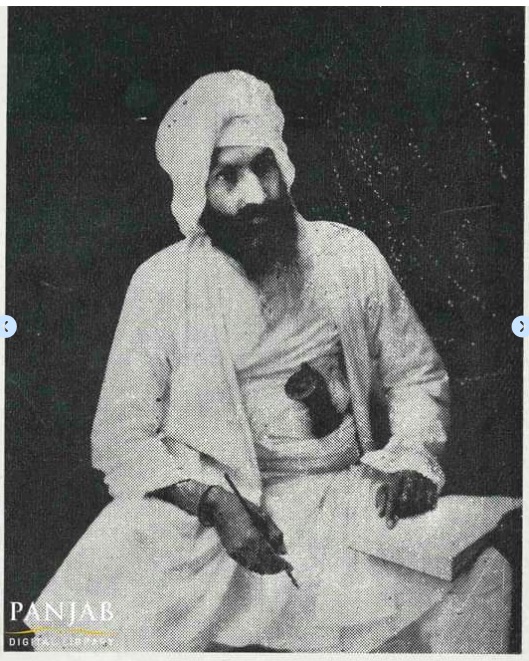
The first Sikh to be excommunicated by a decree of the Akal Takhat was Professor Gurmukh Singh, founder of the Sikh Reform Movement or the Singh Sabha Leher. His excommunication happened in 1887 in colonial Punjab.
What is worth noting is that his excommunication was never accepted by the Sikh masses, including the elite. The core sanction in an excommunication order is that Sikhs stop associating with the one who is excommunicated. This never happened to Gurmukh Singh. The enlightened Sikhs at that time such as Bhai Gurdit Singh, Gyani Ditt Singh and Bhai Kahn Singh Nabha defied the excommunication order and continued to deal and interact openly with Prof Gurmukh Singh.
Five reasons can be advanced for the fact that the excommunication of Gurmukh Singh failed to have the desired effect.
The first comes from within the philosophy of Sikhi Gurmat, and Sikh history. There is not a single verse within the Sri Guru Granth Sahib (SGGS) that supports the notion of excommunicating someone. From the Gurmat point of view, the act of excommunication goes against virtually every principle that Sikhs are supposed to inculcate – principles such as inclusion, a non-judgmental outlook towards others, and freedom of thought and belief. From the historical point of view, no Guru had advocated, preached or called for excommunicating anyone, let alone practice it. Sikhs did not think that Akal Takhat had the authority to go against such norms.
The second reason had to do with the nature of the charges against Prof Gurmukh Singh. It was clear that the root causes had to do with his ideas and activism relating to reform of Sikh practices. His basic contention that Sikhism had come to be corrupted in its practices and needed reforming had won the hearts and minds of the Sikh masses. His excommunication was thus viewed – by the Sikh masses – as an attempt to silence him and stop the reform in its tracks.
The third reason was that the concept of excommunication was alien to Sikhs. A vast majority believed that the notion had been infiltrated into Sikhism by the British colonialists who had a stellar record of interfering in the religious practices of Sikhs. The British viewed Sikhi as the root cause of their inability to subjugate Sikhs and had thus openly interfered in all matters concerning the Sikh religion. They had created a class a people called “Sants” to propagate a corrupted version of Sikhi, taken over control of the management of Sikh Gurdwaras, hired people to write versions of Sikh history that favored British domination, and co-opted Sikh leaders into their designs through acts of corruption. Getting the Akal Takhat to excommunicate influential Sikh leaders who did not want to serve British interests fitted well into their scheme of subjugation of their subjects.
The fourth reason had to do with the Sikh personalities who were believed to be the instigators and prime movers of the excommunication. Khem Singh Bedi who had mischievously set up the Snatani (vedic) branch of Singh Sabha Amritsar to hijack the reforms of the Singh Sabha Laher of Professor Gurmukh Singh had persuaded the masands and sarabrahs of Akal Takhat (caretakers hired by the British) to carry out the act of the excommunication. The Sikh masses were well aware of Khem Singh’s depravities – beyond his penchant for wanting to Snatanize Sikhi. He had claimed to be the direct decedent of Guru Nanak and considered himself to be the 11th Guru. He thus sat on a special cushion parallel to the SGGS in the Darbar Sahib.
The fifth reason had to do with the suspicion that the real reason behind Prof Gurmukh Singh’s excommunication was his vocal opposition to the Fareedkoti Teeka – the first ever exegesis of the Sri Guru Granth Sahib (SGGS) by a group of Benares based Nirmlas who had presented the SGGS as the “fifth Veyd”. The Singh Sabha leader has asked why Sikhs were not commissioned to the job. He asked Sikhs to reject the Teeka. The officially stated reason for the professor’s excommunication – disrespecting the SGGS and conducting activities against the Sikh Panth – was vague enough for the Gurbani enlightened Sikhs to surmise that his opposition to the Freedkoti Teeka was the real reason.
THE PRACTICE CONTINUES
The Akal Takhat nullified Professor Gurmukh Singh’s excommunication 108 years after the effect, in 1995. But it has carried on with the practice, even if in the absence of any clear basis of authority – either from the SGGS, Gurmat or Sikh historical practices.
Amongst those excommunicated since include Babu Teja Singh Bhassaur in the past century; and Professor Piar Singh, Gyani Bhag Singh Ambala, Gyani Gurbaksh Singh Kala Afghana, Prof Darshan Singh, Harnek Singh of Radio Virsa and Tharminder Singh Anand in more recent times. These good Sikh scholars were all excommunicated for their writings.
It is worth noting that at least three of those ex-communicated were either not residents of Punjab (Gyani Gurbakhs Singh was a resident of UK) or were citizens of foreign countries (Tharminder Singh is a citizen of the USA and Harnek a citizen of New Zealand) at the time of their excommunication. This raises the issue of jurisdiction. The institution of the Akal Takhat – the body that issues excommunication edicts – is administered by the SGPC. The SGPC is governed by The Sikh Gurdwaras Act, 1925. The jurisdiction of SGPC – and by extension the Akal Takhat – is thus limited to Punjab. Outside of Punjab its edicts are considered as advisory. This raises the question of validity of excommunication orders issues to Sikhs residing outside of Punjab.
POINTS WORTHY OF DELIBERATION
In summary then, the following seven points can be made.
One, the notion of “excommunication” does not exist within the Sikh scripture. It did not exist during the era of the ten Sikh Gurus (1469 – 1708). It did not exist in the post Guru period and the Sikh Raj period. It came to exist during British colonial rule.
Two, the Sikh clergy at Akal Takhat were exposed to the practice of excommunication when the British brought with them the tradition of Catholicism into Punjab.
Three the first excommunication order by the Akal Takhat was overturned by the same body more than a century later in 1995. This suggests that the Akal Takhat is aware of the illegitimacy of the practice.
Four, the institution of the Akal Takhat – as the body that issues excommunication edicts – is administered by the SGPC. The SGPC is governed by The Sikh Gurdwaras Act, 1925 which was a piece of legislation in British India which legally defined Sikh identity and brought Sikh gurdwaras under the control of an elected body of orthodox Sikhs. The jurisdiction of SGPC, and by extension that of the Akal Takhat outside of Punjab, or at least outside of India, is thus non-existant.
Five, a study of the main excommunications indicate that they are targeted against intellectuals, thinkers, academics and reform minded Sikhs. Such a fact raises serious questions regarding the intent of the practice. It appears that these excommunications are meant to act as a sword of Damocles to silence Sikhs who think, act and write differently from the version of the Sikh religion that is adopted by those who control the SGPC and the Akal Takhat.
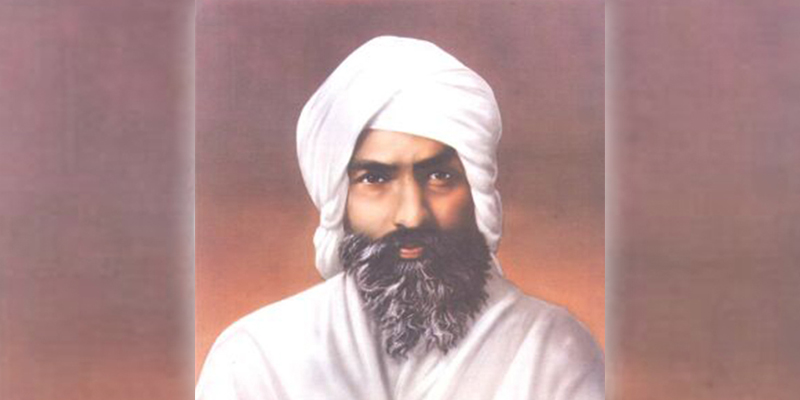
Prof Gurmukh Singh – Photo: Panjabi Digital Library
Six, all five Jathedars of the Akal Takhat (and the 20 Jathedars of the other 4 Takhats) and all of the Granthis in the Takhats and Darbar Sahib are schooled in the Taksali, dera and sampardayi traditions. A study of those who have been excommunicated indicate they are either NOT from these traditions, or have, at some point in time, discarded these traditions. Such a situation raises serious questions regarding the selective nature of excommunications. Are they meant only for those who belong to traditions other than the Taksali, dera and sampardayi traditions? Tharminder Singh Anand is case in point. He was excommunicated for doing what the Dhumma faction and Nanaksar derawadis have done for decades – altering bani in their gutkas.
Ranjit Singh Dhadrianwale – Photo: Facebook page of Parmeshar Dwar Gurmat Parchar Sewa Mission
Seven, a study of complaints and call made to the Akal Takhat to “take action” against Sikh preachers in the past 5 years shows that 100% of them are made by people affiliated with the Taksali, dera and sampardayi traditions. Case in point is the complaints against Sikh preachers Professor Inder Singh Ghagga, Bhai Ranjit Singh Dhadreanwalla and Bhai Harinder Singh of Nirvair Khalsa Jatha. Such a situation raises the question of the institution of Akal Takhat and the excommunication process being used as a tool by Taksali, dera and sampardayi people against those parcharaks who belong to other traditions.
In the case of Professor Inder Singh Ghagga, Dhadreanwalla, and Harnek Singh, the assertion can be made that the root cause of their excommunication or other action by the Akal Takhat lay in the tensions that existed between those who propagate progressive interpretations of Sikh theology verses those who rely on orthodox ones. The assertion can also be made that the action taken against them by the Akal Takhat is, at its core, an instrument to silence them.
ASIA SAMACHAR is an online newspaper for Sikhs / Punjabis in Southeast Asia and beyond. When you leave a comment at the bottom of this article, it takes time to appear as it is moderated by human being. Unless it is offensive or libelous, it should appear. You can also comment at Facebook, Twitter, and Instagram. You can reach us via WhatsApp +6017-335-1399 or email: asia.samachar@gmail.com. For obituary announcements, click here
Brothers, Sisters, Mother-in-Law, Sisters-in-Law, Brothers-in-Law, Newphews, Nieces, Uncles, Auties and a host of Relatives and Friends
Gurdwara Sahib Subang on 16 July 2023 (Sunday)
Programme: 7am-9am: Asa Ki Var; 10am-12pm: Kirtan & Path da Bhog
Kindly treat this as a personal invitation from the Panesar Family.
Contact: Gurmit 016 215 4336
| Entry: 5 July 2023 | Source: Family
ASIA SAMACHAR is an online newspaper for Sikhs / Punjabis in Southeast Asia and beyond. When you leave a comment at the bottom of this article, it takes time to appear as it is moderated by human being. Unless it is offensive or libelous, it should appear. You can also comment at Facebook, Twitter, and Instagram. You can reach us via WhatsApp +6017-335-1399 or email: asia.samachar@gmail.com. For obituary announcements, click here
Baltej Singh Dhillon, the first turbaned Sikh officer in the Royal Canadian Mounted Police (RCMP), has been appointed chair of WorkSafeBC’s board of directors, exactly four decades after he arrived in the country from Malaysia.
And the appointment came four years after he retired from the RCPM, the Canadian federal and national police force, where he had created a history of sorts.
Baltej, who will serve for a three-year term, effective June 30, 2023, is the first South Asian Canadian to take on this role and has been a member of WorkSafeBC’s board of directors since 2017, according to the board’s statement.
Baltej had a distinguished career as a police officer for more than three decades, working in intelligence, special enforcement, protective services and in investigations for the Air India task force and the Pickton case.
He made history by being the first member of the RCMP, the Canadian federal and national police force, to wear a turban as part of the uniform. He also received Queen Elizabeth II Golden and Diamond Jubilee medals for community service, according to the statement.
In 1983, Baltej moved to Canada at the age of 16, along with mother and sisters, not long after the death of his father due to a heart attack. The move to British Columbia was aided by his brother who had earlier moved to Canada.
After high school, he studied criminology and initially wanted to be a lawyer. But he sought to become a Mountie after volunteering with the RCMP as a translator for Asian immigrants.
He had passed the entrance examination for the law enforcement agency, but he was asked to remove his turban and beard as the RCMP uniform policy did not accommodate turbans and beards.
“This was not the first time I was faced with the decision,” he told Asia Samachar in an interview in Kuala Lumpur in 2018, during one of his visits. The interview was held at the Wadda Gurdwara Sahib Kampung Pandan, one of the places Baltej and his family had stayed in the 1980s.
Insp. Baltej Singh Dhillon
In that interview, Baltej shared some background as to the context of the time when he was faced with the question.
“Arriving in Canada, one of the traditions in Canada at that time, the Sikh men who came to Canada to start a new life, one of the things the families did as a matter of course, was that they are taken to the barber shop to cut their hair and shave their beards so that they could fit in…There was racism, there was prejudice, there was racism that was prevalent at that time.
“When I was asked that question, I had already made a decision for myself whether I was going to keep my turban or not sometime ago. So, when the question came up again, it wasn’t something I had to think about, it was already rehearsed. My answer then was” ‘No, I’m not prepared to sacrifice y faith my way of life, this gift that has been given to me by my teacher,” he said.
Not wanting to give up his dream of becoming a Mountie or compromise his faith, Baltej sparkeda debate across the country about freedom of religion, equality and religious discrimination. Thanks to his efforts, the federal government removed the ban on turbans and beards in the RCMP’s dress code on March 15, 1990.
In the WorkSafeBC statement, Baltej said he looked forward to taking on the role as chair of WorkSafeBC’s board of directors.
“I am committed to working with our key stakeholders to improve workplace health and safety and help ensure that workers get home safely at the end of the day. I am excited to begin working as chair with my fellow board members and WorkSafeBC staff to continue making progress in improving the workers’ compensation system to meet the needs of workers, employers and others throughout the province,” he said.
The WorkSafeBC board of directors is appointed by the B.C. minister of labour. The board members serve as stewards of WorkSafeBC and the workers’ compensation system. The Workers Compensation Act requires that the board of directors includes representation from professionals from a range of relevant fields, including occupational health and safety, law enforcement and an actuary. Representation must also include workers, employers and the public interest.
Baltej replaces the outgoing chair, Jeff Parr, who served from August 2020 to June 2023.
“I thank Jeff Parr for his service, and look forward to working with Baltej Dhillon to continuously improve our workers’ compensation system,” said BC Minister of Labour Harry Bains. “Baltej was a veteran police officer who brings expertise in law enforcement and six years of experience as a director at WorkSafeBC. He will be committed to WorkSafeBC’s role in investigating serious workplace incidents to prevent similar incidents from happening again.”
ASIA SAMACHAR is an online newspaper for Sikhs / Punjabis in Southeast Asia and beyond. When you leave a comment at the bottom of this article, it takes time to appear as it is moderated by human being. Unless it is offensive or libelous, it should appear. You can also comment at Facebook, Twitter, and Instagram. You can reach us via WhatsApp +6017-335-1399 or email: asia.samachar@gmail.com. For obituary announcements, click here
Husband: Late Sardar Joginder Singh (ex-Telekoms) Sidhu
She cherished the precious moments spent with her family, leaving behind a lasting impact. Her presence will be deeply missed, but her memory will forever remain in our hearts.
Passed away peacefully surrounded by family on 4th July 2023
Deeply missed & lovingly remembered by her grandchildrens, Bhalraj Singh & Gurbanijit Kaur and great grandchildren as well as brothers, sisters, sisters-in-laws, brothers-in-law, nieces, nephews, uncles & aunties, friends and relatives.
Cortège leaves residence: No 25 Jalan Permata, Batu 3 1/2, off Jalan Sungai Besi, 57100 Kuala Lumpur, at 11:15am on 5 July 2023 (Wednesday)
Saskaar / Cremation: 12:00pm, 5 July 2023 (Wednesday) at Shamshan Bhoomi, Jalan Loke Yew Crematorium, Kuala Lumpur
Path da Bhog: 16 July 2023 (Sunday), from 6am tp 12.30pm, at Gurdwara Sahib Sungai Besi Shapha, Kuala Lumpur
Programme: 6.00am to 7.30am Asa Di Waar (Cha Parothe)
10.00am to 12.30pm Paath Da Bhog and Anteem Ardaas
ASIA SAMACHAR is an online newspaper for Sikhs / Punjabis in Southeast Asia and beyond. When you leave a comment at the bottom of this article, it takes time to appear as it is moderated by human being. Unless it is offensive or libelous, it should appear. You can also comment at Facebook, Twitter, and Instagram. You can reach us via WhatsApp +6017-335-1399 or email: asia.samachar@gmail.com. For obituary announcements, click here
The 1945 SGPC-constructed and Akal Takhat-proclaimed Sikh Rehat Maryada (Sikh Code of Conduct) has been under constant attack by the dera, taksali, sant smaaj and sampardayi factions ever since it was launched.
Nothing surprising here. All these groups participated in its formulation in 1927 – ostensibly to steer it towards serving their own agendas – but rejected it from the day it was proclaimed in 1936.
Their objective was to render the SRM still born. Failing which, these groups have attacked the SRM relentlessly, resulting in its severe weakening. The result has been exactly what they wanted – while the 16,000 deras, taksals and sampardayi establishments have rejected the SRM in total, those Gurdwaras and Sikh institutions that claim to follow it to the extent of having promised its implementation in their constitutions – too do not follow it to any meaningful extent.
This is primarily because the vast majority of granthis that are employed in Gurdwaras across the world – the custodians of maryada in Gurdwaras – are the product of deras, taksals and sampardayi outfits. In addition to that, a vast majority of “symbol brandishing” individuals who seek the posts of Gurdwara parbandhaks too are imbued in dera, taksali and sampardayi maryadas. No surprise therefore that the SRM has suffered an overkill. It has been destroyed many times over.
Why then is the “maryada-concerned” Sikh world surprised at the latest attack on the SRM by Dr Amarjit Singh Chawla? All Chawla did was to regurgitate the often repeated false assertions that the SRM was “not approved” by the SGPC General Body and exists only in “draft” form. How can a document be called final if it never went its draft stage, he asked?
Furthermore, Dr Chawla’s intent appears to be no different than that of the dera, taksali and samparydayi folk, namely of undermining the integrity of the SRM, attacking its validity, and putting the Sikh Panth in a state of disarray.
One reason for the surprise may be that this time around, the nefarious attack on the SRM is spearheaded by elements within the very organization that led the Sikh Panth over the past 9 decades in first spearheading the formation of the SRM and then in propagating, disseminating and protecting its integrity – namely the Shromani Gurdwara Parbandhak Committee (SGPC).
In all fairness, it does come as a surprise to many that the attack on the SRM is led by SGPC Board Member and one-time General Secretary of SGPC Dr Amarjit Singh Chawla. But that’s where the surprise element ends. In reality though, Dr Chawla’s act of condemning the SRM ought to have come as no surprise – at least for the following three reasons.
One, Dr Chawla’s reprehensible condemnation of the SRM was coordinated and orchestrated in concert with the traditional enemies of the SRM – the derawadees, taksali and sampardayi folk. The SGPC Board member was soon joined by a chorus of leaders – of the Jatha Bhindra(n) Mehta under Harnam Singh Dhumma and other dera, taksal and sampardayi organizations. The arguments are the same – stale and false assertions. The methods are the same – baseless claims. The objectives are the same – undermine the already emasculated SRM. The only thing different is that this time the orchestra is led by someone who is “supposed” to be a non-dera personality. Which brings us to the second reason.
Dr Chawla’s dera and sampardayi affiliations are well known – he has regularly appeared and spoken on barsi functions of deceased dera personalities and participated regularly in dera organized functions. The Nanaksar Dera is his favorite. It is therefore clear that this well-orchestrated attack on the SRM is the result of Dr Chawla’s convictions and affiliations with groups that have never accepted the SRM from day one of its inception.
Three, the SGPC of today is no longer the SGPC of 1939 – when the SRM was formulated; or of 1945 – when the SRM was proclaimed. Over the past nine decades since, the SGPC has been slowly and surely infiltrated by persons that are aligned with dera, taksali and sampardayi thought. The same can be said of SGPC’s primary institutions – the five Takhats, including the Akal Takhat. One hundred percent of the current 25 Jathedars of the 5 Takhats, and 100 percent of all the Granthis at these Takhats and all other major historic Gurdwaras under the control of SGPC are dera and taksali trained. Is it any surprise then that the governing body of SGPC, its executive committee, its secretariat and general staff are of the same mold?
At the time of this writing, the Jathedar of the Akal Takhat had yet to make any comment on Dr Chawla’s attack on the SRM. He must surely find it difficult to comment when one’s paymaster (SGPC) in involved.
Nevertheless, even if Dr Chawla’s reprehensible condemnation of the SRM is a rehash of old claims, a factual response has been considered necessary by, amongst others, the Sikh Missionary Colleges.
Lady Singh Kanwaljit Kaur, President of the Global Sikh Council (GSC) issued a press-statement aimed at informing the Sikh Panth of the basic and pertinent facts pertaining to the SRM as follows: namely that the genesis of the SRM was on 15th of March 1927 through the setting up of a sub-committee to mobilize the Panth towards its formulation. And that nine years later, after all additions and deletions had been made, the SGPC gave its final approval to the SRM by its resolution No.97 passed at its meeting held on 3rd February 1945. It is thus not a draft by any measure.
THE REAL ISSUES
The real issues pertaining to the SRM are however more intricate than the issue of stale allegations that are rehashed by Dr Chawla. One wonders if SRM supporting Sikhs create a fuss repeatedly over these stale allegations as a way of avoiding or at least deflecting from the real issues.
One real issue that is staring us in the face is the fact that the SRM is not adopted at the five Takhats even. All of them have their own maryada. The four taksals have their own maryada. One Takhat conducts the daily slaughter of a goat as offering – in direct contravention of the SRM and of Gurmat. Two Takhats have parkash of the Sri Guru Granth Sahib (SGGS) side by side another granth – something expressly forbidden in the SRM. How does one label the SRM as “panthik maryada” in such a state of affairs?
Then there are close to 16,000 deras which are basically Gurdwaras run by individual group or cults and none of them follow the SRM. The sant samaj of Punjab does not follow the SRM either.
The Darbar Sahib Amritsar which is considered the Vatican for Sikhism too does not adopt the SRM in the conduct of its most basic functions. The SRM has a stipulation regarding what can be sung as Kirtan. The Ragis at Darbar Sahib are frequently heard singing compositions that are excluded from the stipulation. The SRM stipulates that the parkash of the SGGS is the first order of business in a Gurdwara. In the Darbar Sahib, Kirtan of Asa Di Vaar precedes the parkash. The Kirtan is interrupted midway to do the parkash.
The reality therefore is that the SRM is adopted and followed by a minority of Sikh Gurdwaras and institutions. Its rejection amongst an increasing number of non-dera, non-taksali and non-sampardayi Gurdwaras and institutions is based on a variety of controversies that surround its creation, process and stipulations; the primary of which is the fact that the very groups that are opposed to the SRM – the deras, taksals and sampardayi folk – managed to smuggle in their beliefs through the back door of the compromise that was needed to finalize the SRM. The outcome has been an SRM that is laden with provisions that are in deeply serious contradiction of the principles of Gurbani and Gurmat. No one can say that the postulations of the SRM pertaining to Nitnem Banis and Amrit Sanchar Banis is in accordance with the principles of the SGGS. How can it be when a majority of the Banis for both are from outside the SGGS?
Amidst such defects, the decision to adopt or not adopt the SRM is made by individual Gurdwaras and their congregations. The position amongst a majority of Gurdwaras is to follow only portions of the SRM.
Given such a state of affairs, the basic question is not whether the SRM is a draft or a final document. The primary question is also not whether the Akal Takhat has sanctioned it. These questions become moot when faced with the contradictions of the SRM with the tenets of SGGS and Gurmat.
The fundamental questions are therefore simply these: Is the SRM the accepted maryada of the Sikh Panth and is the SRM the practiced maryada of a majority of Gurdwaras and institutions. The overarching question is whether the SRM is fully and completely in line with the dictates of Gurbani as enshrined within the SGGS. The related question is: what are the options for enlightened Sikhs who are aware that the maryadas of the deras, taksals and sampardayi outfits, and the SRM do not conform to the principles of Gurbani – and that their contradictions are merely a matter of degree. Can the SRM become the choice maryada simply because it is less corrupted than the maryadas of the deras, taksals and sampardayi outfits? Is this a good criterion to justify making it the “constitution of the Sikhs”?
In line with the above-mentioned fundamental questions, the fundamental assertions are these: One, the Akal Takhat has lost the moral authority to propagate, enforce and defend a maryada that its own Jathedars are not affiliated with – in mind, body and soul. All of them are schooled in maryadas that are in contravention of the SRM. Two, Dr Chawla has just ascertained what was increasingly clear to the Sikh world – that the SGPC too has lost that moral authority.
One simply does not preach what one does not practice.
And one cannot be expected to practice what one was never schooled in.
ASIA SAMACHAR is an online newspaper for Sikhs / Punjabis in Southeast Asia and beyond. When you leave a comment at the bottom of this article, it takes time to appear as it is moderated by human being. Unless it is offensive or libelous, it should appear. You can also comment at Facebook, Twitter, and Instagram. You can reach us via WhatsApp +6017-335-1399 or email: asia.samachar@gmail.com. For obituary announcements, click here