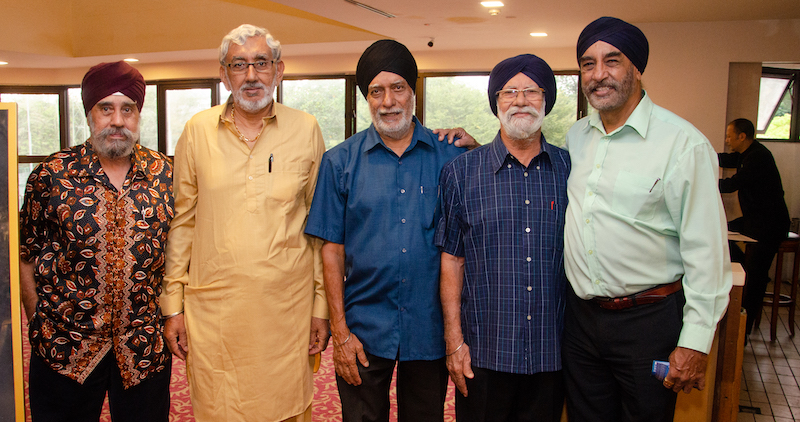
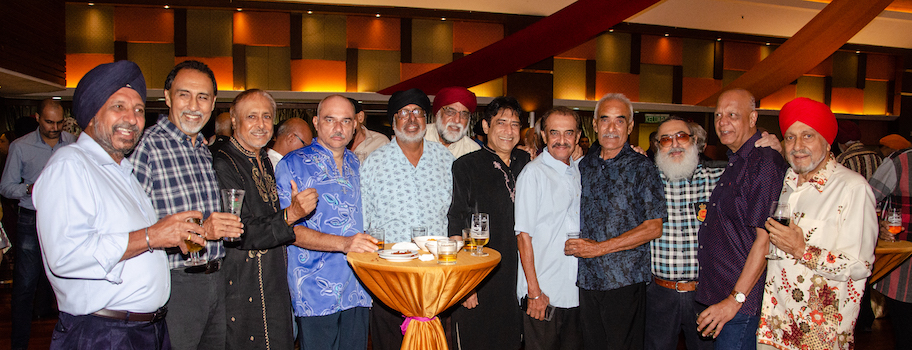
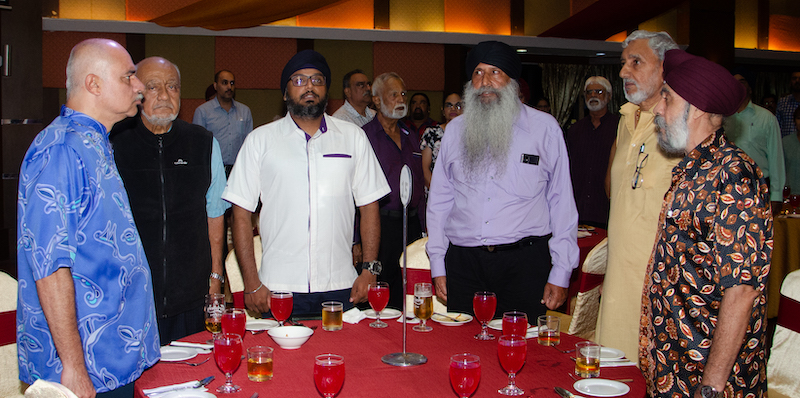
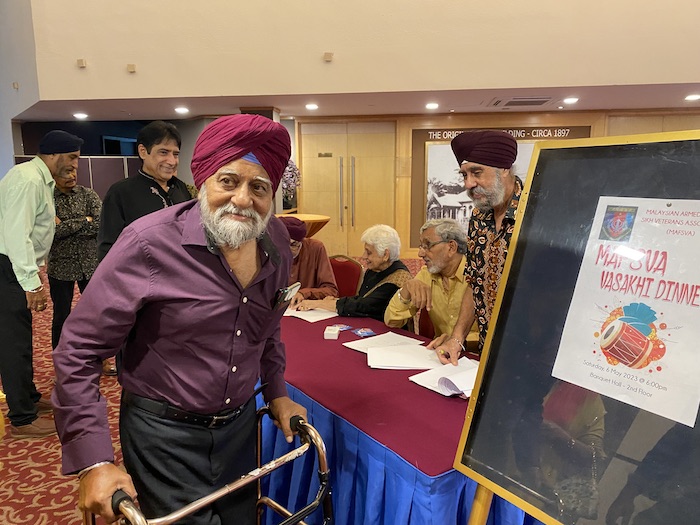
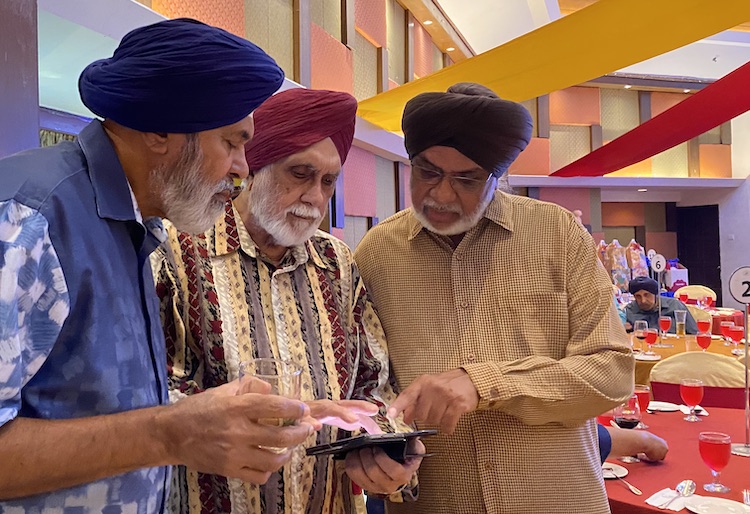
Amreek (in turban) with fellow MAFSVA members at the Vaisakhi 2023 dinner – Photo: Asia Samachar
By Asia Samachar | Malaysia |
Their numbers may be small, but they have punched way above their weight. That’s the story of Sikh veterans in the Malaysian armed forces.
They have been involved in the fight against the communist insurgency, taking up roles on the medical front and excelling in sports as well.
On May 6, they came together in the spirit of comradeship, picking Vaisakhi as the anchor celebration.
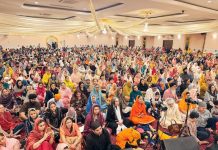
The evening event, organised by the Malaysian Armed Forces Sikh Veterans Association (MAFSVA), attracted an enthusiastic participation.
Present among them were Brigadier General Inderjit Singh, the highest ranking serving Sikh officer in the Malaysian armed forces, who is preparing for his retirement.
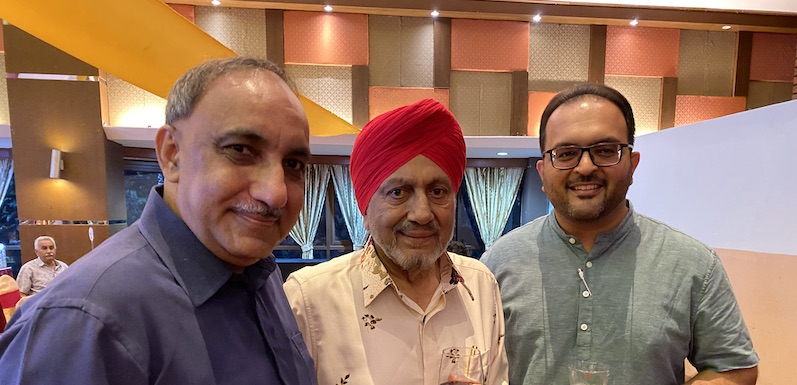
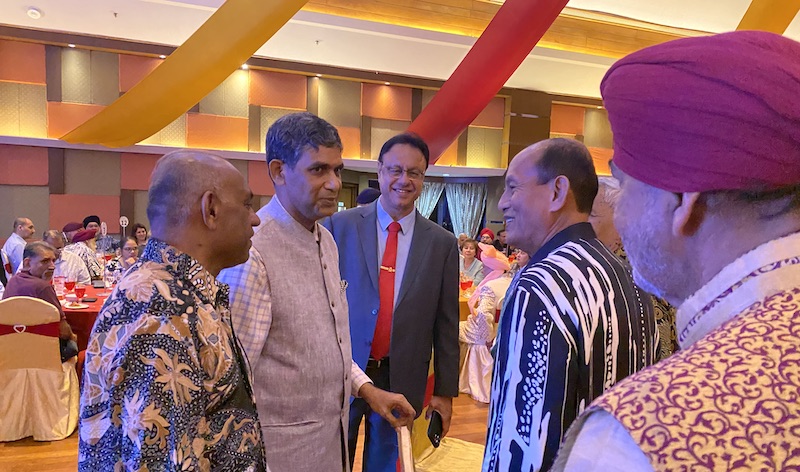
Brig-Gen Inderjit Singh (left) with Major (Rtd) Baldev Singh (middle) and Dr Hardev Singh at the MAFSVA Vaisakhi 2023 dinner – Photo: Asia Samachar
Also present were retired lady officials like Karamjit Kaur who retired as army staff sergeant and Sarjeet Kaur who retired from the navy but not before representing the nation for archery in five SEA Games.
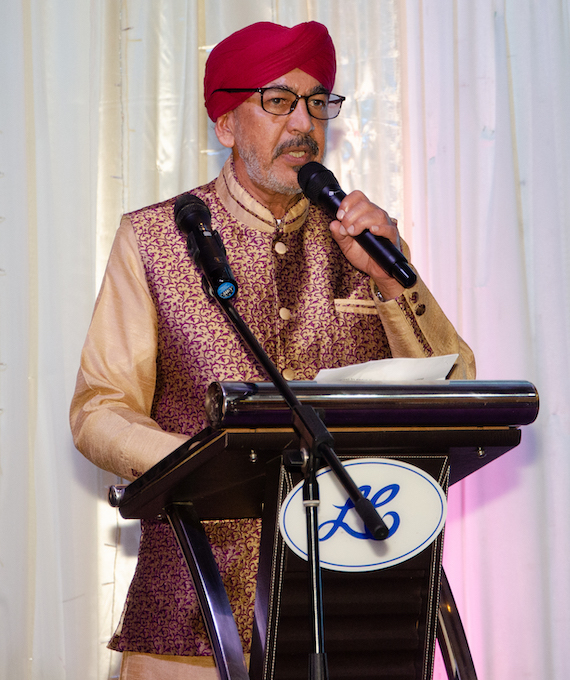
“We have had our share of sacrifices whereby Sikhs have lost their lives defending our beloved country. All of us are fortunate and blessed to have made it thus far and we thank Waheguruji for that,” said MAFSVA president Avtar Singh.
The retired air force officer Avtar Singh added: “We stand testimony to that as we the Sikh Veterans had also pledged our lives to our beloved country Malaysia by entrusting our loyalty to King and country.
MAFSVA president Avtar Singh at the 2023 Vaisakhi dinner – Photo: MAFSVAIndia’s High Commissioner to Malaysia BN Reddy (2nd from left) with businessman Rashpal Singh Randhay (left) as well as MAFSVA’s president Avtar Singh (right) and deputy president Hadial Singh (middle) at the MAFSVA Vaisakhi 2023 dinner – Photo: Asia Samachar
“We have had our share of sacrifices whereby Sikhs have lost their lives defending our beloved country. All of us are fortunate and blessed to have made it thus far and we thank Waheguruji for that.”
He noted that Sikh veterans have made an invaluable contribution to society through their selfless service to the country.
“We have defended the nation and its values, often putting ourselves in harm’s way to protect everyone’s freedom. The skills and values that we have learned in the military have enabled us to continue to make a positive impact in our communities even after leaving the service,” he said.
Formed in May 2016, one year later MAFSVA acquired from the Government a vacant bungalow in Petaling Jaya on a lease basis renewable every two years.
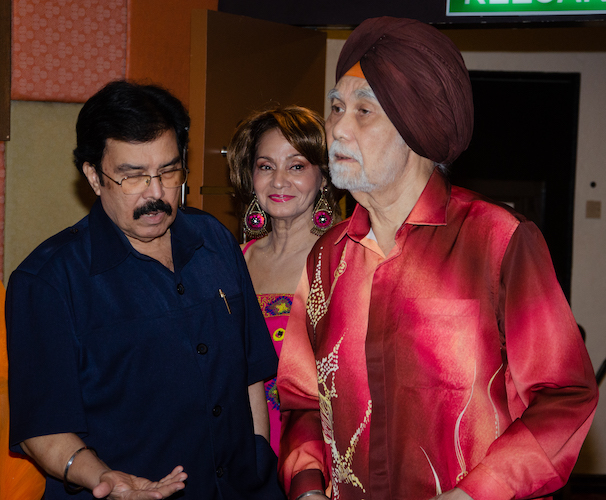
MAFSVA Vaisakhi 2023 dinner – Photo: Asia Samachar MAFSVA Vaisakhi 2023 dinner – Photo: Asia Samachar
MAFSVA Vaisakhi 2023 dinner – Photo: Asia Samachar
MAFSVA Vaisakhi 2023 dinner – Photo: Asia Samachar
MAFSVA Vaisakhi 2023 dinner – Photo: Asia Samachar
ASIA SAMACHAR is an online newspaper for Sikhs / Punjabis in Southeast Asia and beyond. When you leave a comment at the bottom of this article, it takes time to appear as it is moderated by human being. Unless it is offensive or libelous, it should appear. You can also comment at Facebook, Twitter, and Instagram. You can reach us via WhatsApp +6017-335-1399 or email: asia.samachar@gmail.com. For obituary announcements, click here.
I never had the opportunity to meet my maternal grandfather, Narayan Singh Sewa Singh (Lakha Village), who lived a greater part of his life in the Federated Malay States from 1921 until January 1950, before returning to Punjab.
I was fortunate enough to have met my maternal grandmother, Nihal Kaur Surwan Singh (Alekay Village), during her return visit to Malaysia in 1980 after 30 years! I saw her for the final time in 1983 when I first visited my ancestral village in Punjab. She passed away some years later.
Both my Nana and Nani (maternal grandparents) led an extremely tough life struggling in abject poverty and hardship. My grandfather first came to the Federated Malay States (FMS) in 1921 and worked as a watchman on a coconut plantation and padi storage facility in Bagan Serai run by Kong Lee (Perak) Plantation Limited which was incorporated in the United Kingdom and managed by Brown, Phillips & Stewart. His elder brother Haldhar Roor Singh was also in the police force.
My Nani’s brother, the late Ujagar Singh, served as a policeman at the Ipoh Police Station for several years prior to his untimely demise involving an accident in a Police Land Rover he was travelling in.
I can share with conviction the employment history of my grandfather with fervent accuracy because he kept every single document of his including testimonials, receipts, home leave applications, vaccination certificates, and the works. Every piece of paper was of extreme importance and not to be discarded.
Watchman Narayan Singh Sewa Singh’s letter issued in 1927 from the manager at the Kong Lee Plantations in Bagan Serai – Photo: Courtesy of Malkeet Singh
The earliest testimonial of his is dated April 1926 (attached). He was a meticulous individual who made sure that he had everything in black and white including home leave approvals from the colonial estate managers.
Watchman Narayan Singh Sewa Singh’s letter issued in 1934 from the manager at the Kong Lee Plantations in Bagan Serai – Photo: Courtesy of Malkeet Singh
Indeed, his foresight was a great help in accelerating my uncle, Naginder’s application to settle in later years in the United Kingdom as the documents came in very handy as documentary evidence.
During the Great Depression of 1929 to 1934, Malaya was not spared. Those working in the plantations and mines were the hardest hit. Migrant labour from China and India had to be repatriated back to their home countries. My grandparents did return to Punjab for a couple of years to continue working on their ancestral farmland.
Picture taken in January 1950. (Left to Right) : Naginder Singh, Narayan Singh, Nihal Kaur, Karam Singh. (Back): Karam Singh – Photo: Courtesy of Malkeet Singh
My mother, Jasmail Kaur, who was born in Bagan Serai in 1929 spent her early childhood in Punjab. I believe my grandparents returned to Bagan Serai sometime in 1934 or 35 and continued working on the same plantation in Bagan Serai for a couple of years.
In 1940, they left the Kong Lee Estate and started working in Bikam Rubber Estate, Sungkai for a couple of months followed by Jara Estate, Bagan, Bukit Mertajam until 1948.
My mother shared with me the hardship the family had to endure during the Japanese Occupation whilst living on the estate and surviving mainly on fruits and keeping your presence under the radar.
She also shared about a powerful Thai Buddhist Monastery in a Village called Nona (Nenas?) near Kulim. Somehow, I can’t seem to locate it.
My mother married in 1946 at the Bagan Serai Gurdwara and moved to Kamunting, Taiping, where my father was staying with his brothers and their families. In 1947, my parents moved to Rawang where my father had secured a teaching job.
Narayan Singh’s smallpox vaccination certification issued in 1950 – Photo: Courtesy of Malkeet Singh
Sometime in 1948, my grandparents and their children had a rude and frightening shock, when communist bandits confronted them for money at Jara Estate, Bagan. The family was so poor and could not give any money resulting in my uncle getting assaulted by the bandits.
On hearing this, my father immediately requested my grandparents to move to Sungei Bakau, Rawang for safety reasons. To sustain the family, my grandfather reared cows and worked as a Special Constable at the Rawang Tin Fields.
However, in mid-January 1950, due to my grandfather’s ill health, the family decided to sell off their meager belongings and take a ship from Penang and sail to Calcutta, India. From Calcutta, they took a long train journey to Punjab.
My mother tells me that my father accompanied the family on the train journey from Rawang to Butterworth bidding them a final bon voyage for he never returned to India after setting foot in Malaya in 1932 at a very tender age of 7 years. Such was his karma.
Haldhar Roor Singh would have also probably returned to Punjab after his retirement. Haldhar Roor served at the the Bagan Serai Police Station for many years. Although, he was married but had no children. My mother’s elder sister, Basant Kaur, was his pet niece. He loved dressing her up as a little male kid with a joora. She passed away in 1947 during the Partition.
(Left to Right): Haldhar Roor Singh (Narayan Singh’s elder brother) and his niece Basant Kaur – Photo: Courtesy of Malkeet Singh
I thank the Almighty that my mother who is 94 years old is hale and hearty with an excellent and sharp memory. She is able to share in-depth family history and experiences with the family. Her only setback is that she has lost her eyesight due to advanced glaucoma but is well compensated by Mother Nature with alertness and a superb memory.
In my upcoming post, I will share the story of a Tiger Moth plane that crashed during an acrobatic stunt on June 2, 1953, just yards away from the Rawang Police Station. This was on the eve of the late Queen Elizabeth’s coronation celebrations. My mother shared information about the young pilots who perished. On double-checking with the Straits Times archives her accuracy matched. My recent posts on Templer’s Park tigers were also enriched by the information shared by my mother.
I am eternally grateful to be blessed with the divine company of my mother to enrich, inspire and honour our lives. I shall endeavour to research, write and share as many fascinating stories as I can complete. I am also dying to complete a story on Sulakhan Singh, the Station Master extraordinaire who served at the Malayan Railways Station in Rawang and many more.
Malkeet Singh is a veteran ad man, who ran Bloomingdale Worldwide Partners for more than 3 decades. He is retired and now dedicates his twilight years to writing on various subjects including early family history of forefathers, Sikh settlers in Malaya, climate change, sustainability and trending topics.
ASIA SAMACHAR is an online newspaper for Sikhs / Punjabis in Southeast Asia and beyond. When you leave a comment at the bottom of this article, it takes time to appear as it is moderated by human being. Unless it is offensive or libelous, it should appear. You can also comment at Facebook, Twitter, and Instagram. You can reach us via WhatsApp +6017-335-1399 or email: asia.samachar@gmail.com. For obituary announcements, click here.
Path Da Bhog: 18 June 2023 (Sunday) at Gurdwara Sahib Selayang Programme: Asa Ki Vaar from 6am to 8am, followed by Path Da Bhog from 10am to 12pm, followed by Guru Ka Langgar
Goodbye Is Not Forever Goodbye Is Not the End It Simply Means We’ll Miss You Until We Meet Again
| Entry: 10 June 2023 | Source: Family
ASIA SAMACHAR is an online newspaper for Sikhs / Punjabis in Southeast Asia and beyond. When you leave a comment at the bottom of this article, it takes time to appear as it is moderated by human being. Unless it is offensive or libelous, it should appear. You can also comment at Facebook, Twitter, and Instagram. You can reach us via WhatsApp +6017-335-1399 or email: asia.samachar@gmail.com. For obituary announcements, click here
Students from Singapore high school visit Khalsa Dharmak Sabha on 29 June 2022 – Photo: KDS Facebook
By Amarjit S. Gulati | Opinon |
Recently, I visited a local gurdwara and saw a group of Punjabi families busy in the langar hall, cleaning and cutting vegetables, washing dishes and some were preparing food. However, what I also noticed everyone was busy talking while doing Seva.
It made me think…
Is it okay to talk while doing Seva?
What is the true purpose of Seva ?
How is Seva supposed to be done?
Hence, I began my research to find the answers from within SGGS.
Before that, I went on the Internet and discovered an online resource, stating that Seva in Sikhism means ‘selfless service’. It involves acting selflessly and helping others in a variety of ways, without any reward or personal gain. It is a way of life for many Sikhs and is part of their daily routine.
For me, this explanation was incomplete because I know, based on Gurmat, Seva is not just a physical selfless act to help others, it is more than that.
DIFFERENT FORMS OF SEVA
First, let’s examine the different forms of Seva. This is not an exhaustive list. Do feel free to share in the comments section below if I left out any other forms of Seva.
Joriaa di seva (Wiping of footwear)
Charu di seva (Sweeping the surroundings and inside the Gurdwara)
Nishaan Sahib di seva (Cleaning the flag and its area)
Langgar di seva (Making and serving food in the langar hall)
Pandiaan di seva (Washing and stacking of dishes)
Darbar di seva (Cleaning, vacuuming the darbar where SGGS is present)
Shabad phet seva
Gurdwara building fund seva
I’m sure most of us are quite familiar with the Seva listed above. Notice, when we talk about Seva, what comes to mind? Seva in the gurdwara. A physical activity that is carried out inside or in the surrounding compounds of a gurdwara. Towards the middle of this article, you’ll read a Gurmat concept of Seva.
Next question we need to ask ourselves is, why are we doing Seva? Are we doing it to appease Guru and God? Are we doing it because we want some material gain, better health, a new job, a career promotion or more business and money?
Did someone tell you doing Seva can help ease a dying or sick family members pain? Or perhaps you heard the local gurdwara Giani preach about Seva and told you how it can help you secure a seat in ‘heaven’?
Doing Seva helps but not in the ways described above. Moreover, you’ll soon realise, our Gurus have put a caveat, a condition to what they deem as Seva.
Whenever in doubt, always make it a point to refer to Gurbani enshrined within Sri Guru Granth Sahib (SGGS). As Sikhs, we MUST benchmark our answers with what our Gurus viewpoints are, not just listening to some random dude. Then, there will be no doubt left.
Sa Seva Kiti Safal Hai Jit Satgur Ka Man Maney || Ja Satguru Ka Man Maneya Ta Paap Kasamal Paney || Updesh Je Dita Satguru So Suneya Sikhi Kaney || (SGGS Mehl 3, 314)
Meaning,
One is considered to be doing Seva IF that Seva is in accordance and in acceptance of the teachings of the Guru (instructions contained within Sri Guru Granth Sahib -SGGS). When this condition is met ONLY then the Seva done is considered acceptable. This is the instructions (Updesh) given by the Guru and we are to listen and adhere to it attentively (So Suneya Sikhi Kaney).
In the Shabad above, it is clear what our Gurus consider acceptable Seva.
GOAL OF SEVA
IF Seva done has to be followed by listening and adhering to the instructions of the Guru (as contained within SGGS), then the purpose of doing Seva would be to eliminate ones ego, evil thoughts, bad intentions, unwanted behavior and bad character and eventually adopt Godly virtues.
The “Updesh” instruction given by the Guru, which is to live a life free of vice, IF this were to be the focal point when carrying out the Seva, I doubt one would do much talking or gossiping while carrying out the seva.
Neither the Creator nor any of our Gurus need to be made happy by our Seva. Neither is there a ‘reward system’ of doing selfless service too regardless of what the Giani has preached as the reward concept – do this and you’ll get that, do that and you’ll get this – is NOT a Gurmat concept. Period!
Some religions may preach such concepts, such as doing Seva will ensure ones place in heaven or doing Seva can help one become more successful in business etc. These are just baseless stories, likely cooked up by the Poojaris. These are by far NO WAY acceptable according to Gurmat.
SO WHAT’S THE POINT OF DOING SEVA?
What we need to understand is, the Seva we do is NOT for making God or Guru happy.
Neither it is done to ask for favors or any rewards. It is supposed to be a sign of our love. Our feeling of thankfulness, gratitude and gratefulness towards our Guru for giving us the chance to be considered worthy of the advice or instructions (updesh).
There is NO point in doing Seva if one is not willing to listen to the instructions of the Guru or make any effort in changing ones mind or attitude.
The ego within has to be subdued and eliminated completely, only then the Seva done is considered fruitful. – Guru Amardas Ji
SEVA EVERYWHERE, AT ALL TIMES
If this is the essence of what Seva is, then there is more to Seva. Seva cannot be just considered being done in a gurdwara.
Guru Arjan Dev Ji (5th Sikh Guru) says…
ਗੁਰ ਕੀ ਸੇਵਾ ਕਰਹੁ ਦਿਨੁ ਰਾਤਿ ॥ ਸੂਖ ਸਹਜ ਮਨਿ ਆਵੈ ਸਾਂਤਿ ॥੩॥ Gur Ki Sewa Karoh Din Raat || Sukh Sehaj Man Aavey Shaant ||3|| (SGGS Mehla 5, 741)
Meaning, Living a virtuous life according to the teachings of the Guru (Gur Ki Seva) is to be done at all times – day and night (Karoh Din Raat). The outcome of such Seva is one will attain bliss, contentment and mind’s peace (fruits of Seva).
Take for example, Guru Angad Dev ji (Bhai Lehna), before He became Guru, he did a lot of Seva. He did not just do the Seva, he also listened to Guru Nanak’s instructions attentively AND applied the teachings in His own life.
Our Gurus mastered the art of transforming the mind, eliminating ego within and they never had any desires to receive any kind of reward in return. This is also called ‘Nishkaam Seva’. Service without any desire or wants. It’s a state of mind. Are we doing Seva in this state of mind?
On the other hand, when we see Guru Nanak’s disowned son – Sri Chand, refusing to listen to Guru Nanak’s instructions, teachings and advise, hence he lost the chance of becoming a Sikh or even to be appointed the next Guru of the Sikhs, which he yearned so badly.
In another place, Guru Ramdas Ji (4th Sikh Guru) says…
ਕੋਈ ਪੁਤੁ ਸਿਖੁ ਸੇਵਾ ਕਰੇ ਸਤਿਗੁਰੂ ਕੀ ਤਿਸੁ ਕਾਰਜ ਸਭਿ ਸਵਾਰੇ ॥ Koi Put Sikh Seva Karey Satguru Ki Tis Karaj Sabh Svarey || (SGGS Mehla 4, 307)
Meaning, If a Sikh who does Seva for the Guru (by listening to the teachings and applying in ones life), then all his affairs are fulfilled.
“Koi Put Sikh” here simply means a Sikh who lives his life in accordance to the teachings of the Guru is considered by the Guru as his own child. Such a Sikh is indeed rare, because one has to constantly be aware of the Guru’s instructions and work on his/her mind, eliminating vices and adopting Godly virtues.
Guru says “Tis Karaj Sabh Svarey” meaning, the affairs of such a Sikh is fulfilled.
NOTE: The verse translation done by Sant Singh Khalsa MD therefore is misleading as it does not paint a clear picture and is merely a word level translation in English.
Here’s what MD translated…
If any son or Sikh serves the True Guru, then all of his affairs will be resolved.
Firstly, Guru is not referring to two different people here (son or Sikh). The translator has failed to understand the meaning of “Koi Put Sikh” and “Karaj Swarey” as part of a bigger context of the Shabad.
Just reading that one line (without seeing the whole Gurmat perspective) one may wrongly conclude Guru is saying, “Serve me and I shall resolve all your affairs”. What is considered as “Serve me”? How does one serve Guru?
IN CONCLUSION
Carry on doing the Seva as you’ve always enjoyed doing BUT from here on, think of what our Gurus have said about “Gur Ki Seva Shabad Vichaar”.
The highest form of Seva according to Guru is still contemplation and applying the teachings of Guru Granth Sahib in ones life. We need to transform our behavior, character and our minds to eliminate ego and adopt virtues for a better spiritual living.
Don’t go bargaining with the Guru. It makes NO difference to Guru if you were to do Seva or not. Seva done with the ‘right’ mindset and attitude matters. Yes, that also means we’re not supposed to talk or gossip during Seva.
When it comes to eliminating ego, here’s what Guru Angad Dev Ji (2nd Sikh Guru) says…
Haumai Deerag Rog Hai Daru Bhi Es Mahey|| Kirpa Karey Je Aapni Ta Gur Ka Shabad Kemahey|| Nanak Kehai Sunoh Janoh Eit Sanjam Dukh Jahey ||2|| (SGGS Mehla 2, 466)
Meaning,
Ego (Haumai) is the most dangerous disease of the mind. However, there is a cure. With the blessings of the Guru, one is able to attain the knowledge to subdue ego, hence ones mind is prepared to absorb and practice the teachings of the Guru (Shabad Kemahey). Guru Sahib says, listen! my beloved ones, this is the way, this is the method, to attain a life free of pain, misery and sorrow.
About the Author: Amarjit Singh Gulati, who runs a Malaysian-based blockchain academy and manages a software solutions company, blogs on Sikhi at JeevanJach.com. In the full article (click here), he elaborates on what ‘Serve The Guru’ means, role of ego and pride and seva for the creation
ASIA SAMACHAR is an online newspaper for Sikhs / Punjabis in Southeast Asia and beyond. When you leave a comment at the bottom of this article, it takes time to appear as it is moderated by human being. Unless it is offensive or libelous, it should appear. You can also comment at Facebook, Twitter, and Instagram. You can reach us via WhatsApp +6017-335-1399 or email: asia.samachar@gmail.com. For obituary announcements, click here.
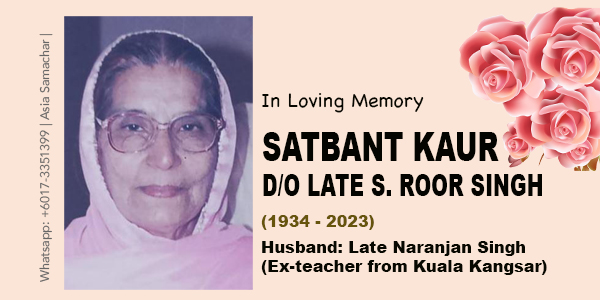
Passed away peacefully surrounded by her family on the 9th of June 2023
Saskaar / Cremation: 3.30pm, 10 June 2023 (Saturday) at Jalan Loke Yew Crematorium, Kuala Lumpur Guests may pay their last respects from 2pm-3:30pm at Jalan Loke Yew Crematorium.
Just a prayer from the family who loved you, just a memory fond and true, in our hearts you will live forever, because we thought the world of you.
As a mother, she has a nurturing and caring personality. Her devotion to her family as a wife shows her loyalty and commitment to her loved ones. And as a loving grandmother, she exudes warmth, kindness, and generosity towards her grandchildren. She is a true role model in terms of family values and unconditional love.
| Entry: 10 June 2023 | Source: Family
ASIA SAMACHAR is an online newspaper for Sikhs / Punjabis in Southeast Asia and beyond. When you leave a comment at the bottom of this article, it takes time to appear as it is moderated by human being. Unless it is offensive or libelous, it should appear. You can also comment at Facebook, Twitter, and Instagram. You can reach us via WhatsApp +6017-335-1399 or email: asia.samachar@gmail.com. For obituary announcements, click here
Sahej Path Da Phog will be held on 11th June 2023 (Sunday), from 10am to 12pm, at Gurduwara Sahib Melaka
Please treat this as a personal invitation.
Waheguru’s embrace was a haven for you when you grew tired. Your rest is deserved, for His garden is only for the best. May you find eternal peace there, your pain now replaced by beauty. We cannot bring you back, but we can keep your memory alive. Love you Dad
Contact: Gurmeet 012 – 972 3182 Hari +65 8621 5226
Hardeep was a cherished friend, a great father/grandfather and colleague to many, not forgetting a die hard fan of the late singer Mohd Rafi. His loss has left a void in the lives of those who knew him.
| Entry: 9 June 2023 | Source: Family
ASIA SAMACHAR is an online newspaper for Sikhs / Punjabis in Southeast Asia and beyond. When you leave a comment at the bottom of this article, it takes time to appear as it is moderated by human being. Unless it is offensive or libelous, it should appear. You can also comment at Facebook, Twitter, and Instagram. You can reach us via WhatsApp +6017-335-1399 or email: asia.samachar@gmail.com. For obituary announcements, click here
A door in a village in Panjab, India – Photo: SST Photography
By Raakhi Jagga | The Indian Express |
The simple act of sipping tea as the dappled sunlight filters into the verandah of their sprawling 300-square-yard house in Ludhiana is set to become a thing of the past for Sadhu Singh, 76, and Manjit Kaur, 68. With their two sons having become permanent residents of Canada a few years ago, the couple are in the process of selling their ancestral property to move abroad permanently.
In the past, landowners divided their time between tending to their fields and businesses in India, and staying with their children abroad. However, many aged farmers in Punjab are now selling their massive parcels of land and shifting abroad — lock, stock and barrel — to stay close to their children who are settled in countries like Canada and Australia.
That’s a significant shift for a population defined by their emotional attachment to their “zameen” (land), even as many of them lived abroad or shuttled between their adopted countries and “home”.
Sadhu, who lives in Ludhiana’s Punjab Mata Nagar, said, “My wife and I became permanent residents of Canada in early 2016, but divided our time between the two nations. While we were in Canada, some thieves broke into our house. We decided to sell the house after that and move abroad. Our sons and their families have no plans to return to India. We plan to shift to Canada in two months. Our children worry about us since we stay alone in India. Whenever we come to India next, we will rent a house for a month.”
ASIA SAMACHAR is an online newspaper for Sikhs / Punjabis in Southeast Asia and beyond. When you leave a comment at the bottom of this article, it takes time to appear as it is moderated by human being. Unless it is offensive or libelous, it should appear. You can also comment at Facebook, Twitter, and Instagram. You can reach us via WhatsApp +6017-335-1399 or email: asia.samachar@gmail.com. For obituary announcements, click here.
Sukhmani Sahib Path will be held at residence No. 210, Block O, Jalan PJS 5/18, Taman Desaria, 46000 Petaling Jaya on 8 June 2023 (Thursday)
Hearse leaves residence at 2pm.
Saskaar/Cremation: 3pm, 8 June 2023 (Thursday), at Shamshan Bhoomi Hall (Jalan Loke Yew Crematorium). Address: 294 & 295, Jalan Loke Yew, Pudu, 55200 Kuala Lumpur
Contact : Kisminder (son) +6012 376 2663
| Entry: 7 June 2023 | Source: Family
ASIA SAMACHAR is an online newspaper for Sikhs / Punjabis in Southeast Asia and beyond. When you leave a comment at the bottom of this article, it takes time to appear as it is moderated by human being. Unless it is offensive or libelous, it should appear. You can also comment at Facebook, Twitter, and Instagram. You can reach us via WhatsApp +6017-335-1399 or email: asia.samachar@gmail.com. For obituary announcements, click here
ਅਬ ਕੀ ਬਾਰ ਬਖਸਿ ਬੰਦੇ ਕਉ ਬਹੁਰਿ ਨ ਭਉਜਲਿ ਫੇਰਾ ॥੩॥੭॥ O Lord, please forgive Your slave now, in this life, so that he may not have to return again to this terrifying world-ocean. ||3||7|| (SGGS, 1104)
In loving memory of our beloved husband / father / grandfather
FIRST BARSI
Sardar Sathwan Singh Ji (Veipui)
24.9.1940 to 17.7.2022
Wife: Mata Nant Kaur ji (Batu Pahat)
1st Barsi Program: 18 June 2023 (Sunday), from 9.30am to 12.00pm, at Gurdwara Sahib Sentul, Kuala Lumpur
Contact Person :
Amarjeet Singh (+6019 2228287)
Baljeet Singh (+6019 214 3389)
Sukhvindar Singh (+60125936616)
| Entry: 7 June 2023 | Source: Family
ASIA SAMACHAR is an online newspaper for Sikhs / Punjabis in Southeast Asia and beyond. When you leave a comment at the bottom of this article, it takes time to appear as it is moderated by human being. Unless it is offensive or libelous, it should appear. You can also comment at Facebook, Twitter, and Instagram. You can reach us via WhatsApp +6017-335-1399 or email: asia.samachar@gmail.com. For obituary announcements, click here
She will be fondly remembered, cherished and greatly missed by family, relatives and friends near and far.
Children & Spouses:
Harginder Singh & Sethvinder Kaur
Manvinder Singh & Kiranjeet Kaur
Grandchildren:
Narvinderjeet Singh
Jaydave Singh
Path da Bhog: 11 June 2023 (Sunday), from 10am to 12pm, at Gurdwara Sahib Gunong Rapat, Ipoh, Perak.
Contact:
Manvinder 016-5533114
Harginder 016-2266765
| Entry: 6 June 2023 | Source: Family
ASIA SAMACHAR is an online newspaper for Sikhs / Punjabis in Southeast Asia and beyond. When you leave a comment at the bottom of this article, it takes time to appear as it is moderated by human being. Unless it is offensive or libelous, it should appear. You can also comment at Facebook, Twitter, and Instagram. You can reach us via WhatsApp +6017-335-1399 or email: asia.samachar@gmail.com. For obituary announcements, click here