

















UA-56202873-1
Page 230

Tigers of Templer’s Park

School headmaster Guardial Singh (author’s father) with an Australian traveller in front of the Clive Institution in Rawang – Photo: Malkeet Singh

By Malkeet Singh | Malaysia |

In 1954, the Sultan of Selangor, the late Sultan Hishamuddin Alam Shah, proclaimed that Templer’s Park, four miles from Rawang Town was “dedicated by Selangor to serve as a refuge and a sanctuary for wildlife and a meeting place for all who love and respect the beauty of nature”.

It was the year of my birth as well – December 26, 1954.

My late father, Gurdial Singh Narain Singh, was a teacher at the then-only English school, the Clive Institution. The Government English Primary School (GEPS) in Rawang only commenced operations in 1958. My dad was also a stringer/part-time correspondent for the Straits Times and used to regularly file stories for the newspaper.

There was a thriving Punjabi community of Sikhs, Hindus, and Muslims living together at the 18th Milestone Rawang. Apart from being employed in various jobs, all of them reared dairy cattle for milk and clarified butter (ghee).

Rawang was rich in flora and fauna with vast swathes of grazing grounds for cattle and goats. The families would herd their cattle and goats towards the 16th Milestone bordering a forest reserve and Templer’s Park.

The Malayan tiger was in abundance and never a threatened nor protected animal in those years – the 1950s and 1960s. In fact, the tiger was so abundant in Templer’s Park that it was uncommon to report sightings of tigers crossing the main trunk road and even pouncing onto roof-tops of cars.

As a journalist covering Rawang and its periphery towns of Batu Arang, Kundang, Serendah, and Batang Kali, there was no shortage of newsworthy stories for my father. He was the envy of most journalists for he always had a field day covering all kinds of stories ranging from strikes at the Malayan Collieries in Batu Arang, tiger sightings, communist insurgent ambushes, secret society fights, crime news, social functions, and more.

One fine day, he had to report on the devouring of his milking cow, which had given birth just a month over by a tiger in the Templer’s Park area. There was alarm amongst the dairy farmers for another cow belonging to a Punjabi Musalman, Sonu, and his son, Japen, had also been killed a few days earlier.

Around the same time, there were reports of a tiger pouncing on the rooftop of a car driven by the daughter of Mr. Maniam of Waterfall Road Estate, Rawang. Thank God, she managed to drive back home to Rawang safely.

In 1963, my dad also filed a report to the Straits Times of an extraordinary encounter with a tiger leisurely crossing the main trunk road to Rawang at Templer’s Park. The Headmaster of the Government Primary English School, Mr. C. Maheswaran, was driving to Rawang after his weekly bridge game at the Selangor Club and had to slam the brakes of his car, as a tiger majestically took his time in crossing the road. Mr. Maheswaran is the late uncle of Comedy Court actor, Indi Nadaraja. He was the same Headmaster who caned me and my classmate, Tan Kar Ghee, for throwing chalk at each other in the classroom! Thank God, that was the only caning I got in my life.

The tiger that killed and devoured the cows was killed by the game rangers on 15 September 1963 at 8.30pm. Of course, my dad took a picture of the large cattle-eating tiger measuring 9.5 feet in length and filed a report to the Straits Times.

On 16 September 1963 at about 10am, the tiger that had been shot was loaded onto a Land Rover and taken back to Rawang by the game rangers. I vividly recall the Land Rover stopping by our house so that the entire community could come and see the tiger and bid our final farewell.

That image of the tiger with a bullet piercing through his stomach still remains deeply etched in my memory even after close to 60 years. The photograph is part of my late Dad’s collection of precious yesteryear archives in the library.

My encounter with tigers did not end with just this episode.

My dad took to me the Great Royal Indian Circus performance in Rawang and on seeing my fascination with the circus tigers, nicknamed me “Tiger”. Till his last breath in March, 1974, he would always call me “Tiger” as in English but not the Punjabi version of “Sher”.

Incidentally at this very circus, there was a PWD worker, Karanta, who has highly inebriated with toddy and dared his friend that he could pluck the moustache of a sleeping tiger in the circus cage. His hand got badly mauled by the tiger and thank God, he was not killed. I recall for many years seeing Karanta in Rawang town with only one arm.

Sometime in 1988, unwittingly, not knowing that it was a serious offence, I foolishly dragged a stuffed tiger carcass from a friend’s sealed office in the former UMBC Bank Building in Jalan Sultan Suleiman, Kuala Lumpur to my office – Bloomingdale Advertising – which a floor atop. My colleague convinced me that having a stuffed tiger carcass in our office will endow us with super creative powers! How naive could I get and “steal” an item from a sealed office?

Anyway, the building maintenance was able to trace the disappearance of the stuffed tiger to my office given the heavy drag marks left on the floor as sufficient evidence. The next morning, the maintenance team appeared at Bloomingdale and asked us to surrender the tiger.

In later years, I had the opportunity to drink Chinese wine containing the penis of a tiger in a friend’s home who kept it for medicinal purposes.

These days apart from drinking chilled Tiger beer and calling each other “Sher Ji” there are no more tigers left in Templer’s Park. The only sighting of tigers in our vicinity is the soft cotton tigers displayed on car tops parked by roadside vendors. Of course, the others are our Sikh brothers calling themselves, Shers!

The rape and plunder of Mother Nature at Templer’s Park have destroyed forever a once thriving and beautiful haven of tigers, wildlife, flora, fauna, and crystal clear waterfalls after waterfalls.

RELATED STORY:

The history of Sikhs in Malaysian advertising (Asia Samachar, 9 May 2021)

ASIA SAMACHAR is an online newspaper for Sikhs / Punjabis in Southeast Asia and beyond. When you leave a comment at the bottom of this article, it takes time to appear as it is moderated by human being. Unless it is offensive or libelous, it should appear. You can also comment at FacebookTwitter, and Instagram. You can reach us via WhatsApp +6017-335-1399 or email: asia.samachar@gmail.com. For obituary announcements, click here.

Why bother with truthful living?

1

By Devinder Pal Singh Opinion |

Truthful living is a central concept in Sikhism. It highlights the importance of living a life based on truth, honesty, and integrity. According to Sikhism, living a truthful life is essential for spiritual growth and leading a fulfilling and purposeful life.

The foundation of truthful living in Sikhism is the concept of ‘Sat,’ which means truth or reality. Sikhism emphasizes the importance of seeking and living in harmony with the ultimate truth, which is believed to be embodied in the teachings of the Guru Granth Sahib, the holy book of the Sikhs [1]. Truthful living involves aligning one’s thoughts, words, and actions with this ultimate truth. Guru Nanak emphasizes the importance of truthful living as:

ਸਚਹੁ ਓਰੈ ਸਭੁ ਕੋ ਉਪਰਿ ਸਚੁ ਆਚਾਰੁ ॥
Sacẖahu orai sabẖ ko upar sacẖ ācẖār.
Truth is the highest virtue, but higher still is truthful living. (Mehl 1, SGGS, p. 62)

ESSENTIAL ASPECTS

One of the major principles of truthful living in Sikhism is honesty [2-3]. Sikhs are expected to be honest in all their dealings and interactions with others. It includes being truthful in their speech, actions, and intentions. Sikhism teaches that honesty is a moral virtue and a spiritual practice that leads to inner peace and enlightenment. Advising on the daily routine of a devotee, Guru Nanak proclaims:

ਪਹਿਲਾ ਸਚੁ ਹਲਾਲ ਦੁਇ ਤੀਜਾ ਖੈਰ ਖੁਦਾਇ ॥
Pahilā sacẖ halāl ḏu▫e ṯījā kẖair kẖuḏā▫e.
Let (you adopt) firstly truthfulness, secondly honest living, and thirdly charity in the love of God. (Mehl 1, SGGS, p. 141)

Another critical aspect of truthful living in Sikhism is humility. Sikhs are encouraged to cultivate a sense of humility and modesty in their daily lives. It involves acknowledging one’s limitations and weaknesses and seeking to learn from others. Humility is an essential quality for spiritual growth and is closely tied to the concept of Seva,’ which means selfless service.

ਮਿਠਤੁ ਨੀਵੀ ਨਾਨਕਾ ਗੁਣ ਚੰਗਿਆਈਆ ਤਤੁ ॥
Miṯẖaṯ nīvī nānkā guṇ cẖang▫ā▫ī▫ā ṯaṯ.
Sweetness and humility, O Nanak, are the essence of virtue and goodness. (Mehl 1, SGGS. p. 13)

ਸੁਖੁ ਹੋਵੈ ਸੇਵ ਕਮਾਣੀਆ ॥
Sukẖ hovai sev kamāṇī▫ā.
you shall find peace, doing selfless service. (Mehl 1, SGGS, p. 19)

Sikhism also emphasizes the importance of living harmoniously with nature and the environment [4]. Sikhs are expected to respect and protect the natural world and live in a way that minimizes environmental harm. It includes practicing sustainability, reducing waste, and being mindful of one’s consumption habits [5]. Guru Nanak asserts that nature is the manifestation of God, who is all-pervading. Therefore, he urges us to have a harmonious relationship with it.

ਨਾਨਕ ਸਚ ਦਾਤਾਰੁ ਸਿਨਾਖਤੁ ਕੁਦਰਤੀ ॥
Nānak sacẖ ḏāṯār sinākẖaṯ kuḏraṯī.
Nanak says that the True One (God) is a great benefactor. He is revealed through His All-powerful Creative Nature. (Mehl 1, SGGS, p.141) 

The Jap hymns, also known as Japji Sahib, are a collection of sacred hymns composed by Guru Nanak, the first Sikh Guru, which form the basis of Sikh daily prayer [6]. The Jap hymns contain teachings on various spiritual topics, including the importance of truthful living.

According to Guru Nanak, truthful living involves aligning one’s thoughts, words, and actions with the ultimate truth, which is the divine reality that underlies all existence. In the Jap hymns, he teaches that the path to truthful living begins with recognizing the fundamental unity of all creation and cultivating a sense of oneness with the divine [7].

One of the fundamental teachings on truthful living in the Jap hymns is the importance of living following one’s true nature. Guru Nanak teaches that everyone has a unique purpose and destiny and that living in alignment with this purpose is essential for a truthful and fulfilling life. It involves being true to oneself and following Hukam (Divine Command) rather than conforming to the expectations of others or society. Guru Nanak proclaims it as:

ਕਿਵ ਸਚਿਆਰਾ ਹੋਈਐ ਕਿਵ ਕੂੜੈ ਤੁਟੈ ਪਾਲਿ॥ ਹੁਕਮਿ ਰਜਾਈ ਚਲਣਾ ਨਾਨਕ ਲਿਖਿਆ ਨਾਲਿ ॥
Kiv sacẖi▫ārā ho▫ī▫ai kiv kūrhai ṯutai pāl. Hukam rajā▫ī cẖalṇā Nānak likẖi▫ā nāl.
How can you become truthful? And how can the veil of illusion be torn away? Nanak says that (to be a truthful person) one must follow the Hukam (Divine Command). (Mehl 1, SGGS, p. 1)

Another crucial aspect of truthful living in the Jap hymns is the importance of honesty and integrity. Guru Nanak emphasizes the significance of speaking the truth and living with integrity in all one’s dealings with others. He teaches that falsehood and deception are barriers to spiritual growth and that living in truthfulness is essential for developing a deep and abiding connection with the divine. Guru Nanak highlights the importance of acquiring spiritual wisdom, as:

ਗਿਆਨ ਵਿਹੂਣਾ ਕਥਿ ਕਥਿ ਲੂਝੈ ॥
Giān vihūṇā kath kath lūjẖai.
Without spiritual wisdom, they (people) babble and argue. (Mehl 1, SGGS, p. 466).

In addition to honesty and integrity, the Jap hymns also stress the importance of humility and selflessness. Guru Nanak teaches that spiritual growth and enlightenment come from serving others and living humbly. He proclaims the significance of putting the needs of others before one’s own and cultivating a sense of compassion and kindness towards all beings. Guru Nanak articulates:

ਭੁਗਤਿ ਗਿਆਨੁ ਦਇਆ ਭੰਡਾਰਣਿ ਘਟਿ ਘਟਿ ਵਾਜਹਿ ਨਾਦ ॥
Bẖugaṯ gi▫ān ḏa▫i▫ā bẖandāraṇ gẖat gẖat vājėh nāḏ.
Let spiritual wisdom be your sustenance and compassion your provider (for others). Let (you hear) the Sound-current of the love of God everywhere. (Mehl 1, SGGS, p. 6)

RELEVANCE IN PRESENT ERA

Truthful living is crucial in the modern context for several reasons. In today’s world, there is a growing sense of uncertainty and distrust in many areas of life, including politics, business, and personal relationships. It has led to a breakdown in trust and a general disillusionment with the institutions and systems that govern our lives.

In this context, truthful living provides a foundation for building trust, fostering transparency, and creating a sense of accountability. When individuals and institutions operate with honesty and integrity, they are more likely to be trusted and respected by others. It, in turn, can lead to greater cooperation, collaboration, and positive outcomes. Guru Nanak makes us aware of our responsibility and accountability for our actions. He says:

ਕੀਤਾ ਆਪੋ ਆਪਣਾ ਆਪੇ ਹੀ ਲੇਖਾ ਸੰਢੀਐ ॥
Kīṯā āpo āpṇā āpe hī lekẖā sandẖī▫ai.
Everyone receives rewards for his actions. The person’s account is adjusted accordingly (as per his good or evil acts). (Mehl 1, SGGS, p. 473) 

Moreover, truthful living is essential for promoting social justice and equality. In a world that is often marked by discrimination, prejudice, and inequality, living with honesty and integrity can help to challenge and dismantle these structures. By bravely and firmly stating one’s beliefs and objections against injustice and advocating for truth and transparency, individuals and groups can help to create a more just and equitable society. Guru Nanak asserts that it is a pious duty of a king (i.e., leader or judge) to provide justice to all without any discrimination. He says:

ਰਾਜੇ ਚੁਲੀ ਨਿਆਵ ਕੀ ਪੜਿਆ ਸਚੁ ਧਿਆਨੁ ॥
Rāje cẖulī ni▫āv kī paṛi▫ā sacẖ ḏẖi▫ān.
For the king, cleansing is justice; for the scholar, it is true meditation. (Mehl 1, SGGS, p. 1240)

Finally, truthful living is crucial for promoting sustainability and protecting the environment. In a world that is facing significant environmental challenges, such as climate change and ecological degradation, living with honesty and integrity can help to create a more sustainable and resilient future. By reducing waste, consuming responsibly, and advocating for environmentally conscious policies, individuals and groups can help mitigate human activities’ impact on the planet.

Sikhism emphasizes the importance of living a life of purpose, service, and ethical behavior by connecting with the divine and achieving spiritual enlightenment. In this context, truthful living is an integrated approach that emphasizes spiritual growth and fulfillment through ethical and sustainable living. This way of life is crucial in the modern context because it promotes trust, transparency, accountability, social justice, equality, sustainability, and environmental protection. By living with honesty and integrity, individuals and institutions can create a more just, equitable, and sustainable world for future generations.

References

  1. Sri Guru Granth Sahib, (SGGS), 1983 (Reprint), SGPC, Amritsar
  2. Singh, D. P. (2019, January). A Path to Truthful Living (Part -I), The Sikh Review, 67 (1), 25-32.
  3. Singh, D. P. (2019, February). A Path to Truthful Living (Part -II), The Sikh Review, 67 (2), 19-30.
  4. Singh, D. P. (2022). Natural Symbolism in Sri Guru Granth Sahib. Horizon J. Hum. Soc. Sci. Res. 4 (2), 1–7. https://doi. org/10.37534/bp.jhssr.2022.v4.n2.id1158.p1
  5. Singh, D. P. (2018). Science, and Sikhism – Conflict or Coherence, 2018, Singh Brothers, Amritsar, India.
  6. Talib, G. S. (1977). Japuji: The Immortal Prayer Chant. Delhi.
  • Singh, S. (2004). The Seeker’s path: Being an interpretation of Guru Nanak’s Japji. Orient Blackswan

Dr. D. P. Singh, M.Sc., Ph.D. is Director, Center for Understanding Sikhism, Mississauga, Ontario, Canada. He is a physicist by training, a teacher by profession and a writer by choice. He specializes in writing on Science, Religion and Environmental topics. Currently, he is working as Director, CanBridge Learning & Educational Consultant to various educational institutions in Canada. Email: drdpsn@gmail.com

RELATED STORY:

Explainer: Guru Nanak’s birthday (Asia Samachar, 9 April 2022)

ASIA SAMACHAR is an online newspaper for Sikhs / Punjabis in Southeast Asia and beyond.Facebook | WhatsApp +6017-335-1399 | Email: editor@asiasamachar.com | Twitter | Instagram | Obituary announcements, click here 

Hockey: India beat Pakistan to emerge Junior Asia Cup 2023 champs

India emerge champs of Men’s Junior Asia Cup 2023 on June 1 – Photo: Hockey India

By Asia Samachar | India |

The Indian men’s junior hockey emerged as the best in Asia when they managed to beat arch-rival Pakistan in a nail biting finals in Oman on June 1.

Pakistan marched to the finals after beating Malaysia 6-2 in the semi finals while India had outclassed South Korea with a spectacular 9-1 victory for the Men’s Junior Asia Cup 2023.

Playing in front of a near-capacity crowd at the Salalah Sports Complex, both teams looked threatening from the start but Angad Bir Singh’s strike in the 13th minute helped India get on the scoresheet, reports Olympics.com.

Araijeet Singh Hundal, India’s top-scorer at Men’s Junior Asia Cup hockey 2023 with eight goals, doubled the lead five minutes into the second quarter.

“After the 1-1 draw in the round robin stage, we were very aware of the areas we had to do well in order to beat Pakistan,” said India captain Uttam Singh, who was awarded the Player of the Match.

This was India’s fourth title at Men’s Junior Asia Cup, having won it previously in 2004, 2008 and 2015. Pakistan are the second-most successful team in the tournament with three titles but their last win came 27 years ago in 1996.

In an earlier match against Thailand, Angad Bir Singh won the Player of the Match after scoring four goals.

Angad Bir Singh win Player of the Match after scoring four goals against Thailand at Men’s Junior Asia Cup 2023 in Oman

RELATED STORY:

Khalsa tops Singapore hockey league two (Asia Samachar, 29 July 2022)

ASIA SAMACHAR is an online newspaper for Sikhs / Punjabis in Southeast Asia and beyond. When you leave a comment at the bottom of this article, it takes time to appear as it is moderated by human being. Unless it is offensive or libelous, it should appear. You can also comment at FacebookTwitter, and Instagram. You can reach us via WhatsApp +6017-335-1399 or email: asia.samachar@gmail.com. For obituary announcements, click here.

If you can afford, up your offering when you matha-tekna next (ਮੱਥਾ ਟੇਕਣਾ)

The darbar sahib of Gurdwara Sahib Tanjung Rambutan in Perak, Malaysia – Photo: Asia Samachar (2022)

By Pola Singh | Opinion |

Step into the vibrant world of Sikhism, and you will encounter the profound significance of matha-tekna – a sacred act of offering before the revered Guru Granth Sahib at the gurdwara, the dwelling of the Guru.

The Sikh faith, guided by the principles of honesty, humility, integrity, and spirituality, intertwines worship into the very fabric of daily life. Sikhs strive to keep Waheguru, the divine force, ever present in their minds, ensuring that their actions remain God-centered and virtuous. As they step into the Gurdwara Sahib, their hearts are filled with reverence, for they are about to embark on a spiritual journey through matha-tekna.

The ritual unfolds as they approach the altar, where the Guru Granth Sahib rests. With hands joined together, worshippers bow before the sacred scripture, offering their sincere prayers and donations, often in the form of cash or offerings in kind. As an expression of utmost humility, they kneel down, their foreheads gently grazing the carpeted floor. Rising gracefully, they offer another prayer, refusing to turn their backs abruptly on the Guru Granth Sahib, instead gradually seeking a vacant space to sit and spend time with God.

Within this realm of devotion, two remarkable issues resonate, illuminating the essence of Sikh practice and emphasizing the pursuit of compassion and generosity.

Within the tapestry of Sikhism, a vital principle reveals itself – that the quantum of the offering be somewhat proportionate to one’s status in life. It is disheartening to witness those who belong to the esteemed top 20% of Malaysia’s population, adorned in richness and abundance, yet offering a mere ringgit during matha-tekna.

At the very least, let us extend our offerings to cover the cost of our nourishment throughout the day, encompassing cha, roti, and all that we consume. Such a gesture is the least we can do, for we should not expect others to subsidise our sustenance within the Gurdwara Sahib. Of course, those belonging to the B20 group, are understandably exempt from this expectation. B20 refers to the bottom 20% income-wise.

Generosity, a core value of Sikhism, beckons these individuals to shed their thrift and embrace the spirit of giving. Imagine the blessings that await them if their offering matched their means. Instead of expecting others to subsidise their consumption at the Gurdwara, let them donate enough to cover the costs of their nourishment, and perhaps extend a helping hand to those in need. The act of giving, after all, is not merely an obligation but a testament to the gratitude we hold for the blessings bestowed upon us.

In the grand narrative of Sikhism, we proudly proclaim the provision of free food within the langar, the community kitchen. However, we seldom pause to consider the source of this sustenance. The truth remains that the financial support required for this noble endeavour must come from somewhere. Each contribution made during matha-tekna not only supports the Gurdwara’s maintenance but also serves as a catalyst for enabling the continuous provision of nourishment to all who seek it. Let us reflect on this truth and embody the essence of selfless service, ensuring that the langar remains a beacon of compassion and unity.

Thankfully there are many generous donors who in their own quiet way make outright significant donations or offer to pay for the cost of renovations or other costs. These behind-the-scenes individuals don’t expect anything in return but are often blessed by God in his own unique way and hence although they may give a paltry sum during matha-tekna they compensate in other ways.

For instance, my late sister, Ajaib Kaur gives to the Tampin Gurdwara 20% of whatever she receives. Since it is on a sustaining basis, the Gurdwara is always assured of income, thanks to such kind individuals.

MALACCA ANNUAL PRAYER

I have another observation about matha-tekna during the annual Sant Baba Sohan Singh Ji Annual Yaadghar Semagam in Melaka, a significant event in the Sikh calendar. I am one of the several sewadars [term here used to denote volunteers] who try to manage the long queues waiting to matha-tekna. As the main hall (admittedly its relatively small) often faces space constraints due to the large crowd, we try our level best to minimise the waiting time for eager worshippers. There will be three or four lines formed to speed up the matha-tekna process.

While most of the worshippers are sensitive and aware that they have to quickly matha-tekna to make way for the many others, there are a few who begin their prayers only when they stand before the altar. They don’t realise that they do hold up the queue – meaning that the line stops moving until they have finished their prayers.

What if we shift our mindset and commence our prayers as soon as we enter the House of God? The essence of prayer lies not in the physical proximity to the altar but in the spiritual connection with the divine. Let our prayers permeate every step we take, allowing our souls to be in constant communion with Waheguru. No longer need we delay our communion until we reach the front of the line, for the beauty of prayer transcends time and space.

So, as we immerse ourselves in the profound practices of Sikhism, let us remember the essence of matha-tekna ethics. May we embrace prayer as a constant companion, igniting our souls with devotion from the moment we set foot in the Gurdwara Sahib. And may our offerings mirror our means, embracing generosity as a means to uplift and support the community. Together, let us ensure the blessings flow abundantly, nourishing both body and soul, as we continue to cherish the invaluable traditions of Sikhism.

Dr Pola Singh, who retired as Maritime Institute of Malaysia director-general in 2011, is also the author of ‘Uphill — The Journey of a Sikh-Chinese Kampung Boy’

RELATED STORY:

Gurdwara of the future. What do Singaporeans think? (Asia Samachar, 27 Dec 2021)

ASIA SAMACHAR is an online newspaper for Sikhs / Punjabis in Southeast Asia and beyond. When you leave a comment at the bottom of this article, it takes time to appear as it is moderated by human being. Unless it is offensive or libelous, it should appear. You can also comment at FacebookTwitter, and Instagram. You can reach us via WhatsApp +6017-335-1399 or email: asia.samachar@gmail.com. For obituary announcements, click here.

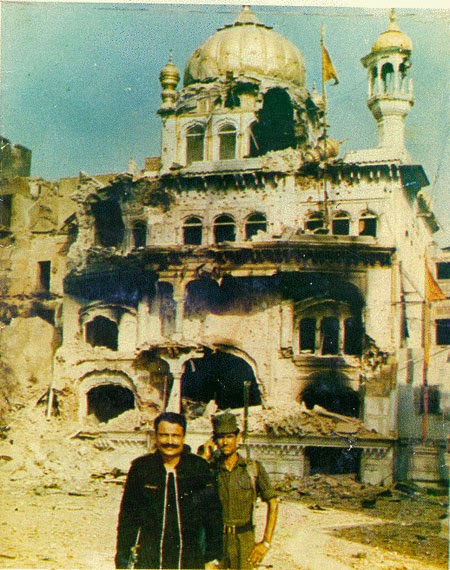
39th Anniversary of the Indian government attack on the holy Darbar Sahib!

0
The blood-soaked marble in front of the Akal Takht Sahib in the Darbar Sahib, Amritsar, Punjab, South Asia

By American Sikh Council | Statement |

The American Sikh Council (ASC) stands in solemn solidarity with the Sikh ‘Panth’ in remembering the attack by the Indian Government on the most sacred and important Gurdwara for the Sikhs – “Darbar Sahib” (incorrectly known as the Golden Temple, Harmandar and Hari Mandir). The attack was planned to coincide with Guru Arjan Sahib’s martyrdom on, June 1, 1984.

Even though this is a very complex issue the bigger question is why?

During the parliamentary elections of 1971, Indira Gandhi had defeated Raj Narain from Rae Bareli (Uttar Pradesh) constituency. He filed a petition in the Allahabad High Court accusing Indira Gandhi of electoral malpractices. On June 12, 1975, Justice Sinha found Indira Gandhi guilty and declared her election null and void. He also barred her from contesting elections for next six years. She refused to concede. On June 25, 1975 Indira Gandhi the Prime Minister of India declared a state of emergency as her leadership position was at stake. A strong political opposition put her in a vulnerable position and in order to consolidate power she made a radical move by usurping all powers to control a country which she claimed was allegedly being destabilized by various unseen forces of the time.

During that period the country was in turmoil which included protests and civil disobedience which were all put down with brute force. Most of Gandhi’s political opponents were imprisoned at will, the press was censored and there were widespread violations of human rights.

According to Shah Commission, nearly 111,000 people were arrested under detention laws. Torture and custodial deaths also occurred during Emergency.

The Constitution was amended in an autocratic manner, especially the 42nd amendment. Another amendment was made declaring that elections of Prime Minister, President and Vice-President could not be challenged in the Court. The government restricted all the fundamental rights of the citizens during that era.

The fear of arrest, detention and torture was rampant and dissent was minimized across India. The only people to continuously challenge Indira Gandhi’s illegal authority through mass peaceful protests were the Sikhs of Punjab starting on July 9, 1975. Over 100,000 protested and more than 50,000 courted peaceful arrest till the jails were overflowing.

Finally, Indira Gandhi’s government finally decided to hold elections and after 21 months in March 1977. All leaders and activists were released from jails. Opposition had very little time but it quickly formed a new party called the Janata Party. The majority of the people voted against Gandhi and the Janata Party won hands down. The opposition coalition lasted for less than four years.

Indira Gandhi bounced back in the 1980 general elections to become PM again but she never forgot the serious opposition by the Sikhs of Punjab against her, who stood for civil rights, justice, liberty and democratic values. She continued to look for excuses and ways to get back at the Sikhs and permanently break the back of their leadership.

Sikhs had been protesting since 1978 and those protests got louder as time progressed in reference to a long list of genuine grievances, but most surrounding economic freedom and control of all the resources within the state of Punjab. In all the meetings and parlays with Gandhi’s government, no concrete solutions ever came out, to solve the legitimate demands of the Sikhs of Punjab which would benefit everyone.

Simultaneously, in the same period Sant Jarnail Singh Bindrawale a preacher from the Damdami Taksal reminded Sikhs to respect themselves by being true to their Sikhi. His speeches were candid and understood by the ordinary Sikhs but also spoke to others. There was a resurgence of Sikhs taking their religion seriously and thousands taking ‘Kanday Batey Di Pahul’. Indira Gandhi was fearful of a Sikh opposition to her rule and knew she could not buy the honest Sant. Being a seasoned politician and using all the Brahminical tricks up her sleeve, she decided to kill many birds with a stone. First, she covertly used the government resources to paint the Sant as her own plant. When that did not work, she painted the Sant and all Sikhs aligned with his thinking, by framing them as ‘terrorists’ and used the government-controlled media to the hilt in spreading mis-information and propaganda that Sikhs wanted to separate from India. Sant Jarnail Singh Bindrawale never asked for a separate homeland, except for the basic constitutionally guaranteed rights and to be treated as equal citizens. But the uneducated, autocratic and narcissist Brahmin woman could not fathom anyone, least of all a simple Sikh preacher standing up to her! She had to teach the Sikhs a lesson.

Indira Gandhi had proactively planned at least 30 months in advance to attack and subjugate the Sikhs, starting with breaking their spirit. According to Lt.Gen S.K.Sinha a retired Army commander, a mockup complex of the Darbar Sahib was set up in mountainous town of Chakrata, 55 miles from Dehradun (Uttarakhand) where the Indian Military Academy is located. The Indian Army commandos had started training seriously 18 months earlier. Information is a two-way street, so the Sant and his Sikhs got to know about the draconian plan of attacking the Darbar Sahib.  No Sikh worth his salt would stand for such an affront to their most revered religious institution and the Sant and his men decided to take a stand and protect it. They were fully aware that Indira wanted them there, in order for her own ruse to stick. The brave Sant was aware that his stand to protect the hallowed ground would also be an excuse for Indira to attack and it was a Hobson choice! Unfortunately, the dilemma was, do they allow the attack to go unchallenged or take her bait but also protect the Darbar Sahib against her attack?

The much-maligned Sant Jarnail Singh Bhindrawale did not have single charge filed against him till the day of the attack. The mighty Indian Army with thousands of soldiers with an entourage of generals including some Sikh turncoats (Brar, Dayal, Oberoi, et.al) were kept at bay for more than three days by just 150 Sikhs with simple weapons. The Indian government forces killed thousands of innocent Sikhs including women and children. After three days of fighting, over 10,000 pairs of footwear went unclaimed. Hundreds of army trucks took away bullet riddled bodies of Sikh children, women and men only to be burnt to cinder with no traces left behind.  

The entire state of Punjab was locked down and while no press or foreigners were allowed in. Over 42 historic gurdwaras across Punjab were attacked simultaneously, killing thousands of more innocent Sikhs. The Indian Army issued a public proclamation in its June 1984 monthly news bulletin No 153 – ‘Baat Cheet’. The decree read that ‘Any knowledge of the “Amritdharis” who are dangerous people and pledged to commit murder, arson and acts of terrorism should be immediately brought to the notice of the authorities. These people may appear harmless from outside but they are basically committed to terrorism. In the interest of us all, their identity and whereabouts must always be disclosed.’ This shocking and illegal decree has never been officially rescinded and no official apologies have been forthcoming to date.

This was the start of the very prolonged ‘Sikh Genocide 1984 – 1998’ www.thirdsikhgenocide.org which can fill many blood-soaked volumes. The trauma of a government attacking its own citizens, especially those who gave the most lives in the freedom of that country is beyond shocking. Simply put, the Brahminical leaders not only declared moral bankruptcy on the enormous debt owed to the Sikh nation but turned out to be savage demons like the bloodthirsty Hindu goddess Kali and her cohorts.

Regardless of which upper caste Hindu leaders are at the helm of the country, there has been long standing institutional hatred and discrimination against Sikhs passed down from one bigoted regime to the next. To date, the Article 25 (b) of the Indian Constitution has not been changed, i.e. in 73 years! Sikhs are still defined as Hindus legally! A long litany of decades old, economic, civil and constitutional grievances remains unheard, while dozens of protests continue every year, peacfully.

The most feared reality by the Brahminical puppeteers is, that the universal and extremely egalitarian revelatory teachings of the Sikh religion can completely upend the diabolically digressive Brahmin designed (Manu’s) caste system along-with the devious Poona Pact, therefore keeping the Sikhs under their heel is very important. The permanent caste majority (PCM) cannot afford to dismantle the few millennia old Brahminical-Hindu Apartheid, otherwise the PCM will become politically impotent.

The Sikhs need to be proud of those brave Sikhs who had the Guru’s blessings to stand and guard the ‘Darbar Sahib’ till their last breath. Sant Jarnail Singh Bindrawale, Maj. Gen Shabeg Singh and other shaheeds will always be remembered as they reside in the hearts of every true Sikh. It behooves every Sikh family across the world wherever they reside, to remember the illegal, unprovoked and disastrous attack by the Indian government and hold an Ardas at a minimum for all those innocent Sikhs who were murdered in June 1984. Every gurdwara must also hold an Ardas to remember those who perished and teach the recent bloodied history to all our children.

Till there is a hearing and followed by complete justice, there cannot be closure! So, the wounds still remain raw and the hurt continues to fester, while the ruling majority of that country pretends to have its head in the sand and keeps repeating, their Hindutva mantra “forgive, forget and move on!”

The 2021 ‘Farmers/People Uprising’ led by the Sikh farmers of Punjab was the world’s largest protest, while being incredibly peaceful and well-organized protest was attended by millions from all over that country. True Sikh leadership could be seen in action on the five highways surrounding the state of Delhi. This kind of collective consensus-built leadership in the service of all, is exactly what the world’s largest democracy is afraid of, because it challenges the status-quo and the PCM’s unending Hindu Apartheid and even more so with the current RSS/BJP’s fascist autocratic leadership.  \

The American Sikh Council (ASC) will continue to support efforts to ensure full accountability and justice, including ongoing demands for full and accurate count of every Sikh and anyone else murdered by the Indian government to date, under the facade of terrorism. ASC will continue to teach and educate the public about the brutal and illegal attack on the Darbar Sahib by the Indian regime, while making sure our children never forget their valiant history! ASC stands with every other sovereign Sikh for the Chardi Kala of the Sikh Panth!

The American Sikh Council is the umbrella organization representative of Sikhs in the United States. It is an elected body of Sikh Gurdwaras and institutions. Currently 74 Gurdwaras and other Sikh institutions across the nation are members of ASC. The major governing purpose of the organization is to represent the collective view of Sikhs in the United States. ASC works to promote Sikh interests at the national and international level focusing on issues of advocacy, education, and well-being of humankind.

RELATED STORY:

From Jallianwalla Bagh to Operation Bluestar; Questions on information credence (Asia Samachar, 23 Jan 2023)

ASIA SAMACHAR is an online newspaper for Sikhs / Punjabis in Southeast Asia and beyond. When you leave a comment at the bottom of this article, it takes time to appear as it is moderated by human being. Unless it is offensive or libelous, it should appear. You can also comment at FacebookTwitter, and Instagram. You can reach us via WhatsApp +6017-335-1399 or email: asia.samachar@gmail.com. For obituary announcements, click here.

Pritam Kaur Sidhu (1933 – 2023), Port Klang

In Loving memory of our Mother, Grandmother & Great Grandmother

SARDANI PRITAM KAUR SIDHU

10.4.1933 – 3.6.2023

Age : 90 years old

(Village:-Landeh)

Husband: Late Nirbhai Singh (Kaleke) – Port Klang

ਚਲ ਦਰਹਾਲ ਦੀਵਾਨਿ ਬੁਲਾਇਆ।। ਹਰਿ ਫੁਰਮਾਨੁ ਦਰਗਹ ਕਾ ਆਇਆ।। ਰਹਾਉ।।
“Go quickly, Dharma-Raj has called ; The command of the Lord’s shrine has come.” (SGGS, 792)


ਗੁਰਮੁਖਿ ਜਨਮੁ ਸਵਾਰਿ ਦਰਗਹ ਚਲਿਆ।।
“Spending this life fruitfully, Gurmukh passes to the other world” (SGGS, 14)

In the time you were here with us, you managed to bless us with your presence and your kindness. Not a day goes by where we will miss the relief and comfort of your soul that have touched everyone in our family. The greatest gratitude showered upon us by Waheguru was your presence. You will be forever in our hearts as we will never forget the values that you have engraved in our lives. May your soul rest in peace.

Leaving behind;

Sons / Spouses:

  1. Jaginder Singh Gill / Ravneet Kaur Sidhu
  2. Balbinder Singh Gill / Sulinder Kaur
  3. Dr Swaran Singh Gill / Sharon Kaur Randhawa

Daughters / Spouses:

  1. Balber Kaur (USA) / Manjit Singh Dhaliwal
  2. Jaswant Kaur (UK) / Gurdharsan Singh Sidhu
  3. Kulwant Kaur (USA) / Sean Downing

Grand Children / Spouses:

  1. Lakhvinder Singh Gill / Harvin Kaur Sidhu
  2. Akedeep Singh Gill / Gursharan Kaur Dhanoa
  3. Jasvin Singh Sidhu / Nicola Grewal
  4. Dr. Pravin Singh Dhaliwal
  5. Jasbir Kaur
  6. Jasveena Kaur Gill
  7. Sareet Kaur Sidhu
  8. Monika Tazbir Kaur
  9. Dr. Sarina Kaur Dhaliwal
  10. Dr. Simran Kaur Dhaliwal
  11. Navneet Singh Gill
  12. Dr. Divnesh Singh Gill
  13. Sanesh Singh Gill
  14. Jaslin Kaur Gill

Great Grand Children:

  1. Mandev Singh Gill
  2. Keshdeep Singh Gill
  3. Gursheren Kaur Gill
  4. Akashdeep Singh Gill
  5. Seraya Kaur Sidhu
  6. Jessleen Kaur Sidhu
  7. Ranaya Kaur Sidhu

Path da Bhog: 10th June 2023 (Saturday), from 10am to 12pm, at Gurdwara Sahib Klang

Contact:
Dr. Swaran – 012 6557540
Balbinder – 012 3931739
Akedeep – 016 6124686

| Entry: 3 June 2023; Updated: 7 June 2023 | Source: Family

ASIA SAMACHAR is an online newspaper for Sikhs / Punjabis in Southeast Asia and beyond. When you leave a comment at the bottom of this article, it takes time to appear as it is moderated by human being. Unless it is offensive or libelous, it should appear. You can also comment at FacebookTwitter, and Instagram. You can reach us via WhatsApp +6017-335-1399 or email: asia.samachar@gmail.com. For obituary announcements, click here

Captain Rajinder Singh (1979 – 2023), Bidor / Cheras

CAPTAIN RAJINDER SINGH S/O AMAR SINGH

7.6.1979 – 2.6.2023

From Bidor, Perak; Living in Cheras, Kuala Lumpur

With profound grief, this is to inform that Captain Rajinder Singh passed away peacefully on 2nd June 2023.

Waheguru’s embrace was a haven for you when you grew tired.
Your rest is deserved, for His garden is only for the best.
May you find eternal peace there; your pain is now replaced by beauty.
We cannot bring you back, but we can keep your memory alive.

Father: Amar Singh (Bidor)

Mother: Swarn Kaur

Wife: Reena Kaur Sandhu

Children:
Jezreel Singh
Gyana Kaur

Also missed by Brothers, Sisters-in-Law, Nieces, Uncles & Aunties and Cousins.

Sehaj Path Da Bhog: 17 June 2023 (Saturday), from 9.30am to 12pm, at Gurdwara Sahib Kuyow, Kuala Lumpur

A loving Son, Husband, Father, Brother, Brother-in-law & Uncle will be fondly remembered for all the lives he has touched with his generosity, kindness & charm. His loss has left a void in the lives of those who knew him.

“The most painful goodbyes are the ones that are never said or explained.”

Contact:
Avtar (Brother) +6012 217 6314
Jessy (Brother) +6012 206 8615
Asbir (Brother-in-Law) +6012 469 9330

| Entry: 2 June 2023; Updated: 14 June 2023 | Source: Family

ASIA SAMACHAR is an online newspaper for Sikhs / Punjabis in Southeast Asia and beyond. When you leave a comment at the bottom of this article, it takes time to appear as it is moderated by human being. Unless it is offensive or libelous, it should appear. You can also comment at FacebookTwitter, and Instagram. You can reach us via WhatsApp +6017-335-1399 or email: asia.samachar@gmail.com. For obituary announcements, click here

Penang state government holds Vaisakhi festival on June 4

By Asia Samachar | Malaysia |

The state government will be holding the Penang Vaisakhi Festival at Fort Cornwallis, Esplanade, on Sunday (4 June 2023), from 6pm to 11pm. The event comes after a two-year interval due to the Covid-19 pandemic restrictions. The event will be attended by Penang governor Ahmad Fuzi Abdul Razak and chief minister Chow Kon Yeow.

RELATED STORY:

Vaisakhi national level rumah terbuka set for 26 May (Asia Samachar, 18 May 2019)

ASIA SAMACHAR is an online newspaper for Sikhs / Punjabis in Southeast Asia and beyond. When you leave a comment at the bottom of this article, it takes time to appear as it is moderated by human being. Unless it is offensive or libelous, it should appear. You can also comment at FacebookTwitter, and Instagram. You can reach us via WhatsApp +6017-335-1399 or email: asia.samachar@gmail.com. For obituary announcements, click here.

Jagdish Singh (1950 – 2023), Setapak, Kuala Lumpur

JAGDISH SINGH A/L ARJAN SINGH

Setapak, Kuala Lumpur

3.8.1950 – 1.6.2023

Wife: Jit Kaur

Children / Spouse:
Amarpreet Kaur / Jaspreet Singh Bhatia
Gursewak Singh

Grandchildren: Samaya Kaur

Path da Bhog: 11 June 2023 (Sunday) at Tatt Khalsa Diwan, Kuala Lumpur

Programme:

7am to 8.30am Asa Ki Vaar
9.30am to 11.30am Kirtan/Katha, Antim Ardaas and Path Da Bhog

Contact: Gursewak Singh (Son) 012 210 5601

| Entry: 2 June 2023; Updated: 3 June 2023 | Source: Family

ASIA SAMACHAR is an online newspaper for Sikhs / Punjabis in Southeast Asia and beyond. When you leave a comment at the bottom of this article, it takes time to appear as it is moderated by human being. Unless it is offensive or libelous, it should appear. You can also comment at FacebookTwitter, and Instagram. You can reach us via WhatsApp +6017-335-1399 or email: asia.samachar@gmail.com. For obituary announcements, click here

No Tobacco Day

0

By: Bhupinder ‘Bo’ Singh | Opinion |

World Health Organization (WHO) has recognized the harmful effects of consumption of tobacco and its products and dedicated May 31 as No Tobacco Day.

Tobacco claims the lives of as many as half of its users and kills over eight million people every year, says WHO.

We, the Sikhs, are really thankful that our Guru’s asked to abstain from it. The Sikh Rehat Maryada which provides guidelines for code of conduct has clearly spelled out against its consumption in Chapter X – Beliefs, Observances, Duties, Taboos and Ceremonies, Sub-section J as under:

j. A Sikh must not take hemp (cannabis), opium, liquor, tobacco, in short, any intoxicant. His only routine intake should be food.

This day is dedicated to spreading awareness about the adverse effects of consuming tobacco. The day also aims to encourage people to quit tobacco in any form and lead a healthier life.

For Sikhs this acts a reminder for the edicts of our Gurus not to consume tobacco products not just personally and lead a healthier life but also spread the message to others. Thus, we can help in not just making our families lead a healthier life but also help in creating a healthier world.

This is also a sewa in creating a healthier world. Afterall, the Sikh’s prayer is for welfare of entire mankind and on this day:

  1. We can thank our Gurus for making us aware of harmful effects of tobacco products and excluding it from the list of items to be consumed and putting it on the banned list.
  2. This year the WHO’s theme is “Grow food, not tobacco”. They have embarked on a global campaign aimed to raise awareness about alternative crop production and marketing opportunities for tobacco farmers and encourage them to grow sustainable, nutritious crops.
  3. Support WHO’s campaign to expose the tobacco industry’s efforts to interfere with attempts to substitute tobacco growing with sustainable crops, thereby contributing to the global food crisis.
  4. Encouraging smokers and other consumers of tobacco products to give up this unhealthy habit thus adopting healthier lifestyle.

Let us all pray to make our world a healthier place by ridding it of harmful tobacco.

Bhupinder ‘Bo’ Singh, Houston. Born in Bhamo, Myanmar, he now lives in Houston, US, where he runs a manufacturing company formed with his son. A mechanical engineer by training, he has authored a number of books, including Connecting with the Master – A collection of essays on topics related to Sikhism (2006) and In Bully’s Eyes – An Illustrated Children’s book on Bullying (2019).

RELATED STORY:

The Sakhi that Shaped my Life (Asia Samachar, 25 March 2023)

ASIA SAMACHAR is an online newspaper for Sikhs / Punjabis in Southeast Asia and beyond. When you leave a comment at the bottom of this article, it takes time to appear as it is moderated by human being. Unless it is offensive or libelous, it should appear. You can also comment at FacebookTwitter, and Instagram. You can reach us via WhatsApp +6017-335-1399 or email: asia.samachar@gmail.com. For obituary announcements, click here.