In the time you were here with us, you managed to bless us with your presence and your kindness. Not a day goes by where we don’t miss the relief and the comfort of your soul, that touched everyone in our family. The greatest gratitude showered upon us by Waheguru was your presence. Now you shower the souls who have passed on with your presence. You will forever be in our hearts as we will never forget a man like you.
In Loving Memory Of Our Beloved Father / Babaji
1st Barsi Prayers
LATE TARA SINGH S/O LATE CHANDA SINGH
(14.3.1939 – 19.6.2022)
Village: From Fefreh Bhai Ke. Based in Seremban, Negeri Sembilan.
ASIA SAMACHAR is an online newspaper for Sikhs / Punjabis in Southeast Asia and beyond. When you leave a comment at the bottom of this article, it takes time to appear as it is moderated by human being. Unless it is offensive or libelous, it should appear. You can also comment at Facebook, Twitter, and Instagram. You can reach us via WhatsApp +6017-335-1399 or email: asia.samachar@gmail.com. For obituary announcements, click here
Awtar Singh Mendar Singh and the existing team was returned unopposed to steer Gurdwara Sahib Petaling Jaya (GSPJ) on the strength of work done over the last few years, including spearheading emergency relief and assistance for flash flood victims towards the end of 2021.
The 52-year-old community leader was returned unopposed for the second consecutive term at GSPJ’s annual general meeting (AGM) on May 28. He had previously served as vice president, secretary and assistant secretary.
Baldev Singh Tahil Singh, a management consultant and senior manager of an international college, was elected unopposed as the vice president.
Two posts were up for contest. Entrepreneur Keshmahinder Singh Manjeet Singh was elected as the secretary and Saran Singh Phan Singh as the treasurer. Keshmahinder is the founder and CEO of software applications provider Kollect Systems Sdn Bhd while Saran is also the secretary of the Khalsa Koperasi.
The 11 committee members are Manisha Kaur Badesha, Harjinder Singh Mohan Singh, Ranjit Kaur Pritam Singh, Balbir Singh Sohanpal, Indarjit Kaur a/p Santa Singh, Rajinder Singh Banga Singh @ Santa Singh, Sarabmeet Singh Madhanjit Singh, Avtaar Singh Bhag Singh, Kuldip Singh Giani Harnam Singh, Pavandeep Singh Pajan Singh and Jasbinder Singh Ajaib Singh.
The outgoing committee, serving from 2021 to 2023, had five females, including three principal office bearers. They were vice president Jasbir Kaur, secretary Sharan Kaur and treasurer Indarjit Kaur and committee members Manisha Kaur and Ranjit Kaur.
Anwar Ibrahim (front, centre) visiting Gurdwara Sahib Petaling Jaya on Dec 25, 2021 to deliver aid and see flood relief work going on there – Photo: GSPJ
In December 2021, the Petaling Jaya gurdwara had stepped forward to provide emergency relief and assistance to flash flood victims in Taman Sri Muda, Shah Alam. Read about it here.
The effort snowballed into a full scale relief aid operation when they began collecting desperately needed items like food and clothes, and activated a control room to distribute them directly to the affected areas. And then came the legion of volunteers – people of all faiths and races, from all walks of life. Hundreds of them, stepping forward out of the blue, all wanting to do their bit.
Volunteers at work at Petaling Jaya gurdwara on Dec 20, 2021 – Photo: Sarjit Kaur
The relief operation also saw Anwar Ibrahim, then Opposition and Pakatan Harapan (PH) leader, visiting the gurdwara grounds on Dec 25, 2021 to see firsthand the massive operation and deliver aid. Eleven months later, he was elected Prime Minister.
When asked what is one of the major challenges being addressed by the GSPJ team, Awtar tells Asia Samachar: “Getting the youth to the gurdwara…and giving them enough opportunities.”
In his speech at the AGM, Awtar said the gurdwara has been a ‘neutral ground’ where all members of the Sanggat are welcome with open arms and boundless love.
In his message delivered to members, Awtar noted that the gurdwara has strived to reach out and engage with the Sanggat not only physically but also by tapping the online technology.
Gurdwara Sahib Petaling Jaya on 12 April 2022, lighted up for Vaisakhi – Photo: Asia Samachar
ASIA SAMACHAR is an online newspaper for Sikhs / Punjabis in Southeast Asia and beyond. When you leave a comment at the bottom of this article, it takes time to appear as it is moderated by human being. Unless it is offensive or libelous, it should appear. You can also comment at Facebook, Twitter, and Instagram. You can reach us via WhatsApp +6017-335-1399 or email: asia.samachar@gmail.com. For obituary announcements, click here.
Well, this is quite a science for me. So let me break this down……..
First, wear a black colour turban – that takes care of the top of your head that will always be and is meant to be, forever black.
I am not suggesting you change your religion because I can’t. You see, Sikhism is not a proselytising religion and proselytism is discouraged, out of the belief that each person has a fundamental right to practice their religion freely.
Having a “black” looking head does wonders to one’s permanent youthful pate and poise; imagine the hundred of thousands you save on barber’s bills in your lifetime. Not to mention escape from all those barber-voodoo wrestlerlevel neck spins that result in spondylitic scares.
Not known to many, as it is covered under the Official Sikh Act (OSA), turbans cure baldness.
Hiding one’s age is about covering up; you’ll never be able to tell how old a lady is if she is in a full hijab, unless you believe the eyes are the window to the soul. In which case, I suggest doll lash mascara and I am told violet-venom coloured contacts instantly brushes off any hint of agedness. Black hijab recommended at all times.
I think you are getting the picture now, it is about blanketing the surface area of your face… clever boy…
Next, get a pair of glasses, powered or non-powered boleh, vanity has no boundaries.
Glasses, larger the better, can cover quite a bit of surface skin. Tint is a must, the Rayban larger-than-your-face Explorer series is a winner by far. But the lesser affluent of us can opt for Photogrey lenses that instantly darken in the sunlight, giving you a false Tom Cruise look in the sun.
Hey, how you feel about yourself is just as important!
Try to avoid the clip-on mirrored or reflective sunglasses; because while they give you sun and legal protection for the voyeur in you at public beaches, they unfortunately also draw attention to you which is a no-no when your face is designed to be in stealth mode.
Now, as far as crow’s feet go, ensure your glasses have a thick temple (those long arms on the sides of the frame that extend from the hinge and over the ears) and of opaque design. No more crows, only good looking birds.
Finally, if you are a man, grow a full beard and moustache – this key tip takes care of half the surface span of your mug and neck. I repeat neck, where the tell-tale creases will camouflage themselves in the lushness of your weekly jet-black dyed follicular bush. Key charm offensive tool: keep all bristles neatly in check.
When dyeing, don’t miss the eye brows; the ultimate macho virtue signal.
Now, all these helpful tips can also be personally demonstrated by your loyal Friday scribe, but by appointment only.
That’s why I am forever grateful that I am a Sikh.
This article, first appeared in Marketing Weekender, May 2023, issue. Click here for the full issue.
ASIA SAMACHAR is an online newspaper for Sikhs / Punjabis in Southeast Asia and beyond. When you leave a comment at the bottom of this article, it takes time to appear as it is moderated by human being. Unless it is offensive or libelous, it should appear. You can also comment at Facebook, Twitter, and Instagram. You can reach us via WhatsApp +6017-335-1399 or email: asia.samachar@gmail.com. For obituary announcements, click here.
We attend Satsangat in Gurudwaras for various reasons as has been conditioned by our learning thus far from our own experience, from our parents, peers, parcharaks and babas. What is the real emphasis of the satsangat? Guru Nanak defines Satsangat as follows
ਸਤਸੰਗਤਿ ਕੈਸੀ ਜਾਣੀਐ ॥ satsangat kaisee jaanee-ai. (SGGS 72) What constitutes (Satsangat) a congregation of learners/seekers?
ਜਿਥੈ ਏਕੋ ਨਾਮੁ ਵਖਾਣੀਐ ॥ jithai ayko naam vakhaanee-ai. Satsangat is where there is contemplation/ realization and/or deliberation /discourse on/of ONLY ONE Creator and His Divine Virtues in calculated in daily life.
ਏਕੋ ਨਾਮੁ ਹੁਕਮੁ ਹੈ ਨਾਨਕ ਸਤਿਗੁਰਿ ਦੀਆ ਬੁਝਾਇ ਜੀਉ ॥੫॥ ayko naam hukam hai naanak satgur dee-aa bujhaa-ay jee-o. Nanak says, ONLY ONE Creator and His Divine Virtues is the Divine Hukm, the messages of the Perpetual Guru in existence has given me this understanding.
2. Four matters has been emphasized in these phangthis:
Eko ਏਕੋ the One and Only Creator,
His Naam ਨਾਮੁ His Divine Virtues as contained in Gurbani,
ਵਖਾਣੀਐ the Divine Virtues are to be contemplated, understood, deliberated and assimilated in daily use and,
therefore understanding Creator’s ਹੁਕਮੁ Hukm within – Cosmic Law from the messages of the Satguru as contained in the Gurbani. Here we have an irrefutable definition of the Satsangat as provided by Guru Nanak.
By using the term ‘EKO NAAM‘ in the foregoing verse, Guru Nanak has eliminated any speculation and doubt. That is, only that Sangat, which meets this criteria of the Gurbani is to be known Satsangat, otherwise, it’s not qualified to be known or called Satsangat.
3. Now let’s dwell upon some of the possible reasons some of us attend Satsangat (congregational gatherings). For now I shall categorize this into five main reasons.
(a) First, it is a Pooja – worship / ritualistic – we attend because it is good to attend. It is sacred. The wow factor of attending satsangh. The conditioned mind – my parents has been doing this, I also should do the same. Sikhs are encouraged to attend satsangat without understanding its objective. We do all kind of physical sewa at the very institution build for learning (gurudwara) about Naam but do not partake in shabad vichaar. Then there is the social aspect of satsangat – I must show my face as I have been invited by my relatives and friends.
(b) Second, we attend satsangat believing and expecting a miracle that life will change for the better. You will obtain what you been desiring for. Or half-baba has stated, never mind, you just keep on attending and things will look up automatically, miraculously.
(c) Third, the routinehas set in for decades and is continuing that satsangat should be attended – has became rutten (repetition of sorts) but nothing changed for I don’t know what to look for while attending satsangat. Or satsanghis (people who attend Satsangs) get together to repeat a word continuously. It becomes an organised religious obligation.
(d) Fourth, attending satsangat out of fear of punishment from God. This a conditioning some of us pick up in our life journey. Some of the half-babas become advisors when innocent satsanghis seek their counsel for their sorrow and pain. These half-babas infuse fear that the satsanghis’ ancestors re unhappy, and that is root cause of their difficulties. Many become victims of doing paths to appease the ancestors rather than we ourselves learning the divine virtues – realizing the Hukm within to be applied in our daily life to become a Gurmukh. It makes no sense fearing God who is sitting right within me as the driving force of my life. It makes a lot of sense to love, appreciate, revere and realise this Creator. Guru Nanak empowered us as human being with divine virtues of Fearlessness (Nirbhau) and Contentment (Santokh).
(e) Fifth, our habit of asking and begging out of our desires and greediness for things for ourselves and our children. And this has been encouraged by half-babas who dictate long ardas (prayer) for their followers who are in the mode of begging and fear. In Gurbani, the only asking advocated is asking for contentment. The virtue of contentment is the starting point of Sikh spirituality. It begins with inner testimony that the Creator is within me, hence I have no fear and no want. Why should I be asking when the Creator of Universe is sitting right within me? Begging, pleading, fearing and crying out to an entity that is sitting within me as the giver and driver of my life makes no sense. The rightful emotion of the Creator within me is love, reverence and realisation. Sikhi begins with an affirmation to the effect that the Creator has given me all that I need. I ask for nothing. My only prayer is one of Thanks, of Appreciation and of Gratitude – in Contentment.
(half baba – meaning a pacharak with a following, who does shabad vichar but is still immersed/conditioned in the pujaris/bipar mind set with emphasis on pooja,miracle, rutten and putting people in doubts of fear and asking)
4. From the definition of Satsangat of Guru Nanak it is clear that when a Sikh makes up his mind to attend satsangat he should affirm and objectify that I shall make an effort to realize the Hukm of the One Creator within me by knowing/understanding/contemplating His Divine Virtues through the messages within the Shabad and applying this Divine virtues in my day to day life.
5. Sikhi is living 24/7 the Gurmukh-Lifestyle — a Lifestyle guided by the Divine Wisdom (virtues) of the Gurbani. In short, if WE ARE WILLING TO REALIZE WITHIN and PRACTICE after attending satsangat, as the SGGS provides us Wisdom (Giaan), which:
protects Sikhs from deception, fraud, hypocrisy or Pakhand,
makes Sikhs Wise, just, rational or discreet ,
inspires Sikhs to be ONLY good human being,
motivates Sikhs to pursue higher education,
makes Sikhs prudent and brave,
builds high character, originality and conviction,
inspires to live a learner life (the Gurmukh Lifestyle),
removes delusion, doubts, fear and Karamkaand,
leads people to the straight path of realizing His Hukm,
does good to the society,
rejects Jaat Paat (casteism), inequality, injustice, and so on.
6. Fittingly, the Gurbani’s edict is that Sikhi is an unbroken learning of the Divine Wisdom of the Gur-Shabad through Shabad-Vichaar, and then living that Wisdom in daily life (Gurmukh Lifestyle). The word ultimate (ootam) has been used.
ਊਤਮ ਕਰਣੀ ਸਬਦ ਬੀਚਾਰ ॥੩॥ ootam karnee sabad beechaar. ||3|| (SGGS 158) The ultimate action is Reflections/Contemplation on the Shabad – Shabad Vichaar.
7. Guru’s sewa has been distorted and skewed more towards physical sewa but according to Gurbani definition it is ultimately Shabad Vichar. All the support and sewa at a Gurudwara is towards this goal. And the objective to attend satsangat at Gurudwara is for contemplation of the shabad. If this is not happening, then there is a need for introspection of what you are doing. Are you attending satsangat for reasons as stated in paragraph 3 above? Only through contemplation of shabad, one’s vices (vikaars) and ego are kept at bay.
ਗੁਰ ਕੀ ਸੇਵਾ ਸਬਦੁ ਵੀਚਾਰੁ ॥ gur kee sayvaa sabad veechaar. (SGGS 223) The Guru’s Seva or Service is Shabad Vichaar – Internalizing the Shabad – Enlightening oneself with the Updesh or message of the Shabad.
ਹਉਮੈ ਮਾਰੇ ਕਰਣੀ ਸਾਰੁ ॥੭॥ ha-umai maaray karnee saar. ||7|| Undertaking (this) essential effort, one subdues haumai (i.e. false ego-sense and its vices – Bikaar).
8. At page 413 of the SGGS, Guru Nanak states when you live your life according to the divine virtues from vichar of the shabd there is no doubt one realizes the creator within.
ਸਬਦੁ ਵੀਚਾਰਿ ਮਿਲਣੁ ਨਹੀ ਭ੍ਰਾਤਿ ॥੭॥ sabad veechaar milan nahee bharaat. ||7|| (SGGS 413) Through the Shabad Vichaar, Union with the Creator is Realized within; there is no doubt in it.
9.Shabad-Vichaar is must to cultivate the Divine Knowledge, for the Gurmat (teaching or Wisdom of the SGGS) is the Way of understanding. It is meant to be learned, understood and applied. The Gurbani Guides:
ਗਿਆਨੁ ਕਮਾਈਐ ਪੂਛਿ ਜਨਾਂ ॥ gi-aan kamaa-ee-ai poochh janaaN. (SGGS 1180) Gain Spiritual Wisdom by consulting Jan (Bhagats, Daas, Gurmukhs) the humble servants of the Creator.
10. Guru Amardasji, emphasising further on sewa being shabad vichaar, states
ਸਤਿਗੁਰੁ ਜਿਨੀ ਨ ਸੇਵਿਓ ਸਬਦਿ ਨ ਕੀਤੋ ਵੀਚਾਰੁ ॥ satgur jinee na sayvi-o sabad na keeto veechaar. (SGGS 88) Those who have not served the Creator in perpetual existence through the contemplation/internalization of the shabad,
ਅੰਤਰਿ ਗਿਆਨੁ ਨ ਆਇਓ ਮਿਰਤਕੁ ਹੈ ਸੰਸਾਰਿ ॥ antar gi-aan na aa-i-o mirtak hai sansaar. No wisdom has awakened within them, they may appear as alive but they are as dead in the world – spiritually dead.
Clearly, spiritual quest significantly rests on Vichaar of Gur-Shabad, which goes beyond dogma, empty rituals of repeating a word, traditions and organized religions. Vichaar is not just collecting information. Neither it is reading and memorizing scriptures nor philosophies, etc. It is real learning/awareness that has to change us, transform us, and make us grow within daily.
11. An important component of Vichaar is the freedom to question (spiritual inquiry), which helps remove doubts and confusions of the mind. Unfortunately, in Gurdwaras, question and answer format is totally missing. As a result, we do not get to Realize the full Spiritual Benefit (Laahaa) of the Gurbani. As there is no mechanism or system in place whereby members of the congregation (Sangat) are afforded and encouraged to ask questions to those (professional preachers, raagees, bhais, etc.), conducting sermons in Gurdwaras.
12. If we have been attending satsangats for decades and further there are opportunities to ask questions to remove doubts and confusions of the mind, but instead we are still in turmoil and struggle to understand Gurbani and blindly accept half babas authority, than the heart is not yet pierced through, by the arrow of the Gur-Shabad, then obviously there is something wrong! Bhagat Kabeer ji states
ਕਬੀਰ ਸਤਿਗੁਰ ਸੂਰਮੇ ਬਾਹਿਆ ਬਾਨੁ ਜੁ ਏਕੁ ॥ kabeer satgur soormay baahi-aa baan jo ayk. (SGGS 1374) Kabeer, the Satgur, the Spiritual Warrior, has shot me with one Arrow – of spiritual Knowledge of his Shabad, Giaan.
ਲਾਗਤ ਹੀ ਭੁਇ ਗਿਰਿ ਪਰਿਆ ਪਰਾ ਕਰੇਜੇ ਛੇਕੁ ॥੧੯੪॥ laagat hee bhu-ay gir pari-aa paraa karayjay chhayk. ||194|| As soon as the ‘arrow’ struck me, I fell to the ground (i.e., became egoless), with a (hole in the Heart) – my Heart became assimilated or weaved with the Gur-Giaan, spiritual Knowledge).
13. Since the journey of a Sikh (learner) begins with sincere spiritual inquiry, there is tremendous emphasis on search (Khoj) and Shabad vichaar in the SGGS – reflecting on the Gur-Shabad or realizing the divine virtues in daily life. So, if we truly want to respect the Sri Guru Granth Sahib (SGGS), then, as the SGGS urges us, we must seek/churn Giaan (Divine Wisdom or Virtues) in the Gurbani through the Shabad-Vichaar and become the Gurmukh (the follower of Wisdom of the Gur-Shabad), and live accordingly. The one who truly respects the SGGS becomes the Gurmukh and his mind and life gets transformed. He gets absorbed into the Gurmat (ਗੁਰ ਕੀ ਮਤਿ, ਗੁਰ ਕੀ ਸਿਖਿਆ) the Gurbani’s Teaching, Virtues, Wisdom, Giaan).
14. The Gurbani cannot be more clear! Why Shabad-Vichaar is must? One ought to study Knowledge to some extent, because, it is the Shabad-Vichaar that gives rise to Giaan (ਸੂਝ-ਬੂਝ, Gur-Giaan, Aatam-Giaan, Shabad-Giaan, Gurmat, Spiritual Wisdom, Self-Knowledge).
ਮਨ ਸਮਝਾਵਨ ਕਾਰਨੇ ਕਛੂਅਕ ਪੜੀਐ ਗਿਆਨ ॥੫॥ man samjhaavan kaarnay kachhoo-ak parhee-ai gi-aan. ||5|| (SGGS 340) To instruct the mind one ought to study Knowledge to some extent.
15. Without Shabad-Vichaar, mere seeing (Darshan-ਦਰਸਨ) of SGGS will not, and cannot, liberate anybody from Maya, doubts, duality, Haumai (false ego-sense), worldly bondage, mind’s delusions, Vikaars, and so on.
ਸਤਿਗੁਰ ਨੋ ਸਭੁ ਕੋ ਵੇਖਦਾ ਜੇਤਾ ਜਗਤੁ ਸੰਸਾਰੁ ॥ satgur no sabh ko vaykh-daa jaytaa jagat sansaar. SGGS 594 Everybody in this world physically see/notice the Creator in perpetual Existence.
ਡਿਠੈ ਮੁਕਤਿ ਨ ਹੋਵਈ ਜਿਚਰੁ ਸਬਦਿ ਨ ਕਰੇ ਵੀਚਾਰੁ ॥ dithai mukat na hova-ee jichar sabad na karay veechaar. Nothing is going to happen just by seeing (the Satgur); one can not be liberated, untangled, unhindered from bondages – until and unless the Messages within the Shabad is Reflected upon and lived.
ਹਉਮੈ ਮੈਲੁ ਨ ਚੁਕਈ ਨਾਮਿ ਨ ਲਗੈ ਪਿਆਰੁ ॥ ha-umai mail na chuk-ee naam na lagai pi-aar. Because, without the Shabad-Vichaar – the filth of Haumai (false ego-sense) is not removed,and love for the Naam (Shabad, Hukam, Divine Virtues, Divine Wisdom, Giaan) does not get affixed (in the mind).
The foregoing verse also provides us with the clue as to how liberation (Mukti) is realized. That is, we can only be liberated of the bondages of vices – vikaars through the Reflection on the Gur-Shabad (Vichaar of the Gur-Shabad). Because, without the Shabad-Vichaar, the filth of the false ego-sense (Haumai or Bikaar of the mind) does not end. Also, without the Vichaar of the Gur-Shabad, love for the Naam (Gur-Giaan, Aatam-Giaan, Shabad-Giaan, Gurmat) cannot be implanted in the mind and the love for Virtues of the Creator does not well up.
16. Guru Nanak says that people without the Divine Knowledge are plundered.
Gurbani indicates that although the material of this world is for man’s livelihood, however, in reality, it turns into vices when attachment sets in! Because, abandoning the Spiritual Wisdom, we fall in love with the mirage-like enchanting world, and misappropriate everything — we use it unwisely!
ਨਾਨਕ ਮੁਸੈ ਗਿਆਨ ਵਿਹੂਣੀ ਖਾਇ ਗਇਆ ਜਮਕਾਲੁ ॥੧॥ Nanak musai gi-aan vihoonee khaa-ay ga-i-aa jamkaal. ||1|| (SGGS 465) O Nanak! Without the Guru’s Wisdom (guidance), one is plundered and devoured by vices – vikaars.
Jasswant Singh is a practicing lawyer of 27 years and a former teacher. He does katha on SGGS regularly at various gurdwaras throughout Malaysia. He can be contacted at dasmeshpita(at)gmail(dot)com
ASIA SAMACHAR is an online newspaper for Sikhs / Punjabis in Southeast Asia and beyond. When you leave a comment at the bottom of this article, it takes time to appear as it is moderated by human being. Unless it is offensive or libelous, it should appear. You can also comment at Facebook, Twitter, and Instagram. You can reach us via WhatsApp +6017-335-1399 or email: asia.samachar@gmail.com. For obituary announcements, click here.
Gurdwara Sahib Subang (photo taken in January 2022) – Photo: Asia Samachar
By Asia Samachar | Malaysia |
The Subang Sikh Association Selangor (SSAS) will continue its push for the better development of the community, with special attention to be paid to welfare and education.
These are among the areas that will be given attention by the new team at SSAS, which also runs Gurdwara Sahib Subang.
At its recent AGM, SSAS elected Balvinder Singh, a recently retired manager at a private firm who was serving as the society’s vice president, to lead the executive committee for the 2023-2025 period.
“Aside from Panjabi language education, we will also see how we assist Sikh students,” Balvinder told Asia Samachar in a short phone conversation. He takes over from Amrick Singh, one of the founding members of the association.
ASIA SAMACHAR is an online newspaper for Sikhs / Punjabis in Southeast Asia and beyond. When you leave a comment at the bottom of this article, it takes time to appear as it is moderated by human being. Unless it is offensive or libelous, it should appear. You can also comment at Facebook, Twitter, and Instagram. You can reach us via WhatsApp +6017-335-1399 or email: asia.samachar@gmail.com. For obituary announcements, click here.
SCD Government College, Ludhiana – Photo: College Website
By Prabhjot Singh | Opinion |
In 1970 when the newly set up Punjab School Education Board (PSEB) conducted its first ever Matriculation examination, Rajinder Singh Bhatia of Government Model High School, Cemetery Road, Ludhiana, stood first in the State. He scored 753 marks out of a maximum of 900.
Twenty-seven students, including nearly 50 percent boys of the same school, figured in the State Merit list. Lot of water has flown down the Sutlej since then. Number of boys, especially those from Government schools, on the merit list has since then been on the downslide.
How many times since 1970, a boy has topped the Matriculation examination in Punjab. The number may be close to reaching a double figure. In 53 years, the State has not produced even 10 boys as toppers in one of the prime examinations conducted by the State Board. Several hundred thousand students appear in the exam.
Recently, when the Central Civil Services examination results were announced, Punjab, once a front runner, drew a poor consolation. Representation of the State not only in Civil Services but other areas, including defence forces, Railways, and education is shrinking fast. It is why a section of eminent Punjabis, including politicians, bureaucrats, technocrats, writers and businessmen, have shown their serious concern at diminishing Punjab’s face from the national horizon. Who is responsible for this downslide?
Perhaps, we, the people.
Senior secondary education has come to such a pass that the State that once used to pride itself with institutions like SC Dhawan Government College (Ludhiana), Government Mahendra College (Patiala) and Government College (Hoshiarpur). They long ago lost their status as exclusive men or boys’ colleges. These institutions, that used to produce top bureaucrats, technocrats, doctors, academicians, writers and captains of trade and industry, would have closed down but for the change of their nomenclature. From exclusive men, they have conveniently become co-educational institutions.
Interestingly, there may be no example of any women college in the State becoming co-educational for want of students.
Where are Punjab boys going? What are they doing? These are some of the questions that are uppermost on the minds of parents of Punjab boys. Parents have been taking bank loans, selling their agricultural land and investing their lifetime savings only to make sure their son goes abroad and earns while he learns. It is a sad story that those entrusted with the governance and shaping the future of the youth of the State have “more important things to work on.” What are those important things that keep them overly occupied?
Controlling and combating the end results of this exodus of youth, shrinking job opportunities and deteriorating standard of education is what they collectively pretend to be doing. Drugs, domestic violence and pollution are the byproducts that have assumed dangerous proportions.
Yes, it is time to feel proud of the achievements of our girls as the Chief Minister Bhagwant Mann said in his tweet. But at the same time boys, too, need attention and careful handling. Time is up for serious introspection. Otherwise, it will be too late.
(Prabhjot Singh is a veteran journalist with over three decades of experience of 14 years with Reuters News and 30 years with The Tribune Group, covering a wide spectrum of subjects and stories. He has covered Punjab and Sikh affairs for more than three decades besides covering seven Olympics and several major sporting events and hosting TV shows.)
ASIA SAMACHAR is an online newspaper for Sikhs / Punjabis in Southeast Asia and beyond. When you leave a comment at the bottom of this article, it takes time to appear as it is moderated by human being. Unless it is offensive or libelous, it should appear. You can also comment at Facebook, Twitter, and Instagram. You can reach us via WhatsApp +6017-335-1399 or email: asia.samachar@gmail.com. For obituary announcements, click here.
Mr Jagjit Singh was one of the survivors of the deadly Sentosa cable car accident on Jan 29, 1983. (Photos: CNA/Aqil Haziq Mahmud)
By Aqil Haziq Mahmud | CNA | Singapore |
SINGAPORE: On Jan 29, 1983, Mr Jagjit Singh and six family members had just spent a fun-filled day in Sentosa. Dusk was setting, and they were about to return to Mount Faber on the mainland, where Mr Singh’s godparents had parked their car.
At the time, the only ways to get to and from Sentosa were by ferry or cable car. The latter would take them straight to Mount Faber. Mr Singh, then an eight-year-old boy, waited with his family at the Carlton Hill station on Sentosa.
The first cable car that rolled in at about 6pm was red and numbered 26. Mr Singh still remembers vividly every detail from that fateful day – and he had a gnawing feeling getting into it.
“My favourite colour happens to be blue, and I just didn’t feel comfortable with taking the red cable car that was coming first,” he told CNA.
“So I told my godparents, ‘Can we just take the blue one?’ They said no, because we were rushing to go to a temple. I hope they had listened to me, because by the time the blue one came, I felt like the accident would have happened (before we could board).”
Mr Singh’s cable car was one of 15 cars travelling between Sentosa and the mainland when the derrick of oil drilling vessel Eniwetok struck the ropeway at 6.06pm as it was being towed out to open sea.
The impact dislodged two cars, plunging them into the water 55m below. One of the cars was empty, but five passengers in the other car were killed.
Mr Singh’s car swung so violently, making at least one somersault, that its doors gave way, flinging out three of its seven passengers. Mr Singh’s godfather and grandmother died, but the third passenger – his cousin, who was just two years old – miraculously survived.
Mr Singh saw everything. The now 47-year-old has been diagnosed with anxiety, depression and post-traumatic stress disorder.
“It plays in my head every single day. There’s not one day I can say that passes without me thinking about the incident, or it coming back as flashbacks,” he said of the incident.
“I get flashbacks every single day. There are a lot of factors that trigger these emotions. Sometimes they are related to scenic places. If I happen to pass by the cable car tower, while going on the bridge to Sentosa, my head will always turn to the right.
“When I’m coming out I will turn to the left. It’s automatically like second nature. You just turn to see the spot where the accident happened.”
Read the full story, entitled ’40 years after Sentosa cable car accident, survivor still struggles with trauma’, CNA, 19 Jan 2023), here
ASIA SAMACHAR is an online newspaper for Sikhs / Punjabis in Southeast Asia and beyond. When you leave a comment at the bottom of this article, it takes time to appear as it is moderated by human being. Unless it is offensive or libelous, it should appear. You can also comment at Facebook, Twitter, and Instagram. You can reach us via WhatsApp +6017-335-1399 or email: asia.samachar@gmail.com. For obituary announcements, click here.
A photo of a local gurdwara in Borneo taken by the author
By Sikh and Gay from East Malaysia | Malaysia |
I was asked to write about being Indian from an East Malaysia perspective and how that experience was. I could not do it, tried as I did, with numerous versions, all seemed like I was writing propaganda one see’s every day in Malaysian mainstream media, “Malaysia is a multiracial country with three main races, Malays, Chinese, Indians.” Just as that statement is untrue, writing from an Indian perspective on life in Borneo is also untrue, well for me at least.
I am ethnically Punjabi, and I do not as a Malaysian Bornean understand nor identify with the notion of racial boxes or boundaries. Like sexuality and gender, race too is a social construct that has been used by colonial powers and the current political parties to control the narrative and stay in power. I learnt about these racial boundaries when I moved to Peninsular Malaysia to go to a public university as an undergraduate. It was an utterly shocking cultural experience as everything seemed to revolve around the notion of ‘race’.
“Come support our college Indian team playing against the Malay team,” I was told. “We must band together as Indians I was told, if not no one will help you in university.” They were of course like-minded East Malaysians I banded with and Peninsular Malaysians who understood the doctrine of race but ignored or navigated expertly through it. Perhaps, one of them would have been better suited to write this essay because I realise once again, how I cannot describe what it is like being an ‘Indian’ from East Malaysia.
So, let me tell you what it is like being from East Malaysia, as an East Malaysian instead. First of all, our respective State flags mean more to us than the Malaysian flag. Our State anthem is always sung more loudly than the national anthem and we never do Facebook articles describing how the ‘Chinese’ uncle helped the ‘Malay’ child cross the road. We would just write about how the uncle helped the child cross the road.
So, why is it this way? We share the same systems of education, government, and languages (with our own additional languages), not to mention, the British were also the colonial masters in East Malaysia as well[1]. The answer is actually quite simple. We are an inclusive bunch of various ethnicities and religious beliefs. Just as we share some of our coffee shops with halal and non-halal food, we also share our families at times with it not being uncommon to have Muslims and Christians from the same families. Seeing Muslim brethren at Gurdwara or Church or Temples for weddings, celebrations, and funerals is the norm, not the exception.
Now, some of you reading, might say, well this seems like reading the same type of propaganda mentioned in the first paragraph. Of course, we too have issues in the East. In Sabah, local politicians use the Stateless migrant as the bogeymen that cannot be accepted in Sarawak giving priority to one ethnic group for State civil service jobs. When I was a child, Sikh boys were at times still made fun of for their Joora (man-bun) and the majority did not keep their long locks, while girls suffered snickers for the coconut oil in their hair as well and many parents of my generation in the 1980s still wore turbans.
Of course, as I write this, I do not wish to diminish the issue of marginalisation of Indians in Peninsular Malaysia, where the majority of people who die in police incarceration are categorised as Indians. These are alarming facts that need national attention and recognising that one community makes up most of the victims is crucial in ending these outright human rights violations. And this should be a priority of all Malaysians.
As for being part of the LGBTIQA+ community, I still feel safe at my Gudwara after formally coming out on social media. I have openly talked about being a gay person when I do on rare occasions get asked why I am not married by people visiting our Gudwara from elsewhere. I have not felt in danger (although at times nervous), and I recognise the privilege of this and I am ever thankful that the multiracial Sikhs of East Malaysia choose inclusion and acceptance over hate and exclusion. I wonder if part of the reason is that we know everyone in our small Gurdwara communities or just because we are inclusive Borneans. It is harder to hate someone you do not know after all, and we grew up together in the community.
For me, being an East Malaysian, being excluded or included only because of race has never been part of my psyche growing up. I believe it allows us a special worldview, one that sees a sense of togetherness instead of being othered. This I think is what gives Sabah and Sarawak our greatest strength and I can only wish that this will be the future for all Malaysians.
The author is a Sabahan who identifies as a Sikh and trans person in Malaysia.
[1] The type of British administration we had before World War Two in the Bornean States was different from Malaya and Singapore. Sarawak had a white Rajah and Sabah (then known as North Borneo) was run by a company. They are numerous issues with all these different types of colonial setups.
ASIA SAMACHAR is an online newspaper for Sikhs / Punjabis in Southeast Asia and beyond. When you leave a comment at the bottom of this article, it takes time to appear as it is moderated by human being. Unless it is offensive or libelous, it should appear. You can also comment at Facebook, Twitter, and Instagram. You can reach us via WhatsApp +6017-335-1399 or email: asia.samachar@gmail.com. For obituary announcements, click here.
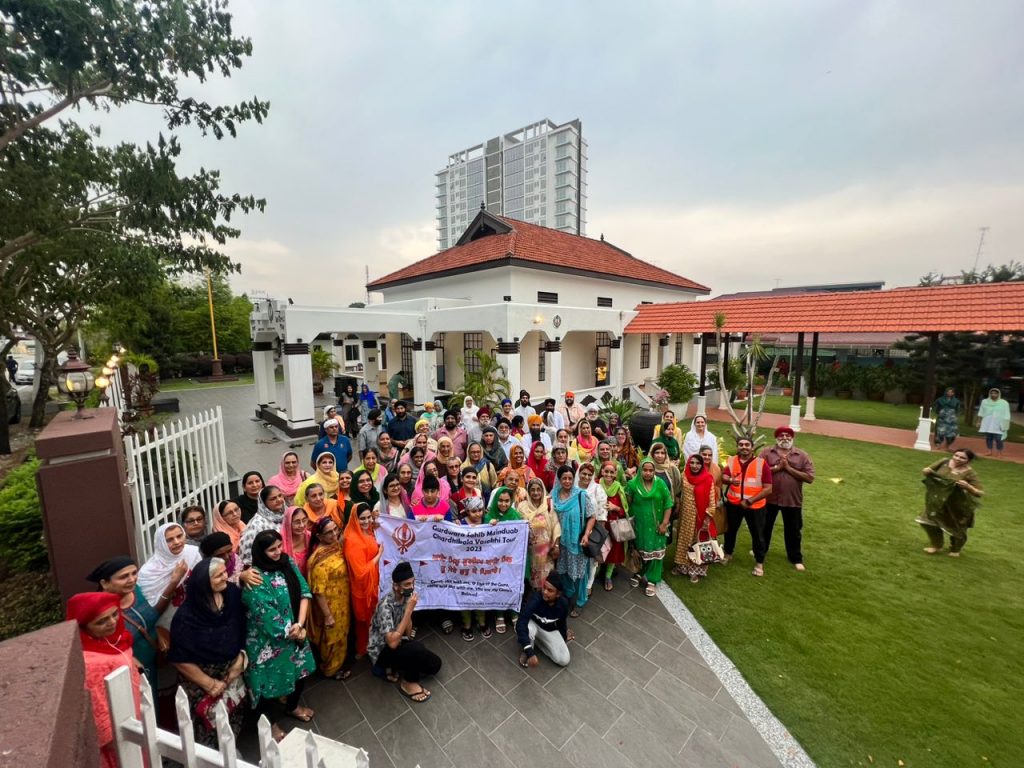
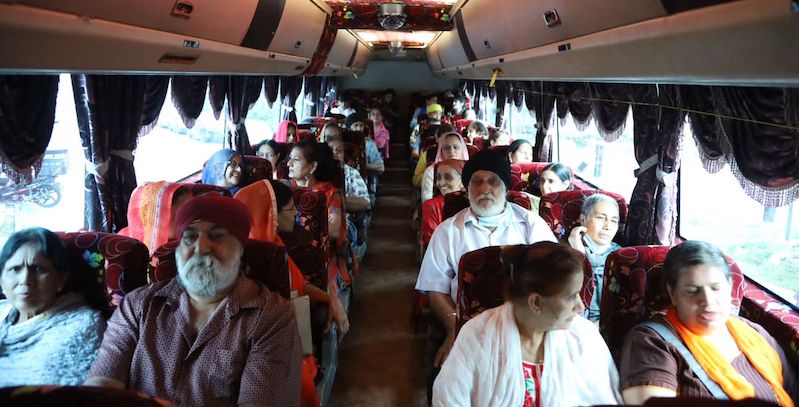
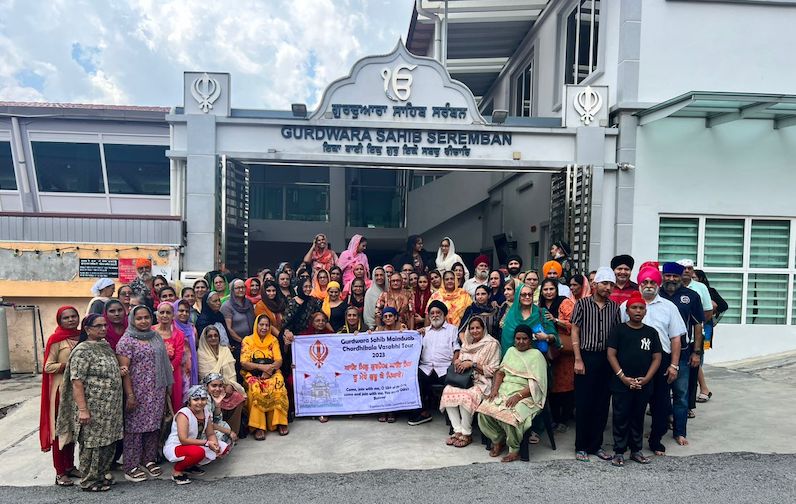
It was a Vaiskahi with a difference this year. After a prolonged Covid-19 pandemic induced lockdowns earlier, a team at Gurdwara Sahib Mainduab planned a ‘yatra’ to five gurdwaras in the states of Malacca, Negeri Sembilan and Johor.
The trip, on April 7 and 8, 2023, began with the participants gathering at the Kuala Lumpur-based gurdwara at 6am. Some members of the sanggat had actually slept overnight.
They then went on the lively and fun trip, visiting gurdwaras in Tampin, Melaka, Muar, Machap and Seremban. Everywhere they went, the 100-odd participants received enthusiastic welcome from the local gurdwaras. They had put up the night at Machap.
ASIA SAMACHAR is an online newspaper for Sikhs / Punjabis in Southeast Asia and beyond. When you leave a comment at the bottom of this article, it takes time to appear as it is moderated by human being. Unless it is offensive or libelous, it should appear. You can also comment at Facebook, Twitter, and Instagram. You can reach us via WhatsApp +6017-335-1399 or email: asia.samachar@gmail.com. For obituary announcements, click here.
Mata Sargite Kaur (seated) at Mother’s Day event, with GS Klang president Santokh Singh Cheema called forward for a photo session
By Asia Samachar | Malaysia |
Centenarian Mata Sargite Kaur took centrestage when some 200 Sikh women gathered for the Mother’s Day hi tea at Gurdwara Sahib Klang on May 13, 2022.
The 104-year-old lady, married to the late Arjan Singh who used to run a dairy farming business, has 10 children, 31 grandchildren and 32 great grandchildren.
The mothers attended the event dressed in their colourful outfits. They all received door gifts prepared by the gurdwara.
RELATED STORY:
(Asia Samachar, x April 2020)
ASIA SAMACHAR is an online newspaper for Sikhs / Punjabis in Southeast Asia and beyond. When you leave a comment at the bottom of this article, it takes time to appear as it is moderated by human being. Unless it is offensive or libelous, it should appear. You can also comment at Facebook, Twitter, and Instagram. You can reach us via WhatsApp +6017-335-1399 or email: asia.samachar@gmail.com. For obituary announcements, click here.