
















UA-56202873-1
Page 228

Anand Karaj: A marriage ceremony with a difference

1

By Paguman Singh | Sikhi |

BACKGROUND

Marriage as a social institution is found in all societies the world over. As society began to form social relationships, while living in communities, this institution took root and received acceptance. Researchers have historically traced the beginnings of marriage, and first records of such an event indicate it occurred in 2350 BC making it 4,373 years old. Marriage became a popular institution across ancient Hebrews, Greeks and Romans and Indians and remains so till the present date. There are many forms of marriage, the prevalent being monogamous. Another form is polygamy, defined as marriage between one person and two or more spouses simultaneously. It exists in two main forms: polygyny, where one man is married to several women, and polyandry, where one woman is married to several men. The practice of polygyny is witnessed and accepted in different societies, while polyandry is presently limited to some tribes in Nepal and China.

Societies informally established processes for the selection of a partner for the male or female. These ranged from family introductions to middlemen and other means available in the region. Social rules also prevented marriages amongst certain blood relationships, while in others it was encouraged and gave first rights of choice to some.  Examples of these is marriage of siblings is not allowed while in certain societies the mother’s brother has the first right to marry his niece. In general, widows were not allowed to remarry while the male dominated society allowed the marriage of widowers. Each accepted process and rule had its own reasoning and was generally accepted by all members of that social order. In recognition of the importance of the institution of marriage society also rejected any relationship outside marriage and considered it as taboo. Children born out of this relationship, unfortunately, through no fault of theirs, had to pay a high price and were usually shunned from society and badly treated.

As marriage forms the foundation of socially accepted behavior and the legitimate fabric of the next generation, the ceremony associated with it was infused will all the cultural richness and values treasured by the society. It remained simple, yet providing the feeling of happiness, family and friends togetherness, motivation, providing joy to the couple, family, and friends. All cultural ceremonies and dressings were used to make the occasion a memorable one. The occasion was also used to provide financial support to the newlyweds, which took the form of household goods as well as money. Exchanges of gifts within the family members of the couple symbolized the bonding of families to mutually safeguard their honor. Unfortunately, with a male dominated society a dowry system took root and has been a burden to the bride’s family in many societies, as well as bringing with it other social ills like female infanticide, ill treatment and burning of brides.      

Marriage in traditional terms is to last a life time and as such each anniversary achieved is celebrated carrying names indicating the strength of that relationship. The names given range progressively from the 5th being Wood, 10th Tin, 15th Crystal, 20th China, 25th Silver, 30th Pearl, 35th Jade, 40th Ruby, 45th Sapphire, 50th Gold, 60th Diamond, and 70th Platinum. Parents of couples go to great lengths to ensure they match perfectly and in this endeavor seek the assistance of the priests and other soothsayers, who use the stars, calculate horoscopes, colors and other methods to determine the fit as well as the right time and place for the marriage. In present times, modern physiological and aptitude tests are used by online matchmaking agencies in addition to horoscopes to match the couple.

Marriage also creates responsibilities and right. Society then developed laws to govern the process of rights and dissolution of this relationship. This legally legitimizes these responsibilities and rights irrespective of the fact that a ceremony has taken place or a de facto relationship exists. This matter is mainly legal but takes into consideration the cultural and religious beliefs of the society and country.

Pre-existing social and cultural values of society were accepted by religion, which now provided the blessings of the Divine in the marriage sphere. A common saying “weddings are made in heaven”, “purbale sanjoog”, indicate that the couple had been preordained by the supreme power to live as man and wife. The religious matrimony process, however was usually a simple religious ceremony where a prayer was recited and the couple’s agreement sought to receive the divine right of living together. The process was usually in the religious institution of the religion and conducted by the clergy of the religion. The commitment to the relationship was by uttering the holy scriptures and giving personal consent. This is accepted as the norm for a religious marriage.

THE EQUALITY PRINCIPLE

Guru Nanak Sahib introduced a spiritual and social revolution which was continued by the nine Gurus based on Gurbani. The objective was to transform, change traditional faith-based living to an enlightened, realized, and intellectual based living. The foundation for the reformation was equality of humankind in all spheres of life. The master strategic planner, Guru Nanak Sahib, knew it would take many life times to achieve the ultimate goal of a just and equal society. Amongst his strategic initiatives was the establishment of the first training University for Gurmat in Kartarpur. Here, from 1531 to 1539 the training began but selection was based on meritocracy. History testifies that Bhai Lehna proved he had all the qualities. Guru ji had also manjis established with both male and female missionaries to head them. The strategic change process coupled with a well-designed training program for succession spearheaded the revolution leading to the rise of gender equality and consequently marriage and family responsibilities.       

The social structure reformation began within the marriage domain began when satti, the burning of a widow on the pyre of the deceased husband was not only opposed but disallowed by Guru Amar Das Ji. Guru ji went a step further, advocated for the remarriage of widows thus restoring their status in society and a right to a respected life. In encouraging simplicity and economic savings for marriage ceremonies, mass marriages were arranged and performed by Guru Amar Das.  The dowry system was next in line to be questioned and Guru Ram Das Ji redefined it and reject the idea of receiving physical gifts, deeming their acceptance as egotism.   

  • ਹਰਿ ਪ੍ਰਭੁ ਮੇਰੇ ਬਾਬੁਲਾ ਹਰਿ ਦੇਵਹੁ ਦਾਨੁ ਮੈ ਦਾਜੋ ॥ ਹਰਿ ਕਪੜੋ ਹਰਿ ਸੋਭਾ ਦੇਵਹੁ ਜਿਤੁ ਸਵਰੈ ਮੇਰਾ ਕਾਜੋ ॥ ਹਰਿ ਹਰਿ ਭਗਤੀ ਕਾਜੁ ਸੁਹੇਲਾ ਗੁਰਿ ਸਤਿਗੁਰਿ ਦਾਨੁ ਦਿਵਾਇਆ ॥ ਖੰਡਿ ਵਰਭੰਡਿ ਹਰਿ ਸੋਭਾ ਹੋਈ ਇਹੁ ਦਾਨੁ ਨ ਰਲੈ ਰਲਾਇਆ ॥ ਹੋਰਿ ਮਨਮੁਖ ਦਾਜੁ ਜਿ ਰਖਿ ਦਿਖਾਲਹਿ ਸੁ ਕੂੜੁ ਅਹੰਕਾਰੁ ਕਚੁ ਪਾਜੋ ॥ ਹਰਿ ਪ੍ਰਭ ਮੇਰੇ ਬਾਬੁਲਾ ਹਰਿ ਦੇਵਹੁ ਦਾਨੁ ਮੈ ਦਾਜੋ ॥੪॥
  • Har prabh mere Baabulaa Har devahu daan mai daajo …: O my father! Give me the Lord’s Naam (Gur-Giaan, Aatam-Giaan, Shabad-Giaan …) as my wedding gift / dowry. ……. Any other dowry, which the Manmukhs (self-willed …) place for show, is only false egotism, and a false display (of falsehood). O my father! Give me the Lord’s Naam (Gur-Giaan, Aatam-Giaan, Shabad-Giaan …) as my wedding gift / dowry. ||4|| (sggs 78).

The rejection of the dowry system places both the bride and groom on the socially equal platform. This also gives dignity to the bridegroom as it indicates his economic capability to manage a family and removes the negative view of being portrayed as an object that was purchased. Unfortunately, the dowry system has not been totally eliminated as it is still practiced amongst Sikhs, who consider it as a cultural tradition and practice.

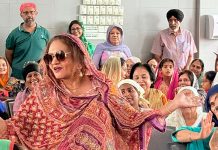
The anand karaj of Manjit Kaur and Gurnam Singh in Birmingham on 20 Jan 1985 – Photo: Supplied

The equality principle that is foundational to the social revolution of Guru Nanak Sahib is also compromised at the milini ceremony where only the bride’s side offers gifts to the bridegroom’s family and the good gesture is not reciprocated. If it is a milini, meaning introduction, then both sides should exchange gifts. The traditional milini was an exchange of turbans between only the male heads of the family signifying that we now brothers (paag vat bhra) and the honour of both families becomes their collective responsibility. This is the reason the father-in-law is called “dharma da pita” and mother-in-law “dharam di mata” with due respect being accorded to both. It is time to reconsider the practice of multiple milinis seen these days, the gold ornaments gifted under the guise of cultural and traditional ways.

Additionally, all of us have witnessed the bridegroom with his janj party walking into Darbar Sahib and later followed by the bride and her family. Have you ever wondered why both parties and families cannot walk in at the same time? In the sangat all are equal to the Guru then why this different approach and parade? It has been wonderful to watch, in rare cases, where both families walk in together led by the bride and groom. A sign of families working and agreeing to be bonded in love and care for the future support of the couple. Alas, some old taboos prevalent amongst some women, driven by ignorance, is that the mother should not watch the marriage of the son. How can this ever be justified, the mother who gave birth to the son and took care of all his needs be denied the moments of joy to see her son stepping into the reality of grist or familyhood. Gian or knowledge and changes in understanding has reduced this belief, and in Malaysia, it has been eradicated.

ISSUES RELATED TO ANAND KARAJ

Sikhs in general and their children had previously witnessed Anand Karaj, as going to a Gurdwara (not Guru Ghar) was a weekly Sunday or Friday rigidly followed discipline. Over the years there has been a steady decline in the younger generation attending Gurdwara programs. This decline has contributed to the lack of understanding of the routines followed in the Gurdwara especially those related to Anand Karaj.

There is also no pre-Anand Karaj program to prepare them both mentally and spiritually for their great day. It is also time to develop a course on Anand Karaj for the those intending to get married. Rather, all the energy and finances are utilized for attire, the gifts (clothes and jewelry) to be given to the relatives, wedding and reception cards, food arrangement, flower arrangements, music DJ, video operators, studio for wedding photo shoots to name a few, but hardly any for the religious aspects. “The Raja and Ratu Sehari” mainly focus on how to look their best, show joy and happiness, walk slowly counting each step, which pose would be great for the photo. No objection to these arrangements, however there needs to be a further step taken in the preparation.

It is suggested the couple read and understand the Bani (Panna 773/774 GGSJ), which would be read and sung during the Anand Karaj, for at least a month before the  date of the Anand Karaj and memorize the Laava da Paath. This will support the couple to focus on the Bani and read along while doing the pheras, around Guru Granth Sahib Ji.

Another point to note is that newly appointed granthis in Gurdwaras, especially Malaysia, are also not trained in conducting the Anand Karaj. They do not follow the provisions in the Sikh Rehat Maryada relating to Anand Karaj. Some granthis are from deras where the maryada is different or they are simply ragis performing the duties of a granthi. An important aspect of the Maryada is the sikhia or advice provided to the couple at the time of the Anand Karaj which is usually omitted or in some cases extended with irrelevant non-specific guidance.  

As Sikhs living outside Punjab now invite non-Sikh friends to witness their Anand Karaj a new dimension emerges.  These guests, not knowing the protocol of the Gurdwara and being in a sea of Sikhs, feel uncomfortable and lost. An additional issue arises where non-Sikh video operators and some Sikh ones, do not understand how respect is to be accorded to Guru Granth Sahib as well as the religious ceremonies during the Anand Karaj. Gurdwaras do not have proper guidelines prepared for these video operators with the dos and the don’ts. Many a times their actions are not acceptable by religious standards.

The two issues mentioned above can be resolved easily. A family member of the bride could be assigned the duty of caring for the non-Sikh guests. The appointed person should welcome, guide, and make them feel comfortable. A printed program of the processes that will take place during the Anand Karaj needs to be prepared and distributed to them and providing details of the ceremony being performed. In addition, guiding the guests about placing their footwear, information on the location of various facilities in the Gurdwara as well as providing a clean cloth to cover the head. Also guide them to a place in the Darbar Sahib where they can sit to participate in the Anand Karaj. As they have their own faith, to bow before Guru Granth Sahib is not necessary.

Regarding the video operators it is suggested that guidelines be prepared for video camera operators as well as assistants in charge of lighting. Paramount in these guidelines is how full respect is to be accorded to Guru Granth Sahib and the sangat. These guidelines must include appropriate dressing, proper behavior, compliance with instructions from the authorized committee member of the Gurdwara. There should be a Gurdwara committee member appointed, whose duty would be to supervise the video operator in the Darbar Sahib. Equipment for the video shooting in the Darbar Sahib should be setup in advance to prevent disturbance while kirtan is being sung, in respect for Gurbani. This is a matter that needs to be resolved collectively as Anand Karaj is a blissful spiritual ceremony and disruptions and distractions by the video operators needs to be managed. This applies to all video operators both Sikh and non-Sikh.

ANAND KARAJ THE SOCIAL AND SPIRITUAL FOUNDATION OF FAMILY

In Gursikhi, living the life of a householder is preferred rather than that of a yogi. Bhai Gurdas in his Vaars has stated that of all religions, ghrist or living as a householder is superior.

ਗਿਆਨਨ ਮੈ ਗਿਆਨੁ ਅਰੁ ਧਿਆਨਨ ਮੈ ਧਿਆਨ ਗੁਰ ਸਕਲ ਧਰਮ ਮੈ ਗ੍ਰਿਹਸਤੁ ਪ੍ਰਧਾਨ ਹੈ ॥੩੭੬॥ Just as the Knowledge imparted by the Guru is supreme of all knowledge, and concentration of mind on this Guru’s Knowledge is superb concentration, so is the family life ideal and superior of all the religions (i.e. all the religious ways of life). (Kabit Bhai Gurdas, 376).

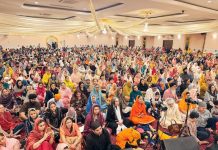
ANAND KARAJ: Jagmeet SIngh and Gurkiran Kaur

There are no historical records of Sikh marriages except claims by some sites of the marriage of Guru Arjun Sahib being performed in a manner we know today. The Anand Karaj ceremony was reconstructed by the Singh Sabha Movement and incorporated into the Sikh Rehat Maryada in 1945. (Khokar, K.S. (2005.) Anand Marriage – Development and History. Global Sikh Studies.) 

Anand Karaj as outlined in the Sikh Rehat Maryada sets some conditions under which it can be performed. It states that an engagement ceremony is optional. Advice and guidance is given on how to determine the date of the Anand Karaj, free from astrology and chosen to be convenient to all parties. Advice given is to reject meaningless customs as well as those that are related to other faiths.

The actual ceremony as per Rehat Maryada requires the following: –

  • A Diwan in the presence of Guru Granth Sahib Ji;
  • Sangat or Ragis to do kirtan;
  • Bride and Bridegroom to be seated in front of Guru Granth Sahib;
  • With the approval of the sangat the Granthi with both parents of the bride and groom to do the Arambak Ardas.
  • The couple to be given advice on responsibilities and living in accordance with Gurmat. Details of what is to be covered is provided, (need to be revisited and modified in accordance with social and economic changes that have occurred since 1925).
  • The couple bow before Guru Granth Sahib Ji acknowledging the advice and committing to it.
  • Reading followed by the singing of Bani on page 773 in Raag Suhi Mehala 4 as the couple circumambulate GGSJ.
  • Reading of Anand Sahib (short version).
  • Ardas of completion of the Anand Karaj.
  • Shabads by Sangat or Ragis.

Aspects of the Anand Karaj that have escaped our attention and can be highlighted as advice: –

  • The choice of a partner is the most important decision in a person’s life. Note that no one has chosen parents, or siblings, which relations were formed at birth in accordance with the Divine Will or Hukum. The one and only conscious choice made in the person’s life is whom one will marry; imagine its importance.
  • The Hukumnama on the day of the Anand Karaj is the only one that is heard by any individual Sikh to guide married life. At birth the parents hear the hukumnama as the child cannot know what is going on and the final hukumnama is after death which cannot be heard. Hence, the couple needs to remember the hukumnama at their Anand Karaj, in fact print, laminate and hang it as a constant reminder of the moment of bliss in life, Blessings of Guru Ji.
  • The advice/guidance or Sikhia that can be given is as follows:

Commitment: This is commitment to life of Ghrist in accordance with Guru Granth Sahib and removing any other believes. Also as a Commitment to each other in life.

The practice of Care and Honest Communication with each other. This communication requires virtues of humility, forgiveness, and polite loved filled conversation. Guidance from GGSJ Sloak Farid Ji 126 & 127 (Panna 1384) which applies to both bride and bridegroom:

ਕਵਣੁ ਸੁ ਅਖਰੁ ਕਵਣੁ ਗੁਣੁ ਕਵਣੁ ਸੁ ਮਣੀਆ ਮੰਤੁ ॥
Kavan S Akhar Kavan Gun Kavan S Maneeaa Manth ||
What is that word, what is that virtue, and what is that magic mantra?

ਕਵਣੁ ਸੁ ਵੇਸੋ ਹਉ ਕਰੀ ਜਿਤੁ ਵਸਿ ਆਵੈ ਕੰਤੁ ॥੧੨੬॥
Kavan S Vaeso Ho Karee Jith Vas Aavai Kanth ||126||
What are those clothes, which I can wear to captivate my Husband Lord? ||126||

nਵਣ ਸੁ ਅਖਰੁ ਖਵਣੁ ਗੁਣੁ ਜਿਹਬਾ ਮਣੀਆ ਮੰਤੁ ॥
Nivan S Akhar Khavan Gun Jihabaa Maneeaa Manth ||
Humility is the word, forgiveness is the virtue, and sweet speech is the magic mantra.

ਏ ਤ੍ਰੈ ਭੈਣੇ ਵੇਸ ਕਰਿ ਤਾਂ ਵਸਿ ਆਵੀ ਕੰਤੁ ॥੧੨੭॥
Eae Thrai Bhainae Vaes Kar Thaan Vas Aavee Kanth ||127||
Wear these three robes, O sister, and you will captivate your Husband Lord. ||127||

Creativity: Surprise your beloved with various romantic words and gifts never a dull moment in family life.

Conscious: Care is given when you are conscious of your partner’s moods, feelings, likes and dislikes. Showing concern for each other is the is the medicine for understanding.

Forgive and forget for a life of Ghrist it is the sweet memories that make life and family blossom.

MANAGING THE MAGIC OF ANAND KARAJ:

Thousands of dollars are spent on photographs and videos during the Anand Karaj, so sit together at least once in three months and watch them and rekindle the joy felt on the day of the Anand Karaj. This will help remove any emotional differences that could be developing.   

Each month have a quiet couple moment to read the Laava di Bani and feel the spirit of love and romance experienced on the day of the Anand Karaj. The foundation of family understanding is strengthened by reading the Laava da Paath. Anand Karaj Anniversary should be celebrated not only with dinner and other forms of entertainment but also with the Laava Da Paath done together. Bonds of a Happy Family Life.

RELATED STORY:

Paradigm shift in Sikhi Parchar (Asia Samachar, 7 Dec 2021)

ASIA SAMACHAR is an online newspaper for Sikhs / Punjabis in Southeast Asia and beyond. When you leave a comment at the bottom of this article, it takes time to appear as it is moderated by human being. Unless it is offensive or libelous, it should appear. You can also comment at FacebookTwitter, and Instagram. You can reach us via WhatsApp +6017-335-1399 or email: asia.samachar@gmail.com. For obituary announcements, click here.

Kaka Singh (1945 -2023), Ex-Telekom Malaysia

KAKA SINGH S/O LATE GURABAK SINGH GILL

14.6.1945 -16.6.2023

(Ex-Telekom Malaysia)

Village: Mehna

Leaving behind beloved

Wife: Late Harthial Kaur d/o Late Toki Nagindar Singh Cheema

Children, Grandchildren, Son-in-law, Family & Friends

Last respect at Shamshan Bhoomi Hall (Loke Yew Crematorium) Kuala Lumpur on 18 June 2023 (Sunday) from 11.00am to 12.30pm followed by funeral at the same venue between 12.30pm to 1.00pm

Path da Bhog: 25 June 2023 (Sunday), from 5.00pm to 7.00pm, at Gurdwara Sahib Petaling Jaya

Contact:
Baljit 012 643 4538
Rajinder 017 230 6743

| Entry: 17June 2023 | Source: Family

ASIA SAMACHAR is an online newspaper for Sikhs / Punjabis in Southeast Asia and beyond. When you leave a comment at the bottom of this article, it takes time to appear as it is moderated by human being. Unless it is offensive or libelous, it should appear. You can also comment at FacebookTwitter, and Instagram. You can reach us via WhatsApp +6017-335-1399 or email: asia.samachar@gmail.com. For obituary announcements, click here

Giani Raghubir Singh new jathedar of Akal Takht

0

By Asia Samachar | Punjab |

Giani Raghubir Singh has been appointed as the new jathedar of the Akal Takht, taking over from Giani Harpreet Singh who has been holding the position in an acting capacity since 2018.

Harpreet will continue to serve as Jathedar of Takht Damdama Sahib, Talwandi Sabo.

Shiromani Gurdwara Parbandhak Committee (SGPC) president Harjinder Singh Dhami made the announcement after a meeting yesterday. It is understood that Harpreet was on a foreign tour when the announcement was made.

Raghubir was previously the jathedar of Kesgarh Sahib, Anandpur Sahib.

RELATED STORY:

Akal Takht jathedar is on a roll. But who’s pulling the strings? (Asia Samachar, 31 May 2022)

Excommunication and Sikhism: The case of Bhai Ranjit Singh Dhadriawala (Asia Samachar, 4 Sept 2020)

ASIA SAMACHAR is an online newspaper for Sikhs / Punjabis in Southeast Asia and beyond. When you leave a comment at the bottom of this article, it takes time to appear as it is moderated by human being. Unless it is offensive or libelous, it should appear. You can also comment at FacebookTwitter, and Instagram. You can reach us via WhatsApp +6017-335-1399 or email: asia.samachar@gmail.com. For obituary announcements, click here.

Kuldip Singh Sambhi (1934 – 2023), Penang – Syarikat Gurcharan Singh

MR KULDIP SINGH SAMBHI (PENANG – SYARIKAT GURCHARAN SINGH)

25.2.1934 – 15.6.2023

Passed away peacefully surrounded by family on 15th June 2023

Path da Bhog: 1 July 2023 (Saturday), from 5pm to 7 pm, at Gurdwara Sahib Petaling Jaya

Leaving behind, beloved:

Wife: Late Madam Balbir Kaur

Children / Spouses:
Datin Parminder Kaur / Datuk Jarnail Singh Daliwal
Aqbal Singh Sambhi / Dr Ravinder Kaur
Harpal Singh Sambhi / Annie Koh Puay Hong

Grandchildren / Spouses:
Dr Kirenjit Kaur / Sandeep Singh Gill
Harsheenarit Kaur
Dr Sandesh Kaur Sambhi / Dr Sanjiv Nair
Roshan Singh Sambhi
Sharan Kaur Sambhi
Simren Kaur Sambhi
Paul Aman Singh Sambhi
Sonia Kaur Sambhi
David Sanjay Singh Sambhi
Aaron Deepak Singh Sambhi

Great Grandchildren:
Yasha Sambhi Nair
Leela Sambhi Nair
Aarav Singh

Contact:
Datuk Jarnail Singh Daliwal (+6012 203 1656)
Sandeep Singh Gill (+6012 686 6871)

We, the family of the Late Mr Kuldip Singh Sambhi, wish to express our heartfelt appreciation for your support and assistance during this difficult time in our lives and wish to thank you for your thoughts and prayers.

We are grateful for your presence, wreaths, messages to honour our father/father-in-law/grandfather/great grandfather.

| Entry: 15 June 2023; Updated: 18 June 2023 | Source: Family

ASIA SAMACHAR is an online newspaper for Sikhs / Punjabis in Southeast Asia and beyond. When you leave a comment at the bottom of this article, it takes time to appear as it is moderated by human being. Unless it is offensive or libelous, it should appear. You can also comment at FacebookTwitter, and Instagram. You can reach us via WhatsApp +6017-335-1399 or email: asia.samachar@gmail.com. For obituary announcements, click here

Bachan Kaur Sidhu (1922 – 2023), Taman Perak, Ipoh

Ghaley Aave Nanka Sade UtThee Jaye
ਘਲੇ ਆਵਹਿ ਨਾਨਕਾ ਸਦੇ ਉਠੀ ਜਾਹਿ ॥੧॥

SARDARNI BACHAN KAUR SIDHU

Wife of Late Sardar Mahinder Singh Sidhu

9.1.1922 – 14.6.2023

Path da Bhog will be held on 24 June 2023 (Saturday), from 10am to12pm, at Gurdwara Sahib Police, Ipoh

Daughters & Spouses:
Late Sardarni Ajmer Kaur & Late Sardar Bogha Singh Dhaliwal
Sarjit Kaur (Sita) & Charan Singh Gill
Late Sardarni Pharpur Kaur Sidhu
Dr. Inderjit Kaur Sidhu PMP
Dr. Tej Kaur Sidhu

Grandson, Granddaughters & Spouses, Great Grandchildren and Relatives.

For further information please contact
Dr. Inderjit Kaur +6013 521 9331
Dr. Tej Kaur +6014 308 4927

| Entry: 14 June 2023; Update: 20 June 2023 | Source: Family

ASIA SAMACHAR is an online newspaper for Sikhs / Punjabis in Southeast Asia and beyond. When you leave a comment at the bottom of this article, it takes time to appear as it is moderated by human being. Unless it is offensive or libelous, it should appear. You can also comment at FacebookTwitter, and Instagram. You can reach us via WhatsApp +6017-335-1399 or email: asia.samachar@gmail.com. For obituary announcements, click here

AirAsia X to resume Amritsar flights from September 2023 – Report

Darbar Sahib, Amritsar. – PHOTO SARJIT KAUR/MALAYSIA

By Asia Samachar | Malaysia |

AirAsia X plans to resume Kuala Lumpur – Amritsar service from September 2023, reports Aeroroutes. The route was last served regularly until April 2020. The low cost airline will operate plans to schedule four weekly scheduled flights with Airbus A330-300 aircraft, reports the website which tracks worldwide airline schedule and network changes.

A check on AirAsia’s website showed results for KL-Amritsar flights in September, with return fares of about RM700 without seat confirmation or meals. Do add RM20 for one helping of the Hyderabadi vegetable biryani.

AirAsia first flew KL-Amritsar on Aug 17, 2018, was flown by Capt Paramjeet Singh and first officer Jovinder Singh.

Amritsar is a popular destination for Sikhs. Its home to the Darbar Sahib, popularly known as the Golden Temple, one of the most visited gurdwaras in the world.

RELATED STORY:

Air Asia crew don turban for maiden Amritsar flight (Asia Samachar, 17 Aug 2019)

ASIA SAMACHAR is an online newspaper for Sikhs / Punjabis in Southeast Asia and beyond. When you leave a comment at the bottom of this article, it takes time to appear as it is moderated by human being. Unless it is offensive or libelous, it should appear. You can also comment at FacebookTwitter, and Instagram. You can reach us via WhatsApp +6017-335-1399 or email: asia.samachar@gmail.com. For obituary announcements, click here.

The struggle for Khalistan: What next?

0

By Gurnam Singh | Opinion |

In the minds of most, Sikh or non-Sikh, 1984 will go down as a line in the sand of the history of modern India. From June to November of that year it would not be an overstatement that the Indian state and the ruling Congress Party declared a de facto war on Sikhs resulting in the deaths of thousands. But this is not new; hardships and genocidal violence are etched into Sikh history. Indeed, it is difficult to imagine Sikh identity and psyche without reference to the historic genocide the quam has periodically experienced.

In 1746 we had the first genocide called the Chhota Ghallughara (Small Holocaust). This massacre of Sikhs, that happens over the course of a couple of days, was committed under the rule of Afghan invader Ahmad Shah Durrani. Thousands were killed, and many historical Sikh sites were destroyed. Some 16 years later, in 1762, we saw the second Genocide known as the ‘Wadda Ghallughara (Great Holocaust)’. As the name suggests, this was an even more devastating massacre carried out by Afghan forces. It resulted in the death of tens of thousands of Sikhs, including women and children. Now given that the Sikh population was probably less than 100,000, this massacre effectively wiped out a significant proportion of the Sikh Quam. Click here for stories on Sikh Genocide.

Notwithstanding the deaths of 100,000’s of Sikhs in the 1947 partition of Punjab, the next recoded Sikh Genocide took place in June 1984 during that is infamously known as Operation Blue Star. From the 1st June onwards the Indian government launched a military operation in the Punjab centred on the Darbar Sahib or Golden Temple complex in Amritsar. The operation resulted in heavy casualties and significant damage to the temple. This event led to widespread Indian military operations in Punjab resulting in the deaths of thousands of Sikhs for a whole decade to come.

And then in November 1984, we saw the fourth Sikh Genocide. This occurred following the assassination of the then Indian Prime Minister, Indira Gandhi by her Sikh bodyguards. Led by Congress party politicians and workers, we saw three days of anti-Sikh violence centred mostly on Delhi and other major Indian cities of India. Innocent Sikh men, women and children were targeted, and widespread violence, arson, and killings took place. The exact death toll is disputed, but estimates range from several thousand to over 20,000 Sikhs killed.

These genocidal events have had a profound impact on the Sikh community and psyche, leading to the loss of countless lives, the destruction of religious sites, and an enduring trauma for Sikhs around the world. Perhaps the most enduring impact has been for generations of Sikhs expressing a desire to break free from the centralising Indian state under which they perceive an existential threat.

Though the demand for Khalistan, an independent Sikh state was not new, the events of 1984 turbocharged this demand culminating in a historic Sarbat Khalsa or gathering of the Khalsa Panth to deliberate on the future direction of the quom on 26th January 1986. During the gathering at the Akaal Takht in Amritsar of over half million Sikhs, amongst the various resolutions was the formal presentation of a legal case the establishment of the Khalistan. This was done in the form of the presentation of a dossier of legal evidence setting out the case for Khalistan along with a resolution to appoint a committee of 5 Sikhs to work towards its realization. Thirty seven years after the historic Sarbat Khalsa, Sikhs throughout the world still actively campaign to realise their dream of their own homeland. However, most objective assessments suggest the realisation of Khalistan remains as elusive as ever.

As we saw with the phenomenal rise of youth leaders Amritpal Singh and his Khalsa Vaheer, and the worldwide success of the Punjab Referendum campaign, there is a latent urge for Khalistan. However, it is also true that, politically and electorally, most significantly, in the Punjab, it has not made much of an impression. However, in some sense we are at a stalemate and though some attempts have been made to broker an agreement between Khalistani activists and the Indian state, due to a lack of trust and good will, these have not led to any substantial improvement of relations.

Now that the 40 anniversary of the 1984 Sikh Genocide approaches, we have opportunity to focus hearts and minds on finding a solution to the ongoing and arguably unhelpful fall out from those terrible events. However, closure will only be possible if Sikhs feel a real sense of justice and the Indian state shifts from its rhetoric about being ‘pro-Sikh’ to addressing the serious and legitimate demands of Sikhs. And only then can we hope for a successful peace and reconciliation process. In order to move forward, it incumbent on both sides to see the other perspective.

ARGUMENTS BY PROPONENTS

So, from the perspective of advocates of Khalistan, there is a need to acknowledge the arguments put forth by proponents of the movement. These can be summarised as follows:

Self-determination: One of the primary arguments for Khalistan is based on the principle of self-determination. Supporters argue that Sikhs, as a distinct religious and cultural community, have the right to determine their own political destiny. They believe that the creation of an independent Sikh state would allow Sikhs to govern themselves and protect their unique identity and interests.

Historical and cultural significance: Proponents of Khalistan often emphasize the historical and cultural significance of Punjab as the traditional homeland of the Sikhs. They argue that the region holds immense religious and cultural importance for Sikhs and that an independent Sikh state would serve as a symbol of Sikh sovereignty and heritage.

Political marginalization and discrimination: Some Khalistan supporters argue that Sikhs have faced political marginalization and discrimination within the Indian state. They point to instances such as the Operation Blue Star in 1984, which was a military operation conducted by the Indian government to remove Sikh militants from the Golden Temple complex, resulting in significant casualties and damage. They believe that an independent Khalistan would protect Sikhs from such injustices and provide a platform for their political empowerment.

Protection of Sikh interests: Supporters of Khalistan assert that an independent Sikh state would enable Sikhs to safeguard their religious, economic, and cultural interests more effectively. They argue that being a minority in India, Sikhs often face challenges in preserving their distinct identity and securing their rights. Khalistan, they claim, would provide a dedicated space for Sikhs to promote and protect their interests without being overshadowed by the dominant Hindu majority.

Autonomy and governance: Another argument put forth by Khalistan proponents is that an independent Sikh state would allow Sikhs to govern themselves according to their own values, traditions, and principles. They believe that self-governance would enable them to address issues specific to their community effectively and make decisions that align with Sikh religious and cultural norms.

COMPLEX, CONTENTIOUS

It is important to note that the demand for Khalistan is a complex and contentious issue and that not all support the idea, and others may have reservations or outright oppose it. That, however, does not take away the right to make the case and campaign for self-determination in a peaceful and democratic way. Indeed ,this is a right that is specifically protected in International Covenant on Civil and Political Rights (the ICCPR), ‘[a]ll peoples have the right of self-determination. By virtue of that right they freely determine their political status and freely pursue their economic, social and cultural development.’

No peace and reconciliation process can suggest without taking seriously the arguments on both sides. And in this regard the Indian state has its own defence which is centred on its duty to protect unity and stability of the state. It has accordingly taken actions to suppress the Khalistan movement as a conspiracy by is neighbour and historic enemy Pakistan to destabilise the state.

OPPOSING ARGUMENTS

For any table talk to happen and a successful outcome, advocates of Khalistan will have to develop a robust response to the arguments that the Indian state will make opposing the idea of an independent Sikh state. Here is a brief summary of the key anti-Khalistan arguments:

Sovereignty and territorial integrity: Critics argue that Punjab is an integral part of India and that advocating for Khalistan undermines the country’s sovereignty and territorial integrity. They believe that supporting secessionist movements sets a dangerous precedent that could encourage other separatist demands, potentially leading to fragmentation and instability within the country.

National unity and diversity: Opponents of Khalistan contend that India’s strength lies in its unity and diversity. They argue that embracing diversity while maintaining a unified nation is a cornerstone of India’s identity as a multicultural and multi-religious society. Dividing the country along ethnic or religious lines, they assert, would undermine this unity and disrupt the social fabric.

Economic implications: Critics of Khalistan suggest that the creation of an independent Sikh state would have significant economic consequences, both for Punjab and the wider region. They argue that Punjab, which is currently one of India’s prosperous states, benefits from being part of the Indian Union and its integration into the national economy. Separation, they claim, could disrupt trade, investment, and economic development, potentially leading to adverse effects on the livelihoods of the people in the region.

Security concerns: Detractors express concerns about the potential security implications of an independent Khalistan. They argue that the formation of a new state might trigger unrest, conflicts, and border disputes, leading to instability not only in Punjab but also in neighbouring regions. Additionally, opponents worry about the potential for external interference and the rise of militant or extremist elements within the proposed Khalistan.

Inclusivity and minority rights: Critics contend that advocating for a separate Sikh state may undermine the principles of inclusivity and minority rights within India. They argue that rather than pursuing separatism, it is essential to work towards fostering a more inclusive society where all communities, including Sikhs, have equal opportunities, representation, and protection of their rights.

One of the lessons of history is that the future is difficult to predict. In this regard, given the instability of post-partition India and Pakistan, the question of Khalistan may take on a whole different dimension if one or both state collapses. One needs to look no further than the collapse of the Soviet Union, and let’s not forget, India itself was established as a union of states, and in this regard, its legitimacy is predicated on the social contract established between its people, its various nations, and the union government in Delhi.

In truth, countries come and go, empires rise and fall, and in this regard, perhaps most of all, Sikhs need to reflect from their own history when indeed, under the leadership of the benevolent rulers, Ranjit Singh, they once did have their own sovereign rule. And as for breaking the current stalemate, it seems to me the only option is for Sikhs to open dialogue with the Indian state to establish a process of normalise relations and to work towards peace, reconciliation and justice. This does not mean the dream of Khalistan is abandoned, but it does mean working much harder at articulating a democratic roadmap for its realisation.

Gurnam Singh is an academic activist dedicated to human rights, liberty, equality, social and environmental justice. He is an Associate Professor of Sociology at University of Warwick, UK. He can be contacted at Gurnam.singh.1@warwick.ac.uk

* This is the opinion of the writer and does not necessarily represent the views of Asia Samachar.

RELATED STORY:

Miracles and Godmen (Asia Samachar, 31 July 2020)


ASIA SAMACHAR is an online newspaper for Sikhs / Punjabis in Southeast Asia and beyond. When you leave a comment at the bottom of this article, it takes time to appear as it is moderated by human being. Unless it is offensive or libelous, it should appear. You can also comment at FacebookTwitter, and Instagram. You can reach us via WhatsApp +6017-335-1399 or email: asia.samachar@gmail.com. For obituary announcements, click here.

Rajambal d/o A Rethinam Pillay @ Inderjit Kaur (1947 – 2023), Bukit Mertajam

MDM RAJAMBAL D/O A. RETHINAM PILLAY @ INDERJIT KAUR

17.11.1947 – 13.06.2023

HAS COMPLETED HER JOURNEY OF LIFE AND LEFT FOR HER HEAVENLY ABODE ON 13 JUNE 2023. WE REQUEST YOUR KIND PRESENCE TO GRACE THE SOLEMN OCCASION FOR THE ETERNAL PEACE OF THE LIGHT OF OUR LIVES.

Antim Ardas & Path da Bhog: 18 June 2023 (Sunday), from 5pm to 7pm, at Gurdwara Sahib Butterworth. Guru ka Langgar will be served.

Mamet, a loving variation of Mummy as she was known to her children and grandchildren, Indra to her sisters and in-laws and Dear to her beloved husband, hailed from the island of Penang and served more than two decades in the District Office and Survey Department in Kulim, Kedah. She took optional retirement early on to care for her ailing father-in-law, an exemplary act of selflessness that she continued to display throughout her blessed life. She was her children’s greatest supporter, prioritising their needs till the very end. She was known for her warmth, her generosity, her strong sense of responsibility and her values, all punctuated with a wicked sense of humour. Throughout her life, she has touched and inspired many around her with her love, her kindness and her compassion. Having her leave to her heavenly abode unexpectedly is the greatest challenge our family will have to endure in the next few months. Words cannot express the emptiness in our hearts and the longing in our minds for our mum’s daily phone calls, home-cooked meals, our little excursions around town and her words of wisdom, love and support. Heaven has now gained another angel, an angel who’s loving memories on Earth would be forever cherished and whose presence in our lives would forever be missed and fondly remembered.

Husband: Sdr Sarjit Singh A/L Jawala Singh (BUKIT MERTAJAM)
Village: Baduwal, Punjab

Children:
1) TYT Amarjit Singh / Param Git Kaur (Ambassador to Timor Leste)
2) Rabinder Kaur / K.Sivakumar (KSK Printings)
3) Gurprit Singh (Kuala Lumpur)

Grandchildren
1) Sachin Dev
2) Sherendeep Kaur Sidhu
3) Shenjay Singh Sidhu
4) Sonia Swetha
5) Raahul Dev
6) Teshan Singh Sidhu

Contact :
TYT Amarjit Singh +6019-452 0048
Rabinder Kaur +6012-292 1684
Sachin Dev +6017-479 7741

The loveliest soul, the pillar of our hearts, the light of our lives.

Mummy was the most precious, compassionate wife, mother, mother-in-law, grandmother, sister, sister-in-law, daughter-in-law, friend and companion to all. Her love was infinite, her laugh infectious, her hugs and kisses irreplaceable. Her passing has broken us all and left an incredible void that cannot be filled. Mummy’s legacy of kindness, humility, compassion and love will live through us all forever.

PLEASE KINDLY TREAT THIS AS A PERSONAL INVITATION

| Entry: 13 June 2023; Updated: 15 June 2023 | Source: Family

ASIA SAMACHAR is an online newspaper for Sikhs / Punjabis in Southeast Asia and beyond. When you leave a comment at the bottom of this article, it takes time to appear as it is moderated by human being. Unless it is offensive or libelous, it should appear. You can also comment at FacebookTwitter, and Instagram. You can reach us via WhatsApp +6017-335-1399 or email: asia.samachar@gmail.com. For obituary announcements, click here

Why this Sikh boy knows the Bismillah

0
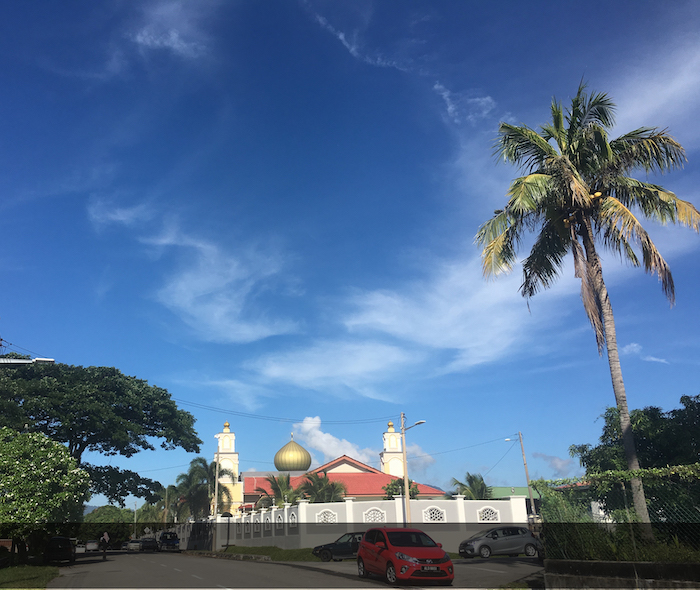
A masjid in Ipoh, Perak -Photo: Asia Samachar (2022)

By Jagdesh Singh | Opinion |

In the 80s, growing up in a small town like Sungai Petani, tucked up north in this thin sliver peninsula we call Malaysia, discrimination wasn’t really something blatantly in my face.

My earliest memory of not being allowed to be with my buddies in class because of my race and religion was during my earliest year as a primary school student. We start at Standard One at seven years of age.

Being of mixed parentage, between my Dad’s slightly darker complexion of Punjabi heritage and my Mom’s fairer of Chinese, I turned out to look a lot like a Malay boy. Language wasn’t a problem because I grew up with neighbors of all races in developing Malaysia. I conversed easily in the Kedahan dialect of Malay, and fit right in with a bunch of jovial and very friendly Malay boys from Day One in school.

My first week in school was exhilarating, making so many new friends at rapid pace, the non-stop discovery of new games during recess and during class made me fall on love with school. I was part of a gang!

One fine day, not more than 5 days in my new schooling adventure, a kind gentle man walks into the classroom, and directs the Chinese boys to line up and walk in file into another classroom next door. Then, he does the same for the Indians. I couldn’t be bothered at the least.

You see, I was told by my father and my uncles that I was a Punjabi Sikh boy and that we were distinctly different from the South Indians Hindus. So, in my 7 year old conditioned mind, I wasn’t Indian, and for sure I wasn’t Chinese.

After the last non Malay Muslim boy left the classroom, the Ustaz then proceeds to begin his class, which was early Muslim education. His voice suddenly transformed to a bellowing deep one, “I shall now test if any of you can recite the Bismillah!”, he says in Kedahan Malay. Like any new teacher that week that walked into our classroom with their introductions, I figured that’s something I’ll learn very soon. The concept of tests and quizzes was still very alien to me.

He points to my buddy sitting next to me, who receives an approving nod after reciting the Bismillah. That’s when the pin dropped. Maybe I am supposed to know this. When the Ustaz then turned his sharp eyes on me with a confident smile, I froze.
“Well boy, what are you waiting for? Recite to me the Bismillah. I haven’t got the whole day.”

I measly shook my head, eyes wide opened, racking my head to say something that might resemble what the boy next to me said 2 minutes ago.

“What do you mean you don’t know the Bismillah, boy? You’re 7 years old. You should know this by now!” He lightly hits me with the board duster on my forehead and beckons me to give it another try. Meanwhile, the boys sitting around me start giggling from the reaction of the Ustaz, which did seem comedic at that time.

I smiled sheepishly, and shrugged my shoulders. This time, the duster hit my head a little harder. But not inflicting any physical pain. The emotional pain from embarrassment was obvious on my face though. Finally, at that moment, my buddy next to me stood up so bravely and says loudly, “But he’s not Muslim, Ustaz! He’s a Singh, but no head bun on his head!”

This time, it was the Ustaz’ turn to look a little pained. The realization that there was a mix-up dawned on him pretty quick. But he needed to know why the mix-up, because his confused reaction was, “Why didn’t you follow the Indian boys just now?”

I always smile when recalling this episode in my life. There is no doubt the humor in classic mix-ups and the errors in judgement that ensues. But I also remember how I felt being no more with the gang of friends, playing with them, laughing with them. I had to be separated from them because of who I was, and it did make me want to be a Muslim, even for the briefest of time, to be back with the gang.

I’m very sure many of us, at some point in our lives, have experienced being in the minority. Even if you were part of the majority race in any country, there would be times you’d feel being in a minority because of other things that make you unique. The degree of discrimination while being part of a minority differs, sometimes life altering for some of us. Because the higher the degree of discrimination poses the harder the challenging experiences.

We always want to be part of that gang that we feel so very comfortable with, having built relationships with others in that community. When we get discriminated and not be treated as an equal with the rest in the community, outcasted because of something that makes us unique, there is pain and discomfort. The question “Why can’t I be with them or have what they have or enjoy what they are?” will ring loudly in our heads. Sometimes longer than most times.

The more we experience discrimination, the more we can empathize with others who are going through other forms of discrimination. That is why most minorities like us can understand the pain of being a female in a male dominated world, or a physically impaired person trying to survive in a world designed for people with perfect bodies, or as a Muslim in an Islamaphobic world, or as a Gay in a conservative world that treats them as pariahs.

Our most basic right as a human in God’s earth is to be treated equally with all other humans, no matter my creed, race, religion and now, sexual orientation. Discrimination in any form that starves any humans of this basic right should be dealt with like how we’ve been fighting discrimination generations before us. Through education and awareness, with empathy and relatedness.
Until today, I still know how to recite the Bismillah, thanks to that Ustaz and my buddy who sat next to me.

Jagdesh Singh, a Kuala Lumpur-based executive with a US multinational company, is a father of three girls who are as opinionated as their mother

* This is the opinion of the writer, organisation or publication and does not necessarily represent the views of Asia Samachar.

RELATED STORY:

The plight of the Rohingya (Asia Samachar, 29 April 2020)

ASIA SAMACHAR is an online newspaper for Sikhs / Punjabis in Southeast Asia and beyond. When you leave a comment at the bottom of this article, it takes time to appear as it is moderated by human being. Unless it is offensive or libelous, it should appear. You can also comment at FacebookTwitter, and Instagram. You can reach us via WhatsApp +6017-335-1399 or email: asia.samachar@gmail.com. For obituary announcements, click here.

First time candidate Sukh Kaur wins District 1 council battle

By Asia Samachar | United States |

First-time candidate Sukh Kaur emerged victorious in her effort to become a council member for District 1, making her the first person of South Asian descent to be elected to the San Antonio’s City Council.

The 34-year old former teacher and public school administrator, who now owns her own education consulting company, ran a solid campaign against incumbent Mario Bravo in the Texas battle.

“Our opponent ran a really strong campaign, not just for political newcomer, but for anybody,” Bravo told San Antonio Report. “I told her we’re here to assist her in any way, shape or form.”

Sukh runs her own education consulting company, EDreimagined, which helps schools implement charter programs. She is also a yoga instructor and realtor.

She was born in India and her family came to the US when she was young. She has lived in Texas for 17 years and in San Antonio for 7.

“I’m running for City Council because District 1 needs real change. Our community should not be left in the dark about what’s happening at City Hall. I will make it a priority to listen, communicate, and work collaboratively with residents and local businesses to get things done,” she said on her website.

RELATED STORY:

Coventry appoints Sikh councillor as Lord Mayor (Asia Samachar, 23 May 2023)

ASIA SAMACHAR is an online newspaper for Sikhs / Punjabis in Southeast Asia and beyond. When you leave a comment at the bottom of this article, it takes time to appear as it is moderated by human being. Unless it is offensive or libelous, it should appear. You can also comment at FacebookTwitter, and Instagram. You can reach us via WhatsApp +6017-335-1399 or email: asia.samachar@gmail.com. For obituary announcements, click here.