















UA-56202873-1
Page 243

Sikh and interracial relationships

1

By Gurnam Singh | Opinion |

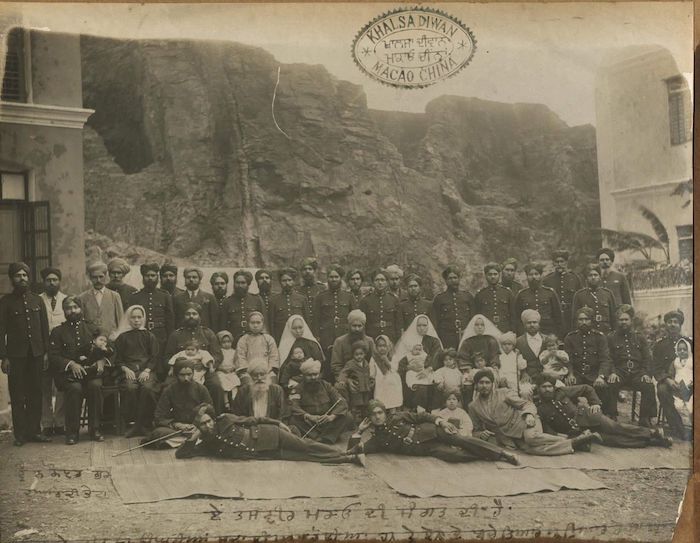
Sikhs who object interracial marriage should have a close look at this picture of the Sikh Sangat of Macao in Hong Kong with Chinese wives and children. As the stamp shows, the picture is of the Khalsa Diwan Macau, Hong Kong, taken 27th of March 1927. Sikhs came to Hong Kong with the British Army and in 1901, the first Gurdwara (Sikh temple) was built on the site. It was called the Siri Guru Singh Sabah and was constructed by the local Sikh community and Sikh soldiers from the Burma Infantry of the British Army.

Siri Guru Singh Sabah was the name of the organisation that managed the temple, but the name was later changed to the Khalsa Diwan Society. The society was founded in 1902 in the Punjab and it society became an incredible force for unifying the Sikh community around the world. It’s aim was the protection of Sikh identity by institutionalising the Singh Sabha, a movement aimed at re-establishing Sikh values and root out the growing influence of Brahmanical ritualistic practices under British rule.

Another example of Punjabi Sikhs mixing with local populations is in California, specifically with Mexico migrant women, which is documented by Karen Leonard in her 1992 book “Making Ethnic Choices: California’s Punjabi Mexican Americans”. The first marriages between Punjabis men and Mexican women occurred in the early 1900s, soon after Punjabi men started entering the West Coast of the United States via Canada.

The traditional system of arranged marriage for Punjabi Sikh migrants, who were mostly male. became disrupted by strict immigration restrictions. This resulted in the vast majority being forced to turn elsewhere, namely to local Mexican women that worked on their land. These women mostly came across the border to the US after the Mexican Civil War, and they supported themselves by working in the cotton fields of California. Leonard suggests the Punjabi men chose Mexican women because of their physical and cultural similarities with Punjabis, and their willingness to work hard. I suspect it was also because of availability and the needs of the Mexican women as well.

In terms of the Far East, where Sikhs have settled in significant numbers, whilst there appears to be no systematic study on the issue of interracial mixing, anecdotally, in the early days, interracial marriage was not so prevalent. Most Panjabi Sikhs who came over to Malaya and Singapore tended to go back to Panjab for marriage. But in the territory of Sabah and one or two Malayan states, they did marry local women. In the state of Kelantan, for example, they married Siamese women from the state borders of Thailand.

Though, for a variety of factors, patterns of mixing vary across time and space, there are many examples to suggest Sikhs, through design or necessity, have been willing to mix wherever they have settled. However, collectively there still appears to be resistance to accepting this with some Sikhs even hold onto the idea that Sikhs are a distinct ethnic group or even ‘race’, which they feel will the threatened by mixing. Others argue that Sikhs are not a race, caste or even a religion in the traditional sense of the word, but a movement of people. Committed to the revolutionary teachings of Guru Nanak and many other great souls who sought to transcend social divisions and confront all kinds of racist, caste and class-based bigotry, they have no objection to Interracial mixing.

Whilst bigotry can act against human mixing, it seems like such resistance is easily overcome by other factors. Human mixing is a complex phenomenon and can occur in various ways, including through migration, travel, trade, education, and technology. Research suggests that under normal circumstances, people are generally more likely to form relationships with individuals who are similar to them in terms of race, ethnicity, creed and culture. However, there has been a growing trend of interracial relationships in many societies, which can be attributed to many factors, such as increased exposure to people from different backgrounds, and changing social attitudes towards race and interracial relationships.

Sikhs are no different to other communities in that attitudes towards interracial marriage can vary among individuals and families, with some Sikh families being more accepting than others. Indeed, there is evidence that some maintain very rigid feudal views and associate marriage put of race, religion or caste as being dishonourable. Couched in terms of a narrative of ‘izat’ or honour, in extreme cases, this can result in what has become known as ‘honour crimes’. These are acts of extreme violence, often resulting in the murder of a woman or girl by male family members by claiming that they have brought dishonour upon the family name or prestige.

Though such crimes take place in Punjabi communities, there is no place for honour crimes or any kind of violence against women and girls in Sikh. Indeed, Sikh values simply do not allow us to make distinctions of race, caste, class and gender and once we begin to water down these commitments we cease to deserve to call ourselves Sikhs. Because of the dominant culture in the various places where Sikhs live the world, maintaining these commitments is not easy, but one does not become a Sikh because one wants an easy life.

To adopt the oath of the warrior who dedicates their life to fighting oppression is a perilous path; this is why our history is littered with so many sacrifices. As the17th Century Sikh scholar, Bhai Gurdas Ji states in one of his compositions:

ਗੁਰਸਿਖੀ ਬਾਰੀਕ ਹੈ ਖੰਡੇ ਧਾਰ ਗਲੀ ਅਤਿ ਭੀੜੀ।
The oath of a Gursikh is very subtle like a sword edge and narrow alley.
ਓਥੈ ਟਿਕੈ ਨ ਭੁਣਹਣਾ ਚਲਿ ਨ ਸਕੈ ਉਪਰਿ ਕੀੜੀ।
On this path even mosquitos and ants cannot stand there.
ਵਾਲਹੁ ਨਿਕੀ ਆਖੀਐ ਤੇਲੁ ਤਿਲਹੁ ਲੈ ਕੋਲ ਪੀੜੀ।
It is thinner than hair and finer than the oil of sesame obtained after crushing it in the crusher.
ਗੁਰਮੁਖਿ ਵੰਸੀ ਪਰਮ ਹੰਸ ਖੀਰ ਨੀਰ ਨਿਰਨਉ ਚੁੰਜਿ ਵੀੜੀ।
The Guru-centred ones have the discerning abilities of swans that can separate water from milk with their beak of thoughtfulness.
ਸਿਲਾ ਅਲੂਣੀ ਚਟਣੀ ਮਾਣਕ ਮੋਤੀ ਚੋਗ ਨਿਵੀੜੀ।
Like licking the salt-less stone they pick up the rubies and jewels to eat.
ਗੁਰਮੁਖਿ ਮਾਰਗਿ ਚਲਣਾ ਆਸ ਨਿਰਾਸੀ ਝੀੜ ਉਝੀੜੀ।
The Guru-centred ones, repudiating all hopes and desires, move on the way of detachment and tear down the veil of Maya.

Though Sikhs originate from the Punjab, today Sikhs are rapidly becoming a global people. The mixing of human beings according to evolutionary theory is not a choice but a biological necessity for the survival of humanity. Indeed, contrary to popular racial myths, there is more genetic variation within ethnically and culturally defined groups than between groups. Human diversity is the natural order of things and nothing can stop human beings from mixing. Hence fighting diversity is futile, and the task is to find ways to embrace it to enhance and expand our horizons. And because Sikh values are eternal, there is no reason to fear these may be lost in the process of mixing.

Gurnam Singh is an academic activist dedicated to human rights, liberty, equality, social and environmental justice. He is an Associate Professor of Sociology at University of Warwick, UK. He can be contacted at Gurnam.singh.1@warwick.ac.uk

* This is the opinion of the writer and does not necessarily represent the views of Asia Samachar.

RELATED STORY:

Miracles and Godmen (Asia Samachar, 31 July 2020)


ASIA SAMACHAR is an online newspaper for Sikhs / Punjabis in Southeast Asia and beyond. When you leave a comment at the bottom of this article, it takes time to appear as it is moderated by human being. Unless it is offensive or libelous, it should appear. You can also comment at FacebookTwitter, and Instagram. You can reach us via WhatsApp +6017-335-1399 or email: asia.samachar@gmail.com. For obituary announcements, click here.

Spanking new darbar sahib for Johor Bahru gurdwara

0
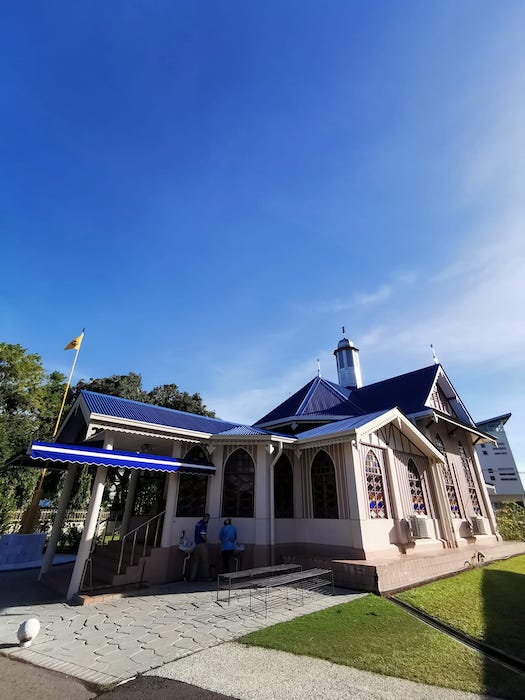
Gurdwara Sahib Johor Bahru unveils new darbar sahib on 12 April 2023

By Asia Samachar | Malaysia |

The Sikh Sanggat of Johor Bahru thronged the local gurdwara for the unveiling of the newly renovated darbar sahib, the main Sikh prayer hall.

They congregated for a kirtan programme followed by an akhand path (continuous reading of the Guru Granth Sahib) for the Vaiskahi celebration.

The darbar sahib has a new carpet, marble for the palki area and a state-of-the-art sound system.

The darbar sahib was last renovated in 2005.

The next phase of the gurdwara’s renovation will also work on other parts of the building, including the langgar area. The presnt gurdwara building was constructed in 1992.

RELATED STORY:

Johor Baru gurdwara to get RM600k state funding to building upgrade (Asia Samachar, 29 Oct 2022)

ASIA SAMACHAR is an online newspaper for Sikhs / Punjabis in Southeast Asia and beyond. When you leave a comment at the bottom of this article, it takes time to appear as it is moderated by human being. Unless it is offensive or libelous, it should appear. You can also comment at FacebookTwitter, and Instagram. You can reach us via WhatsApp +6017-335-1399 or email: asia.samachar@gmail.com. For obituary announcements, click 

Sardarni Jito (Sarjit Kaur) (1936 – 2023), Batu Pahat, Johor

ਗੁਰਮੁਖ ਜਨਮ ਸਵਾਰ ਦਰਗਹ ਚਲਿਆ॥ ਸਚੀ ਦਰਗਹ ਜਾਇ ਸਚਾ ਪਿੜ ਮਲਿਆ॥
Gurmukh Janam Savār Dargah Chaliā॥ Sachee Dharageh Jae Sacha Pirr Malia||
(Bhai Gurdas, Var 19, Pauri 14)

SARDARNI JITO (SARJIT KAUR) W/O LATE DALIP SINGH (ARJAN) (BATU PAHAT, JOHOR)

2.4.1936 – 12.4.2023

Sardarni Jito (Sarjit Kaur) passed away peacefully on 12th April 2023. She will be dearly missed by family and friends.

Children:
Mukhtiar Kaur / Harbinder Singh
Jagraj Singh / Ranjit Kaur
Mukhtiar Singh / Gurmit Kaur
Harminder Singh / Balinder Kaur

Grandchildren, Relatives & Friends.

Path da Bhog : 22nd April 2023 (Saturday) from 10 am to 12 noon at Gurdwara Sahib Batu Pahat, Johor. Followed by Guru ka Langar.

Contact:
Harbinder 019 – 412 0232
Viran: 012 – 313 3819

Please treat this message as personal invitation.

| Entry: 12 April 2023; Updated: 16 April 2023 | Source: Family

ASIA SAMACHAR is an online newspaper for Sikhs / Punjabis in Southeast Asia and beyond. When you leave a comment at the bottom of this article, it takes time to appear as it is moderated by human being. Unless it is offensive or libelous, it should appear. You can also comment at FacebookTwitter, and Instagram. You can reach us via WhatsApp +6017-335-1399 or email: asia.samachar@gmail.com. For obituary announcements, click here.

Soulful kirtan track to celebrate birthday of Guru Tegh Bahadur

0

By Asia Samachar | Kirtan |

Kirtan student Jasleen Kaur Monga released a soulful track on Salok Mahalla 9 to commemorate the Prakash Purab (birthday) of Guru Tegh Bahadur Sahib, the ninth Sikh Guru.

The composition are saloks by the ninth Sikh which form the concluding portion of the Guru Granth Sahib. It consists of 57 saloks and span just four pages of the Sikh scripture.

Each salok is a couplet consisting of 2 lines. This Bani was incorporated into the Guru Granth Sahib by Guru Gobind Singh ji and were composed by Guru Teg Bahadur while in the ‘Kotwali’ (prison) at Chandni Chowk, Delhi, before he achieved martyrdom.

These saloks form an important part of the epilogue when bringing to a close the reading of the Guru Granth Sahib (Bhog) on a religious or social occasion and should thus be the most familiar fragment of it, after the Japji Sahib, the Sikhs’ morning prayer.

CREDITS
Title – Salok Mahalla 9
Writer -Guru Teg Bahadur Ji
Vocal-Jasleen Kaur Monga
Composition – Ustad Sukhwant Singh ji
Music/Mix Master – Jus Keys
Recorded at -Gurmat Sagar Trust,Anandpur Sahib
Production -Singh Sahib Prof.Manjeet Singh Ji
Initiative by -Amitoj Singh &Mangal Marg
Artwork -Turban and Tales

RELATED STORY:

The Truth of Guru Teg Bahadur Ji’s Martyrdom (Asia Samachar, 23 Nov 2022)

ASIA SAMACHAR is an online newspaper for Sikhs / Punjabis in Southeast Asia and beyond. When you leave a comment at the bottom of this article, it takes time to appear as it is moderated by human being. Unless it is offensive or libelous, it should appear. You can also comment at FacebookTwitter, and Instagram. You can reach us via WhatsApp +6017-335-1399 or email: asia.samachar@gmail.com. For obituary announcements, click here

A New Wave of Online Harassment and Misinformation Campaigns are Targeting Sikhs in Canada – Press Progress

By Rumneek Johal | Press Progress | Canada |

As Sikh Canadians continue to speak out against ongoing violations of human rights by the Indian government in the state of Punjab, many Sikhs are being targeted in coordinated harassment and misinformation campaigns.

Recently, Indian media outlets amplified unverified and baseless rumours linking a murder at a downtown Vancouver Starbucks to events in India. The rumours, which seem to have originated with anonymous Twitter accounts, falsely claimed the suspect in the stabbing was a “Sikh Khalistani radical.”

The Khalistan movement is a separatist movement that seeks to establish a sovereign state for Sikhs, who are religious minorities in India. The Indian government is currently undertaking a “mega crackdown” to help locate Amritpal Singh, a Sikh activist and separatist figure. The government has also arbitrarily detained a number of people including journalists and lawyers.

Former journalist Rena Heer, who attempted to correct misinformation targeting the Sikh community on Twitter, says coordinated misinformation campaigns are negatively impacting Sikhs in Canada.

“It’s very sustained. It’s relentless. It’s over long, long periods of time,” Heer told PressProgress. “And at some point or another, it’s going to have a harmful impact on our community, and more directly our children and our families.”

“What it does is it puts you as a small community, as a minority community, under a microscope. It casts this sort of atmosphere of mistrust around you. It opens you up to questions from people that you know around whether your community has extremists.”

Heer was responding to misinformation spread by Indian media and a anonymous Twitter accounts that exploited horrific video of 37-year-old father Paul Schmidt being stabbed to death outside of a Starbucks on Granville Street.

A number of articles made unsubstantiated claims that the second degree murder suspect, 32-year-old Inderdeep Singh Gosal, attended a protest outside the Indian High Commission prior to the attack.

There is no information confirming Gosal was ever at the protest, which took place on Saturday, March 25 – the stabbing attack took place a day later, on Sunday, March 26.

Vancouver Police have confirmed no details about the murder, stating only that they “do not believe the victim and suspect knew each other” and that the “circumstances that led up to the fatal stabbing remain under investigation.”

Despite this, Twitter accounts of verified Indian academics and journalists, repeated this unsubstantiated claim, later picked up by Indian media to link the murder to a “rally outside the Indian High Commission in Canada.”

Heer says that after trying to correct misinformation, she was flooded with hateful replies.

“I just kind of put it out there. I just couldn’t read the replies. And once I read it, it’s just constant repetition. The comments and replies are just very directly anti-Sikh,” said Heer. “(People) don’t know how hard the machine works to make sure it’s targeting us wherever we live.”

To read the full story, go here.

PressProgress is an award-winning non-profit news organization focused on uncovering and unpacking the news through original investigative and explanatory journalism.

RELATED STORY:

India’s disinformation campaign against Canada’s Sikhs (Asia Samachar, 6 Feb 2021)

Farm laws: Fake social media profiles targeting Sikhs exposed – BBC (Asia Samachar, 24 Nov 2021)

ASIA SAMACHAR is an online newspaper for Sikhs / Punjabis in Southeast Asia and beyond. When you leave a comment at the bottom of this article, it takes time to appear as it is moderated by human being. Unless it is offensive or libelous, it should appear. You can also comment at FacebookTwitter, and Instagram. You can reach us via WhatsApp +6017-335-1399 or email: asia.samachar@gmail.com. For obituary announcements, click here

Harthial Kaur d/o Late Toki Nagindar Singh Cheema (1947 – 2023), Petaling Jaya

HARTHIAL KAUR D/O LATE TOKI NAGINDAR SINGH CHEEMA

28.10.1947 – 9.4.2023

Village: Wehniwal

Leaving behind beloved

Husband: Kaka Singh Gill (ex-Telekom Malaysia)

Children, Grandchildren, Son-in-Law, Family & Friends

Path da Bhog will be held on 24 April 2023 (Monday), from 10.00am to 12.00pm, at Gurdwara Sahib Petaling Jaya

Contact:
Baljit 012 643 4538
Rajinder 017 230 6743

| Entry: 11 April 2023; Updated: 16 April 2023 | Source: Family

ASIA SAMACHAR is an online newspaper for Sikhs / Punjabis in Southeast Asia and beyond. When you leave a comment at the bottom of this article, it takes time to appear as it is moderated by human being. Unless it is offensive or libelous, it should appear. You can also comment at FacebookTwitter, and Instagram. You can reach us via WhatsApp +6017-335-1399 or email: asia.samachar@gmail.com. For obituary announcements, click here.

Jangir Singh Gill (1926 – 2023), Nilai-Seremban Bus Inspector

As His Decree is issued, so is His command obeyed. Those who are sent, come, O Nanak; when they are called back, they depart and go

JANGIR SINGH GILL

14.4.1926 – 10.4.2023

Village: Mehna

Passed away peacefully on 10 April 2023.

Akhand Path: 4pm, 17 April (Monday) to 19 April (Wednesday) at Gurdwara Sahib Mantin. Path da Bhog is at 8pm.

For more details, contact:
Ravindar Singh 019 457 6363
Dalbir Singh 012 222 2112

| Entry: 11 April 2023 | Source: Family

ASIA SAMACHAR is an online newspaper for Sikhs / Punjabis in Southeast Asia and beyond. When you leave a comment at the bottom of this article, it takes time to appear as it is moderated by human being. Unless it is offensive or libelous, it should appear. You can also comment at FacebookTwitter, and Instagram. You can reach us via WhatsApp +6017-335-1399 or email: asia.samachar@gmail.com. For obituary announcements, click here.

Vaisakhi: Blood donation drives at Kota Kinabalu, Seremban; free medical screening at Penang gurdwara

0
Gurdwara Sahib Kota Kinabalu in a 2022 photo – Photo: Elvis Loong

By Asia Samachar | Malaysia |

A number of gurdwaras are holding blood donation drives as the Sikh community celebrates Vaisakhi, the commemoration of the establishment of the Khalsa.

Gurdwara Sahib Kota Kinabalu will hold its donation drive in collaboration with the Hospital Queen Elizabeth II blood bank on April 15, from 9am to 2pm, at the gurdwara’s Punjabi Education classrooms.

TO UNRAVEL MYSTERY OF GURU NANAK’S BIRTHDAY, CLICK HERE

Gurdwara Sahib Seremban is organising a similar campaign in collaboration with the Hospital Tuanku Jaafar on April 14, from 8.30am to 12.30pm, also at the Punjabi Education Centre (PEC) room.

Meanwhile, United Sikhs is organising a free medical screening camp at Wadda Gurdwara Sahib Penang in Georgetown, Penang on April 29, from 10am to 3pm. They will screen, among others, for glucose, cholesterol, dental, eye, bone and cardiac. (Contact: 012-6690312).

RELATED STORY:

Malaysian Gurdwaras Council nationwide Vaisakhi kirtan tour (Asia Samachar, 5 April 2023)

13 Questions on Guru Nanak’s Birthday (Asia Samachar, 30 March 2023)

ASIA SAMACHAR is an online newspaper for Sikhs / Punjabis in Southeast Asia and beyond. When you leave a comment at the bottom of this article, it takes time to appear as it is moderated by human being. Unless it is offensive or libelous, it should appear. You can also comment at FacebookTwitter, and Instagram. You can reach us via WhatsApp +6017-335-1399 or email: asia.samachar@gmail.com. For obituary announcements, click here

Plundered stones from Punjab and India

0
Left: The queen mother’s crown sits on top of the coffin during her funeral in 2002. Right: King Charles and Emerald girdle of Maharaja Sher Singh

By David Pegg and Manisha Ganguly | The Guardian |

Five years ago, Buckingham Palace marked its summer opening with an exhibition celebrating the then Prince Charles’s 70th birthday with a display of his favourite pieces from the royal collection, Britain’s official trove of items connected to the monarchy. “The prince had a very, very strong hand in the selection,” the senior curator said.

Among the sculptures, paintings and other exhibits was a long gold girdle inlaid with 19 large emeralds once used by an Indian maharajah to decorate his horses. It was a curious choice to put into the exhibition in light of the violent means by which it had come into the hands of the royal family.

As part of its Cost of the crown series, the Guardian has uncovered a remarkable 46-page file in the archives of the India Office, the government department that was responsible for Britain’s rule over the Indian subcontinent. It details an investigation, apparently commissioned by Queen Mary, the grandmother of Elizabeth II, into the imperial origins of her jewels.

The report, from 1912, explains how priceless pieces, including Charles’s emerald belt, were extracted from India as trophies of conquest and later given to Queen Victoria. The items described are now owned by the monarch as property of the British crown.

Plundered stones

To fully understand the context behind the jewels, and their place in India’s history, it was necessary to visit the archives.

A journal records a tour in 1837 of the Punjab area in north India by the society diarist Fanny Eden and her brother George, the governor general of the British Raj at the time. They visited Ranjit Singh, the maharajah in Lahore, who had signed a “treaty of friendship” with the British six years earlier.

The half-blind Singh wore few if any precious stones, Eden wrote in her journal, but his entourage was positively drowning in them. So plentiful were the maharajah’s gems that “he puts his very finest jewels on his horses, and the splendour of their harness and housings surpasses anything you can imagine,” she wrote. Eden later confided in her journal: “If ever we are allowed to plunder this kingdom, I shall go straight to their stables.”

Twelve years later, Singh’s youngest son and heir, Duleep, was forced to sign over the Punjab to the conquering forces of the British East India Company. As part of the conquest, the company did indeed plunder the horses’ emeralds, as well as Singh’s most precious stone, the legendary Koh-i-noor diamond.

Today, the Koh-i-noor sits in the crown of Queen Elizabeth the Queen Mother, on display at the Tower of London, and it has become an emblem of Britain’s tortured relationship with its imperial history.

Anita Anand, a journalist and historian who co-wrote a book titled Koh-i-noor on the diamond, said it was “a beautiful and cold reminder of British supremacy during the Raj”, the period between 1858 and 1947 when India was ruled by the crown.

“Its facets reflect the fate of a boy king who was separated from his mother,” Anand said. The stone too was “taken far away from his home, recut and diminished”. Anand said: “That is not how India sees itself today.”

To read the full story entitled ‘India archive reveals extent of ‘colonial loot’ in royal jewellery collection’ (The Guardian, 6 April 2023), click here.

RELATED STORY:

As world mourns Queen Elizabeth II, my thoughts turn to Prince Duleep Singh (Asia Samachar, 16 Sept 2022)

ASIA SAMACHAR is an online newspaper for Sikhs / Punjabis in Southeast Asia and beyond. When you leave a comment at the bottom of this article, it takes time to appear as it is moderated by human being. Unless it is offensive or libelous, it should appear. You can also comment at FacebookTwitter, and Instagram. You can reach us via WhatsApp +6017-335-1399 or email: asia.samachar@gmail.com. For obituary announcements, click here

Malkir Singh (1952 – 2023), Sentul, Kuala Lumpur

MALKIR SINGH A/L FANJA SINGH

5.8.1952 – 8.4.2023

Waheguru Ji Ka Khalsa, Waheguru Ji Ki Fateh

It is with great sadness that we announce the sudden passing of our father/husband/grandfather Malkir Singh a/l Fanja Singh on 8th April 2023. He was an active and cherished member of the Sikh community and will be remembered for his generosity and charitable work. He will be deeply missed by:-

Wife: Satte Shewaram

Sons:
Kulvinder Singh Dhillon
Karan Singh Dhillon

Daughter-in-law:
Jameet Breyna Dhillon

Grandchildren:
Pia Samaira Kaur Dhillon
Armaann Aarav Singh Dhillon

Sisters:
Dharan Kaur
Puran Kaur
Balwin Kaur

Brothers:
Gurdial Singh
Balbir Singh
Ranjit Singh

and a whole host of in-laws and their spouses, nephews, nieces, grandnephews, grandnieces, extended family and friends.

Akhand Path Aramb will be held from 13th to 15th April 2023 at 1st Floor Darbar, Gurdwara Sahib Sentul followed by Akhand Path da Bhog on 15th April 2023 between 9.30 am to 11.30am at the New Darbar Sahib, Gurdwara Sahib Sentul, Kuala Lumpur

For enquiries, please contact:
Balbir Singh – 016 2876814
Gurdial Singh – 017 5227520
Karan Singh – 012 3137751

| Entry: 9 April 2023 | Source: Family

ASIA SAMACHAR is an online newspaper for Sikhs / Punjabis in Southeast Asia and beyond. When you leave a comment at the bottom of this article, it takes time to appear as it is moderated by human being. Unless it is offensive or libelous, it should appear. You can also comment at FacebookTwitter, and Instagram. You can reach us via WhatsApp +6017-335-1399 or email: asia.samachar@gmail.com. For obituary announcements, click here.