There is much money handed over to priests and treasurers in our places of worship in exchange for a promise of relief from pain and suffering and/or material rewards and sukh (pleasure). I know because lists of devotees and their respective sufferings are often read out during a Ardaas ceremony in Gurdwaras. I am sure similar processes take place in Churches, Mosques and Mandhirs. This is not surprising as praying and the promise of divine cures is a lucrative source of income.
I have no doubt that prayer can help us to manage, and perhaps even eradicate some of our pain and suffering, both mental and physical. However, the question is, what is the mechanism behind this? Is it that God somehow answers our prayers? Is it a result of natural bodily mechanism? Or is it a mix of both nature and divine intervention?
This is not an easy question to answer and there a number of studies that seek to test out these hypotheses. What I know from my own experience is that prayer can give us emotional strength. Indeed, it is plausible that, through the placebo effect (mind over matter), in some instances this may result in pain relief and even curing of some illnesses.
The effect may even be greater for those people who have absolute belief in the possibility of God or some spirit making an intervention. In short, I think there is good reason to believe prayer can heal in small and large ways. The question is what is the casual mechanism, which for believers in a theistic God is direct divine intervention; quite literally for them, often through proxies (Holy men – they are always men!) they are blessed by the ‘hand of God’.
In terms of the divine intervention hypothesis, based on the below shabad, you might be surprised to learn that Guru Nanak seems to reject this explanation. I may be misinterpreting the lines, in which case I stand corrected, but on the surface, it seems clear that Nanak is suggesting pain and pleasure are natural feelings that are part of normal functioning.
What do you think?
ਮਃ ੧ ॥ First Mehla:
ਨਾਨਕ ਬੋਲਣੁ ਝਖਣਾ ਦੁਖ ਛਡਿ ਮੰਗੀਅਹਿ ਸੁਖ ॥ O Nanak, it is absurd to ask to be spared from pain by begging for comfort.
ਸੁਖੁ ਦੁਖੁ ਦੁਇ ਦਰਿ ਕਪੜੇ ਪਹਿਰਹਿ ਜਾਇ ਮਨੁਖ ॥ Pleasure and pain are the two garments given, to be worn in the Court of the Divine.
ਜਿਥੈ ਬੋਲਣਿ ਹਾਰੀਐ ਤਿਥੈ ਚੰਗੀ ਚੁਪ ॥੨॥ Where you are bound to lose by speaking, there, you ought to remain silent. ||2||
Gurnam Singh is an academic activist dedicated to human rights, liberty, equality, social and environmental justice. He is an Associate Professor of Sociology at University of Warwick, UK. He can be contacted at Gurnam.singh.1@warwick.ac.uk
* This is the opinion of the writer and does not necessarily represent the views of Asia Samachar.
ASIA SAMACHAR is an online newspaper for Sikhs / Punjabis in Southeast Asia and beyond.Facebook | WhatsApp +6017-335-1399 | Email: editor@asiasamachar.com | Twitter | Instagram | Obituary announcements, click here |
Johor-born Kavita Kaur is passionate about her job. And she’s all the more fired up as she can sense that she can make a difference in people’s life.
“What inspires me is actually making a difference in the lives of many individuals. One aspect is being able to offer a quality job to someone which improves their lives and second is knowing that person would be caring for the community. That satisfaction is like no other,” she told Asia Samachar.
Kavita was recently promoted to general manager at Singapore-based international specialist healthcare recruitment agency People360 Services.
The company provides recruitment and staffing solutions to government and private hospitals, nursing homes and aged care facilities and other private healthcare institutions. Its main disciplines of hire are nurses, allied health, and medical doctors.
Tell us something about your family?
I have a small little family which comprises my mum, elder brother, sister in law and three little nephews who mean the world to me. I am a graduate in Bachelors of Business Administration (Hons) Major in Human Resource Management from Multimedia University. Currently, I am pursuing my Executive Master of Business Administration from Multimedia University as well.
Tell us about your career?
I started my career as a Human Capital and Development Executive with the Pan Pacific Hotels Group and then moved on as a Senior Training Executive with the Thistle Group of Hotels. Eventually, I decided to specialize into Recruitment as I enjoy meeting new people and this is where I landed an opportunity via a referral with People360 Healthcare Recruitment, a Singapore based healthcare recruitment agency.
I started as a Recruitment and Research executive and was promoted to head the Malaysia branch as a Country Manager. I was then offered to come over to Singapore to lead the foreign recruitment division and now I have been promoted to General Manager eventually overseeing the entire operations of People360, Singapore. I have to thank my boss for believing in me to provide me with such amazing opportunities in my career and the sky’s my limit!
Tell us more about your parents?
My father Sardar Sukhdave Singh Sandhu father passed away in 2012. He was a Plant Manager with Carpet Raya Manufacturing. My mother Harbhajan Kaur Dhaliwal was a homemaker. She was originally from Seremban, Negeri Sembilan in Malaysia. My parents are the reason for who I am today for all their struggles and sacrifices that they have made to ensure I am able to be well equipped to be successful in my life. I am ever grateful for the support of my family, especially whatever my father has done for us. This success is a tribute to my late dad.
What inspires you to do your work?
In my current job, I deal with a lot of healthcare workers whose main duties are to provide care to the community. What inspires me is actually making a difference in the lives of many individuals. One aspect is being able to offer a quality job to someone which improves their lives and second is knowing that person would be caring for the community. That satisfaction is like no other.
Advice to people who want to follow in your footsteps?
I think the main important thing is hard work and perseverance. We never know what we are capable of until we push ourselves to do better every single day. Remember that the only competition should be yourself and you should try to be better everyday. Never stop learning and always be humble.
ASIA SAMACHAR is an online newspaper for Sikhs / Punjabis in Southeast Asia and beyond.Facebook | WhatsApp +6017-335-1399 | Email: editor@asiasamachar.com | Twitter | Instagram | Obituary announcements, click here
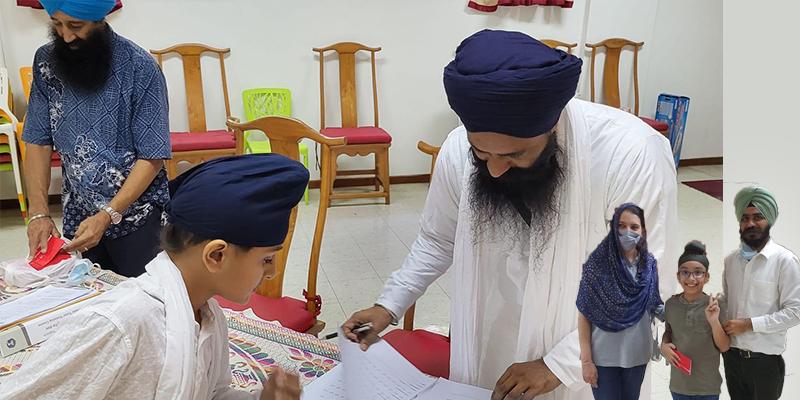
All set to say the Sikh prayer – Photos: SMSS Facebook
By Asia Samachar | Singapore |
Sikh Missionary Society Singapore (SMSS) held its first Ardaas contest for children.
The preliminary round for the junior category (aged 10 and below) was concluded on Saturday (Sept 3, 2022), with the final round slated for Oct 1. For children aged 10 years and above, the preliminary round is on Sept 11 (2pm) and the final round on Oct 2 (2pm).
The initiative was in conjunction with the GurtaGaddi celebrations of Sri Guru Granth Sahib Ji. If keen, children can still get in touch to take part. (Article edited to correct date, details added).
ASIA SAMACHAR is an online newspaper for Sikhs / Punjabis in Southeast Asia and beyond.Facebook | WhatsApp +6017-335-1399 | Email: editor@asiasamachar.com | Twitter | Instagram | Obituary announcements, click here
15 September 2022 (Thursday), from 9.00 A.M. to 12.00 PM, at Wadda Gurdwara, Jalan Gurdwara, Georgetown, Penang
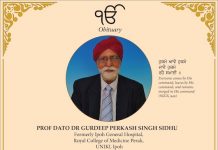
YOU WERE OUR BROTHER, YOU WILL BE REMEMBERED ALWAYS
Contact: Jasdave 011-10109489 Nirmal 013-4372517
| Entry: 8 Sept 2022 | Source: Family
ASIA SAMACHAR is an online newspaper for Sikhs / Punjabis in Southeast Asia and beyond.Facebook | WhatsApp +6017-335-1399 | Email: asia.samachar@gmail.com | Twfffitter | Instagram | Obituary announcements, click here
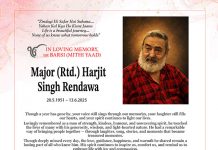
Forever will be remembered and cherished by:- Children and In-laws, Grandchildren and In-laws and Great Grandchildren.
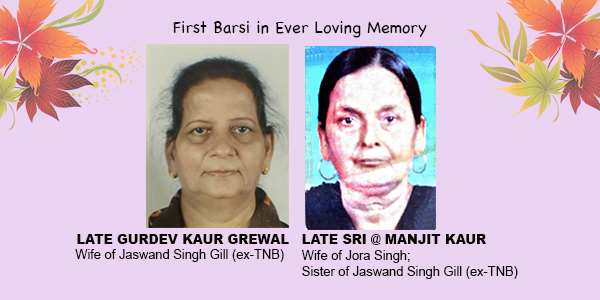
1st Barsi, Sahej Path da Bhog will be held on 17 September 2022 (Saturday) from 10 am – 12 pm at Gurdwara Sahib Kampung Pandan Settlement, Kuala Lumpur. Guru Ka Langgar will be served.
ASIA SAMACHAR is an online newspaper for Sikhs / Punjabis in Southeast Asia and beyond. Facebook | WhatsApp +6017-335-1399 | Email: asia.samachar@gmail.com | Twitter | Instagram | Obituary announcements, click here
(This is the third of a 7-part series on Misinterpretation of Gurbani. Click for Part 1, Part 2, Part 3, Part 4, Part 5, Part 6 and Part 7. Click here for all articles by the same author)
Mirtak Ko Jiwalanhar (SGGS page 283).
ਮਿਰਤਕ ਕਉ ਜੀਵਾਲਨਹਾਰ ॥
This verse has been literally interpreted as: HE infuses life back into dead. Prof Sahib Singh has interpreted it as: God has the power to raise a person from dead.
I find these interpretations going against the basic principles of the spiritual philosophy of Sri Guru Granth Sahib (SGGS). Raising a person from dead is a miracle event because it violates the laws of nature (Cosmic Laws). Nanak says
Hukamai Undar Sabh Ko Bahar Hukam Na Koe (SGGS, Page 1) ਹੁਕਮੈ ਅੰਦਰਿ ਸਭੁ ਕੋ ਬਾਹਰਿ ਹੁਕਮ ਨ ਕੋਇ ॥
meaning every event in the universe happens according to unchangeable laws of nature, GURU calls WILL OF GOD. Nothing ever happens in violation of the cosmic laws. Nature does not break its own laws. Nanak further says
NATH means GOD; NATHEE means orderly, according to laws of nature; SIDH means miracle power; RIDH means self praise; AWRA SADH means without meaning, worthless. In this conversation with ascetics (Yogis) who falsely claimed to possess miracle powers, Nanak says everything in the universe happens according to laws of nature. Your claim to possess miracle powers, self praise is your ego and ignorance of truth. This in fact is the stumbling block in your spiritual awakening, in realizing the meaning and purpose of life. When in conversation with ascetics (YOGIS), Guru Nanak was asked to perform a miracle for them, he replied Baba Bolai Nathji Ass Wekhan Jogee Wast Na Kaee. Gur Sangat Bani Bina Doojee Oat Nahi Hai Raee (Bhai Gurdas, Var 1) meaning I do not believe in miracles; my only support is divine wisdom (BANI). This clearly shows that Gurbani does not subscribe to miracle belief system.
I believe it is important to understand why such a baseless and misleading interpretation of Gurbani was done. One, it was a misunderstanding, a misconception in the belief amongst most Sikhs that God possesses supernatural powers and has the power to perform miracles and do anything. Once speaking to senior Sikh couple I said Gurbani does not subscribe to miracle powers. They replied, you do not know, God has power to do anything. Such Sikhs have the old beliefs so cemented in their psyche that they are not prepared to unlearn. Second, there were hundreds of miracle stories associated with the ten Gurus and the Bhagats (Saints) written in various history books and JANAM SAKHIS that influenced Sikh scholars. Thirdly, Sikh scholars translating Gurbani did not have the technological tools that I believe greatly aid in doing proper research of Gurbani.
Such misleading translations have done great damage to Sikhi way of life and Sikh character. Sikh youth today do not believe in such baseless and miracle stories told in Gurdwaras every day. They then simply walk away from the Sikhi way of life. Older generations with blind faith (sharda) in such stories refuse to change and see the truth.
Let us interpreted the verse with logic, reason, relevance and scientific method based on the basic principles of Sikhi after Guru period, and see how the message matters in daily life.
meaning one may have impressive personality, very smart, knowledgeable and rich, but if you are not spiritually awakened, have no compassion, kindness and love in your heart, you are a walking corpse, consciously dead (atmik maut). Nanak further says
Antar Gian Na Aaeo Mirtak Hai Sansar (SGGS, 88) ਅੰਤਰਿ ਗਿਆਨੁ ਨ ਆਇਓ ਮਿਰਤਕੁ ਹੈ ਸੰਸਾਰਿ ॥
meaning when as humans we do not contemplate and meditate on divine wisdom, godly virtues, we become slave to ego and create self identity. This then is the cause of our anxiety, worries, stress and depression. In Gurbani, this is our conscious death (atmik maut). MIRTAK here does not mean physical death. Nanak is not talking about sririrak (BODY) death as erroneously interpreted. In Gurbani, conscious death is the worst death for human being.
Now we can interpret Mirtak Ko Jiwalanharਮਿਰਤਕ ਕਉ ਜੀਵਾਲਨਹਾਰ in the real perspective of Gurbani, carrying a profound spiritual message. Physically we all will die one day. Some die at birth, others live to a hundred. In this verse Nanak is not talking about physical death. Spiritual, conscious death is the cause of pain and suffering in life. Nanak says O MAN through understanding, contemplating on divine wisdom, one is spiritually awakened, internalizes godly virtues and learns to live the HUKM, DIVINE WILL. We become SACHIARA, realize meaning and purpose of life, enjoy inner peace and happiness.
realizing eternal life while living. The key message in this verse is that every human has ability to choose the path to truthful living, be a good human and enjoy bliss in life.
I may say here that literal and misleading interpretation of Gurbani has serious harm to Sikhi way of life. Similarly, there are positive and practical implications of a logical and scientific interpretation of Gurbani. Youth find logical interpretation relevant in their daily life, to learn how to be a good human being.
Harbans Singh Kandola. Born in Ludhiana, Punjab, he read Ph.D. in Agriculture from Punjab Agriculture University in 1972. He moved to Canada in 1973 and retired as a senior bank manager in 2005. He reads Gurbani passionately to understand its spiritual message and how it matters in his daily life. He poured over Prof Sahib Singh’s ‘Sri Guru Granth Sahib Darpan’ (SGGS translation) over five years, preparing for himself a complete set of notes. In the past two decades, Harbans has engaged in Gurbani discussion on radio and television (go here and here), as well as newspapers and the Sikh Bulletin. He believes that we now have the literature reflecting the true and real message of Gurbani which has to be presented to Sikhs and non-Sikhs. This article is from his unpublished book ‘Renaissance of Sikhi’.
* This is the opinion of the writer, organisation or publication and does not necessarily represent the views of Asia Samachar.
ASIA SAMACHAR is an online newspaper for Sikhs / Punjabis in Southeast Asia and beyond.Facebook | WhatsApp +6017-335-1399 | Email: editor@asiasamachar.com | Twitter | Instagram | Obituary announcements, click here
Earlier this week, the Jathedar of the Akal Takht (i.e., the chief temporal seat of the Sikh faith) made national news by declaring that Christian evangelicals have been using fraudulent and unscrupulous methods to convert the Sikhs and Hindus of Punjab on a large scale. His comments, which were trailed by similar expressions of concern by functionaries of various Gurdwara Prabhandak Committees, suggest that the Sikh religious leadership, at a meeting to be held in Anandpur Sahib on 5th September, will demand that the state government enact stringent provisions to prevent conversions from parent religions, akin to those enacted by certain other states.
The combative response of Sikh organisations to missionary activity is a testament to the recent success of well-funded conversion programmes in the state, the origins of which can be traced to the colonial era. In the districts of Gurdaspur, Amritsar and Tarn Taran, where evangelical activities are mainly concentrated, the opposition has taken on particularly militant tones—also known as the Majha region, these districts, along with other parts of the erstwhile Lahore Division, once formed the heart of colonial authority in Punjab and have been a focus for Christian groups for the better part of a century.
To those viewing the issue of religious conversions in the state from a distance, the issue may seem unduly tendentious. After all, the share of the state’s Christian population has barely moved from the 1% mark over the past three censuses. Yet, what is obscured by this statistic is the complex sociology that forms the backdrop to missionary activity in the state, which has long targeted the most vulnerable and marginalised sections of Sikh and Hindu society.
By holding out the promise of free English-medium education and subsidised healthcare—rendered possible by formidable financial machinery—missionary groups have induced large numbers of Sikh and Hindu Dalits (in particular, those belonging to the Mazhabi and Valmiki communities in the Majha) to accept Christianity in practice. Yet, given that conversion implies loss of reservation benefits, it is only rational that converts choose to retain their parent faith and birth names on paper. The official figures are thus likely to significantly undercount the state’s Christian population.
The crisis unfolding in Punjab, most importantly, exposes the philosophical chasm between indigenous Indian religions, which are nothing if not ideologies of coexistence, and those religions that exhort missionary activity. Islam and Christianity, at least in their organised forms, make absolute claims about God and salvation; a corollary of this is that all other faiths are not just misguided but blasphemous. Spreading the divine message is thus a part of the foundational logic of both faiths.
For good measure, Abrahamic faiths have managed to adapt their proselytisation strategies to the modern age. The slick, viral Punjabi videos promoting claims about the performance of miracle cures by Christian priests are redolent of the biblical zeal that has long driven mass conversions in states such as Jharkhand and Odisha.
(This article is authored by Nirmal Kaur who is a retired IPS officer of 1983-batch. She retired as DGP in Jharkhand. All views are personal. Click here to read the full article)
ASIA SAMACHAR is an online newspaper for Sikhs / Punjabis in Southeast Asia and beyond.Facebook | WhatsApp +6017-335-1399 | Email: asia.samachar@gmail.com | Twitter | Instagram | Obituary announcements, click here
Professor J. S. Grewal, an eminent historian, had a pioneering interest in the historiography of medieval India. He brought the rich history of Punjab and Sikhs from the margins to the mainstream. His outstanding research works took Amritsar’s name to national and international levels. Grewal, a retired national fellow of the Indian Council of Historical Research, used to say: “To understand the present, it’s important to understand the past.”
Born in 1927, he was the youngest of five children in his family. As a child, he studied Persian and Urdu in school at Lyallpur (now in Pakistan). He was inspired by his father, who was well-read in traditional literature. He was studying math and physics at Forman Christian College, Lahore, when the Partition of India took place. After Partition, his family settled at Dhandra village in Raikot where his father had been reallotted land.
Due to changed circumstances, his father could only afford to send him to a government college in Ludhiana. Therein, he did postgraduation in English and geography. During his college days, he participated in debates and loved football. His teachers inspired him to take a shot at the civil services, which he did. He was successful in his attempt and was selected for the audit and accounts training in Nagpur, but he soon realized that his heart lay in history, not accounts.
After quitting the audit service in 1954, he joined Government College, Hoshiarpur, to study history. He was much influenced by Partition and wanted to know more about the cultural interchange between Hindus and Muslims. So, he focused on the social and cultural history of the medieval period.
As advised by his teachers, he went to the University of Durham in the U.K. to research how European scholars had treated Sufism in India. In 1963, his research culminated in his doing a Ph.D. on the British historical writing on medieval India. Oxford University Press published his work in 1970 as “Muslim Rule in India: The assessments of British historians.”
In the U.K. in 1964, his meeting with A.C. Joshi, the Vice-Chancellor of Panjab University (P.U.), culminated in his joining the history department of the University as a lecturer. He served P.U. for the next seven years. In 1971, he joined Guru Nanak Dev University (GNDU), Amritsar and became the founder Head of its History Department. During his tenure as the Head of the Department of History, he got every aspect of Punjab deeply researched. His research interests included such diverse elements of Punjab as social, cultural, political, social classes, peasantry, the business community, the economy, and the history of various city areas. Under his stewardship, the History Department was so dynamic that it became one of the top departments in the Punjab state and the entire country.
In addition to his academic duties, he shouldered the responsibilities of the University’s first and longest-serving Academic Affairs Dean. He became the third Vice-Chancellor of GNDU in 1981, following Dr. Bishan Singh Samundri and Dr. Karam Singh Gill. Due to his contribution to historiography, he was elected President of the Indian History Congress in 1984. He retired from GNDU in 1987. Soon after, he joined the Indian Institute of Advanced Study (IIAS), Shimla as a fellow. Therein, he rose to the position of Director and Chairman of the same institute.
Professor Grewal has been a member of the Religious Advisory Council of the Tony Blair Faith Foundation and the head of the Institute of Punjab Studies, Chandigarh. He published numerous articles and books on Sikh history. Some of his notable works include Guru Nanak in History (1969), The Sikhs of Punjab (1990), Contesting Interpretations of the Sikh Tradition (1998), Maharaja Ranjit Singh: Polity, Economy and Society (2001), Social and Cultural History of Punjab (2004), Sikh Ideology, Polity and Social Order(2004), Kinship and State Formation (2007), The Sikhs: Ideology, Institutions, and Identity (2009), and Historical Writings on the Sikhs: 1784–2011 (2012). In addition, his research has been subjected to studies on academic levels. His contributions to establishing the importance of regional history in the larger perspective of national and international historiography are outstanding. In 2005 he was honoured with Padma Shri, the fourth highest civilian award, by the Indian Government for his outstanding contributions to Indian literature.
Prof. Grewal was an institution builder, a good administrator, and a good man. Historian of international fame, he gave a new meaning and identity to the history of Punjab and the Sikhs. He had a unique contribution to establishing the importance of regional history in the broader perspective of national and international historiography.
Dr. J. S. Grewal passed away at the age of ninety-five in Chandigarh on August 11, 2022. However, Dr. Grewal’s legacy lives on in his scholarly writings, the many initiatives he gifted to academia, and the various academic institutions he served.
Dr. D. P. Singh, M.Sc., Ph.D. is Director, Center for Understanding Sikhism, Mississauga, Ontario, Canada. He is a physicist by training, a teacher by profession and a writer by choice. He specializes in writing on Science, Religion and Environmental topics. Currently, he is working as Director, CanBridge Learning & Educational Consultant to various educational institutions in Canada. Email: drdpsn@gmail.com
Harbans Lal, Ph.D.; D.Litt (Hons) is the Professor Emeritus & Chairman at the Dept of Pharmacology & Neurosciences, University of North Texas Health Science Center. He is also the Professor Emeritus at the Amritsar-based Guru Nanak Dev University as well as President of the Academy of Guru Granth Studies. He can be reached at Japji2050@gmail.com.
ASIA SAMACHAR is an online newspaper for Sikhs / Punjabis in Southeast Asia and beyond.Facebook | WhatsApp +6017-335-1399 | Email: editor@asiasamachar.com | Twitter | Instagram | Obituary announcements, click here
Please ensure all SOP are complied with regards to COVID-19.
| Entry: 7 Sept 2022 | Source: Family
ASIA SAMACHAR is an online newspaper for Sikhs / Punjabis in Southeast Asia and beyond.Facebook | WhatsApp +6017-335-1399 | Email: asia.samachar@gmail.com | Twfffitter | Instagram | Obituary announcements, click here
The 6th Singapore Sikh Education Foundation (SSEF) kindergarten graduation ceremony 2022 recently was a fun-filled event with dances and performances. Singapore Indian Development Association (SINDA) CEO Anbarasu Rajendran handed the graduation certificates to the K2 students. – Photo: SSEF Facebook
ASIA SAMACHAR is an online newspaper for Sikhs / Punjabis in Southeast Asia and beyond.Facebook | WhatsApp +6017-335-1399 | Email: asia.samachar@gmail.com | Twitter | Instagram | Obituary announcements, click here