There is a common saying that ‘you are damned if you do and damned if you don’t’. It is used to show how sometimes there are situations where a person can be blamed or considered wrong no matter what he or she does. It reflects an atmosphere of mistrust and even fear, something that I am sure many Sikhs will be able to relate to, especially in today’s social media age where reputations can be made and destroyed by the virtue of a tweet or Facebook post.
A few weeks ago, I attended an invitation-only premiere of the animated movie ‘Supreme Motherhood’, which depicts the life of Mata Sahib Kaur, the wife of Guru Gobind Singh, the 10th and last Guru of the Sikhs. The release of the movie had been keenly anticipated and one could feel a real sense of expectation amongst the 300 or so guests at the Imax Cinema at Millennium Point in Birmingham. What was great about the audience on the night was that it was so varied. We had young and old, male and female, Amritdhari and Sehajdhari. There was a buzz of anticipation as we waited to be let into the cinema.
Along with the buzz, because of some of the adverse reporting about the movie in the media, I could also feel a sense of anxiety. Given that the Shiromani Gurdwara Parbandhak Committee (SGPC) had refused to give their approval amid allegations that the movie was factually inaccurate, I was concerned that we might be seeing a repeat of the events that took place in 2015 concerning the animated film Nanak Shah Fakir based on the life of Guru Nanak. It’s worth recalling that despite winning many awards, following protests from some Sikh groups claiming that it was wrong to depict Sikh figures through actors, and historically inaccurate, Nanak Shah Fakir was banned! There were also questions raised about the character producers of the film and their motives. Interestingly, though the sequence of events was different, almost identical concerns had been raised about the movie Supreme Motherhood.
Arriving at the movie theatre and seeing many familiar faces, and no sign of any protesters, gave me a sense of comfort. I felt reassured that by attending the premiere along with many other respectful Gursikhs, I was not acting against the interests of the Panth. Given the current leaderless and confused state of the Panth, I often feel like the only real source of direction for me is Guru Granth Sahib and my commitment to human rights, especially freedom of expression and belief. Of course, with these freedoms, comes responsibilities, but it is also true that we cannot please all the people all time, so we need to also tolerate differences of thought and opinion.
The morning after attending the movie premiere I did write a short review, which was mostly positive, and posted it on Facebook. But, almost instantly, I received comments from some Facebook friends drawing attention to objections that had been raised about both the content of the movie and the character of those behind the production. To avoid becoming entangled in the controversy, in what can only be described as an act of self-censorship, I deleted the post. Rather than ‘banning’ we should develop the capacity to intelligently challenge those who knowingly or accidentally misrepresent Sikhi.
Since making that choice to delete my thoughts on the Motherhood movie, I have not felt comfortable as it’s not in my nature to stay silent. And so, given that to date the movie has been watched by many Sikhs across the world, and that the views of those objecting to the film and the filmmakers are in the public domain, I felt it was right that I express my thoughts and feelings, too. In doing so, please note, that I am in no way passing judgement on those who were behind the making of ‘Motherhood’, but simply expressing my feelings about the movie itself.
When I was young the only way we could find out about Sikhi was through the Gurdwara. But if I am honest, though I loved to attend and listen to the katha and kirtan, I didn’t understand much and as a result knew very little about Sikh history. But today’s generation, with the advent of the internet and multimedia, are so lucky; there is so much available for them, especially movies like this animation.
Of course, it is not enough to have an animated movie, there is the question of historical accuracy, quality of the script, quality of the picture and sound. I am no expert, but my impression is that Motherhood is perhaps the best animated Sikh movie to date. But I think what impressed me the most was the way it challenged gender stereotypes. As a woman and someone who has always been presented with male role models, seeing a movie where a Sikh woman is depicted as a strong leader of the Khalsa, was truly an eye-opening, inspiring and emotional experience.
I know one of the aims of the producers was to tell the often-ignored stories of women in Sikhi, and they must be congratulated for this. Sadly, much of the Punjabi media depicts women and girls as weak, helpless, and the property of men. So in my mind, both to empower women and young girls, and to give a message to young boys and men about the importance of gender equality, there was a need for a movie like Motherhood. And in this regard, I am sure the movie will have a big impact.
On a personal level, watching the movie was a very emotional experience. Indeed, when Mata Sahib Kaur, dressed in her beautiful Bana, was fighting like a true warrior, I had goosebumps. During the fight scenes, because of the detail of the animation and powerful soundtrack, and the fact that in the past I had done shastra vidya, I almost felt like I was there in the battle scene. Every time Mata Sahib Kaur waved her sword, I felt like it was my arm. The spirit that these scenes awakened within me made me feel so strong, which is difficult to describe; I am sure other women and girls must have felt the same sense of empowerment.
One of the objections raised by the SGPC is that making movies and cartoons depicting the Gurus, is against Sikhi! I find this bizarre given the many depictions of our Gurus in pictures exist already, and animations are nothing more than moving pictures. For sure we should never allow real actors to play the role of the Guru, but besides this, we must move with the times. In today’s multimedia world it is important to make the most of technology to tell our history. And what better character to choose than Mata Sahib Kaur. It is by embracing new technologies that we engage the younger generation.
Ultimately what matters is the stories we tell, and sadly, to date in teaching about Sikh history we have ignored the contribution of women. We Sikhs always claim that there is equality in Sikh, but the way our history is told we focus mostly on the achievements of men. It’s a shame that we talk so little about the role of female heroes like Mata Sahib Kaur and it is so important in today’s world that the next generation is given access to this history, otherwise, they might feel Sikhi is not for them. Why have we forgotten the history of Sikh women is a complicated question, but it was amazing and refreshing to see a movie challenging gender stereotypes by focussing on Mata Sahib Kaur, a leader who led the Khalsa army in such an inspiring way.
As for the protests against the move, no doubt these will rumble on and we will go from one ‘controversy’ to another. For sure the Panth reserves the right to challenge any writer, filmmaker or preacher, who seeks to bring Sikhi into disrepute. However, in the absence of a consensus on a whole range of aspects of Sikh history and tradition, it is difficult to see how this can be achieved. Moreover, any objection must be within the broad principle of freedom of speech, belief and consciousness, something that the Sikh Gurus sacrificed so much for.
Ultimately, the only way to safeguard our history and heritage is to build excellent research and scholarship. It is to broaden and deepen an understanding of Sikhi rather than focus on the surface level and ritualistic aspects, which sadly is increasingly the case. Most importantly, we need to educate the Sikh masses to develop a critical understanding of Sikhi, Sikhi history, Sikhi scripture and Sikh traditions.
New technologies bring with them opportunities and threats. However, what we can’t do is simply ignore these developments and close our eyes. We live in a technological age where we are increasingly getting our knowledge and learning through multimedia. For sure nothing can replace going to the Gurdwara, sitting in the Sangat and listening to kirtan and katha. But, today, by voting with their feet, young people are not attending Gurdwaras and they do not engage with the current crop of Sikh preachers. They get their knowledge and information through a wide range of electronic media and that means we need to make the most of the technology of our age.
Manjit Kaur, a UK-based therapist and counsellor, is a presenter of the 1 Show on Akaal Channel. She can be contacted via email at manjitkaur1show@gmail.com
ASIA SAMACHAR is an online newspaper for Sikhs / Punjabis in Southeast Asia and beyond.Facebook | WhatsApp +6017-335-1399 | Email: editor@asiasamachar.com | Twitter | Instagram | Obituary announcements, click here |
“What you are shouts so loudly in my ears I cannot hear what you say.” – (Ralph Waldo Emerson)
What we are says much more about us than anything we say about ourselves. Only basic goodness in a person makes an impact on others.
We have our role-models in Sikh history who made a massive contribution to the progress of the revolutionary Sikh movement founded by Guru Nanak Sahib. Most did not write autobiographies but others did write about them when the real, positive or negative, impact of their actions became known in due course of history. We remember some as our role models – the Guru-persons and the great Sikhs in history. Sometimes we come across such humble sewadars who leave their impress on our lives.
We also read about those who betrayed community interests at critical times in history. In our own life-time, we try and follow and associate with those we believe to be well-positioned to serve the Panth. Sadly, over the years, some remind us of the Gurbani Panktis:
ਮੈ ਜਾਨਿਆ ਵਡ ਹੰਸੁ ਹੈ ਤਾ ਮੈ ਕੀਆ ਸੰਗੁ ॥
I thought he was a great swan so I associated with him.
ਜੇ ਜਾਣਾ ਬਗੁ ਬਪੁੜਾ ਤ ਜਨਮਿ ਨ ਦੇਦੀ ਅੰਗੁ ॥੨॥
Had I known that he was only a wretched heron from birth, I would have avoided his company. ||2|| (SGGS Ank 585)
Life stories of community role models inspire next generations. I hesitate to use the word leader because the Sikhi concept of true leadership in Guru tradition and Sikh history, is very different from that generally understood. For example, Bhai Lehna (later Guru Angad Sahib) and, amongst the great Sikhs, Kapur Singh (later Nawab) were recognised as role models of Sikhi sewa in humility. They were not leaders as such who claimed some sort of hereditary right to lead or due to their privileged positions of influence with the establishment. In fact, those like Babas Prithi Chand, Ram Rai or Dhir Mal, who did gain influence in the Mughal darbar by promoting themselves or misrepresenting Sikhi, were rejected by the Gurus and the Sikhs.
Humble role models like Nawab Kapur Singh, strengthened the jathebandi (organisation) of the Panth. They recognised and promoted skills and potential and, through succession planning, they produced hundreds like themselves. They set the bar high for Sikhs writing autobiographies. They secured the unity and victory of the Khalsa Panth in the peoples war of liberation in the 18th century.
Thus, like many other Sikh word concepts, leadership in the Sikh tradition is re-defined and needs to be understood using Sikhi-sewa criteria.
Life stories of role models are recorded by historians as biographies. As such, they are an important source of our history and heritage. However, in recent times, the trend is to write own life stories as autobiographies presented in various forms. It takes much humility to talk about own weaknesses, mistakes, missed opportunities and lessons learnt.
Most ambitious individuals with some talent, who single-mindedly maneuver themselves into influential positions with the establishment, are often unaware of the great harm they might have done to the future of the community at critical times. Sadly, there are many such examples in pre and post Indian independence Sikh history. Self-centred individuals exaggerate own successes and limited contribution and blame others for own failures. And so, such a story about self, or My Story, becomes a bit of a mystery to be solved by the discerning reader and future historians.
However, over the years, I have also come across many educational personal accounts. Probably Sachi Sakhi by Sirdar Kapur Singh is one. Another is Soldiers’ Contribution to Indian Independence by late General Mohan Singh of the Indian National Army. Both have been my constant sources of reference in the context of the true story of Indian independence, politics and Brahmanic hegemony.
Neither biographies nor autobiographies should be confused with family heritage and records preserved from generation to generation. There is a wealth of information in old family records and images left by earlier generations. I am still in the process of sorting out my own family documents and images going back well over a hundred years. It is a humbling spiritual experience to be able to look back in time and relate to own family continuum. Family records should be preserved as family treasure so that:
ਪੀਊ ਦਾਦੇ ਕਾ ਖੋਲਿ ਡਿਠਾ ਖਜਾਨਾ ॥
When I opened and looked at the treasure [my family heritage] left by my ancestors,
ਤਾ ਮੇਰੈ ਮਨਿ ਭਇਆ ਨਿਧਾਨਾ ॥੧॥
Then my mind was filled with [spiritual] joy. ||1|| (SGGS Ank 186)
It is a humbling experience and an essential process of orientation in own family and community history.
A biography of a person is his story (history) told by another and not my story (a mystery!) to be read between the lines for the truth. It is an objective account based on independent evidence.
Because, individual performance against the broader historical background, can only be assessed by a trained historiographer, usually when a person is no longer around. In most cases, it is the “true story”!
We should welcome good biographies as part of Sikh history but receive self-promoting autobiographies with caution. In any case, what one is, is generally known and speaks louder than words!
Gurmukh Singh OBE, a retired UK senior civil servant, chairs the Advisory Board of The Sikh Missionary Society UK. Email: sewauk2005@yahoo.co.uk. Click here for more details on the author.
* This is the opinion of the writer, organisation or publication and does not necessarily represent the views of Asia Samachar.
ASIA SAMACHAR is an online newspaper for Sikhs / Punjabis in Southeast Asia and beyond.Facebook | WhatsApp +6017-335-1399 | Email: editor@asiasamachar.com | Twitter | Instagram | Obituary announcements, click here
Path da Bhog: 7 May 2022 (Saturday) at Gurdwara Sahib Alor Setar, Kedah
A Letter From Heaven
I am sending a dove to heaven with a parcel on its wings be careful when you open it Its full of beautiful things Inside are a million kisses wrapped up in a million hugs To say how much I miss you and to send you all my love. Mum I hold you close within my heart and there you will remain To walk with me throughout my life Until we meet again.
Special Thanks
The family of Mdm Balvinder kaur from AlorSetar, Kedah (wife of Sardar Bajit Singh-Ludhiana) would like to express their sincere appreciation and gratitude to the President and the committee of the Gurdwara Sahib Seremban for their support and assistance extended during the recent demise of her mother Madam Sarajit Kaur W/O late Sardar Saudagar Singh at GH Seremban.
A special thanks is extended to Sardar Jasbeer Singh, who volunteered selflessly to drive the hearse from Seremban to Alor Setar.
Thanks to all others who assisted in any way during our time of need
Contact information:
Balvinder Kaur ( Bina ): 019 429 0835 (Daughter)
Baljit Singh: 016 443 5365 (Son-in-law)
| Entry: 1 May 2022 | Source: Family
ASIA SAMACHAR is an online newspaper for Sikhs / Punjabis in Southeast Asia and beyond.Facebook | WhatsApp +6017-335-1399 | Email: asia.samachar@gmail.com | Twitter | Instagram | Obituary announcements, click here
IN SKETCH: Baba Sohan SIngh sketched by Malacca youth Harpreet Singh – PHOTO COURTESY OF GS MALACCA FACEBOOK
By Asia Samachar | Malaysia|
A local movie producer is preparing a short documentary to capture the life and times of Baba Sohan Singh, a former granthi in Malacca who is easily the most famous Sikh in Southeast Asia.
It has been 50 years since he passed away in 1972. The annual programme in his memory will be held in Malacca later this month.
To mark the occasion, movie production house Sri Saheb Production is in the midst of preparing the documentary on the respected Sikh granthi and parcharak.
“If you have a story to tell, get in touch with us. If you old photos, do send a copy to us,” Sri Saheb Production founder Baldev Singh Uppal said in an appeal to the community at large.
Baldev can be reached at +6016-9077555.
(Readers can also email photos/videos to asia.samachar@gmail.com).
ASIA SAMACHAR is an online newspaper for Sikhs / Punjabis in Southeast Asia and beyond.Facebook | WhatsApp +6017-335-1399 | Email: asia.samachar@gmail.com | Twitter | Instagram | Obituary announcements, click here
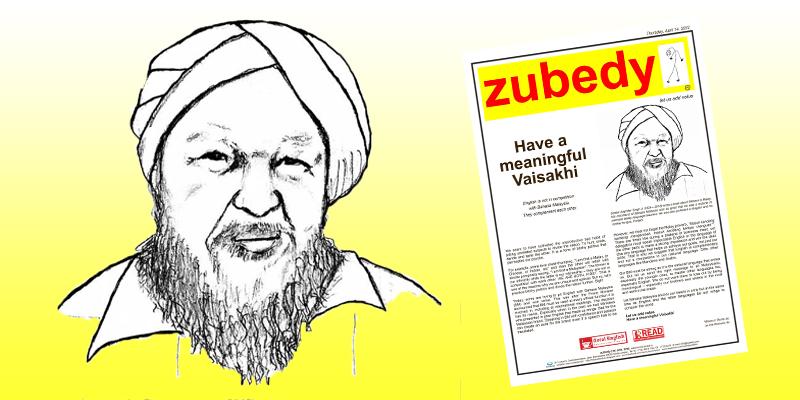
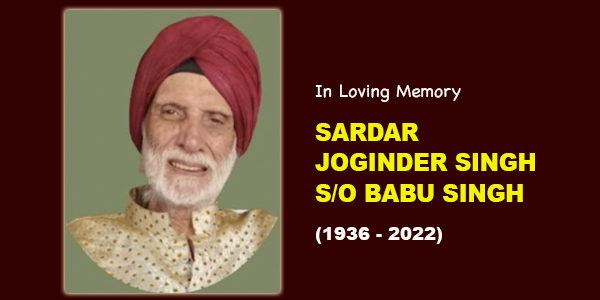
Meet Sardar Joginder Singh (1924 – 2018). The Malaysian-born held the distinction of being one of the few people in the world to have written a Malay book on the Sikh faith.
Unity advocate Anas Zubedy and his team anchored on Joginder’s astounding language talent to put across their salient message for this year’s Vaiskahi celebration.
“His command of Bahasa Malaysia was so good that he was a lecturer to potential Malay language teachers. He was also proficient in English and his mother tongue, Punjabi,” they wrote, tagged with a sketch of later-day Joginder.
The underlying message with the team’s Vaiskahi 2022 greeting was this: English is not in competition with Bahasa Malaysia. They complement each other.
“Our BM must be strong as it is the national language that unites us. But let us send the right message to all Malaysians, especially the younger ones, to master other languages too, especially English. We do not want them to lose out by being monolingual – especially our brothers and sisters in the rural and semi-rural areas,” they wrote in the note. See below for the full text.
This is classic Anas at work. For some years, he had taken up full-page advertisements in Malaysian newspapers to celebrate major festivals like Hari Malaysia, Hari Raya Aidilfitri, Chinese New Year, Deepavali, Wesak, Vaiskahi and Christmas. The fact that someone paid cold, hard cash to celebrate those festive occasions caught the attention of the nation.
“My brand is unity. I support uniting people. It’s our Zubedy brand. We started the [full-page newspaper] advertisements in 2001 for Hari Malaysia,” he told Asia Samachar.
Anas is the principal consultant and founder of Zubedy (M) Sdn Bhd, a Kuala Lumpur-based marketing and advertising firm that he founded in 1994 after leaving Nestle. He was with conglomerate’s branding team for coffee.
With social media gaining traction, Zubedy has begun using those platforms to continue pumping out their messages, with unity of the nation always as the underlying theme.
For Vaisakhi 2022, they heard about Joginder’s contribution. It resonated with an on-going debate about the use of the English language. Joginder was a lecturer at Teachers’ Training College in Tanjong Malim and a founding member of the Sikh Naujawan Sabha Malaysia (SNSM).
He was actively involved with Sikh activities in Malaysia, including running Sikh camps all over the country. This led to him writing the book, Ugama Sikh, published by the SNSM in the 1960s. He later moved to Adelaide, Australia, where he lived for some four decades before passing away on 4 July 2018.
But Joginder’s zeal, commitment and dedication lives on, as amply reflected in anchoring Zubedy’s message for Vaisakhi 2022.
Joginder Singh speaking at the SNSM Samelan in Port Dickson in 1962 – Source: Family collection
(Full text of Zubedy’s Vaisakhi 2022 message)
ENGLISH IS NOT IN COMPETITION WITH BAHASA MALAYSIA. THEY COMPLEMENT EACH OTHER.
We seem to have cultivated the unproductive bad habit of pitting unrelated subjects to divide the nation. To hurt, snide, deride and spite the other. It is a form of bitchy politics that permeates our psyche.
For example, some love chest-thumping, “I am first a Malay, or Chinese, or Indian, etc” and then the other will retort with similar pomposity saying, “I am first a Malaysian”. The former is our ethnicity while the latter is our citizenship – they are not in competition with each other. WE ARE BOTH, FIRST. That is one of the reasons why we are unique and special. But no, let’s practice bitchy politics and divide the nation further. Sigh!
Today, some are trying to pit English with Bahasa Malaysia (BM) and vice versa. This was after the [Malaysian] Prime Minister announced that BM must be used at every official function it is involved in, including at international meetings. The decision has its merits. Especially when in the past we had Ministers who presented in poor English that made us cringe. Bad for the Malaysian brand. Speaking in BM with confidence and passion can create an aura for the brand even if a speech has to be translated.
However, we must not forget the Malay proverb, “Masuk kandang kambing mengembek, masuk kandang kerbau menguak” (When in Rome do as the Romans do.) There are times like during a bilateral or business meet, our delegation must speak impeccable English or the language of the other party to make a strong impression and win the deal. Use any language that helps us achieve our goals, not just our pride. That is why we suggest that English is complementary and not a competition to our national language. Ditto other languages like Mandarin and Arabic.
Our BM must be strong as it is the national language that unites us. But let us send the right message to all Malaysians, especially the younger ones, to master other languages too, especially English. We do not want them to lose out by being monolingual – especially our brothers and sisters in the rural and semi-rural areas.
Let Bahasa Malaysia anchor our hearts in unity but at the same time let English and the other languages be our wings to conquer the world.
ASIA SAMACHAR is an online newspaper for Sikhs / Punjabis in Southeast Asia and beyond.Facebook | WhatsApp +6017-335-1399 | Email: asia.samachar@gmail.com | Twitter | Instagram | Obituary announcements, click here
Children / Spouse Late Harbhajan Kaur (India) Amrik Singh (Batu Pahat) / Pritam Kaur Late Harbans Kaur (Singapore) / Late Puran Singh Gauthi Kaur (Shinder) (Kelana Jaya) / Mehinder Singh Ranjit Singh (Batu Pahat) / Jasbir Kaur Harcharan Kaur (Kuala Lumpur) Late Sarjeet Singh (Batu Pahat) / Darshan Kaur Harjit Kaur (Kuala Lumpur) / Late Baljit Singh
24 grandchildren, 28 great grandchildren, and a host of nephews, nieces, relatives and friends.
Sri Akhand Path will commence on Wednesday, 4th May 2022 at 9am at Gurdwara Sahib Batu Pahat, followed by Path Da Bhog, Kirtan and Antim Ardaas at 8:30am on Friday, 6th May 2022.
Guru Ka Langgar will be served on all three days. Please treat this as a personal invitation.
The family would like to express our heartfelt appreciation to the doctors, nurses and staff of Pantai Hospital Batu Pahat and the caregiver Lovepreet Singh for all their support.
ASIA SAMACHAR is an online newspaper for Sikhs / Punjabis in Southeast Asia and beyond.Facebook | WhatsApp +6017-335-1399 | Email: asia.samachar@gmail.com | Twitter | Instagram | Obituary announcements, click here
Amarjit Singh Sandhu (left) meets Penang CM Chow Kon Yeow – Photo: Amarjit Singh Sandhu LinkedIn
By Asia Samachar | Malaysia|
A team led by Amarjit Singh Sandhu, a corporate chief at memory solutions provider Micron Technology, was recently hosted by the Penang chief minster Chow Kon Yeow.
“The delegation discussed Micron’s growing presence in Penang, our efforts to recruit and develop talent, and initiatives to give back and engage meaningfully with communities,” Amarjit shared on his LinkedIn page. “We continue to build bridges with the government based on meaningful dialogue and collaboration.”
Amarjit is the corporate vice president for assembly and test NAND operations at Micron (Malaysia and Singapore) as well as the country manager for Malaysia.
ASIA SAMACHAR is an online newspaper for Sikhs / Punjabis in Southeast Asia and beyond.Facebook | WhatsApp +6017-335-1399 | Email: asia.samachar@gmail.com | Twitter | Instagram | Obituary announcements, click here
19 Grand Kids, 13 Great Grand Kids, brothers & sister, relatives and friends to mourn their losses.
Saskaar / Cremation: 2pm, 1 May 2022 (Sunday), at the Mantin Sikh Crematorium in Seremban, Negeri Sembilan
Cortege leaves residence at 1.00 pm from No. 27 Jalan Nyior 5, Taman Nyior, 70100, Seremban, Negeri Sembilan
Path Da Bhog & Ardas will be held on 7 May 2022 (Saturday), from 9.30 am – 11.30 am, at Gurdwara Sahib Seremban
Contact:
Sdr Balwant Singh @ 0133413245
Sdr Baldev Singh @ 0133414735
| Entry: 30 April 2022 | Source: Family
ASIA SAMACHAR is an online newspaper for Sikhs / Punjabis in Southeast Asia and beyond.Facebook | WhatsApp +6017-335-1399 | Email: asia.samachar@gmail.com | Twitter | Instagram | Obituary announcements, click here
Please know, under NO circumstance am I writing this article to degrade, slander or put down any particular Gurdwara, committee or Giani. I just want to share my observation as to why I think a Gurdwara today is no longer the same Dharamsaal created by Guru Nanak.
I have travelled and visited many Gurdwaras in Malaysia, India and other parts of Asia including in the UK and I see there are countless issues such as fights, control of power, who can and cannot do certain sewa(s), the questionable rituals being carried out in the darbar itself, lighting of jyot/ deewa, putting up framed Guru’s and some saintly person’s photos, etc (the list goes on)…
Today, many Sikhs (especially the younger generation Gen Y & Z) are questioning everything. They are not getting answers as they are being told to simply listen and obey. The outcome of this mentality of the elders not having answers to their questions, or worst still, trying to answer illogically or giving answers that do not make any common sense, has somewhat created a ‘disconnect’ a vacuum in the minds of our children about Gurdwaras.
Our children simply can’t fathom the countless rituals and religious dogmas being practiced today. How do I know this? Because, I have 2 growing up kids aged 11 and 13 and they asked me some of these questions too, which I have tried to pen the answers to in this blog post.
So, what is the REAL role of a Gurdwara? How can 21st century children and youth see themselves getting connected with a Gurdwara?
PLACE OF WORSHIP
First, let’s try to understand the meaning of the word ‘gurdwara’. If you type the word Gurdwara in Google, you will probably see a similar search result like the one below:
Wait a minute! What?
A Gurdwara is NOT a Sikh place of worship! Someone please update Google on this.
Sikhs do not need a specific place of worship because according to Guru Nanak’s philosophy, God resides in us, in His entire creation. God (the Lord, the light, creator of the Laws of the Universe, which governs EVERY living thing, Hukam) is Omnipresent.
God does NOT reside in a particular place or in a building like in a temple, in a church, in a mosque or in a gurdwara! The whole world and this entire creation is His place of worship!
Guru Nanak made this very clear when He recited the ‘Aarti’ during one of his travels (udaasi) to Jagannath temple in Puri, Odisha (east of India).
Guru Nanak observed that the worshipers (devotees) of Jagannath (Lord Vishnu) were singing praises with candles lit on a plate and were moving them in a circular motion while facing Lord Vishnu’s idol.
Instead, Guru Nanak, went into the open field and composed and sang the ‘Aarti‘ facing the entire creation, while Bhai Mardana (Guru Nanak’s companion) played the rebab.
The devotees were shocked to see how Guru Nanak was singing the Aarti so melodious and beautifully, that too without any plate of candles in His hands. What did this even mean? They were bewildered.
Meaning: Upon that cosmic plate of the sky, the sun and the moon are the lamps. The stars and their orbs are the studded pearls. The fragrance of sandalwood in the air is the temple incense, and the wind is the fan. All the plants of the world are the altar flowers in offering to You, O Luminous Lord. ||1|| Guru Nanak is saying, You are the dispeller of doubts and this is Your Aarti. Without beating any drums, the Shabad (laws) are prevalent. ||1||Pause||
Whilst Guru Sahib is looking at the surrounding environment and expressing His realization of the how he sees the entire creation as singing the Aarti, we Sikhs have not been able to capture the essence of what Guru Nanak said and did.
Sikh Clergy Doing Aarti Facing SGGS in Gurdwaras
Instead, we have begun worshipping (pooja) Sri Guru Granth Sahib (SGGS).
In many Gurdwaras (especially the ones in India) the clergy, literally lights up candles in a plate and starts to sing the Aarti shabad while moving the candle-lit steel plate in circular motion (exactly the same as how the Hindu priests do in the mandirs). Instead of facing an idol or deity, we are facing Sri Guru Granth Sahib Ji.
Look at the irony of what we ourselves are doing! I’m not even going to get into what the Nihangs do during the Aarti ceremony. Their version is almost identical of what you will find the Brahmin priests do in mandirs and Indian temples. It’s true but it’s a sad truth.
How would you answer your child if he/she were to ask you to explain what the Giani is doing in the above photo? Is this part of Guru Nanak’s Sikhi? What would you answer? Tough one, right?!
Sikhs today are all into the outward appearances, dressing up in white kurta-pyjamas, adorning long beards and kesari colored turbans, putting on the 5Ks as an Amritdhari Sikh, more like appearing to look like Sikhs of Guru Nanak BUT whom are we trying to fool? Our actions are PRECISELY that of a Hindu Brahmin priests!
DOORWAY OF GURU’S TEACHINGS
Guru Nanak Dev Ji established the first gurdwara in Kartarpur back in 1521. Back then, it was called a ‘Dharamsaal’ or Ashram.
Later on, Guru HarGobind Sahib, the 6th Guru, introduced the word ‘gurdwara’ and since then, the name ‘gurdwara’ has been used.
DID YOU KNOW? Guru Nanak’s son, Baba Sri Chand was an outcast son of the Guru? Many do not know this but Sri Chand wanted the Guruship for himself and refused to accept Bhai Lehna (later known as Guru Angad) as the next Sikh Guru. In retaliation, Sri Chand adorned a very different dress, looks and character compared to His father, Guru Nanak. He put on a loin cloth, wore the janeyu (which Guru Nanak out right refused to wear), covered his body in Ash and later on took possession of Guru Nanak’s Ashram and converted it to become the Center for Udasis movement.
The etymology of the term gurdwara is from the words gur (ਗੁਰ) (a reference to Shabad – NOT THE PHYSICAL GURU) and dwara (ਦੁਆਰਾ) (doorway) in Gurmukhi. When put together, the meaning would be doorway of the Guru’s teachings.
Guru Arjan Dev Ji says…
ਮੈ ਬਧੀ ਸਚੁ ਧਰਮ ਸਾਲ ਹੈ ॥ ਗੁਰਸਿਖਾ ਲਹਦਾ ਭਾਲਿ ਕੈ ॥
Mai Badhhee Sach Dharam Saal Hai || Gursikhaa Lehda Bhaal Kai ||
Meaning: “I have established a true Dharamsaal. I’ve discovered the right-minded GurSikhs in this place of learning.”
So, to answer the question, “why are gurdwaras today NOT the same dharamsaals as established by our Gurus?”
The simple, straight-forward answer to this question is because, we Sikhs had for a very long time (for almost 60-years) LOST CONTROL of our institutions to several groups of deviant and anti-Sikhi groups mainly the Udasis, Nirmalas and ‘Sant Babas’ beginning from 1718.
Dr. Karminder Singh Dhillon (Malaysia) has done extensive research on this topic in his latest book “Hijacking of Sikhi” which I’ve had great privilege to read myself. I must say, “a truly brave attempt to reveal the depths of truth, well researched and easy to understand book every Sikh should read!”
The book describes how the plot of the Udasis (beginning with the retaliation of Guru Nanak’s son – Baba Sri Chand) being totally unhappy with his father’s decision of passing the Guruship to Bhai Lehna (Guru Angad) and his subsequent plot together with the Brahmin priests who planned to take control of the Kartarpur Dharamsaal of Guru Nanak with the hopes of luring Sikh followers to accept Sri Chand as the rightful Guru. Sri Chand later created Kartarpur Ashram as the center for Udasi sect and learning. How did the Nirmala priests take control of our literature, our institutions and gurdwaras instilling Snatan, Vedic and Brahmannical beliefs (which we see happening in most gurdwaras today) and later on how Sant Deras mainly the Taksaals wrecked the worst havoc by completely renouncing Guru Nanak’s unique philosophy and propogating physical saroop worship of SGGS among other damages. A truly well-written book.
Baba Banda Singh Bahadur gained a stronghold for 10-years (from 1708 – 1718) but sadly his reign came to an abrupt halt (likely due to conspiracies created by power hungry and greedy Sikhs within the army itself). Many were jealous of Baba Banda Singh’s prowess and his ever-growing support of the Sikh communities throughout Punjab and India.
By this time Baba Banda Singh had taken over many major cities and towns in Punjab. So, it is likely these evil-hearted individuals conspired with the British government to grab power and control away from Baba Banda Singh. This, I believe lead to the capture and murder of Baba Banda Singh Bahadur, his children, countless families as well as his loyal members of the army. Most of them had actually fought the same battles side by side with Guru Gobind Singh.
So, coming back to the question, what is a Gurdwara meant to be?
1. Place to receive spiritual wisdom
I think this is one of the most important functions of a gurdwara – to read/listen, understand and then apply Guruji’s teachings in ones life thru Shabad Gurbani. In the past, during the times of our Guru, a lot of emphasis used to be put towards Gurbani Vichaar (contemplation and understanding of Guru’s teachings). In fact, when Guru Nanak himself in Kartarpur, spent hours on with the Sanggat (congregation) imparting ‘true’ spiritual knowledge and true knowledge (sacha gyan). Back then, many followers of Guru Nanak were not even Punjabis or Sikhs by birth. They came from various backgrounds and race ethnicity. Some were Hindus, some were even Muslims but because Guru’s Nanak’s message struck a UNIVERSAL chord, all accepted His teachings and sermons with an open heart.
2. Place to practice equality and selflessness
During Guru’s time, anyone and everyone was welcome to the Dharamsaal. It didn’t matter if you were rich or poor. One was NEVER to look down upon others based on their gender, race, skin color etc. Guru Nanak was especially strict about this. Knowing the only way to break this vicious caste system, the guru introduced selflessness in the form of ‘sewa’ (service) to mankind, NOT just in the gurdwaras but also in our day-t0-day living. Did you know, in Kartarpur, Guru Nanak used to cook and serve ‘langgar’ (meals) for the pilgrims who visited the dharamsaal? It is true! In fact, NO one was on any kind of wage or salary. Everyone volunteered to be part of something so remarkable. They gave out 10% of their incomes as ‘dasvandh’ which was used to run the day to day operations of the dharamsaal and to feed and give shelter to the needy. The sewadaars had NO ulterior motives like wanting to gain popularity, control of the Dharamsaal, politics etc, like the way we see in today’s Gurdwaras.
3. Place for community resources and healthcare
During the times of our gurus, (and even till today in some gurdwaras in the world), the dharamsaals used to act as a community center providing services such as health care, family guidance, consultation, Punjabi classes and collaboration. In fact, free medicine and healthcare was given to anyone who needed medical attention regardless of their gender, race, caste, age, religion or social status.
STATE OF GURDWARAS TODAY
1. Too much power given to committee or clergy (Giani)
Over the last three hundred years (303) or so, we Sikhs have been very unfortunate to have our gurdwaras taken over by the Udasis, Nirmala Mahants and Sant Babeys.
It took Guru Nanak and the other Sikh gurus close to 200-years to abolish the caste based system and rituals but either due to circumstance or probably due to our own ill-preparedness and naivety, we lost control of the gurdwaras to outsiders for many-many years. This is probably why till today, many Sikhs worship Guru Granth Sahib in its physical form. We spend lots of money buying expensive rumaleys (coverings), langgars, donations etc, but we’ve NEVER lifted the rumaleys and read the Divine Shabads of our Gurus in Guru Granth Sahib.
In fact, we carry out rituals and practices which our Gurus have refrained us from doing and which Guru Granth Sahib Ji condemns. The worst part of all, Gianis and gurdwara committee use emotional tactics to lure us into the ‘guilt trap’ of parting with our Dasvandhs and donations to do programs and Akhand Paaths or Sampat Paaths.
Why? So, that they can build more than required building structures, pointless renovations, all in the name of religion. But how about the learning and deciphering of Gurus messages within Gurbani? No one has time for that!
2. Akhand paaths and Gurpurabs outsourced
I know of a particular gurdwara here in Malaysia where they openly advertise everyone should do ONE Akhand Paath a month! They’ve even printed and distributed brochures of all the different Paaths the gurdwara can undertake together with the breakdown of prices. Come one. Where is this coming from? I mean some of us can’t even find time to recite Nitnem everyday, how can they expect families to do ONE Akhand Paath a month? But probably thats the plot of the clergy and committee.
Since we are not able to carry out and do the Akhand Paaths ourselves, outsource it! So, we end up paying the Giani and his team to do it ON BEHALF OF US! This is NOT based on Sikhi or Guru Nanak’s teachings. The clergy can even go on to say, the families who do this Akhand Paaths with them, participating occasionally, will get their problems resolved and they would receive rewards (pun) in the after-life.
Do you know why some Gurdwaras and their Gianis are rich? Because, they’ve made this whole Paath recitation a commercial act. One Akhand Paath can bring in say RM2500 for the Gurdwara, minus the ration which some charge separately. How much can 10 Akhand Paaths a week earn the gurdwara?
RM25,000 x 4-weeks and that’s a whopping RM100K p/month just from Akhand Paaths! It’s a HUGE money making business, isn’t it? Of course, during the COVID19 pandemic, the gurdwaras made some loses as they could not get the crowd to attend Gurdwara functions but its nothing compared to what they make during normal times. You can do the math yourself.
3. Sunday Gurdwara – family get-together
Have you been to a Sunday program in your local gurdwara? I don’t know about you, but as a child, I used to enjoy attending Sunday programs. Why? Because I get a chance to meet and play with my friends, not to mention the free delicious langgar I get to eat after that.
The Giani will be singing one shabad after another for about 1-2 hours and then he would share some mythical story (which he probably heard from his grandmother) and worst of all, they do it so confidently, as if the story is part of Gurbani. I’ve nothing against story-telling, but most of their stories are nothing but concocted tales and lies.
Either the Giani or an invited ‘raagi jatha’ (professional singers) who will do the kirtan with the aim of collecting the most ‘shabad peth’ (money). On several occasions, when I had the chance to attend Sunday programs, I realized the number of people sitting in the langgar hall always outnumbered the ones sitting in the ‘darbaar’ (main hall).
We’d rather sit in the langgar hall, gossiping, instead of sitting in the main hall listening to kirtan. But I cannot blame the Sanggat entirely either. We get Gianis who are not well trained, who themselves have not understood Guru Nanak’s teachings and have made practically NO attempts to apply the teachings of our Gurus in their own lifes. They say something but do something else.
I’m sure you’ve heard or seen first-hand some of the lives of these so called Gianis. At the end, they get caught with their pants down, drinking, smoking, womanizing, telling false tales etc. Some of these Gianis even tell us to belief in miracles and say our Gurus used miracles and had super-natural powers.
Most are trained by deviant centers like the Damdami Taksaal where they use the Fareedkoti Teeka, Sooraj Prakash Granth, Gurbilas Patsaahi 6, and countless other anti-Sikhi texts and books to train the clergy. Not a surprise then why many sanggat members, including the youth have become ‘disconnect’ and are uninterested in attending Gurdwara programs anymore.
4. Wrong concept of Langgar
Are we deserving to eating Guru-Ka-Langgar? I don’t think so. Guru Nanak established the concept of langgar to feed the poor and abolish the caste system because everyone had to sit together to have their meals. Even if you were a king, you’d still have to sit with the rest. But today, you will notice a select few would sit on the floor separately whilst the rest sit on tables and chairs. Where is the unity in thought here? Moreover, today’s langgar is being given to the already well fed and some of the dishes served are probably more expensive than what one would have in a restaurant. Do we need such an extravagant menu for langgar?
5. Gurdwaras as profit centers and elections
Did you know all gurdwaras are registered as non-profit organizations? But to be honest, Gurdwaras today operate like a large corporation with profits in mind.
The committee conduct their roles as if they are running a business or a shop. They go on collecting and keeping Sanggats funds and when it comes to helping out a poor family or to provide funds for a child’s education, they say, they have NO funds!
Every once or twice a year, they carry out elections to vote in a new president. But, instead of passing the baton over peacefully and giving a chance to others to lead, they are busy back-stabbing one another, trying to get votes from the Sanggat. Instead of helping the new president and committee to a smooth take over, they squabble and fight, throwing tantrums and even sometimes ending up with fist fights. I’m sure you’ve heard of police being called in to calm the crowd during an annual gurdwara election? How embarrassing right?
Is there a solution?
Yes! There are many solutions, provided we make a concerted effort to revisit our roots of Sikhism first and study the core values and principles taught to us by our Gurus. Then and only then, can we re-purpose the existing gurdwaras.
We can easily put the blame on Akaal Takhat, SGPC, Taksaals, Sant Babeys, Jathedaars etc but truthfully, the blame should be upon us, the Sikh sanggat. You may ask why? Because, we are split in thought and action. We have different viewpoints of many essential basic tenets of Sikhi. There is a saying, “united we stand, divided we fall”. We are either united in thought and action or we will fall!
We should ourselves recite Gurbani, understand and apply the teachings for ourselves first then share it with our close ones and family before attempting to go out and teach others. Why is this essential? Because Gurbani is meant to elevate ones mind and bring about positive characteristics, divine personalities. Without which, we will always struggle to decide between right and wrong, good and bad deed, selfishness or selflessness.
We need to choose our leaders wisely. We cannot expect a corrupt leader to lead and govern a Gurdwara because, corrupt beings are selfish, greedy and only think for themselves.
We need to bring in well-trained and English learned Gianis. Ones who can speak, read and write English as well and who are trained to view Gurbani from the standpoint of practical living – NOT sharing fake and concocted fairy tales. This will certainly help the younger generation who will stand to benefit from English explanations of Gurbani during Kirtan and Katha sessions in the Gurdwara.
Like a said, the list of possibilities is long. We need to start somewhere. We need to transform our own perceptions of lots of things and start seeing Guru Nanaks Sikhi as a practical, logical and transformational path. We need to make a firm stand to protect what’s left of our Gurdwaras and rid the rituals and senseless activities that has nothing to do with the minds elevation.
We are smart beings. Our youth and the next generation need to see Gurdwaras as REAL centers of learning or else, it’s going to be a downward spiral. In time to come, no youth will step into a Gurdwara. In the next millenium, we might lose our Gurdwaras entirely. How?
The Gurdwara land we are all so proud off is given to us by the local authorities to be used as centers of learning and prayers. But it is not written in stone that they cannot take the land and the buildings back. When the government sees there is not much of activity happening and nothing fruitful is being done to help the youth and the community, they might take our Gurdwaras back and use it for something else.
I hope we will not let this happen!
About the Author: Amarjit Singh Gulati, who runs a Malaysian-based blockchain academy and manages a software solutions company, blogs on Sikhiat JeevanJach.com.
ASIA SAMACHAR is an online newspaper for Sikhs / Punjabis in Southeast Asia and beyond.Facebook | WhatsApp +6017-335-1399 | Email: asia.samachar@gmail.com | Twitter | Instagram | Obituary announcements, click here