UA-56202873-1
Page 350

Amreek Singh (1957 – 2022), Retired Teacher SMK Khir Johari, Tanjung Malim

ਮਾਰੈ ਰਾਖੈ ਏਕੋ ਆਪਿ ।
The One Lord Himself destroys and also preserves.

ਮਾਨੁਖ ਹੈ ਕਿਛੁ ਨਾਹੀ ਹਾਥਿ ।
Nothing at all is in the hands of mortal beings.

SARDAR AMREEK SINGH S/O PIARA SINGH

(Retired teacher SMK KHIR JOHARI TG. MALIM)

Passed away peacefully on 22nd January 2022.

A loving husband, father, brother, teacher and friend.

You will live through your teachings and memories. Your wisdom will guide us.

Your life was a blessing.

You are loved beyond words and missed beyond measure.

Leaving behind;

Madam Selvender Kaur (Wife)

Children;
Baljinder Kaur/ Dr. Kiranjeet Singh (Auckland)
Dalbir Singh/ Meninderpreet Kaur
Gursharan Kaur/ Jagdave Singh

Grandchildren: Ashvir Singh, Dalveena Kaur, Gaheera Kaur, Jaikaar Singh

Sahaj Path Da Bhog will be held at Gurdwara Sahib Tanjung Malim on 6th February 2022 from 9.30am to 12.30 noon

Kindly treat this as a personal invitation.

For enquiries contact Dalbir Singh (017 6025024)

| Entry: 27 Jan 2022 | Source: Family

ASIA SAMACHAR is an online newspaper for Sikhs / Punjabis in Southeast Asia and beyond.Facebook | WhatsApp +6017-335-1399 | Email: editor@asiasamachar.com | Twitter | Instagram | Obituary announcements, click here |

Canada gurdwara gets C$40,000 for mental health and addictions recovery initiative

0

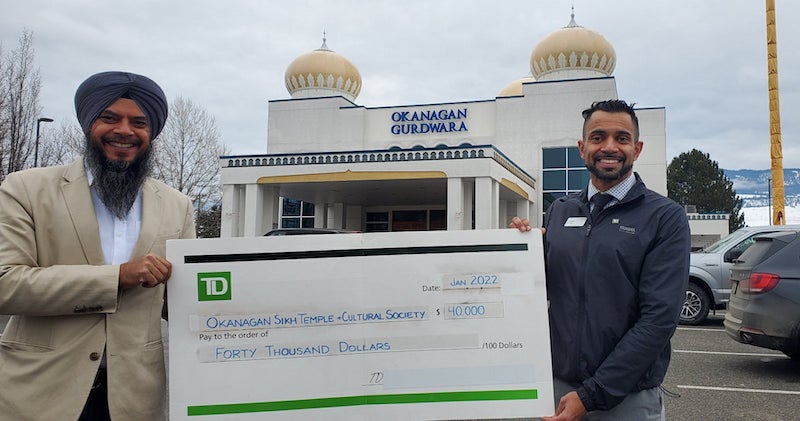
Vik Bains (right), Branch Manager of TD Canada Trust in Rutland, presents a $40,000 TD donation to Amarjit Singh Lalli (left), President of The Okanagan Sikh Temple and Cultural Society, to help start a new mental health and addictions recovery support initiative for the South Asian community in Kelowna and surrounding region. (CNW Group/TD Bank Group)

By Asia Samachar | Canada |

A Canadian gurdwara is already working on a new mental health and addictions recovery support program for South Asian people living in the Okanagan. The effort has just been boosted by a C$40,000 donation from TD Bank Group.

The Okanagan Sikh Temple and Cultural Society, the oganisation behind the initiaitve, now plans to recruit multiple experienced counsellors who can speak Punjabi and English to lead the drop-in sessions.

“Our community is not immune to the societal issues that many British Columbians are facing, including the opioid crisis and mental health challenges,” said the society president Amarjit Singh Lalli. “We want South Asian people who may be struggling to be able to seek help and access available resources that are both language-specific and culturally safe.”

The program will provide drop-in sessions for people who identify as South Asian and are seeking help fighting mental health challenges associated with addiction. The initiative comes at a critical time following a Fraser Health study that suggested South Asian people “may be more likely to die from an overdose than non-South Asian people.” The same report found that there were low engagement rates with substance use treatment among South Asian men, according to a statement.

“There has certainly been a history of stigma around substance abuse, however, the conversation within the South Asian community is changing,” said Vik Bains who is the branch manager of TD in Rutland. “Whether in our branch or out in the community, I am talking to people who are increasingly opening up about their own personal struggles or are expressing concern over loved ones.”

The funding will also go toward helping to improve communication between parents and children around drug use and gang-culture, the statement added.

“This funding will enable us to reach as many community members as possible during such a challenging time for everyone,” Lalli said. “And, so long as the need exists, we are committed to keeping this conversation going while continuing to extend a compassionate hand.”

The Okanagan Sikh Temple and Cultural Society was incorporated in November of 1979 with 34 Sikh families in the area. The first Sikh temple in Kelowna opened in 1982, and to meet the needs of the city’s growing Sikh population, a new facility was built and opened in 2008.

RELATED STORY:

Mental health lessons from Sikhs in Malaysia (Asia Samachar, 24 Feb 2021)

ASIA SAMACHAR is an online newspaper for Sikhs / Punjabis in Southeast Asia and beyond.Facebook | WhatsApp +6017-335-1399 | Email: editor@asiasamachar.com | Twitter | Instagram | Obituary announcements, click here 

Afghan rebab player enthralls London charity concert

0

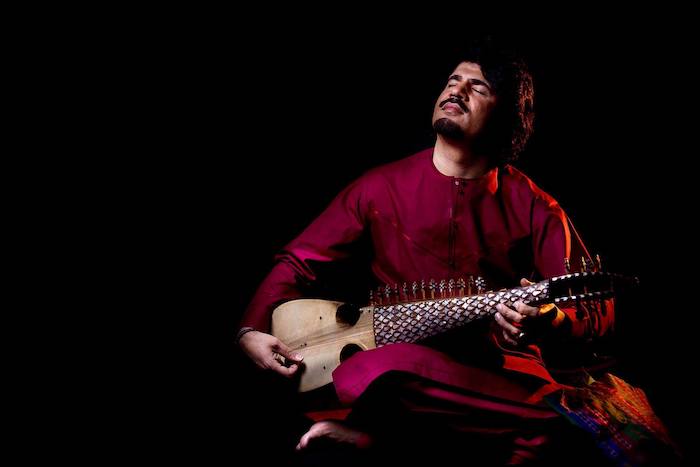
Afghan maestro Homayoun Sakhi on the rebab – Photo: Sakhi Facebook page

By Asia Samachar | Britain |

As the Taliban authorities still tinker with their policies after their takeover of Afghanistan, musicians have been one of the many groups that have have been pushed to the edge. Their very survival has become a question mark.

A famed Afghan rebab player Homayoun Sakhi lent skills to enthrall Songs of Hope: A Benefit Concert for Afghanistan on Saturday (22 Jan 2022). It was a concert with the fate of music in Afghanistan very much on their minds.

“Right now we don’t have music in Afghanistan,” Sakhi tells AFP in an interview. “It’s really difficult because there’s no concerts, there’s no music, and (for musicians) it’s very difficult to be without any money and without a job. That’s why they’re trying to go somewhere to play.”

Rebab (also spelt rubab) was the instruments at the hands of Bhai Mardana, the constant companion of Guru Nanak, the first Guru of the Sikhs, on his various travels to far flung places.

Sakhi left Afghanistan before the Taliban came to power the first time round and has lived in California for over 20 years. He flew from the United States for the concert which aimed to raise funds for emergency medicine and education in Afghanistan.

Accompanying him at the London’s Barbican concert hall was Shahbaz Hussain, one of Europe’s finest tabla players and the son of vocalist Ustad Mumtaz Hussain. They were joined by guest artist Adib Rostami playing kamancheh.

The event was organised by Afghanistan International TV, a London-based channel was set up by Volant media company, which also runs a Persian-language channel for Iranians.

RELATED STORY:

Life under the Taliban (Asia Samachar, 28 May 2020)

ASIA SAMACHAR is an online newspaper for Sikhs / Punjabis in Southeast Asia and beyond.Facebook | WhatsApp +6017-335-1399 | Email: editor@asiasamachar.com | Twitter | Instagram | Obituary announcements, click here 

In Loving Memory: Charanjeet Singh Ranjit Singh (1973 – 2021)

M E E T H I Y A R D G E R I

CHARANJEET SINGH S/O RANJIT SINGH

26.2.1973 – 22.2.2021

Path Da Bhog will be held on Sunday, 30th January 2022 (Sunday) at Gurdwara Sahib Tatt Khalsa Diwan, Kuala Lumpur

Programme: 7.00am – 8.30am Asa Di Vaar; 9.30am – 11am Kirtan, followed by Sehaj Path Da Bhog

Guru Ka Langgar will served thereafter

| Entry: 25 Jan 2022 | Source: Family

Panjabi Word Search | 002

0

#panjabiwordsearch

Can you find the 10 words hidden here? It’s all in the family. Your timer starts now….

  1. ਦਾਦੀ (paternal grandmother)
  2. ਨਾਨੀ (maternal grandmother)
  3. ਦਾਦਾ (paternal grandfather)
  4. ਨਾਨਾ (maternal grandfather)
  5. ਮਾਸੀ (mother’s sister)
  6. ਭੂਆ (father’s sister)
  7. ਰਿਸ਼ਤੇਦਾਰ (relatives)
  8. ਪਰਿਵਾਰ (family)
  9. ਭੈਣਾਂ (sisters)
  10. ਬਚਪਨ (childhood)

(Share with someone who wants to improve their Panjabi vocabulary)

ASIA SAMACHAR is an online newspaper for Sikhs / Punjabis in Southeast Asia and beyond.Facebook | WhatsApp +6017-335-1399 | Email: editor@asiasamachar.com | Twitter | Instagram | Obituary announcements, click here 

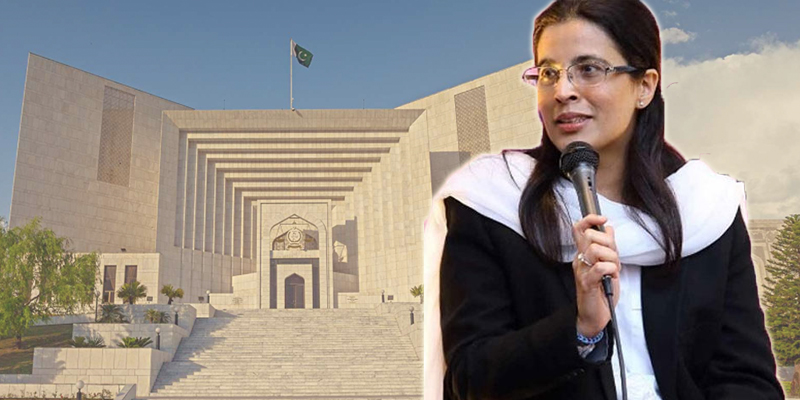
Pakistan gets first woman supreme court judge

0

By Anandpreet Kaur | Pakistan |

Justice Ayesha A. Malik makes history as the first woman judge at the Supreme Court of Pakistan.

The 55-year judge took her oath administered by Chief Justice Gulzar Ahmed in Islamabad, today (24 January 2022), joining the nation’s apex court consisting of 16 male justices.

In 2012, she made history when she became the first woman to be elevated as a judge to the Lahore High Court (LHC).

She believes her presence in itself would make a difference.

“The biggest way I’ve had an impact is that I’ve become a voice. I’m there to call out the discrimination, call out stereotyping, and bring out the gender perspective. I’m the voice that nudges, reminds, and suggests ways to improve ourselves and make our system more inclusive,” she had said in an interview published at the United Nations Office on Drugs and Crime (UNODC) website.

She added: ” For example, in superior courts, judges generally refer to each other as brother judges since most judges are men. I had to always mention that I’m not a brother judge. That I’m, if at all, a sister judge, and so this would bring on a debate on gender. And even today, at times, I need to make my presence felt and say that you keep me out of the narrative by using brother judge, so please include me by using the brother and sister judge’s terminology.”

At LHC, she heared constitutional petitions on a large variety of issues including tax, environmental, and regulatory matters. She had decided on important issues pertaining to the empowerment of women, the right to vote as well as against maintaining a women quota in government departments and medical colleges, according to her profile at the LHC website.

In January 2021, Justice Malik presided over the landmark ruling abolishing the controversial ‘two-finger’ virginity test for rape survivors. In the case, titled Sadaf Aziz vs The Federation (2021), she declared the two finger test as unconstitutional holding the practice of virginity testing in rape cases as illegal.

As a member of the Board of Punjab Judicial Academy, she helped develop courses on gender sensitization of court processes and training for gender based violence cases.

Born in 1966, she completed her basic education from Schools in Paris and New York and did her Senior Cambridge from the Karachi Grammar School, Karachi. She then did her A’ Level from Francis Holland School for Girls in London.

She completed her B.Com from the Government College of Commerce & Economics, Karachi and studied law at Pakistan College of Law, Lahore. She went on to do her LL.M from Harvard Law School, Cambridge, Massachusetts, U.S.A. where she was named a London H. Gammon Fellow 1998-1999 for outstanding merit.

During 1997-2001, she worked with Fakhruddin G. Ebrahim & Co., Karachi, where she assisted Mr. Fakhurddin G. Ebrahim.

From 2001 to the date of her elevation, she worked with Rizvi, Isa, Afridi & Angell known as RIAA, initially as a Senior Associate and from 2004 as a Partner and was in charge of the firm’s Lahore Office.

She has taught law as a Lecturer of Banking Law, University of Punjab, Department of Masters of Business and Information Technology. She was also a lecturer of Mercantile Law, College of Accounting & Management Sciences, Karachi.

RELATED STORY:

Sikh judge elavated to Malaysia’s top court (Asia Samachar, 17July 2020)

Canada appoints Palbinder Kaur Shergill as Supreme Court judge (Asia Samachar, 24 June 2017)

ASIA SAMACHAR is an online newspaper for Sikhs / Punjabis in Southeast Asia and beyond.Facebook | WhatsApp +6017-335-1399 | Email: editor@asiasamachar.com | Twitter | Instagram | Obituary announcements, click here 

Holocaust, Genocide and Sikhs

0

1984: A Sikh family in front of their dwelling after the rampage. A photo grab from Sikh Genocide Project: Third Sikh Holocaust, Part 3

By Gurnam Singh | Opinion |

The World Holocaust Memorial Day, which is commemorated every year on 27th January, is the day for us all to remember the millions of people murdered in the Holocaust, under Nazi Persecution in the first half of the 20th Century, as well as those who have suffered in genocides which followed. “Holocaust” comes from a Greek word meaning “burnt offering.”  The term was first used to describe the massacres of Armenians in the 1890s. It was used again in the 1940s to describe the mass destruction of European Jewish communities by the Nazis.

Between 1941 and 1945, an estimated six million Jewish men, women and children were murdered by the Nazis and their collaborators. Their attempt to murder all the Jews in Europe, shook the foundations of the world. The Nazis targeted anyone they believed threatened their ideal of a ‘pure Aryan race’, including Roma people, disabled people, gay people, political opponents and others who were deemed to be of inferiors racial stock. This ‘political project was based on ‘scientific racism’ and the ‘science of eugenics’ which basically argued that humanity constituted of different races, with the white European Anglo Saxon race being the most advanced. Eugenics was based both on the view that human mixing had led to defective gene pools and that selective breeding, segregation, sterilization and ‘ethnic cleansing’ was the only solution, with genocide being the final solution.

So, whilst each genocide has its own dynamics, spurious ideas associated with race/ethnicity/nation and religion have always loomed large. Alongside the Nazi Holocaust, to date the UN has officially recognised 4 other genocides: From 1975 to 1979, the Khmer Rouge, led by Pol Pot, imposed an extremist programme to reconstruct Cambodia. Millions of people died through starvation, disease and exhaustion, and thousands were executed; In a violent outpouring in 1994, approximately one million Tutsis and moderate Hutus were murdered in just 100 days in the Genocide in Rwanda; In July 1995, against the backdrop of an ongoing civil war, Bosnian Serb forces murdered around 8,000 Muslim men and boys in the town of Srebrenica; And in 2003 a civil war began in the region of Darfur. Arab militia, known as the Janjaweed attacked black African people, destroying entire villages, murdering civilians and displacing many more.

We should definitely never forget these terrible crimes against humanity, but we also need to note that these are not the only genocides in human history. Sadly, betraying the positive view we seek to cultivate for the human race, as a race of beings capable of developing immense intelligence, compassion and love, there is dark side to human nature that has resulted in the destruction of peoples and places.

A longer historical view of genocide reveals arguably even greater horrors than those references above that too place in the Post World War 2 period. Take for example the West African Slave Trade. In his book “The Slave Ship: A Human History,” American historian Marcus Rediker recounts the history of the modern slave ship, from the moment the first captives boarded it on the coast of Africa – 12.4 million souls from the 15th to the 19th century – until the last of them disembarked on the shores of the New World. No fewer than 1.8 million of them died during the journey; their bodies were thrown to the sharks that trailed the ships across the sea. The 10.6 million who made it to the other side became slaves on the plantations of the American South or in the Caribbean.

And if we focus on the larger European Imperial project that began with the Genoise ‘explorer’ Christopher Columbus sailing to the Caribbean in 1492, we saw a period of 400 years of the destruction of civilisations, indigenous peoples the planet over.

Some argue that, though human history is indeed stained will all kinds of oppressions, to avoid losing its meaning, it is important to maintain a precise definition of genocide. In terms of international law, Genocide was first recognised as a in 1946 by the United Nations General Assembly and later codified  It was codified as an independent crime in the 1948 Convention on the Prevention and Punishment of the Crime of Genocide.

The convention offers a detailed definition but the main element is that, genocide refers to acts committed, usually by some form of state sanction, with intent to destroy, in whole or in part, a national, ethnical, racial or religious group, as such: Killing members of the group; Causing serious bodily or mental harm to members of the group.

The convention goes onto to explain that Genocide may be a result in the context of armed conflicts, national or international, or in ‘peaceful situations’, but in all instances it contains two key elements:

  • Psychological element – intent to destroy whole or part of a distinct ethnic, national or religious group.
  • Physical element – actual, deliberate and systematic destruction of peoples, their lives and livelihoods. 

Turning to the Sikh perspective on Genocide, one can come at this from two perspectives. Once can look at it from a theological/philosophical perspective in relation to Sikh teachings on Genocide and from the lived history/experience of Sikhs being the victims of genocide, in our relatively short history of some 550 years. Let me offer some brief insights into these two aspects:

First what is Sikh teaching on Genocide? The term that we use in Panjabi to refer to Genocide is ਨਸਲਕੁਸ਼ੀ or ‘nasalkushi’ meaning the extermination of a ‘race’.  Another term that is often used is ਘੱਲੂਘਾਰਾ

Ghalughara, which which means massacre on very high level. I guess one of the key distinctions between the two is that ‘nasalkushi’ may take place over an extended time phase deploying a variety of sophisticated and perhaps covert strategies, ‘ghalughara’ is often done in a short intensive period in the open, often involving some kind of war situation involving asymmetric power; that is where normally the aggressor is greatly more powerful that the victim.

Whether it is racial genocide or military conquest, both result in horrific and inhumane treatment of people based simply on some imaginary conceptions of the other as Dangerous, evil, immoral, property but in all instances less than human. Many holocaust scholars have noted the link between dehumanisation and genocide, both as a justification for it and in the treatment of the victims.

If we turn to Sikh teachings we can find many philosophical and historical observations that challenge and condemn all forms of discrimination, racism, castism, gender based violence, and all forms imperialism, up to and including genocide. For example Guru Nanak in Guru Granth Sahib chronicles the march of the Persian Mogul imperialist Babur who occupied and colonised the Indian Subcontinent. In Asa Ragg, Guru Granth Sahib p360 Nanak observes:

ਖੁਰਾਸਾਨ ਖਸਮਾਨਾ ਕੀਆ ਹਿੰਦੁਸਤਾਨੁ ਡਰਾਇਆ ॥ ਆਪੈ ਦੋਸੁ ਨ ਦੇਈ ਕਰਤਾ ਜਮੁ ਕਰਿ ਮੁਗਲੁ ਚੜਾਇਆ ॥

Khuraasaan Khasamaanaa Keeaa Hindhusathaan Ddaraaeiaa || Aapai Dhos N Dhaeee Karathaa Jam Kar Mugal Charraaeiaa ||

Having attacked Khuraasaan, Baabar terrified Hindustan. The Creator Himself does not take the blame, but has sent the Mugal as the messenger of death.

ਏਤੀ ਮਾਰ ਪਈ ਕਰਲਾਣੇ ਤੈਂ ਕੀ ਦਰਦੁ ਨ ਆਇਆ ॥੧॥

Eaethee Maar Pee Karalaanae Thain Kee Dharadh N Aaeiaa ||1||

There was so much slaughter that the people screamed. Didn’t You feel compassion, Lord? ||1||

ਕਰਤਾ ਤੂੰ ਸਭਨਾ ਕਾ ਸੋਈ ॥ ਜੇ ਸਕਤਾ ਸਕਤੇ ਕਉ ਮਾਰੇ ਤਾ ਮਨਿ ਰੋਸੁ ਨ ਹੋਈ ॥੧॥ ਰਹਾਉ ॥

Karathaa Thoon Sabhanaa Kaa Soee || Jae Sakathaa Sakathae Ko Maarae Thaa Man Ros N Hoee ||1|| Rehaao ||

O Creator Lord, You are the Master of all. If some powerful man strikes out against another man, then no one feels any grief in their mind. ||1||

ਸਕਤਾ ਸੀਹੁ ਮਾਰੇ ਪੈ ਵਗੈ ਖਸਮੈ ਸਾ ਪੁਰਸਾਈ ॥

Sakathaa Seehu Maarae Pai Vagai Khasamai Saa Purasaaee || [SGGS, 360]

But if a powerful tiger attacks a flock of sheep and kills them, then its master must answer for it. This priceless country has been laid waste and defiled by dogs, and no one pays any attention to the dead. [SGGS, 360, English translation by Dr Sant Singh Khalsa]

If we fast forward to the 10th Guru of the Sikhs, Guru Gobind Singh ji, who fought many battles against marauding Hill Chiefs, as well as losing his whole family at the hands of the Modul Emperor Aurangzeb who deployed terror and genocide as a strategy for maintain his rule, in many of his writings condemns the ideologies and practices of genocide, of which racism, caste and religious bigotry was central.

If we briefly turn to lives experience of Sikhs then I think without bias I can safely say it has been a history of survival, but physical and cultural. If you type the words Sikh Holocaust or Sikh Genocide, in into Google, in both instances you get over 2 million hits.

Sikh Holocaust tends to refer to two specific events in the 18th Century: Sikh holocaust of 1746 or Chhōtā Ghallūghārā where 10,000 Sikhs were massacred, by invading Pashtun people of Afghanistan’s Durrani Empire during the waning years of the Mughal Empire; Sikh holocaust of 1762 or Vaddā Ghallūghārā where some 30,000 Sikhs were massacred, up to one-third or half the Sikh population by Afghani Durrani Forces.

The term Sikh Genocide refers specifically to the events of 1984, sometimes refers to as the 3rd Sikh Holocaust. Though much has been written about this terrible crime, tragically, there has been no or little ‘offical’ recognition of this event. Consistently described by the Indian media and state as ‘dhange’ or ‘communal riots’, is, as Pav Singh in his brilliant expose of this modern day terrible crime against humanity, ‘India’s Guilty Secret’.

As he notes, “1984 sets a terrible precedent of how those with power can and have sought to violently suppress minorities with impunity. The killings of Gujarati Muslims in 2002, and numerous incidents since, have been made that much more possible by the outrageous genocidal massacres of 1984, which have served as a sickening blood stained blueprint for state directed mass killings… [in India] In July 2015 , world leaders came to the Bosnian town of Srebrenica to recognise the genocide, 20 years on, of 8000 Muslims by Bosnian Serb forces. In 1984, thousands had been killed, raped, traumatised and displaced from their homes. The lives of the survivors, their children and of the generations to come have been irrevocably impacted. It is time for India and the world to take a similar stand. To this day more than 99% of the killers remain free and the Congress leaders who instigated the genocide massacre remain mostly unpunished. We look forward to the day that 1984 is acknowledged by the same world community, and India demonstrates the courage to uphold the rights and dignities of his own people above those of its leaders and their henchmen”.

The two critical arguments here. If the Sikh Genocide goes unrecognised and unpunished, it is not only dangerous for Sikhs, but for all Indians who value human life, democracy and justice. Why? Because it provides the state, or rather those who control the instruments of the state, with a tried and trusted method for eliminating any group of people they feel present some kind of obstacle to their policies. Second, if the international community, which includes nations and the UN, are incapable of calling out a genocide when it happens, then tragically humanity will continue to be cursed with many more genocides to come.

Gurnam Singh is an academic activist dedicated to human rights, liberty, equality, social and environmental justice. He is an Associate Professor of Sociology at University of Warwick, UK. He can be contacted at Gurnam.singh.1@warwick.ac.uk

* This is the opinion of the writer and does not necessarily represent the views of Asia Samachar.

RELATED STORY:

Miracles and Godmen (Asia Samachar, 31 July 2020)

Towards a more loving, sharing and caring world in 2021 (Asia Samachar, 22 Dec 2020)

ASIA SAMACHAR is an online newspaper for Sikhs / Punjabis in Southeast Asia and beyond.Facebook | WhatsApp +6017-335-1399 | Email: editor@asiasamachar.com | Twitter | Instagram | Obituary announcements, click here |

As breakaway SKM unions plough a political furrow, farmers’ movement left lonely and vulnerable

0

United Front: Farmers at Ludhiana ‘Corporate Bhajao-Desh Bachao-Punjab Bachao’ rally – Photo: Trolley Times

By Indra Shekhar Singh | First Post | India |

With parties naming their chief minister candidates, the battle has been well and truly joined for the land of five rivers. Apart from the major political parties, the breakaway Samyukta Kisan Morcha (SKM) unions led by Balbir Singh Rajewal and Gurnam Singh Chaduni have also declared joint candidates for the state. But will farmer unions’ political foray work?

A quick recap. For over a year, the SKM doughtily held firm at Delhi’s borders demanding the three farm laws be repealed. About 750 farmers lost their lives as the movement spread to different parts of the country. It also brought farm leaders like Rakesh Tikait and Joginder Singh Ugrahan into the national limelight. Opposition parties were quick to shower their blessings on what became an anti-NDA stir.

The farmers’ leaders, claiming to be apolitical, campaigned across India not only for the repeal of the three laws, but also to make Minimum Support Price (MSP) a legal right for farmers; a demand many think is fair given the generally dismal state of agriculturists.

SKM DEFANGED

The farm laws are gone now, and so is the protest. And things have changed: It hardly matters now if the Modi government repealed the laws for political mileage or for farmers’ welfare or was forced to. The fact is that the repeal of the laws destroyed the SKM camp’s “common cause”. A schism had to open, and it did.

The alliance and seat-sharing between Gurnam Chaduni’s Sanyukt Sangharsh Party and Balbir Singh Rajewal’s Sanyukta Samaj Morcha has already been declared. Rajewal, some believe, tried to work out an alliance with the Aam Aadmi Party (AAP) but failed. Rajewal harboured ambitions for the top post, which the AAP couldn’t surrender and soon after launched a bitter campaign questioning the “funding” of farmers’ parties.

The political foray has caused a big rift within the SKM too. The coalition, if not dead, has drastically weakened. Important leaders like Rakesh Tikait and Joginder Singh Ugrahan have vehemently opposed this step, and maybe rightly so, because farmers will find it hard to beat the BJP’s well-oiled political machinery. They may be walking into a political trap.

Read the full story, ‘As breakaway SKM unions plough a political furrow, farmers’ movement left lonely and vulnerable’ (First Post, 23 Jan 2022), here. The writer is the Director of Policy and Outreach at the National Seed Association of India.

RELATED STORY:

The human cost of India’s yearlong farmers’ protest (Asia Samachar, 13 Dec 2021)

ASIA SAMACHAR is an online newspaper for Sikhs / Punjabis in Southeast Asia and beyond.Facebook | WhatsApp +6017-335-1399 | Email: editor@asiasamachar.com | Twitter | Instagram | Obituary announcements, click here 

Roots: Old Sikh portrait by Singapore painter

0

Old Sikh watercolour on paper by Lim Cheng Hoe (1955) – Source: Collection of National Gallery Singapore; Donated by Michael Lim Hock Ann (Mr)

By Roots | Singapore |
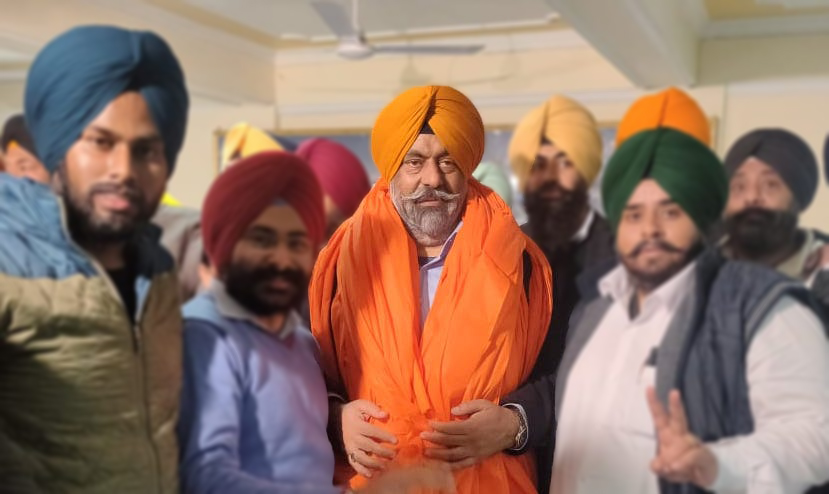
Born in Amoy, China in 1912, Lim Cheng Hoe came to Singapore when he was 7. Primarily a self-taught artist, Lim studied art under Richard Walker, Singapore’s first Art Inspector of Schools, at the Raffles Institution in the early 1930s. Lim was a prominent and significant first generation artist due to his treatment of the local landscape in the watercolour medium and is associated with the Nanyang Style. He was also a founding member of the Singapore Watercolour Society. Lim passed away in 1979 in Singapore.In the mid 1950s Lim painted numerous portraits in order to refine his skill in representing form. However he found that painting portraiture in watercolour was difficult due to its quick drying nature. He therefore favoured pastel as he felt lends itself better to the description of skin tones and textures. Consequently there are only a handful of portraits rendered in watercolour and this work is one of them.

(Click here for original source. The Roots website has been established by Singapore’s National Heritage Board strives to preserve and catalogue the elements of that unique inheritance, and to present them to the public in an engaging and accessible format.)

RELATED STORY:

Soldier and diplomat (Asia Samachar, 25 Dec 2021)

ASIA SAMACHAR is an online newspaper for Sikhs / Punjabis in Southeast Asia and beyond.Facebook | WhatsApp +6017-335-1399 | Email: editor@asiasamachar.com | Twitter | Instagram | Obituary announcements, click here 


Harmeet Singh Kalka elected DSGMC president

0

Harmeet Singh Kalka congratulated by supporters after elected as DSGMC president on 22 Jan 2022 – Photo: Kalka Twitter

By Asia Samachar | India |

Harmeet Singh Kalka is the new president of the Delhi Sikh Gurdwara Management Committee (DSGMC), overcoming a challenge mounted by Paramjit Singh Sarna for the influential Delhi-based Sikh outfit.

Harmeet, an ally of the Shiromani Akali Dal president Sukhbir Singh Badal, will steer the organisation after a tumultous recent string of incidents.

“Many thanks to the winning members for reposing their faith in me and electing me as the President of DSGMC by 29/29 votes,” Harmeet tweeted. He gained 29 of the 51 votes.

Harmeet, 54, takes over from the colourful Manjinder Singh Sirsa, who lost from Punjabi Bagh seat in the DSGMC elections in Augusut 2021. After a confusing comeback as president, Sirsa then staged a resignation.

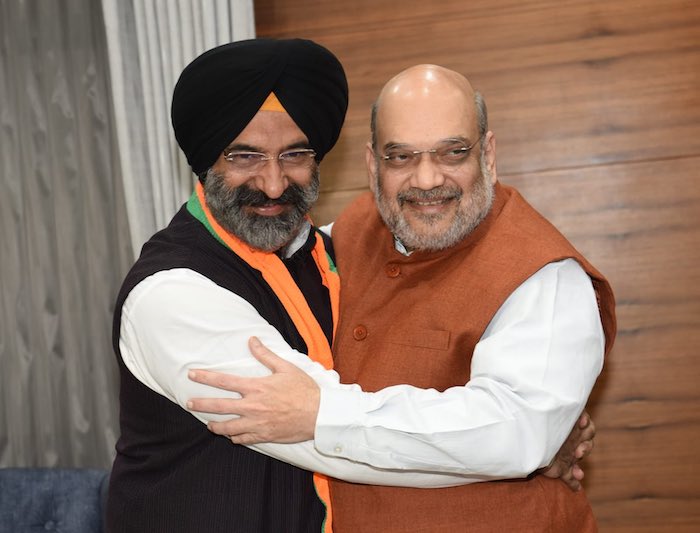
On 1 Dec 2021, Manjinder joined the Bharatiya Janata Party (BJP) in a highly publicised move, including a photo-op with the powerful BJP leader and home minister Amit Shah, ahead of the Punjab state elections.

In January 2020, Sukhbir appointed Harmeet as president of Shiromani Akali Dal (SAD) Delhi State and had earlier served as DSGMC secretary general.

The election proceeding saw some disturbances.

“The election process will continue as per the law, despite of Sarna and GK party trying to mishandle the election process and captured the ballot box,” Harmeet tweeted.

In an earlier entry, he tweeted: “Our team is well prepared for the upcoming DSGMC’s ‘General House Internal Elections’ for the office bearers, scheduled to be held on 22nd January 2022.”

The victory cements Badal’s influence on Shiromani Gurdwara Parbandhak Committee (SGPC) and DSGMC.

In November 2021, Harjinder Singh Dhami another Badal-ally, was elected to succeed Bibi Jagir Kaur as SGPC president.

Manjinder Singh Sirsa (left) and BJP’s Amit Shah on 1 Dec 2021. Manjinder tweets: “Honouring my commitment to raise issues of nation, my community and humanity, today I Join @BJP4India.” – Photo: Manjinder Twitter

RELATED STORY:

SGPC elects Badal loyalists, stays in tight family grip (Asia Samachar, 1 Dec 2021)

ASIA SAMACHAR is an online newspaper for Sikhs / Punjabis in Southeast Asia and beyond.Facebook | WhatsApp +6017-335-1399 | Email: editor@asiasamachar.com | Twitter | Instagram | Obituary announcements, click here