UA-56202873-1
Page 355

Cash handouts from Malaysian Gurdwaras Council to flood victims. More than RM120,000 already given

0

MGC president Jagir Singh (left), GSGNSA committee president Patminder Singh (4th from left) and others involved in the flood relief aid mission – Photo: Supplied

By Asia Samachar | Malaysia |

The Malaysian Gurdwaras Council (MGC) have given cash handout totaling more than RM120,000 to families in Bentong and Taman Sri Muda, two of the places most badly affected by the recent spate of flooding around the nation.

Each affected family received RM2,000. The process to identify other affected families continues.

“We started visiting the affected families on ground. The families who are not at home, we have created a list and invited them to gurdwara to collect the cash aid. This is the first time MGC went directly to families,” an MGC official told Asia Samachar.

Bentong is in the state of Pahang while Taman Sri Muda is Shah Alam, Selangor.

In Selangor, MGC worked closely with the team at Gurdwara Sahib Guru Nanak Shah Alam (GSGNSA).

MGC president Jagir Singh (3rd from left) and fellow committee members running the flood relief aid mission – Photo: Supplied

RELATED STORY:

Gurdwaras reaching out to pandemic victims (Asia Samachar, 27 June 2021)

ASIA SAMACHAR is an online newspaper for Sikhs / Punjabis in Southeast Asia and beyond.Facebook | WhatsApp +6017-335-1399 | Email: editor@asiasamachar.com | Twitter | Instagram | Obituary announcements, click here 

Health minister KJ makes pit stop at Petaling gurdwara

0

By Asia Samachar | Malaysia |

Malaysian Health Minister Khairy Jamaluddin made a pit stop at the flood relief collection centre at Gurdwara Sahib Petaling Jaya yesterday (27 Dec 2021) to drop off some items urgently needed for the flood victims.

Today is the 10th day the gurdwara has been running a flood relief centre to distribute urgently needed items as well as hot cooked vegetarian meals.

Listed as urgently needed today are candles, toothbrushes, instant noodles, mosquito coils, hand sanitisers, wet wipes, mattresses, pillows and small packets of curry, chilli and tumeric powders. Centre contact number: +6010-2174556

RELATED STORY:

Pakatan Harapan leader Anwar Ibrahim visits Petaling Jaya gurdwara (Asia Samachar, 26 Dec 2021)

ASIA SAMACHAR is an online newspaper for Sikhs / Punjabis in Southeast Asia and beyond.Facebook | WhatsApp +6017-335-1399 | Email: editor@asiasamachar.com | Twitter | Instagram | Obituary announcements, click here 

Surindar Kaur (1945-2021), Seremban

I N L O V I N G M E M O R Y

SURINDAR KAUR D/O LATE SURJAN SINGH JP

23.03.1945 – 21.12.2021

Husband: Late Bhagwant Singh s/o Late Toki Santokh Singh of Seremban

Children:

Satvinder Kaur (Deceased)

Satwant Singh

Preetam Kaur / Ranbir Singh Rendy

Grandchild: Dilshan Singh Rendy

Mdm Surindar was a dutiful wife, daughter and daughter in-law, a loving mother, sister, aunt, friend
and a doting grandmother who showered unconditional love and compassion to one and all and
touched the hearts of all those who came to know her. She made our house a home to everyone who
walked through our doors. Her warmth and generous nature was well known to all family and friends.
Mdm Surindar will be fondly remembered and greatly missed by all family members and friends near and far.

We see her Halo shine always ; Our mother, forever our Angel deeply loved and will be missed so very much.

She has now become that evening Star amongst the Angels in heaven. We will love you always.

Sehaj Path Da Bhog & Anthim Ardas will be held on 2 January 2022 (sunday) between 4-6pm at Gurdwara Sahib Seremban

For enquiries contact:

Satwant 012-2868901

Preeta 012-2177141

| Entry: 28 Dec 2021 | Source: Family

ASIA SAMACHAR is an online newspaper for Sikhs / Punjabis in Southeast Asia and beyond.Facebook | WhatsApp +6017-335-1399 | Email: editor@asiasamachar.com | Twitter | Instagram | Obituary announcements, click here |

How a tribal village in Telangana turned to Sikhism – The Week

1

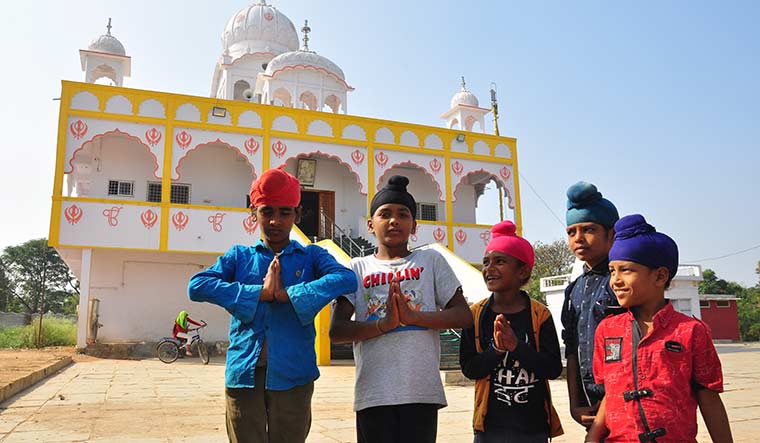
Guiding light: Children in front of the gurdwara in Gachubhai Thanda – Photo: P. Prasad / The Week

By Rahul Devulapalli | The Week | India |

TO REACH GACHUBHAI Thanda, one has to follow the line of sight of a renowned Hindu saint’s statue. The 216ft-tall statue of saint Ramanujacharya, also called the Statue of Equality, will be unveiled by Prime Minister Narendra Modi in February 2022.

The tribal hamlet and its neighbour, a spiritual mascot, lie in Shamshabad, a short drive from Hyderabad. A narrow, dusty lane off the Hyderabad-Bengaluru highway leads to the entrance of the settlement. But for the villagers, Gachubhai Thanda now exists only on paper, as they insist that they live in Guru Gobind Singh Nagar.

It is Sunday morning, and a middle-aged man donning a Patiala shahi pagg—a traditional way for tying the Sikh turban—with a kirpan slung across his chest, guides a heavy vehicle. A little farther away, a youngster in a gol parna (another Sikh turban style) stands outside a small concrete house. And, on reaching the open field, one can see six boys in patka—a smaller under-turban worn by children—playing cricket. One does not need to refer to official records to know that 90 per cent of residents here are Sikhs.

The village has around 500 residents, almost all of whom are Lambadas, listed under the Scheduled Tribes. The conversion to Sikhism happened in the last 20 years or so. The villagers mostly speak Lambadi and a bit of Hindi and Telugu, but no Punjabi. The village has its own gurdwara—Gurdwara Saheb Dashmesh Darbar. The two-storied structure lies on one end of the village, surrounded by farmland.

In its vicinity lives Lakhvinder Singh, who was born Khetawat Deepla. All Sikhs in the village took new names when they embraced the new religion. Lakhvinder, 73, is president of the gurdwara committee. The gurdwara stands on land he donated five years ago. “Life became more meaningful after I converted,”says Lakhvinder, who was among the first converts. He points to a room in the gurdwara premises, and says, “That is where it all started for us.”

Inside the unused room is a two-feet-high tomb. “Our ancestors used to occasionally visit the Nanded Sahib in Maharashtra,”recalls Lakhvinder. “Around 50 years ago, they set a bull free, chanting the name of Guru Gobind Singh. When it died, they buried the animal and constructed a tomb. The elders then placed a picture of Guru Nanak above the tomb and conducted pujas for a long time. In 1996, we raised a roof and turned it into a small temple.”

It was another village elder—Bhagat Singh—who initiated the process of building a gurdwara in the village. Bhagat claims to have visited the Sikh holy sites in Pakistan and also stayed at a gurdwara in Hyderabad for nearly five years to get a deeper understanding of the faith and its tenets.

“In 2001, I consulted Sikh religious leaders on converting our small temple into a gurdwara,”recalls Bhagat, an auto driver. “We were told that it was better to embrace Sikhism if we wished to perform rituals at the gurudwara. Around 70 of us then got initiated into the faith, and we started carrying the five articles mandated by the religion.”

Read the full story, ‘How a tribal village in Telangana turned to Sikhism’, (The Week, Issue @ Jan 2022), here.

RELATED STORY:

A letter to SGPC: Unethical conversion of Sikhs in Punjab (Asia Samachar, 24 Dec 2021)

ASIA SAMACHAR is an online newspaper for Sikhs / Punjabis in Southeast Asia and beyond.Facebook | WhatsApp +6017-335-1399 | Email: editor@asiasamachar.com | Twitter | Instagram | Obituary announcements, click here 

Utah Sikhs bring warmth to holiday season, donate 500 blankets to the homeless

0

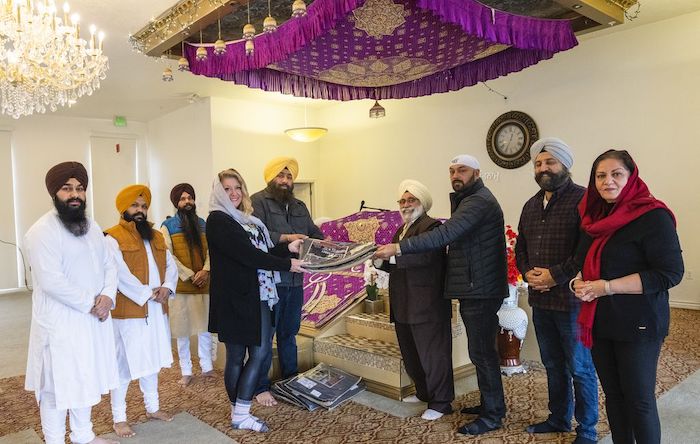
Members of the Sikh community present wool blankets to Carin Crowe from Habitat for Humanity to distribute to the help the unsheltered stay warm, during a blessing ceremony at the gurdwara in Taylorsville, on Thursday, Dec. 23, 2021 – Photo: Rick Egan / The Salt Lake Tribune

By Scott D. Pierce | The Salt Lake Tribune | United States |

Bachider Singh and Kuljeat Singh bless wool blankets that members of the Sikh community are donating to help the unsheltered stay warm during a blessing ceremony at the Sikh temple in Taylorsville on Thursday, Dec. 23, 2021.

“It was just incredibly generous,” said Carin Crowe, senior director of operations at Salt Lake Valley Habitat for Humanity. “The blankets were absolutely for people who were weathering the worst of the storms out there.”

(Rick Egan | The Salt Lake Tribune) Ty Bellamy, with Black Lives for Humanity, and a volunteer named JJ distribute wool blankets donated by the Sikh community to people in camps in Salt Lake City to help the unsheltered stay warm on Thursday, Dec. 23, 2021.

(Rick Egan | The Salt Lake Tribune) Ty Bellamy, with Black Lives for Humanity, and a volunteer named JJ distribute wool blankets donated by the Sikh community to people in camps in Salt Lake City to help the unsheltered stay warm on Thursday, Dec. 23, 2021.

It’s hardly the first time the Sikhs have made a donation like this. Members of the temple have been doing it for many years. It’s part of their religious beliefs.

“We believe in service, community, helping the needy,” said Push Singh. “So that’s what we do every year. We just want to help fellow Americans.”

Sikhs trace their religious roots to northern India. They make up the fifth-largest organized religion in the world, according to the Sikh Coalition, and there are about half a million Sikhs in the United States.

(Rick Egan | The Salt Lake Tribune) Carin Crowe, of Habitat for Humanity, and Ty Bellamy with Black Lives for Humanity, distribute wool blankets donated by the Sikh community to people in camps in Salt Lake City to help the unsheltered stay warm on Thursday, December 23, 2021.

(Rick Egan | The Salt Lake Tribune) Carin Crowe, of Habitat for Humanity, and Ty Bellamy with Black Lives for Humanity, distribute wool blankets donated by the Sikh community to people in camps in Salt Lake City to help the unsheltered stay warm on Thursday, December 23, 2021.

“We want to help the community,” said Jagdish Gill, a founding member of the Sikh Temple of Utah in Taylorsville. “We just announced that anybody who wanted could contribute, and they gave the money.”

This has long been a personal project for the Gill family — Jagdish and Surjit, who are the parents of Salt Lake County District Attorney Sim Gill. For several years, Surjit Gill — Sim Gill’s mother — has knitted about 500 hats a year that were distributed at The Road Home shelter.

“Whatever little we can do,” Jagdish Gill said, “we have done it.”

Crowe said that as she and Ty Bellamy, president of the Black Lives for Humanity Movement, handed out the blankets, they were met with “overwhelming gratitude” from the recipients.

“There were people in tears — grateful for having this heavy wool blanket,” Crowe said. “It will make a big difference for them. I mean, there are people out there that are suffering. There’s just not enough beds in the shelters and they have no place to go. And so we just can’t forget about them.” – See original story here

RELATED STORY:

Meet Malkith Singh: A Part-Time Clerical Staff And A Full-Time Malaysian Superhero Sikh (Asia Samachar, 26 Dec 2021)

ASIA SAMACHAR is an online newspaper for Sikhs / Punjabis in Southeast Asia and beyond.Facebook | WhatsApp +6017-335-1399 | Email: editor@asiasamachar.com | Twitter | Instagram | Obituary announcements, click here 

Sweetness of Humility

0

By Bhupinder Singh | Opinion |

Guru Nanak Dev Ji has succinctly talked about the sweetness of humility in these words:

“ਮਿਠਤੁ ਨੀਵੀ ਨਾਨਕਾ ਗੁਣ ਚੰਗਿਆਈਆ ਤਤੁ ॥”

“Mithath neevee Naanakaa gun changiaaeeaa tat.” (SGGS, Pg. No. 470)

Translation: There is sweetness of humility, O Nanak, it is the essence of all virtues and goodness.

The above quote is from the composition where Guru Nanak Ji starts by describing the sweetness of humility with the example of its nemesis, the Simmal. It is also called Semal (botanical name: Bombax ceiba) and commonly known in English as Silk Cotton Tree. This native Indian tree bears bright red attractive flowers during the months of January to March, with fruits about the size of Ping-Pong ball. It is a fast-growing tree, that shoots up like a tall arrow and can have solid girth of 2 to 3 meters. Guru Ji says its beauty attracts the birds who come there with hopes. But its fruit is tasteless, flowers are unwholesome, and its leaves useless (no nutritional value). By providing the example Guru Ji cautions against becoming majestic, attractive, and good looking, yet useless. While some famous and accomplished in life may appear attractive as a resource to help us to mitigate our life challenges, but we may be disappointed in them. Then Guru ji says that humility is sweetness, which will not disappoint those who come with hopes and expectations.

Guru Ji wants us to inculcate humility and to become humble in life. Becoming humble is recognizing that we are not here to see how important we can become, but to see what difference we can make in the life of others. Let us try to see to explore this virtue of humility.

WHAT IS HUMILITY?

“ਹੋਦੈ ਤਾਣਿ ਨਿਤਾਣੀਆ ਰਹਹਿ ਨਿਮਾਨਣੀਆਹ ॥”

Hodhai taan nithaaneeaa raheh nimaananeeaah.” (SGGS, Pg. No. 85)

Translation: Despite wielding power, they remain powerless, humble, and meek.

But in reality, what is the state of mankind? Guru Ji describes it as, “Virtuous is our talk, but our deeds are evil as well as our conduct. Pitch dark (totally evil) are our minds, but from our outward appearance, we present ourselves as (angelic) white (SGGS, Pg. No. 85)”. In simple words there is a dichotomy between our words and deeds because of ego. Guru Ji wants us to shun our pride and ego in these words:

“ਚਤੁਰ ਸਿਆਣਾ ਸੁਘੜੁ ਸੋਇ ਜਿਨਿ ਤਜਿਆ ਅਭਿਮਾਨੁ ॥”

“Chathur siaanaa sugharr soae jin tajiaa abhimaan.”  (SGGS, Pg. No. 297)

Translation: One who renounces egotistical pride is intelligent, wise, and farsighted.

Where did these traits come from? These are intrinsic, as we are born with them. Guru Ji has described the construct of the humans as:

“ਅਵਗੁਣੀ ਭਰਪੂਰ ਹੈ ਗੁਣ ਭੀ ਵਸਹਿ ਨਾਲਿ ॥”

“AvaguNee bharapoor hai guN bhee vasahi naal.” (SGGS, Pg. No. 936)

Translation: He (man) is overflowing with faults and demerits, but virtues dwells within him as well.

Guru Ji is sharing with us that we humans are packaged with both virtues and imperfections. Virtues are there as the Creator Himself dwells within each of us as the soul. Additionally, imperfections or faults are also present in each of us, as the Creator has imparted those within human body too. Interestingly, both these coexist in everyone since the time of inception.  Brimming with such contradictions, becoming humble will be a paradoxical challenge. When we look at the life of Guru Nanak, we can see that he was epitome of humility. His words as enshrined in Sri Guru Granth Sahib, his personal interactions with others and his selection criteria for his own successor, reflect the significance of the humility. In fact, even during the successor selection during the subsequent Guru period, the trait of humility was a preeminent consideration. Here in one quote by Guru Nanak Dev Ji that offers his personal perspective:  

“ਨੀਚਾ ਅੰਦਰਿ ਨੀਚ ਜਾਤਿ ਨੀਚੀ ਹੂ ਅਤਿ ਨੀਚੁ ॥ ਨਾਨਕੁ ਤਿਨ ਕੈ ਸੰਗਿ ਸਾਥਿ ਵਡਿਆ ਸਿਉ ਕਿਆ ਰੀਸ ॥ ਜਿਥੈ ਨੀਚ ਸਮਾਲੀਅਨਿ ਤਿਥੈ ਨਦਰਿ ਤੇਰੀ ਬਖਸੀਸ ॥੪॥੩॥”

“Neechaaa andhar neech jaath neechee hoo ath neech. Nanak tin kai sang saathh vaddiaa sio kiaa rees. Jithai neech samaaleean thithhai nadhar thaeree bakhasees.” (SGGS, Pg. No. 15)

Translation: Nanak seeks the company of the lowest of the low class, the very lowest of the low. Why should he try to compete with the (so called) great/highest? In that place where the lowly are cared for, there the Blessings of Your Glance of Grace rains down.

Guru Ji sees no need to compete with the elite, affluent, successful, or those belonging to a higher caste by birth – he is happy with the lowliest. In the quote as under, Guru Ji addressed the subject of caste discrimination in these words:

            “ਹਉ ਢਾਢੀ ਕਾ ਨੀਚ ਜਾਤਿ ਹੋਰਿ ਉਤਮ ਜਾਤਿ ਸਦਾਇਦੇ ॥”

            “Hau dhadhee kaa neech jaath hor utham jaath sadhaaeidhae.”  (SGGS, Pg. No. 468)

Translation: I am just a bard of low caste and low social status (at your door); others call themselves as belonging to high caste.

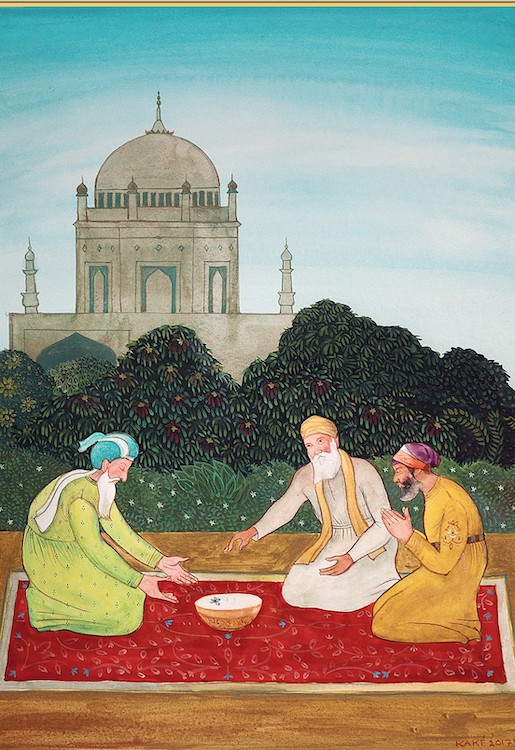
By declaring himself as belonging to the low caste, Guru Ji exposed the hollowness and futility of discrimination simply based on birth caste/class. Despite belonging to Khatri caste, considered upper class in class hierarchy, Guru Ji proclaimed himself to be minstrel, labeled as a lower caste by the society and was discriminated against. By doing so, Guru Ji displayed his true humility, and simultaneously raised his voice against the practice of caste system. Guru Ji demonstrated this trait when he spurned the invitation of elite state official Malik Bhago, in Saidpur but knocked the door of poor carpenter Lalo uninvited. Guru Ji again demonstrated it when he went to Multan and the pirs there sent a bowl full of milk symbolizing the fact that city was full to the brim with holy people. Guru Ji plucked a jasmine flower from the garden and placed it over the contents of bowl. Guru Ji’s message was he was there to spread fragrance and not to dislodge them.
FOLLY OF PRIDE

Humility and its nemesis Ego, and pride are within every human being, a universal presence. Ego grows like wild weeds when humility is not nurtured and cultivated. The pre-eminence of ego, pride and the haughty nature in humans is essentially declaring that ‘I am something or something in the making’. The Punjabi words for these traits are ‘houmai’ and ‘hankaar’. Guru Ji has described its prevalence in humans in these words as:

“ਹਉਮੈ ਰੋਗੁ ਮਾਨੁਖ ਕਉ ਦੀਨਾ ॥”

“Houmai rog maanukh kau deenaa.” (SGGS, Pg. No. 1140)

Translation: (The entire) Mankind is afflicted with the disease of egotism.

Guru Ji has made it very clear that pride is the deadliest vice, by calling it a chronic disease by Guru Ji in these words:

“ਹਉਮੈ ਦੀਰਘ ਰੋਗੁ ਹੈ……”

“Houmai dheeragh rog hai….” (SGGS, Pg. No. 466)

Translation: Egotism is a chronic disease.

Guru Ji calls it a chronic disease as it is so self-deceiving; everyone else can see it clearly, yet the person himself is always totally blind to it. The mind under the influence of pride is always self-serving, and wanting more:

“ਘਣੋ ਘਣੋ ਘਣੋ ਸਦ ਲੋੜੈ ਬਿਨੁ ਲਹਣੇ ਕੈਠੈ ਪਾਇਓ ਰੇ ॥”

“Ghanno ghanno ghanno sadh loRai bin lahannay kaittai paaio ray.”  (SGGS, Pg. No. 715)

Translation: More and more, he continually yearns for more (gripped by pride and attachment); but unless he is destined to receive, how can he obtain it?

Pride leverages minds into believing in an exaggerated sense of self, and the term narcissistic has been coined for it. Pride in self generates into prejudice against others. In Guru Ji words the one gripped by pride, is a walking testament of a lunatic:

“ਜਬ ਇਹੁ ਮਨ ਮਹਿ ਕਰਤ ਗੁਮਾਨਾ ॥ ਤਬ ਇਹੁ ਬਾਵਰੁ ਫਿਰਤ ਬਿਗਾਨਾ ॥”

“Jab eih mun mahi karat gumaanaa. Tab eih baavar firat bigaanaa.”  (SGGS, Pg. No. 235)

Translation: When this mind is filled with pride, then it wanders around like a madman exhibiting strange behavior.

WISDOM OF BECOMING HUMBLE

Pride and ego consume those who possess it, just as termite consumes the big tree from inside by hollowing it. These become self-destructing traits. As we can see ego is concerned in establishing who is right, but Humility is concerned only with what is right. Guru Arjan Dev Ji’s had succinctly summed the wisdom of becoming humble in these words:

“ਸੁਖੀ ਬਸੈ ਮਸਕੀਨੀਆ ਆਪੁ ਨਿਵਾਰਿ ਤਲੇ ॥ ਬਡੇ ਬਡੇ ਅਹੰਕਾਰੀਆ ਨਾਨਕ ਗਰਬਿ ਗਲੇ ॥੧॥”

“Sukhee basai masakeeneeaa aap nivaar tale. Badde badde ahankaareeaa Nanak garab gale. 1”  (SGGS, Pg. No. 278)

Translation: The humble beings abide in peace; by subduing egotism they become meek. But the very proud and arrogant people, O Nanak, are consumed by their own pride. ||1||

Guru Ji advises us to get rid of hubristic ego in these words:

“ਭੋਲਿਆ ਹਉਮੈ ਸੁਰਤਿ ਵਿਸਾਰਿ ॥ ਹਉਮੈ ਮਾਰਿ ਬੀਚਾਰਿ ਮਨ ਗੁਣ ਵਿਚਿ ਗੁਣੁ ਲੈ ਸਾਰਿ ॥੧॥ ਰਹਾਉ ॥”

“Bholiaa haumai surat visaar. Haumai maar beechaar mun gun vich gun lai saar. 1. Rahaau.” (SGGS, Pg. No. 1168)

Translation: (Guru Ji advises) O ignorant one, forsake your egotistical intellect. Make up your mind to subdue your ego by enshrining the most Sublime virtue – (Naam). ||1||Pause||

We can see Guru Ji is extolling us to efface ego. To efface ego Guru Ji wants us to enshrine in our mind the sublime virtues of God’s Naam. Naam means remembrance of existence of God in his entire creation. The act of remembrance has not received its due recognition as a transformational tool. That remembrance effaces ego, planting, and nurturing humility instead. Thus, the act of remembrance is an act chiseling the persona by removing ego. The act of remembrance affirms power of God thus increases faith and builds positive feelings. Guru Ji shares with us the benefits in these words:

 “ਸੁਖੁ ਪ੍ਰਭ ਸਿਮਰਨ ਕਾ ਅੰਤੁ ਨ ਪਾਰ ॥”

“Sukh prabh simaran kaa a(n)t na paar.” (SGGS, Pg. No. 263)

Translation: The peace and joy (that emanates) from the meditative remembrance of God are limitless.

In order to experience those benefits Guru Ji wants us to inculcate humility in these words:

“ਬੁਧਿ ਗਰੀਬੀ ਖਰਚੁ ਲੈਹੁ ਹਉਮੈ ਬਿਖੁ ਜਾਰਹੁ ॥”

“Budhh gareebee kharach laihu houmai bikh jaarahu.” (SGGS, Pg. No. 399)

Translation: Take wisdom and humility as your supplies (on spiritual journey) and burn away the poison of pride.

This is preparation for receiving divine grace. Guru Ji has advised that ego is only effaced by divine grace. He has asked us to seek grace from Almighty. Guru Nanak Dev Ji has clarified that grace eradicates humility completely. Once ego completely disappears the mind becomes immaculate:

“ਇਹੁ ਮਨੁ ਨਿਰਮਲੁ ਹਉਮੈ ਮਾਰੀ ॥”

“Eih mun nirmal haumai maaree.”  (SGGS, Pg. No. 1049)

Translation: WhenEgotism has been conquered, then this mind will become immaculate.

When it becomes immaculate then it merges with the Creator God:

“ਹਉਮੈ ਜਾਈ ਤਾ ਕੰਤ ਸਮਾਈ ॥”

“Haumai jaaee ta kanth samaee.”  (SGGS, Pg. No. 750)

Translation: If one gets rid of ego, then one merges with Husband Lord.

CULTIVATING HUMILITY

Pride is biggest obstacle to inculcation of humility, yet most invisible to self. So, instead of reining in our ego we enable it by feeding it as we grow in age, as well as become successful. Then what should we do to become humble? Guru Ji has prescribed the method of singing the praises. Guru Ji has not just prescribed the path but has provided us with the words and mechanism to accomplish it. The technique provided by Guru Ji is Keertan (singing) and words are in Sri Guru Granth Sahib. Guru Ji says:

“ਵਾਹੁ ਵਾਹੁ ਕਰਤਿਆ ਮਨੁ ਨਿਰਮਲੁ ਹੋਵੈ ਹਉਮੈ ਵਿਚਹੁ ਜਾਇ ॥”

“Vaahu vaahu karatiaa mun nirmal hovai haumai vichahu jai.” (SGGS, Pg. No. 515)

Translation: Chanting Waaho! Waaho! The mind is purified, and egotism departs from within.

Saying “Vaahu, Vaahu” is praising and is the only avenue of access to God. This is method that Guru Nanak Ji adopted and encouraged everyone else to practice. Have we not failed to exercise it? If we had not, then we would have known about its benefits. Praise is acceptance of the situation we find ourselves in. It is acceptance of one’s own inadequacy to handle and asking for Divine intervention. It is so powerful that it brings a paradigm shift from me to Him. Its nature is to draw our attention away from our problems no matter how overwhelming and lift our gaze to God. Praise changes relationships, hearts, and mindsets. Guru Arjan Dev Ji demonstrated its efficacy, when Sulhi Khan mounted an attack on Guru Ji from Lahore and his shabads on the subject of attack paint its picture.  

Guru Ji created a fountain of praises in form of Sri Guru Granth Sahib for us and sealed it for posterity to prevent its doctoring and plagiarizing. Guru Ji have not just set the words in poetic meters and strung them on musical scales, but also set the style of singing for its optimal effect on the mind. The result is that these words just don’t reach our ears but can penetrate the deeper core – the soul within, transforming it. In the process we witness our own limitations, while offering us a dazzling display of magnanimous nature of God. These words can become the catalyst for our resizing of ourselves, in the process deflating our ballooned ego. The ego is the wall that separates us from our Creator God. So, what should we ask from our Guru Ji? Guru Ji even provides answer for that as:

“ਸਾ ਮਤਿ ਦੇਹੁ ਦਇਆਲ ਪ੍ਰਭ ਜਿਤੁ ਤੁਮਹਿ ਅਰਾਧਾ ॥”

“Saa mut dhaehu daeiaal prabh jith thumehi araadhhaa.”  (SGGS, Pg. No. 678)

Translation: Bless me with such understanding, O Merciful Lord God, that I might engage in Your adoration.

Let us take the first step to go to Guru Ji, with complete faith and in total surrender. There, the process of transformation will be initiated by listening and believing; and both these activities are associated with the mind alone. When one listens attentively and starts believing, then a sacred shrine develops within. Thus, awareness of pride is the prerequisite for the humility cultivation process to take place. By incorporating these processes with reverence, progress is made, humility is cultivated, and one experiences cleansing of the mind. When one is reminded that one is lacking virtues inside, it produces an immediate humbling effect. As the malignant growth of ego is curtailed, a prayer is born and humility blossoms from within. Such is the humble prayer to the Almighty to bless with virtues. Because without virtues, the progress on the path of spiritual evolution cannot take place, as Guru Nanak Dev Ji has advised:

“ਵਿਣੁ ਗੁਣ ਕੀਤੇ ਭਗਤਿ ਨ ਹੋਇ ॥”

Vinh gun keethae bhagat n hoe.” (SGGS, Pg. No. 4)

Translation: Without virtue, there is no devotional worship possible.

Guru Ji has shared the fact that the Creator is the reservoir of virtues, and these can only be acquired when one is blessed by Him, in grace. So, this becomes a starting point of realization of need of Guru. It is through that relationship the connection with Almighty will develop, for the journey on the road to humility. In Sri Guru Granth Sahib Ji, Sheikh Fareed Ji has taken the example of a floor mat made of river-bed grass to describe how humble one has to become. He says:

“ਫਰੀਦਾ ਥੀਉ ਪਵਾਹੀ ਦਭੁ ॥ ਜੇ ਸਾਂਈ ਲੋੜਹਿ ਸਭੁ ॥ ਇਕੁ ਛਿਜਹਿ ਬਿਆ ਲਤਾੜੀਅਹਿ ॥ ਤਾਂ ਸਾਈ ਦੈ ਦਰਿ ਵਾੜੀਅਹਿ ॥੧੬॥”

“Fareedhaa Thheeo Pavaahee Dhabh. Jae Saanee Lorrehi Sabh. Eik Shhijehi Biaa Lathaarreeahi. Thaan Saaee Dhai Dhar Vaarreeahi.16.”  (SGGS, Pg. No. 1378)

Translation: Fareed, become the grass on the path, if you long for the Lord of all. One will cut you down, and another will trample you underfoot; then, you shall enter the Court of the Lord.

To paint a complete picture of humility, Farid Ji uses the metaphor of a variety of grass that grows on riverbanks used to make floor mat. In this example, first the grass is cut that symbolizes giving up or total surrender. Then the cut grass gets trampled upon to flatten it, finally woven into a floor mat. Only then does it qualify to become the mat that graces the door of the house of Lord picking up dust from feet of the devotees. When it becomes the floormat at the place of worship, then worshippers in reverence pick up dust from it and apply it on their foreheads. Thus, the grass because of its humility was elevated to become an object of reverence. In fact, Guru Arjan Dev Ji has recommended a two-pronged attack on the ego from his own personal experience as:

“ਪ੍ਰਥਮੇ ਤਿਆਗੀ ਹਉਮੈ ਪ੍ਰੀਤਿ ॥ ਦੁਤੀਆ ਤਿਆਗੀ ਲੋਗਾ ਰੀਤਿ ॥”

“Prathhamae tyagee houmai preet. Dhutheeaa tyagee logaa reeth.”  (SGGS, Pg. No. 370)

Translation: First, I renounced my egoistical love of the self. Second, I renounced the ways of the world.

Here, Guru Ji is talking about abandoning self-hood, the ego that is afflicting everyone. It is the thinking of the mind in terms of “I, me, mine” alone. The ego likes to rule over everyone but does not relish the thought of becoming subservient to anyone else. That is how slavery, caste systems and feudal systems made inroads and established firmly in societies. These were later scorned upon as perverse and are now slowly working their way out of the society.

We all want to be successful in life. Unfortunately, the gauge of our success in life comes from the acknowledgment and endorsement of others. In order to declare our success to the world, we paint our own poster with the brush of lavish lifestyle. That lifestyle is a demonstration to the world, that we have made it big on the world stage; that we are somebody worthy of endorsement. The influence of celebrities in our lives can be gauged from the way we try to imitate their lifestyles, dresses, their sense of fashion, mannerisms, hair styles, etc. In fact, if we go to the magazine section in bookstores, we can see that celebrity magazines are doing roaring business, but mind-stimulating magazines have their sales plummeting. Our only objective from all these senseless imitations is to declare to the world that we have joined the elites club. Now we are the glitterati ourselves. These lavish lifestyles are food and nourishment to the ego. The ego desires respect and recognition from others. In one short sentence, Guru Ji has provided a strategy to tame ego with a double pronged attack. Guru Ji’s prescription is to give up ego and cease conforming to the norms of the society which only result in ego enhancements. According to Guru Ji, by adopting this double pronged strategy, a big transformation will take place. Faith and humility are garnered while the ego is tamed. Then the race to do what everybody else is doing takes backseat.   

So, how to prepare ourselves to rid the filth of ego? Guru Ji declares that the ego is only washed away when the love for God wells up inside.

“ਪ੍ਰਭ ਕੀ ਪ੍ਰੀਤਿ ਹਉਮੈ ਮਲੁ ਖੋਇ ॥”

“Prabh kee preeth houmai mul khoe.” (SGGS, Pg. No. 391)

Translation: In the Love of God, the filth of ego is washed away.

When the filth of ego is washed away, then through the teachings of Guru a clear understanding and realization that the divine light is within everyone is enkindled. Thus, Guru Ji has clarified that getting rid of the ego is a pre-requisite for cultivating humility. So, when in the midst of crisis and we remember God, we have accepted that the difficult or unpleasant situation as God’s plan, whose outcome will be beneficial for our growth. This is contrary to mere acceptance of the situation as fate and becoming complacent. Instead, it is an endeavor to precisely gauge the situation, and plan for commensurate course of action. Such a course of action leads to dissolution of ego and growth to take place. Guru Nanak Dev Ji has very clearly defined those growth areas for human form as:

“ਤਿਥੈ ਘੜੀਐ ਸੁਰਤਿ ਮਤਿ ਮਨਿ ਬੁਧਿ ॥”

“Thithhai gharreeai surath math man budhh.” (SGGS, Pg. No. 7)

Translation: The intuitive consciousness, intellect and understanding of the mind are shaped there.

Guru Ji is talking about development not just at intellectual level but the spiritual. Guru Ji has defined the four faculties where development needs to take place as:

  1. Thorough development of awareness
  2. Acquiring higher understanding
  3. Complete evolution of perception
  4. Thorough development of logic and rationality

Guru Ji calls those who embark on this journey as “Spiritual Warriors”. These warriors develop these four faculties, and a realization of the One consciousness is behind all the forms.  Our current dilemma is with lack of complete awareness, the higher thought processes and understanding is not in our realm. So, how can these four faculties be developed? These faculties can only be developed if humility is cultivated. Guru Nanak Dev Ji has advised us about it in these words:

“ਸੁਣਿਆ ਮੰਨਿਆ ਮਨਿ ਕੀਤਾ ਭਾਉ ॥ ਅੰਤਰਗਤਿ ਤੀਰਥਿ ਮਲਿ ਨਾਉ ॥”

 “Suniaa munniaa mun keethaa bhaao. Antharagath teerath mul naao.”  (SGGS, Pg. No. 4)

Translation: By listening and believing in reverence with humility in mind, one cleanses the sacred shrine (soul) within.

Guru Arjan Dev Ji has suggested:

“ਮਨ ਕੀ ਮਤਿ ਤਿਆਗੀਐ ਸੁਣੀਐ ਉਪਦੇਸੁ ॥੧॥ ਰਹਾਉ ॥”

“Mun kee muth thiaageeai suneeai upadaesh. Rahaau.” (SGGS, Pg. No. 814)

Translation: So, renounce the intellectual cleverness of your mind, and listen to the (divine) Teachings (from Guru).

Guru Ji wants us to be convinced without a doubt that whatever Guru Ji’s teachings are, they are for our good and to have complete faith in them:

“ਜੋ ਗੁਰੁ ਕਹੈ ਸੋਈ ਭਲ ਮਾਨਹੁ ਹਰਿ ਹਰਿ ਕਥਾ ਨਿਰਾਲੀ ॥੧॥ ਰਹਾਉ ॥”

“Joe gur kahai soe’ee bhal maanahu har har kathaa niraalee.1. Rahaau.” (SGGS, Pg. No. 667)

Translation: Deem whatever the Guru says as good (for you); the sermon of the Lord, Har, Har, is unique and wonderful (as it is best for us). 1. Pause.

It is through the words of the Guru; the ego gets completely eradicated:

“ਗੁਰ ਸਬਦੀ ਵਿਚਹੁ ਹਉਮੈ ਖੋਇ ॥”

Gur shabadhee vichahu houmai khoe.” (SGGS, Pg. No.1173)

Translation: Through the Word of the Guru’s Shabad, egotism is eradicated from within.

                  Guru Ji’s words or teachings share with us the greatness, benevolence, infinite capability, art, and intelligence of God, who made the entire creation and is sustaining it continuously. It is again Guru Ji’s teachings that make us realize that our own strength, capability, faculties, and intelligence are quite limited. Guru Ji’s words perform the work of a life coach, transforming life. The outcome is clarified by Guru Ji as follows:

“ਹੋਇ ਸਗਲ ਕੀ ਰੇਣੁਕਾ ਹਰਿ ਸੰਗਿ ਸਮਾਵਉ ॥”

“Hoae sagal kee raenukaa har sang samaavo.” (SGGS, Pg. No. 322)

Translation: Become the dust of all men’s feet, and so merge with the Lord.

Now, this is true exalting of the humble. This is true sweetness of humility, a result of God’s grace. The path prescribed by Guru is through remembrance and praises of God.

References:

  1. Singh, Bhupinder. Humility: A Spiritual Journey. Gracious Books, Patiala, 2018
  2. Pierce, Virginia. The Power of Remembering.
  3. www.Sikhitothemax.com, base SGGS translation by Dr Sant Singh Khalsa
  4. https://www.foundationofpraise.org/powerinpraise.html

Bhupinder ‘Bo’ Singh, Houston. Born in Bhamo, Myanmar, he now lives in Houston, US, where he runs a manufacturing company formed with his son. A mechanical engineer by training, he has authored a number of books, including Connecting with the Master – A collection of essays on topics related to Sikhism (2006) and In Bully’s Eyes – An Illustrated Children’s book on Bullying(2019).

RELATED STORY:

Akal Takht: A Journey from Original Concept to Emerging Digital World (Asia Samachar, 1 June 2021)

ASIA SAMACHAR is an online newspaper for Sikhs / Punjabis in Southeast Asia and beyond.Facebook | WhatsApp +6017-335-1399 | Email: editor@asiasamachar.com | Twitter | Instagram | Obituary announcements, click here 

Gurdwara of the future. What do Singaporeans think?

0

By Asia Samachar | Singapore |

Gurdwaras are important to a huge majority of Sikhs in Singapore as they offer important cultural, spiritual and emotional ties, says a survey. Even the youth share the same feeling.

This was a key finding of a Singapore survey keen to see where Sikh places of worship fit as the republic charges forward.

The Gurdwara of the Future (GOF) survey found that a majority of survey respondents (90%) said that gurdwaras are important because they offer important cultural, spiritual and emotional ties. It also noted that 83% of youth aged 18-34 agree that gurdwaras are important for the Sikh community.

At least 70% of survey respondents regard Sikh history (and related practices such as commemorating Gurpurabs and other Sikh calendar events), Sikh music (kirtan) as well as the Punjabi language, culture and heritage as important to them, according to a survey report.

“This has been the most comprehensive survey done to look at the Gurdwara of the Future in Singapore. We would like to get sangat members who are interested and have expertise for each pillar to be part of the team to execute the recommendations,” one of the survey promoters told Asia Samachar.

The survey was initiated by the Central Sikh Gurdwara Board (CSGB) and supported by the Sikh Advisory Board Singapore (SAB).

The survey had 387 respondents who were Sikhs from Singapore. Over 92% of the respondents were between the age of 18 – 50 years old which was a good representation (95% confidence) of the young Sikh population in Singapore. Also noteworthy is that a large number of the respondents were married and many with young children which is an important subgroup for the gurdwaras.

Many of the gurdwaras are almost 100 years old, with Silat Road Gurdwara commemorating its centenary next year and the Central Sikh Temple (CST) will be celebrating 110 years anniversary in 2022.

“Our Sikh Pioneers had great foresight to build our Sikh Institutions for the religious & social needs of the community. These institutions have helped the Sikh community to remain visible and assert influence in the region. It is important to have regular introspection on the purpose of these Sikh Institutions so that they remain relevant for the future generations,” according to the promoter.

The GOF survey was conceptualised around a 4-pillar framework which emerged from informal discussions and ad hoc community discussions during the 2020 circuit breaker. The pillars identified were deemed important to preserve the relevance of the gurdwaras and to be made future ready for the community needs, according to the GOF report.

The survey asked different questions to track and map how community members gain awareness of Gurdwara related activities and engage at a Gurdwara, to better understand their needs as per the four pillar framework:

1. Sangat engagement – are community members firstly aware of existing services and programmes and/or have access?

2. Technology roadmap – are current digital offerings sufficient to practice the Sikh faith (i.e. dasvand, book programmes), build knowledge and/or connect with fellow community members?

3. Professional development – do community members need skills or job related support in the form of network building, training or resources?

4. Financial sustainability – the recession from the pandemic has its impacts: how can Gurdwaras think long-term and mitigate these challenges while supporting fellow community members who may be in need?

The survey outreach captured a broad range of viewpoints that are useful in understanding the different needs of the Sikh community.

KEY TAKEAWAY

These are the six key takeaways gleaned by the survey:

1. Gurdwaras Are Important And Need To Stay Relevant

2. Top Priority is Sangat Engagement

3. Digital Transformation Ensures Accessibility

4. More Open, Transparent Communications Encouraged

5. Gurdwaras Are Pivotal to both Intra-Sikh and Inter-Faith Community Building

6. Good Corporate Governance Practices Will Increase Trust

Some excerpts from the report:

The GOF Survey then sought respondents’ thoughts on the four proposed pillars where majority (84.8%) of survey respondents stressed the importance pillar 1: sangat engagement, especially more targeted programmes and services for youths.

60.5% of survey respondents agreed the second pillar on technology roadmap development is crucial to support/boost community engagement, especially in times like the pandemic and in targeting digital natives.

44.4% of survey respondents who answered the open-text question gave reasons why each pillar is important and many stressed that long term thinking requires all four pillars. Gurdwaras are the primary Sikh institutions for community and network building; and this is where professional development and financial sustainability (pillars 3 and 4) need to be considered as well.

82.7% of survey respondents would like to engage in sewa opportunities in and outside a Gurdwara.

64.6% of survey respondents would like to learn how to read Gurbani in regards to pronunciation and practices. 58.1% appreciate personal and professional networking opportunities. Counselling in terms of spiritual guidance and support for needy families was selected by 47.8% of survey respondents as well as doubly stressed in the open-text segment of the question.

62.3% agreed there is a need for Gurdwaras to think of new services. And some shared it would be prudent to improve existing programmes before embarking on new initiatives.

RELATED STORY:

Singapore Sikh welfare outfit honours volunteers at silver jubilee (Asia Samachar, 5 Dec 2021)

Taking the pulse of Singapore Sikhs (Asia Samachar, 27 Aug 2021)

ASIA SAMACHAR is an online newspaper for Sikhs / Punjabis in Southeast Asia and beyond.Facebook | WhatsApp +6017-335-1399 | Email: editor@asiasamachar.com | Twitter | Instagram | Obituary announcements, click here 

Book Review: Fighting for Sikh Causes in Indian Parliament

0

By Dr. Devinder Pal Singh Book Review |

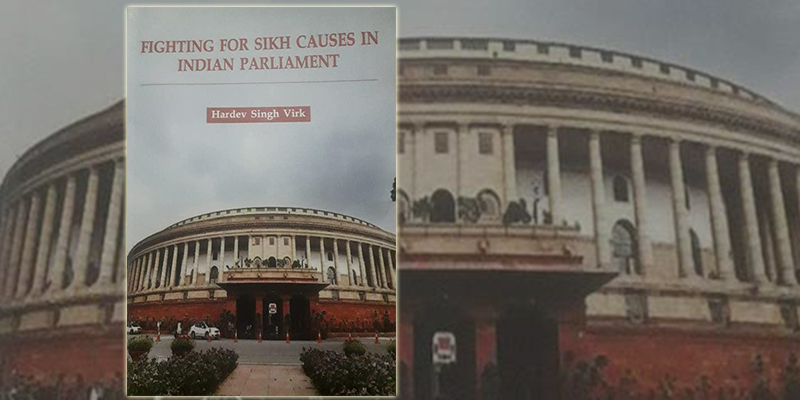
BOOK TITLE: FIGHTING FOR SIKH CAUSES IN INDIAN PARLIAMENT                                      

(Edited by: Prof. Hardev Singh Virk; Published by: Arsee Publishers, Daryaganj, New Delhi, India; Publication Year: 2021; Price: Rs. 250/-; Pages: 104)

“Fighting for Sikh Causes in Indian Parliament” is a compendium of speeches delivered by four Sikh Parliamentarians, i. e. Hukam Singh, Kapur Singh, Khuswant Singh and Tarlochan Singh. Each speech refers to a critical point in India’s post-1947 political history where the relationship between India, the Sikh community, and Punjab was under utmost stress and scrutiny. Prof. Hardev Singh Virk has done a yeoman’s service to publish the speeches of these eminent Sikh parliamentarians who fought for the Sikh Causes in the Indian Parliament. In the Foreword to the book, Vikramjit Singh Sahney has outlined the background of the current project. Herein, he points out that both Hukam Singh and Kapur Singh made outstanding contributions in highlighting the majoritarian bias against the minorities in the Indian Parliament. In addition, Khushwant Singh and Tarlochan Singh recapitulated the events leading to the Sikh genocide and its aftermath by presenting the Sikh Cause assiduously.

In the Preface of the book, Prof. Pritam Singh states that the criterion for selecting these four speeches (by Hukam Singh, Kapur Singh, Khuswant Singh and Tarlochan Singh) has not been specified. However, it can be inferred that these speeches refer to India’s post-1947 political history. He opines that this book is expected to fulfill at least two objectives. Firstly, it allows Punjabis/Sikhs to investigate the role of their representatives in the Indian Parliament and raise awareness of their standing in the Indian federation. Secondly, it helps the social sciences researchers to understand the role of some of the Sikh/Punjabi parliamentarians. Welcoming the advent of this book, he states that the book can play a significant role in liberating the issues raised in these speeches from the records of parliamentary proceedings and presenting them to a broader readership.

In the Introduction (Chapter 1) of the book, Prof. Virk states that its objective was to highlight the contributions of four prominent members of the Indian Parliament who fought for the Sikh Causes. The parliamentarians chosen are Hukam Singh, a Member of the Constituent Assembly; Kapur Singh, an elected Member of Lok Sabha; Khushwant Singh and Tarlochan Singh, both Members of the Rajya Sabha.  Hukam Singh was one of the two Sikh Members who did not sign the Indian Constitution in protest for providing no guarantees to the Sikhs, as promised by the leaders of the Indian National Congress, for joining India. Kapur Singh’s speech on the Bill for the reorganization of Punjab state dilates on eight different controversial issues concerning the Sikhs. When the discussion was going on the floor of Parliament concerning Blue Star Operation and White Paper of the Government, Khushwant Singh intervened as a member of Rajya Sabha with the following remarks “….. a tragic error of judgement, a grievous mistake and a gross miscalculation….”. Tarlochan Singh’s speech, under review in this book, was delivered on 14th Dec. 2009 during the call attention motion on the killing of Sikhs in 1984.

Chapter 2 presents Hukam Singh’s Speech in the Constituent Assembly on “Sikh Grievances.” In this speech, Hukam Singh, as a representative of the minority Sikh community, excelled in viewing various provisions of the Indian constitution from the angle of majority-minority relations. Criticizing the constitution, he touched on several issues, which in his opinion, had grave implications for the Sikh community. He was very incisive in commenting on the power imbalance between the judiciary and the legislature in India, where the legislature was dominant. He eloquently expressed his fear, shared by several members of the Constituent Assembly, that the legislature might accumulate unwarranted powers. His remarks on the dangers of the provisions for emergency powers have proved prophetic.

Chapter 3 reports Kapur Singh’s Speech on “Betrayal of the Sikhs.” He delivered this speech on 6th Sept. 1966, in Lok Sabha. In it, he dilates on eight different controversial issues concerning the Sikhs. Moreover, he put forward a compelling argument highlighting the betrayal of the Sikhs by the leaders of the Indian National Congress and the Indian government in a chronological manner. Thereby, he did make an outstanding contribution in highlighting the majoritarian bias in the Indian Parliament.

Khushwant Singh’s speech on “Operation Blue Star” is delineated in Chapter 4. He delivered it on 25th Jul. 1984 in the Rajya Sabha. In his remarks, Khushwant Singh tore apart the lies of the government— controlled media and the subservient press on Operation Blue Star. Furthermore, he touched on the role of the army cautiously but boldly. In addition, he successfully highlighted the degree of alienation being felt by the Sikhs.

The next Chapter reports Khushwant Singh’s speech on “Massacre of Sikhs in Delhi.” He delivered this speech in response to President’s address in Rajya Sabha on 22nd Jan. 1985. Speaking about the 1984 November genocide, he narrated his own experience and highlighted the degree of insecurity felt by every Sikh, however highly placed. He pointed out that 6000 innocent Sikhs were massacred in these two days. At least 900 women were windowed, 50,000 Sikhs were rendered homeless and removed to refugee camps, thousands of crores worth of property of the Sikhs was destroyed. In this context, he even brought two reports to the notice of the house. Firstly, the report: ‘Who are the guilty?’ by Dr. Rajni Kothari, and secondly, the report by a committee presided over by the retired Chief Justice of the Supreme Court, Justice S. M. Sikri.  He ended his speech with his prophetic remarks: “unless the guilty are identified and punished, mark my words, there will be no settlement of the Punjab problem, and there will be no peace in this country.”

Chapter 6 describes the translated version of Tarlochan Singh’s speech, originally delivered in Hindi on 14th Dec. in 2009. He delivered this speech in Rajya Sabha during the call attention motion on the killing of Sikhs in 1984. Tarlochan Singh referred particularly to the role of the police, the judiciary, and the central government in demonstrating majoritarian institutional bias. Tarlochan Singh is known for his political acumen and oratory. At his rhetoric best in his speech, he reminds the Parliament: “Why didn’t the earth shake when Mahatma Gandhi was murdered, how many Marathas were murdered in the country, because the murderer was a Marathi? When Rajiv Gandhi was killed, how many Tamils were killed? Why were only the Sikhs victimized? Why the tree had to fall only on the Sikhs?”. He boldly invoked the UNO convention on Genocide and Article 7 of the International criminal court of crimes against humanity to demand a trial of the guilty from India’s Supreme Court for the November 1984 violence.

The last Chapter of the book reports the profiles of the contributing members of Parliament. Except for the profile of Sardar Hukam Singh, whose source was Lok Sabha Speakers, all other profiles are reproduced from Wikipedia. Unfortunately, Wikipedia is not credited as an authentic source of information in academia.

By initiating archival research in Indian parliamentary affairs, this book provides a valuable contribution to Punjab and Sikh studies.  A collection of such speeches has the potential to highlight the roles and relevance of parliamentarians in Indian democracy by presenting a record of their activities and views to a broader readership. I hope that this initiative of Prof. Virk will inspire another collection of Parliamentary speeches focused on Punjab and Sikh affairs.

Dr. D. P. Singh, M.Sc., Ph.D. is Director, Center for Understanding Sikhism, Mississauga, Ontario, Canada. He is a physicist by training, a teacher by profession and a writer by choice. He specializes in writing on Science, Religion and Environmental topics. Email: c4usikhism@gmail.com

RELATED STORY:

Fighting for Sikh Causes in Indian Parliament by Hukam Singh, Kapur Singh and Tarlochan Singh (Asia Samachar, 21 Sept 2021)

ASIA SAMACHAR is an online newspaper for Sikhs / Punjabis in Southeast Asia and beyond.Facebook | WhatsApp +6017-335-1399 | Email: editor@asiasamachar.com | Twitter | Instagram | Obituary announcements, click here 

Meet Malkith Singh: A Part-Time Clerical Staff And A Full-Time Malaysian Superhero Sikh

1

Malkeet Singh – Photo: Sadho Ram / Say

By Sadho Ram | Says.com | Malaysia |

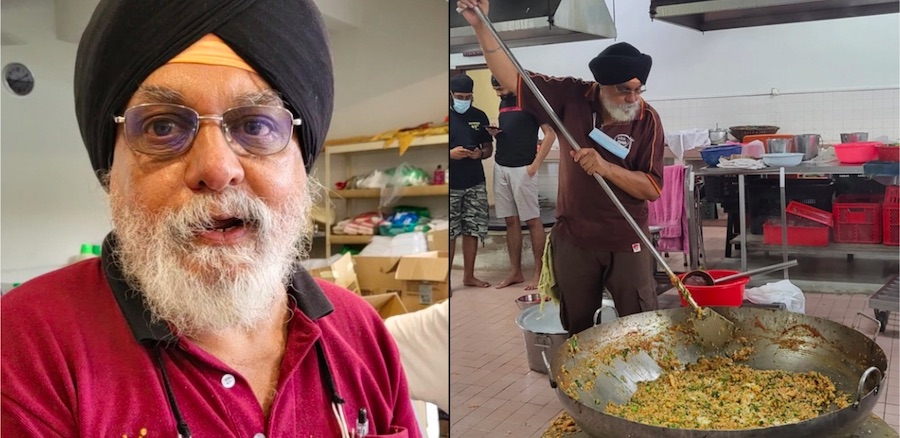
At around 4pm last Sunday, 19 December, this SAYS writer sent out a tweet with a photo of a turbaned man cooking in an oversized kadhai

The man, with a beard white as milk, was preparing food for thousands of people who had been left stranded across the Klang Valley and beyond in the aftermath of continuous heavy rain for over three days.

He was cooking in the community kitchen (langar) at the Gurdwara Sahib Petaling Jaya (GSPJ), where the Sikh community had sprung into action after they received SOS messages past midnight, 19 December.

In fact, they were so quick that some 5,000 free hot meal boxes were already sent out around 2pm.

It was around that time that a GSPJ representative reached out to SAYS, asking if we could help spread the word about the flood relief work being organised there so that they could serve more flood-affected victims.

As I reached there, I was shown how attendees — who had gathered at the gurdwara for a religious camp — were busy preparing and packing food boxes as the turbaned man was hard at work in the kitchen.

Which is when I snapped a photo of him and posted it on Twitter, not realising it will soon inspire thousands of Malaysians — regardless of their race and religion — to volunteer at the gurdwara.

The tweet spread like wildfire, thanks to some of the prominent handles and social news sites boosting it across social media. By the end of the day, it had already been retweeted more than 14,000 times.

Under the tweet, people started asking “how can we help?” and “is there a fund where we can donate?” while expressing their immense gratitude towards the turbaned man for his Seva (selfless service).

The photo had prompted an outpouring of emotions from Malaysians, who soon took to calling him ‘uncle’.

Soon, I started getting queries from people about him, who he is, his health, and if he is getting enough rest. They were concerned for him.

The next morning, I went over to the gurdwara to join thousands of volunteers who had come from all over the Klang Valley to help in the flood relief work that would see over 100,000 food boxes being sent out.

Read the full story, ‘Meet Malkith Singh: A Part-Time Clerical Staff And A Full-Time Malaysian Superhero Sikh’ (Says, 26 Dec 2021), here.

RELATED STORY:

Pakatan Harapan leader Anwar Ibrahim visits Petaling Jaya gurdwara (Asia Samachar, 26 Dec 2021)

ASIA SAMACHAR is an online newspaper for Sikhs / Punjabis in Southeast Asia and beyond.Facebook | WhatsApp +6017-335-1399 | Email: editor@asiasamachar.com | Twitter | Instagram | Obituary announcements, click here 

Pakatan Harapan leader Anwar Ibrahim visits Petaling Jaya gurdwara

0

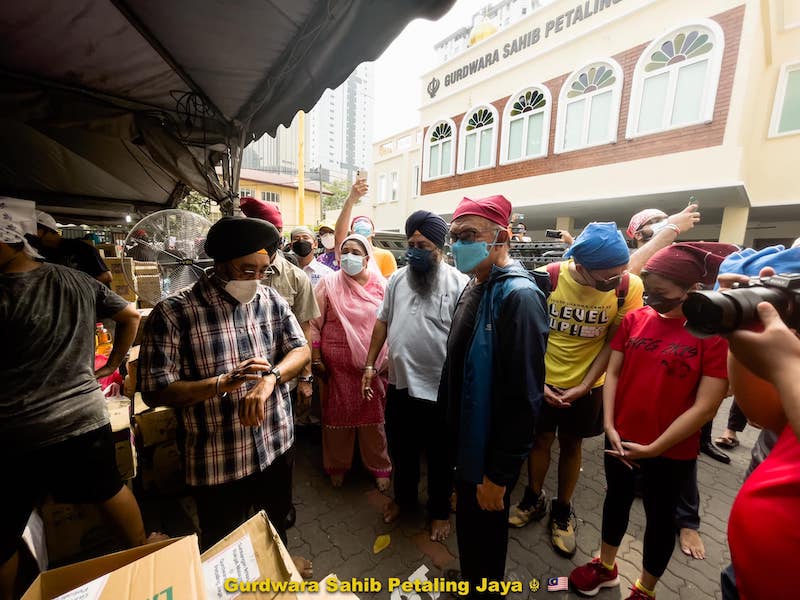
Anwar Ibrahim (front, centre) visiting Gurdwara Sahib Petaling Jaya to deliver aid and see flood relief work going on there – Photo: GSPJ

By Asia Samachar | Malaysia |

Pakatan Harapan (PH) leader Anwar Ibrahim yesterday (Dec 25) visited Petaling Jaya gurdwara to see firsthand the massive operation, powered by people from all races and faiths, underway to assist flood victims.

“I was present at Gurdwara Sahib Petaling Jaya [GSPJ] to deliver aid as well as witnessing harmony at work as people of all races lending a helping hand to assist people affected by the flood disaster,” he said in a social media entry. Anwar is also the Malaysian Opposition Leader.

GSPJ has been running a command centre to provide cooked hot vegetarian meals as well as other necessary items as news started spreading about the devastating impact of the flash floods in the Klang Valley, with Taman Sri Muda being the epicenter of the disaster.

Also present was Maria Chin Abdullah, Member of Parliament for Petaling Jaya constituency and activist who held the Bersih rally.

They were briefed by GSPJ committee members led by its president Awtar Singh (Terry).
Anwar Ibrahim (standing, centre) talking to Ajit Kaur, one of the key volunteers managing the flood relief command centre at Gurdwara Sahib Petaling Jaya on 25 Dec 2021 – Photo: GSPJ
RELATED STORY:

Now you can eat gurdwara food ‘tanpa was-was’ (Asia Samachar, 22 Dec 2021)

ASIA SAMACHAR is an online newspaper for Sikhs / Punjabis in Southeast Asia and beyond.Facebook | WhatsApp +6017-335-1399 | Email: editor@asiasamachar.com | Twitter | Instagram | Obituary announcements, click here