UA-56202873-1
Page 363

Modi government repeals 3 contentious farm laws, no debate allowed

0

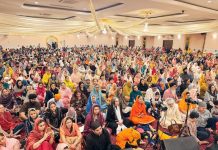
Stills from ‘Corporate Bhajao-Desh Bachao-Punjab Bachao’ rally in Ludhiana on 28 Nov 2021 – Source: Trolley Times

By Asia Samachar | India |

The three contentious Indian farm laws went away just as they came – unilaterally and with no real consultation. It speaks of the arrogance of the Bharatiya Janata Party (BJP) government led by Prime Minister Narendra Modi.

The Indian Parliament today (29 Nov 2021) repealed the three laws after farmers staged an amazingly united protest for more than a year, braving the weather elements and surviving attempts at intimidation and manipulation.

Union Agriculture Minister Narendra Singh Tomar introduced the Farm Laws Repeal Bill 2021 as the Rajya Sabha, the lower house of the Indian parliament, sat for its winter session.

It was passed without giving lawmakers any room to debate it. Opposition leader Mallikarjun Kharge was given two minutes to speak before passage of the bill. The three laws were introduced in a similar fashion in 2020 – then under the shadows of the Covid-19 pandemic.

After giving the cold shoulder to protesting farmers for more than a year, Modi was forced to make a u-turn, probably a strategic decision in view of up-coming state elections.

Uttar Pradesh, the country’s most populous and a bellwether state, is set to go to the polls in February to March 2022. The state is currently under BJP rule, with saffron-clad Yogi Adityanath as its chief minister.

Punjab is also set to elect a new government before the end of March 2022. Farmers from this state have punched above their weight to power the protests, throwing forth the biggest challenge to Modi’s Hindu nationalist government since he came to power in 2014.

On their part, the farmers’ unions have made it clear that they were unhappy with Modi’s unilateral move to repeal the laws. In earlier discussions, the government earlier not putting any foot forward to resolve the differences with the farmers.

The farmers’ unions have also declared to keep up the fight until they secure further concessions from the government.

“It’s a victory for farmers. We are happy the laws have been repealed,” Harinder Happy, spokesman for Samyukt Kisan Morcha, a coalition of more than 40 farmers’ unions, told Al Jazeera.

When moving the bill, Tomar echoed Modi said that the three laws were enacted for the benefit of farmers. He expressed regret that the government failed to convince the farmers on the the benefits of the laws. Modi had said the same.

RELATED STORY:

Modi buckles, announces repeal of controversial farm laws after year-long tenacious protest (Asia Samachar, 19 Nov 2021)

ASIA SAMACHAR is an online newspaper for Sikhs / Punjabis in Southeast Asia and beyond.Facebook | WhatsApp +6017-335-1399 | Email: editor@asiasamachar.com | Twitter | Instagram | Obituary announcements, click here 

One-time music jockey joins US law firm to expand Singapore corporate practice

1

By Asia Samachar | Singapore |

US law firm King & Spalding has hired Parveet Singh Gandoak as a partner in its corporate, finance and investments (CFI) practice group.

He will be based in the firm’s Singapore office in a move seen to expand the international law firm’s presence in Southeast Asia.

Prior to this, Parveet was a Singapore-based counsel at Skadden, Arps, Slate, Meagher & Flom LLP, which he joined in 2016. Previously, he had spent close to six year as an associate at Debevoise & Plimpton and a corporate and securities associate at Dechert LLP in New York.

Parveet regularly represents multinational corporations, sovereign wealth funds, private equity sponsors and venture capital firms in a range of complex, high-value corporate transactions, including cross-border mergers and acquisitions, minority and control investments, joint ventures, secondary transactions, exits, restructurings and capital markets offerings, according to a statement releasd by the law firm.

He also advises clients on investments across Asia, as well as outbound transactions into the United States and Europe.

Parveet brings significant industry knowledge covering technology, media, telecom, energy, insurance, real estate, healthcare, transportation, manufacturing, and retail sectors, the statement added.

“Parveet’s blend of international experience and entrepreneurial spirit further enhances our Asia M&A and Private Equity practices,” said King & Spalding CFI practice head Todd Holleman. “He has a strong background in advising blue-chip clients on some of their largest and most complex transactions in Southeast Asia and India, which taps straight into our existing transactional practice.”

Kelly Malone, the firm’s Office Managing Partner in Singapore, noted that Parveet has an impressive and diverse deal list, representing major players in the private equity, investment and financial services sectors, as well as a proven pedigree in advising on sophisticated transactions across Asia.

“Asian clients increasingly require high-end corporate, M&A and finance advice to assist their business objectives throughout the region so we are glad to welcome Parveet to our team,” he said.

Parveet has a law degree from Pune’s ILS Law College and a LL.M. in law from Cornell Law School.

He also served as a radio jockey at Radio Mirchi for more than two years in 2002, according to LinkedIn entry.

RELATED STORY:

Venturing out (Asia Samachar, 17 Nov 2021)

ASIA SAMACHAR is an online newspaper for Sikhs / Punjabis in Southeast Asia and beyond.Facebook | WhatsApp +6017-335-1399 | Email: editor@asiasamachar.com | Twitter | Instagram | Obituary announcements, click here 

Giani Baba Malkeet Singh Bhai Ki Samadh (1936-2021), Banting

Akhand Path & Path Da Bhog

JEHA CHIRI LIKHYA TEHA HUKAM KAMAEH, GHALE AAVE NAANKA SADE UTHEE JAAYE (SGGS, 1239)

ਜੇਹਾ ਚੀਰੀ ਲਿਖਿਆ ਤੇਹਾ ਹੁਕਮੁ ਕਮਾਹਿ ॥ ਘਲੇ ਆਵਹਿ ਨਾਨਕਾ ਸਦੇ ਉਠੀ ਜਾਹਿ ॥੧॥

GIANI BABA MALKEET SINGH BHAI KI SAMADH S/O SARDAR DAN SINGH SAMADH

1936 – 2021

Returned to the abode of the Divine on 22nd November 2021 (Monday) at the age of 85 years, after living a life devoted to those around him.

His Love will always be carried by:

Wife: Amr Kaur d/o Najar Singh

Children:

Dr Sharanjeet Kaur (Dr Darshan Singh)

Kiranjeet Singh (Kulwinder Kaur)

Grandchildren: Harjoth Singh, Iswarjoth Singh, Karanjoth Singh, Sharanjoth Kaur

Brothers, sisters, cousins, nephews, nieces, relatives and friends.

Please join us at Gurdwara Sahib Guru Ramdas, Banting on:

1st December 2021 (Wednesday)

Sukhmani Sahid Path at 2pm – 4pm

3rd December 2021 (Friday)

Arambh of Sri Akandh Path at 9am

5th December 2021 (Sunday)

Sri Akandh Path Da Bhog at 9am
Kirtan & Katha followed by Sahej Path DaBogh with Anthim Ardass at l2pm

Contact details: Kiranjeet Singh +6013 322 7722

| Entry: 28 Nov 2021 | Source: Family

ASIA SAMACHAR is an online newspaper for Sikhs / Punjabis in Southeast Asia and beyond.Facebook | WhatsApp +6017-335-1399 | Email: editor@asiasamachar.com | Twitter | Instagram | Obituary announcements, click here |

They made a difference

2

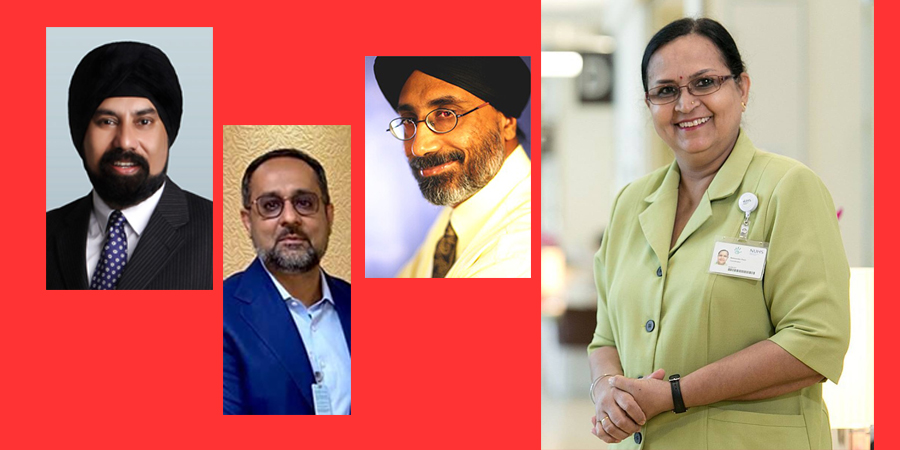
Honoured: Among Singapore Sikh recipients of National Day Awards 2021. L-R: Sarjit Singh, Jeevan Singh, Associate Professor Kuldip Singh and Belwander Kaur

By Asia Samachar | Singapore |

Thirty Singapore Sikhs made the cut for the National Day Awards 2021, including those recognised for efficiency and long service.

Leading the pack is Harvard-trained Sarjit Singh s/o Sarmukh Singh who was conferred The Public Service Star (Bar), also referred to as the ‘Bintang Bakti Masyarakat (Lintang)’ – the highest national honour presented to a Sikh in Singapore to date.

Among the 13 Sikh women in the list are National University Hospital group hospitality services coordinator Belwander Kaur and Parimila Kaur who is the secretary at the HQ Air Defence & Operations Command. Both received the Efficiency Medal.

The National Day Investiture Ceremony will be live-streamed on Youtube today (Sunday, 28 Nov 2021; 5pm-7pm).

Below is the full list of the recipients, courtesy of Singapore Khalsa Association (SKA).

Mr Sarjit Singh s/o Sarmukh Singh, BBM
Member, Central Singapore CDC
Central Singapore CDC
The Public Service Star (Bar), 2021

Mr Jeevan Singh
Consul-General, Singapore Consulate-General in Johor Bahru
Ministry of Foreign Affairs
The Public Administration Medal (Bronze), 2021

Associate Professor Kuldip Singh
Associate Professor, Department of Physics, Faculty of Science
Admin Director, Centre for Quantum Technologies
National University of Singapore
Ministry of Education
The Public Administration Medal (Bronze), 2021

Mr Ravinder Singh s/o Keval Singh
Chairman, Kolam Ayer St George’s East RC
Jalan Besar GRC
The Public Service Medal, 2021

Mrs Balbir Singh
Senior Tax Officer, Individual Income Tax Division
Inland Revenue Authority of Singapore
Ministry of Finance
The Efficiency Medal, 2021

Ms Belwander Kaur
Coordinator, Group Hospitality Services
National University Hospital
National University Health System
Ministry of Health
The Efficiency Medal, 2021

ME3 Dialjeet Singh s/o Kalwant Singh
Platoon Warrant Officer, School of Logistics
Singapore Armed Forces
Ministry of Defence
The Efficiency Medal (Military), 2021

ASP (2) Gurmeet Singh Gill
SFIB 2, OC
Singapore Police Force
Ministry of Home Affairs
The Efficiency Medal, 2021

INSP (2) Harjit Singh s/o Chanchal Singh
OC Troop
Singapore Police Force
Ministry of Home Affairs
The Efficiency Medal, 2021

Mr Jimit Singh
Head (Flight Procedure Design Office)
Air Traffic Services
Civil Aviation Authority of Singapore
Ministry of Transport
The Efficiency Medal, 2021

Ms Parimila Kaur d/o J
Secretary, HQ Air Defence & Operations Command
Ministry of Defence
The Efficiency Medal, 2021

3WO A Kuldheep Singh
Singapore Armed Forces
Ministry of Defence
The Long Service Medal (Military), 2021

Ms Bahadar Kaur d/o Shiv Singh
Secretary, Air Engineering and Logistics Department
Ministry of Defence
The Long Service Medal, 2021

Mr Bhupinder Singh s/o Harjit Singh
Director of Administration
Dean’s Office, Yong Loo Lin School of Medicine
National University of Singapore
Ministry of Education
The Long Service Medal, 2021

Mdm Deepak Kaur
Head of Department
Henry Park Primary School
Ministry of Education
The Long Service Medal, 2021

Ms Gurmit Kaur
Patient Care Assistant
Operations, Clementi Polyclinic
National University Polyclinics
National University Health System
Ministry of Health
The Long Service Medal, 2021

Mr Gurusharan Singh s/o M Singh
Vice-Principal
Victoria Junior College
Ministry of Education
The Long Service Medal, 2021

Mdm Harbans Kaur d/o Sardara Singh
Senior Administrative Executive
West Zone
Housing Management Group
Housing & Development Board
Ministry of National Development
The Long Service Medal, 2021

CI (1) Jasvinder Kaur
Primary Screening Officer
Immigration & Checkpoints Authority
Ministry of Home Affairs
The Long Service Medal, 2021

ME3 Karam Singh s/o Sadhu Singh
Singapore Armed Forces
Ministry of Defence
The Long Service Medal (Military), 2021

Mr Karamjit Singh s/o S Singh
Teacher
Woodlands Ring Secondary School
Ministry of Education
The Long Service Medal, 2021

Ms Manjit Kaur d/o Najar Singh
Assistant Manager
Licensing
Info-Communications Media Development Authority
Ministry of Communications and Information
The Long Service Medal, 2021

Ms Melinder Kaur d/o Jit Singh
Senior Staff Nurse
Division of Nursing
Singapore General Hospital
Singapore Health Services
Ministry of Health
The Long Service Medal, 2021

Dr Rajinder Singh s/o Pall Singh
Senior Consultant
Neurology (TTSH Campus)
National Neuroscience Institute
Singapore Health Services
Ministry of Health
The Long Service Medal, 2021

SI Ranjit Singh s/o Swarant Singh
Deputy Team Leader
Tanglin Division
Singapore Police Force
Ministry of Home Affairs
The Long Service Medal, 2021

Mdm Ravinder Kaur d/o Wiram Singh
Administrative Executive
Home Ownership Eligibility Department
Estate Administration & Property Group
Housing & Development Board
Ministry of National Development
The Long Service Medal, 2021

Ms Satwinder Kaur d/o K Singh
Deputy Director (Corporate Communications)
Civil Aviation Authority of Singapore
Ministry of Transport
The Long Service Medal, 2021

Ms Seran Kiranjit Kaur
Senior Assistant Director
Digital Literacy and Participation
Info-Communications Media Development Authority
Ministry of Communications and Information
The Long Service Medal, 2021

3WO (NS) Shabir Singh Hundal
Singapore Armed Forces
The Long Service Medal (Military), 2021
Ministry of Defence

Mdm Tasver Kaur d/o Kartar Singh
School Attendant
Gan Eng Seng Primary School
Ministry of Education
The Long Service Medal, 2021

RELATED STORY:

Harvard-trained accountant makes history for Singapore Sikhs (Asia Samachar, 28 Aug 2021)

ASIA SAMACHAR is an online newspaper for Sikhs / Punjabis in Southeast Asia and beyond.Facebook | WhatsApp +6017-335-1399 | Email: editor@asiasamachar.com | Twitter | Instagram | Obituary announcements, click here 

Silver tsunami is here. Elderly brain injury from falls is rising

1

By Asia Samachar | Malaysia |

“Elderly brain injury caused by falls is a growing problem, and it is expensive to treat, says a neurosurgeon.

“The silver tsunami is here. But it can be prevented and the effects mitigated by some adjustments around the house,” Malaysian-based neurologist Dr Gurmit Singh told Asia Samachar.

The number of head injury from falls amongst the elderly is expected to increase as the population ages. Currently, Malaysia has some 2 million cases or 6% of the population. It is expected to go up to 15% of population by 2035.

For those with preexisting medical issues, he said they have to keep in mind the possibility of longer length of stay, higher rate of complication and higher likelihood of requiring intensive rehabilitation. Naturally, cost will be higher with the involvement of all these disciplines.

What is the biggest misconception when it comes to brain injury amongst the elderly?

“If patient is talking, walking after the head injury he is OK. Unfortunately, this might not be the case because there is much room in the skull due to atrophied brain (which is norm in aging process). Hence, the skull can accommodate more blood, brain swelling before the elderly victim manifests symptoms of an injured brain. This phenomena is known as talk and deteriorate,” he said

Dr Gurmit, a former senior consultant at Kuala Lumpur General Hospital (HKL) and now a resident neurosurgeon at a Subang-based private hospital, said care of elderly member recovering from head injury should not to be left to a single person.

“Every family member must pitch in and shoulder the responsibility to avoid care giver burnout,” he said.

Dr Gurmit Singh will be talking on ‘Falls and brain injury in he elderly’ in a Facebook live forum organised by the Wadda Gurdwara Sahib Penang (WGSP) tomorrow (28 Nov 2021) from 3pm to 4pm. The talk will broadcast live on its Facebook page.

RELATED STORY:

Parents need a wake up call on mental health (Asia Samachar, 21 Aug 2021)

ASIA SAMACHAR is an online newspaper for Sikhs / Punjabis in Southeast Asia and beyond.Facebook | WhatsApp +6017-335-1399 | Email: editor@asiasamachar.com | Twitter | Instagram | Obituary announcements, click here 

Explorer Ravin

By Anandpreet Kaur | Singapore |

Strategy consultant Ravin Khosa is sure of one thing: she is hopeless at tennis. But she’s not beating herself up about it. In fact, her attention has shifted to the next adventure.

“Usually I experiment a lot through exercise – I picked up yoga and pilates to rehabilitate a few injuries. I also picked up tennis last year but I quickly realised my hand eye coordination was nonexistent when a racket is in the picture,” she tells Asia Samachar.

Ravin, who was promoted as a strategy consultant at Singapore-based Accenture Strategy, has put down her tennis racquet to explore some other exercises. At the moment, with travel out of the picture, she’s working on getting a 100kg deadlift personal best. Silent-disco weightlifting bootcamp has also been jotted in her diary. Quite an explorer.

On her parents, she said they placed a lot of emphasis on giving one’s best shot in whatever one did and striving for a good education. “The ability to define your path on your own terms is a privilege granted to those who are willing to work hard and persevere, regardless of where one’s starting position is. This is one of the biggest lessons I took away from my family,” she said.

The business management graduate from Singapore Management University (SMU) is also active on the volunteer front. She has just completed a project cycle as project adviser with Conjunct Consulting, Southeast Asia’s first social change consultancy, and has been part of the organisation for the past six years.

Excerpts from the interview.

Tell us more about yourself?

I am Ravin Khosa, Singaporean, born and bred!

Tell us more about your family background?

I am the youngest of three children. My father is an engineer and my mum is a homemaker. I have two older brothers; one is in law, and my other brother is in the banking industry. My parents placed a lot of emphasis on giving your best shot in whatever you did and striving for a good education. Working hard and maximising the options you have in order to define your life path on your own terms, is one of the biggest lessons I took away from my family.

You have a BBM in Marketing and Finance from Singapore Management University (SMU). What made you pursue this line of study?

I wanted to pursue a degree that would give me options – be it to explore subject matter in school, or explore different industries or lines of work. I wanted to make a very thought-through decision on what I wanted to do before going all in. If I am entirely honest, before entering university, I thought I was going to end up in marketing in a major FMCG. But I interned at one at the end of year two and realised it wasn’t for me at all.

That was a rude shock and I was already in year three, a year from graduating, wondering where I could go with this. But then I explored around – I enjoyed finance and took up a major in that – again, in the name of flexibility, arriving at what I considered quite balanced coursework. I then found conjunct consulting by chance, and found out about consulting – where I could solve problems for a living and go from cost optimization for an agri-player one day to doing growth strategy proposal work for a shipping firm the next. The brain-pick conjunct consulting gave me doing consulting work for social good organisations entirely sold me and I spent the next 1.5 years doing whatever it took to end up in consulting. And here we are!

You are now a strategy consultant at Accenture. What does the job entail?

Accenture Strategy is positioned as the strategy consulting arm of Accenture targeting C-suites of Fortune 500 companies, shaping points of view on emerging business topics across various industries, and helping Fortune 500 companies mould their strategic agenda and goals, outlining what needs to be done to achieve those business outcomes, and then in some cases, overseeing the actual transformation work as well. Accenture in the last two years has undergone a massive reorganisation to position itself as an end-to-end digital transformation powerhouse – so our role as strategists often involves marrying business and technology which is super fun for me because of the added layer of complexity – and as a tech noob it is an even greater uphill battle.

As a Consultant, I support in proposal development and in project work. In the latter, we develop recommendations, pitch them, and eventually at times, oversee their implementation for the client. In my role, I lead specific workstreams and sets of deliverables, perform analysis and develop our recommendations, and manage some of our client relationships. The next step to work towards is being able to manage consultants across multiple workstreams in a project and play a key role in more senior client discussions, where you would be able to steer your engagements better.

At this stage I am exploring the niche I want to build. I am veering towards doing innovation-related, and front-office transformation work for consumer good companies. This entails helping companies assess how they can grow their sales, optimize marketing spend and more.

You’re also active in various volunteering projects, which one takes up most of your time?

I just completed a project cycle as Project Adviser with Conjunct Consulting. Conjunct Consulting is a pro-bono social consultancy in Singapore, where we train university students across the local universities, SMU, NUS, NTU to be consultants who then go on to help organisations in the social sector in Singapore to achieve their goals. These may be achieving greater financial sustainability, setting up an impact assessment framework for their programmes and more.

The last project I was involved in required the team to set up an impact assessment framework for a local association to assess the impact their programmes have on their beneficiaries. In the next cycle, we will evaluate the impact of the programmes set up by this association and provide them with recommendations to improve their overall impact. As a Project Adviser, I oversee the work and act as a Mentor to guide the project team to achieving the engagement objectives.

What is your advice to younger Sikhs who are looking at pursuing an interest in business management?

I think in anything you pursue, you need to do your own thorough research and build your own network of individuals you want to be like, both from an accomplishment and character/personality perspective. Defining your path is not easy, and should not on the back of someone’s else experience or hearsay or even the “norm”.

What are you passionate about? And what have you done about it?

I thoroughly enjoy learning new and something entirely out of the realm of my current skills. It is important to constantly explore what is out there, not just to learn more, but to remind yourself to not take yourself too seriously, no one starts being good at anything new, and remember we all are a mesh of different hobbies, experiences and therefore perspectives.

Usually I experiment a lot through exercise – I picked up yoga & pilates to rehabilitate a few injuries. I also picked up tennis last year and I realised my hand eye coordination was nonexistent when a racket is in the picture. I am currently getting my 100kg deadlift back in the belt after some injuries and on Sunday, I am checking out a silent-disco weightlifting bootcamp!

On the side, I am very inquisitive about specific companies/organisations and their leaders. Once I get interested, I read just about everything on them. I have read almost every book on Netflix – both on the organisation and its founder, Reed Hastings because I got interested in how they evolved a renting service to being the first streaming service and how in the name of being an innovation company, Reed Hastings has completely transformed the culture of Netflix, implementing policies and organisational structures unheard of anywhere. I also know every single thing that is out there about the British Royal Family because I find how they have kept their reign relevant over the course of British History interesting and we are also approaching a cornerstone that’ll define the future of it.

I am currently investigating Elizabeth Holmes and Theranos so I can appreciate all the articles covering the trial haha.

What are some of the valuable insights you’ve gained when working with Fortune 500 companies?

It has been interesting to me how the different ways companies are organised and reporting lines are set up heavily defines how you devise your plan to win over various stakeholders. Recognising where the power sits, who the CEO relies on for on-the-ground insights, how a client party views their role in your project and how your clients process types of information are all soft skills that are so important in recognising and playing to from day 1. It is not always the best presentation deck that wins or gets the job done – it’s the whole package of who did you approach & when, what did you say, how did they see themselves in this entire engagement.

Culture is also fascinating and such an important factor in defining your client relationships. I am currently doing work for a large consumer good company, and we have engaged people from the Americas, all over Asia, Middle East, Europe, working across many time zones. I always find it amazing working with a Japanese client vs. an American client, and how we need to tweak our presentation styles, use of specific words, greetings, and also small talk.

There’s a lot more, but i think these are very transferable skills that you can take with you everywhere you go.

RELATED STORY:

Anti-money laundering expert joins NomuPay (Asia Samachar, 18 Nov 2021)

ASIA SAMACHAR is an online newspaper for Sikhs / Punjabis in Southeast Asia and beyond.Facebook | WhatsApp +6017-335-1399 | Email: editor@asiasamachar.com | Twitter | Instagram | Obituary announcements, click here 

Christianity’s onward march in Punjab; need for a strategic response

3

By Rishpal Singh SidhuOpinion |

Unlike Sikhism, Christianity is a missionary religion that actively seeks converts and “proselytization in some form is usually perceived as an inalienable aspect of Christian identity.”1 When did Christianity first make its appearance in India, what were the factors that contributed to its special appeal and alarming rate of conversion in the Punjab, and more importantly, what are Sikh organizations currently doing  to address this besides expressing concern in numerous articles in the news media. There is also increasing concern among the fundamentalist Sikhs who form the core of the Khalistan movement that Sikhism will be absorbed by Hinduism.

Hinduism was the largest religion in Punjab before the advent of Islam from the West and the birth of Sikhism in the Punjab region from the East.According to the 2011 Census of India, Punjab has a population of around 27.7 million and Sikhism is the most practiced faith, practiced by 16 million people3 representing 57.69%4 of the population of Punjab. Hinduism is practiced by 10.67 million people, constituting 38.49% of the population.5, 6  It is interesting to note that between the 2001 and 2011 Census, Sikhism as a practicing religion dropped from 59.9% to 57.69%. In contrast, Hinduism recorded an increased growth from 36.94% to 38.49% over the same period, and Christianity recorded an increase from 1.2% to 1.26%.7

While the caste population figures  have not been officially released by the Indian Government, it is estimated that the scheduled castes (Dalits) constitute 31.9% of the population and the Jat Sikhs comprise 21% of the population.

It is believed that Christianity was first introduced to India by Thomas the Apostle when he sailed to the Malabar region in what is now known as Kerala in 52AD. Christianity made its appearance in the Punjab in 1834 with the arrival of Presbyterian missionaries John Lowrie and William Reed and the Presbyterian Church can rightly take credit for the initial spread and conversion through establishing many centres in the Punjab. They were followed not long after by fellow missionaries from the Methodist, Anglican, and Roman Catholic churches, as well as the Salvation Army. The parent organizations of these churches were more than aptly generous in their financial support of their overseas endeavors. Furthermore, they were supported in their activities by grants of land by the British Government for the establishment of settlements.

EARLY WARNINGS OF LOWER CASTES DALIT CONVERSIONS TO CHRISTIANITY

This is not a new phenomenon. Almost 130 years ago, an article appeared in The Tribune dated 19 October 1892, expressing alarm at the rapid conversion of the lower castes to Christianity, and sounded warning bells to the higher castes to protect themselves from these converts who no longer considered themselves in degraded positions. Fast forward to an article published in the 9 May 2011  issue of India Today titled “Wake Up Call for Shiromani Gurdwara Parbandhan Committee (SGPC) – Christian Missions mushroom across Punjab.”Fast forward yet another decade and Giani Harpreet Singh, Jathedar of Akal Takht, expressed concern at the rising rate of Dalit conversions to Christianity and accused Christian missionaries of carrying out mass programs of forced conversions of Sikh families and scheduled caste Sikhs in the border belt of Punjab using money and other means to entice them to adopt Christianity. He added that the conversion of innocent Sikhs to Christianity was intolerable, a direct attack on internal matters of the Sikh community, and   announced a special drive “Ghar Ghar Andar Dharamsaal’(sacred shrine within every home) with the formation of 150 teams, each team comprising of 7 preachers  destined for the rural belts of Majha, Malwa, and Doaba. These teams would visit and “connect the sangat to Gurbani, ‘rehat  maryada’ as well as Sikh history and principles. Free traditional Sikh religious literature would also be distributed –the same method used by Christian preachers. Besides, all gurdwaras in the border villages would also be given extended help to counter  the conversion mission of Christian missionaries.9 SGPC chief, Bibi Jagir Kaur, asserted that “the campaign will not only bring firmness among Sikhs toward their faith, but also make the younger generation take pride in their history and culture.”10 This proposal begs two important questions namely, is this the right step at the right time and does much more than this needs to be done to turn the tide? Dharamsalas as precursors of modern day gurdwaras date back to the time of Guru Nanak and besides providing opportunities for devotional worship and humble service, also functioned as religious asylums providing food and shelter to travellers and the needy. Dhillon correctly asserts that “the original function of the gurdwara as a dharamsal – an institution for the learning of Gurmat has been lost.”11

REASONS FOR SPREAD OF CHRISTIANITY

“The advent and spread of Christianity in the Punjab would have been a limited affair but for the “Dalits”, the depressed classes of the Punjab.”12 It could be argued that Sikhism and its scriptural truths  in some respects is more akin to Christian beliefs, unlike Hinduism with its beliefs in multiple deities. In writing of his Presbyterian experience, Gordon (1886, pp.462-463) observed that “conversion is not a long and elaborate process, depending necessarily upon intellectual qualifications difficult to acquire, but short and simple. It doesn’t require learning and knowledge as much as a sense of sin, and a willingness and readiness to accept the unspeakable gift. It is thus attainable by the poor and illiterate, who appear to accept the gift easily, promptly and decidedly, while the rich hold fast to the world, and the learned stand by their logic.”13 The missionaries targeted the villages, in particular, the untouchables, despised, and exploited members of the rural communities. Singh (1965) suggests that if not for the contributions and strenuous efforts of the Christian missionaries, ‘millions of people of the depressed classes, now forming a respectable portion of the Indian population, would have been rotting as condemned untouchables.”14

Guru Nanak denounced the caste system and, in forming the Khalsa, the members of Guru Gobind Singh’s Panj Pyare truly personified the amalgamation of  high and low castes into one. Yet, more than 500 years later, “Sikhism, despite its claims of equality and less orthodox attitude towards caste, has failed to remove restrictions of the caste system, more so in the case of the untouchables.”15  Even today, the untouchables are shunned by the upper caste Sikh communities in a complete departure from the basic tenets of the Sikh faith. The land owning class of Jat Sikhs have to take some responsibility for their treatment of the Dalit Sikhs. In some rural belts, upper caste Sikhs socially boycott Dalits in gurdwaras. There have also been instances where they are not allowed to enter gurdwaras and their requests to use gurdwara utensils and bedsheets are denied, and in some villages, it has been reported that they are also not permitted to use the Shamshan Ghats (cremation ghats) used by upper caste Sikhs. There is both social and political apathy towards the Dalits, the poor, and the marginalized. The political leadership in Punjab has done little for the welfare of Dalit Sikhs and successive governments in the Punjab have failed to address the issues of social discrimination, justice, and equal opportunities in building an all-inclusive society.

Sadhu Sundar Singh (1889- 1929) was an Indian Christian missionary  and is revered by many as a formative  and towering figure in the missionary conversions of the Christian Church in India. He was born into a Sikh family in the village of Ranpur near Doraha in the district of Ludhiana and was one of the early converts to Christianity when he was publicly baptized as a Christian at the parish church in Simla. The conversion of Maharaja Duleep Singh in 1853 was the first prominent feather in the cap of the Christian missionaries and a grievous shock to the Sikhs.

CONVERSIONS TO CHRISTIANITY BY SUBTERFUGE

Inculturation is the adaptation of Christian liturgy to a non-Christian cultural background. It can also be said to include the gradual acquisition of the characteristics and norms of a culture or group by persons of another culture. Eyebrows have indeed been raised and observations made that some Punjab based Christian missionaries have been using questionable strategies in their conversion efforts to target the Dalit Sikhs and other downtrodden communities. These  include offering money to convert,  food and grain bags, promising to cure them of cancer, chronic illnesses, and disability, protecting them from evil spirits, saving their souls from the fires of hell, and promising to take care of their children’s education. They have also been accused of luring  young Sikhs to convert by offering to arrange visas and getting them settled in the United States, Canada, Europe, and Australia.16  Given the imbalance in the male to female ratio in Punjab as reported in the 2011 census, many Sikh men of marriageable age were reported as experiencing difficulties in finding suitable brides, and some Christian evangelists were reported as promising to find suitable brides for some of these Sikh men if they converted to Christianity.

Jesus is being put across as a savior of the poor, untouchables, and outcasts. He is also referred to as ‘Satguru’  and God is  called ‘Satnam Waheguru’ by missionaries, leading many susceptible converts into believing that they are merely rejuvenating their own Sikh faith. The symbols of Sikhism are apparently being used to confuse and convert rural Sikhs. Converted Sikhs are also allowed and encouraged to retain their Sikh names ending with Singh and Kaur. Some converted Sikhs have themselves become Christian missionaries and notable among them is one Gulshan Singh who is variously addressed in his YouTube video clips as Pope Gulshan Singh Bishop  or Rev. Gulshan Singh Labhana  of the Labhana Church Holy Society.

It has been alleged that some Christian missionaries wear turbans and others use saffron robes and live in ashrams. Furthermore, churches are being built in some rural areas of Punjab which outwardly look like gurdwaras, and that Christian hymns are sung in the form of kirtan. In an interesting twist on acronyms, it was reported that in November 2019, the Christian community of Punjab formed a decision-making body named Shiromani Church Parbandhak Committee (SCPC). Albert Dua, member of the Punjab State Minority Committee and President of the Christian United Federation justified its formation “as incidents of hurting religious sentiments of our peaceful community are on the rise in Punjab.”17

CAN THE TIDE BE TURNED?

Some initiatives such as the Ghar Wapsi program (Hindi, meaning ‘Back to Home’) spearheaded by Hindu organizations such as Vishva Hindu Parishad (VHP), Rashtriya Swayamsevak Sangh (RSS) and Hindu Makkal Katchi to facilitate re-conversion of Christians and Muslims back to Hinduism and Sikhism have met with limited success, and it is reported that between 2011 and 2014, about 8,000 Christians in Punjab converted back to Sikhism. Most of the reconversions took place in the Hoshiarpur district, followed by Amritsar and Batala.18 The RSS has usually been viewed with suspicion by orthodox Sikhs because of its  position that Sikhism is part of the larger Hindu culture — has enabled hundreds of Christians to re-convert to Sikhism with the help of gurdwaras and some members of the SAD-dominated Shiromani Gurdwara Parbandhak Committee (SGPC) who have been acting in their personal capacity. The Khalistani Sikhs also consider the RSS as a threat as it views them within the larger umbrella of Hindu dharma.

As the highest temporal authority for Sikhism, the SGPC has been politicized through its alignment with the Shiromani Akali Dal (SAD) party. Sikh aid organizations around the world have always admirably  risen to the challenge in times of providing  assistance  during famines, floods, earthquakes and other natural disasters, including the Covid-19 pandemic. The rise of Christianity in Punjab is also a challenge and  major initiatives are needed in Panjab (and elsewhere in India) to reverse the conversions and bring back the disadvantaged to the Sikhi fold. The time is nigh for the SGPC and global Sikh organizations to come together under one umbrella to strategize on how best they can they use their vast resources to counter and provide aid for the progress and spiritual nourishment of the lesser members of their own community in the Punjab. Singh (2020) suggests that “this can only be done through Sikhi parchar and practice of human equality and through educational, medical, and a whole range of welfare services.”19 There is no real need to spend money on the embellishment and building of new gurdwaras and the renovation of heritage buildings.

The promulgation of anti-conversion laws is not  a satisfactory solution. “Laws restricting religious conversions were originally introduced by the princely states headed by Hindu royal families during the British colonial period – particularly during the latter half of the 1930s and 1940s.”20 A number of anti-conversion bills have been introduced in the Indian Parliament, but none have been enacted to date. The  legal opinion has  been that a law against forced and fraudulent conversions cannot be enacted at a national level as law-and-order is a State subject under the Indian Constitution. Freedom of Religion laws are currently in force in eight Indian states but not in Punjab.

A more effective solution lies in the provision of a much better, higher, and more effective level of pastoral care to all our Sikh communities, and this is currently something that our granthis are not fully trained to provide. Pastoral care is a model of emotional, social and spiritual support that can be found in all cultures and traditions and a distinction is sometimes drawn between non-religious pastoral care and religious pastoral care, with one having a scientific basis and the latter having a theological basis. Pastoral care duties include counselling, education, spiritual health, hospital and prison visits, prayer sessions, offering guidance, and sustaining community members through prolonged periods of difficulties and. immediate needs, and improving their spiritual level of wellness. Most if not all Christian missionaries have degrees in divinity and have also received training in counselling.

Our granthis are primarily responsible for reading the Sri Guru Granth Sahib (SGGS) and they have not been professionally trained in providing pastoral care. Besides reading the SGGS in a proper intoned manner in a gurdwara during public worship, a granthi has also to be a spiritual leader, religious minister, spiritual counselor, and provide spiritual counselling to individuals and families.21  Singh (2011) makes a moot point in observing that the granthi has become marginally relevant to the lives of the Sikhs, particularly the young, and asks how many Sikhs, young or old, confide in the granthi about personal or familial problems that confront them? 22

While the two years granthi training courses first introduced by the Sikh Missionary Colleges are a step in the right direction,  much more than this urgently needs to be done. Universities in Punjab and elsewhere in the United States and Canada have departments and chairs for research on Sikh studies, though none of them offer formal degrees or training courses that incorporate training in psychology and counseling  to meet the needs for 21st century granthis who would be employable globally. 23  This deficiency needs to be addressed and calls for collective and concerted action by the SGPC and Sikh community organizations.

DENOUEMENT

Any individual has an inalienable right to convert to any religion of their own choosing. The wearing of a turban is not a unique and exclusive the right of the Sikh faith. What is questionable is whether this and other Sikh symbols are collectively being used in furtively carrying out conversions to Christianity under dubious circumstances. Sikhism ranks as the world’s fifth largest religion. Anti-conversion laws are not the solution. It behooves the SGPC, gurdwaras, and global Sikh organizations to collectively work together towards providing spiritual nourishment and assistance to the needy and less privileged in our community. This can only be effectively achieved if we have well trained granthis with the requisite skills to minister to our sangats.

Rishpal Singh Sidhu is a semi-retired casual academic at the School of Information and Communication Studies, Charles Sturt University, Australia. He has a passion for research, writing, and teaching. He is the compiler and editor of the book, Singapore’s early Sikh pioneers: Origins, settlement, contributions and Institutions, published by the Central Sikh Gurdwara Board in Singapore in 2017. He is presently based in Sydney, Australia.

References

1. Sharma, A. Christian proselytization: A Hindu perspective. Missiology: An international review, vol 33 no. 4, 2005, pp.425-434 (Abstract).

2. Tempest, R. Sikhs dominate Punjab: Hindus: A forgotten minority. Los Angeles Times, July 31, 1985.

3. Office of the Registrar General & Census Commissioner, India. Ministry of Home Affairs, Government of India. Indian Census 2011.

4. Censusindia.gov.in. Total population by religious communities, 2008.

5. Office of the Registrar General & Census Commissioner, India. Ministry of Home Affairs, Government of India. Indian Census 2011.

6. Censusindia.gov.in. Total population by religious communities, 2008.

7. Ibid

8. Bains, S. Christian invasion of Punjab: A major demographic change in offing. In Opinion, Asia Samachar, 9 November 2011.

9. TheTribune, 14 October 2021.

10. TFIPOST News Desk, 12 October 2021.

11. Dhillon, K.S. Dasam Granth: The weapon of mass control. In Opinion, Asia Samachar, 8 November 2011.

12. Kaur, K. Searching for a new identity. Christianity, conversion and Dalit Sikhs. Cultural and religious studies. July 2020, Vol 8 No. 7, pp416-428.

13. Gordon, A. (1886). Our India mission, 1855-1885: A thirty years’ history of the Indian mission of the United Presbyterian Church of North America. Philadelphia, Inquirer Printing Company, Stereotypers and Printers, Lancaster, PA.

14. Singh, G, (Ed) 1965. Bhagat Lakshman Singh. Calcutta, The Sikh Cultural Centre.

15. Kaur, K. Searching for a new identity. Christianity, conversion and Dalit Sikhs. Cultural and religious studies. July 2020, Vol 8 No. 7, p.422.

16. Bains, S. Christian invasion of Punjab: A major demographic change in offing. In Opinion, Asia Samachar, 9 November 2011.

17. Times of India, 21 November 2019

18. “In Punjab, Sangh works for ‘return’ to Sikhism as well; SAD fumes”The Indian Express. 22 December 2014.

19. Singh, G. In Opinion. The rise of Christianity in Panjab. Asia Samachar, January 31, 2020.

20. Mathur, A. Anti-conversion laws in India: How States deal with religious conversion. India Today. December 23, 2020.

21. Dhillon, K. S. Dutieseducational and professional qualificationspersonal and spiritual attributes of a granthi. http://direct.sikhnet.com/news/functions-duties-and-qualifications-granthi 10 July 2014.

22. Singh, I. J. The granthi…priest, rabbi, or minister? http://direct.sikhnet.com/news/granthi-priest-rabbi-or-minister.  September 19. 2011.

23. Singh, R.J. Building an Educational Structure for the Sikh Granthis employed globally in 21st century. https://www.sikhnet.com/news/growing-granthis-modern-world. July 10, 2014.

RELATED STORY:

Christian Invasion of Punjab: A Major Demographic Change in Offing (Asia Samachar, 9 Nov 2021)

ASIA SAMACHAR is an online newspaper for Sikhs / Punjabis in Southeast Asia and beyond.Facebook | WhatsApp +6017-335-1399 | Email: editor@asiasamachar.com | Twitter | Instagram | Obituary announcements, click here 

Big break for Amrit Kaur in comedy-drama ‘The Sex Lives of College Girls’

0

Amrit Kaur – Photo: HBO

By Anandpreet Kaur | Movies |

Budding Canadian actress Amrit Kaur has landed a leading role in Mindy Kaling’s American teen comedy-drama ‘The Sex Lives of College Girls.’

This is the biggest break for the 28-year-old actress was found roles in the Netflix series The Bold Type and American anthology television series Star Trek: Short Treks. She also appeared in Little Italy, Nurses and The D Cut.

The show premiered last week on HBO Max.

In a social media entry after the premier, Amrit wrote: “To my parents, who come from a conservative Indian background yet still showed up to the premiere to dance and celebrate their daughter, even when her boob kept popping out of her dress. My mother, in particular, who in her beautiful broken English will relentless run lines at any hour of the day. My sister who was on FaceTime the entire night.”

Amrit has eyed an acting career ever since high school.

“I was a senior captain of the improv team in high school. I was not allowed to take drama [because] I was considered too obnoxious. So I did it as an extracurricular and somehow convinced my parents that I would do theatre school,” she told MTV News in an interview.

Amrit is also a writer and producer. She wrote, co-produced, and acted in the award-winning 2020 short film The Heatwave.

In 2014, the Ontario-born took part in the Miss World Canada Beauty pageant in 2014.

Sidhu (Amrit Kaur) and Pike in Star Trek “Short Trek”

RELATED STORY:

What To Watch: On My Block real life and laughter worthy of binge-watching (Asia Samachar, 19 June 2021)

ASIA SAMACHAR is an online newspaper for Sikhs / Punjabis in Southeast Asia and beyond.Facebook | WhatsApp +6017-335-1399 | Email: editor@asiasamachar.com | Twitter | Instagram | Obituary announcements, click here 

Farm laws: Fake social media profiles targeting Sikhs exposed – BBC

0

An illustration with two Sikh men sitting in the foreground and a network depicted behind with dots representing social media profiles. – Source: BBC

By Shruti Menon and Flora Carmichael | BBC |

A network of fake social media profiles of people claiming to be Sikhs, and promoting divisive narratives, has been exposed.

A new report shared exclusively with the BBC ahead of its publication on Wednesday identified 80 accounts in the network, which have now been suspended because they were fake.

The influence operation used accounts across Twitter, Facebook and Instagram to promote Hindu nationalism and pro-Indian government narratives.

The aim of the network appears to have been to “alter perceptions on important issues around Sikh independence, human rights and values”, according to the report’s author, Benjamin Strick.

There is no evidence linking this network directly with the Indian government, which has yet to respond to a BBC request for comment.

‘Sock puppets’

The network used so-called “sock puppet” accounts, which are fake ones controlled by real people posing as independent individuals, rather than automated “bots”.

The fake profiles used Sikh names and claimed to be “Real Sikhs”. They used the hashtags #RealSikh to endorse, and #FakeSikh to discredit, different political viewpoints.

The report, from non-profit organisation the Centre for Information Resilience (CIR), found many of the accounts in the network used the same fake profiles across several platforms. These accounts shared the same names, profile pictures and cover photos, and published identical posts.

Many of the accounts used profile pictures of celebrities, including actresses in the Punjabi film industry.

Read the full story, ‘Farm laws: Fake social media profiles targeting Sikhs exposed’ (BBC, 24 Nov 2021), here.

This Tweet from a fake account in the network received nearly 17,000 likes – Photo: BBC

RELATED STORY:

India’s disinformation campaign against Canada’s Sikhs (Asia Samachar, 6 Feb 2021)

ASIA SAMACHAR is an online newspaper for Sikhs / Punjabis in Southeast Asia and beyond.Facebook | WhatsApp +6017-335-1399 | Email: editor@asiasamachar.com | Twitter | Instagram | Obituary announcements, click here 

Kalwant Singh Gill (1953-2021), Port Klang

KALWANT SINGH GILL S/O GURDIAL SINGH GILL

12.12.1953 – 16.11.2021

Village: Gagewal, India

Dad are men who have been there for us when we need support and advice. They guide us, show us their love, support us when needed and give us encouragement. You will always be our superhero and our biggest life blessings. Thank you for everything you have done for us. We are forever grateful to you. You’ll forever be remembered by all of us. We love you dearest Papa ❤️

Wife: Manjit Kaur

Children / Spouses:

Jasvinder Singh Gill / Gurmeet Kaur
Charan Kaur / Jagdish Singh Brar
Sukhvinder Singh Gill

Grandchildren:

Sanjaydeep Singh Gill
Sandeep Singh Gill
Sanjeevan Singh Gill
Gurjevan Singh Gill
Bhavanjeet Singh Brar
Simerpreet Kaur Brar
Ekamjeet Singh Gill
Harpreet Kaur Brar

Path da Bhog: 27 November 2021 (Saturday), from 10am to 12pm, at Gurdwara Sahib Port Kelang, Selangor

Contact: 019-9888675

| Entry: 24 Nov 2021 | Source: Family

ASIA SAMACHAR is an online newspaper for Sikhs / Punjabis in Southeast Asia and beyond.Facebook | WhatsApp +6017-335-1399 | Email: editor@asiasamachar.com | Twitter | Instagram | Obituary announcements, click here |