


















UA-56202873-1
Page 362

“The Sikhi we have is not the Sikhi of Gurbani”. Discuss.

0

By Asia Samachar | Discussion |

“Spirituality of Guru Nanak is vegaas (eternal joy & bliss). This is what I learnt from Guru Nanak’s Sikhi. It comes after a soul-wrenching awakening of our conscience. Awakening of the conscience is what Guru Nanak’s Sikhi all about. And putting our conscience to slumber is what hijacked Sikhi all about.” (43:00)

This was Dr Karminder Singh Dhillon’s concluding remarks in this two-hour webinar followed by a question and answer session.

The word hijacking appears numerous times in this discussion. It comes from Karminder’s book, The Hijacking of Sikhi, released last year. In the 420-page book, the Malaysian-based Sikh thinker and author looked at what went wrong in the transmission of Sikhi.

“The Sikhi we have is not the Sikhi of Gurbani, no matter how loudly and how often we claim that it is the Sikhi of Gurbani. It is not….The gurdwara has become the place where our children, our youth are taught ‘hijacked’ Sikhi,” he said in webinar organised by the the Phoenix, Arizona-based Global Gurmat Vichaar Webinar Group (GGVWG).

GGVWG covenor/founder Dr Jaswant Singh Sachdev said the session had stimulated and steered the audience of a well-qualified professionals of several Ph.Ds., M.Ds., IT professionals, professors, religious men of repute, and students from several countries into a serious dialogue.

He noted that the speaker has boldly highlighted fundamental flaws in understanding Sikhi and Gurbani concepts by our translators and religious hierarchy, he said in a note shared with Asia Samachar.

THE WEBINAR FLOW

(The timer is indicated in brackets)

What is meant by hijacking of Sikhi and why is the term used?

Nirmaltaa is the core of Sikhi, and that has been taken away….the destruction of the uniqueness of the Sikhi of Guru Nanak.”

The term hijacking was used because the ‘distortions, corruption and tainting was purposive’.

“It is also not by way of change that a belief system undergoes over a period of time….Sikhi of Guru Nanak is too young a spirituality to have suffered a distortion in this way. The distortion is purposive, planned and calculated.”

Karminder outlines four parameters to make his case for the hijacking of Sikhi.

First Parameter: Distortions of Gurbani.

“The first ever Guru Granth Sahib translation was done by a Baneras-based intellectuals. Think about it carefully. There was no Guru Granth Sahib translation before the 1880s. This is the first one. And who’s doing it? It is by a Baneras-based intellectual group called Nirmalas. This is called the Faridkoti teeka….”

“What is the impact of the Faridkoti teeka is that it has been presented the GGS as the fifth Ved. The Faridkoti has also been the source of all our translations, including the English translations one, whether in print or in the internet. Through the translations, Gurbani messages has been systematically and consistently hijacked into what they are not, what they were not supposed to be.”

Second Parameter: Sikh History

“The history of the Gurus, in particular, has been muddled in unbelievable tales of miracles called Sakhis. This is the one major thing that has put Sikhi out of the range of thinking Sikhs. Our youth, children and educated people….the reason they cannot with our history is because of the unbelievability, the unacceptability on the basis of reason, justification and logic of the kind of sakhis we use to present the history of our Gurus.

Third Parameter: General Conduct of Sikhi

“What we have today is a Sikhi dictated by an institutionalised clergy. Those who have read Gurbani would know that the clergy, as a group, was soundly critiqued and condemned by our Gurus, and clearly excluded from Sikhi.

“When Guru Nanak is asked what is the primary cause of spiritual decay of society when he came in 1469, his answer was clear. He held the clergy squarely responsible, not the belief systems.”

“The gurdwara has become the place where our children, our youth are taught ‘hijacked’ Sikhi.”

Fourth Parameter: Hijacking of Religious Practices

So, who did this hijacking? (13:00)

When did this hijacking began? (13:50)

How would you know of the hijacking? (19:40)

“You cannot ask the hijackers the meaning of Gurbani. You have to understand it yourself….If your plane is supposed to land in New York, look out of the window. If you see paddy or wheat fields, you know you’re headed to a wrong airport. You cannot ask the Ji jackets if we’re landing the right airport. Silly questions will get silly answers.”

“We have to start reading and understanding Gurbani ourselves. That’s what happened to me. Once you do that, once you start understanding Gurbani for yourself, you will realise, as I did, that the Sikhi of the Guru Granth Sahib Ji was totally different from, and In start contrast, to the Sikhi in our gurdwaras, the Sikhi that we practice and the Sikhi we talked about. It is in stark contrast to the Sikhi in our classical texts and the Sikhi that was preached. The Sikhi of Gurbani is, in most cases, contrary and opposite to the Sikhi of our practices.”

Two versions of everything: authentic & hijacked (22:15).

There is the Guru Nanak from the 947 shabads in the Guru Granth Sahib. Then there is the Guru Nanak who’s doing everything critiqued in those shabads – a miracle performer, a faith healer, a magician, purveyor of superstitious belief, a practitioner of supernatural powers, a recluse, an unproductive child, a neglecting father, one who’s demanding blind faith from his followers. The hijacked Guru Nanak cannot be found in the 947 shabads written in his own hands.

Question & Answers:

What makes the original text for Gurbani? (44:10)

What about the teeka (translation) of Prof Saheb Singh? Which one do you recommend? (1:00:00)

Clergy root of all evil. (1:44:40)

Sikhs in Malaysia (1:46:30)

Why did I use the word ‘hijacked’? (1:47:30)

RELATED STORY:

The Hijacking Exposed (Asia Samachar, 23 Nov 2021)

ASIA SAMACHAR is an online newspaper for Sikhs / Punjabis in Southeast Asia and beyond.Facebook | WhatsApp +6017-335-1399 | Email: editor@asiasamachar.com | Twitter | Instagram | Obituary announcements, click here 

The Second Coming of Guru Jagat

0

Guru Jagat, a so-called heir to the kundalini empire, was a decidedly millennial spiritual guide – Photo: Lisandra Vasquez / Vanity Fair

By Hayley Phelan | Vanity Fair | United States |

It was golden hour at the Hollywood Forever cemetery, final resting place of Burt Reynolds, Cecil B. DeMille, and Estelle Getty, just around the corner from Paramount Studios. Five hundred mourners had taken their seats among carefully ordered rows as the sun dipped below the picture-postcard palms. They were dressed almost entirely in white; as followers of the esoteric yoga practice known as kundalini, they believed the color could stretch one’s aura to a very specific nine feet. Behind the stage was projected a black-and-white image of a fair-haired young woman, smiling wistfully. Her name, at least to those gathered, was Guru Jagat, the controversial founder of Ra Ma Institute, a yoga studio dedicated to spreading kundalini to a new generation. But she had other names too. To start with, the one she was given at birth: Katie Griggs, a befittingly average name for a middle-class white girl born in the summer of 1979 on a Colorado farm. Depending on whom you ask, Jagat was a bona fide spiritual leader—or a fraud; a controversial thought leader; a bigot; a feminist; a rape apologist. Now, at the age of 41, she was dead. Maybe.

The official story, as per Ra Ma Institute, was that Jagat had died of a pulmonary embolism following ankle surgery, a chronology of unluck they painstakingly detailed to all who’d listen. But those outside Jagat’s circle of followers weren’t necessarily convinced. Wild theories abounded. Drugs, suicide, complications from COVID-19—a disease she had publicly questioned the existence of and refused to be vaccinated for—were all rumored culprits. Others believed she had merely faked her own death to avoid a cancel campaign that had been brewing against her.

That, and the growing unrest in her community, had prompted me to interview Jagat in April. I could not have imagined at the time that it would be our last interview.

“I’M NOT, LIKE, LOVE-AND-LIGHT SUZIE”

As a practice, kundalini is characterized by intense breath work, repetitive poses, and alternative lifestyle choices, such as wearing white and eating mostly vegetarian. Followers—the likes of which have included celebrities Christy Turlington, Russell Brand, and Alicia Keys—call it an “ancient technology.” In fact it was almost entirely made up by one guy sometime in the late 1960s. Harbhajan Singh Khalsa, a former customs agent, immigrated from India to the United States, where he would die a rich and beloved guru known as Yogi Bhajan. He’d taken elements of Sikhism, Hinduism, and Buddhism, dressed them up with a New Age aesthetic, and sprinkled in techno-futurist jargon. And, in true American fashion, he’d parlayed this fiction into a multimillion-dollar empire that included a private security firm (one still contracted to do work by the not-so-yogic ICE) as well as the enormously popular, duly lucrative Yogi Tea brand.

Bhajan had been accused of rape, sexual misconduct, and financial malfeasance, both before and after he died in 2004, but in a pre-#MeToo era, few seemed to pay attention. That all changed when, in early 2020, his former employee, lover, and victim, Pamela Dyson, self-published her explosive memoir, Premka: White Bird in a Golden Cage: My Life With Yogi Bhajan, sparking an onslaught of other accusations, including but not limited to sexual battery, rape, fraud, and child molestation. A report conducted by an independent third party, including interviews with hundreds of witnesses and victims, found that the abuse “more likely than not occurred.”

Jagat saw things differently. After promoting a video that sought to discredit Dyson and defend Bhajan, she wrote in an Instagram post, “This tale is no truer than any other tale—the Truth as always lies in the eye of the Beholder.” “Truth” was something she had spoken about often; only for her it meant something subjective, mutable, and relative (not the truth at all). Her stance triggered a backlash that opened the floodgates.

Read the full article, ‘The Second Coming of Guru Jagat’ (Vanity Fair, 1 Dec 2021), here.

RELATED STORY:

Lessons from fall of rockstar evangelists Ravi Zacharias and Yogi Bhajan – Part 1 (Asia Samachar, 6 March 2021)

Yogi Bhajan ‘more likely than not’ raped his followers (Asia Samachar, 15 Aug 2020)

ASIA SAMACHAR is an online newspaper for Sikhs / Punjabis in Southeast Asia and beyond.Facebook | WhatsApp +6017-335-1399 | Email: editor@asiasamachar.com | Twitter | Instagram | Obituary announcements, click here 
25 years on, SIWEC continues to serve Singapore

0

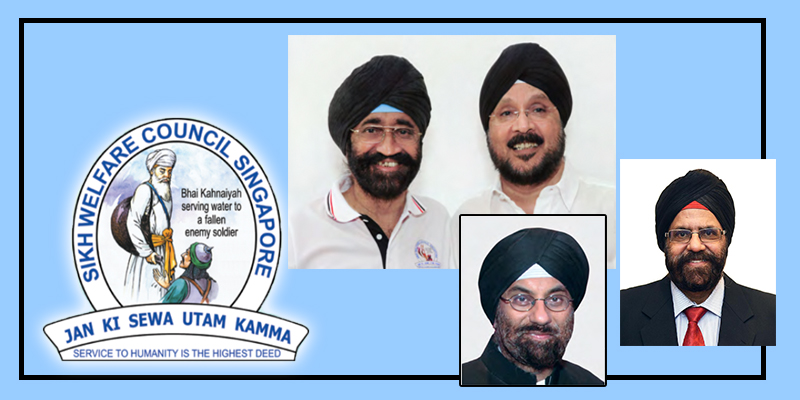
SIWEC past chairman (Clockwise, L-R): Jagjit Singh Sekhon, Dr Sorinder Singh, Gurdip Singh Usma and Amarjit Singh Wasan

By Asia SamacharSingapore |

Sikh Welfare Council (SIWEC) has come a long way since its establishment in 1995.

It was set up as a community-wide response to assist vulnerable Sikh families and individuals in Singapore to better cope with a fast-changing socio-economic context which presented financial, educational, employment and social challenges. Today, it is has evolved and does much more.

And the organisation has kept changing and evolving. How it responded to the Covid-19 induced pandemic was a case in example.

“The last 2 years have also resulted in changes to the way we deliver our services, including live streaming funerals, sending exercise and motivational videos to our senior members to help them stay active and engaged, video calls to check-in on clients we could no longer visit, Zoom meetings and many more adaptations at the management level as well,” SIWEC advisor and immediate past chairman Gurdip Singh Usma tells Asia Samachar.

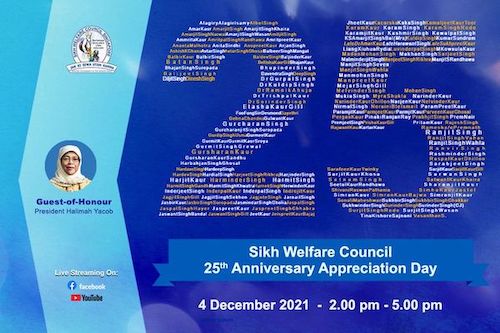
On Saturday (4 December), the organistion will celebrate its 25th anniversary, with Singapore president Halimah Yacob as the guest of honour.

Excerpts from the interview:

Q: Please share with us how the Sikh Welfare Council has grown and transited from a self-help group serving its own community to a well- regarded social service agency in Singapore?

The Sikh Welfare Council (SIWEC) was formally launched on 14th October 1995 in conjunction with the Sikh community’s 30th National Day celebration dinner which was attended by 1,500 people. At the said dinner a sum of S$1.7 million was raised from the Sikh institutions, founding trusties, patrons and members of the Sikh community.
SIWEC was initially set up as a self-help group to assist vulnerable families and challenged individuals within the Sikh community to better cope with a fast-changing socio-economic context which posed a range of financial, educational, employment and social challenges. The pioneers who established SIWEC also set high aspirations for the Council, by exhorting successive generations of volunteers and staff to be guided by the motto that Service to Humanity is the Highest Deed (Jan ki Sewa Uttam Kaama).

Our thinking on SIWEC’s target beneficiaries evolved after 15 years, to realise the aspirations espoused in the motto and the spirit of Sarbat da Bhalla (Service to all Humanity) urged and compelled us to be less insular and to be more embracing to serve all Singaporeans, regardless of race, language or religion.

This vision was also well-navigated and expressed through one of SIWEC’s earliest community engagement initiatives which brought Singaporeans of different races to run together annually in the series of Sarbat da Bhalla runs which evolved to be known as the cross-island Singapore Racial and Religious Harmony Marathon relay.

Overall, with the support of the whole community, we believe that over the past 25 years, SIWEC has made a positive impact on the lives of the beneficiaries served in the wider Singapore community

As of 2020, SIWEC remains a modestly lean social service agency employing 7 staff operating 8 programmes, assisted by about 150 volunteers and serving about 1,200 clients annually. We are now duly recognised by the community and government agencies as a well-regarded welfare organisation.

Q: How has the financial stability and corporate governance of SIWEC been enhanced over the years?

In 2009 the Government granted us the Institution of Public Character (IPC) status.

This IPC status assisted SIWEC to expand its services beyond the Sikh community and to encompass the wider Singapore community as well. It also boosted our fund-raising efforts as all donations to SIWEC began to enjoy generous income tax deductions.

SIWEC’s status was further bolstered in 2014, when we became a full member of the National Council of Social Service, which provided more opportunities and funding resources to help our beneficiaries.

First SIWEC management committee in 1995 – Photo: Source: Sarbat Da bhalla: Service To Humanity, SIWEC 25th anniversary commemorative book

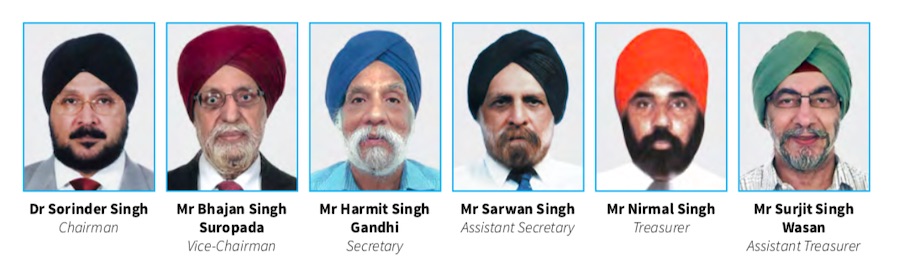
FIRST SIWEC MANAGEMENT COMMITTEE IN 1995. Chairman: Dr Sorinder Singh; Vice-Chairman: Bhajan Singh Suropada; Secretary: Harmit Singh Gandhi; Assistant Secretary: Sarwan Singh; Treasurer: Nirmal Singh; Assistant Treasurer: Surjit Singh Wasan; Committee Members: Jaswant Singh Gill, Jaswant Singh Bandal, Taranjit Singh Grewal, Balbeer Singh Man, R. Kirpal Kaur, Sermit Kaur, Nachatar Singh Sandhu, Gurdip Singh Usma, Luck Singh, Param Ajeet Singh Bal, Kaka Singh, Sarban Singh, Kashmir Singh, Deep Singh, Dr Amar Kaur, Perminder Kaur, Gurbachan Singh, Diljit Singh, Jasmail Singh Khalsa, LTC Mejar Singh Gill, Dr Kuldip Singh, Baldev Singh, Biant Singh (Source: Sarbat Da bhalla: Service To Humanity, SIWEC 25th anniversary commemorative book)

These recognitions also highlighted the need for better corporate governance, transparency and financial stability. Over the past 6 years, SIWEC has enhanced its financial and operating processes, developed and documented its processes in line with the guidelines established by the Commissioner of Charities. Since 2019, we have also started to publish comprehensive Annual Reports for the benefit of our stakeholders.

Our ability to raise funds and obtain matching grants from the government and other agencies, like the President’s Challenge and Tote Board has also enabled SIWEC to achieve good financial stability.

Q: What would you say were the key factors that contributed to SIWEC’s success over the past 25 years?

The key factors that have contributed significantly to the success that SIWEC has achieved over the past 25 years are firstly, the steadfast community support from individuals, institutions, corporate donors and dedicated volunteers devoting effort with hearts, hands and minds to conceive, plan and implement programmes and help raise funds; and secondly, forging strong partnerships across the social and health sectors with key agencies.

One key reality confronting social service organisations like ours is in building on what we have achieved so far and to plan for the next lap of our development. As an organisation, it is vital to institute clear succession planning, enhance professionalisation and skill sets of the Management Committee and the staff team as well.

In terms of programme enhancements, we are already witnessing an increasing complexity of challenges facing clients we support, especially with the intersection of multiple issues in the prevailing context as we transition from pandemic to endemicity. The last 2 years have also resulted in changes to the way we deliver our services, including live streaming funerals, sending exercise and motivational videos to our senior members to help them stay active and engaged, video calls to check-in on clients we could no longer visit, Zoom meetings and many more adaptations at the management level as well.

On the mental health front, even as we embarked on our Theek Thak mental health awareness campaign, we remain concerned about people not seeking help due to concerns about stigma, confidentiality and anxieties about their future. SIWEC will continue to devote attention to this area and develop our internal capacity to help people with mental health issues access the help they need.

Q. Can you give us an insight on the Sarbat Da Bhalla 25th Anniversary Commemorative Book ?

This commemorative book will be formally launched by the President of the Republic of Singapore, Madam Halimah Yacob at SIWEC’s 25th Anniversary Appreciation day to be held on 4 December 2021.

Sarbat da Bhalla – Service to Humanity, is a publication that chronicles the birth, growth and achievements of SIWEC in Singapore between 1995-2020.

The book is a 25th anniversary salute to the commitment and faith of SIWEC’s founding pioneers who stepped forward to establish a dedicated volunteer welfare organisation to cater to the welfare needs of disadvantaged Sikh individuals and families in the mid-1990s. The dedicated service of scores of pioneer volunteers working to support the two full-time staff is a poignant reminder of SIWEC’s humble beginnings

Our editorial team volunteers have worked painstakingly over more than a year to interview pioneer staff, volunteers and leadership, besides searching the national archives and combing through all existing past records.

Everyone attending the event will receive a copy of the book, we will also arrange to courier the book to many of our ardent volunteers, well-wishers and stakeholders who would not be able to attend due to the prevailing capacity due to Covid 19 restrictions.

Event Live Stream: 4 Dec 2021 (Saturday, from 2pm-4pm (Singapore time). Join SIWEC as they celebrate Silver Jubilee to recognise the contributions of their volunteers. Guest of Honour is Singapore President Halimah Yacob. Links: Facebook https://bit.ly/SIWEC25-FB and YouTube https://bit.ly/SIWEC25-YT

RELATED STORY:

Retired businessman set to steer Singapore’s largest Sikh welfare outfit (Asia Samachar, 24 Sept 2021)

ASIA SAMACHAR is an online newspaper for Sikhs / Punjabis in Southeast Asia and beyond.Facebook | WhatsApp +6017-335-1399 | Email: editor@asiasamachar.com | Twitter | Instagram | Obituary announcements, click here 
India NY consulate official tells woman ‘take your money & go’

0

By Asia Samachar | United States |

Dealing with certain embassies and high commissions for travel and the like can be challenging. It can turn into a nightmare if you have rude officers on the other side of the glass windows.

This seems to be the experience of a woman at the India consulate general office in New York when she tried apply for an emergency visa to attend her father’s funeral.

In the 24 November incident, the officer could be seen handing back her documents and money and telling her: “Just take your money and go out. You will not receive visa. That’s it!”

In a video that has now gone viral, you could see an officer treating her with utter contempt and disdain. “This is Vijay Shankar Prasad – the visa officer in charge…Is this…representation of India?” she asked in the tweet.

She wrote: “My father passed away on Monday and this incident took place at New York on Tuesday. I begged and pleaded for nearly an hour as my husband & I were threatened to be blacklisted from ever getting an Indian visa and the NYPD was called on us. As I cried I was also told by security that I live in the United States and am no longer an Indian – and have no rights. No ‘reason’ for this level of apathy and indifference is acceptable with any person let alone someone who found out they lost their father a few hours ago and are begging for help.”

“I can only assume my husband and I are one of numerous people bullied and threatened by officials in charge of visas. It is time for accountability and CHANGE,” she added.

In a message shared on the social media on Nov 27, the consulate stated: “We have taken note of the complaint. The Consulate maintains the highest standards of public service. This particular incident does not reflect either its norms or its guidelines of public functioning. The Consul General has personally reviewed the matter. Based on the information presented, it has been decided to institute disciplinary proceedings against the concerned (sic) officer.”

In a subsequent message, the consular added: “Visas were issued to the applicants expeditiously. Full facts in the case, including the conduct of all parties involved, are being reviewed by the Consul General. We remain committed to efficient and courteous consular services at all times, as we have been delivering these through the unprecedented challenges posed by the Covid-19.”

In response, the woman said: “Our visas were far from expeditious. If it were upto Vijay Shankar Prasad, the man in the picture below, I would have missed my fathers cremation and last rights. We got out visas due to some truly altruistic Indians who stepped in when the @IndiainNewYork failed us.”

In another tweet, user Franky says: “Unfortunately this isn’t the story of just one Indian embassy. Every Indian embassy is the same … the people who are working there they treat Indians like a shit… they aren’t there to help you but to create things more complicated.”

Another twitter, going by the handle of Sonny Chatrath, added: :”This officer, Vijay Raghavan is using the consulate as his bully pulpit.”

For the emergency entry visa, the consulate website states: “Emergency Entry visa is issued for only 6 months validity. Applications will be received in-person at the Consulate only in cases of emergency due to death in the family on working days (Monday-Friday) between 9:30 AM to 11:00 AM. In all such cases, applicant needs to submit the Death Certificate. Applications without Death Certificate will not be accepted at the Counter. For Emergency Visa due to death in the family on weekends and holidays, please call Emergency No. 917-815-7066.”

The Indian embassy, located in Washington DC, is led by ambassador Taranjit Singh Sandhu.

ASIA SAMACHAR is an online newspaper for Sikhs / Punjabis in Southeast Asia and beyond.Facebook | WhatsApp +6017-335-1399 | Email: editor@asiasamachar.com | Twitter | Instagram | Obituary announcements, click here 
Austral Sikh centre gets NSW pandemic engagement grant

0

NSW multiculturalism minister Natalie Ward visited Sikh Mission Centre in Austral, on the suburbs of Sydney – Photo: Videograb from Natalie Ward Facebook

By Asia Samachar | Australia |

The New South Wales state government has provided a $20,000 grant to a Sydney gurdwara to boost the Sikh community’s response to the COVID-19 pandemic and allow for better engagement to improve testing and vaccination rates and support services.

The funding was given to Sikh Mission Centre which manages a gurdwara in Austral.

On Tuesday (30 Nov 2021), NSW multiculturalism minister Natalie Ward visited the gurdwara to meet its leaders and volunteers.

” Reaching all corners of our wonderful multicultural community during the COVID pandemic has been so important for the NSW Government,” she said in a social media update. “This funding will allow further engagement with the Sikh community to support testing and vaccination rates.”

The funding is from the $5.25 million Empowering and Supporting Local Communities Program.

She was accompanied by Camden MP Peter Sidgreaves and Camden mayor Therese Fedeli.

SMC secretary Bawa Singh Jagdev told local newspaper Camden Advertiser: “It’s vitally important that we continue to produce resources in Punjabi, so vulnerable members of our community don’t miss out on key health messages or the help they need.”

Sikh Mission Centre (SMC) was founded in 1988 and opened its Austral temple, or gurudwara, in 2010.

ASIA SAMACHAR is an online newspaper for Sikhs / Punjabis in Southeast Asia and beyond.Facebook | WhatsApp +6017-335-1399 | Email: editor@asiasamachar.com | Twitter | Instagram | Obituary announcements, click here 

SGPC elects Badal loyalists, stays in tight family grip

0

SGPC NEW LEADERSHIP: (L-R) President Harjinder Singh Dhami, Senior SVP Raghujit Singh Virk, Secretary General Karnail Singh Panjoli and Junior VP Surinder Singh

By Asia Samachar | India |

The Badal family continues to exert a firm grip on the Shiromani Gurdwara Parbandhak Committee (SGPC), with Harjinder Singh Dhami being the latest to head the influential Sikh body upon receiving the family’s blessing.

Harjinder, the institution’s honorary chief secretary, was elected on Monday (29 Nov 2021) to succeed Bibi Jagir Kaur who is expected to contest in the next Punjab state polls as a Shiromani Akali Dal (SAD) candidate.

In a press conference immediately after his election, Harjinder tried to shatter a commonly held belief that SGPC leaders are elected out of the ‘envelopes’ passed down from the Badals.

“The parampara (practice) until now is that presidents come out of an envelope. But you saw the contest today,” he said.

However, Harjinder conveniently ignored the fact that just prior to the elections, a majority of the SGPC elected members had given SAD president Sukhbir Singh Badal the sole authority to name the candidate. The Badal ‘envelope’ paved the way for his victory.

In the past, his father Parkash Singh Badal used to wield that power. The five term Punjab chief minister is currently SAD’s patron. His son Sukhbir served as deputy CM from 2009 to 2017, with the senior Badal as CM.

The Badal family also owns a vast business empire, including several transport companies, a hospitality firm, and a media business.

Harjinder got 122 votes while his opponent Mithu Singh Kanekey only receiving 19 votes. A good majority of the 143 voting members present in the house owe their allegiance to Badal.

Other key leaders elected were Raghujit Singh Virk as senior vice president, Karnail Singh Panjoli as secretary general and Surinder Singh as junior vice president.

The 44th president of the SGPC is a law graduate and a SGPC member from Sham Chaurasi segment of Hoshiarpur district.

SGPC is a key Sikh institution. Among others, it oversees the management of Sikh historical gurdwaras in the states of Punjab, Haryana and Himachal Pradesh as well as Chandigarh, allowing it to receive huge contributions from Sikhs.

The elections are governed by the Gurdwara Act 1925, a legacy from the British rule. It requires the general house to meet annually to appoint unanimously or elect through voting the following posts: president, senior vice president, junior vice president, general secretary and 11-member executive body.

The general house comprises 191 members, including 170 elected through ballot papers. The 15 co-opted members, who do not have voting rights, include jathedars of the five takhts and the Darbar Sahib head granthi.

The new 11 executive members are Surjit Singh Kang, Sarwan Singh Klar, Surjit Singh Garhi, Jarnail Singh Dogranwala, Balwinder Singh Weipui, Harjap Singh Sultanwind, Gurdinderpal Singh Gora, Amarjit Singh Bandala, Bibi Gurpreet Kaur, Jodh Singh Samra and Gurpreet Singh. Ten of them are from the SAD team.

Harjinder follows in the footsteps of earlier Badal loyalists.

In 2017, former Punjab state assemblyman Gobind Singh Longowal was elected as SGPC’s 42nd president. He easily defeated Amrik Singh Shahpur from Dera Baba Nanak, who campaigned under the Panthic Front, when he managed to get 154 of the 169 votes casted.

Longowal, a three-time MLA and a minister in the Badal Cabinet, was among 40 leaders awarded ‘tankhah’ (religious punishment) by the Akal Takht for visiting Dera Sacha Sauda ahead of the previous assembly elections.

Longowal replaced Kirpal Singh Badungar who himself took over in 2016 from Avtar Singh Makkar.

On her part, Jagir Kaur was named SAD’s candidate for the Bholath Assembly seat in Kapurthala district for next year’s Punjab state elections.

RELATED STORY:

Jatinder Pannu: Farm laws repeal, SGPC elections and wedding palaces (Asia Samachar,  2021)

ASIA SAMACHAR is an online newspaper for Sikhs / Punjabis in Southeast Asia and beyond.Facebook | WhatsApp +6017-335-1399 | Email: editor@asiasamachar.com | Twitter | Instagram | Obituary announcements, click here 
Steffi Sarge stays calm and collected

Steffi Sarge Kaur (right) and her team in the Football Association of Selangor (FAS) Women’s Super League opening game on 29 Nov 2021 – Photo: FAS

By Jasbir Kaur | Malaysia |

Steffi Sarge Kaur remained calm and collected calmly when directing her teammates from MBSJ FC in their opening match for the Football Association of Selangor (FAS) Women’s Super League yesterday (29 Nov 2021).

She even managed to score one goal in MBSJ’s 6-0 victory over SA United.

Steffi, who donned the captain’s armband, proved her seniority and years of experience as a national futsal player. It certainly gave her team an added advantage.

Her seniority and years of experience as a national futsal player would definitely be an added advantage for her team in this league.

She showed tremendous calmness in directing her teammates in the match. She definitely has the leadership quality required to be a good team captain and this only fortifies her being the recipient of the emerging leader award at the recent FAS’s Women’s Super League launch.

Steffi is proving to grow better with every game.

Steffi, a household name in Malaysian futsal scene, recently captained the Malaysian team at the AFC Women’s Asian Cup 2022 qualifier’s round in Palestine. The 33-year-old national women football and futsal player first donned the national jersey when she joined the football team for the Southeast Asian Games (SEA) in Thailand in 2007.

The FAS Women’s Super League is 11 a-side women football competition involving 10 clubs from around Selangor  and one team from Negeri Sembilan.

Full results: FC SWAT 3-3 The Footsouls (A), Leopard 4-0 Rhym Rovers (B), First 11 0-3 UITM, MBSj 6-0 SA United

RELATED STORY:

Steffi wins Emerging Leader award (Asia Samachar, 21 Nov 2021)

ASIA SAMACHAR is an online newspaper for Sikhs / Punjabis in Southeast Asia and beyond.Facebook | WhatsApp +6017-335-1399 | Email: editor@asiasamachar.com | Twitter | Instagram | Obituary announcements, click here 

Jatinder Pannu: Farm laws repeal, SGPC elections and wedding palaces

0

By Asia Samachar | Punjab |

If you’re looking for a short and interesting discussion on these topics – farm laws repeal, SGPC elections and wedding palaces – check out the comments by Punjab senior journalist Jatinder Pannu.

In this episode over Prime TV Asia, he talks about:

  1. The Indian parliament repeals the three ‘black’ farm laws, a year after intense opposition from the farmers.
  2. Shiromani Gurdwara Parbandhak Committee (SGPC) elections yesterday (29 Nov 2021) saw Jagir Kaur making way for SGPC chief secretary (honorary) Harjinder Singh Dhami. What’s the backstory? A good majority of the SGPC elected members had decided to allow Shiromani Akali Dal (SAD) president Sukhbir Singh Badal to make the call. Previously, his father, Parkash Singh Badal, used to decide who would head the powerful Sikh outfit. SGPC controls the administration of Sikh historical gurdwaras, including the much-visited Darbar Sahib (popularly called the Golden Temple) and the Akal Takht in Amritsar. The Badal candidate received 122 votes, a solid block voting to ensure certain victory.
  3. Sikh wedding norms today. It’s all about the wedding palace, and anand karaj (Sikh wedding ceremony) taking a back seat. He reminisces about Sikh weddings in the past.

Check out the programme: Prime Discussion (1668) || ਪੂਰਾ ਸਾਲ ਖੂਹ-ਖਾਤੇ ਪਾ ਕੇ ਮੋਦੀ ਸਰਕਾਰ ਨੇ ਖੱਟਿਆ ਕੀ (29 Nov 2021)

RELATED STORY:

How SGPC magicians turn a truck into a trunk (Asia Samachar, 7 Sept 2020)

ASIA SAMACHAR is an online newspaper for Sikhs / Punjabis in Southeast Asia and beyond.Facebook | WhatsApp +6017-335-1399 | Email: editor@asiasamachar.com | Twitter | Instagram | Obituary announcements, click here 

Gurbani classes with Subang granthi

0

Giani Jaspal Singh Pandhi

Public Service Announcement | Malaysia |

This is to inform everyone that the Education Team of Gurdwara Sahib Subang has been conducting weekly Understanding Gurbani Classes since 2018 with Giani Jaspal Singh Pandhi as the presenter.

The classes have continued online via Zoom since the pandemic started. Currently the class is on Sukhmani Sahib Vichaar (interpretation of Sukhmani) together with the meanings displayed on slides interpreting it in simple Punjabi.

After the explanation of the Gurbani text, there is a Q&A session on the same topic or on any other question related to Gurmat.

Zoom classes are held on every Tuesday from 10.00 to 11.30am. (Meeting ID: 988-530-7094; Password : JAS13JAS)

The suggested monthly fee for Giani Ji is RM20 but you can also contribute more if you wish for his effort. The fee can be banked into the account of Bibi Bachan Kaur (group admin) and the banking slip forwarded to her for record purposes.

Please request to register with Bibi Bachan Kaur in the “Understanding Gurbani Class” WhatsApp group to receive weekly notifications every Monday evening or Tuesday morning.

Bachan Kaur (Mobile : +6012-621-6273)

Maybank account number: 112222015029

Let us enjoy the authentic and spiritual messages of Siri Guru Granth Sahib Ji. Please also share this message with your family members and friends so that everyone can benefit from this noble effort. Thank you.

Gurfateh Ji.

Gurdwara Sahib Subang Education Team

RELATED STORY:

Subang Sikhs to assist families battling poverty (Asia Samachar, 27 April 2021)

ASIA SAMACHAR is an online newspaper for Sikhs / Punjabis in Southeast Asia and beyond.Facebook | WhatsApp +6017-335-1399 | Email: editor@asiasamachar.com | Twitter | Instagram | Obituary announcements, click here 

Jaspal Singh (1961-2021), Ex Mas Staff

JASPAL SINGH A/L HARCHAND SINGH

(Ex Mas Staff)

12.07.1961 – 16.01.2021

Mother: Madam Sukhwant Kaur (Kota Bharu)

Father: Late Harchand Singh @ Chander (Kampung Simee, Ex Army)

Daughters & Son-in-law:
1) Kerisma Kaur / Amar
2) Sukhwinder Kaur / Jagjeevanjoth Singh

Siblings & Spouses:
1) Satvinder Singh (Bob) / Harjit Kaur (Tg Tualang)
2) Harvinder Kaur / Adrian Jacob (KL)
3) Sukhdev Kaur / Manjit Singh (Selayang)
4) Jagjit Singh (Jack) / Melanie

Also leaving behind a host of nephews, nieces, cousins, relatives near and dear.

He was a loving son and father. Leaving behind beautiful memories to be cherished forever.

Path da Bhog : 18 December 2021, 3.00pm – 5.00pm, at Gurdwara Sahib Sentul, Kuala Lumpur

For further information contact: Kerisma 010-2602867

In view of the current situation and SOP, we understand if you are unable to attend.

| Entry: 29 Nov 2021 | Source: Family

ASIA SAMACHAR is an online newspaper for Sikhs / Punjabis in Southeast Asia and beyond.Facebook | WhatsApp +6017-335-1399 | Email: editor@asiasamachar.com | Twitter | Instagram | Obituary announcements, click here |