“Toxic cultural practices” and a lack of culturally sensitive services means many women who are victims of domestic and sexual abuse in the Sikh community are suffering in silence, according to the first comprehensive report into the issue.
The report by Sikh Women’s Aid (SWA), the UK’s only frontline service for Sikh women, will be released later this week to coincide with the launch of the United Nations’ women’s annual 16 days of activism against gender-based violence. It creates a harrowing picture of the prevalence and effect of domestic abuse and child sexual abuse in the Sikh community.
The research was carried out over a four-month period over the summer, during which time SWA distributed anonymous surveys within the community across the UK.
Researchers received replies from almost 700 respondents, and, of those, 70% said they had experienced domestic abuse, nearly half had experienced incidents with more than one perpetrator, including female members of their family. Over a third of respondents said that they had experienced child sexual abuse, and of these incidents, one in seven involved more than one perpetrator. Most victims knew their abuser, and nearly half of the incidents of abuse took place at home.
Gender equality is one of the core beliefs of the Sikh faith, but, says the SWA, patriarchal societal practices stemming from cultural traditions, such as concepts of honour, mean that many survivors are afraid to speak out.
Awareness of these issues is growing, however, following several high-profile cases, including the murder of 43-year-old Ranjit Gill from Milton Keynes earlier this year. She was stabbed 18 times by her “dominating and bullying” husband Anil Gill in an alcohol and cocaine-fuelled attack.
While domestic and sexual abuse affect all ethnicities, cultures and backgrounds, the founders of Sikh Women’s Aid and authors of the report, Sahdaish Pall and Sukhvinder Kaur, said that a lack of specialist support that met the needs of women in the Sikh community was creating “a generation of young women who are completely lost”.
Ranjit Gill, who was murdered by her husband Anil Gill. Photograph: Thames Valley Police
The findings of the report will be used by SWA to create services tailored to the specific needs and cultural nuances that victims of abuse within the Sikh Panjabi community face.
“Out of all the South Asian communities, Sikh women are the least likely to come forward about abuse. We come across as a very affluent, educated and giving community, and that reputation makes it very difficult for Sikh women to come forward,” said Pall.
“There are issues specific to our culture, like the link between alcohol and domestic and sexual violence. We have a huge drinking culture among men, and the amounts people consume exacerbate issues.”
“There is also a lack of education around things like coercive control. The parental generation’s view is if you haven’t been beaten up, that’s not abuse. There’s often an intergenerational and toxic normalisation and acceptance of violence against women.”
Read the full story, ‘Domestic and sexual abuse of silenced Sikh women revealed’ (The Observer, 20 Nov 2021), here.
ASIA SAMACHAR is an online newspaper for Sikhs / Punjabis in Southeast Asia and beyond.Facebook | WhatsApp +6017-335-1399 | Email: editor@asiasamachar.com | Twitter | Instagram | Obituary announcements, click here
After almost two centuries of their spirituality being corrupted, distorted, and despoiled; enlightened lay Sikhs began to plod their community to awaken towards the plight of their hijacked status. These ordinary Sikhs argued that there was a need to put an end to the alteration, corruption and deviation that had been inculcated into Sikhi by the Hijacker groups. They called for the freeing of our gurdwaras and institutions from the shackles of the hijackers. They rallied for Sikhs to relook at their tainted “classical texts” and literature that had been the handiwork of the hijacker groups. They called for Sikhs to shed off the Stockholm Syndrome that had set into our psyche, and revert to authentic SGGS based Sikhi that was given to us by Guru Nanak and his nine successor Gurus. In short, they called for massive reforms and an overhaul of the hijacked system that was Sikhi.
Resistance against the reform by the Hijacker groups was anticipated. Opposition from the dera, taksali and clergy groups was predictable. What was not expected, however, was that Sikh Institutions, Organizations, Academics, and Thinkers would show such high levels of resistance towards efforts of reform. This resistance was a clear indication of the depth to which the infiltration of Hijacker influence had occurred. It was also a clear sign of the extent to which the Sikh community was in denial as a result of the Stockholm Syndrome effect. What is equally shocking is that the Sikh masses have shown high levels of indifference and ambivalence in wanting to embrace the true and authentic messages of their Gurus as advocated in the SGGS.
The outcome has thus been in the form of an intense, prolonged and unfinished battle that still continues till date and is expected to take up much of our energy and resouces into the 21* Century.
This chapter provides brief narratives of the leading commoner Sikhs who dedicated their lives towards bringing about an awakening within Sikhs and Sikhi. It narrates the challenges they faced against the onslaught of resistance within the backdrop of a community largely unaware, unconcerned and oblivious to the fact that they were hostages.
THE PIONEERS
Gurmukh Singh (1849-1898), a professor at Oriental College Lahore.
Ditt Singh (1985-1901), a historian, scholar and poet who wrote over 70 books on Sikhism.
Karam Singh, Historian (1884-1903), who exposed the hijacking of Guru Nanak’s birth date from Vaisakh of 1469 to Kathik di puranmashi.
Bhai Kahn Singh Nabha Dhillon (1861-1938), author of Mahan Kosh.
(Refer to the book for more details on the pioneers).
THE OUTCOME
The efforts of the pioneers and the Singh Sabha Reform Movement did show some results. The notable ones were the removal of statutes and deities from the precincts of Darbar Sahib, the freeing of major gurdwaras from the nirmlas and mahants through the Gurdwara Reform Movement, the setting of the Shromani Gurdwara Parbandhak Committee (SGPC) in 1920 to manage historical Sikh gurdwaras, the inauguration of the Shromani Akali Dal as a political party also in 1920 to champion Sikh rights and the passing of the Sikh Gurdwara Act in 1925 which legally allowed the custody of historic Sikh shrines to pass from the nirmlas and mahants to the SGPC.
It would not, however, take long for the Sikh community to discover that a good number of these initiatives would soon fail, primarily on account of most of Sikh institutions having fallen back into the hands of the Hijacker groups and their successors. The nirmlas and mahants vacated control of historical gurdwaras to SGPC and moved over to set up deras and taksals — institutions which grew phenomenally due to the fact that the Sikh masses continued with their patronage. These nirmlas and mahants reinvented themselves as sants and babas. Some of them went to great lengths to fabricate fake lineages to the Gurus or prominent Sikhs. These sants and babas repackaged themselves as true preachers of Sikhi through their rituals, non-stop Akhand Paths, and the promotion of the Hijacked version of Sikhi. To create support amongst the masses they relied on initiation rites into their particular deras in the form of mass khande-di-pahul ceremonies. These initiation rites earned them undivided loyalty amongst their followers.
In short the deras, taksals and their sants and babas became the Rebranded Hijackers of Sikhi in the aftermath of the Singh Sabha led reform initiatives.
They would grow so phenomenally that dera and taksali Sikhs would reach critical mass in just one generation. Historian Harjinder Singh Dilgeer says there are close to 15,000 deras in Punjab alone [Dr Harjinder Singh Dilgeer, Sikh History Volume 9, Page 177-178] – a figure higher than the total number of villages therein. The critical mass would allow pseudo Sikhs to take effective control of SGPC, the takhats including the Akal Takhat, Gurdwaras, Sikh Institutions and Academia. In just one generation, up to 95 percent of Sikh clergy worldwide — granthis, ragis, parcharaks, kathakars, dhadees etc. would have had their training at deras and taksals. An equally large portion of the management of Sikh institutions too would be those with dera and_ taksali inclinations.
For all intents and purposes then, Sikhi was headed back to its Hijacked state. The deras and taksals had become the New Hijackers — vitalised and emboldened by the support from the Sikh masses. The Sikh community was back in a state of slumber — fast asleep in the comfort that their spirituality was in the hands of our own hijackers.
THE SIKH REHAT MARYADA
From the Sikh Spirituality point of view however, the efforts to create a uniform code of conduct or Maryada for Sikhs, of Sikh ceremonies and practices for Sikh institutions would stand out. The SGPC appointed a group of 28 eminent Sikhs on 15 March 1927 to undertake the task. [Factual data in this para is derived from Gurbax Singh Gulshan Darpan Sikh Rehat Maryada (Punjabi), UK: Khalsa Parcharak Jatha, 2005, p35 – 54.] The task was completed in April of 1931 and it was discussed with various other groups and individuals throughout 1932. The first draft was put before a panthik seminar on 30 December 1933 attended by 170 individuals. One of the resolutions at this seminar was to send the draft for comments to 50 Sikh individuals and institutions across the globe; of which less than half – 21 to be exact – responded with a variety of suggestions. The resulting draft was then approved on 12 October 1936 and kept in storage. After an unexplained hiatus of 8 years, the Dharmik Advisory Committee comprising of just 8 individuals decided to make a total of 17 changes on 7 January 1945. The final version was released in February of 1945.
THE QUESTIONS THAT RAISED QUESTIONS
First, why was there a hiatus of 8 years? Why was the draft kept in storage for this long?
Second, and more importantly what was added or removed to the draft during these 8 years?
Third, which persons had access to the document while it lay in storage during the 8 years?
Fourth, why did just 8 individuals make 17 changes just prior to its final approval and release? Who were they and who authorized them to make the changes?
Fifth, were these 17 the only changes or were there more alterations done surreptitiously during the 8-years that it lay in storage? Sixth, did the first group of 28 eminent Sikhs know of the changes by the 8 persons? Eight years is a long time, many of the 28 would have moved geographically, passed on or simply moved on in their lives and professions.
Principal Satbir Singh has said _ that the documentation pertaining to the SRM process was more than one ton in weight. Former SGPC president Gurcharan Singh Tohra is on record for agreeing, and adding — most tragically – that not a single sheet of the records remained after the June 1984 attack on the Darbar Sahib and Akal Takhat by the Indian Army [62 Gurbax Singh Gulshan, op cit., p. 51-52. 379]. The Sikh Reference Library, where the material was all kept was razed to the ground as collateral damage according to official versions.
The six questions above will therefore remain unanswered and continue to raise more questions.
THE HIJACKERS AND THE SRM
There is no doubt that the group of Sikhs who were tasked with drafting the SRM suffered deep divisions amongst themselves. The initiative was purely borne out of the Singh Sabha Reform Movement’s efforts to cleanse the psyche of Sikhi of the Snatan, Vedic and Yogic distortion and corruption that had been inculcated into our spirituality on account of the udasis, nirmlas, sants, deras, babas etc – termed as Hijackers of Sikhi in this book.
The Singh Sabha was thus represented in the SRM drafting group in the likes of enlightened mind that was Bhai Kahn Singh Nabha. The Panchkhand group was represented by the highly principled Teja Singh who was unequivocal in his demand for the total and complete exorcism of Hijacker influence from the SRM. There were a fair number of intellectuals such as Professor Teja Singh, Professor Jodh Singh, Principal Harkrishen Singh and Professor Ganga Singh.
But the nirmla, dera, taksali groups had their members as well; in the likes of the very influential nirmla Bhai Veer Singh, Sant Maan Singh nirmla, Sant Sangat Singh, Sant Gulab Singh, Pandit Basant Singh, Pandit Kartar Singh Dakha, and Sant Randhir Singh. Its ironical that an endeavor aimed at removing nirmla influence from Sikhi was participated in by nirmlas and individuals with nirmla mind-sets. For reasons unknown, at some point during the deliberations, two representatives from the antiSikh sect ~ the Shromani Radha Soami Mutt Vicharak Sabha -Harcharan Singh and Bhagat Singh – were included.
Given the interest of the colonial government in the affairs of Sikhs, it can be safely concluded that the British had a hand in the inclusion of some members into this committee.
In the absence of records of the deliberations (they having been reduced to ashes in June 1984 as mentioned above), one can only speculate as to the heated debates that may have gone on between the nirmla, dera and taksali groups on the one hand, the Singh Sabha Reformers on the other and the role played by the British sympathizers.
What is clear however is that the resultant SRM is a compromise document. In order to come into existence, the only way out perhaps, was to RETAIN a certain amount of the Snatan, Vedic and Yogic distortions that the Hijacker groups had smuggled into Sikhi for some 200 years.
The Hijackers of Sikhi thus managed to keep their foot firmly and squarely in the parameters of the SRM. Given the range and depth of their influence, they managed to circumvent a process that that was originally aimed at doing just the reverse.
THE COMPROMISE THAT WAS STILL BORN.
All the nirmla, dera, taksali, sant, baba groups openly declared — the moment the SRM was launched – that they will NOT abide by it. They have all continued to implement their own individual maryadas that contain almost all the stipulations that the Hijackers of Sikhi loaded upon the Sikh psyche over a two century period.
In this regard then, and as argued in the first part of this book, the dera, taksali, sant and baba groups are the present day Hijackers of Sikhi.
The Singh Sabha, Panchkandi, Intellectual, Missionary Parcharak groups accepted the SRM on the justification that its acceptance would bring about panthik unity. Their acceptance was also on the premise that since the SRM had achieved some level of cleansing of Snatan, Vedic and Yogic influences, it will be revisited by the Panth at some point down the line for further cleansing. These groups thus stood in solidarity with the SRM, propagated it, defended it and educated the Sikh masses of its contents. They have accepted the SRM as Panth Parvanit (Panth Ordained) and Akal Takhat sanctioned maryada.
In their REJECTION of the SRM, the dera, taksali and sant samaj groups are also aiming for a revision and a rewrite of the document. Their method is however to infiltrate all Sikh institutions of authority – the SGPC, the takhats, the Akal Takhat, Academia and Gurdwaras — with persons who are aligned with their beliefs. This will ensure that if and when the SRM is revisited — it will be in total and complete compliance with the Snatan, Vedic and Yogic beliefs of the Hijackers of Sikhi.
That the dera, taksali and sant samaj groups have reached such their goal of infiltration of Sikh institutions is clear for all. That the takhats have been fully infiltrated is proven by the fact that none of them follow the SRM. In complete violation of the SRM, two takhats have installed the Bachitar Natak (Dasam granth) side by side the SGGS within their Darbar. One takhat slaughters a goat in full public view on a daily basis. It’s the height of irony that jathedars of these two takhats – themselves violators of the SRM, sit in judgement of those who are alleged to violate the SRM. The jathedars of Akal Takhat (the guardians of the SRM) frequently visit these dera, taksali and sant samaj locations and occasions to be received as guests of honor and garlanded — and never have they once reprimanded them for not following the SRM. These same jathedars have elected to ex-communicate a number of enlightened and awakened Sikhs who have sought to expose the hypocrisy of the situation. Dera and taksali groups go beyond just the parkash of the DG. Some have resorted to Akhand Paths of the Dasam granth; albeit at twice the payment for an Akhand Path of the SGGS. One wonders as to when these deras and taksals would initiate akhand Ramayan and akhand Mahabharat within their precints.
The Singh Sabha, Panchkandi, Intellectual, Missionary Parcharak groups thus fear that the achievements that were obtained through the SRM are in serious danger. These groups thus dedicated their parchar towards bringing about an awakening within Sikhs and Sikhi — the awakening that was initiated by the Pioneers in the form of Professor Gurmukh Singh, Giani Ditt Singh, Karam Singh Historian and Bhai Kahn Singh Nabha.
In short, these Sikhs have decided to pick up where the pioneers of the Singh Sabha Reform Movement left off. Many of them face daunting and unnerving challenges such as excommunication; violence and threats of violence; intimidation; and attempts to prevent their messages from reaching the Sikhs in general — either through Gurdwara stages or the social media.
(Extracted from the writer’s book The Hijacking of Sikhi, published in 2020]
Sikh thinker, writer and parcharak Karminder Singh Dhillon, PhD (Boston), is a retired Malaysian civil servant. He is the joint-editor of The Sikh Bulletin and author of The Hijacking of Sikhi. He can be contacted at dhillon99@gmail.com.
LINKS TO VIDEOS AND LECTURE NOTES FOR ‘THE HIJACKING OF SIKHI’
Hijacking of Sikhi – Part 1 (The Plot): Video | Notes
Hijacking of Sikhi – Part 2 (Udasis): Video | Notes
Hijacking of Sikhi – Part 3 (Udasis): Video | Notes
Hijacking of Sikhi – Part 4 (Nirmlas): Video | Notes
Hijacking of Sikhi – Part 5 (Nirmlas): Video | Notes
Hijacking of Sikhi – Part 6 (Nirmlas – Sooraj Parkash): Video | Notes
Hijacking of Sikhi – Part 7 (Distorting Gurbani: The Nirmalas): Video | Notes
Hijacking of Sikhi – Part 8 (Dera Sants & Taksali Babas): Video | Notes
Hijacking of Sikhi – Part 9 (The Hijacked Turn into Hijackers / Stockholm Syndrome): Video | Notes
Hijacking of Sikhi – Part 10 (Dasam Granth: The weapon of mass control): Video | Notes
Hijacking of Sikhi – Part 11 (Freeing Sikhi from the Hijackers: The SRM): Video | Notes
ASIA SAMACHAR is an online newspaper for Sikhs / Punjabis in Southeast Asia and beyond.Facebook | WhatsApp +6017-335-1399 | Email: editor@asiasamachar.com | Twitter | Instagram | Obituary announcements, click here |
In our hearts you are alive forever In our minds, your memoris are imprinted… So loved and so missed.
Our beloved one has returned to Karta Purakh, leaving behind loved brothers, brothers-in-law, sisters-in-law, uncles and aunts, cousins, nephews, nieces, relatives and friends.
Parents: Karam Singh a/l Polak Singh and Amarajeet Kaur a/p Basakha Singh
Wife: Amarjit Kaur a/p Karam Singh
Children: Kelvinder Singh Sidhu
Siblings:
Ajit Karam Singh (deceased) -Scotland, Jasvinder Singh & Sylia Ciampa – USA, Salvinder Singh
Path Da Bhog: 28 November 2021 (Sunday), 10.30am to 12pm, at Wadda Gurdwara Sahib Ipoh, Perak
Please observe all prevailing Covid-19 SOPs.
We are grateful to all family and friends for sharing our grief. Thanking you for your support and prayers.
Contact:
Amarjit Kaur 014 – 909 9807
Ragbir Singh 012 – 537 1356
Rashminder Singh 016 – 565 8995
| Entry: 22 Nov 2021 | Source: Family
ASIA SAMACHAR is an online newspaper for Sikhs / Punjabis in Southeast Asia and beyond.Facebook | WhatsApp +6017-335-1399 | Email: editor@asiasamachar.com | Twitter | Instagram | Obituary announcements, click here |
A Loving and Great Husband, Father, Brother, Father In Law and Grandfather will be deeply missed & remembered by all.
| Entry: 22 Nov 2021 | Source: Family
ASIA SAMACHAR is an online newspaper for Sikhs / Punjabis in Southeast Asia and beyond.Facebook | WhatsApp +6017-335-1399 | Email: editor@asiasamachar.com | Twitter | Instagram | Obituary announcements, click here |
Father In Law: Late Sardar Kashmir Singh Sheron Bagha
Wife: Baljinder Kaur Sandhu
A good man loved by all. A loving husband, father and a friend. Someone who is one call away for anything and put others before himself. He will forever live in our hearts, never shall his memory fade away. We will miss him dearly. He will always be our King and will always remains in our heart.
Please refer below for further details:
29 November 2021 to 1 December 2021
Evening Arambh: 29 November 2021 – 6:00 PM – Akandh Path and Sehaj Path
1 December 2021 – On his Birthday Path Da Phog followed by Kirtan and Antim Ardaas at 7:00 PM for Late Sardar Balajeet Singh Sandhu A/L Assar Singh @ Billu Don
Location: Gurdwara Sahib Puchong
Contact: 019- 2797861 (Paul)
| Entry: 22 Nov 2021; Updated: 24 Nov 2021 | Source: Family
ASIA SAMACHAR is an online newspaper for Sikhs / Punjabis in Southeast Asia and beyond.Facebook | WhatsApp +6017-335-1399 | Email: editor@asiasamachar.com | Twitter | Instagram | Obituary announcements, click here |
Simha Kaur Jastol at the YSA Sikh graduates tea receptionpanel discussion
By Asia Samachar | Singapore |
Simha Kaur Jastol, one of the valedictorians at a recent Singapore Sikh graduates event, is now the corporate communications lead for information systems Asia Pacific (ISAP) at Crédit Agricole Corporate and Investment Bank.
Prior to this, she was the international digital marketing and corporate communications lead at National University of Singapore (NUS).
She joined Crédit Agricole CIB effective October, according to her LinkedIn update.
Crédit Agricole CIB is the corporate and investment banking arm of Crédit Agricole Group, the 12th largest banking group worldwide in terms of tier 1 capital.
Crédit Agricole CIB, present in Singapore for over 100 years as a full branch, provides a wide range of corporate and investment banking products and services, fixed income and structured finance solutions including structured trade finance facilities to international commodity traders, producers, refiners and importers, according to information at its website.
On Oct 16, Simha was invited to be a valedictorians at the Sikh Tea Graduate annual event organised by the Sikh Association Singapore (YSA). She is also an executive committee member of the Sikh Welfare Council (SIWEC).
Simha has a Master of Science (MSc) in Communications Management from Singapore Management University and a Bachelor of Science in Accounting and Finance from University of Bradford.
ASIA SAMACHAR is an online newspaper for Sikhs / Punjabis in Southeast Asia and beyond.Facebook | WhatsApp +6017-335-1399 | Email: editor@asiasamachar.com | Twitter | Instagram | Obituary announcements, click here
Kirtan and Katha will be held on 28.11.2021 at Gurudwara Sahib, Petaling Jaya from 10am followed by Sahej Path Da Bhog at 11.30am. Sewa Guru ka Langgar.
Please treat this as a personal invitation and kindly comply with the relevant SOPs in force.
Contact: Dev: 012-3762849, Harjinder: 014-6348323
| Entry: 22 Nov 2021 | Source: Family
ASIA SAMACHAR is an online newspaper for Sikhs / Punjabis in Southeast Asia and beyond.Facebook | WhatsApp +6017-335-1399 | Email: editor@asiasamachar.com | Twitter | Instagram | Obituary announcements, click here |
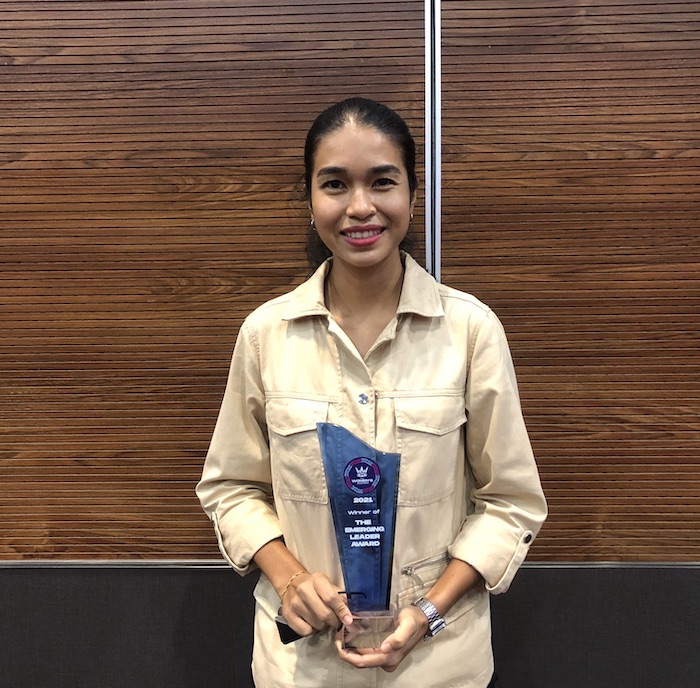
Steffi Sarge Kaur was recognised for her leadership qualities at the launch of the new Selangor women’s football league.
The 33-year-old national women football and futsal player received the Emerging Leaderaward at the Football Association of Selangor (FAS) Women’s Super League launch yesterday (20 Nov 2021).
Steffi, a household name in Malaysian futsal scene, recently captained the Malaysian team at the AFC Women’s Asian Cup 2022 qualifier’s round in Palestine.
Steffi first donned the national jersey when she joined the football team for the Southeast Asian Games (SEA) in Thailand in 2007.
In 2013, she again came to the regional games in Myanmar, this time with the futsal team which took home the bronze medal. In the 2017 Kuala Lumpur SEA Games, she played for the futsal team. Two years later, in 2019, she don the national colours in the FootGolf Asia Cup in Australia.
“I’m thrilled to receive this award,” she told Asia Samachar.
The Women’s Super League is 11 a-side women football competition involving 10 clubs from around Selangor and one team from Negeri Sembilan.
Steffi will play for MBSJ, one of the 10 teams competing in the new league aimed to fill the big gap in women’s football.
At the same event, the Inspire Football award went to Women’s Social Football Malaysia while the Change Makers in Football award was won by Suzana Zakaria.
Also present at the launch was FAS president Tengku Amir Shah Sultan Sharafuddin Idris Shah as well as representatives from women NGOs and members of the footballing community.
In a panel session discussing the future of women’s football, Steffi acknowledged that women’s football has recently received more media coverage compared to the past years. For example, she noted that the women’s team game in Palestine was the first ever match to be telecast live by Astro Arena.
“There is much more system in place for women’s football compared to the past. I’m glad people are beginning to notice us. There’s a lot of talent and potential out there. Please support women’s football. Parents, please encourage and allow your girls to play football,” she said.
Sharing its three-year plan, FAS said it plans to expand the league to 20 teams with three age categories, with the goal of making it a huge component of the women’s football ecosystem in Malaysia.
FAS aims to provide the right and safe environment for women and young girls to compete in a structured, quality and competitive footballing platform.
FAS has conducted two coaching courses and trained six women referees who will be involved in referring the FAS Women’s Super League which kicks off on 29 November 2021 at Radia Arena in Bukit Jelutong. The inaugural games will see FC Swat playing against UiTM in Group A and Leopard FC against MBSJ in Group B. Matches will be played weekly, every Monday, at 8pm and will run all throughout December. The finals is scheduled on 19 January 2022.
But this does not mark the end of the Women’s Super League. FAS plans to continue championing women’s football with more coaching courses in the coming year, and targets to produce 20 more female referees by 2023.
This is a crucial step as these women referees and coaches form the backbone to support clubs and teams involved in women’s football, from grassroots to professional levels.
The opportunity for change in women’s football will see FAS working alongside NGOs and volunteers to fulfill the four pillar pledge: Equal accessibility to football for women, Realising Women’s potential in football, Enhancing messaging and promotions, and Safe environment for Women’s Football.
ASIA SAMACHAR is an online newspaper for Sikhs / Punjabis in Southeast Asia and beyond.Facebook | WhatsApp +6017-335-1399 | Email: editor@asiasamachar.com | Twitter | Instagram | Obituary announcements, click here
I grew up in Singapore, in my childhood and my early years I saw myself to be actively involved in Sikh youth programmes. At 16 I was the secretary of our local Sikh Naujawan Sabha. I graduated from the University of Singapore in 1974. In 1978, I worked with a number of colleagues and formed a Sikh youth organisation called Sikh Sewaks Singapore. This organisation became a registered society. The objects of the organisation were to encourage Sikh youth to actively participate in the development and management of community activities with the view to develop confidence and a sound understanding of Sikhism, Sikh values and to foster the development of a community spirit among the Sikhs of Singapore. It was based on taking a balanced approach that placed equal emphasis of Sikh traditions and gurmat and the role of the individuals in the wider society both locally and internationally.
I studied physics at Singapore University and have worked in the field of science communications(also referred to as public understanding of science) from 1980 to 2004 and then taught Science and Mathematics at the secondary level until 2017. I have worked in community projects that included Nagar Kirtans, Sikh Family Sports Days and served on gurdwara committees. At present I work with a team on a project called Feed My City, which operates under the banner of a newly registered charity called the Manchester Sikh Foundation. The work of the foundation has four areas, responding to food poverty, supporting education and career development, promoting wellbeing and fostering religious harmony through education and contributing to multi and interfaith projects.
I have an interest is Sikh affairs and often have deep concern about the trajectory of what is currently happening in our community and our institutions and where they would be taking us as Sikh community both locally and elsewhere in the world. This brings me to the issue I like to address in this short article.
I understand that there is a continuing decline in the number of pupils undertaking such courses not just in the UK but also among Sikhs in other parts of the world. This represents a very potent threat to the dilution of Punjabi culture and with that access to the teachings of our gurus. We are in this situation even though a number of well qualified and enthusiastic individuals in our community have worked very hard to promote the teaching and learning of Punjabi thorough the gurdwaras and at a small number of Khalsa Schools. It is essential that we take stock of where we are both locally and at the international level so that we can have a clear picture of where we are succeeding and what we can do better to ensure that the learning and usage of the Punjabi language does not continue to decline and go into oblivion.
We need to identify opportunities and also create a platform for the sharing of good practice and successful creation and implementation of curriculums in different parts of the world. Some good work has work has been done in Bangkok, Malaysia, Singapore, Canada and the United States. In Bangkok, for example, we have the only CIS recognised International School run by the Sikh community. The Asia Samachar is doing a fantastic job as a platform for Sikh matters. We should share information of these successes among our community leaders in different parts of the UK as a source of inspiration and resource for the content of the programmes that we can adopt. More importantly look at the models of the provision so that the educational activities do not become victims of the annual cycle of change of leadership in the gurdwara or become a matter which is not a priority of the community when the officials lack the expertise to deliver the product.
I also recognise that funding is an important issue. I reckon this can be addressed by working on this at the international level. For a start we need to get a university like Oxford or Cambridge to offer the GCSC and A level examinations. We need to at the same time work on ensuring that there are sufficient candidates to make the examinations viable. In Singapore the O and A level examinations are put together in Singapore and are accredited by Cambridge University. They have fully developed curriculum from Year 1 to 10 and then onto A level. Their story and path to reach that position is something we could learn from. On the issue of funding by supporting Punjabi learning here and internationally we should be able to get help from business community in our cities and abroad with a programme that will work students both here and abroad. This can be achieved through collaboration and partnerships.
We need to adopt a vision to provide every Sikh child the opportunity to learn to read, write and enjoy Punjabi and also have access to a course in Sikh Studies. The selling point is that this will provide them with 1.5 GCSCs on top of what they will do at school. This will be supported by adequate supply of trained personnel and support materials to ensure that we deliver top quality courses. In addition, we should have opportunities for healthy competitions on poetry writing/recitals, drama and story writing competitions at the local and national level. To make progress we need to engage the Sikh TV channels and work in the development of online courses and facilities that use latest technologies to provide access to material to people of all ages and with the wide range of interests and abilities. The course offered by Harvard University on Sikhism is an example of what can be done at tertiary education level.
We should use our existing resources and personnel at the various centres and universities to organise local, national and international platforms to develop programmes and facilities that will promote learning, publications and research relating to Punjabi and Sikh studies. I am aware of some work already being done at Wolverhampton University.
I apologise if I am doing too much wishful thinking. I feel we do have the people in the UK and in other parts of the world who are doing a lot of good work who can build on this and can do much more. I am certain the combined effort and sharing of experiences in this field will help in a big way. We should now formulate a plan of action which has a bottom-up approach in terms of generating participation in the learning of our mother tongue supported by organisational effort in rewriting their missions and strategic plans to be focused on supporting the formal learning of Punjabi language while making that Universities, colleges and schools offer relevant courses and examination boards offer the examination on Sikhism and Punjabi language at the O/GCSE levels and A level.
ASIA SAMACHAR is an online newspaper for Sikhs / Punjabis in Southeast Asia and beyond.Facebook | WhatsApp +6017-335-1399 | Email: editor@asiasamachar.com | Twitter | Instagram | Obituary announcements, click here
Communications specialist and former press secretary Praveen Randhawa takes a major leap in her career with a new regional communications role at Meta, formerly known as Facebook, after serving various Singapore government entities in the last 11 years.
Praveen is now the communications director for Southeast and South Asia at Meta, effective this month, according to her LinkedIn update.
Prior to this, she served as the senior vice president and public affairs head at Singapore Economic Development Board (EDB) since 2017.
From 2013 to 2017, she was the press secretary to Singapore’s Minister for Law, Director Corporate Communications Division.
She had also served as deputy director and corporate communications department head at the Health Promotion Board and corporate communications head at the Singapore Economic Development Board (SEDC). From 2004 to 2011, she served as the spokesperson at the United Nations Human Rights.
“My professional experience has taught me the importance of interpretation over translation, understanding cultural and historical contexts, to have an action-bias to deliver clear results and that good teamwork, embracing diversity and attention to detail are as important as a good strategy. I believe these values are key to a successful and fulfilling career,” she writes in her LinkedIn profile.
Praveen has a Masters in International Law and Politics and a bachelor’s degree in politics, both the University of Hull.
On Oct 28, Facebook announced that it has changed its company name to Meta. Facebook Inc, the parent company behind the namesake app, as well as Instagram, WhatsApp, Messenger, and the virtual reality company Oculus, is now called Meta Platforms Inc.
The name change, reflecting the company’s growing ambitions beyond social media, came at a time when it was facing a barrage of negative reports stemming from revelations of a whistleblower on the internal workings of the company.
ASIA SAMACHAR is an online newspaper for Sikhs / Punjabis in Southeast Asia and beyond.Facebook | WhatsApp +6017-335-1399 | Email: editor@asiasamachar.com | Twitter | Instagram | Obituary announcements, click here