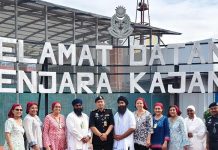
L-R: MSPBT president Harjit Singh Sidhu, MSPBT VP Lakhbeer Singh and Dr Kaldip Kaur – Photo: Supplied
By Asia Samachar Team | MALAYSIA |
A Sikh professionals’ outfit has contributed 100 sets of personal protective equipment (PPE) suits to Hospital Sungai Buloh.
The Malaysian Sikh Professional and Business Trust (MSPBT) donated the PPE suits which included face masks, gloves, shoe covers and goggles.
They handed the suits to hospital director Dr. Kuldip Kaur Prem Singh, a specialist in in public health medicine.
MSPBT said this was its small contribution to the many frontliners working tirelessly around the clock to keep Malaysians safe.
MSPBT is a non-profit organisation which strives to provide professional guidance, know how, support and educational direction to Malaysians irrespective of race and creed.
ASIA SAMACHAR is an online newspaper for Sikhs / Punjabis in Southeast Asia and beyond.Facebook | WhatsApp +6017-335-1399 | Email: editor@asiasamachar.com | Twitter | Instagram | Obituary announcements, click here |
In June 1984, the Indira Gandhi government in India ordered a military assault on the Darbar Sahib (Golden Temple) in Amritsar, codenamed ‘Operation Blue Star’. Led by the Indian army, it was ostensibly aimed at ‘flushing out’ Sant Jarnail Singh Bhindranwale and his associates from the holy shrine.
Three decades later, the calamitous event continues to be perceived in diametrically opposite terms by the Indian state and mainstream media, and the Sikh community and diaspora. This difference in perceptions persists despite senior Indian politicians confessing in recent times that the operation was a blunder.
A report published by the Citizens for Democracy titled, ‘Report to the Nation: Oppression in Punjab‘ (which was banned in 1985), sums this up well:
“The contrast between ‘Operation Blue Star’ and ‘Ghallughara’ [holocaust] as two different perceptions of the same reality is symptomatic of the wide gap between the official version and the people’s recollections of what really happened at the Golden Temple when the army attacked it in June 1984. Listening to the gripping eye-witness accounts of those who were inside Golden Temple at that time, we felt the need to tell the truth, the as-yet untold story and in the process to correct the Government’s version as put out by the Army, the Press, the Radio, the TV and the White Paper.”
LINGERING TRAUMA
Sikhs worldwide commemorate the week from 1-8 June as Ghallughara (meaning ‘holocaust’) week. The earlier Ghallugharas included looting, plundering and atrocities committed against the Sikhs in the 18th century. Thousands of innocent women and children were slaughtered in those pogroms.
Notably, the global Sikh community, which includes not just ‘hardliners’ or ‘radicals’ but the overwhelming majority of Sikhs around the world, including those who have “moved on”, acknowledge the fact that Operation Blue Star had an indelible impact on the Sikh psyche and had only resulted in deterioration of the situation in Punjab between 1984-1994. Apart from hurting Sikh sentiments, the military assault proved to be a catalyst for more militant violence in Punjab.
What more, following the bloody military campaign, Captain Amarinder Singh, the present Chief Minister of Punjab, had resigned from Parliament and the Congress Party to register his protest.
As the operation unfolded, thousands of pilgrims who had come to pay obeisance on the Martyrdom Day of Guru Arjan Dev (the fifth Sikh Guru) on 3 June, found themselves stranded in the Darbar Sahib. Many were even killed in the attack.
Yet, it isn’t just about the loss of lives of innocent pilgrims, but also the damage caused to the temporal seat of the Akal Takht, which enraged the Sikh community.
The differences in the government’s version and that of the Sikhs are evident from the figures of casualties and the damage caused to the Darbar Sahib. The official casualty figure of 492 seems grossly underestimated as thousands of pilgrims were stranded in the complex at the time of the military action.
There is not an iota of doubt that Sikhs, as a community, have faced numerous upheavals even before Operation Blue Star, and have refrained from victimhood. But, it is highly insensitive to not acknowledge the pain and trauma caused to the Sikhs by this cataclysmic event.
TRANSPARENCY, STORYTELLING AND MYTH-BUSTING
In recent years, there have been numerous demands for declassification of important documents pertaining to 1984. In Britain, the first turbaned Sikh Member of Parliament, Tanmanjeet Singh Dhesi, has sought an inquiry into the role of the then Margaret Thatcher government in the operation. Declassified documents revealed that London had provided assistance to the Indian government in undertaking the campaign.
Indian lawmakers too have demanded a declassification of documents related to the Operation and the Sikh massacres that followed the assassination of Prime Minister of Indira Gandhi the same year.
It is also essential to have a narrative, which counters the myths peddled with regards not just the operation, but also the events preceding and succeeding it. This narrative should be fact based and not born out of of hate against any particular community.
One of the important developments in recent years has been attempts by the Sikh civil society to document the history of the tragic events relating to 1984. On the one hand, diaspora-based Sikh research organisations, like the Sikh Research Institute (SikhRI), have done a remarkable job in documenting the events of the ill-fated year in an academic manner.
Apart from this, the Sikh media is trying to fill the gaps left by the mainstream media in India. Very few mainstream media organisations, like The Wire and The Quint, have given space to the Sikh perspective. Several Sikh media publications and channels are countering this silence over the events of 1984 in mainstream circles.
Significantly, some of these channels were banned on 6 June. Even in 2015, the Shiromani Akali Dal (SAD) government in Punjab, a Bharatiya Janata Party (BJP) ally, had requested New Delhi to ban “provocative” Sikh channels, websites and social media pages.
Cover page of Chauraasi Ki Nainsaafi: The continuing injustice for the 1984 Sikh massacre
THE IMPORTANCE OF MEMORIALISATION AND DOCUMENTATION
The initiatives Sikh diasporic organisations and the Punjabi media to memorialise the events of 1984 and present the Sikh perspective are important because for long, many could not get over the trauma, while many who occupied government and military positions during the operation now have better visibility to put forward their views after retirement.
It would be fair to say that the discussions of 1984 have not taken place within echo chambers. Individuals from different political persuasions have been given the opportunity to present their views. There has been an attempt by the Punjabi media to interview senior politicians, bureaucrats, army officers, and journalists who had interviewed Bhindranwale.
Many Punjabi TV channels have been interviewing eyewitnesses, and apart from the tragic events in the first week of June, they have also got an opportunity to highlight some of the important events, which have not gotten enough attention.
While it is tough to express the overall damage caused by the attack, there are a few critical facts that have hardly gotten any mention in the national media and have received attention only as a result of Punjabi civil society and media narratives.
First, few people know that apart from the Golden Temple, thirty-seven other Gurudwaras in Punjab were attacked simultaneously.
Second, in the mainstream media, the excesses committed on pilgrims who were found alive during and after the operation have never been given much attention. They were treated like prisoners of war. According to the eyewitness account of one Shiromani Gurdwara Parbandhak Committee (SGPC) member, as mentioned in ‘Report to the Nation: Oppression in Punjab‘:
“They (the Army) treated the inmates of the Complex as enemies and whenever there was any person wounded on account of the firing, no Red Cross people were allowed to enter, rather the Red Cross personnel had been detained beyond the Jallianwallah Bagh (more than a kilometer away from the main entrance to the Golden Temple from the Chowk Ghanta Ghar side).”
Over 375 men and women who were found in the Golden Temple when the army entered on 6 June were arrested and kept in Jodhpur jail. They were released between 1989 and 1991.
But even more incriminating were the claims made by Brahma Chellaney in his daring reports for the Associated Press after the operation. According to him, ‘several’ young Sikhs had been shot by security forces with their hands tied behind their backs. The report quoted medical sources who had conducted the postmortems.
Third, another tragic event that followed Operation Blue Star was Operation Woodrose, in which the army launched a brutal campaign in Punjab’s countryside under the pretext of detaining suspected militants. Many innocent Sikh youth, especially Amritdhari Sikhs, were tortured and murdered. This has received scant attention in mainstream narratives.
Fourth, during the operation, the Sikh Reference Library inside the Golden Temple was burnt down and its contents confiscated by the central agencies. Sikh reference materials, pictures and even handwritten manuscripts of the Sri Guru Granth Sahib perished.
Fifth, several army officers involved in the operation were given gallantry awards in 1985. This has drawn widespread criticism from the Sikh community. There have been demands from Sikh politicians, such as Tarlochan Singh and Sukhdev Singh Dhindsa, to withdraw the awards.
Akal Takht, Amritsar
BETWEEN CLOSURE AND MOVING ON
Memorialisation and documentation of the events of 1984 from a Sikh perspective become all the more important because even large sections of the “liberal” sections of the media either justify the military action or speak about moving on without any efforts towards reconciliation. A good example of this is a documentary by BBC Hindi, where there was no effort to give space to a Sikh perspective.
While there will never be any closure as far as Operation Blue Star is concerned, the Sikh community has tried to move forward. Further, sections of the Indian civil society have not just expressed solidarity with Sikhs, but also played a role in keeping memories alive.
Perhaps the best way forward today would be to set up a truth and reconciliation commission, which covers the painful period beginning 1984 and under which, the oral history of the events is meticulously recorded using survivor accounts.
Without dialogue between individuals with different views, acknowledging the trauma of the Sikh community, and moving away from the Indian state’s prism of looking at the events, genuine reconciliation appears implausible in the near future.
Tridivesh Singh Maini is a Delhi-based political and policy commentator, and is affiliated with the OP Jindal Global University. The article first appeared at Eleventh Column. Views expressed are the author’s own.
ASIA SAMACHAR is an online newspaper for Sikhs / Punjabis in Southeast Asia and beyond.Facebook | WhatsApp +6017-335-1399 | Email: editor@asiasamachar.com | Twitter | Instagram | Obituary announcements, click here |
Pakistan virtual fashion show Catwalk Cares – Photo: Catwalk Cares blog
By Asia Samachar Team | PAKISTAN |
Pakistan saw its maiden virtual fashion show last week with 19 local brands showcasing their latest collections.
The three-day ‘‘Catwalk Cares’’ virtual fashion took place from June 5-7 was the brainchild of Catwalk Event Management & Productions CEO Frieha Altaf.
Pakistan virtual fashion show Catwalk Cares – Photo: Catwalk Cares blog
It was earlier postponed with respect to the memory of those who tragically lost their lives in the Pakistan International Airlines (PIA) A-320 jet crash which included Pakistani supermodel Zara Abid.
Among the designer lineups included Khaadi, Maheen Karim, Amir Adnan, Nida Azwer, Huma Adnan and Shamaeel Ansari. See here.
The show was dedicated to the frontliners in the battle against Covid-19.
ASIA SAMACHAR is an online newspaper for Sikhs / Punjabis in Southeast Asia and beyond.Facebook | WhatsApp +6017-335-1399 | Email: editor@asiasamachar.com | Twitter | Instagram | Obituary announcements, click here |
Nephews, Nieces, Relatives and Friends to mourn his loss
Cortege leaves from No. 20, Jalan Melati 11, Taman Sri Melati, Batu 8, 68100 Batu Caves, Selangor Darul Ehsan at 12.30 pm on 9th June 2020 (Tuesday). Cremation will be held at 1.30 pm at Jalan Loke Yew Crematorium, Kuala Lumpur.
Path Da Bhog and Antham Ardas will be held at Gurdwara Sahib Selayang Baru, PT 18295, Jalan 10A, Taman Selayang, 68100 Batu Caves, Selangor Darul Ehsan on Sunday 21st June 2020 from 10.00 am to 12.00 noon followed by Guru Ka Langgar ( Lunch).
The family would like to thank the Doctors and Nurses of Ward 4C, Hospital Selayang, Family, Relatives and Friends for the their kind support.
Contact:
House 03-61381172
Salim 016-2201581
Sunita 019-3835097
Message from Family: Due to Recovery Movement Control Order (RMCO), we have been advised to keep the Path Da Bhog as a small affair. Hence, this announcement is meant to inform Relatives and Friends of his demise. We appreciate the love and support that we have received during our bereavement.
| Entry: 8 June 2020 | Source: Family
ASIA SAMACHAR is an online newspaper for Sikhs / Punjabis in Southeast Asia and beyond.Facebook | WhatsApp +6017-335-1399 | Email: editor@asiasamachar.com | Twitter | Instagram | Obituary announcements, click here |
You can’t know where you’re going, if you don’t know where you’ve been. – William Gibson
Stepping up my game… #toonistbains #
ASIA SAMACHAR is an online newspaper for Sikhs / Punjabis in Southeast Asia and beyond.Facebook | WhatsApp +6017-335-1399 | Email: editor@asiasamachar.com | Twitter | Instagram | Obituary announcements, click here |
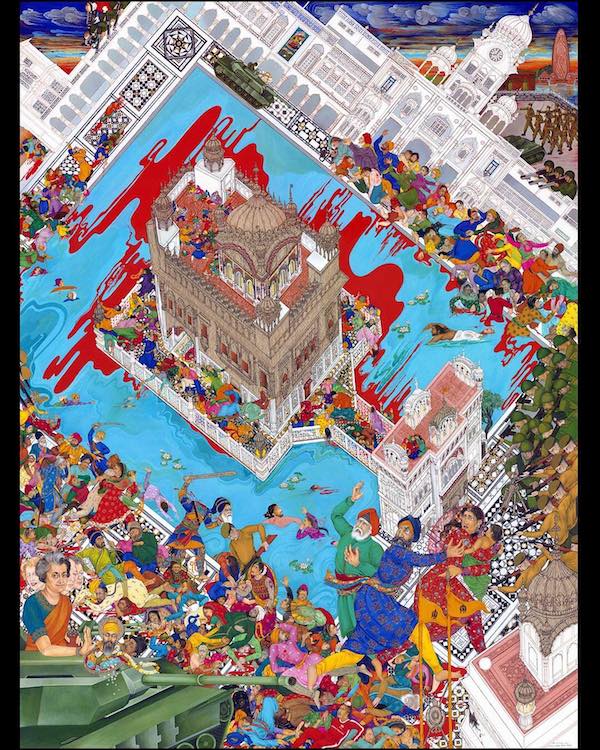
This week in 1984, Indian PM Indira Gandhi launched a military attack on the historic centre of the Sikh faith in Amritsar (‘Harmandir Sahib’, or The Golden Temple complex) and other Sikh shrines. Our artwork, ‘Nineteen Eighty-Four’ focuses on the thousands of pilgrims trapped, injured or killed by the crossfire (a fact censured at the time) which lasted several days. The victims of 1984 are still seeking justice and 36 years on, it’s sad to see and disgraceful that minority groups in India continue to be vilified and persecuted today. Different Government, same old tricks!
A detail of Indira Gandhi depicted as a multi-headed political demon symbolises how the suffering of innocent people caused by an abuse of power for political gain, is a universal occurrence.
Posting this in memory and support of all victims of State violence across the globe.
.
#operationbluestar #sikhgenocide #goldentemple #sikhcoalition
Nineteen Eighty-Four artwork by The Singh Twins
(Adapted from the Facebook posting on 5 June 2020 by The Singh Twins. Click here for more artwork on this topic)
ASIA SAMACHAR is an online newspaper for Sikhs / Punjabis in Southeast Asia and beyond.Facebook | WhatsApp +6017-335-1399 | Email: editor@asiasamachar.com | Twitter | Instagram | Obituary announcements, click here |
A UK-based Sikh channel carrying independent news and views of the community is facing disruption in India.
Akaal Channel has not been assessable via Facebook or Youtube since today (6 June), according to promoters of the seven-year old channel and as confirmed by independent parties.
The disruption comes on the heels of an uproar within the Sikh community when they found that searches for the #Sikh hashtag had been blocked at Facebook and Instagram, two hugely popular social media platforms owned by billionaire Mark Zuckerberg.
“This is a direct onslaught on our freedom of expression,” said Akaal Channel founder Amrik Singh Kooner.
The broadcast disruption comes after Congress parliamentarian Ravneet Singh Bittu, the grandson of former Punjab chief minister Beant Singh, alleged that Akaal Channel had crossed “crossed all levels”, including running an interview with a supposed ‘terrorist’.
This is a second onslaught on the Sikh community involving Facebook. Just days before, Sikhs the world over were shocked when they found out that Facebook and Instagram had ‘mistakenly’ blocked the #Sikh hashtag since mid-March.
The hashtag blocking took place at a time when Sikhs globally were reflecting on the Indian army attack upon the Harmandir Sahib, popularly known as the Golden Temple, and countless other gurdwaras in Punjab in 1984. Referred to as the #1984 Sikh genocide, the incident also involved the killing and disappearance of thousands of Sikhs.
Akaal Channel is said to be watched in more than 150 nations.
“The launch ardas was done at the Akaal Takht. I had invested whatever little savings I had into this channel,” said Amrik in a statement read out today.
In an immediate comment, UK-based academic activist and Akaal Channel presenter Dr Gurnam Singh said it was ‘totally outrageous’ for the Indian state to ban the channel broadcasts in India, apparently at the behest of Congress lawmaker.
“Even more worrying is the fact that YouTube and Facebook are dancing to the tune of the the Indian State by blocking the channel from their platforms. So much for freedom of speech and democracy!,” he said.
ASIA SAMACHAR is an online newspaper for Sikhs / Punjabis in Southeast Asia and beyond.Facebook | WhatsApp +6017-335-1399 | Email: editor@asiasamachar.com | Twitter | Instagram | Obituary announcements, click here |
Hoboken mayor Ravinder Singh Bhalla at a #BlackLivesMatter protest
By Asia Samachar Team | UNITED STATES |
Hoboken Sikh mayor and his family joined thousands of #BlackLivesMatter protest Friday (5 June 2020). Mayor Ravinder Singh Bhalla also signed a pledge to review Newark’s use of force policies. In 2017, Ravinder became the US’ only directly elected turbaned Sikh Mayor with his victory at Hoboken, New Jersey.
ASIA SAMACHAR is an online newspaper for Sikhs / Punjabis in Southeast Asia and beyond.Facebook | WhatsApp +6017-335-1399 | Email: editor@asiasamachar.com | Twitter | Instagram | Obituary announcements, click here |
SIKHS IN ACTION: United Sikhs Malaysia official Mandeep Singh brought some 1.5 tones of groceries to the Orang Asli, one of the Malaysian aborigine groups, in Sungai Jang in Kuala Kubu Bharu, Selangor, in April 2020. – Photo: United Sikhs
By Kamal Preet Kaur | OPINION |
Picture this. A tiny flickering light at the end of a long dark tunnel. As you move closer a figure starts to appear, a full-bearded man with a turban on his head, holding a lamp with a reassuring smile. Back to reality and the picture doesn’t disappoint.
In the times of Covid-19, while the whole world has been pushed indoors, standing shoulder-to-shoulder with professional medics, essential workers and relief teams as harbingers of hope, is a comparatively small religious community of Sikhs. They are a cut above the rest due to its compassion, empathy, generosity of spirit, fearlessness and an iron will to serve. They stand out in the vast sea of humanity with their distinct colourful turbans, adorning them proudly like a crown, which comes with a responsibility to seek and work for Sarbat Da Bhala, welfare of one and all.
The answer to ‘where do these miniscule number of visibly religious people get their lion-heartedness and a tender touch?’ lies in the basic tenets of the faith that originated about 550 years ago in the North West Indian region of Punjab. It’s the magic of their faith that gives them strength to go out and help those in distress despite the risk of contagion.
‘Faith’ is derived from Latin fides, meaning ‘trust, faith, confidence, reliance, credence, belief.’ And Sikhs, the followers of a belief system founded by Guru Nanak, more than just believe in the Guru’s commandments of Kirat Karna (earning honest livelihood), Naam Japna (meditating on God’s name) and Vand Chhakna (sharing with those less fortunate); they endeavour to live up to it as a community and individuals every day.
The statement by the 19th century Oxford professor, author and poet Matthew Arnold — faith is neither the submission of the reason, nor is it the acceptance, simply and absolutely upon testimony, of what reason cannot reach. Faith is: the being able to cleave to a power of goodness appealing to our higher and real self, not to our lower and apparent self — sits well with the believers of the Sikh faith.
FAITH FUNDAMENTALS
Guru Nanak taught that living an active and contributory life of truthfulness, self-control and purity is above the metaphysical truth, and that the ideal man is one who establishes union with God, understands and carries out His Will. He made Simran (meditation) and Sewa (self-less service) as two important pillars of the faith which help Sikhs realise the Divine within their consciousness.
Meditating on God’s name elevates the spirit to higher levels of consciousness and self-less service keeps the seeker humble in the grand scheme of the Divine Order. Balancing the two is the crux of Sikh theological, congregational and individual practice. Guru Nanak also established the system of langar or communal kitchen, in order to demonstrate the need to share and have equality between all people.
The importance of langar as soul food was further signified by the third Guru, Guru Amar Dass who proclaimed ‘Pehle pangat, pachhai sangat’ asking all to first partake food served to them before joining the holy congregation. It signifies that if one can sit with others to eat without discrimination of caste, gender, colour, creed, religious and financial standing, only then does one become ready to realise Divine.
Fifth Guru, Guru Arjan Dev commanded Sikhs to give ‘dasvandh’ one-tenth of their income for welfare causes. “The Provider” is an oft-repeated attribute of God in Sikh scriptures, and considered to be an important characteristic of the individual as well as the larger Sikh Body or Khalsa. The manifestation of the great benevolence of the Khalsa pours forth from the individual contributions of each of the Guru’s Sikhs multiplied manifold; and like a fountain, it showers the blessings from the common pool on all of those who open their arms to receive.
The Tenth Guru, Guru Gobind Singh, founded the Khalsa, the order of the Khalis (pure), saint-soldierly people, who would stand for the oppressed and the downtrodden. They would be fearless and fair, recognising all human race as one. He ordained “Manas ki jaat sabhai ekai pehchanbo.” It is also no coincidence that first one of the Five Beloved Ones (the first five to be initiated into the Khalsa fold) was called Daya Singh. Daya or compassion is the foundation for Dharam, the righteous conduct.
This is a glimpse into underlying teachings of the Gurus which motivate Sikhs to be beacons of hope when the going gets rough for the world. Whether it’s a manmade conflict, as in Yemen and Syria, or a natural calamity like a tsunami, hurricane, floods or forest fires, if there are Sikhs, they come together quickly to arrange aid and relief as required. This often includes delivering life-saving food supplies and other essentials to the people who are left reeling under the effect of these catastrophes. Covid-19 is no different. People around the world are suffering, and Sikhs, as commanded by the Gurus, have come together yet again to provide succour.
Gurjit Singh, Ravinder Singh Oberoi, head granthi, Jasbir Singh, Gurbir Singh Chadha, Arminder Singh and Simerjote Singh Chadha all Members of Gurdwara Guru Nanak Darbar Sikh community in Dublin with some of their food ready for delivery around the city. Photograph: Nick Bradshaw/ The Irish Times
LESSONS IN SELFLESS SERVICE
The way to go about doing relief work by putting the needs of others before their own, even at the cost of risking their own life, has been shown to the Sikhs by the Gurus themselves. There are historic precedents from the life and times of Gurus that guides the Sikh response to all calamities, including the current pandemic Covid 19.
In the last decade of the 16th century, India faced huge famine due to lack of rains. Later, bubonic plague in 1598 added to the miseries of the population. Historian Noor Al Hak records that Lahore, Punjab’s major trade and political centre during the Mughal period, saw huge devastation. Streets of Lahore were filled with corpses emanating unbearable stench and spreading disease. Emperor Akbar and his administrators abandoned their populace as situation spiralled out of control. It is then, the Fifth Guru, Guru Arjan Dev, took upon himself to alleviate the misery of the hapless poor and vulnerable people. The Guru, along with a group of Sikhs, physicians and volunteers travelled to Lahore with all monetary offerings received at Amritsar, the Guru’s abode.
The arrival of the Guru in Lahore brought hope and faith for those living in fear of death and despair. The team of volunteers set to work under Guru Arjan’s dynamic leadership to offer solace to the suffering masses. The first task was to take care of the dead, and people were paid to help clear the bodies off the streets, to be buried and cremated. Streets were cleaned. Langar was set up to feed the poor and destitute. Gurbani was sung to provide emotional and spiritual healing to those grieving. Physicians gave people all possible medical assistance those weakened by prolonged suffering and disease. To help get people back to work, Guru Arjan started a building project in remembrance of Guru Ram Dass ji, his father and the Fourth Guru. This provided economic support to many in need. Guru Arjan stayed there for eight months setting up a blueprint to help rebuild a society from ravages of death and famine.
Similarly, when small pox wreaked havoc in Northern India during the time of Eighth Guru, Guru Har Krishan, at the age of eight, showed amazing grace and courage while caring for those affected by the epidemic. He went from street to street, feeding, tending, comforting those infected and grieving. In doing so, he himself caught the infection and sacrificed his life for the greater good.
The Tenth Guru, Guru Gobind Singh’s life went fighting battles against tyrant Mughal and other enemy forces. One of his Sikhs, Bhai Ghanaiya, is revered for offering water to the fallen, hurt and dying soldiers on the battlefield. When he appeared in the Guru’s court to face complaints that he was helping the enemy, he had said “Dear Guru, as per your teachings, I only see the light of God in all. I see no enemy. Na ko bairi nahe begana, sagal sang humko ban aayi”. Guru Gobind Singh then gave him medicinal balm and asked him to not only offer water, but also tend to the wounded.
It is these life lessons from the Great Gurus that guide Sikhs to serve those in need no matter who and where they are, with humility and kindness. It is a step closer to Almighty. It is Guru’s commandment that Almighty Waheguru dwells in all living beings and serving the humanity, those less fortunate or less privileged, compassionate holding of hand, is all part of sewa, self-less service, that is important for a Sikh’s spiritual progress. Sewa karat hoye nehkami tiss ko hot prapat swami, says Guru Arjan, which means that those who serve others without any desire of reward or recognition, meet the Lord Master. Sikhs are not allowed to silently witness pain, injustice, suffering or discrimination and not do something about it. Their turbans bear testimony to the fact that Guru wanted them to remain visible, so that they can’t hide or run away from their social responsibility.
COVID-19 AND THE SIKH COLLECTIVE
With traditions of Sarbat Da Bhala (welfare of all) and Chardikala (positive mindset) under their belt, it is no surprise that despite the dangers posed by the novel coronavirus Sikhs are out of their homes, helping where needed.
In India, where the need is far too great due to sheer number of the poor caught in the crisis; Sikhs have geared up to serve. They have set up langars in various cities and streets across the country to provide sustenance where there is none. Hundreds and thousands of meals are being served through the gurdwaras. Many in Delhi have set up medical help to tend to the bleeding blistered feet of those who are having to walk hundreds of kilometres in summer heat. Others are pooling in money to offer travel services so that workers and labourers from different parts of India can reach their native places.
In other countries, where situation is not as alarming or as overwhelming as in India, suitable response and aid work has been put in place by various religious organisations, institutions, charities and individuals. Gurdwaras, the door to the Guru, that have had to close down worldwide to the general public following governments’ instructions during pandemic, have taken langar to those who need it most.
Thousands of bags of packaged, fresh, hot, vegetarian meals are being served to the homeless, vulnerable, elderly and those in need across continents. To spread and share Guru’s message to the regular congregations, now isolating, many gurdwaras are using latest technological ways to live stream programmes on social networks like YouTube and Facebook. The collaboration during the times of social distancing has been possible largely because the elderly who often run services in the gurdwara had to be shielded for their safety and young people, who were normally at the fringes of gurdwara affairs have had to take active part in running food and essential services.
Sri Guru Singh Sabha, Southall, the largest gurdwara outside India, has been serving 2,000 meals a day through its mobile langar sewa. Similarly, gurdwaras across London, Midlands, North, South of England, as well as Wales, Scotland and Sikhs in Northern Ireland are volunteering to feed the left-outs in the UK. They are all offering to provide meals and urgent transport, provide shopping for food and other essentials such as medication, as well as providing telephone support for emotional wellbeing. Meanwhile, in Slough, Guru Maneyo Granth Gurdwara has gone a step further, by not only providing delivery of food and essentials to the community, but offering to open up its entire 4-acre site to the NHS for use as an emergency hospital, if needed.
Stellar charity work is being done by Khalsa Aid, Midlands Langar Sewa Society, Langar Aid, NishkamSWAT to reach out to the overworked Covid-19 frontline staff in hospitals and police stations besides enhancing their regular homeless and other relief work. Many of these charities are also providing protective and sanitary equipment such as face masks, toilet rolls and gloves.
United Sikhs have set up food banks in association with gurdwaras in the UK and other parts of the world. There are a large number of Sikh doctors and nurses, serving the NHS in the UK, looking after the Covid patients. Laudable work is being also done across the US, in California, New York, New Jersey, Montana and Wisconsin. Sikhs are serving the needy in Canadian cities of Vancouver, Brampton, Montreal, Ottawa, Victoria, Toronto and Winnipeg. They have collaborated and offering outreach services in Melbourne, Adelaide and Sydney in Australia as well as Auckland and Christchurch in New Zealand. Sikh aid and relief work in parts of Malaysia, Thailand, Singapore, Pakistan and Kenya has also made rounds on social media, which has played a vital role in this worldwide charitable effort.
It is also interesting to note that many Sikhs who haven’t been able to make direct contributions to these ongoing relief efforts due to their own challenging circumstances regularly hold group prayers, kirtan and virtual gurbani recitations around the world. Videos of Sikh households in parts of India, sitting in their balconies or outside their front doors, reciting prayers for Sarbat Da Bhala make an inspiring watch. Similarly, diaspora Sikhs have made the most of the lockdown scenario by organising live religious and spiritual, hymn singing, discourse and discussion programmes on social media to uplift spirits and inspire. All these have helped reinforce Guru’s message on bhana, the Divine Will. Gurbani says where nothing helps, chanting and meditating on God’s Name creates a powerful force and provides sustenance. Spiritual wisdom shows us the way to cope with uncertain times, to deal with grief and suffering in life.
Free food distribution at Gurdwara Sahib Myanmar – Photo: Supplied
COVID LEGACY FOR SIKHS
Unless we learn to revere this Earth as mother and taking leaf from gurbani understand the concept of Pavan Guru, Pani Pita, Mata Dharat Mahat and live in harmony with nature pandemics and natural calamities will continue to reoccur. There needs to be imminent positive shift in the collective behaviour of humans. Sikhs are armed with great set of faith values and should continue to be force for greater good. Langar is not just nourishment for unfed bodies, it also keeps alive faith in inherent human goodness. It will remain significantly relevant in foreseeable future, and until there remains inequality.
Shabad, the word of God, has power to transform lives, uplift the downtrodden and give meaning to our transient existence. Lives should remain as simplified as they have been during lockdowns. Gurdwaras should continue with outreach services and become sanctuaries as envisioned by the Great Gurus.
Words of Martin Luther summarise what faith means to Sikhs– Faith a living, daring confidence in God’s grace, so sure and certain that a man could stake his life on it a thousand times.
Kamal Preet Kaur is a London-based freelance journalist writing diaspora stories for various publications in India.
ASIA SAMACHAR is an online newspaper for Sikhs / Punjabis in Southeast Asia and beyond.Facebook | WhatsApp +6017-335-1399 | Email: editor@asiasamachar.com | Twitter | Instagram | Obituary announcements, click here |
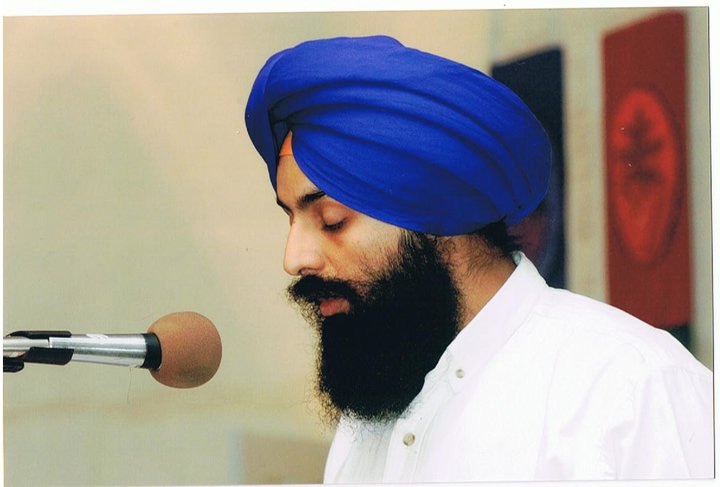
Sawinder Singh – Photo: The Sikh Coalition website
By Sawinder Singh | OPINION |
I was in school in Amritsar, Punjab, on June 1, 1984. It was 12:30 pm when we heard the unmistakable, chilling sounds of gunshots firing. We students were immediately sent home. However, for me, home was right beside the Darbar Sahib complex (also known as the Golden Temple). In fact, my family played kirtan at Darbar Sahib; they are Hazoori Raagis.
I scrambled on my bike and started riding home, in the direction of the gunshots. I was ten.
I remember hearing the gunshots as I pedalled through the narrow alleys of Amritsar. I remember seeing a couple of bodies lying in pools of blood. I was not afraid, but I knew I had to quickly get home.
I managed to reach home safely, but not everyone was safe. This marked the beginning of days of horrific, unimaginable violence. This was the onset of the Indian military’s attack on Darbar Sahib and dozens of other gurdwaras throughout Punjab. Thousands of innocent Sikhs were killed at the hands of the Indian military.
Code-named Operation Bluestar, the assault set the stage for a decade of violent state repression.
When I made it home, my mother was crying because she was so relieved to see me, knowing not all mothers were so lucky. She hid me under a bed, where I heard gunshots throughout the day.
The next day, after the curfew was lifted, my family and I also went to the Darbar Sahib complex. Sangat from all over began pouring into Darbar Sahib for Guru Arjan Dev Ji’s Shaheedi Divaas. By the following day, not only was Amritsar filled with sangat, but no one had ever seen that much military presence in Amritsar.
Once again, there was a curfew. Because of that curfew, we could not take my sick chachaji (uncle) to a hospital. He passed away that night.
On June 4th, at about 4:30 am, we awoke to bombardment. It sounded like the earth was being ripped apart at the seams – a sound I would never forget. Over the next two days, the violence, the blood and the devastation that I saw is hard to speak of, but it is permanently seared into my memory.
People sometimes ask, “Why should we remember such a dark period of our history?” We must remember that period of our history because it is still our history. Our loved ones cannot be left behind and our stories cannot be distorted. We cannot let others dictate our history.
Thousands of Singhs and Kaurs were horrifically killed. Yet the Sikh community, as always, shows resilience in the face of this violent repression. If we were able to survive 1984 as a community, like I did as a ten-year-old boy, we can survive anything.
It is our responsibility to remember and draw strength from our Panth’s sacrifices.
Chardi Kala,
Sawinder Singh
[Born in Amritsar and brought up within the Darbar Sahib complex, Sawinder Singh is a former Hazori Raagi of Darbar Sahib and founded the Sri Harmandir Sahib Academy. He currently works and resides in Maryland with his family. Sawinder Singh will be featured in the Sikh Project photography exhibit this year.]
Interested in learning more? Here is a list of resources:
ASIA SAMACHAR is an online newspaper for Sikhs / Punjabis in Southeast Asia and beyond.Facebook | WhatsApp +6017-335-1399 | Email: editor@asiasamachar.com | Twitter | Instagram | Obituary announcements, click here |