UA-56202873-1
Page 472

West Point gets first observant Sikh cadet

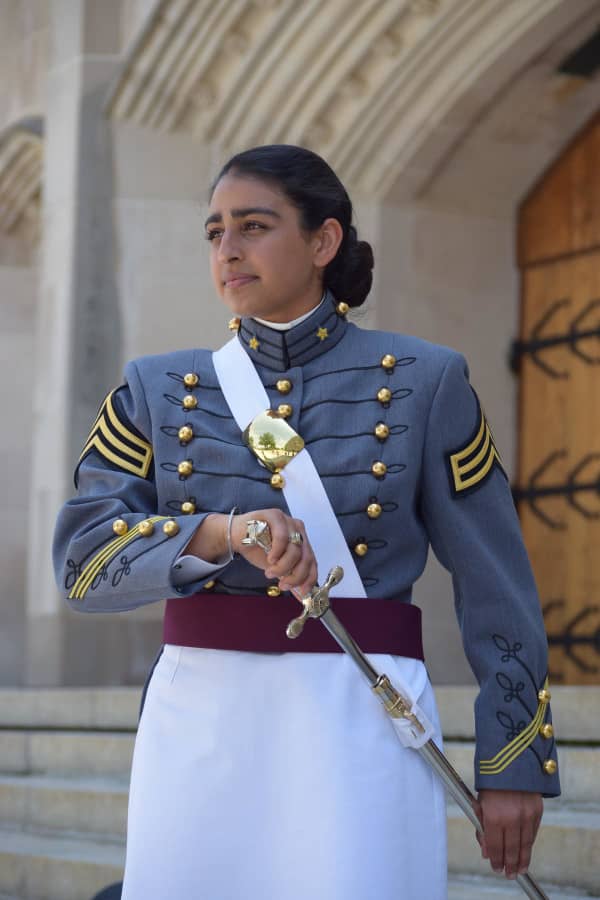
Anmol Narang said she mailed her application to West Point from a hotel in Hawaii immediately after visiting the Pearl Harbor memorial during her junior year in high school.Credit – Photo: NYT / Second Lt. Lauren E. Karbler
By Annie Karni | UNITED STATES |

WASHINGTON — When President Trump takes the stage on Saturday to deliver the commencement speech at West Point, one of the new Army officers he will be addressing will be an Indian-American woman breaking a barrier as old as the 218-year-old military academy.

The woman, Anmol Narang, 23, a newly minted second lieutenant, will become the first observant Sikh to graduate from the United States Military Academy, a milestone that comes as racism appears to be on the rise within the military’s ranks and as Sikhs still face discrimination in some of its branches.

With the exception of the Army and the Air Force, the military largely prohibits its members from serving with turbans, unshorn hair or unshorn beards — all of which are articles of faith for Sikhs.

Lieutenant Narang, who grew up in Roswell, Ga., said military service was always in her blood. “My grandfather was in the Indian Army,” she said in an interview. “It was always a big part of my life and something I was always interested in.”

She recalled mailing her application to West Point from a hotel in Hawaii during her junior year in high school. She had just visited the Pearl Harbor National Memorial and felt inspired to serve.

While Lieutenant Narang is the first observant Sikh to graduate from the academy, she is not the first Sikh cadet to do so.

During his time as a West Point cadet, Simratpal Singh cut his hair short and kept his beard shorn. Having to do so caused him “significant shame,” according to a lawsuit he filed against the Defense Department in 2016, after he had become an Army captain. He was seeking an accommodation so he could practice his religion and serve in the military.

After West Point, Lieutenant Narang plans to attend a basic officer leadership course. In early January, she is expected to assume her first post at the Kadena Air Base in Okinawa, Japan.

See full story, ‘Latest Crop of West Point Graduates Includes First Observant Sikh Cadet’ (The New York Times, 12 June 2020), here.

RELATED STORY:

US Air Force issues new guidelines for beards, turbans and hijabs (Asia Samachar, 14 Feb 2020)

ASIA SAMACHAR is an online newspaper for Sikhs / Punjabis in Southeast Asia and beyond. Facebook | WhatsApp +6017-335-1399 | Email: editor@asiasamachar.com | Twitter | Instagram | Obituary announcements, click here |

Afghan Sikh battled mental health while at Harvard

Awnit Singh Marta – Photo: Danu Mudannayake
By Asia Samachar Team | UNITED STATES |

Many were delighted to read the news of an Afghan Sikh making it good at one of the top universities in the United States. Landing a degree from the Harvard University was no mean feat, more so for someone from a community that have lived through a challenging period. So, when Afghan-born Awnit Singh Marta graduated, everyone rejoiced.

But the journey has been far from smooth sailing.

When asked what was the toughest nut to crack during your university days, he bluntly told Asia Samachar: “Mental health without a doubt. This was one of those things I never expected to have to ever worry about and I think part of the reason is the lack of exposure to these issues growing up.”

You heard right: mental health! And this is not something that you hear very often in the community circles. Awnit himself was very much aware of it, and it took him some time to get a handle on it.

“Our community has a long way to go in understanding issues like depression and anxiety – not only is it important to know about them but also how to help someone who is going through them as saying, ‘Don’t stress yourself,’ or ‘Don’t worry too much,’ does nothing to help,” he told Asia Samachar in an interview after passing through Harvard.

“The way I got help for this was by seeking mental health counselling. I remember when I finally went with much convincing from my close friend and I do not regret going at all.”

At the end, he emerged as the first generation student from his family to graduate from a university.

“I am a Sikh. I am an Afghan. I am a refugee. I am a first gen student. And from today, I am a graduate of Harvard,” he shared on his social media accounts last month upon his big day at the university.

While it’s a new beginning, it comes after much trial and tribulations for him and his family. His parents left Afghanistan when he was less than a month old, seeking refuge in the Netherlands. They then moved from one country to another – finally ending up in England – so that their children could get the education that they never received.

“I worked three jobs freshman fall, my mental health tumbling alongside my GPA. I’ve delivered laundry, flipped burgers, cleaned dorms, stocked shelves, ushered for events,” he had said in his social media update.

That caught the attention of Asia Samachar which reported on his success in a story earlier. We then interviewed him.

How was it in the early days in the Netherlands, we asked.

“My family was the only Sikh family in the neighbourhood and despite it being the early 2000s, we received nothing but love from our town. My parents were often invited to speak at schools about our faith and were received with curiosity and kindness everywhere,” he said.

After some time, they family moved to England where they could plug into a wider Afghan Sikh community. They now live in Southall.

“I believe it was the pursuit of us having access to our community,” he said when asked what made the family move again. “The UK has been blessed with an incredible mass of Sangat – especially Afghani Sikhs. We still remember The Netherlands very fondly and are grateful for both places for what they have given to us.”

Awnit Singh Marta at Harvard University – Photo: Danu Mudannayake

Here are Awnit’s responses to our questions.

You seem to have done quite a few things during your study stint at Harvard. What is the biggest lesson you picked up?

I think the biggest lesson I picked up during my four years is the importance of time. This struck me very early on. Harvard students have it ingrained in their culture to be involved in multiple extra curricular activities, putting on a lot of pressure that comes with taking classes that demand so much from us. Though at times it was very stressful, I’ve come out with a new appreciation for what it means to be productive. We all have the ability to do so much, we’ve just come to the realisation of what we can do and how much time we have in a day to work towards those abilities.

What was the toughest nut to crack during your uni days? What did you do?

Mental health without a doubt. This was one of those things I never expected to have to ever worry about and I think part of the reason is the lack of exposure to these issues growing up. Our community has a long way to go in understanding issues like depression and anxiety – not only is it important to know about them but also how to help someone who is going through them as saying, ‘Don’t stress yourself,’ or ‘Don’t worry too much,’ does nothing to help.

The way I got help for this was by seeking mental health counselling. I remember when I finally went with much convincing from my close friend and I do not regret going at all.

What would you like to tell Sikhs who enter universities, whichever and wherever, in the world?

Keep your Sikhi close to you. Always. For much of my first two to three years at university, what kept me grounded and brought some peace to my hectic time was going to the Gurdwara every Friday evening. It would allow me to unplug, and gather with beautiful Sangat. We would do some Seva at the end and then head out to get ice cream or go bowling. These ‘Gurdwara Gangsters’, as I started calling them, remain close to my heart. I would also tell these Sikhs to speak in Panjabi wherever and whenever possible or learn if you haven’t had the chance to. Knowing your own language is a blessing.

Have you ever been back to Afghanistan?

Unfortunately not.

What comes to mind when you think of Afghanistan?

What comes to mind is a beautiful country, especially from what my parents have told me. I hope I am able to experience it one day.

What did the wider Afghan Sikh community say when you graduated form Harvard?

I think both my family and I were overwhelmed by the love and grace we received from people all around the world when I graduated. They were immensely proud of me. Their dream was for us to pursue the education they never received. I don’t think any of us had ever thought it would be at one of the best institutions in the world.

How do you see the situation of Afghan Sikhs today – those abroad and those still in Afghanistan?

There are many perspectives to look from on Afghan Sikhs. On the one hand, many youngsters are graduating from universities and going on to bring more prosperity for the community; our institution in Southall, Gurdwara Guru Nanak Darbar, has helped thousands of young Sikhs learn Gurmukhi and connected them to Sikhi. On the other hand, the struggle for Sikhs continues in Afghanistan – I hope that they are able to find peace, whether it is by leaving Afghanistan or with the end to violence in Afghanistan.
My urge to all Sikhs would be to realise how much power their voice has and to make full use of it. Run for office or put pressure on those with power. This is the only way we will achieve justice.

#BlackLivesMatter is the talk at the moment. Would you like to say something about it?

I, the Sikh community, and the entire south asian community should always stand with the oppressed. For centuries, systemic racism has targeted black lives and I stand in solidarity – Black Lives Matter.

RELATED STORY:

From flipping burgers to Harvard. A story of an Afghan Sikh refugee (Asia Samachar, 29 May 2020)

First Afghan Sikh lawyer in England chose law. Here’s why. (Asia Samachar, 12 March 2020)


ASIA SAMACHAR is an online newspaper for Sikhs / Punjabis in Southeast Asia and beyond. Facebook | WhatsApp +6017-335-1399 | Email: editor@asiasamachar.com | Twitter | Instagram | Obituary announcements, click here |

Physically challenged Sikh boy designs facemask holder for turbans, tudung

Facemask holder for turban, tudung. Photo modeled by a friend.
By Asia Samachar Team | MALAYSIA |

If you have been having some problem fixing the facemask onto your turban, help is on your way. At the same time, you will also be giving a boost to a physically challenged Sikh boy who made the facemask holders.

A 11-year old boy, who is deaf and mute since birth, came up with the idea and started producing them. His friends from the Kuala Lumpur gurdwara that he frequents are chipping in to help him to market his product.

PRODUCE DETAILS

1. Colours available: At the moment, Blue and white

2. Sizes: Small and Large (for “dastaar”)
Small: Length – 200 mm, Width – 37mm
Large: Length – 270 mm, Width – 47mm

3. Price: Small = RM2.00, Large = RM2.50 (Excluding delivery charges. However, arrangement can be made to deliver larger quantity to specific Gurdwaras (in KL/ Selangor). Sold minimum 5 pieces in a pack (may mix).Proceeds will be shared with the boy.

4. Customisable, if you wish to have something else besides Khanda or plain. Subject to quantity and design.

5. Product is made of durable plastic

6. To order, call 012-3052355 (WhatsApp preferred). Banking details will be provided.

RELATED STORY:

Facemask & turban hacks (Asia Samachar, 22 May 2020)


ASIA SAMACHAR is an online newspaper for Sikhs / Punjabis in Southeast Asia and beyond. Facebook | WhatsApp +6017-335-1399 | Email: editor@asiasamachar.com | Twitter | Instagram | Obituary announcements, click here |

Vancouver city council formally apologizes for historic, racist actions around Komagata Maru

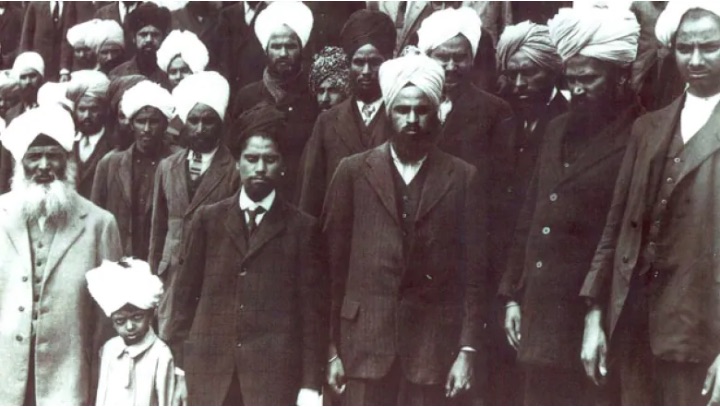
The Komagata Maru, a Japanese charter ship, arrived in Vancouver on May 23, 1914, carrying 376 people from India who were British subjects under the Commonwealth entitled to come to Canada. The vast majority of them were turned away.- Photo: CBC News
By Roshini Nair | CANADA |

On Wednesday, Vancouver City Council unanimously passed a motion to formally apologize for actions of members of the 1914 city council regarding the Komagata Maru incident and declare May 23 as “Komagata Maru Remembrance Day.”

The Komagata Maru, a Japanese charter ship, arrived in Vancouver on May 23, 1914, carrying 376 passengers from India who were then British subjects under the Commonwealth and entitled to immigration to Canada. They were denied entry by immigration officials, based on the prevailing discriminatory practices at the time that called for a curtailing of Asian immigration.

The ship remained docked in the harbour for two months, its passengers lacking proper access to food and water. The ship was eventually forced to return to India.

Upon arrival in what is now Kolkata, India, the ship was stopped by British soldiers. Nineteen passengers were killed and others imprisoned following an ensuing riot.

The provincial government formally apologized for the Komagata Maru incident in May 2008, and Prime Minister Justin Trudeau apologized on behalf of the federal government in the House of Commons in 2016.

Wednesday’s motion before city council was brought by Coun. Jean Swanson.

Her motion noted the words of Vancouver’s 1914 city council which passed a resolution saying it was “unalterably opposed to the admittance of Hindus and other Asiatic races into this country” and that “… these people would prove a serious menace to our civilization, both economically and socially.”

Raj Singh Toor, whose grandfather was aboard the Komagata Maru, is the spokesperson for the Descendants of the Komagata Society. Toor was one of the community members instrumental in bringing Wednesday’s motion forward.

He described how in 1914, then-Vancouver mayor Truman Baxter organized an anti-Asian rally to prevent the passengers aboard the ship from disembarking.

Toor described the words of popular politician H.H. [Harry] Stevens, who was one of the speakers at the rally, as capturing the atmosphere of that time.

“He stated … ‘I intend to stand absolutely on all occasions on this one great principle of a white country and a white British Columbia,'” said Toor.

Read the full story, ‘Vancouver city council formally apologizes for historic, racist actions around Komagata Maru’ (CBC News, 10 June 2020), here.

RELATED STORY:

Kartar Singh Sarabha: The student leader who changed the course of history (Asia Samachar, 3 March 2020)

ASIA SAMACHAR is an online newspaper for Sikhs / Punjabis in Southeast Asia and beyond. Facebook | WhatsApp +6017-335-1399 | Email: editor@asiasamachar.com | Twitter | Instagram | Obituary announcements, click here |

Shinder Kaur (1956-2020), Rawang

SASKAAR / CREMATION:  Last respects at our residence (No 37, Jalan TP8, Taman Tun Perak, 48000, Rawang, Selangor). Cremation will be held at 3pm, 12 June 2020 (Friday) at Serendah crematorium | Malaysia

MADAM SHINDER KAUR (RAWANG)

(15.8.1956 – 12.6.2020)

Mdm Shinder Kaur, wife of late Mr Ojagar Singh Rawang, passed away peacefully on 12/6/2020 at 6am, leaving behind

Children:

Harminder Singh

Kalwinder Kaur

Harjinder Singh

Parvinder Singh

Son-in-law: Nesibjeet Singh

Daughters- in- law:

Kavita Kaur

Gurpreet Kaur

Granddaughters: Mayapreet Kaur, Zoyapreet Kaur

Grandsons: Neeraaj Singh, Yuvraaj Singh

Greatly missed by relatives and friends

Last respects to be paid at our residence (No 37, Jalan TP8, Taman Tun Perak, 48000, Rawang, Selangor). Cremation will be held at 3pm, 12 June 2020 (Friday) at Serendah crematorium.

For further information please contact:

Harminder (016-2132915)

Kelly (019-2737675)

Harjinder (012-2165305)

Parvinder (012-2828548)

* We should strictly adhere to the PKPP SOP, as stated below:

– Only 20 people are allowed at any one time

– Visiting for 5-7min

– Please wear face mask and sanitize your hands

– Please maintain social distancing

– Please register your name upon arrival

Thank you for all your love and support during this difficult time.


| Entry: 12 June 2020 | Source: Family

ASIA SAMACHAR is an online newspaper for Sikhs / Punjabis in Southeast Asia and beyond. Facebook | WhatsApp +6017-335-1399 | Email: editor@asiasamachar.com | Twitter | Instagram | Obituary announcements, click here |

Taking Sikhi Back to 1468

0
By Karminder Singh Dhillon | OPINION |

When it comes to the nexus between Sikhs and Gurbani, three things are certain. One, we have steadily distanced ourselves from its understanding. Two, we source our understanding from Teekas and Translations of the Sri Guru Granth Sahib. And three, these sources are deeply flawed on a variety of counts – their blemishes ranging from their vedic, puranic and yogic slants on one end of the spectrum to reliance on purely literal interpretations on the other; becoming our sources of (mis)understanding instead.

The outcome is as stark as it is dark: Led by this (mis)understanding of Gurbani, we have taken Sikhi back to 1468.

The examination of our (mis) understanding – fueled by defective Teekas and Translations – of just THREE key concepts of Sikhi; Jup, Naam and Sat – makes this finding evident. Jup appears 1,300 times, Naam 5,500 times and Sat 3,200 times within the pages of SGGS. These three words thus appear 10,000 times in total or 7 instances per page. Getting them right is surely important. What about getting them wrong? 10,000 wrongs are surely more than enough to make sure we get the entire message of Sikhi wrong. Horribly wrong.

The first wrong is in (mis)translating Jup as Chanting. The English Translation by Sant Singh Khalsa MD translates Jup as Chant for all 1,300 times. The total count for the words Chant and Chanting in his translation is 1,600 – meaning other words such as Simran have been (mis)translated as Chanting as well. Here are two verses representing the typical translation of Sant Singh.

ਅਨਦਿਨੁ ਨਾਮੁ ਜਪੀ ਸੁਖੁ ਪਾਈ ਨਿਤ ਜੀਵਾ ਆਸ ਹਰਿ ਤੇਰੀ ॥੨॥

Andin Nam Jupee Sukh Payi Nit Jiva(n) Aas Har Teyri. SGGS 171.

Night and day, I chant Your Name, and I find Peace.

ਗੁਰਸਿਖ ਹਰਿ ਬੋਲਹੁ ਮੇਰੇ ਭਾਈ ॥ ਹਰਿ ਬੋਲਤ ਸਭ ਪਾਪ ਲਹਿ ਜਾਈ ॥੧॥ ਰਹਾਉ ॥

O Gursikhs, Chant The Name of the Lord, O My Siblings of Destiny. Chanting The Lord’s Name, All Sins Are Washed Away. SGGS 165.

Wasn’t this the spirituality of the pre-1468 era – doing sins regularly and then “washing them away” through chanting a so called “Lord’s Name?”

Everybody was chanting; as Guru Amardas says on Page 555: ਰਾਮੁ ਰਾਮੁ ਕਰਤਾ ਸਭੁ ਜਗੁ ਫਿਰੈ ਰਾਮੁ  ਨ ਪਾਇਆ ਜਾਇ ॥ Ram Ram Karta Sabh Jug Firey Ram Na Paiya Jaye. Meaning, The Entire Spiritual World Was Chanting, But None Realized Him. Or as Guru Arjun indicates on Page 885: ਕੋਈ ਬੋਲੈ ਰਾਮ ਰਾਮ ਕੋਈ ਖੁਦਾਇ ॥ Koyee Boley Ram Ram Koyee Khudaye. Meaning: Some Were Chanting Ram Ram, Others Khuda. (Readers will note that both verses express the futility of chanting, yet the word Jup is NOT used – a clear indication that Jup is NOT chanting).

So, what does Guru Nanak do? Tell us Sikhs to Keep Chanting Night and Day? – as suggested by Sant Singh Khalsa? Isn’t stupidity defined as doing the same thing and expecting a different result? How do we describe the Guru’s actions of critiquing it when others do it, but prescribing it as a “day and night” activity for us Sikhs?

The truth is Guru Nanak threw chanting into the dustbin of spirituality, but our clergy – aided and abetted by our translators – have picked it up and restored it as our prime spiritual practice under the name of Guru Nanak! And Sikhs – through their collective slumber and zeal for chanting – have taken Sikhi back to 1468. It’s as if Guru Nanak was never really born into our spiritual lives. What was the need for his coming if we were to keep doing the same stuff anyway?

Sant Singh Khalsa MD takes the trophy when he (mis)translates a verse on Page 166 of the SGGS as “The Lord Himself Chants, And The Lord Himself Inspires Others to Chant.” This fellow ought to tell us what the Lord chants, who actually heard the Lord chant, and how did the Lord forget to inspire Guru Nanak to chant.

That’s wrong turn number one. Two more, and we would have made the proverbial three wrong turns that take us back to square one – 1468.

The second wrong is in (mis)translating Naam as “Name.” This second wrong turn is the consequence of the first. Chanting obviously needs a “Name” or at least a word.

The two verses of Guru Amardas and Guru Arjun above – ਰਾਮੁ ਰਾਮੁ ਕਰਤਾ ਸਭੁ ਜਗੁ ਫਿਰੈ ਰਾਮੁ  ਨ ਪਾਇਆ ਜਾਇ Ram Ram Karta Sabh Jug Firey and  ਕੋਈ ਬੋਲੈ ਰਾਮ ਰਾਮ ਕੋਈ ਖੁਦਾਇ Koyee Boley Ram Ram Koyee Khudaye – beyond pointing out the futility of chanting – also make clear the philosophical principle that affixing a “Name” to the Lord is futile.

Our clergy – again aided and abetted by our translators – have ascribed a “Name” for the Lord that is fit for chanting, namely Vaheguru. So, in essence, we are saying that what Guru Nanak really told us was that “chanting is fine, so long as we chanted the right Name of the Lord.”

Our clergy and translators want us Sikhs to know that everyone else got the “Name of God” wrong; we have got it right. Such a ludicrous claim even in the glaring reality that Guru Nanak never used the word Vaheguru even once in his 5,600 plus verses that make up his 947 Shabd in the SGGS. Pray some translator tell us, how he missed this “Name of God” from his entire bani. Readers might want to know that Guru Angad too did not use the word Vaheguru even once in his entire bani of 63 saloks. Neither did Gurus Amardas, Ramdas, Arjun and Teg Bahadur across their entire bani of 3,935 shabds covering 23,490 verses. Neither did the Bhagats in any of their 788 shabds.

The third wrong is the (mis)translation of the word Sat as “Truth.” Satnam is thus (mis)translated by Sant Singh Khalsa as “True Name.” One wonders what a “False Name” of the Lord might look or sound like. The obsession with a people knowing the “True Name” of the Creator, rubbishing other names, preventing others from using the “true name,” and killing others for using the “True Name” belonging to them was “spiritual” delinquency that prevailed in the pre-1468 spiritualties.

So, what did Guru Nanak do to resolve the problem? Declare that “I have the True Name?” Drop all others and chant this one? This is what translators like Sant Singh Khalsa would like us to believe, and in the process take us back to 1468.

The truth is simple. Gurbani’s position is that all of God’s names are given by His bhagats, and Gurbani is replete with them. The SGGS contains God’s Names from the puratan tradition – Har, Ram; from the Muslim tradition – Allah, Rahim, Rubb, Khuda; from the Yogi tradition – Alakh, Aneel, Anaad, Niranjan, Anahut; from the Bhagti tradition – Beethal, Raiya and even from the form the Personal tradition – Pita, Mata. The logic of Gurbani is vibrant. When all names of the Lord are acceptable, it follows that He really has no name.

What then is the reality of these three concepts?

The meaning of Jup is Realization. That is the title of the bani called Jup of Guru Nanak. Two saloks and 39 stanzas lay out the step by step process towards inner realization of the Creator within. The correct translation of the verse on Page 171 cited above, namely: ਅਨਦਿਨੁ ਨਾਮੁ ਜਪੀ ਸੁਖੁ ਪਾਈ ਨਿਤ ਜੀਵਾ ਆਸ ਹਰਿ ਤੇਰੀ ॥੨॥ Andin Nam Jupee(n) Sukh Payi Nit Jiva(n) Aas Har Teyri is “That I Realize Divine Virtues and Become Them to Have Spiritual Bliss is What I Live for, O Omnipresent Creator.”

Sat originates from the Sanskrit word Satya meaning “in perpetual existance.” In Gurbani it refers to the Creator as the one and only being who is in everlasting, permanent, perpetual and eternal existance.

Naam is used in two different contexts. First as divine virtues; and second from the word Niyem as “law of nature or Hukm.” The word Satnam would thus translate as “The Creator, whose primary virtue is that He is Eternal.” Vahe Guru or Vah Guru consists of two separate words from two separate languages – Persian and Sanskrit – and means Wondrous Guru and Wondrous Enlightenment.

If the correct translations of just these three words had appeared 10,000 times across any translation – they would have succeeded in reinforcing our understanding of them as intended. Instead, what translators like Sant Singh Khalsa have done – in mistranslating them – and many others similar concepts – is to ensure that the unique reinterpretation of pre-1468 spiritual concepts into new meanings are all lost on us permanently. This in turn ensures that we take Sikhi back to 1468.

What is of concern is that Sant Singh Khalsa’s Translation is the most prevalent one across the internet, social media and applications for smart devices. Articles, books, chapters and essays written by just about everyone – including the Hukmnama translations that are projected on the screens in our Gurdwaras – all seem to rely on his work, presumably on account of easy availability.

The Sikh Bulletin has thus decided to take a stand on his translations to help stem our journey back to 1468. His translations will no longer grace the pages of this publication.

Note: This article appeared in The Sikh Bulletin (Vol 2020 Issue 2, April – June 2020). See here for the pdf. The author, Karminder Singh Dhillon, PhD (Boston), is a joint-editor of the bulletin. He can be contacted at dhillon99@gmail.com. 


RELATED STORY:

Lost in Translation (Asia Samachar, 8 May 2019)

Jup is not chanting: Karminder  (Asia Samachar, 9 April 2016)


ASIA SAMACHAR is an online newspaper for Sikhs / Punjabis in Southeast Asia and beyond. Facebook | WhatsApp +6017-335-1399 | Email: editor@asiasamachar.com | Twitter | Instagram | Obituary announcements, click here |

Satvinder Kaur (1953-2020), Ex-Court Interpreter, Mahkamah Sesyen & Majistret Ampang

Daily Prayers from 6.30pm to 8pm. The Akhand Path will commence at 5pm, 18 June (Thursday) and will conclude on 20 June (Saturday) followed by kirtan till 8pm. Both daily function and akhand path will be at our residence. Sehaj Path da Bhog on 21 June 2020 (Sunday), from 10am to 11am, at Wadda Gurdwara Sahib Jalan Kampung Pandan, Kuala Lumpur | Malaysia

 ਘਲੇ ਆਵਹਿ ਨਾਨਕਾ ਸਦੇ ਉਠੀ ਜਾਹਿ ॥੧॥

SATVINDER KAUR A/P JESWANT SINGH

(Ex Court Interpreter, Mahkamah Sesyen & Majistret)

(8.1.1953 – 11.6.2020)

Husband: Reginder Singh A/L Prem Singh (ex Telecoms)

Children / Spouses:

1. Manjeev Singh / Maninder Kaur

2. Rajvinder Singh / Gurreet Kaur

3. Jagjeet Singh

Grandchildren:

1. Jaydeep Singh

2. Ishleen Kaur

3. Jasjoth Kaur

4. Mandeep Singh

5. Rehmeth Singh

Daily Prayers: There will daily prayers from 6.30pm to 8pm.

Akhand Path: The Akhand Path will commence at 5pm, 18 June (Thursday) and will conclude on 20 June (Saturday) followed by kirtan till 8pm. Both daily function and akhand path will be at our residence.

Sehaj Path da Bhog in her loving memory will be on 21 June 2020 (Sunday), from 10am to 11am, at Wadda Gurdwara Sahib Jalan Kampung Pandan, Kuala Lumpur

As it is still RMCO, the family will abide and strictly comply to the Standard Operating Procedure (SOP) for place of worship.

Contact:

1. Reginder 013–3300700

2. Manjeev 012-6472813

3. Rajvinder 016-6108844

4. Jagjeet 016-9965619

MESSAGE FROM FAMILY: The family would like to accord our sincere appreciation to all relatives and friends who have supported us during our bereavement – a heartfelt thank you.

Phenji Satvinder is fondly remembered as a very cheerful and helpful person to family, friends and colleagues. She has been our strength and pillar, leaving a legacy of helping people unconditionally throughout her life journey.


| Entry: 11 June 2020; Updated: 14 June 2020 | Source: Family

ASIA SAMACHAR is an online newspaper for Sikhs / Punjabis in Southeast Asia and beyond. Facebook | WhatsApp +6017-335-1399 | Email: editor@asiasamachar.com | Twitter | Instagram | Obituary announcements, click here |

Can Sikhs Forget June 1984?

0
By Gurmukh Singh | OPINION |

Can the Sikhs forget 1984? It is like asking the Jewish people if they can forget the Holocaust. The Holocaust Memorial Day is now the day when the world remembers millions of people murdered under Nazi Persecution and in other genocides. Examples given are Cambodia, Rwanda, Bosnia, and Darfur.

The world should not forget genocides because large scale organised and systematic killings of any people shake the foundations of civilisation. There are good reasons why a people must never forget such episodes in their history. Lessons must be learnt  so that history does not repeat itself.

Sikhs, too, have their blood-stained pages of history. In addition to two historical episodes called Ghalugharas in the 18th century (holocausts of 1 May 1746 and 5 February 1762), 1984 witnessed the start of the Third Ghalughara, except that it lasted for nearly 10 years after 1984. It started with military action called Operation Blue Star. While it involved the whole of the Punjab State and dozens of historical Gurdwaras, the main military operation was carried out between 1 and 8 June 1984, ostensibly, to remove Sant Jarnail Singh Bhindranwale and his followers from Harmandir Sahib complex in Amritsar. The attack was ordered by Prime Minister Indira Gandhi. Bhindranwale had been invited to the Golden Temple Complex by President of Akali Dal, Harchand Singh Longowal, in July 1982.

The Third Ghalughara should be looked at in the context of events leading up to it. One has to look at the root causes.

In  September 1973, Bhai Hari Singh Shergill wrote an article in The Sikh Review with the title, In the Republic of India Sikh Case Still a Running Sore. Even after 26 years of independence, the Sikhs of Punjab felt like second class citizens. He wrote, “Punjabi Suba was conceded after huge sacrifices had been made in fight to wrest it, and even then what was grudgingly granted was a truncated, moth-eaten, ghetto type one, in an undignified manner.  This ignoble and uncalled for discrimination against the most patriotic people, involving colossal turmoil and torture for them, still rankles deep in their hearts. Of all the people of the region, the Sikhs were in the vanguard of sacrifices. They were betrayed by the Congress, which refused to honour its repeated promise that the Sikhs would be recognised as a politico-cultural entity.”

Ten years later, a few months before Operation Blue Star, a publication of 15 December 1983, had an interesting heading, Hindu-Sikh Conflict in Punjab – Causes & Cure (edited by S M Sathananthan and published by Transatlantic India Times.). This was a report by Dr K T Lalvani (London) and S Raghunath Iyenger (Lagos) following interviews with many key figures in Punjab. It traced back the cause of what would be the pending Third Ghalughara, to the decades old Hindu-Sikh conflict in Punjab.

So, the Sikh case became a running sore following broken pre-partition promises, Punjabi Hindus disowning own mother tongue, Punjabi Suba morchas forced on the Sikhs, creation of Haryana as yet another Hindi speaking state next to UP, river water injustice, refusal to declare Chandigarh as the capital of Punjab, biased press reporting and even trivial things like naming a road in Punjab as Guru Gobind Singh Marag!

Sikh desire to be treated as an independent politico-cultural entity became conflated with Sikh separatism.

Prime Minister Indra Gandhi had set 3 June 1984 as the date for military invasion of Punjab including Darbar Sahib complex and about 40 historical Gurdwaras. When the army took up positions around Darbar Sahib, Sant Harchand Singh Longowal told someone to inform Sant Bhindranwale, “Tell him that his guests have arrived.” (Tragedy of Punjab by Kuldip Nayar and Khushwant Singh.)

Earlier, General Brar had addressed his jawans and officers that the “enemy” had links with Pakistan and had captured Darbar Sahib. That the “enemy” wanted to establish Khalistan and that there was a  threat to the integrity of India which they had all sworn to uphold. Thus political machinations leading up to Operation Blue Star had portrayed supporters of Anandpur Sahib Resolution as the enemy seeking separation from the country.

A recent question posed by an ex-army officer is as follows, “In his latest interview S. Tarlochan Singh [ex-MP and Minorities Commissioner] mentions that when he accompanied President Zail Singh on his visit to Darbar Sahib on June 8th, 1984, right outside Darbar Sahib there was a board to the effect “Enemy Territory” and inside, captured Sikhs were being detained as “Prisoners of war”……is this normal for any military force of a country to declare part of their own country as Enemy Territory?”

That is a good question to which no one has offered a satisfactory answer.

The main objective of the Congress Party led by Prime Minister Indra Gandhi in 1984 was to win the next General Election. To win over the patriotic Indian voters, the Sikhs had been targeted and portrayed as separatists. It is most remarkable that the most patriotic of all Indian minorities, with a proven track record of loyalty to the country second to none, had been selected for the pending genocide which would last for more than ten years.

We have seen that the Sikh case had become a running sore following broken pre-partition promises. States were created on the basis of language but not the state of Punjab on the basis of Punjabi language. Instead, next to an existing Hindi speaking state of UP,  another Hindi speaking state Haryana was carved out of Punjab. Thus, Chandigarh became the bone of contention between the two states looking for own capitals.

Punjabi Hindus were influenced by Hindutva propaganda of Arya Samaj and right wing Jan Sangh Party (which existed from1951 to 1977). Replying to a question by a journalist in late 1983 about Hindu-Sikh problems, Sant Jarnail Singh Bhindrawale replied that Punjabi Hindus were opposing every Sikh demand made to the Government, be it a demand for holy city or the naming of a train after the Golden Temple, or even naming of a road inside Punjab after Guru Gobind Singh. Yet, Sikhs had always supported Hindu religious causes and never once opposed their religious demands. 

And so, political game-playing and manipulations on both sides collided with the sanctity of Ardaas before Akal Takht Sahib, and historians are still picking up the bits and pieces.

It is clear that Sikhs cannot and should not forget the Third Ghalughara in Sikh history, if history is not to repeat itself. Truth and re-conciliation is always a possibility. However, that will also require setting the record straight.

\

Gurmukh Singh OBE, a retired UK senior civil servant, chairs the Advisory Board of The Sikh Missionary Society UK. Email: sewauk2005@yahoo.co.uk. Click here for more details on the author.

* This is the opinion of the writer, organisation or publication and does not necessarily represent the views of Asia Samachar.


RELATED STORY:

Artwork on 1984 (Asia Samachar, 8 June 2020)

Sikhi: The Path for the New Age (Asia Samachar, 17 May 2020)


ASIA SAMACHAR is an online newspaper for Sikhs / Punjabis in Southeast Asia and beyond. Facebook | WhatsApp +6017-335-1399 | Email: editor@asiasamachar.com | Twitter | Instagram | Obituary announcements, click here |

Racism from ‘nice’ white people

0
Photo: Pixabay
By Gurnam Singh | OPINION |

Millions of people around the world have watched the horrific video footage of George Floyd’s death which shows the 46-year-old innocent black man struggling to say “I can’t breathe”. The emotional intensity of what was in reality a public execution sent shockwaves far beyond the US. We saw protests, both peaceful and violent, in towns and cities across the world.

Despite the COVID-19 lockdown, anti-racist protesters of all backgrounds, but significantly white people, have joined the #blacklivesmatter movement which has shifted its focus, from the killing of George Floyd to the glorification of the slave traders and white European imperialists in public places, most notably statues and street names.

In the former slave port of Bristol, England last Sunday we saw the ignominious toppling and of a statue of the slave trader Edward Colston; like many of the slaves who were thrown into the Atlantic Ocean, Colston ended up in the Bristol port.Inspired by this example of direct action, we have seen a wave of protests and demands for similar statutes to be removed across the UK and Europe. In Belgium, a statue of Belgium’s King Leopold II — who became ultra wealthy from the enslavement of Congolese people in the late 19th and early 20th centuries — was removed by the city of Antwerp.

And in East London we saw the removal of the statue of slave owner Robert Milligan. Earlier, London mayor Sadiq Khan said the capital’s landmarks – including street names, the names of public buildings and plaques – would be reviewed by a commission.

But the question remains, will these powerful symbolic gestures really make a difference. To answer this question it is necessary to look deeper into how racism is produced and reproduce.

Racism is often portrayed as a problem associated with hateful and prejudiced attitudes harbored by poorly educated whites. Yes, these people can be unpleasant and dangerous. But, because this kind of racism is mostly direct and crude, it is easier to tackle at source.

Indeed, having grown up amongst poor white working-class people, my experience is often that their racism is a manifestation of frustration with their own lives and low self-esteem. Their racism, therefore, is a product of lack of critical thinking about their own lives and simple scapegoating – i.e. taking one’s anger and frustration out on those perceived to be less powerful than oneself in a ‘dog eats dog’ scenario.

Now, there is another kind of racism that is associated with ‘educated’ white people who harbour a self-delusion that if racism exists it does so somewhere else. For them, racism is associated with the kinds of behaviours identified above, i.e. a problem associated with what the Victorian novelist and playwright Edward Bulwer-Lytton termed the ‘great unwashed’. These are white people who occupy professional roles and are usually very polite, that is until they and their authority are challenged, in which case the mask quickly slips.

A recent report about systemic discrimination against Black and Minority Ethnic (BAME) staff in employment within the National Health Service (NHS) Blood Unit highlights this kind of subtle racism. The report uncovers how BAME staff report how they are ‘repeatedly… rejected for jobs they felt they should have got, with white candidates securing posts despite having less experience and qualifications.’  Though within the public sector, be it health, education, or local government, we do now have a significant number of BAME staff employed, this is mostly in lower-paid roles.

I have had experience with both kinds of racism. Growing up in a poor working-class community in the UK I experienced my fair share of ‘Paki-bashing’, but, I was able to fight back and most of the scars have healed. Much more insidious and psychologically challenging is the racism I have faced from ‘nice’ white people in academia, where, nepotism and white supremacy are so entrenched,  even to raise the issue is seen as evidence of lack of rationality and delusional. Don’t get me wrong, there are some/many wonderful white people in academia and I see them as my allies in the struggle against racism. But there remains a stubborn rump that still exercises significant influence in recruitment and selection, and, partly due to their prejudices and insecurity, will routinely promote less-qualified whites.

In terms of the way forward, for BAME colleagues, I would say, keep on fighting – there is no other option. For white colleagues who wish to become allies in the struggle against racism and white supremacy, Nicola Rollock, in a piece in the Financial Times (June 4, 2020) entitled ‘It’s time for white people to step up for black colleagues’, says it all: “White allyship means divesting from the very histories, structures, systems, assumptions and behaviours that keep white people in positions of power.”

At George Floyd’s funeral ceremony on 10 June, speaker after speaker in the church in Houston, Texas, lined up to remember a man whose only crime was that he was born black. But perhaps the most powerful and hopeful words came from the veteran civil rights activist Reverend Al Sharpton. He told the service: “All over the world I see grandchildren of slave masters tearing down slave masters’ statues.” Referring to George Floyd he said: “God took the rejected stone and made him the cornerstone of a movement that’s gonna change the whole wide world.”

On the basis of the massive mobilisation of fair minded people of all colours and ethnicities across the world in raising their voices that not only do black lives matter, but all human life is sacred, there certainly is good reason to hope of a better future.

[Gurnam Singh is an academic activist dedicated to human rights, liberty, equality, social and environmental justice. He is an Associate Professor of Sociology at University of Warwick, UK. He can be contacted at Gurnam.singh.1@warwick.ac.uk]

* This is the opinion of the writer and does not necessarily represent the views of Asia Samachar.


RELATED STORY:

Time to flip some prevailing ideas (Asia Samachar, 24 April 2020)

Sohan Singh Bhakna: Founder of revolutionary Ghadr Party (Asia Samachar, 21 Jan 2019)

ASIA SAMACHAR is an online newspaper for Sikhs / Punjabis in Southeast Asia and beyond. Facebook | WhatsApp +6017-335-1399 | Email: editor@asiasamachar.com | Twitter | Instagram | Obituary announcements, click here |

Youtube clears Akaal Channel in India, Facebook still blocking it

0
By Asia Samachar Team | UNITED STATES |
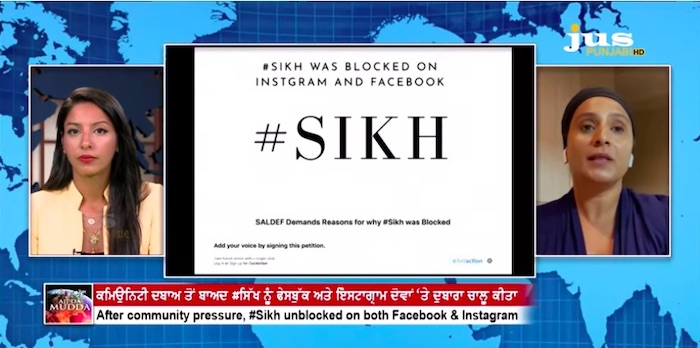

Sikhs are waging a battle against giant social media platform Facebook that had silently blocked the #Sikh hashtag for weeks and then a Sikh television channel in India.

Both the incidents came to light in the run-up to the anniversary of the Indian army assault on the most popular Sikh religious centre in Amritsar in 1984.

After admitting the ‘mistake’ on 3 June, Facebook and its sister social media platform Instagram have unblocked the hashtag, though they have yet to explain how and why it happened.

In India, the independent media platform Akaal Channel is still blocked on Facebook, while Youtube had unblocked the UK-based television channel.

It looks like Facebook has some answering to do to the Sikh community. For at least three months, the platform with some 2.5 billion users internationally had silently blocked the #Sikh hashtag.

Members of the Sikh community only began to realise something amiss when they were observing the 36th anniversary of the attack on the Harmandir Sahib, popularly known as the Golden Temple, and more than three dozen other gurdwaras in Punjab. Referred to as the #1984 Sikh genocide, the incident also involved the killing and disappearance of thousands of Sikhs.

When confronted, on June 3, Facebook acknowledged it. Instagram was the first to unblock the hashtag, followed by Facebook.

US-based Sikh American Legal Defense and Education Fund (Saldef) has asked Facebook the following four questions:

  • Clarify what post triggered the blocking of #Sikh and timeline leading up to yesterday’s complete block.
  • Why did they block #Sikh in its entirety and not just the post that was brought to their attention?
  • What steps are you taking to ensure the Sikh community or any other community that this does not happen again?
  • How do you ensure that Facebook’s policies are applied fairly?

“They have apologised but yet to provide the answers we are seeking,” Saldef board member Juspreet Kaur told a Punjabi talk show on Jus Punjabi.

Saldef has initiated a petition to demand Facebook to explain why the #Sikh hashtag was blocked, something that can happen to any other minority community as well. See here.

In a statement, Saldef said there was no reason that #Sikh should have been blocked, adding that it was ‘unsettling that so quickly a single platform can silence a population of over 27 million people internationally’.

In December 2018, it said former Saldef media fellow Vishavjit Singh had political cartoons removed from Instagram that highlighted the sentencing of Indian former lawmaker Sajjan Kumar, for his role in the 1984 anti-Sikh pogroms in India. To date, Saldef said Instagram has refused to unblock the posts and would not respond or give any explanation as to their actions.

RELATED STORY:

India disrupts Akaal Channel (Asia Samachar, 6 June 2020)

ASIA SAMACHAR is an online newspaper for Sikhs / Punjabis in Southeast Asia and beyond. Facebook | WhatsApp +6017-335-1399 | Email: editor@asiasamachar.com | Twitter | Instagram | Obituary announcements, click here |