Awnit Singh Marta at Harvard University – Photo: Danu Mudannayake
By Asia Samachar Team | UNITED STATES |
From searching a place to call home to flipping burgers, Afghan-born Awnit Singh Marta has been through quite a bit in life.
And now he has hit another milestone for himself and his family. The first generation student from his family has just graduated from Harvard University.
In an update on his Facebook page, the electrical engineering graduate writes:
“My parents left Afghanistan when I was less than a month old, seeking refuge in The Netherlands. They moved from one country to another to another so that their children could get the education they never received.
I worked three jobs freshman fall, my mental health tumbling alongside my GPA. I’ve delivered laundry, flipped burgers, cleaned dorms, stocked shelves, ushered for events.
I am a Sikh. I am an Afghan. I am a refugee. I am a first gen student.
And from today, I am a graduate of Harvard.”
The news comes at a time when Sikhs in Afghanistan are faced with peril. In March, gunmen stormed a gurdwara in Kabul and killed 26 people. The incident was yet another attack on the minority community. The incident also sparked efforts to get the Afghan Sikhs out of Afghanistan as their lives were at stake.
Awnit is not ordinary student. As he writes, his parents left Afghanistan when he just a month old. They fled Afghanistan for the Netherlands, where they lived for eight years until they moved to England.
At Harvard, Awnit did not sit idle, too. He was active in the US university’s bhangra team which he helped to revitalise.
When he first joined Harvard Bhangra, the group was struggling — a low participation rate combined with inadequate leadership. Marta stepped in as a sophomore and helped to create a board for Bhangra, hoping that, with more structure, the group would survive and grow, reportsThe Harvard Crimpson. That’s not all. The magazine also reported that he had resurrected the Harvard British Club and assumed the role of Prime Minister.
Awnit and the Harvard bhangra team – Photo: The Harvard Crimpson
ASIA SAMACHAR is an online newspaper for Sikhs / Punjabis in Southeast Asia and beyond.Facebook | WhatsApp +6017-335-1399 | Email: editor@asiasamachar.com | Twitter | Instagram | Obituary announcements, click here |
By 1996, the Taliban, a Sunni Islamic fundamentalist group had captured most of Afghanistan and when they captured Kabul in September that year, 90 percent of the country was under them except for the parts of Northern Afghanistan. There is a remarkable anecdote of courage and determination displayed by Afghan Sikhs during this period in Jalalabad5.
The original Taliban were from the Kandahar region of Afghanistan. However, they were people from Pakistan and Saudi Arabia within their ranks as well. These Taliban (not the Afghan ones) would spit on the road at the sight of the Sikhs. The Sikhs wore a distinct style of turban and most of them would tie their beard, unlike the natives. The untrimmed moustaches of Sikh men were another distinction. The Sikhs were disgusted at this behaviour but tolerated it as they were the minuscule minority and the Taliban had guns with them.
One fine day in late 1996/97 at Tanda Bazaar in Jalalabad, the Sikhs were running their shops (cloth, grocery, Greco-Arabic medicine clinics) when a group of Taliban guards entered the bazaar and as usual one of them spit at a Sikh who was standing outside his cloth shop. Rather than spitting on the ground which was the norm, this Taliban spat on the face of the Sikh shopkeeper. This infuriated the Sikh as this act had crossed all limits of decency. He pulled his metre rod (used to measure cloth) which is made of steel and hit the Taliban on his head. The guard was not expecting such a reaction and after recovering from the shock he and the other guards pulled up their automatic rifles at the Sikh shopkeeper. By this time, the other Sikh traders from nearby shops gathered at the site and they scuffled with the Taliban guards and grabbed their rifles. The Taliban ran away and the Sikhs started shouting the Sikh slogan (known as Jaikara) ‘Jo Bole So Nihal Sat Shri Akaal’6.
The matter was reported to the local Taliban chief who was an Afghan. He was aware of the Sikh religion and listened to both sides of the story. The Sikhs told him that they just wanted to run their shops but could not tolerate the humiliations meted out by the Talibanis. They added that though the rifles are the property of the Taliban, they were snatched in self-defence by the Sikhs during the scuffle. The chief disapproved of the spitting and it was decided that the Taliban initiated the fight and the Sikhs defended themselves. The Taliban guard who had spat expressed his ignorance about the Sikh religion.
Although it was not said in so many words, the Hanafi School of Islam allowed non-Muslims to live as Dhimmis (protected status) subject to the payment of Jizya. The Taliban chief asked how his men could differentiate the Sikhs from others. The chief was told about the Sikh religion and the turban but he was only interested to find a way for his men to differentiate between local Muslims and non-Muslims (Sikhs and Hindus). The Afghan Sikhs and Hindus were told that they need to have a Khanda (symbol of Sikh faith) outside their houses. There were about fifty to sixty Afghan Sikh-Hindu families in Jalalabad and they felt that this would lead to ‘target attacks’. This was not taken forward. The Afghan Hindus were asked to wear caps and yellow tilak (mark on the forehead) While the Afghan Hindu and Sikh women were asked to put a bindi (coloured dot in the centre of the forehead) and wear a chador (a cloak which covered the upper part of the body).
The Afghan Sikhs were not asked to wear a tilak, however they were often asked to convert. The logic was given that they were monotheistic, do not indulge in idol worship and have beards and wore turbans like Muslims. In such situations, the Afghan Sikhs would explain about their faith and tell the Taliban that they were happy and as God is one and all will go to Him after death. When asked why they kept on asking them to convert, the usual answer would be that their Prophet had told them to bring people to the ‘true faith’.
All shopkeepers including Afghan Sikhs and Hindus were strictly told that they should not serve any woman who was not accompanied by an adult male from the family (husband, father or son only). If a woman was seen on the road alone then the Taliban would whip her. The Taliban and their strict and fundamentalist interpretation of Islam meant that local Muslims too were sometimes flogged in public but after this incident, the Taliban guards stopped spitting and largely left the Sikhs and Hindus alone. This identification was also implemented in Kabul and the rest of the country. The Afghan Sikhs and Hindus paid Jizya and were mostly left alone by the Taliban.
The Taliban continued to rule Afghanistan till October 2001. The American Air Force provided strategic support to the Northern Alliance on the ground in October 2001 and they managed to defeat the Taliban in a couple of months.
When the Taliban came to power in 1996 they banned televisions and transmission was stopped. Televisions were publicly smashed and declared un-Islamic. Radio transmission was allowed but for religious programmes and Koranic verses only.
Five years later when the Taliban was defeated in October 2001, television transmission was resumed. The first broadcast after over five years was music and the news was co-presented by two Afghan women. It was a symbolic gesture as women and music were both shunned out of public life in the country under the Taliban. The first lines of the broadcast were, ‘Greetings, viewers, we hope you are all well! We’re glad to have destroyed terrorism and the Taliban and to be able to present this programme to you’7.
With international support, Afghanistan started rebuilding its infrastructure and within a few years a number of private channels began airing.
DEMOCRATIC GOVERNMENT
Hamid Karzai was elected as Interim Head of the Administration in December 2001 and later the President in 2002 by the grand assembly (Loya Jirga). He won the first Presidential election in 2004 and the second one in 2009. His second term ended in September 2014.
The initial few years of the Karzai administration was peaceful and there was a lot of hope and goodwill among people. About twenty-five Afghan Sikh and Hindu men and five families came back to Afghanistan from India. An Afghan Sikh informs that in 2002/03 he tried selling his house to the illegal occupier who offered him a price which was two-third of the prevailing market price. Ten years later he was still offered only half of the price quoted in 2002/03. A number of ex-warlords had joined the government and the goodwill had evaporated by then. The chance of the government enacting a law to restore the properties of the Afghan Sikhs and Hindus is very remote, hence, the illegal occupiers do not feel the need to pay anything but peanuts.
Pritpal Singh of the Mission Afghanistan documentary fame informed that his Greco-Arabic physician father’s clinic (known as Unani Dawakhana) in Jade Maiwand Bazaar of Kabul is illegally occupied. Another Afghan Sikh told that his orchards and agricultural land outside Kabul city has been occupied by the caretakers themselves and they all belong to the majority community. Almost all the Afghan Sikhs and Hindus now live in Gurdwaras in Afghanistan in the absence of houses.
The Afghan Sikhs who left the country in 2015 and 2016, opine that life under the Taliban regime was ‘not that bad’. The Afghan Sikhs and Hindus paid Jizya and were not bothered. However, under the present government, the locals keep on pestering them about conversion to the ‘true faith’ and their children get bullied in schools too. In every walk of life, they are discriminated against. Law and order has now (2018) deteriorated and cities frequently face suicide attacks and bomb blasts.
At present, there are about 1,000 Sikhs and 100 Hindus in Afghanistan and the majority of them live in and around Kabul and Jalalabad. A few Sikhs also live in Ghazni. There are very few Hindus in Ghazni and only a handful in Jalalabad. The majority of Hindus in Kabul are from the Khost province6.
References
A major festival in Sikh religion, in 1699 Guru Gobind Singh, the tenth and last Guru of the Sikhs administered Khande di Pahul (similar to baptism) and made Nanakpanthi community into Khalsa. Vaisakhi is celebrated on 13th April.
Khajinder S. Khurana. (2001). Kabul de Sangat tee Afghanistan da Sankhep Ithas.New Delhi.
Khajinder S. Khurana. (2001). Kabul de Sangat tee Afghanistan da Sankhep Ithas. New Delhi.
Pritpal Singh spoke to the son of Gajinder Singh and confirmed this information. All three are based in London.
Afghan Sikhs who now live in the UK related this incident to the author. They also informed that the very rich Afghan Hindus and Sikhs left the country in the 1980s, from 1983 onwards.
‘Jo Bole So Nihal Sat Sri Akal’is the Sikh slogan or Jaikara (it is a shout of victory, triumph or exultation) which means one will be blessed eternally who says that God is the ultimate truth. It is an integral part of the Sikh religious service and is shouted at the end of Ardas, Sikh prayers and said in Sangat or holy congregation. This is also the war cry of the Sikh regiment (and the Sikh Light Infantry) in the Indian Army.
Ram Saran Basin from Kabul updated the author during the first week of August 2018. The majority of the Khost community is Pashto-speaking SahajdhariSikhs.
Second of a two-part series of excerpts from Chapter 15 (Turbulent Years, Exodus and the Taliban) of Afghan Hindus and Sikh by Inderjeet Singh. The 233-page book was published in April 2019
ASIA SAMACHAR is an online newspaper for Sikhs / Punjabis in Southeast Asia and beyond.Facebook | WhatsApp +6017-335-1399 | Email: editor@asiasamachar.com | Twitter | Instagram | Obituary announcements, click here |
The March attack on a Kabul gurdwara – Photo: USCIRF Twitter
By Asia Samachar Team | UNITED STATES |
Afghanistan’s religious minorities, including Hindus and Sikhs, ‘remained endangered’, declared a United States (US) religious freedom commission.
The small communities —including Hindus, Sikhs, Christians, Ahmadi Muslims, and Baha’is – have experienced egregious human rights violations under Taliban rule and remain without the ability to observe their faith publicly for fear of violent reprisal by terrorist groups or society at large.
“A number of Sikh families have resorted to living in gurdwaras due to lack of available housing and faced restrictions on practicing Sikh funeral rites requiring cremation, an act opposed by local Muslim communities,” according to the U.S. Commission on International Religious Freedom (USCIRF) in its annual report for 2020.
The commission, established by International Religious Freedom Act 1998 (IRFA), has the principle aim of reviewing instances of violations of religious freedoms internationally and make policy recommendations to the US state department.
The report comes on the heels of a horrific terrorist attack in March on a gurdwara in Kabul which killed 25 people, mostly Sikhs holed up in the place of worship.
For many amongst the 2,000 odd Sikhs and Hindus, the senseless attack upon the Gurdwara Guru Har Rai in Shor Bazaar was the proverbial straw that broke the camel’s back as far as their dreams of continuing to live in Afghanistan. The gunmen stormed the gurdwara, shot discriminately and held 80 hostages.
After the first attack on 25 March, the next day, an explosive went off just outside the crematorium as the Sikhs were cremating their dead. And the next day, yet another attack. Intensive efforts are now underway to get them out of Afghanistan.
Despite an expressed commitment to their homeland, many members of the dwindling non-Muslim communities have felt pressured to leave Afghanistan due to social, political, and economic discrimination, ongoing attacks by extremist groups, and the government’s perceived unwillingness to provide adequate security, the report said.
The commission has placed Afghanistan under its so-called ‘special watch list’, along with Bahrain, Egypt, Indonesia, Iraq, Kazakhstan and Malaysia. The SWL is for countries whose governments engage or tolerate in severe religious freedom violations.
In its key findings, the report noted that lack of security remained the primary challenge to protecting the freedom of religion or belief in the country.
It said that terrorist attacks against the Shi’a community, targeting its leadership, neighborhoods, festivals, and houses of worship, have intensified in recent years, with this trend continuing in 2019.
Throughout the year, terrorist attacks in Afghanistan intensified due to opposition to the U.S.-Taliban peace negotiations and violence linked to the September 2019 presidential election, a flashpoint for conflict within Afghan society.
The report noted that Hindus and Sikhs have been represented in parliament since 2016 with a reserved seat and some have been employed in government service.
In November 2019, it said the Afghan government also instituted visa-free travel for Afghan-origin Sikhs and Hindus currently residing in India.
ASIA SAMACHAR is an online newspaper for Sikhs / Punjabis in Southeast Asia and beyond.Facebook | WhatsApp +6017-335-1399 | Email: editor@asiasamachar.com | Twitter | Instagram | Obituary announcements, click here |
“It is the timber of poetry that wears most surely, and there is no timber that has not strong roots among the clay and worms,” – John Millington Synge
In South East Asia, and parts of both the Far East and South India, the primary building material that was used to build buildings such as houses, public halls, gazebos and even palaces were constructed almost entirely of wood. The lush and verdant landscapes of such breathtaking paradises on Planet Earth provided plenty of renewable materials for people to exploit and to establish communities through building, and centuries of architectural tradition allowed us to develop both an appreciation of such structures and the skilled artistry to construct such delightful pieces of design.
It is undeniable that walking into a building made of wood, say a village house built near the shores of some tropical Eden, perhaps in Malaysia or Indonesia, exudes an almost enigmatic yet calming effect on the human soul, and we feel inexplicably yet intrinsically and spiritually comfortable in such designed environments.
Taking inspiration from such a beautiful context, (the usage of wood in our buildings and the rich environment of the jungles of South East Asia) — so intimately linked to both the local culture and architecture of such places — the proposal for this Gurdwara celebrates the majesty of the centuries old tradition of building wooden structures but designed for the modern era of our times.
This proposed Gurdwara, made almost entirely of renewable timber, is imagined to be by the base of a mountain somewhere in the tropics by the edge of a jungle. It adopts an open feel to allow for free circulation of both people and wind within its premises to take advantage of the cool fresh air that such places naturally provide.
Although this Gurdwara uses renewable timber extensively in its design, the main support structure that allows for the wood to be part of its overall structure is a series of steel beams, columns and platforms shown in white, that provide a minimally built skeletal frame to allow the rest of the complex to be materialized.
Gurdwara Design: Boxes of Timber – Design by Vishal J Singh
The Timber Gurdwara is elevated above its site, much like a village house. Its ground floor is totally open to allow for a complete freedom of movement for the Sanggat within its premises. The Nishan Sahib Plaza is on an elevated timber deck, as well, that seamlessly connects with the rest of the Gurdwara, and the idea behind its elevated platform is to allow for the earth to be minimally disturbed during construction. The main entrance is marked with a ramp that gently slopes upwards onto the elevated platform to allow for disabled people on wheelchairs but also serves as a directional pathway to anyone visiting the Gurdwara.
Gurdwara Design: Boxes of Timber – Design by Vishal J Singh
The Nishan Sahib Plaza located on the left of the entrance and is designed on the same level as the elevated platform of the ground floor of the Gurdwara. The Darbar Sahib and the office is located above while the Langgar Hall is located behind the main structure and can easily be accessed without any hindrances that divide the interiors of the ground floor.
Gurdwara Design: Boxes of Timber – Design by Vishal J Singh
The Darbar Sahib is located on the first floor, and is seen through the cantilevered timber box-like enclosure accessible by either the main staircase or the secondary one, and is ‘protected’ by an installation of steel frames incorporating a series of multi-shaded vertical timber posts that span the entire exterior of the hall. These vertical timber posts, that naturally project a rich texture of wooden grains and warm colours, act as a giant sun-shading device to shade the interiors while allowing wind to naturally pass its spaces, naturally cooling the area o of the first floor.
Gurdwara Design: Boxes of Timber – Design by Vishal J Singh
The Langgar Hall at the back of the main building carries a similar appearance allowing the entire Gurdwara to look as one cohesive complex, and the incorporation of timber here is also extensively used as part of the overall design of the complex to achieve the same visual and vernacular objective.
Gurdwara Design: Boxes of Timber – Design by Vishal J Singh
The Langgar Hall, is situated behind the main complex where the Darbar Sahib on the first floor is located, and is designed with a series of elevated walkways and platforms as well that lead into the main hall where the Sanggat can perform sewa, and continue to enforce the openness of the Gurdwara’s external and internal spaces.
Gurdwara Design: Boxes of Timber – Design by Vishal J Singh
Here too, the Langgar Hall is protected by a series of vertical timber posts that project a rich, multi shaded visual collection of shades and textures originating from the surface of the timber itself, that both partially protect the privacy of the interiors while allowing wind to pass by unhindered to naturally cool the spaces within. The Langgar Hall and the main building at the back are low rise and project a long, ‘horizontal impression’ mirroring the flat plane of the earth below, much like how a traditional village building was built in the past in such verdant areas, full of magnificent trees and fresh air.
The Timber Gurdwara, has its architectural roots in the design of traditional wooden buildings built in the tropics, but it is built in a contemporary context for the modern era, hence its appearance, construction and aesthetics. The openness of its planned spaces, both externally and internally, allow for a sense of unrestricted movement to flourish for the Sanggat, and such spaces allow for a multitude of creative expressions to take place, where people can gather for whatever purpose they may like.
Such open spaces also allow for future development proposals to take place, so for instance, if a new room or a new hall needs to be built, the structural frame in place already allows for the walls to be built and installed quickly and efficiently, and a suitable enclosure materializes to accommodate a new requirement as and when needed. The timber used here too are sourced from renewable sources, harvested from sustainably managed forests and are therefore eco-friendly and responsible in its employment of the construction of this Gurdwara complex, establishing the complex to be environmentally friendly as well.
Essentially, the Timber Gurdwara seeks to celebrate the honoured long practiced tradition of using wood in architecture but through the lens of a modern design ethos and a contemporary perspective, and from an environmental point of view, a complex that uses renewable sources such as sustainable timber and recyclable steel in its construction is generally considered to be an eco-friendly building, which is very much part of the ‘Green Movement’ sweeping the world currently. Indeed, wood has always been closely connected with the ongoing progress of human civilization, and as it has always been a gift of both material and spiritual value for us in the past, there will always be a place for wood both in our hearts and our architecture well into the future.
Waheguru Bless.
The next proposal will imagine designing a Gurdwara that is built by literally integrating the existing landscape into its design, thus creating a ‘hybrid’ between the structure of the Gurdwara building and the greenery that surrounds it.
Vishal J. Singh, an aspiring architect, holds a Bachelor of Architecture Degree from Infrastructure University Kuala Lumpur and enjoys engaging in architecture and its theories as his first love.
* This is the opinion of the writer, organisation or publication and does not necessarily represent the views of Asia Samachar.
ASIA SAMACHAR is an online newspaper for Sikhs / Punjabis in Southeast Asia and beyond.Facebook | WhatsApp +6017-335-1399 | Email: editor@asiasamachar.com | Twitter | Instagram | Obituary announcements, click here |
Jagmeet Singh: Deputy Leader of Ontario New Democratic Party – PHOTO / FACEBOOK
By Asia Samachar Team | CANADA |
As more and more businesses are being asked to reopen, New Democrat Party (NDP) leader Jagmeet Singh has linked the proposal of a two week of paid sick leave for every worker in Canada to a vote on how Parliament would function.
If the government agrees, Jagmeet has promised his party’s support for a proposal to limit full House of Commons sittings and votes on meeting, a change of rules to accommodate social distancing required in view of the gobal Covid-19 pandemic.
In response to the NDP push, Prime Minister Justin Trudeau has said that he would push the provinces to approve the 10 days of paid sick leave idea.
“Every worker should have access to paid sick leave. Workers need to know they have the ability to choose to stay home with pay if they are sick,” said Jagmeet in a statement at the party’s website. “No one should be forced to make the impossible choice between going to work sick or not being able to pay their bills. Workers want to go back to work – we need to make sure they can go back to work safely.”
For the last few weeks, the statement said Singh and New Democrat MPs have been calling for the federal government to make sure all workers have access to two weeks of paid sick leave so they can take the time to heal and stop the spread of any virus or sickness.
Jagmeet made his support for how the House of Commons resumes dependent on introducing two weeks of paid sick leave for all Canadians.
Trudeau’s government, which won 157 seats out of the total 338 seats up for grabs, would need to forge a collaboration with other parties as it does not have an ourright majority in parliament. The opposition is led by the Conservatives with 121 seats. NPD has 24 seats, enough to tilt the balance of power.
“We have been clear from the beginning that the government should make sure every worker has access to paid sick leave. We will keep pushing the government to make sure they deliver on this commitment and that they work with provinces to make sick leave for workers permanent going forward,” added Jagmeet. “Let’s make sure that workers never have to make the choice of losing a day of pay for staying home sick.”
In one interview, Jagmeet outlined workers’ three main concerns as they prepare to return to work after a period of lockdown: safety, sick leave and child care.
ASIA SAMACHAR is an online newspaper for Sikhs / Punjabis in Southeast Asia and beyond.Facebook | WhatsApp +6017-335-1399 | Email: editor@asiasamachar.com | Twitter | Instagram | Obituary announcements, click here |
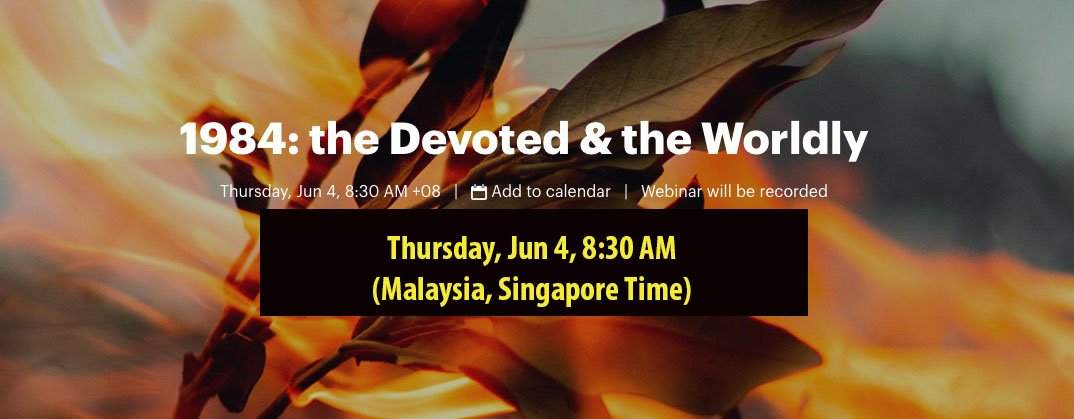
What actually took place in the run-up to the 1984 attacks upon the Darbar Sahib in Amritsar and Sikhs all over India?Sikh Research Institute (SikhRi) is rolling out a webinar led by Sikh educator and thinker Harinder Singh to tackle the matter.
#1984 is considered the third Ghallughara in Sikh history. Why was Sri Harimandar Sahib and Akal Takht Sahib complex attacked? What’s the Sikh historical context? How must the memory be kept alive 36 years on?
This is an opportunity to expand your understanding of Sikh history by looking back at the events of 1984. Click here to sign up.
When: Thursday, Jun 4, 8:30 AM (Malaysia, Singapore Time)
ASIA SAMACHAR is an online newspaper for Sikhs / Punjabis in Southeast Asia and beyond.Facebook | WhatsApp +6017-335-1399 | Email: editor@asiasamachar.com | Twitter | Instagram | Obituary announcements, click here |
A 63-year-old India-born Singaporean visits her late father’s home in Punjab, India, for the very first time, hoping to find closure after a lifetime in Singapore. Catch the film trailer, titled Haruwal, here. The film is directed and produced by GurJeevaan Singh Balrose.
ASIA SAMACHAR is an online newspaper for Sikhs / Punjabis in Southeast Asia and beyond.Facebook | WhatsApp +6017-335-1399 | Email: editor@asiasamachar.com | Twitter | Instagram | Obituary announcements, click here |
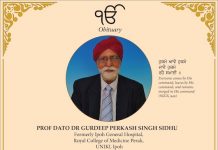
Funeral arrangements: 2pm, 28 May 2020 (Thursday) at Cheras Crematorium, Kuala Lumpur
Due to the CMCO in force, only limited family members can attend the funeral.
Please keep him and his family in your thoughts and prayers.
| Entry: 27 May 2020 | Source: Family
ASIA SAMACHAR is an online newspaper for Sikhs / Punjabis in Southeast Asia and beyond.Facebook | WhatsApp +6017-335-1399 | Email: editor@asiasamachar.com | Twitter | Instagram | Obituary announcements, click here |
Afghan Hindus and Sikh (book cover). Insert: Inderjeet Singh
By Inderjeet Singh | BOOK EXTRACT |
Mohammed Daud Khan, who was the first cousin of the ruler, Zahir Shah deposed him in 1973 in a bloodless coup. He declared Afghanistan a Republic state and became its first President. He remained at the helm of affairs until he was assassinated in April 1978 by the members of the People Democratic Party of Afghanistan, the communist party. Within a year there were several uprisings against the government and the next President was killed by a powerful party leader in October 1979 which led to the ‘Soviet Intervention’ in December 1979.
This Soviet Intervention lasted for a decade and Afghanistan became a battleground for the Cold War. The USA and its allies started providing weapons to the Mujahideen to fight a ‘proxy war’ against Soviet occupation. The Soviet withdrew in 1989 and handed over the defence to Afghan forces who were no match to the Mujahideen who captured Kabul in 1992 and deposed President Najibullah.
The above civil war affected the people of Afghanistan. The rich Afghans including Muslims, Hindus and Sikhs started leaving the country in the mid-eighties. The Afghan Sikh community was directly targeted in 1988 which shocked the community.
In 1988, on the first day of the Vaisakhi Samagham1 at Jalalabad, the Sangat were going to Langar (community kitchen) when suddenly a man with an AK-47 rifle entered the Gurdwara complex and started firing at the devotees. Then as he tried to enter the Gurdwara Hall, Daler Singh, a Sikh soldier stood in front of him and shot all his bullets killing the assailant. However, in the process, Singh received several bullet injuries and died as well. In total, thirteen Sikhs and four Afghan Muslims soldiers were killed.
The next day was Election Day for the Parliament in Afghanistan. In Jalalabad, Bhai Darbari Singh was contesting the election. In Kabul, Gajinder Singh Rangila and Lala Tek Chand Sarin were in the fray. However, the above incident left a deep impact on the minds of the Hindus and Sikhs of Afghanistan and many did not come out to vote. Only Gajinder Singh Rangila was able to win his seat.
It was also the first time that Afghan TV broadcast Gurbani for half an hour where Bhai Amarjeet Singh Taan sang Awal Allah Noor Upaya and Khalsa Mero Roop Hai Khas. During Vaisakhi, Radio Kabul and Nangarhar would broadcast a special programme where people were informed about the Sikh religion and Guru Nanak2.
In 1989 the Mujahideen surrounded Jalalabad and started attacking it with rockets and this continued for nine months. People lost lives and left the city to escape the bombardment. During this time a rocket fell on the Gurdwara Guru Tegh Bahadur Sahib when a congregation had gathered. Seventeen Sikhs were killed and the Gurdwara was damaged. Following this incident, a lot of Sikhs and Hindus left the city and went to Kabul and Peshawar.
In 1992, the Mujahideen won the last bastion, the capital Kabul. A large number of Afghan Sikhs and Hindus of Afghanistan started the exodus and left the country for good. Within a few months, when Rabani took the helm of affairs in the country, the Mujahideen factions revolted and the country plunged into yet another civil war3.
Gajinder Singh was the Member of Parliament in Afghanistan from 1988–92. He played a pivotal role in 1992, working with Dr Najibullah Ahmadzai, the President of Afghanistan to get a safe passage for the Afghan Sikhs and Hindus.
The relations between Afghanistan and India were always cordial. It was felt that under the fundamentalist Mujahideen (who were supported by Pakistan and USA) life would become very difficult for the Afghan Sikhs and Hindus. These fears proved right later on as within months Afghanistan plunged into civil war when the Mujahideen factions started fighting among themselves.
At that time it was extremely bureaucratic to obtain a passport for anyone in Afghanistan. Nevertheless, the Afghan government issued speedier passports to the Afghan Hindus and Sikhs and called the scheme Aab Gang (Aab means water, Gang is river Ganga) pilgrimage passport. It was on the lines of the Haj visa for Muslims issued by Saudi Arabia.
The Indian embassy set up an on-the-go visa department at Gurdwara Guru Har Rai Sahib in Shor Bazaar in Kabul to rapidly issue visas without any checks so that the Afghan Hindus and Sikhs could flee the civil war. It was too dangerous for people living in the old town to travel to the Indian embassy in the centre of the town because of the dangers of bombardment all over Kabul. The Indian embassy did not have enough staff to put the visa stamps so some Afghan Sikh volunteers at the Gurdwara had to put visa stamps on people’s passports. Close to 50,000 people left Afghanistan and came to India under this scheme4.
The above major exodus of the Afghan Sikhs and Hindus in 1992 happened just before the Mujahideen captured the capital Kabul5. Within a year, the Mujahideen factions started fighting among themselves and the country plunged into yet another civil war.
References
A major festival in Sikh religion, in 1699 Guru Gobind Singh, the tenth and last Guru of the Sikhs administered Khande di Pahul (similar to baptism) and made Nanakpanthi community into Khalsa. Vaisakhi is celebrated on 13th April.
Khajinder S. Khurana. (2001). Kabul de Sangat tee Afghanistan da Sankhep Ithas.New Delhi.
Khajinder S. Khurana. (2001). Kabul de Sangat tee Afghanistan da Sankhep Ithas. New Delhi.
Pritpal Singh spoke to the son of Gajinder Singh and confirmed this information. All three are based in London.
Afghan Sikhs who now live in the UK related this incident to the author. They also informed that the very rich Afghan Hindus and Sikhs left the country in the 1980s, from 1983 onwards.
First of a two-part series of excerpts from Chapter 15 (Turbulent Years, Exodus and the Taliban) of Afghan Hindus and Sikh by Inderjeet Singh. The 233-page book was published in April 2019
ASIA SAMACHAR is an online newspaper for Sikhs / Punjabis in Southeast Asia and beyond.Facebook | WhatsApp +6017-335-1399 | Email: editor@asiasamachar.com | Twitter | Instagram | Obituary announcements, click here |
Members of Muslim community perform namaz at the Malerkotla gurdwara. – Photo: The Tribune
By Gurnam Singh | OPINION |
The below article showing Muslims celebrating Eid al-Fitr at a Gurdwara offers a glimpse of the true spirit of Sikhi. Not only do we seek to feed the world, we are even happy to provide facilities for people of other faiths, or none, to pray or simply contemplate at any the Gurdwara in the world. I have seen videos of Muslim preachers form the Malerkotla area of East Punjab show more devotion to the Sikh Gurus than many so called Sikhs.
Muslims offer namaz in Malerkotla gurdwara, attend Roza opening party
By Parvesh Sharma (Tribune News Service)
Setting another example of communal harmony, namaz and gurbani path were performed simultaneously in Gurdwara ‘Sahib Haa Da Naara’ (Regd) at Muslim majority town of Malerkotla of the district.
Members of gurdwara management committee, Namdhari Mission, Sanatan Dharm community and police officers jointly organised a party for the members of Muslim community on the opening of 29 Roza (fast) last night, but by taking care of social distancing to prevent the spread of COVID-19.
“The gurbani path was going on in main hall while namaz was offered in another hall of gurdwara by our Muslim brothers. The main purpose of organising the party was to reconfirm that we all are united,” said Narinderpal Singh, Head Granthi of Gurdwara Sahib.
Members of Muslim community said visiting the historic gurdwara was not a new thing for them as they had been coming to this gurdwara since their birth.
“Every time whenever pass this gurdwara, we bow our head because our religion has been teaching us to respect all religions,” said a local member of Muslim community after offering namaz in gurdwara.
It is not first time that local gurdwara has taken steps to strengthen their ties with local Muslims, but after the lockdown in March, the gurdwara management committee had started serving langar to a local Madrassa, where students of others states were stuck.
Apart from serving langar to Madrassa students, gurdwara management committee had also served langar to around 1,000 other needy and poor residents of city during lockdown.
“We have defeated corona in Punjab because we have the blessings of all religions. Last night’s party was another example of brotherhood,” said Manjit Singh Brar, SP Malerkotla. (Source: The Tribune, 24 May 2020)
Today Sikhs across the world will be commemorating the martyrdom of the 5th Guru, Guru Arian Ji. He was brutally tortured for some days on hot plates before being martyred. This was following his arrest under the orders of the then Mughal Emperor Jahangir and asked to stop preaching the universal message of Guru Nanak and convert to Islam. The emperor was especially angered by the fact Guru Arjan ji had compiled a Mahan Granth (Great tomb) containing the writings of Sikh Gurus and Suffi Saints and poets from across the religious spectrum.
The Emperor claimed that by including certain references to Islam and Muslims, Guru Arjan had blasphemed against Islam. He was given the chance to repent by retracting certain passages, pay a financial penalty and embrace Islam. He refused and remained steadfast in his advocacy of universal sister/brotherhood, and for this he was tortured and executed. His martyrdom is considered a watershed event in the history of Sikhi.
Sikhi does not believe in proselytism (i.e. the practice of religious conversion) and it is clear in Sikh teaching that we respect freedom of belief and expression as long this does not threaten others. Perhaps the most powerful demonstration of this tolerance towards other faiths can be found during the reign of Maharaja Ranjit Singh across a huge part of the Northern Indian subcontinent. Rather than suppressing Islam and Hinduism and favour Sikhi, Ranjit Singh, like Emperor Akhbar did in an earlier period, patronised all the great faiths and promoted religious freedom and tolerance.
Actually all faith traditions have at their core a deep sense of piety and duty but all have in history succumbed to degrees of fanaticism. But it is these acts of kindness, solidarity and sharing that can provide an antidote to hate, religious or otherwise. And so whether you are commemorating the martyrdom of Guru Arjan or celebrating Eid al-Fitr, may you be blessed with good wishes, good health and good deeds!
[Gurnam Singh is an academic activist dedicated to human rights, liberty, equality, social and environmental justice. He is an Associate Professor of Sociology at University of Warwick, UK. He can be contacted at Gurnam.singh.1@warwick.ac.uk]
* This is the opinion of the writer and does not necessarily represent the views of Asia Samachar.
ASIA SAMACHAR is an online newspaper for Sikhs / Punjabis in Southeast Asia and beyond.Facebook | WhatsApp +6017-335-1399 | Email: editor@asiasamachar.com | Twitter | Instagram | Obituary announcements, click here |