Pioneers of Kuching Traffic Police. Gurbachan Singh Akhara (2nd from left) and Arjan Singh Cheema (5th from left) in an undated photograph taken in front of Central Police Station, Kuching in Sarawak. – Photo: Gurdwara Sahib Kuching Facebook page
By Asia Samachar Team | MALAYSIA |
Pioneers of Kuching Traffic Police. Gurbachan Singh Akhara (2nd from left) and Arjan Singh Cheema (5th from left) in an undated photograph taken in front of Central Police Station, Kuching in Sarawak.
The Central Police Station was built to replace the old police station formerly located on the site of the General Post Office. It opened in 1931 and has retained its original function and façade to the present day, according to an entry at the Saraweak Tourism website. It stands out prominently among the building lining the Padang Merdeka thanks to its blue and white colour scheme, common to all police stations in Malaysia.
ASIA SAMACHAR is an online newspaper for Sikhs / Punjabis in Southeast Asia and beyond.Facebook | WhatsApp +6017-335-1399 | Email: editor@asiasamachar.com | Twitter | Instagram | Obituary announcements, click here |
Original illustration by Dom McKenzie / The Observer
By Dr Gurnam Singh | OPINION |
One of the many consequences of the terrible coronavirus crisis is the opening up of debates about the relationship between religion and science. Among Sikhs, and I suspect other faith groups as well, the coming of COVID-19 has opened the age old question: if God exists, if God is compassionate and if God is in control of everything, then why would he unleash such terror on humanity?
Theologians have managed to develop a robust defense to this argument that goes something like this: in suffering God helps us to learn to become better people for it is in the face of suffering that we can realise something is wrong. However, though such erudite philosophical justifications may carry weight in a university seminar, they have little purchase on the ground, where suffering is experienced the ordinary people. It certainly appears, in the current crisis, along with the places of worship of our great religions, God too has been locked down and the people are looking towards scientists, doctors and nurses to help them in their hour of need.
Amongst Sikh groups it appears COVID-19 has thrown fuel to an ongoing theological conflict about the nature of God in Sikhi. Put crudely, Sikh parcharaks (preachers) are split into two almost opposing world views.
One perspective, commonly associated with the Nirmala Sant tradition, argues for a personal anthropomorphic (human like) God with super natural powers. This God is often depicted as an old bearded man dressed in white flowing robes; interestingly, not dissimilar in appearance to the priests belonging to this tradition! For this school of thought, God is merciful and compassionate to those who, with genuine love and faith, perform penance, religious rituals, selfless service and prayers. In return, God rewards his devotees with divine intervention, which may result in reducing or even eradicating their suffering, be it physical and/or mental. It logically follows that those subscribing to this perspective will have faith in supernatural events and miracle cures. Indeed, the sermons of the Nirmala parcharaks are replete with miracle stories, which no doubt provide hope and inspiration to their followers.
The other school of thought is what can be broadly termed the Sikh missionary tradition. The roots of this tradition can be found in the development of the Tatt Khalsa and Singh Sabha Movement in the late 19th and 20th Century. There are complex socio-political reasons for their emergence, but in relation to question of theology, the Singh Sabha Scholars were, as noted by Pashaura Singh and Louis E. Fenech (2014) in The Oxford Handbook of Sikh Studies, profoundly influenced by the European enlightenment and in particular the ideas of reason, logic, universality and rationality. In some senses, one could argue that the project of the Singh Sabha Scholars was to reform the Sikh God in the light of the growing impact of science in the West. Indeed, there is no doubt that science was making major inroads into the influence of Christianity in Europe during the 19th and 20th Centuries.
Though there are differences, broadly speaking the Sikh Missionary take on God is that He first created the universe and all that exists within it and then he became one with it, with nature or ‘kudrat’. It follows that the laws of nature are also the laws of God and therefore the aim of religion or dharam is to find ways of appreciating and living with these and religious worship is essentially a tool to develop inner spiritual awareness. In other words, dharam is not invoke a vehicle for invoking God to intervene or to disrupt that which is natural, but to help us to accept his will manifest in natural processes.
One could argue their position is closely related to the proposition made by the Dutch/Portuguese philosopher Benedictus de Spinoza, often seen as the originator of a school of thought termed Panentheism. Spinoza argued that, though God and Nature had their distinct meanings, namely, they were not interchangeable concepts, it was through nature that Gods infinitely many attributes were demonstrated, including the human qualities of reason, from which science and reason itself emerges.
Whilst Spinoza was seeking to reconcile reason and God, others, such as the English philosopher, Bertrand Russell sought to write off God altogether! In a famous lecture at the Royal Society in 1927 entitled, ‘Why I am Not a Christian’ (https://users.drew.edu/jlenz/whynot.html ) after systematically refuting the convectional Christian arguments for the existence of God, Russell concludes with the following devastating observations:
We want to stand upon our own feet and look fair and square at the world—its good facts, its bad facts, its beauties, and its ugliness; see the world as it is, and be not afraid of it. Conquer the world by intelligence, and not merely by being slavishly subdued by the terror that comes from it. The whole conception of God is a conception derived from the ancient Oriental despotisms. It is a conception quite unworthy of free men. (Russell, 2927)
There can be no doubt that science does call into question many of the claims made in the name of religion, but, somewhat counter intuitively, this has not stopped some of the greatest scientific brains from invoking the concept of God in their own attempt to answer the big questions. One of the few boons of the COVID-19 lockdown is that we all have more time on our hands. For some this has meant catching up on multitude of DIY tasks, binging on Netflix or social media. To be honest, I too have been doing all these things, but I have also been getting on with some reading. Accordingly, I came across a book by the late Professor Stephen Hawking entitled Brief Answers to the Big Questions which was posthumously published earlier this year. I was particularly drawn to a chapter where he asks the question, Is There a God? Here is a sample of his argument.
Science is increasingly answering questions that used to be the province of religion. Religion was an early attempt to answer the questions we all ask: why are we here, where we come from? Long ago, the answer was almost always the same: gods made everything. The world was a scary place, so even people as tough as the Vikings believe in supernatural beings to make sense of natural phenomena like lightning, storms or eclipses. Nowadays, science provides better and more consistent answers, but people will always cling to religion, because it gives comfort, they do not trust or understand science. (Hawking, 2020 P25)
I have been a fan of Hawking for many years and have read a number of his ground breaking books, including his first and most famous, A Brief History of Time, in which he sets out the Big Bang Theory. Hawking was always interested in the question of God and he concluded this book with a very interesting speculation about what might have been there before the Big Bang. He contemplated that to be able to answer that question one ‘would know the mind of God.’ This statement has been subject to most much debate about what Hawking actually meant. Did it reveal a latent belief in God or was it simply a play with word?
Some religious people took Hawking’s statement as scientific evidence of the existence of an intelligent creator, whereas Hawking, in later clarifications, confirmed that he did not believe in God and that he was simply playing with words. However, at the end of the chapter of his last book, he concludes that though he does not have faith in ‘heaven’ or ‘afterlife’, he is open to the possibility that we do live on, in our influence, our genes.
For Hawking, there is something special about being born a human being, for it is the one opportunity we have to appreciate the ‘grand design of the universe’. For me this is very similar to the idea in Sikh scripture (Gurbani )that it is only in the human form (manukhi jananm) that we have the possibility of meeting the divine universal force (Gobind) and the way to do that is to engage in thoughtful reflection (naam simran).
Though science has answered a lot of the big questions, many others remain, so the mystery of life and the beginning of existence is not likely to be solved in the near future. Moreover, during its short history of some 400 years, there are many questions that science has got wrong and sometimes this has led to terrible suffering.
Indeed one of the paradoxes of science is that it progresses by negating its own truth claims! In other words, scientific claims are themselves speculative and trapped within the prevailing theories and paradigms of the age. So for example, if one takes quantum mechanics, many of the findings completely refute Newtonian physics. Similarly, who knows if today’s discoveries in cosmology and quantum theory will not similarly be overturned in the future. For example, developments in neuroscience and genetics over the past 30 years has completely changed our view of how the mind and body works and the relationship between our thoughts and our physical body. The possibilities of discovery appear to endless, particularly as we contemplate a new age of artificial intelligence, so who knows how this might shape the way we think about our place not only in this world but the universe as a while.
Because of the realization of the incompleteness of knowledge, unlike religion, science rarely gives you definitive answers and this can be frustrating at times. Take for example the COVID-19 crisis where currently we are seeing a desperate race by scientist’s, across the world, to find a vaccine and/or cure. Whereas some ‘God men’ the world over have been offering all kinds of instant remedies, most scientists have been hesitant to make such bold claims. The reason for this is simple, the threshold of evidence for science is very high, whereas for the ‘God men’ it is almost non-existent. Indeed, almost all of the miracle cures that people of different religious persuasions make tend to be based on single cases that are unverified or unverifiable, or they may be associated with placebo affects. But clearly such cases that appear to contradict medical opinion do allow religious people some comfort in seemingly provoking religious claims.
Often debates about religion and science are presented in antagonistic ways, but this doesn’t need to be the case: it is wrong to see religion or science as either good or bad. The real issue is, what impact do these have on human well-being ? And if this can be proven to be positive, or at least harmless, then nobody should object and perhaps both can co-exist.
There is plenty of historical evidence that religion has been invoked to justify terrible crimes against humans and animals. But that doesn’t mean that science is exempt from its own inhumanity and historically, the truth claims of science have led to terrible outcomes for humanity, including the justification for slavery, colonialism, genocide and all forms of oppression and dehumanisation. Indeed, if one looks at the field of medicine itself some of the remedies offered by medicine in the not too distant past would today be seen as no different to superstitious folklore, and any doctor practicing these would no doubt be struck off. We must not forget that many of the health gains in modern societies, resulting in dramatic improvements to life expectancy, are related to basic things like clean water, nutrition and health and safety regulations.
And so, whilst it would be idiotic to discount science, it is also important to realise that science doesn’t always have the answers. That said, I still feel Stephen Hawking’s observations about God and religion are also true and that many of the truth claims of religion have little or no evidence to support them. But the question remains, if it is purely speculative and without evidence, why has religion survived the scientific age? The way out of this seemingly illogical outcome is to understand that the invocation of religion is not really about God as a real entity, but as a metaphor for not knowing all the answers. The problem of course is that those people who claim to have a direct connection to God, namely the priestly class, will then go on exploit people’s fears to offer them all kind of supernatural unproven explanations and remedies.
Will science one day finally see the back of God and religion? Well God has proven to be pretty resilient, so I would say until science can address his own contradictions, God is going nowhere! Alongside our human instinct towards rationality, there is also the need to believe, to remember, to desire, to imagine, and yes to speculate, and God has nothing to fear from these emotions. Indeed, I would argue, the idea of a mysterious all knowing divine entity can facilitate such imaginings. Perhaps in this regard, one might be able to see God and science as complimentary entities, especially given that science is wholly dependent on cultivating novel thinking and therefore disrupting what might be deemed to be ‘normal’.
Whilst, both Einstein and Hawking were staunch defenders of science, they were also willing to invoke the concept of God in their discourses. Like Guru Nanak, both were in awe of nature, of the universe, of the planets and the stars lighting up the of cosmos. Whereas as Nanak reveals this beauty through his sublime poetic discourses (Gurbani), Einstein and Hawking relied on mathematics. For Nanak the essence of Gods divinity is experienced through the loving embrace of nature, whereas for Einstein, this relationship is beautifully captured in his famous equation E=MC2. Similarly, Hawking’s discovery of gravitational waves, black holes and his mathematics proof of the Big Bang, where the universe is shown to have been born from nothing some 10 Billion years ago, is itself a manifestation of divinity.
And as for COVID-19, it is clearly the case that by forming alliances between science, religion, the state and civil society will we be able to ameliorate and ultimately defeat the virus. Indeed, given the outpouring of love, care, charity and conviviality over the past 3 months, there may just be some good to come out of this terrible moment in human history.
[Gurnam Singh is an academic activist dedicated to human rights, liberty, equality, social and environmental justice. He is an Associate Professor of Sociology at University of Warwick, UK. He can be contacted at Gurnam.singh.1@warwick.ac.uk]
* This is the opinion of the writer and does not necessarily represent the views of Asia Samachar.
ASIA SAMACHAR is an online newspaper for Sikhs / Punjabis in Southeast Asia and beyond.Facebook | WhatsApp +6017-335-1399 | Email: editor@asiasamachar.com | Twitter | Instagram | Obituary announcements, click here |
Hindi cinema of the 1970s and 1980s, the two decades that saw Rishi Kapoor at his peak, rarely, if ever, sought geographical or cultural specificity in the stories that it told. The Mumbai movie industry catered to a pan-Indian audience. In the films that it produced, therefore, it refrained from placing its characters in a defined ethos. On the stray occasions that it did, the manner of doing so was strictly superficial.
Kapoor, a Punjabi by birth, was a youth icon whose appeal transcended linguistic boundaries. Several of the major directors that the hugely popular actor worked with had roots in Punjab but they did not always set their films in the state. His illustrious father, Raj Kapoor, who launched his career as a lead actor in 1973 by casting him in the super-successful Bobby, was born in Peshawar, North West Frontier Province.
Lyallpur in undivided Punjab was the birthplace of H.S. Rawail, with whom the actor did 1976’s Laila Majnu. And Yash Chopra, who cast Kapoor in the multi-starrer Kabhie Kabhie in 1976 and went on to do other films with him, including Chandni (1989), was born in Lahore. But with Rishi Kapoor, they did not ever make a trip back to their roots.
It wasn’t until the mid-1980s that Kapoor played a role in a film that was located wholly in Punjab — Sukhwant Dhadda’s Ek Chadar Maili Si. Adapted from Rajinder Singh Bedi’s Sahitya Akademi Award-winning Urdu novel of the same name, the social drama wasn’t a box-office success. But all these years later, the film stands out as a shining example of a piece of formidable literature that was effectively brought to life on the big screen with the aid of great performances from the actors and outstanding cinematography.
The film deserves to be rediscovered by audiences. It ranks among the four best screen adaptations of works by Punjabi writers, alongside Chandraprakash Dwivedi’s Pinjar (based on Amrita Pritam’s celebrated novel), Mani Kaul’s Uski Roti (a 1969 film adapted from a Mohan Rakesh short story) and Rajendra Bhatia’s Pavitra Paapi (1970), based on Nanak Singh’s novel of the same name. The last-named film came into existence at the insistence of Rawalpindi-born Balraj Sahni, a great admirer of the writer’s literary output.
The veteran actor died on 30 April 2020 (corrected) after a two-year battle with cancer. To read the full story, ‘Punjab in Rishi Kapoor’s veins’ (The Tribune, 3 May 2020), click here. Other films mentioned in this piece are Ek Chadar Maili Si, Do Dooni Chaar (2010), Sadiyaan (2010), Patiala House (2011), Deewana (1992) and Andaaz (2003).
ASIA SAMACHAR is an online newspaper for Sikhs / Punjabis in Southeast Asia and beyond.Facebook | WhatsApp +6017-335-1399 | Email: editor@asiasamachar.com | Twitter | Instagram | Obituary announcements, click here |
This current Generation lives in a very superficial era. We can say that we are in an era where anything is possible especially with the advancement of technology. But the art of Living has been depreciated. Our focus, by and large, has been diverted. A majority of us end up wasting most of our time on smart phones which then causes a downward trend on physical productivity and the art of intercommunication. We share tons of things on social media platforms, most commonly as a show-off. In fact we, almost, invariably keep checking and bragging on the numbers of ‘likes’ and ‘followers’ as if it were a trophy to flash around. Among these are the ‘Tiktok’ and ‘Instagram’ trends where most of the posts are meaningless and brings a negative effect on us. of which I will narrate in the following paragraphs. These ‘likes and followers’ counts means nothing to THE Actual self.
I personally profess and would like to share that we should never expose 5 SECRETS of our lives in a conversation or on platforms that are set for thousands of eyes, like social media.
Rule No.1: Never reveal How much you Earn!
What we earn is our Financial Rizak – Goodwill from the Cosmos. Remember whatever we earn in this world for a living is out of services that we provide for another mankind. It is an inter-twined relationship of providing and accepting. The outcome of this act is a reward. The reward is our “Rizak” – Livelihood. This comes to us in the form of Cash. The quantum may vary. Nature’s phenomenon plays in such a way, that the moment we start to boast about our earnings, something will go wrong and the cash vanishes away from our hands. What we earn should be within our immediate family unit only. For anyone else, the answer should always be “my earnings are just enough for my needs”. Never give your answers in figures – you will risk losing it. Many events will follow through for the money to slip away. It has something to do with Cosmic Energy. The Saints and uplifted souls know it all.
Rule No. 2: Never boast about your Spouse and Children!
Our Spouse and Children making our integral family are here not by chance. They have joined our journey by the WILL of some Cosmic Wonders. It is again “Rizak” – A Goodwill provided to us to upkeep our social interaction and Psychological wellbeing.
Today, on the media, every young family posts pictures of their children almost every day. Parents tend to keep exposing to the vast public, every small activity of their children. Many of us, in conversation, indulge speaking about our spouses, their beauty, their good behaviors, their love and care, etc.
This deliberation has its own set of negative effects, especially if it’s done over and over again. This then can affect family disharmony in terms of health and relationship. The more discrete we are about our family and our relationship the better. Spiritually uplifted people know it all.
Rule No. 3: Never Expose what we Eat
What we eat is what I call Chemical “Rizak” to keep us alive. Our body is all about chemistry. What we eat today will not mean to us much tomorrow. Because, by the second day what we had eaten would have converted into various tissues and waste product in our body. Today, we see people in large, filling up spaces on Instagram and Facebook showing what is cooked and enjoyed by the family. But do we realize “what’s all that for?”. What you eat is very divine.
The less we share of what we eat is always better. Like the saying goes for prayers being “between me and God”, similarly, food is supposed to be between you, and what you put into your mouth. You can share a recipe but avoid boasting about what is being cooked for the family. Yes, sending your daily meal’s pictures to your very nuclear family are acceptable, but not on social media.
From a metaphysics point of view, when we expose what we eat to the many eyes, the food becomes less effective in our body. It then has a reverse effect and exposes this body to possible ailment and discomfort. Holy people, never expose what they eat. They would eat in total solitude and be discrete about their food. They keep their feeding habits very simple. Holy books describe food as “What we eat and drink is divine” (Reference made in the Sri Guru Granth sahib on page 472) as it is again Cosmic “Rizak” (Goodwill for living).
Rule No. 4: Never Speak about how much you Pray or Meditate
Again this is cosmic “Rizak” (Good Will) for spiritual upliftment. The religion, to which we are belonging to, is immaterial. Prayers should be kept a secret. How much you pray and how much you travel for pilgrimage should be a secret kept close to ourselves. Prayers can sometimes open doors to meditation. To begin with, Meditation is most of the time very boring and is a tedious practice, full of self-discipline.
A majority of us tend to boast about it before achieving any sort of solace. Whenever we speak to someone boastfully about our meditation or prayers regime, the routine will somehow break the following day. We will find something diverting and distracting us from the inner voices calling us to pray. Adding on to this, we tend to lose our “Rizak” of inner peace if our prayers and meditation is aimed to be a show-off to public. The more we keep this a secret, the more we will achieve and fulfill the purpose. Those who are discrete and religiously follow through the regime will be among the few who could achieve spiritual divinity. References are made in SGGS Pg 466, advising us not to indulge in unnecessary conversation with mass public while have simple meals, not “live to eat” but “eat to live”. The spiritually elevated people know it all.
Rule No. 5: Never speak about how much you Exercise!
Exercising is also a cosmic “Rizak” for the ability to upkeep physical wellbeing. It is to keep this body healthy. Again social media is filled with posts and pictures of exercises we perform for our personal wellbeing. Here, it is more of an ego-boost. The more we expose our daily exercise regime to people, the more it will discourage us from completing the set routine. We will perpetually miss our exercise objectives the following day. It would then take a very long time before we could gather caurage to restart exercising. Keep these activities close to you and only expose if necessary to the immediate nucleus of the family. Never boast about the exercises that we do daily. Highly elevated souls will discretely do Yoga using body weight for exercises.
In conclusion, let’s begin this journey of self-love, without having to share with every single aquatinted in our lives… It is not necessary to inform the world about our personal, mental and physical growth to achieve self-care. This mass sharing does not promote further accomplishments or achievements. Where else, as mentioned earlier; it massively retards the cosmic “Rizak” towards our development.
So let’s learn to live, love and laugh within our nuclear circle without having to inform the whole world.
Dr Balwant Singh Bains is a Malaysia-based kirtan enthusiast and a practicing physiotherapist with a chain of physiotherapy clinics.
ASIA SAMACHAR is an online newspaper for Sikhs / Punjabis in Southeast Asia and beyond.Facebook | WhatsApp +6017-335-1399 | Email: editor@asiasamachar.com | Twitter | Instagram | Obituary announcements, click here |
Charan Sekhon, of the Seva Trust, in Bedford, offers an international student a food parcel. ‘We have lots of examples where they haven’t got anything at all to eat,’ he says. Photograph: Graeme Robertson/The Guardian
By Anna Fazackerley | BRITAIN |
Thousands of Indian students unable to leave the UK because of the coronavirus lockdown are relying on food donations from charities because they can no longer afford to eat.
Student groups representing the students, from across the UK, have been coordinating emergency food drops with local community groups and charities. Many of the young people have lost their part-time jobs and can no longer afford even basic living costs.
The Indian National Students’ Association, one of the largest student groups, says so far it has helped to distribute food to more than 3,000 struggling students across the country. A second UK-wide students’ group, the National Indian Students and Alumni Union, says it has also had calls from hundreds of students who cannot afford food.
Charan Sekhon, chair of an Anglo-Indian charity based in Bedford called the Seva Trust, which has delivered food parcels to more than 60 Indian students in its local area, says: “We have had lots of examples where students are actually starving. They haven’t got anything at all to eat.”
Read the full story, Indian students trapped in UK by coronavirus ‘actually starving’ (The Guardian, 1 May 2020), here.
RELATED STORY:
(Asia Samachar, 5 April 2020)
ASIA SAMACHAR is an online newspaper for Sikhs / Punjabis in Southeast Asia and beyond.Facebook | WhatsApp +6017-335-1399 | Email: editor@asiasamachar.com | Twitter | Instagram | Obituary announcements, click here |
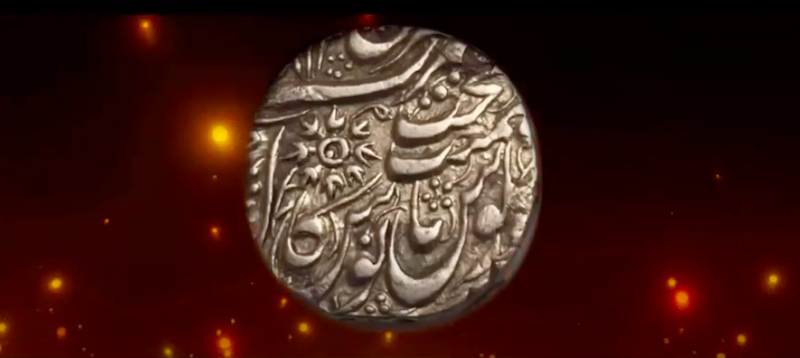
A new documentary on the Sikh empire coins, a topic rarely discussed by the majority of Sikhs, has just been released by a Canada-based film maker.
The 22-minute documentary by Micromeg Movies captures interviews with a number of numismatist, coins dealers and coins collectors.
The documentary is an attempt to ‘illuminate the gallant & glorious past of Sikh empires produced by using original Sikh Coins as markers & milestones’, as described by the promoters.
“This long neglected subject by Sikh Historians and Numismatists alike needs immediate attention by Sikh community to save & protect our proud heritage,” reads an entry at its website.
Among those interviewed were Sikh numismatist Gurprit Singh who is also author of the Coins of the Sikhs – Sri Amritsar Jiyo. Others featured included Sikh coins dealers Sneh Jain, Goga Jain and Jeevandeep Singh as well as Sikh coins collectors Dalwinder Singh and Dr Parvinder Jit Singh Khanuja.
The documentary as produced and directed by Surjit Singh Pahwa, along with co-director Ashish Thind and co-producer Bicky Singh from the SikhLens. Micromeg Movies is also the producer of short films “Bonjour Ji” and Ibadat.
The project is supported by Chapman University, Dodge College of Cinema and Sikhlens. The Sikh International Film Festival (SIFF) has officially selected the documentary to be showcased in its 2020 film festival.
ASIA SAMACHAR is an online newspaper for Sikhs / Punjabis in Southeast Asia and beyond.Facebook | WhatsApp +6017-335-1399 | Email: editor@asiasamachar.com | Twitter | Instagram | Obituary announcements, click here |
Some of the persons featured in Singapore at 50 – 50 Sikhs and their Contributions
By Asia Samachar Team | SINGAPORE |
Young Sikh Association – Singapore (YSA) is embarking on an interesting community project as the world grapples with the Covid-19 threat.
Many nations across the world, including Singapore and Malaysia, are in partial lockdowns as the authorities work towards containing the spread of the novel coronavirus.
“We’re starting this effort to raise funds for ongoing relief efforts,” YSA president Sarabjeet Singh told Asia Samachar.
The project involves reading entries from the Singapore at 50 – 50 Sikhs and their Contributions, a YSA book published in 2015 to celebrate Singapore’s 50th birthday (SG50).
Launched by Singapore Prime Minister Lee Hsien Loong, the book features 50 notable Sikhs who have contributed to Singapore’s development and nation-building across various fields. You will find many of the entries from the publication at our website.
Asia Samachar is happy to give this project a boost. Where do you start? Read their entry below.
So all of us at YSA were thinking how we can;
1️⃣ Do something for the community and support COVID19 Relief efforts
2️⃣ Involve and engage our members, partners and friends
3️⃣ Bring hope and even inspiration during this period to others
We are starting a new initiative to raise funds for any and all COVID relief efforts ❤️ During this current period, we recognise that all of us could use some hope and inspiration. One source of hope and inspiration are stories of individuals who overcame adversities, challenges and went on to make significant contributions to nation building in Singapore ??? And some of these stories are captured in YSA’s SG50 publication, Singapore at 50 – 50 Sikhs and their Contributions?
Here’s how you can get involved. First, identity a story from the publication that you would like to have read out aloud and for the reader to share some insights on (the complete publication is available online at our website ysas.org). Next, identify and nominate a YSA EXCO member who you would like to read aloud this story. YES YOU READ THAT RIGHT ? YSA’s EXCO members will be reading and video recording these stories, and they will also share how these stories inspire and give them hope ❤️ Finally, once you have selected and nominated a YSA EXCO member to read your preferred story, make a donation!
You can make a your donation to YSA account: 2173123363 (United Overseas Bank). Send a picture to confirm your donation to Sharan hp: 9755 5497
All contributions will go to ongoing COVID19 relief efforts by various organisations in the community (e.g. Sikh Welfare Council, Gurdwaras for their Langgar Outreach Programmes) and others that need support ??? We look forward to sharing these stories of hope and inspiration, and your support! ❤️?
ASIA SAMACHAR is an online newspaper for Sikhs / Punjabis in Southeast Asia and beyond.Facebook | WhatsApp +6017-335-1399 | Email: editor@asiasamachar.com | Twitter | Instagram | Obituary announcements, click here |
The Malacca annual prayer in the memory of the respected granthi-parcharak Baba Sohan Singh may not taking place this year, but Singapore is going ahead with a virtual prayer programme.
Every year, at least 20 buses load of Sikhs from Singapore heads to Malacca to join the annual Sant Baba Sohan Singh Ji Yaadghari Semagam. This year, the programme has been cancelled due to the novel coronavirus threat.
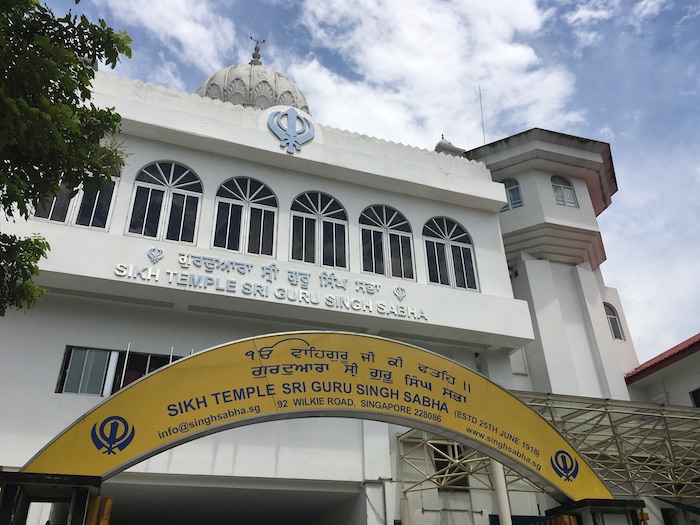
So, what is the alternate? The Singapore sanggat will hold prayers at the Sri Guru Singh Sabha (SGSS) Singapore starting this Sunday (3 May). The daily prayer recital will be held between 7am to 9am as well as 5pm to 7pm. On Sundays, there will be an additional slot from 12pm to 2pm. The prayers will be live-streamed via the gurdwara’s Facebook page.
“Sant Ji was close to many Singaporeans. Many of the elders knew him in person as he used to visit Singapore. Many of their family members have continued paying respects by going to Malacca,” SGSS Singapore committee secretary Jernayal Singh told Asia Samachar.
He said every year, the Singapore sanggat has been holding a programme in Singapore either at the same time or after the Malacca event. One of their highlight is the Sukhmani Sahib reading led by the Istri Satsang. This year, that will take place on 23 May from 3pm, also at SGSS Singapore.
Gurdwaras in Malaysia and Singapore, as with other places of worship, are not allow hold congregational prayers due to the Covid-19 threat.
ASIA SAMACHAR is an online newspaper for Sikhs / Punjabis in Southeast Asia and beyond.Facebook | WhatsApp +6017-335-1399 | Email: editor@asiasamachar.com | Twitter | Instagram | Obituary announcements, click here |
“I’d be lucky if I have one passenger a week,” says Pall. – Photo: Pall Singh / The Star
By Sheela Chandran | MALAYSIA |
Taxi driver Pall Singh has seen a 95% drop in business in the last month, since the movement control order was enforced on March 18.
“I’d be lucky if I have one passenger a week,” says Pall, 59. “Every day, I drive around Kuala Lumpur and Petaling Jaya and pray that I can get at least one passenger. I also wait at designated taxi stops. But sadly, there are not any passengers.”
Before the restriction on movement, Pall would typically make four trips a week to Kuala Lumpur International Airport in Sepang. Although this meant working for longer hours, he did not mind as it allowed him and his family to live comfortably with the RM2,000 to RM3,000 he would earn a month.
Now, with the drastic loss of income, Pall admits that he is struggling to make ends meet. As the sole breadwinner for his family of four, he has been having sleepless nights worrying about his finances. How will he put food on the table, pay his housing loan, car installments, groceries, and other miscellaneous bills.
“I also miss the drives to the airport, being able to talk to passengers en route to and from KLIA. These days, there’s always a fear that the person next to you might have Covid-19,” says Pall, a retired physical training instructor with the Royal Malaysian Airforce who has been driving his taxi for 15 years.
As an essential service worker, Pall is well aware about the dangers of picking up passengers. To stay safe, he uses a mask and disinfects his car whenever a passenger steps out of his vehicle.
Pall has already used up the RM600 he received from the government’s Bantuan Prihatin Rakyat aid. His wife, homemaker Kuljit Kaur, 54, has also received RM1,000 under the scheme.
Read the full story, ‘Labour Day: Nobody is hailing taxis now, says struggling taxi driver Pall Singh’ (The Star, 1 May 2020), here.
ASIA SAMACHAR is an online newspaper for Sikhs / Punjabis in Southeast Asia and beyond.Facebook | WhatsApp +6017-335-1399 | Email: editor@asiasamachar.com | Twitter | Instagram | Obituary announcements, click here |
A New York-based publication Newsday runs a yearly special issue on Interfaith relations in which spokespersons – often clergy – of major faiths like Judaism, Christianity Islam, Hinduism, Sikhi, among others, are invited to explore very briefly their holy days or a specific practice or belief. All 5 or 6 pieces appear on one page once a year, I have luckily drawn the assignment over the years to provide many such synopses on Sikhs and Sikhi.
In a special issue on April 26, 2020, Newsday highlighted opinions of faith-leaders, in 250-words apiece, and included my brief contribution on Sikhs and Sikhism as well. This essay in your hand today is an expanded version of my brief piece on this pandemic that has roiled life all over the globe. Over the past couple of months many Sikhs have written extensive essays especially on the Internet, about this event even though details about its devastations in India remain largely unexplored. A most notable calamity was the passing away of the Raagi Nirmal Singh as a consequence.
The coronavirus surfaced just months ago, like a nuclear disaster, an existential threat to life on Earth. Now we see some hope on the horizon, but intermixed mostly with a darker visage. Today the world seems closed. It will surely reawaken but when and in what form remains a mystery.
The first thoughts and reflex that grab us are automatic and often simplistic: Has the Creator abandoned his Creation including all human life? Talk to people of any faith, including Sikhi. Surely many believe that people have forgotten God and His retribution is the well-deserved consequence of the pandemic now visiting humanity.
But I wonder! Wouldn’t that be a vengeful Creator punishing all for the possible sins of some. How best to understand and deal with what torments us? As expected, we quickly jump to prayers for forgiveness. Prayers might calm and focus our mind, which is good, but not necessarily prevent further suffering. Ergo, I would not suggest that we blame the whim of God. The Creator should not be the scapegoat for any disaster that crosses our path. The Covid-19 is not the first disaster in human history, nor is it the last. Let us also eschew the path of beating up on ourselves and our sinful ways. These are signs of desperation that steer us into the path of self-created failure.
What next? Let a prayerful mind anchor itself so that we do not stray from the path of sanity. Prayer can settle the mind and that is central to a productive path, so that it is shaped by commonsense, reason and information with science and technology as necessary.
So, heed the experts, mavens and scientists, not charlatans. Respect knowledge and let them guide us. Again, prayers will shape the mind. Without the mind at peace knowledge remains unbridled and may often lead us astray. Our focus has to remain on the common good that is the goal.
The Covid-19 challenges us with a most modern and unusual weapon, posing a challenge to the human scientific talent and achievements. The human potential is and will prove its acumen but it will take a little time and considerable challenge to human talents.
As a Sikh, I lean on Sikh spiritual underpinnings of Guru Nanak’s teachings. The Guru Granth pointedly reminds us that pleasure and pain are two robes in our wardrobe. Each of us dons one or the other in turn. Such is life – “Sukh dukh doi dar kapray pehray jaaye manukh, p.149.”
This hints at the obvious that the two items in the wardrobe, sorrow and joy —Sukh and Dukh – are not only cyclical but transitory as all life is, and we are all renewed by our mortality. Life is thus a transitory temporary circumstance that we are experiencing – by just passing through. Our onus then is to make the most of it during our short and brief passing through.
Hence, we need to cultivate the state of mind that accommodates both pain and pleasure, and anticipates the change of seasons with patience, contentment and equanimity. Each moment heralds the new and the old, the anticipated as well as the unexpected, some more welcome than others to our mortal existence. The variety is the richness of life and the cure for life’s mendacity. Accept it and work with it.
Guru Granth also pointedly reminds us that even the most undesirable horrendous event may be the needed positive agent of change – “Dukh daroo sukh roag bhaya ja sukh taam na hoyee,” p. 469. Forget not this apparent idea that absolutely does not contravene the first teaching but enhances it to relate to a full life inherent in the metaphor with the two robes in our closet. And I conclude with another powerful metaphor from Gurbani that tells us to continue working towards the common good – Aapan hathi aapay he kaaj savariyae (Guru Granth p. 474).
So, don’t diminish the Creator to the level of our own insecurities, and don’t fall for the spin masters whether religious or political charlatans. Keep in mind that coronavirus is not the first such mega-disaster in human history nor is it the last
Remember that this, too, shall pass.
I.J. Singh is a New York based writer and speaker on Sikhism in the Diaspora, and a Professor of Anatomy. Email: ijsingh99@gmail.com.
* This is the opinion of the writer, organisation or publication and does not necessarily represent the views of Asia Samachar.
ASIA SAMACHAR is an online newspaper for Sikhs / Punjabis in Southeast Asia and beyond.Facebook | WhatsApp +6017-335-1399 | Email: editor@asiasamachar.com | Twitter | Instagram | Obituary announcements, click here |