Prof Dr Balwant Singh (left) and Dr Hardip Singh Gendeh
By Asia Samachar Team | MALAYSIA |
The lockdowns the world over due to the novel coronavirus has changed a good many things. For the first time, Sikhs were not be able to step into the gurdwara to celebrate Vaisakhi. The same goes for people from the other faiths, with their own celebrations.
Last year, father-son ENT surgeons celebrated Vaisakhi – a major event in the Sikh calendar – with family and friends. Not this time around.
“This year, Vaisakhi is going to be a bit different. Unlike last year, this year we will be celebrating in the hospital, looking after our Covid-19 patients,” Dr Hardip Singh Gendeh tells Asia Samachar.
Dr Hardip and his dad Prof Dr Balwant Singh were busy at the hospital with the ever increasing pressure from the spread of Covid-19.
Dr Balwant, now attached to the Pantai Hospital, retired after the serving in the government service for 36 years as a professor and ear, nose and throat (ENT) surgeon.
He is also the president of Association of Specialists in Private Medical Practice of Malaysia (ASPMPM). On behalf of the association, he had urged private medical specialists to come forward to help the nation battle the novel coronavirus pandemic Covid-19.
His son Dr Hardip is a resident at UKM’s otorhinolaryngology department.
Here’s their Vaisakhi greeting that Asia Samachar ran earlier at its Facebook page. Click here.
And we also had greetings from another medical pair. This one is from Georgia, United States.
Meet Dr Hardip’s sister, and her husband — Dr Manvin Gendeh and Dr Avinash Bhar. They are part of the medical fraternity in the US. Click here.
ASIA SAMACHAR is an online newspaper for Sikhs / Punjabis in Southeast Asia and beyond.Facebook | WhatsApp +6017-335-1399 | Email: editor@asiasamachar.com | Twitter | Instagram | Obituary announcements, click here |
The ever-green Dya Singh and his team has done it again. This time, they have produced a Sikh Lullaby for the delight of children from around the world. Sung by Parvyn and Harsel, the lullaby has been uploaded to the Aussie-based kirtani’s newly created Youtube page. Do check it out.
“With the launch of YouTube channel, we now have a source to reach out to all Sikhs globally,” he said in a text message to Asia Samachar.
“We hope to prepare more such videos esoecially for Punjabi schools in Punjabi next. Nursery Rhymes of each of our Guru Sahibs in simple easy Punjabi fit teachers to use to teach young Sikh children how to sing,” he added.
ASIA SAMACHAR is an online newspaper for Sikhs / Punjabis in Southeast Asia and beyond.Facebook | WhatsApp +6017-335-1399 | Email: editor@asiasamachar.com | Twitter | Instagram | Obituary announcements, click here |
Raub Sikhs putting up a new cover for the Nishan Sahib, the Khalsa flag, during Guru Nanak’s 550th birth commemoration – Photo: Supplied
By I.J. Singh | OPINION |
The 25 million Sikhs around the world remember Vaisakhi 1699, the historic day that Guru Gobind Rai appeared at a massive conclave of the Sikhs at Anandpur Sahib, flashed a naked sword and demanded a head.
History tells us that after much trepidation one Sikh, Dya Ram, offered his head. The call was repeated until five volunteers materialized. The Guru then initiated the five into the new order of the Khalsa.
Then they initiated the Guru who became Guru Gobind SINGH.
This, we believe, was the final step in the evolution of the Sikh movement started by Guru Nanak two centuries earlier. Thus were the Sikh lifestyle and world view clearly and fully delineated with an independent identity.
One can elaborate on this very skimpy outline and a slew of scholars and critics have weighed in on it over the past three hundred years; many will continue to do so until the end of time.
I come at it today from a radically different direction.
When we talk of Vaisakhi, as we do every year, we recognize the finality of the message in 1699 and hardly note any changes in our structural framework, mission or message by the passage of time.
We treasure Vaisakhi 1699 as the year of the birth of the Khalsa but hardly note that every child’s birth depends on a year or so of preparation before a newborn is delivered to the world. Remember, too, that what is born is also destined to die but not the Khalsa; It is different.
We remember the birthday and its date but fail to take into account that the newborn is now over 300 years old.
Obviously the birth of the Khalsa in 1699 was made possible, even necessary, by the 200 years of growth in the Sikh movement and its identity made possible by the personal mentorship of the nine Gurus, from Guru Nanak to Guru Tegh Bahadur, that preceded Guru Gobind Singh, as well as the Sikh institutions and worldview that evolved during those two centuries of the Guru period.
I have taken more detailed stock of these matters in an earlier 2012 essay titled “Vaisakhi Redux” and will sidestep these matters today. Let me come from a tangent instead to the post 1699 period today.
What brought this home to me was a recent panel on the tube. I was listening to some talking heads on television passionately dissecting the meaning, purpose and mechanics of the American Revolution. These events date from the 1770’s. To some, the Founding Fathers were no less than prophets who had been touched by God and set on a divine mission. Hence the society founded by them was no less than a holy Church and we could do no better than to preserve the structure that has been bequeathed to us; one does not mess with perfection.
Others had a more Earthly take on the perfection and the pristine purity of the nation’s Fathers, their message, motives and their mission.
The words that continue to haunt me are of Chris Mathews, an iconoclastic liberal political Pundit, rational but not always reasonable. He said, “The (American) Revolution started well over two centuries ago but it continues today. It did not end then and it hasn’t ended now.”
Of course, he and others like him rest their case on how the nation’s reality has changed from its beginning on matters like slavery, racial and gender equality, the ideas of what it means in matters like equality of opportunity when we speak of life, liberty and the pursuit of happiness. These are, of course, not easy matters; just look at issues like immigration reform, universal health care, and gender issues that continue to rile up the nation even today.
There are those who look at the way the societal reality was during the revolutionary days and forcefully want to reject any modern expansive interpretation of the words of that time. They forget that words reflect the context, and meaning of the time and societal values extant then. Life does not stop; it is not fixed forever in anything – not the way we live, eat, travel or relate to the rest of the world. And words change meaning and application; language, too, evolves as our lives change.
That is how I look at the inevitability of all the amendments to the Constitutions of nations, including this one, that have resulted over the years and will continue to arise as needed. The idea is to evolve into a more fruitful, more egalitarian and a just society with more transparency, accountability, integrity and self-governance at the core.
Yet there remain excellent minds that seem frozen in time. I point to some scholars and legal luminaries like Justice Antonin Scalia of the Supreme Court who is justly known for his razor sharp intellect. He and many like him appear to be totally wedded to the idea that in interpreting the laws of the country we must remain faithful to the original intent of the founding fathers of the nation; any re-interpretations of their words that take into account the intervening two centuries and the transformation of society must be rejected.
It seems to me that such a self-limiting view must by nature become a prison that holds us back in time and limits us. A lively debate, of course, continues. Witness the hot and heavy disagreement that focuses on the meaning of the Second Amendment even today.
For parallels of such thinking explore any religious tradition where newer interpretations and analyses are discouraged because such intellectual processes would “diminish” the sacred nature of doctrine and tradition. I can supply such examples from secular non-religious literature as well, more from the liberal arts and less from science.
I suppose such is human nature. Interpretation, analyses and change are threatening like shifting ground. In stability and unchanging realities there is comfort. But then these matters need to be balanced – without change there is no progress and no life.
Unquestionably when matters come to religions we take a few more regressive steps back. To us the message, its interpretation and meaning is etched in stone, and any change is blasphemy, pure and simple.
We forget that religions, no matter how old or new, were often radically revolutionary when they came to be. That’s why their founders often suffered at the hands of the powers, and even lesser despots of the time.
Religions and their founders often challenged the existing order. And we treasure the message for they give us a way of life and define for us a social order – a community or even a nation. Nations need borders much as neighbors need fences, to define “us” and “them” and “ours” and “theirs” so as to reduce conflict between them but never ever to seal one from the other.
The borders help us protect and preserve; the idea is not so much to worship but to live the life style that a religion asks us to do – that is the best worship. Again, as in civic society, the social fabric – religious or secular – must operate with transparency, honesty, accountability and self-governance at the core. To me that’s the primary purpose of a religion – to define a way of life and a framework of social mores and ethics, and not so much to worry or obsess about a life hereafter. To neglect the here and now for a fanciful and imaginative tomorrow is not the purpose at all — certainly not at all in Sikhi.
And it seems to me each new generation must reinterpret, re-explore, re-examine and rediscover the way of life, not merely to follow it slavishly.
The message of Vaisakhi every year must start with the 200 years that preceded 1699, continue to explore the 300 years that followed it and then take us forward to what will be – our hopes and dreams of tomorrow here on Earth.
At the risk of repeating myself, I say yes we should celebrate how the message of Sikhi defines a way of life and a framework of social mores and ethics but, more critically, at every Vaisakhi we need to examine what we have done to it over the years – gender issues, our preoccupation with a life hereafter, self governance and accountability, and our Sikh institutions. To repeat myself: To neglect the here and now for a fanciful and imaginative tomorrow is not the purpose at all.
The point is that the significance of Vaisakhi did not start with 1699 nor did it end that day. The revolution of Vaisakhi continues apace and undiminished today. We need to move our heads into the 21st century to see it. That, if anything, will make religions relevant and that will make them sacred.
Hail Vaisakhi.
This article was written in 2014. I reread it and liked it like new.
I.J. Singh is a New York based writer and speaker on Sikhism in the Diaspora, and a Professor of Anatomy. Email: ijsingh99@gmail.com.
* This is the opinion of the writers, organisation or publication and does not necessarily represent the views of Asia Samachar.
ASIA SAMACHAR is an online newspaper for Sikhs / Punjabis in Southeast Asia and beyond.Facebook | WhatsApp +6017-335-1399 | Email: editor@asiasamachar.com | Twitter | Instagram | Obituary announcements, click here |
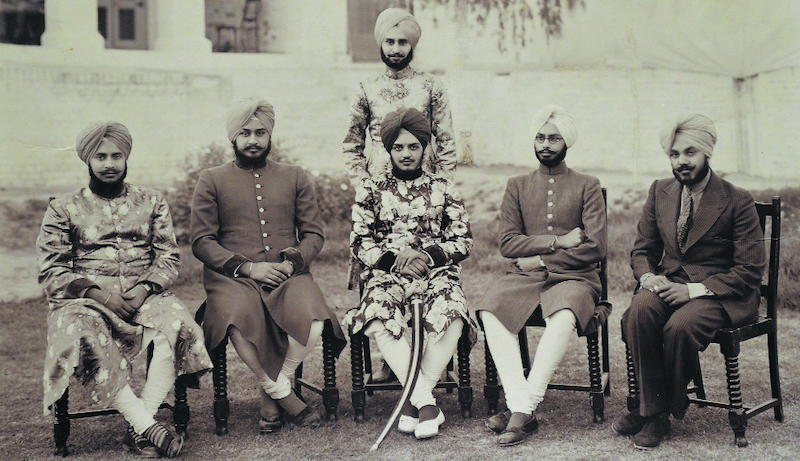
High fashion: In the 1940s, Punjabi men and women wore a variety of imported material, the kind that was traded at Amritsar. From here, the fabrics made inroads into other towns of Punjab – Photo: The Tribune
By Jasvinder Kaur | PUNJAB, INDIA |
It might be the undisputed food capital of North India today, but once upon a time, Holy City was a major textile trading centre
By Jasvinder Kaur | PUNJAB, INDIA |
Around 200 years ago, as Maharaja Ranjit Singh, aided by his legendary French generals, was consolidating his kingdom, the latter were introducing Europe to rich North Indian textiles. At the heart of this trade was Amritsar, the undisputed food capital of North India today, but a major centre for textiles in the distant past.
Amritsar, for many centuries, has in one way or the other been associated with textiles, either as a producer or as a trading centre. In fact, it became a centre of production of shawls and was at the forefront of exporting them to Europe during Ranjit Singh’s rule.
Kashmir became a part of the Sikh kingdom in 1819 after Ranjit Singh invaded it. Shortly afterwards, in 1822, Ranjit Singh hired men from Napoleon’s army — Jean-Francois Allard and Jean-Batiste Ventura — as his generals. By 1835, these generals were exporting shawls to Europe, and Amritsar had become the centre of the Kashmiri shawl trade.
Weavers and dyers from Kashmir settled in the plains and hills of Punjab during this period. One of the factors that pushed them to do so was famine. As a result, Kashmiri colonies were established in places like Amritsar and Ludhiana in present-day Punjab and Nurpur and Tiloknath in what is now Kangra in Himachal Pradesh.
Shawls made in Amritsar — jamavar or kani and amli — were of high quality. Writing in 1872, Baden Powell mentions that shawls from Amritsar were close in quality to Kashmiri shawls. The striped shawls were called jamavar or kitraz, and were popular in Iran and Turkey. These were made by the complicated kani technique. As these were used to make jamas, the word jamavar was also used for them. The amli shawls, on the other hand, were embroidered Kashmiri shawls.
Read the full story, ‘The lost story of Made in Amritsar’ (The Tribune, 19 April 2020), here.
RELATED STORY:
(Asia Samachar, 24 June 2020)
ASIA SAMACHAR is an online newspaper for Sikhs / Punjabis in Southeast Asia and beyond.Facebook | WhatsApp +6017-335-1399 | Email: editor@asiasamachar.com | Twitter | Instagram | Obituary announcements, click here |
Six foreign tourists who tried to sit out the coronavirus pandemic in an Indian cave have been sent to quarantine at an ashram near a town made famous by the Beatles after running out of money, Indian police said Sunday.
The four men and two women — from France, the United States, Ukraine, Turkey and Nepal — had been living in the cave near Rishikesh in Uttarakhand state since March 24, police inspector Rajendra Singh Kathait told AFP.
They have now been moved to Swarg Ashram, where they will be quarantined for 14 days — although none have shown coronavirus symptoms.
“Before the lockdown began, they were living in a hotel in the Muni Ki Reti region but they moved to the cave after they ran out of money,” Kathait was qouted by the news agency. “However, they had saved some money to buy food and other supplies.”
In a separate news, Bloomberg reported that India today recorded its largest daily spike in coronavirus cases, adding 1,400 new infections to its tally of more than 16,000 amid a nationwide lockdown that’s about to enter its fourth week.
The South Asian nation’s cases have been surging over the last week as it gradually scales up its testing capacity. Confirmed infections are up 78% to 16,365 on Sunday, from 9,200 on April 12, according to data from Johns Hopkins University.
Infectious diseases experts say the true number of infections is likely much higher given that the Indian Council of Medical research said the country has tested just 372,123 samples from its 1.3 billion citizens. That’s about 0.03%.
Prime Minister Narendra Modi last week extended the lockdown until May 3, but announced that makers of information technology hardware, farmers and industries in rural areas would be allowed to resume operations from Monday to start to revive stalled economic activity.
ASIA SAMACHAR is an online newspaper for Sikhs / Punjabis in Southeast Asia and beyond.Facebook | WhatsApp +6017-335-1399 | Email: editor@asiasamachar.com | Twitter | Instagram | Obituary announcements, click here |
PATH DA BHOG: 10am, 3 May 2020 (Sunday), at Wadda Gurdwara Sahib Ipoh | Malaysia
ਘਲੇ ਆਵਹਿ ਨਾਨਕਾ ਸਦੇ ਉਠੀ ਜਾਹਿ ॥੧॥
AMAR SINGH RANDHAWA S/O LATE SUBAH SINGH RANDHAWA
(8.6.1949 -18.4.2020)
Village: Saidhpur, Amritsar, Punjab
Siblings / Spouse:
Late Gihidar Singh / Sowarni Kaur
Sarjit Kaur / Gurdev Singh
Late Sarjeet Singh
Daljeet Kaur / Avtar Singh
Jaswant Kaur
Path-da-Bhog: 10am, 3 May 2020 (Sunday), at Wadda Gurdwara Sahib Ipoh, Perak
Amar Singh passed away peacefully on 18th April 2020 at around 10.25pm on his 71st year.
Amar Singh grew up in Jalan Bendahara, Ipoh and later resided in Ipoh Garden East. He has been running a textile shop, Ladies Elegance in Little India, Ipoh for almost 20 years.
The family wishes to express their heartfelt thanks to everyone who provided their utmost love, support and care during his difficult times.
Due to the Movement Control Order (MCO), the family has been advised to keep this as a private affair. Hence, this announcement is meant to inform relatives and friends.
Amar Singh will be dearly missed by his family, friends and all those who knew him.
May Waheguru Ji bless his soul.
Satnam Waheguru.
Contact:
Kelvinder Singh 012.3506679
Amrita Kaur 012.5403352
Jasmeet Singh 017.5193412
| Entry: 19 April 2020 | Source: Family
ASIA SAMACHAR is an online newspaper for Sikhs / Punjabis in Southeast Asia and beyond.Facebook | WhatsApp +6017-335-1399 | Email: editor@asiasamachar.com | Twitter | Instagram | Obituary announcements, click here |
Pondering on Guru Nanak Dev Ji’s divine message on page 470 of Sri Guru Granth Sahib that narrates as follows:
ਨਾਨਕ ਮੇਰੁ ਸਰੀਰ ਕਾ ਇਕੁ ਰਥੁ ਇਕੁ ਰਥਵਾਹੁ॥
ਜੁਗੁ ਜੁਗੁ ਫੇਰਿ ਵਟਾਈਅਹਿ ਗੀਆਨੀ ਬੁਝਹਿ ਤਾਹਿ॥
ਸਤਜੁਗਿ ਰਥੁ ਸੰਤੋਖ ਕਾ ਧਰਮੁ ਅਗੈ ਰਥਵਾਹੁ॥
ਤ੍ਰੇਤੈ ਰਥੁ ਜਤੈ ਕਾ ਜੋਰੁ ਅਗੈ ਰਥਵਾਹੁ॥
ਦੁਆਪੁਰਿ ਰਥੁ ਤਪੈ ਕਾ ਸਤੁ ਅਗੈ ਰਥਵਾਹੁ॥
ਕਲਜੁਗਿ ਰਥੁ ਅਗਨਿ ਕਾ ਕੂੜੁ ਅਗੈ ਰਥਵਾਹੁ॥
For Romanize Punjabi readers:
Nanak Merr Sareer Ka Ik Rath ik Ratthwahu.
Yug yug Phir vatayiae. Gyani bhuje tahen.
Sat yug Rath Santokh Ka Dharam agge Ratthwahu.
Traete Rath Jatteh Ka Jorr agge Ratthwahu.
Dwapar Rath.Tappe Ka Satt agge Ratthwahu.
Kal Yug Rath Agan Ka Kood agge Ratthwahu.
Sat Yug, Treta Yug, Dwapar Yug and Kal Yug, are FOUR States of Mind acting as Drivers of this Body, which Guru Ji mentions here as A Chariot. It all depends on what kind of MIND is driving it.
The Yuggas have nothing to do with a specific period in numbers of years.
It’s a phase attributed to the Collective State of Mind. Each respective mind can change its phase (Yuga). This differs from one person to another.
When this sort of change takes place in millions of minds, we call it Collective Consciousness, prevailing and creating its effect either on a particular society or across the universe.
The FOUR phases change its fragments in a cycle. When one phase ends the next begins. Consciously or unconsciously, we may be going through the ending phase of one such cycle and perhaps moving towards the beginning of another.
Guru Nanak narrates “yug yug phir vatayiae….”
Meaning that the PHASES keep taking turns; a brand new era starts after the end of an old era. In this way, this Earth could have witnessed hundreds of such cycles in the past millions of years.
He explains that this soul is set off onto a journey on a Chariot (Our Body) – Ratth, and its Driver(Ratthwahu) is the Mind directing the body.
So…
1. When Sat Yug prevails, the Chariot is of Contentment(Santokh) and the Driver is Righteousness (Dharam).
Elements of Contentment are Serenity, Equanimity, Complacency, Satisfaction and being Pleased.
Elements of Righteousness of Mind are Conscientious, Honourable, Ethical, Law-Abiding, Pure, Spiritual, Transparent, Virtuous, Holy, Godliness,Meritorious, Trustworthy and Dutiful…
2. When Treta Yug prevails, the Chariot is of Moderation(Jatteh) and the Driver is Power (Jorr).
Elements of Moderation are Restrainment, Celibate, Patience, Calmness,Quiey, Dispassionateness and Composed.
Elements of Power are Skill, Capacity, Capability, Influence, Aptitude, Endowment and being Talented.
3. When Dwapar Yug prevails, the Chariot is of Penance(Tappe) and the Driver is Truth (Sat).
Elements of Penance are Self-restriction like self-punishment eg. Fasting, Atonement, Penetance,Repentance,Self-Flagillation (Self torture).
Elements of Truth are Accuracy. Legitimacy, Certainty, Authenticity, Veracity, Gospel and Factuality.
4. When Kal Yug prevails, the Chariot is of Fire(Agaan) and the Driver is falsehood (kood).
Elements of Fire are Heat, Pyre, Devouring, Warfare, Jealousy. Loot, Ingerno, Blaze, Flare, Holocaust, Spark, Distruction, Smoke, Confusion and Darkness.
Elements of Falsehood are Perjury, Shame, Untruthfulness, Fallacy, Distortion, Dishonesty, Deceit, Fakery, Misstatement, Manipulativeness, Fraud, Fictitious, Fib, Pretense and Mendacity
Through these illustrations we can now check our Minds, what is driving our chariot and what kind of a chariot we are carrying in this journey call LIFE.
Imagine when hundreds of us carry similar illustrated attributes, we then fall within the community of a certain Consciousness. The collective sum creates a specific environment for us. The effect of the environment then determines our psychic, economic and physical state. When the similar consciousness prevails across the planet, then we are bound to face an inevitable mass adjustment.
Perhaps the coronavirus pandemic is doing something good to mankind or is a cycle taking another turn? Are we going into a new collective consciousness of Sat Yugga?
We need to reflect! Guru Nanak Dev Ji has made this very clear some 550 years ago the Yuggas move in cycles. Do those lines narrated in the beginning directed to this present situation we are facing globally?
Dr Balwant Singh Bains is a Malaysia-based kirtan enthusiast and a practicing physiotherapist with a chain of physiotherapy clinics.
ASIA SAMACHAR is an online newspaper for Sikhs / Punjabis in Southeast Asia and beyond.Facebook | WhatsApp +6017-335-1399 | Email: editor@asiasamachar.com | Twitter | Instagram | Obituary announcements, click here |
A Sikh temple in Wolverhampton has donated £50,000 to help hospital patients stay in touch with their families during the coronavirus crisis.
Trustees and worshippers from the Guru Teg Bahadur Gurdwara donated the cash to The Royal Wolverhampton NHS Trust (RWT) and University Hospitals Birmingham NHS Foundation Trust (UHBT).
The trusts say they plan to use the cash to buy tablets that NHS staff will use to connect Covid-19 patients with family and friends who are unable to visit them during the pandemic.
Former city MP Paul Uppal, a trustee at the temple on Upper Villiers Street, said: “Our trustees and members of the temple are incredibly passionate about the NHS and wanted to support the local services that are delivering exceptional care under unprecedented circumstances.
“We hope the donation helps to bring some comfort to those hospitalised by the virus and to their families and friends, as well as to the frontline NHS workers who are doing everything within their power to get us all through this crisis.”
RWT chief executive David Loughton said: “During this challenging time, we have been astounded by the generosity shown by businesses, individuals and members of the local communities we serve.
“Thank you to the Guru Teg Bahadur Sikh Gurdwara. Their donation will enable us to fund projects that will not only support our patients throughout this difficult time, but also our dedicated hardworking staff who, as always, have gone above and beyond to support our patients and their families.”
Read the full story, ‘Wolverhampton Sikh temple donates £50k to hospitals to aid coronavirus fight’, (Express & Star, 18 April 2020), here.
ASIA SAMACHAR is an online newspaper for Sikhs / Punjabis in Southeast Asia and beyond.Facebook | WhatsApp +6017-335-1399 | Email: editor@asiasamachar.com | Twitter | Instagram | Obituary announcements, click here |
Indian intelligence agencies attempted to use money and disinformation to “covertly influence” Canadian politicians, reveals a Canadian newspaper quoting ‘a highly sensitive government document’.
The document shows that Canadian security officials suspected India’s two main intelligence branches had asked an Indian citizen to sway politicians in this country into supporting Indian government interests, reportsGlobal News.
The Research and Analysis Wing (RAW) and Indian Intelligence Bureau (IB) were allegedly behind the operation, which began in 2009, the newspapers said, attributing the information to the document.
The alleged foreign influence operation was disclosed in Federal Court proceedings involving an Indian national accused by the Canadian Security Intelligence Service of espionage, the report added. The security screening investigation was triggered when the Indian newspaper editor had applied to immigrate to Canada.
In an immediate response, Ottawa-based World Sikh Organization of Canada (WSO) said it was deeply disturbed by the newspaper report, but added that it was not surprised as India has had a long history of interference and espionage in Canada, targeting the Sikh community.
In the statement, WSO president Tejinder Singh Sidhu said: “While we are deeply troubled by the news that Indian intelligence agencies have been attempting to “covertly influence” Canadian politicians with money and disinformation, it is hardly surprising to Canadian Sikhs.
“Indian intelligence agencies have a long history of using media and planted stories to negatively portray Sikhs in Canada. Sikhs have long suffered from the consequences of this foreign interference.”
He said the WSO has regularly raised the issue of Indian espionage and interference in Canada with the federal government.
“We call on the federal government to take immediate steps to clamp down on Indian espionage here in Canada and to ensure that the Canadians can live free from the machinations of foreign governments,” he said.
In the report, Global News had also highlighted the details of the Federal Court judgment in the case of an applicant identified in court records only as ‘A.B’. He is the editor-in-chief of an unnamed Indian newspaper whose wife and son are Canadian citizens.
He allegedly met Indian intelligence more than 25 times over six years, most recently in May 2015 — a month after Indian Prime Minister Narendra Modi visited Canada, the report noted.
FEDERAL COURT JUDGMENT
The judgment, viewed online by Asia Samachar, published what was described as an ‘undated and unattributed summary’ of what A.B. had allegedly admitted. It says:
“On June 16, 2015, during your interview, you stated that you were approached by both the Indian Intelligence Bureau (IB) and the Research and Analysis Wing (RAW) in the mid-2000s but added that it was not until 2009 that both services requested your formal assistance. You stated that you were tasked by RAW to covertly influence Canadian government representatives and agencies on behalf of the Indian government. You stated that RAW had also tasked you to meet with government officials in Belgium and Canada in an effort to influence their views in favor of the Indian government. You stated that you were told to identify random Caucasian politicians and attempt to direct them into supporting issues that impacted India. You stated that the guidance from RAW included that you were to provide financial assistance and propaganda material to the politicians in order to exert influence over them. As an example, you stated that you were tasked to convince politicians that funding from Canada was being sent to Pakistan to support terrorism. You stated that you met with your IB and RAW handlers outside of Canada at least once every two months, and that the last time you met with them was in May 2015 (i.e. about one month before the interview took place).”
In his decision, Judge Simon Fothergill said that the immigration officer’s decision rested in large part on the finding that it was implausible for AB to claim he did not supply information to the Indian intelligence services when he met with representatives of those agencies 25 times over several years beginning in the mid-2000s.
“However, AB is a journalist and editor-in-chief of a newspaper. It is not inconceivable that he would meet with government sources every other month while maintaining his journalistic independence,” he said.
INDIAN INTERFERENCE
Commenting on the report, Prof. Stephanie Carvin told Global News that while India had long been active in the country, the case was a rare example of its interference with Canadian elected officials.
“To my mind, this is one of the first public examples of evidence of clandestine foreign influence targeted at Canadian politicians” said the Norman Paterson School of International Affairs expert.
The allegation of Indian meddling follows the release last month of a National Security and Intelligence Committee of Parliamentarians (NSICOP) report on foreign interference.
The newspaper said the NSICOP 200-page document acknowledged that China, Russia and other states were conducting foreign interference activities in Canada and that “elected and public officials across all orders of government” were being targeted. It added that 1.2 million Canadians were of Indian descent, and that some communities were “vulnerable to foreign interference either as targets or as a means of undermining Canadian values and freedoms.”
ASIA SAMACHAR is an online newspaper for Sikhs / Punjabis in Southeast Asia and beyond.Facebook | WhatsApp +6017-335-1399 | Email: editor@asiasamachar.com | Twitter | Instagram | Obituary announcements, click here |
Meher and her dad Navdeep Singh – Photograb from Boston 25 News
By Asia Samachar Team | UNITED STATES |
There is nothing like fear until it strikes you in the heart. That was how a 15-year-old Sikh girl in Massachusetts, US, felt when Covid-19 landed in her home.
Thankfully, Meher Kaur and her family have come out of the novel coronavirus episode in high spirit. And she is blogging to capture her family’s experience when they had to isolate themselves in Hopkinton.
She begins her blog like this: “Never in a million years would I have thought that the international threat that social media was making jokes about would enter my home.”
She recalled the phone call on the afternoon of 22 March ‘right as my mom, brother and I sat down to eat lunch’.
“We were informed that my dad tested positive for COVID-19. I could feel the fear that my mom suppressed as to not worry or scare my 8 year old brother and I. Hanging up the phone after receiving the news, my mom assured us that everything was going to be just fine,” she writes.
Her father, Navdeep Singh told Boston 25 News: “The recovery is all over the spectrum, anywhere from asymptomatic to very serious cases, I would want to say I was somewhere in the middle. I did go through a period that was a little difficult.”
On her part, Meher told the television channel: “I think mindset is a big part of it….More than the physical recovery is the mental recovery.”
The blog focuses on their story from Meher’s perspective, it includes thing her family wishes they knew. It also offers mental and emotional support for others, the channel said.
ASIA SAMACHAR is an online newspaper for Sikhs / Punjabis in Southeast Asia and beyond.Facebook | WhatsApp +6017-335-1399 | Email: editor@asiasamachar.com | Twitter | Instagram | Obituary announcements, click here |