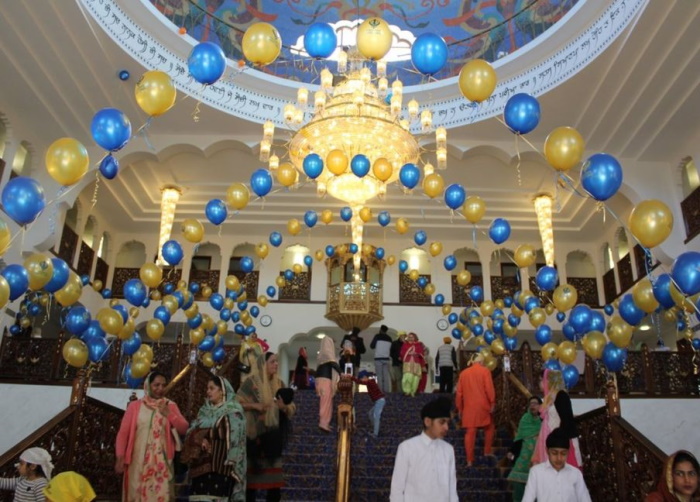
The gurdwara in Gravesend would normally be decorated for Vaisakhi – Photo: BBC News
By Tanya Gupta & Minreet Kaur | BRITAIN |
Celebrations to mark one of the most important dates in the Sikh calendar have been cancelled or postponed because of the coronavirus pandemic.
Vaisakhi, which this year falls on Monday, commemorates the creation of the Khalsa, a collective body of initiated Sikhs.
In past years, thousands have gathered in the towns and cities that are home to England’s largest Sikh communities.
But now gurdwaras have found ways to take Vaisakhi into people’s homes.
Two of the biggest events that would have been held later this month were in London’s Trafalgar Square, where more than 30,000 have gathered in past years, and Birmingham’s Handsworth Park, where up to 100,000 people were expected.
Celebrations in Leicester, Southall and Gravesend have also been brought to a halt.
In London, cultural advisor to the mayor, Manraj Singh Othi, said while Vaisakhi had brought together Londoners, Sikhs and non-Sikhs alike, public safety came first.
Those feelings were echoed by the Council of Sikh Gurdwaras in Birmingham – and in Southall, west London, gurdwara general secretary Navraj Singh added: “No event in the Sikh calendar should endanger lives.”
At any other time, celebrations would have included colourful street processions, or nagar kirtans, and free food, or langar, as well as cultural activities including arts, crafts, entertainment and martial arts.
But this year, religious worship has moved online and the Sikh practice of offering food was set to be taken out to the community, as people self-isolated and stayed at home.
In Leicester, that initiative has been backed by the Leicestershire Police Sikh Association, which has been helping to cook and deliver meals, distributing between 300 and 400 meals to people each day.
In Gravesend, Kent, the gurdwara had expected about 10,000 people to celebrate Vaisakhi.
Newly-elected president Manpreet Singh Dhaliwal said, along with the virtual prayers and food deliveries, the gurdwara had been taking langar to NHS workers in several hospitals nearby.
Read the full story, ‘Coronavirus: UK’s Sikh Vaisakhi festivals cancelled amid pandemic’, (BBC News, 13 April 2020), here.
RELATED STORY:
(Asia Samachar, 24 June 2020)
ASIA SAMACHAR is an online newspaper for Sikhs / Punjabis in Southeast Asia and beyond.Facebook | WhatsApp +6017-335-1399 | Email: editor@asiasamachar.com | Twitter | Instagram | Obituary announcements, click here |
In 2019, Singapore saw major programmes as Sikhs worldwide commemorated the 550th birth of Guru Nanak. Vaisakhi was no exception. It was celebrated with gusto.
This year, though, everything has been put on hold as governments around the world institute measures to contain the spread of the novel coronavirus Covid-19. Singapore and Malaysia are both under partial lockdown, making any congregational celebration impossible.
Still, not everything has come to a stop. The golden heart of the Sikhs continues to ooze gratitude and empathy as Sikhs fire up their Langgar to feed the needy in their midst.
“Our gurdwaras are all serving langgar. The needy either collect it from the gurdwara or we send it to their homes,” Inderjit Singh, a former lawmaker and entrepreneur, tells Asia Samachar. He chairs the Singapore’s Co-ordinating Council of Sikh Institutions (CCSI).
Asia Samachar invited Inderjit to share a Vaisakhi greeting as part of the #vaisakhiindoor campaign featuring community leaders & influencers & Covid-19 frontliners.
“In our prayers, let us remember the birth the Khalsa on the Vaisakhi day,” he said. Vaisakhi falls on 14 April.
In view of the Covid-19 threat, Malaysia has imposed a ‘movement control order’ (MCO) which has been extended to 28 April while Singapore has introduced a ‘circuit breaker’ which ends on May 5. In essence, both are partial lockdowns.
Singapore gurdwaras had initially cancelled all congregational prayers and gatherings, effective 27 March. The decision, taken by the CCSI, had advised gurdwaras to suspend all programmes, including family sponsored and group programs, until 30 April.
What is #vaisakhiindoor? Its our small way – a simple but let’s make it a powerful hashtag – to bring cheer to Sikhs as they celebrate Vaisakhi indoor.
We ask everyone to share how they will celebrate their Vaisakhi at home. Share the cheer! When you do, please add the hashtag to connect with the rest of the Sikh community and humanity.
ASIA SAMACHAR is an online newspaper for Sikhs / Punjabis in Southeast Asia and beyond.Facebook | WhatsApp +6017-335-1399 | Email: editor@asiasamachar.com | Twitter | Instagram | Obituary announcements, click here |
Vaisakhi 2020 is going to be different. And let’s make it happening and memorable!
Maybe they you will make your first roti or learn to make degh or sing is that favourite song of yours.
Just do it. And then share your Vaisakhi cheer on Facebook, Twitter, Insta or wherever WITH the hashtag #vaisakhiindoor
Asia Samachar wants you to be part of the #vaisakhiindoor global movement.
At the same time, Asia Samachar will bring to you #vaisakhiindoor messages from community leaders & influencers & Covid-19 frontliners.
So, we at Asia Samachar eagerly await your #vaisakhiindoor moment. Let’s make it happen.
To kickstart #vaisakhiindoor, let’s meet Malaysian advertising genius Ham who’s volunteering at MERCY Malaysia for Covid-19 related work.
Ham, as he’s known all around, and the his team of volunteers at Mercy have been busy interviewing the medical frontliners at Hospital Sungai Buloh, one of the primary Covid-19 centres for Malaysia.
Harmandar Singh is no stranger in the Malaysian advertising world. He was inducted into the International Advertising Association (IAA) Malaysia Hall of Fame. He is the publisher of the Marketing and ADOI magazine.
ASIA SAMACHAR is an online newspaper for Sikhs / Punjabis in Southeast Asia and beyond.Facebook | WhatsApp +6017-335-1399 | Email: editor@asiasamachar.com | Twitter | Instagram | Obituary announcements, click here |
Gurjit Singh, Ravinder Singh Oberoi, head granthi, Jasbir Singh, Gurbir Singh Chadha, Arminder Singh and Simerjote Singh Chadha all Members of Gurdwara Guru Nanak Darbar Sikh community in Dublin with some of their food ready for delivery around the city. Photograph: Nick Bradshaw/ The Irish Times
By Sorcha Pollak | IRELAND |
Volunteers from a Sikh temple in south Dublin have offered to cook and deliver hundreds of free meals to vulnerable families, gardaí and health workers for the duration of the Covid-19 pandemic.
Members of the Sikh Gurdwara (temple) on Serpentine Avenue in Dublin 4 say they can produce up to 500 vegetarian meals a day if necessary for people in need around the city from the temple’s kitchen.
The decision to offer the free food stems from the Sikh tradition of ‘langar’ or sharing meals, says Ravinder Singh Oberoi, one of the volunteers at the temple.
“It comes with the tradition we follow that food is for the poor. It was started by our first Guru Nanak; it’s a free kitchen for anyone. Worldwide there are Sikh organisations providing free meals to the needy. It’s in our blood that we want to help. On this occasion with a lot of people suffering, we decided as Sikhs we can help in some shape or form.”
There are currently ten volunteers in the temple’s kitchen cooking vegetarian meals made up of rice, chickpeas and lentils. These meals are then boxed up and delivered to those in need, says Mr Singh Oberoi.
O’Connell Street
The first batch made last week was handed out to people outside O’Connell Street’s NGO while other meals were delivered to gardaí at Irishtown and Pearse street stations.
“We already deliver to O’Connell Street every Tuesday but have decided to do it each day depending on requirements. If there are people out there looking for help and food we will try and reach them.”
Those working in the kitchen can currently prepare between 250-300 meals a day but with a few volunteers could reach up to 500 meals a day, says Mr Singh Oberoi. The temple is observing strict social distancing rules in the kitchen and wants to limit the number of people cooking to maintain health and safety standards, he said, adding that meals are delivered by a separate set of volunteers.
Like all other places of worship, the temple is currently closed to the public and members of the Sikh community are gathering through skype and other online platforms to pray, says Mr Singh Oberoi. Close to 500 people would usually attend the Sunday service, he says.
The Gurdwara has posted about its food delivery service on its website and Facebook but is trying to spread the word to families outside the Sikh community. There is also concern about foreign students who may be alone and living off very little money, said Mr Singh Oberoi.
“This food is for health workers and gardaí but also families. Anyone who needs help, just let us know.”
Read the original article, ‘Sikh temple offers to cook up to 500 free meals daily for vulnerable families’ (The Irish Times, 10 April 2020), here.
ASIA SAMACHAR is an online newspaper for Sikhs / Punjabis in Southeast Asia and beyond.Facebook | WhatsApp +6017-335-1399 | Email: editor@asiasamachar.com | Twitter | Instagram | Obituary announcements, click here |
The Josan family has deep links to Smethwick. Grandfather settled in the West Midlands town in the 1950s. His son took an active interest in the local affairs. And now the grandson is continuing the tradition. He has upped the ante by going into national British politics.
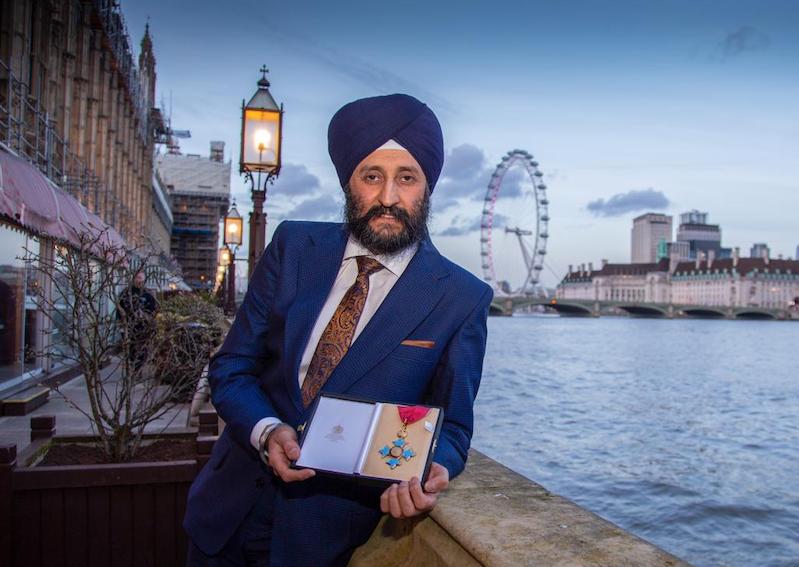
Gurinder Singh Josan, a Labour member since he was 16 years old, was elected to a vacant position to the political party’s national executive committee (NEC) in an election that closed on Saturday (4 April).
This is a major breakthrough for the Sikh presence in British party. For the first time, a Sikh has been elected to its the influential body.
“My grandfather helped build the first Gurdwara, Guru Nanak Gurdwara, Smethwick in 1961. My family were involved in sewa (selfless service) from the outset,” Gurinder tells Asia Samachar.
“Whilst having a Sikh person on the Labour NEC hasn’t been an aim in itself, achieving this is a milestone and a welcome step because it shows the Labour Party is open to all and reflects the communities of the UK.”
In the same election, Labour elected Sir Keir Starmer as its new chief.
He has appointed Preet Kaur Gill, the first British Sikh female MP, as the Shadow International Development Secretary.
Two other Punjabis elected to major roles were Tanmanjeet Singh Dhesi as the shadow railway minister and Seema Malhotra as the shadow employment minister.
Preet and Tan were first election to the parliament in the 2017 snap elections. They both won again the December 2019 general elections which was Conservative Party storming to a decisive victory under Boris Johnson.
Here are excerpt from the interview with Gurinder.
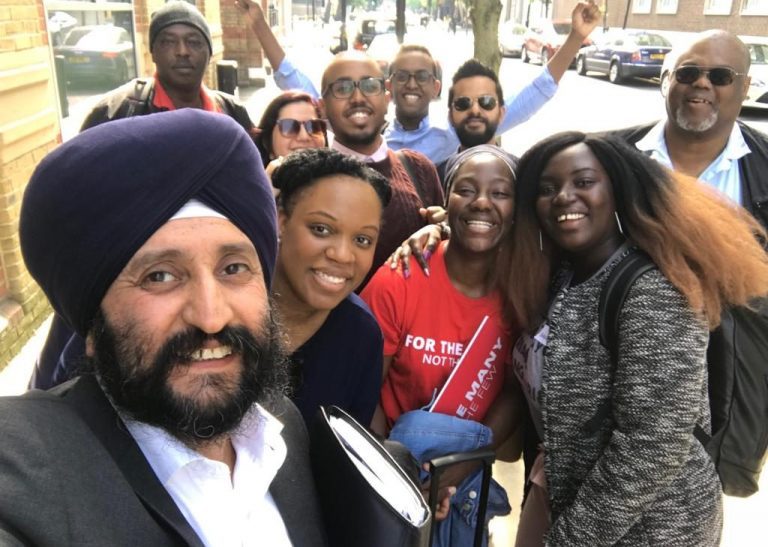
Gurinder Singh Josan and Labour supporters
What are your immediate plans now that you’re part of the Labour NEC?
The Labour Party has just lost our fourth General Election and has been hopelessly divided along factional lines. There is a big job of rebuilding to do to ensure the party is ready to challenge for power at the next General Election.
I’ve been elected as a representative of ordinary members and will be doing my best to ensure the concerns, aspirations and ideas of ordinary Labour Party members and activists are always given full consideration as part of the rebuilding.
What does it mean for Sikhs and other minorities?
Progress in improving diversity at every level in every field is important for all minorities to maintain their sense of belonging and ownership of institutions and within society generally. Whilst having a Sikh person on the Labour NEC hasn’t been an aim in itself, achieving this is a milestone and a welcome step because it shows the Labour Party is open to all and reflects the communities of the UK.
Also, the Sikh community, like many other minority communities, has been established in the UK for many decades and several generations now. Sikhs and other minorities have traditionally largely supported the Labour Party. However, we are seeing in recent elections that allegiance amongst some communities, Sikhs and Hindus in particular, is shifting. It’s important the Labour Party understands and responds to these changes and having somebody who understands the communities on the NEC is an advantage.
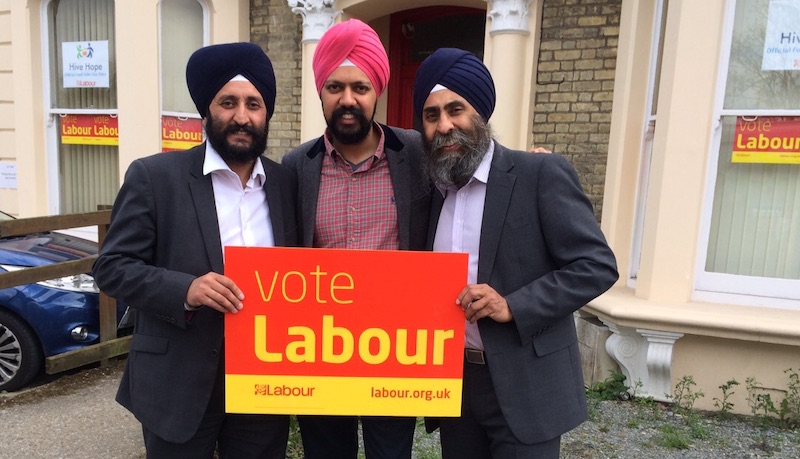
L-R: Gurinder Singh Josan, Labour MP Tanmanjeet Singh Dhesi and Jagtar Singh Gill of Sikh Assembly
There are not many Asians in the newly unveiled Labour shadow cabinet. For someone who’s championing diversity, are you disappointed? Should something be done about it?
There are 24 members of the Shadow Cabinet. In addition, there are to be many more junior shadow ministerial roles appointed in the coming days.
Among them is Preet Kaur Gill, the first Sikh to be appointed and another milestone for the community. There are four others who have Indian or Pakistani heritage that I’m aware of. So, five out of 24 (approx. 20%) is not a bad representation for a community that will be less than 20% in the UK. Overall, including all BAME appointees this is a very diverse Shadow Cabinet and Keir Starmer should be congratulated.
When considered along with the increase in recent elections in the number of BAME MP’s elected and the diversity currently in the UK Government, these are all welcome steps for minority communities.
What made you join the Labour Party at 16?
As long as I can remember my family has always been actively involved in the Labour Party. My late father was an active member of his trade union and became an elected councillor in Sandwell wand was Cabinet Member for Housing when he passed away in 1999.
Some of my earliest memories as a young child are going out with my late father while he was leafletting or attending meetings. I suppose it was inevitable I would join the Labour Party at the earliest opportunity!
Who inspired you in those days (any particular leader, from Labour or elsewhere)?
At the time I joined, the Labour Party was involved in a similar factional struggle over the direction of the party. The leader at the time, Neil Kinnock, inspired me because of his own personal political journey that led him to challenge more dogmatic elements in the party and to advocate change to enable the party to focus on winning elections. Without winning elections, we can’t achieve the things we set out to do so.
Do tell us about your family background.
My late paternal grandfather, Bhan Singh, and my late father, Swaran Singh Josan, came to the UK in the 1950’s and settled in Smethwick in the West Midlands where we still live today. My father was 10 years old at the time and so most of his education was in the UK. My grandfather worked in the foundries in the West Midlands doing manual labour. After completing his education, my father joined what was then called the Post Office and later became British Telecom as a telecommunications engineer where he worked for 27 years.
My maternal grandfather, Niranjan Singh Khinda, also come to the UK in the 1950’s. He settled in Bedford where he worked as a labourer the brickworks. He was one of the founding trustees of Guru Nanak Gurdwara, Bedford.
My mother, Bhajan Kaur Josan, and father married in 1970. I was born in 1972.
My late father and my late uncle established a retail business in 1975 which my mother worked in too. My brothers and I now run the business, a plumbers merchants.
I married in 1996 my wife, Harvinder Kaur Josan, who is an accountant. We have two children – a son and a daughter both at university.
How did break into politics?
My father arrived in the UK aged 10 and most of his education was here. He was, therefore, proficient in English as well as Punjabi and in those days there weren’t many people. The early community settlers always had departments and correspondence to be dealt with and my father assisted a lot of people on a regular basis. At work he got very involved in the trade union and this led him to join the Labour Party.
The Josans: L-R: Daughter Gurkirta Kaur Josan, Gurinder, mother Bhajan Kaur Josan, wife Harvinder Kaur Josan and son Pavandeep Singh Josan
What are the Sikh principle, if any, that inspire you?
I was bought up in a devout Sikh household. I am inspired by the importance given to equality of all, by the principles of ‘naam japna’, ‘wand ke shakna’ and ‘kirat karni’ and by the importance given to miri and piri aspects in life.
My grandfather helped build the first Gurdwara, Guru Nanak Gurdwara, Smethwick in 1961. My family were involved in sewa (selfless service) from the outset. My uncle served as a committee member several times including as Treasurer and I served as a Trustee for a short time.
You founded Sikhs for Labour. Why?
We founded Sikhs for Labour to be a two-way interface between the community and the Labour Party. It is a vehicle through which the Labour Party can engage with the community and through which the community can engage with the Labour Party on issues such as representation and policy issues.
Are Sikhs open to supporting Labour?
I believe they are. The Labour Party has been the home for Sikhs in the UK traditionally. This is partly due to the proactive stance historically taken by the Labour Party on equality issues particularly regarding the Dastar and the Kakaars.
Whilst these issues are still of relevance to Sikhs, the Labour Party position on other policy areas remain attractive to Sikhs particularly in areas such as welfare and protecting the less well off.
ASIA SAMACHAR is an online newspaper for Sikhs / Punjabis in Southeast Asia and beyond.Facebook | WhatsApp +6017-335-1399 | Email: editor@asiasamachar.com | Twitter | Instagram | Obituary announcements, click here |
ASIA SAMACHAR is an online newspaper for Sikhs / Punjabis in Southeast Asia and beyond.Facebook | WhatsApp +6017-335-1399 | Email: editor@asiasamachar.com | Twitter | Instagram | Obituary announcements, click here |
Singapore Punjabi school resumes – Photo: SSEF Facebook page
By Gurdial Kaur | SINGAPORE |
In view of the Covid-19 situation, Non-Tamil Indian Languages (NTIL) weekend classes in Singapore were suspended on 21 March 2020. In response, Singapore Sikh Education Foundation (SSEF) has put in place Home-Based Learning (HBL) for all levels from Kindergarten to A levels. SSEF tapped on its existing portal for the Kindergarten and Primary levels while Google classroom was used for the Secondary and A Levels.
SSEF is fortunate to have educators leading the organization who were able to guide and train the teachers to look at the possibilities of re-enacting classroom instructions through the SSEF online portal and Google Classroom. Teachers met on the first day of closure on 21 March to conceptualise the delivery of lessons and enthusiastically recorded themselves delivering different components of the curriculum. In addition to the video recordings, teachers explored additional resources such as audio embedded into learning activities, videos depicting animated stories as well as interactive and engaging activities to motivate young learners. The secondary and Junior College youth interacted with customised learning packages.
For the last few weeks, lessons have been made available online to the students on Saturday mornings. These are carried out at all levels to ensure that teaching and learning is not compromised and that students are carrying out the assigned tasks. We are pleased to announce that almost all our students are turning in their assignments promptly and teachers give timely feedback to the students on the work submitted.
SSEF would like to place on record its sincere appreciation for the support that it has received from parents in guiding their children from home as well as acknowledging the efforts of our Staff. SSEF would also like to thank all Centre Principals and teachers for the time and effort that they have put into the preparation of teaching and learning materials. Our teachers will continue with the rigorous follow up, track students’ learning and provide feedback.
It was indeed a steep learning curve for all of us at SSEF. The positive feedback that we have received from parents has reinforced the commitment of our Centre Principals and teachers who have gone beyond to explore more tools to better engage our students.
HBL will continue for the rest of the semester despite the directive from the Board for the Teaching and Testing of South Asian Languages (BTTSAL) that NTIL Mid-Year Examinations and Term 2 Weighted Assessments for Primary 3 and Secondary 1 will be cancelled.
Despite HBL being a new mode of learning, SSEF has surmounted various challenges and will continue to endeavour to bring out the best in every child to enhance the learning of the Punjabi Language in Singapore.
Feedback from our parents:
“As a parent, I appreciate the efforts of the teachers for developing home based lessons to support the students’ learning. Kudos to the teachers and the Principal who allays our concerns.” – SSEF Punjabi School (Secondary)
“The online platform used for Primary is seamless and easy to navigate. Thanks to the clear and crisp instructions provided by the Principal and teachers to prepare the students and parents. Teachers’ voice and delivery of lessons was clear and engaging. Difficult content was contextualized and made easy for students.” – SSEF Punjabi School (Primary)
“Although HBL is new to all of us, the amount of work that the Principal and teachers have put in to make materials colourful, engaging and fun for young children is commendable. Due to the quality of each week’s lesson, we feel that learning of Punjabi via HBL mode is as meaningful as learning in a classroom” – SSEF Kindergarten
Gurdial Kaur is the chairperson of the Singapore Sikh Education Foundation (SSEF), a self-help group in Singapore providing Punjabi Language education for students from Kindergarten to A Levels.
ASIA SAMACHAR is an online newspaper for Sikhs / Punjabis in Southeast Asia and beyond.Facebook | WhatsApp +6017-335-1399 | Email: editor@asiasamachar.com | Twitter | Instagram | Obituary announcements, click here |
Question from a Satsanggi: You quoted this line from Bani. What does it mean? And when does one live then?
Gur parsadi jivat maray hukmay bujhay soi
ਗੁਰ ਪਰਸਾਦੀ ਜੀਵਤੁ ਮਰੈ ਹੁਕਮੈ ਬੂਝੈ ਸੋਇ ॥
With the Guru’s grace if one dies whilst still living one understands His hukam.
Nanak aisi marnee jo maray ta sadh jivan hoi
ਨਾਨਕ ਐਸੀ ਮਰਨੀ ਜੋ ਮਰੈ ਤਾ ਸਦ ਜੀਵਣੁ ਹੋਇ ॥੨॥
Nanak – one who dies such a death lives forever.
(SGGS Ang 555, Raag Bihagra M.3.)
Jivat maray is a very important concept in Gurbani.
We all have inner passions. They drive us to act and such actions result in karmic baggage.
As one takes to Gurbani, lives his life in accordance with the wisdom of Bani, he attracts the grace of the Guru. His avastha becomes so high that maya has no effect on him and he is no longer ruled by his passions (kaam, krodh, etc).
Such a person becomes jivat maray or jivan mukat i.e liberated whilst still alive. Such a person carries on living but he is no longer selfish. He lives with the realization that he is part of a huge order and every act of his is selfless. Rather, every act of his is in the sewa of the Guru.
Such a person gets release from aava gavan i.e janam maran as his liv is absorbed in the Lord with himself. As he leaves the body, the transition is seamless since he is already merged.
Those who do not merge while alive i.e do not become jivan mukat…
At SGGS Ang 648. Mehala.1.
Ek dajjay ek dabiye eikna kuttay khaiye.
ਇਕ ਦਝਹਿ ਇਕ ਦਬੀਅਹਿ ਇਕਨਾ ਕੁਤੇ ਖਾਹਿ ॥
Some are cremated, and some are buried; some are eaten by dogs.
Ek paani vich usatiye ek bhi fir hassan paiye.
ਇਕਿ ਪਾਣੀ ਵਿਚਿ ਉਸਟੀਅਹਿ ਇਕਿ ਭੀ ਫਿਰਿ ਹਸਣਿ ਪਾਹਿ ॥
Some are thrown into water, while others are thrown into wells
Nanak eev na jaapeye kithay jaai samaiye’ .”
ਨਾਨਕ ਏਵ ਨ ਜਾਪਈ ਕਿਥੈ ਜਾਇ ਸਮਾਹਿ ॥੨॥
O Nanak, it is not known, where they go and into what they merge. ||2||
Guruji says it is impossible to say where such jeev will go because an infinite number of things are taken into account. But in many other places in Gurbani we are told such jeevs suffer terribly.
Nanga dozak chaliya ta dissay khara daravnaa..
ਨੰਗਾ ਦੋਜਕਿ ਚਾਲਿਆ ਤਾ ਦਿਸੈ ਖਰਾ ਡਰਾਵਣਾ ॥
(He goes to hell naked, and he looks hideous then).
Bhai Manjeet Singh, now retired, started Shabad Veechar discussion groups in 2002 while running law firm in Kuala Lumpur. You can find his writings and audio recordings here. This article first appeared here.
ASIA SAMACHAR is an online newspaper for Sikhs / Punjabis in Southeast Asia and beyond.Facebook | WhatsApp +6017-335-1399 | Email: editor@asiasamachar.com | Twitter | Instagram | Obituary announcements, click here |
My good friend Bhai Satnam Singh from Southall, who has an amazing photographic archive of UK Sikh politics dating before 1984, shared this picture of me. It was taken on 23rd September 1984 at the largest ever UK Sikh Panthic Convention. There were over 10,000 attendees from all parts of the UK who descended to the West Midlands town of Walsall. I was 25 years old at the time. This was a historic event where the International Sikh Youth Federation (ISYF) was established.
This convention was held against the background of the Indian State assault on the Darbar Sahib in Amritsar 3 months earlier, and the de facto declaration of war against the Sikhs. It was a time of great turmoil for Sikhs world wide, who were still trying to respond to the terrible situation in Paniab, which was under Indian army occupation and central government control. All democratic accountability had been suspended and a ‘shoot on sight’ policy was being perused by the state. The main Sikh leaders had either been arrested or eliminated by the security forces and the so called ‘militant’ organisations, such as the extremely powerful All India Sikh Students Federation (AISSF), had been outlawed.
The ISYF was established to become the international wing of the AISSF and its expressed aim was to fight for Sikh liberation in India. Bhai Jasvir Singh Rode, nephew of Shaheed Baba Jarnail Singh, was appointed president of the ISYF, though soon after he was arrested and extradited to India in strange circumstances.
Branches of the ISYF would be established across the world, but the this was to be the inaugural convention where the UK branch was established.
At the convention, 5 regional leads were elected, of which I was one. The others were: Dr Pargat Singh, Hitchen; Dr Jasdev Singh Rai, Hounslow; Dr Sadhu Singh, Wolverhampton; and the late Bhai Harbinder Singh Rana, Walsall.
My memory is a little rusty but thanks to Dr Rai, I can confirm that later, Dr Pargat Singh became the first ‘national’ president of ISYF. Dr Sadhu Singh was the first senior Vice President of ISYF. Harbinder Singh Rana was the first General secretary of ISYF. Dr Rai was advisor on human rights and political matters until he became the second ‘national’ President in 1987 though he left a year later due to policy differences. In total, the ISYF had 21 branches. Though everyone of those 5 leaders went on to take their own paths, each did and some continue to play an important role in Sikh politics and education.
One of the great aspects of the convention was the seemingly total unity amongst UK Panthic Sikhs and jathebabdhis – a far cry from today where there seems to be more hate towards each other than the murderous Indian state that is rapidly descending into fascism.
I can’t quite recall exactly what I said in my speech, but it was something on the lines that “if we believe we are true lions and that each one of us is capable of taking on ‘sava-lack’ (125,000) then we should enter the battlefield with confidence”.
The Indian media had labelled the ISYF and organisations who challenged the Indian state as terrorists and in 2001, along with Babbar Khalsa International, the ISYF was proscribed by the British government. The organisation later fragmented and two factions emerged, one called the International Panthic Dal, who remained loyal to Jasbir Singh Rode, who after his extradition to Indian became the Jathedar of the Akaal Takht, The other faction is the Sikh Federation UK who shifted its focus to domestic politics, in particular pursuing the UK Government for its role in the June 1984 attack in the Darbar Sahib.
My direct involvement with the ISYF and other jathebandhis was quite limited and I tended to focus my energies on Gurmat camps, learning and teaching Sikh martial arts and kirtan and giving lectures. Though I remained closely involved in Panthic politics, my destiny would take me down the academic path. I also realised the futility of armed conflict, especially where one side was so much more powerful than the other and also a realisation that words and the pen are, and can be powerful weapons to fight struggles, especially in the age of social media.
One of the advantages of not belonging to any jathebandhi is that you can speak your mind, and hopefully the truth as you perceive it. The obvious disadvantage is that you are trusted by none with equal measure.
As an academic and journalist I often think that if you are equally disliked by all sides you are probably getting things right. As the saying goes, ‘truth can be bitter’. There can be little use for academics and journalists that seek to negate truth and trade in propaganda, which sadly seems to be the case in most Sikh and Indian media in the present moment.
[Gurnam Singh is an academic activist dedicated to human rights, liberty, equality, social and environmental justice. He is an Associate Professor of Sociology at University of Warwick, UK. He can be contacted at Gurnam.singh.1@warwick.ac.uk]
* This is the opinion of the writer and does not necessarily represent the views of Asia Samachar.
ASIA SAMACHAR is an online newspaper for Sikhs / Punjabis in Southeast Asia and beyond.Facebook | WhatsApp +6017-335-1399 | Email: editor@asiasamachar.com | Twitter | Instagram | Obituary announcements, click here |
A cool photo from the on-going Indian TV series Choti Sardarni, probably the first to have a lead actor donning a turban.
“I was so happy to wear it. I am a Sardar in real life and donning the turban is a matter of immense pride for me,” Avinesh Rekhi told an Indian newspaper in an interview last year. He plays the character Sarabjit Gill, a polical party leader who hails from a royal family and is the Punjab agriculture minister.
And the lady actor is Nimrit Kaur Ahluwalia aka Meher.
Anyone’s fav? Do share some thoughts with our readers.
ASIA SAMACHAR is an online newspaper for Sikhs / Punjabis in Southeast Asia and beyond.Facebook | WhatsApp +6017-335-1399 | Email: editor@asiasamachar.com | Twitter | Instagram | Obituary announcements, click here |