KUALA LUMPUR: A 28-year-old pharmacist at Tuanku Mizan Armed Forces Hospital in Wangsa Maju has created a new milestone for the Armed Forces by being its first medical officer to be honoured with the ‘Pharmacy Professional of The Year 2019’ award.
Captain Manvikram Singh Gill was presented with the top professional pharmacist award in Southeast Asia recently by SwipeRx, the largest social network of pharmacists in Southeast Asia.
Manvikram beat thousands of other pharmacists in the region to win the award, given in recognition of his contribution to the practice in the country.
“I am proud of the award which helped put the Armed Forces and the country on a pedestal. It will motivate me and my fellow colleagues to aim higher in our service,” said Manvikram.
He attributed his success to his superior Brigadier-General Datuk Dr A. Halim Basari for his guidance in grooming and encouraging him to do better. Dr Halim is Malaysia’s first military pharmacist and currently serves as pharmacy director at the Health Services Division of the Defence Ministry.
“I was Dr Halim’s understudy during my early years after graduating as second-lieutenant (from the Armed Forces Health Institute at the Terendak Camp in Malacca).
He was among the first batch of pharmacists to be provisionally trained in an Armed Forces institution before being commissioned into the Royal Medical and Dental Corps.
Manvikram, who hails from Gunung Rapat in Ipoh, Perak, attended SMK Sri Ampang in Ipoh and graduated with a Bachelor’s Degree in Pharmacy from the La Trobe University in Melbourne, Victoria, Australia in 2014.
Read the full story, ’28-year-old military pharmacist first recipient of top award in SEA’ (New Straits Times, 17 Feb 2020), here.
ASIA SAMACHAR is an online newspaper for Sikhs / Punjabis in Southeast Asia and beyond.Facebook | WhatsApp +6017-335-1399 | Email: editor@asiasamachar.com | Twitter | Instagram | Obituary announcements, click here |
We both sat at the corner of the finely manicured waiting area of a very posh shop. We’ve been told to wait for an hour for whatever business we went there to be over. It was in the second minute of that one hour wait when we both placed our smartphones in front of us, in comfortable yet bloated silence.
It was uncanny, both of our turbans of beige and sky blue tied in the same style. My half-greying beard wasn’t much of a contrast to his fully white beard. Our sitting posture of the left leg over the right leg at the exact degree of the slanting back in a relaxed half tilt.
At the half-hour mark, we started having light and trivial conversations about home. And it stayed that light and flimsy until it was time.
I had taken some time off from work that day to be with Dad. I didn’t need a good excuse, to be honest. He comes to Kuala Lumpur every couple of months, to attend his community meetings, or a wedding or sometimes even funerals. What he doesn’t tell me vocally is that he also loves the company of his youngest granddaughter while entertaining her elder sisters. His actions, though, speak louder.
It was only a week before where I had lamented to my close friend that I don’t keep in touch enough with my bachelor father. As his only son, I have no excuse whatsoever to not call him on a daily basis. What with my smartphone virtually at my fingertips every waking second of the day (except maybe not when I’m showering). Or that a simple touch of the screen to call him on the video would only cost me a few cents. What’s 5 mins of my time to just say ‘Hello’ to him as we get ready for dinner at home?
Compared to the good old days of the public payphone or the ever-present landline phone within walking vicinity of the house or apartment, the ability to speak or see a loved one is really literally at our fingertips. And yet, I only manage a 10-minute chat and laugh with my septuagenarian dad every 3 or 4 days, which is a crime in itself considering the whole ‘at the fingertips’ thing I just talked about.
But here we were in this waiting area of the shop sitting almost shoulder to shoulder next to each other. Now with the technology in the palms of both our hands, and yet the words exchanged were no more than when we’re chatting hundreds of kilometres away every 3 or 4 days. My entire reason for being there for him that day was to be there with him. As in to spend time and enjoy his company.
Maybe it wasn’t all about how technology will bring both of us closer. Maybe it’s about trying to be closer in spite of technology getting better. Being close, and just being comfortable with each other, really depends on what the relationship is built on. Between me and my father, before the demise of my mother, our foundations of the father-son relationship was almost entirely built on guilt and fear of disappointing him. We did talk. We did laugh.
But when Mom left, then the relationship unraveled to something more of mutual understanding and, dare I say, mutual respect. We still talk. We still laugh. Nevertheless, because of the way the relationship is now built upon, the frequency that we keep in touch with each other really should be a lot better. A parent really should be able to talk and laugh with his or her offspring as often as possible. Even if they’re hundreds of miles away. It is, after all, at our fingertips.
Go ahead. Go make that call. Say Hi. Talk. Laugh. Even just for 5 minutes.
Jagdesh Singh, a Kuala Lumpur-based executive with a US multinational company, is a father of three girls who are as opinionated as their mother
* This is the opinion of the writer, organisation or publication and does not necessarily represent the views of Asia Samachar.
ASIA SAMACHAR is an online newspaper for Sikhs / Punjabis in Southeast Asia and beyond.Facebook | WhatsApp +6017-335-1399 | Email: editor@asiasamachar.com | Twitter | Instagram | Obituary announcements, click here |
MUSIC VIDEO RELEASE | Singer and composer Arvinder Raina has released ‘Jaan Nikle‘ which also features budding Malaysian performing artist Ashvinder Kaur. – Asia Samachar
ASIA SAMACHAR is an online newspaper for Sikhs / Punjabis in Southeast Asia and beyond.Facebook | WhatsApp +6017-335-1399 | Email: editor@asiasamachar.com | Twitter | Instagram | Obituary announcements, click here |
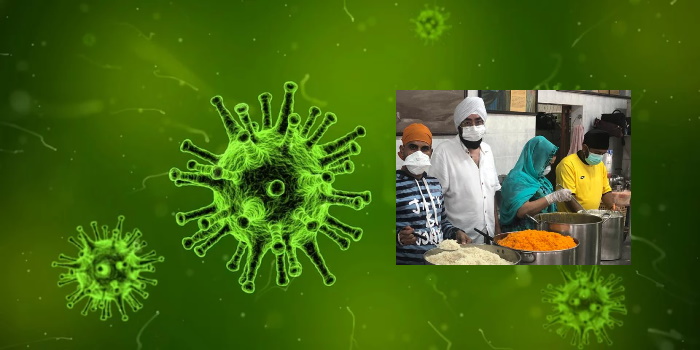
Singapore gurdwaras are taking precautionary measures, including screening staff temperature and wearing gloves and masks when preparing food, as the nation battles the coronavirus.
In a meeting yesterday (Feb 15), Sikh institutions and gurdwaras agreed looked at a number of potential ‘key measures’ to control the spread of Covid-19 (coronavirus) which has affected more than 70 people.
The one-page guideline, issued by the Co-ordinating Council of Sikh Institutions (CCSI), will see gurdwaras on a heightened alert but not canceling programmes.
It made some suggestions on attendance and participation, darbar sahib (prayer hall), langgar lall (commuity kitchen), and general cleanliness and hygiene.
In the note, it said, in principle, besides some large — scale events being postponed, other regular community activities — including the various Gurdwara programs and Punjabi-school classes – will carry on.
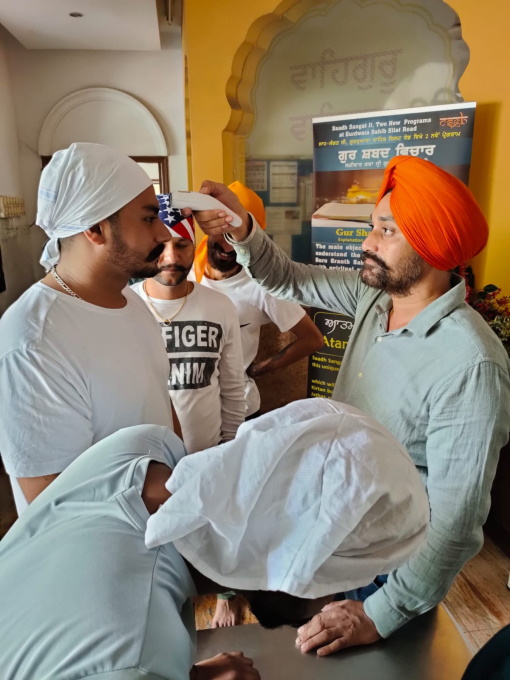
It also recommended gurdwaras and other Sikh institutions impose temperature screening when one attends/visits their premises.
“At this juncture, the intent is to implement what is practical to each individual gurdwaras, to play our role and part to manage the current situation,” Central Sikh Gurdwara Board (CSGB) president Baljit Singh told Asia Samachar. He took part in the meeting.
The CSGB manages and operates the daily running of two Singapore’s Gurdwaras –Central Sikh Gurdwara at the junction of Towner Road/Serangoon Road and the Silat Road Gurdwara along Jalan Bukit Merah.
It is understood that gurdwaras are keeping tabs of staff temperatures, but are not conducting temperature checks on the visiting public, as they do not have the proper equipment to perform checks on a large scale.
“We are not doing temperature check on the visiting Sanggat (congregation members),” said another gurdwara official.
It is understood that checking temperatures for a larger crowd requires thermal scanners, like those used at airports, which may not be readily available.
CSGB’s Baljit said the gurdwaras would decide upon the best measures depending on the practicality of implementing the measures, availability of sensors, protective gears, the daily congregation size, the design of the premises and the feedback of the sangat, among others.
On the whole, they are upping the ante on personal hygiene, making more public broadcasts and informing congregation members who are not well to consult the doctor and stay home.
In an update yesterday, the Ministry of Health (MOH) Singapore reported five new cases of COVID-19 infection, with three of them linked to the cluster at Grace Assembly of God church, a popular Christian group which has canceled all large scale gatherings.
SGSS Singapore
THE FULL STATEMENT ISSUED BY THE CCSI:
Key Measures for Sikh Institutions for COVlD-19
Backround
In light of the outbreak of COVID-ls (the 2015 novel coronavirus disease) in Singapore, leaders of the Singapore Sikh community met on 15 February 2020 and agreed upon the following precautionary measures. In principle, besides some large—scale events being postponed, other regular community activities — including the various Gurdwara programs and Punjabi-school classes – will carry on.
So long as the precautionary measures, in line with the government’s recommendations, are in place, we wish to maintain the confidence, faith and calm in the community.
These measures agreed upon are as follows:
Attendance and Participation
1. If any member of the community is unwell, please do seek medical help from the doctor, stay at home and avoid attending or participating in any community activity, including visiting the Gurdwara. This socially responsible action will help ensure that the welfare of the rest of the congregation/community is taken care of.
2. Our Gurdwaras and other Sikh institutions shall impose temperature screening when one attends/visits their premises and this is likely to be done at a single entrance point. In view of this, some regular entrance points may be closed to make it easier for volunteers to streamline the temperature checking process.
3. Gurdwaras and other institutions could set-up books/forms for anyone attending/visiting to record their details (name, contact) as requested by the Ministry of Health for contact tracing if need be. Those Gurdwaras with CCTV recording common spaces can also rely on footage from these cameras in the event that contact tracing is needed.
Darbar Sahib
1. Volunteers who serve kara parshaad degh will be asked to do so using spoon and plastic gloves as well as have on facial masks. Some gurdwaras may also choose to serve parshaad outside of Dorbar Sahib for convenience and safety.
2. Any member of the congregation doing any form of sewn in the Darbar Sahib, including Chou! Sahib sewn, will be asked to wash his/her hands with soap before proceeding with the sewn. Gurdwaras will make soap bottles readily available at all washing points near Darbar Sahib.
Langgar Hall
1. In the preparation of langgar all sewadars and volunteers are asked to wear gloves and facial masks throughout the preparation and avoid using bare hands to prepare any food during this period, including salads etc.
2, The same protocol of using gloves and masks will be followed in the sewing of Ianggar at all times. As far as possible, avoid any member helping themselves and use gloved and masked volunteers to serve the langgar.
3. In the washing of dishes thereafter, where possible, dishes should be rinsed with a round of warm water to sterilise them. Any waste food is to be disposed safely and regularly and avoid any bins that contain them to be left uncovered or unattended.
General Cleanliness and Hygiene
1. Institutions are recommended to clean their common areas, including the langgar hall, kitchen and toilets, more frequently than present with adequate and effective cleaning solutions.
2. Institutions should also help their congregations easily maintain personal hygiene levels by making available hand soap bottles, hand sanitisers, paper towels/wet wipes in easily accessible and common places.
The document made some suggestions on attendance and participation, darbar sahib, langgar lall, and general cleanliness and hygiene.
ASIA SAMACHAR is an online newspaper for Sikhs / Punjabis in Southeast Asia and beyond.Facebook | WhatsApp +6017-335-1399 | Email: editor@asiasamachar.com | Twitter | Instagram | Obituary announcements, click here |
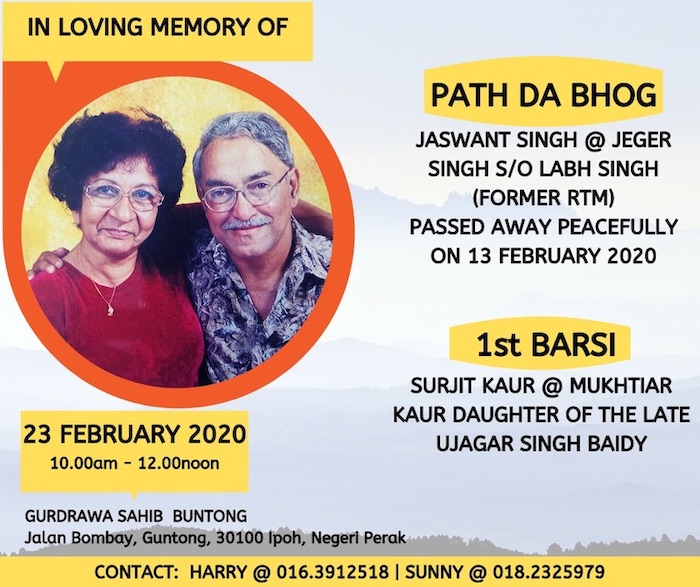
PATH DA BHOG & 1ST BARSI: 23 Feb 2020 (Sunday), 10am-12noon, at Gurdwara Sahib Buntong (Jalan Bombay, Buntong, 30100 Ipoh, Perak | Malaysia
Path Da Bhog: Jaswant Singh @ Jeger Singh s/o Labh Singh (Former RTM) who passed away on 13 Feb 2020
First Barsi: Surjit Kaur @ Mukhtiar Kaur d/o Late Ujagar Singh Baidy
Programme: 23 Feb 2020 (Sunday), 10am-12noon, at Gurdwara Sahib Buntong (Jalan Bombay, Buntong, 30100 Ipoh, Perak
Contact:
Harry 016 – 391 2518
Sunny 018 – 232 5979
| Entry: 15 Feb 2020 | Source: Family
ASIA SAMACHAR is an online newspaper for Sikhs / Punjabis in Southeast Asia and beyond.Facebook | WhatsApp +6017-335-1399 | Email: editor@asiasamachar.com | Twitter | Instagram | Obituary announcements, click here |
Social equality envisioned by Bhagat Ravidas in Begam Pura Sehar (ਬੇਗਮ ਪੁਰਾ ਸਹਰ ਕੋ ਨਾਉ) can be realised through Miri-Piri twin track approach of Sikhi.
Sikhi, according to Gurbani scholar S. Rawel Singh, is fusion of spiritual and secular aspects of life. There is no dichotomy on this subject in Gurbani.
The birth of Bhagat Ravidas ji is being celebrated worldwide. The Bhagti movement led by saints like Bhagats Kabir and Ravidas honoured in Sri Guru Granth Sahib (SGGS), started a revolution against traditional Vedic and Semitic practices. The ordinary people were exploited by the priestly class and the rulers. Conquest and forced mass conversions had become the Islamic way while exploitation and inhuman treatment of fellow human beings through the Manuvadic caste system, rituals and superstition were the tools of the Hindu upper castes led by the Brahmin.
In line with the revolt of the Bhagti movement, the cruel and exploitative practices of the two major religious systems were also rejected by Guru Nanak Sahib, albeit, with one difference. He defined the Creator Being and laid down the foundation of a twin track theo-temporal ideology which empowered the Bhagti movement. He brought together meditation and an active life for socio-political change. Equality and freedom is the birth right of every human being regardless of family background. No sacrifice is too great to defend that right and armed defence is justified as the last resort.
Today, the struggle for human equality and abolition of the degrading caste system continues in India. Social practices and political power of the upper castes promoted by the Hindutva political agenda, continues to frustrate the ideal society envisaged by Bhagat Ravidas and confirmed as the Khalsa objective of Halemi Raj by Guru Arjan Dev in Sri Guru Granth Sahib.
Ideally, the Bhagti reform movement should have merged with the later Miri-Piri Sikh/Khalsa Panth well capable of self-defence. Through their numerical strength and social mix of a casteless Panth, all those who embraced egalitarian Sikhi, regardless of their earlier background, would have been compelled to shed social discrimination in any form. The Sikhi institutions of Sangat-Pangat should prevail in spirit and social practice.
The reality is that the Bhagti movement alone did not succeed. That is, not until the Miri-Piri Sikhi of Guru Nanak Sahib challenged the cruelty of Mughals and their cohorts, the corrupt Hindu rulers of the day. Sikhs emerged as the Khalsa Panth under the tuition of the One Guru Jot-Jugat from 1469 to 1708. Bhagti succeeded only when it was given temporal shakti (power).
In his Panjabi booklet, ‘Bharat de Pashday Vargo’, author Nand Kishore has urged the disadvantaged classes of India, the so called pashday varg, to embrace Sikhi and defend their human rights. Thus will Baygumpura, ‘the city without sorrow’ become a reality. So that all will stroll about freely, just as they please. So envisioned Bhagat Ravidas, the emancipated shoe-maker (SGGS, 345).
The revolutionary vision of the Bhagats was realised by the robustly egalitarian Miri-Piri ideology of Guru Nanak Sahib backed by the Khalsa Degh and Tegh – a life of sharing and Simran defended by the sword of honour and human dignity.
Non-Sikh Bhagti Marg sects should not remain divided but adopt the Miri-Piri Sikhi ideal and stand united.
Gurmukh Singh OBE, a retired UK senior civil servant, chairs the Advisory Board of The Sikh Missionary Society UK. Email: sewauk2005@yahoo.co.uk. The article appeared here.
* This is the opinion of the writer, organisation or publication and does not necessarily represent the views of Asia Samachar.
ASIA SAMACHAR is an online newspaper for Sikhs / Punjabis in Southeast Asia and beyond.Facebook | WhatsApp +6017-335-1399 | Email: editor@asiasamachar.com | Twitter | Instagram | Obituary announcements, click here |
Gurdwara Sacha Sauda – Photo: Hassan Ishtiaq for Asia Samachar
By Asia Samachar | PAKISTAN |
Remember the man who led a rowdy protest in front of Gurdwara Janam Asthan, Nankana Sahib, in early January? Within a few days, a Pakistani from Sheikhupura puts up a message denouncing
With a day or so of the shocking incident, a Pakistani university student came out denouncing the actions of the man and spoke of their respect for Sikhs.
In a Facebook entry, Hassan Ishtiaq, a student pilot at the University of Lahore, writes: “This is special message for our Sikh brothers. I’m from Farooqabad district Sheikhupura, Pakistan. We have a Gurdwara in front of our house. We have a great respect & protection for Gurdwara Sahib. So don’t think all people are same. In every community there are some this type of persons. Don’t worry. Pakistan is a peaceful country. We are responsible for caring all your religious places. Insha Allah, this will not happen again.” (Edited for clarity).
He shared some photos of Gurdwara Sahib Sacha Sauda located in his hometown of Farooqabad in Sheikhupura, Punjab Pakistan.
Hassan Ishtiaq
In a message in response to queries from Asia Samachar, he said he had have never any such incident in his hometown and that “we have a great respect and protection for the gurdwara and all other religious places as well.”
Two days after the incident, the man responsible for the incident was arrested and charged under the Terrorism Act. The swift action to arrest him for the incident on Friday (3 Jan 2020) was probably due to the attention given to the case, including a tweet by the Pakistan Prime Minister Imran Khan.
During the demonstration, the accused, Imran Chishti was seen in a video threatening to raze the gurdwara and build a mosque in its place, remarks that made headlines in newspapers in neighbouring India.
“With the help of Allah almighty, this will not happen again,” Hassan said in his email.
ASIA SAMACHAR is an online newspaper for Sikhs / Punjabis in Southeast Asia and beyond.Facebook | WhatsApp +6017-335-1399 | Email: editor@asiasamachar.com | Twitter | Instagram | Obituary announcements, click here |
Great Grandchildren: Dharam Singh Uppal, Dhian Singh Uppal
Path Da Bhog will be held at Gurdwara Sahib Polis High Street KL from 9.30am to 12.00pm on Sunday, 23rd of February 2020.
Please contact:
Gurmit (016-249 5281)
Sukhdev (012-235 7148)
Harbans (017-882 2438)
| Entry: 15 Feb 2020 | Source: Family
ASIA SAMACHAR is an online newspaper for Sikhs / Punjabis in Southeast Asia and beyond.Facebook | WhatsApp +6017-335-1399 | Email: editor@asiasamachar.com | Twitter | Instagram | Obituary announcements, click here |
Airman 1st Class (A1C) Gurchetan Singh (top, right). Two photos (middle) taken from the 144-page USAF accommodation document. Main background photo taken from Air National Guard document – Photo: Asia Samachar
By Asia Samachar | UNITED STATES |
Practicing Sikhs and Muslims intending to serve the US Air Force can breath a sigh of relief as the wing of the world’s most powerful armed forces clarifies the uniform and grooming accommodation process.
The new policy, outlined in a 144-page document finalised last week, outlines a clear approval process for Sikhs and Muslims who want to serve while wearing their articles of faith like the turban or the hijab; or maintain beards and unshorn hair.
Under the guidelines, Sikhs and Muslims can seek a religious accommodation for turbans, beards, unshorn hair and hijabs which will be dealt with within 30 days for cases in the United States.
In welcoming the move, New York-based civil rights organization Sikh Coalition also announced that Airman 1st Class (A1C) Gurchetan Singh had secured a religious accommodation to serve in the Air National Guard, making him the first Sikh American to do so.
It added: “Our ultimate goal in engaging the U.S. military remains to secure permanent policy changes that end discrimination by our nation’s largest employer: the U.S. Department of Defense. Achieving that victory will be critical to ending discrimination in workplaces across the country,’ it said in a statement.
In September 2019, Sunjit Singh Rathour became the first Sikh airman to complete the USAF basic training and advanced technical training while wearing a turban, beard, and unshorn hair, in compliance with his Sikh religious beliefs.
Commenting on the turban and under-turban, the USAF document, viewed online by Asia Samachar, said that an accommodated Airman may wear a turban (or under-turban or patka, as appropriate) made of a subdued material in a color that closely resembles the headgear for an assigned uniform.
It goes on to say: “Wing Commanders may designate conditions where the under-turban will be worn instead of the turban. The turban or underturban will be worn in a neat and conservative manner that presents a professional and well-groomed appearance. The material will be free of designs or markings, except that an Airman wearing the ABU or OCP may wear a turban or under-turban in a camouflage pattern matching the uniform.
“When directed by a Commander, the Airman may be required to wear an under-turban made of fire resistant material. Unless duties, position, or assignment require an Airman to wear protective headgear, Airmen granted this accommodation are not required to wear military headgear in addition to the turban or under-turban. Rank will be displayed on the turban or under-turban when worn in circumstances where military headgear is customarily worn and removed in circumstances where military headgear is not customarily worn, such as indoors or in no-hat/no-salute designated areas.
“Hair worn under the turban or under-turban is not subject to paragraph 3.1.2. standards, but may not fall over the ears or eyebrows or touch the collar while in uniform. When Airmen are wearing protective headgear with the under-turban, the bulk of the hair will be repositioned or adjusted to ensure proper fit.”
ASIA SAMACHAR is an online newspaper for Sikhs / Punjabis in Southeast Asia and beyond.Facebook | WhatsApp +6017-335-1399 | Email: editor@asiasamachar.com | Twitter | Instagram | Obituary announcements, click here |
NEW DELHI – “Waheguru has asked me to come in here and start the langar,” says advocate DS Bindra who practises law at the Karkardooma court and is now a prominent presence at Shaheen Bagh. His langar service on the lines of the free food service by the Sikh community is continuing at the protest site for many days now, and he is doing his best to help the sit-in protesters here.
Initially he didn’t think the sit-in protests would continue for very many days. Now, he is short of funds to organize the langar on a daily basis for longer periods. He would not leave this half-way, and decided to sell one of his flats to raise money for continuation of the langarl’.
About a hundred metres away from the protest site, under the foot over-bridge at 13A Road, Bindra with his wife and son runs the free food distribution programme.
While the anti-CAA protest in Shaheen Bagh has received tremendous support from across the country and members from different communities kept coming to the site to demonstrate their solidarity with the protesters, the langar service is seeing many men and women lining up under the over-bridge every day. Recently, a group of Sikh farmers from Punjab came to participate in the ongoing protest sit-in.
An advocate-turned social worker, Bindra believes that a particular community is being targeted by the BJP government at the Centre. “Muslims are being humiliated and downgraded more, in comparison to the members of other communities,” said Bindra, extending his support to the sit-in protest.
While leaders of the BJP have been spewing communal venom over the Shaheen Bagh sit-in campaign, Bindra says he wants to highlight the fraternity that exists between Sikhs and Muslims.
The act is simply to turn the slogan of ‘Hindu-Muslim-Sikh Isayi, aapas me hain bhai-bhai’ (We are all brothers) into meaningful actions. “It’s easy to raise a slogan but not so easy to implement it,” notes Bindra.
Read full story, ‘Sikh-Muslim Fraternity Will Be Remembered: Bindra Who Sold Flat for Langer at Shaheen Bagh’ (The Caravan Daily, 9 Feb 2020), here.
ASIA SAMACHAR is an online newspaper for Sikhs / Punjabis in Southeast Asia and beyond.Facebook | WhatsApp +6017-335-1399 | Email: editor@asiasamachar.com | Twitter | Instagram | Obituary announcements, click here |