First Sikh Mental Health Summit, a free virtual event on Dec 6, 2025, co-founded by Dr Poojajeet Khaira (left) and Dr Avneet Soin
By Asia Samachar | United States |
The first-ever Sikh Mental Health Summit in the United States will take place on Saturday, Dec 6, 2025 (10am to 6pm, EST), a free virtual event open to participants from around the world.
The landmark initiative aims to create a culturally informed space for conversations about mental health within the Sikh community — a topic long considered sensitive and often overlooked.
The SMHS was co-founded by Dr Poojajeet Khaira and Dr. Avneet Soin. Dr Poojajeet is the Academic Chief Resident at MetroHealth Hospital – Case Western Reserve University and a University Hospitals Public and Community Psychiatry Fellow. Dr Avneet is a consultation-liaison psychiatry fellow at Brigham and Women’s Hospital/Harvard Medical School.
Organisers said the summit will bring together mental health professionals, community leaders and Sikh organisations to explore how culture, identity and faith intersect with emotional well-being.
Participants will hear from leading voices and organisations working at the intersection of community and mental health, including Brown Girl Therapy, The Sikh Coalition, Sikh American Legal Defense and Education Fund (SALDEF), Sikh Family Center, UMEED, the American Psychiatric Association Foundation and the United Sikh Movement.
The virtual programme will feature keynote sessions, panel discussions and interactive forums focused on strengthening awareness and collaboration in mental health care.
According to the organisers, the summit seeks to:
Highlight ongoing efforts to support Sikh mental health
Encourage connection and conversation within and beyond the community
Share practical tools and culturally grounded approaches to care
Inspire participants to continue this work in their own circles
The organisers hope the event will help reduce stigma, build understanding, and foster stronger community support around mental health and healing.
The Sikh Mental Health Summit is free and open to all. Registration details are available online.
Event details: Date: Saturday, Dec 6, 2025 Location: Virtual via Zoom (Free registration) Inquiries: sikhmentalhealth@gmail.com Follow: @sikhmhsummit
ASIA SAMACHAR is an online newspaper for Sikhs / Punjabis in Southeast Asia and beyond. You can leave your comments at our website, Facebook, Twitter, and Instagram. We will delete comments we deem offensive or potentially libelous. You can reach us via WhatsApp +6017-335-1399 or email: asia.samachar@gmail.com. For obituary announcements, click here
Sikh Museum Initiative celebrates 10th anniversary with a programme at University of Leicester Heritage Hub on Oct 29, 2025 – Photo: SMI
By Asia Samachar | Britain |
The Leicester-based Sikh Museum Initiative (SMI) marked its 10th anniversary with the unveiling of two Sikh weaponry artefacts digitised in 3D from the collection at Kedleston Hall, under the care of the National Trust.
The artefacts were presented in immersive digital format, showcasing the potential of 3D technology to preserve and share Sikh history globally. They represent a significant addition to SMI’s expanding portfolio of digital Sikh heritage.
SMI director Gurinder Singh Mann said the organisation’s 10-year journey represents a blend of heritage, scholarship, and technology.
“The digitisation of Sikh artefacts from Kedleston Hall is a proud moment — it brings history to life in new and powerful ways, ensuring these treasures are preserved and shared for future generations,” he told a gathering at the University of Leicester Heritage Hub on Oct 29.
Guests also explored creative displays by Amandeep Kaur Art, Rajpal Singh (Intrinsikh Arts), and Harinder Singh (Sikhlens), as well as SMI’s own VR and touchscreen installations, offering interactive engagement with Sikh artefacts and stories.
Hosted by Kartar Singh (SMI), the event opened with welcome addresses by Heritage Hub director Professor Sarah Scott, Lord-Lieutenant Mike Kapur, and University of Leicester President and Vice-Chancellor Professor Nishan Canagarajah. Among the guests were Oadby & Wigston Mayor Jasvir Chohan and Leicester Dean Karen Rooms.
The programme featured engaging talks by University of Leicester Head of Archives and Special Collections Dr Simon Dixon, Leeds Royal Armouries Curator of Oriental Collections Natasha Bennett, and Birmingham Open Media Chief Technology Officer Taranjit Singh.
Sikh Museum Initiative celebrates 10th anniversary with a programme at University of Leicester Heritage Hub on Oct 29, 2025 – Photo: SMI
ASIA SAMACHAR is an online newspaper for Sikhs / Punjabis in Southeast Asia and beyond. You can leave your comments at our website, Facebook, Twitter, and Instagram. We will delete comments we deem offensive or potentially libelous. You can reach us via WhatsApp +6017-335-1399 or email: asia.samachar@gmail.com. For obituary announcements, click here
(L-R) JAWI director Hanifuddin Roslanin, Rejinder Singh, FT Mufti Ahmad Fauwaz Fadzil Noor and Ranmit Singh in a courtesy call on October 29, 2025
By Asia Samachar | Malaysia |
A team from Tatt Khalsa Diwan Malaysia paid a courtesy call on the Mufti of the Federal Territories Ahmad Fauwaz Fadzil Noor and the Federal Territories Islamic Religious Department (JAWI) Director Hanifuddin Roslanin Kuala Lumpur on Wednesday (October 29).
The Tatt Khalsa team was led by its president Ranmit Singh and vice president Rejinder Singh.
Ahmad Fauwaz, who took on the FT mufti role in May 2025, is the son of the late Fadzil Mohd Noor, who served as president of Parti Islam SeMalaysia (PAS) from 1989 to 2002. His older brother Muhammad Faiz is the current Secretary-General of Amanah, a coalition member of the current Madani federal government.
The FT Mufti serves an important religious and advisory role in the Islamic administration of Kuala Lumpur, Putrajaya and Labuan. The mufti provides authoritative religious rulings (fatwas) on matters related to Islamic law (Shariah) when requested by government bodies, courts, or the public. These fatwas guide Muslims in religious, social and legal matters.
Tatt Khalsa Diwan Malaysia runs the Tatt Khalsa gurdwara in Kuala Lumpur.
ASIA SAMACHAR is an online newspaper for Sikhs / Punjabis in Southeast Asia and beyond. You can leave your comments at our website, Facebook, Twitter, and Instagram. We will delete comments we deem offensive or potentially libelous. You can reach us via WhatsApp +6017-335-1399 or email: asia.samachar@gmail.com. For obituary announcements, click here
Ramsha Khan and Khushhal Khan in ARY Digital’s drama Biryani
By Raag & Reel | Movie Reviews |
Two months down the road, Pakistan drama “Biryani” has clocked in some 11 million views.
Written by Zafar Mairaj and directed by Badar Mehmood, the compelling new entry in the Pakistani drama world brings together leads Ramsha Khan (as Nisa) and Khushhal Khan (as Meeran), with a strong supporting performance by Sarwat Gilani in the role of Gul Meher.
At its heart, Biryani explores the evolving relationship between Nisa, a senior BBA student, and Meeran, a freshman from a conservative feudal background. Initially a mentorship assignment, their bond deepens into friendship and sets the stage for more complex emotional stakes.
Gul Meher’s character stands bank like a guiding figure in Meeran’s life, adding layers of familial and social texture to the story. The show is lauded for its cultural grounding: Sindhi roots, realistic sets and references to tradition give it local flavour and authenticity.
While the romantic arc is charming, critics note that the storytelling occasionally falls into uneven pacing and character inconsistencies. For example, Nisa’s initial firmly-drawn boundaries later seem to shift abruptly. Social media reactions reflect a mixed audience response: some embrace the slow-burn romance and cultural nuance, others find the progression overly cautious or sluggish.
Overall, Biryani stands out as an attempt to blend romance with the socio-cultural realities of modern Pakistan. With strong performances and a layered setting, it offers more than a typical love story—yet its success will depend on how consistently it sustains its narrative momentum and deepens its characters.
ASIA SAMACHAR is an online newspaper for Sikhs / Punjabis in Southeast Asia and beyond. You can leave your comments at our website, Facebook, Twitter, and Instagram. We will delete comments we deem offensive or potentially libelous. You can reach us via WhatsApp +6017-335-1399 or email: asia.samachar@gmail.com. For obituary announcements, click here
The Sri Guru Granth Sahib, the eternal Guru of the Sikhs, offers profound guidance on achieving true happiness and inner peace. Rather than seeking joy in material success or external pleasures, it teaches the path of spiritual balance, self-awareness, and divine connection. This article highlights five essential lessons from the Guru Granth Sahib—living in Hukam (Divine Will), mastering the mind through Naam Simran, maintaining balance in joy and sorrow, discovering inner bliss, and practicing truthful, selfless living. Together, these teachings illuminate the Sikh path to Anand—a state of lasting peace, fulfillment, and union with the Divine.
The Sri Guru Granth Sahib (SGGS)[1], the eternal Guru of the Sikhs, offers timeless spiritual wisdom on how to live a life of peace, happiness, and fulfillment. It emphasizes inner harmony, right action, and connection with the Divine rather than external success or possessions. The Sikh Gurus taught that true happiness (Anand) arises when we live in remembrance of the Divine (Naam), act selflessly, and maintain balance amid life’s ups and downs. Here are five life-changing lessons from SGGS that can guide us toward lasting joy and inner peace.
1) Live in Hukam — Accept the Divine Will
ਹੁਕਮੈ ਅੰਦਰਿ ਸਭੁ ਕੋ ਬਾਹਰਿ ਹੁਕਮ ਨ ਕੋਇ ॥ Hukmai andar sabh ko, bahar hukam na koi. Everyone is under the command of the Divine Will; nothing is outside of it. (Jap, SGGS, p. 1)
One of the most profound teachings of the Guru Granth Sahib is to live in Hukam [2], the Divine Order. Happiness and peace arise when we accept life’s flow instead of resisting it. By recognizing that everything happens by the Divine Will, we learn to let go of anxiety and ego-driven control. Acceptance doesn’t mean inaction; it means performing our duties sincerely while trusting that outcomes rest with the Divine. This surrender brings serenity, freeing us from the endless cycle of expectation and disappointment.
2) Control the Mind through Naam Simran
ਮਨਿ ਜੀਤੈ ਜਗੁ ਜੀਤੁ ॥ Man jeetai jag jeet. One who conquers the mind conquers the world. (Jap, SGGS, p. 6)
The Guru Granth Sahib teaches that the restless mind is both the cause of suffering and the key to liberation [3]. Through Naam Simran, the remembrance and meditation on the Divine Name, we can calm the mind, dissolve the ego, and connect with our inner source of peace [4].
When the mind is trained through reflection, meditation, and discipline, it becomes our friend rather than our enemy. True happiness, therefore, is not found in outer pleasures but in the inner stillness that arises from divine remembrance.
3) Remain Balanced in Pleasure and Pain
ਸੁਖੁ ਦੁਖੁ ਦੋਨੋ ਸਮ ਕਰਿ ਜਾਨੈ ਅਉਰੁ ਮਾਨੁ ਅਪਮਾਨਾ ॥ ਹਰਖ ਸੋਗ ਤੇ ਰਹੈ ਅਤੀਤਾ ਤਿਨਿ ਜਗਿ ਤਤੁ ਪਛਾਨਾ ॥ Sukʰ ḋukʰ ḋono sam kar jaanæ a▫or maan apmaanaa. Harakʰ sog ṫé rahæ aṫeeṫaa ṫin jag ṫaṫ pachʰaanaa. One who knows that pain and pleasure are both the same, and honour and dishonour as well, who remains detached from joy and sorrow, realizes the true essence in the world. (M. 9, SGGS, p. 219)
Life is full of change: joy and sorrow, gain and loss, but the Guru Granth Sahib teaches us to remain steady in all conditions [5-7]. This state of sehaj (equipoise) allows us to experience deep contentment regardless of circumstances. The wise person doesn’t get inflated by success or crushed by failure. By anchoring ourselves in the remembrance of the Divine, we rise above the waves of duality. This spiritual balance brings lasting happiness and freedom from inner turmoil.
4) True Joy Comes from Within
ਅਨੰਦੁ ਭਇਆ ਮੇਰੀ ਮਾਏ ਸਤਿਗੁਰੂ ਮੈ ਪਾਇਆ ॥ Anand bhaya meri maa, satgur main paya. O my mother, I have found the True Guru, and bliss has come to me. (M. 3, SGGS, p. 917)
According to the Guru Granth Sahib, the source of true happiness lies within our own consciousness, not in material possessions or worldly achievements. The Anand Sahib reveals that absolute joy (Anand) emerges when we realize our connection with the Divine [8]. External pleasures fade, but inner bliss endures. The Gurus teach that by nurturing virtues such as humility, gratitude, and compassion, we cultivate a heart that radiates joy independent of outer circumstances.
5) Serve Selflessly and Live Truthfully
ਸਚੁ ਕਮਾਵਹਿ ਸਚਿ ਰਹਹਿ ਸਚੇ ਸਚਿ ਸਮਾਹਿ ॥ Sach kamaavėh sach rahėh saché sach samaahi. They practice Truth, and abide in Truth; being truthful, they merge into Truth. (M. 3, SGGS, p. 429)
Living truthfully (Sach kamaavėh) and engaging in selfless service (Seva) are central to a happy life, according to the Guru Granth Sahib [9-10]. When we serve others without desire for reward and act in accordance with righteousness (Dharam), our lives become aligned with divine purpose. The act of giving, sharing, and working honestly (Kirat Karni, Vand Chakna) brings inner satisfaction and harmony. Such living turns ordinary life into a spiritual path, where every action becomes a form of devotion.
Wisdom for Lasting Happiness
The teachings of Sri Guru Granth Sahib remind us that happiness is not a fleeting emotion but a state of spiritual awakening. By living in Hukam, mastering the mind through Naam, maintaining balance in dualities, seeking joy within, and acting selflessly, we attain true Anand, the bliss of union with the Divine.
In essence, the path to happiness in Sikh thought is not about escaping life, but about engaging it fully, with remembrance, integrity, humility, and love. When we live this way, each moment becomes sacred, and life itself becomes a song of divine joy.
Dr. D. P. Singh, M.Sc., Ph.D. is Director, Center for Understanding Sikhism, Mississauga, Ontario, Canada. He is a physicist by training, a teacher by profession and a writer by choice. He specializes in writing on Science, Religion and Environmental topics. Currently, he is working as Director, CanBridge Learning & Educational Consultant to various educational institutions in Canada. Email: drdpsn@gmail.com
ASIA SAMACHAR is an online newspaper for Sikhs / Punjabis in Southeast Asia and beyond. You can leave your comments at our website, Facebook, Twitter, and Instagram. We will delete comments we deem offensive or potentially libelous. You can reach us via WhatsApp +6017-335-1399 or email: asia.samachar@gmail.com
Sardar Naranjan Singh passed away peacefully on Thursday, 30th October 2025, at the age of 89. He leaves behind his beloved wife, brothers, children, daughters-in-law, and grandchildren.
He leaves behind:
Beloved Wife, Kirpal Kaur d/o late Letchuman Singh (Raub)
| Entry: 30 Oct 2025; Updated: 8 Nov 2025 | Source: Family
ASIA SAMACHAR is an online newspaper for Sikhs / Punjabis in Southeast Asia and beyond. You can leave your comments at our website, Facebook, Twitter, and Instagram. We will delete comments we deem offensive or potentially libelous. You can reach us via WhatsApp +6017-335-1399 or email: asia.samachar@gmail.com. For obituary announcements, click here
Wife of Late Sardar Puran Singh @ Mejar (Formerly from Air Panas, Setapak) Daughter of Late Sardar Tota Singh (Bentong, Pahang) Daughter-in-law of Late Sardar Sohan Singh (Labu Road, Seremban)
PROGRAMME Saturday, 22nd November 2025 6 a.m. to 12 noon Gurdwara Sahib Tatt Khalsa Diwan, KL
Program will include; . Asa Di Vaar . Jodh Mela . Guru ka Langar
We humbly request all dear family and friends to kindly save the date and join us in prayer and remembrance.
ASIA SAMACHAR is an online newspaper for Sikhs / Punjabis in Southeast Asia and beyond. You can leave your comments at our website, Facebook, Twitter, and Instagram. We will delete comments we deem offensive or potentially libelous. You can reach us via WhatsApp +6017-335-1399 or email: asia.samachar@gmail.com. For obituary announcements, click here
Jujhar “Tiger” Singh emerges category champion at Power Slap championship in Abu Dhabi on October 24, 2025
By Asia Samachar | India |
Jujhar “Tiger” Singh of Chamkaur Sahib, Punjab, has etched his name in sports history by becoming the first Indian to win an international Power Slap championship.
On October 24, in Abu Dhabi, the 28-year-old athlete triumphed in a gripping three-round bout against Russian heavyweight Anatolii “The Kraken” Galushka. The event, officially sanctioned by the Nevada State Athletic Commission, marked India’s powerful debut on the global Power Slap stage.
In the opening round, Galushka’s precision and power gave him the upper hand, landing heavy shots that tested Singh’s resilience. The second round turned fierce when a thunderous slap from the Russian grazed near Singh’s right eye. However, displaying the true spirit of a Punjabi warrior, Jujhar rebounded spectacularly in the final round. His precise and forceful strikes overwhelmed Galushka, earning a unanimous decision from the judges and sealing a historic victory for India.
Born into a modest farming family on the outskirts of Chamkaur Sahib, Jujhar’s journey reflects grit and determination. A former wrestler and kabaddi player during his school days in nearby Karura village, he later turned to modern combat training inspired by mixed martial arts. Relocating to Mohali, he joined a specialized strength and conditioning program, balancing limited resources with unwavering commitment.
For over a year, Singh trained rigorously for his Power Slap debut. His daily routine began at dawn with strength and hand-conditioning exercises, followed by balance and breathing drills designed to build control and resilience—key components in Power Slap competitions.
With this groundbreaking win, Jujhar “Tiger” Singh has not only brought pride to Punjab but also opened a new chapter for India in the emerging world of professional slap fighting.
ASIA SAMACHAR is an online newspaper for Sikhs / Punjabis in Southeast Asia and beyond. You can leave your comments at our website, Facebook, Twitter, and Instagram. We will delete comments we deem offensive or potentially libelous. You can reach us via WhatsApp +6017-335-1399 or email: asia.samachar@gmail.com. For obituary announcements, click here
Divorce rates are rising across all racial groups in Malaysia, and sadly, our Sikh community is not spared.
By Dr Pola Singh | Malaysia |
I write this not as a marriage counsellor, but as a concerned Sikh—a father, grandfather, and community advocate—who sees the quiet heartbreak unfolding in our midst. Divorce rates are rising across all racial groups in Malaysia, and sadly, our Sikh community is not spared. With a population of just around 100,000 Sikhs in a nation of over 35 million, every broken home is a deep wound to our collective spirit.
We must ask ourselves: Are we doing enough to prepare our couples for the realities of marriage?
Too often, young couples enter marriage swept up in love, unaware of the emotional, financial and spiritual demands that lie ahead. The honeymoon fades, and the pressures of work, parenting and unmet expectations begin to take their toll. Misunderstandings arise. Tempers flare. And before long, the sacred bond begins to unravel.
Many young mothers are left to raise children alone—sometimes with little or no support. Mixed marriages, where one partner is Sikh and the other of a different faith, bring additional layers of complexity. Cultural and spiritual values may clash.
And in cases where the wife is financially independent, she may choose to walk away rather than endure emotional or physical harm.
This is not just a personal tragedy—it is a communal one.
We Must Act—Before, During and After Marriage
I urge our Gurdwara Committees to take the lead. Let us begin by discussing this issue openly in committee meetings. Let us acknowledge that something must be done—not to solve every problem overnight, but to take the first step toward healing and prevention.
In the Christian faith, marriage counselling is a recognised and respected practice. Why not us? Why not now?
Let us emulate this model and adapt it to our Sikh values. Let us offer a lifeline to couples before they reach the breaking point.
Five Key Practices to Guide Us Forward
Counselling Before, During and After Marriage
Offer confidential counselling services at the Gurdwara.
Encourage couples to seek help without fear or stigma.
Embed spiritual guidance into the process—especially during the Anand Karaj ceremony, where the couple walks around the Guru Granth Sahib four times, each Laav symbolising a deeper spiritual bond.
2. Train a Core Group of Professionals
Recruit volunteers committed to sewa (selfless service).
Provide “train-the-trainer” programmes to equip them with counselling skills and cultural sensitivity.
Too often, young couples enter marriage swept up in love, unaware of the emotional, financial and spiritual demands that lie ahead.
3. Ensure Accessibility and Inclusivity
Services must be open to all—regardless of income, caste or background.
Begin with in-person sessions and expand to online platforms and helplines.
4. Support Mental and Emotional Health
Address the emotional toll of marriage, parenting and work-life balance.
Include mental health support in counselling guidelines.
5. Raise Awareness and Reduce Stigma
Use newsletters, sermons, and community events to promote the service.
Equip counsellors to identify early signs of distress.
Encourage couples to seek help early—before problems escalate.
Infusing Spirituality into the Marriage Bond
Recently, I attended a wedding at the Gurdwara Sahib Petaling Jaya (GSPJ), and during the advice sermon to the couple by Jasswant Singh, here are some of his words of wisdom. The Anand Karaj is not just a ritual—it is a roadmap for sacred partnership. Each of the four Laavan guides the couple from righteous living to divine union. He adds: “It is a reminder that marriage is not merely between two people, but between two minds that become one towards the journey of spiritual union.”
“Let us help our couples understand this deeper meaning. Let us prepare them not just for the wedding day, but for the lifelong journey ahead.”
A Pilot Project, A New Beginning
Let us begin with a pilot programme in well-established Gurdwaras— PJ, Subang, Puchong—and expand from there. Let us build a framework, consult experts and move forward with humility and resolve.
This is not the end—it is the beginning.
I have taken the first step. I invite you—our Gurdwara leaders, our elders, our youth—to walk with me. Let us protect the sanctity of Sikh marriages. Let us offer hope, healing, and guidance.
Let us do what is right.
Dr Pola Singh, who retired as Maritime Institute of Malaysia director-general in 2011, is also the author of ‘Uphill — The Journey of a Sikh-Chinese Kampung Boy’
ASIA SAMACHAR is an online newspaper for Sikhs / Punjabis in Southeast Asia and beyond. You can leave your comments at our website, Facebook, Twitter, and Instagram. We will delete comments we deem offensive or potentially libelous. You can reach us via WhatsApp +6017-335-1399 or email: asia.samachar@gmail.com. For obituary announcements, click here
On 24 November, the Delhi and central governments will roll out the red carpet for the 350th Shaheedi Divas of Guru Tegh Bahadur in the grounds of the world-famous Red Fort, a stone’s throw away from Chandani Chowk, where Guru Sahib, was beheaded by the then Mogul Emperor, Aurangzeb. No doubt we will witness a magnificent, state-sponsored spectacle: illuminated noisy processions, vibrant stage shows, vast gatherings, and the requisite security detail, all costing crores of rupees. It will be curated as a majestic, photogenic display of national unity and a safe affirmation of Guru Sahib and his unprecedented sacrifice.
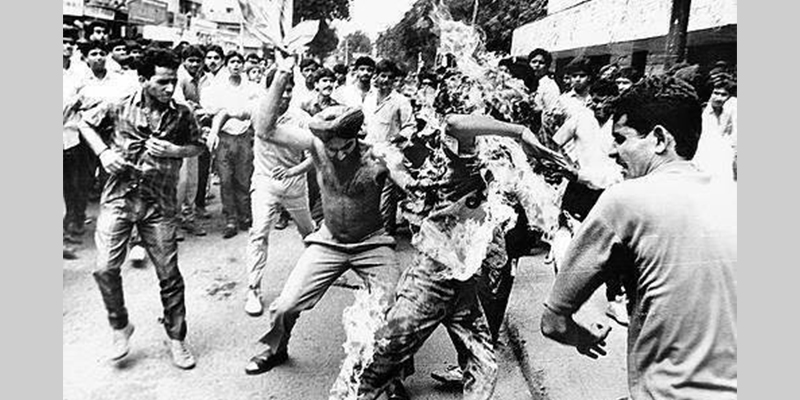
But only days before, from November 1 to 3, another anniversary will pass like a whisper in a storm: the 42nd remembrance of the 1984 anti-Sikh genocide. In those dark days, following the assassination of Prime Minister Indira Gandhi, thousands of Sikh men, women and children were systematically hunted down and massacred in the streets of Delhi and other cities. For the survivors, the state’s silence is not merely deafening; it is a continued act of betrayal. As Harjit Singh, whose father was burnt alive in Trilokpuri, put it with heartbreaking clarity, “They are spending crores to light up Delhi for Guru Tegh Bahadur’s martyrdom, but they cannot light a single lamp for those who were burnt alive in these same streets.”
Delhi’s hidden history of genocidal violence
Sadly, the Sikh Genocide of 1984 in Delhi does not represent an isolated incident; it is a window into deeply contradictory history and nature of the city. The celebrated British chronicler of Indian history William Dalrymple observed that the “Partition was a total catastrophe for Delhi… Those who were left behind are in misery. Those who were uprooted are in misery. The Peace of Delhi is gone. Now it is all gone”.
Sikh Riot Survivors, Kalyanpuri Sector 13, Delhi, 1984 by Ram Rahman (Cover photo for Black November: Writings on the 1984 Sikh Massacres and the Aftermath)
Dalrymple captures the contradictory nature of India more generally; a place of immense beauty and sacrifice on the one hand, but place that harbours a darker history of unimaginable violence and suffering. Today, behind the shiny cosmopolitan exterior, as it prepares to commemorate the 550th martyrdom anniversary of Guru Tegh Bahadur, Delhi remains perpetually suspended between hysteria and horror that encapsulates the contradiction at the heart of the city.
This is the crux of the moral bankruptcy: The celebration of an ancient martyr is safe because it is unifying and apolitical, demanding accountability from no one alive today. The remembrance of 1984, however, is a direct threat. It risks implicating the modern political class and forces the inconvenient question: Where is the justice?
Justice: A Political Commodity
The narrative of state failure since 1984 is a monumental indictment. Decades have passed, from Ranganath Misra to Nanavati, commissions have sat, and mountains of testimony have been amassed, all pointing to the complicity of the Indian state and systemic failure to protect the innocent Sikh minority in Delhi. Yet, for all the evidence, we have witnessed only a handful of convictions. The deliberate slow-walking of justice has ensured that many alleged perpetrators have simply died before facing trial.
Survivors still languish in resettlement colonies, struggling with trauma and neglect, while politicians invoke Sikh history as a mere ceremonial flourish. This neglect is compounded by the persistent, institutional refusal to call the events what they were: a genocide. The targeted, organised nature of the violence, coupled with clear state complicity, makes common characterisation of it as ਦੰਗੇ or ‘riots’ a complete obfuscation, designed to diminish the scale of the crime, blame the hired killers or ordinary people and avoid state complicity and international scrutiny.
A Sikh attacked in 1984
The evidence pointing towards leaders of the then ruling Congress Party, Sajjan Kumar, Jagdish Tytler, and the late H.K.L. Bhagat, is not mere historical conjecture; it is the accumulated record of multiple commissions. The state machinery, under their control, was either passive or actively abetted the mobs.
While Sajjan Kumar’s 2018 conviction was a long-delayed drop of justice, the broader system that protected these men for decades remains intact. Successive Congress governments actively suppressed investigations and closed cases for “lack of evidence,” a failure that survivors rightly see as a fundamental assault on their humanity.
The BJP’s Selective Weapon
In recent years, Prime Minister Narendra Modi and the BJP have leveraged the trauma of 1984 into a political cudgel, placing the entirety of the blame squarely on the Congress. They claim credit for reviving stalled cases and point to key convictions secured during their tenure as proof of justice delivered. For the BJP, the memory of 1984 is a potent tool for electoral mobilization, especially among Sikh voters, serving as a reminder of their political rival’s darkest hour.
But this partisan narrative, like any political tool, has its own blind spots. While the bulk of the indictment rightly focuses on Congress-era leaders, the call for justice must be universal. As a 2002 Hindustan Times report revealed, even the Delhi Police registered cases against 49 individuals with BJP and RSS affiliations on charges of rioting, arson and attempted murder, based on victim affidavits.
The fact that no prominent BJP or RSS leader has faced the same scrutiny or conviction as their Congress counterparts raises a critical question: Is the pursuit of justice a non-partisan moral imperative, or is it merely a political weapon to be deployed against opponents? When a government fails to vigorously pursue claims against its own associated individuals, it is not delivering justice; it is merely continuing the tradition of selective accountability.
A City of Unhealed Wounds
Delhi today lives in two registers of remembrance. The martyrdom of Guru Tegh Bahadur is staged with grandeur: illuminated arches, televised sermons, processions stretching across the capital. This commemoration is “safe” for the state; it offers a spectacle of national unity while conveniently serving electoral ends. In stark contrast, the memory of 1984 remains muted, almost invisible in public life. Survivors gather at gurdwaras or memorials in modest numbers, but there are no state-funded exhibitions, no grand vigils, and no official acknowledgement on a scale commensurate with the loss.
This imbalance transforms memory into a political commodity. A 17th century martyrdom can be safely packaged as heritage, but the massacre of thousands of Sikhs in the 20th century is treated as a political liability. As the capital prepares to light up its boulevards to commemorate an ancient struggle, the shadowed alleyways where that freedom was brutally extinguished in 1984 remain unacknowledged, unhealed and fundamentally unresolved.
Aleksandr Solzhenitsyn, who chronicled the horrors of the Soviet gulags, offered a timeless warning: “The line separating good and evil passes not through states, nor classes, nor political parties either—but right through every human heart.” In 1984, that line was decisively crossed by the state machinery, turning ordinary citizens into predators and the government into a killer.
Time to Forgive and Forget?
One of the narratives promoted by the Indian state, and the BJP in particular, is that Sikhs should “forgive and forget” the events of 1984, often shifting the blame for the Sikh Genocide onto the Congress Party. The BJP argues that the Congress is now politically irrelevant, portraying itself as a bhaivaal (ਭਾਈਵਾਲ)—a friend and partner of the Sikh community. This claim is reinforced through initiatives such as the annual Fateh Divas, commemorating the sacking of Delhi by the Khalsa Army under the command of Sikh Missaldars, Jassa Singh Ahluwalia, Jassa Singh Ramgarhia, and Baghel Singh, in 18th-century Punjab. Similarly, they point to the establishment of Bir Bal Divas that honours the martyrdom of Guru Gobind Singh’s four sons on a national scale.
For many Sikhs, these commemorations are a source of pride. Yet, as Pav Singh observes in 1984: India’s Guilty Secret, “In a nation where the rich and powerful have the means to pervert and evade justice, there can be no closure for the victim.” The failure to deliver justice for the Sikh Genocide of November 1984 not only harms the victims but also undermines the foundations of Indian democracy. It sets a chilling precedent that systematic, targeted violence can be committed with impunity.
Until the modern Indian state can confront its contemporary failures with the same moral scrutiny it applies to ancient tyrannies, Delhi will continue to embody a nation of dual histories: glittering festivals staged upon the ashes of death and destruction. For minorities in Delhi and across India, the end of celebrations does not bring peace but a return to persistent anxiety. As the political scientist and anthropologist Partha Chatterjee argues, the postcolonial Indian state retains the authoritarian and disciplinary structures of the colonial state, reproducing violence while presenting itself as democratic and developmental.
Concluding thoughts
On past form, there is little doubt that the Delhi and Indian government is expected to take credit for the 350th ਸ਼ਹੀਦੀ ਦਿਵਸ (martyrdom) of Guru Tegh Bahadur, portraying him as a saviour of Sanatan Dharma. On 24 November this year, when Prime Minister Narendra Modi steps up to the podium at Delhi’s Red Fort, he has an opportunity to signal a truly new India. No doubt, he will recount the supreme sacrifice of Guru Tegh Bahadur Ji and extol his virtues as ਹਿੰਦ ਦੀ ਚਾਦਰ (‘protector of Hindustan’). However, to be true to the teachings of Guru Tegh Bahadur Ji and worthy of the status of a great statesman, which he seeks to claim, Mr. Modi must also officially take this opportunity to recognise the November 1984 massacre of Sikhs, in Delhi and further afield. As well as declaring it as a genocide, he must take personal charge of prosecuting the culprits and ensure compensation for the victims within a defined timeline.
Though Sikhs can, and should, never forget 1984, only when the Indian state acknowledges its guilt can the victims begin the process of genuine healing and forgiveness. And through the process, with the blessing of Guru Tegh Bahadur Ji, perhaps Delhi and India can contemplate escaping itself from its violent past and heralding a new hope for a democratic, inclusive and peaceful future.
Gurnam Singh is an academic activist dedicated to human rights, liberty, equality, social and environmental justice. He is an Associate Professor of Sociology at University of Warwick, UK. He can be contacted at Gurnam.singh.1@warwick.ac.uk
* This is the opinion of the writer and does not necessarily represent the views of Asia Samachar.
ASIA SAMACHAR is an online newspaper for Sikhs / Punjabis in Southeast Asia and beyond. You can leave your comments at our website, Facebook, Twitter, and Instagram. We will delete comments we deem offensive or potentially libelous. You can reach us via WhatsApp +6017-335-1399 or email: asia.samachar@gmail.com. For obituary announcements, click here