VESAKHI MELA 2018 – A SIGNATURE COMMUNITY EVENT FOR SOCIAL INTEGRATION
The Singapore Khalsa Association (SKA) will be organising its annual signature event, the Vesakhi Mela (Carnival) on Saturday 14 April 2018, from 0830 hours to 1700 hours, at the Association’s premises at 2 Tessensohn Road.
Vesakhi this year will be celebrated on 14 Apr 2018. Prayers will be held at the Sikh Temples to commemorate the birth of the Khalsa Panth (the Brotherhood of the Pure), a religious order of saint-soldiers.
The Guest of Honour for this year’s Vesakhi Mela is Ms Grace Foo Minister for Culture, Community and Youth.
The SKA has positioned the Vesakhi Mela as an inclusive event involving the wider Singapore community. Hence, the theme for this year’s Mela, “One Community, Embracing Diversity” supports the national focus of achieving greater social integration.
Supported by the People’s Association, National Integration Council and the Central Singapore Community Development Council (CDC), the Vesakhi Mela 2018 reaches out to Singaporeans as well as non-Singaporeans. It provides a proven platform for all to better understand Sikhs and their festivities.
The Mela also serves as a useful avenue for new Singaporeans, foreign workers and their families to integrate and be part of the wider community in Singapore. This year, members of the immigrant associations have also been invited to participate in the Mela activities.
We expect about 3,000 visitors, both Singaporeans and non-Singaporeans, to the Vesakhi Mela.
Based on the theme, the activities for this event have been planned to enhance community cohesion through culture and sports, and to reinforce SKA’s efforts to integrate people of different ages, nationalities, and ethnicities. This year, students from the Punjabi Language centres are involved structured activities to drive home the message of Integration through Culture and Sports.
The main activities of the Mela include demonstration-cum-learning sessions on how to make traditional Punjabi chapattis (wheat bread), Chapati Wraps, age group games (soccer, hockey, netball) involving children, youths and adults, traditional food stalls, and stage shows. Cultural performances by multi-ethnic participants.
To promote excellence and recognise role models, the SKA will also continue to present awards to outstanding Sikh students at national milestone examinations, namely PSLE, ‘N’, ‘O’, & ‘A’ levels, and International Baccalaureate(IB), and excellence in sports at the national level.
Not forgetting our Punjabi Workers (Indian Nationals) who may not be able to join is in the celebration on Saturday, we have arranged for a cultural show by a troupe from Punjab and local performers on Sunday 15 April from 12noon to 5 pm. This is for them to celebrate Vesakhi while they are away from their families and loved ones.
[The above media release was received from the Singapore Khalsa Association]
[ASIA SAMACHAR is an online newspaper for Sikhs in Southeast Asia and surrounding countries. We have a Facebook page, do give it a LIKE. Follow us on Twitter. Visit our website: www.asiasamachar.com] 18553
[Fastest way to reach Asia Samachar: Facebook message or WhatsApp +6017-335-1399. Our email: editor@asiasamachar.com. For obituary announcements, click here]
Global Sikh Council (GSC) press release after its meeting in Dubai – Photo: Asia Samachar
GLOBAL SIKH COUNCIL PRESS RELEASE
Background
The Global Sikh Council (GSC) held its 5th Annual General Meeting in Dubai on 16-18 March 2018. The President, Lady Kanwaljit Kaur, noting that the meeting recorded the largest ever attendance amongst delegates welcomed everyone commenting: ‘I am delighted with the large attendance, it is really heartening to see a record number of countries at our AGM. The GSC is getting bigger day by day as a result, of the enthusiasm and dedication of our members to further the undiluted teachings of our Gurus. l humbly pray for its success.‘
GSC is a common platform currently representing Sikhs from more than 20 countries, to deliberate and discuss multiple challenges facing Sikhs across the world.
The AGM was held over a three-day period. Day one and two were designated for in-depth discussions over urgent and pressing matters relating to the Panth in general and GSC in particular. The final day was reserved for Election of office bearers for the next term and matters relating.
Presentations
On Friday, GSC members from various countries spoke eloquently about the work they are doing to try to resolve the critical issues facing them in their countries, and how GSC can support and guide them.
On Saturday, GSC members had the privilege to listen to renowned speakers. From India, Professor Jagmohan Singh Editor, ”The World Sikh News’ along with renowned Sikh Historian and writer S Ajmer Singh. Both gave informative accounts of the crisis of character confronting Sikh Leadership in all fronts. They gave their ideas of what projects GSC could follow to support and guide the Sikh Community, and urged upon the Sikh world to choose leaders With both knowledge and leadership skills able to lead the community and inspire Sikh youth.
Noted Sikh scholars, Dr DS Chahal, from Canada, and Dr Karminder Singh Dhiilon from Malaysia emphasised the importance of reasoning and logic in understanding the fundamentals of Sikhism. They focussed their presentations on the need for Sikhs to understand the fundamentals of Sikhi enshrined in the Guru Granth Sahib. They rightly emphasised that rituals, superstitions and supposed supernatural occurrences all too easily lead us away from essential Sikh teachings. This was the direct consequence of Sikhs relying on sources other than the Guru Granth Sahib for their Sikhi understanding.
New Constitution
On Sunday, the new constitution for GSC, authored under the leadership of S Jagir Singh of Malaysia was discussed, debated and unanimously adopted by all 11 countries (22 members). The President thanked S Jagir Singh for agreeing at the AGM held in Malaysia in March 2017, to lead the task of drafting a new constitution consistent with the declared aims and objectives of the GSC. Lady Singh lDr Kanwaliit Kaur) said that ‘we are all greatly indebted to S Jagir Singh for his hard work, commitment and perseverance towards his endeavour. He fully consulted members in preparing a Constitution based on the ’Geneva Constitution for Global bodies.’ S Jagir Singh’s invaluable work was fully appreciated by all members.
After some discussion, the following motion was passed unanimously:
’We, the representatives from various countries organisations assembled here today after due deliberations do hereby approve the draft constitution, adapt, enact, give effect and deliver to ourselves this Constitution on the 18th day of March 2018 at Dubai, UAE.’
Discussions on New Membership Applications
Members accepted the applications of new members from Hong Kong and lreland. The members deferred the application from Bahrain pending further clarification from the organisation. A membership application from ASEEN nominating S Gulbarg Singh Bassi was rejected.
GSC members enthusiastically congratulated and thanked S Ramesh Singh Pakistan on tabling and securing passage of the Anand Kari Act in the Pakistan provincial Assembly. The members recognised the significance and importance of the passing of this Act.
Elections to the New Committee
As per the protocol, elections for the office bearers were held. Lady Singh (Dr Kanwaljit Kaur) tendered her resignation and requested all members to come forward for the services of the Khalsa Panth and choose people who will selflessly engage in promoting the teaching of the Guru Granth Sahib and the general guidance of the Rehat Maryada of 1945 published by SGPC. She urged all assembled to put their own egos aside and follow the classic example of those Sikhs who turned down the Nawabi offered by Zakaryia Khan in favour of Nawab Kapoor Singh.
Representatives of all member countries unanimously urged Lady Singh to continue serving as the President for the second term keeping in view her dedicated and selfless service for the Panthic cause. All office bearers and executive committee members were elected unanimously.
Office Bearers
President Lady Singh (Dr Kanwaljit Kaur 08E) U.K.
Deputy President Sardarni Jasbir Kaur USA
Secretary S Jagjit Singh Malaysia
Treasurer S Gulbarg Singh Batra Hongkong
Committee Members
S Harsaran Singh India
S Jagir Singh Malaysia
S Balwant Singh Indonesia
S Gurdial Singh France
S Ranjit Singh Portugal
In her vote of thanks, the President urged all member countries and Sikhs around the work to unite under the umbrella of ’One Granth, One Panth’ to become a forceful and potent voice in promoting our Gurus’ teaching in the wider world.
[Signed by the President Lady Singh and Secretary Jagjit Singh]
[ASIA SAMACHAR is an online newspaper for Sikhs in Southeast Asia and surrounding countries. We have a Facebook page, do give it a LIKE. Follow us on Twitter. Visit our website: www.asiasamachar.com] 18536
[Fastest way to reach Asia Samachar: Facebook message or WhatsApp +6017-335-1399. Our email: editor@asiasamachar.com. For obituary announcements, click here]
PATH DA BHOG: 21 April 2018 (Saturday), 10.45am – 12.30pm, at Gurdwara Sahib Kuantan, Pahang |Malaysia
Mandeep Singh Sidhu (1967-2018), Sidhu Brothers Transport
“Khale Aaye Nanaka, Sade Uthh Jaye”
ਘਲੇ ਆਵਹਿ ਨਾਨਕਾ ਸਦੇ ਉਠੀ ਜਾਹਿ ॥੧॥
SDR MANDEEP SINGH SIDHU S/O
LATE SDR MAHINDAR SINGH SIDHU
Of Sidhu Brothers Transport
Age: 51
Born: 3 April 1967
Departed: 3 April 2018
Leaving behind:
Mother: Harbans Kaur Gill
Parent In Law: Gurbak Singh Pannu & Balwant Kaur
Wife: Manjit Kaur Pannu
Children:
Mansonia Kaur Sidhu
Mansheel Kaur Sidhu
Manveer Singh Sidhu
Siblings / Spouses:
Ranjit Singh Sidhu / Keshminder Kaur Sangha
Jagjit Kaur Sidhu / Jagdev Singh Sidhu
Gurjit Kaur Sidhu / Jagjit Singh Sidhu
Harinder Kaur Sidhu / Moonpal Singh Grewal
Jimmy Sidhu / Avdesh Kaur Sidhu
Nephews, nieces, relatives & friends to mourn their loss
Sahej Path da Bhog: 21 April 2018 (Saturday), 10.45am – 12.30pm, at Gurdwara Sahib Kuantan, Pahang
Contact:
Ranjit 019 – 267 9958
Jimmy 012 – 391 0040
Mansonia 0111 – 1234 954
| Entry: 4 April 2018; Updated: 17 April 2018 | Source: Family
[ASIA SAMACHAR is an online newspaper for Sikhs in Southeast Asia and surrounding countries. We have a Facebook page, do give it a LIKE. Follow us on Twitter. Visit our website: www.asiasamachar.com] 18540
[The fastest way to reach Asia Samachar is by sending us a Facebook message or Whatsapp message to +6017-3351399. For obituary announcements, click here]
Aussie Sikh meet: Photo: Australian Sikh Games 2018 Facebook page
Australian Sikh Games at Sydney have scripted history by drawing one of the largest crowds ever since the event started 31 years ago, reports SBS Punjabi
Close to 100,000 came to Bass Hill in Canterbury-Bankstown area for the weekend of sports and cultural showcase as the 31st Australian Sikh Games were held over the Easter weekend from 30 March to 1 April 2017.
With 3,000 athletes competing in 16 sports categories, the event was full of energy and promise for the years to come, reports SBS Punjabi.
Malaysian had taken part in hockey. Matador Hockey Club Malaysia won two gold medals and a silver at the Aussie games. The Malaysian team won golds in the Junior and Open categories, while their Masters team grabbed the silver medal — losing narrowly 3-2, according to an earlier report. See here.
Ranjit Singh Khera from the Sydney Games Organising committee said the sports carnival was a big success with massive crowds turning up at the venue.
“This is one of the biggest ever crowd seen in the history of the games. We estimate that around 100,000 people attended the three-day spectacle of sports and culture,” Ranjit told SBS Punjabi. “It wasn’t possible without the support of the local community who helped us script this big success story.
Australian National Sikh Sports and Cultural Council (ANSSACC) president Amandeep Singh Sidhu estimated about 130,000 food plates in the ‘Langar’ were consumed over three days.
“It’s a big number and we highly appreciate the tireless efforts done by our volunteers,” he told the Aussie radio station.
The event had the participation of 177 teams, making it the most highly participated in games till date. There’re 64 local teams, 97 travelled from interstate and 8 teams represented regional parts of Australia. Eight teams participated from overseas with the most number of players flying from New Zealand and Malaysia, the report said, quoting a joint media statement released by the local and national organizing committee.
Soccer had the most number of players with over 1,200 participants competing in different age groups and both genders.
[ASIA SAMACHAR is an online newspaper for Sikhs in Southeast Asia and surrounding countries. We have a Facebook page, do give it a LIKE. Follow us on Twitter. Visit our website: www.asiasamachar.com] 18530
[Fastest way to reach Asia Samachar: Facebook message or WhatsApp +6017-335-1399. Our email: editor@asiasamachar.com. For obituary announcements, click here]
Someone shared this photo with the Facebook page of the event, with this message: Thank you to the Sikh community for hosting this wonderful lunch experience! Langar style lunch, served to all, no division of social status/caste, gender, or faith.
It’s not just what we say, but what we do that counts.
Over ten thousand registrants at the past Parliament of the World’s Religions were invited as guests of the Sikh volunteers to share a meal in The Salt Lake City, Utah, throughout the five-day event. The guests came from every religion of the world; all were served with the same passion without any discrimination. Sikhs were only practicing the values that their gurus taught them. They were practicing what they preach, serving langar.
It is well known that daily Langar at the Golden Temple Guruduara in the Amritsar City of India serves nearly a hundred thousand guests every day. It is also known that every one of the thousands of Guruduaras spread all over the world serve Langar at the end of every service.
In the Langar, food is prepared fresh by the Sikh community to serve the meals to all without any discrimination based on religion, gender, social or economic status, or political consideration. This is an open service where there is no expectation for any reward in return.
In the Langar, all are seated on the ground at the same level, served the same food that is always vegetarian and is not forbidden in any religion. It is financed through individual contributions of funds and ingredients.
Prayer Component
Also, every Langar always starts with a universal prayer of thankfulness to express heart-felt gratitude to the Creator for the opportunity to love and to serve.
Every day the Langar is started with a universal prayer of gratitude. The verses are taken from the Sikhs’ sacred book, the Guru Granth Sahib, as well as those composed by the community to suit the occasion. It is often following a short session of reciting or singing hymns from the Guru Granth.
Sikhs around the world recite the same prayer at least once a day. The prayer does not ask for anything. Instead, it praises the Creator for taking care of its creation like father and mother. It offers gratitude for all the bounties that are given to us to enjoy and the wisdom to be ever thankful.
Often, chanting of sacred verses from the Guru Granth Sahib precedes the prayer said before the opening of the Langar.
Experience of Serving Langar
Serving Langar is a multi-faith, multicultural experience. People from all religions not only join Sikhs to share a meal but also like to serve Langar. People from a variety of backgrounds want to serve Langar.
I witnessed this very vividly both in Salt Lake City and several years earlier in Barcelona, Spain that attendees of the Parliament were noticeably eagers for the opportunity to serve the langar before they ate themselves.
Langar in the New World
Langar is a Sikh institution started by Guru Nanak over five centuries ago, and it has been served since then in every guruduara in the world. What is new and more recent is that the Langar is now served also outside the Guruduara to the communities all over the world and where ever there is a call to feed the hungry or share a meal with faith communities. Thus, the Sikhs are increasingly taking the concept of Langar outside its traditional setting in Guruduaras or temples and out onto the streets to feed the homeless and the poor.
In the Salt Lake City of USA, the Langar was shared with the followers of over 50 religions from almost every country and tradition of the world. Thousands of pounds of food prepared locally as well as in Los Angeles was trucked to the site of the Parliament. The Sikh volunteers cooked hundreds of pounds of rice, baked over 50 thousand Punjabi Naan (chapati of white flour) in ovens, several thousands of sweet like gulab jamans (after sweet meal dish), and prepared hundreds of gallons of sweetened yogurt drink, mango lassi, tea, and coffee.
Langar Served in Challenged Situations
I like to tabulate below some examples of Langar being served in a variety of challenging situations from the earthquake in Nepal to refugees in the Middle East to homeless in North America or Europe, and everywhere in between. With thanks and due acknowledgement I also wish to include here some of the Langar events recently summarized by a young Indian journalist, Priyanjana Roy Das (Source: http://www.scoopwhoop.com). With due acknowledgement, I am borrowing some of her photos and photos taken by others.
Myanmar Young Sikh Aid and Khalsa Aid members on the ground in Myanmar. – PHOTO MYSA
Langar at Nepal Earthquakes: Talking of recent earthquakes in Nepal two Sikh organizations in New Delhi and Amritsar, and an organization from California sent out 25,000 packets to Kathmandu besides sending their team of people who served hot meals to over 10,000 people a day there.
According to the Trussell Trust, Langar fed 346,992 people across Britain in one year. The Sri Guru Singh Sabha Guruduara in Southall, the biggest Sikh temple outside of India, alone serves 5,000 meals on weekdays and 10,000 meals on weekends.
Seva Food Bank: Sikhs have been a part of Canada for over a hundred years now. The SEVA FOOD BANK opened its doors in 2010 and has dedicated itself towards providing safe, nutritious and most importantly, culturally-appropriate food to low-income families in Mississauga in Canada. Being a religious organization, they do not fail to respect and take into account the food cultures of other people while serving food and preparing the menu. Truly inspiring, to say the least.
Khalsa Food Pantry and Khalsa Peace Corps Los Angeles, USA: Located in Pacoima, CA, the Khalsa Food Pantry provides assistance to the low-income families in the US and every week, the Khalsa Peace Corps serve about 600 meals at Skid Row and Venice Boardwalk alone. Sharing meals and uplifting the spirit of communities, they are serving and growing, with dedication and good will.
Food and Supplies for Assam Flood Victims: Around 45,000 people were victims of a recent flood in the Indian State of Assam. The floods devastated four districts of Assam according to the state disaster management authority.
While a lot of people criticized the Government and local elected officials for their apathy and ineptness during the floods, they were also thanking the local Sikh congregations. People there visibly appreciated Sikh dedication and efforts to reach out to the flood affected areas and help those in need.
For instance, Gurdwara Singh Sabha in Dibrugarh distributed food to over 1000 people affected by the floods. Others similarly served those in distress; all volunteers were enthused to join hands in the service to the children of the Creator.
UK’s Khalsa Aid Provides Langar and Disaster Relief in Many Countries: The UK based Sikh charity, Khalsa Aid, provides disaster relief in Albania, Turkey, Somalia and Pakistan. Their Langar of prepared food was always there where and whenever needed. The British Sikhs also helped the Thames Valley and Somerset flood victims by delivering sand bags, food and medical supplies to those affected. In one of their Middle East ventures, they also delivered food, blankets, clothes and water to over 150 Yazidi refugee families, many of whose family members were kidnapped by the ISIS for abuse.
Tweaking the concept of Langar, the Khalsa Aid has been collaborating with the locals to provide fresh bread to nearly 14,000 refugees daily in the strife-torn region for many months now.
Sikhcess Project USA: The Sikhcess Project provides food and clothing to the homeless in several local communities across the USA. Based on the basic humanitarian principles of sharing, inclusiveness, community, and public service, this project not only helps those in need but also creates public service opportunities with the goal of enhancing life for all humankind.
Sikhs set up a langar for flood hit victims in Uttarakhand: Some time ago Uttarakhand State of India experienced catastrophic flashfloods. The state government released a final list of 4,120 persons, including 92 foreign nationals missing. While many were busy blaming the authorities and disaster management procedures, the Sikhs of Delhi Sikh Guruduara Management Committee came forward and provided a helping hand to rescue and serve the stranded pilgrims in Uttarakhand. They provided LANGAR around the clock for affected people as long as it was needed.
Midland Langar Seva Society Birmingham UK: The Midland Langar Seva Society is a food relief organization in Birmingham UK. It has been selflessly serving LANGAR and other help to homeless and providing food and hunger relief to those that are in need of it.
Langar at Kashmir Floods: The Sikhs sent out food packets to more than 70,000 people daily during recent floods in Jammu and Kashmir. In addition, they established permanent Langar at several places in Srinagar. Their Guruduaras opened doors to people from all communities and religions in need of help. In addition, food for more than hundred thousand victims stranded in different places was airlifted from Amritsar.
KIRPA Food Bank in Wolverhampton: With the aim of helping everyone realize that there is no other race but one – the human race, the Kirpa Food Bank is dedicated to feed the homeless, the victims of disasters and those in need in this area.
Gurmeet Singh is Exceptional: Are you in pain? This is the question Gurmeet Singh usually asks when he enters a hospital ward in the north- Eastern Indian city of Patna. He has been serving this way now for over 20 years.
By day, 65-year-old Gurmeet works at the clothing shop. By night, he is a veritable messiah to the residents of a foul kingdom of disease and disability. The facility is tucked away in the corner of a vast 90-year-old 1,760-bed state-run Patna Medical College and Hospital.
Once Gurmeet reaches the ward, he is playing, at once, nurse, doctor, provider, and kin. He goes through prescriptions and pays for the more expensive medicines, tests, scans, and chemotherapy for cancer patients. He donates “a lot of” blood.
Then he takes out the shining steel plates and caringly serves the food.
Guru Nanak’s Free Kitchen in Doncaster and Edinburgh: Not everyone can help everyone, but everyone can help someone. With the aim of providing and serving free food to anyone in need of it, the Sikhs are helping so many people every day, selflessly and happily.
The Bedford Langar Project: These two Sikh organizations, The BedFort Langar Project and Sikh Welfare and Awareness Team (SWAT) in London, are taking care of the needs of the poor. No one has ever become poor by serving others, have they?
Round-the-clock Langar on the Delhi-Ambala highway: The Sikh community distributed free snacks, cooked rice and hot tea to stranded travelers and ran a round-the-clock Langar for people who were stuck in Haryana during the Jat Agitation. While the Agitators must have caused discomfort to everyone, the Sikhs were there working for the relief of those in need, comforting people of all castes and religions.
The Khalsa Aid Langar for those stuck in Chennai floods: Coming to the rescue of the distressed and helping those in need, during the India’ Chennai floods, the Sikhs offered food and basic necessities to the ones stranded and grieved by the floods.
Act of Justice
Hunger is not an always issue of charity. At times, it is an act of justice. The Sikh community’s work often goes unnoticed as they are too busy helping others to even take notice of it. They are intoxicated in love their Guru and the Guru given mission.
The article first appeared at Harbas Lal’s blog, Seeking Wisdom. See here.
Harbans Lal, Ph.D.; D.Litt (Hons) is the Professor Emeritus & Chairman at the Dept of Pharmacology & Neurosciences, University of North Texas Health Science Center. He is also the Professor Emeritus at the Amritsar-based Guru Nanak Dev University as well as President of the Academy of Guru Granth Studies. He can be reached at Japji2050@gmail.com
* This is the opinion of the writer, organisation or publication and does not necessarily represent the views of Asia Samachar.
[ASIA SAMACHAR is an online newspaper for Sikhs in Southeast Asia and surrounding countries. We have a Facebook page, do give it a LIKE. Follow us on Twitter. Visit our website: www.asiasamachar.com] 18524
[Fastest way to reach Asia Samachar: Facebook message or WhatsApp +6017-335-1399. Our email: editor@asiasamachar.com. For obituary announcements, click here]
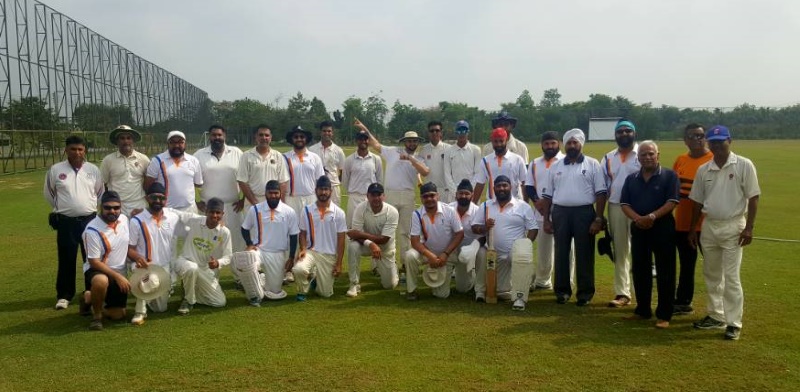
The Thai and Malaysia teams for the 1st Interport Cricket Match 2018 – Photo: Supplied
By Avtar Singh
A cricket game which was played over the weekend is going down the history for being an inaugural cricket game between the Thailand Sikhs and the Malaysian Sikhs.
The 1st Interport cricket game for the Sikh community of both the countries took place at the Terd Thai Cricket Ground, Bangkok. The series will be played annually on a home and away basis.
The players from both the teams demonstrated the true spirit of the game. Two games were played and both the games the Malaysian Sikhs emerged victorious but with a narrow margin.
The more victorious is the camaraderie and comradeship which was built in this series.
The Malaysian team included three national cricketers Pavandeep Singh, Virandeep Singh and Harinder Singh as well as national junior player Shaunvinder Singh.
Besides the game, the Thailand Sikhs hosted the Malaysian to an excellent lunch and dinner. The most significant development in this series is the number of youths involved from both the sides, promising that the series will be played for a long time.
Next year, Malaysia will host the Interport. Special thanks and compliments to Dr. Harjit Singh from Johore and the other sponsorsfor financing this trip for the Malaysian Sikhs.
The Thai and Malaysia teams for the 1st Interport Cricket Match 2018 – Photo: Supplied
[ASIA SAMACHAR is an online newspaper for Sikhs in Southeast Asia and surrounding countries. We have a Facebook page, do give it a LIKE. Follow us on Twitter. Visit our website: www.asiasamachar.com] 18518
[Fastest way to reach Asia Samachar: Facebook message or WhatsApp +6017-335-1399. Our email: editor@asiasamachar.com. For obituary announcements, click here]
Sangeet Kaur Deo, daughter of the late formidable Malaysian lawmaker and lawyer Karpal Singh, is slated to make her debut in the Puchong parliamentary seat currently held by her older brother Gobind Singh.
Quoting unnamed sources, Free Malaysia Today yesterday reported that Gobind is expected to leave Puchong for the Kulai parliamentary seat in Johor, which is now held by state Democratic Action Party (DAP) vice-chairperson Teo Nie Ching.
“Sangeet is the preferred candidate for the seat as the party wants to send more women representatives to the Dewan Rakyat,” the source told FMT on condition of anonymity due to the sensitivity of the issue.
Sangeet, who is also a lawyer, is also the Selangor DAP women’s wing deputy chief.
If that happens, she would be the fourth Karpal’s child to run for a parliament or a state seat (corrected).
Karpal rose to become chairman of the DAP, a major force in the Malaysian politics.
Karpal died in a car accident in 2004. His son Ramkarpal Singh, who was travelling with him in that fateful incident, later on won his dad’s parliament seat in a by-election. He retained the seat in 2008.
At the national level, DAP had always been an opposition party. However, the party’s fortunes changed in the 2008 national general elections when Pakatan Rakyat, a coalition that included DAP, won the state elections in Penang, Selangor and Perak.
In that year, Karpal’s eldest son Jagdeep Singh Deo won the Dato Keramat state seat in the Penang. He retained it in the subsequent elections in 2013 and was made a member of the Penang state exco, holding the line-up Town, Country Planning and Housing committee portfolio.
On her part, FMT reported that Sangeet grabbed media attention on Jan 8 when she voiced her reservations over the naming of Pakatan Harapan (PH) chairman Dr Mahathir Mohamad as the coalition’s prime minister should the opposition win the 14th general election (GE14).
Disagreeing with the move, she said the fact that the opposition had “no one else” to choose to be prime minister showed its lack of long-term strategy.
“The focus should always be on policies and principles (not personalities) and leaders must be groomed to ensure continuity.
“While it may be an act of desperation, as was our coalition with PAS at one point, will we be open to working with Najib (Prime Minister Najib Razak) one day, should desperate circumstances demand?” she had asked in a statement.
[ASIA SAMACHAR is an online newspaper for Sikhs in Southeast Asia and surrounding countries. We have a Facebook page, do give it a LIKE. Follow us on Twitter. Visit our website: www.asiasamachar.com] 18512
[Fastest way to reach Asia Samachar: Facebook message or WhatsApp +6017-335-1399. Our email: editor@asiasamachar.com. For obituary announcements, click here]
Canada PM Justin Trudeau and family visiting the Harmandir Sahib, Amritsar – Photo courtesy of Justin Trudeau Facebook page
Both the Liberals and New Democrats have recently been forced to deal with an issue that usually isn’t part of the political agenda in Canada – Sikh extremism.
Justin Trudeau went on the defensive when it was discovered that Jaspal Atwal, convicted of the attempted murder of an Indian politician in 1986, was invited to a reception at the Canadian High Commission during the prime minister’s recent visit to India. The prime minister subsequently stated his government supports a united India and condemned those who used violence in their campaign for an independent Sikh state, Khalistan.
Before ‘84, Sikhs in Britain had focused on campaigning for the right to wear turbans in the workplace and on motorbikes and in schools. Some even raised funds to support India in the 1971 Indo-Pakistan war. However, the immediate aftermath of Operation Bluestar saw Sikhs in Britain lashing out at the Indian state for the “dishonour” caused to the community with the storming of Harmandir Sahib, regarded by Sikhs as their most significant and precious institution.
The reaction to Bluestar also saw increased support for the idea of Khalistan. In Britain, individuals seen to be speaking out against Khalistan or to be aligning themselves closely with India became fatal victims of violence at this time, including Tarsem Singh Toor in 1986 and Darshan Das in 1987.
Sikhs in Canada
I found a similar chronology of events in Canada where, according to national census data, approximately 460,000 people identify as Sikh.
Although a number of violent incidents occurred involving Sikhs throughout the 1990s, the majority of these appear to be internal Sikh issues relating to gurdwara governance, the contested nature of religious authority and local factional politics.
Timeline: Sikh incidents/protest in Canada since 1980s – Source: Jasjit Singh
#AskCanadianSikhs: The impact of Sikh activism
My research in Britain found five different types of Sikh activity beyond the simplistic labels of “fundamentalist,” “extremist” or “radical.” These include: Social justice and humanitarian relief; diasporic nationalism around Khalistan; “enforcing” Sikh practices; “defending” the Sikh community against a variety of perceived “external threats;” and personal/factional disputes.
In my research, I made use of Sophia Moskalenko and Clark McCauley’s distinction between radicalism and activism where “radicalism” is a “readiness to engage in illegal and violent political action” while activism is a “readiness to engage in legal and non-violent political action.”
Given these definitions, it’s clear that although the events in India in 1984 saw an immediate “radical” reaction from Sikhs around the world, much of the contemporary political activity being labelled “Sikh extremism” or “radicalism” is in fact activism focused on social justice.
In my research, I found no threat to the West or to the wider public from Sikh activism as highlighted in the 2017 public report on the terrorist threat to Canada which makes no mention of any terrorist threats by Sikhs in Canada.
In terms of the threat to India, the roles of the nine alleged Canada-based Khalistani operatives who were included in a list presented by the Punjab Chief Minister Amarinder Singh to Prime Minister Trudeau in February 2018 remain to be seen.
Given the parallels between the U.K. and Canada, it’s worth noting that a key driver in contemporary Sikh activism are the events of 1984. Whether this is protesting against the “dishonour” caused to the community with the storming of Harmandir Sahib, seeking justice for human rights abuses around the events of June and November 1984, publicly articulating the need for Khalistan as an act of resistance against the Indian state or simply raising awareness of what occurred, the feeling that the events of 1984 remain unresolved remains an important issue for many Sikhs.
It will take open and honest discussions about crimes committed across the board in the leadup, during and following the events of 1984 for the communities affected to feel they can finally move on.
The article first appeared at The Conversation. See here.
Dr Jasjit Singh is a Research Fellow in Religious and Cultural Transmission based at the University of Leeds and a recognised expert on Sikhs in Britain. His research examines religious identity and processes of religious and cultural transmission among British South Asians with a focus on British Sikhs. He is author of the report, The Idea, Context, Framing And Realities Of ‘Sikh Radicalisation’ In Britain, released in 2017
* This is the opinion of the writer, organisation or publication and does not necessarily represent the views of Asia Samachar.
[ASIA SAMACHAR is an online newspaper for Sikhs in Southeast Asia and surrounding countries. We have a Facebook page, do give it a LIKE. Follow us on Twitter. Visit our website: www.asiasamachar.com] 18503
[Fastest way to reach Asia Samachar: Facebook message or WhatsApp +6017-335-1399. Our email: editor@asiasamachar.com. For obituary announcements, click here]
MATADOR Hockey Club Malaysia won two gold medals and a silver at the Australia Sikh Games in Sydney Sunday.
Matador won golds in the Junior and Open categories, while their Masters team grabbed the silver medal — losing narrowly 3-2.
Matador HC is coached by former Olympians Sarjit Singh and Maninderjit Singh as well as former international Baljit Singh Charun and former National Juniors coach Balbir Singh.
[ASIA SAMACHAR is an online newspaper for Sikhs in Southeast Asia and surrounding countries. We have a Facebook page, do give it a LIKE. Follow us on Twitter. Visit our website: www.asiasamachar.com] 18491
[Fastest way to reach Asia Samachar: Facebook message or WhatsApp +6017-335-1399. Our email: editor@asiasamachar.com. For obituary announcements, click here]
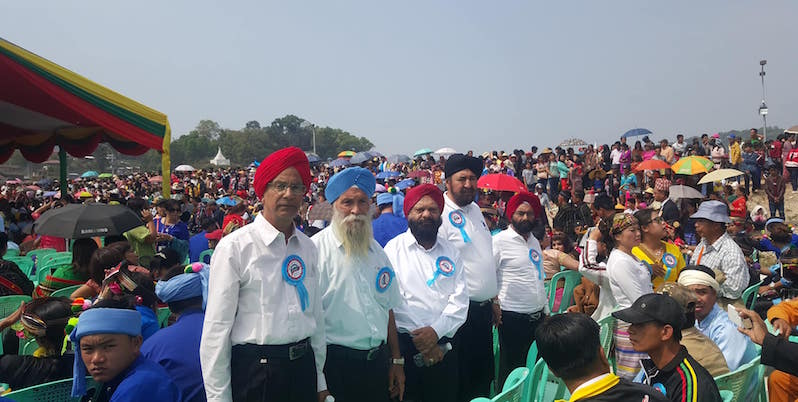
PROUD TO BE AT MOGOK: Some of the Sikhs taking part in the 800th anniversary of Mogok – Photo: Rajeev Singh for Asia Samachar
The massive celebration in Mogok, marking the 800th anniversary of the Myanmar town, continued this weekend with Sikhs taking an active part, proudly presenting their culture and the displaying the Guru Ka Langgar.
Sikhs from Mogok and other towns and cities in Myanmar converged for the celebration.
Among those present were the well-known local Sikhs like ruby trader Manmohan Singh and medical doctor Dr Harra Singh.
Joining them were officials from Sikh organisations, including All Myanmar Sikh Religious Council president Sukhdev Singh and Gurdwara Sahib Lashio committee president Ranjit Singh.
Sikhs are taking an active part in the 800th anniversary celebration with prayer, Guru Ka Langgar and get-togethers.
On 24 March, Sikh youth wearing Punjabi dresses joined a procession, proudly holding the sign ‘Sikh Family’.
On Wednesday (28 March 2018), some 200 Sikhs and 700 others joined a celebration at the Gurdwara Sahib Mogok to kick-start their participation. The local media was present.
“We will also be distributing some 2,000 langgar boxes per day on March 30 and 31,” Mogok-born Sikh entrepreneur Rajeev Singh had earlier told Asia Samachar. Rajeev runs a tyre business in Mandalay.
Sikhs have been present in Mogok for more than 150 years through the Indian army. Today, there are less than a dozen families in the town located about 800km north of Yangon.
For centuries emperors, kings and warlords have vied for control over the valley of Mogok, north of Mandalay, once known as the “land of rubies” for its extraordinary treasure trove of jewels. Its unique “pigeon-blood” stones are the most expensive coloured gems in the world. In 2016, the so-called Sunrise Ruby sold for a record US$30.3 million (RM136.12 million), over US$1 million a carat, reported AFP.
MASSIVE CELEBRATION: L-R: Harish Singh, Mogok ruby trader Manmohan Singh, Mogok medical doctor Dr Harra Singh, Gurdwara Sahib Lashio committee president Ranjit Singh and All Myanmar Sikh Religious Council president Sukhdev Singh – Photo: Rajeev Singh for Asia Samachar
It is nestled in a valley between a number of large mountains where, due to its altitude (1,170 metres), a cool temperate climate can found all year round.
“Most youths from this town went outside to set up businesses or for job in cities like Mandalay Yangon and Taunggyi due to the poor economic condition. Some of them are back for this celebration,” Rajeev told in the same interview.
Like many other traditions preserved in Myanmar, mining in Mogok today involves little to no mechanisation and is based on intensive use of manual labour, concentrated on hillside deposits, through open trenches, deep pits, or through excavating tunnels directly into the limestone. A number of bustling ruby markets, including Panchan and Aungchanthar markets, can be found in the centre of town (note that gems sold in markets in Mogok can only be purchased at government licensed dealers), according to a Go-Myanmar.com, a website promoting the country to foreign tourists.
Located in Mandalay Division and bordering Shan State, the Mogok area hosts a diverse ethnic population, including Bamar, Shan, Lisu, Palaung, and Karen ethnic groups, as well as Chinese, Indians and Gurkhas (descendants of a Nepalese group).
SEE MORE PHOTOS AT ASIA SAMACHAR FACEBOOK PAGE. GO HERE.
ASIA SAMACHAR is an online newspaper for Sikhs / Punjabis in Southeast Asia and beyond.Facebook | WhatsApp +6017-335-1399 | Email: editor@asiasamachar.com | Twitter | Instagram | Obituary announcements, click here |


















 VESAKHI MELA 2018 – A SIGNATURE COMMUNITY EVENT FOR SOCIAL INTEGRATION
 [The above media release was received from the Singapore Khalsa Association]


 Harbans Lal, Ph.D.; D.Litt (Hons) is the Professor Emeritus & Chairman at the Dept of Pharmacology & Neurosciences, University of North Texas Health Science Center. He is also the Professor Emeritus at the Amritsar-based Guru Nanak Dev University as well as President of the Academy of Guru Granth Studies. He can be reached at Japji2050@gmail.com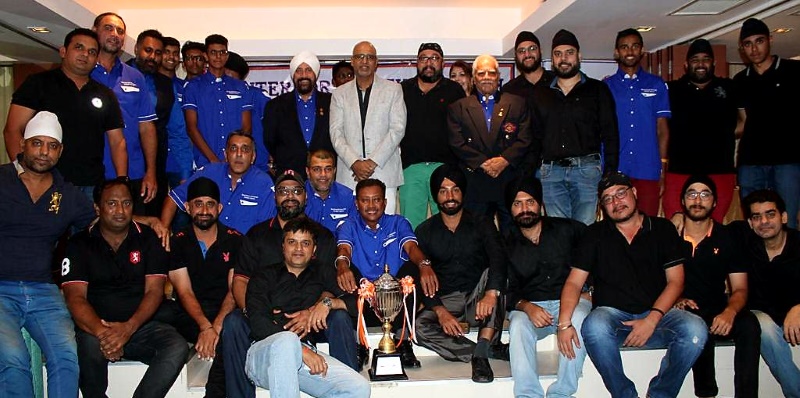


 Dr Jasjit Singh is a Research Fellow in Religious and Cultural Transmission based at the University of Leeds and a recognised expert on Sikhs in Britain. His research examines religious identity and processes of religious and cultural transmission among British South Asians with a focus on British Sikhs. He is author of the
  By Jugjet Singh | Jugjet’s World of Field Hockey