UA-56202873-1
Page 688

Singapore denies entry to two foreign Islamic preachers

0
Ismail (left) and Haslin in photographs ran in the Straits Times

An Islamic preacher from Zimbabwe and another from Malaysia were supposed to be preaching on a religious-themed cruise departing from Singapore in November.

But that’s not about to happen as the republic has barred their entry for their preaching ‘are unacceptable in the context of Singapore’s multi-racial and multi-religious society’, according to a statement from Singapore’s Ministry of Home Affairs (MHA).

The two preachers, Ismail Menk from Zimbabwean and Haslin Baharim from Malaysia, had previously had their Miscellaneous Work Pass applications to preach in Singapore rejected.

“They will not be allowed to get around the ban by preaching instead on cruise ships which operate to and from Singapore,” according to the statement released yesterday (30 Oct 2017).

Ismail Menk has been known to preach segregationist and divisive teachings. For example, he preached that it is the biggest sin and crime for a Muslim to wish a non-Muslim Merry Christmas or Happy Deepavali, in short, that Muslims are not allowed to wish others happiness during the latter’s religious festivals.

On his part, Haslin Baharim has expressed views that promote disharmony between Muslims and non-Muslims, whom he describes as “deviant”.

“Such divisive views breed intolerance and exclusivist practices that will damage social harmony, and cause communities to drift apart. They are unacceptable in the context of Singapore’s multi-racial and multi-religious society,” the statement said.

MHA said the move was in consultation with the Islamic Religious Council of Singapore (MUIS), Singapore Tourism Board and Maritime and Port Authority of Singapore.


[ASIA SAMACHAR is an online newspaper for Sikhs in Southeast Asia and surrounding countries. We have a Facebook page, do give it a LIKE. Follow us on Twitter. Visit our website: www.asiasamachar.com] 16272

RELATED STORY:

Sikh Marriage Act set to become law in Punjab, Pakistan (Asia Samachar, 26 Oct 2017)

Sikhism on rise in Pakistan (Asia Samachar, 25 Oct 2017)

Amardeep’s burning passion sparks second book on Sikh legacy in Pakistan (Asia Samachar, 1 Sept 2017)


[Fastest way to reach Asia Samachar: Facebook message or WhatsApp +6017-335-1399. Our email: editor@asiasamachar.com. For obituary announcements, click here]

Pakistan to set up Guru Nanak University in Nankana Sahib

0

The Pakistan government has decided to construct Baba Guru Nanak International University (BGNIU) in Nankana Sahib, the birthplace of first Sikh, following a consultative meeting of all the stakeholders held in Lahore on Sunday, reports Paksitan Today.

Evacuee Trust Property Board (ETPB) Chairman Siddique-al-Farooq presided the meeting attended by Federal Minister Barjees Tahir, MNA Shazra Mansab, MPAs Rana Muhammad Arshad, Zulqarnain Dogar and Rana Jameel, members of Pakistan Sikh Gurdwara Prabandhak Committee (PSGPC) Sardar Tara Singh, Sardar Bishan Singh Arorra and Sardar Gopal Singh and other stakeholders.

The meeting has formed a committee of six members under the supervision of Barjees Tahir which will present its finding in four weeks. The committee has given the mandate to propose the suggestions regarding acquisition of land, planning and other issues related to the university, the report added.

This is the second significant news connected to Sikh in the recent weeks announced as the community prepares to celebrate the birthday of Guru Nanak.

On Oct 26, Asia Samachar reported that Ramesh Singh Arora, the first and only Sikh lawmaker in the Punjab state assembly, had introduced the Punjab Anand Karaj Bill 2017 at its recent sitting, a move that will enable the Sikhs to solemnise and register their marriages under the act.

SEE ALSO: Sikh Marriage Act set to become law in Punjab, Pakistan

SEE ALSO: Sikhism on rise in Pakistan

Pakistan Today reported that proposal of university was first surfaced during Pervaiz Elahi’s government in 2003 but the matter went into limbo on some legal grounds.

Around 19,000 acres of land situated in Nankana Sahib is controlled by ETPB from which around 17,000 acres of land was leased out to farmers and residents of Nankana Sahib, who were not willing to vacate the land despite after notices were served to them.

Last month, the issue of BGNIU become to limelight when an announcement was reported that government had decided to construct university in Muridke. Moreover, there was also a proposal to construct the main campus of university in Islamabad. However, both the proposals were rejected by Sikh community.

After the consultative meeting, ETPB Chairman Siddique-al-Farooq said that all the stakeholders were at same page regarding the construction of BGNIU in Nankana Sahib. He was talking to media after the consultative meeting of the stakeholders in this regard, the same report added.

By establishing the BGNIU, Siddique said that it will be helpful in promoting the religious tourism in Pakistan while it will also portray country’s good image on international level. For the construction of university, he demanded federal government to allocate Rs10 billion while he demanded Punjab government to allocate Rs20 billion.

Sardar Tara Singh was of the view that the establishment of BGNIU will be a source of pride for the Sikh living across the word. He said that the university will not only help improve the image of the country but will also help in improving the socio-economic and educational condition of the district Nankana Sahib.


[ASIA SAMACHAR is an online newspaper for Sikhs in Southeast Asia and surrounding countries. We have a Facebook page, do give it a LIKE. Follow us on Twitter. Visit our website: www.asiasamachar.com] 16268

RELATED STORY:

Sikh Marriage Act set to become law in Punjab, Pakistan (Asia Samachar, 26 Oct 2017)

Sikhism on rise in Pakistan (Asia Samachar, 25 Oct 2017)

Amardeep’s burning passion sparks second book on Sikh legacy in Pakistan (Asia Samachar, 1 Sept 2017)


[Fastest way to reach Asia Samachar: Facebook message or WhatsApp +6017-335-1399. Our email: editor@asiasamachar.com. For obituary announcements, click here]

Kuldip Kaur (1939-2017), Petaling Jaya

Path Da bhog: 11 November 2017, 10am-12pm, at Gurdwara Sahib Petaling Jaya | Malaysia

Kuldip Kaur (1939-2017), Petaling Jaya

Madam Kuldip Kaur

Wife of Late Sardar Manmohan Singh, Retired RTM

Daughter of Late Sardar Dalip Singh and late Bibi Laab Kaur of Temiang, Seremban

Born: 27 April 1939

Departed: 30 October 2017

Age: 78 years old

Dearly loved and sadly missed by her family

Children / Spouses:

Hardesh Singh / Satvinder Kaur

Baldesh Singh

Mandesh Singh / Tuuli Turunen

Granchildren: Kishore Sohi, Nitya Sohi, Marvin Singh & Mai Singh

Brothers, sisters, nephews nieces, cousins & many dear friends.

Path Da Bhog: 11 November 2017, 10am-12pm, at Gurdwara Sahib Petaling Jaya, followed by Guru Ka Langgar

Contact:

Home 03-79550520


| Asia Samachar | Entry: 31 Oct 2017; Updated 5 Nov 2017 | Source: Family |

[ASIA SAMACHAR is an online newspaper for Sikhs in Southeast Asia and surrounding countries. We have a Facebook page, do give it a LIKE. Follow us on Twitter. Visit our website: www.asiasamachar.com] 16262

[The fastest way to reach Asia Samachar: Facebook message or WhatsApp text to +6017-335-1399. For obituary announcements, click here]

British government ‘covered up’ its role in Amritsar massacre in India – The Observer

Sacrificing Sikhs

The government has been accused of covering up the full extent of the UK’s support for India’s bloody crackdown on Sikhs in 1984, reports a British national newspaper.

A new report calls for a full inquiry into the role played by Margaret Thatcher’s government in the events leading up to a massacre in which hundreds, possibly thousands, of Sikhs and Indian soldiers died, reports The Observer.

In 2014 David Cameron ordered a review after the accidental release of secret documents revealed that a British SAS officer had been drafted in to advise the Indian authorities on removing armed Sikh militants from the Golden Temple at Amritsar, Sikhism’s holiest shrine.

The documents said the plan, known as Operation Blue Star, was carried out with the full knowledge of the Thatcher government, reports the Sunday edition of Rhe Guardian.

THE REPORT GOES ON:

A report, Sacrificing Sikhs, published by the Sikh Federation UK, described Cameron’s review, conducted by Sir Jeremy Heywood, as a “whitewash”.

It claims that attempts to expose the full facts have been thwarted by government secrecy rules and conflicts of interest. More than half of the Foreign Office’s files on India from 1984 have been censored in whole or in part.

Some documents suggest the Foreign Office was aware of what was at stake when the Indian authorities approached the UK for help.

A week before the Golden Temple assault, Bruce Cleghorn, a diplomat, wrote that “it would be dangerous” for the UK government “to be identified” with “any attempt to storm the Golden Temple in Amritsar”. He was also named in correspondence discussing possible SAS assistance to India immediately after the massacre.

In 2015, Cleghorn became a Foreign Office “sensitivity reviewer” whose job involved censoring documents about the Amritsar massacre before they were released to the National Archives.

Sir John Ramsden, a member of the Advisory Council on National Records and Archives, which adjudicates on government censorship applications, was a member of the Foreign Office’s south Asia department in 1984. Ramsden wrote a letter advocating further SAS assistance for India immediately after Operation Blue Star and also argued in favour of equipping India’s paramilitary forces.

The role of the SAS officer in the days before Operation Blue Star are shrouded in secrecy as are the full extent of the fatalities. The Indian government puts the figure at about 400. Sikh groups say it was in the thousands.

According to the Sikh Federation’s report, immediately after the SAS officer carried out his reconnaissance with an Indian special forces unit, the Sikhs pulled out of peace talks believing they had seen a commando unit move into the city. The negotiations never recovered and eventually the Indian army stormed the temple in June 1984. Four months later, India’s prime minister Indira Gandhi was assassinated by one of her Sikh bodyguards, prompting reprisals that led to the deaths of more than 3,000 Sikhs.

The report suggests the UK was keen to help India because the country was one of its biggest purchasers of military equipment between 1981 and 1990. It also claims that repressive measures against Sikhs were carried out in the UK to appease the Indian government and secure arms deals.

“The government needs to finally come clean about Thatcher’s role in the Amritsar massacre and India’s crackdown on Sikhs,” said the report’s author, Phil Miller. “Whitehall censorship of historical files is like an old boys’ club that prevents the public from ever knowing how taxpayers’ money was spent. This culture of secrecy around Britain’s special forces and intelligence agencies is undemocratic and unsustainable.”

Bhai Amrik Singh, chair of the Sikh Federation (UK) said: “This report casts serious doubts on the adequacy and integrity of the inhouse Heywood review commissioned by Cameron. There has been a massive cover-up and parliament and the public have been disturbingly misled. An independent public inquiry to get to the truth is the only way forward.”

See original report  here.
https://www.google.com/amp/s/amp.theguardian.com/world/2017/oct/29/british-government-cover-up-amritsar-massacre-golden-temple-sas-india

16256

Sikh scholar translates Guru Granth Sahib into Hindi – Report

0

Sikh scholar and former professor of Punjabi University, Patiala, Rattan Singh Jaggi has translated Guru Granth Sahib (SGGS) into Hindi language.

There are five volumes of his translation and transliteration of the scriptures. The copies of all volumes are under publication, reports TNN.

The nonagenarian academic has devoted 55 years to translate and interpret the Sikhs’ holy book in Hindi.

Earlier in 2013, Prof Jaggi had presented a detailed translation and interpretation of Guru Granth Sahib in Punjabi. Along with the word meanings, it was named ‘Bhav Parbodhini’ and was presented in nine volumes, including the appendix.

Earlier Hindi translations of Guru Granth Sahib have been done by former professors nd Manmohan Sehgal. Prof Jaggi said, “I read all these translations of Guru Granth Sahib in Hindibut was not satisfied.”

Prof Jaggi, who has a lifetime fellowship of Punjabi varsity, did his PhD about ‘Dasam Granth’ in 1962, without landing into any controversy over its authorship. Co-authored by his wife Gursharan Kaur Jaggi, he released his interpretation of ‘Dasam Granth’ in five volumes in 1999, the report added.


16253

Pharmacy student Nermesh Singh wins prize at Italian photography award

0
Nermesh Singh: Winner at Siena International Photography Awards 2017

By Asia Samachar | Malaysia |

Two Malaysians – pharmacy student Nermesh Singh and dentist Dr Nick Ng – won prizes at the Siena International Photography Awards 2017, a major Italian photography event that attracted 16,762 entries from 150 countries.

“I felt proud when they pronounced the full name correctly…For me, [photography is] all about freeing your talent. You never know what is hidden in you,” he told Asia Samachar in a text message from Siena just hours after winning a prize.

Now into its third year, the competition is already Italy’s biggest photography contest. A scan of the winning photographs for the last two years reveal amazing photographs of all kinds.

Nermesh came out third in the Open Colour category and won Remarkable Award in Under 20 Category. He turns 20 in two weeks time. Dr Ng was second in the Open Colour and won the Remarkable Award in Storyboard.

Nermesh, hails from Taiping, Perak. His father is a businessman and mother a housewife.

He won Euro 6000 euros and received free stay in hotel, a free exhibition book and free world-wide entry for photography related competition.

Nermesh, a second year student at International Medical University (IMU), Bukit Jalil, had earlier won in competitions like the SDG United Nations competition in 2016 and the World Photographic Cup Team Malaysia.

He will be representing Malaysia for the next World Photographic Cup 2018 in Australia which has attracted at least 56 teams from 56 nations.

ASIA SAMACHAR is an online newspaper for Sikhs / Punjabis in Southeast Asia and beyond.Facebook | WhatsApp +6017-335-1399 | Email: editor@asiasamachar.com | Twitter | Instagram | Obituary announcements, click here 

The big push for Kampung Pandan Settlement gurdwara

5
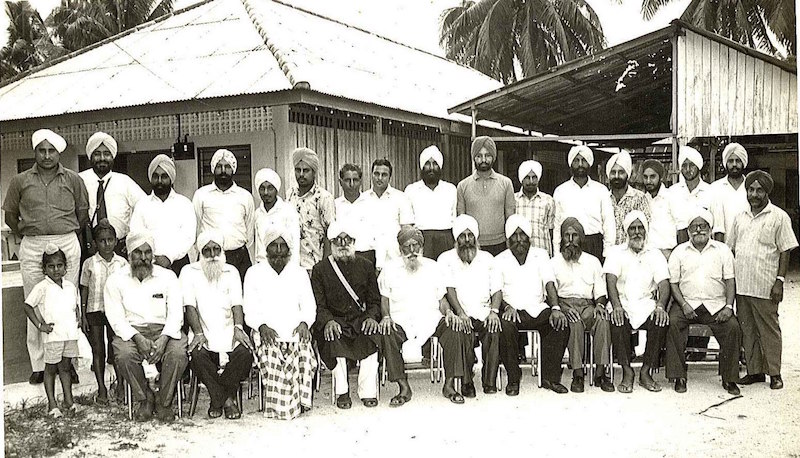
First generation picture of Gurdwara Sahib Kampung Pandan Settlement – Facebook entry at Facebook page of Gurdwara Sahib Kg Pandan Settlement

A gurdwara built primarily by cattle owners in the days after World War 2, the Kampung Pandan Settlement gurdwara is set for its third major makeover. This time, it’s the big push for a bigger and better gurdwara complex to serve the needs of the community for years to come.

In the present challenging economic conditions, one may say it’s a brave push.

Gurdwara Sahib Kampung Pandan Settlement (GSKPS) is moving forward its planned RM4 million renovation. On Sunday (29 Oct 2017), they will have a ground breaking ceremony for the temporary darbar sahib estimated to cost about RM300,000, which will later be part of the overall plans.

Minister of Finance II Datuk Seri Johari Abdul Ghani, who is also the local Member of Parliament and a regular visitor to the gurdwara, is expected to join the ceremony.

“We are confident that we will be able to raise the funds needed,” one committee member told Asia Samachar.

ARTIST IMPRESSION: Gurdwara Sahib Kampung Pandan Settlement

The gurdwara was originally located in Cheras, Ulu Pudu. It was made of wooden planks with an attap roof, as was the normal practice in the early days. The Sikh families who lived in the vicinity were mostly cattle owners, bullock cart drivers and farmers. The British re-located the Sikhs and other families to the Kampung Pandan Settlement area around 1950, according to an entry at the gurdwara’s Facebook page.

Two lots of land approximately 12,000 square feet in size were allocated for the construction of the new gurdwara building. In 1952, the gurdwara building was built on the new site. It was made of wooden planks with a zinc roof. The address: No. 136 & 137 Lorong Tujuh, Kampung Pandan Indian Settlement, 55100, Kuala Lumpur.

In 1962, the new gurdwara building was built on the same site for about RM50,000. It was constructed with bricks and concrete with a tiled roof in accordance with an approved building plan. Around 1970, the sangat (local congregation) appointed five trustees. They were Bachan Singh, Kishen Singh, Utam Singh, Sohan Singh and Ajaib Singh.

“With the growing number of Sikh families in the surrounding areas and the current building which needs a good amount of repairs, the Parbandakh Committee with the blessings of the Sangat has decided to build a new Gurdwara building,” according to a note sent to Asia Samachar.

The plan is to build a two and half storey gurdwara which includes the main and small darbar sahib with a seating capacity of 400 and 100 respectively. Other facilities include a Langgar Hall, music room, a place to bath the deceased, rooms for the Granthi Sahib and the sewadaars.

“The Parbandakh committee would like to extend this invitation to all readers of Asia Samachar to join the Sangat of GSKPS in this ceremony (ground breaking for the construction of temporary premises),” the note says.

It is scheduled at 9.30am tomorrow.

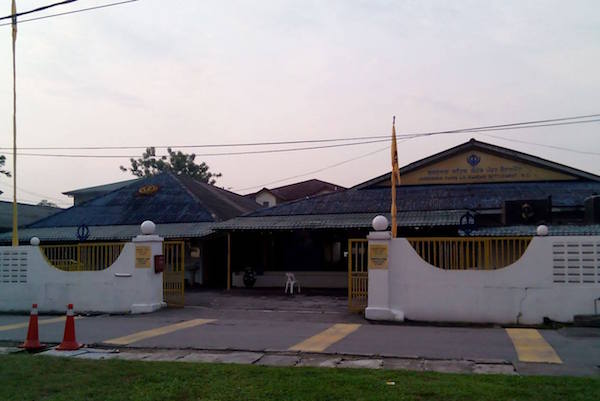
PRESENT LOOK: Gurdwara Sahib Kampung Pandan Settlement photo taken in 2015

[ASIA SAMACHAR is an online newspaper for Sikhs in Southeast Asia and surrounding countries. We have a Facebook page, do give it a LIKE. Follow us on Twitter. Visit our website: www.asiasamachar.com] 16231

RELATED STORY:


(Asia Samachar, 24 Oct 2017)

[Fastest way to reach Asia Samachar: Facebook message or WhatsApp +6017-335-1399. Our email: editor@asiasamachar.com. For obituary announcements, click here]

Pride of Lions

0
Pride of Lions: Eminent of Sikhs in Malaysia by Dr Manjit Singh Sidhu – Photo / Asia Samachar

Who was the richest Sikh in Southeast Asia in the 1950s? Malaysia’s first Prime Minister had persuaded a retired Sikh police officer to take charge of Zoo Negara? Who was it? Who is the first woman to become a magistrate in Malaya? Who is the first Asian to be promoted to the rank of Assistant Commissioner of Police in Malaya?

They are Jagat Singh, SAC Ishar Singh, Harwanth Kaur and ACP Pritam Singh, respectively.

These are some of the 57 personalities whose lives and times are captured in the newly released Pride of Lions: Eminent Sikhs in Malaysia authored by Dr Manjit Singh Sidhu.

The 295-page hardcover book brings to life some interesting stories of Sikhs, both men and women, in Malaysia. The stories of Jagat Singh and Ishar Singh, for example, are captivating.

Jagat was the largest land owner in Perlis in pre-independent Malaya and a long time leader of the Khalsa Diwan Malaya (KDM). Due to his involvement in the Ghadar movement in Malaya, the British considered him a threat to the British Empire in the Far East, which led to a failed sedition trial. Still, he was detained in Singapore, only to be released upon a petition by his wife.

Probably unknown to many, he borne the expense of the Guru Ka Langgar served at Wadda Gurdwara Sahib Penang. Imagine the number of Sikh migrants who came through Penang who would have benefitted from his generosity.

The story of how Malayan Prime Minister Tunku gets Ishar (1906-1987, born Serendah) to take on the Zoo Negara assignment is heart warming. “I have full confidence in you. If you face any problems you can always come and see me,” Tunku told him. In the end, he delivered beyond their expectations, even managing to turn around the loss-making zoo.

SEE ALSO: A burning passion to capture stories of Sikhs in Malaysia

The ‘most colourful character’ in the book, in the words of the author himself, is Colonel Dara Singh (Col. Ong Ah Leng). His father, Mota Singh, was a soldier who saw action in Europe in the First World War in 1915. Somehow, Dara (1914-2001, born Kamunting) was adopted by a Chinese family who sponsored his education in Taiping.

In 1939, Dara went to Burma in response to the call by Chiang Kai-shek for overseas Chinese to help China in its war efforts. At the age of 27, he was made a colonel in the Chinese army and had the opportunity to have lunch with Generalissimo Chang and his wife in Chungking. Impressed with his skills, Dara was promoted to the rank of Brigadier-General. The story does not end there.

SELECTION PROCESS

“Prof Khoo himself suggested that I write about Dara Singh,” Dr Manjit tells Asia Samachar. Well-known Malaysian historian Prof Dr Khoo Kay Kim wrote the foreword for the book.

What about the others? “I had known many of these people. During interviews, some of them would suggest some other names,” he said.

Dr Manjit is also the author of the Sikhs in Malaysia, which captured the results of interviews, conducted in 1978 and 1979, of 100 Malaysian Sikhs who were born in India and Pakistan. See here and here.

The retired Malaysian university lecturer had also released recently another book, ‘Sikhs and Sikh Institutions In Pakistan’. See here.

WOMEN SPOTTED

Harwanth Kaur (born 1937, Ipoh), one of the entries, holds the distinction of being the first female Sikh lawyer and the first lady magistrate in Malaysia.

After reading law in London, she returned to Malaya in 1962. After chambering, she was called to the Bar in February 1962. One year later, she was appointed magistrate in Kuala Lumpur, creating history by becoming the first woman to become a magistrate in Malaya, and later a President of the Sessions Court.

During the Japanese occupation, Ajeet Kaur (born 1931, Tanjong Malim) had learnt English from a friend while attending to their cows in Kuala Kangsar. She was 12 years old then. She eventually went on to become the first Sikh lady to become an Australia trained doctor. She was one of the pioneer members of the Sikh Naujawan Sabha Malaysia (SNSM) and a founding member of the Sikh Welfare Society (Selangor/Federal Territory).

The other women included in the book are Ajaib Kaur (social worker popularly known as Madam Joe), Dr Harbans Kaur Virik (first child specialist in Malaysia), Kirpal Kaur (entrepreneur and owner of Gulati Stores), Kirenjit Kaur (lawyer and first lady district governor of Rotary in Malaysia), Preetam Kaur Gill (social worker and women’s rights activist) and Dato Rhina Bhar (lawyer, politician and first Sikh woman senator in Malaysia).

OBVIOUS LEGENDS

Some of the obvious legendary names included in the book are lawmaker Karpal Singh (DAP chairman, opposition politician knowm as ‘Tiger of Jelutong’), Tan Sri Ajit Singh (Malaysia’s first Sikh ambassador), Budh Singh (founding member and the second president of Malayan Indian Congress, MIC), Datuk Gurbakhs Singh Kler (Father of Sabah sports), Gurchan Singh (Singa, The Lion of Malaya, Aide-de-Camp to Tunku Abdul Rahman), Tan Sri G S Gill (leading businessman dealing in sports goods), Prof Gurdial Singh (former law professor at University Malaya), Gurmit Singh (environment crusader), Dato Harjit Singh Hullon (television news editor and prominent news reader), Dato Dr Harjit Singh (President of Johor Cricket Council), Karamjit Singh (motor rally champion known as The Flying Sikh), Datuk Dr Keshmahinder Singh (eye specialist and founder president of Sikh Welfare Society Malaysia), Lall Singh (Malaysia’s cricketing legend), Major General Datuk Ranjit Singh Ramday (First Sikh Major General in the Malaysian armed forces), Tan Sri Sarwan Singh Gill (court interpreter who rose to Chief Justice of Malaya) and Dr Veerinderjeet Singh (tax expert).

Some of the possibly lesser known personalities, to some, have also been captured. When travelling the North-South highway along the Peninsular Malaysia, one would have caught the sign board for Ladang Guru Nanak at Serendah, Selangor. The owner was Shamsher Singh (born 1920, Punjab), a police officer turned rubber planter. He took the path less travelled, paving the way to his success. Don’t skip this entry!

There are also entries on Datuk Balwant Singh Kler (Malaysia’s sports official from Sabah), Ginder Singh (owner of largest transport business in Negeri Sembilan) and others. Like most of the others, they have stories to tell.

PENANG SIKHS

Among the Sikhs from Penang are Prof Dr Chatar Singh and Dato Sri Chet Singh.

Dr Chatar (born 1929, Kuala Kangsar) is one of the founding fathers of University Sains Malaysia (USM) and of the School of Physics and the School of Mathematical Sciences. He was also the man responsible renaming the road in front of Wadda Gurdwara Sahib Penang to Jalan Gurdwara in 1990. That took seven years! Among others, he had a long association with the Penang Sikh Association.

Chet (born 1936, Kuala Kangsar), who started working as a teacher before moving to the Home Ministry, was transferred to Penang in 1967 to become the State Financial Officer. In 1971, he was made the General Manager of the Penang Development Corporation. In this role, he was instrumental in making Penang the northern hub of manufacturing industries.

There are more stories in the book. The author has done a tremendous job in capturing, in many instances, the story from the horses mouth themselves. It is the first draft of the history of Sikhs in Malaya, and Malaysia. “It’s a labour of love on my part,” said Dr Manjit.

HOW TO BUY A COPY? CLICK HERE.


RELATED STORY:

Once Sikhs landed in Malaya, how many never revisited Punjab? (Asia Samachar, 24 Oct 2017)

First job in Malaya (Asia Samachar, 15 June 2017)

Sikh migration to Peninsular Malaysia – Part 2 (Asia Samachar, 13 June 2017)

Sikh migration to Peninsular Malaysia – Part 1 (Asia Samachar, 10 June 2017)

Malaysian retired lecturer releases book on Sikhs in Pakistan (Asia Samachar, 24 Feb 2017)

ASIA SAMACHAR is an online newspaper for Sikhs / Punjabis in Southeast Asia and beyond. You can leave your comments at our website, FacebookTwitter, and Instagram. We will delete comments we deem offensive or potentially libelous. You can reach us via WhatsApp +6017-335-1399 or email: asia.samachar@gmail.com. For obituary announcements, click here

Universal like Rivulets of Rainwater

0

By Harbans Lal | Seeking Wisdom

What is universal? Universal is that which is applicable everywhere, to whole humankind, and in all civil societies regardless of culture, race, sex, religion, nationality, sexuality, or any other distinguishing feature. In theology, universalism is the doctrine of universal application of the teachings of religion or Dharma. Further, universal can be relevant only in the world of diversity. Without diverse universe, a universal can be applied.

Let us apply the dynamics of universality to Sikhi to establish that they are universal. To start with, the Sikhi dynamics are universal because the founder of the Sikhi claimed them to be so. When we go deep into the Guru’s teachings, we find a dynamic relationship between Sikh identity, Sikh community, and the grace-awakened values that our Gurus prescribed in our scripture. It is the need of the hour that they are articulated in the language that the new civilizations can grasp. Where their universality is not apparent, we must actively explore ways of discovering the universality in the Guru’s message.

What I am talking about may take many efforts and many articulations to cover the subject adequately. Here I will start with a powerful metaphor that the Founder of Sikhi or Gurmat, Guru Nanak, employed to describe the universality of his Dharma.

Metaphor of Ocean and Rivers

Guru Nanak used the metaphor of the ocean waters that through the routes of cloud formations give birth to glaciers, lakes, and rains. They, in turn, go on to form rivers and rivulets. These rivulets then flow through mountains and lands to irrigate vast territories on all continents before they return to the oceans again.

The rivers and rivulets originate at different locations throughout the world, in different geographical areas, in different seasons, and in various formats, sizes, and strengths. They flow in different directions. They carry varied contents and compositions of nutrients or minerals through vast distances. On their way, the rivulets carry diverse materials that may even give them different colors. They nourish widely differing soils and vegetation that give birth to a wide variety of foliage, vegetations, life forms, and ultimately even different civilizations.

Then, they nourish widely differing soils and vegetation that give birth to a wide variety of foliage, vegetations, life forms, and ultimately even different civilizations.

My stressing so much on the vastness and diversity among the rivulets is actually stimulated by a verse from Sri Guru Granth Sahib (SGGS) that was spoken by Guru Nanak, the founding light of Sikhi.

Ocean, Rains, and Rivulets of Sikhi – Gurmat Dharma

There is a striking verse in SGGS, the Sacred Sikh Scripture. Its author was the founder of Sikhi sometime known as Sikhism. Guru Nanak wrote:

ਗੁਰੂ ਸਮੁੰਦੁ ਨਦੀ ਸਭਿ ਸਿਖੀ ਨਾਤੈ ਜਿਤੁ ਵਡਿਆਈ ॥

Gurū samunḏ naḏī sabẖ sikẖī nāṯai jiṯ vadi āī.

The Guru, the Divine Wisdom, is the bottomless ocean, and all of its WISDOM in the form of teachings -Sikhi- originate out of this ocean as rains and falling ice to form rivulets and rivers, sometime puddles. They are of many lengths and depths. When drenched through these rains and rivulets the earth and the life it supports is exalted.

– Guru Nanak. SGGS, p. 150

Ocean and streams here are used as metaphors; ocean for Guru’s wisdom and streams for Sikhi or the institutions of dissemination. Ocean of sacred knowledge is depthless. The water of Knowledge vaporizing from this ocean creates clouds, raindrops, and snow. In turn, they descend on earth in the form of rain and showers. Finally, all of them give birth to rivulets, rivers, and sometimes, puddles all over the diverse earth. When they are in the format of SABD (hymn from SGGS) using the language of Sikh tradition, then they are said to form rivulets of Sikhi.

Thus, the rivulets are metaphors describing practices of Sikhi doctrines and operation of Sikh strategies some of which give birth to Sikh institutions all around the world. But they are always universal as they serve all civilizations in all continents.

These institutions in the form of rivulets flow in numerous variations to suit the varied landscapes. These landscapes consist of wide-ranging temperaments that are innately thirsty for the spiritual water flowing in rivers of many traditions, colors, and mode of things for their spiritual survival as well as the growth of their missions.

As rivulets vary in shape, size, speed, and quality of water they distribute, so are the Sikhi doctrines and practices. Both of them adapt to numerous variations depending on the terrains of particular geographical or cultural expanse. Their shape and external formats are formed by widely differing cultural landscapes and linguistic temperaments. However, their purpose is one, to nourish the earth and its humanity with ONE Universal consciousness. The intention is to nurture the divine creation in the schema of Divine Creativity.

Different landscapes receive the thirst-quenching waters in various ways, sizes, shapes, and colors to benefit each one of the terrains in their own peculiar and varied traditions.

Briefly what these metaphors mean concerning the present and future of Sikhi is as follows.

Guru’s wisdom originating from SABD Guru is dispensed to diverse populations and cultures. The recipients may be of varieties of mindsets throughout the world, the world which is varied from place to place. The wisdom is dispensed in a wide range of ways, even under different designations, names, and titles.

Thus, the ways of Sikhi would overtly look and feel diverse, but inside they are universal and carry the same fundamental doctrines and wisdom. Their purpose is one, to nourish the human mind with one universal knowledge towards ONE Universal Consciousness, to ultimately take all humanity back to their source, the OCEAN, the Creator.

Cloud Burst

There is a beautiful story from the Guruship of Guru Ram Das reported by Sikh historian, Bhai Santokh Singh.

A delegation of Hindu religious scholars under the leadership of Pundit Mohan Lal came to visit the Guru. The members were well-known Pundits or leaders from Brahmanical tradition. Their mission was to express their concern with the language and mode of propagation the Guru was using to freely dispense Gurmat message among the people.

They loudly expressed their concern. The delegation attempted to persuade the Guru to use the language of the religious elite, the Sanskrit, to impart Guru Nanak’s doctrines. Further, the same elites should be given charge to also reveal the sacred knowledge to the ordinary citizen.

The Guru is reported to rebuke the suggestion and used the same metaphor of rain as related above to make his point forcefully. Bhai Santokh described it as:

ਬੇਦ ਪੁਰਾਨ ਕੂਪ ਜਲ ਜੈਸੇ।ਬਰੋਸਾਇ ਕੋ ਕਿਤੀ ਜੈਸੇ

ਸਤਿਗੁਰ ਬਾਣੀ ਮੇਘ ਸਮਾਨ ।ਬਰਸੈ ਚਹੁੰ ਦਿਸਿ ਬਿਖੈ ਜਹਾਨ ॥

Divine knowledge in Sanskrit or Arabic is like the needed water being buried in deep wells. It takes the effort to draw it out and then quench the thirst of the person drawing it out or to irrigate crops of only those who possessed the means of taking out water in this manner. No sharing was likely as the quantity of water thus drawn was sufficient just to satisfy the needs of the holder of the bucket.

In contrast, the Guru’s Wisdom, Sikhi or Gurmat, was manifested in Gurbani (Guru’s repository of knowledge and findings) in a language which served as a cloudburst. It turned the crops of everyone and in every field, green; it reached mountains and valleys alike, birds and mammals alike, animals and human alike, educated and uneducated equally, poor and affluent alike. (See Santokh Singh, Sri Gur Partap Suraj Granth, Raas 1, Part 46, p. 1518. Reprinted Amritsar, Khalsa Samachar, 1954.)

The Guru’s verdict was akin to a biblical parabola.

Jesus is known to say that when you light a lamp place it at a higher pedestal so that the light can reach everyone.

Universality and Diversity Inseparable

It may be pointed out that the metaphor from the Guru Granth as described above also implied the appreciation of high diversity observed in all civil societies and faiths. For example, As Guru Amar Das said, Diversity is a Divine Order. Guru wrote,

ਮੇਰੈ ਪ੍ਰਭਿ ਸਾਚੈ ਇਕੁ ਖੇਲੁ ਰਚਾਇਆ ॥ ਕੋਇ ਨ ਕਿਸ ਹੀ ਜੇਹਾ ਉਪਾਇਆ ॥

My True Creator has staged a play. He has created no one like anyone else.

Guru Amar Das, SGGS, p. 1056.

Without an appreciation of diversity, universality cannot be practiced. Diversity provides a necessary opportunity to practice universality.

Conclusion

Our clergy frequently talk about their message being universal. Moreover, our clergy, exegetists, and even scholars stress loudly and with authority as well as with pride that our Gurus gave us a religion that is universal.

However, our clergy and exegetists never elucidate what they mean from the Sikhi teachings being universal. As a matter of fact, in the name of their universal religion, they religiously promote rituals, definitions, and religiosities which are out and out anything but universal. This is seriously limiting the spread of Sikhi faith and the Sikhi followings.

Guru Nanak, several centuries ago, used the metaphor of ocean for the divine wisdom that serves the humanity as the nourishing water of rivulets all over the earth. By saying so, Guru Nanak also inculcated the recognition of vast diversity that the Creator had desired of the Creation.

Calling Sikhi as rivulets, the founders were explicit: Sikhi would never formally align Guru Wisdom with one ethnicity, one society, one culture, one denomination, one political party, or one geographical area. Guru will also not allow someone to use a Sikhi rivulet to ignore laws of civil societies, of sciences, or of colors and diversities within the same community. As far as we know, that was the intent of Guru Nanak.

There is another point to ponder. A rivulet is a minority if you look at one at a time, but it is the majority if you look at it “connected to the source along with others and its ending into the ocean with all others.” Then you are part of a vast majority. This way the Wisdom Seekers encounter the coming waves of global uncertainty with confidence and optimism.

The original entry can be found at Bhai Harban Lal’s blog, Seeking Wisdom, here.

Harbans Lal, Ph.D.; D.Litt (Hons) is the Professor Emeritus & Chairman at the Dept of Pharmacology & Neurosciences, University of North Texas Health Science Center. He is also the Professor Emeritus at the Amritsar-based Guru Nanak Dev University as well as President of the Academy of Guru Granth Studies. He can be reached at Japji2050@gmail.com

* This is the opinion of the writer, organisation or publication and does not necessarily represent the views of Asia Samachar.


[ASIA SAMACHAR is an online newspaper for Sikhs in Southeast Asia and surrounding countries. We have a Facebook page, do give it a LIKE. Follow us on Twitter. Visit our website: www.asiasamachar.com] 16219

RELATED STORY:

Once Sikhs landed in Malaya, how many never revisited Punjab? (Asia Samachar, 24 Oct 2017)

[Fastest way to reach Asia Samachar: Facebook message or WhatsApp +6017-335-1399. Our email: editor@asiasamachar.com. For obituary announcements, click here]

Aussie rapper’s music video targeted by racist comments – Report


A string of racist and abusive comments has flooded Aussie hip hop artist L-FRESH The LION’s YouTube Creators For Change music video on Thursday (26 Oct 2017).

The clip for the Western Sydney-based songwriter’s track, Raci$t/Our World, is currently featured on the homepage of the Australian YouTube page and has so far garnered over 60,000 views, reports an Australian music network.

SEE ALSO: Aussie artist Sukhdeep holds dear his roots 

While many have praised the song, there have been some horrific comments left on the thread, according to the report at TheMusic.com.au.

One user’s comment reads, “Globalist faggot! You should whinge and complain about White people back in the shit hole country you belong in”, while another reads, “Fuck off you Punjabi cunt”.

Ironically, the powerful message of Raci$t/Our World speaks directly to such negative comments which can be noted in the lyric, “Surrounded by man-made walls, we’re all prisoners/Trapped in a cycle of comments, sections and statuses/Void of any compassion, facts or analysis”, which is why LION has purposely allowed the hateful comments to remain there.

LION said of the track following its release last month, “We don’t talk about racism at a systemic level enough. The video highlights the need for us to move into that space so we can address the root causes”, the report said.


[ASIA SAMACHAR is an online newspaper for Sikhs in Southeast Asia and surrounding countries. We have a Facebook page, do give it a LIKE. Follow us on Twitter. Visit our website: www.asiasamachar.com] 16204

RELATED STORY:

Harshdeep Kaur to perform at Singapore MTV Unplugged musical concert (Asia Samachar, 25 Oct 2017)

Aussie artist Sukhdeep holds dear his roots (Asia Samachar, 9 Feb 2015)

[Fastest way to reach Asia Samachar: Facebook message or WhatsApp +6017-335-1399. Our email: editor@asiasamachar.com. For obituary announcements, click here]