Young Sikh Association (Singapore), or YSA, to hold inaugural Sikh Voices Conference on 11 Nov 2017, exploring the ‘What If’ theme – Photo / Grab from event promo video
The Young Sikh Association (Singapore) (YSA) will organise the inaugural Sikh Voices Conference on 11 November 2017 with a provocative and exploratory ‘What If’ theme.
Aimed at posing pertinent questions that the community needs to ask itself, the theme hopes to discuss strategies ranging from the existential to adaptability.
The conference will feature panel discussions and activities aimed at catalysing thinking about the future of the local Sikh community and Singapore.
Singapore, as a young nation, has progressed phenomenally in its first 50 years of independence. However, like many developed economies, it faces several challenges in its coming years, from ensuring its economy remains dynamic and is job-generating, to maintaining its relevance in an increasingly competitive and uncertain world.
How do these driving forces then, should they materialise, affect the Sikh community in Singapore? Are Sikhs here equipped to face such trends? How, as a community, do we remain largely self-sustaining?
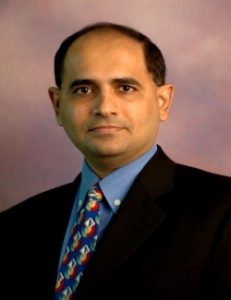
These issues, both macro and micro, will be discussed by the speakers on Panel 1, namely, former Singapore Member of Parliament Inderjit Singh, Asia Growth Capital Advisors Chairman/CEO Harjit Singh Bhatia and Singapore-based public intellectual and Future-Moves Group CEO Devadas Krishnadas.
The Sikh Voices Conference also aims to bring together Sikhs from all walks of life to discuss the challenges of the Sikh community in Singapore and its strategic implications. For example, what if our Sikh institutions fail to keep up with the community’s evolving needs? How do we ensure that our institutions are sustainable in the long-term and what if we are unable to attract a pipeline of talent for leadership positions in the community in the future?
Addressing these issues on Panel 2 will be Surjit Singh Wasan, member of Singapore’s Presidential Council for Religious Harmony and the Presidential Council for Minority Rights; Sarabjeet Singh, YSA’s Vice-President and an educator by profession’ Amarjit Kaur, a lawyer with Morgan Lewis Stamford LLC and Karamjit Singh, a prominent practitioner and commentator in Singapore’s real estate industry.
The third panel, which will feature a government leader, whose name YSA will announce later, will assess the important considerations of Singapore’s organising principles. What if multiracialism or meritocracy are no longer pillars of Singapore’s society or are at risk of being so? What if Singapore’s social compact, which emphasises individual and family responsibility, changes? The discussions here will also attempt to trace the impact of any of these changes on the Sikh community and what it may mean for a minority group.
With the potentially thought-provoking sessions, participants can also look forward to group discussions on plausible scenarios of the community in the future, the launch of a publication titled Sikh Voices that will capture the perspectives of thought leaders and community leaders on the leadership needs of the community and a short-docufilm on Sikh identity and heritage in Singapore.
YSA, which is rapidly acquiring a reputation as an innovator and thought leader in the Sikh and youth communities in Singapore, will also use the conference to showcase its Young Leaders Programme (YLP). Participants of the programme, which is currently in its second run, are behind the Sikh Voices conference and are organising this as their graduating project from the programme.
To participate in this inaugural conference, you can sign up for a free ticket at sikhvoices2017.peatix.com. For more information, feel free to contact the organizing committee on Facebook at
[ASIA SAMACHAR is an online newspaper for Sikhs in Southeast Asia and surrounding countries. To include events in the ASIA SAMACHAR EVENT LISTING, please send brief details of the event and a poster (if available) to editor@asiasamachar.com and/or the Asia Samachar Facebook messenger. Sender must include his/her name, Facebook handle and handphone number. We have a Facebook page, do give it a LIKE! Visit our website: www.asiasamachar.com]
HSBC has appointed Amreek Singh and Omar Mahmoud as Co-Heads of Global Banking for Malaysia.
Amreek has more than 25 years of experience in the financial services sector. He joined HSBC in Malaysia in 2008 and was most recently Co-Head of Large Corporates, Global Banking where he played a key role in establishing strong relationships with some of the Bank’s biggest clients in the country, the bank said in a statement released today (28 Sept 2017).
He is also a Fellow of CPA Australia, a Chartered Accountant and a CFA Charterholder.
Amreek and Omar will be based in Kuala Lumpur and will report to Stephen Williams, Head of Global
Among others, Amreek had pursued high schooling at ACS Ipoh, according to his LinkedIn profile.
[ASIA SAMACHAR is an online newspaper for Sikhs in Southeast Asia and surrounding countries. To include events in the ASIA SAMACHAR EVENT LISTING, please send brief details of the event and a poster (if available) to editor@asiasamachar.com and/or the Asia Samachar Facebook messenger. Sender must include his/her name, Facebook handle and handphone number. We have a Facebook page, do give it a LIKE! Visit our website: www.asiasamachar.com]
Amar Singh to run in Singapore Big Walk – Photo / TNP website grab
Security Amar Singh, took part in the Big Walk at the National Stadium in 2002, will be making a return to the annual run which will kick off from the National Stadium on Nov 26.
“It was wonderful to take part in the Big Walk among so many people at the National Stadium in 2002. When I learnt that the Big Walk has returned to the National Stadium this year, I signed up, and I am trying to persuade friends to join me,” the 67-year old was featured in The New Paper.
The National Stadium was the venue of the Big Walk from 1991 to 2006, after which the event was held at other spots. This year, the National Steps Challenge The New Paper Big Walk 2017 will be flagged off from the Sports Hub, where the new National Stadium is, the newspaper added.
Amar said: “I also love running and jogging. When you are doing these exercises, you can see the scenery and make new friends too.
See original story, Big Walkers go on a sentimental journey (The New Paper, 28 Sept 2017), here.
[ASIA SAMACHAR is an online newspaper for Sikhs in Southeast Asia and surrounding countries. To include events in the ASIA SAMACHAR EVENT LISTING, please send brief details of the event and a poster (if available) to editor@asiasamachar.com and/or the Asia Samachar Facebook messenger. Sender must include his/her name, Facebook handle and handphone number. We have a Facebook page, do give it a LIKE! Visit our website: www.asiasamachar.com]
158 Punjabi Language teachers from 50 PECs took part in two-day professional development course in Ipoh in August – Photo / Supplied
By Jaginder Singh Rahpatti
A total of 158 Punjabi Language teachers teaching at some 50 centres in Malaysia took part in a professional development course in Ipoh in last month (August 26-28).
These teachers are actively engaged in teaching kindergarten to secondary five classes at the various Punjabi Education Centres (PECs) nationwide.
The event, organised by Punjabi Education Trust Malaysia (PETM), the education wing of Khalsa Diwan Malaysia (KDM), was handled by five coordinators and nine facilitators.
Such professional courses, which are held from time to time, provide a platform for teachers to share and exchange knowledge and experience, in an effort to keep improving themselves.
Based on feedback from teachers and performance of students in examinations, oral communication stood out as the grey area which needed urgent attention. Hence, it was agreed that this course would focus on enhancing verbal communication among the students. Themed “An Innovative Approach To Effective Oral Communication”, the course and workshop activities were geared towards applying innovative approaches to help students communicate effectively.
The participants were trained to plan student-centred activities that would enhance the verbal communication skills of students by engaging in pair (face partner/shoulder partner) or group work. They were asked to come up with a three-part lesson structure in which they had to plan innovative activities for the starter, main and plenary stages. Through engagement in these activities, teachers would be able to help their students develop oral communication skills.
MIC VP Senator Jaspal Singh (seated centr) officiated the PETM/KDM two-day professional development course in Ipoh in August – Photo / Supplied
The objectives of the course were achieved, thanks to the contribution and effort of Prof Dr Kuldip Kaur, who heads KDM’s Teacher Training Division, together with her dedicated team of facilitators, who were mostly professionals in the field of education. The feedback from the participants was testimony to this fact. Most teachers were satisfied with the course content and delivery. They shared and learnt a lot from the lively workshops, and gained valuable insights on how to promote verbal communication in the classroom.
The participants even made numerous suggestions to further improve the teaching and learning of Punjabi Language. For example, textbooks for Kindergarten and Lower Primary should have more dialogues to enable students do role-playing in the classroom. Some teachers wanted PETM to set up teachers’ and students’ portals to facilitate sharing of knowledge, information and experience among Punjabi Education Centre (PECs) nationwide. The PETM welcomes these suggestions, and will look into them when planning designs for future courses.
PETM takes this opportunity to thank all the coordinators, facilitators and course participants for the smooth running of this course, and hope this partnership and cooperation will continue to grow.
In order to enhance the usage and dissemination of the Punjabi Language to higher levels, the concerted effort of all is needed. Teachers, parents and the community on the whole, have a collective responsibility.
Malaysian Indian Congress Vice President Senator Jaspal Singh officiated the event.
The course was made possible to the aid from Socio-Economic Development of the Indian Community (SEDIC), a unit in the Malaysian Prime Minister’s Department, which has provided financial aid to KDM to help preserve and promote the use of Punjabi Language.
[Jaginder Singh Rahpatti is the Secretary of the Punjabi Education Trust Malaysia, the education wing of Khalsa Diwan Malaysia]
ASIA SAMACHAR is an online newspaper for Sikhs / Punjabis in Southeast Asia and beyond.Facebook | WhatsApp +6017-335-1399 | Email: editor@asiasamachar.com | Twitter | Instagram | Obituary announcements, click here |
Born in December 1929, Mr Jeswant Singh Bandal lost his mother when he was just four years old. His early childhood was also rather unsettling as he spent his early years living in different parts of the region. When he finally settled in Singapore, he embarked on a life journey that saw him carving a name for himself in Singapore society and the Sikh community.
As an infant, Jeswant was raised in Tronoh in Perak, Malaya. His grandfather, Mr Ran Singh, was brought from India to Taiping in Malaya as part of the British military police to control the communists operating in that area. He finally retired in Tronoh and soon after, settled in India. Jeswant recalled his early years, “My father, Mr Assa Singh, served as a priest first in Sumatra and then in Kuala Lumpur. We moved with him.”[1] When Jeswant lost his mother, the family decided to move to India. After a year, Jeswant and his family returned to Malaya.
In 1935, Jeswant started his education in Sentul in Kuala Lumpur where he attended the Loyola Institute. Subsequently, he moved to Kedah and enrolled into Sultan Abdul Hamid College for another two years before finally moving to Singapore and enrolling in Rangoon Primary School to complete his primary education.
The Japanese occupation of Singapore took place in 1942 when Jeswant was only 13 years old. For all Singaporeans, the arrival of the Japanese was a time of pain and suffering. However, Jeswant took advantage of the situation and started learning the Japanese language and over time, honed his knowledge of the language and culture. This led to a recommendation for him to be a language interpreter initially for the municipal office and then with the Inspector General of the Japanese Police Commissioner. Jeswant continued to further study the language and was among one of only two Singaporeans who passed the ‘Tokkyu’ – the Highest Special Grade Examination. The other individual is Singapore’s former President, Mr S R Nathan.
With the help of his uncle, then a senior teacher at Victoria Institution in Kuala Lumpur, Jeswant was able to secure a place at Raffles Institution. He realised that he was performing rather poorly in Mathematics and needed help if he were to pass his examinations. He approached his Mathematics teacher, Mr K M R Menon, for additional help. Through his guidance, Jeswant graduated with a credit average in the Cambridge Examinations. Unfortunately, his desire to study further was cut short when he could not pay the tuition fee. He stated that, “I was superannuated to the effect that I was suspended from classes for not paying my tuition fees.”[2]
TEACHING
Jeswant decided to enter the teaching profession. By the age of 23 years, he was a qualified teacher and he started his teaching stint as a teacher demonstrator for two years before becoming a Mathematics teacher at Outram Secondary School. Jeswant was appointed principal of a primary school when he was 30 years old. Thereafter, he was seconded to the Singapore Police Force as a Police Education Officer for three years.
Such career progressions were the first of many for him and he took each and every posting professionally, believing that it was an opportunity to further enrich himself. He went on to serve as the principal of Charlton Primary School and finally took on the task of guiding senior students who were dispassionate when it came to their studies in his role as the principal of Baharuddin Vocational Institute.[3]
Taking a break from his teaching and leadership stints, Jeswant took up a Public Service Commission scholarship and pursued a training course in the United Kingdom. During the two years, he trained to be a specialist Mathematics teacher at the Institute of Education in the University of Kingston Upon Hull, Yorkshire.
Upon his return to Singapore, he was appointed as an Assistant Inspector of Schools (Mathematics). He was eventually promoted to the post of Inspector of Schools at the Ministry of Education (MOE). This would be Jeswant’s longest serving post – it lasted 22 years. In 1989, at the age of 60 years, Jeswant retired from the education service.
Not one to sit idle, he continued to lecture part-time at the Singapore Productivity and Standards Board[4] for another eight years before finally deciding to devote most of his time to his family.
COMMUNITY SERVICE
Throughout his life, while Jeswant advanced in his professional career, he was also committed to giving back to the nation and community. In 1987, he formed the Board of Visitors (Drug Rehabilitation Centres) under the Ministry of Home Affairs (MHA). Through this initiative, he carried out inspection visits at various Drug Rehabilitation Centres to assess their conditions. He stated: “I had the strong desire to continue serving on the Board of Visitors for as long as possible. It was a noble effort.”[5]
At the same time, he was part of the Management Committee of Ashram, a half-way house for drug offenders under the Hindu Endowments Board (HEB).[6] He also held the position of Chairman of the Sikh Advisory Board and was actively involved in fundraising efforts for community projects, including for the Central Sikh Temple. He is currently a Member of the Council of Elders in the Singapore Sikh Education Foundation.
Jeswant’s social and community contributions have not gone unnoticed. He is the recipient of various medals. In 1989, he received the Pingat Berkebolehan (Efficiency Medal)[7] for his service in MOE, the Pingat Bakti Masyarakat (Public Service Medal)[8] in 2006 and the Bintang Bakti Masyarakat (Public Service Star)[9] in 2013 for long and outstanding service on the Board of Visitors, and the Pingkat Bakti Setia (Long Service Award)[10] in 2009 for his service to the Ministry of Community Development, Youth and Sports.
In spite of his achievements, Jeswant remains a humble and unassuming person. Today, he is 86 years old and he still lives by the belief that “you must keep on trying persistently and you are likely to succeed.”[11]
Such a belief system cannot possibly be wrong – Jeswant kept on trying with determination and persistency and despite hurdles along the way, he achieved success in the education and social services sectors in Singapore.
“I am blessed to have been associated with Jeswant for more than 30 years. Both of us have been active volunteers in our nation’s fight against drug abuse through SANA and on the Board of Visitors (Drug Rehabilitation Centres) under MHA. We have also been in the Management Committee of Ashram, a half-way house for drug offenders under the HEB, for many years. The nation-building role Jeswant played as an eminent personality in Singapore’s education service is remarkable. He is an honest and straight forward gentleman with an analytical mind. He mixes well with people and has a golden heart, ever ready to help others irrespective of their race or religion.”
DR RAMASAMY KARUNANITHY PBM,
Former Professor of Pharmacy, National University of Singapore
Jeswant Singh Bandal in an undated photo – Source / book
ENDNOTES
[1] Interview with Mr Jeswant Singh Bandal, August 13, 2015.
[3] Baharuddin Vocational Institute was part of the Vocational and Industrial Training Board which was the predecessor to the Institute of Technical Education, a post-secondary institution that provides pre-employment training to secondary school leavers and continuing education and training to working adults. See www.moe.gov.sg. Baharuddin Vocational Institute was the first tertiary school dedicated to manual and applied arts in Singapore. See http://www.queenstown. org.sg/heritage-2
[4] The PSB was formed from the merger of the National Productivity Board and the Singapore Institute of Standards and Industrial Research in 1996. It was the national agency for productivity and standards. See http://eresources.nlb.gov.sg/infopedia/articles/SIP_26_2005-01-09. html. Today, it is called SPRING Singapore, an agency under the Ministry of Trade and Industry responsible for helping Singapore enterprises grow and building trust in Singapore products and services. See https:// www.mti.gov.sg.
[5] Interview with Mr Jeswant Singh Bandal, op. cit.
[6] The HEB is a statutory body set up under the Hindu Endowments Act in 1968. Its role, as set out in the Act, is to administer those endowments placed under its administration. See http://heb.gov.sg.
[7] The Pingat Berkebolehan was instituted in 1969. It is awarded to any of the following persons for exceptional efficiency or exceptional devotion to duty or for work of special significance: public officer; officer employed by any statutory authority; any person who in the service of any organisation, association or body rendering services in the field of education; or any person employed in any company which is whollyowned by the government and which is carrying on business mainly as an agent or instrumentality of the government. See http://www.pmo.gov.sg/nationaldayawards.
[8] The Pingat Bakti Masyarakat was instituted in 1973. The medal is awarded to any person who has rendered commendable public service in Singapore or for his or her achievement in the field of arts and letters, sports, the sciences, business, the professions and the labour movement. See http://www.pmo.gov.sg/nationaldayawards.
[9] The Bintang Bakti Masyarakat was instituted in 1963. It is awarded to any person who has rendered valuable public service to the people of Singapore; or who has distinguished himself or herself in the field of arts and letters, sports, the sciences, business, the professions and the labour movement. Ibid.
[10] The Pingat Bakti Setia was instituted in 1962. The medal may be awarded to any person who has completed 25 years continuous service in the service of the government, any statutory authority, any organisation, association or body rendering services in the field of education, or any company which is wholly owned by the government and which is carrying on business mainly as an agent or instrumentality of the Government, and who is of irreproachable character. Ibid.
[11] Interview with Mr Jeswant Singh Bandal, op. cit.
[This article is courtesy of SINGAPORE AT 50: 50 SIKHS AND THEIR CONTRIBUTIONS, a book published in 2015 by the Young Sikh Association, Singapore (YSA) in conjunction with Singapore’s 50th birthday]
[ASIA SAMACHAR is an online newspaper for Sikhs in Southeast Asia and surrounding countries. We have a Facebook page, do give it a LIKE. Follow us on Twitter. Visit our website: www.asiasamachar.com]
Sikh soldiers in Gallipoli in 1915 – Photo / SikhMuseum.com
Malaya Tribune | 10 March 1915:
The Indian Council have received a request to send a supply of copies of the Granth Sahib or Sikh Scriptures for the use of the sick and wounded Sikh soldiers in hospital in Europe.
His Honour Sir Michael O’Dwyer, Lieutenant Governor of the Punjab Centre of the Association, has presented 500 copies of the sacred writing to the Indian Council, and the Indian Council has ordered a further supply of copies from the printers.
This additional effort on behalf of the Indian Council to provide for the spiritual as well as the physical well-being of our gallant Sikh soldiers will no doubt be greatly appreciated by the Sikh community in India generally as well as by the gallant Sikhs who are covering themselves with glory on the battlefields of Europe and elsewhere.
ASIA SAMACHAR is an online newspaper for Sikhs / Punjabis in Southeast Asia and beyond.Facebook | WhatsApp +6017-335-1399 | Email: editor@asiasamachar.com | Twitter | Instagram | Obituary announcements, click here |
Prayer: 6.30am-12pm, 1 Oct 2017 (Sunday), at Gurdwara Sahib Ampang (Ulu Klang), Selangor | Malaysia
Datin Tarnjit Kaur 1960-2017 BainsPhysio.jpeg
Datin Tarnjit Kaur Bains d/o Kundu Singh
Senior Consultant Physiotherapist
Wife of Dato’ Dr Balwant Singh Bains, BainsPhysio
Born: 23 August 1960
Departed: 24 September 2017
Prayer: 6.30am-12pm, 1 Oct 2017 (Sunday), at Gurdwara Sahib Ampang (Ulu Klang), Selangor
6:30am – 8.30am – Asa Di War;
8.30am – 9.45am – Breakfast
9.45am – 12.00 – Satsang & Antam Ardas
Kirtan By: Satsangi Jattha Malaysia
Contact:
Balbir Singh 016-3828047
Mandeep Singh 013-2253566
Note From Family: Left to be with The Almighty Akal Purakh Peacefully. Please join us for the Antam Ardas Prayers.
Asia Samachar | Entry: 24 Sept 2017; Updated: 26 Sept 2017 | Source: Family
[ASIA SAMACHAR is an online newspaper for Sikhs in Southeast Asia and surrounding countries. We have a Facebook page, do give it a LIKE. Follow us on Twitter. Visit our website: www.asiasamachar.com]
[The fastest way to reach Asia Samachar is by sending us a Facebook message. For obituary announcements, click here]
Amarjit Singh Gill: Elected to International Cycling Union (UCI) executive body – Photo / Amarjit Singh Gill Facebook
Malaysian lawyer and Asian cycling management enthusiast Amarjit Singh Gill joins the executive body of the International Cycling Union (UCI) after being elected to the post for a five year term from 2017-2021.
“With this, I am now the 2nd Malaysia and Asian to sit after my father, Tan Sri Darshan Singh served in 1996-2005…My gratitude to my father, Tan Sri Darshan Singh who have always been my role model and inspiration and for the great support,” he made an entry on his Facebook page.
The treasurer of the Asian Cycling Confederation was present at the international body’s elections at Bergen, Norway, on 22 Sept 2017. His father was also present there.
[ASIA SAMACHAR is an online newspaper for Sikhs in Southeast Asia and surrounding countries. To include events in the ASIA SAMACHAR EVENT LISTING, please send brief details of the event and a poster (if available) to editor@asiasamachar.com and/or the Asia Samachar Facebook messenger. Sender must include his/her name, Facebook handle and handphone number. We have a Facebook page, do give it a LIKE! Visit our website: www.asiasamachar.com]
| Kuala Lumpur, Malaysia | 23 Sept 2017 | Asia Samachar |
Women's Legal Rights in Malaysia seminar
1 of 5
STANDING UP: One of the participants at the SWSM Women's Legal Rights in Malaysia seminar in Kuala Lumpur on 16 Sept 2017 - Photo / Asia Samachar
Ravinder Singh Dhaliwal (centre) flanked by SWSM deputy president Parveen Kaur and president Tarlochan Singh Dhaliwal - Photo / Asia Samachar
Women's Legal Rights in Malaysia seminar in Kuala Lumpur on 16 Sept 2017 - Photo / Asia Samachar
LADIES BRIGADE at the SWSM Women's Legal Rights in Malaysia seminar in Kuala Lumpur on 16 Sept 2017 - Photo / Asia Samachar
ORGANISING TEAM for the SWSM Women's Legal Rights in Malaysia seminar in Kuala Lumpur on 16 Sept 2017 - Photo / Asia Samachar
Conversion is no shortcut to a divorce. And if you are converting to Islam in Malaysia, be aware of the consequences.
“They should go in with their eyes open…They should take into consideration the long term implications that can arise as far as property is concerned, maintenance in the future, custody of the children,” a lawyer told a recent Kuala Lumpur seminar.
“All these matters do play a role and they need to be taken into consideration before going through a conversion.”
This was one of issues that cropped up in the half-day ‘Women’s Legal Rights in Malaysia’ seminar organised by the Sikh Welfare Society Malaysia (SWSM) in Kuala Lumpur on 16 Sept 2017.
Ravinder Singh, who had served as chairman of the Kuala Lumpur Bar, had also touched on issues concerning spouse abuse, marital rape and the rights of spouses married to Malaysians. It was attended by about 100 participants, mostly women.
Jagjit Singh, a former judge and Malaysia Competition Commission (MyCC) commissioner, who was originally scheduled to speak, could not make it due to a last minute work travel commitment.
When speaking to Asia Samachar after the event, Ravinder said: “When there is a marriage between a Sikh and a non-Sikh, especially one in this [Malaysia] country where a certain religion which requires conversion by law, under those circumstances, young adults must be aware of the risks.”
In Malaysia, conversion-related cases have been widely debated. In a number of conversion cases that ended up in the court of law, one of the spouses, usually the husband, would convert to Islam and attempt to unilaterally change the status of their children’s faith as well.
Last year, the Malaysian government had given an assurance that the it will amend the Law Reform (Marriage and Divorce) Act 1976 to resolve the issue.
When the final amendments were brought to the Parliament in August 2017, among the amendments was Section 51, which allows either spouse in cases where one party has converted to Islam, to have the marriage dissolved in civil courts.
However, the lawmakers had dropped one key demand of various parties, including the interfaith groups. At the last minute, the Government decided to omit Section 88A intended to address issues concerning unilateral conversion of children.
In September 2016, for example, the Malaysian Consultative Council of Buddhism, Christianity, Hinduism, Sikhism and Taoism (MCCBCHST) then welcomed a minister’s statement that the proposed reforms will essentially see the cabinet abiding by its April 2009 decision which requires both parents’ consent before a child of a civil marriage can be converted to another religion.
The seminar was sponsored by the Malaysian Ministry of Women, Family and Community Development and supported by the Malaysian Sikh Union (MSU). Asia Samachar was the event media partner.
ASIA SAMACHAR is an online newspaper for Sikhs / Punjabis in Southeast Asia and beyond.Facebook | WhatsApp +6017-335-1399 | Email: editor@asiasamachar.com | Twitter | Instagram | Obituary announcements, click here |
| Petaling Jaya, Malaysia | 23 Sept 2017 | Asia Samachar |
Why does one experience hair loss? What can be done about it? Beauty parlour owner Gurjit Kaur Sekhon will share tips on the issue at the Sikh Women’s Awareness Network’s (SWAN) health talk in Petaling Jaya, tomorrow (24 Sept 2017).
The talk, from 2.30pm to 4.40pm, will be held at SWAN’s office at No 10, SS 1/4, Kampung Tunku, Petaling Jaya.
To include events in the ASIA SAMACHAR EVENT LISTING, please send brief details of the event and a poster (if available) to editor@asiasamachar.com and/or the Asia Samachar Facebook messenger. Sender must include his/her name, Facebook handle and handphone number.
[ASIA SAMACHAR is an online newspaper for Sikhs in Southeast Asia and surrounding countries. We have a Facebook page, do give it a LIKE! Visit our website: www.asiasamachar.com]


























 Why does one experience hair loss? What can be done about it? Beauty parlour owner Gurjit Kaur Sekhon will share tips on the issue at the Sikh Women’s Awareness Network’s (SWAN) health talk in Petaling Jaya, tomorrow (24 Sept 2017).