UNISON IN PRAYER: Members of three hash run Sikh chapters come together for a prayer programme in Kuala Lumpur during Merdeka day – Photo / Supplied
This was a different kind of a meeting. No jungle tracks, and no heavy breathing as they go uphill and downhill. Instead, they were surrounded with prayer and food.
Three Sikh chapters of Hash Run in the Klang Valley came together for a prayer session, taking advantage of the Merdeka holiday on Aug 31.
Some 200 runners and their family members caught up at the Gurdwara Sahib Selayang Baru. They sponsored the jordmela (gathering) programme as well as made a donation to the gurdwara.
The three chapters are United Sikh Hash, Kelab Aman Hash and Chakdey Hash.
“We prayed for the safety of all hashers when undertaking their activities. It was nice to see the gathering happening annually,” said United Sikh Hash grandmaster Palwinder Singh.
The annual prayer event has been going on since 2010 when first held at Gurdwara Sahib Tatt Khalsa in Kuala Lumpur. It was followed at the following gurdwaras: 2011 (Pulapol), 2012 (Selayang), 2013 (Lembah Jaya), 2014 (Parliament), 2015 (Kampung Pandan) and Shah Alam (2016).
[ASIA SAMACHAR is an online newspaper for Sikhs / Punjabis in Asia. How to reach us: Facebook message or WhatsApp +6017-335-1399. Our email: editor@asiasamachar.com. For obituary announcements, click here]
Many of you have written or called me to ask, “I am pregnant. Can I colour my hair? Is it safe? Will my baby be safe? Will my baby get cancer?”
This article is drawn from studies done. Please share this article with your friends and loved ones, too.
A study done in 2005 suggested an association between the use of hair dye during pregnancy and the development of childhood cancer neuroblastoma. However, other studies haven’t reached the same conclusion. Most researchers say it’s unlikely that maternal use of hair products before or during pregnancy would increase the risk of childhood tumours.
Doctors at Mayo Clinic belief that, if necessary, precautions are taken then there is no harm but they also caution that the mother should speak to her gynaecologist.
The American Cancer Society, Harvard School of Public Health and American Journal of Epidemiology belief that there is an association between chemical hair dye and certain types of cancer in young children.
Other studies, however, haven’t reached the same conclusion. Many researches argue that it’s unlikely that a woman having her hair coloured before, during or after her pregnancy may increase her child’s risk to cancer.
The College of Family Physicians of Canada had published an article regarding the safety of hair products during pregnancy.
My suggestion to all expecting mothers would be this: It is best that you avoid colouring your hair until after 13-weeks of pregnancy. The reason is that your first trimester is when all the major organs of the child are being developed. Speak to your gynaecologist and ask for his/her advice. Voice out your concerns to him and make an informed decision.
Compared to chemical colouring, naturally organic colouring and henna hair + herbs is a friendlier alternative. I believe in ensuring that clients are aware of the pros and cons of organic hair colouring and henna hair + herbs. The decision is ultimately yours as to what you are comfortable with and what you believe is right for you and your child.
Gurjit Kaur Sekhon is founder of Simran Beyond Beauty, an organic hair, beauty & waxing spa
* This is the opinion of the writer, organisation or publication and does not necessarily represent the views of Asia Samachar.
[ASIA SAMACHAR is an online newspaper for Sikhs in Southeast Asia and surrounding countries. We have a Facebook page, do give it a LIKE! Visit our website: www.asiasamachar.com]
Hardeep Singh Puri, India’s former permanent representative of India to United Nations (UN) and now a retired ambassador, was a surprise pick in the latest Cabinet reshuffle by Prime Minister Narendra Modi.
The 65 year old retired diplomat, who joined the Indian Foreign Services in 1974 and held ambassadorial level assignments in London and Brasilia, took oath of office today (3 Sept 2017).
His diplomat career spanned over 40 years, including as the permanent representative of India to the UN from 2009 to 2013. He was also India’s ambassador to Brazil and the United Kingdom.
Hardeep, who studied at The Hindu College, Delhi, is also a prolific writer. In 2016, he had released ‘Perilous Interventions: The Security Council and the Politics of Chaos‘, a book that captures his experiences during the UN days.
In the book, he showed how some recent instances of the use of force – not just in Libya but also in Syria, Yemen and Crimea, as well as India’s misadventure in Sri Lanka in the 1980s – have gone disastrously wrong.
“A perilious intervention is about whimsical and reflexive decision making, and about taking decisions with far-reaching consequences without thinking through their consequences,” he writes in the book.
In the case of Libya and Syria, he writes that the UN decision makers ‘did not weigh the consequences carefully, shut out sound advise and better judgement because they seemed inconvenient, and ignore perfectly feasible alternatives’.
In a July 2017 entry at his Facebook page, Hardeep announced that Penguin Random House India will be publishing his next two books, ‘Delusional Politics’ & ‘The Perfect Storm’, in 2018 and 2019, respectively.
Hardeep has also been actively contributing articles to magazines and newspapers. In one of his latest articles, ‘The importance of trade’ published in the Business Standard last month, he writes: “We do ourselves and India great disservice if we continue to perpetuate a flawed narrative on trade, one based on myths rather than facts.”
ASIA SAMACHAR is an online newspaper for Sikhs / Punjabis in Southeast Asia and beyond.Facebook | WhatsApp +6017-335-1399 | Email: editor@asiasamachar.com | Twitter | Instagram | Obituary announcements, click here |
[ASIA SAMACHAR is an online newspaper for Sikhs in Southeast Asia and surrounding countries. We have a Facebook page, do give it a LIKE. Follow us on Twitter. Visit our website: www.asiasamachar.com]
[The fastest way to reach Asia Samachar is by sending us a Facebook message. For obituary announcements, click here]
Muslims offer prayers at a gurudwara in Uttarakhand’s Joshimath. – Photo / Hindustan Times
Muslims and Sikhs on Saturday (2 Sept 2017) set an example of communal harmony in Uttarakhand’s Joshimath, 300 kilometres from New Delhi, when the local gurudwara offered Muslims space to offer Eid prayers.
Muslims had gathered at a local ground in large numbers to offer prayers on the occasion of Eid-Ul-Zuha, but could not proceed due to incessant overnight rains. This is when Gurudwara Singh Sabha stepped in and welcomed them to the gurudwara, reports Hindustan Times.
“Be it Hindus, Sikhs or Muslims we have a strong bonding in Joshimath. The senior management from the Gurudwara sahib and the Muslim community held a short meeting on Saturday morning and made quick arrangements for the prayers,” Buta Singh, manager, Shri Hemkund Sahib gurudwara, told the newspaper on phone. More than 500 Muslims offered Namaaz in the retiring hall of the gurdwara, he said.
Salim Raja, an office bearer of Joshimath Muslim Committee, was also quoted as saying: “The incessant rains for the past couple of days had rendered offering Bakr-Eid Namaaz at the traditional Gandh Maidan and local municipal board hall difficult. This led us to approach Govindghat-based gurdwara management committee senior manager Seva Singh for permission to offer Namaaz there. The gurdwara has ample space to accommodate sizable devout.”
This is not the first time that Sikhs have offered space for Eid prayers. On 20 Aug 2012, the Muslims prayed at the same gurudwara. Joshimath is believed to be the last place in the state towards the China border where Muslims offer Namaaz. Beyond Joshimath lies Badrinath, one of four shrines of the Chardham pilgrimage of Hindus, the report added.
“Though we keep hearing stories about growing hatred in the society, by Allah’s grace we never witnessed such negative things here,” said Rais Ahmad (50).
Joshimath falls in the Chamoli district home to revered Hindu shrine – Badrinath and Hemkund Sahib, the Sikh Gurudwara.
This is not the first time gurdwaras have flung open their doors to assist people of other faiths. In January 2017, gurdwaras in West London joined mosques and churches by opening their doors to offer assistance to the survivors of a huge fire that engulfed a 24-storey residential tower block killing six people and injuring over 50 others.
[ASIA SAMACHAR is an online newspaper for Sikhs in Southeast Asia and surrounding countries. We have a Facebook page, do give it a LIKE. Follow us on Twitter. Visit our website: www.asiasamachar.com]
[The fastest way to reach Asia Samachar is by sending us a Facebook message. For obituary announcements, click here]
Mansharan Singh Gill in an undated photo – Source: SINGAPORE AT 50: 50 SIKHS AND THEIR CONTRIBUTIONS
One of the oldest military formations in Singapore is the Singapore Artillery. With a rich history since its conception in 1888, the Singapore Artillery has played a crucial role as a deterrent against any threat to Singapore’s sovereignty.
Although command of the unit has changed countless times since its formation, one commander particularly stands out from all these great leaders. He is the late Colonel (Retired) Mancharan Singh Gill. Living true to the motto of the Artillery formation, ‘In Oriente Primus’, which means ‘First in the East’,[1] Mancharan was the first Chief of the Singapore Artillery and he played a critical role in the rise of modern-day Singapore Artillery.
One of 11 children, Mancharan was born in Muar in Malaya in 1934. He completed his early education in Malaya. Despite the Japanese invasion of Malaya during the Second World War, which led to a disruption of his studies, Mancharan persevered and continued studying after the war, graduating from Saint Xavier’s College in Penang. Following the completion of his early education, Mancharan came to Singapore in 1952 and enrolled in the University of Malaya.
In 1955, Mancharan graduated from the university and became a teacher before joining Singapore’s Metrological Service. During his stint at the metrological service, the Indonesian Konfrontasi broke out and Mancharan joined the Singapore Volunteer Artillery where he served to protect Singapore and Malaysia which had merged at that time.
In 1965, when Singapore separated from Malaysia, Mancharan was in Sabah. Along with the other officers in the army, he was given the option to choose between the Singapore and Malaysian armies. Although most of his family members were in Malaysia, Mancharan chose to remain in Singapore. His time spent here, his interactions at university (where he was housemate with Singapore’s former President, Mr S R Nathan, and others) and thereafter imbued in him a sense of commitment sophistication needed by the troops. His men were also not trained well and many did not know how to handle the artillery pieces properly. His first tenure as the Chief of the Artillery formation was from the end of 1969 till May 1971.
In this short time, Mancharan built up the Artillery formation from scratch. He utilised many of his old comrades from the volunteer artillery as instructors in the Singapore Artillery units and they trained the pioneer batches of soldiers in handling the various types of artillery pieces effectively and confidently. Mancharan also knew that, on top of his men being well-trained, to defend Singapore effectively, they needed modern guns. As such, he approached several countries to discuss the sales of artillery to Singapore.[2]
At the end of his first tour, Mancharan was sent to Fort Leavenworth in the United States for training at the Command and Staff College where he excelled in his batch and was promoted to the rank of Colonel. Upon his return to Singapore in 1973, Mancharan was appointed the Chief of the Artillery formation for the second time. He had the opportunity to further carry on his work in developing Singapore’s artillery capability. During his two tours as the Singapore Artillery Chief, Mancharan set in place plans, policies and processes for the modernisation of the Singapore Artillery.[3] At that point in time, the Singapore Artillery used a simple ‘aim the mortar tube and fire’ system. Having personally experienced the Second World War, Mancharan was fully aware that for Singapore to avoid such a catastrophic scenario again, the SAF needed to be a top-notch entity with modern equipment and well-trained men.
TOUGH LOVE
When it came to his men, Mancharan was extremely disciplined but fair. It was very common to see him mingling with his men as often as he could so that he could build rapport with them, and motivate and push them to their limits. To his officers, Mancharan was a hard taskmaster who was always demanding the maximum to the newly independent country and he wanted to contribute to its development.
As the Singapore Armed Forces (SAF) had not been formed at that point in time, Mancharan served in the precursor of the SAF, the Singapore Military Force, where he held the rank of Captain. When the SAF was formally set up and the various units were formed, Mancharan was appointed Singapore’s first Chief of the Singapore Artillery in 1969. He was a committed, experienced and highly capable ground officer.
When Mancharan became the Chief of the Artillery formation, he was faced with many challenges. The British had left Singapore in a hurry and did not leave any proper equipment for use by the Artillery. The Singapore Artillery consisted of simple mortars, which lacked the range and from them at all times.
Mancharan was convinced that the Singapore Artillery officers’ leadership was crucial to the effectiveness of the formation and he expected much more from them. His officers acknowledged that his methods were highly effective and those under his charge were willing to go that extra mile to ensure that the formation excelled in the quickest time possible. It was due to his dedication, efforts and contributions that he became famously known as the ‘Father of the Singapore Artillery’.
Mancharan Singh Gill: Served as first Chief of Artillery from December 1969 to May 1971, and again from September 1973 to January 1976. He was Director of Singapore Armed Forces Training Institute (SAFTI) from 1971 to 1973 – Source: SINGAPORE AT 50: 50 SIKHS AND THEIR CONTRIBUTIONS
Mancharan was the first Chief of the Artillery in the SAF. Armed with little knowledge, he built up Singapore Artillery, together with the Artillery formation pioneers. This marked the development of MODERN DAY Singapore Artillery. He worked very hard, never seemed to rest and was a real hard taskmaster. He strove for excellence and always demanded the best from those under his command. As his OFFICER, I learned greatly from him. He remained dedicated and committed to his job and his position till he retired. He was a great OFFICER.
Colonel (Retired) Chan Jwee Kay
Former Chief of Artillery
After completing his second tour, Mancharan took up various positions in the SAF. From 1976 to 1979, he served as the Assistant Chief of General Staff (Logistics) and the Assistant Chief of General Staff (Training). From 1979 to 1982, he was Commander of the 3rd Singapore Infantry Division. During his tour here, alongside other officers from the various SAF formations, Mancharan was a core member of the Combined Arms Division planning team. This Division housed the various units of the SAF which worked together to achieve full effectiveness on and off the battlefield. His last command was Deputy Chief of General Staff from 1982 until his retirement in 1986.
LIFE AFTER ARMY
After leaving the SAF, Mancharan joined the Chartered Industries of Singapore (CIS), known today as ST Kinetics. He focused on the artillery aspect within CIS and was heavily involved with artillery equipment development for the SAF.
One particular weapon system that Mancharan helped developed was the FH-2000 gun system. This was an advancement of the existing FH-88 system, which was fast becoming outdated. Mancharan saw the FH-2000 system as a critical factor in the defence of Singapore as it was one of the most modern gun systems at that time. He was aware that one of the reasons Singapore fell to the Japanese was due to its ineffective or outdated guns so he strongly believed that the FH-2000 would change that.
In addition to helping with production of the FH-2000 system, Mancharan acted as a representative of CIS to other governments and arranged for the sales of Singapore manufactured arms and equipment to them.[4]
Mancharan finally called it a day in the late 1990s. He felt that he had contributed immensely to the SAF and Singapore, and that it was time for the younger generations to carry the torch forward. After years of working constantly and always on the go, he finally could sit back and enjoy his free time doing activities that interested him, such as reading.
Colonel Mancharan Singh Gill: The first Chief of Artillery from December 1969 to May 1971, and again from September 1973 to January 1976. He was also Captain of the 20 People’s Defence Force (Artillery) (August 1966); Commanding Officer of the 20 Singapore Artillery Battalion (1969); Director of SAFTI or Singapore Armed Forces Training Institute (1971-1973); Assistant Chief of General Staff (Logistic); Assistant Chief of General Staff (Training); Commander of the 3rd Singapore Division (1979); Deputy Chief of General Staff (1982-1986); and President of the Singapore Armed Forces Veteran’s League (1995). He was promoted from LTC to the rank of Colonel in May 1972. He was conferred the Public Administration Medal (Silver) and the Public Administration Medal (Gold) (Military) by the Government of Singapore in 1971 and 1982 respectively. Title devised by Library staff. – Source: The Singapore Artillery 100th year commemorative book
Over a period of 40 years, Mancharan was instrumental in transforming the Singapore Artillery both when he was in charge of it and as part of the CIS establishment. When some of the systems he implemented were replaced with more modern ones, rather than feeling aggrieved, Mancharan was extremely proud that the Singapore Artillery was always upgrading itself based on the principles of the early years of its formation. Importantly, to continue to remain a potent force, it must have the best equipment to bring out the best in the soldiers.
In spite of being out of the army, Mancharan kept abreast of developments in the Artillery formation. Sadly, Mancharan passed away in 2008. However, his legacy lives on in the Singapore Artillery. He firmly believed in a strong sense of principle, discipline and pride, and he infused these values into the Singapore Artillery. For Mancharan, failure was not an option in matters concerning the defense of the nation. He practiced what he preached and led from the front.
Today, the Singapore Artillery plays a crucial part in the defense of Singapore. It is highly indebted to the ‘Father of the Singapore Artillery’ for its development and success.
[This article is courtesy of SINGAPORE AT 50: 50 SIKHS AND THEIR CONTRIBUTIONS, a book published in 2015 by the Young Sikh Association, Singapore (YSA) in conjunction with Singapore’s 50th birthday]
[ASIA SAMACHAR is an online newspaper for Sikhs / Punjabis in Asia. How to reach us: Facebook message or WhatsApp +6017-335-1399. Our email: editor@asiasamachar.com. For obituary announcements, click here]
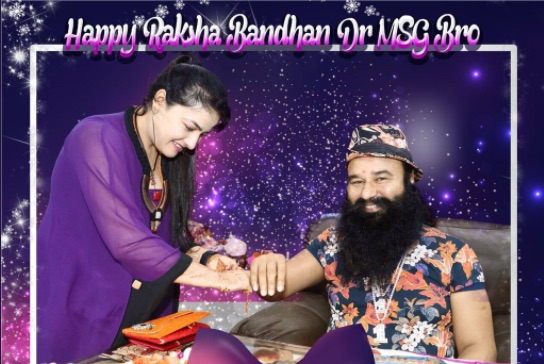
Dera Sacha Sauda head Ram Rahim with his adopted daugher Honeypreet Insan on one Twitter entry by the later. They are hundreds of such photos.
By Hb Singh
They should have seen it coming, but they were blinded in the name of sharda.
Meet Saint Dr. Gurmeet Ram Rahim Singh Ji Insan. Yes, believe it or not, that’s how a website aligned to the convicted rapist Indian baba addresses him.
They should have seen it coming. But when you put on the blind sharda blinkers – oozing unending loyalty without question, following silly one and all edicts from the head – you end up a fool. And much more. You can end up hurting your family, friends and the community.
In the chase for a baba in their lives – let’s call it babadom – stories are emerging on how people were simply ‘gifting’ their wealth to this self-styled godman running a religious centre called Dera Sacha Sauda. Some families even left their daughters, young and innocent, in the supposed care of the centre.
For now, the story does not seem to have a happy ending. On 28 Aug 2017, an Indian court threw a spanner into the seemingly amazing life and times of Gurmeet Ram Rahim. The head of the Haryana-based dera, wielding considerable political clout and financial muscle, has been given a 20-year jail sentence for raping two women followers in 2002.
What are the lessons for Sikhs in India, and in foreign lands? The dera has attracted Sikh followers. And Sikhs are no strangers to babas and deras. We have thousands of them – in India and abroad.
“There are good, decent man of God out there. But there may be an equal, if not more, opportunists disguised as babas,” a Kuala Lumpur-based Sikh who was actively involved in Sikh preaching told the writer.
Another Sikh, who had always been active in Sikh activities, said: “Stick close to the teachings of the Sri Guru Granth Sahib (SGGS). Take care of yourself and your family.”
But don’t these self-styled babas themselves peddle messages from SGGS, the Sikh scriptures?
“If we have cultivated the right teachings for ourselves and our kids, we have no reason to fear. The problem is that a huge percentage of us do not attempt to do our bit to equip ourselves. We then blame the babas,” he said.
But the power babadom is immense. Let us return to the ‘baba’ under discussion.
“Pitaji’s thinking begins where your science and education ends.”
These words of an elderly follower of the Dera Sacha Sauda in Tehsil office of the Bathinda district in October 2012 echoed in the mind of Tribune News Service (TNS) journalist Jupinderjit Singh.
The elderly man, sporting a white turban that matched his flowing white beard and kurta-pyjama, went on: “You can never fathom him or his actions. You don’t have the faculty to do so, as you journalists are cynics.”
The elder man and 130 followers of the dera had queued up at the Tehsil office to ‘gift away’ some part or whole of his property to the dera. The dera management had given a call to them to do so, he writes in an article entitled ‘Then and now: Mind of a Dera Sacha Sauda follower‘.
The article adds:
Today, the same man while talking to me over the phone begged not to be identified, “I am in state of a shock. I don’t know what is right or wrong and whether the man we revered as father (Pitaji) was really guilty or not? But I definitely feel betrayed. I wonder if I will get my property back. But I don’t know if I will seek it,” he said without any authority or conviction about his faith in the dera.
Within a few days in October 2012 nearly 150 followers like him had ‘gifted’ their land — in rural as well as urban areas ranging from few kanals to several acres — to the dera. The sale deed was done in favour of the Shah Satnam Ji Green ‘S’ Welfare Force Wing of the dera.
Another man, a father of five daughters, had told this reporter that he won’t bat an eyelid before giving away his life and that the house and shop he was “gifting away” was nothing before the dera head. Another follower even gifted 13 acres of land. Both could not be traced now.
These followers still have some hope. As per records of the dera land gathered by the state government, many properties were in still the name of the followers only, though they had executed the sale deeds.
LIFESTYLE
The lifestyle of the baba and his close associates should have sounded the alarms bells. A cursory look at their social media platforms – websites, facebook, twitter – is enough to suggest that something was not quite right at Sirsa, where the Dera Sacha Sauda is headquartered.
Take Honeypreet Kaur, the supposed adopted daughter of the Pita Ji, which is how they address the head.
In one website checked by Asia Samachar (www.honeypreetinsan.me), she is described as ‘a great Daughter of an amazing Father. We are talking about none other than the multi-talented Indian Saint Dr. Gurmeet Ram Rahim Singh Ji Insan and his equally talented daughter, Honeypreet Insan.’ Notice the uppercase for the words daughter and father, the accolades for the head.
The Haryana Police have issued a lookout notice for her, along with dera spokeman Dr Aditya Insan, for their alleged involvement in inciting violence and possible role in a conspiracy to free the dera chief soon after he was convicted by a CBI court on August 25, according to Indian media reports.
Honeypreet accompanied Ram Rahim in the AgustaWestland helicopter after he was sentenced. The police are now investigating who allowed her to accompany the convict, according to the reports.
The likes of Ram Rahim, booted by sidekicks like Honeypreet, are not new. They are many others out there, waiting to seduce their victims. The people must be vigilant against life’s easy-fixes that babadom peddles.
* This is the opinion of the writer, organisation or publication and does not necessarily represent the views of Asia Samachar.
[ASIA SAMACHAR is an online newspaper for Sikhs in Southeast Asia and surrounding countries. We have a Facebook page, do give it a LIKE. Follow us on Twitter. Visit our website: www.asiasamachar.com]
thaal vich tiňn vastoo pa-ee-o sat saňtokh veechaaro.
Upon the divine platter (of Guru Granth Sahib), three valuable things have been placed: truthful conduct, contentment and contemplation. -Guru Arjan Sahib, Guru Granth Sahib, 1429
Message: Guru Granth Sahib is a large platter of spiritual food. It contains three delicious dishes or values: namely truthful living, a state of inner satisfaction and deep reflection.
The nourishment of the mind is essential for spiritual enlightenment and growth. Day after day, we need to partake of this food and relish it.
If we regularly read, reflect, and act on the lessons learnt, we realise that all creation is an expanse of the Divine. We learn to live in harmony with the will of the Divine and will thus obtain nirvana on this earth.
Notes: This verse is from the closing hymn in Guru Granth Sahib followed by a couplet which is an expression of gratitude to the Divine for help in completing the enormous task of compilation. Ragmala is as an appendix.
Etymology: From Sanskrit gaḍḍar (sheep) → Prakrit gaḍḍaree → Sindhi/Gujarati/Hindi gaaḍar. This also gave us gaḍariyaa (shepherd).
Summary of the Week:
Guru Granth Sahib is probably the only Scripture that was written by the Gurus themselves. The compositions were handed over to the successive Gurus who kept adding their writings to the compositions of their predecessors and including other contributors until these were compiled into Pothi Sahib or Adi Granth by the fifth Guru.
Sikhs might not have survived and prospered through many adversities and genocides without their firm faith and application of the wisdom enshrined in Guru Granth Sahib.
Guru Granth Sahib is the Gurus’ greatest gift to humankind. Engaging with its wisdom enables us to seek solutions to the multiple challenges we face in modern society. It is as relevant today as it was more than 500 years ago.
This can be done by overcoming duality within our lives and creating a dignified, just and open-minded society based on holistic understanding, love and compassion – the central mission of the Gurus.
Notes: Certain collections of hymns exist in other volumes (known as Mohan Pothis or Goindwal Pothis or Ahiyapur Vali Pothis) and some scholars believed that they are the sources from which the first version of Guru Granth Sahib was compiled.
However, these sources have been examined by some prominent Sikh scholars and they have verified that their inferences are at variance with the above beliefs. The story of these volumes being the source for compilation of Guru Granth Sahib also fails the touchstone of Gurbani.
For example, it is claimed that these volumes were written under the supervision of the third Guru, however, they also contain some hymns of the fourth and the fifth Gurus. Some hymns of the first and third Gurus have been shown as those of the fourth and fifth Gurus. This shows that they represent later collections and could not have been the source for compiling the first version of Guru Granth Sahib.
In fact, the descendants of Baba Mohan, the elder son of Guru Amar Das (who didn’t acknowledge Guru Ram Das as the fourth Guru) wanted to project Baba Mohan as the guru and that they are the custodians of Gurbani. Many scholars mistakenly believe this concocted story.
The definitive view is that the compositions, including the collection of Bhagat and Bhatts, were passed down the line, from the first to the fifth Guru by the successive Gurus themselves. Passing on of the compositions was considered the sign of anointment or guruship.
The work of Prof Pritam Singh, an eminent Sikh scholar and an expert on “Ahiyapur Vali Pothi,” is quite significant in separating the Bani of Guru Granth Sahib and various spurious writings attributed to the Sikh Gurus. He proved that Guru Arjan never used Goindwal or Ahiyapur Vali Pothi for the preparation or as a source for Guru Granth Sahib in 1604.
Source: A Word A Thought (AWAT), Vol. 4, Iss. 35, Pt. 5 (Sep 01, 2017)
[ASIA SAMACHAR is an online newspaper for Sikhs in Southeast Asia and surrounding countries. We have a Facebook page, do give it a LIKE. Follow us on Twitter. Visit our website: www.asiasamachar.com]
THE QUEST CONTINUES: LOST HERITAGE The Sikh legacy in Pakistan’ by Amardeep Singh
The passion is still burning strong in Amardeep Singh, a corporate executive turned self-taught expert on the Sikh legacy in Pakistan.
After pouring his heart into his first book, Lost Heritage: The Sikh Legacy in Pakistan, he reached out to the people via dozens of talk sessions at numerous cities in India, Pakistan, Australia, Malaysia, Singapore and the United States, amongst them.
He then went back to Pakistan in January 2017 to dig deeper. The second research trip took him to 90 cities and villages across Sindh, Balochistan, Pakistan Administered Kashmir, Khyber Pakhtunkhwa and the Punjab. In his maiden visit in 2014, Amardeep had covered 36 cities and villages.
The second exploration, documented in a sequel entitled ‘The Quest Continues: Lost Heritage – The Sikh Legacy in Pakistan’, will be released in October 2017.
The book is simply the quest of the author to record as much as possible of the Sikh legacy in Pakistan, an area that has not been given much attention by the Sikh world after the partition of the Indian subcontinent in 1947. Post-partition, most Sikhs moved eastward, to the Indian side of Punjab.
In 2014, Amardeep undertook a journey across Pakistan to visit the native lands of his parents in the present Pakistan Administered Kashmir.
Inquisitive, during the journey, he questioned, could the heritage in the lands where Sikhism was founded and the Sikhs had created an empire be limited to just a few functional gurdwaras? This led him to go beyond his personal motive to travel across 36 cities and villages, researching the remnants of the Sikh Legacy. The findings were compelling to document in a book entitled, ‘LOST HERITAGE The Sikh Legacy in Pakistan’, which was published in January 2016.
“After having elevated the research to a global platform, the passage thereafter, stirred Amardeep towards an obsessive quest to further research the tangible and intangible footprints of the Sikh legacy in Pakistan,” according to a statement announcing the launch of second book.
“The research in the sequel provides a continued strong impetus to those curious about their roots or interested in the rich historical era. The text of the second narrative too is interspersed with photographs of the remnants of the legacy that continues to bear mute witness to the heart-wrenching partition of the subcontinent.
“In addition, it brings focus to the life and practices of forgotten communities which continue to thrive and evolve across Pakistan.”
Over a period of two and a half years, Amardeep has now researched the remnants of the Sikh legacy at 126 cities and villages in Pakistan, now published in the two volumes.
Amardeep has approached the subject holistically to cover, among others, religious places, arts, architecture, forts and living cultural aspects. He believes the ‘humane approach’ to the subject is resonating with members of all communities.
His aim through the study of the abandoned legacy of one community is to motivate all communities to become aware of their past and through it, learn to live in harmony for mutual progress, the statement added.
When launching the first book in Kuala Lumpur in January 2016, Amardeep said that Sikhs in the diaspora should consider preserving selected historical places connected to the Sikh heritage in Pakistan rather than pouring money into slapping marbles at gurdwaras elsewhere.
“We have money in the diaspora. We should get local [Pakistan] artisans to do the job, and not bring the Babas from Punjab… they will destroy it,” he then said. “Later, we can develop a heritage trail.”
Amardeep, 50, had been in the corporate world for 25 years when he left American Express in 2013 as the head of regional revenue management. He was then based in Singapore. Born in India, he now lives in Singapore.
ASIA SAMACHAR is an online newspaper for Sikhs / Punjabis in Southeast Asia and beyond.Facebook | WhatsApp +6017-335-1399 | Email: editor@asiasamachar.com | Twitter | Instagram | Obituary announcements, click here |
| Opinion | Malaysia | 31 Aug 2017 | Asia Samachar |
Dera Sacha Sauda – Photo by RajKumarSirohi, 2011
By T Singh
To market a fake product, you must use an authentic name. Hence, Dera Sacha Sauda!
That is the story of Gurmeet Ram Rahim Singh, the head of the Haryana-based Dera Sacha Sauda, who has been thrown behind bars for raping two women. They were his followers, young ladies left under the care of his spiritual centre.
Guru Nanak’s odysseys records ‘sacha sauda’. To hoodwink, you have to use historically reputed names and titles. So, this chap has latched onto it and runs “Dera Sacha Sauda”. He is a simply conman, like so many others around. Except that this one made it!
We have had many charismatic “saints” who appealed to the poor and the so-deemed lower caste people in caste conscious India. The charisma is used to lead the flock. Needless to say, abuses aplenty.
Politicians latch on to them for support. The allot them free land. This chap’s centre is reportedly more than 1,000 acres!
With numbers, you have strength. With strength, you have power. And we have all heard the adage: Power corrupts, absolute power corrupts absolutely.
Most such babas run their fiefdom with an iron fist, disguised as loving discipline. It develops into a cult. Humans have desires; women are brought to satisfy their desires. Most of them are probably unwilling and intimidated; so its rape.
Rural folk dare not report it. They fear it will bring you shame. If married, husbands may divorce you. If single, you can’t get married. Rape goes unreported.
Then someone braces it and reports. The cult leader commands a vote bank, so he has political support and patronage. Police will refuse to act. Until his luck runs out, then even his imagined spiritual powers will fail to protect him. Trial. Jail.
In the ensuing period, you may have riots, as with the Dera Sacha Sauda chap. Lives are lost, many get injured. The state security apparatus are stretched, a sheer drain on public finances. Who pays? The people, themselves, as it paid out of the taxes they pay.
In Malaysia, ‘babadom’ is hard to fault. Most baba groups are prayer based and centred on Sri Guru Granth Sahib Ji. They usually have a local sponsor. By and larger, their practices do not comply with the Panthic-approved Sikh Reht Maryada (SRM), but generally do not dabble in malpractices like liquor and women. And any wealth accumulated is used for their centres and not for personal use. That’s my cursory understanding. I stand corrected here.
Gurmeet Ram Rahim Singh: Dera Sacha Sauda head – Photo / Dera Facebook
These ‘babas’ command their centres. That gives them power.
Their mantra is usually naam japo, simran karo. They define these as repeatedly saying and chanting Satnam Waheguru.
They are capable of greatly influencing their followers. They can get patits to be kesadharis; to stop consuming liquor and go vegetarian. They can “convert”. We (those involved in Sikhi parchaar) try but fail to get an audience.
Of course, the huge influence poses the risk of abuse. In the Malaysian context, however, such abuses are rare. It could be due to immigration issues. The desi [a parlance referring to Sikhs hailing from India] saints fear deportation or being blacklisted should the local Sanggat lodge a complaint.
One “saint” or “guru” has been brought to book, but dozens continue to thrive. India is the land of Gods and Saints. History keeps repeating itself. Pray Sikhs are spared such a fate.
T Singh has been involved in Sikh-related activities in Malaysia for many years. He will occasionally share his thoughts on issues that may matter to Sikhs. But he asks readers not to take him too seriously!
* This is the opinion of the writer, organisation or publication and does not necessarily represent the views of Asia Samachar.
ASIA SAMACHAR is an online newspaper for Sikhs / Punjabis in Southeast Asia and beyond.Facebook | WhatsApp +6017-335-1399 | Email: editor@asiasamachar.com | Twitter | Instagram | Obituary announcements, click here |




















 By Gurjit Kaur
 Gurjit Kaur Sekhon is founder of