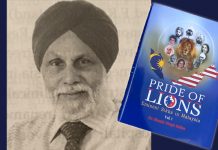
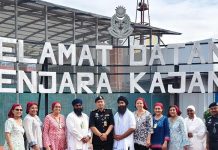
LAST RITES 20 February 2025 (Thursday) 10.30am: Cortege leaves from No 243, Jalan Desa Damai 5, 28700, Bentong, Pahang 11am: Saskaar (cremation) at Sikh Cremation Bentong, Jalan Chamang, Kampung Chamang, Bentong, Pahang
PATH DA BHOG Gurdwara Sahib Bentong 1 March 2025 (Saturday) 9.30am – 11.00am: Kirtan 11.30am: Sehaj Path Da Phog
ASIA SAMACHAR is an online newspaper for Sikhs / Punjabis in Southeast Asia and beyond. You can leave your comments at our website, Facebook, Twitter, and Instagram. We will delete comments we deem offensive or potentially libelous. You can reach us via WhatsApp +6017-335-1399 or email: asia.samachar@gmail.com. For obituary announcements, click here
“Papa, you’re funny lah but sooooo annoying”. This came out of nowhere from my youngest, now finally passing the threshold of being a teenager. It’s still a shock to me how her personality has changed overnight as if a switch flipped. Maybe because she’s the youngest, and the one we treated more the baby of the family with a six year gap in between her and her elder sister.
Her comment is part of that personality change, her being more vocal about her thoughts and ideas. Whether by design or not, all three daughters developed that sense of speaking their mind (loudly, I may add) albeit hers came a little later than her elder sisters.
She’s also developing the unladylike use of street language (read vulgar language to many of my peers) that I’ve never discouraged because I believe in treating such language part of our daily vocabulary. Conversations can be a tad spicy and funny, especially mixed with a good dose of sarcasm. While this is in English, I take inspiration from the hilarious gutter Punjabi I’ve heard all my life. Sarcasm is just part of our DNA. Her elder sisters are no different and we’ve had our fair share of cursing matches with both.
Of course, we’re also training her to be sensitive with the audience around her. Respect and decorum is still an absolute requirement when conversing with people outside of her circle of comfort. Teachers, coaches, parents of friends, etc. demand her respect and the proper way of talking.
What we really want out of these girls are honesty and sincerity when sharing their thoughts, more so with their parents. Experience have loudly indicated to her elder sisters that hiding what is going on with their lives from their parents didn’t exactly make their lives easier but messier. Sharing their ideas, their happiness, their sadness, their fears, their embarrassing actions with me and their mother is now more habitual. We both are very grateful for this.
I know I’m fooling myself if I believe there are no secrets left to be told. Some secrets are still kept within their hearts, I’m sure, because there is the right time to share them and that time perhaps has yet to arrive. But I take comfort that I’ve been there to console and to celebrate so many of their sharings, even more for the elder ones who have embarked on their adult journeys in faraway lands. Thank the Gods for technology.
I do wish, hope and pray that this habit of theirs remain all my life. I’ve had moments where pride swelled up considerably after each of my daughters have told me they love that we can speak about anything under the sun with me, and their mother.
I’ve read somewhere that the biggest wealth a man could wish for is for his children to want to come home every single chance they get. I somewhat agree with this wholeheartedly because I’ve felt immense pride when my girls reach out to me to just talk. Even though I’m that annoying father that makes Dad jokes all the time.
Jagdesh Singh, a Kuala Lumpur-based executive with a US multinational company, is a father of three girls who are as opinionated as their mother
* This is the opinion of the writer, organisation or publication and does not necessarily represent the views of Asia Samachar.
ASIA SAMACHAR is an online newspaper for Sikhs / Punjabis in Southeast Asia and beyond. You can leave your comments at our website, Facebook, Twitter, and Instagram. We will delete comments we deem offensive or potentially libelous. You can reach us via WhatsApp +6017-335-1399 or email: asia.samachar@gmail.com. For obituary announcements, click here
In loving memory of the late Sardar Sarjit Singh Dhaliwal (Ex. Pos Malaysia) s/o late Sardar Babu Singh Dhaliwal & late Mata Bhagwan Kaur and husband of late Sardani Mahinder Kaur @ Taj Kaur (Mindo)
(14.10.1939 – 4.3.2024)
On Sunday, 23rd February, 2025, at Gurdwara Sahib Kajang, from 10:00am to 12:00 noon.
Deeply missed by family members, relatives and friends.
Please join us for Kirtan, Sehaj Paath Da Phog and Ardas followed by Guru Ka Langgar.
For further information kindly call Manjit (019 – 227 7007) Ranjit (019 – 368 1212)
ASIA SAMACHAR is an online newspaper for Sikhs / Punjabis in Southeast Asia and beyond. You can leave your comments at our website, Facebook, Twitter, and Instagram. We will delete comments we deem offensive or potentially libelous. You can reach us via WhatsApp +6017-335-1399 or email: asia.samachar@gmail.com. For obituary announcements, click here
ASIA SAMACHAR is an online newspaper for Sikhs / Punjabis in Southeast Asia and beyond. You can leave your comments at our website, Facebook, Twitter, and Instagram. We will delete comments we deem offensive or potentially libelous. You can reach us via WhatsApp +6017-335-1399 or email: asia.samachar@gmail.com. For obituary announcements, click here
ASIA SAMACHAR is an online newspaper for Sikhs / Punjabis in Southeast Asia and beyond. You can leave your comments at our website, Facebook, Twitter, and Instagram. We will delete comments we deem offensive or potentially libelous. You can reach us via WhatsApp +6017-335-1399 or email: asia.samachar@gmail.com. For obituary announcements, click here
Racheal Kaur: A low-cost carrier assistant manager
IN a world where work-life balance often feels like an impossible juggling act, one Malaysian woman is defying the odds. Meet Racheal Kaur, a mother of two and an assistant manager at AirAsia, who has turned her daily commute into a high-flying adventure.
Initially featured by CNA Insider on their YouTube channel, her story of flying from Penang to Kuala Lumpur every single day for work quickly went viral — and it is as inspiring as it is unconventional.
SKY-HIGH COMMUTE: TRADING TRAFFIC JAMS FOR TAKEOFFS
Racheal’s journey begins at 4am each morning. While most of us are still hitting the snooze button, she’s already up, showered, and heading to the airport.
By 5.55am, she’s settled into her seat, waiting to takeoff at 6.30am. Her flight, a short hop from Penang to Kuala Lumpur, whisks her through the morning sky in under an hour.
Landing at Kuala Lumpur International Airport (KLIA), it’s a quick five- to seven-minute stroll to her office. By 7.45am, she’s at her desk, ready to conquer the day.
A MOTHER’S DEDICATION
But why go through all this trouble? For Racheal, it’s all about her children. As a mother of two she realised that renting an apartment in KL and only seeing her children on weekends wasn’t cutting it.
“With them growing, I feel that they need for their mother to be around more often,” she shared.
“With this arrangement, I’m able to go home every day, see them at night, and help with last-minute homework. You know kids — there’s always something last-minute!”
THE ECONOMICS OF FLYING TO WORK
What makes Racheal’s story even more fascinating is the financial logic behind her decision. Thanks to her employee discount at AirAsia, her daily round-trip flights cost just RM50, totaling RM1,100 a month.
Compare that to her previous rent in KL, which ranged from RM1,400 to RM1,500, and it’s clear why this arrangement makes sense. Her monthly food expenses were also halved — from RM600 to RM300 a month!
Living in Penang also means she only has to pay her mortgage, which is significantly lower than the cost of renting in KL. Plus, she avoids the stress of navigating KL’s traffic, which can take up to 90 minutes during rush hour.
For Racheal, the convenience and savings far outweigh the challenges of her daily flights.
ASIA SAMACHAR is an online newspaper for Sikhs / Punjabis in Southeast Asia and beyond. You can leave your comments at our website, Facebook, Twitter, and Instagram. We will delete comments we deem offensive or potentially libelous. You can reach us via WhatsApp +6017-335-1399 or email: asia.samachar@gmail.com. For obituary announcements, click here
SI (R) 59486 Sardar Dhaljirt Singh (VAT 69 Komando)
(1955 – 2025)
Missing You Always You never said you were leaving. You never said goodbye. You were gone before we knew it, and only God knows why. In life, we loved you dearly, and in death, we love you still. In our hearts, we hold a place that only you can fill. It broke our hearts to lose you, but you didn’t go alone; a part of us went with you. The day God took you home.
In loving memory of a Loving Husband, Father, Uncle, Brother, Brother in Law, a True Friend & a Devoted Sewadar
Sardar Dhaljirt Singh s/o Late Sardar Pakar Singh & Late Mata Mendar Kaur left for his heavenly abode in the early hours of 1st February 2025.
ASIA SAMACHAR is an online newspaper for Sikhs / Punjabis in Southeast Asia and beyond. You can leave your comments at our website, Facebook, Twitter, and Instagram. We will delete comments we deem offensive or potentially libelous. You can reach us via WhatsApp +6017-335-1399 or email: asia.samachar@gmail.com. For obituary announcements, click here
ASIA SAMACHAR is an online newspaper for Sikhs / Punjabis in Southeast Asia and beyond. You can leave your comments at our website, Facebook, Twitter, and Instagram. We will delete comments we deem offensive or potentially libelous. You can reach us via WhatsApp +6017-335-1399 or email: asia.samachar@gmail.com. For obituary announcements, click here
Dr. B.R. Ambedkar is acclaimed by all sections of the society as author of Independent India’s constitution. He as Chairman of the drafting committee of Indian Constitute Assembly succeeded in getting approval of all sections of the House. With the passing of time he is getting more respect and honour for his singular role at the most crucial time of Indian history.
It is well known that Dr. Ambedkar born as Dalit embraced Buddhism along with large number of Dalits in Nagpur on 14th October 1956. This decision was taken by him after having negotiations with many religious leaders starting from 1935. Earlier he tried that Dalits should become follower of Guru Nanak Dev who preached against Caste system and established Sikhism where everyone is treated as equal.
Dr. Ambedkar was always of the opinion that Schedule Caste population which was the part of the Hindus should convert themselves to some other religion where they can get proper treatment and respect in the society.
BIOGRAPHY OF ATMA SINGH
I have recently read the biography of S. Atma Singh, former Punjab Minister and a prominent leader of the Akali Dal written by Dr. Harvinder Singh Khalsa. Dr. B. R. Ambedkar’s dialogue with the Sikhs has been described in details to the extent that in order to provide higher education to Dalits, Khalsa College was built in Mumbai in 1937 on the request of Dr. Ambedkar. S. Atma Singh was then on the staff of Nankana Sahib Gurdwara Committee and S. Narayan Singh was the Manager.
In January 1936, a delegation of the Shiromani Gurdwara Management Committee led by S. Narayan Singh went to Mumbai and had talks with Dr. Ambedkar and the representatives of the various Schedule Castes communities like Muhar, Mang, Chamar and Bhangi etc. They carried literature on Sikhism and also a tract in Marathi language. A big gathering of the Schedule Castes communities was held in Pune on 11 January 1936 and the Gurdwara Committee arranged there a proper Langar. People sat in rows and enjoyed the food. The Sikhs who were serving there were mostly from the Backward Classes. This created a great impact on everyone.
On 13 April 1936, the Sarbhind Sikh Mission was established to propagate the philosophy of Guru Nanak in the country. An impressive conference was organised in Amritsar which was attended by Dr. Ambedkar and leaders of various Dalit communities. Bawa Harikishan Singh gave a speech in English. The visitors were astonished to see that people irrespective of caste and creed were sitting together in Golden Temple. Dr. Ambedkar at that time had relinquished the post of Principal of Law College, Mumbai.
Later on Dr. Ambedkar sent many of his associates to Amritsar who stayed there for many days. On Ambedkar’s demand, to provide education facilities to weaker sections it was decided to open a Khalsa College in Mumbai for which the entire expenses were to be borne by the Nankana Sahib Gurdwara Committee. S. Kehar Singh, Head Master was made Incharge of this project and S. Atma Singh was appointed Manager. Dr. Ambedkar selected a place in Matunga where a 2742 square yards plot was purchased at the rate six rupees per yard. S. Gurdit Singh Sethi, President of Gurdwara Singh Sabha Mumbai also provided help.
As per the book Dr. Ambedkar had taken Rs. 5000 from S. Kehar Singh for a foreign trip. Dr. Ambedkar brought a design of a German educational institution for the College building. Dr. Ambedkar used to visit the site every third day to see the progress of the works and gave necessary suggestions. Laboratories furniture, library etc. were purchased as per his advice. A printing press was also installed for a newspaper “Janta” published by Ambedkar. The classes in the college were started on 20 June 1937 and S. Kashmira Singh was appointed the first Principal.
PUSHBACK
At that time, there was a stir all over the country about the possibility of the crores of Schedule Caste Hindus adopting Sikhism. To shelve this move, leading Hindu millioners and many Hindu organizations came forward. Even Mahatma Gandhi the leader of the Congress Party came forward for the safeguards of Hindu population.
I have read a book “Tagore and Mahatma Gandhi” by Dr. Chanda Chatterjee, a Professor in Santi Niketan University which contains a letter from Sh. Mahadev Secretary to Mahatma Gandhi addressed to Sh. Rabindernath Tagore. This letter was written on 20 December 1936 from Wardha headquarter of Mahatma Gandhi.
Wrote Mahadev: “A number of people have been quoting your opinion on the question of the conversion of Harijans to Sikhism in support of their own contention that to embrace Sikhism is the only way to retain Hindu Culture and yet renounce Hinduism. Bapu could not believe that you could ever have given your assent to a proposition like this. I need not bother you with the political aspect of the question, for the very insistence on conversion to Sikhism must take a political colour, for the converts will vote not as Hindus but as Sikhs! This political motive vitiates the whole question. Would you mind setting out your considered opinion on the matter?”
Gurudev Rabindernath Tagore sent a lengthy reply to him from Santi Niketan on 4th Jan. 1937. “ Hinduism is a just a way of life but it divides society into so many graded groups and those at the bottom are made to feel themselves as less than human. It was indeed a great day not only for the whole of Indian Sikhs but also for the whole of India when Guru Gobind Singh, defying the age long convention of the Hindu Society, made his followers one, by breaking down all barriers of caste and thereby made them free to inherit the true blessings of a self-respecting manhood. Sikhism has a brave message to the people and it has a noble record.” Wrote Tagore.
PLANS POSTPONED
With the efforts of Mahatma Gandhi and others Hindu leaders the whole plan of Dr. Ambedkar had to be postponed. A new Harijan organisation was formed which issued statements against conversion. A deputation of the Sikh leaders met Dr. Ambedkar on 23rd May 1937 and he disclosed to them all the difficulties and his helplessness to take any further action. He clearly mentioned that not large scale Harijans but a few will go with him. The deputationists consisting of Bawa Harikshan Singh, Kashmira Singh Principal, Matar Sujan Singh Sarhali, Jathedar Teja Singh Akrapuri and Ishar Singh Majhael understood the compulsion of Dr. Ambedkar. They decided that Khalsa College, Mumbai would continue without any change. The College is functioning since then and has served the people of Maharashtra especially the Harijans and Minorities.
Dr. Ambedkar remained active but did not join any political movement. He was one of the most prominent legal consultants of the country. His services for utilized by Gandhi and Nehru when the first interim Government was formed in 1946 and he was made Law Minister. He continued with his mission to help the downtrodden Dalits and remained firm of his opinion to advise them to adopt some other religion. This dream became a reality on 14th October 1956 when he along with them embraced Buddhism.
Tarlochan Singh, a former Indian MP and Press Secretary of Indian President Giani Zail Singh, continues to keep abreast with the on-goings of the Sikh community in India and abroad
RELATED STORY:
(Asia Samachar, x 2022)
ASIA SAMACHAR is an online newspaper for Sikhs / Punjabis in Southeast Asia and beyond. You can leave your comments at our website, Facebook, Twitter, and Instagram. We will delete comments we deem offensive or potentially libelous. You can reach us via WhatsApp +6017-335-1399 or email: asia.samachar@gmail.com. For obituary announcements, click here
Email: I refer to some videos produced by Karminder Singh in the Sikh Concept of God, the links of which were provided in recent issues of the Sikh Bulletin. The question that has come up in my mind is whether the presence of God in creation or this universe is a physical one or spiritual? Or is it both?
I have some friends who say that God cannot reside within Creation. Instead, they emphasize his transcendence and separation of God and Creation. So, my question is, in Sikhi when we talk about God permeating creation, is it literal or spiritual or both? How can I better understand this concept of God’s immanence. Harpreet Singh.
Reply by Karminder Singh
The Sikh Bulletin had published an essay titled “Guru Nanak’s Concept of God” sometime back. You are encouraged to read it here.
At the core, Guru Nanak understood God to be the Law of Nature that governs the universe of creation. He used the term Hukm for it. His answer to what is spirituality is “Hukm Rajayi Chalna.” In practical terms, it is to understand, realize, and abide by the Hukm. The phrase “Rajai Chalna” means to “go with the flow of Rza or Hukm.”
His answer to the question “where is God” is answered by way of re-wording the question to “where is this Hukm?” The answer is “Likhiya Naal” – “imbued within, inscribed within, or contained within.” So, this is what we mean when we say “God is within, or the Divine is within his creation.
The Hukm (law of nature) of a seed is within the seed. We understand that Hukm to mean that if you plant it in soil, water it and give it access to sunlight, it will grow into a tree or plant and produce more seeds. The farmer understood this Hukm, abided by it – and was able to feed himself, his family, his village and sustain the whole world. Such sustenance is spirituality for Guru Nanak because it relies on going with the flow of Hukm (for the seed and agriculture in this case.
Your question “is the presence of God in creation or this universe a physical one or spiritual? Or is it both?” would have to be reworded in Guru Nanak’s terms as “Is the presence of Hukm in creation or this universe a physical one or spiritual or both?” The answer is that it is physical, but its understanding and applicability is of the spiritual domain in the sense that understanding and accepting it, or not understanding and not accepting it determines the presence or absence of spirituality within humanity.
The issue of “God’s immanence” is therefore an issue of the “immanence of Hukm” in Guru Nanak’s terms. Hukm is immanent in the sense that it is imbued within each element within the universe of creation – right from the electron and atom – right up to the planets and the space they take up in the universe.”
So, in this sense the issue of “separation of God and His Creation” is a non-issue in Sikhi. Guru Nanak advocated the unity of both. The ੴ symbolizes this unity – the numeral 1 in ੴ means “one-ness” (not ‘one’) and the open Oorra symbolises the immanence / manifestation of Hukm (God) into creation. The following video may provide you with a better understanding of the issue.
So long as the religious world subscribes to a God that is viewed as an entity sitting up there, out there, somewhere – the advocacy of Guru Nanak would never be realized or understood. All the religions of the world see God in this way – so separation is their default mode. Their adherents and followers cannot be faulted because their philosophy as contained within the Bible, Quran, Torah etc. present it that way – God is in the heavens etc.
The tragedy is that the entire Sikh world too sees God in the same way. We cannot be absolved of our fault because our philosophy (Gurbani) does not present God in that way.
Sikh thinker, writer and parcharak Karminder Singh Dhillon, PhD (Boston), is a retired Malaysian civil servant. He is the joint-editor of The Sikh Bulletin and author of The Hijacking of Sikhi. Click here to retrieve archived copies of the bulletin. The author can be contacted at dhillon99@gmail.com.
ASIA SAMACHAR is an online newspaper for Sikhs / Punjabis in Southeast Asia and beyond. You can leave your comments at our website, Facebook, Twitter, and Instagram. We will delete comments we deem offensive or potentially libelous. You can reach us via WhatsApp +6017-335-1399 or email: asia.samachar@gmail.com. For obituary announcements, click here