





















By Gurnam Singh | Opinion |
Nobody deserves to be treated the way Professor Jason Arday was by large sections of both the mainstream and social media. In his blog, ‘Professor Arday, IPSO and the Press: Steps to End the Cycle of Tragedy?’ Paul Wragg (17.8.26) highlighted that, based on NewsCord data, press outlets published 249 articles about Professor Jason Arday over a period of 22 days leading up to his resignation. Perhaps the most shocking statistic is that 188 of those 249 articles were published after Jason Arday issued a public statement asking to be left alone due to the severe toll the coverage was taking on his personal well-being.
Against this backdrop, one can understand why some, such as Kehinde Andrews, Professor of Black Studies at Birmingham City University, argue that the ‘intense media scrutiny’ was tantamount to a ‘racist media lynch mob’.
In the weeks leading up to his death, public commentary often crossed the line from legitimate criticism regarding academic misconduct into a crescendo of personal vilification and worse. Some of those who enthusiastically participated in this hostility have since fallen silent. Others, such as the British journalist and historian and committed Catholic Tim Stanley, appear to be showing some contrition. In The Daily T Podcast (17.8.26) with Camilla Tominey, he talks about having gone to confession at the weekend ‘to examine his conscience from covering the story and admitting to at times needing to remember that there is a human behind the story’. He also expressed shame and regret about his own conduct but argued that Cambridge University must accept a significant degree of responsibility for the circumstances that contributed to this tragic outcome.
While the suggestion that Jason Arday was a victim of institutional failures is to be welcomed, there are those who have sought to explain Jason’s death solely through the lens of individual failures. They argue that, as a ‘fantasist’ and ‘fraudster’ who has been exposed, his downfall was entirely self-inflicted. By reducing the story to one of a failed individual who chose to end his own life, even in death, they continue to distort the reality behind his sad demise. While mental health should never be trivialised, and, based on Jason’s own statements during the final days to close friends, this was a factor, focussing on personal tragedy and failings risks ignoring the wider social and cultural context in which such suffering occurs.
SEE ALSO: Jason Arday deserved better from academia and the media
SEE ASO: Racism from ‘nice’ white people
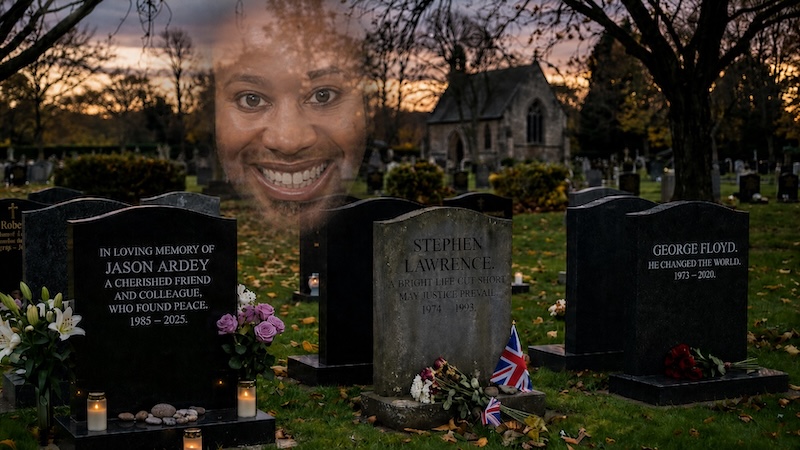
The life and death of Jason Arday will, in due course, reveal many uncomfortable truths. What already seems beyond doubt is that the contrasting responses to him reflect the long-standing racist construction of Black men as ‘big, black, mad and bad’. One might have hoped that, following the horrific murder of George Floyd and the period of apparent soul-searching it prompted among many white people, particularly within academia, such stereotypes had finally been consigned to the dustbin of history. The calls to decolonise the curriculum appeared to signal precisely that. Yet the persistence of these reactions suggests otherwise.
The stereotype ‘big, black, mad and bad’ has deep roots in colonialism, slavery, and the historical portrayal of Black people as primitive, physically imposing, irrational, and dangerous. One of the clearest examples is the ‘mental illness’ known as drapetomania. This was a label for a mental health condition that was constructed in 1851 by American physician Samuel Adolphus Cartwright, who claimed it caused enslaved Black people to flee captivity. Operating under the belief that slavery was a natural condition for Black people, Cartwright argued that any enslaved person seeking freedom must literally be mad! Though this idea, along with all other claims made under the aegis of scientific racism of the period, has been largely discredited, there are still ‘scholars’ such as Nathan Cofnas who are seeking to rehabilitate it.

Far from disappearing, as all the reliable statistics highlight, these ideas continue to shape elements of popular culture and institutional practice, particularly in areas such as policing, criminal justice, and mental health services. The notion of ‘big’ reflects the tendency to view Black men as physically excessive, intimidating, or threatening. ‘Bad’ associates them with criminality, moral deficiency, and social disorder. ‘Mad’ invokes assumptions of irrationality, emotional instability, and unpredictability. Together, these labels have functioned as powerful mechanisms of racial othering, casting Black men as figures to be feared, controlled, or disciplined rather than understood.
One might have expected that among Oxbridge academics, journalists, and other members of the educated elite, such crude stereotypes would have long since been recognised as irrational racist myths incapable of surviving serious intellectual scrutiny. Yet the hostility directed at Jason in the weeks before and indeed after his death suggests that these assumptions remain more deeply embedded than many would care to admit.
The intensity of the campaign against him also raises important questions about consistency. Having secured the symbolic scalp of Jason Arday, will the self-appointed guardians of academic standards, free speech, and intellectual integrity now direct the same energy towards the many other individuals, both within and beyond academia, who have been accused of plagiarism, dishonesty, exaggeration, or fabrication? Will they pursue those cases with equal determination and public fervour?
I suspect the answer is largely no. The unevenness of outrage suggests that something more than a principled defence of academic standards may have been the real issue in the Jason Arday case. For many of his supporters, the issue of academic dishonesty was a smokescreen for a much wider attack on attempts to create a fairer and more just higher education system. And so, the issue seems not merely what Jason did or did not do, but what Jason represented: a highly visible Black scholar occupying a position of intellectual authority. The uncomfortable truth may be that, beneath the language of meritocracy, standards, and free inquiry that is constantly bleated out by his detractors, the real agenda is a reluctance to accept Black people as fully equal participants in intellectual and academic life.
Join the conversation on this story on Asia Samachar’s Facebook and Instagram pages.

Gurnam Singh is an academic activist dedicated to human rights, liberty, equality, social and environmental justice. He is a Professor of Sociology at University of Warwick, UK. He can be contacted at Gurnam.singh.1@warwick.ac.uk
* This is the opinion of the writer and does not necessarily represent the views of Asia Samachar.
RELATED STORY:
Heaven, Hell and the Afterlife: What does Sikhi teach us? (Asia Samachar, 3 July 2026)
ASIA SAMACHAR is an online newspaper for Sikhs / Punjabis in Southeast Asia and beyond. You can leave your comments at our website, Facebook, Twitter, and Instagram. We will delete comments we deem offensive or potentially libelous. You can reach us via WhatsApp +6017-335-1399 or email: asia.samachar@gmail.com. For obituary announcements, click here