




















By Manjit Kaur | Opinion |
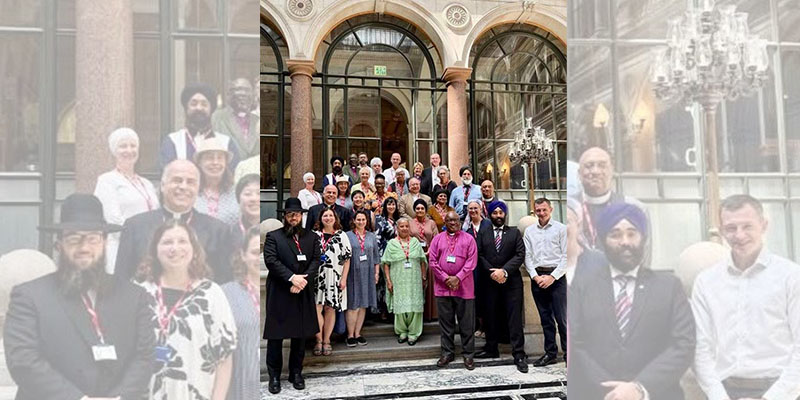
I had the great pleasure and honour in attending the second GIC + (Global Interfaith Commission) Leadership Summer School, held at Regents Park College Oxford University from 21st to 26th June 2026. I was also blessed to attend the first Summer School in 2025 about which I published my reflections in Asia Samachar in an article The power of open minds: A Sikh woman’s call for LGBT+ inclusion.
As well as another amazing week of learning with over 40 delegates, I was able to connect and share ideas and experiences with so many wonderful academics, activists and faith leaders from across the world. The GIC+ Project is a Government funded initiative based at Regent’s Park College Oxford, focusing on the intersection of faith and sexual/gender identity and the development of leadership, advocacy and allyship to confront discrimination, prejudice and fear regarding LGTB people and communities. A really pleasing aspect of this year’s gathering was the strong Sikh participation. It just reinforced my love for a faith that not only preacher oneness but demands that we all practice it in our daily lives.
A unique aspect of the Summer School was how people in various leadership roles from such a diverse range of experiences, religions, cultures, languages, from across the world, were able to connect in ways that we often find difficult even within our community. The answer for me lies in seeing the Divine in all. Once we accept we are all children of the one Divine, as it is said in Gurbani ਏਕੁ ਪਿਤਾ ਏਕਸ ਕੇ ਹਮ ਬਾਰਿਕ (Guru Arjan, SGGS, p611), this opens up the possibility of empathy across all human differences.
In a world that often feels divided by hate and conflict, empathy has become one of the most important human qualities we can develop. Empathy is more than simply feeling sorry for someone. It is the ability to genuinely understand another person’s experiences, emotions, struggles, and perspectives without rushing to judgement. Within Sikhi, empathy can be deeply understood through the powerful principle of “ਨਿਰਭਉ ਨਿਰਵੈਰ” (Nirbhau Nirvair), which appears in the first line of Guru Granth Sahib in the Mool Mantar written by Guru Nanak. Together this expresses two inseparable divine virtues. ਨਿਰਭਉ (Nirbhau) means “without fear,” and ਨਿਰਵੈਰ (Nirvair) means “without enmity” or “without hatred”.
While Nirbhau Nirvair describes the nature of the Divine, it also provides a framework for how we should relate to one another. To be free from fear (Nirbhau) and free from enmity (Nirvair) is to approach others with openness, compassion, and understanding rather than prejudice, anger, or suspicion.
As a counsellor, one of my experiences was to work with women prisoners and teenagers to provide them counselling to reflect on their lives, hopes and felling’s. I can remember the first time I went to the prison to meet my client; I must admit I felt some fear, but once the sessions began, my total attention was on my client. No two people have exactly the same experience and while, as a woman, I was able to relate to aspects of my client’s lives, some of the stories shared by them were very painful to hear.
Empathy begins with listening. When someone is going through difficult experiences, trauma, loss, anxiety, or painful memories, they do not always need solutions. Often, they simply need someone who is willing to listen carefully and respectfully. True empathy involves paying attention not only to a person’s words but also to their emotions, tone, body language, and the deeper meaning behind what they are saying. It requires sensitivity, patience, and kindness.
In many ways, empathy asks us to step outside our own opinions and assumptions. Instead of focusing on what we think, we focus on understanding where the other person is coming from. We listen to understand rather than listening to respond or judge. This approach is closely aligned with Sikh teachings, which encourage us to see the Divine light within every human being.
Guru Nanak challenged the divisions that existed in society during his time and taught that all people are equal. From the Sikh perspective, no one should be judged on the basis of race, caste, gender, sexuality, nationality, or social status. We are all human beings sharing the same world, facing different challenges and carrying different burdens. When we recognise this shared humanity, empathy becomes natural.
The principle of Nirvair is particularly powerful because it asks us to go beyond simple tolerance. It encourages us to let go of hostility and see others as fellow travellers on life’s journey. Sikh teachings remind us that there is no “other.” We all belong to the same human family. Differences in appearance, language, culture, or belief should not divide us; rather, they should deepen our appreciation of the richness of human experience.
One of the greatest tests of empathy is how we respond to those who have hurt us. Sikhi teaches compassion even towards one’s enemies. This is not about excusing harmful behaviour or ignoring injustice. Rather, it is about freeing ourselves from hatred and resentment. Carrying bitterness can poison our own hearts and minds. By practising compassion and forgiveness where appropriate, we create inner peace and allow ourselves to move forward.
This principle is often reflected in professional counselling. A counsellor’s role is not to judge clients or tell them how to live their lives. Whether working with a man, woman, or child, the counsellor creates a safe space where individuals can explore their own challenges. The counsellor listens, supports, and offers guidance, but ultimately respects the individual’s autonomy and choices. This professional approach reflects the essence of empathy: understanding without judgement.
The same principle applies in everyday life. To truly understand someone’s world, we must keep an open mind. Too often, people form opinions based on stereotypes, assumptions, or labels linked to race, caste, skin colour, religion, or nationality. Sometimes these attitudes become embedded within us through family, community, or social influences without us even realising it. Empathy requires us to examine these biases honestly and, where necessary, unlearn them.
This process is not always easy. Retraining the mind takes effort, humility, and self-awareness. Yet Sikh philosophy encourages continuous self-reflection and growth. Instead of clinging to outdated prejudices, we can choose education, understanding, and compassion. In doing so, we remove the barriers that prevent genuine human connection.
There is much to learn from younger generations in this respect. Many young people today demonstrate a refreshing openness towards diversity and individuality. While every generation faces its own challenges, there is value in embracing perspectives that promote inclusion, equality, and understanding. Respect between generations grows when both sides listen to one another and remain open to learning.
Ultimately, Nirbhau Nirvair calls us to live with courage and compassion and to the other not as a threat or an enemy, but as a fellow travellers. Our prejudices are often fuelled by fear of strangers and difference. This is a natural reaction, especially when we encounter unfamiliar cultures and environments.
When we keep our distance through fear, because of the lack of knowledge about the other, or false information, this can turn into hate and prejudice. However, when we confront our prejudices and reach across our differences, the fear rapidly turns into curiosity and respect.
Freedom from fear helps us engage with people who are different from us. Freedom from hatred allows us to see the Divine in every person. Together, these principles create the foundation for empathy and love, which is so needed to bring peace into our world.
Join the conversation on this story on Asia Samachar’s Facebook and Instagram pages.

Manjit Kaur, a UK-based therapist and counsellor, is a presenter at the 1 Show Live at Panjab Broadcasting Channel, UK. She can be contacted via email at manjitkaur1show@gmail.com
RELATED STORY:
Sikh identity under siege: Children, safety and racism in the UK (Asia Samachar, 12 June 2026)
ASIA SAMACHAR is an online newspaper for Sikhs / Punjabis in Southeast Asia and beyond. You can leave your comments at our website, Facebook, Twitter, and Instagram. We will delete comments we deem offensive or potentially libelous. You can reach us via WhatsApp +6017-335-1399 or email: asia.samachar@gmail.com. For obituary announcements, click here