





















By Harmeet Shah Singh | Opinion |
Dharmendra Pradhan resigned as India’s education minister this summer, less than 50 days after a Gen Z movement that began almost as a joke forced its way into a national phenomenon.
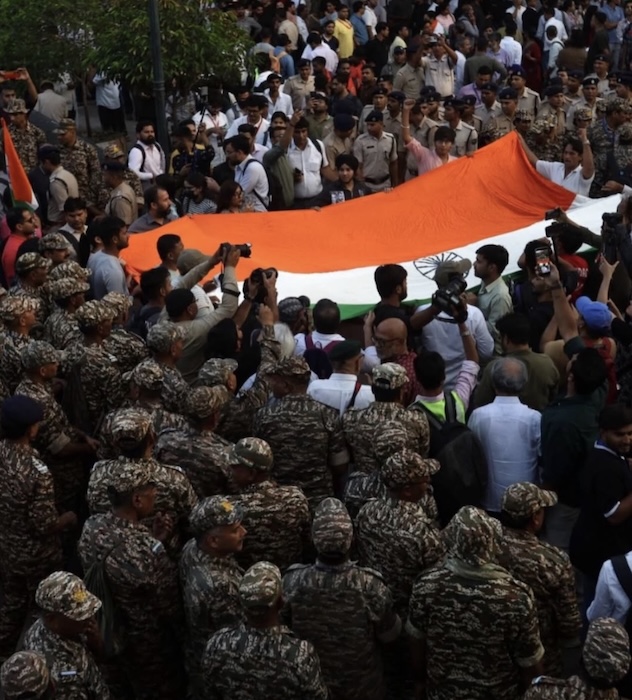
The Cockroach Janta Party filled New Delhi’s Jantar Mantar protest site and marched in Mumbai, Bengaluru and Nagpur. Solidarity events followed in Hyderabad and Ahmedabad. Its Instagram page became a sensation.
But there is no comparable camp in Panjab’s Sangrur, Batala, Tarn Taran or Moga, in a state that votes in early 2027 and sits only a few hours from Delhi.
Intriguing absence
That absence is worth examining. It tells us something about present-day Panjab’s socio-political structure, and about who benefits from keeping its young people politically fragmented.
A state that rewarded the early arrival
The region’s political history, ironically, has often rewarded leaders who arrived young, found a political vehicle and grew inside it.
Partap Singh Kairon, born in 1901, became chief minister at about 55. Parkash Singh Badal became chief minister at about 43, the youngest in the country at the time. Amarinder Singh entered the Lok Sabha in 1980, aged about 38, and became chief minister at 60.
Bhagwant Mann joined the Aam Aadmi Party (AAP) in March 2014, won Sangrur at 41 and, at about 49, led the party to 92 of Panjab’s 117 assembly seats, ending the old Akali-Congress alternation.
Amritpal Singh won the Khadoor Sahib Lok Sabha seat at 31 as a jailed independent. The routes were different. The pattern was not.
Political breakthroughs in Panjab have generally found a party, a personality or both.
That said, Panjab has little tradition of a leaderless, secular, youth-led pressure movement. All adjectives considered together.
AAP runs the government. Amritpal’s Akali Dal (Waris Panjab De) now occupies much of the Sikh hardline support and has projected him as its chief ministerial face.
There isn’t much vacant political space left. The exit door has narrowed
Panjab’s cosmopolitanism was never entirely home-grown. A large part of it was built around the Panjabi diaspora in Brampton, Yuba City, Southall and Melbourne. At one point, according to some estimates, Panjab accounted for around 70 percent of Indian students going to Canada.
Then the migration pipeline began to tighten.
Consultants reported that IELTS coaching volumes had fallen by almost 80 percent, with 25 Amritsar centres shutting in 2025 alone. This followed the arrival of the first US military flight carrying more than 100 deportees at Amritsar in February that year.
Canada’s 2026 targets have made the route narrower still. For young Panjabis, many of them Sikhs, who had planned their lives around leaving, the sudden closure of that route has created a visa-shaped hole in their plans.
But the desire to leave has not disappeared.
That creates an odd political situation. A generation that spent years preparing to leave Panjab has little reason to occupy a protest ground on behalf of a state it had already mentally left. The aspiration is still there. Some Panjab students did slip out of their dorm rooms to join the first Jantar Mantar gathering.
What is missing is a secular political channel in Panjab capable of turning that aspiration into a state-wide movement.
Panjabi pop culture still sells the village, the tractor, the diasporic swagger and the escape.
Panjab’s classrooms and startups, unfortunately, compete less visibly with those in Andhra Pradesh, Maharashtra, Gujarat, Delhi, Tamil Nadu, and West Bengal.
The last two points are arguments, not measurements. But they matter to the political mood.
The wall around the village
The Cockroach is now a national and deliberately egalitarian youth symbol.
Panjab’s countryside has been sending a different message about who belongs.
After the murder of a child in Hoshiarpur in September 2025, a number of panchayats in Hoshiarpur, Bathinda and Barnala reportedly passed resolutions seeking to push workers from other states towards the outskirts of villages. Chief Minister Bhagwant Mann said such a response must not discriminate.
Panjab is believed to host more than 1.8 million migrant workers.
There is a paradox here that is hard to miss. Some of the same diaspora voices that cheer a campaign built around shared hardship are less comfortable with the migrant worker sharing space with them in Panjab.
Politicians have noticed the mood. Akali chief Sukhbir Singh Badal has already promised Panjabis-only jobs and a bar on outsiders buying farmland. He has also spoken of 100 percent reservation in government jobs and 70 percent in private industry. (Sukhbir’s pledge here).
A Cockroach movement built around the idea that young Indians face the same precarious system wherever they come from runs against that politics.
The Panjabi who demands equal treatment in Brampton is being asked to think differently about the migrant worker in Moga.
The dominant landed voices in village politics have largely stayed away from the Cockroach.
The anger already has political owners
The pharmacy officer recruitment exam on 19 July ended in a cheating racket and multiple detentions. Panjab Police said there had been no paper leak. Mann insisted no paper has leaked in Panjab in four-and-a-half years. Opposition parties alleged several leaks affecting hundreds of thousands of aspirants.
Former Chief Minister Charanjit Singh Channi led a protest at Baba Farid University in Faridkot. Badal addressed an Akali student protest outside Punjabi University. Haryana’s BJP Chief Minister attacked Panjab’s youth policy.
AAP’s response to youth anger is delivery.
The government points to more than 60,000 government jobs provided in under four years and has combined youth runs and sporting events with its anti-drug campaign. Its 2022 Panjab manifesto, however, promised 2.5 million employment opportunities.
There is another complication.
The Cockroach Janta Party’s founder is a former AAP communications strategist. Its first Panjab outing focused on NEET and CBSE rather than state recruitment. A spokesperson’s visit to a school in Ludhiana, praised by AAP leader Arvind Kejriwal, was enough to trigger accusations that the CJP was an “AAP B-team”.
There is no public evidence of a formal link, and the CJP has denied coordination.
But politics is rarely governed by evidence alone. Suspicion can be enough to blunt a movement before it has found its feet.
What the missing cockroach means politically
AAP is both defendant and possible beneficiary.
Mann denies a paper leak. Police describe a cheating racket. And the national youth movement that helped bring down a BJP cabinet minister is, in Panjab, operating in a political environment where the AAP government has obvious reasons to keep control of the youth narrative.
A CJP that enters Panjab through doors seen as friendly to AAP will have difficulty making a credible case against AAP.
The opposition has another problem. It is compelled to co-opt a movement it does not own.
Rahul Gandhi welcomed Pradhan’s exit. The BJP demanded the resignation of Panjab education minister Harjot Bains. The Shiromani Akali Dal has its student wings.
Everyone can point to youth anger. Nobody has given it an organisation that is independent of the existing political parties.
That leaves Amritpal Singh’s bloc turning an economic grievance into an identity claim. Its appeal to right-wing Sikh voters means that the question put to a young, unemployed Sikh can quickly become one of who owns Panjab, before anyone gets around to asking where the jobs are.
Quotas push the youth question in the same direction.
Reserving jobs for Panjabis turns the competition into one between young Panjabis and the migrant workers beside them. The larger competition, against a broken examination system and the politics around paper leaks, disappears from view.
The verdict
Panjab’s missing Cockroach is, therefore, less about apathy than structure.
A generation that planned to leave has found the opportunities closing.
The Sikh majority-state’s political system welcomes leaders who can take a grievance and carry it into an existing party. Its village institutions have increasingly treated outsiders as a threat. And every political formation has found a way to speak on behalf of angry young people.
That saves them from having to listen to those young people as an organised political force. It suits incumbents. It suits challengers. The 2027 contest is four-cornered.
The young voter is the one constituency all four sides want to court with promises they can make without an organised young Panjab standing over them and asking for results.
Perhaps that is why the cockroaches stop at Panjab’s borders.
A movement that treats a leaked paper in Patiala as the same offence as one in Delhi, and a migrant worker in Moga as deserving the same dignity as a Punjabi in Brampton, would put something new on the political table.
So far, nobody seems politically inclined to make that happen in Panjab.
CHECK OUT MORE FEEDBACKS FOR THIS REPORT AT FACEBOOK AND INSTAGRAM
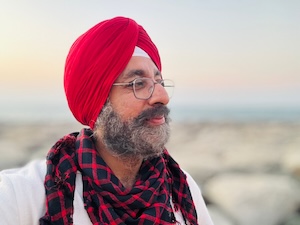
Harmeet Shah Singh is a career journalist currently serving as Communications and Advocacy Director at UNITED SIKHS (UK), a charity registered in England and Wales. The article was first shared here.
* This is the opinion of the writer and does not necessarily represent the views of Asia Samachar.
RELATED STORY:
The Age of White Nationalism Has Arrived — The Sikh Diaspora Is Unprepared (Asia Samachar, 8 June 2026)
ASIA SAMACHAR is an online newspaper for Sikhs / Punjabis in Southeast Asia and beyond. You can leave your comments at our website, Facebook, Twitter, and Instagram. We will delete comments we deem offensive or potentially libelous. You can reach us via WhatsApp +6017-335-1399 or email: asia.samachar@gmail.com. For obituary announcements, click here