














UA-56202873-1
Page 226

The Crisis in Russia: A Precarious Crossroad for the Nation and the Word

By Gurnam Singh | Opinion |

In an era marked by the rise of dictators and resurgence of fascism, leaders worldwide must pay heed to the perils that befall those who govern with an iron fist. The age-old adage, “live by the sword, die by the sword,” rings true as despotic rulers find themselves confronted with the repercussions of their actions. When surrounded by criminal egotistical psychopaths like Yevgeny Prigozhin, the risk of betrayal looms large, reminiscent of Frankenstein’s monster turning on its creator. The current crisis in Russia, a nation governed under Putin’s increasingly autocratic regime, presents an uncertain path forward. However, one plausible scenario points to the potential disintegration of the Russian state, attributed to Putin’s abandonment of democratic principles in favor of a gangster plutocracy.

The imposition of sanctions has eroded the support base of Putin, leading to at best discomfort with the Moscow regime by influential oligarchs, whose assets are locked across thr world. Consequently, Putin finds himself increasingly exposed and isolated, with uncertain outcomes lying ahead.

The immediate threat ironically comes from his prodigy Yevgeny Prigozhin, whose humble beginnings as a hot dog vendor transformed him into a Russian oligarch. And through his Wagner militia he commands a well-armed private army, remains an enigma. The depths of his intentions, ambitions and capability remain shrouded in uncertainty, leaving room for speculation regarding his longer role in shaping the future of the nation.

As events rapidly unfold, the intricate puzzle of Russia’s crisis gradually takes shape. Speculation points to the possibility of a violent showdown in Moscow, envisioning Putin’s arrest, execution, or exile while Russian Generals take on the formidable Wagner militia and emerge victorious. However, these predictions remain speculative, and a clearer picture is expected to emerge in the coming days, shedding light on the nation’s destiny.

Contrary to being passive observers, the United States and NATO actively seek to influence the final outcome of the Russian crisis. Presented with the choice between balkanization of the nation or shaping a new Russia amenable to their interests, it is likely they will opt for the latter. The US could potentially leverage diplomatic channels through influential figures such as Erdogan in Turkey or even Modi in India to broker a deal. This deal, once Putin and Prigozhin are eliminated from power, may pave the way for the emergence of a new regime capable of meeting the demands of both the global powers and the Russian people.

A potential outcome of this deal could involve the withdrawal of Russian forces from Ukraine and the installation of UN forces in disputed regions, such as Crimea. While such a transition may be disruptive, it represents a path with minimal upheaval, providing an opportunity for economic revitalization in a nation grappling with a gloomy outlook. Moreover, this resolution would likely lead to an end to the war in Ukraine, garnering support from China—an essential global trading nation. Stabilization in Russia and the subsequent lifting of sanctions would not only be welcomed by China but also mitigate the risk of a refugee crisis along their shared border.

The possibility of a relatively bloodless conclusion hinges on several critical factors. Firstly, it depends on the level of support that Putin can expect from his generals. Second, the courage of Russian Generals to take decisive action and remove Putin from power
Third, the resolve and capability of Yevgeny Prigozhin to carry out his threats and assert his influence.. Lastly, the success of US agencies in providing incentives and “sweeteners” to those who emerge as the new custodians of the Kremlin will prove instrumental. Harold Wilson, the Labour PM, famously stated that “a week in politics is a long time.” Given the rapidly evolving situation, it seems like a day or even an hour is a long time in politics!

Gurnam Singh is an academic activist dedicated to human rights, liberty, equality, social and environmental justice. He is an Associate Professor of Sociology at University of Warwick, UK. He can be contacted at Gurnam.singh.1@warwick.ac.uk

* This is the opinion of the writer and does not necessarily represent the views of Asia Samachar.

RELATED STORY:

Miracles and Godmen (Asia Samachar, 31 July 2020)


ASIA SAMACHAR is an online newspaper for Sikhs / Punjabis in Southeast Asia and beyond. When you leave a comment at the bottom of this article, it takes time to appear as it is moderated by human being. Unless it is offensive or libelous, it should appear. You can also comment at FacebookTwitter, and Instagram. You can reach us via WhatsApp +6017-335-1399 or email: asia.samachar@gmail.com. For obituary announcements, click here.
They helped us bring the youth back to the gurdwara

By Asia Samachar | Malaysia |

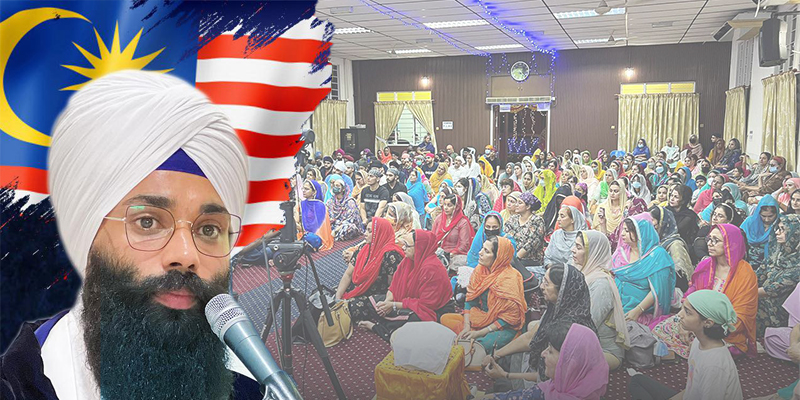
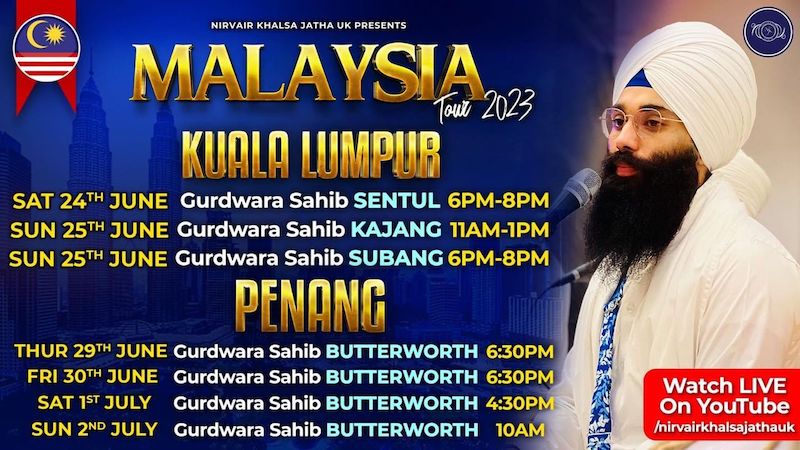
The team at the Kajang gurdwara is looking forward to welcoming UK-based Nirvair Khalsa Jatha (NKJ) back for a programme tomorrow (Sunday, July 25, 110am to 1pm).

The last time Harinder Singh and the jatha conducted kirtan and katha programmes at the Gurdwara Sahib Kajang (GSK), they managed to pull in the crowd, both young and old. That was November 2022 when GSK celebrated the 100th anniversary of the gurdwara. Click here.

The Sanggat appreciated NKJ’s programme the last time, said GSK management committee president Ranjit Singh. Their presence attracted many members of the Sanggat who had were not regulars at the gurdwara. They also managed to bring the youth to the gurdwara.

“Many of the Sanggat members, including the youth, have kept coming back since,” he told Asia Samachar.

RELATED STORY:

Indonesia and Thai done, now NKJ moves to Malaysia (Asia Samachar, 17 Nov 2022)

ASIA SAMACHAR is an online newspaper for Sikhs / Punjabis in Southeast Asia and beyond. When you leave a comment at the bottom of this article, it takes time to appear as it is moderated by human being. Unless it is offensive or libelous, it should appear. You can also comment at FacebookTwitter, and Instagram. You can reach us via WhatsApp +6017-335-1399 or email: asia.samachar@gmail.com. For obituary announcements, click here

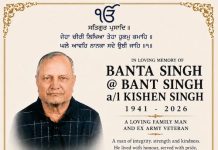
Jasbir Kaur (1959 – 2023), Johor Bahru

Ghaley Aave Nanka Sade UtThee Jaye
ਘਲੇ ਆਵਹਿ ਨਾਨਕਾ ਸਦੇ ਉਠੀ ਜਾਹਿ ॥੧॥

JASBIR KAUR

Age: 63

28 August 1959 – 22 June 2023

Father: Late Amar Singh

Mother: Late Sarjit Kaur

Husband: Gurdev Singh (Vain Poin)

Deeply missed & fondly remembered by:

Children / Spouse:
Harmeet Kaur Bhatti
Jaskiret Singh Bbhatti
Thejvir Singh Bhattii / Avneet Kaur Pannu

Sibling / Spouse:
Late Swarn Singh Sidhu / Gurmeet Kaur
Late Dr. Sarban Singh Sidhu / Swinder Kaur
Shindo Kaur / Late Hardial Singh Bhal

Akhand Path at Gurdwara Sahib Johor Bahru starts on Wednesday, 28 June 2023 at 10am. Path Da Phog on Friday, 30 June 2023 from 9 to 11am.

Please treat this as a personal invitation

Contact:
Gurdev Singh Bhatti 012 777 4833
Jaskiret Singh Bbhatti 012 514 7500

| Entry: 24 June 2023; Updated: 2 July 2023 | Source: Family

ASIA SAMACHAR is an online newspaper for Sikhs / Punjabis in Southeast Asia and beyond. When you leave a comment at the bottom of this article, it takes time to appear as it is moderated by human being. Unless it is offensive or libelous, it should appear. You can also comment at FacebookTwitter, and Instagram. You can reach us via WhatsApp +6017-335-1399 or email: asia.samachar@gmail.com. For obituary announcements, click here

Sikhs in Academia launched

0

By Sikhs In Academia | Britain |

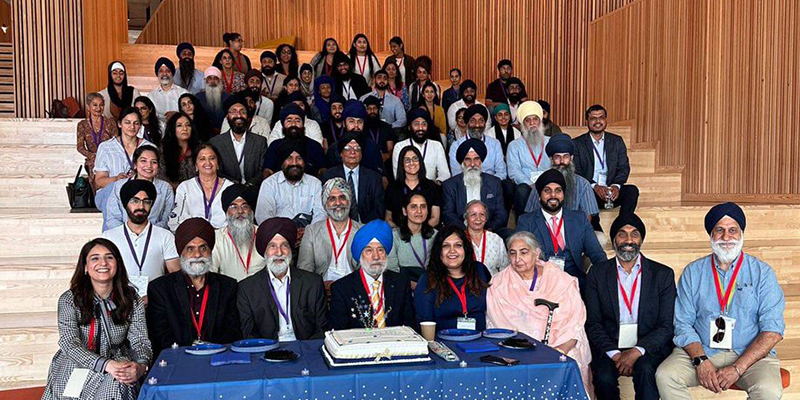
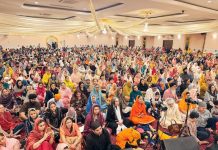
The “Sikhs in Academia” was launched on June 10, 2023 at the University of Warwick (UK).

This noble endeavor was established to unite, and be the voice of, Sikh academics, researchers and students spanning the entirety of the nation. Esteemed experts from various universities graced the occasion, delivering insightful speeches on the topics of Sikh representation, networking, and beyond.

The day commenced with a student-led Ardaas invoking divine blessings upon the auspicious inauguration of “Sikhs in Academia”.

As the keynote speaker, Dr. Sujinder Singh Sangha shared reflections and insights drawn from his personal academic career. In attendance at the launch were representatives from other prominent Sikh organisations, namely, Sikhs in Law and the Sikh Doctors and Dentists Association. They spoke about the importance of professional Sikh networks, and how these networks can propel Sikhs to greater heights within their respective fields.

Dr. Opinderjit Kaur Takhar, through her affiliation with ‘The Centre for Sikh and Panjabi Studies,’ highlighted the importance of actively engaging in critical matters to help raise Sikh perspectives in decision-making processes, at Government level. The event also featured Dr. Jaswinder Kaur, who spoke about empowering Sikh women in academia and disabling the unique challenges faced by ethnic minority women.

The launch event proved to be a resounding success, sparking meaningful discussions as well as fostering an inclusive and supportive academic community. With remarkable clarity and conviction, agenda-setting breakout sessions during the launch event reiterated the compelling need for an organisation such as Sikhs in Academia – to stand as a cohesive entity, amplifying the voices of all Sikhs in every facet of Higher Education.

The formation of Sikhs in Academia has resonated globally, gathering tremendous strength and widespread support. Through resolute unity, they strive to provide opportunities for collaboration, mentorship, and advancement for all Sikhs.

RELATED STORY:

(Asia Samachar, x April 2020)

ASIA SAMACHAR is an online newspaper for Sikhs / Punjabis in Southeast Asia and beyond. When you leave a comment at the bottom of this article, it takes time to appear as it is moderated by human being. Unless it is offensive or libelous, it should appear. You can also comment at FacebookTwitter, and Instagram. You can reach us via WhatsApp +6017-335-1399 or email: asia.samachar@gmail.com. For obituary announcements, click here

Fatherless Legacy

0

By Charanjit Kaur | Opinion |

In an era that increasingly emphasizes individual autonomy and decision-making, we encounter instances where choices made can have an impact on humanity or the lives of others. Within the realm of familial relationships, the growing trend of separation from a partner is becoming more prevalent. However, the writer’s focus lies in a particular issue where the role of a father is not necessarily confined to the male gender.

While many families celebrate Father’s Day by honoring the biological father, whether present or deceased, the writer wishes to delve into the significance of discussing the role of a father that transcends gender or biological ties, considering the possibility that this trend of redefining fatherhood may persist in the coming decades.

Despite the Guru Granth Sahib drawing upon contemporary cultural references in its composition as a spiritual book, it does not advocate for the rigid confinement of the role of fatherhood to a specific gender. Instead, the Guru Granth Sahib emphasizes the importance of gender equality and denounces cultural norms that undermine any gender, particularly women. Numerous scholarly works have discussed the equal rights of women within gurdwaras and family structures. However, it is now crucial to acknowledge the significant contributions of single mothers who courageously strive to support and sustain their families.

The status of being a single mother can arise from three different situations: the death of a husband, divorce, or having children without being married. This piece specifically focuses on the aspect of divorce. By exclusively engaging in social interactions within the gurdwara institution, the writer readily encounters numerous single mothers. Remarkably, these single mothers exhibit strong determination and excel in fulfilling the role of both mother and father.

Although society often associates mothers with nurturing responsibilities, single mothers adeptly take on additional roles traditionally attributed to fathers, such as providing for the family financially, making important decisions, and upholding their independence. In fact, many of these divorced women display a heightened dedication to the well-being of their families and efficiently manage all household matters. Equipped with a solid education, a significant portion of these single mothers choose to remain single and wholeheartedly devote themselves to the welfare of their beloved children.

Interestingly, there are instances where a married woman assumes the role of a ‘single mother’ despite her husband being alive and present. This unique situation highlights the complexity of the family institution, where an individual takes on dual roles simultaneously. The term ‘single mother’ is used in this context because the father fails to fulfill his responsibilities, lacks commitment, and falls short of the expected role of a father as dictated by religious or cultural norms.

The absence or neglect of fathers is not a new phenomenon within the Sikh community, particularly in families facing socio-economic pressures. Issues such as alcoholism, gambling, and infidelity are the primary reasons why wives find themselves having to assume the responsibilities traditionally attributed to fathers within their households. ‘Fatherless Legacy’ depicts the aftermath of growing up without a father figure or a substantial paternal influence, which significantly shapes the individual’s life and family dynamics. This scenario places a significant burden on the wife, who not only has to take on the role of a mother but also supports her husband, who may lack proper knowledge about the ethical aspects of maintaining a harmonious marital relationship.

These scenarios exemplify how women are capable of fulfilling roles and duties traditionally associated with men. It goes beyond the concept of gender equality and delves into the dedication and sense of responsibility exhibited by mothers and wives towards their families. The inherent value of sacrifice commonly attributed to the female gender allows them to navigate the complexities of assuming multiple roles rather than pursuing legal avenues for justice. By applying this notion of responsibility and commitment to their sons as well, it is likely to mold them into future fathers who prioritize their families over personal gain, ensuring their steadfast presence and support.

As societal norms continue to evolve, so should our perspectives on Father’s Day and the recognition of parental roles. In today’s changing times, it is important to broaden the meaning of Father’s Day beyond solely celebrating biological fathers. The modern age has seen various individuals stepping into the role and responsibility traditionally associated with fathers, such as single mothers, elder siblings, uncles, and other individuals within the family structure.

Rather than confining our appreciation to a single day in June each year, it is worth considering the idea of expressing gratitude through daily simple gestures that acknowledge and value their unwavering commitment to our well-being. In doing so, we can adapt our traditions to reflect the diverse array of individuals who contribute to our lives as father figures, regardless of their biological relationship. This expanded perspective allows us to embrace the changing dynamics of family and honor those who play significant roles in nurturing and guiding us throughout our lives.

Dr Charanjit Kaur is an Assistant Professor at Malaysia-based Universiti Tunku Abdul Rahman (UTAR). Her area of specialisation is cultural anthropology with a special focus on the Sikh minority community in Malaysia which touches on themes such as religious-cultural conflicts, gender identity and social behavior.

RELATED STORY:

Begging for Naam or Food? A Man-Made Dilemma (Asia Samachar, 4 July 2021)

ASIA SAMACHAR is an online newspaper for Sikhs / Punjabis in Southeast Asia and beyond. When you leave a comment at the bottom of this article, it takes time to appear as it is moderated by human being. Unless it is offensive or libelous, it should appear. You can also comment at FacebookTwitter, and Instagram. You can reach us via WhatsApp +6017-335-1399 or email: asia.samachar@gmail.com. For obituary announcements, click here

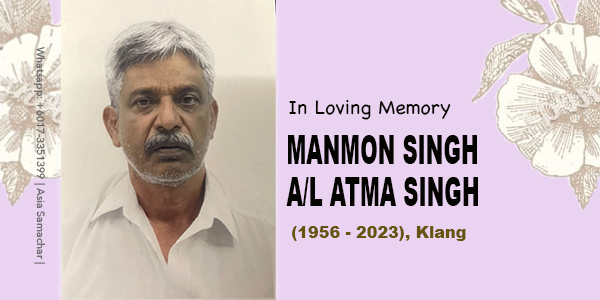
Manmon Singh (1956 – 2023), Klang

MANMON SINGH A/L ATMA SINGH

30.10.1956 – 22.6.2023

A loving Son, Husband, Father, Brother, Brother-in-law & Uncle will be fondly remembered for all the lives he has touched with his generosity, kindness & charm. His loss has left a void in the lives of those who knew him.

Sehj Path da Bhog will be held on 8th July 2023 (Saturday), from 9.30am to 11.30am, at Gurdwara Sahib Sentul

Dearly remembered by:

Wife: Gurmit Kaur (Sheena)

Children: Roshen Singh & Tara Kaur

Also Brothers, Sisters Sisters-in-Law, Brothers-in-Law, Nieces, Nephews, Uncles & Aunties and Cousins.

For Further Information please contact:
Joginder (Joe) 010 214 1858
Ajit 019 321 7771
Sangeetha 017 4772104

| Entry: 23 June 2023; Updated: 3 July 2023 | Source: Family

ASIA SAMACHAR is an online newspaper for Sikhs / Punjabis in Southeast Asia and beyond. When you leave a comment at the bottom of this article, it takes time to appear as it is moderated by human being. Unless it is offensive or libelous, it should appear. You can also comment at FacebookTwitter, and Instagram. You can reach us via WhatsApp +6017-335-1399 or email: asia.samachar@gmail.com. For obituary announcements, click here

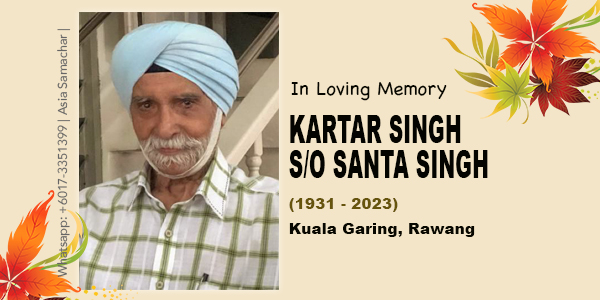
Kartar Singh (1931 – 2023), Kuala Garing, Rawang

SARDAR KARTAR SINGH S/O SANTA SINGH

1.5.1931 – 22.6.2023

Kuala Garing Rawang, Selangor

Path da Bhog will be held on Sunday, 2nd July 2023, from 10.00am to 12.00pm, at Gurdwara Sahib Subang, Persiaran Kewajipan, 47500 Subang Jaya. Guru Ka Langar will be served

Wife
Late Mata Sowaran Kaur d/o Maghar Singh

Siblings
Late Master Teja Singh, Dr. Sarjit Singh (Sydney), Late Karam Kaur, Late Gursant Kaur and Late Harcharan Kaur

Children and Spouses
Dr. Harjit Singh / Dr. Gurjit Kaur
Ranjit Singh (ex UAB/CIMB) / Clinder Kaur
Amarjit Singh (YTL) / Mokthiar Kaur
Late Inderjit Singh / Peramjit Kaur
RMAF Jit Singh / Jaspal Kaur
Dr. Karamjit Singh / Charan Kaur (UK)
Capt. Gordip Singh (Sapura) / Sawaran Jit Kaur (Miri)
Baljeet Singh (Rtd ACP)
Baldev Kaur / Satwant Singh
Manjit Singh / Late Inderjit Kaur (S’pore)

Grandchildren and Spouses
Komal Kaur Helyer /Paul Helyer
Roshan Singh / Serena Sharp Singh
Jesmeet Singh Jassal
Jesmesh Singh Jassal
Jitender Singh Jassal / Danisha Kaur
Ashwinder Kaur Jassal
Preshinder Kaur Jassal
Harsukhdip Singh / Simran Jeet Kaur
Dr. Chamanjeet Kaur Jassal
Dr. Ranmeet Kaur / George Kantzios
Dr. Navreen Sarson Singh / Joshua Sarson Singh
Aeshprit Kaur / Alexander Darshan Monteiro
Dr. Dheren Kaur
Dr. Dherej Kaur / Haroshanraj Singh
Himmat Singh / Arvinjit Kaur
Jaideep Singh / Ramandeep Kaur (Ria)
Mohkam Singh
Dr. Kiran Jassal
Phel Kaur
Jasleena Kaur Jassal
Opashna Kaur Jassal
Jyotishna Kaur Jassal

Great Grandchildren
Lana-Lily Jas Helyer, Arabella-Skye Helyer, Cassius Sharp Singh, Gauravv Singh, Keanu George Kantzios & Ryan Jai Monteiro

Fondly missed by Jasbir Kaur (UK), Ranjit Kaur, nephews, nieces and a host of relatives and friends.

The family wishes to record its thanks and gratitude to all the specialists, doctors, nurses, and staff of IJN for their dedication and attention. Special thanks to Fitriani for the care and dedication given.

Contacts:
Ranjit: 016 966 2474 | Amarjit: 019 266 1803 | Baljeet: 019 382 6163

| Entry: 23 June 2023; Updated: 25 June 2023 | Source: Family

ASIA SAMACHAR is an online newspaper for Sikhs / Punjabis in Southeast Asia and beyond. When you leave a comment at the bottom of this article, it takes time to appear as it is moderated by human being. Unless it is offensive or libelous, it should appear. You can also comment at FacebookTwitter, and Instagram. You can reach us via WhatsApp +6017-335-1399 or email: asia.samachar@gmail.com. For obituary announcements, click here

Maur is Kisan Movement in the 19th Century

By Harjeshwar Pal Singh | Movie Review |

Growing up in a village on the outskirts of Malwa in Ferozepur District, Maur was an integral part of our lives, memories, and popular culture, just like any other folk character.

My earliest recollections of Maur were our neighbors and “Shareeks” who were called Maurs for their expertise in bootlegging, feuds,”Vailpuna” and their ability to outsmart the police .

Then came “Jeona Maur,” a popular song-dialogue LP record by Surinder Shinda, which was released in the early 80s and became a mega-hit. This Jeona Maur was a fearless action hero in the style of Bollywood, seeking revenge against “Dogar” for betraying his brother Kishna. As children, we were enthralled by the dialogues like “Langeya langeya Jeonn sian” and songs like “Badla lae layin jeoneya je maan da jaaya” and “Jeona Maud Ghori te farar ho geya.” We would plead with the “tawe wala Bhai” to play it repeatedly at every “Viah” and “ Akhand Path”.

In the early 90s, “Jatt Jeona Maur” hit the screens and became a massive success. This movie, featuring Guggu Gill as Jeona Maur and Gurkirtan as Ahmed Dogar, was one of the many Jatt movies produced in Pakistan and India during the 80s, following the genre pioneered by “Maula Jatt.” These films, with robust Jatt heroes and villains, were filled with bombastic dialogues, buxom heroines, acrobatic action, and graphic gore, appealed primarily to rural audiences.

Maurh,” starring Amy Virk and directed by Jatinder Mauhar, has been one of the most highly anticipated Punjabi movies ever. Its extensive marketing campaign, with gigantic billboards along highways and cities across Punjab, rekindled childhood and adolescent memories.

While remaining faithful to the essence of the Kissa and its traditional feudal values of “Anakh” (honor), “Dhokha” (betrayal), and “Badla” (revenge), Mauhar reinterprets this classic late 19th-century Malwayi folk tale of Punjab to address contemporary needs. The Maur of “Jeona Maur” is not an exaggerated larger-than-life hero seeking personal vengeance; rather, he is a social bandit glorified as a symbol of resistance by oppressed communities against feudal and pre modern state oppression, as hailed by scholars like Eric Hobsbawm.

Set in feudal and colonial South Malwa, Maur is a semi-arid village inhabited by “Muzaras” (sharecroppers) who endure the oppression of the Jagirdar (landlord), Shahukar (moneylender), and Sarkar (government). Jeona Maur’s fight is not only against Dogar for “Yaar maar” (betrayal of friendship) but also against the feudal lords and their colonial masters.

The resistance of Maur for their “izzat” (dignity) and “Anakh,”(pride) epitomized by the two brothers Kishna and Jeona who become Dakus (outlaws), is based on an idealized class, caste, and religious solidarity. Jatt sharecroppers like Jeona and Kishna join forces with Dalits like Chatra, invoking the blessings of Gurus, Pirs, and Devis, where “miracles” provide solace to a community under immense stress.

The reinvention and reimagining of Maur are clearly inspired by the Kisan (farmer) movement, where a united “Maur” Punjab fought against contemporary “Dhadwails” (oppressors) and “Shahukars” (monebags) in the form of Modi and Adani, as well as the compradors like the “Dogars” who faced the wrath of the people. Jatinder Mauhar has now added the name of Maur to the esteemed list that includes Ajit Singh, Chottu Ram, Kishangarh, and other symbols of peasant resistance.

Among the actors, Dev Kharaud delivers an intense performance as Kishna, while Vikramjeet Virk’s portrayal of Dogar is menacing and captivating. Richa Bhatt shines as Bishni,in a brief but powerful role. Amy Virk as Jeona looks the part as a timid farmer forced by familial call and community strife to take on the mantle of a peoples hero.

The sandy ,arid backdrop and mud houses add authenticity to the movie. The cinematography, art direction, and dialogues are top-notch, capturing the essence of the story flawlessly. However, a minor critique lies in the background music, which feels overly Westernized, artificial, and jarring. At the same time the faux Sangrur dialect seems contrived.Nevertheless, this is a minor flaw in an otherwise groundbreaking film.

“Maur” will be remembered as a milestone in Punjabi Cinema, placing it in the same league as iconic films like “Chan Pardesi” and “Laung Da Lishkara.”

Jatinder Mauhar’s “Maur” showcases the power of cinema to mould popular heroes and folk memories in light of historical struggles to inspire contemporary movements. As we witness the journey of Jeona Maur and his battle for justice, we are reminded of the ongoing fight for equality and dignity. Maur, once a folklore character etched in our childhood memories, now takes on a new form, representing the indomitable spirit of those who resist tyranny and fight for a better tomorrow.

Harjeshwar Pal Singh is an assistant professor at Sri Guru Gobind Singh College, Chandigarh, where he teaches history. He is an avid political commentator.

RELATED STORY

CAT: Crime thriller set to be a milestone for Punjabi cinema (Asia Samachar, 26 April 2023)

ASIA SAMACHAR is an online newspaper for Sikhs / Punjabis in Southeast Asia and beyond. When you leave a comment at the bottom of this article, it takes time to appear as it is moderated by human being. Unless it is offensive or libelous, it should appear. You can also comment at FacebookTwitter, and Instagram. You can reach us via WhatsApp +6017-335-1399 or email: asia.samachar@gmail.com. For obituary announcements, click here.
Jasvir Singh to continue as Pahang MB special officer

Jasvir Singh receives letter of appointment from Pahang MB Wan Rosdy Wan Ismail on June 21, 2023 – Photo: Supplied

By Asia Samachar | Malaysia |

Bentong councillor Jasvir Singh Ram Singh will continue to serve as Pahang Menteri Besar’s special officer for the Sikh community for another year.

Jasvir, who is also the Bentong gurdwara management committee president, received the letter of award from Pahang MB Wan Rosdy Wan Ismail today (June 21). He will serve until June 30, 2024.

RELATED STORY:

Jasvir Singh to continue serving Bentong (Asia Samachar, 27 Nov 2020)

ASIA SAMACHAR is an online newspaper for Sikhs / Punjabis in Southeast Asia and beyond. When you leave a comment at the bottom of this article, it takes time to appear as it is moderated by human being. Unless it is offensive or libelous, it should appear. You can also comment at FacebookTwitter, and Instagram. You can reach us via WhatsApp +6017-335-1399 or email: asia.samachar@gmail.com. For obituary announcements, click here.

Barah Maha: Asar

0

By Sikh Research Institute (SikhRI) | 

Asar is the fourth month of Barah Maha. It is sweltering heat. The earth endures pain and suffering as the sun sucks all of the life from the defenseless vegetation.

The heat is a symbol of a human-bride, the seeker who is disconnected from IkOankar.

Follow the human-bride as she finds realization in her anxieties and the external pains in her life.

(Embark on this journey with us as we take a visual dive into the genre. If you are looking to enhance your understanding of Barah Maha, we invite you to visit The Guru Granth Sahib Project. This learning resource is incredibly insightful to readers of different experience levels.)

ਆਸਾੜੁ ਭਲਾ ਸੂਰਜੁ ਗਗਨਿ ਤਪੈ ॥
ਧਰਤੀ ਦੂਖ ਸਹੈ ਸੋਖੈ ਅਗਨਿ ਭਖੈ ॥
ਅਗਨਿ ਰਸੁ ਸੋਖੈ ਮਰੀਐ ਧੋਖੈ ਭੀ ਸੋ ਕਿਰਤੁ ਨ ਹਾਰੇ ॥
ਰਥੁ ਫਿਰੈ ਛਾਇਆ ਧਨ ਤਾਕੈ ਟੀਡੁ ਲਵੈ ਮੰਝਿ ਬਾਰੇ ॥
ਅਵਗਣ ਬਾਧਿ ਚਲੀ ਦੁਖੁ ਆਗੈ ਸੁਖੁ ਤਿਸੁ ਸਾਚੁ ਸਮਾਲੇ ॥
ਨਾਨਕ ਜਿਸ ਨੋ ਇਹੁ ਮਨੁ ਦੀਆ ਮਰਣੁ ਜੀਵਣੁ ਪ੍ਰਭ ਨਾਲੇ ॥੮॥

Interpretive Transcreation

The month of Harh (mid-June to mid-July) is also auspicious, since it is in the will of IkOankar. Under this Will, the sun radiates heat from the sky.The earth suffers from the heat. The heat increases, drying up the vegetation.

The heat dries up the vegetation’s sap. Vegetation becomes lifeless because of the scorching heat. Yet the sun, in the Will, continues performing its duty.

As the sun moves, the temperature increases, and the seeker searches for shade. In the open fields, the cricket, tormented by the heat, chirps.That seeker entangled in demerits suffers pain. Only that seeker who remembers the true Identification (Nam) of IkOankar finds happiness.

At the end of the stanza, by using the signature ‘Nanak,’ Guru Nanak states that the seeker who has been graced with the mind that remembers IkOankar, lives and dies only with IkOankar. Remembering IkOankar is life, forgetting IkOankar is death.8.

To read more, click here

Researcher: Surender Pal Singh | Videographer: Sean J. Holden | Producer: Amanda Heck | Creative Director: Inni Kaur

RELATED STORY:

Guru Granth Sahib Project: Three Sabads of ‘Maru Kaphi’ by Guru Nanak Sahib (Asia Samachar, 18 Nov 2022)

ASIA SAMACHAR is an online newspaper for Sikhs / Punjabis in Southeast Asia and beyond. When you leave a comment at the bottom of this article, it takes time to appear as it is moderated by human being. Unless it is offensive or libelous, it should appear. You can also comment at FacebookTwitter, and Instagram. You can reach us via WhatsApp +6017-335-1399 or email: asia.samachar@gmail.com. For obituary announcements, click here.