BALPREET KAUR GREWAL D/O LATE JOGINDAR SINGH (MALHI)
Balpreet passed away peacefully on 3rd April 2023.
Akhand Path will be held from 9th April 2023, from 6pm to 11th April 2023 (concluding semagam 5pm to 7pm), at Gurdwara Sahib Mantin.
For those who wish to convey their condolences to the family members, kindly contact the following numbers:- Imerpal Singh – Brother (017-689 7620) Beldesh Singh – Brother (016-958 3201)
| Entry: 5 April 2023 | Source: Family
ASIA SAMACHAR is an online newspaper for Sikhs / Punjabis in Southeast Asia and beyond. When you leave a comment at the bottom of this article, it takes time to appear as it is moderated by human being. Unless it is offensive or libelous, it should appear. You can also comment at Facebook, Twitter, and Instagram. You can reach us via WhatsApp +6017-335-1399 or email: asia.samachar@gmail.com. For obituary announcements, click here.
It is with great sorrow that we announce the passing of Madam Ajit Kaur d/o Beant Singh, a beloved great grandmother, grandmother, mother, sister and friend, who passed away on April 4th, 2023. She was born on September 9th, 1931, and lived a full and vibrant life in which she was loved and adored by everyone around her. She was a devoted and loving lady, always putting the needs of her family before her own. Being fiercely protective, nothing made her happier than seeing them grow and thrive. Her children were the center of her universe, and she loved them unconditionally, as they did in return. Known for her legendary meals, filling her kitchen with the aroma of spices and love.
Madam Ajit Kaur leaves behind a legacy of love and devotion. She is survived by her four children, two sons and two daughters, and her ten grandchildren and eight great-grandchildren. Her presence will be deeply missed, but her spirit will live on in the hearts of all those who knew and loved her.
| Entry: 5 April 2023; Updated: 8 April 2023 | Source: Family
ASIA SAMACHAR is an online newspaper for Sikhs / Punjabis in Southeast Asia and beyond. When you leave a comment at the bottom of this article, it takes time to appear as it is moderated by human being. Unless it is offensive or libelous, it should appear. You can also comment at Facebook, Twitter, and Instagram. You can reach us via WhatsApp +6017-335-1399 or email: asia.samachar@gmail.com. For obituary announcements, click here.
Lieutenant Manmeet Kaur Colon, a Sikh woman officer of Indian descent, has been appointed as the Assistant Chief of Police (ACP) in Connecticut, US. She holds the distinction of being the first-ever person of Asian origin to hold this position in the department.
In the presence of a large gathering, including friends, family, and coworkers from the city and police department, Lt Manmeet was sworn in as the third assistant police chief of the city – marking the first appointment of an Asian as the department’s second-in-command, according to local media reports.
The 37-year-old police officer, who belongs to a Sikh family and is proficient in Punjabi, hails from Mumbai, India. She moved with her family to Queens when she was 11, graduated from the police academy in December 2008. She studied criminal justice at the University of New Haven.
She was appointed unanimously by the Board of Police Commissioners in New Haven on March 14 for her previous experience as a lieutenant at the internal affairs office.
ASIA SAMACHAR is an online newspaper for Sikhs / Punjabis in Southeast Asia and beyond. When you leave a comment at the bottom of this article, it takes time to appear as it is moderated by human being. Unless it is offensive or libelous, it should appear. You can also comment at Facebook, Twitter, and Instagram. You can reach us via WhatsApp +6017-335-1399 or email: asia.samachar@gmail.com. For obituary announcements, click here.
Stories have always been a part of human culture – how we pass on traditions, history and knowledge from one generation to the next.
But beyond being a mere tool for transmission of information, stories have the power to connect people on a deeper level.
Stories help us understand each other. Empathise with each other. Creating a sense of community and oneness. Stories remain the great equaliser. They don’t care about race, gender, religion, or nationality. They have the power to bring us all together.
My Personal Anecdote: Fooling Friends with Louis Vuitton (LV) Branded Turbans
During her trips to the Punjab, my wife took a fancy to the brighly colourful, multi- patterned and embroided turbans readily available at Amritsar’s fashionable pagri shops. Unlike, the normal plain turbans, these embroided turbans with fanciful designs sometimes representing stripes of a tigeror zebra regally manifested as a crown adorned on the head of a Sikh male. I decided to discontinue wrapping my head with the mundane me-too plain turbans and started creating fashion statements with these rarely seen turban fabric in Bolehland.
From an invisible male Sikh I became a highly visible and sought-after Sikh wherever I went. My friends and total strangers were complimenting me on my marvellous turbans of distinction. That was when the storyteller in me started telling everyone that my turban collection was indeed, Louis Vuitton branded.
People really believed me, simply because I was a copywriter on the Citroen account in Malaysia. They began to believe that during my frequent trips to Paris I was also shopping for LV turbans.
I managed to fool my friends and others with a simple story of LV branded turbans that added an element of mystique to my character.
Authenticity in Storytelling
While stories have the power to connect people, they can also be used to manipulate or deceive. In today’s age of social media and instant gratification, it’s easy to get caught up in the idea of creating the perfect story to impress others. However, the most powerful stories are those that are authentic and true to who you are. People can sense when a story is fake or forced, and it can actually have the opposite effect of what you intended.
Authenticity is the key to creating a story that resonates with people and creates a lasting connection.
Importance of Visual Storytelling
In addition to authenticity, visual storytelling is becoming increasingly important in today’s digital age.
With the rise of platforms like Instagram and TikTok, people are consuming more visual content than ever before. Visual storytelling allows you to convey a message or story in a way that is engaging and memorable. It’s also a great way to showcase your brand or product in a way that is visually appealing to your audience.
How to Incorporate Storytelling into Your Brand Strategy
The first step is to identify your brand’s unique story. What makes your brand different from others? What is your brand’s mission and values? Once you’ve identified your story, it’s important to find ways to incorporate it into your marketing and content strategy.
This could be through blog posts, social media campaigns, or even your product packaging. The key is to be consistent and authentic in your storytelling to create a lasting connection with your audience.
The Impact of Storytelling on Consumer Behaviour
The power of storytelling extends beyond just creating a connection with your audience. It can also have a direct impact on consumer behaviour. Studies have shown that people are more likely to remember information presented in a story format than in a traditional format.
People are more likely to take action after hearing a story that resonates with them. By incorporating storytelling into your brand strategy, you can create a powerful emotional connection with your audience that can lead to increased brand loyalty and sales.
Tools and Resources for Storytelling
If you’re looking to incorporate storytelling into your brand strategy, there are many tools and resources available to help you. One popular tool is Canva, which allows you to create visually appealing graphics and social media posts.
Another resource is StoryBrand, which provides a framework for creating a compelling brand story. Additionally, there are many courses and workshops available that can teach you the art of storytelling and how to incorporate it into your marketing strategy.
Future Trends in Storytelling
As technology continues to advance, the future of storytelling is likely to be even more immersive and interactive. Virtual and augmented reality technologies are already being used to create immersive storytelling experiences that allow people to step into a different world. The rise of voice technology and smart speakers is creating new opportunities for audio storytelling. The possibilities are endless, and the brands that are able to embrace these new technologies and use them to tell compelling stories will be the ones that will succeed in the future.
Embracing the Power of Storytelling
Storytelling has the power to connect the rakyat on a deeper level, create a lasting emotional connection, and even influencing consumer behaviour.
By embracing the power of storytelling and incorporating it into your marketing strategy, you can create a brand story that resonates with your audience and sets you apart from your competitors.
So, don’t be afraid to lean into your authenticity and share your unique story with the world.
The future belongs to storytellers, and it’s time to start telling yours.
I started mine years ago with the LV branded turbans.
ASIA SAMACHAR is an online newspaper for Sikhs / Punjabis in Southeast Asia and beyond. When you leave a comment at the bottom of this article, it takes time to appear as it is moderated by human being. Unless it is offensive or libelous, it should appear. You can also comment at Facebook, Twitter, and Instagram. You can reach us via WhatsApp +6017-335-1399 or email: asia.samachar@gmail.com. For obituary announcements, click here.
SAWINDER KAUR @ SHITNO W/O LATE BUKHASIS SINGH AUJLA
28.8.1942 – 30.5.2022
Forever loved and cherished by sons, daughters, sons-in-law, daughter-in-law, grandchildren, relatives and friends.
The 1st Barsi Sahej Path da Bhog will be held at at Gurdwara Sahib Bidor, Perak, on Sunday, 30th April 2023 from 10am to 12pm. Guru ka Langgar will served thereafter,
Please treat this as a personal invitation from the family.
| Entry: 3 April 2023 | Source: Family
ASIA SAMACHAR is an online newspaper for Sikhs / Punjabis in Southeast Asia and beyond. When you leave a comment at the bottom of this article, it takes time to appear as it is moderated by human being. Unless it is offensive or libelous, it should appear. You can also comment at Facebook, Twitter, and Instagram. You can reach us via WhatsApp +6017-335-1399 or email: asia.samachar@gmail.com. For obituary announcements, click here.
At all times, especially amid chaos, crisis, and warfare, the ten founder Guru Sahibs — Guru Nanak to Guru Gobind Singh — reminded the seekers and the Sikhs to invoke the living remembrance of the 1 for calm and clarity; they themselves practiced it incessantly. May we all feel the presence of the 1 as the 30 million Sikhs struggle to make sense of what has been going on in this Nanakshahi 555’s first month!
THE BACKGROUND
In Sikhi, the political and the spiritual are inseparable. Its IkOankar, Nam, and Sabad principles create its ethos: there is only 1 creative and pervasive Force, 1 is intimately experienced in Identification with the Creator and the Creation, and the Infinite Wisdom must be invoked to address all human conflicts. The founders (1469-1708) established cities in the undivided Panjab to create an egalitarian and just society.
Panjab is the homeland of the Sikhs. Sanctum sanctorum of the Sikhs, Sri Harimandar Sahib and Akal Takht complex, is in Amritsar, Panjab. Sikhs held multiple iterations of Raj in the Panjab in the last 555 years, including ruling from Lahore. Khalistan was first articulated in the 1940s; it went through political and militant struggle in the 1980s. Most critical issues since then remain unaddressed and unresolved. Pursuing Khalistan via non-violent means is not illegal in India. Indian Panjab is the only space in the world where Sikhs constitute a slim majority of 57%, where 70% of global Sikhs reside.
The British Empire created two nations in 1947: the Hindu majority in India and the Muslim majority in Pakistan. Sikhs joined India after Indian assurances. In 75 years, almost all assurances were ignored, and three to four generations have lived under the Indian realities. Panjab was further truncated in the 1960s.
The Sikhs in India outside Panjab – “Inspora” – are mostly forgotten or ignored. They form 17% of the global Sikh population; their presence is very visible and part of administrations, economies, and the social fabric. Many are natives in their local regions since the times of the Guru Sahibs (1469-1708), several ventured during the Sikh Empire (1799-1849), and more migrated from the Panjab since the Partition of Panjab (1947).
The Sikh Diaspora started forming in the 1850s under the British, most prominently in Malaysia and Kenya. Large sections of the Sikhs left India after the 1984 Ghallughara (genocide and much more). They form 13% of the global Sikh population. Their presence in western democracies has grown tremendously; their personal success, activism, and connection to the Panjab have amplified their soft power.
THE SCENARIO
On 18 Mar 2023, the Panjab government and the Indian government initiated an operation via the Panjab police and the National Investigation Agency. It included targeted arbitrary detentions, total mobile internet shutdowns, prohibited gatherings, protests, rallies, and curated social media blocks. About 400 Sikhs — activists, reporters, students, protestors, leaders, and lawyers — were arrested, and few were charged under the stringent National Security Act. Some have been released due to Sikh outrage. Those arrested were not limited to the members of Waris Punjab De; its head, Amritpal Singh’s detention status remained unknown till 29 Mar 2023 when he appeared on video not in custody. He touched upon crackdown, arrests, and surrender. He asked the Shiromani Gurdwara Parbandhak Committee (SGPC) appointed acting Jathedar of Akal Takht Sahib, Giani Harpreet Singh, to call Sarbat Khalsa (the Sikh collective assembly akin to congress or parliament) this upcoming Vaisakhi Day, which is in two weeks.
There was no violence before, during, and since then in Panjab by the Sikhs. There have been many Morchas or protests during this period. Quami Insaf (Nation Justice) or Bandi Singh Rihai (Imprisoned Sikhs Release) in Mohali as well as P20 parallel to G20 in Amritsar. On 2 Mar 2023, 50 units of Central Paramilitary Forces (CPF) were sent to Panjab: 12 Border Security Force (BSF), 10 Central Reserve Police Force (CRPF), 10 Indo-Tibetan Border Police (ITBP), 10 Sashastra Seema Bal (SSB), 8 Railway Protection Force (RPF). On 11 Oct 2021, BSF jurisdiction was increased from 15 km to 50 km from the Indo-Pakistan Border in Panjab; all political parties of Panjab unanimously condemned it.
Arrest numbers kept changing; internet shutdowns kept growing; Khalistan and manhunt stories kept flashing; photoshopped images kept resurfacing. This is how fear and danger is manufactured to influence the mind. This is how PSYOPs work; psychological operations disseminate information to influence governments, organizations, groups, and individuals’ emotions, motives, reasoning, and behavior.
Politicians of all political parties furthered the state narrative, albeit with rare exceptions. Mainstream Sikh institutions and organizations also raised complaints and organized gatherings. Liberals, leftists, unions, and secularists largely remain silent. Media overwhelmingly spins the state narratives. Manipulations in India, Panjab, and Sikh spheres are the norm. Journalists, their platforms, lawyers, and human rights organizations who report objectively are harassed and blocked.
There have been protests globally by the Sikhs; emotions are high, and restraint is low. Many are outraged; few fall into the state trap and/or uncalled-for, un-Sikh-like behavior.
THE CHALLENGE
The Sikhi must consciously fuel the Sikh response. It must be exemplified in our vocabulary, behavior, speeches, memos, dialogue, and debates. It is not visible enough; what is visible and amplified by the media is anger and venting masquerading as action. We need training, reminders, and vibe-checkers in all Sikh spaces to organize our people, voice our narrative, and maintain our composure.
The Panjab issues must remain center stage. The focus needs to be on how each successive Panjab and the Indian government have failed even to create a meaningful and just dialogue to date. We need disciplined minds to stay on message and engage with Delhi media who have a couple or no correspondents in Panjab.
The Indian context needs to be comprehended. The center-state relations and national government’s priorities and their relationships with the Sikh and Panjab interlocutors; the national and regional political parties, alliances, and their baffling and opposing center alliances; the national agencies and their heads’ experiences with the Sikhs and the Panjab; the media and its demise from global standards. We need geo-political nuancing with the 2024 elections in India.
The Sikh Inspora is larger than the Sikh Diaspora. Their apprehensions, survival, roles, and relationships demand a reappraisal with sensitivity, especially given the 1984 Ghallughara context; they operate as a very small yet easily targetable minority among minorities in a complex internal tension caught between Savarkar and Golwalkar visions of Hindutva’s idealogues. We need a sensible approach in Indian realities.
The Sikh Diaspora is strong and connected. Its soft power is building the Sikh image and the Sikh response. But it is reactive; it is not prepared. There is no public policy institute, lobbying group, or think-tank in the United States, the United Kingdom, or Canada. The aforesaid provides context and information to existing organizations and policymakers in the short term. In the long term, they carve a specific policy. We need investment and strategy.
As we try to make sense of things, as we struggle to respond, and as we synthesize to develop the next steps, the Sikh inspiration remains the personal and intimate connection with the 1 as documented by Guru Nanak Sahib in Guru Granth Sahib (141):
If my body were afflicted with pain, and I found myself under the spell of the two sinful shadow planets rahu and ketu. If blood-sucking cruel rulers held sway over my head, in that condition, may my love for You be evident. Even then, may I continue to praise You, may my excitement never fade while admiring You! Rahu and Ketu represent trouble; let’s not get caught up in Hindu mythology or astrology. In Indic parlance, it means trouble, even today. Amid our Panthic (Sikh collective) pains and troubles caused by cruel politicians, may we strengthen our love for the 1, so we can respond in love and with love!
This Content has been made available for educational purposes only. SikhRI does not make any representation concerning the completeness of the Content. This Content is not intended to substitute research or a deeper understanding of the topic. SikhRI encourages readers to read multiple authors to gain a complete understanding of the topic.
This article, entitled ‘Pain, Rulers & Love: Panjab in Cet 555 (Mar 2023)‘, first appeared at the SikhRi website on 29 March 2023. Click here for the original entry
ASIA SAMACHAR is an online newspaper for Sikhs / Punjabis in Southeast Asia and beyond. When you leave a comment at the bottom of this article, it takes time to appear as it is moderated by human being. Unless it is offensive or libelous, it should appear. You can also comment at Facebook, Twitter, and Instagram. You can reach us via WhatsApp +6017-335-1399 or email: asia.samachar@gmail.com. For obituary announcements, click here.
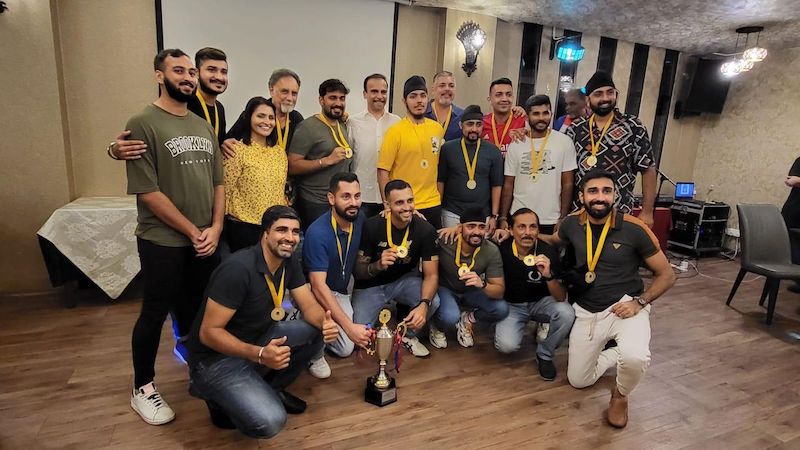
Causeway Cup 2023, 30th edition, hosted by Johor – Photo: SKA Facebook
By Asia Samachar | Malaysia |
The Singapore Sikh contingent ‘did extremely well’ at the annual Causeway Cup on 1 April 2023, emerging overall champion of the 30th edition of the competition.
Hosted by Johore Sikhs Sports Club (JSSC), the event featured open hockey, open football and veteran football categories. The Singapore team won all three matches with a score of 2-1, 2-1 and 3-1 respectively, according to an entry at the Singapore Khalsa Association (SKA) social media platform.
The tournament is a meet between JSSC and SKA. Present at the event were Johor state exco Mohd Hairi Mad Shah, JSSC patron Avinderjit Singh and SKA president Harnek Singh.
Causeway Cup 2023, 30th edition, hosted by Johor. – Photo: SKA FacebookCauseway Cup 2023, 30th edition, hosted by Johor – Photo: SKA Facebook
ASIA SAMACHAR is an online newspaper for Sikhs / Punjabis in Southeast Asia and beyond. When you leave a comment at the bottom of this article, it takes time to appear as it is moderated by human being. Unless it is offensive or libelous, it should appear. You can also comment at Facebook, Twitter, and Instagram. You can reach us via WhatsApp +6017-335-1399 or email: asia.samachar@gmail.com. For obituary announcements, click here.
Sardar Surinderjit Singh( Shindi) Canada, son of late Sardar Harmek Singh and Sardarni Gurdev Kaur, village- Chak Bhai Ka, formerly from Segamat, Johor
5.7.1967 – 3.3.2023
Surinderjit Singh passed away on 3.3.2023 in Canada.
He will be dearly missed by his family and friends.
Sehaj Path Da Bhog: 8 April 2023 (Saturday), from 10:30am to 12:30pm, at Gurdwara Sahib Subang (Address: Lot 72021, Persiaran Kewajipan, SS13 47500, Subang Jaya, Selangor) followed by Guru ka Langar
Please treat this message as personal invitation.
For any info please contact: Harpal Kaur- 016 750 5563 Harpreet Kaur – 012 321 2174
| Entry: 2 April 2023 | Source: Family
ASIA SAMACHAR is an online newspaper for Sikhs / Punjabis in Southeast Asia and beyond. When you leave a comment at the bottom of this article, it takes time to appear as it is moderated by human being. Unless it is offensive or libelous, it should appear. You can also comment at Facebook, Twitter, and Instagram. You can reach us via WhatsApp +6017-335-1399 or email: asia.samachar@gmail.com. For obituary announcements, click here.
Sikh youth at the Vaisakhi 2023 programme at Sentul gurdwara – Photo: Asia Samachar
By Asia Samachar | Malaysia |
Sentul saw a big turnout today for the third day of its four-day Vaisakhi 2023 programme. It was a full house in the darbar with a number of prominent kirtan jathas, including Bhai Gagandeep Singh (Ganga Nagar Wale).
One of the obvious attraction was the newly renovated Darbar Sahib. Gurdwara Sahib Sentul has added a new wing to its original darbar sahib, providing a larger space for the kirtan and katha sessions.
The congregation members also were delighted with an assortment of food, including local favourites cendol and tau fu fah. They also had the choice of trying out the curry laksa mee prepared by the Pulapol Gurdwara team.
Vaisakhi celebrates the day when Guru Gobind Singh unveiled the Khalsa, coinciding with the birthday of Guru Nanak. The four-day kirtan and katha ends tomorrow (April 2, Sunday).
ASIA SAMACHAR is an online newspaper for Sikhs / Punjabis in Southeast Asia and beyond. When you leave a comment at the bottom of this article, it takes time to appear as it is moderated by human being. Unless it is offensive or libelous, it should appear. You can also comment at Facebook, Twitter, and Instagram. You can reach us via WhatsApp +6017-335-1399 or email: asia.samachar@gmail.com. For obituary announcements, click here.
Aussie students visiting a gurdwara – Photo: Gurdwara Sahib Brisbane, Facebook
By Alex Brewster | ABC | Australia |
Punjabi is now Australia’s fastest growing language, according to the latest census — but it is still not offered in Queensland schools.
Census data shows Punjabi is the fifth most spoken language at home other than English, making it the most popular Indian-subcontinental language ahead of Hindi and Nepali — despite Punjabis, who hail from the north of India, making up less than 3 per cent of the total Indian population.
Community leaders want dedicated resources to teach it so the children of immigrants can continue to learn about their Punjabi language and culture.
South-east Queensland has become a hub for a rapidly growing Indian-Australian community, the centre of which is the Brisbane Sikh Temple, an almost 40-year-old institution.
“It’s not only the first Sikh temple in Queensland, it’s a community centre,” Punjabi Council of Queensland president Parnam Singh Heir said.
“We have more than 5,000 people come here every week.
“There’s a free kitchen where all are welcome, vegetarian food, seven days a week, open for everyone.”
Integration through education The temple runs Punjabi language classes for children on the weekends, but Mr Singh would like further support.
“Punjabi is the number one growing language in the last five years and it’s not recognised well in the community,” he said.
“I think it’s time for the government and our education department to promote and tell people how many Punjabis are here and about our language.”
ASIA SAMACHAR is an online newspaper for Sikhs / Punjabis in Southeast Asia and beyond. When you leave a comment at the bottom of this article, it takes time to appear as it is moderated by human being. Unless it is offensive or libelous, it should appear. You can also comment at Facebook, Twitter, and Instagram. You can reach us via WhatsApp +6017-335-1399 or email: asia.samachar@gmail.com. For obituary announcements, click here.